Items Similar to British Sad Clown Boy Oil Painting on Canvas Barry Leighton Jones Circus Scene
Want more images or videos?
Request additional images or videos from the seller
1 of 8
Barry Leighton-JonesBritish Sad Clown Boy Oil Painting on Canvas Barry Leighton Jones Circus Scenec. 20th century
c. 20th century
$2,200
£1,669.91
€1,914.97
CA$3,105.29
A$3,333.24
CHF 1,774.78
MX$39,478.44
NOK 22,428.33
SEK 20,483.32
DKK 14,305.70
About the Item
Frame: 27 X 21
Image: 23.5 X 17.5
Barry Leighton-Jones was born in London, England in 1932 and is a direct descendant of the Victorian artist and President of the Royal Academy, Lord Frederic Leighton. He began his artistic career at the age of five by winning a major art competition, and later completed seven years of academic training at Sidcup and Brighton and was tutored by the acclaimed English artist and illustrator from the Royal College of Art - John Minton.
After launching himself straight into the British art world, his paintings were very quickly in demand - many of them were published and his international reputation grew. But the real breakthrough came in 1985, when he was selected by the Kelly Estate to create a series of images based on the life and work of the famous American clown - Emmett Kelly.
Taking a page out of Norman Rockwell's book, Leighton-Jones devoted a great amount of time to the preparation stage more than ever before. The Kelly Estate supplied Leighton-Jones with black and white photographs of Kelly throughout his career, and he took it upon himself to carefully study Kelly's work on film and read everything about the great man. He even completed visits to the Ringling Museum in Sarasota. All this preparation paid off, as the result is the comprehensive series of paintings, which join the different periods of Kelly's life. Many of the paintings and sketches were produced as limited edition prints and figurines, all becoming best sellers and eagerly sought after by collectors all over the U.S.A.
The years between 1986 and 1992 define one of the most important and prolific periods in the career of Barry Leighton-Jones. Those years mark his selection by various licensors to produce paintings with the purpose of reproduction in several forms: prints, collectors plates, figurines, etc. Although the foremost of these commissions were "The Emmett Kelly Collection", he also completed "The Gone With the Wind Collection" and "The Wizard of Oz Collection", as well as a number of portraits and collages of some of the 19tgh centuries' most famous faces, including Albert Einstein, John Lennon and Princess Diana.
Leighton-Jones, although best known for his clowns and urchins, has completed many different series of works, in many different styles. His work, whether of clowns, children, social situations, pub scenes, or "the weighty ladies", is recognizable from all others as a mixture of the classical and the modern. His realistic rendition of the human form, combined with an impressionistic background, creates a timeless and compelling image that speaks to children of all ages.
"Humor in art is a British tradition going back to Hogarth and Rowlandson, yet is rare today outside the world of political cartooning. For 50 years or so, I have used humor in many of my paintings and continue to do so. Much of the subject matter derives from childhood memories and early manhood experiences, i.e. the wedding breakfasts, the pubs and the weighty ladies. For the past 25 years I have lived and exhibited in the U.S.A. showing to a varied ethnic and cultural clientele. At first I wasn't sure how the British sense of humor would be appreciated but my doubts were dissolved when these people began to buy the works. Men and women identified different characters in my pictures as people they knew as friends or relatives. On numerous occasions I was asked to dedicate the pieces personally to the buyer as he or she found a resemblance to a character. Most artists are pleased when their works are beautifully painted, I'm happy when a painting elicits a good laugh". Barry Leighton-Jones
- Creator:Barry Leighton-Jones (1932, British)
- Creation Year:c. 20th century
- Dimensions:Height: 27 in (68.58 cm)Width: 21 in (53.34 cm)
- Medium:
- Movement Style:
- Period:
- Condition:Refer to photos.
- Gallery Location:Surfside, FL
- Reference Number:1stDibs: LU38214736492
About the Seller
4.9
Platinum Seller
Premium sellers with a 4.7+ rating and 24-hour response times
Established in 1995
1stDibs seller since 2014
1,864 sales on 1stDibs
Typical response time: <1 hour
- ShippingRetrieving quote...Shipping from: Surfside, FL
- Return Policy
More From This Seller
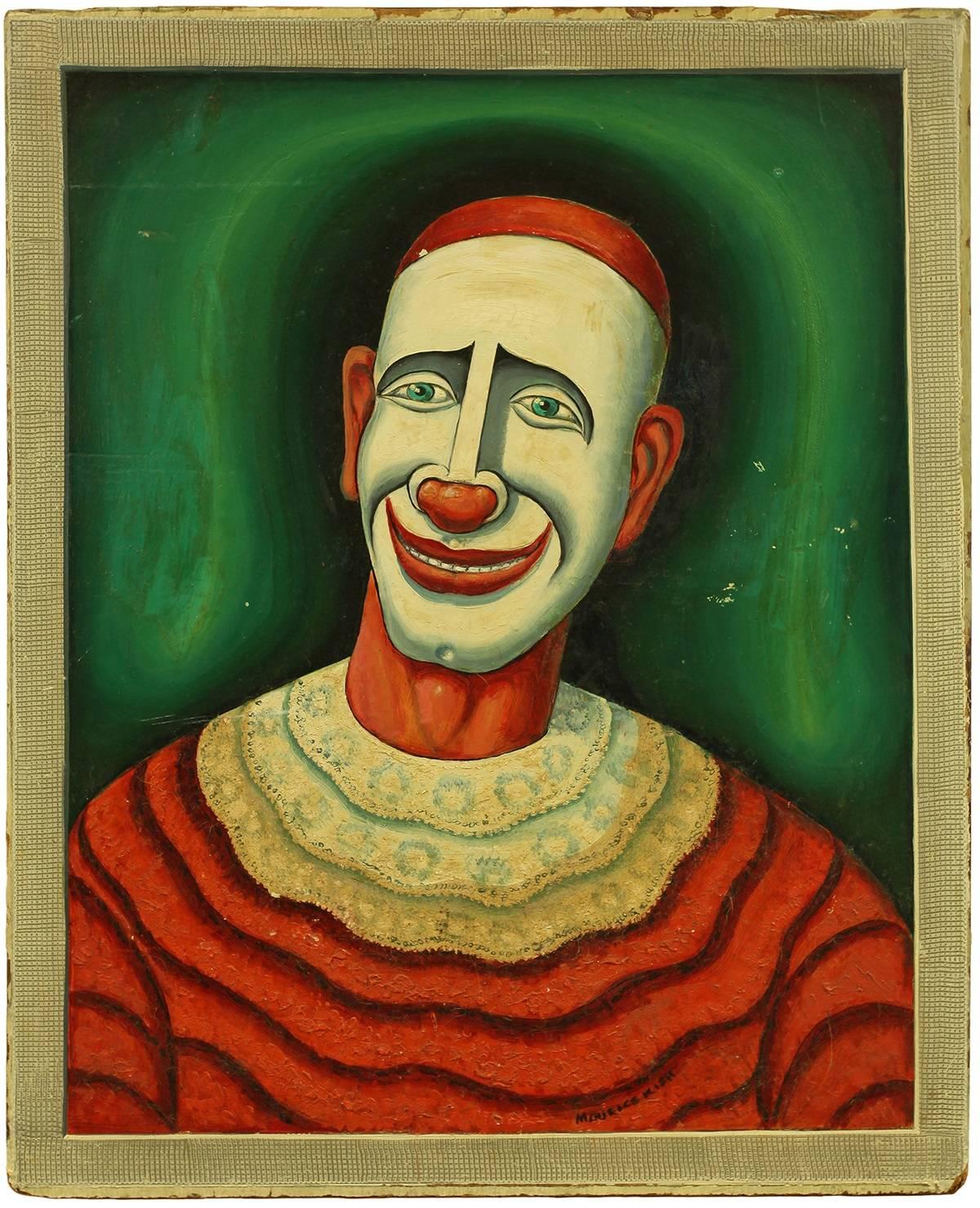
View AllClown, Early 20th Century Playful Oil Painting on Board
By Maurice Kish
Located in Surfside, FL
This portrait of a clown by Maurice Kish is part from a series of carnival figures, circus clowns and carousel horses and riders that he did in the 30s and 40s. The artist uses a vibrant color palette and controlled brushstrokes to depict the subject in a realistic way.
The imagery of Maurice Kish (1895-1987), whether factories or carousels, reliably subverts expectations. His vision hovers just around the unraveling edge of things, where what is solid and clear becomes ambiguous. He is fascinated, often delighted, by the falling apart. This unexpected, fresh perspective results in oddly affecting pictures of a now long-gone New York.
Born Moishe in a town called Dvinsk, Russia (what is now Daugavpils, Latvia), Kish came with his family to New York when he was in his teens. The family settled in Brownsville, and for the rest of Kish’s life Brooklyn remained his home, though he moved from one neighborhood to another. He was close to his parents, who recognized his talent and supported his desire to become an artist.
Kish attended the National Academy of Design as well as Cooper Union. His fellow students included many other immigrants and children of immigrants who were particularly receptive to the Modernism coming from Europe. As his career progressed, Kish himself applied different strains of Modernism to different purposes. For him, the story was held above all else.
For years, Kish used the skills he acquired in art school to earn his living at a Manhattan glass...
Category
Early 20th Century Modern Portrait Paintings
Materials
Oil, Board
Clown, Modernist Oil Painting on Board WPA Artist
By Maurice Kish
Located in Surfside, FL
This portrait of a clown by Maurice Kish is part from a series of carnival figures, circus clowns and carousel horses and riders that he did in the 30s and 40s. The artist uses a vib...
Category
Early 20th Century Modern Portrait Paintings
Materials
Oil, Board
The Clown Surrealist Oil Painting Maurice Kish WPA Artist American Modernist
By Maurice Kish
Located in Surfside, FL
The imagery of Maurice Kish (1895-1987), whether factories or carousels, reliably subverts expectations. His vision hovers just around the unraveling edge of things, where what is so...
Category
20th Century Modern Portrait Paintings
Materials
Oil, Board

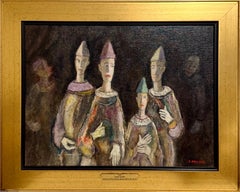
Samuel Brecher WPA Artist Mid Century Mod Modernist Oil Painting Circus Clowns
By Samuel Brecher
Located in Surfside, FL
American artist Samuel Brecher (New York, 1897-1982)
Oil on Canvas,
Hand signed "S.Brecher" lower right.
Dimensions: Frame size: 24 X 30 image 17.5 X 23.5
Provenance: Marbella Ga...
Category
Mid-20th Century Modern Portrait Paintings
Materials
Canvas, Oil
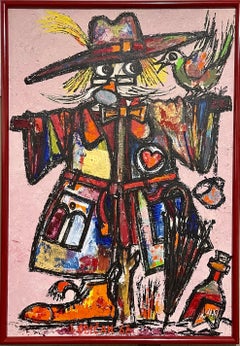
Large Naive European Folk Art Oil Painting Lazar Obican French Scarecrow Clown
Located in Surfside, FL
Lazar Obican 1944-2004
Genre: Other
Subject: People
Medium: Oil
Surface: Canvas
Dimensions: 35" x 16.5
Dimensions w/Frame: 35.5" x 17.25
An impasto composition that depicts a colorful scarecrow clown with a bird perched on his shoulder with a bottle of French Vin (wine)
Artist signature L OBICAN to bottom and dated 1968. Title to verso.
Work Size: 36 x 25 in. Framed 37.5 x 26 x 1 in
The artist Lazar Obican iconic style is child-like yet masterfully adult; a style that tells a story with sociological overtones. His funny little people are always colorful, full of spirit, living with music and birds to bring them happiness.
Lazar Obican artist, painter, sculpture and mosaic ceramic artisan was born in Cannes, France, to his Yugoslavian family. He finished his training, imbued with the spirit of his native country, the people, their legends, and their philosophy. It has been said that his work has a "timeless quality" and a naive, folk art, outsider art brut quality, child-like primitive style. Obican is identified with his style the world over, a style that is simple yet sophisticated; child-like yet masterfully adult; a style that tells a story with psychological, philosophical or sociological overtones. His funny little people are always colorful, full of spirit, living with music and birds to bring them happiness. Best known for his depictions of folklore and traditional costumes rendered in a playful, childlike style and for his happy Jewish wedding scenes. He often used bright colors and black outlines in his renderings of figures and animals, giving his work an illustration-like quality. Thematically, the artist’s work is similar to Marc Chagall and Jean Dubuffet for its dreamlike images and so-called naïve style of painting. Over the course of his career, the artist maintained a studio in Boca Raton, Florida and Dubrovnik, Croatia—part of former Yugoslavia— where he developed an interest in Eastern Europe’s Jewish culture. Many of his mature works depict Jewish traditions and ceremonies, including traditional Jewish weddings, the dancing of the Hora, and traditional music. There is a display of his works in his former Dubrovnik studio.
His style is a unique conglomerate of tradition, history, legends, heroes, old customs and folklore. It is a self-standing style, recognizable, cheerful, whimsical and a happy creation. Naïve art is any form of visual art that is created by a person who lacks the formal education and training that a professional artist undergoes (in anatomy, art history, technique, perspective, ways of seeing). Unlike folk art, naïve art does not necessarily evince a distinct cultural context or tradition. Naïve art is recognized, and often imitated, for its childlike simplicity and frankness. Paintings of this kind typically have a flat rendering style with a rudimentary expression of perspective.
One particularly influential painter of "naïve art" was Henri Rousseau (1844–1910), a French Post-Impressionist who was discovered by Pablo Picasso. Naïve art is often seen as outsider art that is by someone without formal (or little) training or degree. While this was true before the twentieth century, there are now academies for naïve art. Naïve art is now a fully recognized art genre, represented in art galleries worldwide.
Museums devoted to naïve art now exist in Kecskemét, Hungary; Riga, Latvia; Jaen, Spain; Rio de Janeiro, Brasil; Vicq France and Paris. "Primitive art" is another term often applied to art by those without formal training, but is historically more often applied to work from certain cultures that have been judged socially or technologically "primitive" by Western academia, such as Native American, sub saharan African or Pacific Island art (see Tribal art). This is distinguished from the self-conscious, "primitive" inspired movement primitivism. Another term related to (but not completely synonymous with) naïve art is folk art. There also exist the terms "naïvism" and "primitivism" which are usually applied to professional painters working in the style of naïve art (like Paul Gauguin, Mikhail Larionov, Paul Klee).
At all events, naive art can be regarded as having occupied an "official" position in the annals of twentieth-century art since - at the very latest - the publication of the Der Blaue Reiter, an almanac in 1912. Wassily Kandinsky and Franz Marc, who brought out the almanac, presented 6 reproductions of paintings by le Douanier' Rousseau (Henri Rousseau), comparing them with other pictorial examples. However, most experts agree that the year that naive art was "discovered" was 1885, when the painter Paul Signac became aware of the talents of Henri Rousseau and set about organizing exhibitions of his work in a number of prestigious galleries. The Earth Group (Grupa Zemlja) were Croatian artists, architects and intellectuals active in Zagreb from 1929 to 1935. The group included the painters Krsto Hegedušić, Edo Kovačević, Omer Mujadžić, Kamilo Ružička, Ivan Tabaković, and Oton Postružnik, the sculptors Antun Augustinčić, Frano Kršinić, and the architect Drago Ibler. A term applied to Yugoslav (Croatian) naive painters working in or around the village of Hlebine, near the Hungarian border, from about 1930. Some of the best known naive artists are Dragan Gaži, Ivan Generalić, Josip Generalić, Krsto Hegedušić, Mijo Kovačić, Ivan Lacković-Croata, Franjo Mraz, Ivan Večenaj and Mirko Virius. Camille Bombois (1883–1970) Ferdinand Cheval, known as 'le facteur Cheval' (1836–1924) Henry Darger (1892–1973) L. S. Lowry (1887–1976) Grandma Moses, Anna Mary Robertson...
Category
1960s Folk Art Figurative Paintings
Materials
Canvas, Oil
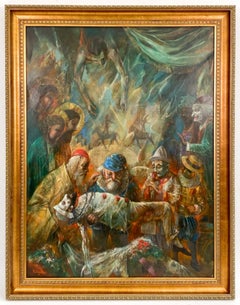
Large Oil Painting Circus Scene Clowns Rediscovered NY Artist Jonah Kinigstein
By Jonah Kinigstein
Located in Surfside, FL
Jonah Kinigstein
"Death of a Clown"
Large Oil on Board Painting of macabre circus scene with clowns
Hand signed lower left and signed and titled verso
Frame: 55 X 43 Image: 48 X 36
...
Category
20th Century Expressionist Portrait Paintings
Materials
Oil, Board
You May Also Like
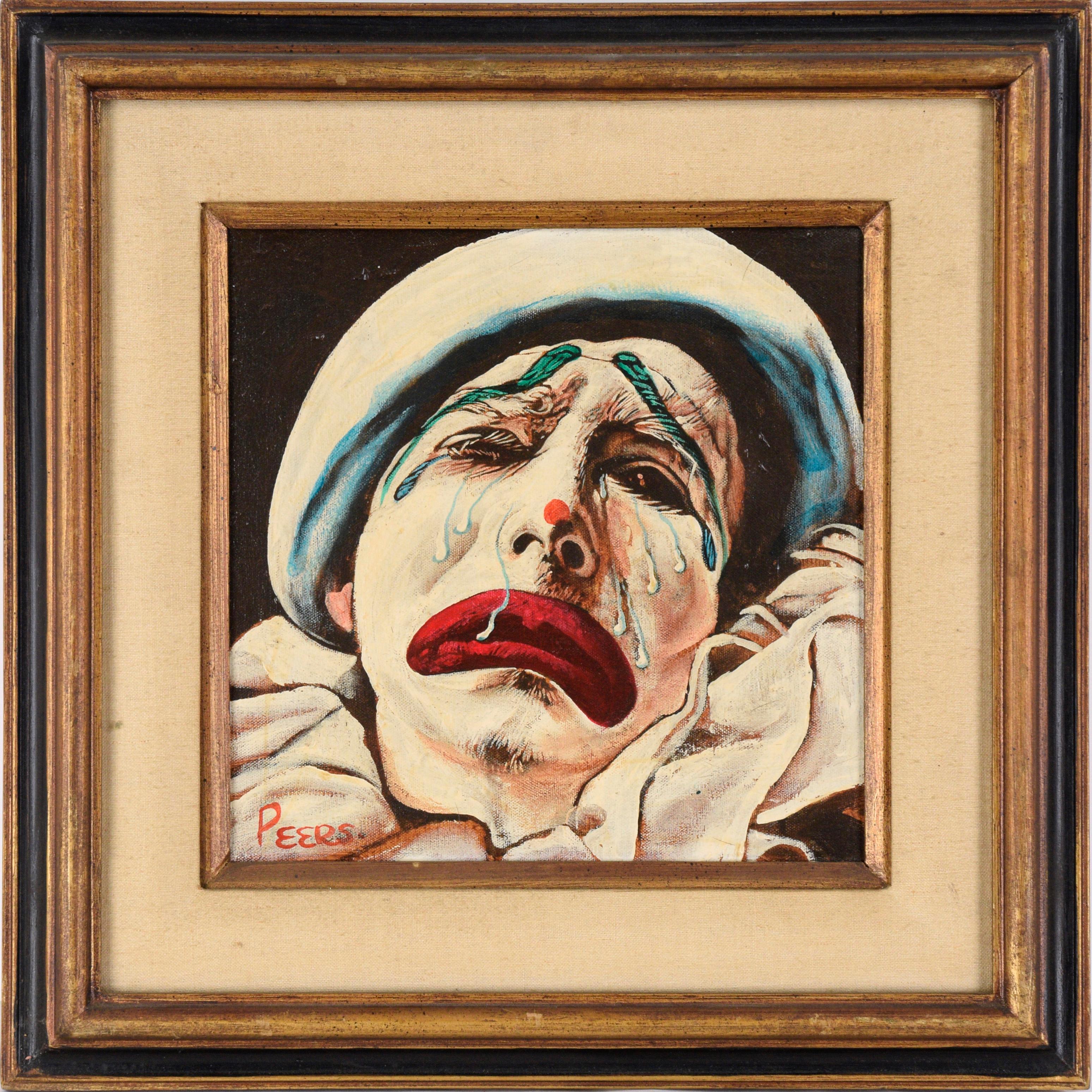
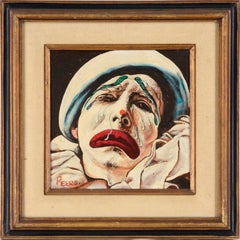
Crying Clown Portrait in Oil on Canvas
Located in Soquel, CA
Crying Clown Portrait in Oil on Canvas
Portrait of a sad clown by San Francisco artist John Peers (American, 1922-2009). This portrait is closely fra...
Category
1970s American Modern Figurative Paintings
Materials
Canvas, Oil
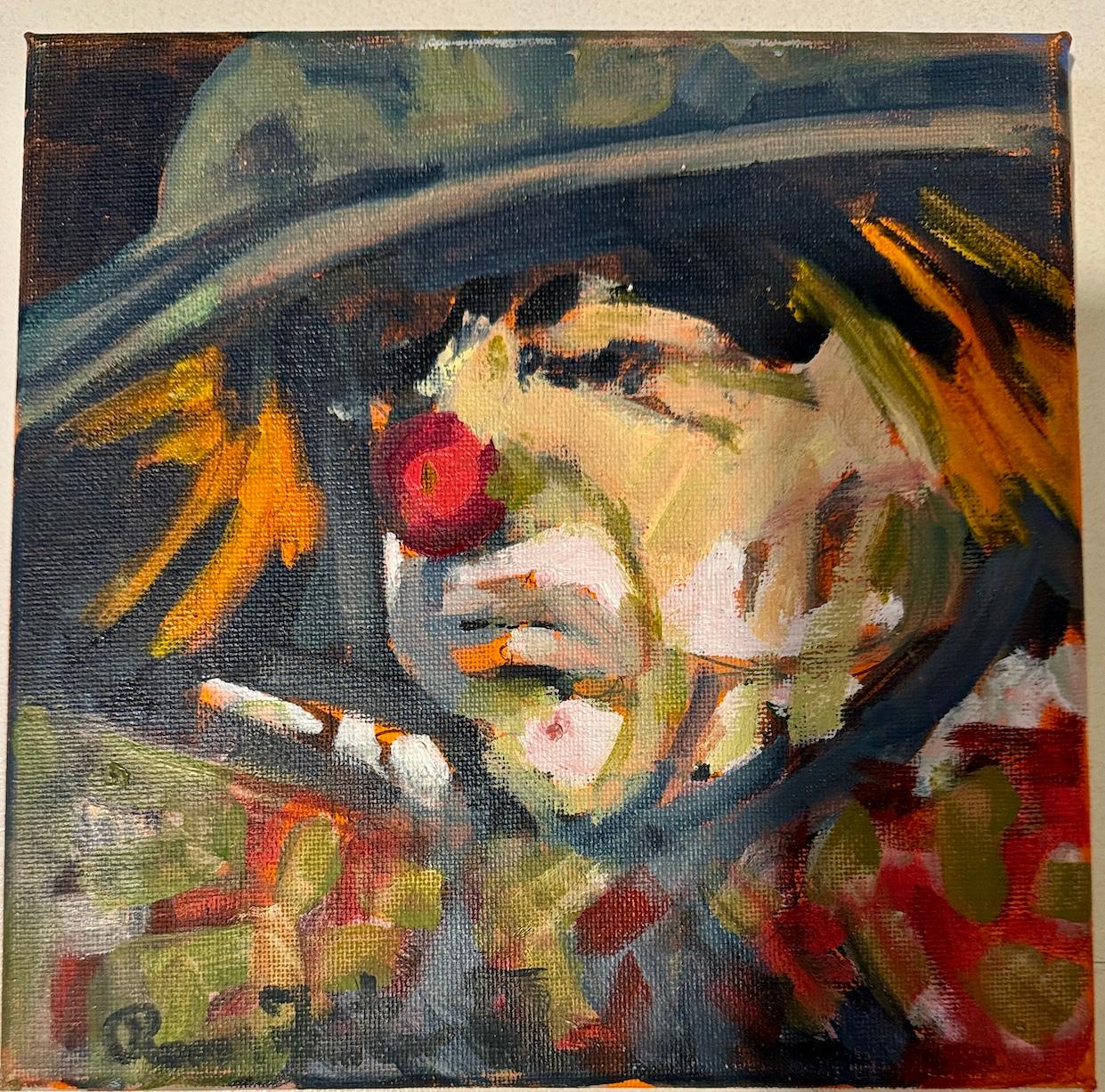
Modern British oil Portrait of a Clown in full makeup
Located in Woodbury, CT
Portrait of a Clown
This expressive and dynamic work by Ken Foster, an accomplished English Impressionist painter, is a compelling example of his mastery in capturing the essence of...
Category
2010s Modern Portrait Paintings
Materials
Canvas, Oil
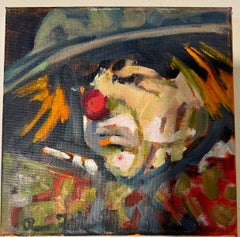
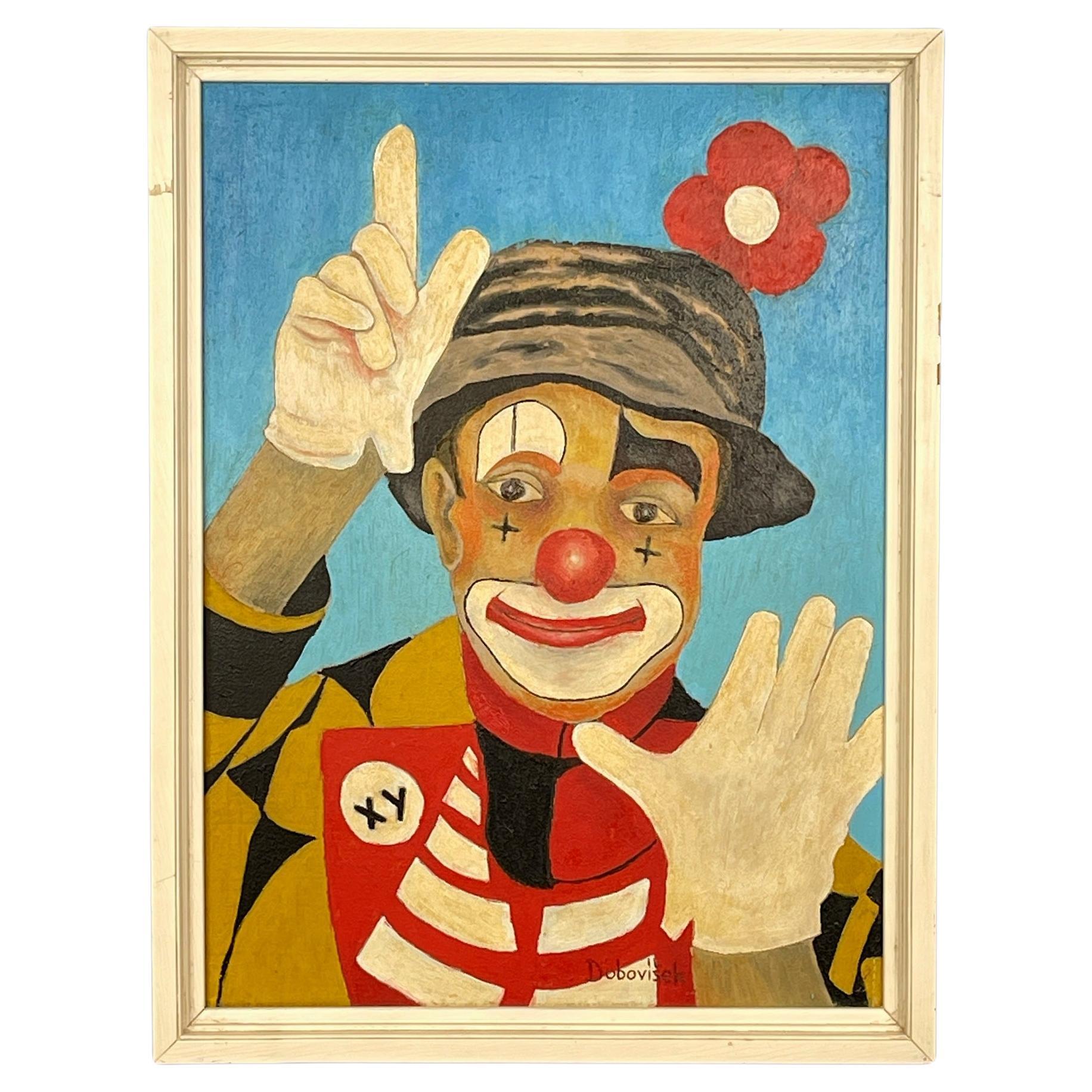
Painting portrait Sad Clown, oil, hardboard, Oto Dobovišek, Yugoslavia 1989s
Located in Miklavž Pri Taboru, SI
This oil painting, titled "Sad Clown," is a remarkable piece of Naive art created by Oto Dobovišek in Yugoslavia during the 1980s. This folk art portrait beautifully captures the poi...
Category
Mid-20th Century Slovenian Folk Art Paintings
Materials
Paint
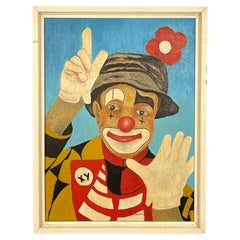
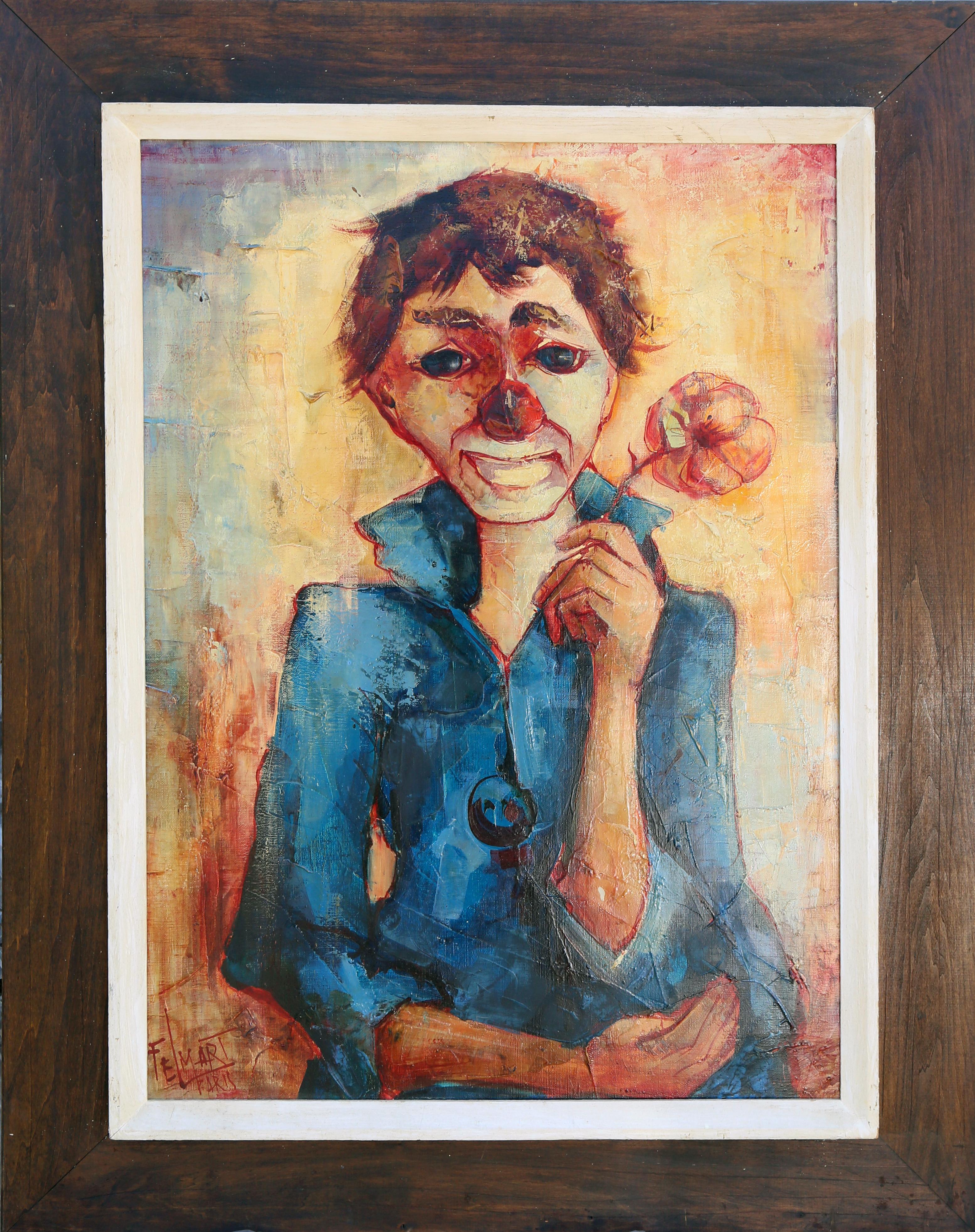
Clown Boy from Paris, Folk Art Oil Painting on Canvas by Felix Felmart
By Felix Felmart
Located in Long Island City, NY
Artist: Felix Felmart, Spanish XXth
Title: Clown Boy from Paris
Year: 1964
Medium: Oil on Canvas, signed l.l.
Size: 28 x 20 in. (71.12 x 50.8 cm)
Frame Size: 36 x 28 inches
Category
1960s Modern Portrait Paintings
Materials
Oil

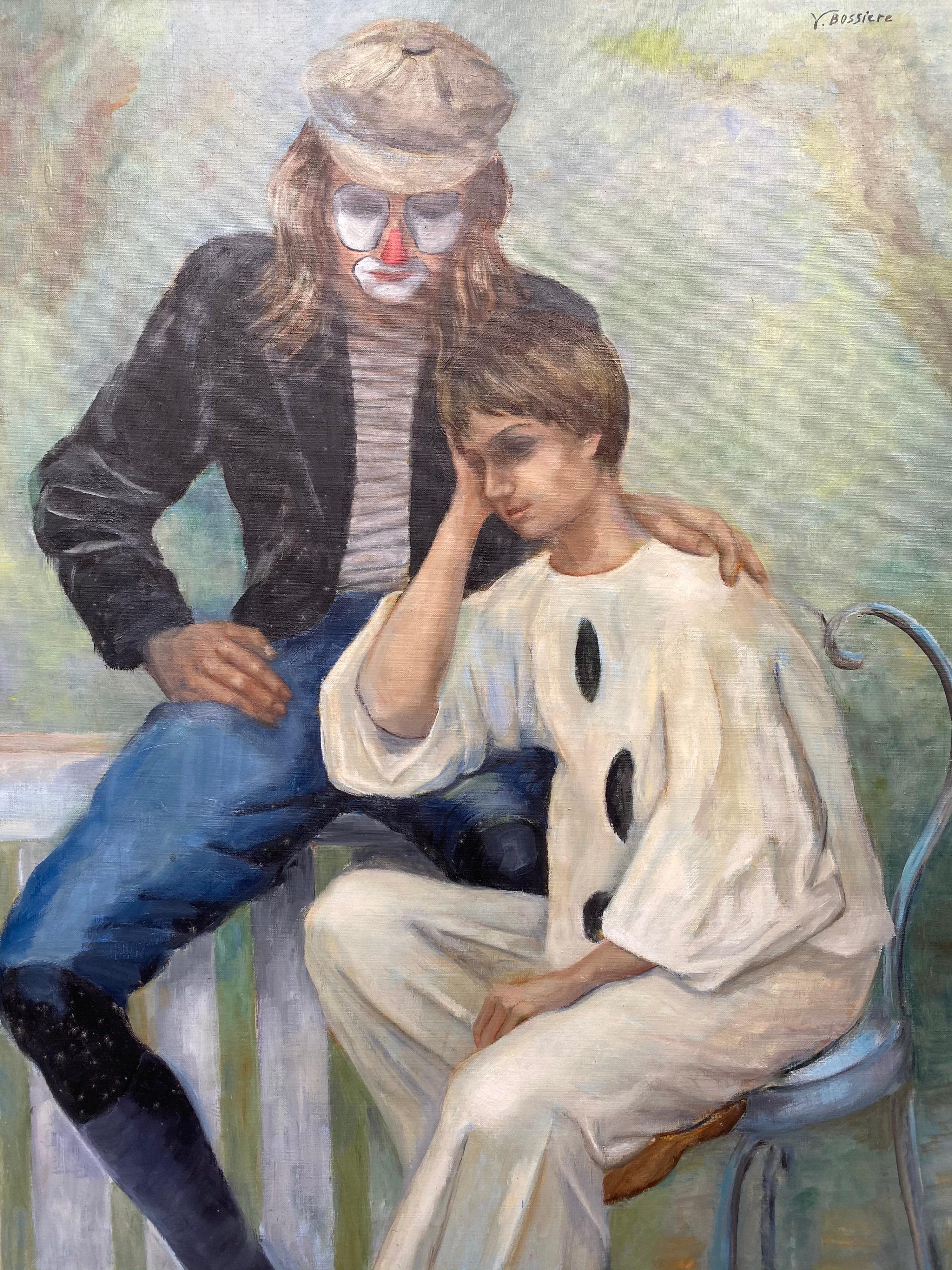
Large 20th Century French Impressionist Oil - Two Circus Clowns/ Performers
Located in Cirencester, Gloucestershire
Artist: Yvette Bossiere (French, b.1926) signed lower corner and verso
Title: The Two Performers
Medium: oil painting on canvas, unframed
Size: painting: 26 x 29 inches
Provenanc...
Category
Mid-20th Century Impressionist Figurative Paintings
Materials
Oil
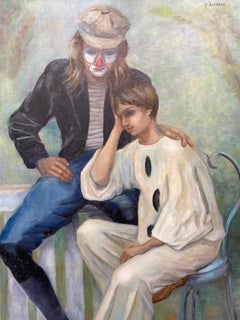
The Sad Clown, Figurative Surrealism, Original oil Painting, Handmade artwork
By Ashot Yan
Located in Granada Hills, CA
Figurative Surrealism Original Painting
Artist: Ashot Yan
Work: Original Oil Painting, Handmade Artwork, One of a Kind
Medium: Oil on Linen,
Year: 2018
Style: Figurative Surrealism, ...
Category
2010s Surrealist Figurative Paintings
Materials
Canvas, Oil
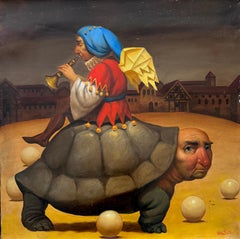
$2,880 Sale Price
20% Off
More Ways To Browse
Princess Diana Vintage
Vintage Minton
Sad Art
Royal Minton
Leighton Jones
Barry Leighton Jones
Vintage Sad Clown Painting
Kate Moss Painting
Powdered Wigs
Warhol Studio 54
Woman Smoking Art
1800 Oil Painting Portrait
Abe Lincoln
Hollis Dunlap
Indian Girl
John Winston
Oil Painting Of King George V
Oil Portraits Of Fisherman