Want more images or videos?
Request additional images or videos from the seller
1 of 2
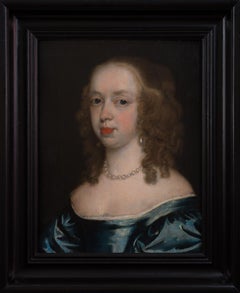
Portrait of a Lady
$32,658.77List Price
About the Item
- Attributed to:Barthel Bruyn. (1493 - 1555, German)
- Dimensions:Height: 10 in (25.4 cm)Diameter: 0.5 in (1.27 cm)
- Medium:
- Movement Style:
- Period:
- Condition:
- Gallery Location:London, GB
- Reference Number:1stDibs: LU5248126482
About the Seller
5.0
Gold Seller
Premium sellers maintaining a 4.3+ rating and 24-hour response times
Established in 2007
1stDibs seller since 2014
85 sales on 1stDibs
Typical response time: 4 hours
Authenticity Guarantee
In the unlikely event there’s an issue with an item’s authenticity, contact us within 1 year for a full refund. DetailsMoney-Back Guarantee
If your item is not as described, is damaged in transit, or does not arrive, contact us within 7 days for a full refund. Details24-Hour Cancellation
You have a 24-hour grace period in which to reconsider your purchase, with no questions asked.Vetted Professional Sellers
Our world-class sellers must adhere to strict standards for service and quality, maintaining the integrity of our listings.Price-Match Guarantee
If you find that a seller listed the same item for a lower price elsewhere, we’ll match it.Trusted Global Delivery
Our best-in-class carrier network provides specialized shipping options worldwide, including custom delivery.You May Also Like
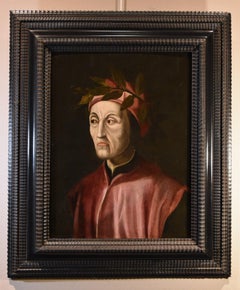
Portrait Dante Alighieri Cristofano Papi Dell
altissimo Paint 16/17th Century
Located in Riva del Garda, IT
Florentine school of the sixteenth century
Cristofano di Papi dell'Altissimo (Florence 1525 – 1605) workshop
Portrait of Dante Alighieri (Florence 1265 - Ravenna 1321)
Oil o...
Category
16th Century Old Masters Paintings
Materials
Oil
$10,499 Sale Price
20% Off
H 33.08 in W 27.56 in
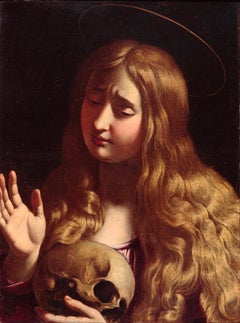
17th Century Antiveduto Gramatica Magdalene Praying with a Skull Oil on Canvas
Located in Milano, Lombardia
Antiveduto Gramatica or Grammatica (Rome, Italy, 1571 – 1626)
Title: Magdalene Praying with a Skull
Medium:Oil on canvas
Dimensions: without frame 58 x 43.2 cm - with frame 85 x 72 x...
Category
17th Century Old Masters Portrait Paintings
Materials
Canvas, Oil
$79,147 Sale Price
20% Off
H 22.84 in W 17.01 in D 2.37 in
Portrait of a lady in blue dress ”Countess of Peterborough”
Located in Stockholm, SE
This exquisite portrait, with its new attribution to Theodore Russel, is believed to depict Lady Penelope O'Brien, daughter of Barnabas O'Brien, the sixth Earl of Thomond, and wife of the Earl of Peterborough, whom she married in 1644. The painting thus belongs to a historically significant period, capturing the refined elegance of the time.
The portrait has a prestigious provenance from Elleholms Hofgård, a historic estate in Mörrums socken, Blekinge, Sweden. Elleholms Hofgård, whose two-story, timber-framed main building was constructed in 1730 and expanded in 1804, has changed ownership several times since the 17th century. The ancestors of the present owners acquired the estate in 1915, and from the 20th century until 2023, this painting was prominently displayed in the estate’s main building, making it an integral part of the estate’s history.
Theodore Russel, an English portrait artist born in 1614, studied under the renowned Sir Anthony van Dyck, whose influence can be seen in Russel’s meticulous style. Russel often painted on cabinet-sized panels, such as this one, which measures approximately 39 x 31 cm. This preference for panels is a notable characteristic that sets him apart from contemporary artists like Sir Peter Lely, who exclusively used canvas. The size of the panel is a key reason for the reattribution to Russel from Peter lely, as Lely never used panels for his works. This distinctive format, along with Russel’s characteristic style, strongly supports the new attribution.
Russel, the son of Nicasius Rousseel, a goldsmith and jeweler to James I and Charles I, refined his skills under the mentorship of his uncle, the famous portrait painter Cornelis Janssen. He also worked as an assistant and copyist for van Dyck, further honing his artistic style. This captivating portrait exemplifies Russel’s craftsmanship, reflecting the elegance of the period’s fashion and the artist's refined techniques.
oil on wood panel
with indistinct inscription Countess of Peter[...] upper left.
with inscription on the reverse: ”Countess of Peterborough. P. Lely 1670. S Beatty Picture Restorer [...] Warwick”.
unframed 39 x 31 cm = 15.35 x 12.2 inches
framed 52 x 41.5 cm = 20.47 x 16.34 inches
Condition:
The portrait has just been restored by a professional art conservator in Stockholm and is now in a very good condition. The colors are vivid, and the skin tones appear more natural than before. It is a very fine painting. The frame is newly made and included.
Provenance:
Elleholms Hofgård, Mörrums socken, Blekinge, Sweden **;
Stockholms Auktionsverk, Fine Art & Antiques Autumn...
Category
17th Century Old Masters Portrait Paintings
Materials
Oil, Wood Panel
$11,283
H 20.48 in W 16.34 in
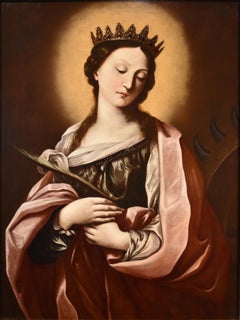
Saint Catherine Portrair Guido Reni Paint 17th Century Oil on canvas Old master
Located in Riva del Garda, IT
Guido Reni (Bologna 1575 - 1642) Workshop of
Saint Catherine of Alexandria
(full details LINK)
Oil on canvas
Measurements (cm): 96 x 73 - with frame 112 x 88
This splendid work dep...
Category
17th Century Old Masters Paintings
Materials
Oil
$12,104 Sale Price
20% Off
H 44.1 in W 34.65 in
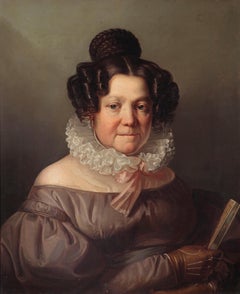
19th Century By Giuseppe Molteni Portrait of a Woman Oil on Canvas
Located in Milano, Lombardia
Giuseppe Molteni (Affori (Milano), Italy, 1800 - Milano, Italy, 1867)
Title: Portrait of a Woman
Medium: Oil on canvas
Dimensions: without frame 67 × 55 cm - with frame 91.5 x 80 cm
...
Category
19th Century Old Masters Portrait Paintings
Materials
Canvas, Oil
$26,319 Sale Price
20% Off
H 26.38 in W 21.66 in D 1.97 in
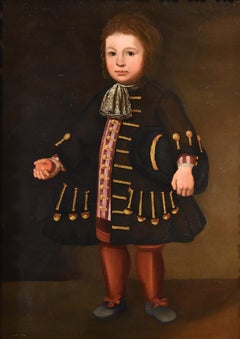
Portrait Young Boy Lombard School 17th Century Paint Oil on canvas Old master
Located in Riva del Garda, IT
Lombard School, 17th century
Portrait of a Young Boy
oil on canvas
109 x 78 cm - 127 x 97 cm with frame
The protagonist of the offered canvas is a chubby little boy, aged approxima...
Category
17th Century Old Masters Paintings
Materials
Oil
$9,263 Sale Price
20% Off
H 50.01 in W 38.19 in
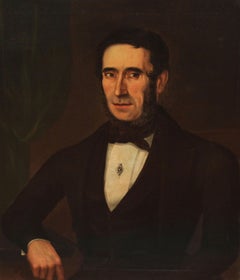
Escuela española (XIX) - Óleo sobre tela - Retrato de caballero burgués
Located in Sant Celoni, ES
La obra no va firmada, es de autor anónimo
El estado de conservación es aceptable, pero en la zona de la cara, presenta algunos desgastes (ver fotografías adjuntas)
Se presenta sin...
Category
Mid-19th Century Old Masters Portrait Paintings
Materials
Oil
$1,187
H 29.53 in W 25.2 in D 0.79 in
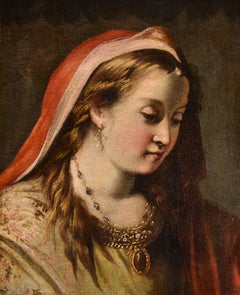
Portrait Woman Princess Diziani Paint 18th Century Oil on canvas Old master Art
Located in Riva del Garda, IT
Gaspare Diziani (Belluno 1689 - Venice 1767)
Portrait of a Young Princess (Salome?)
Oil on canvas
42 x 33 cm
Framed 70 x 63 cm
A charming portrait of a beautiful young woman with ...
Category
18th Century Old Masters Paintings
Materials
Oil
$6,793 Sale Price
20% Off
H 27.56 in W 24.81 in
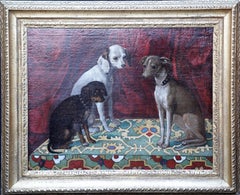
Italian Greyhound and Friends - Italian 17thC Old Master dog art oil painting
By Francesco Fieravino
Located in Hagley, England
This stunning Old Master 17th century oil portrait painting is attributed to Francesco Fieravino, an artist famous in his day for still lifes and carpets. This painting which dates t...
Category
17th Century Old Masters Animal Paintings
Materials
Canvas, Oil
$56,608 Sale Price
20% Off
H 27 in W 33 in D 2 in
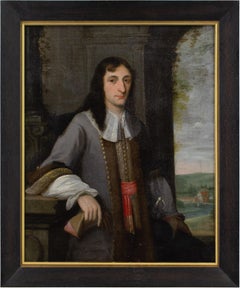
17th-Century Flemish School, Portrait Of A Gentleman In A Justaucorps, Oil
Located in Cheltenham, GB
This fine late 17th-century Flemish portrait depicts a distinguished gentleman wearing a justaucorps, black cloak, white shirt, vest, leather gloves, and breeches. He’s carrying a wi...
Category
1670s Old Masters Portrait Paintings
Materials
Canvas, Oil
$3,939
H 22.5 in W 18.5 in
More From This Seller
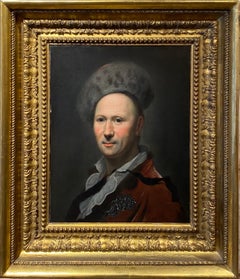
View AllPortrait of Conrad Friedrich Hurlebusch, Early 18th Century Oil Painting
By Dominicus van der Smissen
Located in London, GB
Dominicus van der Smissen
Early 18th Century
Portrait of Conrad Friedrich Hurlebusch
Oil on canvas
Image size: 20½ x 16¼ inches
Period gilt frame
This is a portrait of Conrad Friedrich Hurlebusch, composer, Kapellmeister and organist, whom Van der Smissen most probably portrayed during his stay in Hamburg, Brunswick or Amsterdam. The identification is based on the reproduction of the portrait which was engraved by Pieter Anthony Wakkerdak (1740- 1774).
Van der Smissen has reduced the face of the sitters to an egg-shaped oval in three-quarter view, applying diminution to one half of the figure’s torso, which is farther away from the viewer. This partial side view, with the head turned to look at the viewer over the shoulder, creates spatial depth and brings the figure to life by avoiding the stiffness of a frontal depiction.
Because the artist chose to highlight the figure from above, a distinct shadow is cast under the tip of the nose, in the shape of a triangle. This is an often recurring and almost ‘signature’-like feature in Van der Smissen’s oeuvre.
Hurlebusch's garments are of a very high quality and serve to reflect the sitter’s wealth, status and elegance. During this period, gentlemen often shaved their heads in order to facilitate the wearing of a wig, which wouldbe worn with a suit. Here Hurlebusch has been depicted in a luxurious turban-like cap lined with lynx fur, a highly fashionable and expensive material at the time.
Over his shirt, he wears a velvet fur-lined gown adorned with decorative clasps fashioned from silver braid. The elegant informality of his appearance can be seen in his unbuttoned shirt and the unfastened black ribbon hanging from his button hole, which has been artfully arranged into a fluttering drape by the portraitist.
The Sitter
Hurlebusch was born in Brunswick, Germany. He received the first instructions in his field from his father Heinrich Lorenz Hurlebusch, who was also a musician. As an organ virtuoso, he toured Europe, visiting Vienna, Munich and Italy.
From 1723 to 1725 he was Kapellmeister in Stockholm; later he became Kapellmeister in Bayreuth and Brunswick, and lived in Hamburg from 1727 to 1742, where he had contact with fellow composers Johann Mattheson and Georg Philipp Telemann. He made his living composing, performing and teaching.
In 1735 and 1736, he is believed to have visited Johann Sebastian Bach in Leipzig, who promoted Hurlebusch’s compositions as the local seller...
Category
Early 18th Century Old Masters Portrait Paintings
Materials
Canvas, Oil
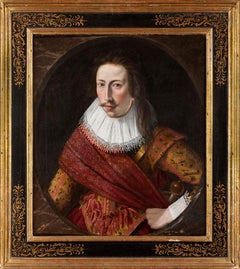
Portrait of an Officer, Cornelius Johnson, 17th Century Old Masters
By Cornelius Johnson
Located in London, GB
Circle of Cornelius Johnson
Circa 1620’s
Portrait of a Officer
Oil on canvas
Image size: 28 x 24 inches
Period style hand made frame
Provenance
Private European Estate
This striking portrait dates to around 1620, as you can see from the images of the sash the detail is very high. The sash is decorated with gold thread and would have cost a small fortune at the time. Sashes were originally developed for a military function (making officers more visible for their men during combat), but soon became a primarily male fashion...
Category
Early 17th Century Old Masters Portrait Paintings
Materials
Oil
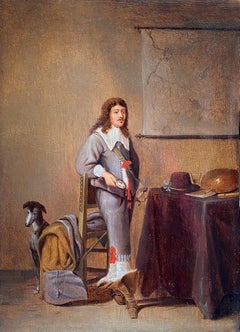
Soldier in an Interior, Early 17th Century Dutch Oil
Located in London, GB
Pieter Symonsz Potter
Dutch 1600 - 1652
Soldier in an Interior
Oil on oak panel, red seal to reverse
Image size: 15 x 10 3/4 inches
Dutch Ebonised frame
Bathed in a well lit roo...
Category
Early 17th Century Old Masters Portrait Paintings
Materials
Oil, Board
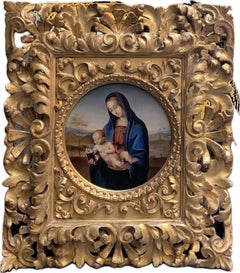
Conestabile Madonna Old Master Renaissance
By (after) Raphael (Raffaello Sanzio da Urbino)
Located in London, GB
After Raphael
Conestabile Madonna
1483 - 1520
Oil on poplar panel
Image size: 8 x 8 inches (20.5 x 20.5 cm)
Original ornate hand carved gilt frame
Conestabile Madonna
Made in compos...
Category
16th Century Old Masters Portrait Paintings
Materials
Canvas, Oil
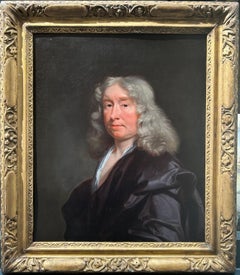
Portrait of William Chiffinch
By John Riley
Located in London, GB
John Riley
1646 – 1691
Portrait of William Chiffinch (c.1602-88)
Oil on canvas
Image size: 30 x 25 inches
Original frame
Another version of this can be found in the Dulwich Pictur...
Category
1680s Old Masters Portrait Paintings
Materials
Canvas, Oil
Portrait of William Herbert, 3rd Earl of Pembroke, Early 17th Century Portrait
Located in London, GB
English School, (circa 1600)
Portrait of William Herbert, 3rd Earl of Pembroke
Oil on panel, oval
Image size: 29¼ x 23⅞ inches
Painted wooden frame
Provenance:
176, Collection of Francis Greville, 1st Earl of Warwick.
The Trustees of the Lord Brooks’ Settlement, (removed from Warwick Castle).
Sotheby’s, London, 22nd March 1968, lot 81.
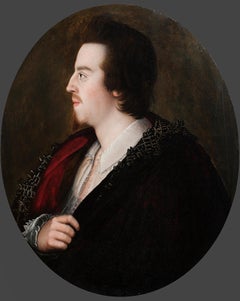
Painted onto wooden panel, this portrait shows a dark haired gentleman in profile sporting an open white shirt. On top of this garments is a richly detailed black cloak, decorated with gold thread and lined with a sumptuous crimson lining. With the red silk inside it’s all very expensive and would fall under sumptuary laws – so this is a nobleman of high degree.
It’s melancholic air conforms to the contemporary popularity of this very human condition, evident in fashionable poetry and music of the period. In comparison to our own modern prejudices, melancholy was associated with creativity in this period.
This portrait appeared in the earliest described list of pictures of Warwick castle dating to 1762. Compiled by collector and antiquary Sir William Musgrave ‘taken from the information of Lord & Lady Warwick’ (Add. MSS, 5726 fol. 3) is described;
‘8. Earl of Essex – an original by Zuccharo – seen in profile with black hair. Holding a black robe across his breast with his right hand.’
As tempting as it is to imagine that this is a portrait of Robert Devereux, the 2nd Earl Essex, we might take this with a pinch of salt. Its identification with this romantic and fatal Elizabethan might well have been an attempt to add romance to Warwick Castle’s walls. It doesn’t correspond all that well with Essex’s portraits around 1600 after his return from Cadiz. Notably, this picture was presumably hung not too far away from the castle’s two portraits of Queen Elizabeth I. The first, and undoubtedly the best, being the exquisite coronation portrait that was sold by Lord Brooke in the late 1970s and now hangs in the National Portrait Gallery. The second, described as being ‘a copy from the original at Ld Hydes’, has yet to resurface.
The portrait eventually ended up being hung in the State Bedroom of Warwick Castle.
Archival documents present one other interesting candidate. The Greville family’s earliest inventory of paintings, made in 1630 at their home Brooke House in Holborn, London, describes five portraits of identified figures. All five belonged to the courtier, politician and poet Sir Fulke Greville (1554-1628), 1st Baron Brooke, and were hung in the ‘Gallerie’ of Brooke House behind yellow curtains. One of them was described as being of ‘Lord of Pembrooke’, which is likely to have been William Herbert (1580-1630), 3rd Earl of Pembroke. William was the eldest son of Greville’s best friend’s sister Mary Sidney, and was brought up in the particularly literary and poetically orientated household which his mother had supported. Notably, the 3rd Earl was one of the figures that Shakespeare’s first folio was dedicated to in 1623.
The melancholic air to the portrait corresponds to William’s own pretensions as a learned and poetic figure. The richness of the robe in the painting, sporting golden thread and a spotted black fabric, is indicative of wealth beyond that of a simple poet or actor. The portrait’s dating to around the year 1600 might have coincided with William’s father death and his own rise to the Pembroke Earldom. This period of his life too was imbued with personal sadness, as an illicit affair with a Mary Fitton had resulted in a pregnancy and eventual banishment by Elizabeth I to Wilton after a short spell in Fleet Prison. His illegitimate son died shortly after being born. Despite being a close follower of the Earl of Essex, William had side-stepped supporting Devereux in the fatal uprising against the Queen and eventually regained favour at the court of the next monarch James I.
His linen shirt is edged with a delicate border of lace and his black cloak is lined on the inside with sumptuous scarlet and richly decorated on the outside with gold braid and a pattern of embroidered black spots.
Despite the richness of his clothes, William Herbert has been presented in a dishevelled state of semi-undress, his shirt unlaced far down his chest with the ties lying limply over his hand, indicating that he is in a state of distracted detachment. It has been suggested that the fashion for melancholy was rooted in an increase in self-consciousness and introspective reflection during the late 16th and early 17th centuries.
In contemporary literature melancholy was said to be caused by a plenitude of the melancholy humor, one of the four vital humors, which were thought to regulate the functions of the body. An abundance of the melancholia humor was associated with a heightened creativity and intellectual ability and hence melancholy was linked to the notion of genius, as reflected in the work of the Oxford scholar Robert Burton, who in his work ‘The Anatomy of Melancholy’, described the Malcontent as ‘of all others [the]… most witty, [who] causeth many times divine ravishment, and a kind of enthusiamus… which stirreth them up to be excellent Philosophers, Poets and Prophets.’ (R. Burton, The Anatomy of Melancholy, London, 1621 in R. Strong, ‘Elizabethan Malady: Melancholy in Elizabethan and Jacobean Portraits’, Apollo, LXXIX, 1964).
Melancholy was viewed as a highly fashionable affliction under Elizabeth I, and her successor James I, and a dejected demeanour was adopted by wealthy young men, often presenting themselves as scholars or despondent lovers, as reflected in the portraiture and literature from this period. Although the sitter in this portrait is, as yet, unidentified, it seems probable that he was a nobleman with literary or artistic ambitions, following in the same vain as such famous figures as the aristocratic poet and dramatist, Edward de Vere...
Category
Early 17th Century Old Masters Portrait Paintings
Materials
Oil, Wood Panel