Items Similar to Portrait of Lady, Barbara Herbert, Countess of Pembroke c.1708, Large Painting
Want more images or videos?
Request additional images or videos from the seller
1 of 13
Charles D
AgarPortrait of Lady, Barbara Herbert, Countess of Pembroke c.1708, Large Paintingcirca 1708
circa 1708
$17,521.18
£12,850
€14,910.19
CA$24,122.95
A$26,399.67
CHF 13,949.91
MX$315,097.54
NOK 178,018.23
SEK 162,812.16
DKK 111,371.39
About the Item
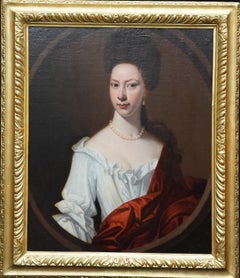
Portrait of Barbara Herbert, Countess of Pembroke c.1708
Charles d’Agar (1669-1723)
This magnificent large-scale portrait, presented by Titan Fine Art, depicts the British court official and noble, Barbara Herbert, Countess of Pembroke (c.1688-1721). She was the second wife of Thomas Herbert, 8th Earl of Pembroke and 5th Earl of Montgomery (c.1656-1733).
Born Barbara Slingsby, she was a daughter of Sir Thomas Slingsby, 2nd Baronet (1636-1688) and Dorothy Cradock (died 1673). Barbara had two brothers: Sir Henry Slingsby, 3rd Baronet (c.1660-1691), and Sir Thomas Slingsby, 4th Baronet (c.1668-1726). The history of the Slingsby family is extensive and deeply rooted in Yorkshire, with their beginnings linked to the village of Slingsby and the manor of Scriven. As a distinguished family from Yorkshire, they played a significant role in both local and national matters, holding various governmental positions and producing notable individuals such as the Royalist Sir Henry Slingsby, whose diary offers valuable perspectives on the English Civil War. The family founded two baronetcies in the 17th century, although both have since either become extinct or dormant.
Our sitter married three times. Firstly, to Sir Richard Mauleverer, 4th Baronet, of Allerton Mauleverer (died 1689). After his death, she married John Arundell, 2nd Baron Arundell of Terrace (1649–1698), of Trerice, Cornwall (died 1698) in 1692. As Lady Arundell, she had a son, Hon. Richard Arundell (1698-1759). Again, she outlived her husband, and wed Thomas Herbert, 8th Earl of Pembroke on 21 September 1708. The couple had one daughter, Lady Barbara (died 1752). In 1718, she became a Lady of the Bedchamber to the Princess of Wales, Caroline of Ansbach, a role that she continued until her death on 6th September 1712. She was interred Salisbury Cathedral, Wiltshire.
Seated in a wooded area, resting one arm on a plinth with a draped curtain, she confidential looks out at the viewer. The countess was a paragon of the wealthy and privileged society that she belonged to and such images exude a sense of status and Augustan decorum, and were highly influential in transmitting these values into the first half of the eighteenth century. An inscription on the portrait identifies the sitter: 'Barbara Daughter to Sir Thomas Slingsby Barnonet, 2nd wife to the Earl of Pembroke
Montgomery”.
The portrait was painted around the time of her marriage to the 8th Earl of Pembroke in 1708 and was perhaps painted to celebrate this important event in her life. It is possible that the portrait was conceived as a companion portrait to that of her husband, as she is inclined to the viewer’s left (her husband would have been inclined to the viewer’s right as per conventions on portraiture at the time). Furthermore, her left-hand gestures toward her pet, and this could signal fidelity.
The portrait is striking in its quality and also in its remarkable state of preservation. The azure pigments used in the blue drapery still appear bright and vivid, some 300 years later – a fact that is quite remarkable considering the volatility of this pigment and how it often appears quite abraded and faded today in works of this age.
A portrait of the sitter (by Kneller) and another (with her daughter, 50x40 inches) were in the collection of the Earl of Pembroke at Wilton House in 1907. And a further portrait, also by D’agar, was sold at Christies 21st November 1980 (lot 87) in The Earl of Guilford’s sale, Waldershare Park.
Presented in a good antique carved frame.
Charles d’Agar was a prolific artist and his graceful portraits are mannered and competent and were in high demand. His female sitters are easily recognised, and were often modelled on terraces beside a plinth and a classical column or curtain, and a woodland with one or two prominent tree trunks in the background.
Born in Paris in 1669, was the son of painter Jacques (Jacob) d'Agar and his wife Marie Picard. As protestants the d’Agar family immigrated to London sometime between 1678 and 1681 by which time Jacques was officially expelled from the French Academy on religious grounds. Father and son both worked in London up to 1684 painting well known individuals such as Charles II’s French mistress, Louise de Keroualle, Duchess of Portsmouth, before moving to Copenhagen c. 1685. This painting was among a group of paintings listed as having been brought with them from England to Denmark that Jacques eventually sold to the King of Denmark in 1702. Jacques worked at the courts of Christian V and Frederick IV until his death there in 1715. Charles returned to London in 1691 and developed a good portrait practice and success as a court portraitist.
After the painter’s death in Leicester Fields, London in May 1723, George Vertue attended the sale of his collection of prints and drawings and reported that D’Agar had been “a good courteous Man. [who] afflicted violently with the Gout
Stone”. He left a widow Susannah and a son who was also a painter, possibly named David.
Provenance:
Christies London sale 12th Feb 1932, Lot 70, “Various properties” as “Sir Godfrey Kneller, Portrait of Barbara, Daughter of Sir Thomas Slingsby, wife of Thomas, Earl of Pembroke and Montgomery, in blue dress, with a dog by her side, 43 x 40 in.”
Measurements:
Height 126cm, Width 119cm framed (Height 49.5”, Width 46.75” framed)
- Creator:Charles D Agar (1669 - 1723)
- Creation Year:circa 1708
- Dimensions:Height: 49.61 in (126 cm)Width: 46.86 in (119 cm)Depth: 2.76 in (7 cm)
- Medium:
- Movement Style:
- Period:
- Condition:The condition is very good and can be hung and enjoyed immediately. The painting has passed a strict condition assessment by a professional conservator prior to going on sale.
- Gallery Location:London, GB
- Reference Number:1stDibs: LU1199117009282
About the Seller
5.0
Vetted Professional Seller
Every seller passes strict standards for authenticity and reliability
Established in 1998
1stDibs seller since 2019
45 sales on 1stDibs
- ShippingRetrieving quote...Shipping from: London, United Kingdom
- Return Policy
More From This Seller
View AllPortrait of a Lady, Mrs Wray in a Silk Dress
Pink Wrap c.1698, Oil on canvas
By Michael Dahl
Located in London, GB
Portrait of a Lady, Mrs Wray in a Silk Dress & Pink Wrap c.1698
Circle of Michael Dahl (1659-1743)
This delightful work, presented by Titan Fine Art, is a fine example of British po...
Category
17th Century Old Masters Portrait Paintings
Materials
Cotton Canvas, Oil
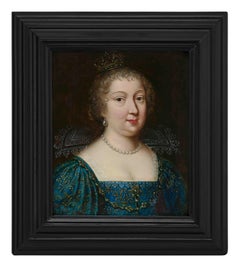
Portrait of Lady, Maria Therese of Spain, Queen of France, 17th Century Panel
Located in London, GB
Portrait of Maria Therese of Spain, Queen of France, 17th Century
Circle of Henri and Charles Beaubrun
Not signed
This distinguished seventeenth-century portrait of Maria Theresa o...
Category
17th Century Old Masters Portrait Paintings
Materials
Oil, Wood Panel
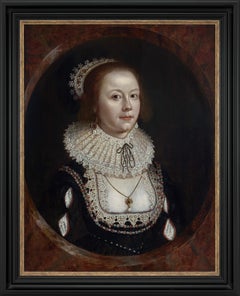
Portrait of lady, Mary Hammond in Rich Attire, Jewels, Lace c.1618-22 Historical
By Cornelius Johnson
Located in London, GB
Portrait of Mary Hammond in Sumptuous Attire, Jewels and Lace c.1618-22
Circle of Cornelius Johnson (1593-1661)
This portrait of a lady, presented by Titan Fine Art, is an exquisite example of early seventeenth-century portraiture, remarkable both for the lavishness of its subject’s attire and for the distinguished provenance that has accompanied it across four centuries that adds a rich layer of historical significance. It was once part of the notable collection of Sir William Temple, 1st Baronet (1628–1699) at Moor Park, a stately mansion in Hertfordshire. Temple was a diplomat, essayist, philosopher, and the patron of Jonathan Swift. He was a key participate at an important period in English history, helping not only to negotiate the Triple Alliance, but also the marriage between William of Orange and Princess Mary. His collection at Moor Park was well known in its day, reflecting both his cultivated taste in art and literature and his international connections.
Its fabulous attire, rendered with almost microscopic attention, is not merely decorative but emblematic of a world in which visual display was a language of power. Its provenance, stretching from the English country house and Enlightenment scholarship to modernist circles, forms a microcosm of cultural exchange across four centuries. Thus, the portrait of Mary Hammond stands as both a masterpiece of early seventeenth-century craftsmanship and a witness to the grand narrative of collecting and connoisseurship—a testament to the enduring fascination of beauty, status, and history intertwined.
By tradition the portrait depicts Mary Hammond (born c.1602), who was Sir William Temple’s mother, and the daughter of the royal physician who served James I, Dr John Hammond (c.1555–1617) and whose family owned Chertsey Abbey in Surrey. The woman appears between 18 and 25 years old, and Mary would be about 18–20 when the portrait was painted circa 1620, therefore this matches the apparent age of the sitter and the fashion perfectly.
Mary stood at the intersection of learned/courtly and gentry worlds. On 22 June 1627 she married her first cousin (a common practice for consolidating family wealth and influence during that era.) Sir John Temple (1600-1677) at St Michael, Cornhill in the City of London. The couple resided nearby, at Blackfriars. Her marriage to Sir Temple placed her at the heart of the social and political circles that shaped British history.
The couple had at least five children, and they became highly significant historical figures:
The eldest son, Sir William Temple, 1st Baronet, became a distinguished diplomat, statesman, and essayist, famous for his role in the Triple Alliance and as a patron and mentor to the writer Jonathan Swift – our portrait was in his collection. Their daughter, Martha Temple, later Lady Giffard, was a notable figure in her own right. She became her brother William's first biographer and a respected letter-writer, providing a rare female perspective on the events and high society of the time. Another son, also named Sir John Temple, became Attorney General for Ireland and was involved in the turbulent politics surrounding the English Civil War and the Act of Settlement in Ireland.
Mary died in November 1638 after giving birth to twins and was buried at Penshurst, Kent. The family's connection to Penshurst Place is a major point of interest as this historic manor was the seat of the Sidney family, a major aristocratic and literary dynasty.
The portrait was in the collection of the Mary’s son, Sir William Temple. From there it descended to his daughter, and then to her nephew, the Reverend Nicholas Bacon of Spixworth Park, Norfolk (his mother was Dorothy Temple who died in 1758). Indeed, by this time, many Temple relics were in the collection at Spixworth including the engagement ring of the illustrious Dorothy Osborne, Lady Temple, wife of Sir William Temple. The portrait thus linked two prominent English families—the Temples and the Bacons—for generations. It is listed in a Spixworth Park inventory of 27 October 1910 by the local collector and art historian, Prince Duleep Singh. He described it with characteristic precision as: “No. 69. Lady Half Length, body and face turned towards the sinister, hazel eyes upwards to the dexter, red hair dressed low and over the ears, a jewelled coronet behind, pearl ear-rings tied with black strings. Dress: black, bodice cut low and square, with lace all round the opening and over shoulders, sleeves with double slashes showing red lining and lace under, falling thin pleated lace collar, black strings tied behind it, a jewel suspended on a black string round the neck, and a double row of agate and silver beads all round to the shoulders. M. In brown veined stone frame. Age 30. Date c.1620. It is called ‘Dutch portrait from Moor Park, mentioned by Nicholas Bacon of Coddenham and Shrubland as a very valuable painting.’
A few years later, when Robert Bacon Longe’s executors sold the contents of Spixworth Park (19–22 May 1912), the portrait appeared as lot 262, described as: “A very valuable half-length portrait on panel, ‘Dutch Lady, with deep lace collar and pearl and amethyst necklace, pendant, and ear-rings, and auburn hair, with coronet’ Early Dutch School 1620.” Following this sale the painting entered the collection of David and Constance Garnett, prominent literary figures of the early twentieth century, before being gifted to Andre Vladimervitch Tchernavin by 1949, and subsequently passed by him to the present owners in 1994.
The two great houses associated with the painting, Moor Park and Spixworth Park, further underscore its pedigree. Moor Park, in Hertfordshire, was among the grandest country estates of seventeenth-century England—its gardens famously redesigned by Sir William Temple himself and later influencing landscape design across Europe. Sir William's Temple's secretary was Jonathan Swift, who lived at Moor Park between 1689 and 1699. Swift began to write "A Tale of the Tub" and "The Battle of the Books" at Moor Park.
Spixworth Park, near Norwich, was an Elizabethan country house in Spixworth, Norfolk, located just north of the city of Norwich. It was home to successive generations of the Bacon family, one of Norfolk’s most distinguished dynasties (later, the Bacon Longe family), who were considerable land owners (owning Reymerston Hall, Norfolk, Hingham Hall, Norfolk, Dunston Hall, Norfolk, Abbot's Hall, Stowmarket, and Yelverton Hall, Norfolk). Spixworth Hall and the surrounding parkland remained in the Longe family for 257 years until 1952, when it was demolished.
Rendered with meticulous precision and sumptuous detail, the painting depicts an elegantly dressed woman—her poise, costume, and jewels all communicating a message of wealth, refinement, and social rank. Every brushstroke conveys an artist deeply attuned to the textures of luxury and the nuances of feminine dignity.
The sitter’s attire is nothing short of magnificent. Her bodice and sleeves are fashioned from the finest black silk or satin, the fabric absorbing and reflecting light in equal measure, suggesting both depth and lustre. Around her shoulders lies an opulent lace ruff—a deep, radiating lace collar worked in such intricate detail that it testifies to both the artist’s technical skill and the sitter’s extravagant taste. Lace of this quality, especially Venetian or Flemish bobbin lace, was one of the costliest materials available in early seventeenth-century Europe, its weight worth more than gold, and was a marker of prestige that rivalled jewels in value. The painter has taken great care to delineate every loop and scallop of the lace, achieving an almost tactile realism. Pale skin was also a desired beauty standard, sometimes accentuated with contrasting black ribbons or strings.
Her jewels amplify this display of affluence. Matching earrings and a delicate coronet or jewelled hair ornament with a feather adorn her hair, which is styled in the modest yet fashionable manner of the time. These details are far from decorative excess—they serve as visual emblems of social standing, refinement, and lineage. Portraits of this kind were statements of both identity and aspiration, intended to project a family’s prosperity and moral virtue to posterity.
The portrait was most likely painted in London around 1618-1622. The low-cut, décolletage-revealing neckline was fashionable in the courts of England and France during the late Elizabethan and Jacobean eras (c. 1590s-1610s), this style did not prevail in the public fashion of the Low Countries at this time. This style of lace ruff — delicate needle lace with geometric openwork — was fashionable from c.1615 to 1622, and the jewelled caul (hair net) and lace edging over a stiffened coif are consistent with high-status English women’s portraiture between 1610–1620. The puffed sleeve slash and the use of pink satin beneath black velvet belong squarely to the late Jacobean...
Category
17th Century Old Masters Portrait Paintings
Materials
Oil, Panel
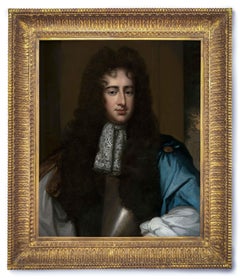
Portrait of Gentleman, Sir Henry Hobart, Blue Cloak
cravat, Wissing oil canvas
By Willem Wissing
Located in London, GB
Portrait of a Gentleman, Sir Henry Hobart Blue Cloak and cravat c.1683-1684
Attributed to Willem Wissing (1656-1687)
This impressive portrait, presented by Titan Fine Art, depicts t...
Category
17th Century Old Masters Portrait Paintings
Materials
Cotton Canvas, Oil
Portrait of Gentleman in blue, Portrait of Lady, oval pair Fine Carved Frames
Located in London, GB
Portrait of a Gentleman with Blue Cloak and Portrait of a Lady in Russet Dress c.1697
Thomas Murray (1663-1735)
These fascinating portraits are exquisite examples of portraiture in ...
Category
17th Century Old Masters Portrait Paintings
Materials
Oil, Canvas

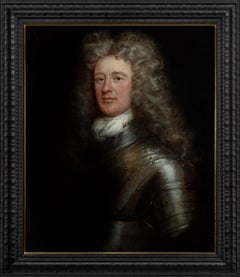
Portrait of a Gentleman, David Erskine, 13th Laird of Dun, Wearing Armour c.1700
Located in London, GB
The gentleman in this exquisite oil on canvas portrait, presented by Titan Fine Art, is shown with the grandiloquence characteristic of the English School of painting. He is portray...
Category
17th Century Old Masters Portrait Paintings
Materials
Oil, Canvas
You May Also Like
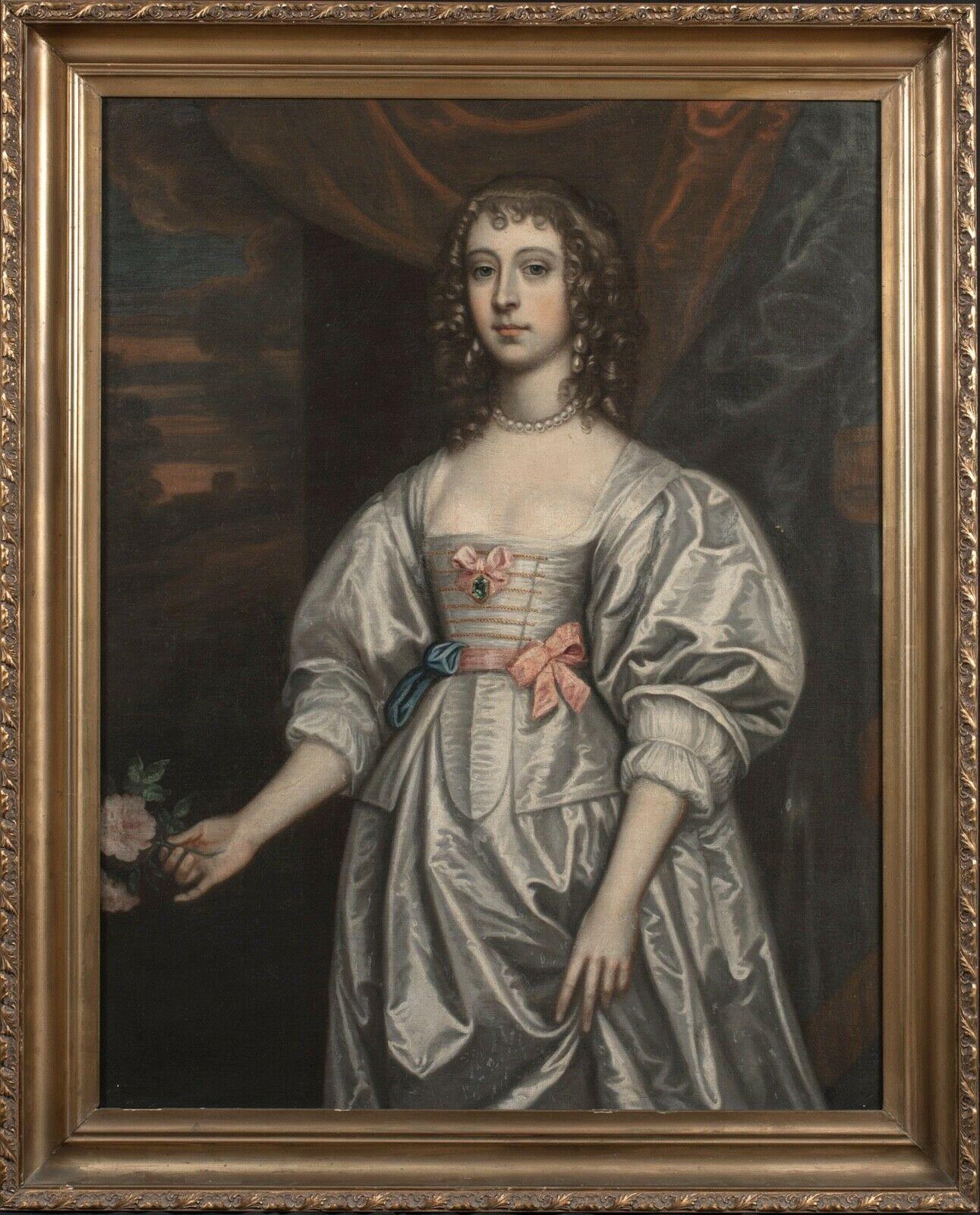
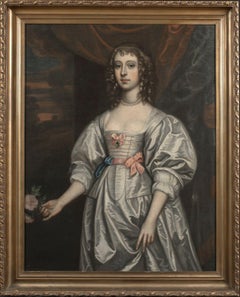
Portrait Of A Lady, Frances Bard (1646-1702) Mistress of The Duke Of Cumberland
By Anthony van Dyck
Located in Blackwater, GB
Portrait Of A Lady, Frances Bard (1646-1702) Mistress of Prince Rupert von de Pfalz, Duke of Cumberland (1619-1882)
follower of Anthony Van Dyck (1...
Category
Late 17th Century Old Masters Portrait Paintings
Materials
Oil
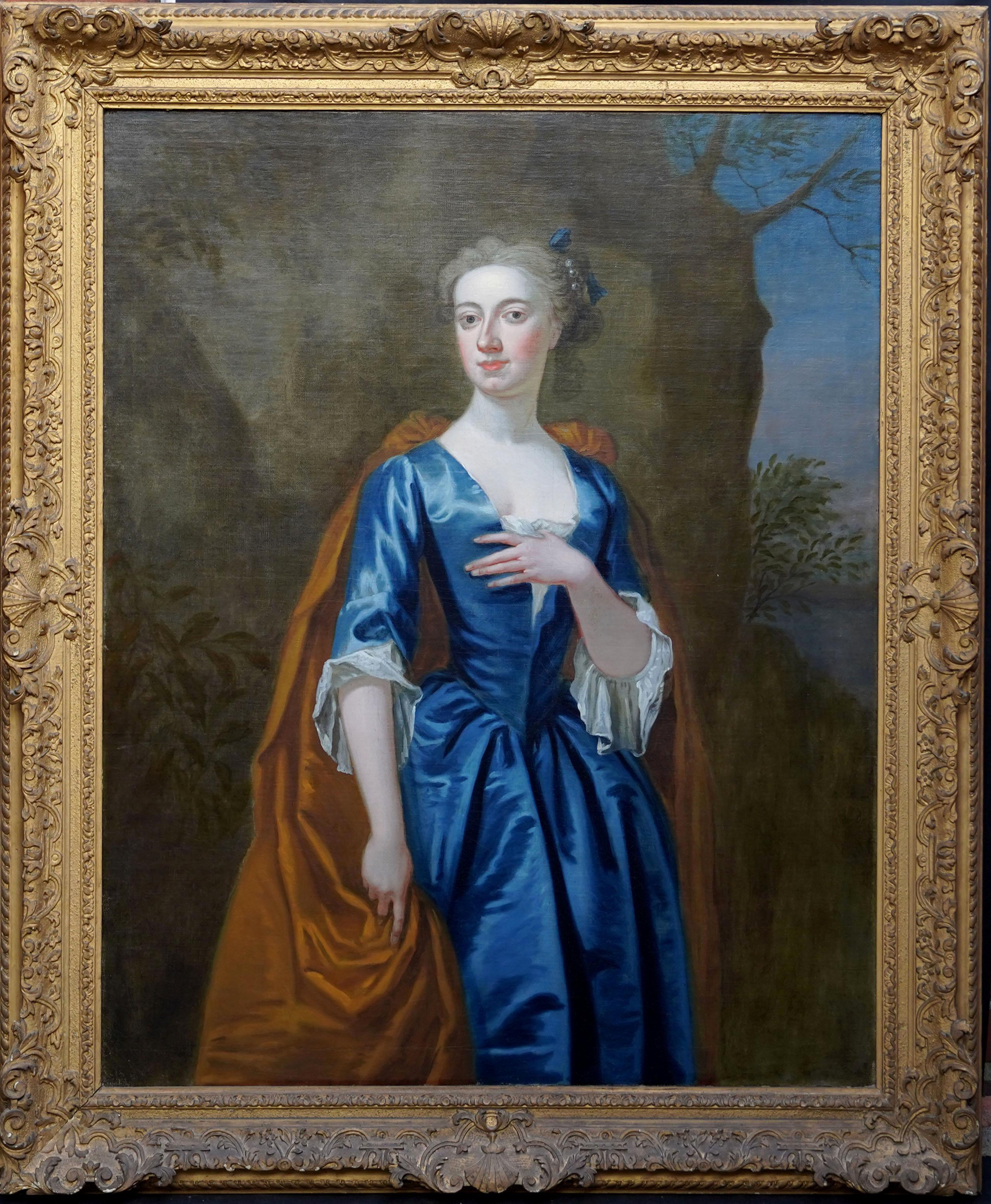
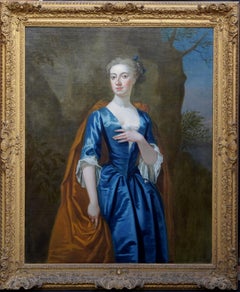
Portrait of Mrs James Hoste - British 18th century art portrait oil painting
By John Vanderbank
Located in Hagley, England
This superb large three quarter length British Old Master portrait in a landscape oil painting is attributed to circle of John Vanderbank the Younger. Painted circa 1738 the sitter is Mrs James Hoste of South Wootton and Sandringham, nee Hammond. She was the daughter of Anthony Hamond and Susan Walpole, daughter of Robert Walpole, and was sister to Robert, 1st Earl of Oxford. She married Major James Hoste of Sandringham, Norfolk, and they had two daughters. The sheen of her blue satin dress against her gold cloak is stunning. A really lovely 18th century portrait with excellent provenance.
Inscribed with sitter details lower left.
Provenance. By descent within the family of the sitter at West Acre High House, Norfolk;
Cheffins, Cambridge, 'West Acre High House' sale, 24 November 2010, Lot 519; Wood Hall, Arkesden, Essex.
Literature: 'Portraits in Norfolk Houses', Prince Duleep Singh, 1927, No. 36.
Sitter's details on two labels verso.
Condition. Oil on canvas, image size is 50 inches by 40 inches and in good condition.
Frame. Housed in an ornate gilt frame, 58 inches by 48 inches framed and in good condition.
John Vanderbank (1694-1739) was an English portraitist and book illustrator, who enjoyed a high reputation for a short while during the reign of King George...
Category
18th Century Old Masters Portrait Paintings
Materials
Oil
$13,089 Sale Price
20% Off
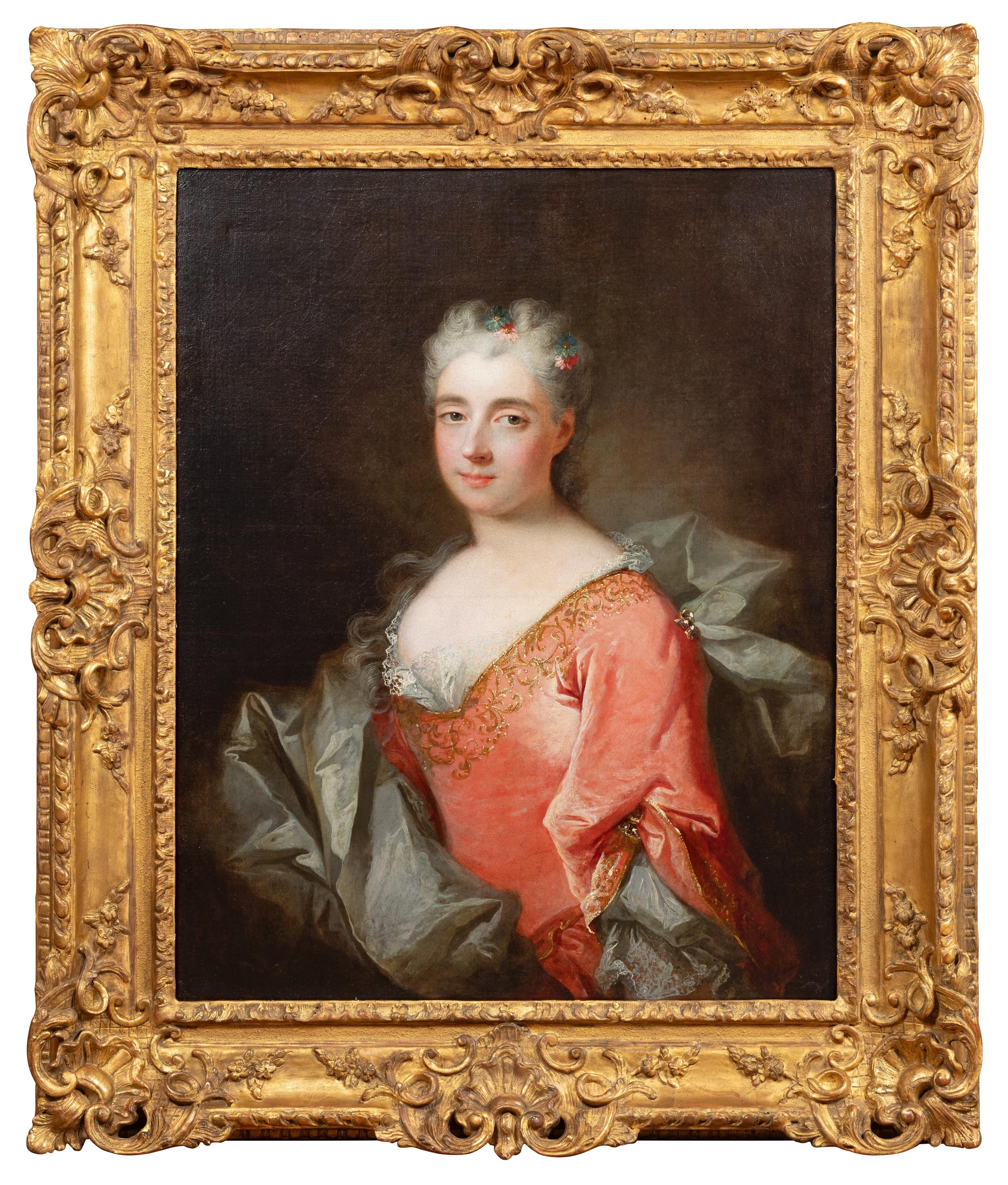
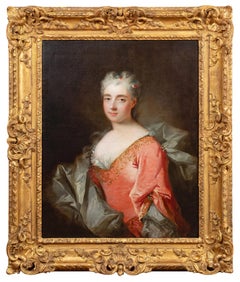
Portrait of a French lady by Robert Le Vrac Tournieres, circa 1725
Located in PARIS, FR
Portrait of a young Lady
Robert Le Vrac Tournières (1667-1752)
18th century French school, circa 1725
Oil on canvas
Dimensions: h. 81 cm, w. 65 cm
Important 18th century Régence per...
Category
Early 18th Century Old Masters Portrait Paintings
Materials
Canvas, Oil
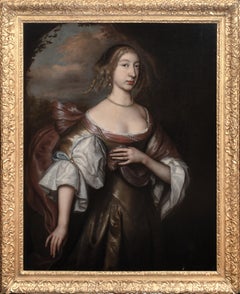
Portrait Of Lady Isobel Mackenzie, Countess of Seaforth (1636-1715) 17th Century
Located in Blackwater, GB
Portrait Of Lady Isobel Mackenzie, Countess of Seaforth (1636-1715), 17th Century
Studio of John Michael Wright (1617-1694)
Large 17th century portrait of Isobel Mackenzie, Countes...
Category
17th Century Portrait Paintings
Materials
Canvas, Oil
Portrait of Mrs Harborough - British 18th century art portrait lady oil painting
Located in Hagley, England
This lovely 18th century Old Master portrait oil painting is attributed to the circle of noted portrait artist Enoch Seeman. Seeman came from Poland to England as a youngster with hi...
Category
18th Century Old Masters Portrait Paintings
Materials
Oil
The Duchess of St. Albans: A 17th C. Portrait After a Kneller Painting
By (After) Sir Godfrey Kneller
Located in Alamo, CA
This is a 17th century engraved mezzotint portrait of the Duchess of St. Albans by John Smith, after a painting by Sir Godfrey Kneller. It was published in London by John Boydell in 1694.
The Duchess of St. Albans (1642-1712) was a woman named Diana de Vere. She was born in 1642, the daughter of Aubrey de Vere, the 20th Earl of Oxford. In 1662, she married Charles Beauclerk, the illegitimate son of King Charles II and his mistress, Nell Gwyn. As a result of her marriage, Diana became the Duchess of St. Albans, and she and Charles had several children together. Diana was known for her beauty and charm, and she was a prominent figure in the court of King Charles II. Despite her husband's illegitimate birth, Diana was highly respected in the royal court and was known for her intelligence and wit. She was a patron of the arts and supported many artists and writers of the time. Diana lived through a tumultuous period of English history, including the Great Fire of London and the Glorious Revolution, which saw King James II replaced by William of Orange. She died in 1712 at the age of 70 and was buried in Westminster Abbey. Descendants of Diana and her husband, who was an illegitimate son of King Charles II, include Diana, Princess of Wales and her son William, Duke of Cambridge.
An author wrote of her: "The line of Vere, so long renown’d in arms,
Concludes with luster in St. Albans’s charms;
Her conquering eyes have made their race complete,
It rose in valor, and in beauty set."
This striking mezzotint engraving depicts Diana, Duchess of St Albans in a three-quarter length pose, standing, wearing loose flowing dress and a wrap. She has a very serene, calm appearance as she is looking straight at the viewer. There is a landscape of trees in the background. The print is adhered in the corners to an archival backing, which is itself adhered in the upper corners to a larger backing. The print is trimmed to just beyond the plate mark. There are areas of discoloration in the margins and in the inscription area, but the print is otherwise in very good condition. The sheet measures 14.5" high and 10" wide. This mezzotint is held by multiple museums and institutions, including The British Museum, The National Portrait Gallery London, The Fine Arts Museum of Boston, The Lewis Walpole Library at Yale, The Yale Center for British Art, The Fitzwilliam Museum at Cambridge and The National Galleries of Scotland. The original Kneller painting is part of the British Royal Collection Trust and hangs in the King's Private Dining Room at Hampton Court Palace.
Sir Godfrey Kneller (1646-1723) was a leading portrait painter of his time, particularly renowned for his depictions of the British aristocracy and royalty. He was born in Lübeck, Germany, and trained in Amsterdam under the painter Ferdinand Bol...
Category
Late 17th Century Portrait Prints
Materials
Mezzotint