Items Similar to 18th century painting of the Dalbiac family in the gardens of a country house
Want more images or videos?
Request additional images or videos from the seller
1 of 5
18th century painting of the Dalbiac family in the gardens of a country housecirca 1730
circa 1730
$30,149.34
£22,000
€25,869.67
CA$41,814.11
A$45,016.70
CHF 24,107.32
MX$542,435.18
NOK 304,167.55
SEK 278,362.43
DKK 193,308.50
About the Item
The painting depicts James (Jacques) Dalbiac, his wife Louise (ne de la Porte) and their five children, James, Charles, Louise, Marianne and Martha in the ornamental gardens of a grand country estate.
The extensive gardens extend into the distance with gardeners working in the background and figures strolling through the avenues of trees. A peacock and peahen can be seen on the wall to the left and a potted orange tree to the right. Louise Dalbiac holds an orange taken from the orange tree, aluding to the family's faith and their loyalty to the protestant King William of Orange and their adopted country.
The Dalbiacs were wealthy London silk and velvet merchants of French Huguenot origin who had fled France at the end of the 17th century to escape persecution for their protestant faith. England offered safe refuge and their skills and industriousness allowed them to establish one of the most successful businesses in London's Spitalfields which became a new centre of the silk trade, effectively leading to the collapse of the once dominant French silk industry. Both sons, James and Charles followed their father and Uncle into the family business, successfully growing the family's fortune and each going on to own their own country estates.
A conversation piece is a genre of painting used to describe group portraits of families and friends, often depicted with their servants and family pets and set within an elegantly furnished interior or the garden of a grand country house. They were a celebration of the intimacy of family relations as well as a sign of status, property and the power of succession. The informality of conversation pieces grew popular in 18th century England, allowing the sitters to present themselves in a more relaxed pose, perhaps engaged in intellectual conversation or showing their talents or interests. In this present portrait, the Dalbiacs are shown richly dressed and and at leisure in a grand country house setting, conveying their success and cultural and social aspirations.
Charles Philips (c.1703–1747) was an English artist known for painting a number of portraits and conversation pieces for noble and Royal patrons in the mid-eighteenth century. He was the son of portrait painter Richard Philips and was likely to have learnt the trade from his father. He was primarily a painter of small portraits and conversation pieces. George Vertue notes that 'in painting small figure portraits and conversations (which) has met with great encouragement amongst People of Fashion—even some of ye Royal Family'. In 1732 he painted conversation works for the Duchess of Portland and the Duke of Somerset. Throughout the 1730s these conversation pieces increased in complexity with the subjects becoming more numerous and engaging in more varied activities.
Provenance:
Sotheby's New York, January 21, 2004, lot 111
The estate of John J. Caliolo, New York
- Attributed to:Charles Philips (1707 - 1742, American)
- Creation Year:circa 1730
- Dimensions:Height: 36.74 in (93.3 cm)Width: 52.25 in (132.7 cm)
- Medium:
- Movement Style:
- Period:
- Condition:
- Gallery Location:Bath, GB
- Reference Number:1stDibs: LU95214019032
About the Seller
5.0
Vetted Professional Seller
Every seller passes strict standards for authenticity and reliability
Established in 2002
1stDibs seller since 2015
37 sales on 1stDibs
Associations
The British Antique Dealers
AssociationLAPADA - The Association of Arts
Antiques DealersInternational Confederation of Art and Antique Dealers
Associations
- ShippingRetrieving quote...Shipping from: Bath, United Kingdom
- Return Policy
More From This Seller
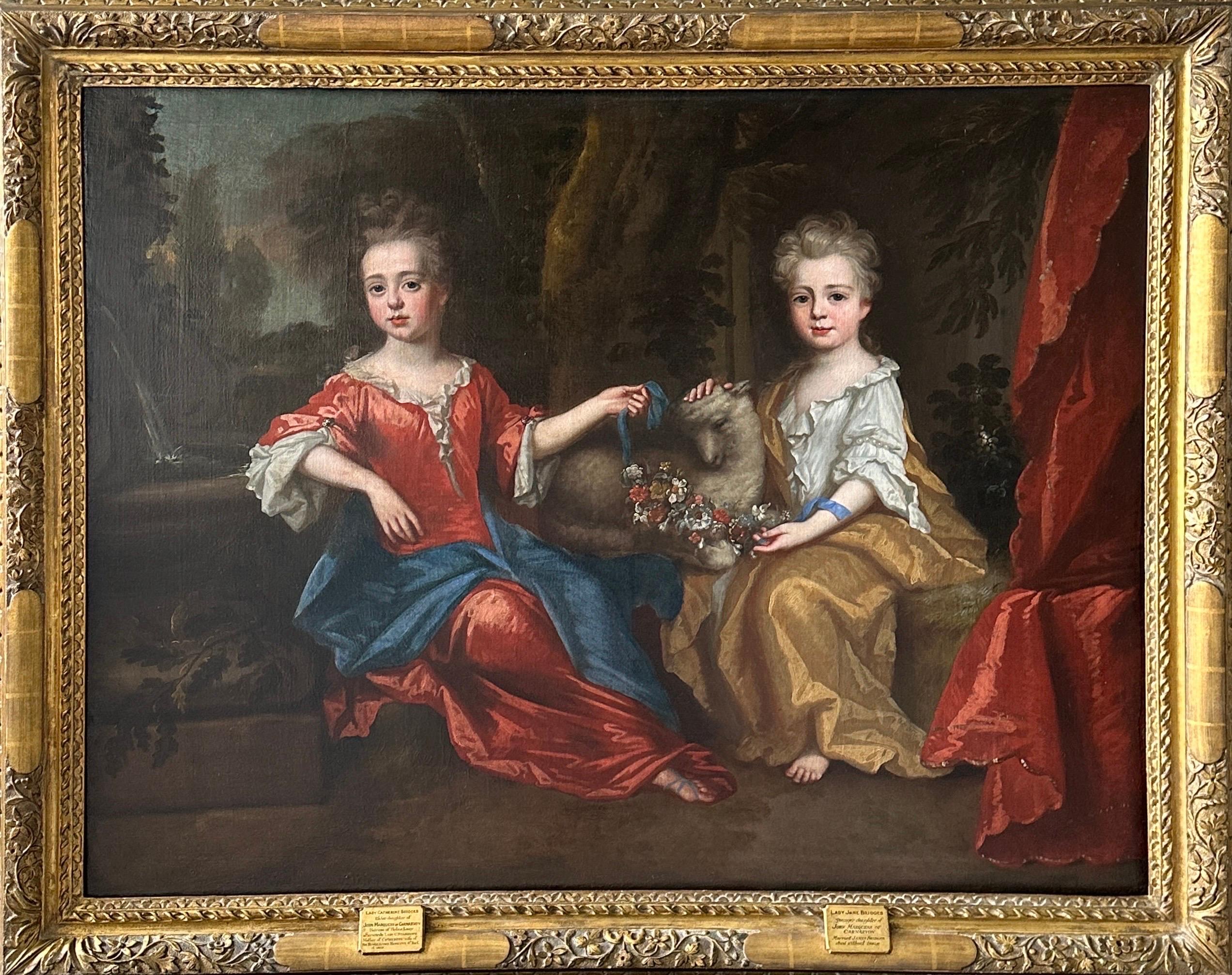
View All18th century portrait of sisters Lady Catherine and lady Jane Brydges
By James Maubert
Located in Bath, Somerset
This large double portrait depicts the sisters Lady Catherine and Lady Jane Brydges, the daughters of John Brydges, the Marquess of Carnarvon (1703-1727). They are seated on a stone...
Category
Early 18th Century Old Masters Portrait Paintings
Materials
Canvas, Oil
18th century portrait of the German Flautist and composer Johann Joachim Quantz
By Arthur Devis
Located in Bath, Somerset
Portrait of Johann Quantz (1697-1773), flautist and composer, wearing a blue velvet coat, waistcoat and breeches, standing in a garden landscape with ...
Category
18th Century English School Portrait Paintings
Materials
Canvas, Oil
$14,800 Sale Price
20% Off
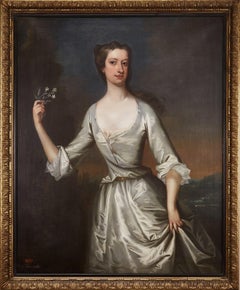
English 18th century portrait of Henrietta Pelham-Holles, Duchess of Newcastle.
By Charles Jervas
Located in Bath, Somerset
Portrait of Henrietta Pelham-Holles (née Godolphin) (1701-1776), Duchess of Newcastle, standing in a wooded landscape with a river beyond, three-quarter length wearing an ivory silk ...
Category
1720s Old Masters Portrait Paintings
Materials
Canvas, Oil
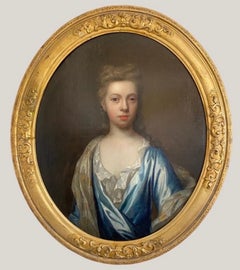
English 18th century portrait of a lady, Circle of Thomas Murray (1663-1735)
Located in Bath, Somerset
An early 18th century portrait of a young lady, half length, wearing a blue silk gown with white chemise and gold trimmed cloak draped across her arm and shoulders. Her sensitively observed soft expression and skilfully painted youthful 'dewy' complexion are reminiscent of the portrait style of John Closterman whose work Murray would have been familiar with, being a close colleague of Murray's teacher, John Riley.
An old label on the reverse identifies the sitter as a young Princess Charlotte...
Category
Early 18th Century Old Masters Portrait Paintings
Materials
Canvas, Oil
$8,222 Sale Price
20% Off
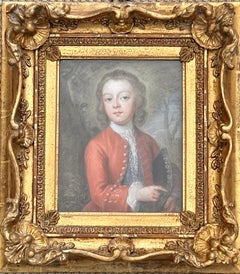
18th century pastel portrait of a young boy in a wooded landscape
By Arthur Pond
Located in Bath, Somerset
This little jewel of a pastel of a young boy in his smart red jacket and silver trimmed waistcoat is by an artist working in the circle of Arthur Pond and ...
Category
18th Century English School Portrait Paintings
Materials
Pastel
$7,674 Sale Price
20% Off
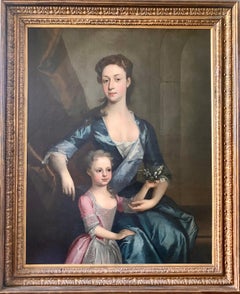
English 18th century portrait of a Lady and her Daughter in an interior
By (attributed to) Joseph Highmore
Located in Bath, Somerset
Portrait of a lady, three-quarter length, wearing a blue silk gown, seated in a classical interior, with her daughter in a pink gown standing beside her holding a sprig of blossom. T...
Category
Early 18th Century Old Masters Portrait Paintings
Materials
Oil
You May Also Like
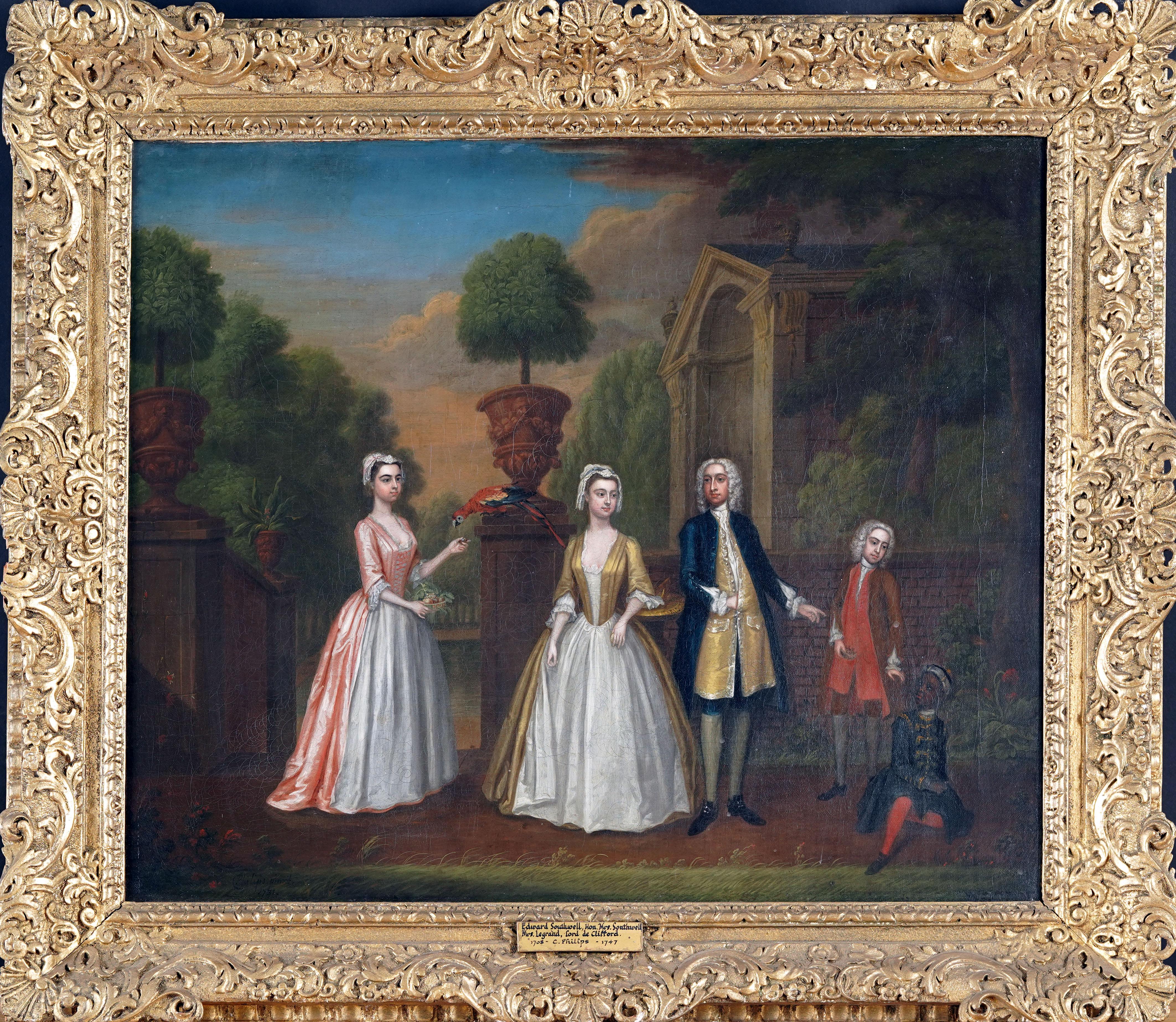
A group portrait of the Southwell family with a Negro Page and Macaw
By Charles Philips
Located in Taunton, GB
A group portrait of the Southwell family on the terrace with a negro page and Macaw.
Oil on canvas
Signed and dated 1731
Canvas size 25 x 30 ¼ inches 63.5 x 77 cms
Frame exterior 32 x 37 ¼ inches 81 x 94.5 cms
This evocative family portrait offers a glimpse into the life of 18th Century English nobility.
The Southwells are a noble family whose roots go back to the early 17th Century. In 1776 Edward Southwell III was granted the Barony of de Clifford (a title in abeyance at the time), and the line extends to today, with the 28th Baron de Clifford sitting in the House of Lords.
Charles Phillips (1708-1747) was a leading portraitist of his time, having painted many noble and royal portraits. Two of his paintings are part of the Royal Collection Trust.
In this portrait, signed and dated 1731, we see Edward Southwell Sr (1671-1730) and his family on the grounds of their Estate, Kings Weston House near Bristol. On the far left is Mrs. Helena Le Grand (Edward’s sister). Next to her is Mrs. Southwell (Edward’s second wife, the first having died in 1709). On the right is Edward Southwell Jr (1705-1755), Edward’s son by his first marriage and next to him a “Negro Page” (in the euphemistic words of an old label on the painting; more on him below.)
Phillips has arranged the figures in an arc, anchoring the composition. The arc stretches from Mrs. Le Grand’s red dress on the left, through the colourful parrot, onward to the heads of Mr. and Mrs. Southwell, down again to the younger Southwell and finishing on the right with the enslaved boy.
As Edward Sr. died in 1730, this must be a posthumous portrait, making it especially poignant. (Presumably Phillips used another portrait to capture his likeness.)
One can imagine the late Edward’s family looking affectionately at the portrait, remembering the time spent with him on the grounds of Kings Weston House. Southwell stands between wife and son, eyes directed toward one, hand pointed toward the other, symbolically balancing the needs of both.
Devoted husband and father? Perhaps. Slave-owner as well. English noble families of the 18th Century often had financial and practical connections with the slave trade. The Southwells themselves were granted a tract of land by the Crown in 1766, which Edward Southwell III (1738-1777) – the son of the younger Southwell in the portrait – developed with partners into a plantation worked by slave labour.
This portrait shows us that slave ownership was not always a matter for distant colonies. This young boy, likely deprived of his freedom from birth (born to enslaved parents), was made to serve the Southwell family in their home. We see him here sitting half cross-legged, wearing a house servant’s uniform and a faint smile. He gaze is turned upward; at first we think is looking at his Master, then we realise he must be in fact enjoying the sight of the parrot eating from the hand of his Master’s sister. Phillips has placed him on the ground, beneath the rest of the family in pose as in station.
Yet here he is in this portrait just the same, as if he were a member of the family. Was the family fond of him? Was he a playmate of the younger Southwell? Or was he simply there in the Garden that day to serve them their refreshments? The answers to these questions must remain unanswered, known only to the sitters frozen in time by Phillips’ paintbrush. Three centuries later we are fortunate to have this portrait as a snapshot of 18th Century England, both its nobility and its baseness.
Charles Philips, the son of a portraitist, likely acquired his artistic skills from his father. He specialised primarily in painting small portraits and conversation pieces. George Vertue observed that in painting small figure portraits and conversation scenes, Philips gained significant recognition and patronage among fashionable circles, including members of the Royal Family. In 1732, he produced conversation works for the Duchess of Portland and the Duke of Somerset. During the 1730s, his conversation pieces became increasingly complex, featuring more numerous subjects engaged in a greater variety of activities.
Following the precedent set by contemporaries such as Philippe Mercier and William Hogarth, both prominent painters of small-scale conversation pieces, Philips transitioned into the more lucrative field of portrait painting later in the decade. His career peaked in 1737 when he painted full-length portraits of the Prince and Princess of Wales. The Prince of Wales was renowned for his patronage of the arts, particularly towards immigrant artists including Jacopo Amigoni and Philippe Mercier, who were principal influences on Philips.
Two of Philips' paintings in the Royal Collection depict fashionable London clubs not recorded elsewhere. The first, from 1732, shows Frederick...
Category
18th Century Portrait Paintings
Materials
Oil
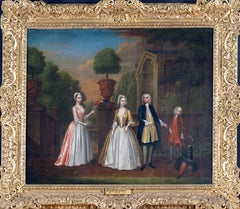
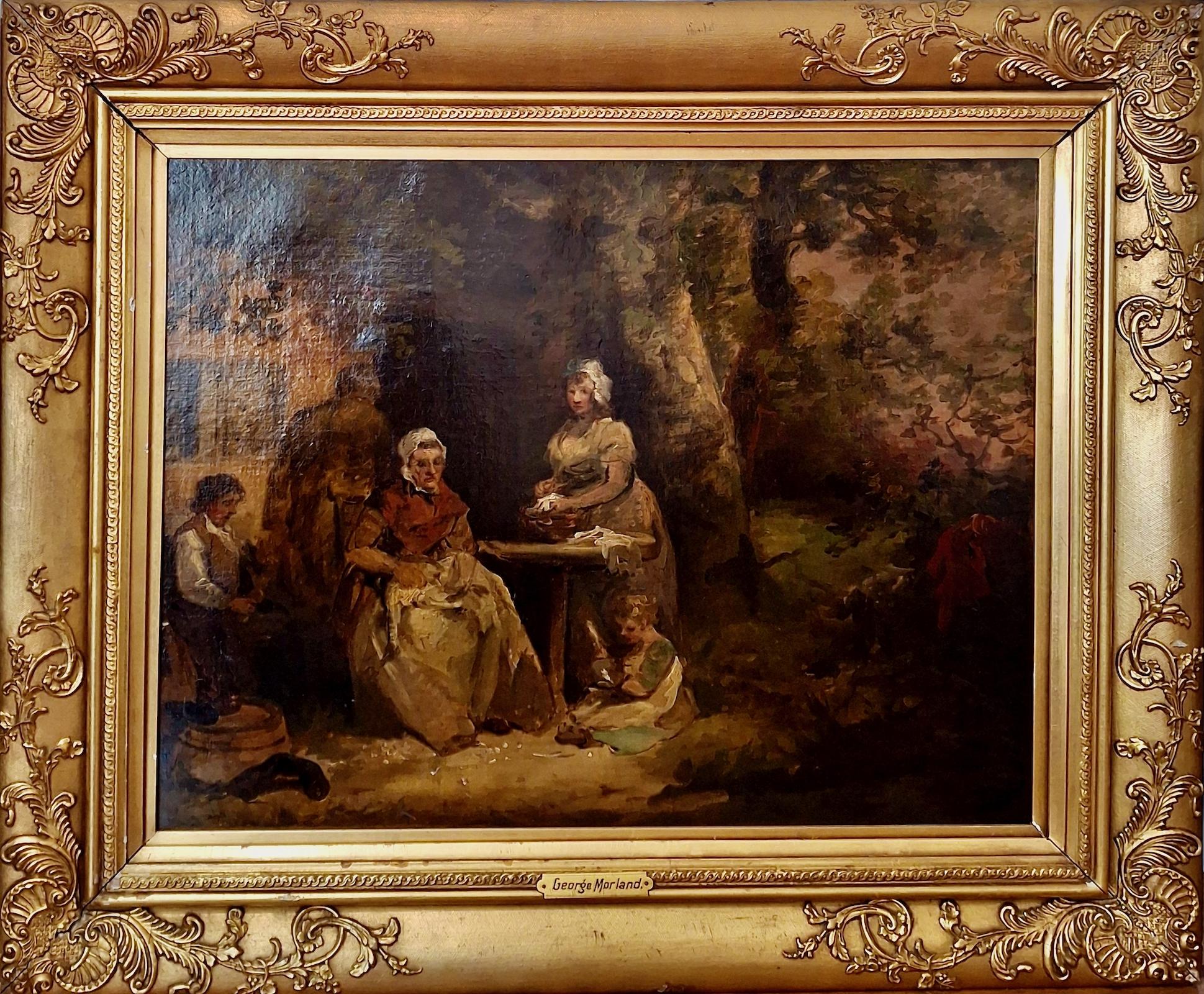
A Late 18th-Century Rural Family Scene
By George Morland
Located in San Francisco, CA
No sentimentality on the loose here. Not with the expressions on the mother and her three children all engaged in various forms of 18th-century drudgery on this late summer’s eve. An...
Category
Late 18th Century English School Figurative Paintings
Materials
Canvas, Oil
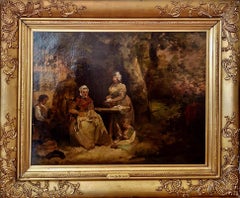
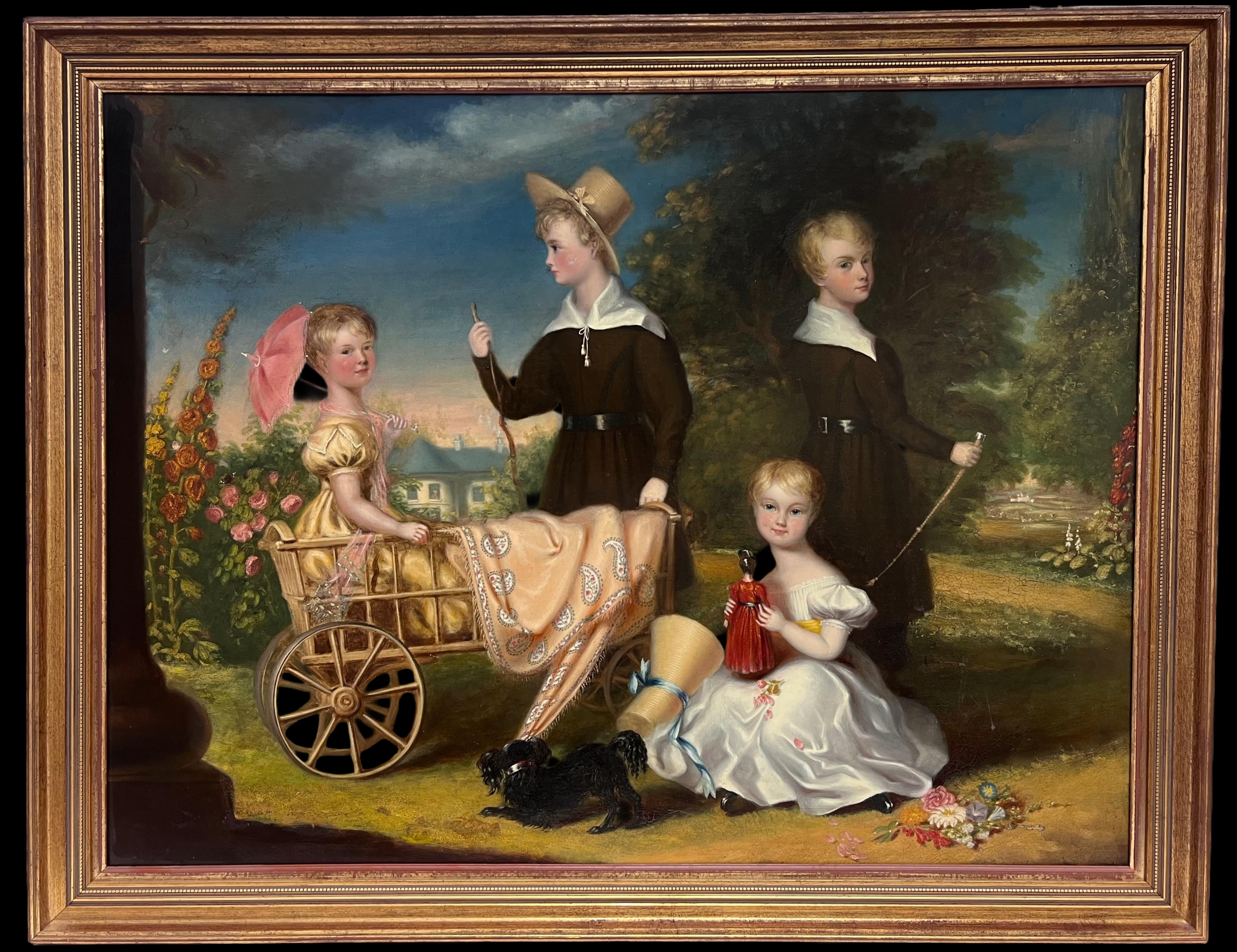
Huge 1800
s British Oil Painting Family Portrait Dorset Country House Children
Located in Cirencester, Gloucestershire
The children of Robert Williams with their go-cart in the grounds of Bridehead, Dorset *see historical notes below.
ATTRIBUTED TO RAMSAY RICHARD REINAGLE (1775-1862, unsigned).
oi...
Category
Mid-19th Century Victorian Figurative Paintings
Materials
Oil
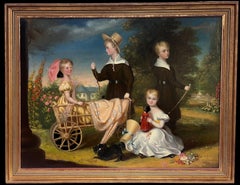
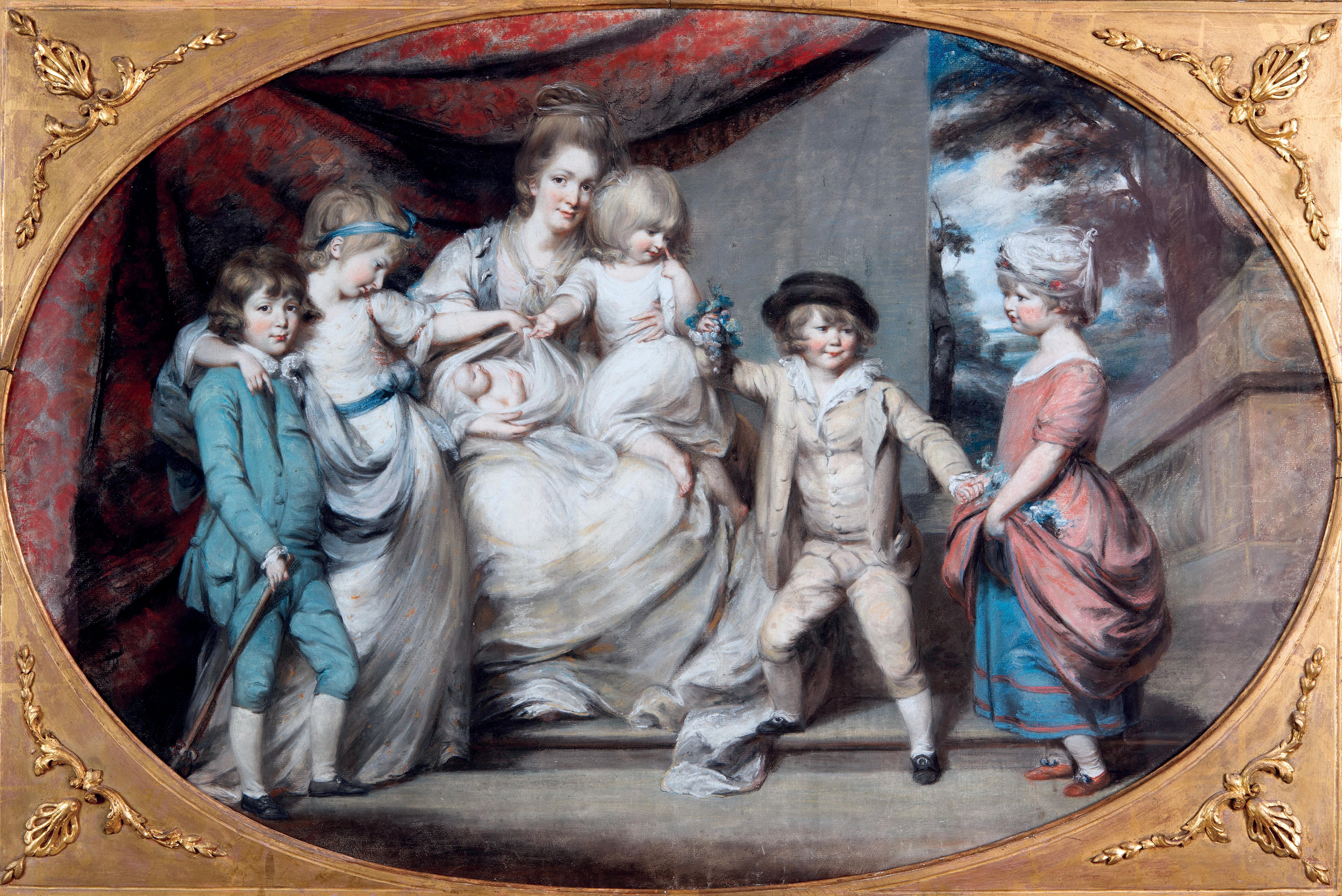
Sophia, Lady de Clifford and her Children
By Daniel Gardner
Located in Taunton, GB
Sophia, Lady de Clifford and her Children
Pastel
Oval
THE ARTIST
Daniel Gardner (1750-1805) was an inventive portrait painter known for blending pastel, gouache, and graphite to ...
Category
18th Century Portrait Paintings
Materials
Pastel
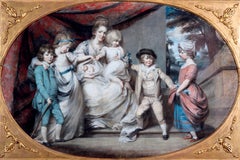
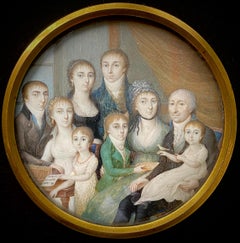
Scandinavian Family Portrait, Artist 18th Century, Scandinavian School
Located in Knokke, BE
Scandinavian Family Portrait
Artist 18th century
18th Century
Scandinavian School
Signature: Not signed
Medium: Miniature
Dimensions: Image size ...
Category
18th Century Medieval Portrait Paintings
Materials
Egg Tempera
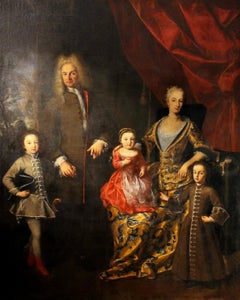
Oil on Canvas Painting Portrait of the Italian Noble Family of Zanardi Count
By Lucia Casalini Torelli
Located in Firenze, IT
This museum quality old master oil on canvas formal portrait painting depicting the family of the Count Zanardi is signed by the artist- the female painter Lucia Casalini Torelli- and published in a book dedicated to Casalini Torelli’s workshop and academy.
This palatial masterpiece artwork comes directly from the ancient Villa Maraini Guerrieri - Palidano di Gonzaga (Mantua), an historic Italian heritage building owned by the descendants of the family portrayed for more than two centuries, until 1998.
The big scale of this oil on canvas masterpiece painting states the relevance of Lucia Casalini Torelli as a painter. The present artwork is a formal family portrait painting that aim to introduce the characters depicted according to their social role in the society. The noble family is all gathered under a loggia overlooking a park, the landscape in the background is partially covered by a beautiful red cloth on the right side.
The father stands up and holds the hand of his eldest son, proudly introducing his future heir. The son wears a light-blue dress and red boots, he is depicted in a serious pose holding a black tricorn hat under his arm and a rapier sword on his belt.
The mother wears an elegant gold and dark green brocade dress, she is sitting with her youngest daughter on her knees while her second son is by her side. The little daughter wears a lovely long red and dress with white lace and holds an apple on her hand. The son stands next to his mother and is dressed in a brown priestly clothes.
This palatial old masters piece was probably painted in 1740 due to the similarities with Cardinal Doria’ s portrait, now on display at the Doria Palace Museum, the official residence of the Prince of Genoa.
The painting features original canvas (“prima tela”) and antique original patina, it is in excellent overall condition considering the age, use and its large scale. A formal detailed condition report and the results of the inspection with the UV lamp accompanied by photos is available on request.
As well as for its exceptional quality and quite perfect state of conservation, this painting is particularly important and even more valuable both for the artist who painted it and for its absolutely exclusive provenance.
Lucia painted the most prominent and powerful noble families of her time, the location of these paintings is unknown to the art market as it is extremely likely that the portraits are still kept in private collections.
Furthermore, Lucia was one of the most appreciated artists of her time, so important that she was admitted as a member of the academy at a time when women were forbidden to attend these studies.
In 1706, Felice Torelli...
Category
18th Century Old Masters Portrait Paintings
Materials
Canvas, Oil
More Ways To Browse
William Of Orange
George Vertue
Louise James
French Huguenot
Painting Of Country Houses
Duke Of Somerset
Old Master Family Portrait
18th Century Family Portrait
Portrait Of Two Women
Robert Daughters
Sir Anthony Van Dyck
17 Century Portraits
17th Century Man Portrait
African American Portrait Painting
Coronation Painting
Danse Macabre
Military Portrait Paintings
Native American Portraits