Items Similar to The Lovers
Want more images or videos?
Request additional images or videos from the seller
1 of 9
Charles Webster HawthorneThe Lovers
$48,500
£36,932.72
€42,174.81
CA$68,148.49
A$74,771.88
CHF 39,386.23
MX$889,490.34
NOK 504,532.90
SEK 460,707.43
DKK 315,086.40
About the Item
The Lovers
Signed lower right: C.W. Hawthorne
Tempera on panel, 40 x 40 inches (101.6 x 101.6 cm)
Framed dimensions: 44 1/8 x 44 1/8 inches
Provenance
Sotheby's, New York, March 17, 1988, lot 219;
Berry-Hill Galleries, New York;
Sotheby's, New York, May 25, 2001, lot 46;
Hollis Taggart Galleries, New York;
Private collection, New York, until 2023
Exhibitions
Memorial Art Gallery, Rochester, New York, "Looking Back: A perspective on the 1913 Inaugural Exhibition," October 9-November 20, 1988.
Like his mentor the great American Impressionist William Merritt Chase, Charles Webster Hawthorne was equally admired in his own lifetime as both a talented painter and a highly influential instructor. Hawthorne first studied with Chase at his Shinnecock Summer School of Art, which was specifically dedicated to open-air landscape painting. Not only did Hawthorne quickly absorb all the principles of Chase’s instruction, but he also became determined to found his own school based on the same model. In 1899 Hawthorne discovered the small fishing village of Provincetown on the furthermost tip of Cape Cod, and after purchasing a large house on Miller Hill, he opened the Cape Cod School of Art, which was an immediate success.
While Hawthorne’s own approach as a teacher owed much to Chase, he developed a distinctly unique painting style and teaching method that defies easy categorization. Hawthorne was greatly impressed with the work of Franz Hals, which he saw during his trip to Holland in the summer of 1898. He was particularly struck by Hals’ Regentesses of the Old Men’s Almhouse, and from this work he absorbed a deep appreciation for the power of human expression and an economy of technique. Hawthorne applied these lessons to his own realistic portraits of Provincetown fishermen and their families; these works have a somber almost melancholy quality to them, as they reveal the vulnerability of the human condition.
Stylistically, Hawthorne maintained a life-long commitment to the importance of color. “Beauty in art,” he said, “is the delicious notes of color one against the other.” Of equal importance to him was capturing the effects of light. He told his students: “Everything in painting is a matter of silhouettes. Hold light against shadow, not light against light.” He developed a particular technique of layering glazes and texturing the surface of this paintings, which heightens the relationship between the color and creates a light effect that seems to emanate from within the painting. These stylistic techniques in combination with his straightforward compositions of one or more figures shown at close range create the hallmarks of Hawthorne’s best paintings. In The Lovers, the two figures stand in the foreground against a spare but glowing background. The way they hold hands is a tender reflection of their relationship to one another. Her outward and his inward gaze speaks to the pathos that Hawthorne’s best paintings beautifully capture.
- Creator:Charles Webster Hawthorne (1872-1930, American)
- Dimensions:Height: 40 in (101.6 cm)Width: 40 in (101.6 cm)
- Medium:
- Movement Style:
- Period:
- Condition:Excellent condition. There are scattered dots and dashes of inpaint in the female figure’s mouth and chin area; there is also a three-inch vertical line of inpaint near the left side of the collar of the female figure’s dress with accompanying smalle.
- Gallery Location:Bryn Mawr, PA
- Reference Number:1stDibs: LU2773217004202
About the Seller
5.0
Recognized Seller
These prestigious sellers are industry leaders and represent the highest echelon for item quality and design.
Platinum Seller
Premium sellers with a 4.7+ rating and 24-hour response times
Established in 2001
1stDibs seller since 2024
6 sales on 1stDibs
Typical response time: <1 hour
- ShippingRetrieving quote...Shipping from: Bryn Mawr, PA
- Return Policy
More From This Seller
View AllIn Venice
By Charles Webster Hawthorne
Located in Bryn Mawr, PA
Like his mentor the great American Impressionist William Merritt Chase, Charles Webster Hawthorne was equally admired in his own day as both a talented painter and a highly influential instructor. Hawthorne first studied with Chase at his Shinnecock Summer School of Art, which was specifically dedicated to open-air landscape painting. Not only did Hawthorne quickly absorb all the principles of Chase’s instruction, but he also became determined to found his own school based on the same model. In 1899 Hawthorne discovered the small fishing village of Provincetown on the furthermost tip of Cape Cod, and after purchasing a large house on Miller Hill, he opened the Cape Cod School of Art, which proved to be an immediate success.
While Hawthorne’s own approach as a teacher owed much to Chase, he developed a distinctly unique painting style and teaching method that defies easy categorization. He was greatly impressed with the work of Franz Hals, which he was exposed to during his trip to Holland in the summer of 1898. Hawthorne was particularly struck by Hals’ Regentesses of the Old Men’s Almhouse, and from this work he absorbed a deep appreciation for the power of human expression and an economy of technique. Hawthorne applied these lessons to his own realistic portraits of Provincetown fishermen and their families; these works have a somber, almost melancholy quality to them, and they reveal a sense of the vulnerability of the human condition.
Stylistically, Hawthorne maintained a life-long commitment to the importance of color. “Beauty in art,” he said, “is the delicious notes of color one against the other.” Of equal importance to him was capturing the effects of light. He told his students: “Everything in painting is a matter of silhouettes. Hold light against shadow, not light against light.” He developed a particular technique of layering glazes and texturing the surface of his paintings, which heightens the relationship between the colors and creates a light effect that seems to emanate from within the painting. These stylistic techniques in combination with his straightforward compositions of one or more figures shown at close range create the hallmarks of Hawthorne’s best paintings.
Hawthorne and his wife Ethel’s 1905-1907 trip to Italy did not result in a drastic impact on his artistic style. Nonetheless, it proved to be a transformative and enlightening voyage. The extensive trip was financed by collectors who paid in advance for a painting to be produced abroad. On the trip, Hawthorne explored the work of old masters and was struck particularly by the paintings of Titian, which to Hawthorne, demonstrated the master’s true adoration for the act of painting itself through his handling of paint and color. Where Titian’s paintings...
Category
Early 1900s Abstract Impressionist Figurative Paintings
Materials
Oil, Panel
Reading Tea Leaves
By Lilian Westcott Hale
Located in Bryn Mawr, PA
Reading Tea Leaves, 1907
Pencil on paper, 14 1/2 x 22 1/2 inches (36.8 x 57.1 cm)
Framed dimensions: 26 x 33 3/4 inches
Signed and dated lower right: Lilian Westcott Hale...
Category
Early 1900s American Impressionist Portrait Drawings and Watercolors
Materials
Paper, Pencil
Study of Ruth
By Lilian Westcott Hale
Located in Bryn Mawr, PA
Study of Ruth, c. 1925
Charcoal and sepia ink on paper
22 1/4 x 27 3/4 inches (56.5 x 70.5 cm)
Signed upper center: Lillian Westcott Hale
Lilian Westcott Hale...
Category
1920s American Impressionist Figurative Drawings and Watercolors
Materials
Paper, Charcoal, Ink
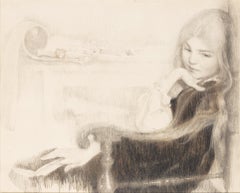
Book of Verses
By Lilian Westcott Hale
Located in Bryn Mawr, PA
Book of Verses, 1924
Charcoal on paper
29 x 23 inches (73.7 x 58.4 cm)
Framed dimensions: 33 3/8 x 27 5/8 inches
Signed upper right: Lilian Westcott Hale...
Category
1920s American Impressionist Figurative Drawings and Watercolors
Materials
Paper, Charcoal
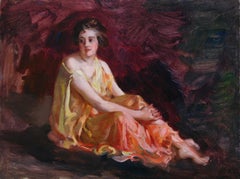
Dance Interlude, c. 1910-20
Located in Bryn Mawr, PA
Oil on board
Provenance
Estate of Marjorie MacMonnies Wysong (the artist's granddaughter); Hap Moore Auctions; Martin Ferrick Antiques
Exhibitions
Avery Galleries, Bryn Mawr, Pennsylvania, American Women Artists: 1860–1960, October 13–November 10, 2017.
Description
During her expatriate career, between the mid-1880s and return to the United States in 1920, painter and muralist Mary Fairchild MacMonnies (later Low) was one of the most successful American women artists of her generation. Mary Fairchild was born in Connecticut, but was raised largely in St. Louis, Missouri. Inspired by her mother's work as a painter of miniatures and dissatisfied as a school teacher, she enrolled in the St. Louis School of Fine Arts, where she led a movement for women to be permitted to draw model posed in the nude, an important component of artistic training then considered improper for well-bred young women. Impressed by her talent and drive, the school's director, Halsey Ives...
Category
1910s American Impressionist Portrait Paintings
Materials
Oil
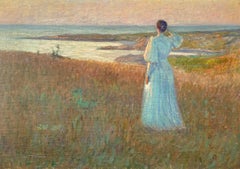
Waiting
Located in Bryn Mawr, PA
Excerpted from The Painter's Journey: The Art of William S. Robinson, The Cooley Gallery
Born in East Gloucester, Massachusetts, William S. Robinson became a talented and successful...
Category
1890s American Impressionist Figurative Paintings
Materials
Canvas, Oil
You May Also Like
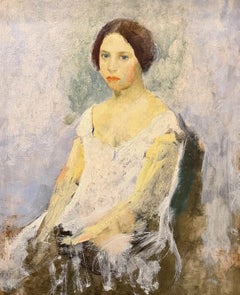
Portrait of a Girl
Located in Fort Washington, PA
Portrait of a Girl.
Please note that the frame is very heavy and may require an additional shipping fee
Medium: Oil on board
Framed Dimensions: 38.5" x 33.5"
Category
Early 20th Century Figurative Paintings
Materials
Oil, Board
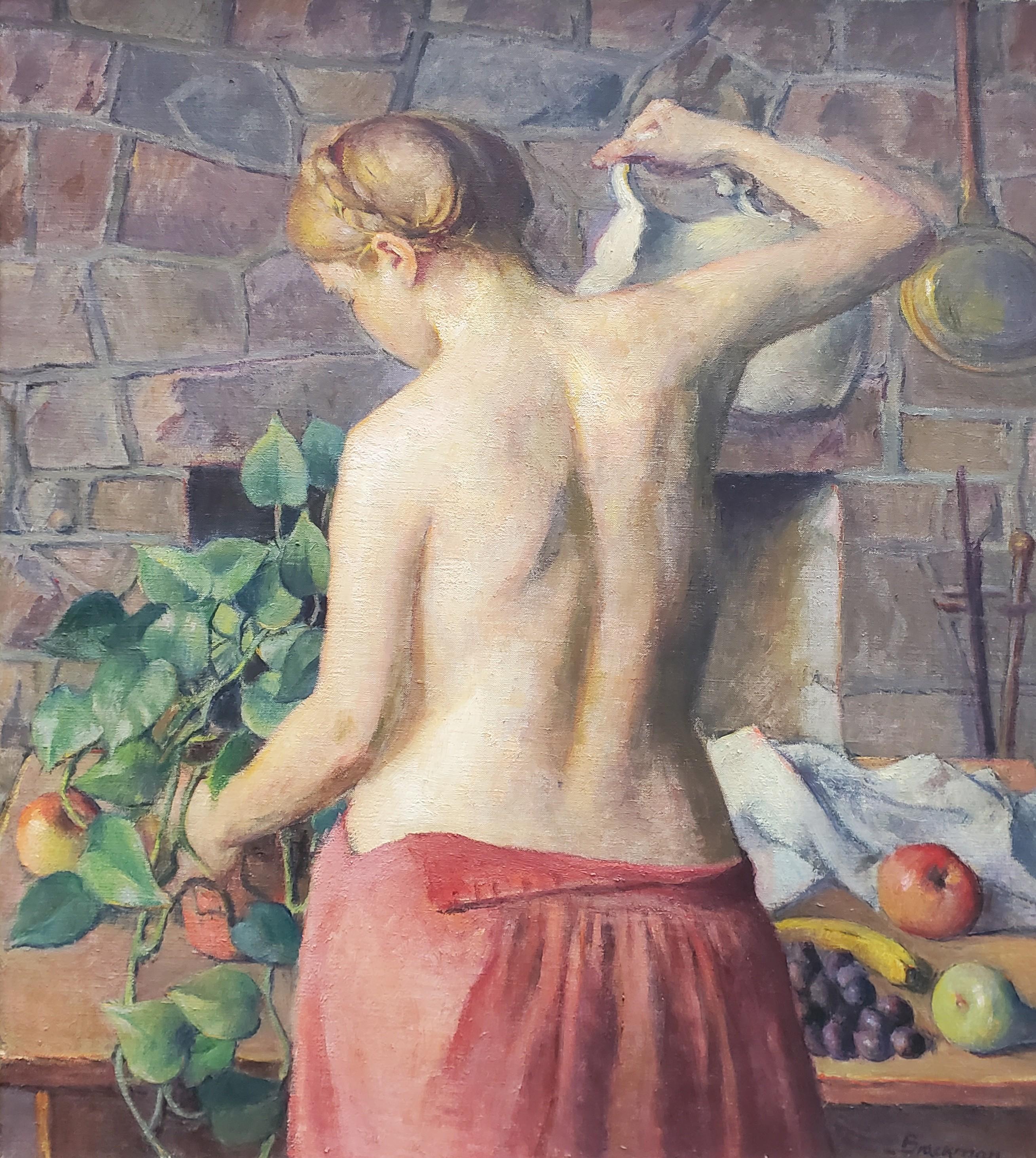
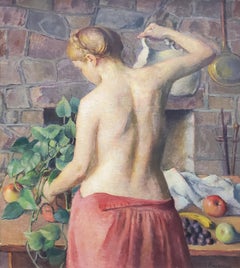
In a Early Light
By Robert Brackman
Located in Saratoga Springs, NY
Signed lower right.
A beautiful painting of a woman with her back to the viewer, watering a plant in front of an old brick wall. She is wearing a red skirt. A fruit arrangement sits...
Category
Mid-20th Century American Impressionist Figurative Paintings
Materials
Canvas, Oil
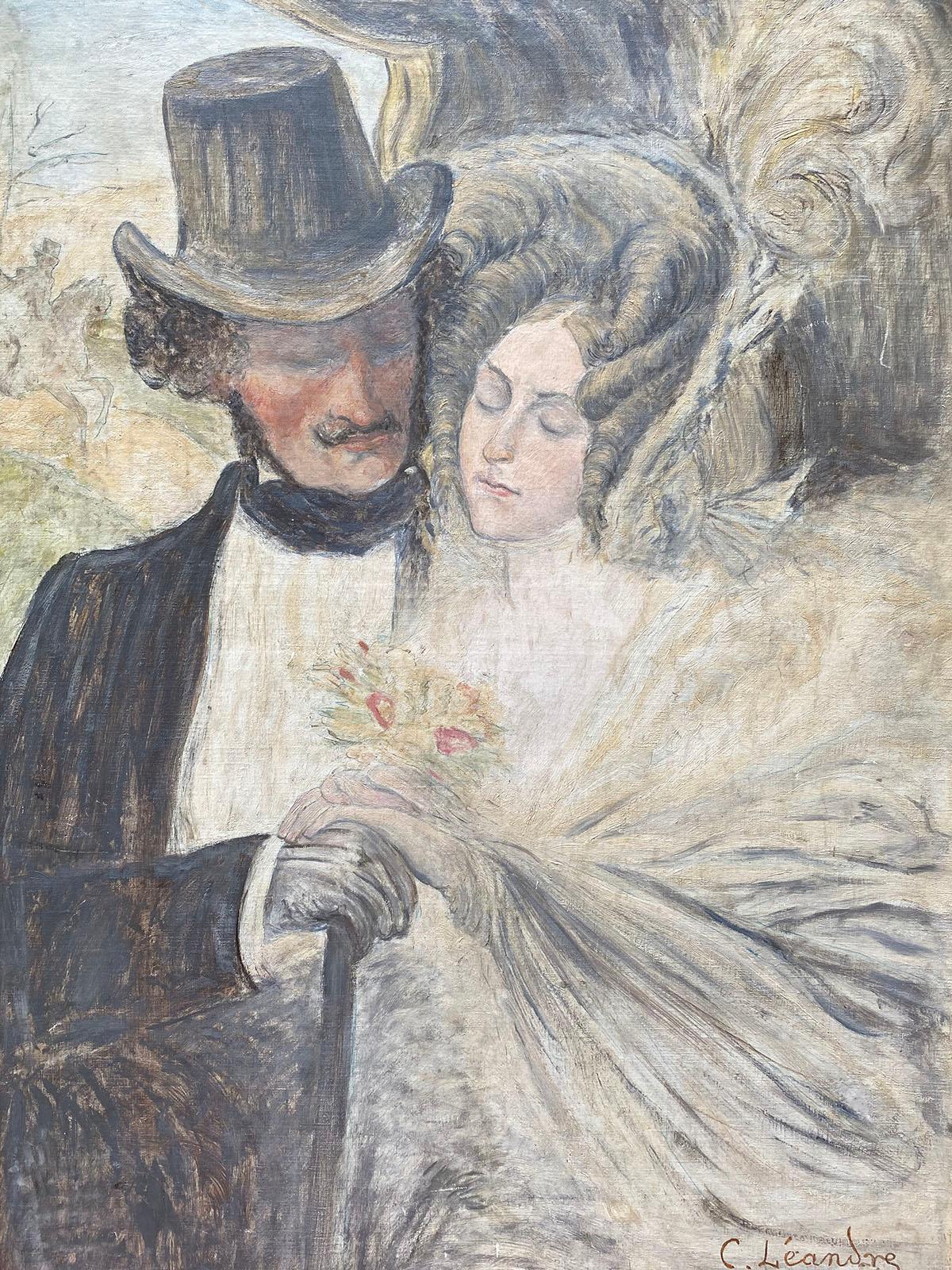
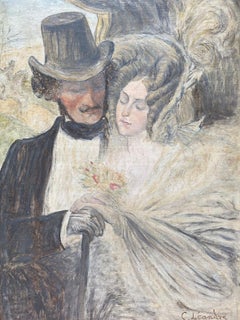
Charles Léandre "Lovers" 1925
Located in Saint Ouen, FR
Charles Léandre
"Lovers"
1925
Oil painting / canvas on frame
115 x 81 cm
Very nice condition!
Selling price : 3900 euros
Category
1920s Portrait Paintings
Materials
Oil
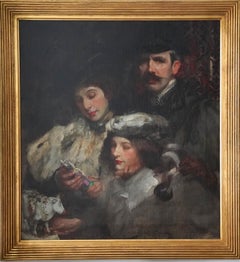
Artist
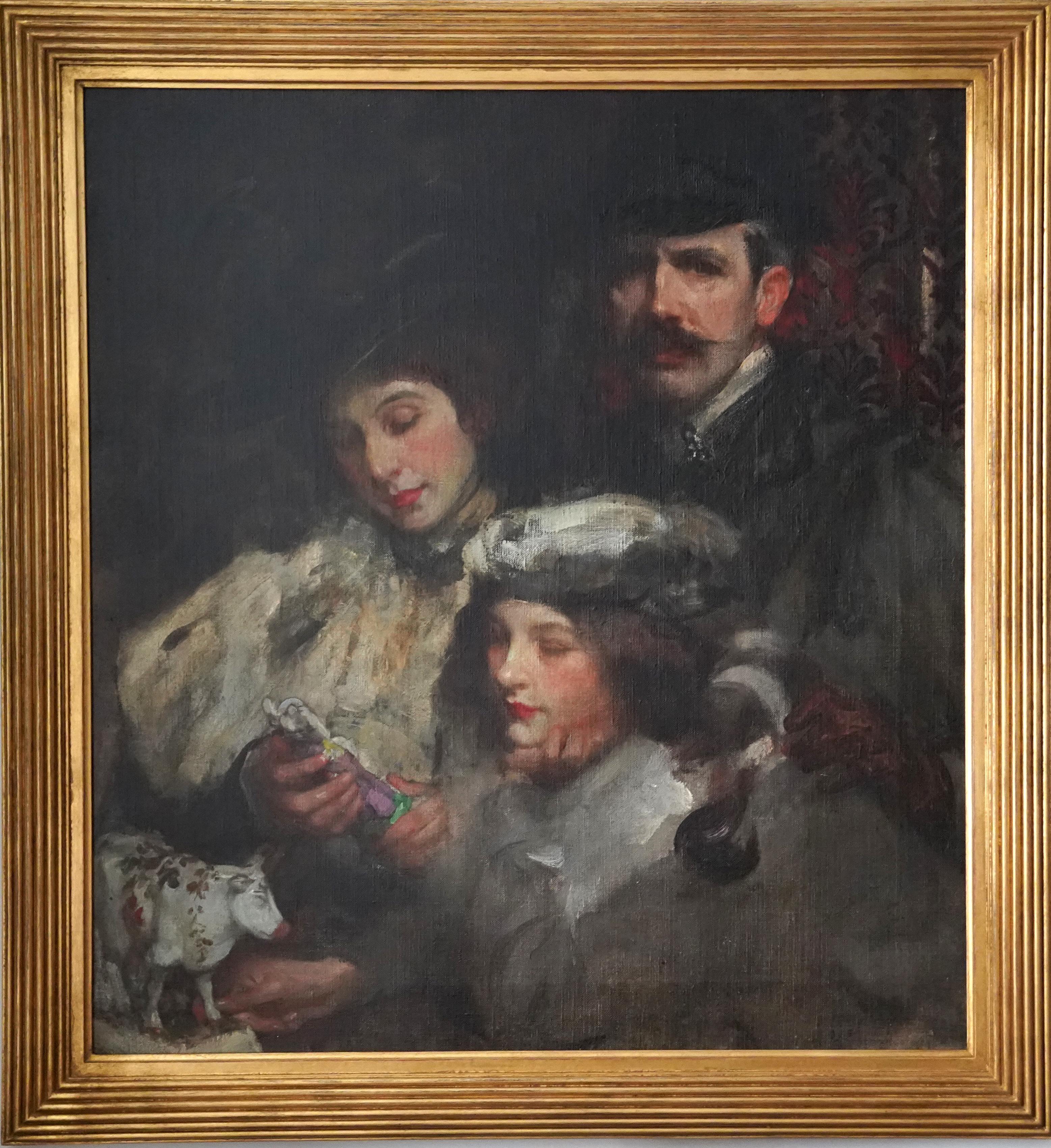
s Family Portrait - British American Impressionist art oil painting
By James Jebusa Shannon
Located in Hagley, England
This stunning British American Impressionist portrait oil on canvas painting is by Sir James Jebusa Shannon circa 1905. The painting is of the artist and his wife Florence and daught...
Category
Early 1900s Impressionist Portrait Paintings
Materials
Oil
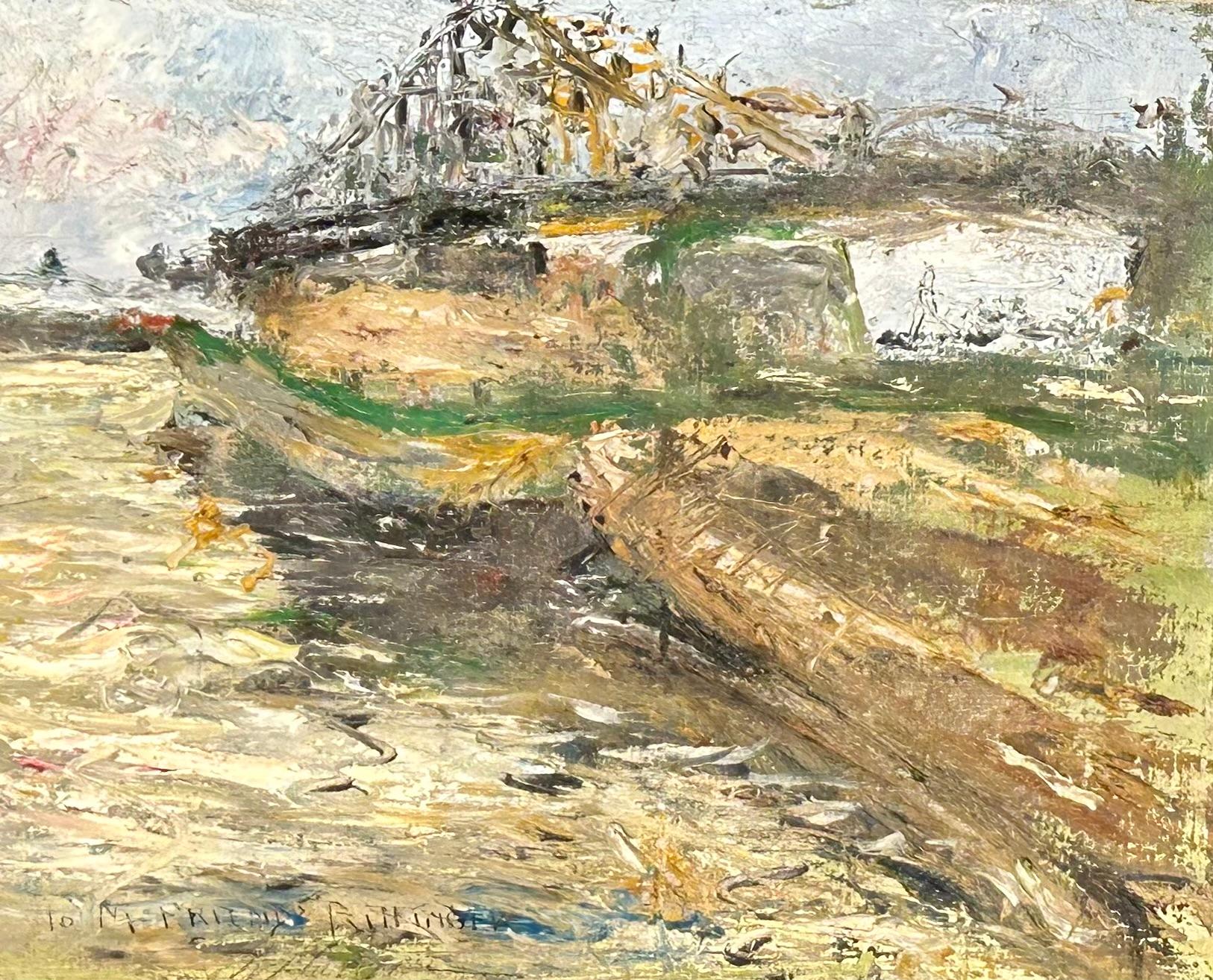
"Near Provincetown" Charles Webster Hawthorne, Cape Cod Impressionist Landscape
By Charles Webster Hawthorne
Located in New York, NY
Charles Hawthorne
Near Provincetown
Signed and inscribed "TO MY FRIEND RILLINGIK" lower left
Oil on canvas
16 x 20 1/4 inches
Provenance:
Private Collection
Sotheby's New York, September 12, 1994, Lot 145
Spanierman Gallery, New York
Private Collection, Scarsdale, New York
Charles W. Hawthorne (1872-1930) was one of America's most dynamic, penetrating and forthright portrait painters, as well as a creative, inspiring teacher. A painter's painter, Hawthorne ran a summer school in Provincetown - the Cape Cod School of Art - for over thirty years and made it a leading artists' colony of plein-air impressionist-inspired talents. Hawthorne grew up in Richmond, Maine, the son of Joseph Jackson Hawthorne and Cornelia Jane Smith...
Category
1910s Impressionist Landscape Paintings
Materials
Canvas, Oil
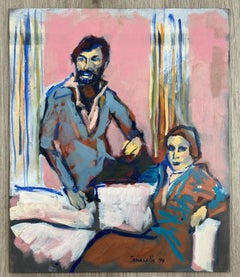
Portrait of Elegant Couple
By Vito Tomasello
Located in Wilton Manors, FL
Beautiful ca. 1970's portrait by American artist, Vito Tomasello. Oil on masonite panel measures 10 x 12 inches. Signed and dated lower right.
A lifetime NYC resident, Tomasello ...
Category
Mid-20th Century American Impressionist Figurative Paintings
Materials
Oil, Board
$650 Sale Price
45% Off