Items Similar to Portrait of a Gentleman, Renaissance Revival, 19th Century
Want more images or videos?
Request additional images or videos from the seller
1 of 9
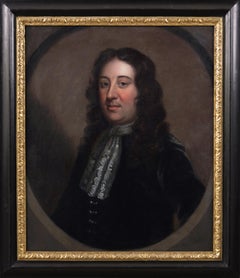
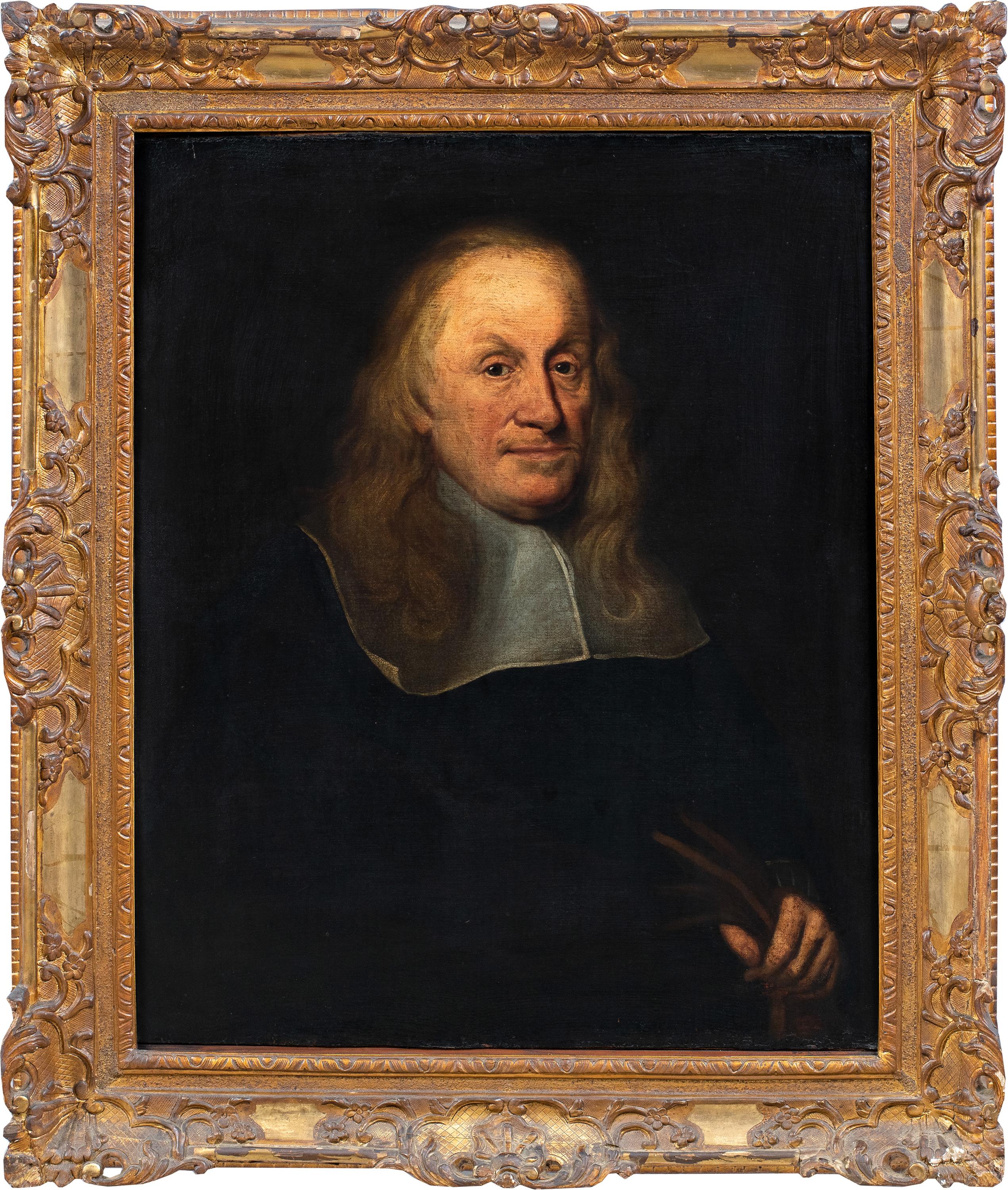
Portrait of a Gentleman, Renaissance Revival, 19th Century
$7,500
£5,716.63
€6,593.54
CA$10,652.24
A$11,446.96
CHF 6,141.96
MX$134,838.14
NOK 77,228.28
SEK 70,547.54
DKK 49,277.48
About the Item
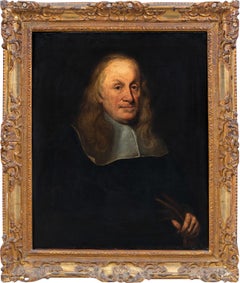
In the Manner of Cornelis Janssens van Ceulen I (English, 1592-1661)
" Portrait of a Gentleman ", 19th Century
Oil on Board
27” x 32"
Housed in a 5" 19th-century ornamented frame
Overall Size: 39 1/2" x 33 3/4"
Provenance:
Previously in the collection of the Hackley Art Gallery (Muskegon Museum of Art)
Warping to board, splits in board held together cradle as well as older repair. Surface of painting appears stable, some inpainting. Losses and touch-ups to frame. In fair, but presentable condition.
Despite the attribution by the Hackley Art Gallery to be by Cornelis Janssens van Ceulen I, we have concluded that this appears to be a 19th-century piece done in the manner of the artist's work as opposed to a period piece (1631). Please review all photos for condition and do not hesitate to contact our gallery if you have any questions.
- Dimensions:Height: 39.5 in (100.33 cm)Width: 33.75 in (85.73 cm)
- Medium:
- Movement Style:
- After:Cornelis Janssens van Ceulen I (1592 - 1661, English)
- Period:
- Condition:
- Gallery Location:Grand Rapids, MI
- Reference Number:1stDibs: LU2380217452802
About the Seller
5.0
Vetted Professional Seller
Every seller passes strict standards for authenticity and reliability
Established in 2016
1stDibs seller since 2023
82 sales on 1stDibs
Typical response time: <1 hour
- ShippingRetrieving quote...Shipping from: Grand Rapids, MI
- Return Policy
More From This Seller
View AllPortrait of a Gentleman in a Landscape, Scottish Portraiture, Portrait, Wealthy
Located in Grand Rapids, MI
John Pairman (Scottish, 1788 - 1843)
Signed: J Pairman 1820 (Lower, Right)
" Portrait of a Gentleman ", 1820
Oil on Canvas
22 1/4" x 18 5/8"
Housed in a 2 3/4" Husar Frame
Ove...
Category
Early 19th Century Portrait Paintings
Materials
Canvas, Oil
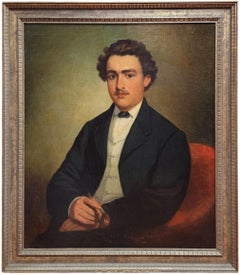
Portrait of a Young Man Holding a Pipe, Mustache, Antique Portrait
Located in Grand Rapids, MI
American, Mid 19th Century
Unsigned
" Portrait of a Young Man holding a Pipe ", circa 1860s
Oil on Canvas laid on masonite
29 3/4" x 25"
Housed in a newer 2 1/2" Frame
Overall ...
Category
Mid-19th Century American Realist Portrait Paintings
Materials
Canvas, Oil
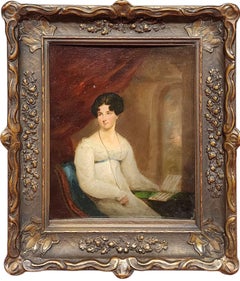
Portrait of a Woman Reading, Early 19th Century English
Located in Grand Rapids, MI
English, Early 19th Century
" Portrait of a Woman Reading ", circa 1820-1825
Oil on Mahogany Panel
9 1/2" x 7 3/4"
Housed in a 2" Ornamented Frame
Overall Size: 13 1/2" x 11 3/8...
Category
Early 19th Century Realist Portrait Paintings
Materials
Canvas, Oil
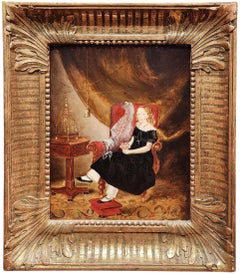
Naive English Portrait of a Girl, circa 1830s Oil on Board, Antique Painting
Located in Grand Rapids, MI
English Naive School, 19th Century
Unsigned
" Portrait of a Seated Girl Holding a Bouquet ", circa 1830
Oil on Board, Laid on Canvas
13 1/4" x 10 1/2"
Housed in a 3" Carved Fram...
Category
Early 19th Century Realist Portrait Paintings
Materials
Oil, Board
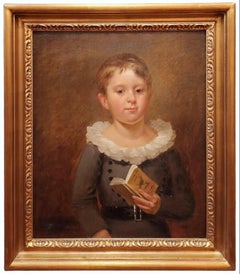
Portrait of a Boy Holding a Book, Early American Portraiture, American Folk Art
Located in Grand Rapids, MI
Portrait of a Boy Holding a Book, c. 1820s
Oil on Panel
24" x 19.5"
Housed in a 3" Carved Frame
Overall Size: 29" x 25 1/4"
In excellent condition. Ready to hang and enjoy.
Category
Early 19th Century Folk Art Portrait Paintings
Materials
Oil, Wood Panel
$3,600 Sale Price
20% Off
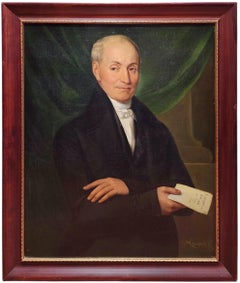
Memories of the Year, 1840 Portrait of a Gentleman Holding a Note, Remarkable
Located in Grand Rapids, MI
Joseph Lavos (Austrian, 1807-1848)
Signed: J. Lavos (Lower, Right)
" Memories of The Year 1840 ", 1840
(written on the note within the sitter's hand, translated from German)
Oil o...
Category
Mid-19th Century Realist Portrait Paintings
Materials
Canvas, Oil
$1,992 Sale Price
40% Off
You May Also Like
Portrait of an Officer, Cornelius Johnson, 17th Century Old Masters
By Cornelius Johnson
Located in London, GB
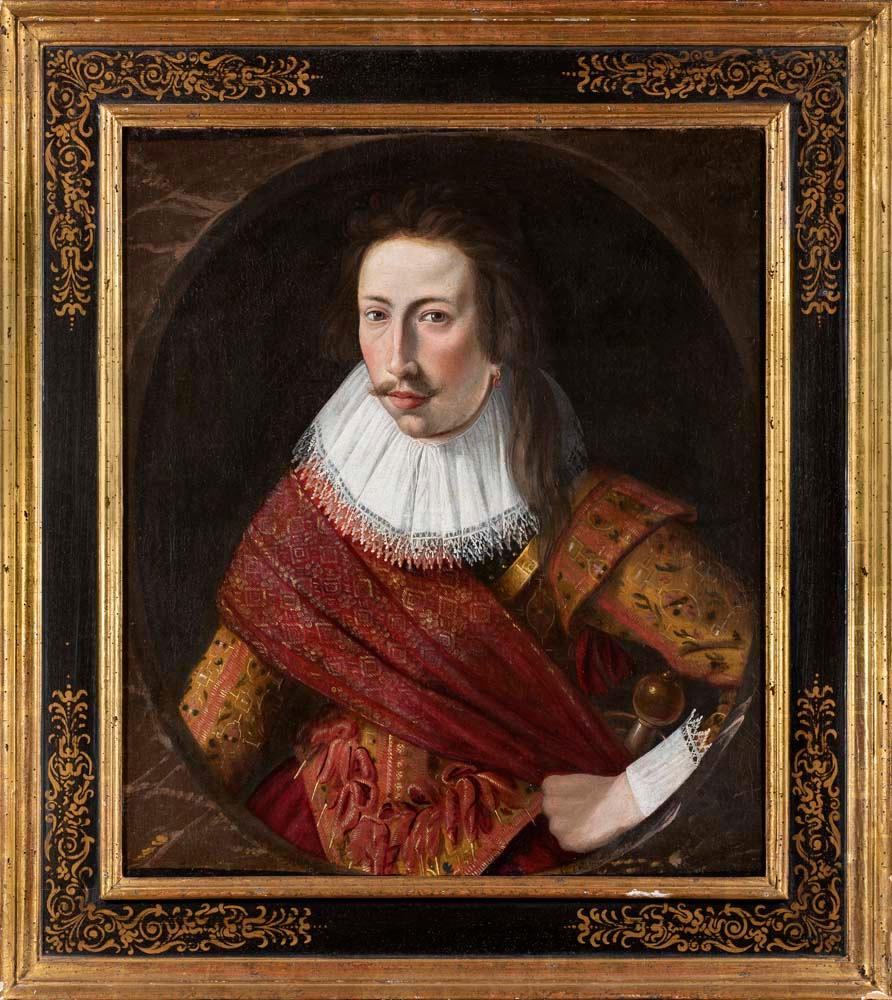
Circle of Cornelius Johnson
Circa 1620’s
Portrait of a Officer
Oil on canvas
Image size: 28 x 24 inches
Period style hand made frame
Provenance
Private European Estate
This striking portrait dates to around 1620, as you can see from the images of the sash the detail is very high. The sash is decorated with gold thread and would have cost a small fortune at the time. Sashes were originally developed for a military function (making officers more visible for their men during combat), but soon became a primarily male fashion...
Category
Early 17th Century Old Masters Portrait Paintings
Materials
Oil
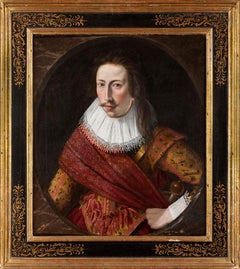
Portrait of a Nobleman, French School 17th Century
Located in New York, NY
French portrait of a nobleman, 17th Century, great condition. With a beautiful carved wooden frame.
Category
17th Century Baroque Portrait Paintings
Materials
Canvas, Oil
$7,200 Sale Price
40% Off
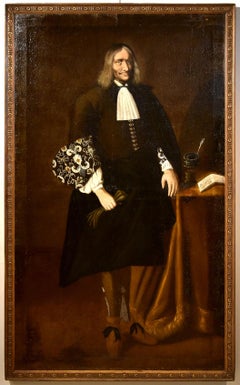
Portrait Noble Man Ceresa Paint Oil on canvas Old master 17th Century Italy Art
Located in Riva del Garda, IT
Carlo Ceresa (San Giovanni Bianco 1609 - Bergamo 1679) attributable
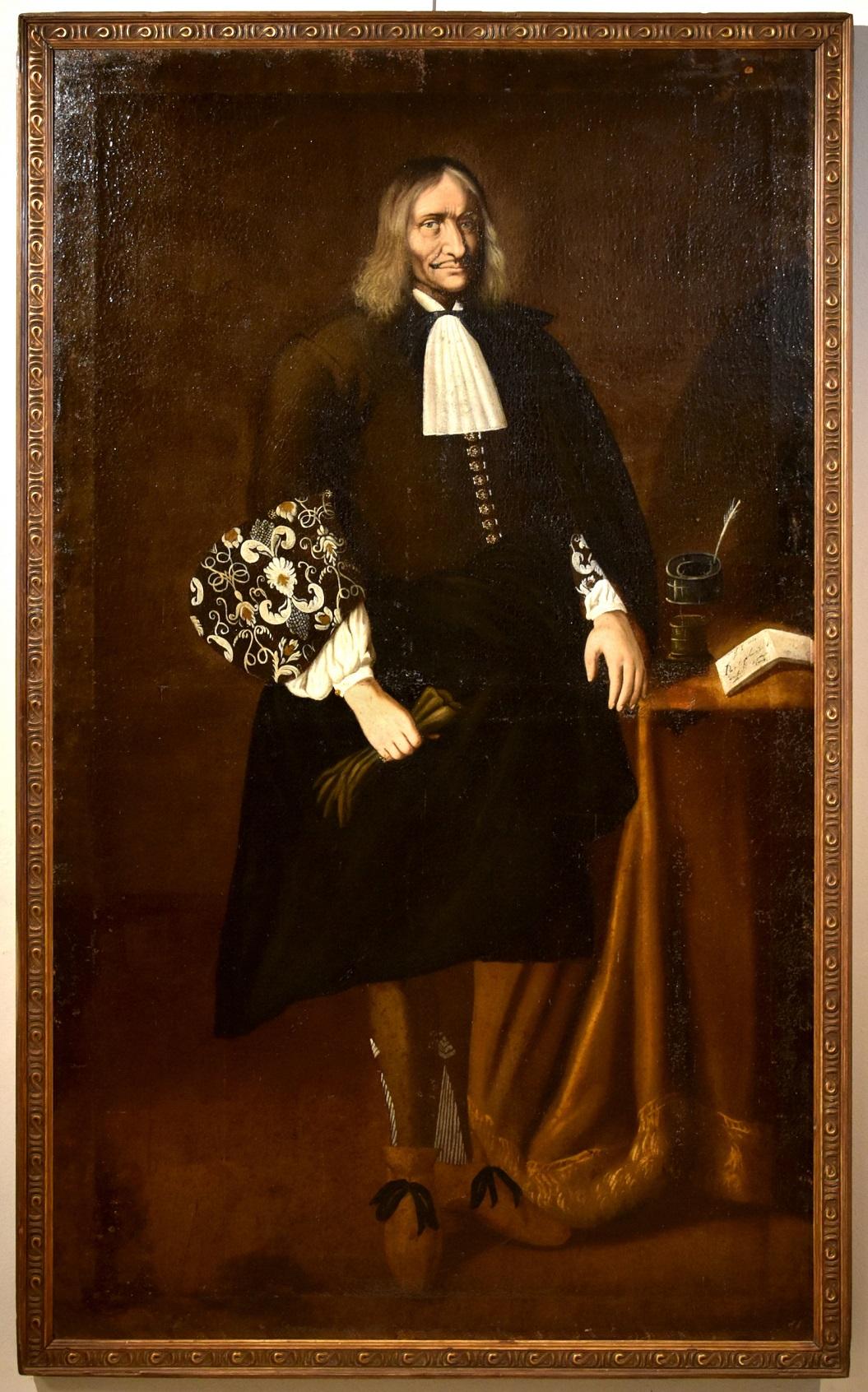
Full-length portrait of Giacomo Pesenti
Oil on canvas (206 x 121 cm - in frame 212 x 133 cm.)
This fascinating portrait, portraying a full-length gentleman and datable to the 17th century, illustrates the stylistic and compositional details typical of the pictorial production of the Lombardy area, Bergamo in particular. This reference is reflected in elements such as the natural light, the sober and austere setting and, above all, the subtle psychological characterisation of the face.
We are inclined to identify the hand of portrait painter Carlo Ceresa, one of the most illustrious Bergamasque figure painters of the 17th century, capable of developing a style of intense realism and acute psychological investigation. In his works, and our portrait perfectly reflects his canons, an extraordinary naturalistic imprint, great realism and remarkable essentiality are evident.
Those traits of severity, moral rigour and austerity typical of his portraiture find a perfect balance here: never courtly or rhetorical, his portraits are profoundly linked to the concept of counter-reform. Immortalising the main personalities of the time, he established himself as a point of reference for the Bergamasque aristocracy, from the Vertova to the Pesenti to the Secco Suardo.
The subject of the portrait is Giacomo Pesenti, here immortalised life-size in a rigorous black suit, his left hand resting on a table, on which is placed the necessities for writing and a manuscript, and his right hand, with a sealed ring on his little finger, abandoned along his side while he holds his gloves.
He wears a suit of incredible rigour, dressed as befits a man of his high social standing, while the sharp light focuses on his face, with an intensity that seems to be accentuated by the reflection of the white collar, with its sharp profile.
For Ceresa, it is not the richness of the garment that gives value to the person portrayed, it is the need to give feeling and bring out the character of the person, and this he succeeds in marvellously, aided by his ability to capture the essence of the person and return it to us in painting through the face and light used as a strong expressive element.
In fact, the image highlights that 'counter-reformed' composure typical of the portraiture of painters active in this area and era, adhering to a verism...
Category
17th Century Old Masters Paintings
Materials
Oil
$12,118 Sale Price
20% Off
Nicolaes Maes workshop (Baroque Dutch)- 17th century figure painting - Gentleman
Located in Varmo, IT
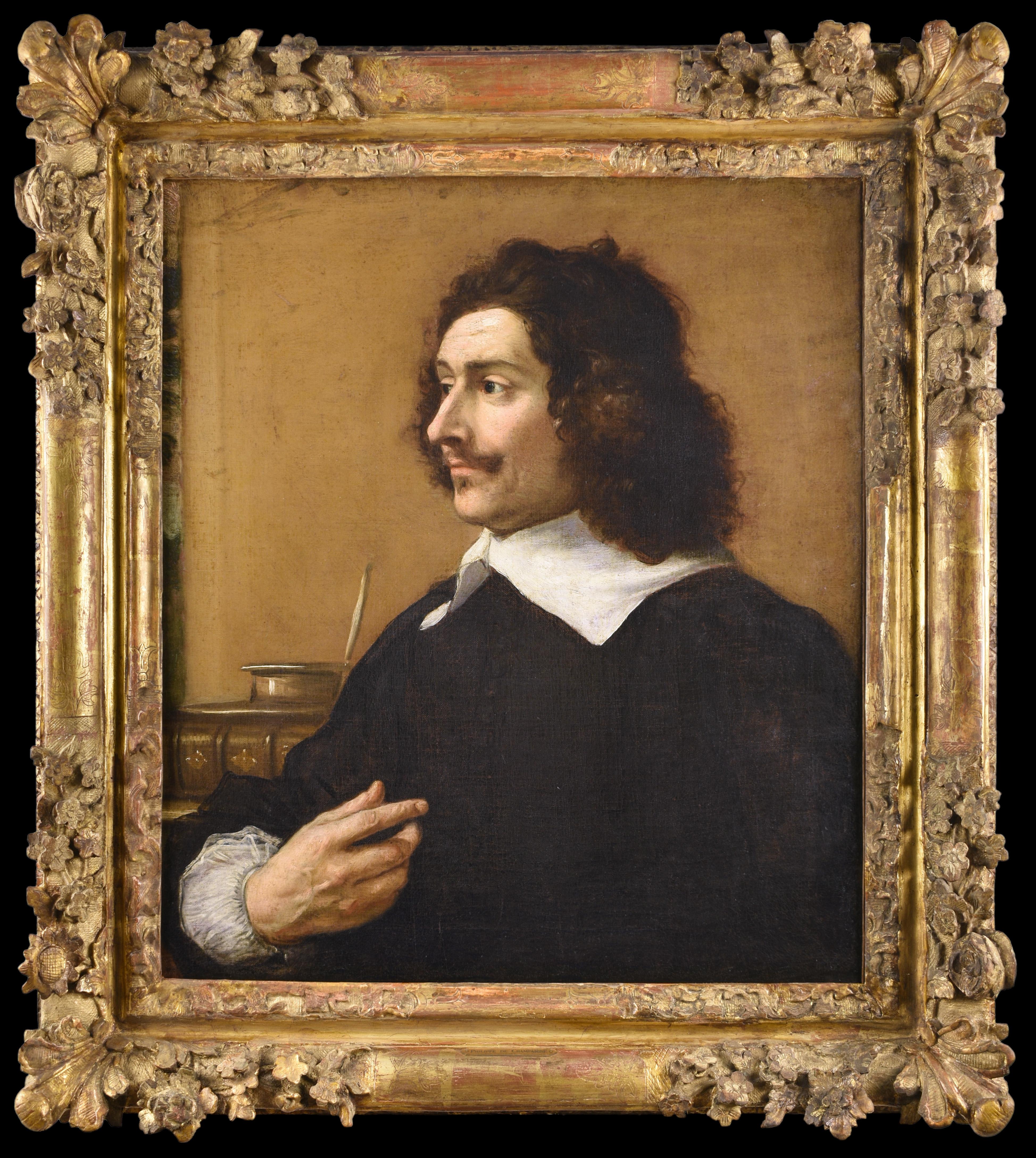
Nicolaes Maes (Dordrecht 1634 - Amsterdam 1693) circle of - Portrait of a Gentleman.
81 x 65 cm unframed, 100.5 x 83.5 cm with frame.
Antique oil painting on canvas, in a carved an...
Category
17th Century Old Masters Figurative Paintings
Materials
Canvas, Oil
$7,103 Sale Price
25% Off
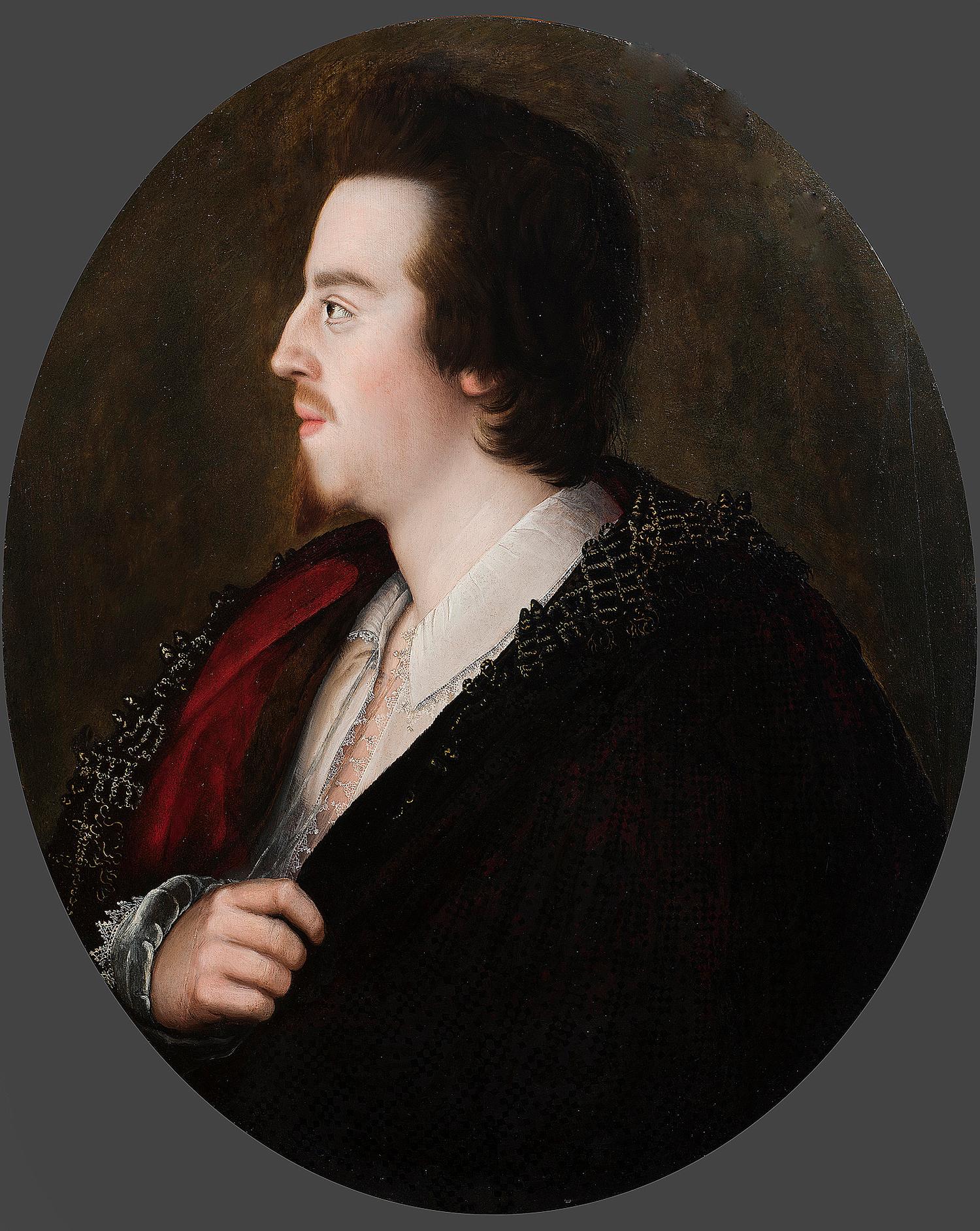
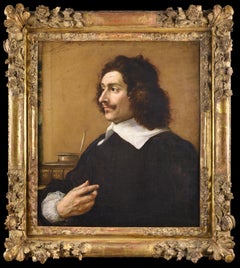
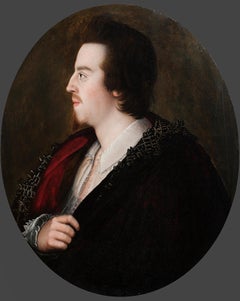
Portrait of William Herbert, 3rd Earl of Pembroke, Early 17th Century Portrait
Located in London, GB
English School, (circa 1600)
Portrait of William Herbert, 3rd Earl of Pembroke
Oil on panel, oval
Image size: 29¼ x 23⅞ inches
Painted wooden frame
Provenance:
176, Collection of Francis Greville, 1st Earl of Warwick.
The Trustees of the Lord Brooks’ Settlement, (removed from Warwick Castle).
Sotheby’s, London, 22nd March 1968, lot 81.
Painted onto wooden panel, this portrait shows a dark haired gentleman in profile sporting an open white shirt. On top of this garments is a richly detailed black cloak, decorated with gold thread and lined with a sumptuous crimson lining. With the red silk inside it’s all very expensive and would fall under sumptuary laws – so this is a nobleman of high degree.
It’s melancholic air conforms to the contemporary popularity of this very human condition, evident in fashionable poetry and music of the period. In comparison to our own modern prejudices, melancholy was associated with creativity in this period.
This portrait appeared in the earliest described list of pictures of Warwick castle dating to 1762. Compiled by collector and antiquary Sir William Musgrave ‘taken from the information of Lord & Lady Warwick’ (Add. MSS, 5726 fol. 3) is described;
‘8. Earl of Essex – an original by Zuccharo – seen in profile with black hair. Holding a black robe across his breast with his right hand.’
As tempting as it is to imagine that this is a portrait of Robert Devereux, the 2nd Earl Essex, we might take this with a pinch of salt. Its identification with this romantic and fatal Elizabethan might well have been an attempt to add romance to Warwick Castle’s walls. It doesn’t correspond all that well with Essex’s portraits around 1600 after his return from Cadiz. Notably, this picture was presumably hung not too far away from the castle’s two portraits of Queen Elizabeth I. The first, and undoubtedly the best, being the exquisite coronation portrait that was sold by Lord Brooke in the late 1970s and now hangs in the National Portrait Gallery. The second, described as being ‘a copy from the original at Ld Hydes’, has yet to resurface.
The portrait eventually ended up being hung in the State Bedroom of Warwick Castle.
Archival documents present one other interesting candidate. The Greville family’s earliest inventory of paintings, made in 1630 at their home Brooke House in Holborn, London, describes five portraits of identified figures. All five belonged to the courtier, politician and poet Sir Fulke Greville (1554-1628), 1st Baron Brooke, and were hung in the ‘Gallerie’ of Brooke House behind yellow curtains. One of them was described as being of ‘Lord of Pembrooke’, which is likely to have been William Herbert (1580-1630), 3rd Earl of Pembroke. William was the eldest son of Greville’s best friend’s sister Mary Sidney, and was brought up in the particularly literary and poetically orientated household which his mother had supported. Notably, the 3rd Earl was one of the figures that Shakespeare’s first folio was dedicated to in 1623.
The melancholic air to the portrait corresponds to William’s own pretensions as a learned and poetic figure. The richness of the robe in the painting, sporting golden thread and a spotted black fabric, is indicative of wealth beyond that of a simple poet or actor. The portrait’s dating to around the year 1600 might have coincided with William’s father death and his own rise to the Pembroke Earldom. This period of his life too was imbued with personal sadness, as an illicit affair with a Mary Fitton had resulted in a pregnancy and eventual banishment by Elizabeth I to Wilton after a short spell in Fleet Prison. His illegitimate son died shortly after being born. Despite being a close follower of the Earl of Essex, William had side-stepped supporting Devereux in the fatal uprising against the Queen and eventually regained favour at the court of the next monarch James I.
His linen shirt is edged with a delicate border of lace and his black cloak is lined on the inside with sumptuous scarlet and richly decorated on the outside with gold braid and a pattern of embroidered black spots.
Despite the richness of his clothes, William Herbert has been presented in a dishevelled state of semi-undress, his shirt unlaced far down his chest with the ties lying limply over his hand, indicating that he is in a state of distracted detachment. It has been suggested that the fashion for melancholy was rooted in an increase in self-consciousness and introspective reflection during the late 16th and early 17th centuries.
In contemporary literature melancholy was said to be caused by a plenitude of the melancholy humor, one of the four vital humors, which were thought to regulate the functions of the body. An abundance of the melancholia humor was associated with a heightened creativity and intellectual ability and hence melancholy was linked to the notion of genius, as reflected in the work of the Oxford scholar Robert Burton, who in his work ‘The Anatomy of Melancholy’, described the Malcontent as ‘of all others [the]… most witty, [who] causeth many times divine ravishment, and a kind of enthusiamus… which stirreth them up to be excellent Philosophers, Poets and Prophets.’ (R. Burton, The Anatomy of Melancholy, London, 1621 in R. Strong, ‘Elizabethan Malady: Melancholy in Elizabethan and Jacobean Portraits’, Apollo, LXXIX, 1964).
Melancholy was viewed as a highly fashionable affliction under Elizabeth I, and her successor James I, and a dejected demeanour was adopted by wealthy young men, often presenting themselves as scholars or despondent lovers, as reflected in the portraiture and literature from this period. Although the sitter in this portrait is, as yet, unidentified, it seems probable that he was a nobleman with literary or artistic ambitions, following in the same vain as such famous figures as the aristocratic poet and dramatist, Edward de Vere...
Category
Early 17th Century Old Masters Portrait Paintings
Materials
Oil, Wood Panel
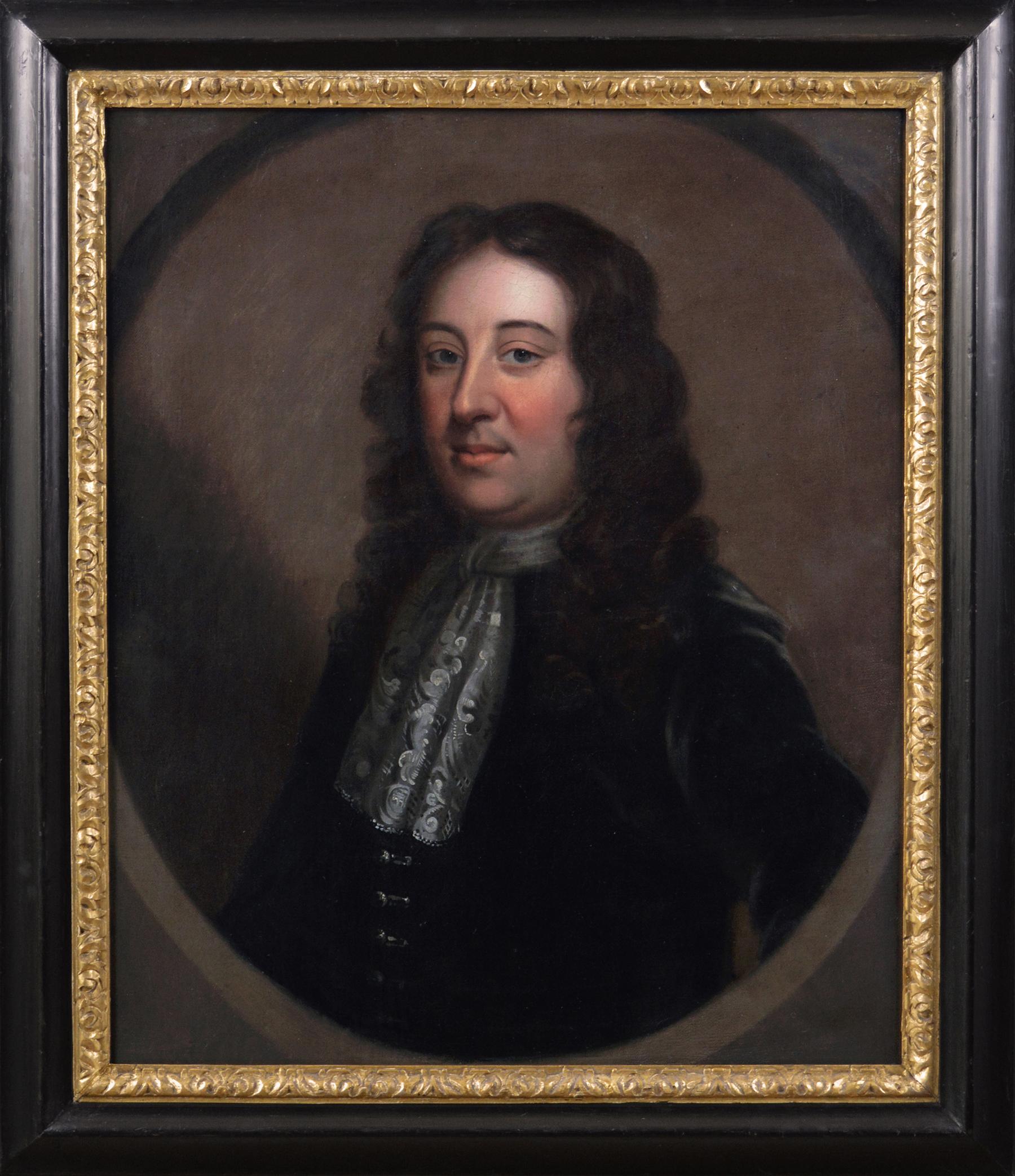
17th Century portrait oil painting of a gentleman
By John Riley
Located in Nr Broadway, Worcestershire
Circle of John Riley
British, (1646-1691)
Portrait of a Gentleman
Oil on canvas
Image size: 29 inches x 24 inches
Size including frame: 36 inches x 31 inch...
Category
17th Century Old Masters Portrait Paintings
Materials
Canvas, Oil