Items Similar to Portrait of King Edward VI, Oil on panel with Gold Leaf, 18th Century English
Want more images or videos?
Request additional images or videos from the seller
1 of 7
English school 18th centuryPortrait of King Edward VI, Oil on panel with Gold Leaf, 18th Century English
$23,181.35
£17,000
€19,740.22
CA$31,942.79
A$35,112.91
CHF 18,434.11
MX$417,517.75
NOK 236,735.88
SEK 215,640.81
DKK 147,491.13
About the Item
Oil on oak panel
Image size: 25 1/2 x 19 inches (37.5 x 27 inches)
18th Century Auricular gilt frame
Provenance
New York private collection
This portrait of the King Edward VI depicts the boy-king standing in a black and gold embroidered doublet, wearing a jewelled cap. King Edward holds a staff with a globus cruciger set on the table beside him. No expense has been spared in the making of this piece, with gold leaf being applied in many areas to give the effect of the costume's gold embroidery, chain of office and other metal accessories.
As the precious male heir to the Tudor dynasty, Edward's childhood was very well documented through portraiture with the earliest portrait of the young prince being developed by Holbein when he was only two years old. The heir to the English throne, ‘His Majesty’s most noble jewel’, was brought up with every precaution to ensure his good health. Recent research reveals him as a normally strong and healthy boy, fond of athletic exercises such as hunting and hawking.
Edward was little more than nine years old when he succeeded to the throne on the death of his father Henry VIII in 1547. Edward's reign was fated to be short as he was only fifteen when he died. After Edward’s accession to the throne, he appears to have sat only once for his portrait in around 1550, painted by William Scrots. Scrots had recently inherited the mantle of ‘King’s Painter’ from Holbein in 1545, and at the Prince’s succession, he oversaw in his studio the production of numerous portraits of Edward. This sitting was the likely source for all the subsequent variants, in all shapes and sizes, produced of Edward as King, by the Scrots studio, both during the monarch’s brief reign and after Elizabeth I’s accession and the subsequent re-affirmation of the Protestant faith.
In April 1552, he suffered from measles and smallpox, recovering by the end of May, and thereafter he was very much under the influence of the Duke of Northumberland. However, early in 1553, Edward became ill (possibly with consumption), from which he never recovered. At this time, the Duke of Northumberland convinced Edward to ‘devise’ the succession to Lady Jane Grey, Northumberland’s daughter-in-law. Edward VI died on 6 July 1553 and was buried in Westminster Abbey.
- Creator:English school 18th century
- Dimensions:Height: 25.5 in (64.77 cm)Width: 18 in (45.72 cm)
- More Editions Sizes:1 of 1Price: $23,181
- Medium:
- Movement Style:
- Period:
- Condition:
- Gallery Location:London, GB
- Reference Number:1stDibs: LU52414262012
About the Seller
5.0
Gold Seller
Premium sellers maintaining a 4.3+ rating and 24-hour response times
Established in 2007
1stDibs seller since 2014
85 sales on 1stDibs
Typical response time: 3 hours
- ShippingRetrieving quote...Shipping from: London, United Kingdom
- Return Policy
More From This Seller
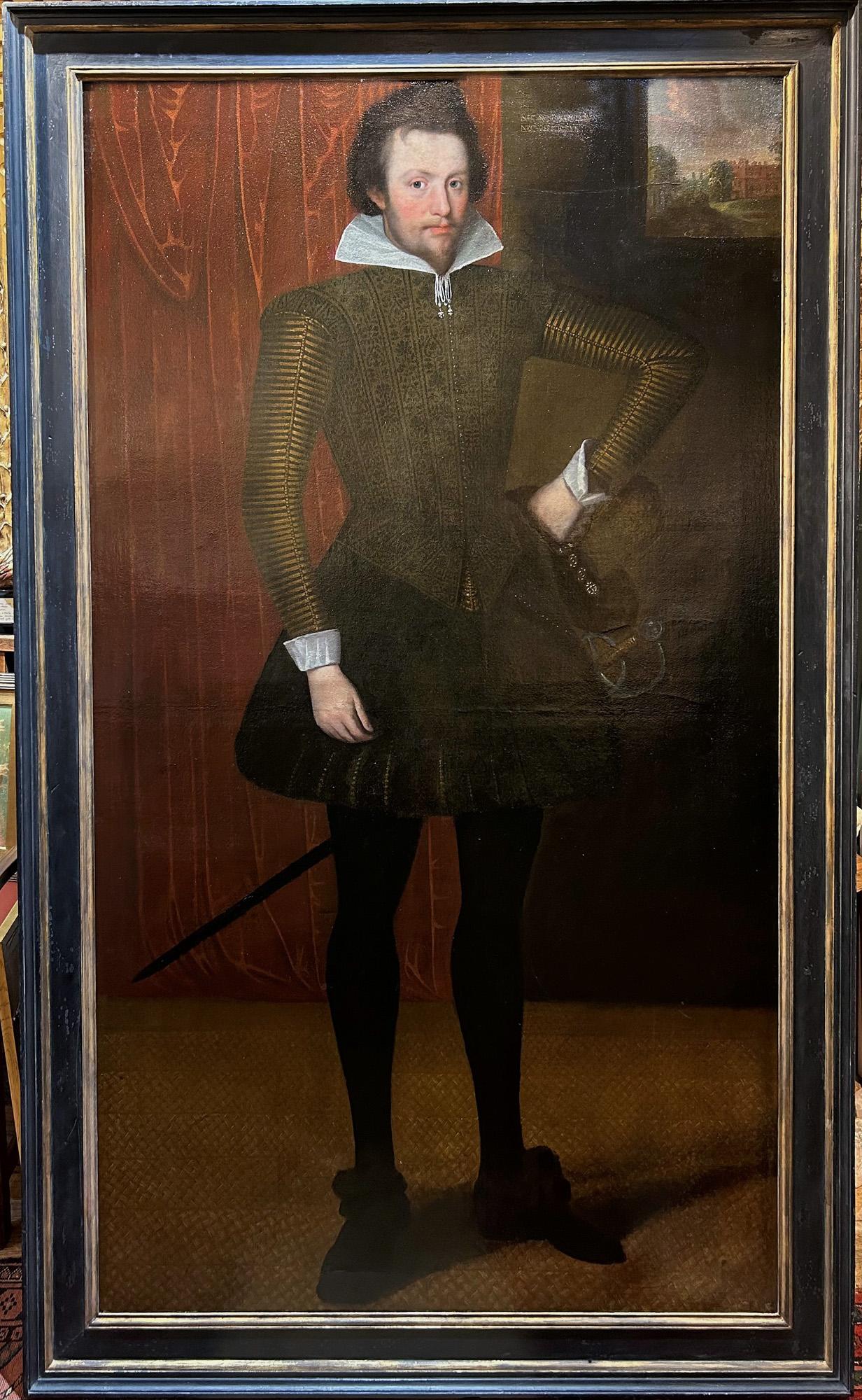
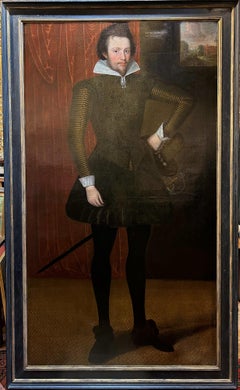
View AllSir Rowland Cotton (1581 – 1634), Tudor Oil on Canvas, Life Size Painting
Located in London, GB
Oil on original canvas
Image size: 78 1/4 x 44 inches (199 x 112 cm)
Contemporary style frame
Provenance
Sir Rowland Cotton, 1608
Family Descent
Private Collection
Sir Rowland Cot...
Category
17th Century English School Figurative Paintings
Materials
Canvas, Oil
Portrait of a King
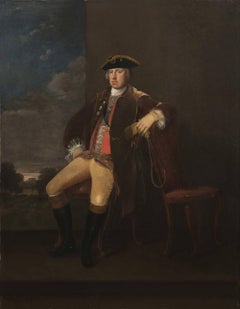
s Messenger, 18th Century English Artist, Original Frame
By Charles Philips
Located in London, GB
Charles Philips
1703 - 1747
Portrait of a King's Messenger
Oil on canvas
Image size: 35 ¾ x 28 inches
Original gilt frame
King's Messenger
The job of a King's Messenger was that of a diplomatic courier, hand-carrying important and secret documents around the world. Some say that the history of the sovereigns' messengers goes back to 1199, but the first known messenger was John Norman, who in 1485 earned 4d (1½ pence) per day for carrying the state papers of Richard III.
The silver greyhound on the messenger's badge dates back to Charles II. In 1660, during his exile at Breda, Netherlands, Charles II issued a declaration of amnesty to all those who had opposed him and his father. He used messengers to make his intentions known. In answer to the messenger's question "How will they know me?", Charles reached forward to a silver bowl on the table in front of him. This bowl, with four decorative greyhounds standing proud above the rim, was well known to all courtiers. Charles broke off a greyhound and gave it to the messenger as a guarantee that the message came from him. From that date, the King's Messenger always wore a silver greyhound around his neck.
Later, dating from George II or III, a badge with the Royal Arms in enamel, with the greyhound suspended beneath, was worn. A George III example of the King's Messenger Badge, pre 1800, sold for over £30,000 pounds some years ago.
The silver greyhounds were minted for each new reign, except the brief one of King Edward VIII. The sovereign's messengers were originally controlled by the Lord Chamberlain, being Messengers of the Great Chamber. When the Foreign Office was created in 1782, the messengers remained common to the three Secretaries of State.
Charles Philips was an English artist known for painting a number of portraits and conversation pieces for noble and Royal patrons in the mid-eighteenth century.
Philips was baptised in the combined parish of St Mildred, Poultry with St Mary...
Category
18th Century Portrait Paintings
Materials
Canvas, Oil
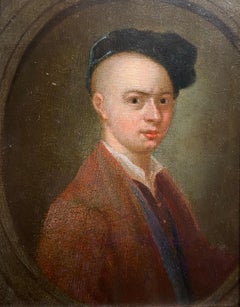
Self-Portrait - Royal Academy Founding Member, 18th Century
By Francis Hayman
Located in London, GB
Francis Hayman RA
1708–1776
Self-Portrait
Oil on oak panel
Image size: 8 x 6¼ inches
Contemporary gilt frame
This newly discovered work is the earliest known self portrait by Francis Hayman, dated to the mid to late 1720’s. The small scale of the portrait gives it a strong sense of intimacy. Whereas clients would often dress themselves in their best clothes for a sitting, Hayman has portrayed himself in informal attire, with his shirt unbuttoned and a wig cap.
Born in 1708 to a respectable Devonshire family, his training began at the tender age of ten under the tutelage of the historical painter Robert Brown, who was probably an uncle. By the 1730’s he is known to have been engaged in painting scenery for the popular theatres on Goodman’s Fields and Drury Lane. He established a studio on St Martin’s Lane, and demonstrated his versatility as one of the most
important painters of his time in portraits, illustration and history painting.
Indeed, he was one of the first English painters deemed to have the skill and proficiency to rival that of the foreign masters, such as Holbein and Kneller, who were brought in by the court to make up for the perceived shortcomings of the native artists. Led by William Hogarth, Hayman and other artists began to create a new movement in the English art world. Thomas Gainsborough was one of his pupils, whom he is said to have introduced to the more lascivious and debauched underbelly of London life.
After mostly making his living as an illustrator, in the 1740’s Hayman was commissioned by the proprietor of the Vauxhall Pleasure Gardens, Jonathan Tyers, to produce a series of four large celebratory canvases depicting British victories from the Seven Years War. His association with Tyers continued, and over the next ten years he produced a number of large decorative paintings...
Category
18th Century Old Masters Portrait Paintings
Materials
Oak, Oil Pastel
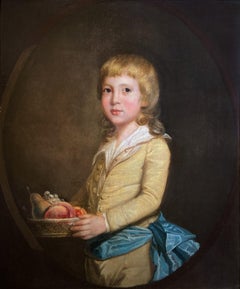
Portrait of a Young Boy Carrying a Fruit Basket, 18th Century Oil on Canvas
By Thomas Beach
Located in London, GB
Oil on canvas
Image size: 30 x 25 inches (76 x 63.5 cm)
Contemporary hand-carved frame
This is a charming 18th century portrait of a young boy, sporting a golden child's two-piece w...
Category
18th Century English School Portrait Paintings
Materials
Canvas, Oil
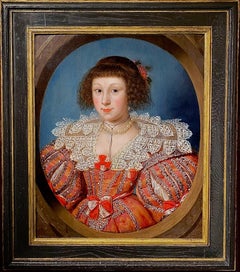
Portrait of a Girl, 17th Century English School Old Masters Oil
By Gilbert Jackson
Located in London, GB
Gilbert Jackson
English Active: 1620 - 1650
Portrait of a Girl
Oil on panel, signed upper left and Inscribed upper right
Image size: 24 ½ x 20 inches
Contemporary style hand made...
Category
17th Century Old Masters Portrait Paintings
Materials
Oil
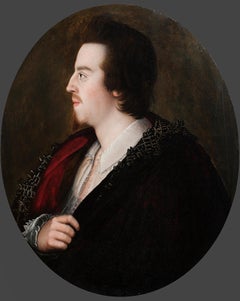
Portrait of William Herbert, 3rd Earl of Pembroke, Early 17th Century Portrait
Located in London, GB
English School, (circa 1600)
Portrait of William Herbert, 3rd Earl of Pembroke
Oil on panel, oval
Image size: 29¼ x 23⅞ inches
Painted wooden frame
Provenance:
176, Collection of Francis Greville, 1st Earl of Warwick.
The Trustees of the Lord Brooks’ Settlement, (removed from Warwick Castle).
Sotheby’s, London, 22nd March 1968, lot 81.
Painted onto wooden panel, this portrait shows a dark haired gentleman in profile sporting an open white shirt. On top of this garments is a richly detailed black cloak, decorated with gold thread and lined with a sumptuous crimson lining. With the red silk inside it’s all very expensive and would fall under sumptuary laws – so this is a nobleman of high degree.
It’s melancholic air conforms to the contemporary popularity of this very human condition, evident in fashionable poetry and music of the period. In comparison to our own modern prejudices, melancholy was associated with creativity in this period.
This portrait appeared in the earliest described list of pictures of Warwick castle dating to 1762. Compiled by collector and antiquary Sir William Musgrave ‘taken from the information of Lord & Lady Warwick’ (Add. MSS, 5726 fol. 3) is described;
‘8. Earl of Essex – an original by Zuccharo – seen in profile with black hair. Holding a black robe across his breast with his right hand.’
As tempting as it is to imagine that this is a portrait of Robert Devereux, the 2nd Earl Essex, we might take this with a pinch of salt. Its identification with this romantic and fatal Elizabethan might well have been an attempt to add romance to Warwick Castle’s walls. It doesn’t correspond all that well with Essex’s portraits around 1600 after his return from Cadiz. Notably, this picture was presumably hung not too far away from the castle’s two portraits of Queen Elizabeth I. The first, and undoubtedly the best, being the exquisite coronation portrait that was sold by Lord Brooke in the late 1970s and now hangs in the National Portrait Gallery. The second, described as being ‘a copy from the original at Ld Hydes’, has yet to resurface.
The portrait eventually ended up being hung in the State Bedroom of Warwick Castle.
Archival documents present one other interesting candidate. The Greville family’s earliest inventory of paintings, made in 1630 at their home Brooke House in Holborn, London, describes five portraits of identified figures. All five belonged to the courtier, politician and poet Sir Fulke Greville (1554-1628), 1st Baron Brooke, and were hung in the ‘Gallerie’ of Brooke House behind yellow curtains. One of them was described as being of ‘Lord of Pembrooke’, which is likely to have been William Herbert (1580-1630), 3rd Earl of Pembroke. William was the eldest son of Greville’s best friend’s sister Mary Sidney, and was brought up in the particularly literary and poetically orientated household which his mother had supported. Notably, the 3rd Earl was one of the figures that Shakespeare’s first folio was dedicated to in 1623.
The melancholic air to the portrait corresponds to William’s own pretensions as a learned and poetic figure. The richness of the robe in the painting, sporting golden thread and a spotted black fabric, is indicative of wealth beyond that of a simple poet or actor. The portrait’s dating to around the year 1600 might have coincided with William’s father death and his own rise to the Pembroke Earldom. This period of his life too was imbued with personal sadness, as an illicit affair with a Mary Fitton had resulted in a pregnancy and eventual banishment by Elizabeth I to Wilton after a short spell in Fleet Prison. His illegitimate son died shortly after being born. Despite being a close follower of the Earl of Essex, William had side-stepped supporting Devereux in the fatal uprising against the Queen and eventually regained favour at the court of the next monarch James I.
His linen shirt is edged with a delicate border of lace and his black cloak is lined on the inside with sumptuous scarlet and richly decorated on the outside with gold braid and a pattern of embroidered black spots.
Despite the richness of his clothes, William Herbert has been presented in a dishevelled state of semi-undress, his shirt unlaced far down his chest with the ties lying limply over his hand, indicating that he is in a state of distracted detachment. It has been suggested that the fashion for melancholy was rooted in an increase in self-consciousness and introspective reflection during the late 16th and early 17th centuries.
In contemporary literature melancholy was said to be caused by a plenitude of the melancholy humor, one of the four vital humors, which were thought to regulate the functions of the body. An abundance of the melancholia humor was associated with a heightened creativity and intellectual ability and hence melancholy was linked to the notion of genius, as reflected in the work of the Oxford scholar Robert Burton, who in his work ‘The Anatomy of Melancholy’, described the Malcontent as ‘of all others [the]… most witty, [who] causeth many times divine ravishment, and a kind of enthusiamus… which stirreth them up to be excellent Philosophers, Poets and Prophets.’ (R. Burton, The Anatomy of Melancholy, London, 1621 in R. Strong, ‘Elizabethan Malady: Melancholy in Elizabethan and Jacobean Portraits’, Apollo, LXXIX, 1964).
Melancholy was viewed as a highly fashionable affliction under Elizabeth I, and her successor James I, and a dejected demeanour was adopted by wealthy young men, often presenting themselves as scholars or despondent lovers, as reflected in the portraiture and literature from this period. Although the sitter in this portrait is, as yet, unidentified, it seems probable that he was a nobleman with literary or artistic ambitions, following in the same vain as such famous figures as the aristocratic poet and dramatist, Edward de Vere...
Category
Early 17th Century Old Masters Portrait Paintings
Materials
Oil, Wood Panel
You May Also Like
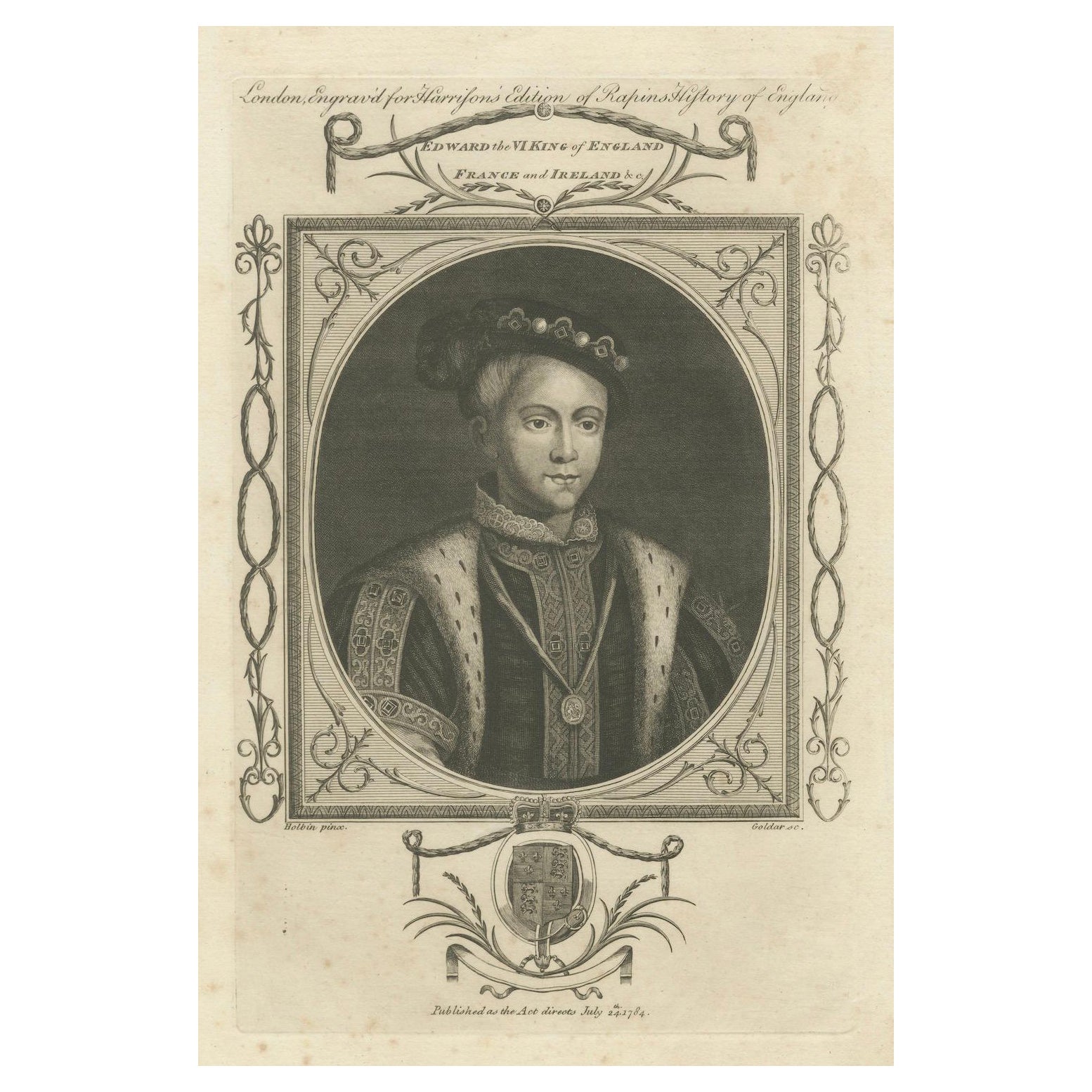
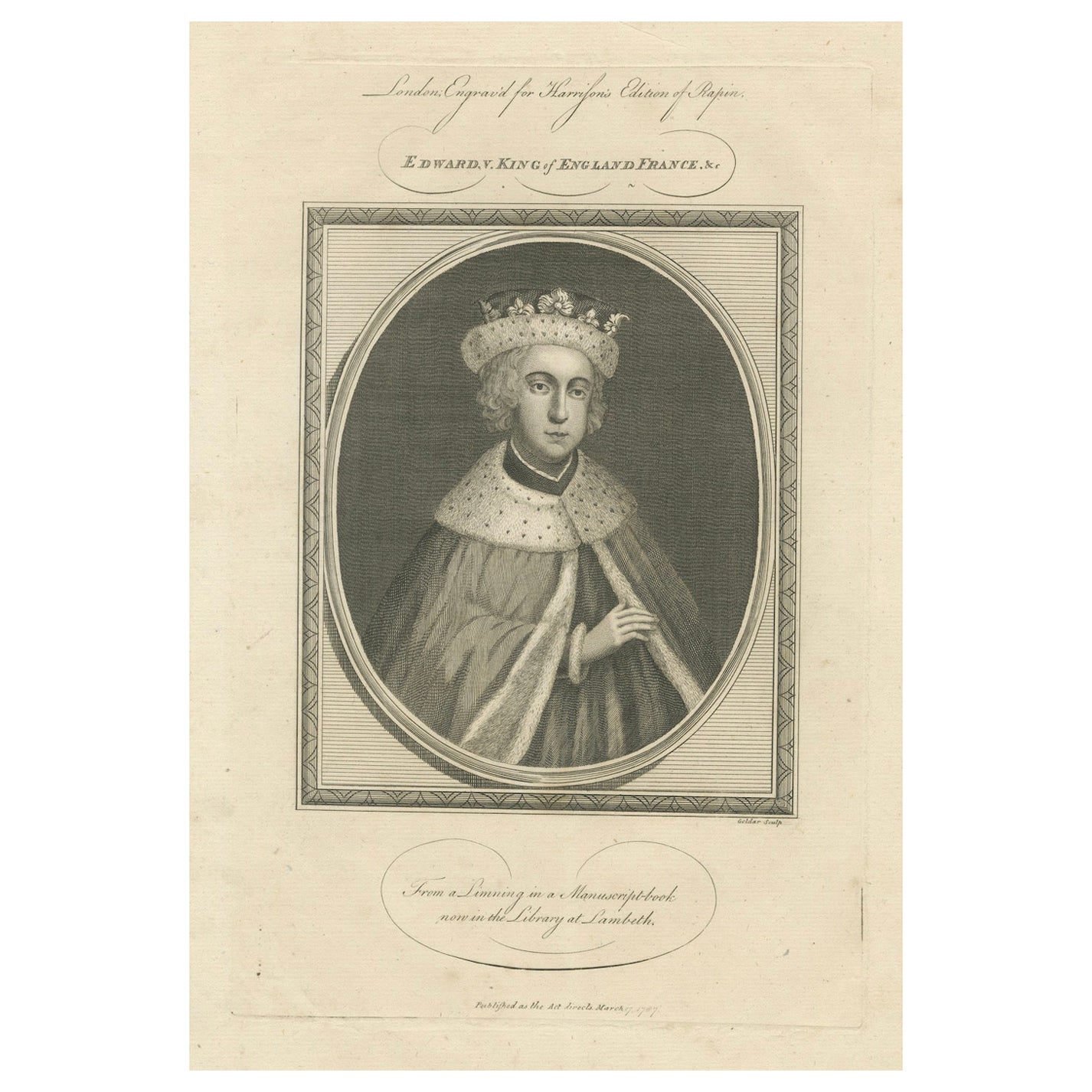
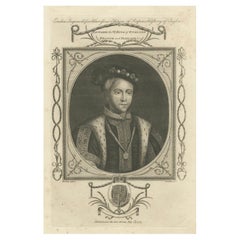
1784 Engraved Portrait of Edward VI - Young English Monarch
Located in Langweer, NL
An original antique engraved portrait from Harrington's edition of "Rapin's History of England."
The text identifies the subject as Edward the VI, King of England, France, and Ireland. The engraving is again by Goldar, indicating John Goldar's work, and it was published as the act directs on July 22nd, 1784.
Edward VI was the son of Henry VIII and his third wife, Jane Seymour. Born on October 12...
Category
Antique 1780s Prints
Materials
Paper
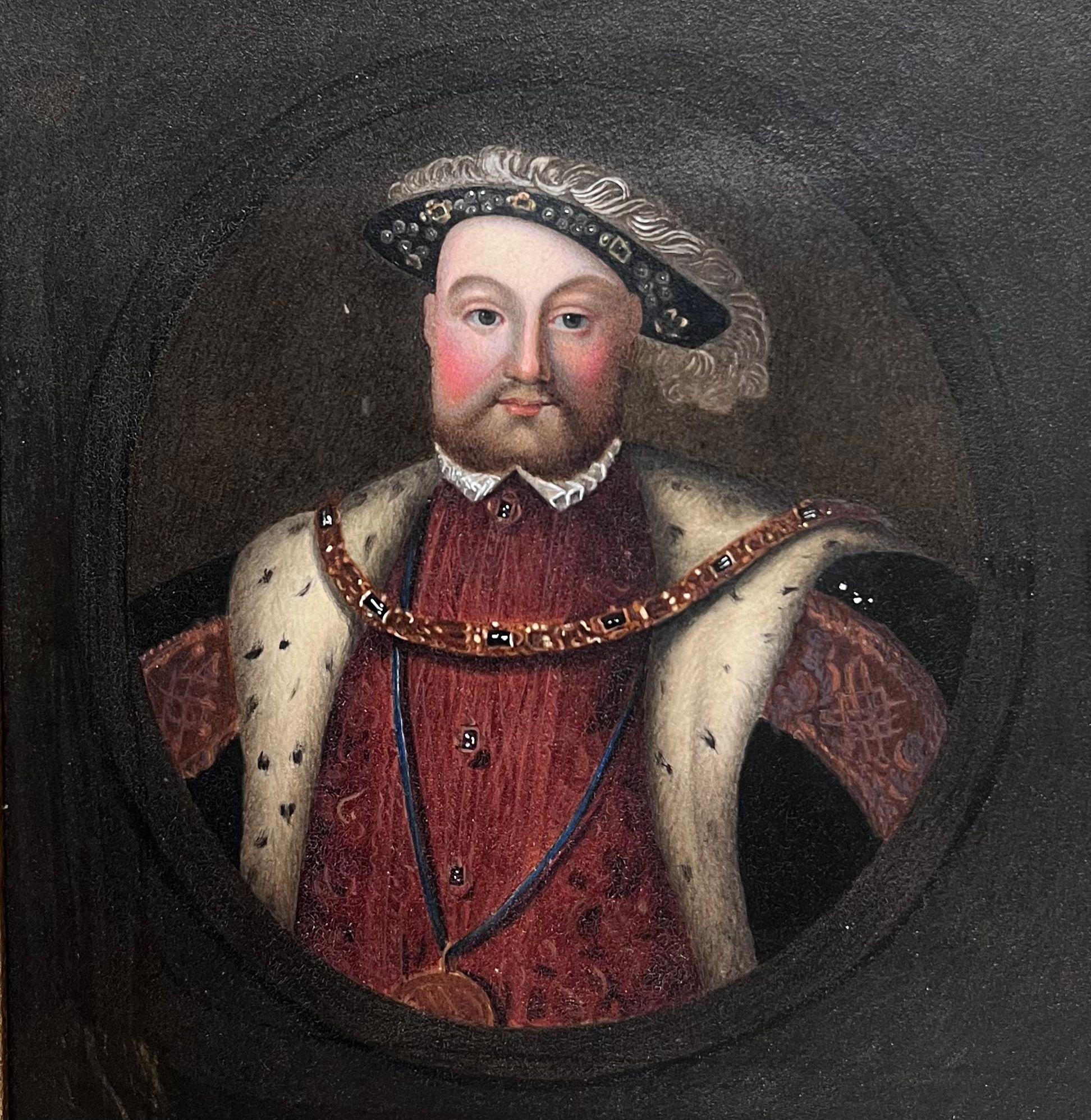
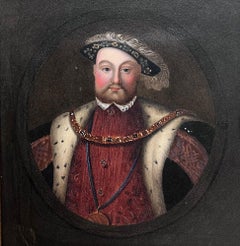
Portrait King Henry 8th VIII Antique English Painting Famous Monarch
Located in Cirencester, Gloucestershire
King Henry VIII
English artist, circa 1840's
oil on paper laid on board, framed
framed: 10.5 x 10inches
board: 8 x 7.5 inches
inscribed verso
provenance: private collection, UK
cond...
Category
Early 19th Century English School Portrait Paintings
Materials
Oil
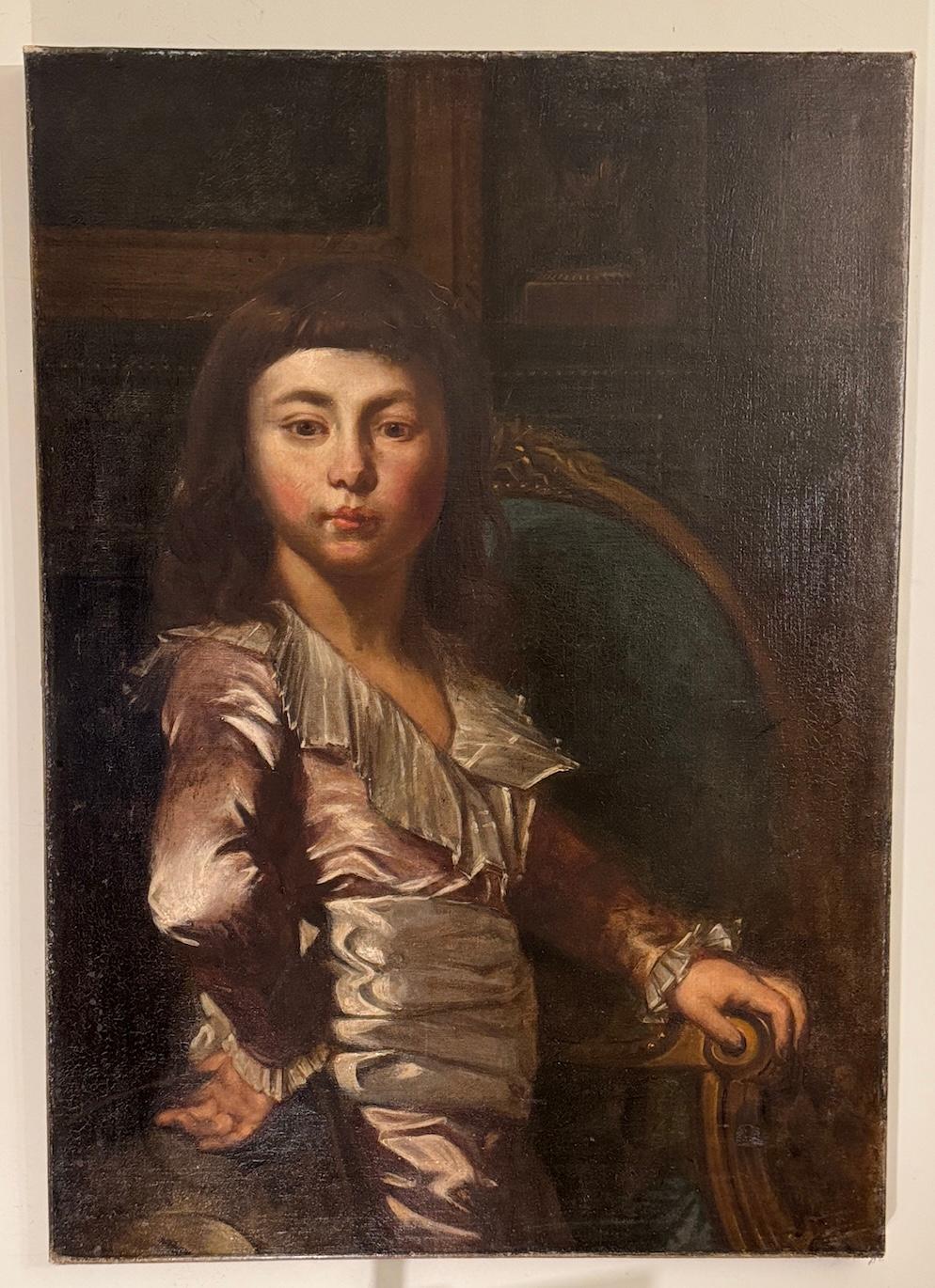
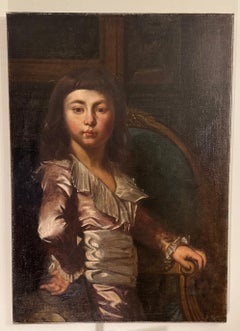
19th century English Portrait of a Young boy in a Cavalier costume
Located in Woodbury, CT
This elegant English 19th-century portrait of a young boy dressed in a Cavalier costume, painted circa 1860, is a striking example of Victorian portraiture that seamlessly combines h...
Category
1860s Old Masters Portrait Paintings
Materials
Canvas, Oil
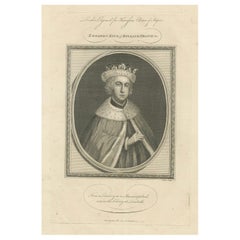
1797 Engraved Portrait of Young King Edward VI - Reformation Leader
Located in Langweer, NL
An engraved portrait of Edward VI, who was King of England and Ireland from 1547 until his death in 1553.
Edward was the son of Henry VIII and his third wife, Jane Seymour, and he ...
Category
Antique 1780s English Prints
Materials
Paper
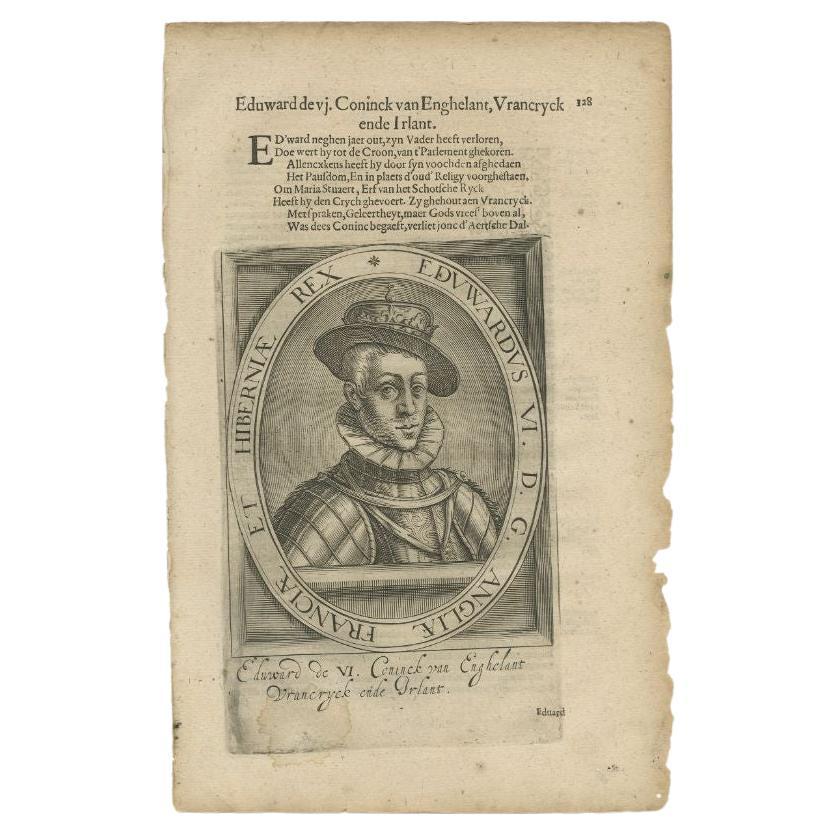
Antique Portrait of Edward VI of England by Janszoon, 1615
Located in Langweer, NL
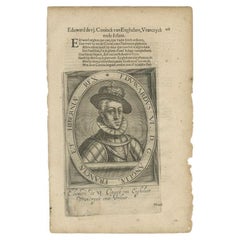
Antique portrait titled 'Iacobus VI (..)'. Portrait of Edward VI of England. This print originates from 'Tooneel der keyseren ende coningen van christenryck ...
Category
Antique 17th Century Prints
Materials
Paper
Portrait Young Boy Lombard School 17th Century Paint Oil on canvas Old master
Located in Riva del Garda, IT
Lombard School, 17th century
Portrait of a Young Boy
oil on canvas
109 x 78 cm - 127 x 97 cm with frame
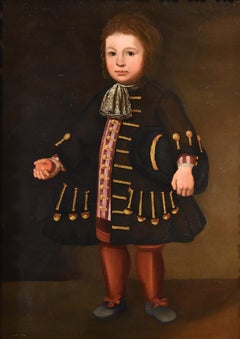
The protagonist of the offered canvas is a chubby little boy, aged approxima...
Category
17th Century Old Masters Paintings
Materials
Oil
$9,342 Sale Price
20% Off
More Ways To Browse
King Edward
Antique Embroidered Gold
Elizabeth I
Antique Gold Embroidery
18th Century English Painting
18th Century Gilt Frame
Westminster Abbey
Edward Vi
Lady Jane
Globus Cruciger
Auricular Frame
Fiddler On The Roof
Portrait Bishop
Presidents Oil Paintings
Wpa Portrait
Clifford Hanley
Countess Painting
Michael Lawrence