Items Similar to 16th Century by Francesco Traballesi Portrait of a young man with a glove
Want more images or videos?
Request additional images or videos from the seller
1 of 12
Francesco Traballesi 16th Century by Francesco Traballesi Portrait of a young man with a glove16th Century
16th Century
$73,234.51
£54,698.56
€61,200
CA$100,893.94
A$109,956.64
CHF 58,226.78
MX$1,320,695.09
NOK 737,163.96
SEK 677,749.75
DKK 466,238.08
About the Item
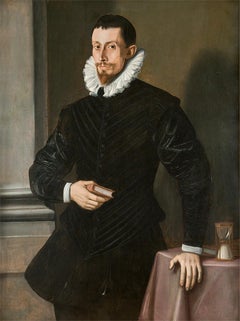
Francesco Traballesi (Florence, Italy, 1541 - Mantua, Italy, 1588)
Title: Portrait of a young man with a glove
Medium: Oil on panel
Dimensions: without frame 69.5 × 86.5 cm
Painting without frame
Not signed
Expertise by Marco Ciampolini, art historian
Publications: From Sacro to Profano, the Giorgio Baratti art collection from Milan, exhibition catalogue curated by Daiva Mitrulevičiūtė, Giovanni Matteo Guidetti and Ileana Maniscalco, (16 February – 27 September 2020), Vilnius, National Museum - Palace of the Grand Dukes of Lithuania, pp. 578-583
We do not know the collecting history of this painting, which appeared only in recent times in an exhibition at the Luigi Diciotto antiques gallery in Piacenza (Gregori, 2003, n.3). The rather worn sealing-wax bollo on the back of the panel does not help us with its provenance. It shows a bishop’s coat of arms, with two affronted lions and a tree, arms that are common to many Italian families. The painting shows an almost beardless young man portrayed slightly from the side and struck by a light source that, against the dark tones of the drapery and clothing, stresses the solid geometry of the head and right hand. This serves to concentrate our attention on the expression of the proud and subtly melancholic face, erect above the white lace collar, while the fine leather glove grasped by the fingers is a sign of nobility and authority. The fashion of the attire also proves that the portrait dates to the third quarter of the 16th century. The composition, together with the excellent descriptive quality, indicates the brush of an artist familiar with portraiture, whom Mina Gregori, in the only analytic study of the painting, recognises as Francesco Traballesi, an artist who was recalled by Filippo Baldinucci for his ability as a portraitist. Francesco Traballesi was an Italian painter and architect. He was born in Florence in 1541, flourished in Rome during the papacy of Pope Gregory XIII (1572–1585), and died in 1588 in Mantua, where he was working as an architect for the duke Vincenzo Gonzaga (1562-1612).
- Creator:Francesco Traballesi (1541 - 1588, Italian)
- Creation Year:16th Century
- Dimensions:Height: 27.37 in (69.5 cm)Width: 34.06 in (86.5 cm)
- More Editions Sizes:without frame 69.5 × 86.5 cmPrice: $73,235
- Medium:
- Movement Style:
- Period:
- Condition:
- Gallery Location:Milano, IT
- Reference Number:1stDibs: LU1701217344802
About the Seller
5.0
Vetted Professional Seller
Every seller passes strict standards for authenticity and reliability
Established in 1964
1stDibs seller since 2021
Typical response time: 22 hours
- ShippingRetrieving quote...Shipping from: Milano, Italy
- Return Policy
More From This Seller
View AllEarly 17th Century by Tiberio Titi Portrait of a Gentleman Oil on panel
Located in Milano, Lombardia
Tiberio Titi (Florence, Italy, 1573 – 1638)
Title: Portrait of a Gentleman
Medium: Oil on panel
Dimensions: Without frame 122 x 91 cm – with frame 162 x 133 x 10 cm
Publications: G...
Category
Early 17th Century Old Masters Portrait Paintings
Materials
Oil, Wood Panel
$85,105 Sale Price
20% Off
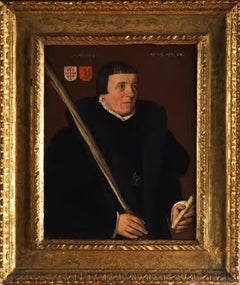
16th Century Jan van Scorel Portrait of a member of the brotherhood of Jerusalem
By Jan van Scorel
Located in Milano, Lombardia
Jan van Scorel (Schoorl, The Netherlands, 1495 – Utrecht, The Netherlands, 1562)
Title: Portrait of a member of the brotherhood of Jerusalem
Medium: Oil on panel
Dimension: without ...
Category
16th Century Old Masters Portrait Paintings
Materials
Oil, Wood Panel
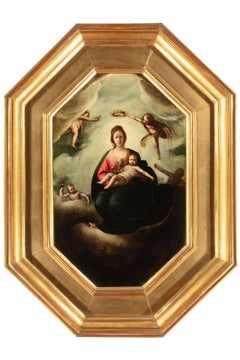
17th Century by Giovanni Stefano Danedi Madonna and Child Crowned by Angels
Located in Milano, Lombardia
Giovanni Stefano Danedi, called Montalto (Treviglio, Italy, 1612 - Milan, Italy, 1690)
Title: Madonna and Child crowned by angels
Medium: Oil on panel
Dimensions: without frame 58 x ...
Category
17th Century Old Masters Portrait Paintings
Materials
Panel, Oil
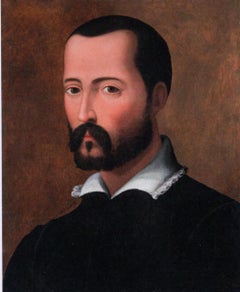
16th Century by Giovanni Maria Butteri Portrait of Francesco I Oil on Panel
Located in Milano, Lombardia
Giovanni Maria Butteri (Florence, Italy, 1540 - 1606)
Title: Portrait of Francesco I
Medium: Oil on panel
Dimensions: without frame cm. 47.7 x 39 - with frame cm. 55.2 x 46.5
Expertise by Carlo Falciani, art historian
Fairs: The International Biennial of Antiques in Florence 2024 (BIAF, Biennale Internazionale dell’Antiquariato di Firenze)
Publications: From Sacro to Profano, the Giorgio Baratti art collection from Milan, exhibition catalogue curated by Daiva Mitrulevičiūtė, Giovanni Matteo Guidetti and Ileana Maniscalco, (16 February – 27 September 2020), Vilnius, National Museum - Palace of the Grand Dukes of Lithuania, pp. 566-569.
This valuable portrait, by the painter Giovanni Maria Butteri, an exponent of Mannerism and active mainly in Florence, portrays Francesco I de' Medici (1541 - 1587) eldest son of the Grand Duke of Tuscany...
Category
16th Century Old Masters Portrait Paintings
Materials
Oil, Panel
17th Century by Juan Alfonso Abril Head of St Paul Painting Oil on Canvas
Located in Milano, Lombardia
Juan Alfonso Abril (active in the 17th century in Valladolid, Spain)
Title: Head of Saint Paul
Medium: Oil on canvas
Dimensions: without frame 48.5 x 62 ...
Category
Early 17th Century Old Masters Figurative Paintings
Materials
Oil, Canvas
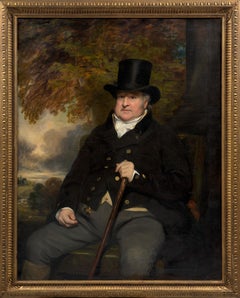
19th Century by Sir Henry Raeburn Portrait of a landowner Oil on canvas
By Sir Henry Raeburn
Located in Milano, Lombardia
Sir Henry Raeburn (Stockbridge, Edinburgh, UK, 1756 - Edinburgh, UK, 1823)
Title: Portrait of a landowner
Year: Early 19th century, 1803
Medium: Oil on canvas
Dimensions: Without fra...
Category
Early 19th Century Old Masters Portrait Paintings
Materials
Canvas, Oil
You May Also Like
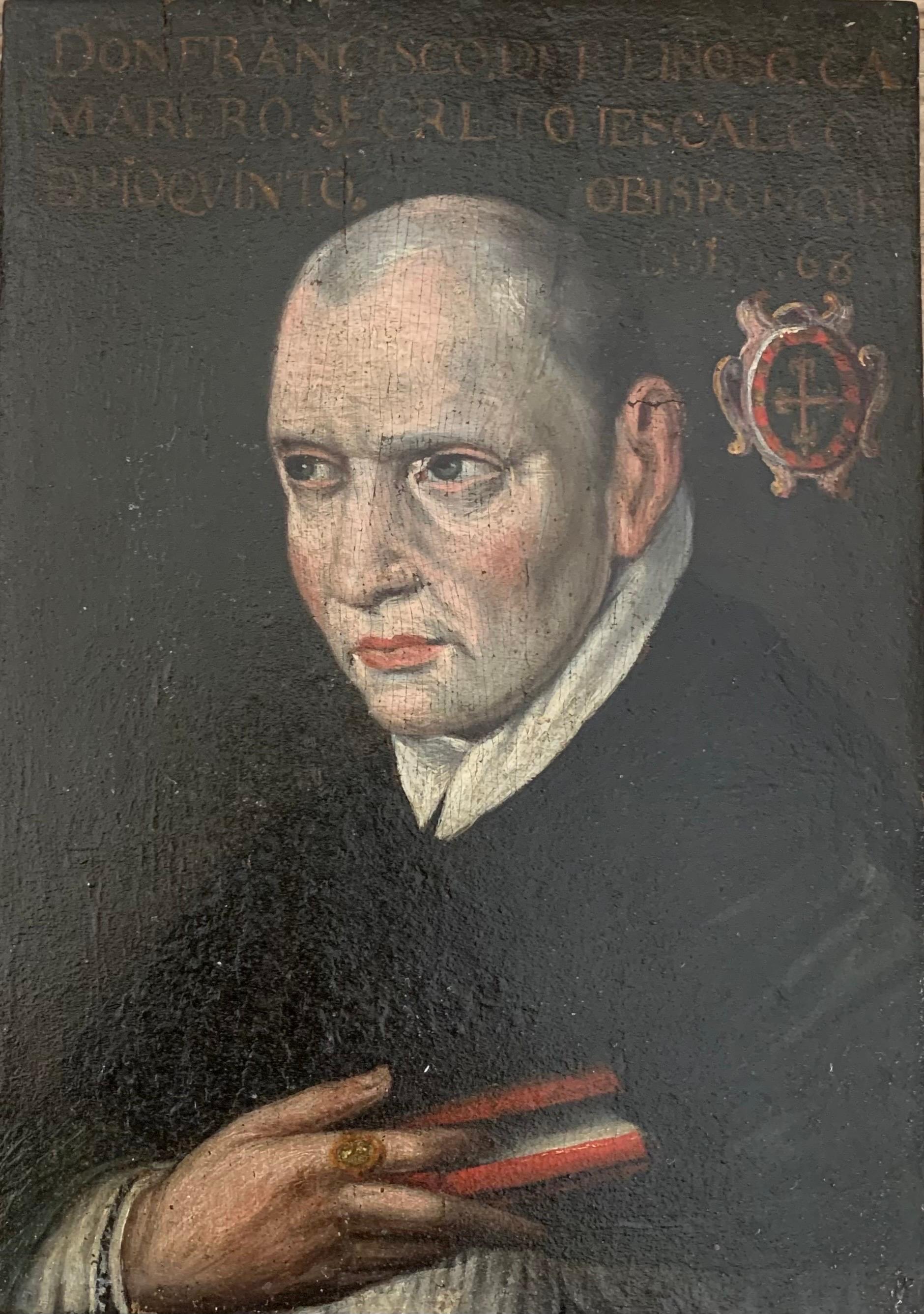
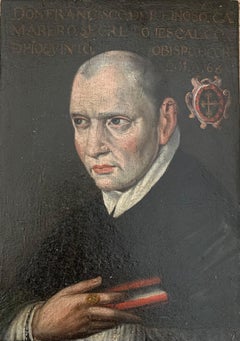
Spanish school. Secretary of Pope Pius V, abbot of Husillos, bishop of Córdoba.
Located in Firenze, IT
Portrait of Francisco de Reynoso y Baeza.
Secretary of Pope Pius V, abbot of Husillos and bishop of Córdoba. Francisci de Reynoso.
Early 17th century.
Small-format portrait from the late Renaissance period.
Spanish school.
Size: Cm 19 x Cm 13.5
Oil on wooden panel.
On the back the fine tablet is strengthened (already in ancient times) by a sheet of parchment.
About 1600-1610.
As often in Mannerist / Late Renaissance portraits, the image of the character is accompanied by the writing that runs at the top, adding a celebratory, historicising touch to the effigy. Let's bring back the sentence here:
DON FRANCISCO DE REINOSO. CAMARERO SECRETO IESCALCO PIO QUINTO OBISCOPO CORDOBA. 68 (? O 7?)
(1534, Autillo de Campos, Spain - 1601, Córdoba)
Francisco de Reynoso was a Spanish cleric, chief chamberlain, and secretary to Pope Pius V, abbot of Husillos, and bishop of Córdoba.
He was the fourth of eleven children. His father was the seventh Lord of Autillo de Campos, and his mother was Juana de Baeza y de las Casas, daughter of Manuel de Baeza, a lawyer of the Royal Council and at the Court of Valladolid.
Francisco de Reynoso was deeply devoted to the Virgin Mary and showed a strong inclination toward religion and piety from an early age.
He studied Latin, arts, and theology at the University of Salamanca.
In 1562, he traveled to Rome with his brothers Pedro and Luis.
In January 1566, following the death of Pope Pius IV, Cardinal Antonio Michele Ghislieri was elected pope, becoming Pius V. From this period until Ghislieri's death in 1572, Francisco de Reynoso served as his chief chamberlain and secretary.
After Pope Pius V died, Francisco de Reynoso returned to Spain and lived for several years in the city of Palencia, where his brother Manuel was a canon.
He supported the Society of Jesus when it was established in Palencia, providing alms to the school's clergy and funding chairs of Letters and Theology at his own expense, as well as donating a significant number of books.
During the brief outbreak of the Black Plague...
Category
17th Century Old Masters Portrait Paintings
Materials
Parchment Paper, Oil, Wood Panel
$1,531 Sale Price
20% Off
Free Shipping
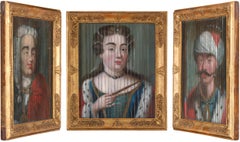
Tri-Directional Portrait Commemorating the Russo-Turkish War
Located in New Orleans, LA
Austrian School
18th Century
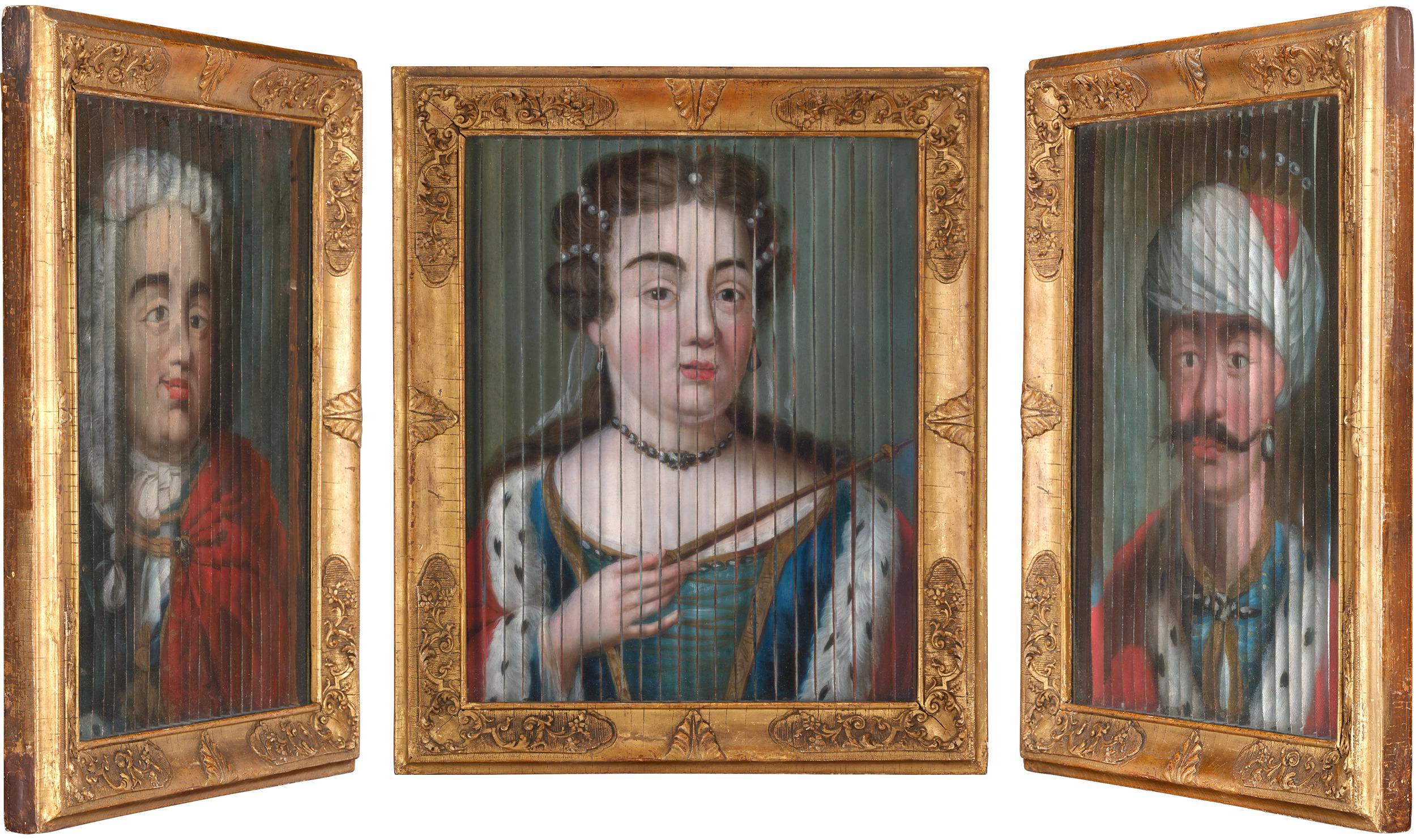
Tri-Directional Portrait Commemorating the Russo-Turkish War
Oil on wooden strips
This extraordinary tri-directional portrait exemplifies the rare innovation known as a triscenorama, capturing a pivotal diplomatic moment through ingenious artistic technique. Employing triangularly cut wooden strips, this remarkable work simultaneously depicts three imperial figures central to the Russo-Turkish War of 1735-1739: Empress Anna Ivanovna Romanova of Russia when viewed directly, Holy Roman Emperor Charles VI from the left and Ottoman Sultan Mahmud I from the right, commemorating the Treaty of Nissa that concluded this significant European conflict.
The portrait utilizes an exceptionally rare optical technique that predates modern movable imaging technology. When observed from different angles, the painted triangular wooden strips create a transformative effect, revealing entirely different imperial portraits as the viewer shifts position. The precision required to execute such a work demonstrates remarkable technical mastery, as the artist had to conceptualize three distinct portraits as well as the meticulous arrangement of the panels. This sophisticated manipulation of perspective creates an interactive viewing experience considered revolutionary for its time.
Almost certainly created by an Austrian artist, this diplomatic artwork likely served as a commemorative piece marking the Treaty of Nissa, signed in September 1739. The treaty concluded Russia's ambitious campaign to secure access to the Black Sea while countering Ottoman raids in Ukraine and the Caucasus regions. Given its exceptional quality and historical significance, this portrait was possibly commissioned by Emperor Charles VI himself, potentially serving as a diplomatic gift to either Empress Anna or Sultan Mahmud I during the treaty negotiations.
Under Empress Anna's leadership, Russia sought to counter devastating raids from Ottoman allies, particularly the Crimean Tatars...
Category
18th Century Old Masters Portrait Paintings
Materials
Wood, Oil, Wood Panel
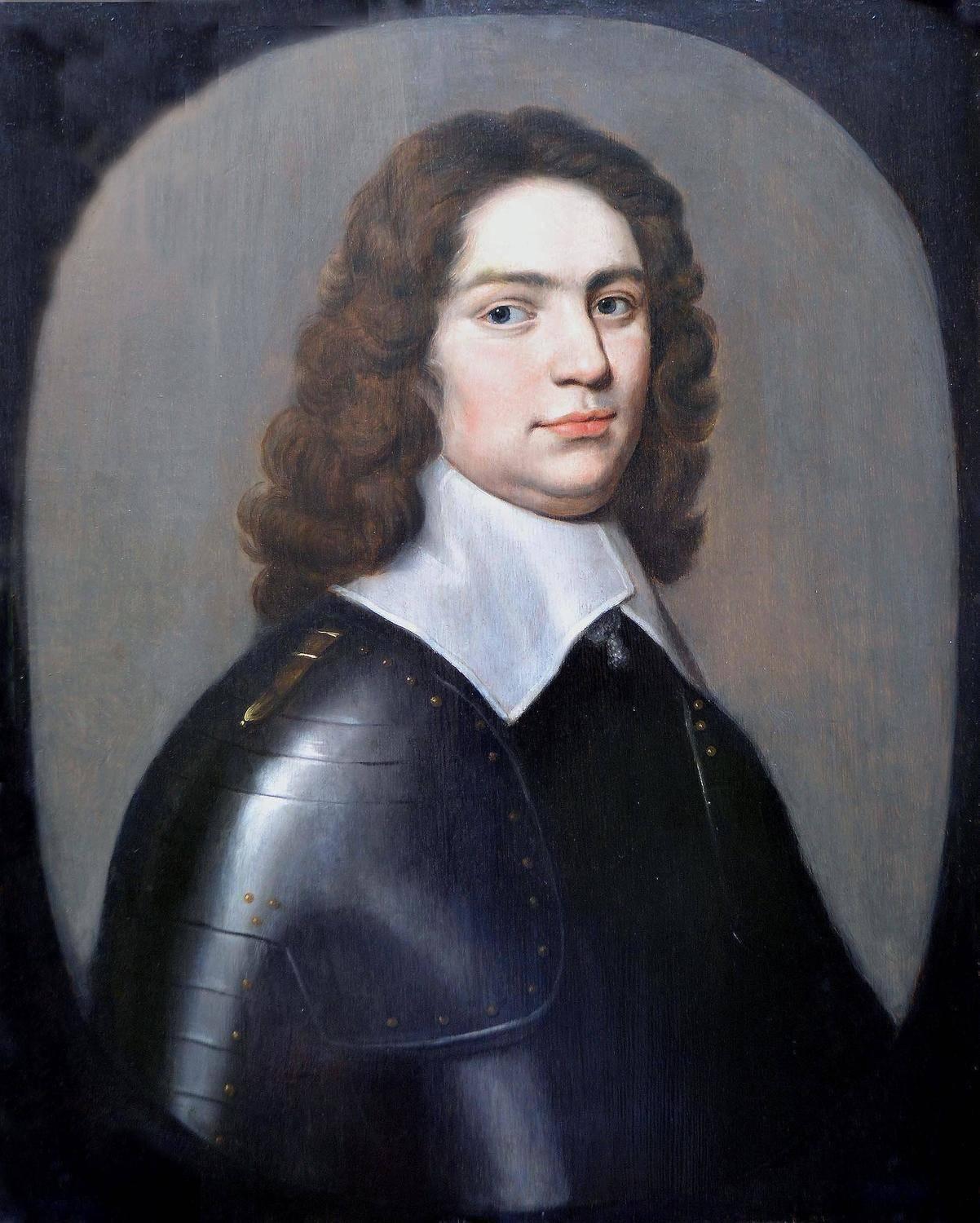
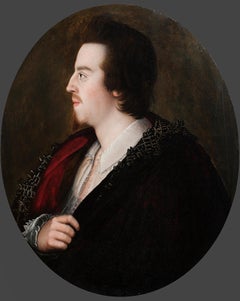
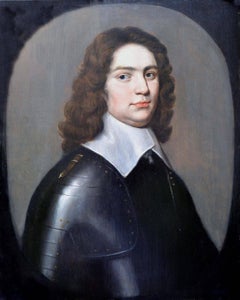
Portrait of William Herbert, 3rd Earl of Pembroke, Early 17th Century Portrait
Located in London, GB
English School, (circa 1600)
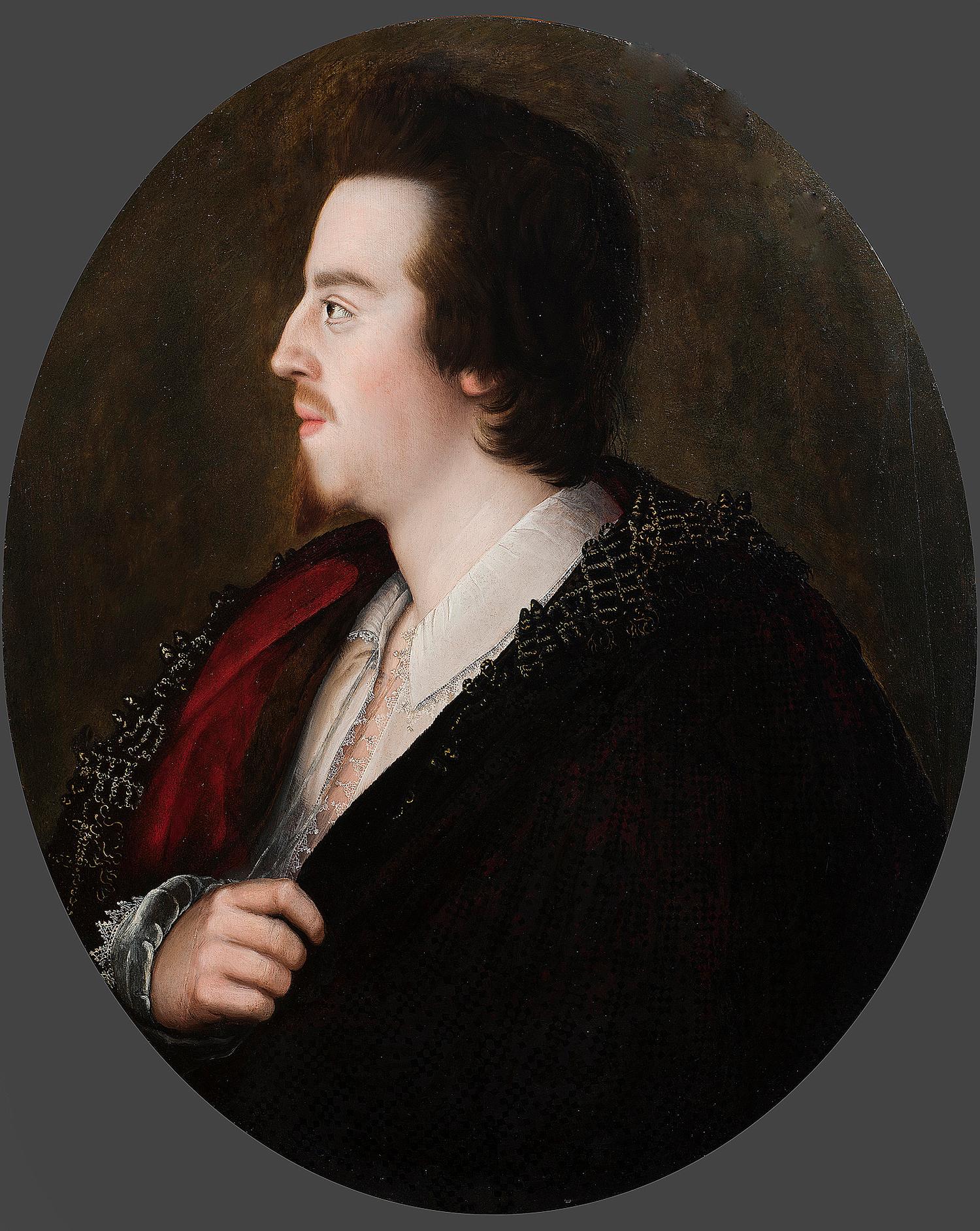
Portrait of William Herbert, 3rd Earl of Pembroke
Oil on panel, oval
Image size: 29¼ x 23⅞ inches
Painted wooden frame
Provenance:
176, Collection of Francis Greville, 1st Earl of Warwick.
The Trustees of the Lord Brooks’ Settlement, (removed from Warwick Castle).
Sotheby’s, London, 22nd March 1968, lot 81.
Painted onto wooden panel, this portrait shows a dark haired gentleman in profile sporting an open white shirt. On top of this garments is a richly detailed black cloak, decorated with gold thread and lined with a sumptuous crimson lining. With the red silk inside it’s all very expensive and would fall under sumptuary laws – so this is a nobleman of high degree.
It’s melancholic air conforms to the contemporary popularity of this very human condition, evident in fashionable poetry and music of the period. In comparison to our own modern prejudices, melancholy was associated with creativity in this period.
This portrait appeared in the earliest described list of pictures of Warwick castle dating to 1762. Compiled by collector and antiquary Sir William Musgrave ‘taken from the information of Lord & Lady Warwick’ (Add. MSS, 5726 fol. 3) is described;
‘8. Earl of Essex – an original by Zuccharo – seen in profile with black hair. Holding a black robe across his breast with his right hand.’
As tempting as it is to imagine that this is a portrait of Robert Devereux, the 2nd Earl Essex, we might take this with a pinch of salt. Its identification with this romantic and fatal Elizabethan might well have been an attempt to add romance to Warwick Castle’s walls. It doesn’t correspond all that well with Essex’s portraits around 1600 after his return from Cadiz. Notably, this picture was presumably hung not too far away from the castle’s two portraits of Queen Elizabeth I. The first, and undoubtedly the best, being the exquisite coronation portrait that was sold by Lord Brooke in the late 1970s and now hangs in the National Portrait Gallery. The second, described as being ‘a copy from the original at Ld Hydes’, has yet to resurface.
The portrait eventually ended up being hung in the State Bedroom of Warwick Castle.
Archival documents present one other interesting candidate. The Greville family’s earliest inventory of paintings, made in 1630 at their home Brooke House in Holborn, London, describes five portraits of identified figures. All five belonged to the courtier, politician and poet Sir Fulke Greville (1554-1628), 1st Baron Brooke, and were hung in the ‘Gallerie’ of Brooke House behind yellow curtains. One of them was described as being of ‘Lord of Pembrooke’, which is likely to have been William Herbert (1580-1630), 3rd Earl of Pembroke. William was the eldest son of Greville’s best friend’s sister Mary Sidney, and was brought up in the particularly literary and poetically orientated household which his mother had supported. Notably, the 3rd Earl was one of the figures that Shakespeare’s first folio was dedicated to in 1623.
The melancholic air to the portrait corresponds to William’s own pretensions as a learned and poetic figure. The richness of the robe in the painting, sporting golden thread and a spotted black fabric, is indicative of wealth beyond that of a simple poet or actor. The portrait’s dating to around the year 1600 might have coincided with William’s father death and his own rise to the Pembroke Earldom. This period of his life too was imbued with personal sadness, as an illicit affair with a Mary Fitton had resulted in a pregnancy and eventual banishment by Elizabeth I to Wilton after a short spell in Fleet Prison. His illegitimate son died shortly after being born. Despite being a close follower of the Earl of Essex, William had side-stepped supporting Devereux in the fatal uprising against the Queen and eventually regained favour at the court of the next monarch James I.
His linen shirt is edged with a delicate border of lace and his black cloak is lined on the inside with sumptuous scarlet and richly decorated on the outside with gold braid and a pattern of embroidered black spots.
Despite the richness of his clothes, William Herbert has been presented in a dishevelled state of semi-undress, his shirt unlaced far down his chest with the ties lying limply over his hand, indicating that he is in a state of distracted detachment. It has been suggested that the fashion for melancholy was rooted in an increase in self-consciousness and introspective reflection during the late 16th and early 17th centuries.
In contemporary literature melancholy was said to be caused by a plenitude of the melancholy humor, one of the four vital humors, which were thought to regulate the functions of the body. An abundance of the melancholia humor was associated with a heightened creativity and intellectual ability and hence melancholy was linked to the notion of genius, as reflected in the work of the Oxford scholar Robert Burton, who in his work ‘The Anatomy of Melancholy’, described the Malcontent as ‘of all others [the]… most witty, [who] causeth many times divine ravishment, and a kind of enthusiamus… which stirreth them up to be excellent Philosophers, Poets and Prophets.’ (R. Burton, The Anatomy of Melancholy, London, 1621 in R. Strong, ‘Elizabethan Malady: Melancholy in Elizabethan and Jacobean Portraits’, Apollo, LXXIX, 1964).
Melancholy was viewed as a highly fashionable affliction under Elizabeth I, and her successor James I, and a dejected demeanour was adopted by wealthy young men, often presenting themselves as scholars or despondent lovers, as reflected in the portraiture and literature from this period. Although the sitter in this portrait is, as yet, unidentified, it seems probable that he was a nobleman with literary or artistic ambitions, following in the same vain as such famous figures as the aristocratic poet and dramatist, Edward de Vere...
Category
Early 17th Century Old Masters Portrait Paintings
Materials
Oil, Wood Panel
Portrait of a Gentleman, 17th Century Dutch Old Masters Oil
Located in London, GB
Circle of Gerard van Honthorst
1592 - 1656
Portrait of a Gentleman
Oil on wooden panel
Image size: 29 x 23 inches
Contemporary gilt frame
Gerard van Honthorst was a Dutch Golden Age...
Category
17th Century Old Masters Portrait Paintings
Materials
Oil, Wood Panel
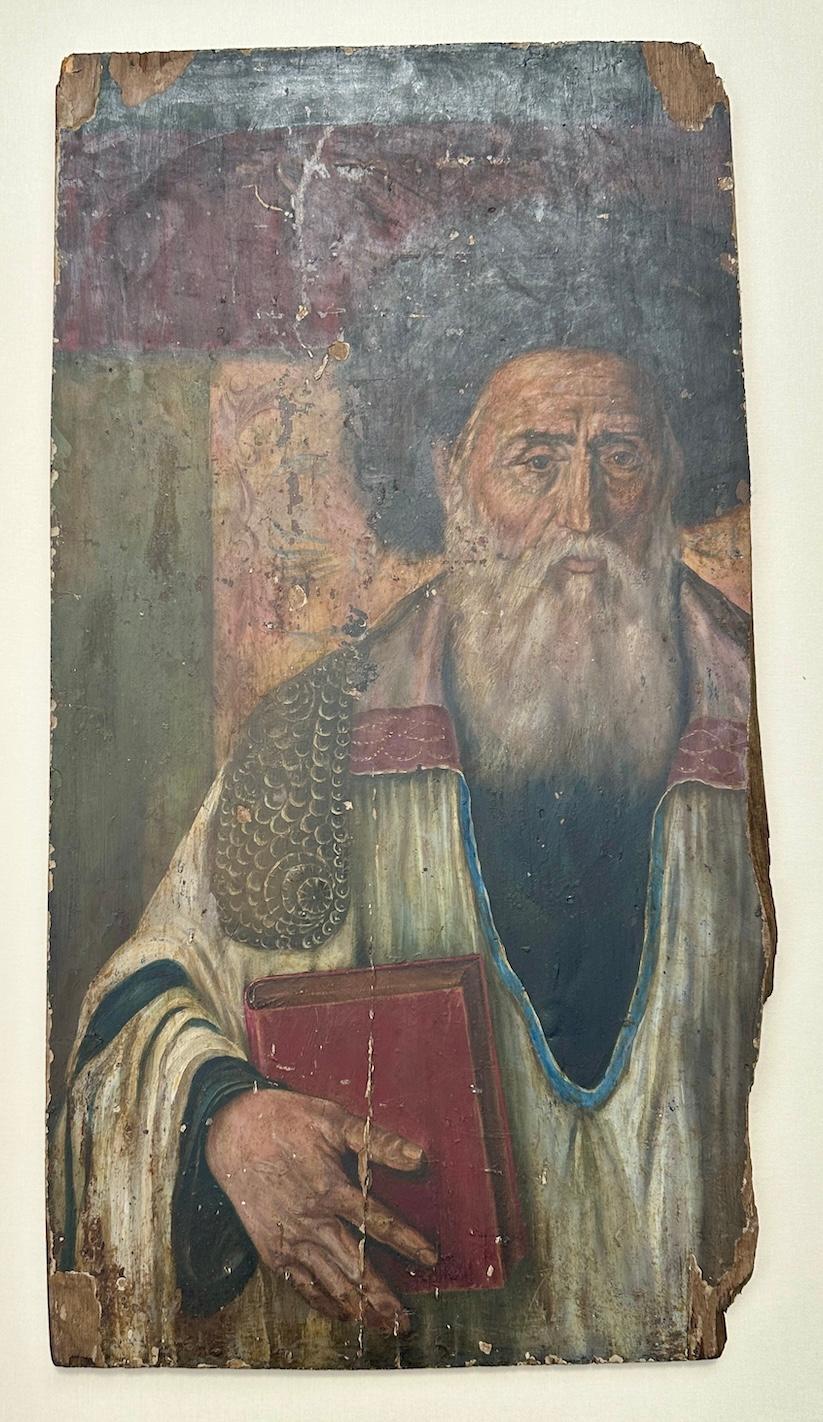
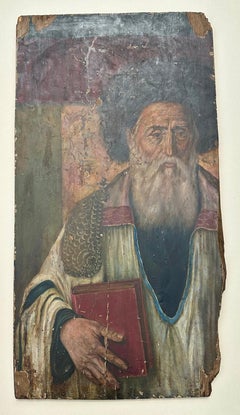
19th century Oil portrait of a Hungarian Rabbi
Located in Woodbury, CT
This 19th-century oil on panel portrait depicts a Hungarian Rabbi, characterized by his traditional attire and solemn expression. The Rabbi is portrayed with a long, white beard and ...
Category
1890s Old Masters Figurative Paintings
Materials
Oil, Wood Panel
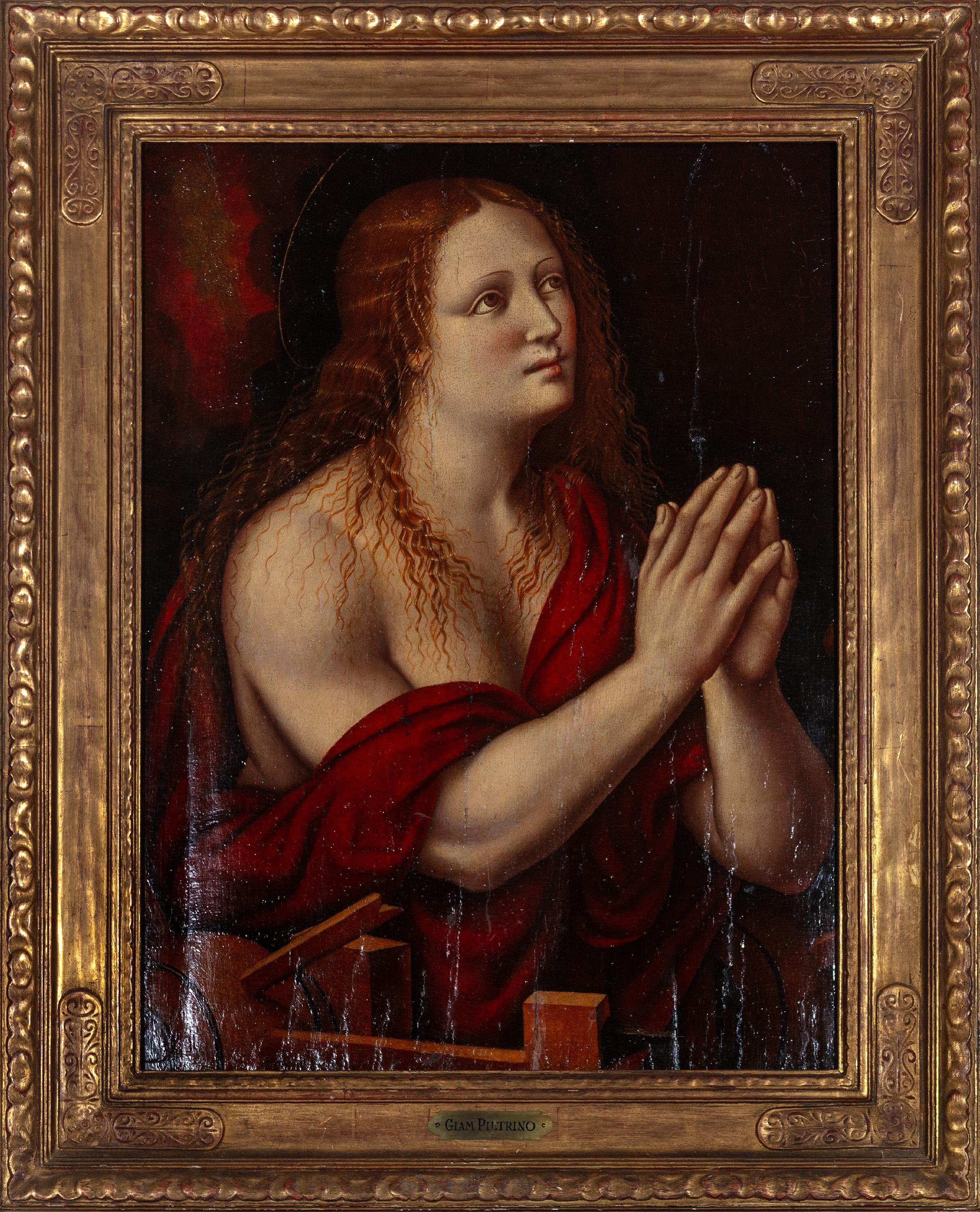
19th century classical religious oil painting portrait female subject red dark
By Giovanni Pietro Rizzoli
Located in Milwaukee, WI
"Caterina d'Alexandria (Saint Catherine of Alexandria)" is a copy oil painting on wood panel, after Italian artist Giampietrino (Giovanni Pietro Riz...
Category
19th Century Old Masters Portrait Paintings
Materials
Oil, Wood Panel