Items Similar to Realist Painting Portrait French actor Comedie Française LARD 19th
Want more images or videos?
Request additional images or videos from the seller
1 of 12
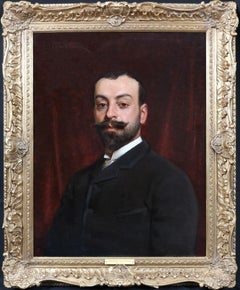
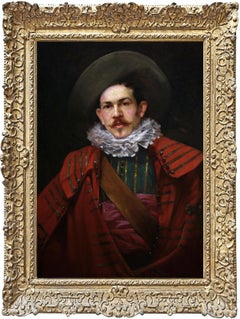
François Maurice LARDRealist Painting Portrait French actor Comedie Française LARD 19th1896
1896
$2,511.73
£1,865.10
€2,100
CA$3,450.73
A$3,751.64
CHF 1,989.13
MX$44,972.71
NOK 25,280.77
SEK 23,160.63
DKK 16,008.74
About the Item
François Maurice LARD
Paris, 1864 – Paris, 1908
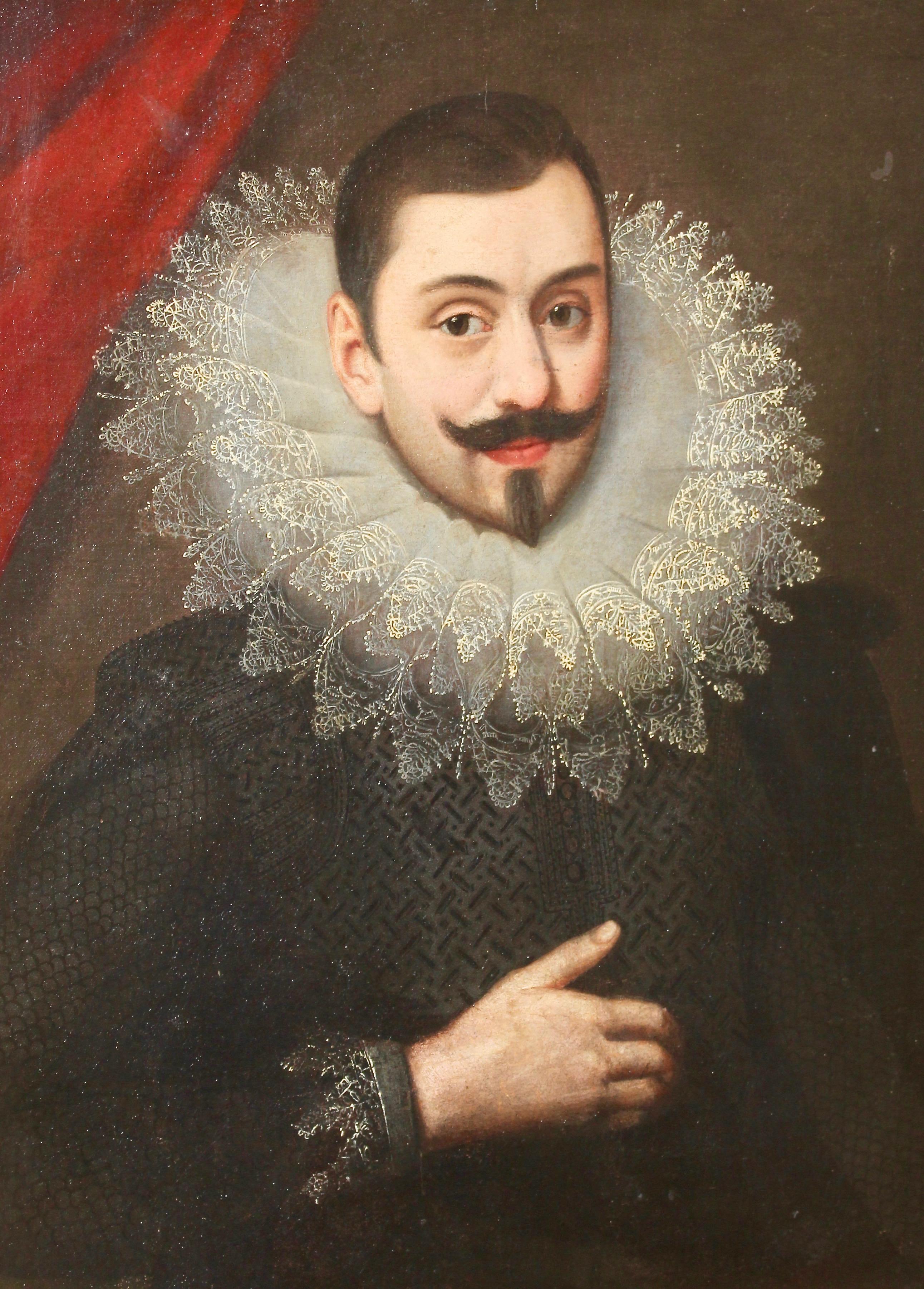
Portrait of the actor Raphaël Duflos as Ruy Blas
Oil on canvas
55 x 38 cm (67 x 49 cm with the frame)
Signed and dated top right “FM Lard / 96”
Beautiful old gilded baguette
Portrait of Raphaël Duflos in 1896 the year he became a member of the Comédie Française. He is represented here as a younger man, in one of his first roles which gave him success, that of Ruy Blas played at the Comédie Française in 1885 (Revue des Deux Mondes, September 14, 1885).
Raphael Duflos studied with Worms at the Conservatoire Raphaël Duflos, graduated with a first prize in Comedy. He made his debut at the Odéon in 1882, where a year later he starred alongside Albert-Lambert in the memorable creation of Severo Torelli by François Coppée. In 1884, he made his debut at the Comédie-Française in the role of Don Carlos (Hernani), then in Don Jual of Austria (the role of Philip II) and Ruy Blas (successively Ruy Blas and Don Sallust). Between 1887 and 1894, he played modern seducers and leading men of melodrama on the boulevards. He returned to the Comédie-Française in 1894 and was appointed a member of the Comédie-Française in 1896 (he then played Alceste in The Misanthrope, Octave in The Caprices of Marianne, Louis XIII in Marion Delorme, Dom Juan in Henri III and his Court). Appointed professor at the Conservatoire in 1910, his students included Maurice Escande and Annie Ducaux. He retired in 1924 and was appointed an honorary member of the Comédie-Française in 1925. "Raphael Duflos, secretary in 1896, first prize winner, student of Worms, did not have the patience to wait for his appointment as a member; he left the Comédie-Française where he had successfully played Don Sallust [and Ruy Blas] in Ruy Blas, and Philip II in Don Juan of Austria, and where a brilliant future probably awaited him. Among his various creations on stages other than that of the Vaudeville, where he distinguished himself in Renée, le Père and l'Affaire Clémenceau, and especially in Mensonges, let us recall Barnabo Spinola, by Severo Torelli, at the Odeon. Duflos has warmth and strength; his acting is sober and correct. He is an actor of real talent that the management of the Gymnase has managed to attract. (Actors and Actresses of Paris, by Adrine Larique, 29th edition, 1897)
- Creator:François Maurice LARD (1864 - 1908, French)
- Creation Year:1896
- Dimensions:Height: 21.66 in (55 cm)Width: 14.97 in (38 cm)
- More Editions Sizes:67 x 49 cm with the framePrice: $2,811
- Medium:
- Movement Style:
- Period:
- Condition:
- Gallery Location:PARIS, FR
- Reference Number:1stDibs: LU2524216053302
About the Seller
5.0
Vetted Professional Seller
Every seller passes strict standards for authenticity and reliability
Established in 2010
1stDibs seller since 2023
25 sales on 1stDibs
- ShippingRetrieving quote...Shipping from: PARIS, France
- Return Policy
More From This Seller
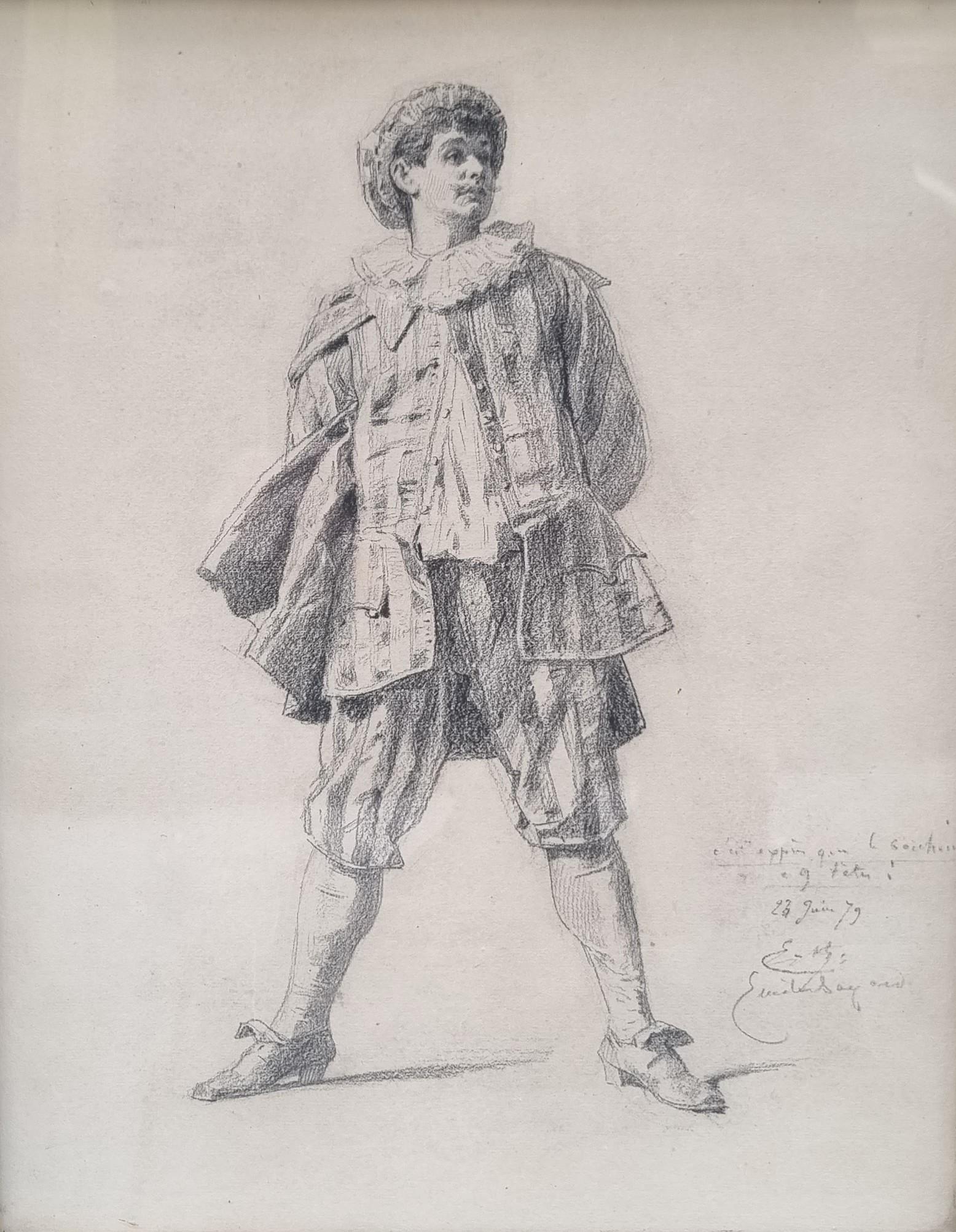
View AllSCAPIN MOLIERE MEZZETIN French Drawing Portrait French actor BARET 19th
Located in PARIS, FR
Emile BAYARD
La Ferté-sous-Jouarre, 1837 – Cairo, 1891
Scapin or the Mezzetin (Portrait of the young Charles Baret in 1879)
Black chalk drawing
34 x 28 cm (43 x 36 cm with frame)
Sig...
Category
1870s French School Portrait Paintings
Materials
Carbon Pencil
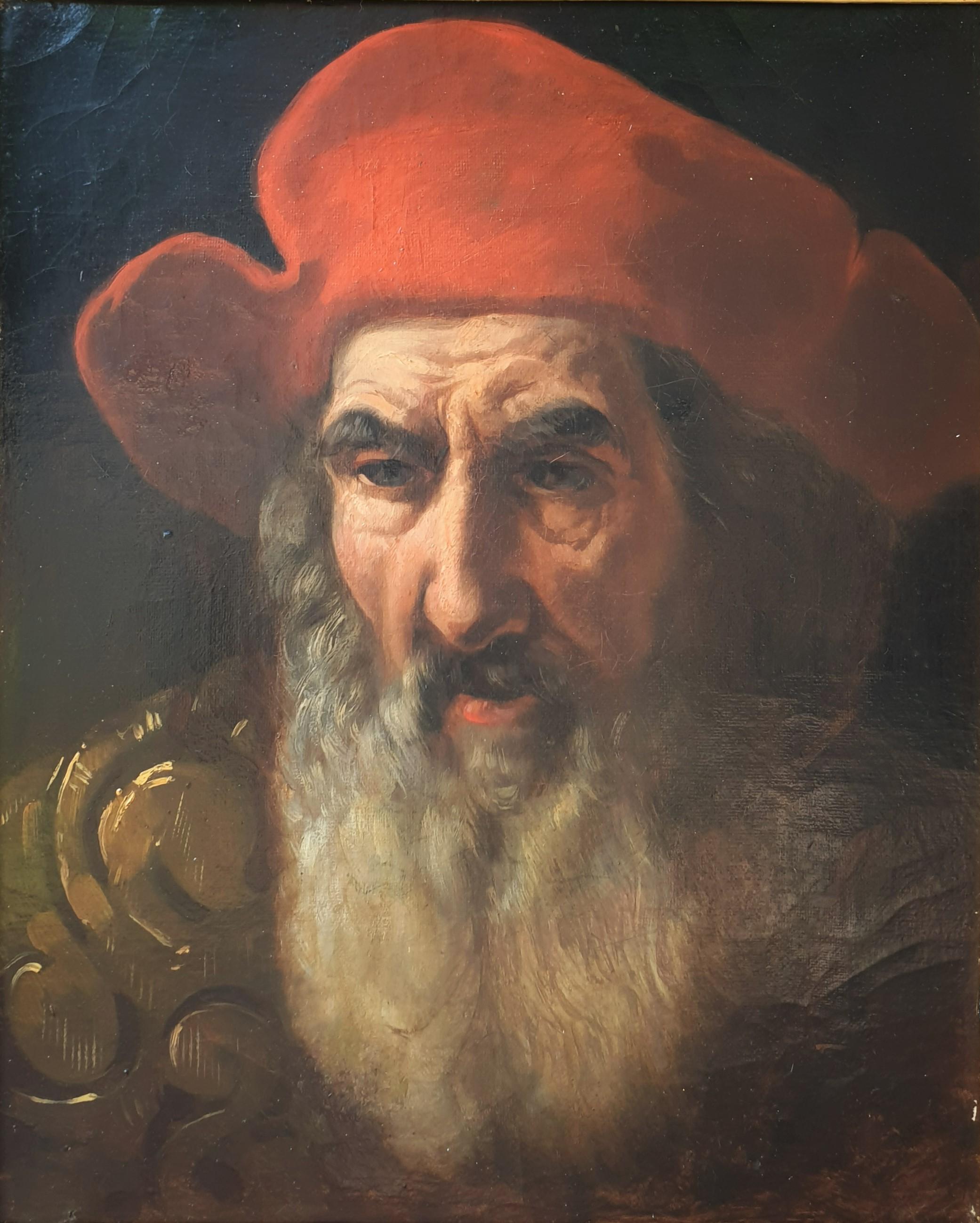
French painting portrait Bearded italian man oil canvas Second half 18th century
Located in PARIS, FR
French school of the second half of the 18th century Oil on canvas 46 x 38 cm (57 x 49 cm with the frame) Very beautiful frame in gilded wood from the Louix XVI period with decoratio...
Category
Late 18th Century French School Portrait Paintings
Materials
Oil
$1,435 Sale Price
20% Off
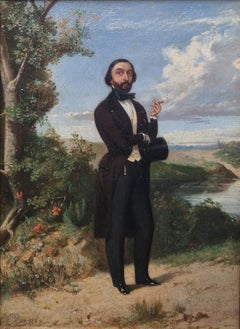
Portrait Alfred de MUSSET cigar French Romantic Painting 19th POTTIN
Located in PARIS, FR
Henri POTTIN Paris, 1820 - Paris, 1864
Presumed Portrait of Alfred de Musset
Oil on canvas 33 x 25 cm (45 x 36 cm with frame)
Signed and dated lower left "h. Pxxxin / 1844" Inscri...
Category
1840s Romantic Portrait Paintings
Materials
Oil
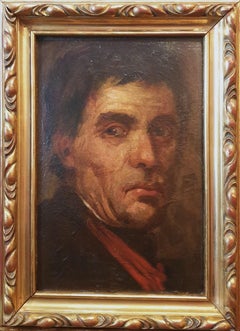
Spanish painting Portrait man Trace signature Academic 19th oil on canvas
Located in PARIS, FR
Juan Pablo SALINAS (Attributed to)
Madrid, 1871 – Rome, 1946
Oil on canvas on a panel
34 x 22 cm (43 x 31 cm with the frame)
Trace of signature lower lef...
Category
Late 19th Century Academic Portrait Paintings
Materials
Oil
$851 Sale Price
28% Off
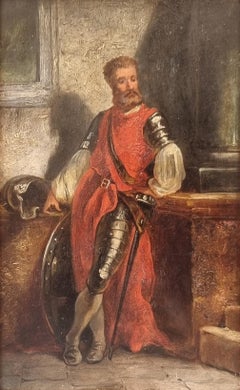
Painting Portrait Soldier in armor Circel of MESSONIER Wood panel 19th
Located in PARIS, FR
French school of the 19th century
Ernest MESSONIER (Circle of)
Portrait of a soldier in armor
27.5 x 17.5 cm (31 x 21 cm with the frame)
Beautiful pitch pine wood frame
Good condition
Category
Mid-19th Century Realist Portrait Paintings
Materials
Oil
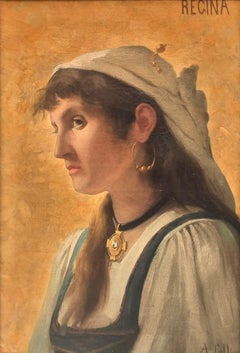
Painting Portrait Young Italian Jewelry Belgian Academic Painter COLLIN 19th
Located in PARIS, FR
André COLLIN
Spa, 1862 – Brussels, 1930
Portrait of a Young Italian Woman
Oil on canvas 57.5 x 41 cm (64 x 47.5 cm with frame)
Signed lower right “A. Collin”
Titled upper right “REGI...
Category
Late 19th Century Academic Portrait Paintings
Materials
Oil
You May Also Like
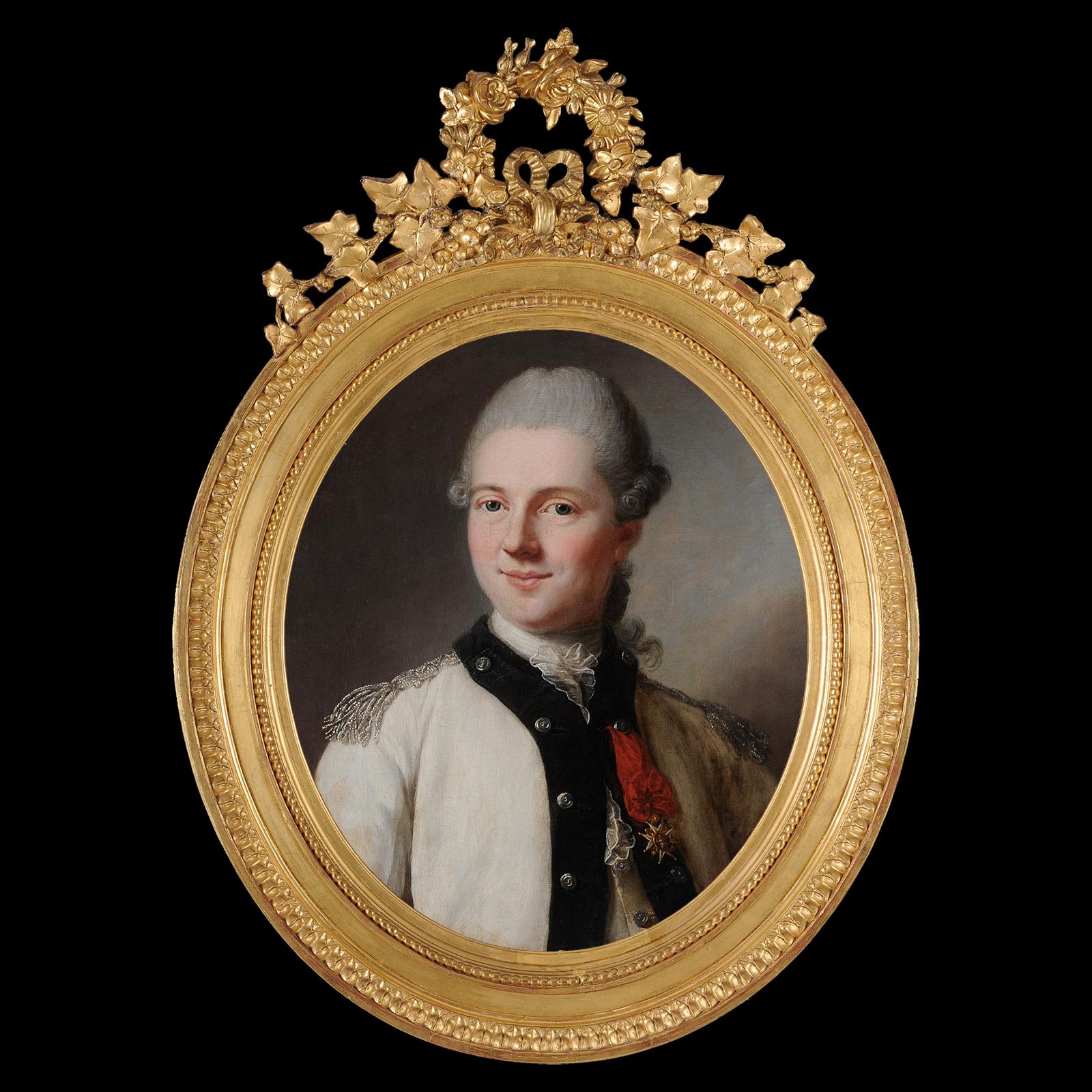
Presumed Portrait of Jean-Jacques-Blaise Baloin de Belvèse, Baron de Vennac
Located in BELEYMAS, FR
Marianne Loir
(Paris 1705 – Paris 1783)
Presumed Portrait of Jean-Jacques-Blaise Baloin de Belvèse, Baron de Vennac (?-1781)
Oil on oval canvas
H. 54.5 cm; W. 46 cm
Unsigned
Grandda...
Category
1760s French School Portrait Paintings
Materials
Canvas, Oil

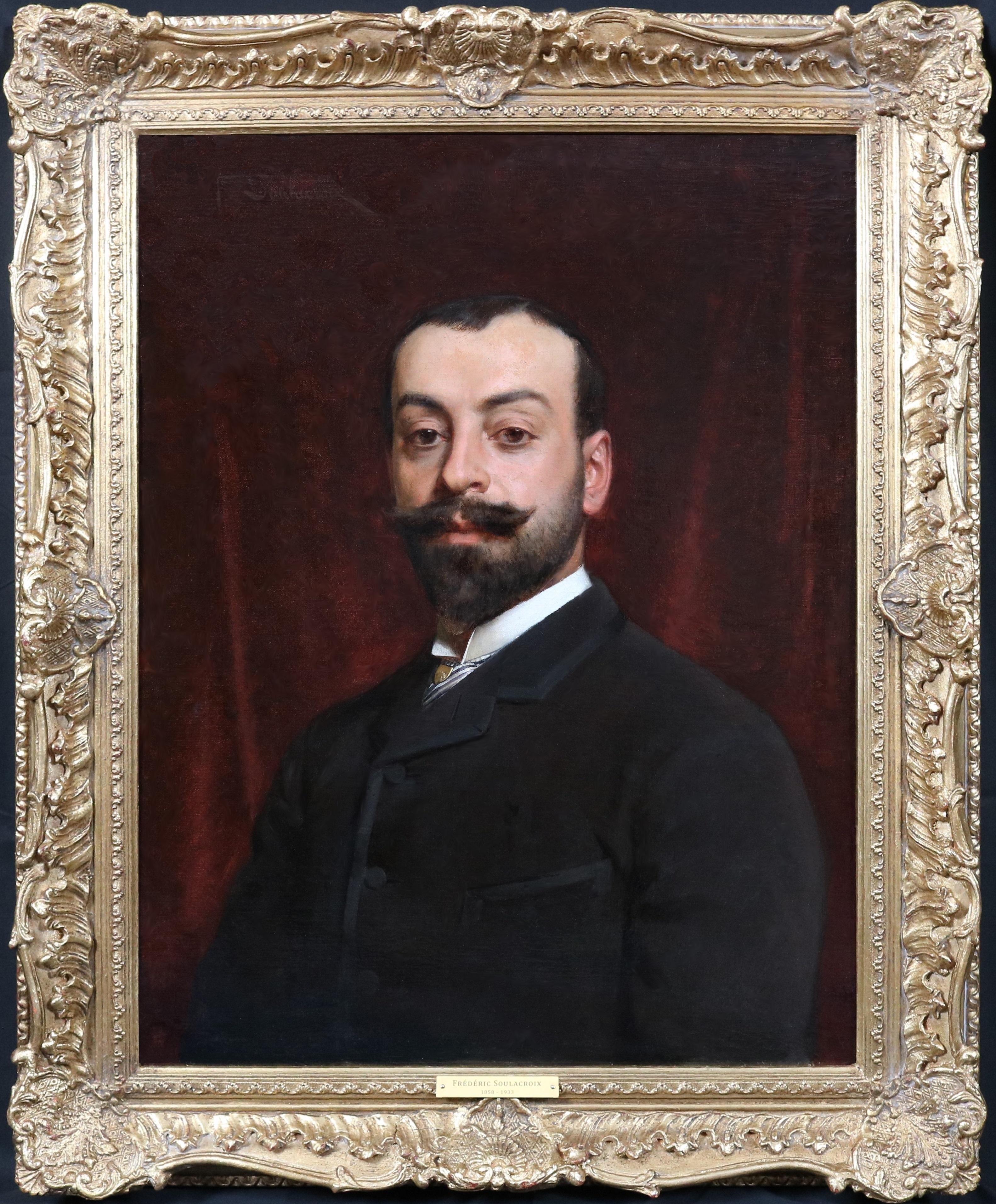
Frédéric Soulacroix - 19th Century Oil Painting Self Portrait of French Artist
By Frédéric Soulacroix
Located in Gerrards Cross, GB
The painting is the only known self-portrait by the eminent 19th century French artist Frédéric Soulacroix (1858-1933). It is signed and presented in a bespoke gold metal leaf frame....
Category
Late 19th Century French School Portrait Paintings
Materials
Oil
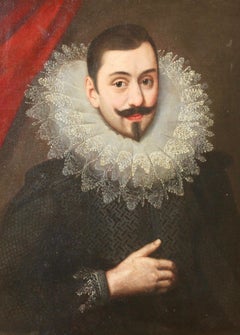
Antique Flemish Baroque painting, 17th Century Portrait "Medici" Oil on canvas.
By Justus Sustermans
Located in Berlin, DE
Antique Flemish Baroque painting, 17th century, portrait, Medici. Oil on canvas.
The painting is probably attributed to the Flemish painter Justus Sustermns.
Pictured is most likel...
Category
17th Century Baroque Portrait Paintings
Materials
Canvas, Oil
$21,529 Sale Price
25% Off
Free Shipping
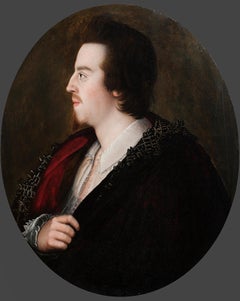
Portrait of William Herbert, 3rd Earl of Pembroke, Early 17th Century Portrait
Located in London, GB
English School, (circa 1600)
Portrait of William Herbert, 3rd Earl of Pembroke
Oil on panel, oval
Image size: 29¼ x 23⅞ inches
Painted wooden frame
Provenance:
176, Collection of Francis Greville, 1st Earl of Warwick.
The Trustees of the Lord Brooks’ Settlement, (removed from Warwick Castle).
Sotheby’s, London, 22nd March 1968, lot 81.
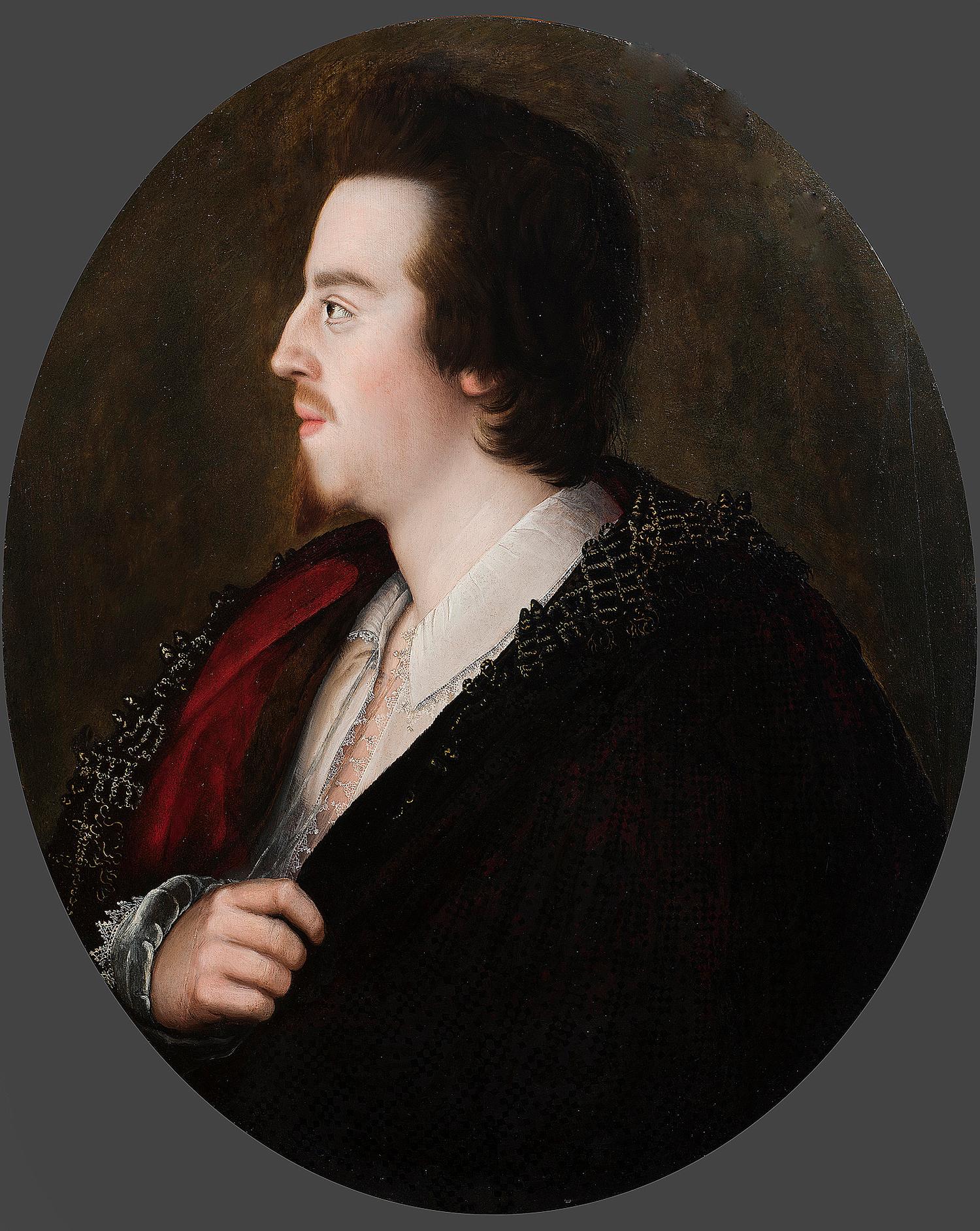
Painted onto wooden panel, this portrait shows a dark haired gentleman in profile sporting an open white shirt. On top of this garments is a richly detailed black cloak, decorated with gold thread and lined with a sumptuous crimson lining. With the red silk inside it’s all very expensive and would fall under sumptuary laws – so this is a nobleman of high degree.
It’s melancholic air conforms to the contemporary popularity of this very human condition, evident in fashionable poetry and music of the period. In comparison to our own modern prejudices, melancholy was associated with creativity in this period.
This portrait appeared in the earliest described list of pictures of Warwick castle dating to 1762. Compiled by collector and antiquary Sir William Musgrave ‘taken from the information of Lord & Lady Warwick’ (Add. MSS, 5726 fol. 3) is described;
‘8. Earl of Essex – an original by Zuccharo – seen in profile with black hair. Holding a black robe across his breast with his right hand.’
As tempting as it is to imagine that this is a portrait of Robert Devereux, the 2nd Earl Essex, we might take this with a pinch of salt. Its identification with this romantic and fatal Elizabethan might well have been an attempt to add romance to Warwick Castle’s walls. It doesn’t correspond all that well with Essex’s portraits around 1600 after his return from Cadiz. Notably, this picture was presumably hung not too far away from the castle’s two portraits of Queen Elizabeth I. The first, and undoubtedly the best, being the exquisite coronation portrait that was sold by Lord Brooke in the late 1970s and now hangs in the National Portrait Gallery. The second, described as being ‘a copy from the original at Ld Hydes’, has yet to resurface.
The portrait eventually ended up being hung in the State Bedroom of Warwick Castle.
Archival documents present one other interesting candidate. The Greville family’s earliest inventory of paintings, made in 1630 at their home Brooke House in Holborn, London, describes five portraits of identified figures. All five belonged to the courtier, politician and poet Sir Fulke Greville (1554-1628), 1st Baron Brooke, and were hung in the ‘Gallerie’ of Brooke House behind yellow curtains. One of them was described as being of ‘Lord of Pembrooke’, which is likely to have been William Herbert (1580-1630), 3rd Earl of Pembroke. William was the eldest son of Greville’s best friend’s sister Mary Sidney, and was brought up in the particularly literary and poetically orientated household which his mother had supported. Notably, the 3rd Earl was one of the figures that Shakespeare’s first folio was dedicated to in 1623.
The melancholic air to the portrait corresponds to William’s own pretensions as a learned and poetic figure. The richness of the robe in the painting, sporting golden thread and a spotted black fabric, is indicative of wealth beyond that of a simple poet or actor. The portrait’s dating to around the year 1600 might have coincided with William’s father death and his own rise to the Pembroke Earldom. This period of his life too was imbued with personal sadness, as an illicit affair with a Mary Fitton had resulted in a pregnancy and eventual banishment by Elizabeth I to Wilton after a short spell in Fleet Prison. His illegitimate son died shortly after being born. Despite being a close follower of the Earl of Essex, William had side-stepped supporting Devereux in the fatal uprising against the Queen and eventually regained favour at the court of the next monarch James I.
His linen shirt is edged with a delicate border of lace and his black cloak is lined on the inside with sumptuous scarlet and richly decorated on the outside with gold braid and a pattern of embroidered black spots.
Despite the richness of his clothes, William Herbert has been presented in a dishevelled state of semi-undress, his shirt unlaced far down his chest with the ties lying limply over his hand, indicating that he is in a state of distracted detachment. It has been suggested that the fashion for melancholy was rooted in an increase in self-consciousness and introspective reflection during the late 16th and early 17th centuries.
In contemporary literature melancholy was said to be caused by a plenitude of the melancholy humor, one of the four vital humors, which were thought to regulate the functions of the body. An abundance of the melancholia humor was associated with a heightened creativity and intellectual ability and hence melancholy was linked to the notion of genius, as reflected in the work of the Oxford scholar Robert Burton, who in his work ‘The Anatomy of Melancholy’, described the Malcontent as ‘of all others [the]… most witty, [who] causeth many times divine ravishment, and a kind of enthusiamus… which stirreth them up to be excellent Philosophers, Poets and Prophets.’ (R. Burton, The Anatomy of Melancholy, London, 1621 in R. Strong, ‘Elizabethan Malady: Melancholy in Elizabethan and Jacobean Portraits’, Apollo, LXXIX, 1964).
Melancholy was viewed as a highly fashionable affliction under Elizabeth I, and her successor James I, and a dejected demeanour was adopted by wealthy young men, often presenting themselves as scholars or despondent lovers, as reflected in the portraiture and literature from this period. Although the sitter in this portrait is, as yet, unidentified, it seems probable that he was a nobleman with literary or artistic ambitions, following in the same vain as such famous figures as the aristocratic poet and dramatist, Edward de Vere...
Category
Early 17th Century Old Masters Portrait Paintings
Materials
Oil, Wood Panel
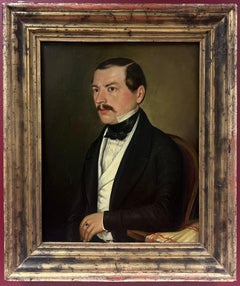
19th-Century French Oil Portrait of Smart Gentleman in Formal Attire
Located in Cirencester, Gloucestershire
Portrait of a Gentleman in Formal Attire
French School, 19th century
oil on board, framed
framed: 17 x 14 inches
board : 13 x 10.5 inches
Provenance: private collection, Paris, Franc...
Category
19th Century French School Portrait Paintings
Materials
Oil
$1,538 Sale Price
20% Off
Large French Oil painting On Canvas, portrait of a musketeer 19th century
Located in Gavere, BE
Beautiful Oil On Canvas, portrait of a musketeer French school 19th century
This is a French 19th century school with large dimensions .
Very decorative and exclusive portrait paint...
Category
1890s French School Portrait Paintings
Materials
Gold Leaf
More Ways To Browse
Don Juan
Gilded Portrait
Maurice Francois
Caspar Netscher
Charles Andre Van Loo
Duke Of Somerset
Edward Masters Painting
French Painter Bernard
John Hicks
Lillian Shao
Marjorie Blake
Moretti Lucien
Oil Painting Of Turkey
Oil Painting Peasant Girl
Portrait Of Cleric
Portrait Painting 1700s
Steve Mcqueen Pop Art
Sybil Oil