Items Similar to Ritratto figurativo maschile neoclassico italiano con cornice firmato
Video Loading
Want more images or videos?
Request additional images or videos from the seller
1 of 17
Giovan Battista dell
EraRitratto figurativo maschile neoclassico italiano con cornice firmato1784
1784
$9,582.69
£7,165.70
€8,000
CA$13,202.56
A$14,399.24
CHF 7,627.75
MX$172,626.50
NOK 97,143.61
SEK 88,830.62
DKK 60,963.19
About the Item
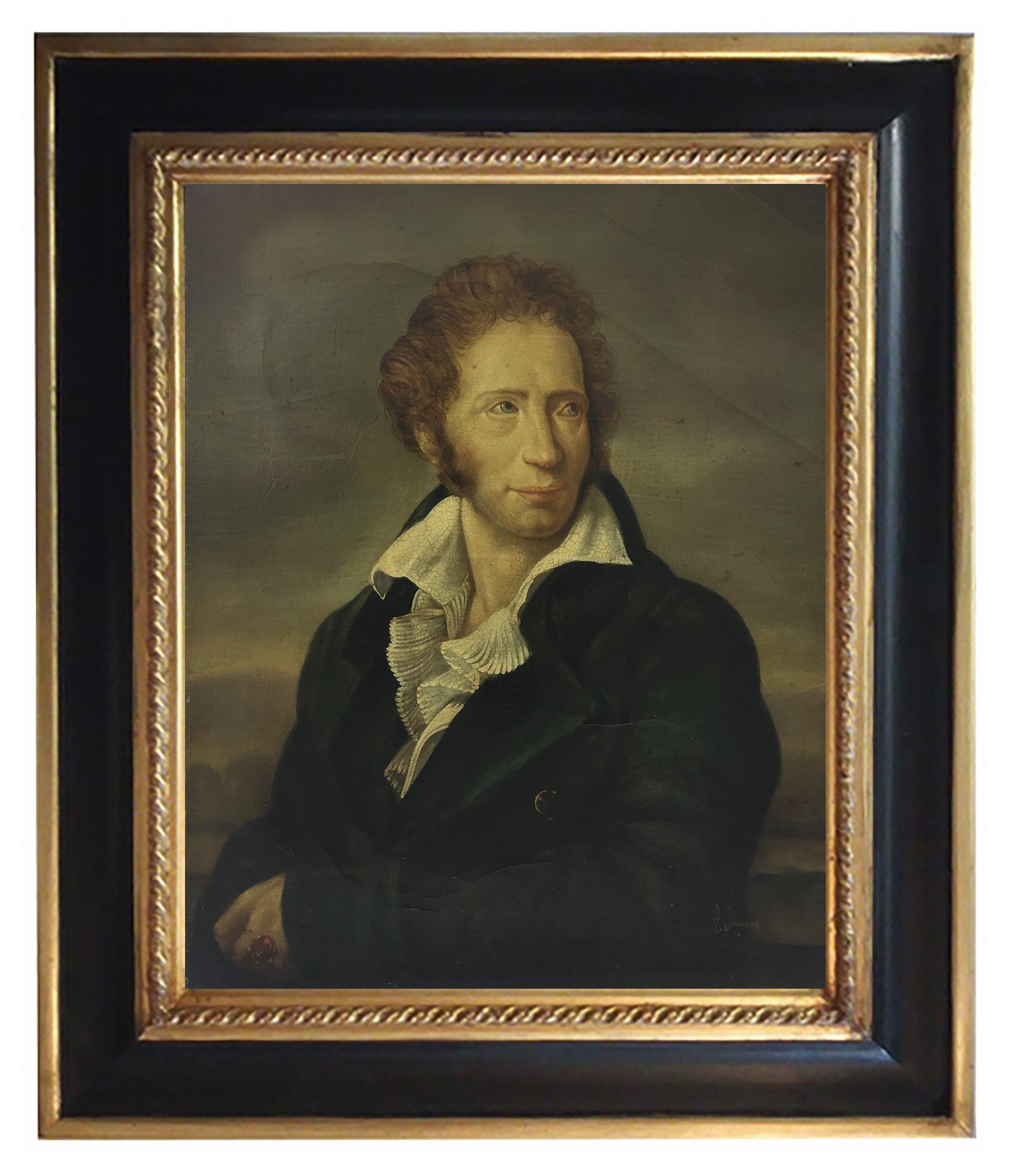
Questo dipinto riporta sul retro della tela un'iscrizione molto importante il cui testo è “Ritratto di (?) Dom.° Anto. Camerini fatto in Roma l’An: 1784: da Gio. Batta del Era Milanese e donato al med. Dal Autore.”
L'iscrizione rende il dipinto, di già squisita e altissima qualità, ancora più rilevante in quanto nonostante Giovan Battista Dell'Era fosse uno dei più richiesti ritrattisti della sua epoca sono sopravvissuti pochissimi esemplari oltre a quello qui analizzato.
La data riportata, inoltre, aiuta nella ricostruzione della sua vita, infatti fino alla sua scoperta di questo ritratto la critica datava il primo viaggio dell'artista a Roma nel 1785, ovvero 1 anno dopo.
L'opera è pubblicata in "1780-1880, dal respiro dell'antico ai moti del cuore
pittura e scultura italiana tra neoclassicismo e tardo romanticismo" a cura di Massimo Vezzosi, Firenze 2003, pp. 59-60.
About the Seller
5.0
Vetted Professional Seller
Every seller passes strict standards for authenticity and reliability
Established in 1958
1stDibs seller since 2019
31 sales on 1stDibs
- ShippingRetrieving quote...Shipping from: Florence, Italy
- Return Policy
More From This Seller
View AllPainted 19th century Roman historical religious male figurative portrait
Located in Florence, IT
Oil painting on canvas ( 97 x 72 cm; 116 x 89 cm with gilt wood frame).
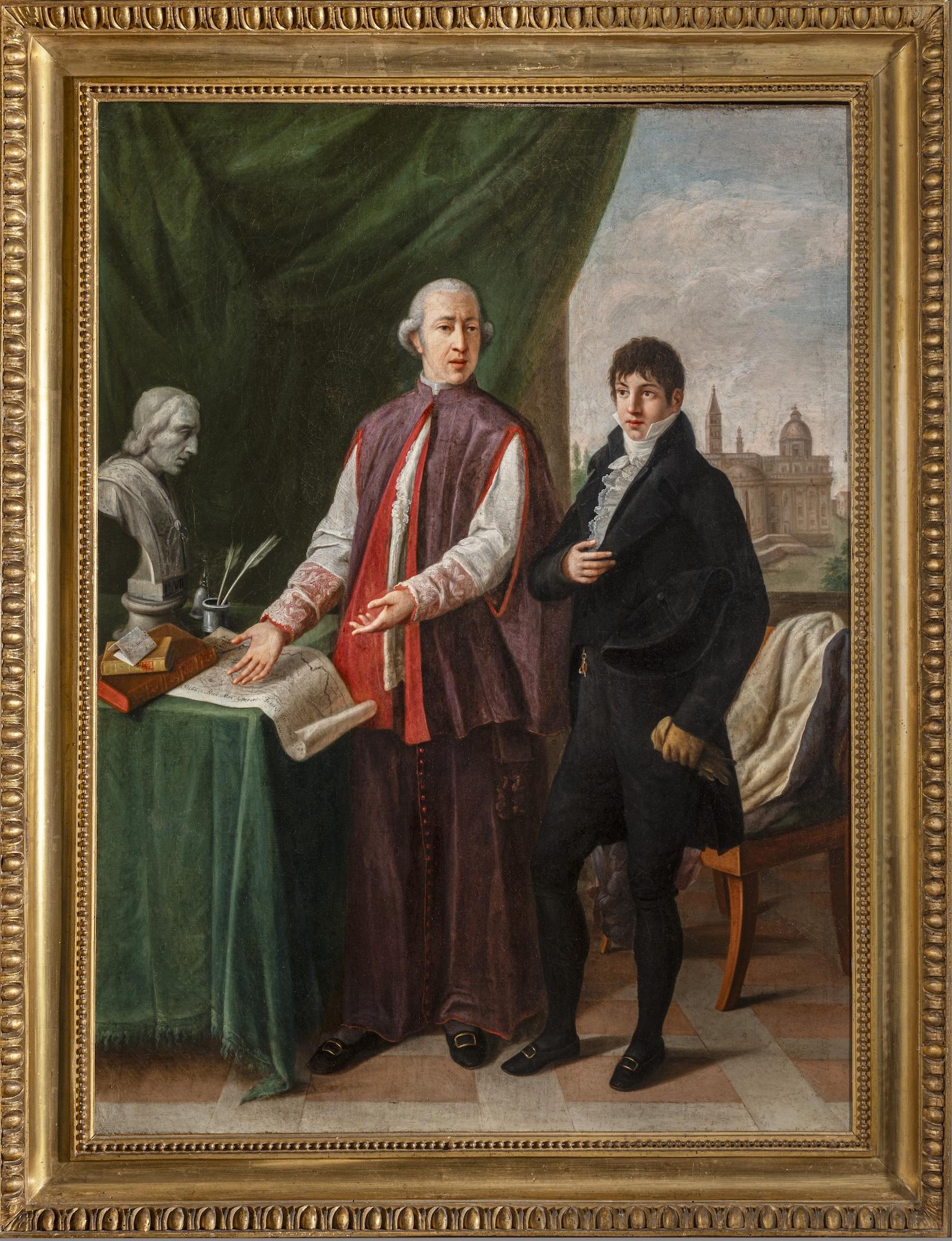
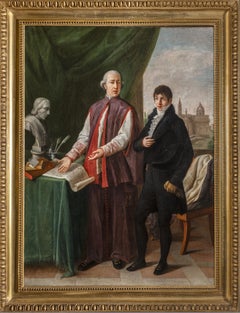
Title: Portrait of Monsignor Gherardo Federici against the background of the church of Santa Maria Maggiore i...
Category
Early 1800s Portrait Paintings
Materials
Canvas, Oil
Ritratto figurativo storico neoclassico fiorentino del XIX secolo con cornice
Located in Florence, IT
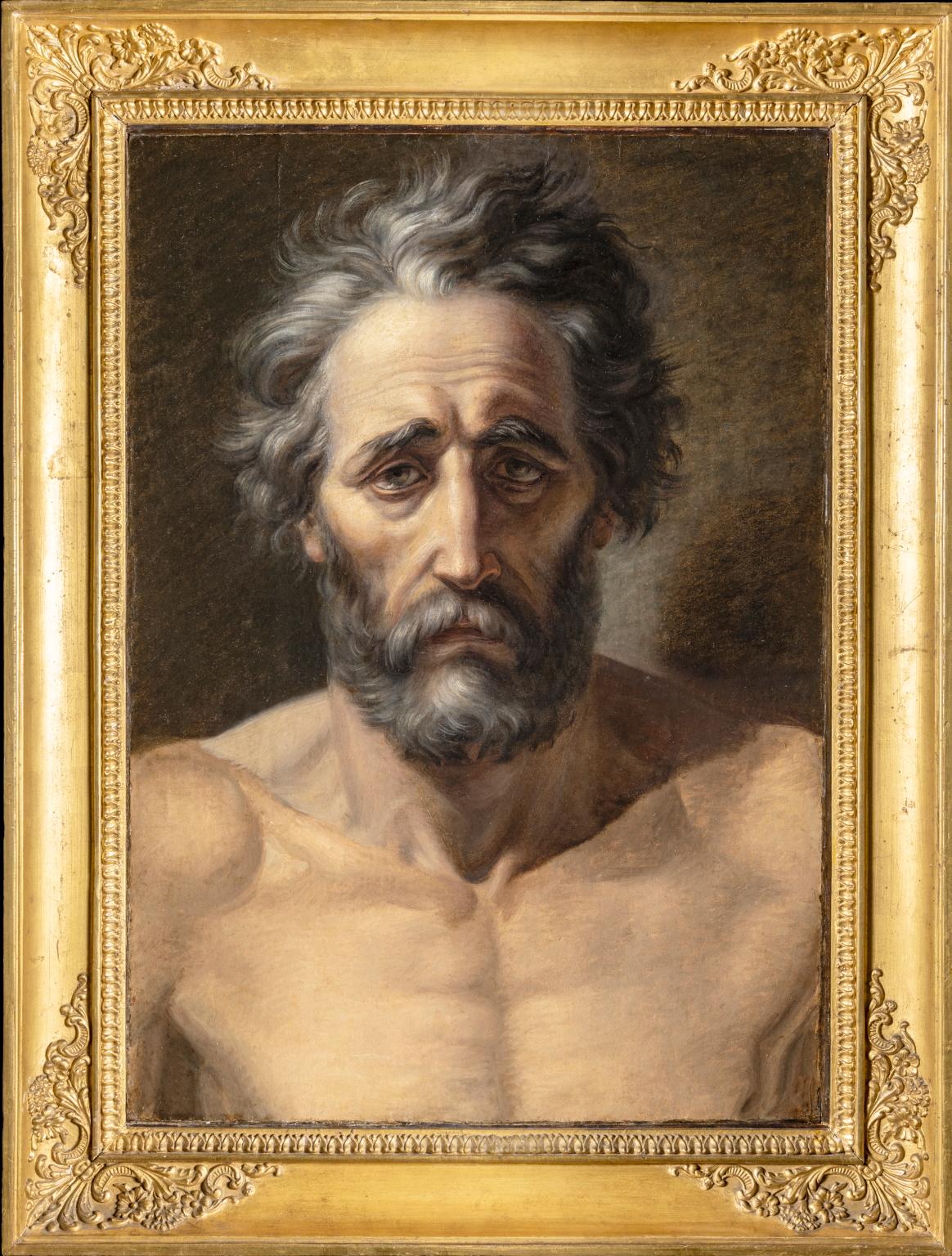
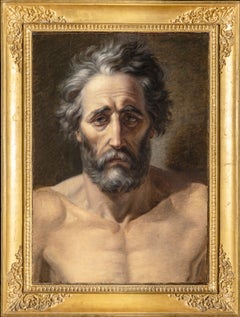
Non si tratta di uno studio preliminare al dipinto ma di una ulteriore messa a fuoco della fisionomia stravolta del protagonista, un ‘primo piano’ che ben corrisponde a quanto annota...
Category
1830s Other Art Style Portrait Paintings
Materials
Oil, Board
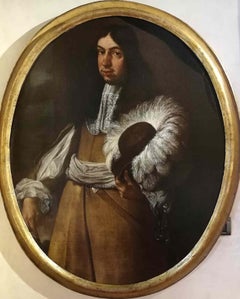
Ritratto figurativo maschile scuola toscana del XVII secolo olio su tela
Located in Florence, IT
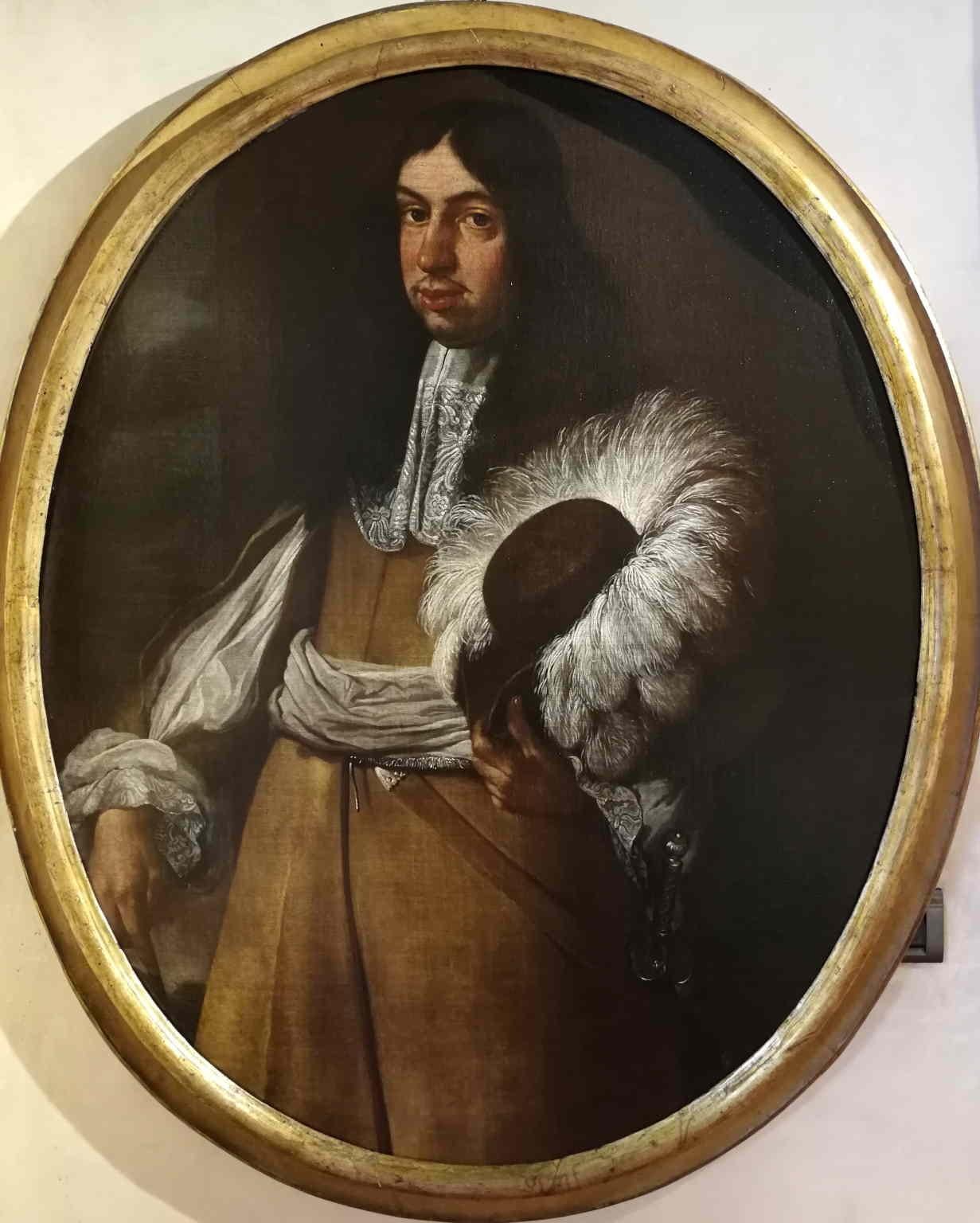
Dipinto di scuola toscana della seconda metà del XVII secolo raffigurante un ritratto maschile di tre quarti, immerso nell'eleganza e nella maestosità proprie dell'epoca. La figura è...
Category
Late 17th Century Baroque Portrait Paintings
Materials
Canvas, Oil
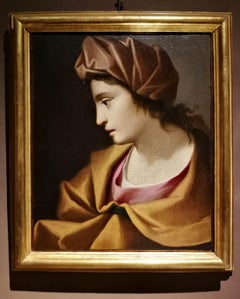
Dipinto ritratto femminile figurativo barocco emiliano del XVII secolo
By Girolamo Negri called Il Boccia
Located in Florence, IT
olio su tela, 62 x 51 cm (senza cornice)
Il dipinto è stato per lungo attribuito alla mano di Francesco Gessi, allievo di Guido Reni, come riporta un'iscrizione a matita datata 1945...
Category
Late 17th Century Baroque Figurative Paintings
Materials
Canvas, Oil
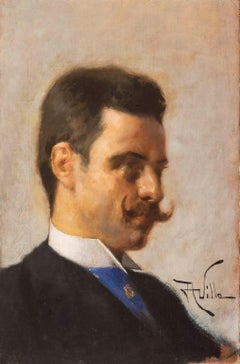
Dipinto figurativo ritratto maschile toscano del XIX secolo
By Aleardo Villa
Located in Florence, IT
Il dipinto è firmato a destra AVILLA.
Aleardo Villa è stato allievo di Giuseppe Bertini e Bartolomeo Giuliano e ha frequentato l'Accademia di Brera, diventando piuttosto famoso in tu...
Category
Late 19th Century Art Nouveau Portrait Paintings
Materials
Canvas, Oil
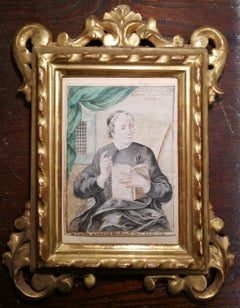
Religious figurative drawing of 18th century male portrait on parchment
Located in Florence, IT
This small portrait, from an important Florentine collection, (unframed 14x10 cm.) is signed and dated on the lower edge "Io(hannes) Baptista Scarlattius Rondinelli Fecit Anno 1754."...
Category
18th Century Rococo Portrait Paintings
Materials
Parchment Paper, Tempera, Watercolor
You May Also Like
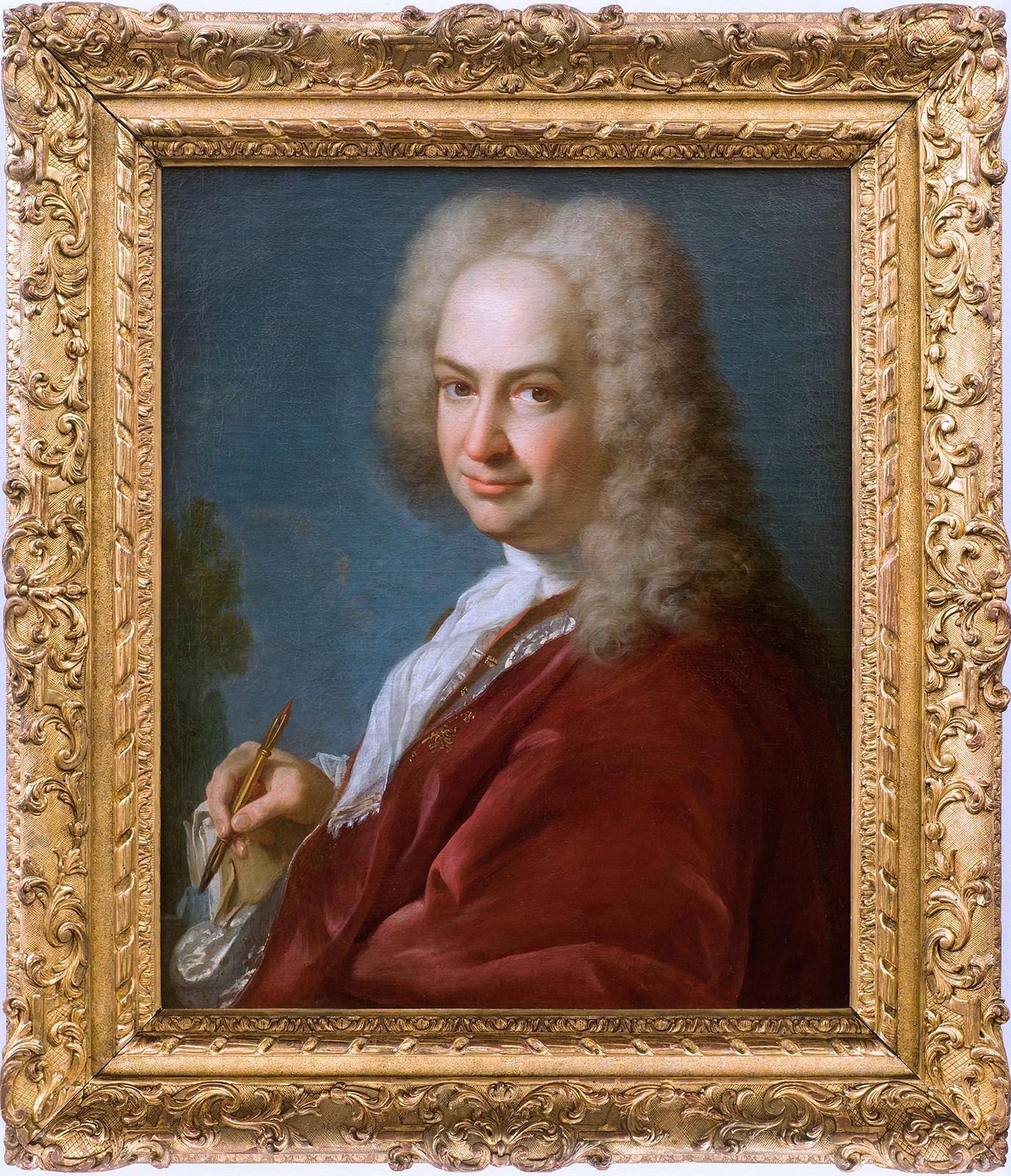
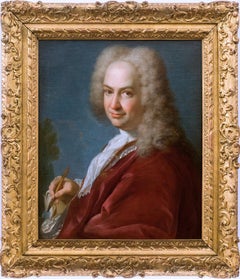
Presumed artist self-portrait
Located in BELEYMAS, FR
Louis-Gabriel BLANCHET
(Versailles, 1701 – Rome, 1772)
Presumed self-portrait of the artist
Oil on canvas
H. 73 cm; W. 60 cm
Circa 1730
Originally presented in a Restoration period frame with a "Mignard" cartouche, this beautiful painting initially appeared to us as a work from northern Italy. However, it exuded a rather French form of refinement, suggesting that its artist may have assimilated a dual influence from both sides of the Alps.
We thank our colleague and friend Philippe Mendès for spontaneously and judiciously "bringing out" the name of Louis-Gabriel Blanchet, a Romanized French portraitist, whose spirit and stylistic characteristics we clearly recognize here.
Blanchet's "French" years, before his final departure for Rome in 1728, following his winning of the second Grand Prix for painting after Subleyras in 1727, are extremely poorly documented. His father, Gabriel, was valet to Blouin, himself Louis XIV's first valet at the time. According to Thierry Lefrançois, Blanchet was one of the few students of Nicolas Bertin (1667-1736), whose studio he is said to have joined in the early 1720s. At a baptism on March 24, 1724, where he was godfather, he is mentioned as a painter in the picture store of the Duke of Antin, the director of buildings between 1708 and 1736. At this time, he was probably already married to Jeanne Quément, with whom he had a daughter also named Jeanne, who would marry Nicolas Aviet, the son of a valet in the queen's wardrobe, in Versailles in 1738.
When Blanchet arrived in Rome in October 1728, he was accompanied by Subleyras, Trémolières, and Slodtz. He enjoyed the goodwill of Vleughels, the director of the Académie de France, which had been based at the Palazzo Mancini since 1725, even though the latter was not always kind to our resident. From 1732, he was under the protection of the Duke of Saint-Aignan when he took up his post as ambassador to Rome. Along with Slodtz and Subleyras, they formed a trio of friends, joined by Joseph Vernet shortly after his arrival in Rome in 1734. Slodtz and Blanchet, on the occasion of Subleyras's marriage in 1739, were there to attest that their friend was not bound by any marital commitment, and Blanchet was a witness at Vernet's wedding in 1745.
It is most likely from these early years in Rome that our portrait of the artist dates, the expression and turn of his face irresistibly reminiscent of a self-portrait. The still relatively youthful features may correspond to Blanchet's thirty-something years, and the fluffy wig was still fashionable at this time.
The painting fits well with the depiction of a young painter wanting to display both the beginnings of success and a certain simplicity or restraint. A slight smile expresses a form of assurance in this man with a gentle, sincere gaze and a face radiating a keen sense of wit. We find here the air of intimacy present in almost all of Blanchet's portraits, even those from the 1750s and 1760s, as well as an almost complicity with the viewer. The spirit of the painting is quite close to that of the presumed portrait of Bouchardon (painted around 1730) and the portrait of Pannini, painted in 1736, but it possesses a more natural quality, notably thanks to the absence of decorum. Our work exhibits the characteristics of Blanchet's paintings: elegance, luminosity (especially in the whites), vibrant and refined colors (here, the harmony of the garnet of the garment and the slate blue of the background, whose uniformity is tempered by a very sketched landscape and a grove of greenery), light complexions, rather rosy cheekbones, often full lips, and rather tight framing.
According to the Academy's rules, Blanchet's stay should have ended in the spring of 1732, but, for reasons unknown, he remained in the Eternal City until his death, as did his friend Subleyras, with whom he shared accommodation until the late 1730s. The latter regularly called upon him to collaborate on his paintings, such as The Meal at Simon's. Through Saint-Aignan's intervention, Blanchet was employed in the late 1730s by the Stuart princely family, then exiled in Italy. He notably produced copies (now lost) after Liotard of the portraits of Charles Edward and Henry Benedict, the sons of James III Stuart. The latter also commissioned three other portraits (now in the National Portrait Gallery in London), whose more formal character contrasts with the intimate spirit of Blanchet's portraits. Blanchet frequented English painters, such as the landscape painter Richard Wilson, and studied with the Scottish portraitist Katherine Read...
Category
1730s French School Portrait Paintings
Materials
Oil, Canvas
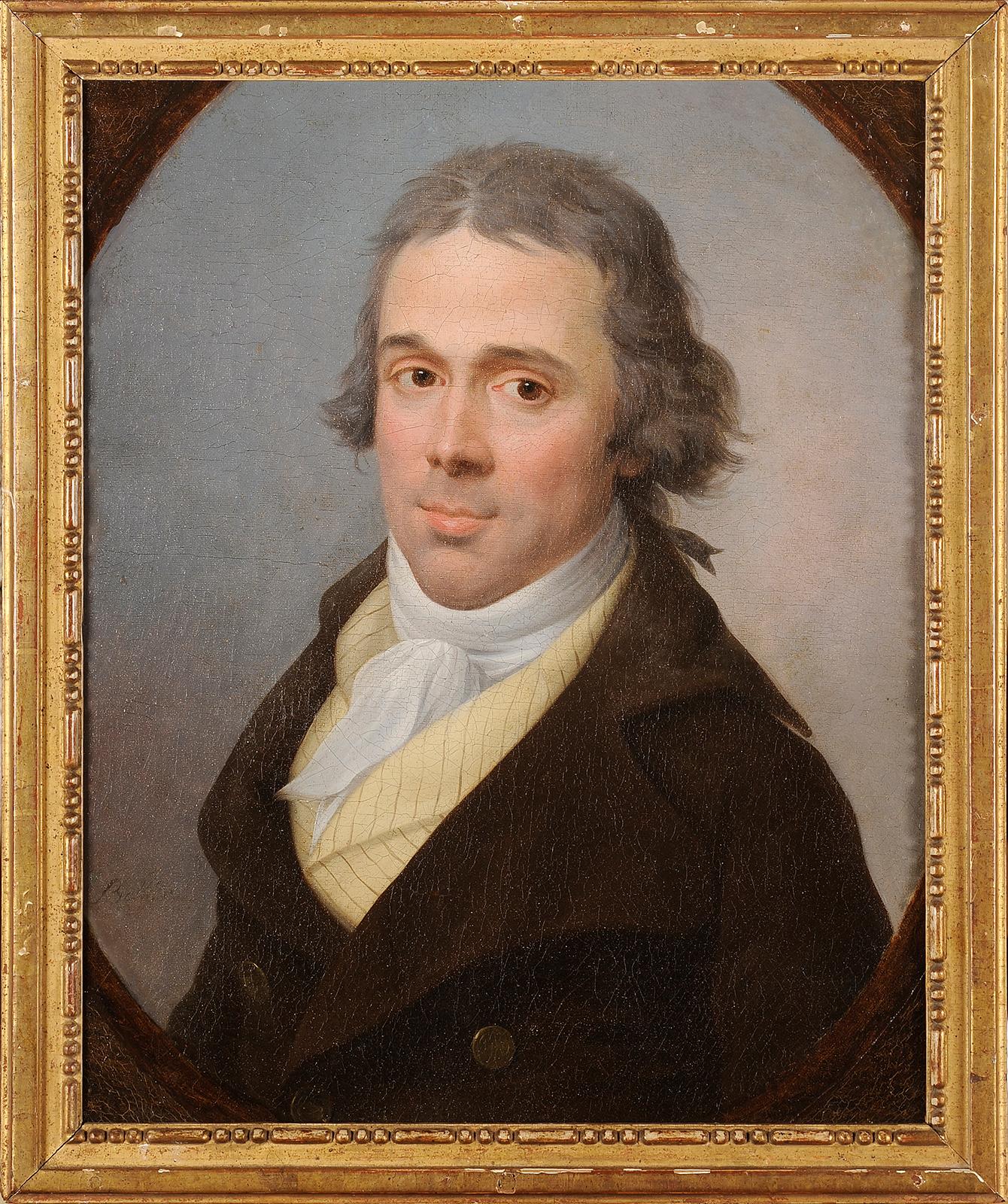
Men portrait
Located in BELEYMAS, FR
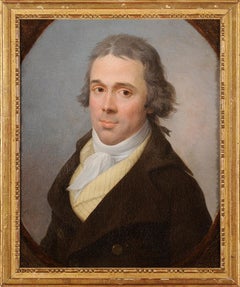
Jean François Marie Bellier
(Paris 1745 – Paris 1836)
Portrait of a Man
Oil on oval canvas laid flat
H. 45 cm; W. 55 cm
Signed on the left
Circa 1790
Jean François Marie Bellier occ...
Category
1790s French School Portrait Paintings
Materials
Canvas, Oil
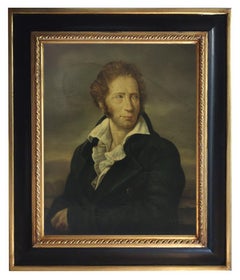
PORTRAIT OF UGO FOSCOLO - Antonio Jannone - Italian Oil On Canvas Painting
By ANTONIO JANNONE
Located in Napoli, IT
PORTRAIT OF UGO FOSCOLO - Oil on canvas cm.50x40, Antonio Jannone, Italy, 2002.
this beautiful portrait of the Italian poet Ugo Foscolo is the painter's pe...
Category
Early 2000s Old Masters Portrait Paintings
Materials
Canvas, Oil
French School 18th century, Portrait of a gentleman, oil
Located in Paris, FR
French School 18th Century
Portrait of a gentleman holding his hat
Oil on paper transferred on wood panel
34 x 27 cm
In a beautiful vintage wood frame with some lacks in the mould, ...
Category
1760s Old Masters Portrait Paintings
Materials
Oil
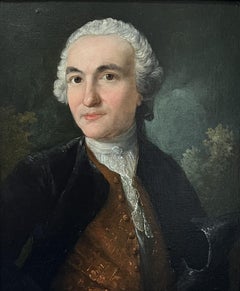
Portrait tête d’expression portrait study of a gentleman
Located in Henley-on-Thames, England
French Academic School, 18th century
Portrait tête d’expression study of a gentleman, c. 1780-90
Oil on canvas
46.1 x 35 cm.; (within frame) 57.5 x 46.6. cm.
Provenance:
Private Co...
Category
1780s French School Portrait Paintings
Materials
Oil
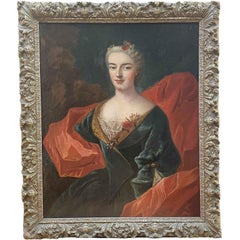
Portrait of a Lady in a Blue Dress French School 18th Century
Located in Milano, IT
Portrait of Lady in Blue Dress French School 18th century, painting done in oil on canvas depicting a gentlewoman. The female figure wears a light blue dress with white lace neckline...
Category
18th Century and Earlier French School Portrait Paintings
Materials
Canvas, Oil
More Ways To Browse
Antique Cornice
Picasso Original Oil
Andras David
Aristocratic Portrait Paintings
Full Length Portrait Painting
Kate Moss Painting
Powdered Wigs
Warhol Studio 54
Woman Smoking Art
1800 Oil Painting Portrait
Abe Lincoln
Hollis Dunlap
Indian Girl
John Winston
Oil Painting Of King George V
Oil Portraits Of Fisherman
Pompeo Batoni
Princess Diana Art