Items Similar to Men portrait
Want more images or videos?
Request additional images or videos from the seller
1 of 12
Jean François Marie BellierMen portraitCirca 1790
Circa 1790
$10,087.62
£7,524.71
€8,500
CA$14,040.46
A$15,062.90
CHF 8,079.43
MX$181,355.30
NOK 101,850.70
SEK 92,873.73
DKK 64,776.47
About the Item
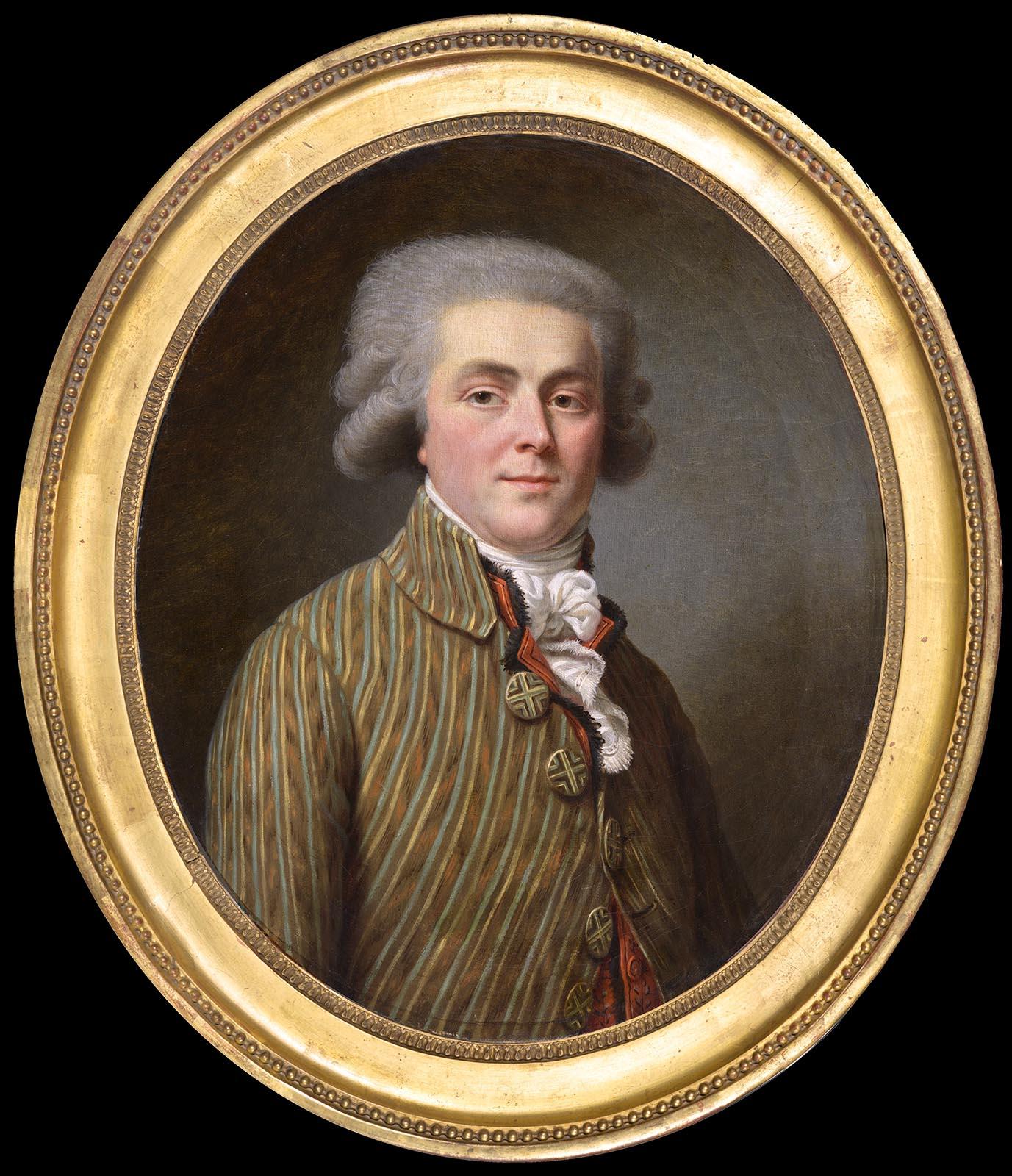
Jean François Marie Bellier
(Paris 1745 – Paris 1836)
Portrait of a Man
Oil on oval canvas laid flat
H. 45 cm; W. 55 cm
Signed on the left
Circa 1790
Jean François Marie Bellier occupies a unique place among painters active between the end of the Ancien Régime and the first decades of the 19th century. Both a portraitist and a landscape painter, he distinguished himself through a career that combined official commissions, decorative works, and portraits for an aristocratic and bourgeois clientele. A valued artist at court, he was notably the official painter of Marie Antoinette, which allowed him to participate in several prestigious projects.
Bellier took part in the decoration of Louis XVI's carriage at the time of his coronation, demonstrating a sure mastery of ornamental painting. He also contributed to the execution of some of the Louvre's ceilings, a testament to his recognition within artistic circles connected to the monarchy. These works, rarely preserved, underscore the breadth of his expertise beyond portraiture.
His paintings are characterized by keen observation and a taste for restraint. Bellier favored delicate modeling, measured lighting, and a muted palette, lending his portraits a quiet and almost introspective presence. One of his best-known paintings depicts a young girl in Norman costume: the attention paid to the fabrics, the posture, and the gentleness of the face perfectly illustrates his sensitive and precise style.
The Revolution did not end his career: he continued his work in a transformed context, maintaining the classical clarity of his style while adapting to a clientele less connected to the old court. He continued to execute portraits and formal compositions until the early decades of the 19th century.
Bellier died in 1836, leaving behind a discreet yet coherent body of work, where the legacy of the Enlightenment, the refinement of courtly art, and the beginnings of a more intimate sensibility converge. Today, his paintings—though rare—are sought after for the quality of their execution and for the insight they provide into the evolution of French portraiture between two pivotal centuries.
Our portrait, accurately placed in its late 18th-century context, is an old oval canvas that was rectangularized in the following century. A handsome gentleman, still wearing a wig, this elegant man is dressed in a pale yellow jacket with fine brown stripes, over which he wears a double-breasted, fitted frock coat of fine taupe linen.
- Creator:Jean François Marie Bellier (1745 - 1836, French)
- Creation Year:Circa 1790
- Dimensions:Height: 21.66 in (55 cm)Width: 17.72 in (45 cm)
- Medium:
- Movement Style:
- Period:1790-1799
- Condition:
- Gallery Location:BELEYMAS, FR
- Reference Number:1stDibs: LU1857217271332
About the Seller
3.0
Vetted Professional Seller
Every seller passes strict standards for authenticity and reliability
Established in 2017
1stDibs seller since 2022
7 sales on 1stDibs
- ShippingRetrieving quote...Shipping from: BELEYMAS, France
- Return Policy
More From This Seller
View AllPortrait of a man during French Revolution
Located in BELEYMAS, FR
Antoine VESTIER, attributed to
(Avallon, 1740 - Paris, 1824)
Portrait of a man under the Revolution
Oil on canvas
H. 46 cm; L. 37 cm
Circa 1793-95
This beautiful unsigned portrait i...
Category
1790s French School Figurative Paintings
Materials
Canvas, Oil
Presumed Portrait of Jean-Jacques-Blaise Baloin de Belvèse, Baron de Vennac
Located in BELEYMAS, FR
Marianne Loir
(Paris 1705 – Paris 1783)
Presumed Portrait of Jean-Jacques-Blaise Baloin de Belvèse, Baron de Vennac (?-1781)
Oil on oval canvas
H. 54.5 cm; W. 46 cm
Unsigned
Grandda...
Category
1760s French School Portrait Paintings
Materials
Canvas, Oil

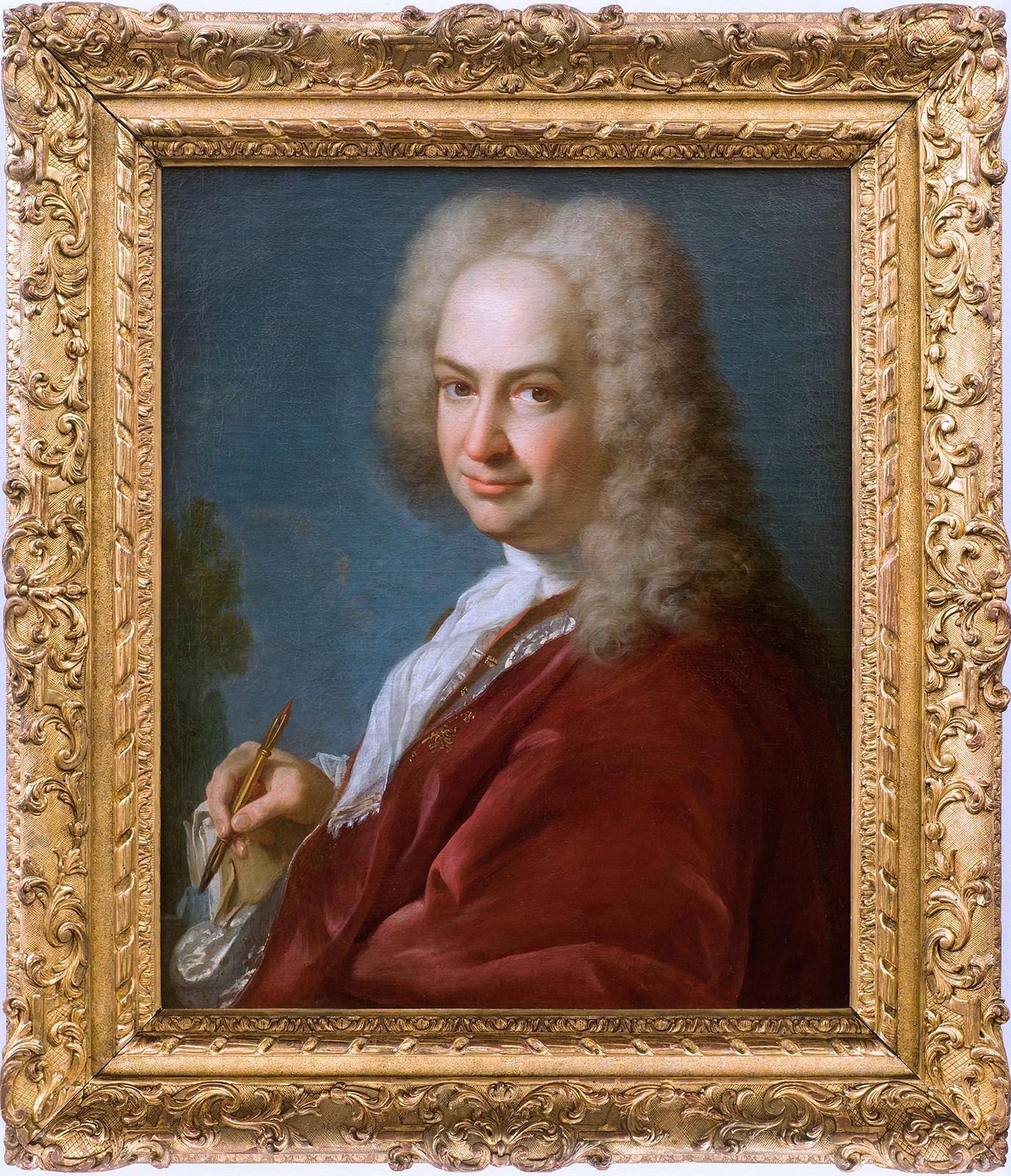
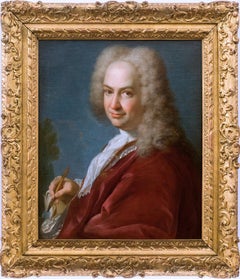
Presumed artist self-portrait
Located in BELEYMAS, FR
Louis-Gabriel BLANCHET
(Versailles, 1701 – Rome, 1772)
Presumed self-portrait of the artist
Oil on canvas
H. 73 cm; W. 60 cm
Circa 1730
Originally presented in a Restoration period frame with a "Mignard" cartouche, this beautiful painting initially appeared to us as a work from northern Italy. However, it exuded a rather French form of refinement, suggesting that its artist may have assimilated a dual influence from both sides of the Alps.
We thank our colleague and friend Philippe Mendès for spontaneously and judiciously "bringing out" the name of Louis-Gabriel Blanchet, a Romanized French portraitist, whose spirit and stylistic characteristics we clearly recognize here.
Blanchet's "French" years, before his final departure for Rome in 1728, following his winning of the second Grand Prix for painting after Subleyras in 1727, are extremely poorly documented. His father, Gabriel, was valet to Blouin, himself Louis XIV's first valet at the time. According to Thierry Lefrançois, Blanchet was one of the few students of Nicolas Bertin (1667-1736), whose studio he is said to have joined in the early 1720s. At a baptism on March 24, 1724, where he was godfather, he is mentioned as a painter in the picture store of the Duke of Antin, the director of buildings between 1708 and 1736. At this time, he was probably already married to Jeanne Quément, with whom he had a daughter also named Jeanne, who would marry Nicolas Aviet, the son of a valet in the queen's wardrobe, in Versailles in 1738.
When Blanchet arrived in Rome in October 1728, he was accompanied by Subleyras, Trémolières, and Slodtz. He enjoyed the goodwill of Vleughels, the director of the Académie de France, which had been based at the Palazzo Mancini since 1725, even though the latter was not always kind to our resident. From 1732, he was under the protection of the Duke of Saint-Aignan when he took up his post as ambassador to Rome. Along with Slodtz and Subleyras, they formed a trio of friends, joined by Joseph Vernet shortly after his arrival in Rome in 1734. Slodtz and Blanchet, on the occasion of Subleyras's marriage in 1739, were there to attest that their friend was not bound by any marital commitment, and Blanchet was a witness at Vernet's wedding in 1745.
It is most likely from these early years in Rome that our portrait of the artist dates, the expression and turn of his face irresistibly reminiscent of a self-portrait. The still relatively youthful features may correspond to Blanchet's thirty-something years, and the fluffy wig was still fashionable at this time.
The painting fits well with the depiction of a young painter wanting to display both the beginnings of success and a certain simplicity or restraint. A slight smile expresses a form of assurance in this man with a gentle, sincere gaze and a face radiating a keen sense of wit. We find here the air of intimacy present in almost all of Blanchet's portraits, even those from the 1750s and 1760s, as well as an almost complicity with the viewer. The spirit of the painting is quite close to that of the presumed portrait of Bouchardon (painted around 1730) and the portrait of Pannini, painted in 1736, but it possesses a more natural quality, notably thanks to the absence of decorum. Our work exhibits the characteristics of Blanchet's paintings: elegance, luminosity (especially in the whites), vibrant and refined colors (here, the harmony of the garnet of the garment and the slate blue of the background, whose uniformity is tempered by a very sketched landscape and a grove of greenery), light complexions, rather rosy cheekbones, often full lips, and rather tight framing.
According to the Academy's rules, Blanchet's stay should have ended in the spring of 1732, but, for reasons unknown, he remained in the Eternal City until his death, as did his friend Subleyras, with whom he shared accommodation until the late 1730s. The latter regularly called upon him to collaborate on his paintings, such as The Meal at Simon's. Through Saint-Aignan's intervention, Blanchet was employed in the late 1730s by the Stuart princely family, then exiled in Italy. He notably produced copies (now lost) after Liotard of the portraits of Charles Edward and Henry Benedict, the sons of James III Stuart. The latter also commissioned three other portraits (now in the National Portrait Gallery in London), whose more formal character contrasts with the intimate spirit of Blanchet's portraits. Blanchet frequented English painters, such as the landscape painter Richard Wilson, and studied with the Scottish portraitist Katherine Read...
Category
1730s French School Portrait Paintings
Materials
Oil, Canvas
Italian men portrait
By Giovanni Maria delle Piane dit Mulinaretto (Genoa 1670 - Monticelli d´Ongina 1745)
Located in BELEYMAS, FR
Giovanni Maria DELLE PIANE, known as IL MULINARETTO
(Genoa, 1660 – Monticelli d'Ongina, 1745)
Portrait of a man
Oil on oval canvas
H. 108 cm; L. 83 cm
Provenance: Nino Ferrari Colle...
Category
1740s Italian School Portrait Paintings
Materials
Canvas, Oil
Portrait of a couple
Located in BELEYMAS, FR
Jean-Baptiste SANTERRE
(Magny en Véxins 1651 - Paris 1717)
Portrait of a couple
Oil on original oval canvas
H. 115 cm; L. 90 cm (140 x 115 cm with frame)
Around 1695
Jean-Baptiste S...
Category
1690s French School Portrait Paintings
Materials
Canvas, Oil
Portrait of a man in armor
Located in BELEYMAS, FR
Attributed to Jacques DUMONT aka DUMONT LE ROMAIN
(Paris 1701 - 1781)
Presumed portrait of Louis-Joseph de Formanoir (?-1732)
Oil on canvas
H. 91.5 cm; L. 73 cm
Signed on the helmet:...
Category
1750s French School Portrait Paintings
Materials
Canvas, Oil

You May Also Like
Portrait tête d’expression portrait study of a gentleman
Located in Henley-on-Thames, England
French Academic School, 18th century
Portrait tête d’expression study of a gentleman, c. 1780-90
Oil on canvas
46.1 x 35 cm.; (within frame) 57.5 x 46.6. cm.
Provenance:
Private Co...
Category
1780s French School Portrait Paintings
Materials
Oil
French school late 18th Century, Portrait of a young man, oil on metal
Located in Paris, FR
French school late 18th Century
Portrait of a young man
oil on metal
10.2 x 7.7 cm
Framed under glass : 24.4 x 21.8 cm
This small portrait painting, quite original in its technique...
Category
Late 18th Century Old Masters Portrait Paintings
Materials
Oil
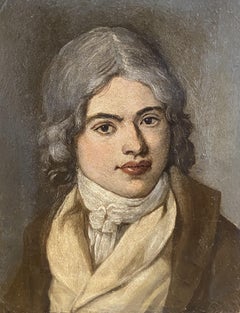
French School 18th century, Portrait of a gentleman, oil
Located in Paris, FR
French School 18th Century
Portrait of a gentleman holding his hat
Oil on paper transferred on wood panel
34 x 27 cm
Not signed which is normal for this type of artwork
In a beautifu...
Category
1760s Old Masters Portrait Paintings
Materials
Oil
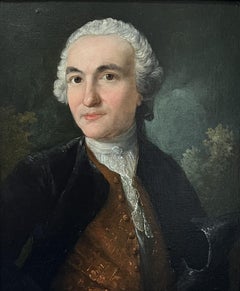
PORTRAIT OF A GENTLMEN - French School -Portrait Italian Oil on Canvas Painting
By Eugenio De Blasi
Located in Napoli, IT
Portrait of a Gentlemen - Oval oil on canvas cm.50x40, Italia, 2006 Eugenio De Blasi
Wooden frame available on request
The portrait of Eugenio De Blasi is inspired by one of the many portraits painted by Guillam Francois Colson, a French historian painter, who painted portraits of families...
Category
Early 2000s Old Masters Portrait Paintings
Materials
Canvas, Oil
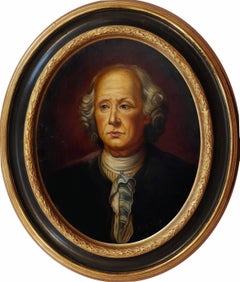
French Oil On Canvas Portrait of a Man c. 1800
Located in 263-0031, JP
French oil on canvas portrait of a man c. 1800. The bourgeois gent depicted here displays the cliched hand-in-waistcoat mannerism of the 18th and early 19th century. He’s wearing wha...
Category
Antique Early 19th Century French Paintings
Materials
Canvas
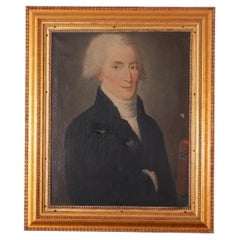
Early 19th Century Oil - Portrait of a Gentleman
Located in Corsham, GB
A formal portrait of a gentleman wearing a brown coat and wig. Well presented in an oval gilt-effect frame with floral ornamentation. Illegibly inscribed in German to the reverse of ...
Category
Early 19th Century Portrait Paintings
Materials
Oil