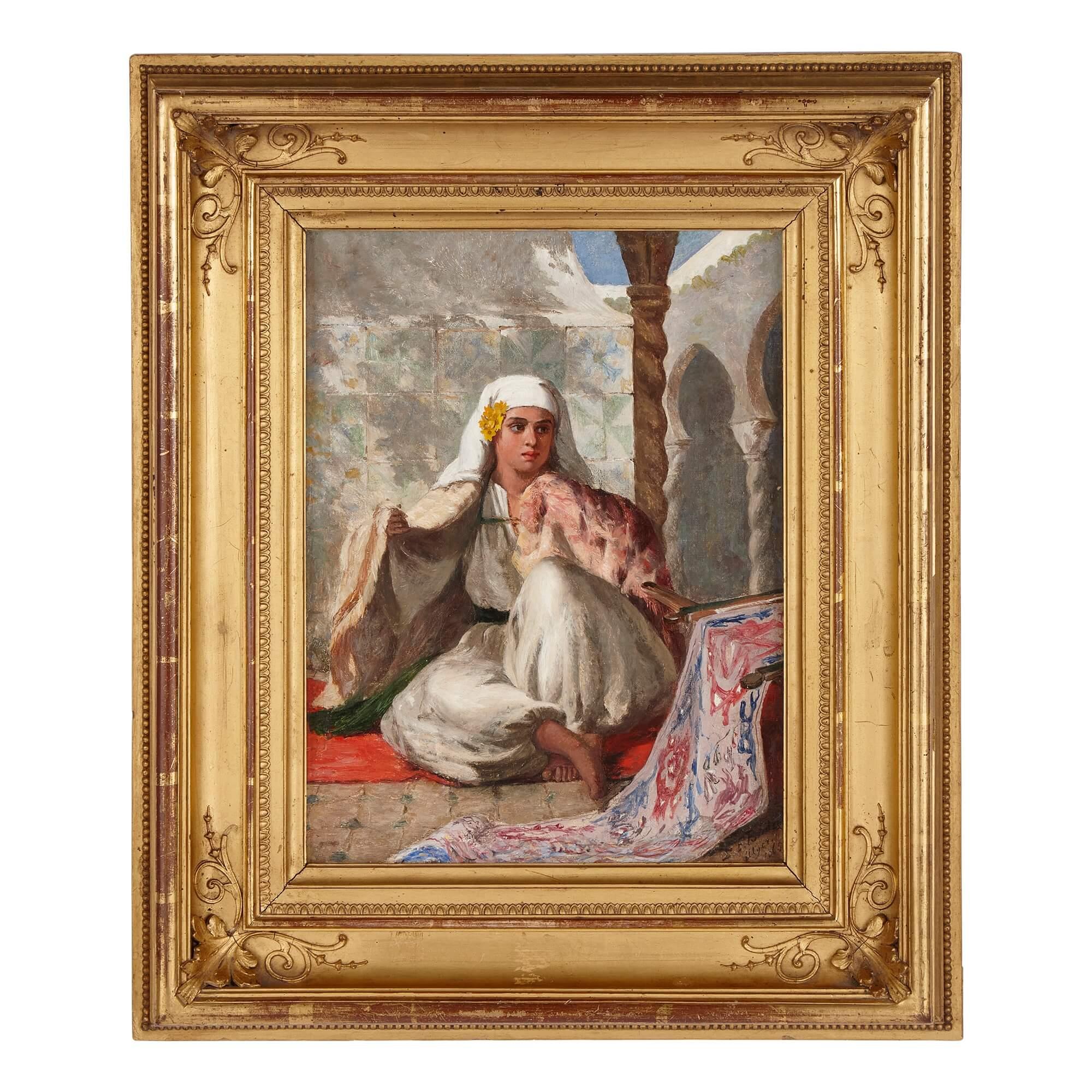
Items Similar to ‘Oriental Girls - Mediants à Tanger’, Jean François Portaels ( 1818 - 1895 )
Want more images or videos?
Request additional images or videos from the seller
1 of 14
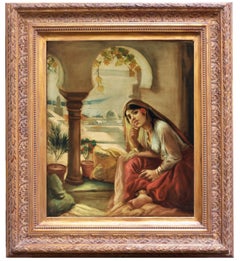
Jean Francois Portaels ‘Oriental Girls - Mediants à Tanger’, Jean François Portaels ( 1818 - 1895 )1842 - 1947
1842 - 1947
$8,378.45
£6,225.39
€7,000
CA$11,476.75
A$12,520.52
CHF 6,640.63
MX$150,843.99
NOK 84,282.46
SEK 77,162.88
DKK 53,325.12
About the Item
Jean François Portaels
1818 - Brussels - 1895
Belgian Painter
‘Oriental Girls - Mediants à Tanger, Maroc’
Signature: signed lower right ‘J. Portaels’
Medium: oil on canvas
Dimensions: image size 40,5 x 28,5 cm, frame size 67,5 x 56 cm
Biography: Jean François Portaels, also known as Jan Portaels, was a versatile Belgian painter born on April 3, 1818, in Vilvoorde and passed away on February 8, 1895, in Schaerbeek. He was celebrated for his genre scenes, biblical stories, landscapes, portraits, and Orientalist subjects. As a teacher and director of the Academy of Fine Arts of Ghent and the Académie Royale des Beaux-Arts in Brussels, Portaels significantly impacted Belgian art, becoming a pivotal figure in the Belgian Orientalist school. His works were known for their 'everyday elegance and feminine grace,' and he played a crucial role in influencing the next generation of Belgian artists, including notable figures like Théo van Rysselberghe.
Portaels was the son of a wealthy brewer who also served as Vilvoorde's mayor. Showing an early passion for drawing, he was sent to the Académie Royale des Beaux-Arts in Brussels in 1836, where he studied under François-Joseph Navez, a former student of Jacques-Louis David. Navez invited him to his studio, which was renowned at the time, allowing Portaels to refine his skills alongside other talented students like Charles de Groux and Joseph Stallaert.
In 1841, Portaels moved to Paris, enrolling at the Ecole des Beaux-Arts and studying under Paul Delaroche. He became influenced by the emerging Orientalist movement, which was gaining traction in Paris. In 1842, he won the Grand Prix de Rome, which funded his travels across Italy and other regions, including Morocco, Algeria, Egypt, Lebanon, Judea, Spain, Hungary, and Norway. These journeys profoundly influenced his artistic vision, particularly his Orientalist works.
Upon his return to Belgium in 1847, Portaels was appointed Director of the academy in Ghent. In 1849, he married Marie Hélène Navez, the daughter of his first teacher. Despite being offered the directorship of the Brussels Academy, he initially declined, opting to preserve his independence. He later accepted a teaching position at the Academy and eventually became its director in 1878, succeeding Eugène Simonis.
Portaels was known for his broad range of artistic talents, including history painting, portraiture, and genre art. He was particularly recognised for his Orientalist depictions, often portraying the 'Oriental woman' with distinctive features like arched eyebrows and almond-shaped eyes. His style, marked by charm and elegance, distinguished him from the dominant artistic movements of Classicism and Romanticism.
He was a pioneer in monumental art in Belgium, working with Jean Baptiste van Eycken to introduce fresco techniques like water glass painting. This method was notably used in the decoration of Saint Jacques-sur-Coudenberg in Brussels.
Portaels' legacy extends beyond his artwork, as he played a critical role in educating and mentoring the next generation of Belgian artists. His students, such as Emile Wauters, Théo van Rysselberghe, and Léon Frédéric, became prominent artists in their own right. Portaels' influence is evident in the continued appreciation of Orientalist art and portraiture, making him a significant figure in Belgian art history. He left behind a rich legacy that continues to be celebrated, with his works remaining highly regarded in various collections and institutions.
- Creator:Jean Francois Portaels (1818 - 1895)
- Creation Year:1842 - 1947
- Dimensions:Height: 26.58 in (67.5 cm)Width: 22.05 in (56 cm)Depth: 3.94 in (10 cm)
- Medium:
- Movement Style:
- Period:
- Condition:The artwork is elegantly presented within an original oriental frame, impeccably preserved in its good condition. This piece is showcased in a state suitable for immediate gallery hanging, having undergone professional review.
- Gallery Location:Knokke, BE
- Reference Number:1stDibs: LU2006214894352
About the Seller
5.0
Vetted Professional Seller
Every seller passes strict standards for authenticity and reliability
Established in 1998
1stDibs seller since 2022
31 sales on 1stDibs
Typical response time: Several days
- ShippingRetrieving quote...Shipping from: Knokke, Belgium
- Return Policy
More From This Seller
View All
Studies of Young Breton Women
by Eugène Louis Boudin (1824 – 1898)
Located in Knokke, BE
Eugène Louis Boudin
Honfleur 1824 – 1898 Deauville
French Painter
'Etude de jeunes Bretonnes'
Signature: signed lower right, revers named and defined 'Studies of young Breton women...
Category
Late 19th Century Impressionist Figurative Paintings
Materials
Watercolor, Pencil
La Leçon de Chant – The Singing Lesson
by Théodule Augustin Ribot, 1823 – 1891
By Théodule Augustin Ribot
Located in Knokke, BE
Théodule Augustin Ribot
St Nicolas d’Attez 1823 – 1891 Colombes
French Painter
'La Leçon de Chant – The Singing Lesson'
Signature: signed lower left 't.ribot'
Medium: oil on canva...
Category
19th Century Realist Interior Paintings
Materials
Canvas, Oil
Madame de Joannès et ses Filles
by Jules Leonard (1827-1897) Belgian - French
Located in Knokke, BE
Jules Leonard
Cerfontaine 1827 – 1897 Valenciennes
Belgian – French Painter
'Madame de Joannès et ses Filles'
Signature: signed lower right and dated ‘Jules Leonard 1881’, on the r...
Category
19th Century Realist Portrait Paintings
Materials
Canvas, Oil
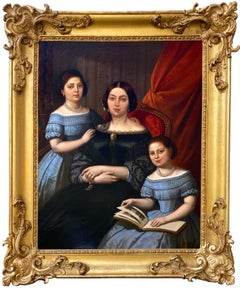
$21,065 Sale Price
20% Off
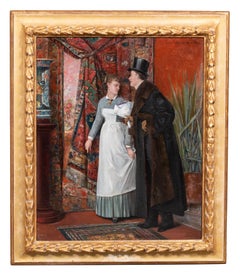
A Gentleman and a Maid
by Charles Léon Cardon (1850 – 1921) signed, dated 1880
Located in Knokke, BE
Charles Léon Cardon
1850 – Brussels – 1921
Belgian Painter
'A Gentleman and a Maid'
Signature: signed top right and dated ‘Ch. Léon Cardon - 1880’
Medium: oil on canvas
Dimensions...
Category
Late 19th Century Impressionist Interior Paintings
Materials
Canvas, Oil
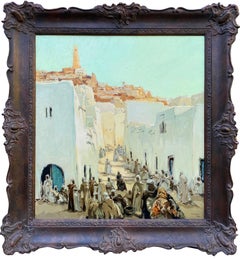
Isidorus Van Mens, 1890 – 1985, Dutch, Ghardaia – The Capital of M’Zab, Algeria
Located in Knokke, BE
Isidorus Van Mens
Berlicum 1890 – 1985 Oosterhout
Dutch Painter
'Ghardaia – The Capital of M’Zab, Algeria'
Signature: Signed bottom right and dated 1957, placed and signed on revers...
Category
Mid-19th Century Impressionist Landscape Paintings
Materials
Oil, Board
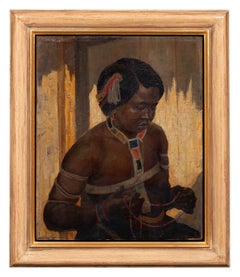
South African Girl by Alfred Richard Martin (1871 – 1939) British-South African
Located in Knokke, BE
Alfred Richard Martin
Liverpool 1871 – 1939 Johannesburg
British-South African Painter
'Portrait of a Zulu Girl, KwaZulu-Natal, South-Africa'
Medium:...
Category
Early 20th Century Impressionist Portrait Paintings
Materials
Oil, Board
You May Also Like
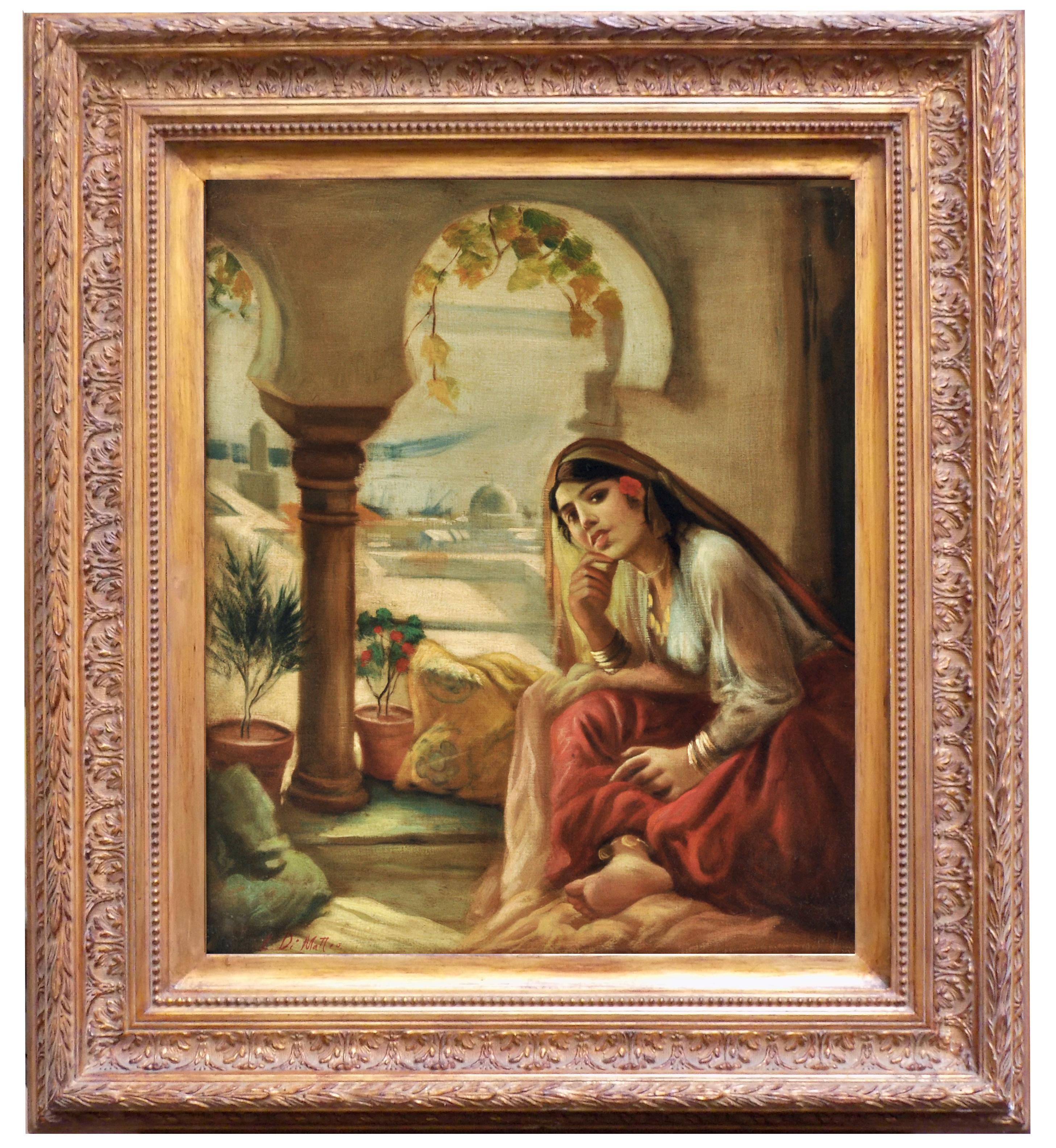
ORIENTAL GIRL- Orientalism- French School Italy figurative Oil on canvas paint
By I. Di Matteo
Located in Napoli, IT
Oriental girl - I. Di Matteo Italia 1997 - Oil on canvas cm. 60x50.
The painting by I. Di Matteo depicts a typically oriental young woman in her hair an...
Category
1990s French School Portrait Paintings
Materials
Canvas, Oil
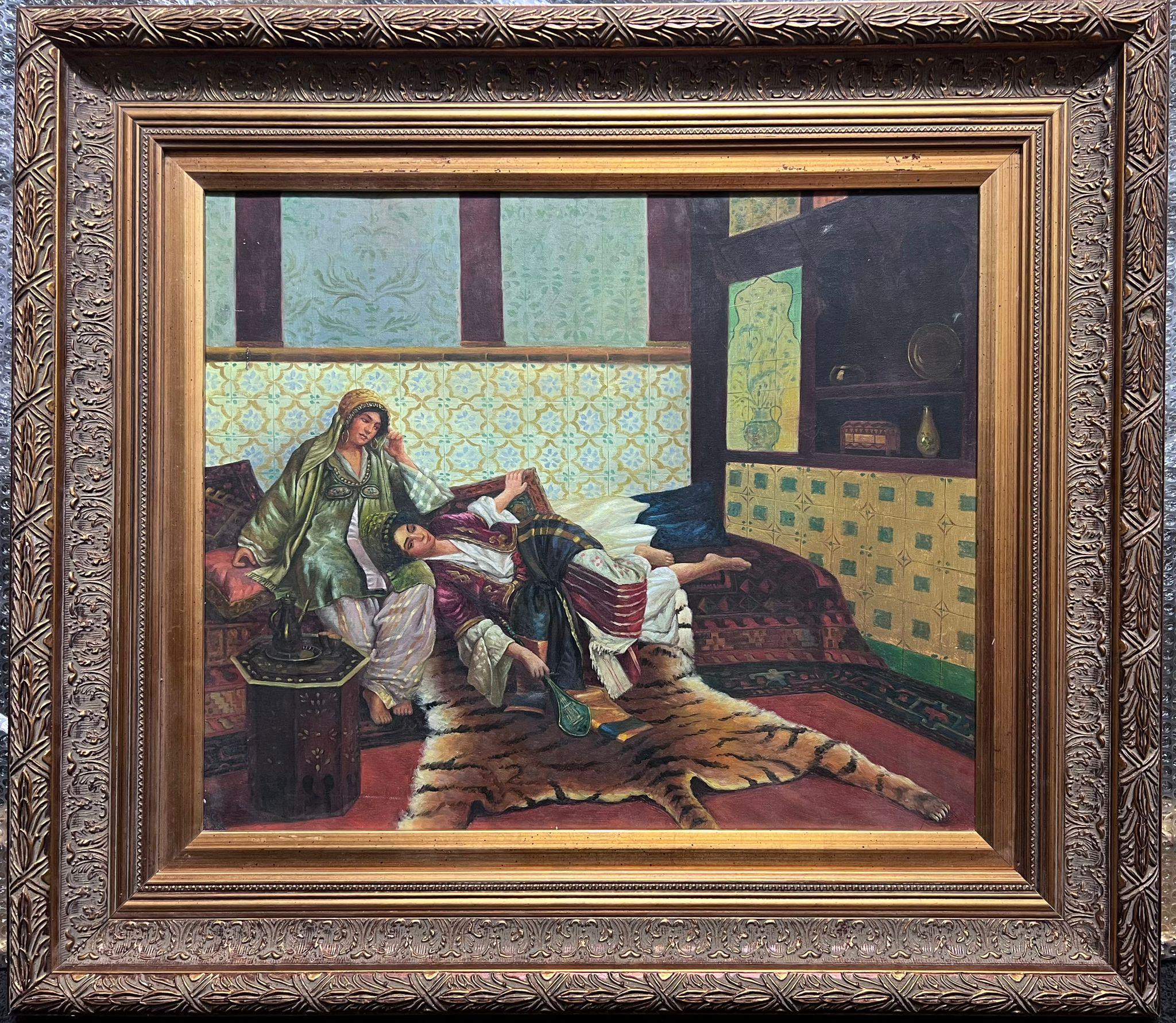
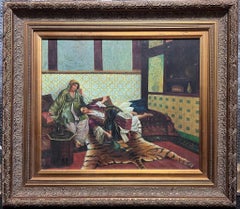
French North African Orientalist Oil Painting Hareem Interior Two Ladies
Located in Cirencester, Gloucestershire
The Hareem Interior
French Orientalist School, late 20th century
(painted after an earlier style)
oil on canvas, framed
framed: 30 x 34 inches
canvas: 20 x 24 inches
provenance: priv...
Category
20th Century Modern Figurative Paintings
Materials
Oil, Canvas
$2,470 Sale Price
20% Off
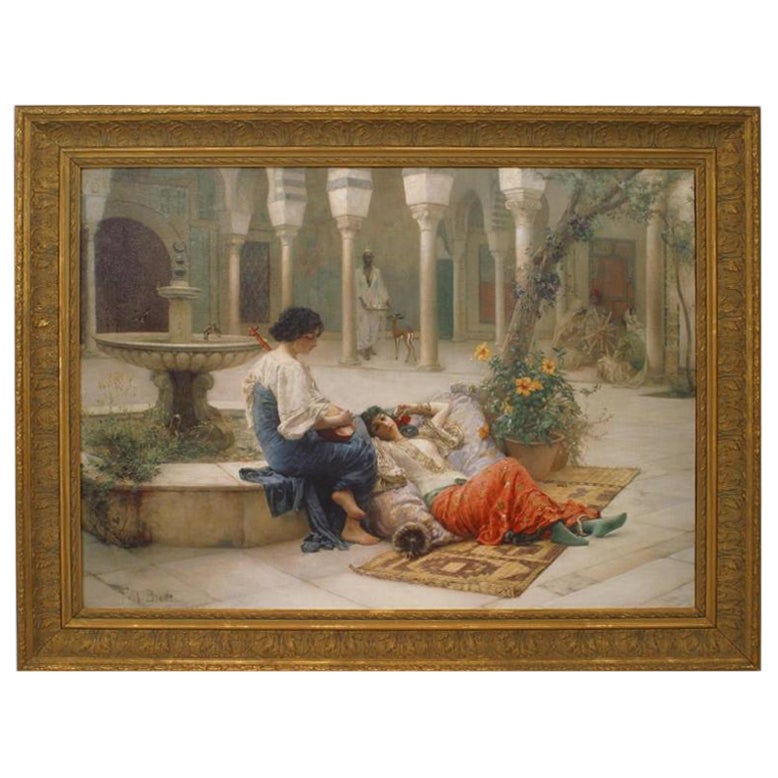
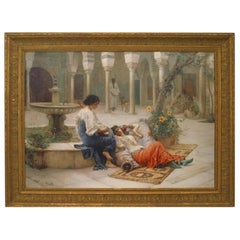
Orientalist Painting of Harem Girls
Located in Queens, NY
Copy of Orientalist painting of two harem girls resting by a fountain in a courtyard.
Category
Late 20th Century American Victorian Paintings
Materials
Paint
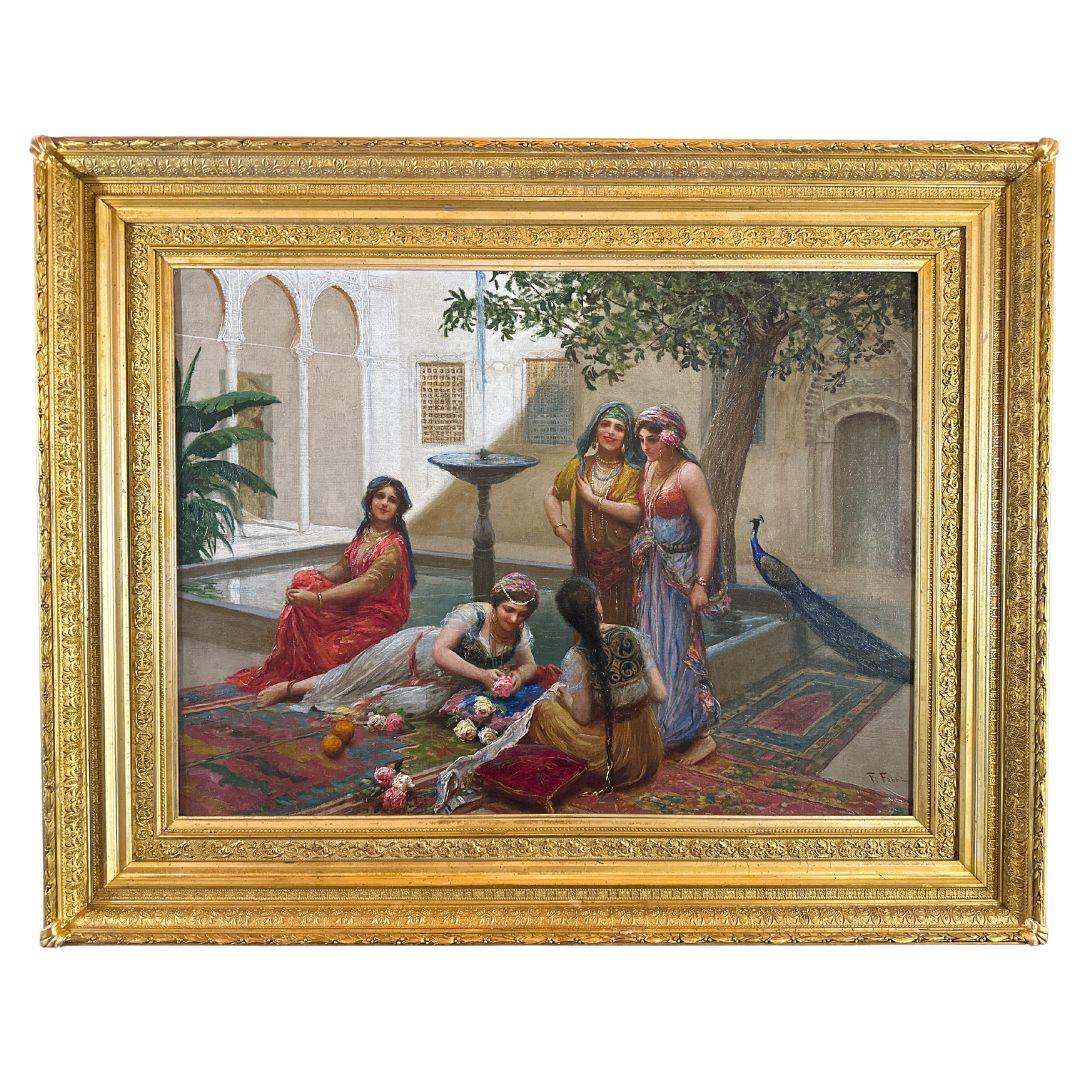
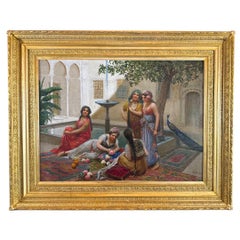
Harem Girls in the Palace Courtyard 19th Century Antique Oil Painting on Canvas
By Fabio Fabbi
Located in Jacksonville, FL
Description:
Fabio Fabbi: A Master of Orientalist Intrigue
The painting is signed on the bottom left side.
Fabio Fabbi, an esteemed Italian artist of the late 19th and early 20th centuries, emerged as a prominent figure within the Orientalist art movement. Born in Rome in 1861, Fabbi’s passion for capturing the exotic and mysterious landscapes and cultures of the East would define his artistic career and leave an indelible mark on the art world.
Fabbi’s artistic journey began with formal training at the Accademia di Belle Arti in Rome, where he developed a deep appreciation for classical techniques and aesthetics. However, it was his encounters with Orientalist themes and subjects that ignited his imagination and set him on a path to becoming a renowned master of Orientalist art.
One of Fabbi’s most captivating works, “Harem Girls in the Palace Courtyard,” stands as a testament to his exceptional talent for depicting scenes of intrigue and sensuality within the luxurious settings of the Ottoman Empire. This mesmerizing painting invites viewers into the opulent world of a harem, where a group of beautiful women gracefully gather in a sunlit courtyard. Fabbi’s brushwork skillfully captures the vibrant colors, exquisite textiles, and intricate architectural details that define the environment.
In “Harem Girls in the Palace Courtyard,” Fabbi delves into the alluring realm of the harem, exploring the interplay between power, desire, and secrecy. With meticulous attention to detail, he captures the expressions and body language of the women, evoking a sense of mystery and sensuality. The play of light and shadow adds depth and dimension to the composition, further immersing viewers in the rich atmosphere of the scene.
Fabbi’s ability to weave narratives within his artworks sets him apart. “Harem Girls in the Palace Courtyard” not only showcases his technical skill but also tells a story—a glimpse into a hidden world that fascinates and captivates. Through his artistry, Fabbi offers a nuanced portrayal of Eastern culture, emphasizing the beauty and complexity that lie beneath the surface.
Throughout his career, Fabio Fabbi gained recognition and admiration for his Orientalist works. His paintings were exhibited in prominent galleries across Europe, where audiences marveled at his ability to transport them to distant lands and evoke a sense of wonder and intrigue. Fabbi’s talent for capturing the essence of Orientalist themes and his exquisite attention to detail earned him a place among the most respected artists of his time.
Fabio Fabbi’s legacy lives on through his remarkable artworks. His ability to portray the mysteries and allure of the East continues to inspire and captivate art enthusiasts worldwide. “Harem Girls in the Palace Courtyard” exemplifies Fabbi’s mastery of the Orientalist genre, inviting viewers to step into a world of beauty, enchantment, and hidden desires.
His paintings exhibited at prestigious venues in Turin and Milan. Knighted in the Order of the Crown of Italy in 1892. Notable works include the Sacred Heart...
Category
19th Century Realist Figurative Paintings
Materials
Canvas, Oil
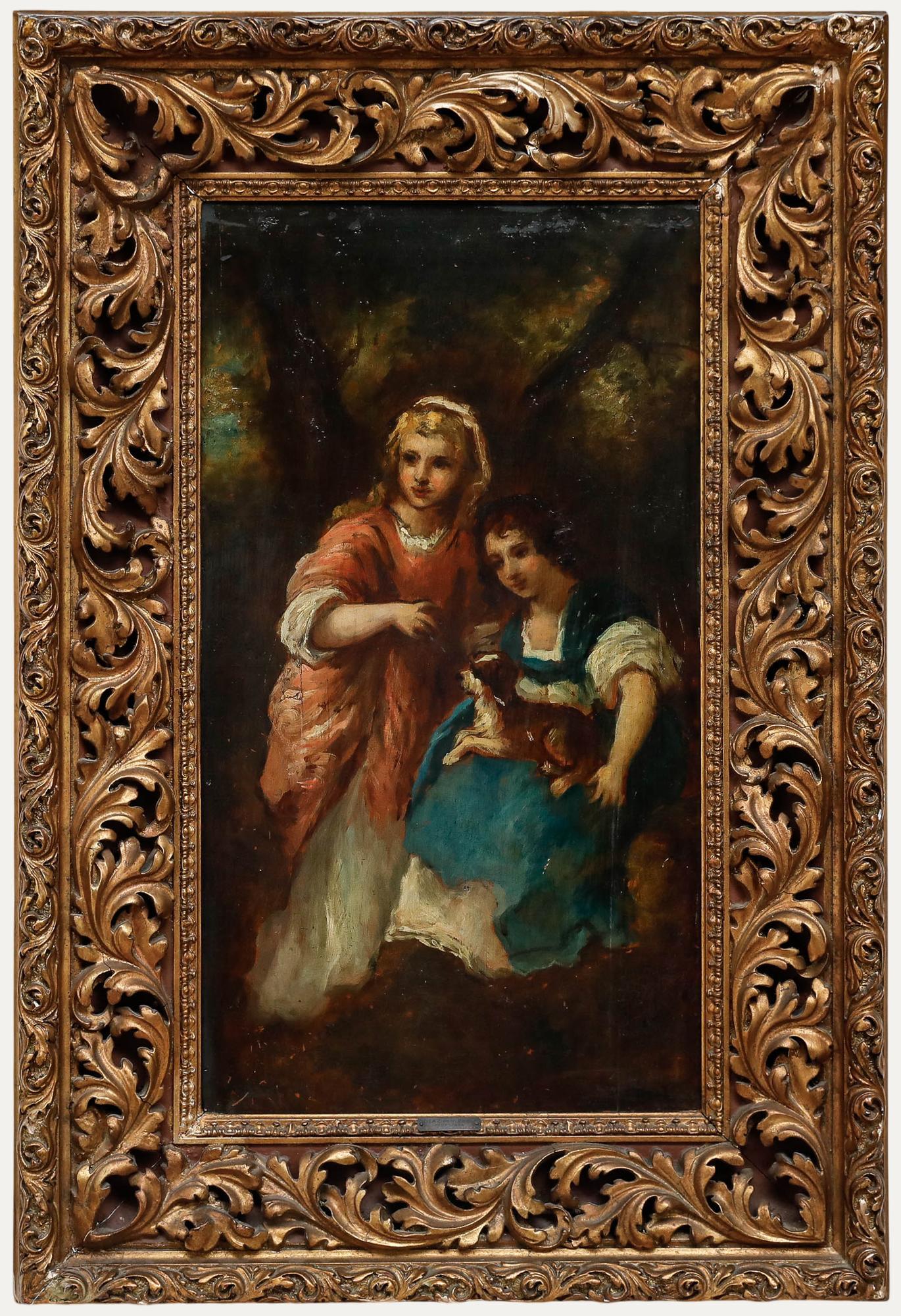
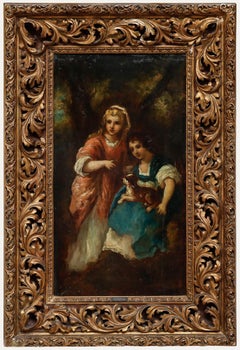
French School c.1900 Oil - The Sisters
Located in Corsham, GB
A charming oil study depicting two young girls and their spaniel dog in a pastoral setting. The artist takes inspiration from 18th century portraiture, using a soft palette and roman...
Category
Early 20th Century Portrait Paintings
Materials
Oil
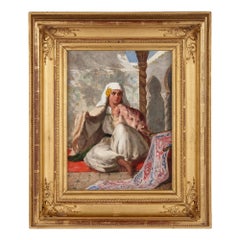
Orientalist Portrait Painting by Bridell-Fox, 1865
Located in London, GB
Orientalist portrait painting by Bridell-Fox, 1865
English, 1865
Canvas: Height 33cm, width 25cm
Frame: Height 49.5cm, width 42cm, depth 6cm
This intimate portrait depicts a seated ...
Category
19th Century Portrait Paintings
Materials
Canvas, Wood, Oil
More Ways To Browse
Belgian School
Saint Jacques
Tanger Painting
19th Century Oriental Paintings
Oriental Girl
Emile Wauters
Giovanni Francesco Barbieri
Jozef Israels
Oliver Samsinger
Portrait Mourning
Portrait Of Bishop
The Lacemaker
The Red Boy
Vintage Condoms
17th Century Dress
Andre Monet
Elizabeth Taylor Painting
Franco Zeffirelli