Want more images or videos?
Request additional images or videos from the seller
1 of 9
John DownmanPortrait of a Gentleman, William Kennaway in a Blue Coat, Signed
Dated 1779Signed and Dated 1779
Signed and Dated 1779
Price:$7,559.76
$9,449.69List Price
About the Item
- Creator:John Downman (1750 - 1824, British)
- Creation Year:Signed and Dated 1779
- Dimensions:Height: 14.18 in (36 cm)Width: 12.6 in (32 cm)Depth: 1.97 in (5 cm)
- Medium:
- Movement Style:
- Period:
- Condition:This painting has passed a strict quality and condition assessment by a professional conservator prior to going on sale. It can be hung and enjoyed immediately.
- Gallery Location:London, GB
- Reference Number:1stDibs: LU1199115100222
About the Seller
5.0
Vetted Professional Seller
Every seller passes strict standards for authenticity and reliability
Established in 1998
1stDibs seller since 2019
45 sales on 1stDibs
Authenticity Guarantee
In the unlikely event there’s an issue with an item’s authenticity, contact us within 1 year for a full refund. DetailsMoney-Back Guarantee
If your item is not as described, is damaged in transit, or does not arrive, contact us within 7 days for a full refund. Details24-Hour Cancellation
You have a 24-hour grace period in which to reconsider your purchase, with no questions asked.Vetted Professional Sellers
Our world-class sellers must adhere to strict standards for service and quality, maintaining the integrity of our listings.Price-Match Guarantee
If you find that a seller listed the same item for a lower price elsewhere, we’ll match it.Trusted Global Delivery
Our best-in-class carrier network provides specialized shipping options worldwide, including custom delivery.You May Also Like
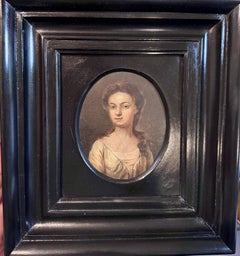
Oval 18th century Portrait of a Young girl, oil on copper
By (Follower of) Sir Godfrey Kneller
Located in Woodbury, CT
This exquisite 18th-century portrait depicts a young girl, delicately rendered in the style of Sir Godfrey Kneller, one of the most celebrated portrait painters of the Baroque period...
Category
1750s Old Masters Portrait Paintings
Materials
Copper
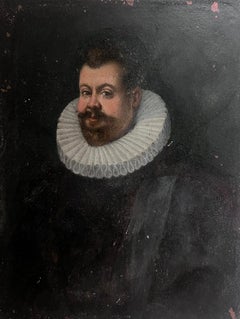
Fine 1700
s French/ Dutch Oil Painting on Copper Portrait Man Ruff Collar
Located in Cirencester, Gloucestershire
Portrait of a Gentleman wearing a Ruff Collar
Dutch/ French artist, 18th century
oil painting on copper, unframed
copper board : 6.75 x 5 inches
provenance: private collection, UK
co...
Category
18th Century Old Masters Figurative Paintings
Materials
Copper
$1,142 Sale Price
30% Off
H 6.75 in Dm 5 in
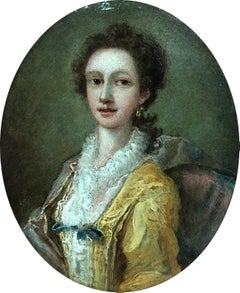
Portrait of a Lady
By Francesco Guardi
Located in Paris, Île-de-France
Francesco GUARDI (1712-1793)
Portrait of a Lady
Oil on copper
5 1/8 x 4 3/8 in
13 x 11 cm
Unsigned
Provenance
Private collection, France
We are pleased to present an exceptional...
Category
Mid-18th Century Old Masters Portrait Paintings
Materials
Copper
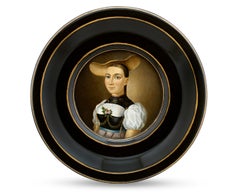
German Miniature of Young Lady in a Fancy Hat
Located in New Orleans, LA
This charming German miniature painting, created of oil on copper, depicts a young woman wearing a large and lavish hat. With dark, braided hair and blue eyes, the sitter's cheerful ...
Category
19th Century Old Masters Portrait Paintings
Materials
Copper
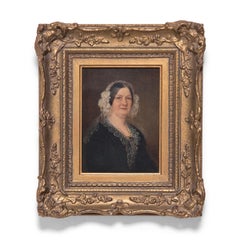
Oil Portrait of a Victorian Lady, c. 1850
Located in Chicago, IL
Painted in the 19th century, this exquisite miniature portrait wonderfully exemplifies realism in traditional oil painting. The small artwork is painted in the conventional portraiture style of the Old Masters, and achieves soft realism with fine brushwork and a subdued, neutral palette. The half length portrait depicts a fine Victorian woman dressed in all black with a delicate lace collar and bonnet. She wears a ruby broach...
Category
Mid-19th Century Old Masters More Art
Materials
Oil
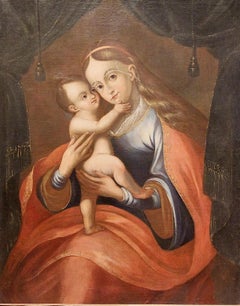
18th Century, Antique Oil Painting, Old Master. Portrait of Mother with child.
Located in Berlin, DE
18th century, antique painting, oil on canvas, old master. Mother with child.
Relined canvas.
Stretcher frame also renewed.
Artist unknown.
Category
18th Century Old Masters Figurative Paintings
Materials
Canvas, Oil
$5,702 Sale Price
20% Off
Free Shipping
H 43.31 in W 34.65 in
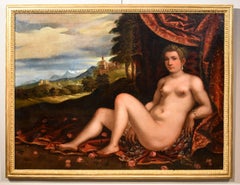
Venus Paolo Fiammingo Paint Oil on canvas Old master 16th Century Italian Art
Located in Riva del Garda, IT
Pauwels Franck, known as Paolo Fiammingo
(Antwerp, 1540 - Venice, 1596)
Venus lying in a landscape
Oil on canvas 116 x 150 cm.
In antique frame 136 x 170 cm.
The work is accompanied by a critical card by Dr. Federica Spadotto
The splendid painting proposed sees portrayed, bare and stretched out on a red brocade cloth in gold sprinkled with roses, a refined and sensual Venus, in a composition with a profound symbolic value, and arriving at the perfect representation of the Renaissance woman who, like Venus, becomes an allegory love, eros, beauty and fertility.
The canvas is part of the prestigious Venetian artistic and cultural environment of the second half of the sixteenth century, whose distinctive distinctive trait can be traced back to its cosmopolitan vocation. This characteristic, as Dr. Spadotto noted in her in-depth study, belongs to the same physiology of the Venetian capital, that is, being a distinctly commercial city located in a strategic point with respect to trade. Representing one of the liveliest ports in the Mediterranean also meant witnessing the continuous passage not only of goods, but of men, ideas, suggestions from distant countries, which influenced not only the taste of their people, but above all art.
This happened thanks to the circulation of prints, as well as pictorial specimens, to which are added the stays of great foreign artists and, above all, the permanence in the capital of a non-negligible number of Dutch, Flemish and German masters.
An emblematic case in this regard comes from Pauwels Franck (Antwerp, 1540 - Venice, 1596), better known as Paolo Fiammingo, who established himself in his native city at a young age - in 1561 a figure enrolled in the Guild of San Luca - and arrived in Venice in 1573. .
He resided in Venice from 1584 until his death, although the stylistic and formal references of some of his works have led critics to believe that in previous years he had undertaken a journey to central Italy, or to Florence and Rome, where he would have metabolized the lively cultural debate that permeated these cities and which, on the other hand, seemed completely absent in Venice.
Here Paolo will be fascinated by the sense of color and by the atmospheric component fixed on the canvas by Jacopo Tintoretto (Venice 1518 - 1594), of which he becomes a collaborator, to undergo, around 1590, the suggestion of Paolo Caliari...
Category
16th Century Old Masters Paintings
Materials
Oil
$30,270 Sale Price
30% Off
H 53.55 in W 66.93 in
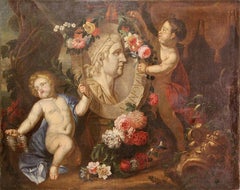
17th Century, Old Master, "King Basileus Alexander of Macedon Magnus, the Great"
Located in Berlin, DE
Very decorative, 17th century, old master painting, oil on canvas, King Alexander Magnus, the great.
Illustration of two children, putti, with wreaths of flowers on a board (or maus...
Category
17th Century Old Masters Figurative Paintings
Materials
Canvas, Oil
$26,611 Sale Price
20% Off
Free Shipping
H 41.93 in W 52.37 in
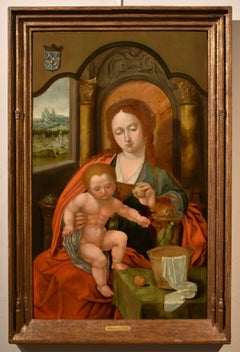
Madonna Parrot Paint Oil on table Old master Flemish Follower Master of Parrot
Located in Riva del Garda, IT
'Master of the parrot' (a painter active in Antwerp in the early 16th century, whose name refers to the parrot who always occurs in his paintings) - follower of
Madonna on the throne with child
(With the coat of arms of the client family in the upper part of the composition)
Oil on the table
101 x 62 cm. - In frame 114 x 76 cm.
The beautiful proposed work explains the typical iconographic characters of the painter called 'Master of the parrot', a conventional name used by critics to define an anonymous Dutch author of the 16th century.
More precisely, it is a painter of the southern Netherlands, active in Antwerp around 1530-50, so defined for the unmistakable parrot who often appears in his works of him. In religious iconography the parrot has often been used as a Marian symbol, as it was widespread that its most common verse was "Ave", that is, the greeting of the Archangel Gabriele to Mary at the time of the Annunciation.
Today the idea according to which the name 'master of the parrot' has not referred to a single painter, but rather a group that, based on the stylistic characters, carried out their training at the workshop of Pieter Coecke Van Aelst (Aalst (Aalst is widespread. 1502 - Brussels 1550), creating devotion paintings intended for a bourgeois client and concentrating their activity on a specific topic particularly requested by the contemporary market.
By way of example we can mention the Virgin with the San Diego Museum of Art child where the figures, like our own, are in line, With the mannerist taste for the elegant body proportions that exceed reality, with elements such as tapered finger, wide face and thin nose. These characters also betray the influence of active artists in the region such as Joos Van Cleve...
Category
17th Century Old Masters Paintings
Materials
Oil
$12,880 Sale Price
40% Off
H 44.89 in W 29.93 in
Answer Within
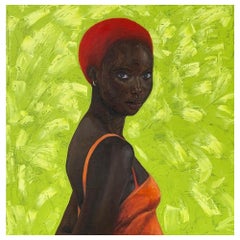
Located in Ibadan, Oyo
Painting
Ships in a well-protected tube from Nigeria
This work is unique, this is not a print or other type of copy.
Accompanied by a Certificate of Authenticity (Issued by the Gallery)
Category
21st Century and Contemporary Old Masters Portrait Paintings
Materials
Canvas, Oil
More From This Seller
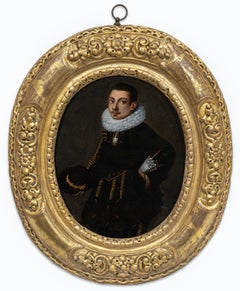
View AllPortrait of a Gentleman in Doublet
Ruff c.1595; Elizabethan oil on copper
Located in London, GB
Portrait of an Elizabethan Gentleman in a Black Doublet c.1595
Manner of Hieronimo Custodis (died c.1593)
Oil on copper
Unsigned
This exquisite oil on copper portrait, painted around 430 years ago, is a splendid survival from the Elizabethan era - the golden age in England’s history, when Queen Elizabeth I was on the throne. It is a time that is sandwiched between two golden ages of English renaissance culture, the reigns of Henry VIII and Charles I. This period produced a style of painting quite unlike that anywhere else in Europe and one that deserves serious assessment. Just a couple of years after our portrait was painted, English painting developed on another course, driven mainly by the artists Marcus Gheeraerts the Younger and Isaac Oliver; they depicted a new mood that was pervading Elizabethan and Jacobean society, which was that of romantic melancholy. Elizabethan painting...
Category
16th Century Old Masters Portrait Paintings
Materials
Copper
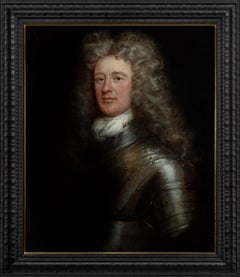
Portrait of a Gentleman, David Erskine, 13th Laird of Dun, Wearing Armour c.1700
Located in London, GB
The gentleman in this exquisite oil on canvas portrait, presented by Titan Fine Art, is shown with the grandiloquence characteristic of the English School of painting. He is portray...
Category
17th Century Old Masters Portrait Paintings
Materials
Oil, Canvas
Portrait of Gentleman in blue, Portrait of Lady, oval pair Fine Carved Frames
Located in London, GB
Portrait of a Gentleman with Blue Cloak and Portrait of a Lady in Russet Dress c.1697
Thomas Murray (1663-1735)
These fascinating portraits are exquisite examples of portraiture in ...
Category
17th Century Old Masters Portrait Paintings
Materials
Oil, Canvas

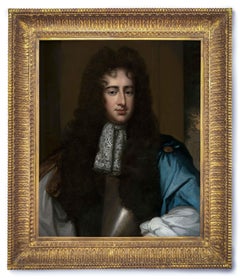
Portrait of Gentleman, Sir Henry Hobart, Blue Cloak
cravat, Wissing oil canvas
By Willem Wissing
Located in London, GB
Portrait of a Gentleman, Sir Henry Hobart Blue Cloak and cravat c.1683-1684
Attributed to Willem Wissing (1656-1687)
This impressive portrait, presented by Titan Fine Art, depicts t...
Category
17th Century Old Masters Portrait Paintings
Materials
Cotton Canvas, Oil
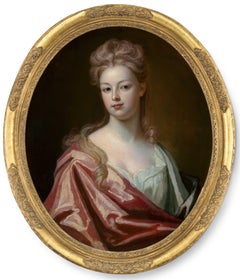
Portrait of a Lady, Mrs Wray in a Silk Dress
Pink Wrap c.1698, Oil on canvas
By Michael Dahl
Located in London, GB
Portrait of a Lady, Mrs Wray in a Silk Dress & Pink Wrap c.1698
Circle of Michael Dahl (1659-1743)
This delightful work, presented by Titan Fine Art, is a fine example of British po...
Category
17th Century Old Masters Portrait Paintings
Materials
Cotton Canvas, Oil
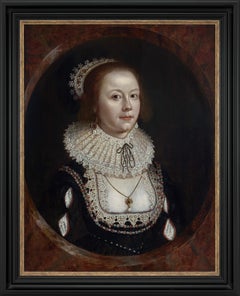
Portrait of lady, Mary Hammond in Rich Attire, Jewels, Lace c.1618-22 Historical
By Cornelius Johnson
Located in London, GB
Portrait of Mary Hammond in Sumptuous Attire, Jewels and Lace c.1618-22
Circle of Cornelius Johnson (1593-1661)
This portrait of a lady, presented by Titan Fine Art, is an exquisite example of early seventeenth-century portraiture, remarkable both for the lavishness of its subject’s attire and for the distinguished provenance that has accompanied it across four centuries that adds a rich layer of historical significance. It was once part of the notable collection of Sir William Temple, 1st Baronet (1628–1699) at Moor Park, a stately mansion in Hertfordshire. Temple was a diplomat, essayist, philosopher, and the patron of Jonathan Swift. He was a key participate at an important period in English history, helping not only to negotiate the Triple Alliance, but also the marriage between William of Orange and Princess Mary. His collection at Moor Park was well known in its day, reflecting both his cultivated taste in art and literature and his international connections.
Its fabulous attire, rendered with almost microscopic attention, is not merely decorative but emblematic of a world in which visual display was a language of power. Its provenance, stretching from the English country house and Enlightenment scholarship to modernist circles, forms a microcosm of cultural exchange across four centuries. Thus, the portrait of Mary Hammond stands as both a masterpiece of early seventeenth-century craftsmanship and a witness to the grand narrative of collecting and connoisseurship—a testament to the enduring fascination of beauty, status, and history intertwined.
By tradition the portrait depicts Mary Hammond (born c.1602), who was Sir William Temple’s mother, and the daughter of the royal physician who served James I, Dr John Hammond (c.1555–1617) and whose family owned Chertsey Abbey in Surrey. The woman appears between 18 and 25 years old, and Mary would be about 18–20 when the portrait was painted circa 1620, therefore this matches the apparent age of the sitter and the fashion perfectly.
Mary stood at the intersection of learned/courtly and gentry worlds. On 22 June 1627 she married her first cousin (a common practice for consolidating family wealth and influence during that era.) Sir John Temple (1600-1677) at St Michael, Cornhill in the City of London. The couple resided nearby, at Blackfriars. Her marriage to Sir Temple placed her at the heart of the social and political circles that shaped British history.
The couple had at least five children, and they became highly significant historical figures:
The eldest son, Sir William Temple, 1st Baronet, became a distinguished diplomat, statesman, and essayist, famous for his role in the Triple Alliance and as a patron and mentor to the writer Jonathan Swift – our portrait was in his collection. Their daughter, Martha Temple, later Lady Giffard, was a notable figure in her own right. She became her brother William's first biographer and a respected letter-writer, providing a rare female perspective on the events and high society of the time. Another son, also named Sir John Temple, became Attorney General for Ireland and was involved in the turbulent politics surrounding the English Civil War and the Act of Settlement in Ireland.
Mary died in November 1638 after giving birth to twins and was buried at Penshurst, Kent. The family's connection to Penshurst Place is a major point of interest as this historic manor was the seat of the Sidney family, a major aristocratic and literary dynasty.
The portrait was in the collection of the Mary’s son, Sir William Temple. From there it descended to his daughter, and then to her nephew, the Reverend Nicholas Bacon of Spixworth Park, Norfolk (his mother was Dorothy Temple who died in 1758). Indeed, by this time, many Temple relics were in the collection at Spixworth including the engagement ring of the illustrious Dorothy Osborne, Lady Temple, wife of Sir William Temple. The portrait thus linked two prominent English families—the Temples and the Bacons—for generations. It is listed in a Spixworth Park inventory of 27 October 1910 by the local collector and art historian, Prince Duleep Singh. He described it with characteristic precision as: “No. 69. Lady Half Length, body and face turned towards the sinister, hazel eyes upwards to the dexter, red hair dressed low and over the ears, a jewelled coronet behind, pearl ear-rings tied with black strings. Dress: black, bodice cut low and square, with lace all round the opening and over shoulders, sleeves with double slashes showing red lining and lace under, falling thin pleated lace collar, black strings tied behind it, a jewel suspended on a black string round the neck, and a double row of agate and silver beads all round to the shoulders. M. In brown veined stone frame. Age 30. Date c.1620. It is called ‘Dutch portrait from Moor Park, mentioned by Nicholas Bacon of Coddenham and Shrubland as a very valuable painting.’
A few years later, when Robert Bacon Longe’s executors sold the contents of Spixworth Park (19–22 May 1912), the portrait appeared as lot 262, described as: “A very valuable half-length portrait on panel, ‘Dutch Lady, with deep lace collar and pearl and amethyst necklace, pendant, and ear-rings, and auburn hair, with coronet’ Early Dutch School 1620.” Following this sale the painting entered the collection of David and Constance Garnett, prominent literary figures of the early twentieth century, before being gifted to Andre Vladimervitch Tchernavin by 1949, and subsequently passed by him to the present owners in 1994.
The two great houses associated with the painting, Moor Park and Spixworth Park, further underscore its pedigree. Moor Park, in Hertfordshire, was among the grandest country estates of seventeenth-century England—its gardens famously redesigned by Sir William Temple himself and later influencing landscape design across Europe. Sir William's Temple's secretary was Jonathan Swift, who lived at Moor Park between 1689 and 1699. Swift began to write "A Tale of the Tub" and "The Battle of the Books" at Moor Park.
Spixworth Park, near Norwich, was an Elizabethan country house in Spixworth, Norfolk, located just north of the city of Norwich. It was home to successive generations of the Bacon family, one of Norfolk’s most distinguished dynasties (later, the Bacon Longe family), who were considerable land owners (owning Reymerston Hall, Norfolk, Hingham Hall, Norfolk, Dunston Hall, Norfolk, Abbot's Hall, Stowmarket, and Yelverton Hall, Norfolk). Spixworth Hall and the surrounding parkland remained in the Longe family for 257 years until 1952, when it was demolished.
Rendered with meticulous precision and sumptuous detail, the painting depicts an elegantly dressed woman—her poise, costume, and jewels all communicating a message of wealth, refinement, and social rank. Every brushstroke conveys an artist deeply attuned to the textures of luxury and the nuances of feminine dignity.
The sitter’s attire is nothing short of magnificent. Her bodice and sleeves are fashioned from the finest black silk or satin, the fabric absorbing and reflecting light in equal measure, suggesting both depth and lustre. Around her shoulders lies an opulent lace ruff—a deep, radiating lace collar worked in such intricate detail that it testifies to both the artist’s technical skill and the sitter’s extravagant taste. Lace of this quality, especially Venetian or Flemish bobbin lace, was one of the costliest materials available in early seventeenth-century Europe, its weight worth more than gold, and was a marker of prestige that rivalled jewels in value. The painter has taken great care to delineate every loop and scallop of the lace, achieving an almost tactile realism. Pale skin was also a desired beauty standard, sometimes accentuated with contrasting black ribbons or strings.
Her jewels amplify this display of affluence. Matching earrings and a delicate coronet or jewelled hair ornament with a feather adorn her hair, which is styled in the modest yet fashionable manner of the time. These details are far from decorative excess—they serve as visual emblems of social standing, refinement, and lineage. Portraits of this kind were statements of both identity and aspiration, intended to project a family’s prosperity and moral virtue to posterity.
The portrait was most likely painted in London around 1618-1622. The low-cut, décolletage-revealing neckline was fashionable in the courts of England and France during the late Elizabethan and Jacobean eras (c. 1590s-1610s), this style did not prevail in the public fashion of the Low Countries at this time. This style of lace ruff — delicate needle lace with geometric openwork — was fashionable from c.1615 to 1622, and the jewelled caul (hair net) and lace edging over a stiffened coif are consistent with high-status English women’s portraiture between 1610–1620. The puffed sleeve slash and the use of pink satin beneath black velvet belong squarely to the late Jacobean...
Category
17th Century Old Masters Portrait Paintings
Materials
Oil, Panel
Recently Viewed
View AllMore Ways To Browse
Oil On Copper Painting 17th 18th
Joseph Wright Of Derby
Antique Collar Buttons
Small Oil Portrait
Portrait Xviii
Relax Sign
Titan Fine Art
Vincent Desiderio
50s British Art
Baron Oil Painting
Cadre Dore
Civil War Portrait
Jonathan Richardson
Le Sueur
Oil Portrait Of Young Blonde Girl
Society Portraits Oil Painting
Wisdom Uche
Woman In Black Hat