Items Similar to Femme aux Souliers Noir (Woman in Black Shoes)
Want more images or videos?
Request additional images or videos from the seller
1 of 9
Jules PascinFemme aux Souliers Noir (Woman in Black Shoes)Circa 1923
Circa 1923
$98,500
£75,005.68
€86,367.03
CA$139,583.17
A$150,141.66
CHF 80,240.06
MX$1,769,742.48
NOK 1,011,639.26
SEK 924,830.27
DKK 645,307.56
About the Item
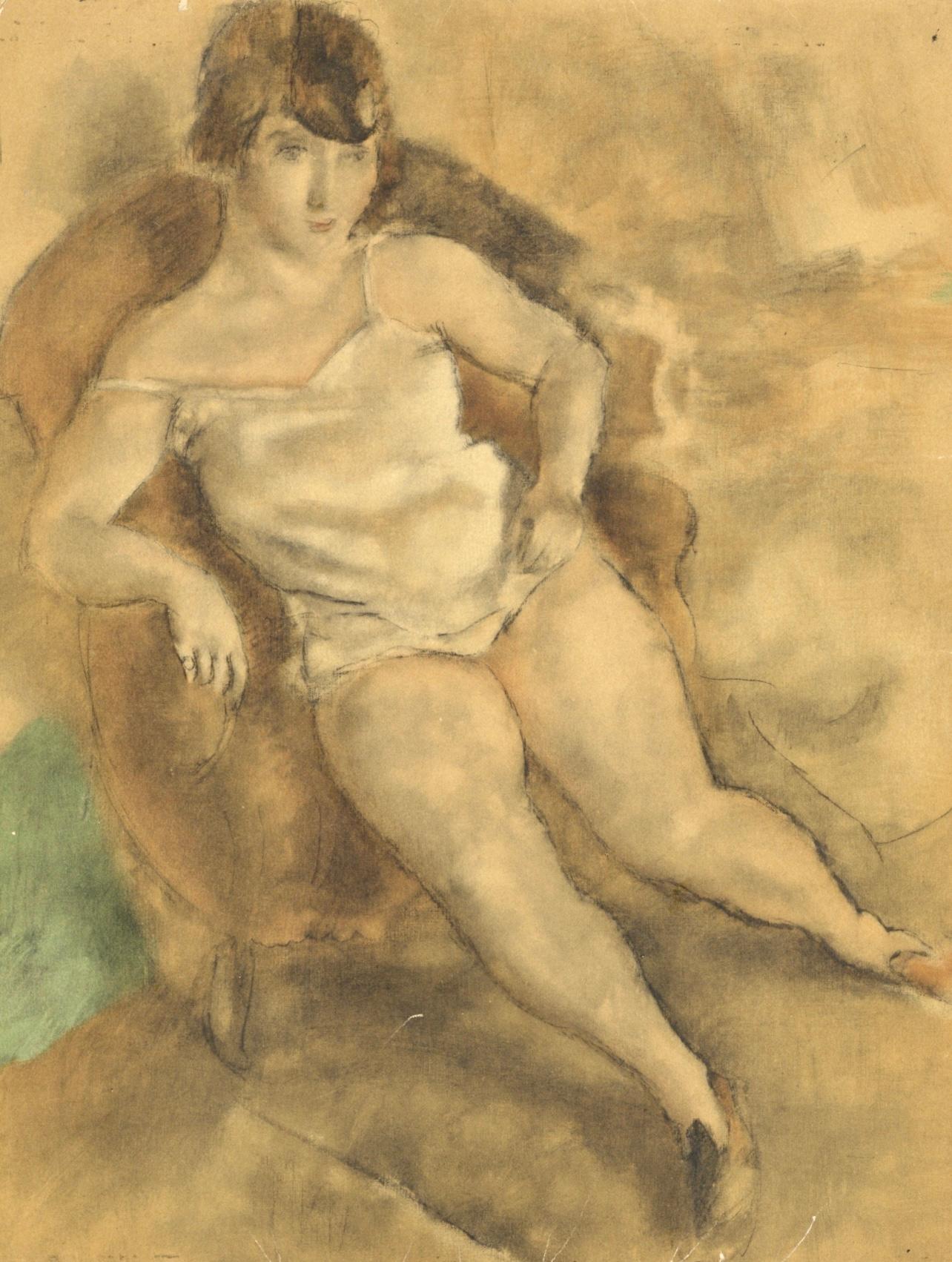
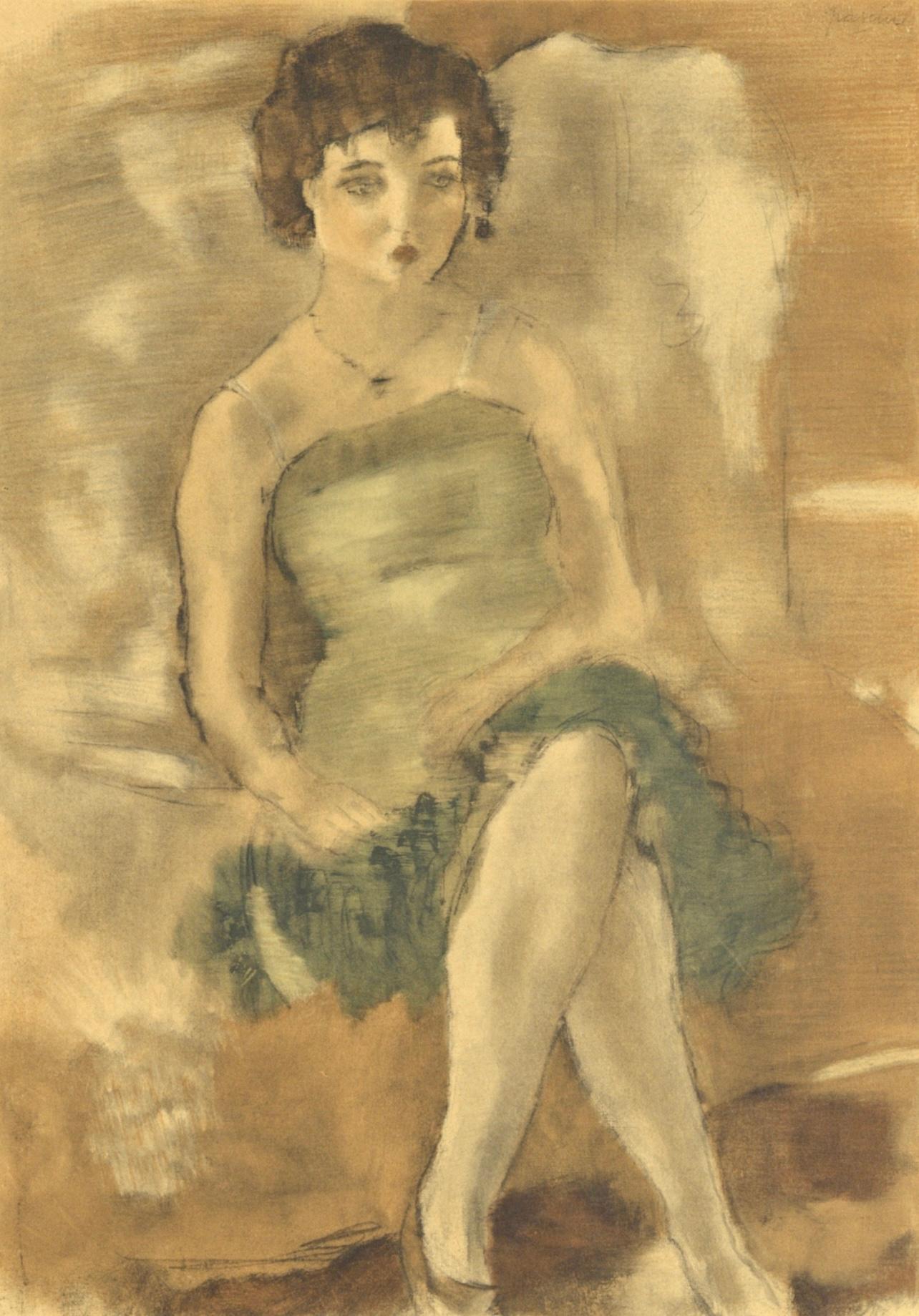
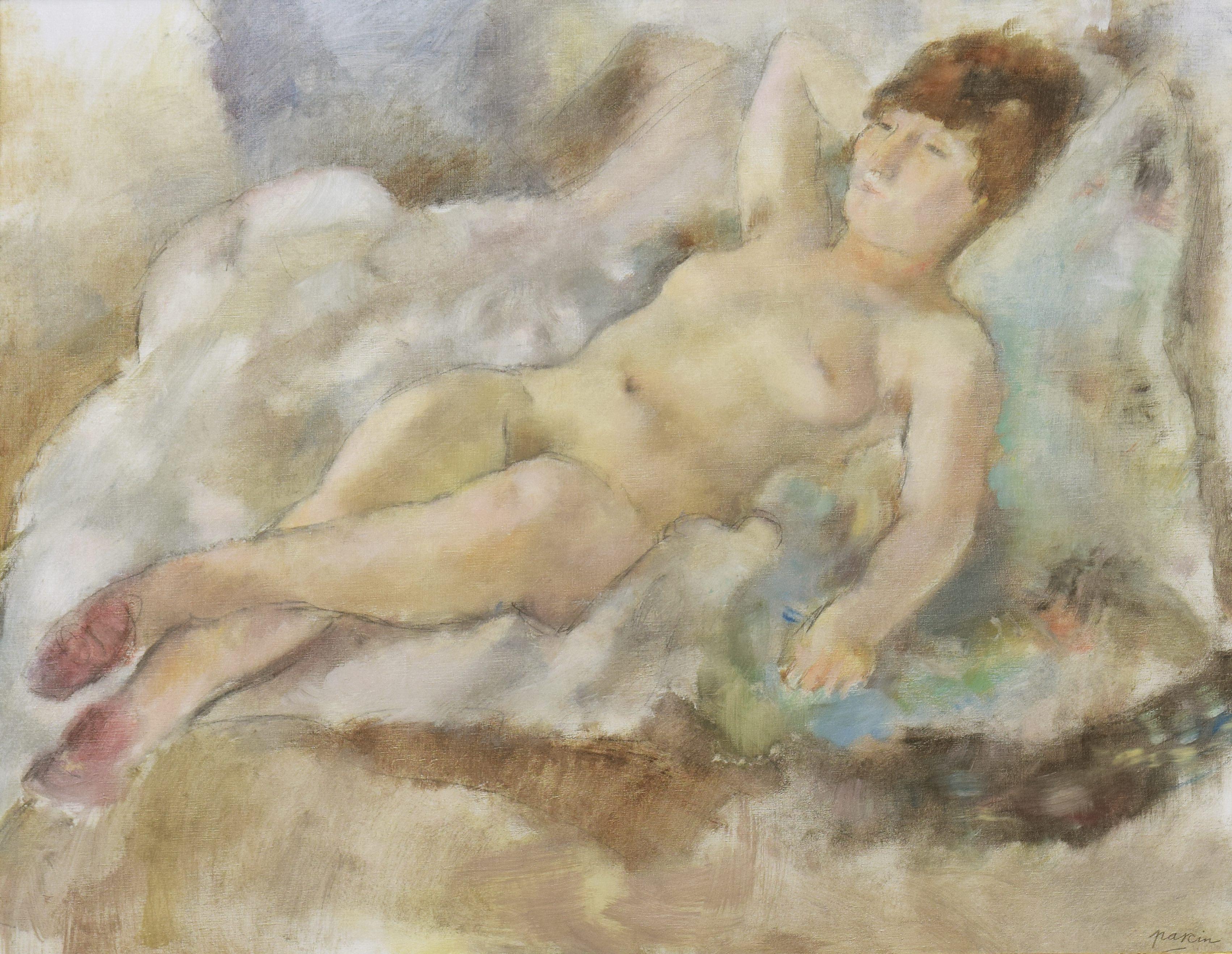
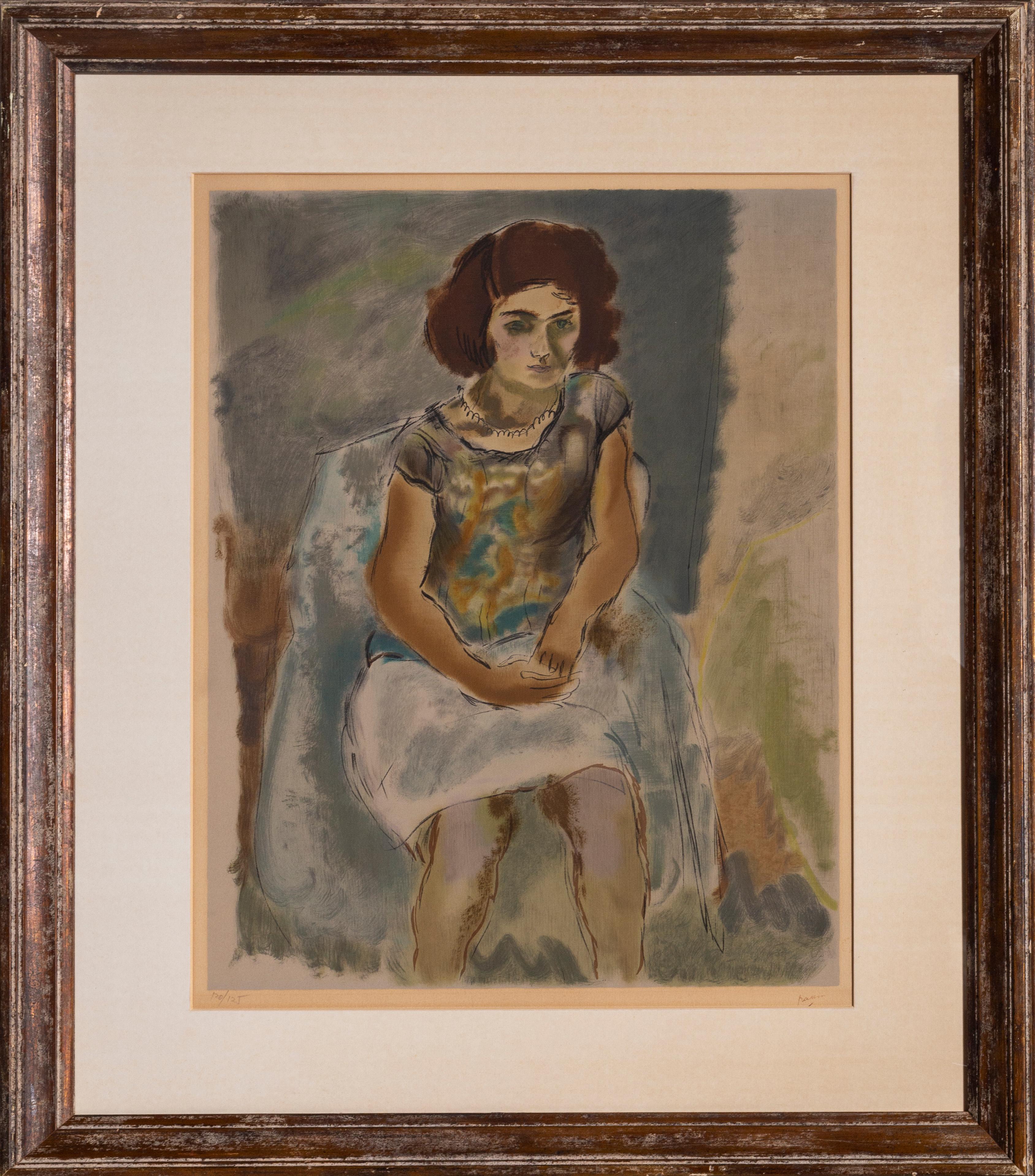
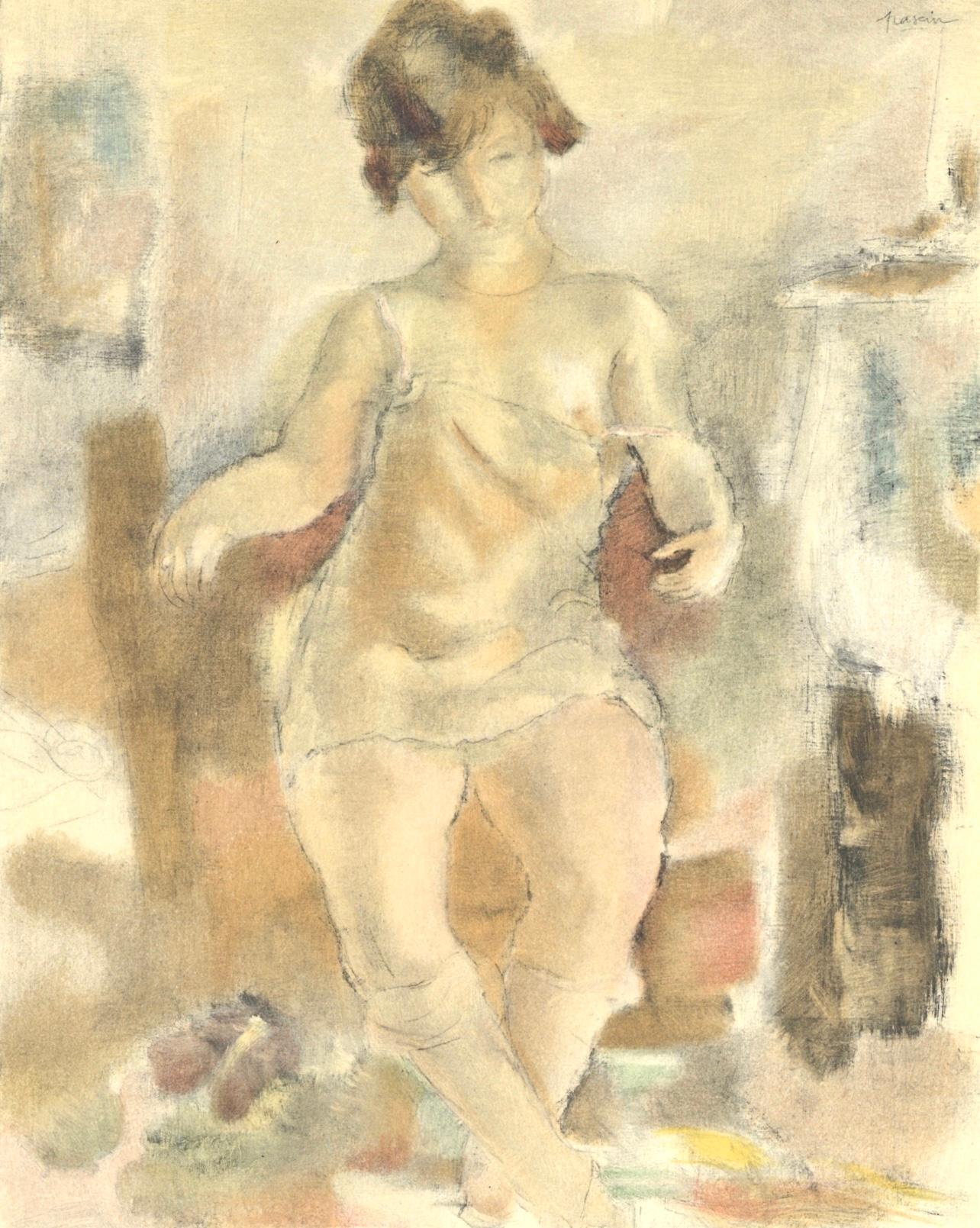
This intimate portrait was composed by the Bulgarian-born French Expressionist painter Jules Pascin. Known as the "Prince of Montparnasse," Pascin made a name for himself throughout both Europe and the United States as a painter of woman, often while nude or in various stages of undress. Undoubtedly influenced by the French Impressionists, particularly Pierre-Auguste Renoir, Pascin developed a highly gestural style that is uniquely his own. Femme aux Souliers Noir displays the unique qualities that made his work so groundbreaking during his lifetime.
Though he was born in Bulgaria and became a United States citizen in 1920, Pascin spent most of his career is Paris, and he is regarded today as a French painter. It was on his return to France from the United States in 1923 when his so-called nacrée, or "pearly," style began to emerge in his work; the present painting dates to this same period. In it, one can see how Pascin adopted a more fluid touch in his paint application, working with almost dry brushes. The technique allowed him to make his tones more transparent, lending a ghostly, immaterial quality to his figures. This portrait perfectly embodies the atmospheric qualities of his nacrée period. Less sensual than his nudes, Femme aux Souliers Noir nevertheless displays the earthy softness and intimate charm that made the artist so successful.
Born in Vidin, Bulgaria in 1885, Pascin grew up part of an affluent Sephardic Jewish family. He attended university in Austria and Germany, though he eventually moved to Paris in 1905. Encountering the Parisian Modernist movement changed the trajectory of his career, and he soon began exhibiting his prints and drawings at the Salon des Indépendants. He achieved a great deal of success and fame early in his career, particularly in North America, so much so that he chose to become a United States citizen in 1920. Tragically, however, he fell prey to depression and alcoholism, and committed suicide in 1930 at the age of 45. Today, his work can be found in the collections of the Metropolitan Museum of Art (New York), the Museum of Modern Art (New York), the Louvre (Paris), the Art Institute of Chicago and others.
Circa 1923
Canvas: 24" high x 18" wide
Frame: 33 1/4" high x 27" wide
- Creator:Jules Pascin (1885-1930, Bulgarian, French)
- Creation Year:Circa 1923
- Dimensions:Height: 33.25 in (84.46 cm)Width: 37 in (93.98 cm)
- Medium:
- Movement Style:
- Period:
- Condition:
- Gallery Location:New Orleans, LA
- Reference Number:Seller: 31-11611stDibs: LU1865906142
Jules Pascin
Jules Pascin was born Julius Mordecai Pincas, in Widdin, Bulgaria to a Spanish-Sephardic Jewish father and a Serbian-Italian mother. His early artistic training was in Vienna and Munich. In 1905, at the age of 20, he adopted the pseudonym Pascin (an anagram of Pincas). About the same time, he began contributing drawings to Simplicissimus, a satirical magazine published in Munich. In December 1905, Pascin moved to Paris, becoming part of the great migration of artists to that city at the start of the 20th century. In 1907, Pascin met Hermine Lionette Cartan David, also a painter, and they became lovers. They lived together until Pascin left for America on October 3, 1914. A few weeks later on October 31, Hermine David sailed for the United States to join Pascin. Pascin lived in the United States from 1914 to 1920, sitting out World War I. He taught at the Telfair Academy in Savannah, Georgia, associated with the Telfair Art Museum. He and Hermine painted in New York City as well as in Miami, New Orleans, and Cuba. Despite his social life, Pascin created thousands of watercolors and sketches, plus drawings and caricatures, which he sold to various newspapers and magazines. He studied the art of drawing at the Académie Colarossi and, like Henri de Toulouse-Lautrec, he drew upon his surroundings and his friends, both male and female, as subjects. He wanted to become a serious painter, but in time, he became deeply depressed over his inability to achieve critical success with his efforts. During the 1920s, Pascin mostly painted fragile petites filles, prostitutes waiting for clients, or models waiting for the sitting to end. His fleetingly rendered paintings sold readily, but the money he made was quickly spent. Famous as the host of numerous large parties in his flat, whenever he was invited elsewhere for dinner, he arrived with as many bottles of wine as he could carry. He frequently led a large group of friends on summer picnics beside the River Marne, where their excursions lasted all afternoon. Ernest Hemingway's chapter titled "With Pascin At the Dôme," in A Moveable Feast, recounted a night in 1923 when he had stopped off at Le Dôme and met Pascin escorted by two models. Hemingway's portrayal of the evening is considered one of the defining images of Montparnasse at the time. Pascin struggled with depression and alcoholism. "[D]riven to the wall by his own legend," according to art critic Gaston Diehl, he committed suicide at the age of 45 on the eve of a prestigious solo show. He slit his wrists and hung himself in his studio in Montmartre. On the wall he left a message written in blood, to a former lover, Cecile (Lucy) Vidil Krohg In his last will and testament, Pascin left his estate equally to his wife, Hermine David, and his mistress Lucy Krohg.
About the Seller
5.0
Vetted Professional Seller
Every seller passes strict standards for authenticity and reliability
Established in 1912
1stDibs seller since 2013
21 sales on 1stDibs
Typical response time: 8 hours
- ShippingRetrieving quote...Shipping from: New Orleans, LA
- Return Policy
More From This Seller
View AllPortrait of Pierre Renoir by Louis Valtat
By Louis Valtat
Located in New Orleans, LA
Louis Valtat
1869-1952 French
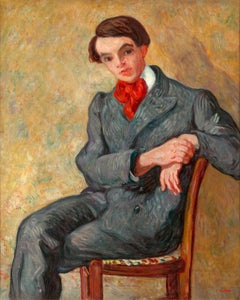
Portrait of Pierre Renoir
Signed "L. Valtat" (lower right)
Oil on canvas
This vibrant painting by Louis Valtat depicts the famed Renoir's eldest son...
Category
Early 20th Century Post-Impressionist Portrait Paintings
Materials
Canvas, Oil
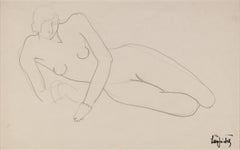
Nu allongé avec bracelet by Tamara de Lempicka
By Tamara de Lempicka
Located in New Orleans, LA
Tamara De Lempicka
1898-1980 Polish
Nu allongé avec bracelet
(Nude lying down with bracelet)
Signed “Lempicka”(bottom right)
Pencil on paper
This exquisite pencil on paper by Tam...
Category
20th Century Modern Nude Drawings and Watercolors
Materials
Paper, Pencil
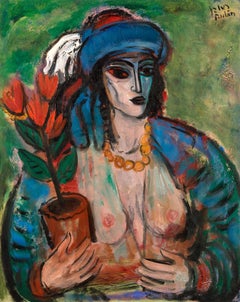
Orientala By Reuven Rubin
By Reuven Rubin
Located in New Orleans, LA
Reuven Rubin
Israeli 1893-1974
Orientala
Signed “Reuven Rubin"
Oil on canvas
A striking and unique work rendered in a breathtaking jewel-toned palette, Orientala by Rueven Rubin ...
Category
20th Century Post-Impressionist Nude Paintings
Materials
Canvas, Oil
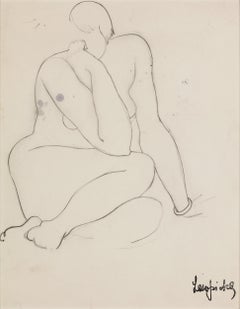
Thinking by Tamara de Lempicka
By Tamara de Lempicka
Located in New Orleans, LA
Tamara De Lempicka
1898-1980 Polish
Thinking
Signed “Lempicka”(bottom right)
Pencil on paper
This enchanting pencil on paper by Tamara de Lempicka radiates Art Deco's signature b...
Category
20th Century Art Deco Figurative Drawings and Watercolors
Materials
Paper, Pencil
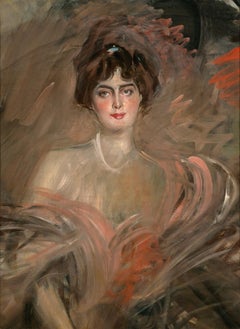
Portrait of Emilienne Le Roy by Giovanni Boldini
By Giovanni Boldini
Located in New Orleans, LA
Giovanni Boldini
1842-1931 Italian
Portrait of Emilienne Le Roy
Oil on canvas
A dazzling display of Giovanni Boldini’s signature style, Portrait of Emilienne Le Roy captures the ...
Category
20th Century Modern Portrait Paintings
Materials
Canvas, Oil
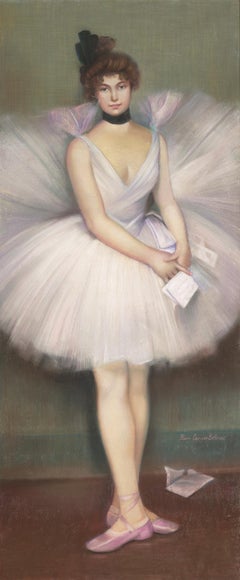
Danseuse By Pierre Carrier-Belleuse
By Pierre Carrier-Belleuse
Located in New Orleans, LA
Pierre Carrier-Belleuse
1851-1932 French
Danseuse
Signed “Pierre Carrier-Belleuse” (lower right)
Pastel on canvas
Strikingly elegant, this extraordinary pastel by French impressi...
Category
19th Century Impressionist Figurative Drawings and Watercolors
Materials
Canvas, Pastel
You May Also Like
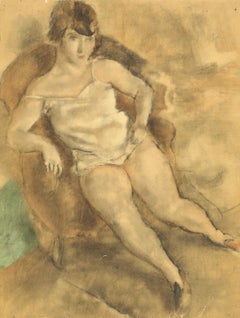
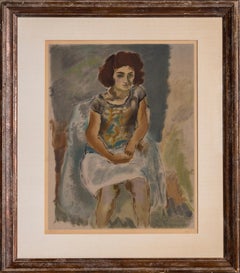
Jules Pascin, Woman in an Armchair, from Pascin, 1954 (after)
By Jules Pascin
Located in Southampton, NY
This exquisite lithograph after Jules Pascin (1885–1930), titled Femme dans un fauteuil (Woman in an Armchair), from the album Pascin, originates from the 1954 edition published by E...
Category
1950s Modern Figurative Prints
Materials
Lithograph
$716 Sale Price
20% Off
Free Shipping
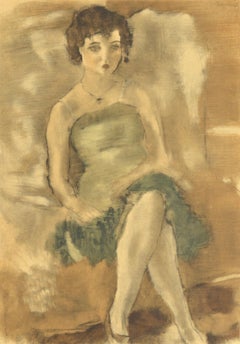
Jules Pascin, The Lady in Green, from Pascin, 1954 (after)
By Jules Pascin
Located in Southampton, NY
This exquisite lithograph after Jules Pascin (1885–1930), titled La Dame en vert (The Lady in Green), from the album Pascin, originates from the 1954 edition published by Editions du...
Category
1950s Modern Figurative Prints
Materials
Lithograph
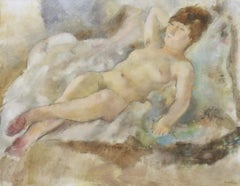
Rebecca Couchée by JULES PASCIN - School of Paris, Nude Painting, Figurative Art
By Jules Pascin
Located in London, GB
*UK BUYERS WILL PAY AN ADDITIONAL 5% IMPORT DUTY ON TOP OF THE ABOVE PRICE
Rebecca Couchée by JULES PASCIN (1885-1930)
Oil over pencil on canvas
73.1 x 91.8 cm (28 ¾ x 36 ⅛ inches)
Signed lower right, Pascin
Executed in 1927, Boulevard de Clichy, Paris
Provenance
Collection Marcel Bernheim, Palais des Beaux-Arts de Bruxelles, acquired from the artist, 1928
Pierre Blum, Paris, acquired from the above, 1952
Perls Galleries, New York, no. 13565
Private collection, Osaka
Sotheby’s, New York, 14th May 1998
Peter Findlay Gallery Inc., New York
Private collection, USA, acquired from the above, June 2011
Literature
Luis Seoane...
Category
1920s Post-Impressionist Nude Paintings
Materials
Canvas, Oil, Pencil
Nana, Modern Lithograph by Jules Pascin
By Jules Pascin
Located in Long Island City, NY
"Nana" is an original lithograph after a early 20th Century painting by Jules Pascin. The work bears the artist's stamp signature and numbering in pencil. Estate authorization by Luc...
Category
1970s Post-Impressionist Figurative Prints
Materials
Lithograph
Jules Pascin, Nude with the Pink Blouse, from Pascin, 1954 (after)
By Jules Pascin
Located in Southampton, NY
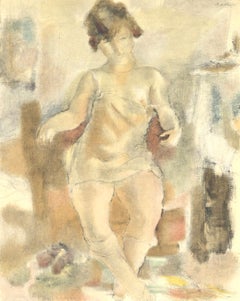
This exquisite lithograph after Jules Pascin (1885–1930), titled Nu a la chemisette rose (Nude with the Pink Blouse), from the album Pascin, originates from the 1954 edition publishe...
Category
1950s Modern Figurative Prints
Materials
Lithograph
$716 Sale Price
20% Off
Free Shipping
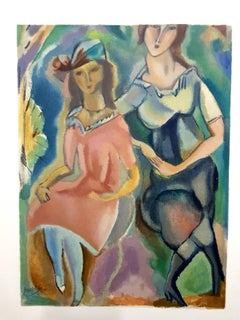
Femininity - Lithograph
By Jules Pascin
Located in Collonge Bellerive, Geneve, CH
(after) Jules Pascin
Title: Femininity
Signed in the plate
Dimensions: 38 x 28 cm
from the edition of 250 as issued in Warnod, Andre, "Les Peintres mes amis" (Paris: Les Heures Claires, 1965)
Jules Pascin, born Julius Mordechai Pincas, was a Bulgarian Jewish painter sometimes referred to as "the Prince of Montparnasse."
He was born on March 31, 1885 in Vidin, Bulgaria to a Spanish-Sephardic Jewish father and a Serbian-Italian mother, the eighth of eleven children. The Pincas family moved to Bucharest, Romania in 1892 and Pascin was raised there until he left for boarding school in Vienna in 1896.
While briefly working for his father’s grain merchant firm in Bucharest at fifteen, Pascin spent much of his time completing his earliest drawings in the local bordello, where he was residing under the Madame’s protection. In 1902, at the age of seventeen, Pascin moved to Vienna to study painting. The next year, he studied at the Heymann Art School in Munich. There, he supported himself by selling satirical drawings to Simplicissimus and other German magazines. Pascin would contribute drawings to a Munich daily through 1929.
Pascin’s contributions were widely recognized for their wit and insight, and upon his arrival in Paris in 1905 he was welcomed at the Gare Montparnasse by an international group of artists and writers who gathered at the Café du Dôme, which Pascin soon began to frequent regularly. The group included Grossman, Grosz, William Howard, Levy, and Emil Orlik. Pascin was also a close friend of Amadeo Modigliani.
Upon his arrival in Paris, Julius Mordechai Pincas changed his name to Jules Pascin and soon became the symbol of the Montparnasse artist community. Always in his bowler hat, he was a witty presence at Le Dôme café, Le Jockey club, and the others haunts of the area’s bohemian society, and was known for hosting legendary all-night parties. In his story, A Moveable Feast, Ernest Hemingway wrote a chapter titled With Pascin At the Dôme, recounting a night in 1923 when he had stopped off at Le Dôme and met Pascin escorted by two models. Hemingway's depiction of the events of that night is considered one of the defining images of Montparnasse at the time.
In 1907, Pascin had his first solo exhibition at Paul Cassirer Gallery in Berlin. Three years later, Cassirir commissioned Pascin to illustrate Heinrich Heine's Aus den Memoiren des Herrn von Schnabelewopski. In 1911, Pascin exhibited his work at Berlin Secession and a year later at the Sonderbund-Aussstellung in Cologne. The artist’s first exhibition in the United States was at the Armory Show in New York, where he exhibited twelve of his works.
Upon the outbreak of World War I, Pascin left Paris for London in order to avoid conscription in the Bulgarian Army. In October 1914, he immigrated to New York, where he stayed through 1920 and would later return again in 1927. Pascin was immediately welcomed into an artists circle based around the Penguin Club and became acquainted with John Quinn, an important art collector. A short time after his arrival in New York, Pascin was given a one-man show by the Berlin Photographic Company, a Madison Avenue gallery. While in New York, Pascin became associated with several progressive painters, including Walt Kuhn, Yasuo Kuniyoshi, and Max Weber. Many of these painters were influenced by Pascin’s unique style, in which he combined elements from Expressionism and Cubism with his own personal view of his environment.
Pascin used his time in the United States to travel extensively, especially in the southern states and the Caribbean islands, recording his travels in sketches that were widely acclaimed. Pascin married Hermine David in 1918. In 1920, Pascin was awarded American citizenship with support from Alfred Stieglitz and Maurice Sterne. He returned to Paris in October of that same year and met his future mistress, Lucy Krohg, the wife of the Norwegian painter Per Krohg...
Category
1960s Modern Portrait Prints
Materials
Lithograph
Read More
Paul Revere Crafted This Silver Coffee Pot 250 Years Ago
Perhaps best known as a Revolutionary War hero, Revere was also an accomplished silversmith, and this pot is now available on 1stDibs.
Degas Portrayed These Exuberant Ukrainian Dancers with ‘Orgies of Color’
Discovered in Parisian cabarets, the performers reenergized the artist’s practice.
More Ways To Browse
Antique Shoes
Pascin Jules
Emily Young
Flapper Girl Painting
Formula One Car
Frances Hodgkins
Francis Edward James
Francois Martin Kavel
Frans Pourbus
George Spencer Watson
Grace Kelly Signed
Grisaille Portrait
Hunt Slonem Her Majesty
Hunt Slonem Queen Elizabeth
Hunt Slonem Queen
Ireland Old Masters
Jocelyn Wildenstein
Johan Zoffany