Items Similar to Presumed artist self-portrait
Want more images or videos?
Request additional images or videos from the seller
1 of 10
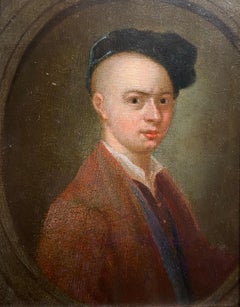
Louis-Gabriel BlanchetPresumed artist self-portraitCirca 1730
Circa 1730
$53,901.33
£40,319
€45,000
CA$74,273.44
A$81,644.61
CHF 42,863.04
MX$970,813.11
NOK 550,458.75
SEK 501,408.43
DKK 342,946.67
About the Item
Louis-Gabriel BLANCHET
(Versailles, 1701 – Rome, 1772)
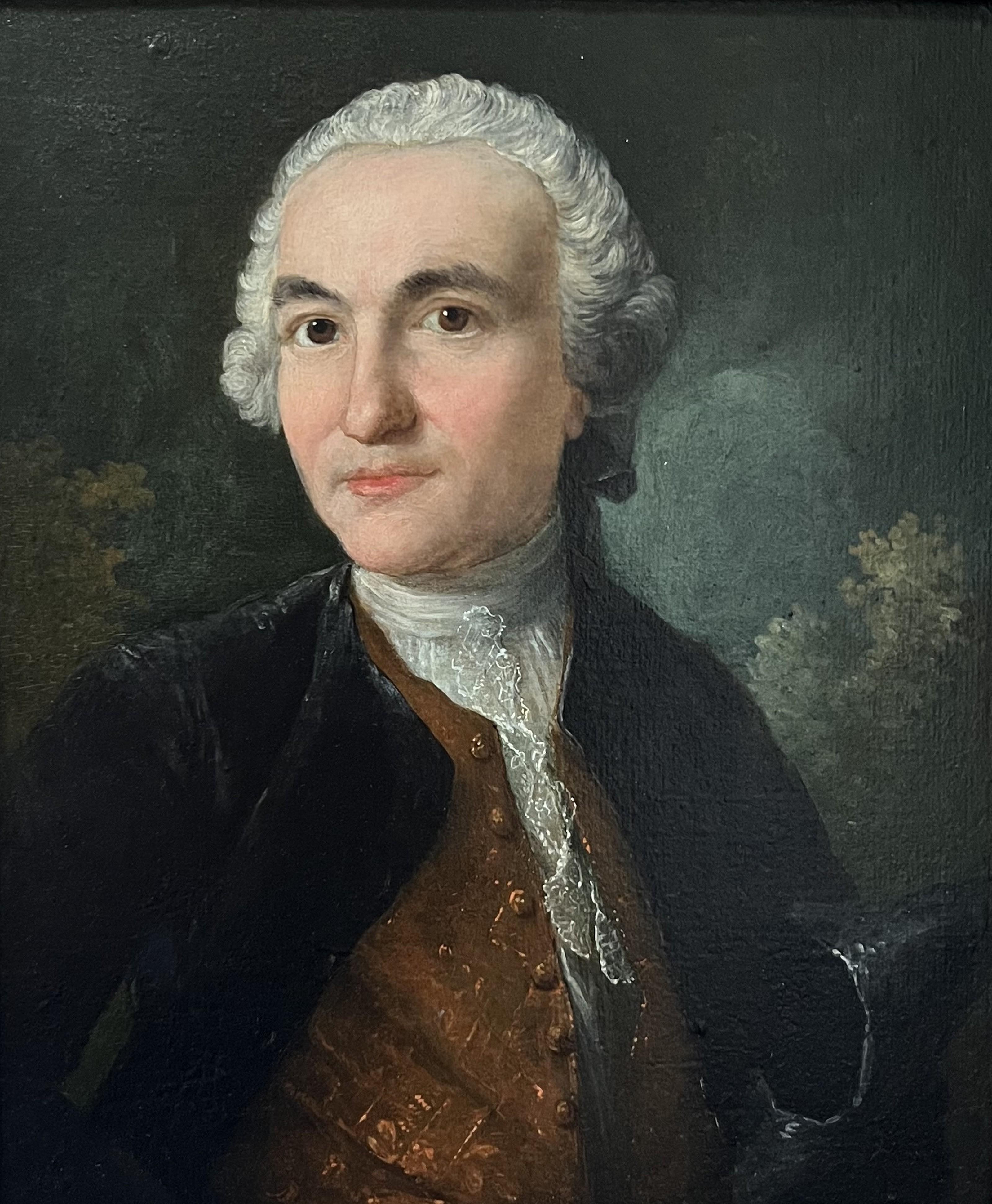
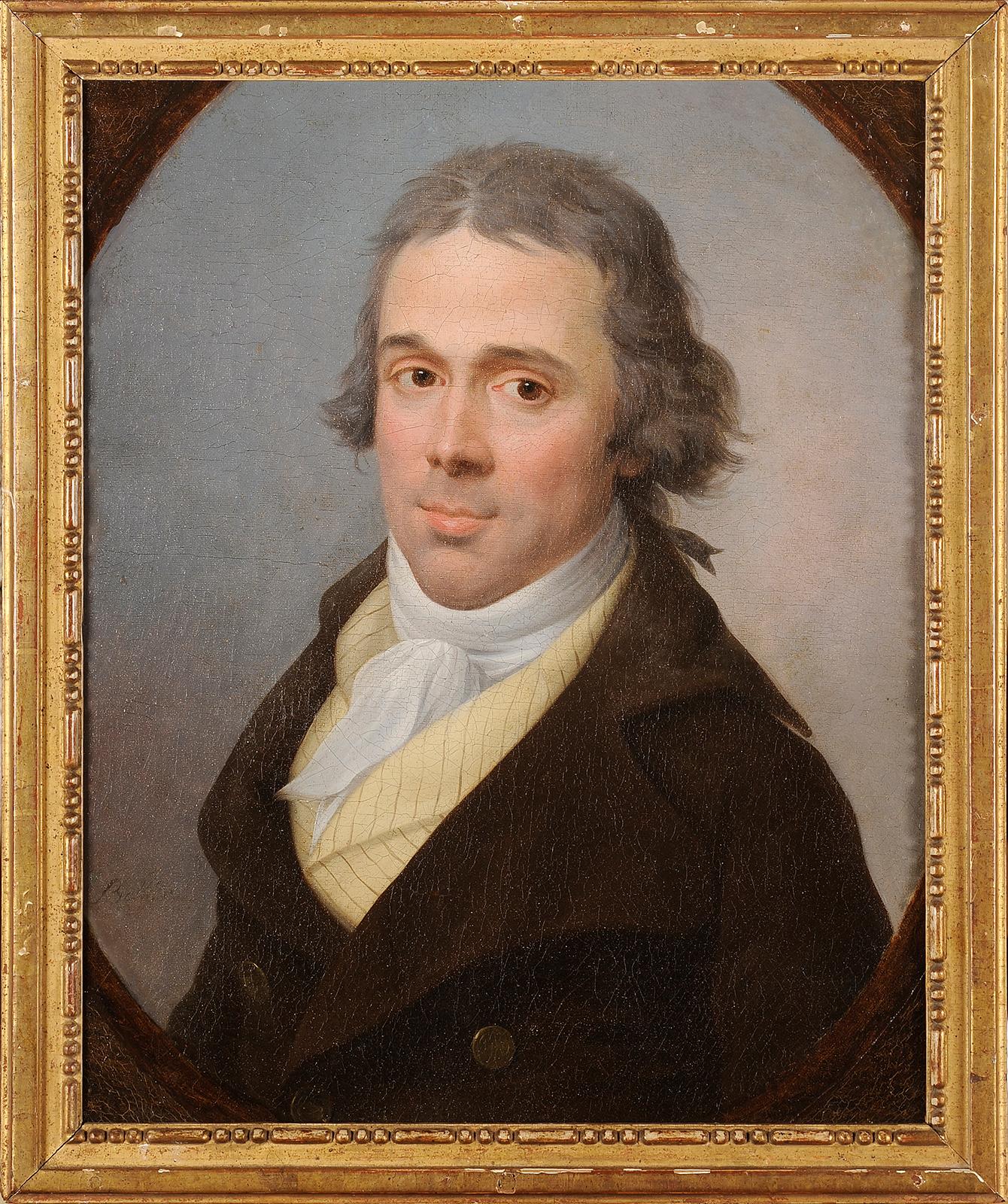
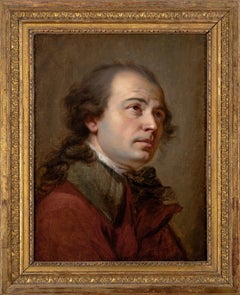
Presumed self-portrait of the artist
Oil on canvas
H. 73 cm; W. 60 cm
Circa 1730
Originally presented in a Restoration period frame with a "Mignard" cartouche, this beautiful painting initially appeared to us as a work from northern Italy. However, it exuded a rather French form of refinement, suggesting that its artist may have assimilated a dual influence from both sides of the Alps.
We thank our colleague and friend Philippe Mendès for spontaneously and judiciously "bringing out" the name of Louis-Gabriel Blanchet, a Romanized French portraitist, whose spirit and stylistic characteristics we clearly recognize here.
Blanchet's "French" years, before his final departure for Rome in 1728, following his winning of the second Grand Prix for painting after Subleyras in 1727, are extremely poorly documented. His father, Gabriel, was valet to Blouin, himself Louis XIV's first valet at the time. According to Thierry Lefrançois, Blanchet was one of the few students of Nicolas Bertin (1667-1736), whose studio he is said to have joined in the early 1720s. At a baptism on March 24, 1724, where he was godfather, he is mentioned as a painter in the picture store of the Duke of Antin, the director of buildings between 1708 and 1736. At this time, he was probably already married to Jeanne Quément, with whom he had a daughter also named Jeanne, who would marry Nicolas Aviet, the son of a valet in the queen's wardrobe, in Versailles in 1738.
When Blanchet arrived in Rome in October 1728, he was accompanied by Subleyras, Trémolières, and Slodtz. He enjoyed the goodwill of Vleughels, the director of the Académie de France, which had been based at the Palazzo Mancini since 1725, even though the latter was not always kind to our resident. From 1732, he was under the protection of the Duke of Saint-Aignan when he took up his post as ambassador to Rome. Along with Slodtz and Subleyras, they formed a trio of friends, joined by Joseph Vernet shortly after his arrival in Rome in 1734. Slodtz and Blanchet, on the occasion of Subleyras's marriage in 1739, were there to attest that their friend was not bound by any marital commitment, and Blanchet was a witness at Vernet's wedding in 1745.
It is most likely from these early years in Rome that our portrait of the artist dates, the expression and turn of his face irresistibly reminiscent of a self-portrait. The still relatively youthful features may correspond to Blanchet's thirty-something years, and the fluffy wig was still fashionable at this time.
The painting fits well with the depiction of a young painter wanting to display both the beginnings of success and a certain simplicity or restraint. A slight smile expresses a form of assurance in this man with a gentle, sincere gaze and a face radiating a keen sense of wit. We find here the air of intimacy present in almost all of Blanchet's portraits, even those from the 1750s and 1760s, as well as an almost complicity with the viewer. The spirit of the painting is quite close to that of the presumed portrait of Bouchardon (painted around 1730) and the portrait of Pannini, painted in 1736, but it possesses a more natural quality, notably thanks to the absence of decorum. Our work exhibits the characteristics of Blanchet's paintings: elegance, luminosity (especially in the whites), vibrant and refined colors (here, the harmony of the garnet of the garment and the slate blue of the background, whose uniformity is tempered by a very sketched landscape and a grove of greenery), light complexions, rather rosy cheekbones, often full lips, and rather tight framing.
According to the Academy's rules, Blanchet's stay should have ended in the spring of 1732, but, for reasons unknown, he remained in the Eternal City until his death, as did his friend Subleyras, with whom he shared accommodation until the late 1730s. The latter regularly called upon him to collaborate on his paintings, such as The Meal at Simon's. Through Saint-Aignan's intervention, Blanchet was employed in the late 1730s by the Stuart princely family, then exiled in Italy. He notably produced copies (now lost) after Liotard of the portraits of Charles Edward and Henry Benedict, the sons of James III Stuart. The latter also commissioned three other portraits (now in the National Portrait Gallery in London), whose more formal character contrasts with the intimate spirit of Blanchet's portraits. Blanchet frequented English painters, such as the landscape painter Richard Wilson, and studied with the Scottish portraitist Katherine Read (1723-1778).
Blanchet was known for being helpful and friendly; but he was fickle and spendthrift, often in debt, which earned him imprisonment in 1752. On this occasion, he had not received Natoire's support, the new director of the Academy, while the previous one, Jean-François de Troy (1679-1752), had been rather kind to him.
In 1755, Blanchet remarried an Italian woman, Annunziata Dies, the daughter of a goldsmith, who brought him a form of financial security and stability.
In the 1750s, Blanchet painted allegorical genre scenes with putti in the Rococo style, amiable and decorative, often intended for doorways; he also produced a few religious paintings. But he remained primarily a portraitist, and while he benefited from the abundant clientele of the Grand Tour, particularly the British, he was in strong competition with Pompeo Batoni (1708-1787), who knew how to depict these "tourists" more lavishly in front of ruins and various monuments, while Blanchet retained his more intimate and psychological approach to portraying his models.
Our painting is therefore one of the few early works known by Blanchet, the most intimate and "simple", before the time of the "official" and formal portraits of the Stuarts and official commissions, then the mature period of the years 1750-1770, when the artist remained faithful to his style but applied mastered and proven recipes. It also allows us, very probably, to know his face.
- Creator:Louis-Gabriel Blanchet (1701 - 1772, French)
- Creation Year:Circa 1730
- Dimensions:Height: 28.75 in (73 cm)Width: 23.63 in (60 cm)
- Medium:
- Movement Style:
- Period:1730-1739
- Condition:
- Gallery Location:BELEYMAS, FR
- Reference Number:1stDibs: LU1857216040132
About the Seller
3.0
Vetted Professional Seller
Every seller passes strict standards for authenticity and reliability
Established in 2017
1stDibs seller since 2022
7 sales on 1stDibs
Typical response time: 5 hours
- ShippingRetrieving quote...Shipping from: BELEYMAS, France
- Return Policy
More From This Seller
View AllMen portrait
Located in BELEYMAS, FR
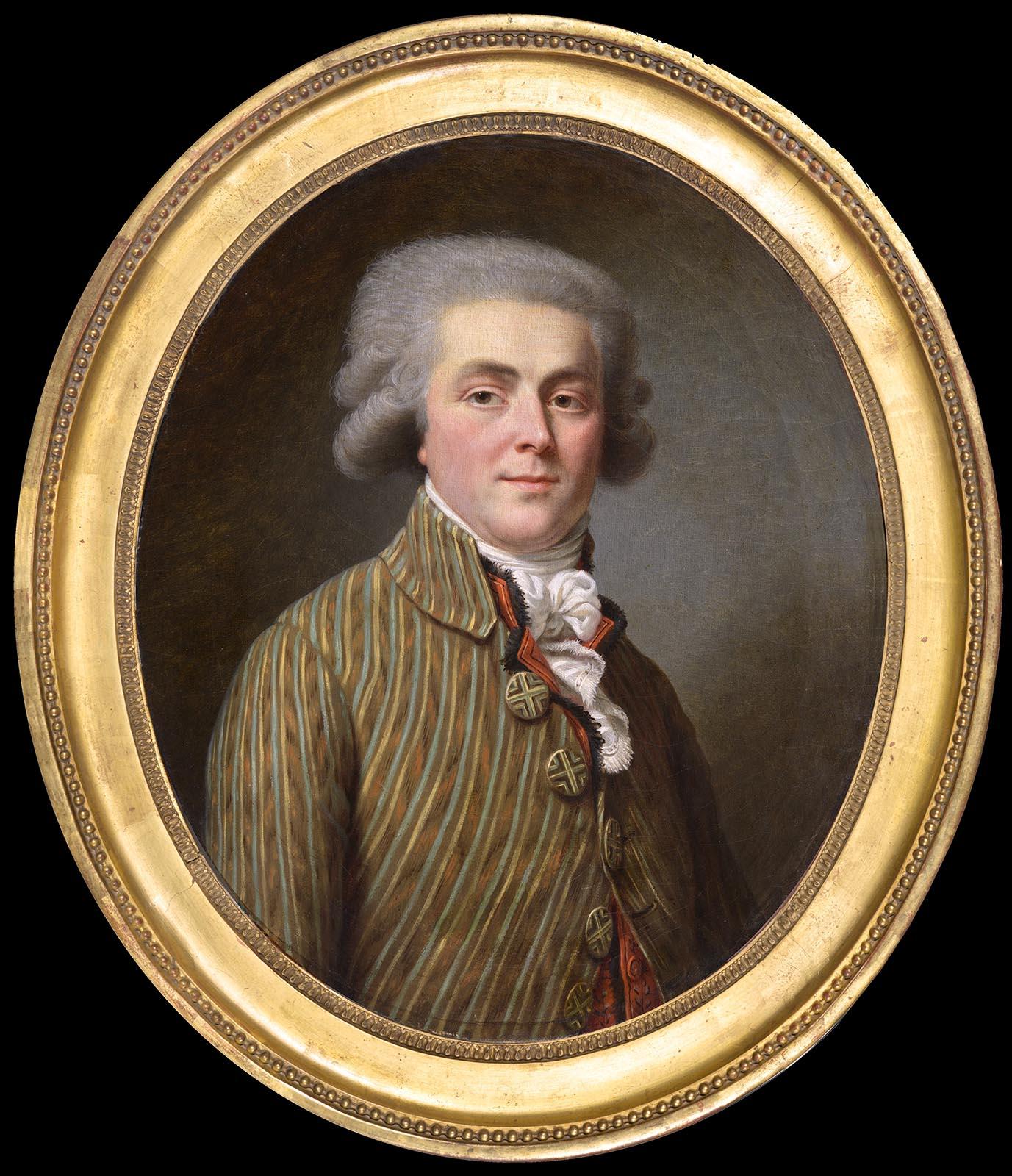
Jean François Marie Bellier
(Paris 1745 – Paris 1836)
Portrait of a Man
Oil on oval canvas laid flat
H. 45 cm; W. 55 cm
Signed on the left
Circa 1790
Jean François Marie Bellier occ...
Category
1790s French School Portrait Paintings
Materials
Canvas, Oil
Portrait of a man during French Revolution
Located in BELEYMAS, FR
Antoine VESTIER, attributed to
(Avallon, 1740 - Paris, 1824)
Portrait of a man under the Revolution
Oil on canvas
H. 46 cm; L. 37 cm
Circa 1793-95
This beautiful unsigned portrait i...
Category
1790s French School Figurative Paintings
Materials
Canvas, Oil
Italian men portrait
By Giovanni Maria delle Piane dit Mulinaretto (Genoa 1670 - Monticelli d´Ongina 1745)
Located in BELEYMAS, FR
Giovanni Maria DELLE PIANE, known as IL MULINARETTO
(Genoa, 1660 – Monticelli d'Ongina, 1745)
Portrait of a man
Oil on oval canvas
H. 108 cm; L. 83 cm
Provenance: Nino Ferrari Colle...
Category
1740s Italian School Portrait Paintings
Materials
Canvas, Oil
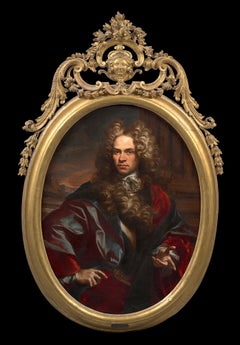
Portrait of a man in armor
Located in BELEYMAS, FR
Attributed to Jacques DUMONT aka DUMONT LE ROMAIN
(Paris 1701 - 1781)
Presumed portrait of Louis-Joseph de Formanoir (?-1732)
Oil on canvas
H. 91.5 cm; L. 73 cm
Signed on the helmet:...
Category
1750s French School Portrait Paintings
Materials
Canvas, Oil

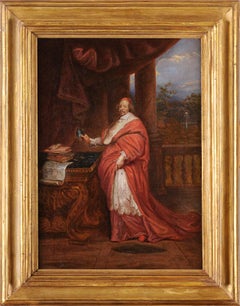
Cardinal Mazarin portrait
Located in BELEYMAS, FR
French School circa 1645
Portrait of Cardinal Mazarin - Sketch
Oil on canvas
H. 41.5 cm; W. 27 cm
Provenance: Collection of the Reverend Georges Downing Bowles (1789-1863)
Would ...
Category
1640s French School Portrait Paintings
Materials
Canvas, Oil
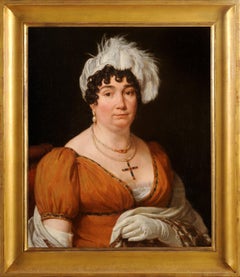
Portrait of Madame Leblond
Located in BELEYMAS, FR
French school circa 1815
Portrait of Madame Leblond
Oil on canvas
H. 66 cm; W. 55 cm
Named on the back
Comparable to the works of painters such as Louis Hersent, our portrait, unsig...
Category
1810s French School Figurative Paintings
Materials
Canvas, Oil
You May Also Like
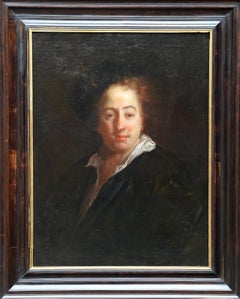
Self Portrait of Artist - French 18th century art Old Master oil painting
Located in Hagley, England
This simply superb French Old Master self portrait oil painting is attributed to portrait artist Alexis Grimou. Painted circa 1720 it is a bust length standing portrait of the artist...
Category
1720s Old Masters Portrait Paintings
Materials
Oil
$13,090 Sale Price
20% Off
Portrait tête d’expression portrait study of a gentleman
Located in Henley-on-Thames, England
French Academic School, 18th century
Portrait tête d’expression study of a gentleman, c. 1780-90
Oil on canvas
46.1 x 35 cm.; (within frame) 57.5 x 46.6. cm.
Provenance:
Private Co...
Category
1780s French School Portrait Paintings
Materials
Oil
Early 18th-Century French Rococo Oil Painting, Portrait of a Baron
Located in Cheltenham, GB
This sumptuous early 18th-century portrait by leading French artist Louis de Silvestre (1675-1760) depicts Baron Pierre de Gaultier, a nobleman and diplomat active during the final y...
Category
Early 18th Century Rococo Portrait Paintings
Materials
Canvas, Oil
French School 18th century, Portrait of a gentleman, oil
Located in Paris, FR
French School 18th Century
Portrait of a gentleman holding his hat
Oil on paper transferred on wood panel
34 x 27 cm
In a beautiful vintage wood frame with some lacks in the mould, ...
Category
1760s Old Masters Portrait Paintings
Materials
Oil
Portrait of Monsieur Aubert, a ceremonial portrait by Nicolas de Largillière
By Nicolas de Largillière
Located in PARIS, FR
Provenance :
Arnold S. Kirkeby (1901-1962)
Donated by Arnold S. Kirkeby to the Los Angeles County Museum of Art in 1955, where it remained until its sale at Sotheby's, New York on January 10, 1991, lot 82.
Christie's, London, July 7, 2010, lot 186, where it was purchased after the sale by the executors of the will of the late Edmund de Rothschild (1916-2009) for display at Exbury House
The Trustees of Exbury House
Literature :
R. Brown, Bulletin of the Art Division, Los Angeles County Museum, VIII, 1957, pp.8-9, no. 4;
S. Schaefer and P. Husco, European Paintings and Sculpture in the Los Angeles County Museum of Art (Los Angeles, 1987), p. 53 (illustrated and dated c. 1735)
This sumptuous ceremonial portrait, executed around 1725-1730, depicts Monsieur Aubert, the French General Comptroller of Bridges and Roadways, as we learn from a letter on the desk beside our model. The virtuoso treatment of the fabrics, the authoritative yet confident pose, the vigorous treatment of the two hands, are representative of Largillière's talent, here at the peak of his art as portraitist.
The portrait also has a rather extraordinary provenance: donated by Arnold S. Kirkeby, an American hotel magnate and real estate developer, it was exhibited during almost forty years in the collections of the Los Angeles County Museum, before being acquired in 2010 by the executors of Edmund de Rothschild's will to adorn his former home Exbury House (Hampshire), where it remained until its sale in 2022.
1. Nicolas de Largillière, a great European portraitist
Nicolas de Largillière (or Largillierre), one of Europe's premier painters of portraits, history paintings, and still lifes during the late seventeenth century and the first four decades of the eighteenth, was born in Paris in 1656. He was the son of a hatmaker and merchant who moved with his family to Antwerp in 1659. As a boy of nine, he traveled for the first time to London in the company of an associate of his father. After returning to Antwerp more than a year later, his artistic gifts were recognized and his father apprenticed him to Antoni Goubau (1616-1698), a painter genre scenes and landscapes. Something of a prodigy, he was admitted to the painters' Guild of Saint Luke when he was only seventeen. In 1675 he made a second trip to London, where he was employed at Windsor Castle and worked as a restorer under the direction of Italian painter and decorator Antonio Verrio (c. 1639-1707), who brought him to the attention of King Charles II (r. 1660-1685).
At this time Largillière painted several still life paintings in the manner of the Dutch and Flemish masters. Thereafter he practiced this branch of painting with consummate skill, a talent that allowed him to make brilliant use of flowers, fruit, and animals in some of his most ambitious portraits and contemporary history pictures.
In 1679 Largillière settled in Paris, where he specialized in baroque portraiture in the grand manner of Peter Paul Rubens (1577-1640), Anthony van Dyck (1599-1641), and Peter Lely (1618-1680). The Flemish battle painter Adam Frans van der Meulen (1631 or 1632-1690) introduced him to Charles Le Brun (1619-1690) who, as First Painter to King Louis XIV (r. 1643-1715) and director of the Académie royale de peinture et de sculpture, was the predominant figure in France's official art establishment. Upon his acceptance as a candidate for admission to the Académie, he agreed to execute as his diploma picture a large portrait of Le Brun (completed 1686, Paris, Musée du Louvre, eight photo in the gallery) seated in his studio surrounded by the accoutrements of his art and an oil study for the ceiling of Galerie des Glaces at Versailles.
In 1686, Largillière made a final trip to England, where he painted portraits of the newly crowned king, James II (r. 1685-1688) (Greenwich, National Maritime Museum) and his consort Mary of Modena...
Category
1720s Old Masters Portrait Paintings
Materials
Oil
Self-Portrait - Royal Academy Founding Member, 18th Century
By Francis Hayman
Located in London, GB
Francis Hayman RA
1708–1776
Self-Portrait
Oil on oak panel
Image size: 8 x 6¼ inches
Contemporary gilt frame
This newly discovered work is the earliest known self portrait by Francis Hayman, dated to the mid to late 1720’s. The small scale of the portrait gives it a strong sense of intimacy. Whereas clients would often dress themselves in their best clothes for a sitting, Hayman has portrayed himself in informal attire, with his shirt unbuttoned and a wig cap.
Born in 1708 to a respectable Devonshire family, his training began at the tender age of ten under the tutelage of the historical painter Robert Brown, who was probably an uncle. By the 1730’s he is known to have been engaged in painting scenery for the popular theatres on Goodman’s Fields and Drury Lane. He established a studio on St Martin’s Lane, and demonstrated his versatility as one of the most
important painters of his time in portraits, illustration and history painting.
Indeed, he was one of the first English painters deemed to have the skill and proficiency to rival that of the foreign masters, such as Holbein and Kneller, who were brought in by the court to make up for the perceived shortcomings of the native artists. Led by William Hogarth, Hayman and other artists began to create a new movement in the English art world. Thomas Gainsborough was one of his pupils, whom he is said to have introduced to the more lascivious and debauched underbelly of London life.
After mostly making his living as an illustrator, in the 1740’s Hayman was commissioned by the proprietor of the Vauxhall Pleasure Gardens, Jonathan Tyers, to produce a series of four large celebratory canvases depicting British victories from the Seven Years War. His association with Tyers continued, and over the next ten years he produced a number of large decorative paintings...
Category
18th Century Old Masters Portrait Paintings
Materials
Oak, Oil Pastel
More Ways To Browse
A Blanchet
Francois De Troy
Caspar Netscher
Charles Andre Van Loo
Duke Of Somerset
Edward Masters Painting
French Painter Bernard
John Hicks
Lillian Shao
Marjorie Blake
Moretti Lucien
Oil Painting Of Turkey
Oil Painting Peasant Girl
Portrait Of Cleric
Portrait Painting 1700s
Steve Mcqueen Pop Art
Sybil Oil
Used Concert Tickets