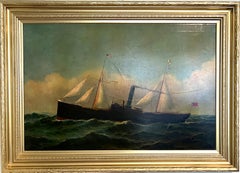
Items Similar to Regina Maris Ship, signed oil painting
Want more images or videos?
Request additional images or videos from the seller
1 of 10
Louis LetoucheRegina Maris Ship, signed oil paintingC. 1996
C. 1996
$769.23
$961.5420% Off
£560
£70020% Off
€656
€82020% Off
CA$1,056.81
CA$1,321.0220% Off
A$1,148.97
A$1,436.2120% Off
CHF 609.18
CHF 761.4820% Off
MX$13,773.23
MX$17,216.5420% Off
NOK 7,742.43
NOK 9,678.0320% Off
SEK 7,093.12
SEK 8,866.3920% Off
DKK 4,902.80
DKK 6,128.4920% Off
About the Item
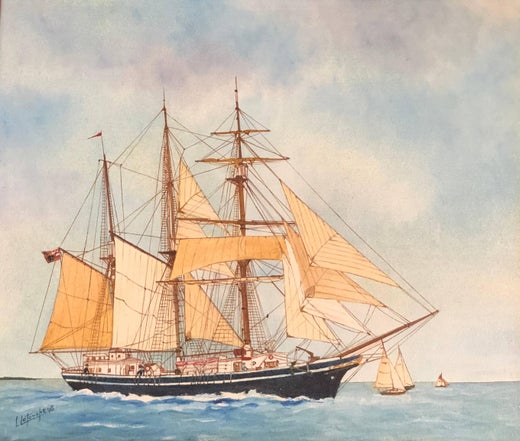
Regina Maris, 1908
by Louis Letouche (French 1924-2015)
oil painting on linen canvas, stretched over board
framed
Framed size: 16 x 19.25 inches
Superb oil painting by the well listed French marine artist Louis Letouche (1924-2015). The painting portrays the early 20th Century ship titled: Regina Maris.
Regina was built to ply the Iceland-to-Baltic Sea codfish trade. The original wooden hull was completed in 1908, the 100th hull produced by the shipyard of J. Ring Anderson in Svendborg, Denmark.
On 15 February 1920, Regina was discovered abandoned in the North Sea. Her crew was rescued by the Swedish steamer Fritiof. Regina was towed into IJmuiden, North Holland, Netherland by the Dutch fishing trawler Eendracht II.
Regina at one time was believed to have been involved in the rescue of Danish Jews during World War II, but this was later disproven.
Until 1963, the ship sailed under Norwegian colors and was called Regina, rigged as a three-masted topsail schooner. Following a severe fire in 1963, she was purchased by the Norwegian shipping magnates Siegfried and John Aage Wilson and converted to serve as the latter's private yacht. Rebuilt with a very tall three-masted barquentine rig for this purpose, the ship was renamed Regina Maris ("Queen of the Sea"). Between 1963 and 1984, she was used in many television and movie productions, conducted two global circuits, and underwent stints as a cruise ship, sail training facility, and marine mammal research vessel.
For a number of years Regina Maris was docked in Gloucester, Massachusetts and was in the possession of the Ocean Research and Education Society (ORES)a local non-profit organization. She was used for day sails and short voyages as scientists and students sampled copepods in the Gulf of Maine, observed whales and other marine mammals but mostly for the pleasure of the Captain. Volunteers could pay for acting as crew on short voyages and sampled life aboard an old wooden sailing vessel, including standing watch, sleeping in narrow bunks and climbing ratlines, the latter optional. When the organization ran out of money trying to keep Regina seaworthy it is believed that she was sold to Anthony Athanas of Boston's Pier Four restaurant for use as a stationary party ship. One severely cold night with a loud crack she sank. Soon after she was purchased and raised by a group from Long Island that hoped to return her to seaworthy condition.
The vessel was saved from being scuttled by Captain Robert Val Rosenbaum and moved from Boston. Massachusetts, to Greenport, New York, where Rosenbaum founded the Regina Maris Foundation and began a restoration process with 70 local volunteers in 1991. Hurricane Bob hit the east end of Long Island in August 1991, and Captain Rosenbaum scuttled the vessel at her berth to save her from being destroyed by the storm and to prevent the destruction of the nearby historic waterfront buildings. After the storm, the vessel was raised by Captain Rosenbaum and sold for one dollar to facilitate the restoration effort by a newly formed nonprofit organization. During the next eight years the corporation raised money through donations in Greenport to restore the vessel, but the funds were misappropriated and never found their way into the ship.
The vessel was towed to Glen Cove, New York, in 1998 as part of a plan to revitalize the city′s waterfront.Plans to restore the ship were hampered by the discovery that she was not involved in rescuing Jewish refugees in World War II, as well as the economic impact of the September 11 attacks in 2001. The ship was chronically leaky and sank at the dock in 2002. Efforts to raise her in 2003 damaged her beyond repair. The deck, gunnels, deckhouse, bowsprit, masts, and rigging were preserved and set in concrete on the nearby esplanade.
The painting is by the very talented French marine artist, Louis Letouche (1924-2015). The artist began painting passionately in 1958. Self taught, he turned to marine portraiture in which he excelled. Never seeking fame or the highlight, the artists work has been relatively unknown until now a couple of years after his death. We are very pleased to introduce you to his work, having acquired a number of marine portraits by this artist, all of which came from the artists estate.
For the collector of maritime paintings and history, they offer a fascinating and unique insight into our maritime past - and for any marine themed interior, they make wonderful interior decoration. They offer potential as a single painting on the "den" wall, pairs hung either side of a fireplace or even whole sets grouped together to really make a powerful statement within a themed space.
Condition report:
The painting is in very good condition. If you will excuse the pun, we can "ship" this painting worldwide!
- Creator:Louis Letouche (1924 - 2015, French)
- Creation Year:C. 1996
- Dimensions:Height: 16 in (40.64 cm)Width: 19.25 in (48.9 cm)Depth: 1 in (2.54 cm)
- Medium:
- Movement Style:
- Period:
- Condition:
- Gallery Location:Cirencester, GB
- Reference Number:1stDibs: LU50932971521
Louis Letouche
Louis Letouche was passionate about painting. He began to paint in 1958. Self-taught he turned to figurative painting privileging the landscapes and portraits of marine.
Several exhibitions have been devoted to this painter around Paris Galleries.
About the Seller
5.0
Platinum Seller
Premium sellers with a 4.7+ rating and 24-hour response times
Established in 1989
1stDibs seller since 2016
5,054 sales on 1stDibs
Typical response time: 1 hour
- ShippingRetrieving quote...Shipping from: Cirencester, United Kingdom
- Return Policy
More From This Seller
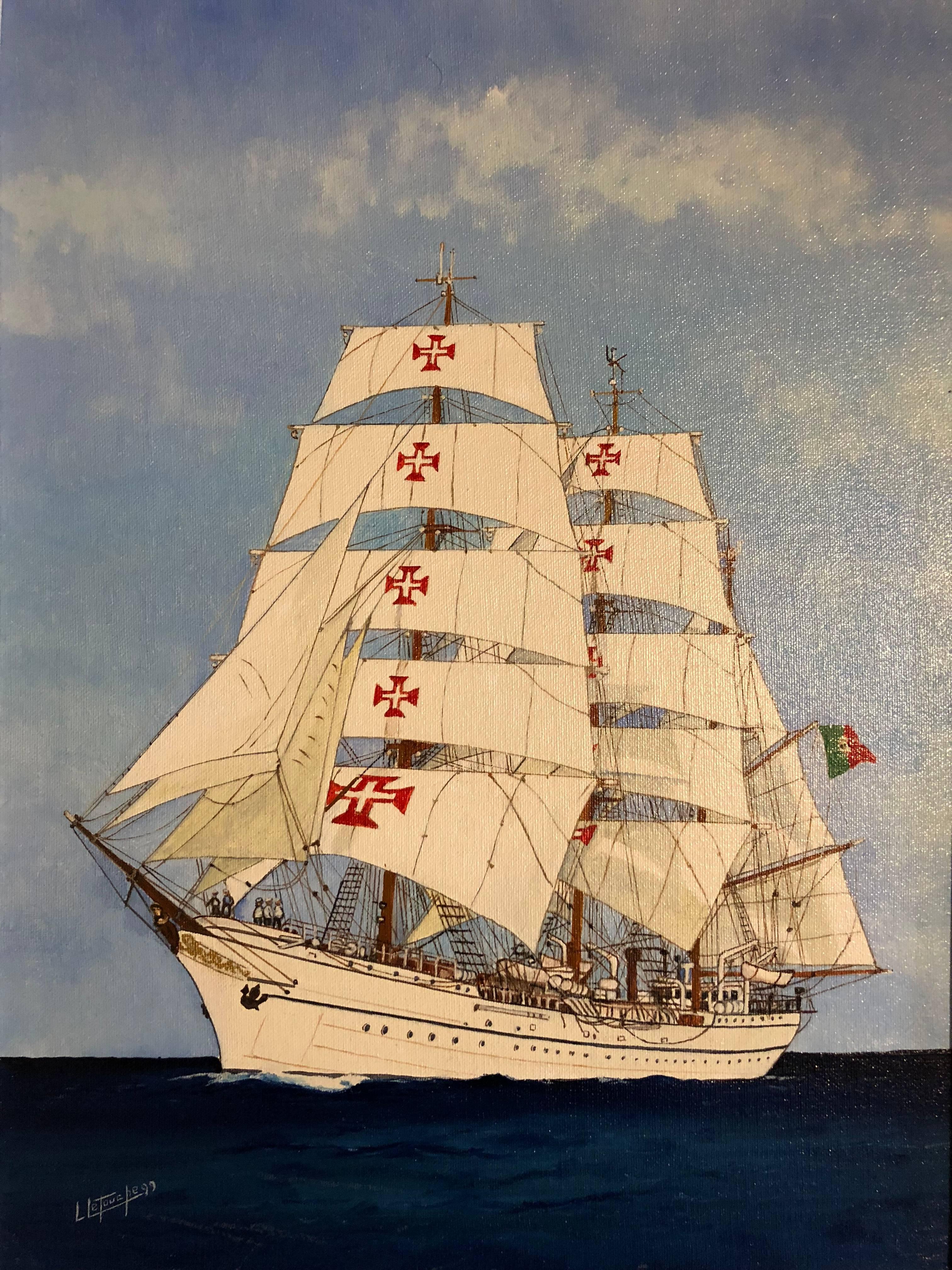
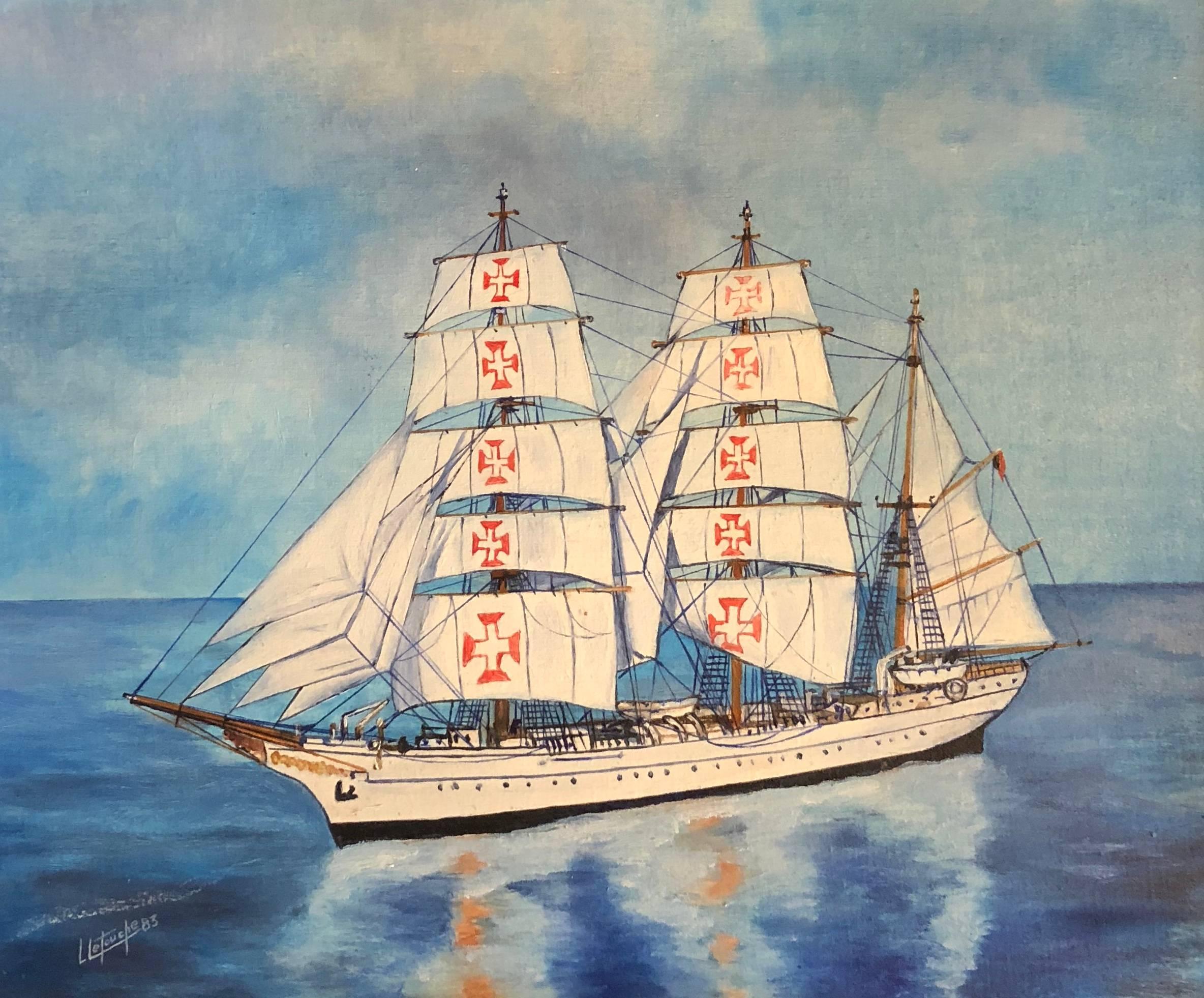
View AllSagres II Ship Portrait 20th Century, signed oil painting
By Louis Letouche
Located in Cirencester, Gloucestershire
Sagres II, 1937
by Louis Letouche (French 1924-2015)
oil painting on linen canvas, stretched over board
framed
Framed size: 18.25 x 13.75 inches
Superb oil painting by the well listed French marine artist Louis Letouche (1924-2015). The painting portrays a Portugese Ship from the early 20th Century, titled: Sagres II.
The three-masted ship was launched under the name Albert Leo Schlageter on 30 October 1937 at Blohm & Voss in Hamburg for Nazi Germany's Kriegsmarine. The ship was named after Albert Leo Schlageter, who was executed in 1923 by French forces occupying the Ruhr area. Her first commander was Bernhard Rogge. Sagres is a sister ship of the Gorch Fock, the Horst Wessel, and the Romanian training vessel Mircea. Another sister, Herbert Norkus, was not completed, while Gorch Fock II was built in 1958 by the Germans to replace the ships lost after the war.
Following a number of international training voyages, the ship was used as a stationary office ship after the outbreak of World War II and was only put into ocean-going service again in 1944 in the Baltic Sea. On 14 November 1944 she hit a Soviet mine off Sassnitz and had to be towed to port in Swinemünde. Eventually transferred to Flensburg, she was taken over there by the Allies when the war ended and finally confiscated by the United States.
In 1948, the U.S. sold her to Brazil for a symbolic price of $5,000 USD.She was towed to Rio de Janeiro where she sailed as a school ship for the Brazilian Navy under the name Guanabara. In 1961, Ambassador Teotónio Pereira of Portugal, who was also a man of the sea...
Category
1990s Realist Portrait Paintings
Materials
Oil

$769 Sale Price
20% Off
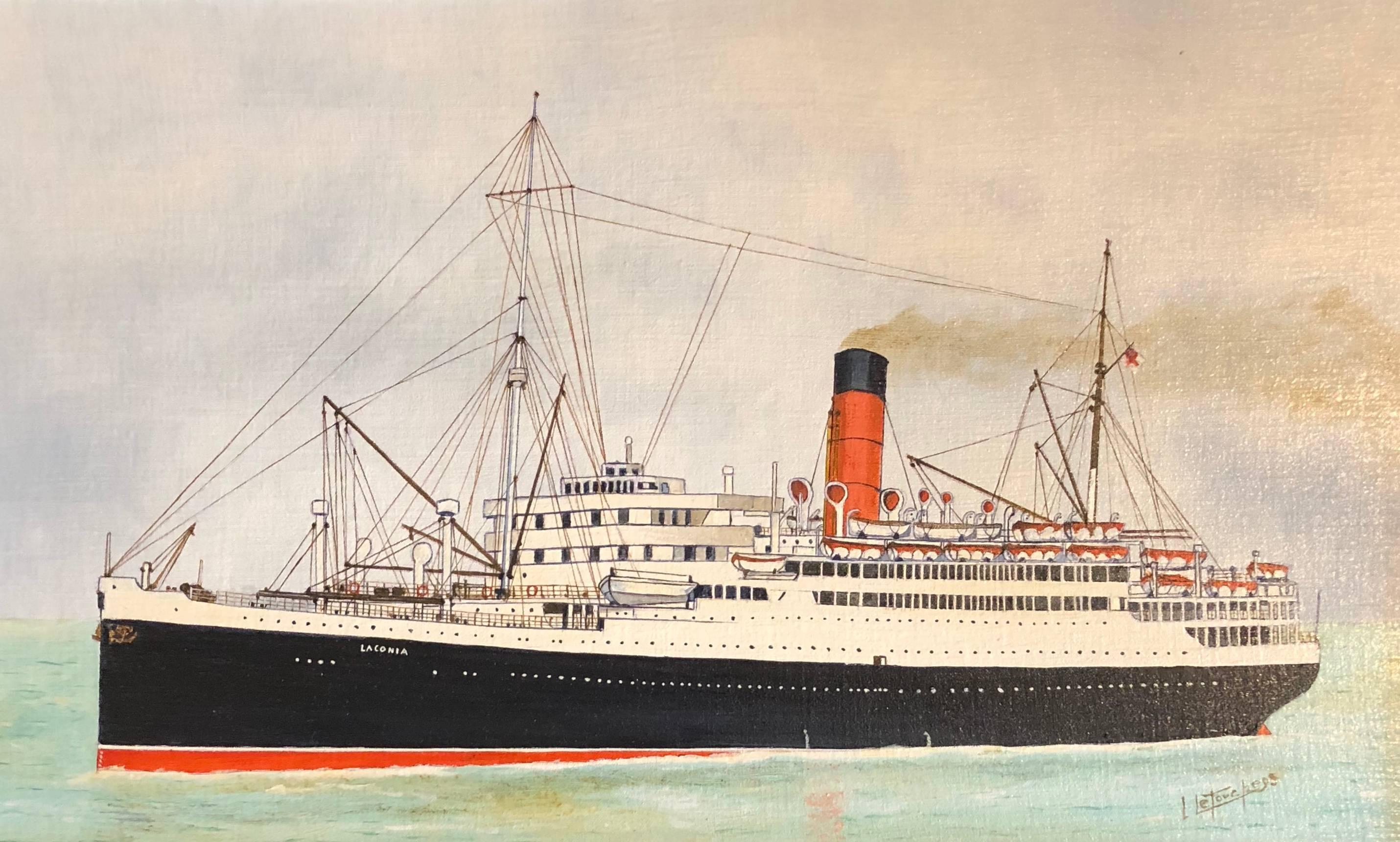
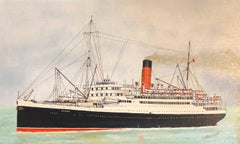
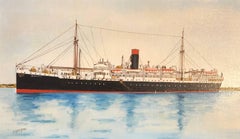
RMS Laconia, signed oil painting
By Louis Letouche
Located in Cirencester, Gloucestershire
RMS Laconia, 1921
by Louis Letouche (French 1924-2015)
oil painting on linen canvas, stretched over board
framed
Framed size: 14.25 x 22.75 inches
Superb oil painting by the well ...
Category
1990s Realist Portrait Paintings
Materials
Oil
$769 Sale Price
20% Off
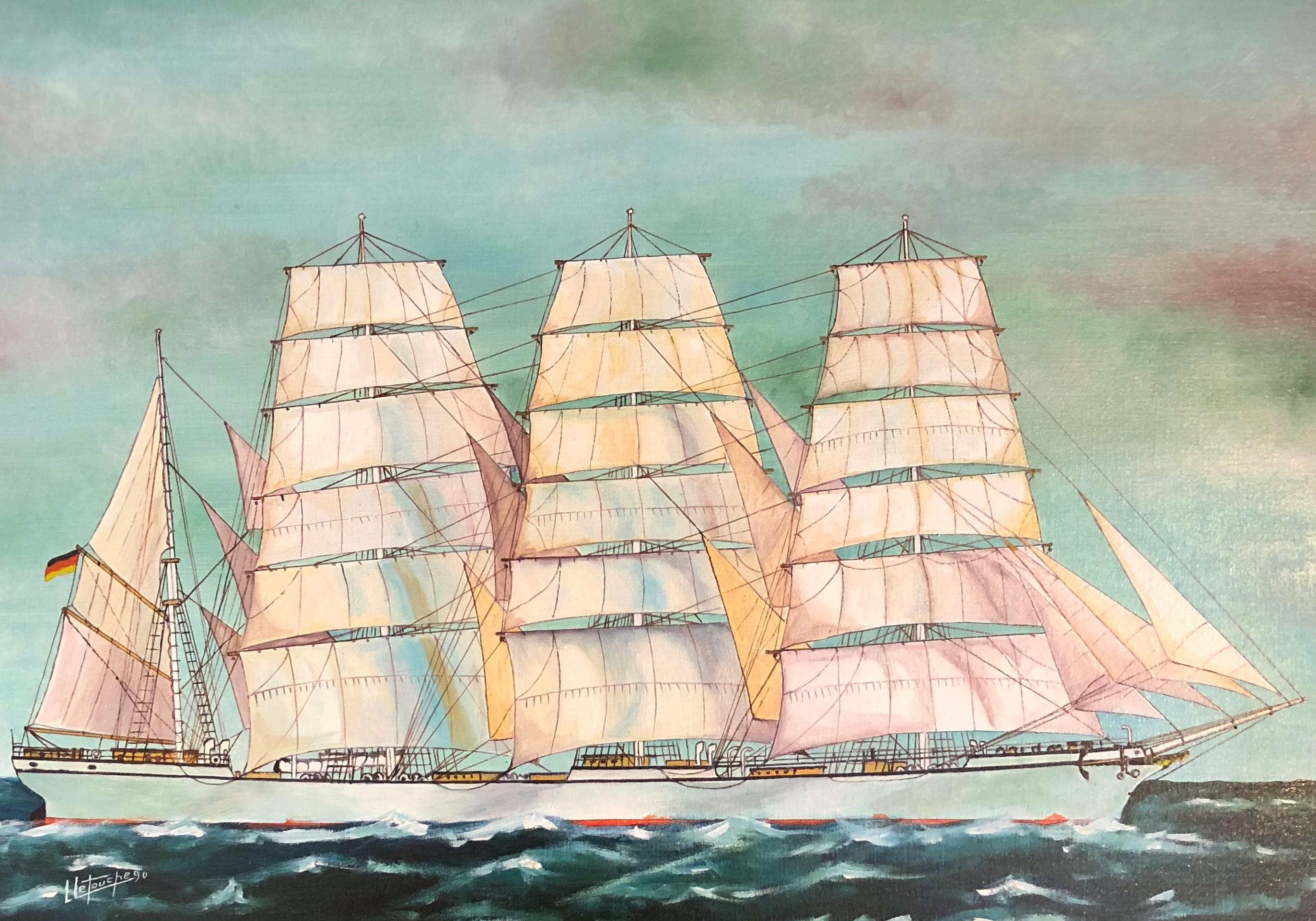
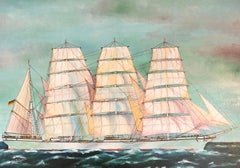
Herzogin Cecilie, signed oil painting
By Louis Letouche
Located in Cirencester, Gloucestershire
Herzogin Cecilie, 1902
by Louis Letouche (French 1924-2015)
oil painting on linen canvas, stretched over board
framed
Framed size: 15 x 21.75 inches
Superb oil painting by the well listed French marine artist Louis Letouche (1924-2015). The painting portrays the early 20th Century ship titled: Herzogin Cecilie, 1902.
Herzogin Cecilie was built in 1902 by Rickmers Schiffbau AG in Bremerhaven. She was yard number 122 and was launched on 22 April 1902. Completion was on 7 June that year. She was 334 feet 8 inches (102.01 m) long, with a breadth of 46 feet 3 inches (14.10 m) and a draught of 24 feet 2 inches (7.37 m). Herzogin Cecilie was built for Norddeutscher Lloyd Bremen. Unlike other contemporary German merchant sailing ships, the black Flying-P-Liners or the green ships of Rickmers, she was painted in white. She was one of the fastest windjammers ever built: she logged 21 knots at Skagen.
The tall ships of the time remained competitive against the steamers only on the longer trade routes: the Chilean nitrate trade, carrying salpeter from Chile to Europe, and the Australian wheat trade, carrying grain from Australia to Europe. Both routes required rounding Cape Horn routinely, and were not well suited for steamers, as coal was in short supply there.
Herzogin Cecilie was one of the fastest merchant sailing ships of her time, on a par with the Flying-P-Liners. The trip around Cape Horn from Portland (Oregon) to The Lizard (England) was done in 1903 in only 106 days.
At the outbreak of World War I, she was interned by Chile, returning to Germany in 1920, only to be given to France as reparation, and subsequently sold to Gustaf Erikson (24 October 1872 – 15 August 1947) of Finland for £4250. She was homeported at Mariehamn.[2]
As the freight rates for salpeter had dropped after the war, Gustaf Erikson sent her to bring grain from Australia. In so-called grain races, several tall ships tried to arrive first in Europe, to sell their cargo for a higher price, as told, for example, in The Great Tea Race of 1866 or The Last Grain Race. Typically, ships were loaded in the Spencer Gulf area, Port Victoria, South Australia or Wallaroo, South Australia, and travelled to Europe, with ports on the British Isles like Queenstown, Ireland or Falmouth, Cornwall being considered as the finish.
After "winning" four times prior to 1921, she again won the grain race four times in eleven trips from 1926 to 1936.
In 1927, when Herzogin Cecilie covered Port Lincoln (South Australia) –Falmouth, London and won a race against the Swedish ship Beatrice. Alan Villiers was on board, which would result in his book Falmouth for Orders, and later a trip aboard the barque Parma.
Wreck of the Herzogin Cecilie in south Devon.
With Sven Erikson as her Captain and Elis Karlsson her First Mate, the ship left Port Lincoln in South Australia on 21 January 1935, with a cargo of wheat, and after taking a more southerly route than usual, reached Falmouth for Orders on 18 May making her passage of 86 days the second fastest ever. Herzogin Cecilie was making for Ipswich in dense fog, when, on 25 April 1936, she grounded on Ham Stone Rock and drifted onto the cliffs of Bolt Head on the south Devon coast. After parts of the cargo were unloaded, she was floating again, only to be towed in June 1936 to Starhole (Starehole) Bay at the mouth of the nearby Kingsbridge Estuary near Salcombe, and beached there.On 18 January 1939, the ship capsized and sank. The remains of the ship sit at a depth of 7 metres at 50°12.82′N 3°47.02′W.
The timber and brass portholes from the chart room...
Category
1990s Realist Portrait Paintings
Materials
Oil
$769 Sale Price
20% Off
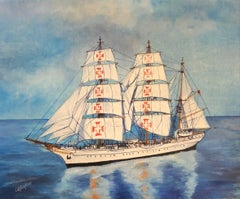
Sagres Ship Portrait signed oil painting
By Louis Letouche
Located in Cirencester, Gloucestershire
Sagres, 1937
by Louis Letouche (French 1924-2015)
oil painting on linen canvas, stretched over board
framed
Framed size: 16 x 19 inches
Superb oil painting by the well listed French marine artist Louis Letouche (1924-2015). The painting portrays the early 20th Century ship titled: Sagres, 1937.
The three-masted ship was launched under the name Albert Leo Schlageter on 30 October 1937 at Blohm & Voss in Hamburg for Nazi Germany's Kriegsmarine. The ship was named after Albert Leo Schlageter, who was executed in 1923 by French forces occupying the Ruhr area. Her first commander was Bernhard Rogge. Sagres is a sister ship of the Gorch Fock, the Horst Wessel, and the Romanian training vessel Mircea. Another sister, Herbert Norkus, was not completed, while Gorch Fock II was built in 1958 by the Germans to replace the ships lost after the war.
Following a number of international training voyages, the ship was used as a stationary office ship after the outbreak of World War II and was only put into ocean-going service again in 1944 in the Baltic Sea. On 14 November 1944 she hit a Soviet mine off Sassnitz and had to be towed to port in Swinemünde. Eventually transferred to Flensburg, she was taken over there by the Allies when the war ended and finally confiscated by the United States.
In 1948, the U.S. sold her to Brazil for a symbolic price of $5,000 USD. She was towed to Rio de Janeiro where she sailed as a school ship for the Brazilian Navy under the name Guanabara. In 1961, Ambassador Teotónio Pereira of Portugal, who was also a man of the sea...
Category
1990s Realist Portrait Paintings
Materials
Oil
$769 Sale Price
20% Off
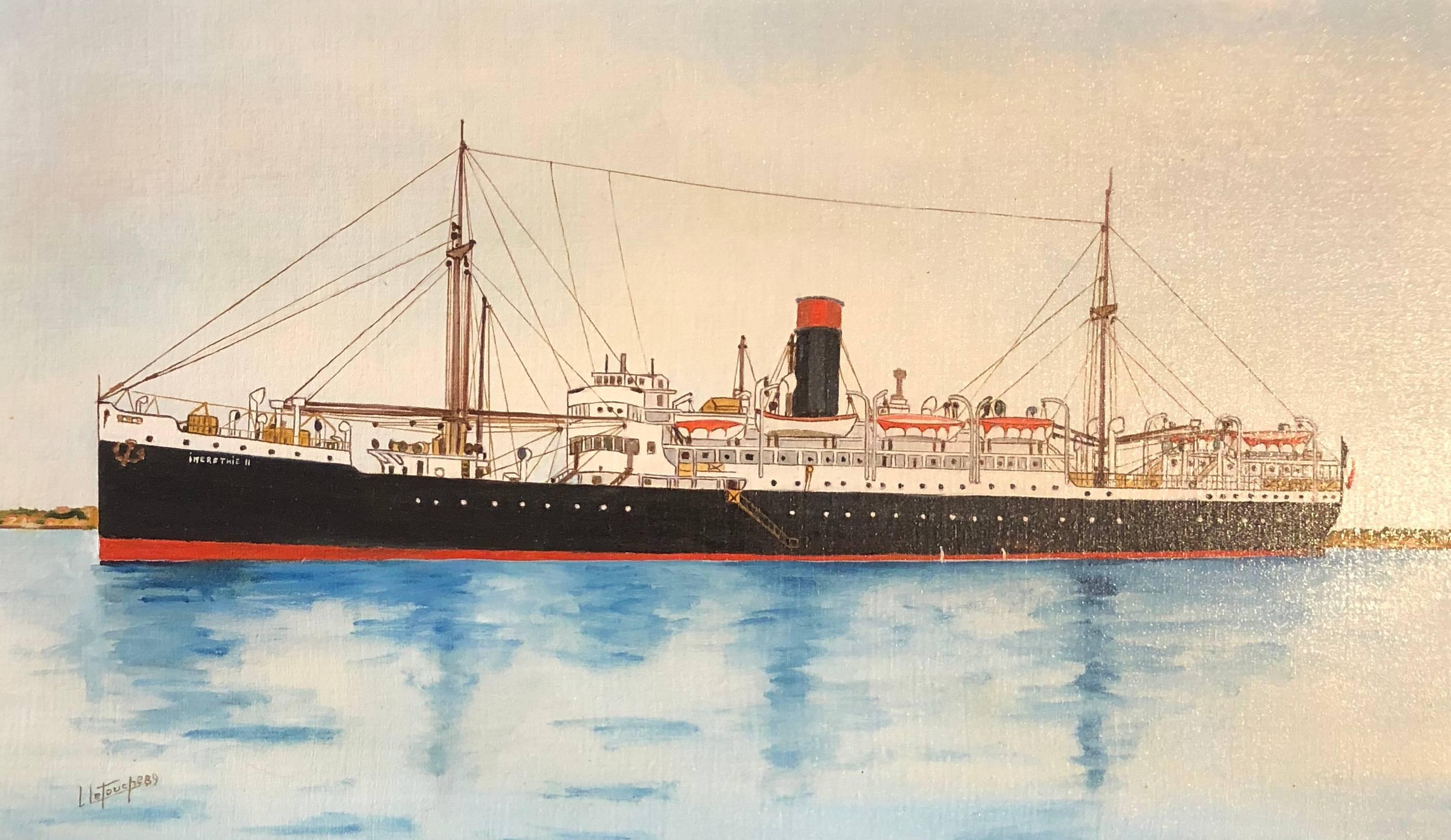
Imerethie II, signed oil painting
By Louis Letouche
Located in Cirencester, Gloucestershire
Imerethie II, 1924
by Louis Letouche (French 1924-2015)
oil painting on linen canvas, stretched over board
framed
Framed size: 13.5 x 22.5 inches
Superb oil painting by the well l...
Category
1990s Realist Portrait Paintings
Materials
Oil
$769 Sale Price
20% Off
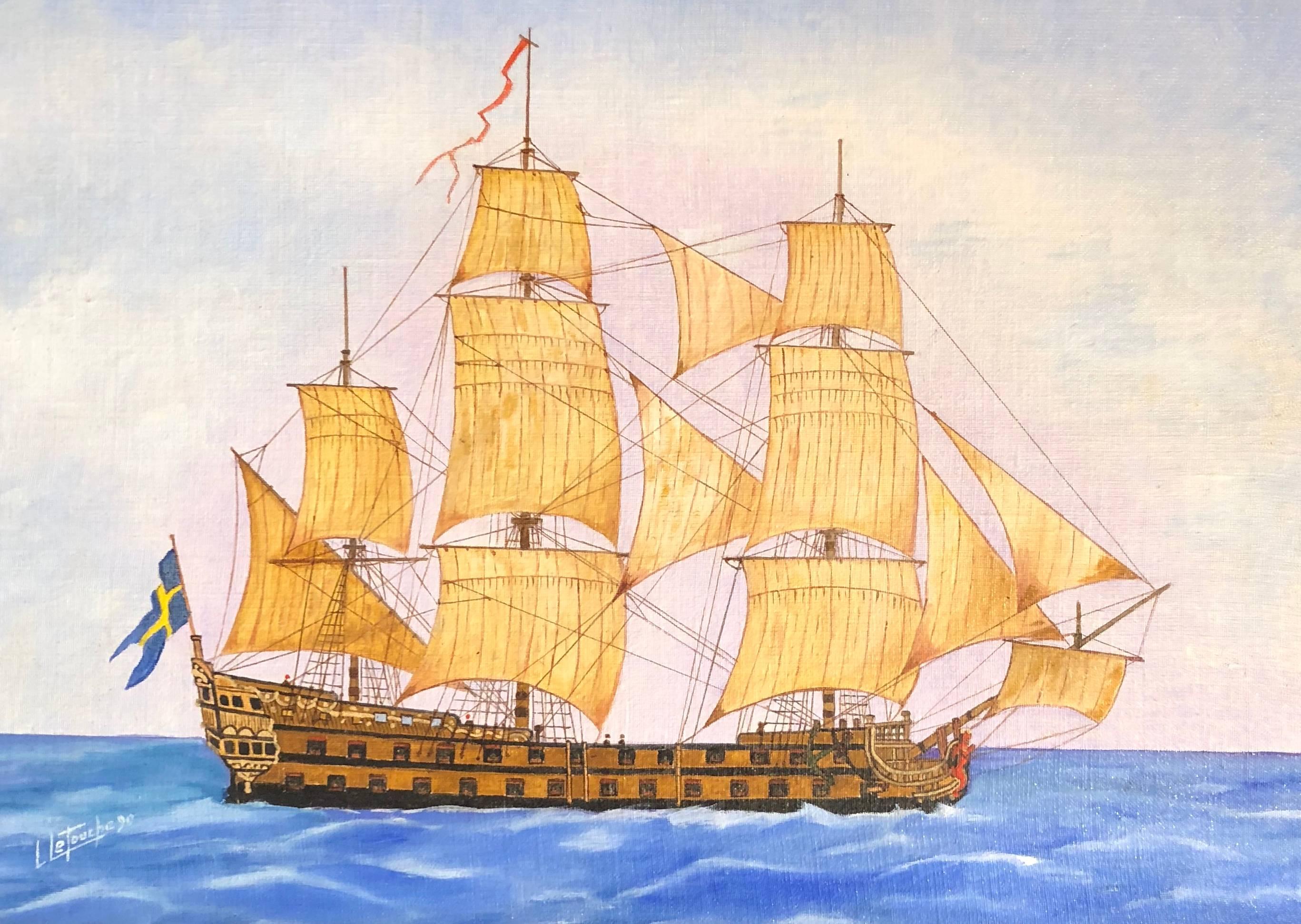
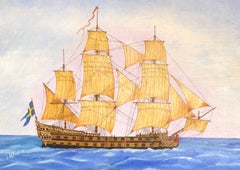
Gota Lejon, signed oil painting
By Louis Letouche
Located in Cirencester, Gloucestershire
Göta Lejon, 1746.
by Louis Letouche (French 1924-2015)
oil painting on linen canvas, stretched over board
framed
Framed size: 15 x 21.75 inches
Superb oil painting by the well lis...
Category
1990s Realist Portrait Paintings
Materials
Oil
$769 Sale Price
20% Off
You May Also Like
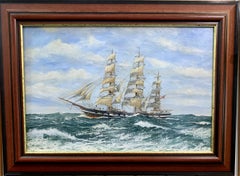
English 20th century portrait of an English Frigate in full sail at sea in oils.
Located in Woodbury, CT
English 20th century portrait of an English Frigate in full sail at sea in oils.
A very well painted oil on canvas with great detail of a ship cutting through the sea at I'm sure great speed.
The piece is an oil on canvas with I think gouache added to the waves to make them a brighter white.
The piece is signed Mason and with some investigation, we are attributing this painting to the talented English painter Barry Mason...
Category
1980s Realist Figurative Paintings
Materials
Canvas, Oil
$2,360 Sale Price
20% Off
Free Shipping
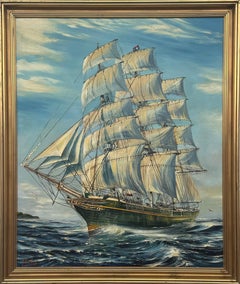
Thermopylae Clipper Sailing Ship at Sea - Vintage 20th Century Oil Painting
Located in Preston, GB
Thermopylae Clipper Sailing Ship at Sea - Vintage 20th Century Oil Painting by J Bishop.
Art measures 25 x 30 inches
Frame measures 28 x 33 inches
A portrait of the famous tea clip...
Category
20th Century Realist Landscape Paintings
Materials
Canvas, Cotton Canvas, Oil
The Coriolanus Clipper Sailing Ship at Sea - Vintage 20th Century Oil Painting
Located in Preston, GB
The Coriolanus Clipper Sailing Ship at Sea - Vintage 20th Century Oil Painting by J Bishop.
Art measures 32.5 x 26.5 inches
Frame measures 36.5 x 30.5 inches
This impressive oil p...
Category
20th Century Realist Landscape Paintings
Materials
Canvas, Cotton Canvas, Oil
Historic Sailing Ship,
by Unknown, Oil on Linen Painting
Located in Oklahoma City, OK
This 19th c. classically realistic oil on canvas painting depicts the majesty of a large sailing vessel on the sea against a light blue sky filled with white cumulus clouds. A gentle...
Category
Late 19th Century Realist Landscape Paintings
Materials
Linen, Oil
$4,000 Sale Price
20% Off
Original Oil painting on canvas seascape, Sailing Ship, signed Davis, Gold Frame
Located in Palm Coast, FL
This impressive oil on canvas, signed Davis in the lower right, depicts a majestic tall ship navigating the open seas under full sail. The artist captures the grandeur of maritime tr...
Category
2010s Impressionist Landscape Paintings
Materials
Oil
Antique Maritime Oil Painting Ship, Signed Sanders Large Framed Nautical Art
Located in Palm Coast, FL
This impressive maritime oil painting depicts a steam-assisted sailing vessel cutting through deep green waves under a dramatic sky. Warm evening light touches the sails and silhouet...
Category
Early 1900s Impressionist Landscape Paintings
Materials
Oil