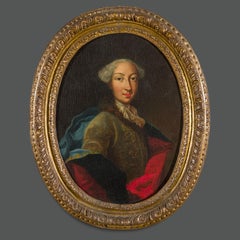
Items Similar to Presumed Portrait of Jean-Jacques-Blaise Baloin de Belvèse, Baron de Vennac
Want more images or videos?
Request additional images or videos from the seller
1 of 9
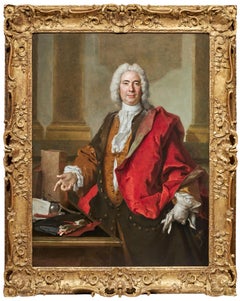
Marianne LoirPresumed Portrait of Jean-Jacques-Blaise Baloin de Belvèse, Baron de VennacCirca 1760/65
Circa 1760/65
$24,038.01
£17,805.75
€20,000
CA$32,883.15
A$35,840.96
CHF 18,948.80
MX$431,457.13
NOK 240,507.48
SEK 220,496.20
DKK 152,388.95
About the Item
Marianne Loir
(Paris 1705 – Paris 1783)
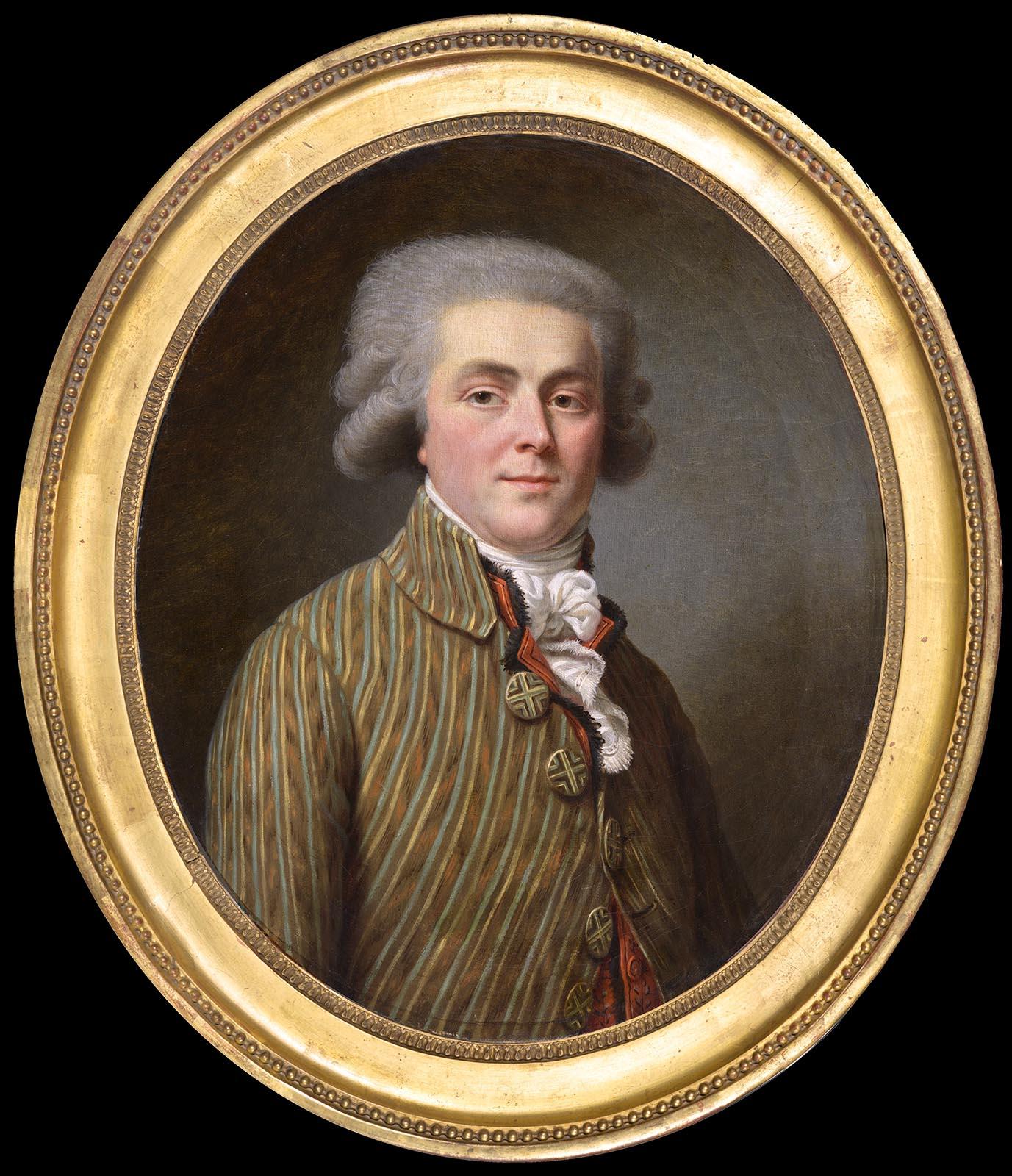
Presumed Portrait of Jean-Jacques-Blaise Baloin de Belvèse, Baron de Vennac (?-1781)
Oil on oval canvas
H. 54.5 cm; W. 46 cm
Unsigned
Granddaughter of the painter and engraver Nicolas Loir, Marianne Loir followed her brother Alexis, a pastelist and engraver, to Rome. There, she furthered what was undoubtedly a family training, studying under Jean-François de Troy, then director of the French Academy in Rome. The vast majority of her known works date from between 1740 and 1770, a period during which she worked in a style very close to that of Jean-Marc Nattier, the height of the Louis XV style. However, her brushwork is freer and her technique less Rococo. A sense of truth and sincerity emanates from her portraits, whose subjects do not appear stiff or in unrealistic poses. Marianne Loir's style is sometimes compared to that of Pierre Gobert, several decades her senior, whose influence can be seen in some of her work.
The artist's identity is revealed by a modern label affixed to the back of the painting. The canvas, almost certainly rectangular in origin given the continuous paint applied to the stretcher, was relined during the first half of the 20th century. Is this label an inscription that was originally on the back of the canvas and then transferred? The name seems difficult to invent…
Baron de Vennac (or Venac), whose full name appears to be Jean-Jacques-Blaise Baloin de Belvèse, was an officer in the Normandy Regiment and a Knight of the Order of Saint Louis. In 1756, he was arrested for making false accusations against other officers in his regiment. They allegedly wanted to assassinate the king… Imprisoned in Le Havre, Mont Saint-Michel, the Bastille, and then Vincennes from 1757 onward, he died in 1781 in that fortress. Aside from these details, the man's life remains unknown except for his birthplace, Saint-Chély-de-Belvèze, the family fiefdom from which the Counts of Belvèze descended, a title held by Vennac's father. These details all come from dubious sources written by the notorious Latude, a prisoner with numerous escapes who wrote his memoirs.
However, our man, judging by his uniform, was indeed an officer of the Normandy Regiment and wore the Order of Saint Louis. The portrait appears to have been painted around 1760/65, which does not rule out the Baron de Vennac as the attributable figure.
- Creator:Marianne Loir (1705 - 1783, French)
- Creation Year:Circa 1760/65
- Dimensions:Height: 21.46 in (54.5 cm)Width: 18.12 in (46 cm)
- Medium:
- Movement Style:
- Period:1760-1769
- Condition:
- Gallery Location:BELEYMAS, FR
- Reference Number:1stDibs: LU1857217402132
About the Seller
3.0
Vetted Professional Seller
Every seller passes strict standards for authenticity and reliability
Established in 2017
1stDibs seller since 2022
7 sales on 1stDibs
Typical response time: 5 hours
- ShippingRetrieving quote...Shipping from: BELEYMAS, France
- Return Policy
More From This Seller
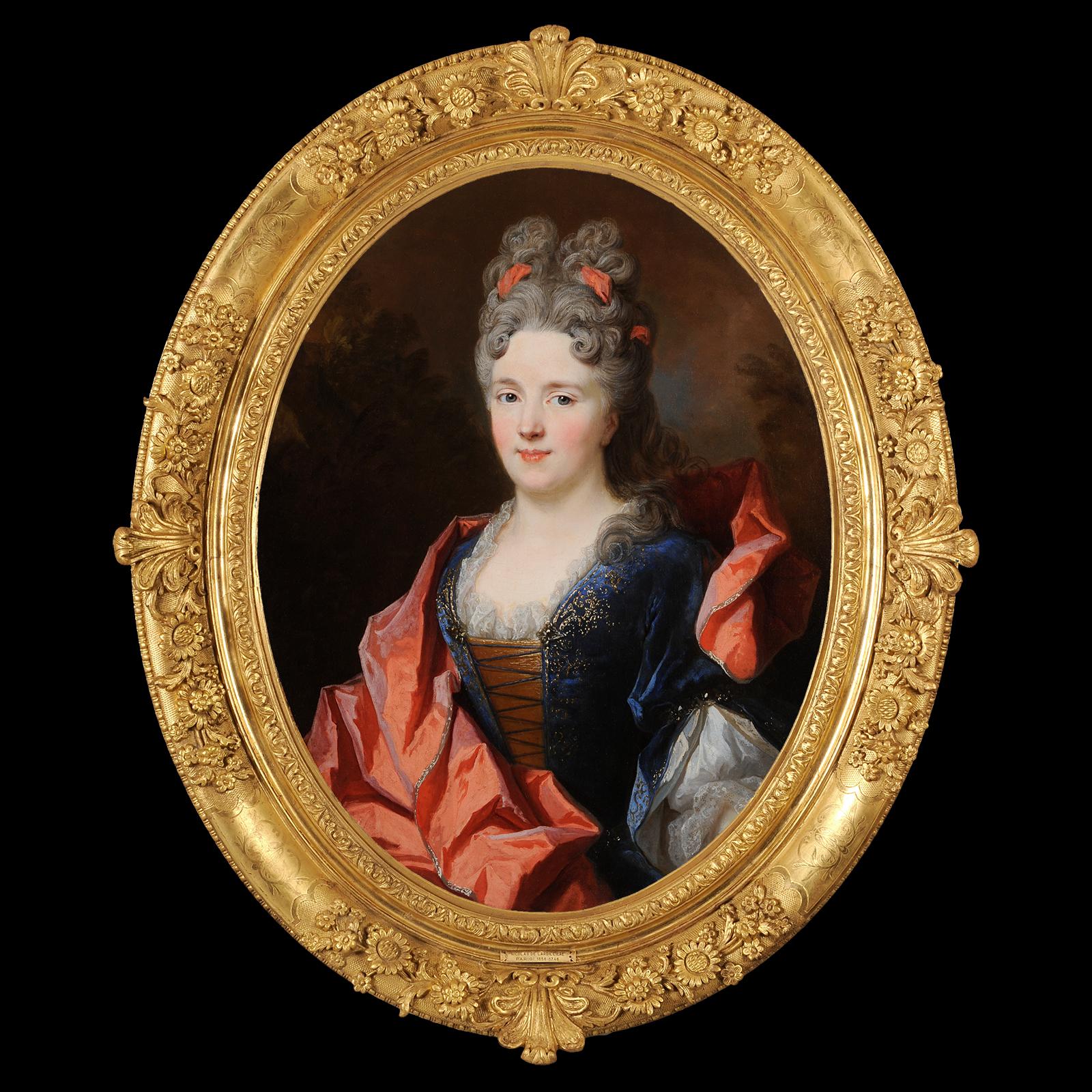
View AllPresumed portrait of Marie-Anne de Bourbon
By Nicolas de Largillière
Located in BELEYMAS, FR
Nicolas de LARGILLIERRE
(Paris 1656 – 1746)
Portrait of a woman, presumed to be Marie-Anne de Bourbon, Princess of Conti (1666-1739)
Oil on oval canvas
H. 8...
Category
Early 1700s French School Figurative Paintings
Materials
Canvas, Oil
Portrait of a man during French Revolution
Located in BELEYMAS, FR
Antoine VESTIER, attributed to
(Avallon, 1740 - Paris, 1824)
Portrait of a man under the Revolution
Oil on canvas
H. 46 cm; L. 37 cm
Circa 1793-95
This beautiful unsigned portrait i...
Category
1790s French School Figurative Paintings
Materials
Canvas, Oil
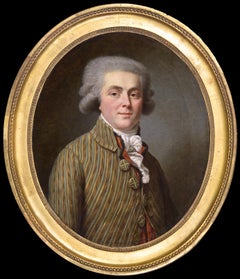
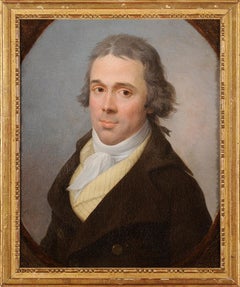
Men portrait
Located in BELEYMAS, FR
Jean François Marie Bellier
(Paris 1745 – Paris 1836)
Portrait of a Man
Oil on oval canvas laid flat
H. 45 cm; W. 55 cm
Signed on the left
Circa 1790
Jean François Marie Bellier occ...
Category
1790s French School Portrait Paintings
Materials
Canvas, Oil
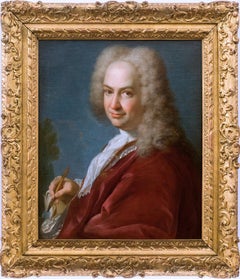
Presumed artist self-portrait
Located in BELEYMAS, FR
Louis-Gabriel BLANCHET
(Versailles, 1701 – Rome, 1772)
Presumed self-portrait of the artist
Oil on canvas
H. 73 cm; W. 60 cm
Circa 1730
Originally presented in a Restoration period frame with a "Mignard" cartouche, this beautiful painting initially appeared to us as a work from northern Italy. However, it exuded a rather French form of refinement, suggesting that its artist may have assimilated a dual influence from both sides of the Alps.
We thank our colleague and friend Philippe Mendès for spontaneously and judiciously "bringing out" the name of Louis-Gabriel Blanchet, a Romanized French portraitist, whose spirit and stylistic characteristics we clearly recognize here.
Blanchet's "French" years, before his final departure for Rome in 1728, following his winning of the second Grand Prix for painting after Subleyras in 1727, are extremely poorly documented. His father, Gabriel, was valet to Blouin, himself Louis XIV's first valet at the time. According to Thierry Lefrançois, Blanchet was one of the few students of Nicolas Bertin (1667-1736), whose studio he is said to have joined in the early 1720s. At a baptism on March 24, 1724, where he was godfather, he is mentioned as a painter in the picture store of the Duke of Antin, the director of buildings between 1708 and 1736. At this time, he was probably already married to Jeanne Quément, with whom he had a daughter also named Jeanne, who would marry Nicolas Aviet, the son of a valet in the queen's wardrobe, in Versailles in 1738.
When Blanchet arrived in Rome in October 1728, he was accompanied by Subleyras, Trémolières, and Slodtz. He enjoyed the goodwill of Vleughels, the director of the Académie de France, which had been based at the Palazzo Mancini since 1725, even though the latter was not always kind to our resident. From 1732, he was under the protection of the Duke of Saint-Aignan when he took up his post as ambassador to Rome. Along with Slodtz and Subleyras, they formed a trio of friends, joined by Joseph Vernet shortly after his arrival in Rome in 1734. Slodtz and Blanchet, on the occasion of Subleyras's marriage in 1739, were there to attest that their friend was not bound by any marital commitment, and Blanchet was a witness at Vernet's wedding in 1745.
It is most likely from these early years in Rome that our portrait of the artist dates, the expression and turn of his face irresistibly reminiscent of a self-portrait. The still relatively youthful features may correspond to Blanchet's thirty-something years, and the fluffy wig was still fashionable at this time.
The painting fits well with the depiction of a young painter wanting to display both the beginnings of success and a certain simplicity or restraint. A slight smile expresses a form of assurance in this man with a gentle, sincere gaze and a face radiating a keen sense of wit. We find here the air of intimacy present in almost all of Blanchet's portraits, even those from the 1750s and 1760s, as well as an almost complicity with the viewer. The spirit of the painting is quite close to that of the presumed portrait of Bouchardon (painted around 1730) and the portrait of Pannini, painted in 1736, but it possesses a more natural quality, notably thanks to the absence of decorum. Our work exhibits the characteristics of Blanchet's paintings: elegance, luminosity (especially in the whites), vibrant and refined colors (here, the harmony of the garnet of the garment and the slate blue of the background, whose uniformity is tempered by a very sketched landscape and a grove of greenery), light complexions, rather rosy cheekbones, often full lips, and rather tight framing.
According to the Academy's rules, Blanchet's stay should have ended in the spring of 1732, but, for reasons unknown, he remained in the Eternal City until his death, as did his friend Subleyras, with whom he shared accommodation until the late 1730s. The latter regularly called upon him to collaborate on his paintings, such as The Meal at Simon's. Through Saint-Aignan's intervention, Blanchet was employed in the late 1730s by the Stuart princely family, then exiled in Italy. He notably produced copies (now lost) after Liotard of the portraits of Charles Edward and Henry Benedict, the sons of James III Stuart. The latter also commissioned three other portraits (now in the National Portrait Gallery in London), whose more formal character contrasts with the intimate spirit of Blanchet's portraits. Blanchet frequented English painters, such as the landscape painter Richard Wilson, and studied with the Scottish portraitist Katherine Read...
Category
1730s French School Portrait Paintings
Materials
Oil, Canvas
Portrait of a man in armor
Located in BELEYMAS, FR
Attributed to Jacques DUMONT aka DUMONT LE ROMAIN
(Paris 1701 - 1781)
Presumed portrait of Louis-Joseph de Formanoir (?-1732)
Oil on canvas
H. 91.5 cm; L. 73 cm
Signed on the helmet:...
Category
1750s French School Portrait Paintings
Materials
Canvas, Oil

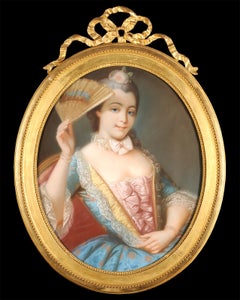
Portrait of a young woman in Louis XV period dress
Located in BELEYMAS, FR
French School
Portrait of a young woman in Louis XV period dress
Pastel on paper mounted on oval canvas
H. 68 cm; W. 54 cm (Frame: H. 102 cm; W. 71 cm)
18th century frame, anti-refle...
Category
Mid-18th Century French School Figurative Paintings
Materials
Canvas, Paper, Pastel
You May Also Like
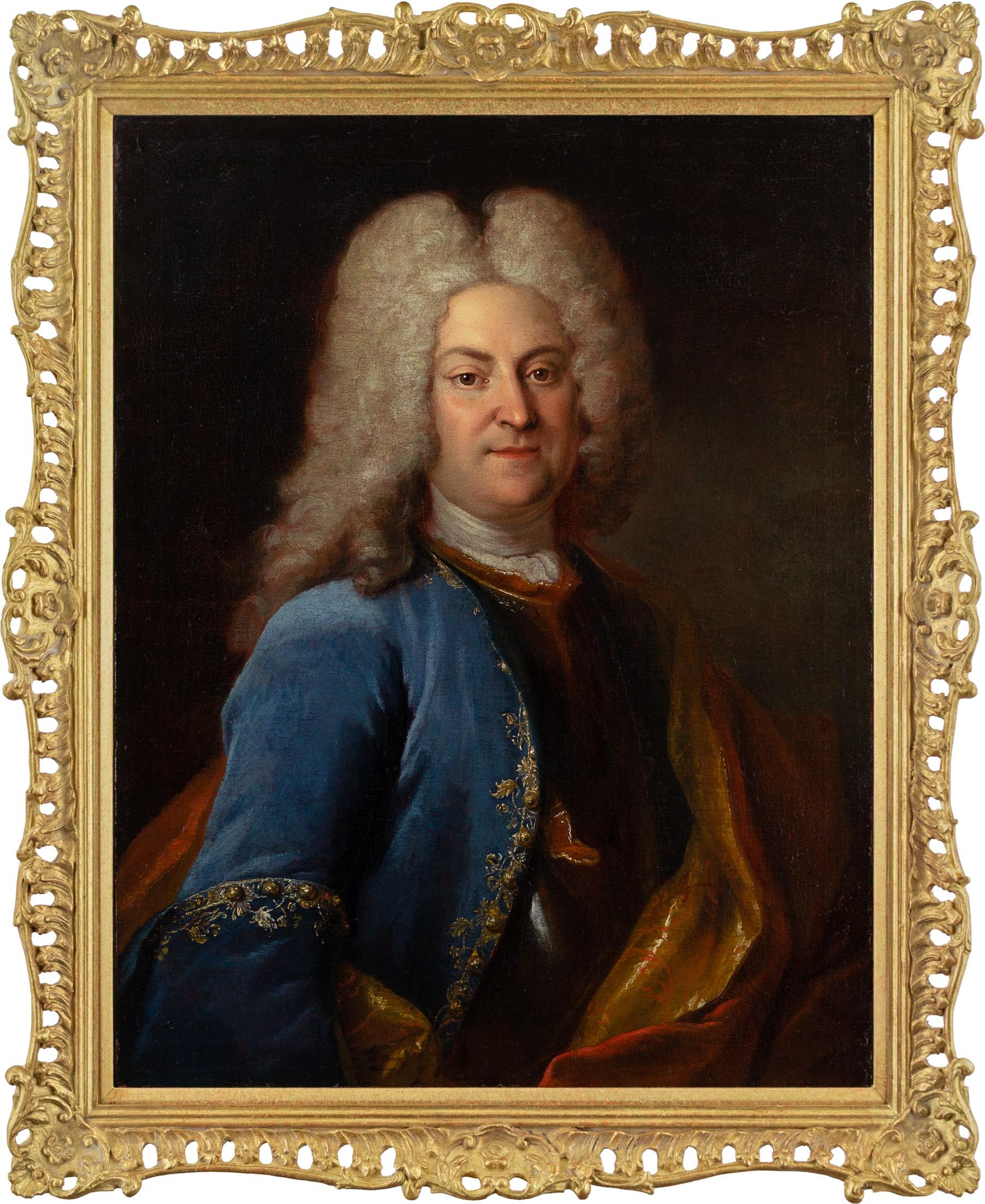
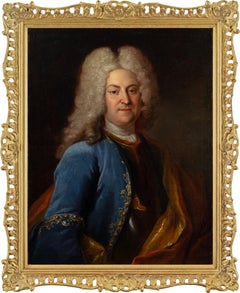
Early 18th-Century French Rococo Oil Painting, Portrait of a Baron
Located in Cheltenham, GB
This sumptuous early 18th-century portrait by leading French artist Louis de Silvestre (1675-1760) depicts Baron Pierre de Gaultier, a nobleman and diplomat active during the final y...
Category
Early 18th Century Rococo Portrait Paintings
Materials
Canvas, Oil
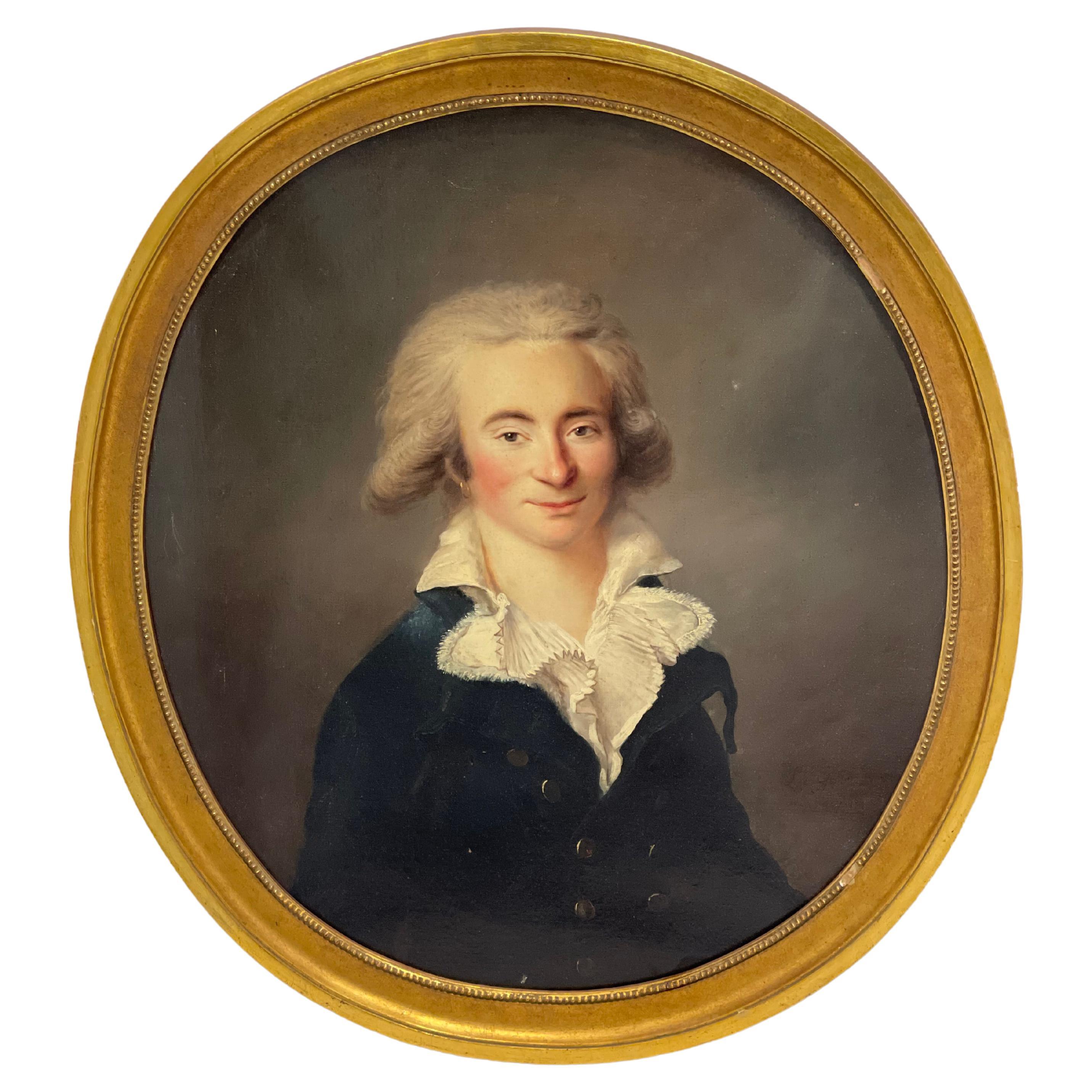
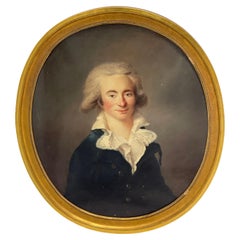
French 18th Century Portrait Signed Legrand, 1790
Located in palm beach, FL
18th century oval portrait oil on canvas of an aristocrat
The individual with the mischievous look wears a highly voluminous powdered starch hairdo.
An earring on his ear is a rare example of coquetry in a picture.
His corner smile and brave cheekbones distinguish the character.
The eighteenth century is an era of grace.
We have never seen men and women so properly prepared throughout history.
The extravagant display was consistent with the rococo aesthetic.
Powdered hairstyles became fashionable among males in the 17th century, under the reign of Louis14, the Sun King.
At the period, France ruled fashion, and its influence expanded to other countries.
This gentleman reflects the entirety of the Grand Siecle...
Category
Antique 1790s French Paintings
Materials
Canvas, Giltwood, Paint
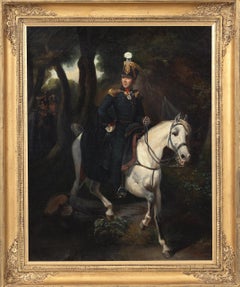
Portrait of Colonel Charles-Louis-Prosper Marquis de Chérisey (1786-1837)
Located in Paris, IDF
After Louis-Stanislas MARIN-LAVIGNE (Paris, 1797 – Paris, 1860)
Portrait of Colonel Charles-Louis-Prosper Marquis de Chérisey (1786-1837)
in the uniform of commander of the 38th lin...
Category
Mid-19th Century French School Portrait Paintings
Materials
Oil
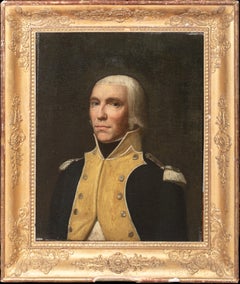
Portrait Of Marshal Jean-Baptiste Bessières, Duc d
Istrie (1768-1813), Napoleon
Located in Blackwater, GB
Portrait Of Marshal Jean-Baptiste Bessières, Duc d'Istrie (1768-1813), circa 1810
French School
Large circa 1810 portrait of Marshal Jean-Baptiste Bessières, Duc d'Istrie, oil on c...
Category
Early 19th Century Portrait Paintings
Materials
Oil, Canvas
Portrait of Monsieur Aubert, a ceremonial portrait by Nicolas de Largillière
By Nicolas de Largillière
Located in PARIS, FR
Provenance :
Arnold S. Kirkeby (1901-1962)
Donated by Arnold S. Kirkeby to the Los Angeles County Museum of Art in 1955, where it remained until its sale at Sotheby's, New York on January 10, 1991, lot 82.
Christie's, London, July 7, 2010, lot 186, where it was purchased after the sale by the executors of the will of the late Edmund de Rothschild (1916-2009) for display at Exbury House
The Trustees of Exbury House
Literature :
R. Brown, Bulletin of the Art Division, Los Angeles County Museum, VIII, 1957, pp.8-9, no. 4;
S. Schaefer and P. Husco, European Paintings and Sculpture in the Los Angeles County Museum of Art (Los Angeles, 1987), p. 53 (illustrated and dated c. 1735)
This sumptuous ceremonial portrait, executed around 1725-1730, depicts Monsieur Aubert, the French General Comptroller of Bridges and Roadways, as we learn from a letter on the desk beside our model. The virtuoso treatment of the fabrics, the authoritative yet confident pose, the vigorous treatment of the two hands, are representative of Largillière's talent, here at the peak of his art as portraitist.
The portrait also has a rather extraordinary provenance: donated by Arnold S. Kirkeby, an American hotel magnate and real estate developer, it was exhibited during almost forty years in the collections of the Los Angeles County Museum, before being acquired in 2010 by the executors of Edmund de Rothschild's will to adorn his former home Exbury House (Hampshire), where it remained until its sale in 2022.
1. Nicolas de Largillière, a great European portraitist
Nicolas de Largillière (or Largillierre), one of Europe's premier painters of portraits, history paintings, and still lifes during the late seventeenth century and the first four decades of the eighteenth, was born in Paris in 1656. He was the son of a hatmaker and merchant who moved with his family to Antwerp in 1659. As a boy of nine, he traveled for the first time to London in the company of an associate of his father. After returning to Antwerp more than a year later, his artistic gifts were recognized and his father apprenticed him to Antoni Goubau (1616-1698), a painter genre scenes and landscapes. Something of a prodigy, he was admitted to the painters' Guild of Saint Luke when he was only seventeen. In 1675 he made a second trip to London, where he was employed at Windsor Castle and worked as a restorer under the direction of Italian painter and decorator Antonio Verrio (c. 1639-1707), who brought him to the attention of King Charles II (r. 1660-1685).
At this time Largillière painted several still life paintings in the manner of the Dutch and Flemish masters. Thereafter he practiced this branch of painting with consummate skill, a talent that allowed him to make brilliant use of flowers, fruit, and animals in some of his most ambitious portraits and contemporary history pictures.
In 1679 Largillière settled in Paris, where he specialized in baroque portraiture in the grand manner of Peter Paul Rubens (1577-1640), Anthony van Dyck (1599-1641), and Peter Lely (1618-1680). The Flemish battle painter Adam Frans van der Meulen (1631 or 1632-1690) introduced him to Charles Le Brun (1619-1690) who, as First Painter to King Louis XIV (r. 1643-1715) and director of the Académie royale de peinture et de sculpture, was the predominant figure in France's official art establishment. Upon his acceptance as a candidate for admission to the Académie, he agreed to execute as his diploma picture a large portrait of Le Brun (completed 1686, Paris, Musée du Louvre, eight photo in the gallery) seated in his studio surrounded by the accoutrements of his art and an oil study for the ceiling of Galerie des Glaces at Versailles.
In 1686, Largillière made a final trip to England, where he painted portraits of the newly crowned king, James II (r. 1685-1688) (Greenwich, National Maritime Museum) and his consort Mary of Modena...
Category
1720s Old Masters Portrait Paintings
Materials
Oil
18th Century Italian Portrait Credited to Maria Giovanna Battista Clementi
Located in Roma, IT
18th Century Italian Portrait Credited to Maria Giovanna Battista Clementi
The painting probably depicts a young nobleman of Savoy court ...
Category
Mid-18th Century Old Masters Portrait Paintings
Materials
Oil, Canvas