Items Similar to “Rough Seas”

Want more images or videos?
Request additional images or videos from the seller
1 of 10
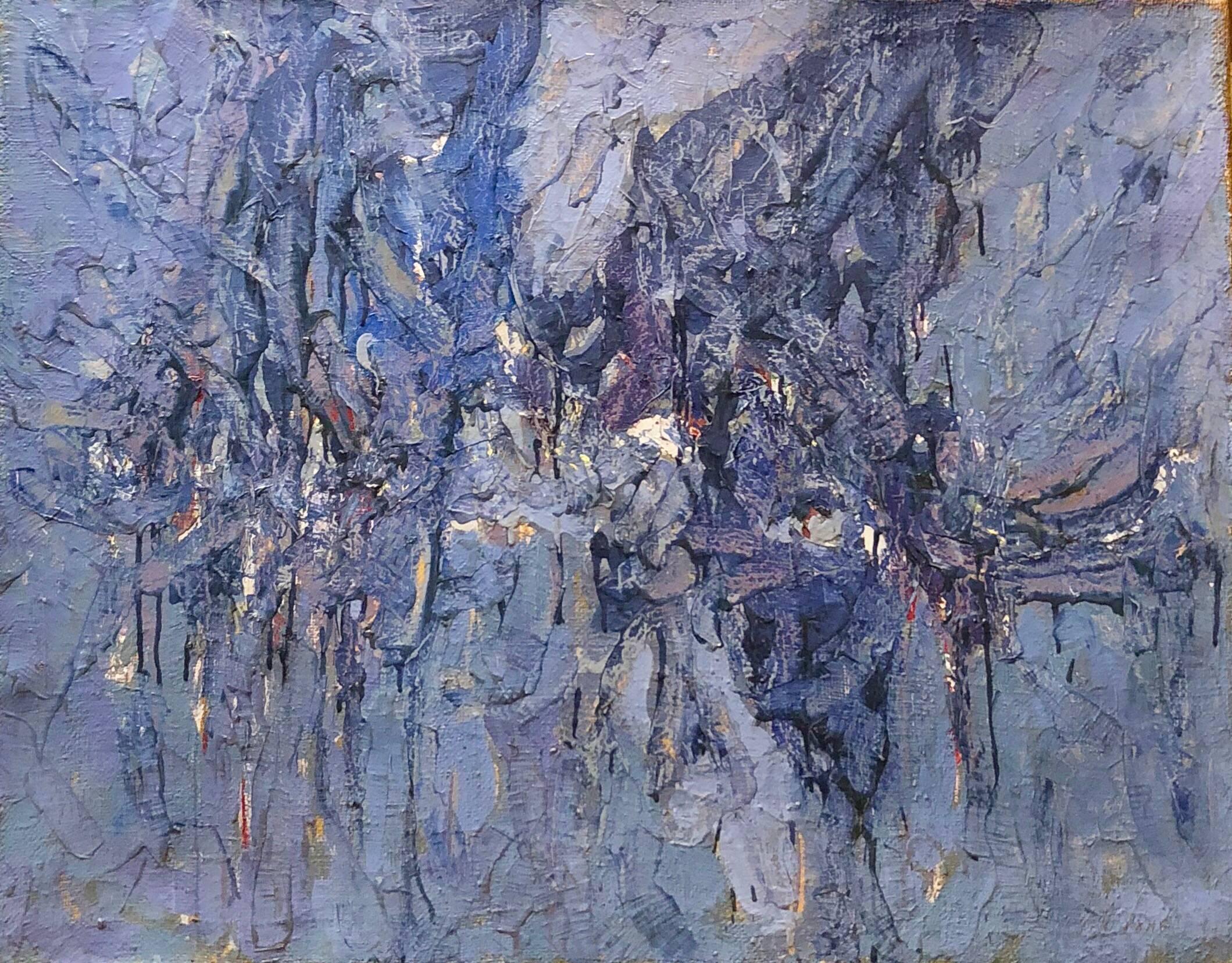
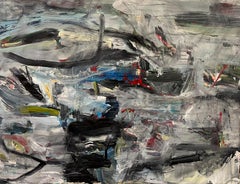
Nahum Tschacbasov“Rough Seas”1945
1945
$5,760
$7,20020% Off
£4,390.37
£5,487.9720% Off
€5,063.83
€6,329.7920% Off
CA$8,180.92
CA$10,226.1520% Off
A$8,791.26
A$10,989.0820% Off
CHF 4,717.02
CHF 5,896.2820% Off
MX$103,555.69
MX$129,444.6120% Off
NOK 59,311.32
NOK 74,139.1520% Off
SEK 54,180.51
SEK 67,725.6320% Off
DKK 37,845.10
DKK 47,306.3820% Off
About the Item
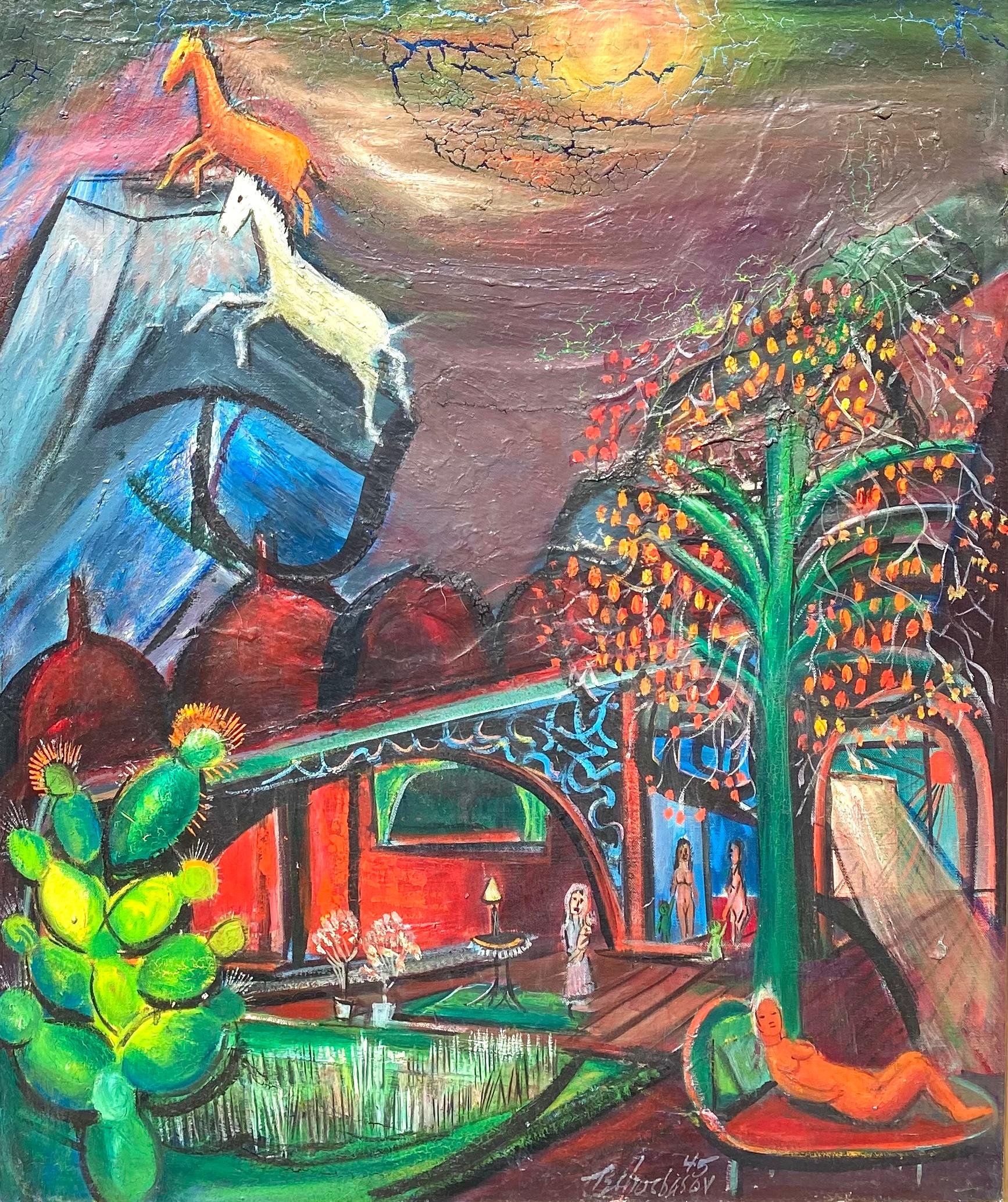
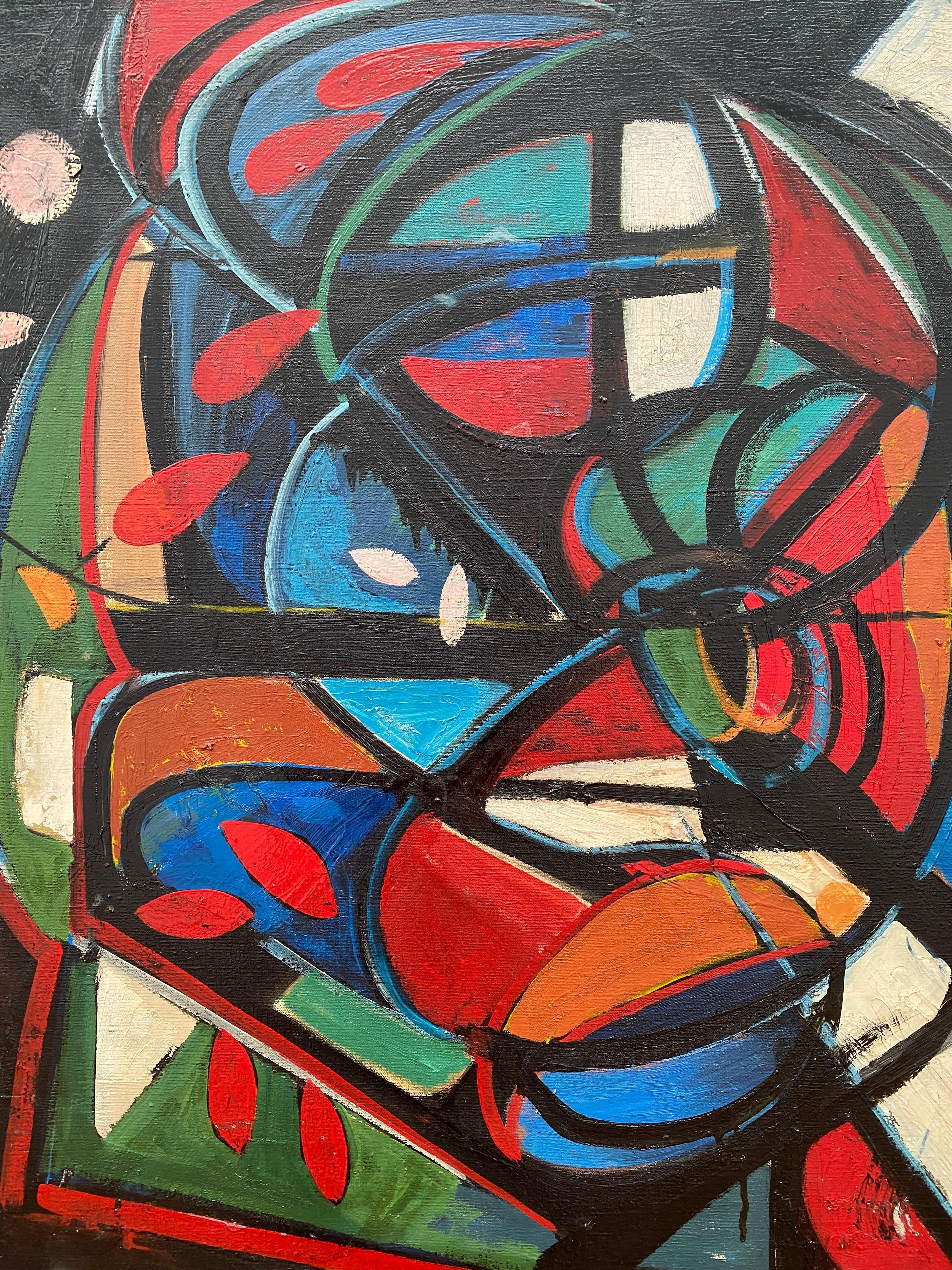
Early original oil on canvas painting of sailboats in stormy seas by the American artist, Nahum Tschacbasov. Artist signed lower right and dated 1945. Condition is very good. Presently unframed. Provenance: Estate of the artist Nahum Tschacbasov.
Biography:
Russian-American artist Nahum Tschacbasov (1899-1984) is known for his cubo-surrealistic works which feature a strong psychological element. Some of his work bears a resemblance to work of another Russian-American artist--David Burliuk. He was somewhat of a late starter, moving to Paris in 1932 to study under Adolph Gottlieb, Marcel Gromaire and Fernand Leger. He had his first exhibition in Paris in 1934. He then returned to the US where he joined Rothko and Gottlieb at the Galery Seccession. He was one of the co-founders of The Ten, a group of social conscious abstract painters which included Rothko, Gottlieb, Joseph Solman and Ilya Bolotowsky, among others.
In 1944, he began to work at Stanley Hayter's Atelier 17, a center for surrealistic ideas. Between 1936 and 1943, he had five one-man exhibitions at the ACA Galleries and participated in five group shows. He also exhibited at the Whitney, the Pennsylvania Academy of Fine Arts, the Knox Albright Museum, the Chicago Institute of Fine Art and Corcoran, among others. His work can be found in the permanent collections of the Met, the Whitney, the Brooklyn Museum and the Jewish Museum.
Tschacbasov has been the subject of two recent retrospectives. The first at Fletcher Gallery, Woodstock, New York and the second by my own gallery, Arthur Kalaher Fine Art, Southampton, New York. Nahum Tschacbasov was the subject of a major retrospective at the National Arts Club entitled: "Nahum Tschacbasov: A Retrospective." in 2013.
- Creator:Nahum Tschacbasov (1899-1984, American)
- Creation Year:1945
- Dimensions:Height: 30 in (76.2 cm)Width: 36 in (91.44 cm)Depth: 1 in (2.54 cm)
- Medium:
- Movement Style:
- Period:
- Condition:
- Gallery Location:Southampton, NY
- Reference Number:1stDibs: LU14113421182
About the Seller
5.0
Platinum Seller
Premium sellers with a 4.7+ rating and 24-hour response times
Established in 1977
1stDibs seller since 2013
563 sales on 1stDibs
Typical response time: <1 hour
- ShippingRetrieving quote...Shipping from: Southampton, NY
- Return Policy
More From This Seller
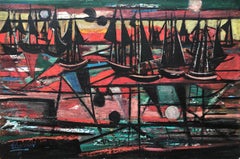
View All“Abstract Sailing, 1945”
By Nahum Tschacbasov
Located in Southampton, NY
Oil on academy board by the Russian/American artist Nahum Tschacbasov. Signed and dated lower left, 1945. Condition: Excellent. Presently not framed.
Biography :
Russian-America...
Category
1940s Modern Abstract Paintings
Materials
Oil, Fiberboard
$4,800 Sale Price
20% Off
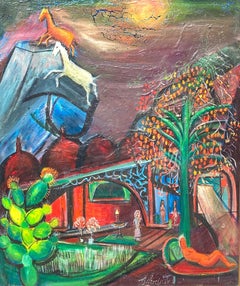
“Mountains and …”
By Nahum Tschacbasov
Located in Southampton, NY
Outstanding and vibrant figurative oil on canvas painting by the well known American artist, Nahum Tschacbasov. Signed lower right and dated 1945. Partial Perl’s Gallery, New York label verso with partial title on same label verso. Title might be “Mountains and Horses” Condition is very good. The painting is housed in it”s original House...
Category
1940s Abstract Expressionist Figurative Paintings
Materials
Canvas, Oil
“Untitled Abstract”
By Nahum Tschacbasov
Located in Southampton, NY
Original mid-century modern abstract oil on canvas painting by the well known Russian/American artist Nahum Tschacbasov. Signed lower right and dated 1945. Condition is very good. P...
Category
1940s Abstract Expressionist Abstract Paintings
Materials
Canvas, Oil
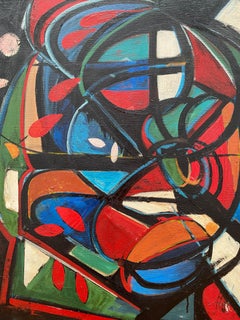
“Untitled Abstract”
By Martin Rosenthal
Located in Southampton, NY
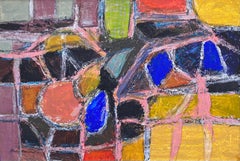
Original abstract oil painting on heavy card stock by the American artist Martin Rosenthal. Signed lower left and dated 1960. Condition is very good. Slight bow to board. Nicely pro...
Category
1960s Abstract Expressionist Abstract Paintings
Materials
Oil, Board
$2,080 Sale Price
20% Off
“Seagame”
By Syd Solomon
Located in Southampton, NY
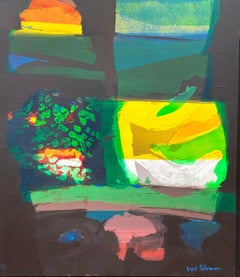
0riginal acrylic on panel painting by the well known American artist, Syd Solomon. Signed Syd Solomon lower center. Signed and dated Syd Solomon 1971 and inscribed as titled on the reverse. 30 × 24 inches. Condition is very good, no issues. The painting is framed in its original wood with silver reveal floating frame. Overall framed measurements are 32.5 by 26.75 inches. Provenance: A private collector.
American, 1917-2004
SYD SOLOMON BIOGRAPHY:
Written by Dr. Lisa Peters/Berry Campbell Gallery
Syd Solomon was born near Uniontown, Pennsylvania, in 1917. He began painting in high school in Wilkes-Barre, where he was also a star football player. After high school, he worked in advertising and took classes at the Art Institute of Chicago. Before the attack on Pearl Harbor, he joined the war effort and was assigned to the First Camouflage Battalion, the 924th Engineer Aviation Regiment of the US Army. He used his artistic skills to create camouflage instruction manuals utilized throughout the Army. He married Ann Francine Cohen in late 1941. Soon thereafter, in early 1942, the couple moved to Fort Ord in California where he was sent to camouflage the coast to protect it from possible aerial bombings. Sent overseas in 1943, Solomon did aerial reconnaissance over Holland. Solomon was sent to Normandy early in the invasion where his camouflage designs provided protective concealment for the transport of supplies for men who had broken through the enemy line. Solomon was considered one of the best camoufleurs in the Army, receiving among other commendations, five bronze stars. Solomon often remarked that his camouflage experience during World War II influenced his ideas about abstract art. At the end of the War, he attended the École des Beaux-Arts in Paris.
Because Solomon suffered frostbite during the Battle of the Bulge, he could not live in cold climates, so he and Annie chose to settle in Sarasota, Florida, after the War. Sarasota was home to the John and Mable Ringling Museum of Art, and soon Solomon became friends with Arthur Everett “Chick” Austin, Jr., the museum’s first Director. In the late 1940s, Solomon experimented with new synthetic media, the precursors to acrylic paints provided to him by chemist Guy Pascal, who was developing them. Victor D’Amico, the first Director of Education for the Museum of Modern Art, recognized Solomon as the first artist to use acrylic paint. His early experimentation with this medium as well as other media put him at the forefront of technical innovations in his generation. He was also one of the first artists to use aerosol sprays and combined them with resists, an innovation influenced by his camouflage experience.
Solomon’s work began to be acknowledged nationally in 1952. He was included in American Watercolors, Drawings and Prints at the Metropolitan Museum of Art, New York. From 1952–1962, Solomon’s work was discovered by the cognoscenti of the art world, including the Museum of Modern Art Curators, Dorothy C. Miller and Peter Selz, and the Whitney Museum of American Art’s Director, John I. H. Baur. He had his first solo show in New York at the Associated American Artists Gallery in 1955 with “Chick” Austin, Jr. writing the essay for the exhibition. In the summer of 1955, the Solomons visited East Hampton, New York, for the first time at the invitation of fellow artist David Budd. There, Solomon met and befriended many of the artists of the New York School, including Jackson Pollock, Franz Kline, Willem de Kooning, James Brooks, Alfonso Ossorio, and Conrad Marca-Relli. By 1959, and for the next thirty-five years, the Solomons split the year between Sarasota (in the winter and spring) and the Hamptons (in the summer and fall).
In 1959, Solomon began showing regularly in New York City at the Saidenberg Gallery with collector Joseph Hirshhorn buying three paintings from Solomon’s first show. At the same time, his works entered the collections of the Whitney Museum of American Art, the Solomon R. Guggenheim Museum, and the Wadsworth Athenaeum in Hartford, Connecticut, among others. Solomon also began showing at Signa Gallery in East Hampton and at the James David Gallery in Miami run by the renowned art dealer, Dorothy Blau.
In 1961, the Guggenheim Museum’s H. H. Arnason bestowed to him the Silvermine Award at the 13th New England Annual. Additionally, Thomas Hess of ARTnews magazine chose Solomon as one of the ten outstanding painters of the year. At the suggestion of Alfred H. Barr, Jr., the Museum of Modern Art’s Director, the John and Mable Ringling Museum in Sarasota began its contemporary collection by purchasing Solomon’s painting, Silent World, 1961.
Solomon became influential in the Hamptons and in Florida during the 1960s. In late 1964, he created the Institute of Fine Art at the New College in Sarasota. He is credited with bringing many nationally known artists to Florida to teach, including Larry Rivers, Philip Guston, James Brooks, and Conrad Marca-Relli. Later Jimmy Ernst, John Chamberlain, James Rosenquist, and Robert Rauschenberg settled near Solomon in Florida. In East Hampton, the Solomon home was the epicenter of artists and writers who spent time in the Hamptons, including Alfred Leslie, Jim Dine, Ibram Lassaw, Saul Bellow, Barney Rosset, Arthur Kopit, and Harold Rosenberg.
In 1970, Solomon, along with architect Gene Leedy, one of the founders of the Sarasota School of Architecture, built an award-winning precast concrete and glass house and studio on the Gulf of Mexico near Midnight Pass in Sarasota. Because of its siting, it functioned much like Monet’s home in Giverny, France. Open to the sky, sea, and shore with inside and outside studios, Solomon was able to fully solicit all the environmental forces that influenced his work. His friend, the art critic Harold Rosenberg, said Solomon’s best work was produced in the period he lived on the beach.
During 1974 and 1975, a retrospective exhibition of Solomon’s work was held at the New York Cultural Center and traveled to the John and Mable Ringling Museum in Sarasota. Writer Kurt Vonnegut, Jr. conducted an important interview with Solomon for the exhibition catalogue. The artist was close to many writers, including Harold Rosenberg, Joy Williams, John D. McDonald, Budd Schulberg, Elia Kazan, Betty Friedan...
Category
1970s Abstract Expressionist Abstract Paintings
Materials
Panel, Acrylic
$21,000
“Multishore”
By Syd Solomon
Located in Southampton, NY
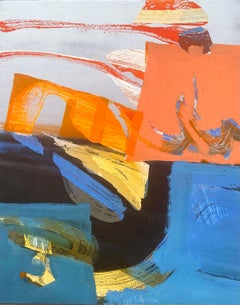
Original oil on canvas painting titled “Multishore” by the well known American artist, Syd Solomon.
Signed Syd Solomon lower right. Signed and dated Syd Solomon 1971 on the stretcher, inscribed as titled on the reverse
30 × 26 inches. Condition is excellent. The painting is housed in its original wood with silver reveal floating frame. Overall framed measurements are 32.75 by 28.75 inches. Provenance: A private collector.
Syd Solomon was born near Uniontown, Pennsylvania, in 1917. He began painting in high school in Wilkes-Barre, where he was also a star football player. After high school, he worked in advertising and took classes at the Art Institute of Chicago. Before the attack on Pearl Harbor, he joined the war effort and was assigned to the First Camouflage Battalion, the 924th Engineer Aviation Regiment of the US Army. He used his artistic skills to create camouflage instruction manuals utilized throughout the Army. He married Ann Francine Cohen in late 1941. Soon thereafter, in early 1942, the couple moved to Fort Ord in California where he was sent to camouflage the coast to protect it from possible aerial bombings. Sent overseas in 1943, Solomon did aerial reconnaissance over Holland. Solomon was sent to Normandy early in the invasion where his camouflage designs provided protective concealment for the transport of supplies for men who had broken through the enemy line. Solomon was considered one of the best camoufleurs in the Army, receiving among other commendations, five bronze stars. Solomon often remarked that his camouflage experience during World War II influenced his ideas about abstract art. At the end of the War, he attended the École des Beaux-Arts in Paris.
Because Solomon suffered frostbite during the Battle of the Bulge, he could not live in cold climates, so he and Annie chose to settle in Sarasota, Florida, after the War. Sarasota was home to the John and Mable Ringling Museum of Art, and soon Solomon became friends with Arthur Everett “Chick” Austin, Jr., the museum’s first Director. In the late 1940s, Solomon experimented with new synthetic media, the precursors to acrylic paints provided to him by chemist Guy Pascal, who was developing them. Victor D’Amico, the first Director of Education for the Museum of Modern Art, recognized Solomon as the first artist to use acrylic paint. His early experimentation with this medium as well as other media put him at the forefront of technical innovations in his generation. He was also one of the first artists to use aerosol sprays and combined them with resists, an innovation influenced by his camouflage experience.
Solomon’s work began to be acknowledged nationally in 1952. He was included in American Watercolors, Drawings and Prints at the Metropolitan Museum of Art, New York. From 1952–1962, Solomon’s work was discovered by the cognoscenti of the art world, including the Museum of Modern Art Curators, Dorothy C. Miller and Peter Selz, and the Whitney Museum of American Art’s Director, John I. H. Baur. He had his first solo show in New York at the Associated American Artists Gallery in 1955 with “Chick” Austin, Jr. writing the essay for the exhibition. In the summer of 1955, the Solomons visited East Hampton, New York, for the first time at the invitation of fellow artist David Budd. There, Solomon met and befriended many of the artists of the New York School, including Jackson Pollock, Franz Kline, Willem de Kooning, James Brooks, Alfonso Ossorio, and Conrad Marca-Relli. By 1959, and for the next thirty-five years, the Solomons split the year between Sarasota (in the winter and spring) and the Hamptons (in the summer and fall).
In 1959, Solomon began showing regularly in New York City at the Saidenberg Gallery with collector Joseph Hirshhorn buying three paintings from Solomon’s first show. At the same time, his works entered the collections of the Whitney Museum of American Art, the Solomon R. Guggenheim Museum, and the Wadsworth Athenaeum in Hartford, Connecticut, among others. Solomon also began showing at Signa Gallery in East Hampton and at the James David Gallery in Miami run by the renowned art dealer, Dorothy Blau.
In 1961, the Guggenheim Museum’s H. H. Arnason bestowed to him the Silvermine Award at the 13th New England Annual. Additionally, Thomas Hess of ARTnews magazine chose Solomon as one of the ten outstanding painters of the year. At the suggestion of Alfred H. Barr, Jr., the Museum of Modern Art’s Director, the John and Mable Ringling Museum in Sarasota began its contemporary collection by purchasing Solomon’s painting, Silent World, 1961.
Solomon became influential in the Hamptons and in Florida during the 1960s. In late 1964, he created the Institute of Fine Art at the New College in Sarasota. He is credited with bringing many nationally known artists to Florida to teach, including Larry Rivers, Philip Guston, James Brooks, and Conrad Marca-Relli. Later Jimmy Ernst, John Chamberlain, James Rosenquist, and Robert Rauschenberg settled near Solomon in Florida. In East Hampton, the Solomon home was the epicenter of artists and writers who spent time in the Hamptons, including Alfred Leslie, Jim Dine, Ibram Lassaw, Saul Bellow, Barney Rosset, Arthur Kopit, and Harold Rosenberg.
In 1970, Solomon, along with architect Gene Leedy, one of the founders of the Sarasota School of Architecture, built an award-winning precast concrete and glass house and studio on the Gulf of Mexico near Midnight Pass in Sarasota. Because of its siting, it functioned much like Monet’s home in Giverny, France. Open to the sky, sea, and shore with inside and outside studios, Solomon was able to fully solicit all the environmental forces that influenced his work. His friend, the art critic Harold Rosenberg, said Solomon’s best work was produced in the period he lived on the beach.
During 1974 and 1975, a retrospective exhibition of Solomon’s work was held at the New York Cultural Center and traveled to the John and Mable Ringling Museum in Sarasota. Writer Kurt Vonnegut, Jr. conducted an important interview with Solomon for the exhibition catalogue. The artist was close to many writers, including Harold Rosenberg, Joy Williams, John D. McDonald, Budd Schulberg, Elia Kazan, Betty Friedan...
Category
1970s Abstract Expressionist Abstract Paintings
Materials
Canvas, Oil
You May Also Like
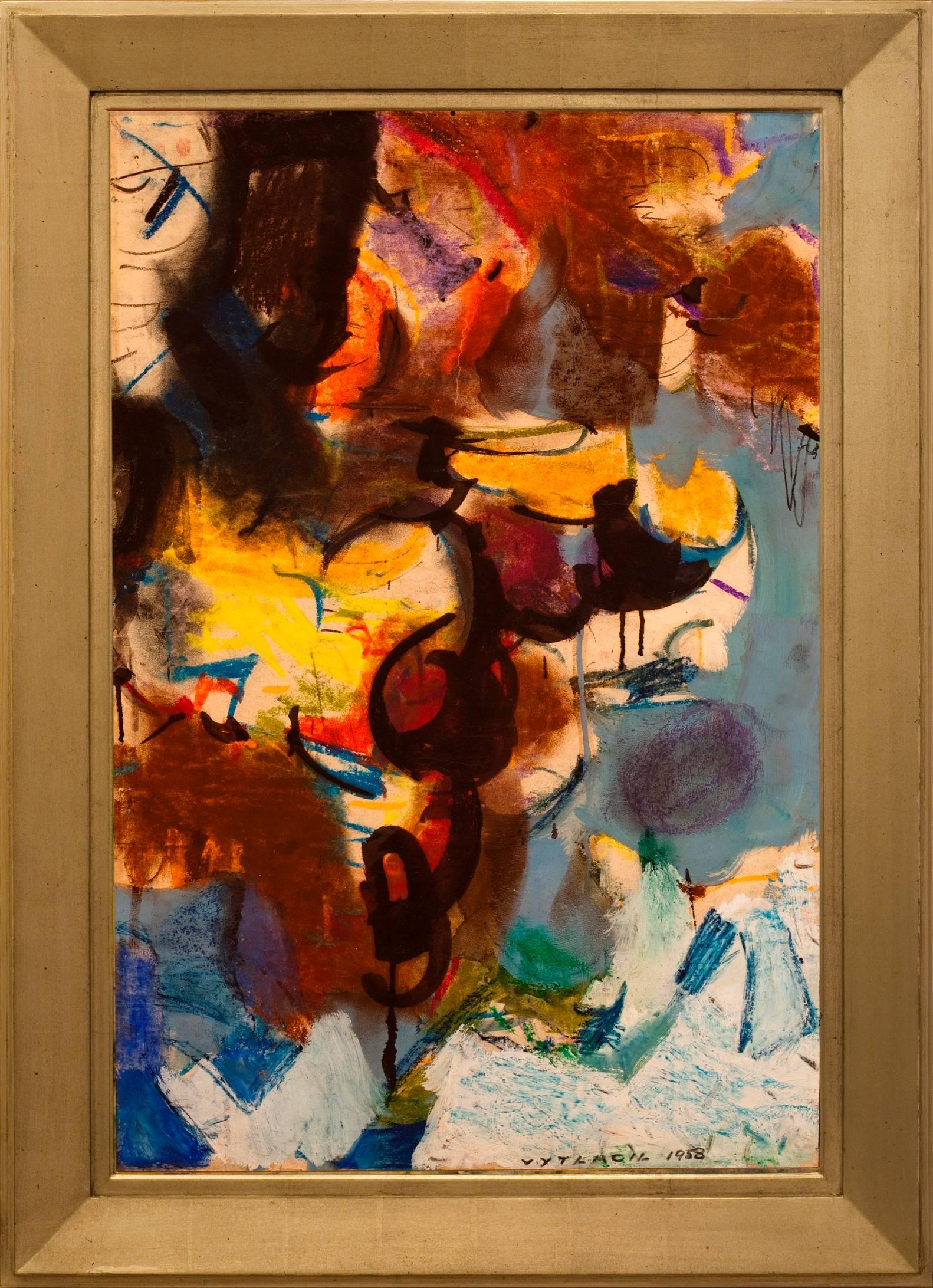
"Rough Seas"
By Vaclav Vytlacil
Located in Lambertville, NJ
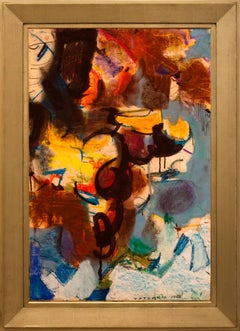
Signed and dated 1958 lower right.
Vaclav Vytlacil (1892-1984)
He was born to Czechoslovakian parents in 1892 in New York City. Living in Chicago as a youth, he took classes at the School of the Art Institute of Chicago, returning to New York when he was 20. From 1913 to 1916, he enjoyed a scholarship from the Art Students League, and worked with John C. Johansen (a portraitist whose expressive style resembled that of John Singer Sargent), and Anders Zorn.
He accepted a teaching position at the Minneapolis School of Art in 1916, remaining there until 1921. This enabled him to travel to Europe to study Cézanne’s paintings and works of the Old Masters. He traveled to Paris, Prague, Dresden, Berlin, and Munich seeking the works of Titian, Cranach, Rembrandt, Veronese, and Holbein, which gave him new perspective. Vytlacil studied at the Royal Academy of Art in Munich, settling there in 1921. Fellow students were Ernest Thurn and Worth Ryder, who introduced him to famous abstractionist Hans Hofmann. He worked with Hofmann from about 1922 to 1926, as a student and teaching assistant.
During the summer of 1928, after returning to the United States, Vytlacil gave lectures at the University of California, Berkeley, on modern European art. Soon thereafter, he became a member of the Art Students League faculty. After one year, he returned to Europe and successfully persuaded Hofmann to teach at the League as well. He spent about six years in Europe, studying the works of Matisse, Picasso, and Dufy. In 1935, he returned to New York and became a co-founder of the American Abstract Artists group in 1936. He later had teaching posts at Queens College in New York; the College of Arts and Crafts in Oakland, California; Black Mountain College in North Carolina; and the Art Students League.
His paintings exhibit a clear inclination toward modernism. His still lives and interiors from the 1920s indicate an understanding of the art of Cézanne. In the 1930s, his works displayed two very different kinds of art at the same time. His cityscapes and landscapes combine Cubist-inspired spatial concerns with an expressionistic approach to line and color. Vytlacil also used old wood, metal, cork, and string in constructions, influenced by his friend and former student, Rupert Turnbull. He eventually ceased creating constructions as he considered them too limiting. The spatial challenges of painting were still his preference. During the 1940s and 1950s, his works indicated a sense of spontaneity not felt in his earlier work.
He married Elizabeth Foster in Florence, Italy, in 1927 and they lived and worked in Positano, Italy for extended periods of time. Later on, they divided their time between homes in Sparkill, New York and Chilmark, Massachusetts, where Vyt, as he was affectionately called, taught at the Martha's Vineyard Art...
Category
1950s Abstract Expressionist Abstract Paintings
Materials
Mixed Media, Board
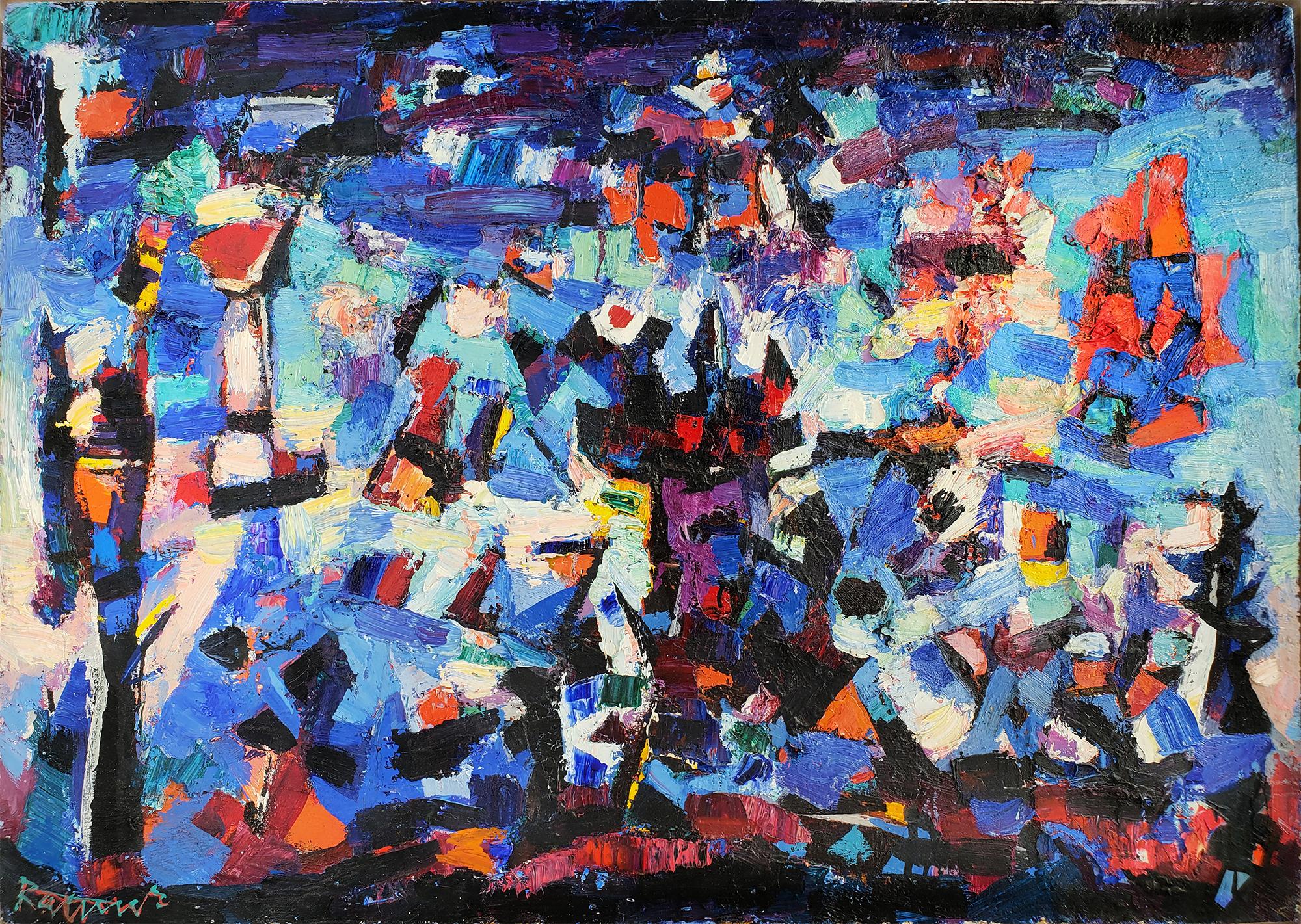
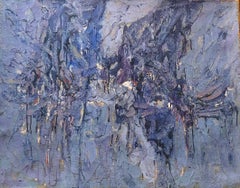
Storm Composition #3
By Abraham Rattner
Located in Miami, FL
An early example of Abstract Expressionism executed in 1955 during the movement's heyday and it's period of peak inventiveness. However, this work is still rooted in representation. The dark area the runs along the base of the picture is the ground and to the left, right and center there are black structures that represent trees. The work is very tactile and is composed of globs of paint that grow out from the surface and form a thick impasto. Rich vibrant saturated blues, reds and oranges create optical drama. The work look better in person. frame: 29 x 39 1/2 inches , Provenance: Kennedy Galleries
The Currier Gallery of Art...
Category
1950s Abstract Expressionist Abstract Paintings
Materials
Oil
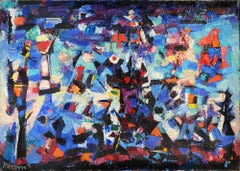
Abstract Expressionist Landscape Israeli Modernist Oil Painting, Moody Blue
By Shimon Avny
Located in Surfside, FL
Shimon Avni
Shimon Avny, painter, born 1932, Paris
Shimon Avny (Stein) was born in Paris, France. He grew up in the Belville neighborhood. In 1942, when the Nazis occupied France, he was separated from his family. His mother and brothers were killed in the Holocaust. After the war, he was transferred from his hiding place to the town of Andlis. He immigrated to Israel with Youth Aliyah in 1948. In 1956, he joined Kibbutz Ra'im. In 1957, he studied painting with Joseph Zaritsky, Avigdor Stematzky and Haim Kiewe. He also studied with Yehezekel Streichman at the Avni Institute. At the end of the 1950s, he went to Paris to continue his studies. In the 1980s, he joined the Radius artists cooperative.
Avny's early work was influenced by the abstractionism of the New Horizons group. In 1963, he took part in the group's exhibition at Ein Harod. His work is characterized by bold colors, expressive brushstrokes and flat planes. He is a figurative painter, but some of his work incorporates symbolic imagery.
Education
1957 Painting with Joseph Zaritsky, Avigdor Stematsky and Haim Kiewe
Avni Institute, Tel Aviv, with Yehezkel Streichman
Grande Chaumiere Academy, Paris, 1958
Ecole des Beaux Arts, Paris, 1961
Fine Arts Academy, Rome
Photography and television, Paris, 1965-67
Teaching
Lectured abroad for the Ministry of Education and Culture, 1969-71
Bezalel Academy, Jerusalem, painting, 1974-78
College of Visual Arts, Beersheba, 1975-81
Headmaster of the Art Institute, Rehovot, 1975-85
1981-85 and 1988-92 Art Teachers College, Ramat Hasharon
Since1992 Avni Institute, Tel Aviv, Teacher and coordinator of the Arts Department
Awards And Prizes
1975 The America-Israel Cultural Fund Scholarship
1985 Scholarship, The Cité Internationale des Arts, Paris, France
1993 The America-Israel Cultural Foundation, Sharett Fund Scholarship for a Young Artist.
A member of the Aclim Group, which was organized in 1974. The group was established in the wake of the Yom Kippur War to point to the necessity of raising the public's consciousness of its Israeli identity in all cultural spheres. Participants in the group's exhibitions until 1983 were: Eliyahu Gat, Rahel Shavit, Ori Reisman, Avram Rafael, Michael Gross, Hannah Levy...
Category
Mid-20th Century Abstract Expressionist Abstract Paintings
Materials
Jute, Oil
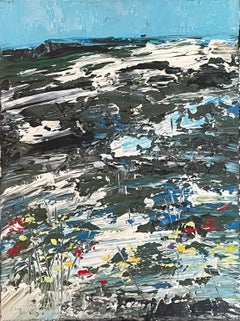
"Snowy Meadow" - Original Landscape with Snow Covered Hill and Colorful Flowers
By Masri Hayssam
Located in Carmel, CA
Masri Hayssam (Lebanese, Italian, born 1965)
"Snowy Meadow" 2001
Oil paint on canvas, stretcher bars
The artist signed the bottom left corner of the painting.
This landscape by Masr...
Category
Early 2000s Post-Impressionist Landscape Paintings
Materials
Canvas, Oil, Stretcher Bars
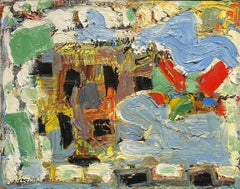
Untitled - Framed Abstract Oil Painting, Gestural Abstraction, Contemporary Art
By Dick Wray
Located in Houston, TX
This abstract oil painting by late Houston artist Dick Wray expresses a striking kinetic energy. Thick layers of paint foster a remarkable tactility commonly found in Dick Wray’s art...
Category
Early 2000s Abstract Expressionist Abstract Paintings
Materials
Canvas, Oil
Stormy seas
Located in Brooklyn, NY
Frank Chiodo is a contemporary painter whose dynamic work centers on organic abstraction. Through the interplay of color and gesture on the canvas, he cre...
Category
2010s Abstract Expressionist Abstract Paintings
Materials
Acrylic
More Ways To Browse
Audrey Hepburn Pop Art
Girl With Braids
Golden Boy
Paul Keene
Selma Burke
17th C Portrait
Cavalier Portrait
Christina Aguilera
Elvis Painting
Flemish Portrait Painting
Georgian Portrait Oil Paintings
Royal Oil Portrait
Sir Peter Lely
1876 Portrait
Art Deco Lady Painting
Blonde Woman Art
Captain Portrait
David Bowie Painting