Video Loading
Want more images or videos?
Request additional images or videos from the seller
1 of 8

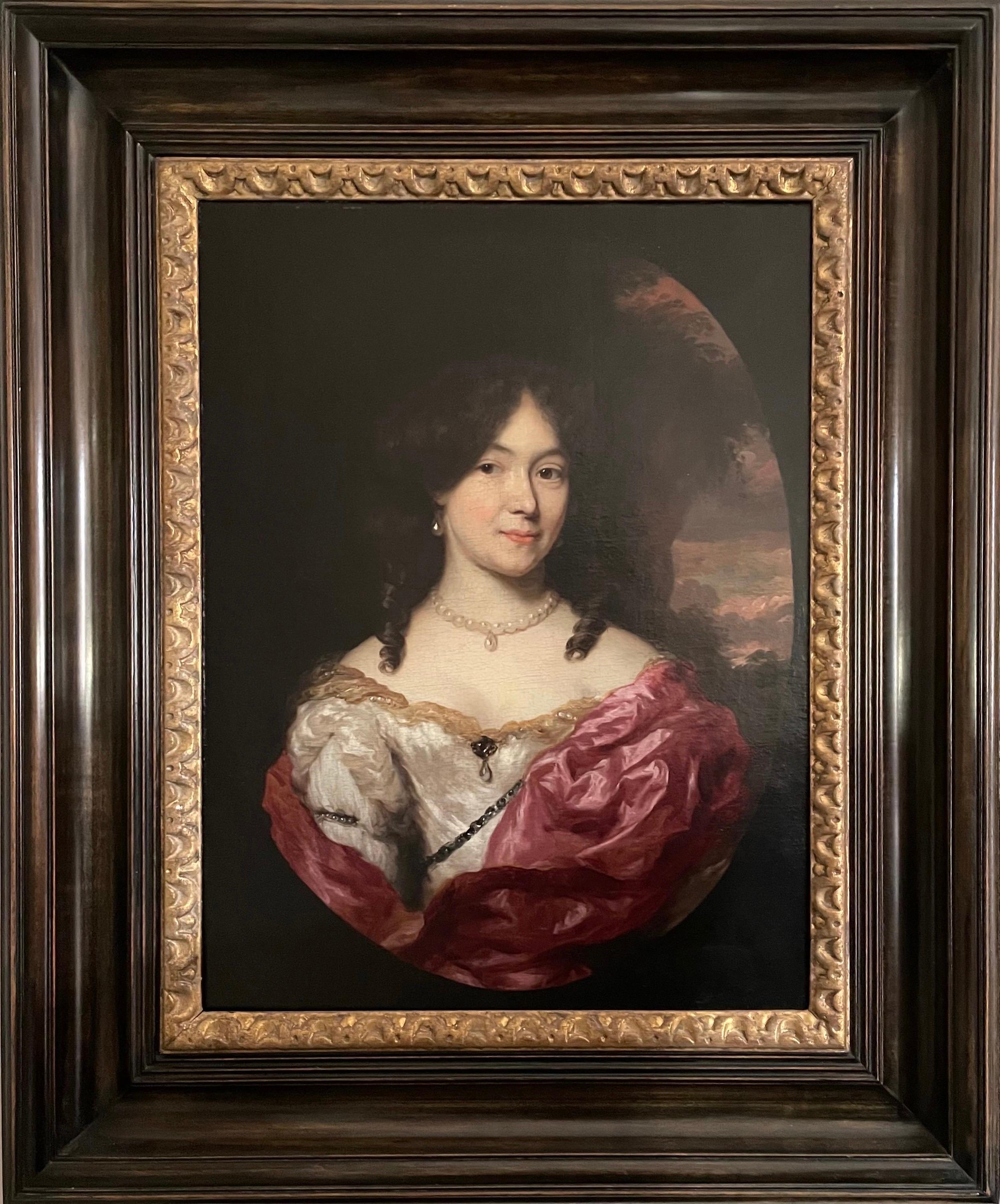
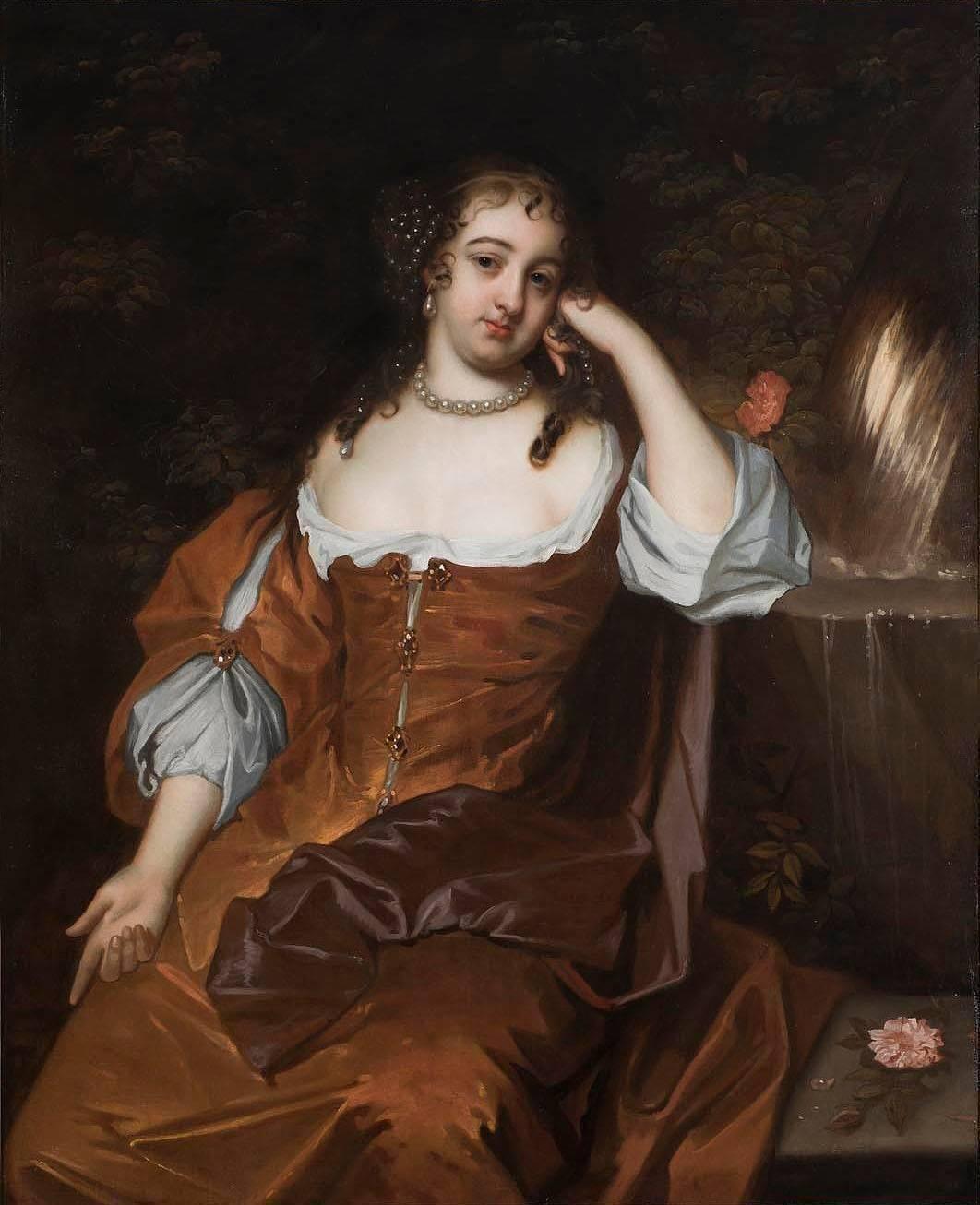
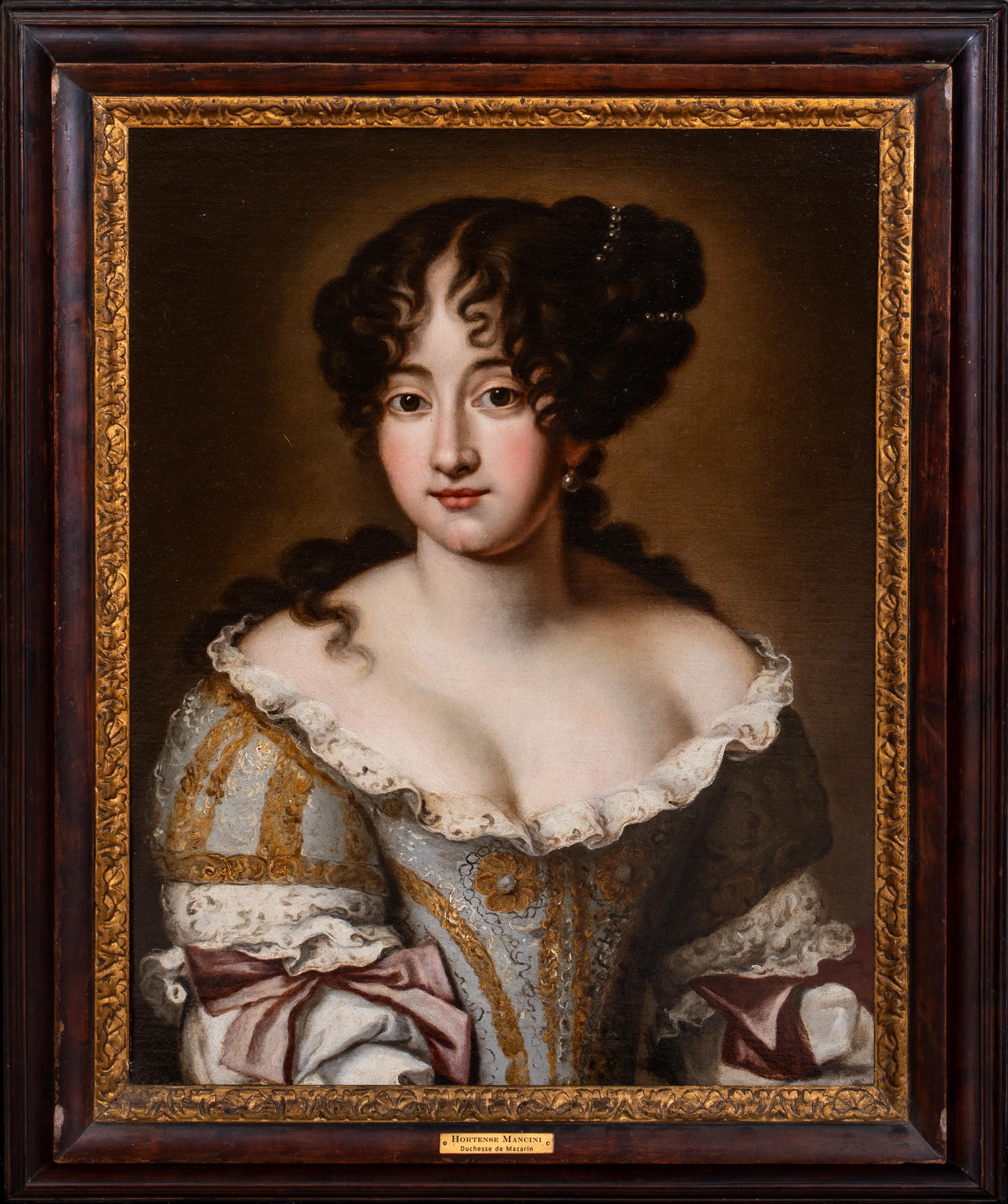
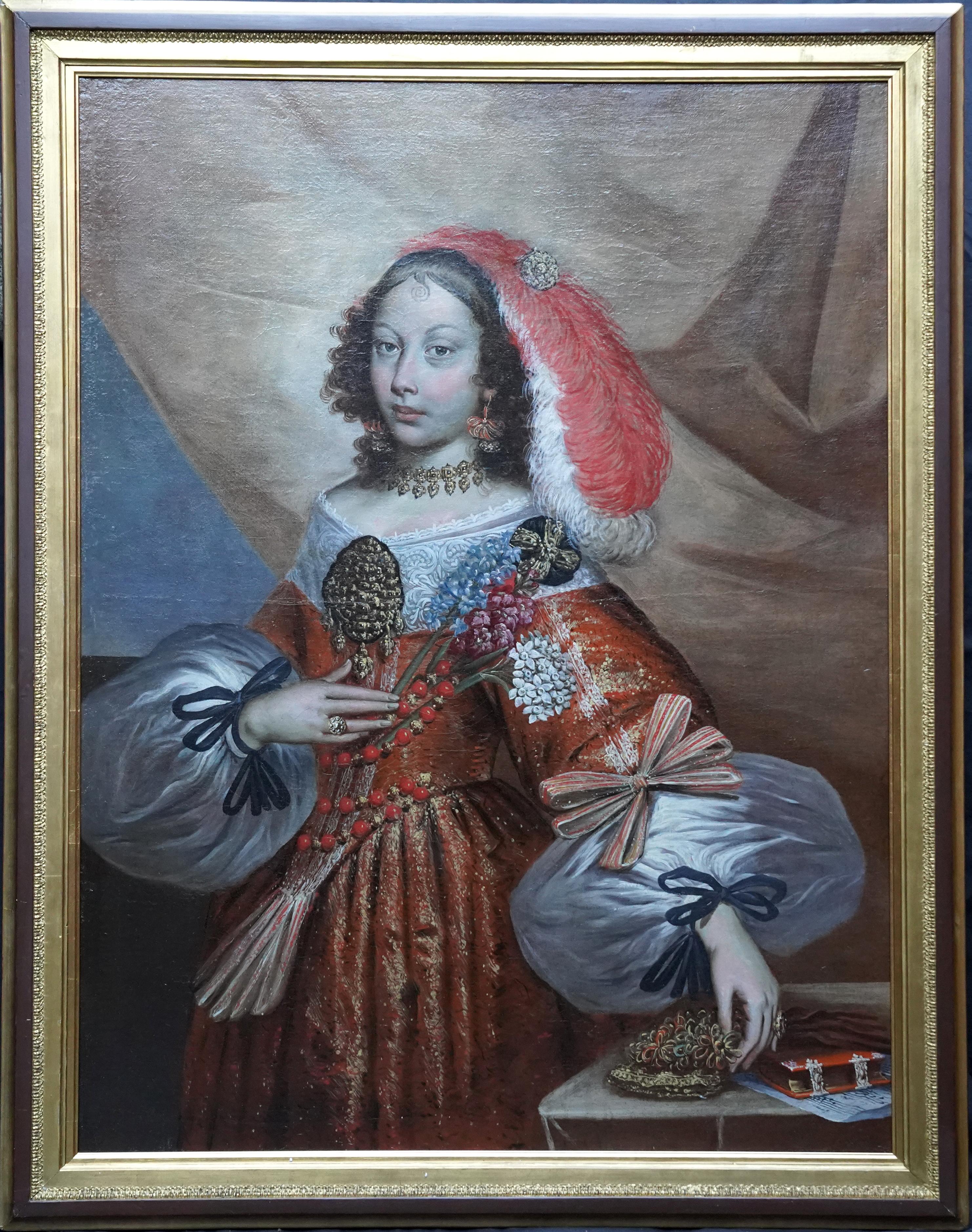
Nicolaes Maes
17th century portrait of a lady

circa 1667

$21,926.79
£16,000
€18,814.30
CA$30,410.26
A$32,739.42
CHF 17,532.60
MX$394,498.32
NOK 221,212.76
SEK 202,445.40
DKK 140,588

About the Item

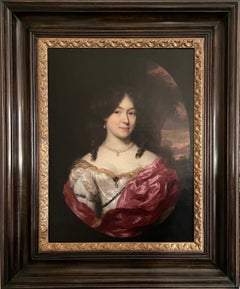
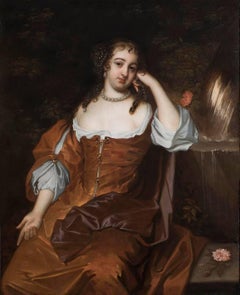
Portrait of a lady richly dressed in a purple silk gown with white sleeves, a gold coloured cloak draped across one shoulder, her blonde curls worn up with ringlets falling down either side, wearing pearl drop earrings and a pearl necklace. Set into a feigned oval.  Oil on canvas in a period giltwood frame, 53 x 44.5cm (in frame) Provenance: Private collection, Belgium Although the identity of the sitter is unknown, she is likely to have been from one of the wealthy merchant families in Amsterdam (known as 'burghers') who were keen to show their new found wealth and status through commissioning fashionable portraits of their family members. This portrait dates from the late 1660's when Maes was at the height of his career, when having a portrait painted by him was seen as most prestigious. Nicolaes Maes was one of Rembrandt's most talented pupils. As a boy of about thirteen or fourteen, he left his parents' home in Dordrecht to serve his apprenticeship with the master in Amsterdam. He spent four or five years in Rembrandt's workshop, returning to Dordrecht in 1653 as a fully-fledged artist. Maes started out as a ‘history’ painter, following in Rembrandt's footsteps, but he soon switched the focus of his activities to genre painting of intimate and detailed domestic scenes. In a short period between 1654 and 1658 he was one of the most innovative painters in this field.  His skill at representing an interior as a suite of rooms rather than a three-wall, one-room enclosure, and the true-to life details and intimate nature of his paintings had great impact on the Delft painters Johannes Vermeer and Pieter de Hooch. In the 1660s, however, Maes began to turn more to portraiture, and after a visit to Antwerp around the middle of the decade his style changed dramatically. He abandoned the reddish tone of his earlier manner for a wider, lighter and cooler colour palette, and the fashionable portraits he now specialised in were closer to those of Van Dyck than to Rembrandt. Arnold Houbraken's 1721 biography described the transformation: Maes "learned the art of painting from Rembrandt but lost that way of painting early, particularly when he took up portraiture and discovered that young ladies preferred white to brown." Maes painted his first portraits in 1655, and shortly before 1660 he stopped painting genre works and other paintings altogether, concentrating solely on portraiture, eventually developing a colourful and elegant style that appealed to a broad circle of wealthy clients in Dordrecht, Amsterdam and beyond.  .
  • Creator:
    Nicolaes Maes (1634 - 1693, Dutch)
  • Creation Year:
    circa 1667
  • Dimensions:
    Height: 53 in (134.62 cm)Width: 44.5 in (113.03 cm)
  • Medium:
  • Movement Style:
  • Period:
  • Condition:
  • Gallery Location:
    Bath, GB
  • Reference Number:
    1stDibs: LU95211819302

More From This Seller

View All
17th century portrait of a lady
By Nicolaes Maes
Located in Bath, Somerset
Portrait of a lady by Dutch Golden Age painter Nicolaes Maes (1634-1693). Half-length, within a feigned oval, the lady wears a pearl necklace and earrings, an ivory silk gown adorned...
Category

17th Century Old Masters Portrait Paintings

Materials

Canvas, Oil

English 17th century portrait of a lady
By Sir Peter Lely
Located in Bath, Somerset
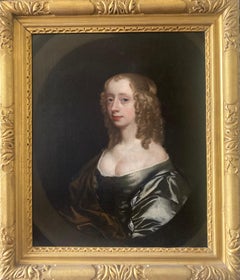
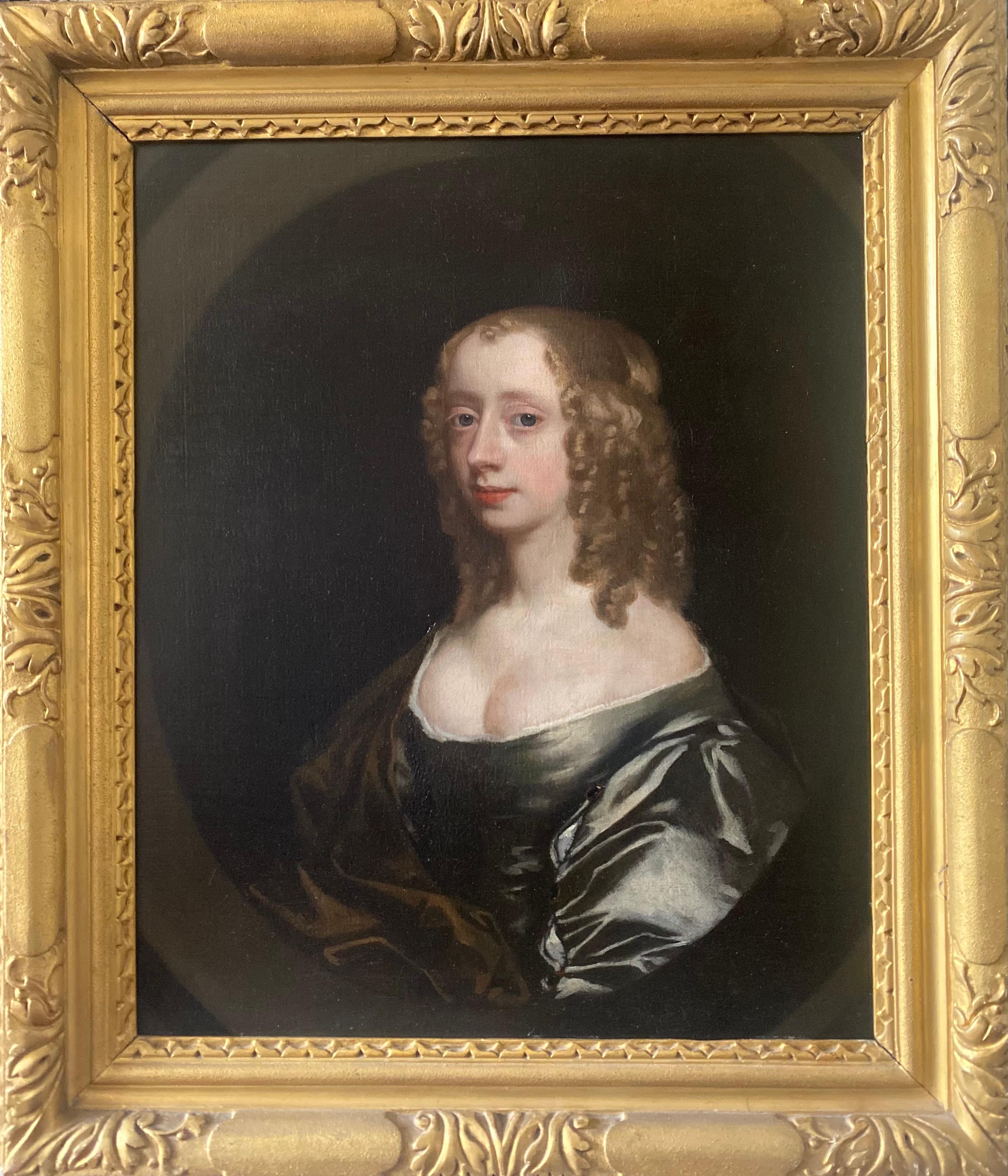
A 17th century English portrait of a lady by Sir Peter Lely (1618-1680), half-length in a painted feigned oval, wearing a green silk gown with chestnut coloured cloak over one shoulder, her fair hair curled in the fashionable ringlet style of the period. Oil on canvas in an English giltwood 'Lely' frame. We are grateful to Diana Dethloff and Catharine MacLeod (who are currently working on a Lely catalogue raisonné) for their confirmation of Lely as the artist from photograph analysis of this previously unidentified early work. Provenance: Private collection Nottingham until 2021 Mellors and Kirk sale December 2000, lot 1173 The sitter is likely to have been from an upper class or aristocratic family in court circles, who were the main source of Lely`s patronage. The simple composition serves to highlight the beauty of the sitter through portraying her pale decolletage and complexion, set against the gentle gaze of her blue eyes, the soft blush of her cheeks and her full red lips. Peter Lely (1618-1680) was originally of dutch origin and became Principle Painter to the King in 1661, following in the footsteps of Van Dyck who had died in 1641. He dominated the portrait painting scene in England for over 20 years, creating a distinctive 'court look' in his work which had a strong influence on many other artists. He had an extremely successful and popular portrait practice which meant that he soon had to develop production methods that could accommodate the high demand for portraits, and also for copies and versions of them which were given as gifts to family and courtiers. The use of studio assistants was a common practice for busy artists and as with Van Dyck, Lely is known to have used specialist assistants to execute particular parts of his paintings. Artists who worked in Lely`s studio included John Baptist Gaspars who specialised in drapery painting, William Wissing, John Greenhill...
Category

17th Century Baroque Portrait Paintings

Materials

Canvas, Oil

17th century Dutch portrait of a Lady in Red adorned with Pearls
By Pieter Nason
Located in Bath, Somerset
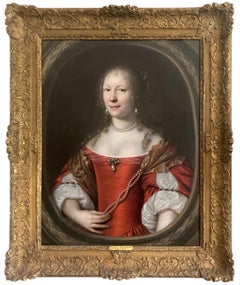
Portrait of a lady, half-length in a feigned oval wearing a ruby coloured silk gown holding entwined strings of pearls across her bodice. Signed 'PNason' and dated 1667 (lower right)...
Category

17th Century Old Masters Portrait Paintings

Materials

Oil, Canvas

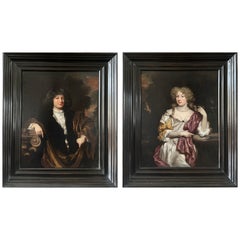
A pair of Dutch 17th century old master portraits of a husband and wife
By Nicolaes Maes
Located in Bath, Somerset
A rare pair of three-quarter length 'marriage' portraits by one of the foremost dutch portrait painters of the 17th century, Nicolaes Maes (Dordrecht 1634-1693 Amsterdam). The gentleman signed middle left 'Maes 1679'. Oil on canvas in dutch style ebonised frames. Dimensions 58 x 47.5cms each. The gentleman is shown in a landscape at dusk, leaning against a stone capital, wearing a white chemise decorated with lace, a black coat and a brown silk cloak draped across his body. The lady is elegantly dressed in an ivory silk gown decorated with jewels on the neckline and shoulders, the contrasting sleeves in gold fabric, with a rose pink silk cloak draped over her shoulder and bodice. She wears a pearl necklace and earrings with her fair hair worn up with ringlets falling down onto her chest in the fashionable style of the day. She stands with one hand touching a lock of her hair as she rests her arm on the bowl of a stone water drinking fountain...
Category

17th Century Old Masters Portrait Paintings

Materials

Canvas, Oil

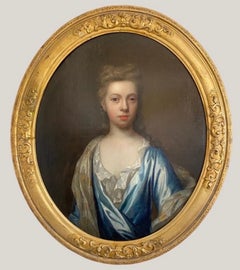
English 18th century portrait of a lady, Circle of Thomas Murray (1663-1735)
Located in Bath, Somerset
An early 18th century portrait of a young lady, half length, wearing a blue silk gown with white chemise and gold trimmed cloak draped across her arm and shoulders. Her sensitively observed soft expression and skilfully painted youthful 'dewy' complexion are reminiscent of the portrait style of John Closterman whose work Murray would have been familiar with, being a close colleague of Murray's teacher, John Riley. An old label on the reverse identifies the sitter as a young Princess Charlotte...
Category

Early 18th Century Old Masters Portrait Paintings

Materials

Canvas, Oil

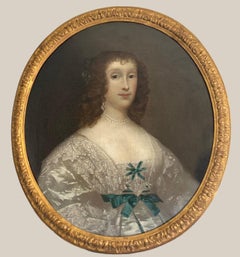
17th century portrait of lady in an ivory silk gown and lace collar
By Cornelius Johnson
Located in Bath, Somerset
Circle of Cornelius Johnson (1593-1661), a 17th century portrait of a lady, bust-length oval, wearing an ivory silk gown with blue silk bows and lace c...
Category

Early 17th Century Old Masters Portrait Paintings

Materials

Canvas, Oil

You May Also Like

Portrait of a Lady, 17th Century Flemish Oil Old Masters
By Jacob Huysmans
Located in London, GB
Jacob Huysmans Flemish 1633 - 1696 Portrait of a Lady Oil on canvas Image size: 49 x 40 ¼ inches Gilt frame Huysmans was born in Antwerp and came to England during the reign of Charles II where he became one of the fashionable painters of the court.. The diarist Samual Pepys noted the artist as capable of a more exact likeness than Lely. Certainly the diarist records that by August 1664 in the circle of Queen Catherine...
Category

17th Century Old Masters Portrait Paintings

Materials

Canvas, Oil, Acrylic

Portrait of Hortense Mancini, Duchess of Mazarin (1746-1699), 17th Century
By Jacob Ferdinand Voet 1
Located in Blackwater, GB
Portrait of Hortense Mancini, Duchess of Mazarin (1746-1699), 17th Century by Jacob Ferdinand Voet (1639-1689) Large 17th Century Italian portrait o...
Category

17th Century Portrait Paintings

Materials

Canvas, Oil

Portrait of a Spanish Noble Lady - 17th Century Old Master art oil painting
Located in Hagley, England
This stunning, large portrait oil painting is attributed to Spanish Old Master Claudio Coello who is considered the last great Spanish painter of the 17th century. It has formerly been the property of Lady Beatrice...
Category

1680s Old Masters Portrait Paintings

Materials

Oil Crayon

Portrait Mignard Paint Oil on canvsa Old master 17th Century French Lady Woman
Located in Riva del Garda, IT
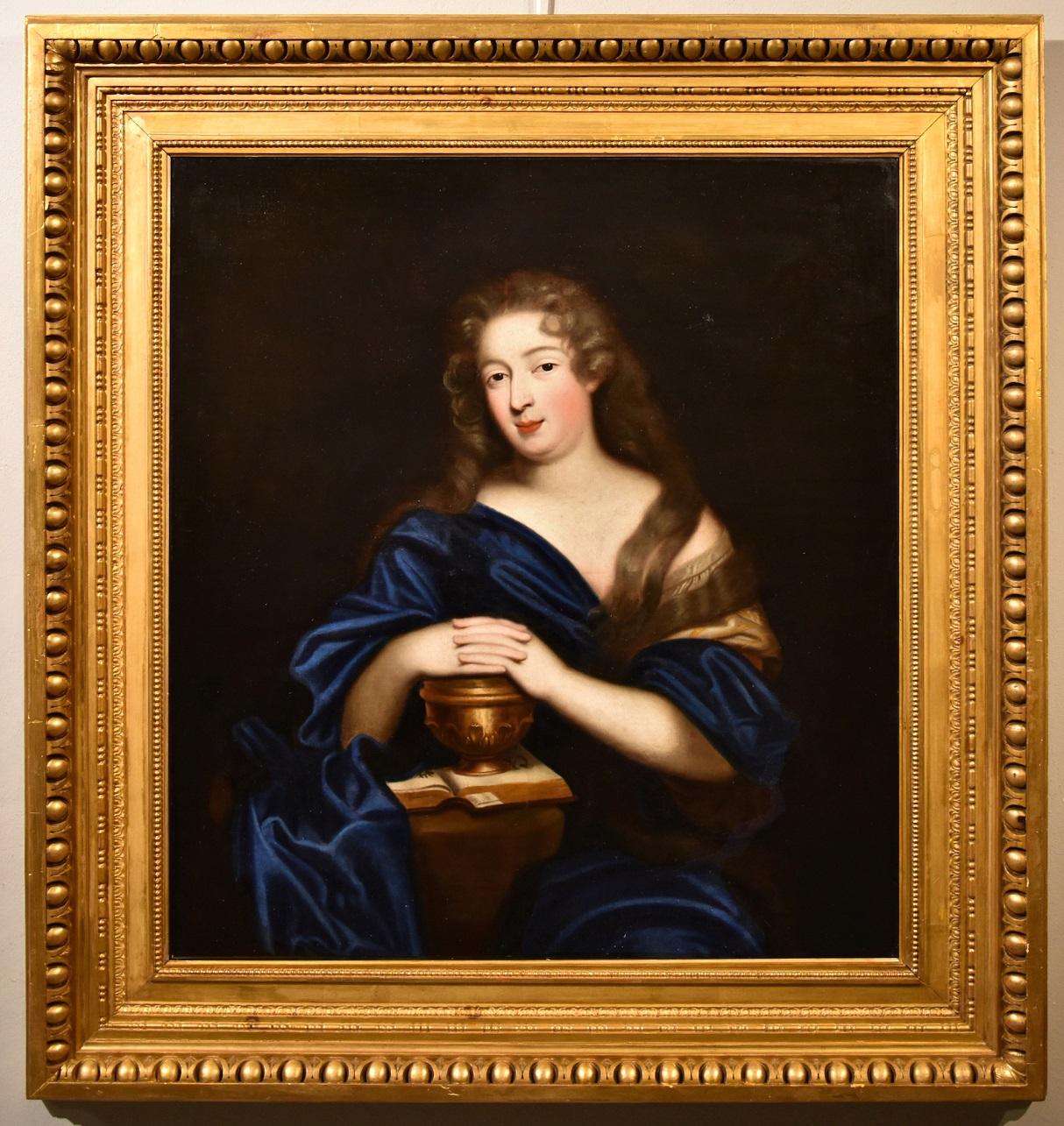
Pierre Mignard, known as Le Romain (Troyes 1612 - Paris 1695), attributed Portrait of 'Louise Renée de Penancoët de Keroualle, Duchess of Portsmouth and Aubigny (Brest 1649 - Paris 1734) as MADDALENA Oil on canvas 97 x 88 cm In an important gilded frame 132 x 122 cm. Provenance: Private collection, Naples The young and attractive noblewoman portrayed in this painting is Louis Renée de Penancoet de Keroualle, Duchess of Portsmouth and Aubigny (Brest 1649 - Paris 1734), known to have been King Charles II's favourite mistress for over fifteen years, from whose relationship Charles Lennox, 1st Duke of Richmond, was born, but above all to have gone down in history as one of Louis XIV's French informants at the English court. The duchess was a very influential figure at court, promoting French interests and often acting as an intermediary between the king, his ministers and French ambassadors. After the death of Charles II this influence quickly came to an end, forcing her to hastily leave London and renounce all her possessions to return to her homeland, between Aubigny-sur-Nère and Paris, where she died in 1734, always remaining in the sovereign's good graces. The peculiarity of the portrait, probably executed after her return to her homeland, is that the noblewoman takes the form of a charming Mary Magdalene, depicted here following her renunciation of earthly possessions, her rich robes and jewellery, in order to aspire to heavenly riches; We see her immortalised with her long hair loose on one breast, her intriguing but serene gaze directed at the observer, as she rests her crossed hands, as if in prayer, on the ampulla of perfumed ointments and the open book, both iconographic symbols. The custom of being portrayed in the guise of Magdalene was in vogue for powerful women of the great European courts as early as the 16th century, as it represented the most appropriate image to justify the union of female power and virtue. It must be said that court culture exalted only the positive characteristics of her personality, glossing over or downplaying all references to her sinful past and dissolute life. The work, whose style fits perfectly into 17th century French portraiture, suggests the pertinent attribution to the Baroque painter Pierre Mignard (Troyes, 1612 - Paris, 1695), whose works were highly praised and earned him a great reputation as a portrait painter for the demanding Parisian aristocracy at the time of Louis XIV, and who portrayed the Duchess de Kérouaille on numerous occasions. His first important artistic training took place in Simon Vouet's studio, and he then moved to Italy for over twenty years before returning to Paris, blending his own with the influence of Roman classicism. The elegant looseness of touch and sensual refinement typical of Mignard, combined with a very accurate chiaroscuro rendering, inherited from his artistic training in Rome (which he looked up to the examples of Ferdinad Voet), and the exceptional sweetness of the drawing, the floridity of the complexion and the almost enamelled surfaces, and finally, the peculiar pose of the figure portrayed (the beauty of the two intertwined hands...
Category

17th Century Old Masters Paintings

Materials

Oil

17th Century portrait oil painting of a lady
Located in Nr Broadway, Worcestershire
Circle of Sir Peter Lely Dutch, (1618-1680) Portrait of a Lady, traditionally identified as Princess Henrietta Anne Stuart Oil on canvas Image...
Category

17th Century Portrait Paintings

Materials

Canvas, Oil

Portrait of the French Princess, late 17th c. French school
Located in PARIS, FR
Portrait of the Princess of Conti - Attributed to Louis Ferdinand Elle the Younger (1648-1717) Late 17th century French school Oil on canvas, h. 100 cm, l. 80 cm Important Louis XIV ...
Category

Late 17th Century Old Masters Portrait Paintings

Materials

Canvas, Oil