Want more images or videos?
Request additional images or videos from the seller
1 of 12

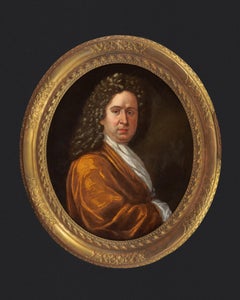
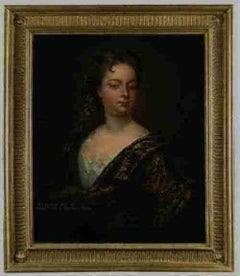
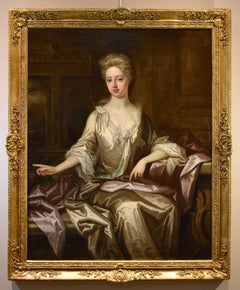
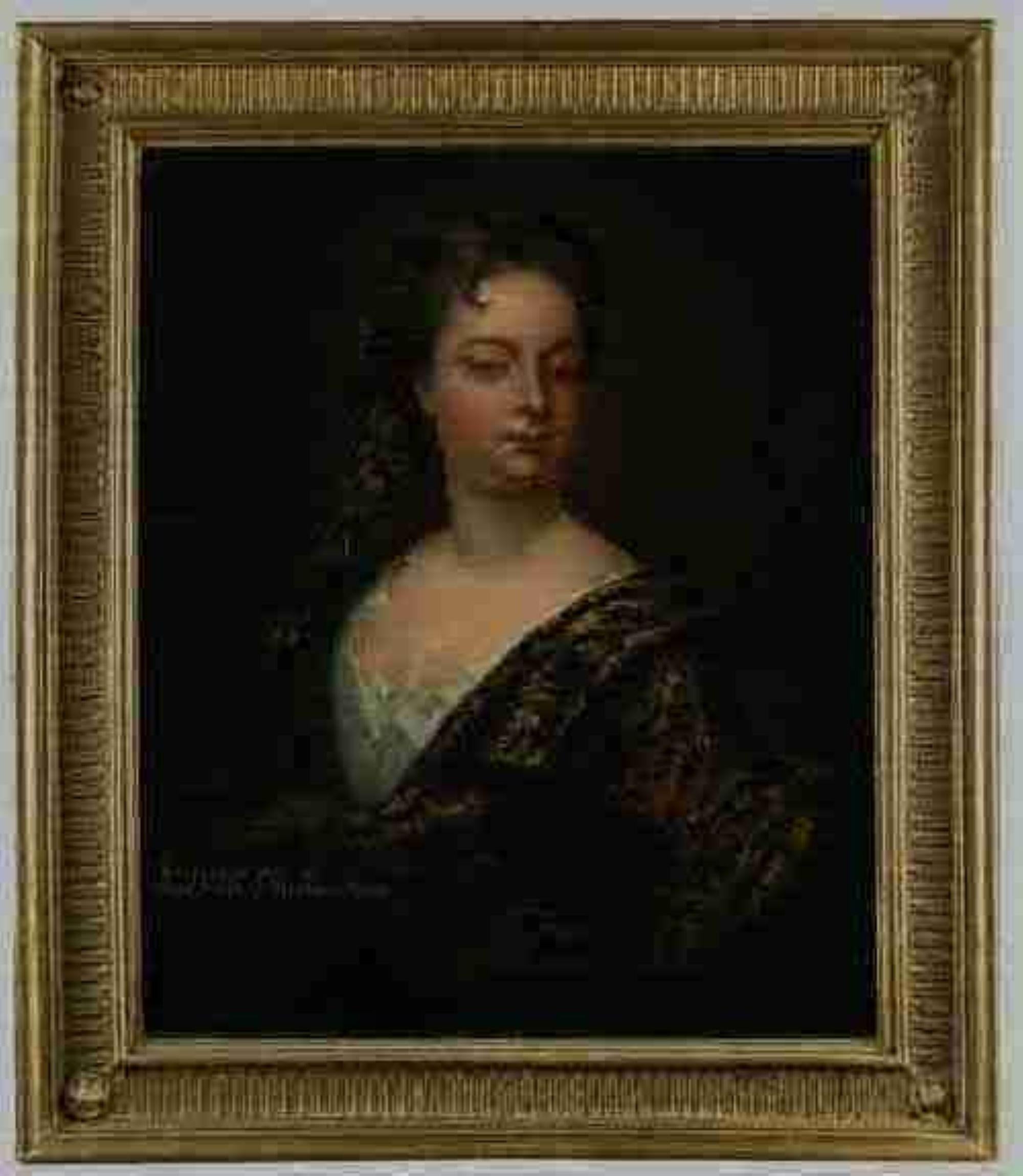
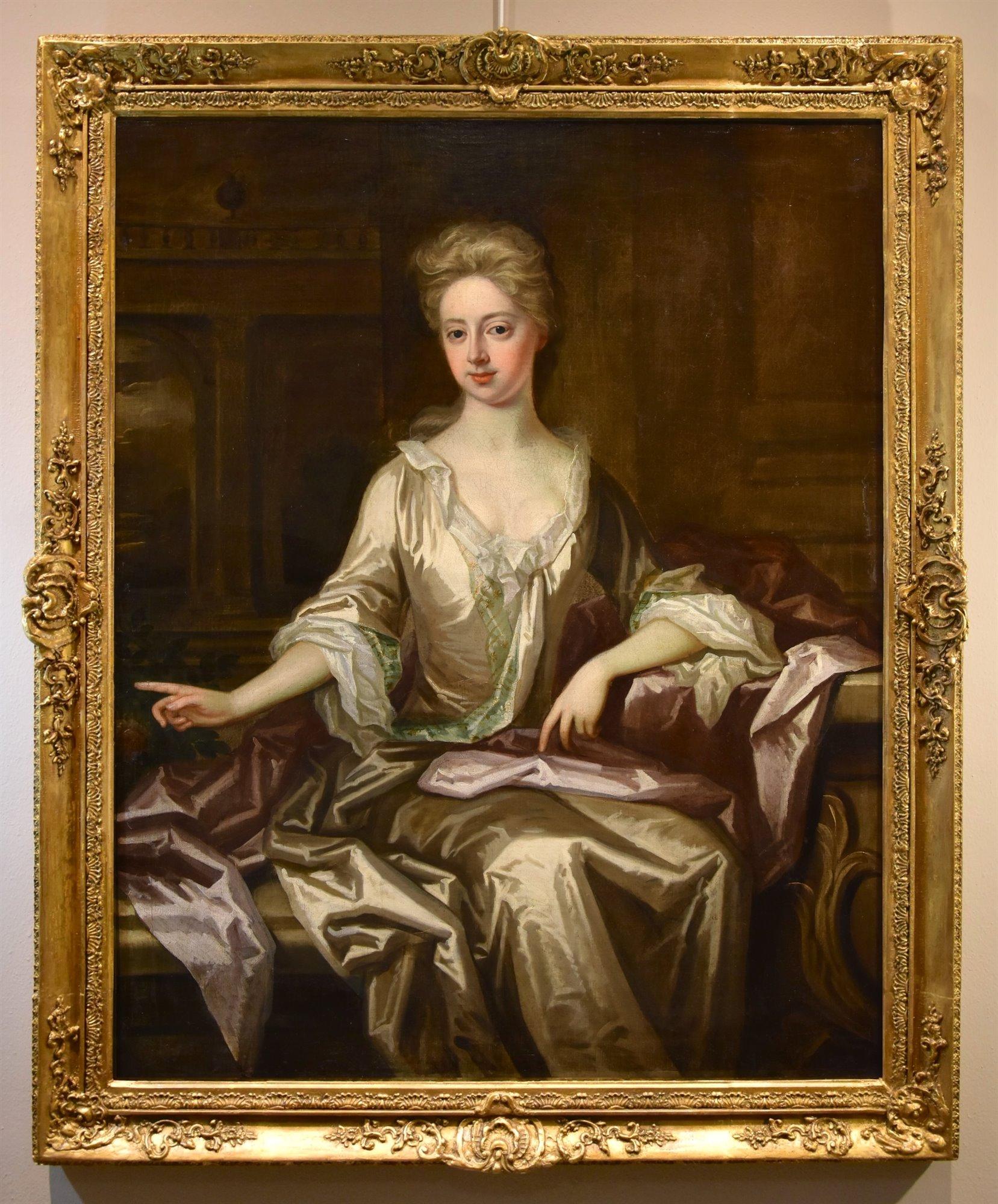
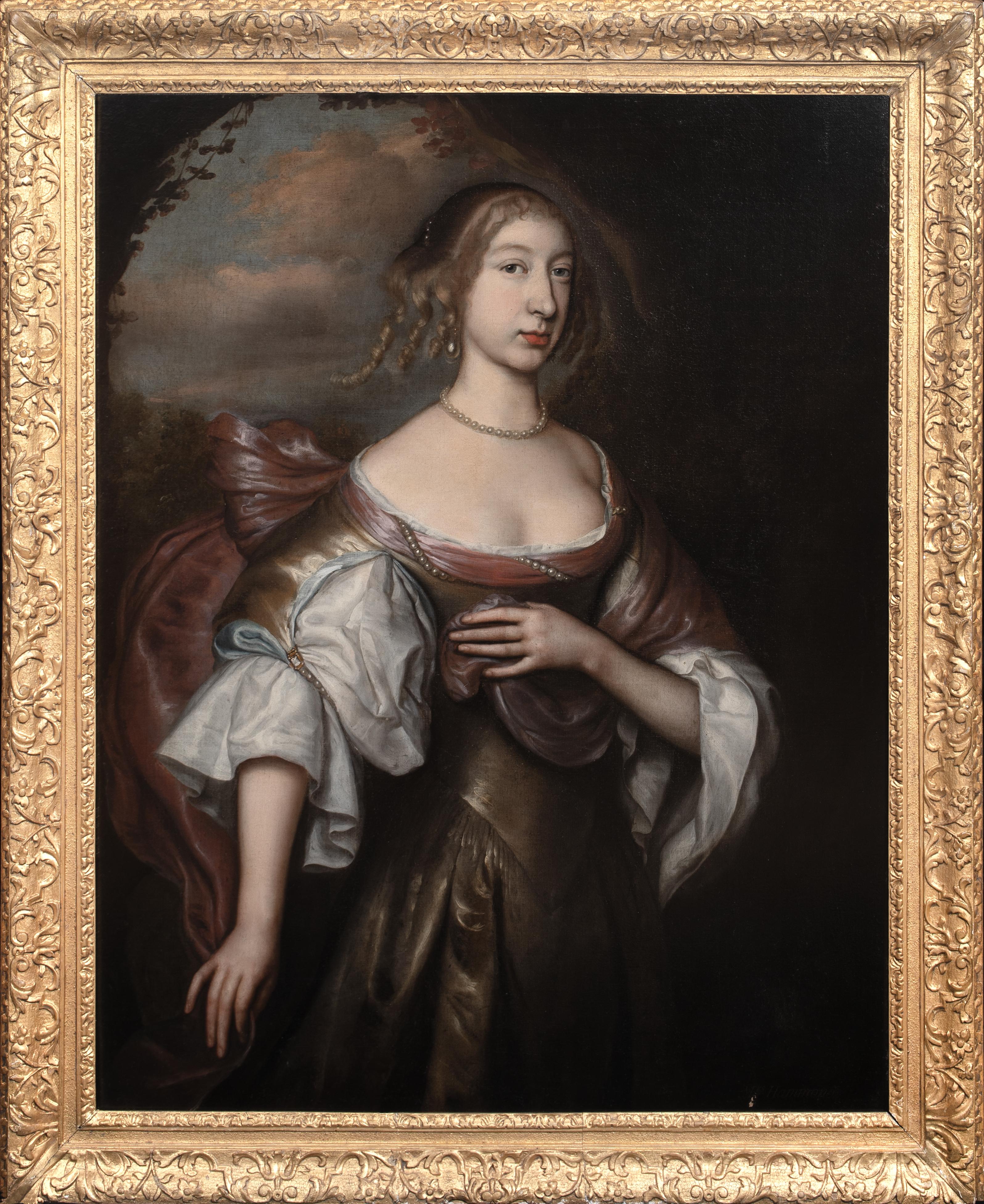
Sir Godfrey Kneller
3rd Countess of Dysart, Grace Wilbraham

circa 1696-1698

$17,348.67
£12,750
€14,897.32
CA$23,988.88
A$26,109.10
CHF 13,951.77
MX$315,298.28
NOK 175,339.58
SEK 163,086.21
DKK 111,290.01

About the Item

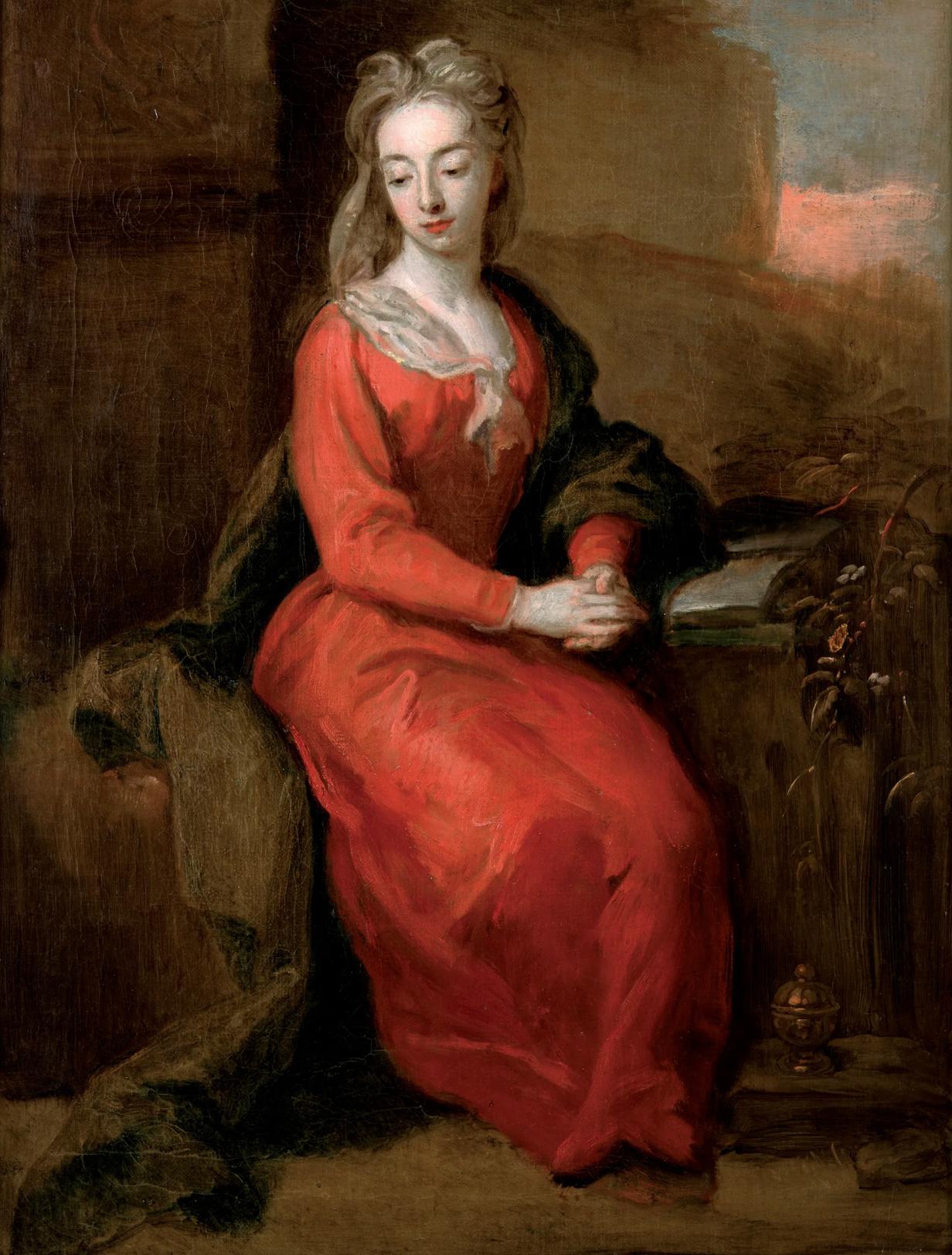
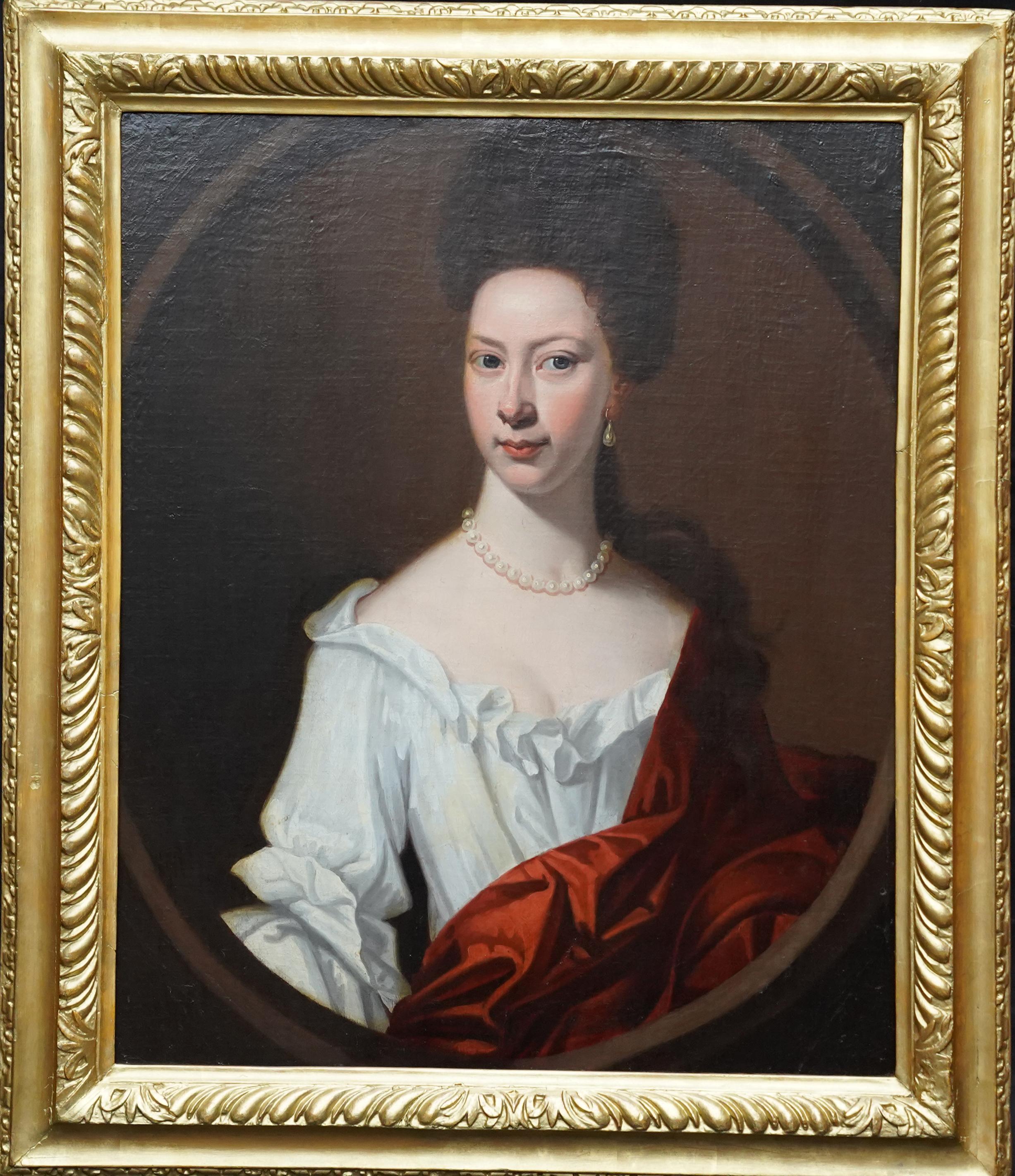
Sir Godfrey Kneller 1646-1723, was a German born British portrait painter. He was born in Leiden and studied under Bol and Rembrandt, before travelling to Rome, Venice, Hamburg and later England, where he was appointed 'Painter in Ordinary' to King Charles II. Kneller produced portraits on an almost industrial scale building a large workshop of pupil artists, he would sketch and paint the main features head and hands, as here, and leave the balance to his pupils, hair clothing and background. Whilst in England he produced something in the region of 900 portraits in a time frame of around 50 years or less. The sitter in this portrait is Grace Wilbraham who was promoted to Lady Dysart upon he marriage when her husband was entitled to the role of 3rd Earl of Dysart, he was Lionel Tollemache and well known to be particularly frugal with his expenses having incurred debt from his father's estate. Consequently Kneller's portraits were graded in cost relating the amount of exposure the sitter agreed to, the lower price of the sitting would relate to the minimal work engaged and therefore a full length portrait would generate the highest income and a head and shoulders without hands would have been the least expensive. Lionel Tollemache was true to his financial beliefs as shown here. This portrait originated from Helmingham Hall and was discovered within close proximity of the Hall in Suffolk. The painting has been conserved in the most professional, thorough and detailed manner, and I have enclosed the restoration pictures of the before and after for your information.
  • Creator:
    Sir Godfrey Kneller (1646 - 1723, British)
  • Creation Year:
    circa 1696-1698
  • Dimensions:
    Height: 29.25 in (74.3 cm)Width: 23.5 in (59.69 cm)Depth: 3 in (7.62 cm)
  • Medium:
  • Period:
  • Condition:
  • Gallery Location:
    Douglas, GB
  • Reference Number:
    Seller: No. 1791stDibs: LU2373215612922
More From This Seller

View All
William Lord Russell
By Sir Godfrey Kneller
Located in Douglas, Isle of Man
Sir Godfrey Kneller 1646-1723, was a German born English portrait painter. He was a pupil of Bol and Rembrandt, he was born in Leiden, travelled to Rome , Venice, Hamburg and later t...
Category

Late 17th Century Baroque Portrait Paintings

Materials

Canvas, Oil

Portrait of a lady.
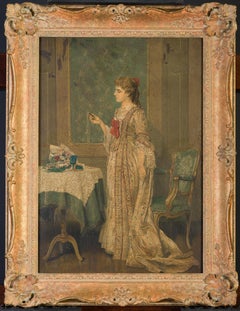
By Auguste Serrure
Located in Douglas, Isle of Man
Auguste Serrure 1825 - 1903, was a Flemish born painter. The description of his birthplace is generally described as Belgium, however the Flemish nationality became Belgian in 1830 a...
Category

Late 19th Century Portrait Paintings

Materials

Oil, Panel

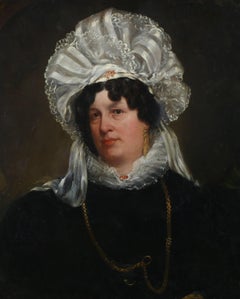
Elizabeth Gordon Duchess of Gordon
By William Fisk
Located in Douglas, Isle of Man
William Fisk 1796 -1872, was an English born portrait and history painter. Although born in 1796 he didn't start his artistic career until after 1826, after the birth of his son Will...
Category

1830s Portrait Paintings

Materials

Canvas, Oil

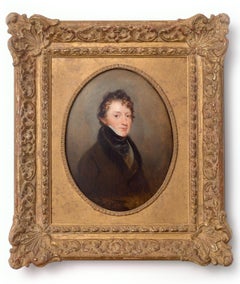
Portrait of John Manners later 7th Duke of Rutland
By Margaret Sarah Carpenter
Located in Douglas, Isle of Man
Margaret Sarah Carpenter 1793-1872, was an English portrait painter. She was one of the foremost portrait painters in the 19th Century, she ex...
Category

1830s Portrait Paintings

Materials

Oil, Panel

Marie de Medici
By Mathurin Moreau
Located in Douglas, Isle of Man
Mathurin Moreau 1822-1912, was a French sculptor in the classic academic style. His father was also a sculptor and his siblings. Mathurin first received a medal at the Salon in 1848,...
Category

Late 19th Century Figurative Sculptures

Materials

Bronze

Portrait of a Venetian Nobleman
Located in Douglas, Isle of Man
Attributed to, Alessandro Longhi 1733-1813, was a prominent Venetian portrait painter, printmaker, and biographer. The son of the famous genre painter Pietro Longhi, he is known for his detailed oil portraits of the Venetian aristocracy and his valuable book on contemporary Venetian painters. Longhi early life and training Born: Alessandro Longhi was born on June 12, 1733, in Venice. He received his initial training from his father, Pietro Longhi. He later studied under Giuseppe Nogari, a respected portraitist in Venice during the 18th century, and was elected to the Venetian Academy in 1759. Longhi specialized in portraiture, primarily depicting the nobles and officials of the Republic of Venice. His paintings are a valuable record of the social and political structure of 18th-century Venice. Rococo aesthetic: Working in the Rococo style, he was adept at capturing the elegance and social status of his subjects. He paid meticulous attention to the elaborate robes, wigs, and emblems of office that signified his subjects' power. While his official state portraits could be stiff and formal, his portraits of less noble patrons demonstrated a greater sense of realism and psychological insight. Longhi was also an accomplished printmaker, particularly in etching. His etching technique showed an awareness of Rembrandt's work, and he used this skill to reproduce his and his father's paintings. In 1762, he published Compendio delle vite de' pittori veneziani istorici più rinomati del presente secolo, a biographical dictionary of contemporary Venetian painters that is still an important resource for art historians. Longhi illustrated the book with etched portraits of the artists. The portrait of Carlo Goldoni: One of his most celebrated paintings is his portrait of the Venetian playwright and librettist Carlo Goldoni. For his election to the Venetian Academy, he painted this allegory, which features a personified figure of Painting. His known portraits include Portrait of a Lady (Uffizi Gallery, Florence), Portrait of a Musician, and various portraits of Venetian nobles and officials. I have included further albeit identical biographies of Alessandro Longhi. Alessandro Longhi (born June 12, 1733, Venice—died 1813, Venice) was a painter, etcher, and biographer of Venetian artists, and was the most important Venetian portrait painter of his day. The son of the painter Pietro Longhi, he was given his first training by his father, who quite soon put him to study under the portrait painter Giuseppe Nogari. In 1759 he was elected a member of the Venetian academy, for which he painted one of his rare allegorical pictures, “Painting and Merit.” In 1762 Longhi issued his book Compendio delle Vite de’ Pittori Veneziani Istorici piu rinomati del presente secolo con sui ritratti dal naturale delineati ed indisi, one of the most important source books for the history of Venetian 18th-century painting. Both portraits and text were printed from plates he etched. Longhi’s facilely rendered portraits are largely generalized likenesses lacking any acuity of character observation. He mainly portrayed the leading Venetian luminaries and dignitaries of his day in a style that drew upon his father’s Rococo manner and 16th-century traditions of Venetian Renaissance portraiture. The personal details available for the painter Alessandro Longhi are limited, but his biography is intertwined with that of his family and the city of Venice. He was the son of a successful painter, which set his artistic path, and is known for creating sensitive and realistic portraits that captured the social atmosphere of 18th-century Venice. Alessandro was born in Venice in 1733 to the celebrated genre painter Pietro Longhi. He received his early training from his father before studying under another prominent portraitist, Giuseppe Nogari. A contrast to his father: While his father was known for painting scenes of everyday Venetian life, Alessandro focused almost exclusively on portraiture. His skill enabled him to capture the intimate psychology and character of his subjects, a quality especially evident in his portraits of less noble patrons. Election to the academy: In 1759, Alessandro was elected to the Accademia dei Pittori, the Venetian Academy of Painting. His election solidified his reputation as a master of the Rococo style. Beyond painting, Longhi was an accomplished printmaker, primarily producing etchings that reproduced his own works and those of his father. In 1762, he published the Compendio delle vite de' pittori veneziani, a collection of biographies of contemporary Venetian painters, which is an important historical resource. He became a prominent portraitist for Venice's upper class, including nobles and state officials. His official state portraits featured grand, full-length depictions of his subjects in their elaborate robes and emblems of office. Emphasis on realism: In contrast to the stylized nature of official portraits, Alessandro was praised for the "reality" he captured in works featuring common people. For example, his 1760 portrait of an innkeeper was celebrated for its realistic subject matter and "nuova maniera" (new manner). The art historian Olimpia Theodoli noted that Longhi's etching technique showed he had a firsthand knowledge of Rembrandt's work. Among his more famous works are a sensitive portrait of playwright Carlo Goldoni and the painting Portrait of a Wine Butler. He also produced religious and allegorical works, including paintings of the "Apostles" for the church of San Pantalon in Venice. This painting has been carefully conserved and the frame also, the frame looks to be original to the picture but we have no way of confirming this but we believe it to be so. 18th Century Italian portraits...
Category

Mid-18th Century Portrait Paintings

Materials

Canvas, Oil

You May Also Like

17th/18th century portrait , Circle Godfrey Kneller, wife, Earl of westmorland
By (Circle of) Godfrey Kneller
Located in York, GB
Portrait Circle of Sir Godfrey Kneller Bt. unsigned (British, 1646-1723) of Katharine, wife of Thomas, 6th Earl of Westmorland, oil on canvas late 17th early 18th century in date. The sitter Katharine is facing dexter and is wearing a cream dress, blue and gold cloak and lace mantilla...
Category

18th Century Old Masters Portrait Paintings

Materials

Oil

Portrait of Mrs Harborough - British 18th century art portrait lady oil painting
Located in Hagley, England
This lovely 18th century Old Master portrait oil painting is attributed to the circle of noted portrait artist Enoch Seeman. Seeman came from Poland to England as a youngster with hi...
Category

18th Century Old Masters Portrait Paintings

Materials

Oil

Portrait of Bridget Drury Lady Shaw, formerly Viscountess Kilmorey
By Sir Peter Lely
Located in London, GB
Sir Peter Lely (Soest 1618 – 1680 London) Portrait of lady with a crown, possibly Bridget Drury Lady Shaw, formerly Viscountess Kilmorey, later Lady Baber (d.1696) c.1665 Oil on canvas 46 1/2 x 40 3/4 inches, Framed 42 1/4 x 36 1/4 inches, Unframed Inscribed left [……….]Isabella James Mulraine wrote the following for this piece: This portrait dates to the middle of the 1660s, the decade when Lely’s career took off as successor to Sir Anthony van Dyck. At the Restoration Charles II had appointed him Principal Painter to the King and paid a pension £200 per annum ‘as formerly to Sr. Vandyke...’1 Lely had trained in Haarlem and he was in his early twenties when he came to London in 1643. He was an astute businessman and a wise courtier. In 1650 he painted a portrait of Oliver Cromwell (Birmingham Museum and Art Gallery) while maintaining links with the Royalist exiles through the 1650s. He had arrived in England as a painter of small-scale portraits and lush scenes of nymphs in landscapes in a Dutch style. His experience of Van Dyck in English collections transformed his painting. His lavish and alluring vision of Arcadia exactly captured the spirit of the Court and as Principal Painter he dominated English portraiture for the next twenty years. Lely ran a highly efficient studio along Netherlandish lines, employing a team of specialists like the drapery painter John Baptist Gaspars and young artists-in-training like Nicolas de Largilliere. He had numerous rivals during that period, and by 1670 he had introduced numbered standard poses to speed up production, while collaborating with printmakers for further revenue and advertising. He died in 1680 of a stroke while painting, working to the last. The portrait, painted at a date when Lely’s poses and execution were still individual and inventive shows a lady sitting at three-quarter length facing away from the viewer. She has begun to turn towards the viewer, a pose with a long pedigree in art, first used by Leonardo da Vinci in the Mona Lisa (Louvre). She steadies her blue drapery where it might slip from her arm with the movement, a flash of realism beautifully captured. Like Van Dyck, Lely painted his female sitters in a timeless costume rather than contemporary fashion, showing a loose gown and floating silk draperies. It presented the sitter as a classical ideal. The portrait would not date. The saffron dress may be the work of a drapery painter but the brown scarf must be by Lely himself, and appears unfinished, broadly sketched in behind the shoulder. The delicate blue glaze and nervous highlights suggest shimmering translucence. Lely was a master of painting hands – his hand studies are marvels of drawing – and the lady’s hands are superb, exactly drawn, delicately modelled and expressive. The fidgety gestures, clutching the gown, fiddling with the edge of the scarf, give the portrait psychological bite, suggesting the personality behind the calm courtier’s expression, adding to the sense shown in the look of the eyes and mouth that the lady is about to speak. The portrait’s language is Vandykian. The inspiration comes directly from Van Dyck’s English portraits of women. Lely owned Van Dyck’s Portrait of Lady Elizabeth Thimbleby and Dorothy Viscountess Andover (National Gallery, London) and the sitter’s costume quotes Lady Andover’s saffron dress and brown scarf. But Lely paints a generation who sat nearer to the ground and through a dialogue of expression and gesture he shows sitters who are more flesh and blood than Van Dyck’s. The background with a column and curtain is different to those shown in most of Lely’s portraits of women. They tend to include trees or fountains, with a glimpse of landscape. But there are other examples. A portrait of the King’s reigning mistress, Barbara Villiers Duchess of Cleveland...
Category

1660s Portrait Paintings

Materials

Oil

Portrait Of Lady Isobel Mackenzie, Countess of Seaforth (1636-1715) 17th Century
Located in Blackwater, GB
Portrait Of Lady Isobel Mackenzie, Countess of Seaforth (1636-1715), 17th Century Studio of John Michael Wright (1617-1694) Large 17th century portrait of Isobel Mackenzie, Countes...
Category

17th Century Portrait Paintings

Materials

Canvas, Oil

Portrait of Lady, Barbara Herbert, Countess of Pembroke c.1708, Large Painting
Located in London, GB
Portrait of Barbara Herbert, Countess of Pembroke c.1708 Charles d’Agar (1669-1723) This magnificent large-scale portrait, presented by Titan Fine Art, depicts the British court of...
Category

17th Century Old Masters Portrait Paintings

Materials

Cotton Canvas, Oil

The Duchess of St. Albans: A 17th C. Portrait After a Kneller Painting
By (After) Sir Godfrey Kneller
Located in Alamo, CA
This is a 17th century engraved mezzotint portrait of the Duchess of St. Albans by John Smith, after a painting by Sir Godfrey Kneller. It was published in London by John Boydell in 1694. The Duchess of St. Albans (1642-1712) was a woman named Diana de Vere. She was born in 1642, the daughter of Aubrey de Vere, the 20th Earl of Oxford. In 1662, she married Charles Beauclerk, the illegitimate son of King Charles II and his mistress, Nell Gwyn. As a result of her marriage, Diana became the Duchess of St. Albans, and she and Charles had several children together. Diana was known for her beauty and charm, and she was a prominent figure in the court of King Charles II. Despite her husband's illegitimate birth, Diana was highly respected in the royal court and was known for her intelligence and wit. She was a patron of the arts and supported many artists and writers of the time. Diana lived through a tumultuous period of English history, including the Great Fire of London and the Glorious Revolution, which saw King James II replaced by William of Orange. She died in 1712 at the age of 70 and was buried in Westminster Abbey. Descendants of Diana and her husband, who was an illegitimate son of King Charles II, include Diana, Princess of Wales and her son William, Duke of Cambridge. An author wrote of her: "The line of Vere, so long renown’d in arms, Concludes with luster in St. Albans’s charms; Her conquering eyes have made their race complete, It rose in valor, and in beauty set." This striking mezzotint engraving depicts Diana, Duchess of St Albans in a three-quarter length pose, standing, wearing loose flowing dress and a wrap. She has a very serene, calm appearance as she is looking straight at the viewer. There is a landscape of trees in the background. The print is adhered in the corners to an archival backing, which is itself adhered in the upper corners to a larger backing. The print is trimmed to just beyond the plate mark. There are areas of discoloration in the margins and in the inscription area, but the print is otherwise in very good condition. The sheet measures 14.5" high and 10" wide. This mezzotint is held by multiple museums and institutions, including The British Museum, The National Portrait Gallery London, The Fine Arts Museum of Boston, The Lewis Walpole Library at Yale, The Yale Center for British Art, The Fitzwilliam Museum at Cambridge and The National Galleries of Scotland. The original Kneller painting is part of the British Royal Collection Trust and hangs in the King's Private Dining Room at Hampton Court Palace. Sir Godfrey Kneller (1646-1723) was a leading portrait painter of his time, particularly renowned for his depictions of the British aristocracy and royalty. He was born in Lübeck, Germany, and trained in Amsterdam under the painter Ferdinand Bol...
Category

Late 17th Century Portrait Prints

Materials

Mezzotint