Want more images or videos?
Request additional images or videos from the seller
1 of 2

Sir Godfrey Kneller
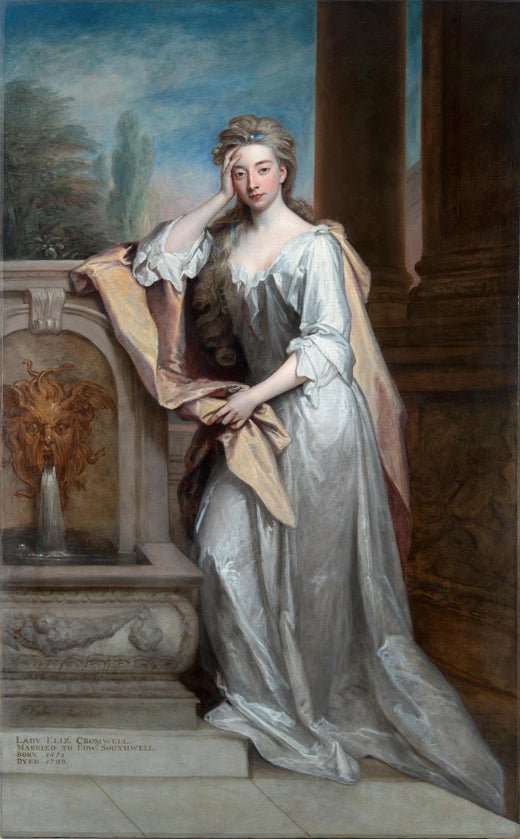
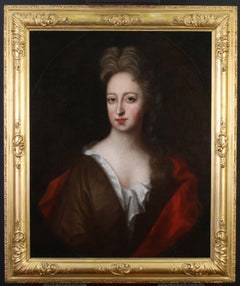
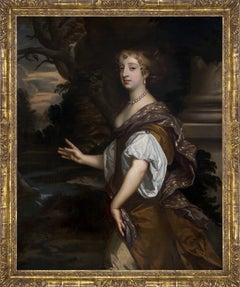
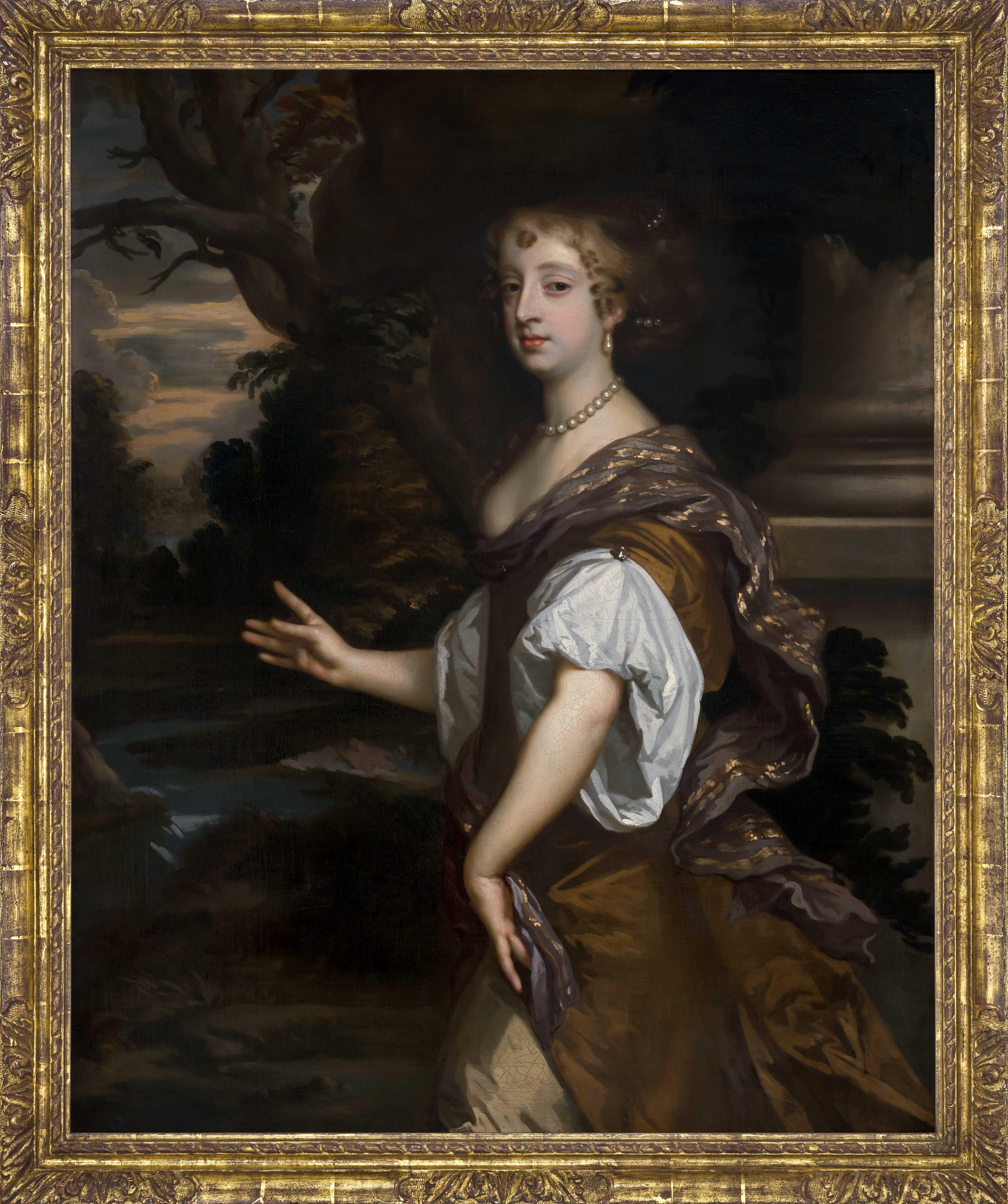
Lady Elizabeth Cromwell, full length wearing a white dress with golden robes

1702

$68,850.72
£50,000
€58,430.58
CA$94,185.37
A$102,657.25
CHF 54,273.99
MX$1,235,798.46
NOK 688,872.10
SEK 631,554.91
DKK 436,479.14

About the Item

Portrait of Lady Elizabeth Cromwell, full length standing wearing a white dress with golden robes, leaning on a plinth Signed, inscribed and dated 1702 Oil on canvas in a carved wood frame 94 x 55 inches THE SOUTHWELL COLLECTION Everett Fine Art is excited to present this remarkable collection of paintings assembled over generations by the Southwell family, once resident at Kings Weston House, a fine 18th-century estate on the outskirts of Bristol. The collection was first established during the 18th and early 19th centuries, and many of the works were personally chosen for the enjoyment they brought. When Kings Weston was sold in 1833, much of the collection passed to the Russell branch of the family. The Russells continued to enrich the collection through the 19th century, commissioning works that reflected the interests and pastimes they valued-most notably, portraits of family members, horses and beloved pets. Thanks to the generosity of the Inge family, who acted as custodians during the 20th century, the collection remained largely intact. In more recent years, the paintings returned to family ownership, where they have been carefully restored and preserved by Lord de Clifford (27th Baron de Clifford). Now, a number of these works are offered for sale.
  • Creator:
    Sir Godfrey Kneller (1646 - 1723, British)
  • Creation Year:
    1702
  • Dimensions:
    Height: 94 in (238.76 cm)Width: 55 in (139.7 cm)
  • Medium:
  • Period:
  • Condition:
  • Gallery Location:
    Taunton, GB
  • Reference Number:
    1stDibs: LU2028217353862

More From This Seller

View All
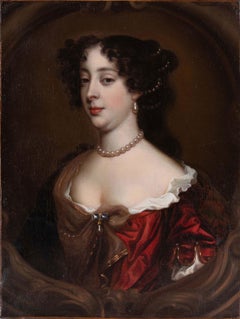
Portrait of Barbara Palmer 1st Duchess of Cleveland
By Sir Peter Lely
Located in Taunton, GB
Portrait of Barbara Palmer 1st Duchess of Cleveland 1640-1709, half-length wearing a red dress and portrayed within a cartouche. Circa 1680 Oil On...
Category

17th Century Portrait Paintings

Materials

Oil

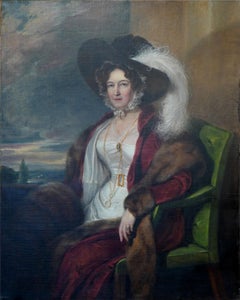
Portrait of Lady Mary Burke, later Wife of Edward Southwell
Located in Taunton, GB
Portrait of Lady Mary Burke, later Wife of Edward Southwell, 2lst Baron, three-quarter length seated, wearing Red Coat and Fur Robes, a Landscape beyond Signed Oil on canvas 55 x ...
Category

18th Century Portrait Paintings

Materials

Oil

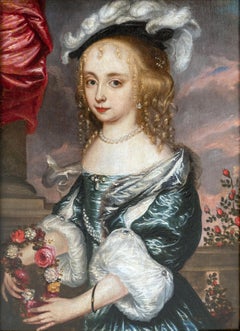
Portrait of a Girl holding a Posy
Located in Taunton, GB
Portrait of a Girl holding a Posy. Oil on Panel 17 1/2 x 13 inches 44.4 x 33 cm ABOUT THE ARTIST:  Jacques d'Agar  was a French portrait painter born i...
Category

17th Century Romantic Portrait Paintings

Materials

Oil

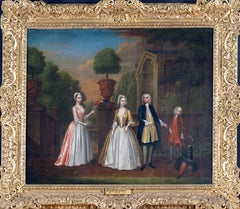
A group portrait of the Southwell family with a Negro Page and Macaw
By Charles Philips
Located in Taunton, GB
A group portrait of the Southwell family on the terrace with a negro page and Macaw. Oil on canvas Signed and dated 1731 Canvas size 25 x 30 ¼ inches 63.5 x 77 cms Frame exter...
Category

18th Century Portrait Paintings

Materials

Oil

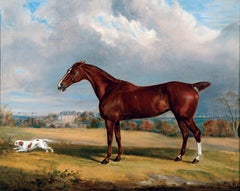
Maryann, A Chestnut hunter and a Spaniel in front of Kirby Mallory Hall
By William Webb
Located in Taunton, GB
Maryann, A Chestnut hunter and a Spaniel in front of Kirby Mallory Hall, Leicestershire Signed and Dated 1829 Oil on canvas 23 ½ x 29 ½ inches THE ARTIST William Edward Webb (18...
Category

Late 19th Century Landscape Paintings

Materials

Oil

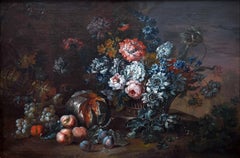
Still life of Summer Flowers in a Basket with Fruit.
By Pieter Casteels III
Located in Taunton, GB
Still life of Summer Flowers in a Basket with Fruit. Circa 1730 Oil On Canvas 32 ¾ x 48 ¼ inches83.1 x 122.5 cm Presented in a 17th century Italian carved gilt frame. Acquired from The collection of the Late Edgar Wigan, Bradstone Brook, Shalford. ABOUT THE ARTIST:  The son of the Flemish painter Pieter Casteels II (referred to as Casteels the Younger) whom he studied under.  While Casteels II was best known for his capriccio harbour scenes and landscapes of his native Antwerp, Casteels III worked primarily in England, where he immigrated in 1708 at the age of 24 and began his career copying Old Master.  Casteels III painted still lives of flowers, and bird and game scenes, and in 1726 produced a volume of twelve plates of bird etchings. Following the success of the publication, he created similar volumes for both flowers and fruit. Pieter Casteels III...
Category

17th Century Flemish School Still-life Paintings

Materials

Oil

You May Also Like

3rd Countess of Dysart, Grace Wilbraham
By Sir Godfrey Kneller
Located in Douglas, Isle of Man
Sir Godfrey Kneller 1646-1723, was a German born British portrait painter. He was born in Leiden and studied under Bol and Rembrandt, before travelling to Rome, Venice, Hamburg and ...
Category

Late 18th Century Portrait Paintings

Materials

Canvas, Oil

Portrait of Lady, Elizabeth Wriothesley, Countess of Northumberland, Peter Lely
By Sir Peter Lely
Located in London, GB
Portrait of Elizabeth Wriothesley, Countess of Northumberland (1646-1690) (later Duchess of Montagu) c.1665-1669 Studio of Peter Lely (1618-1680) This exemplary three-quarter-length...
Category

17th Century Old Masters Portrait Paintings

Materials

Canvas, Oil

The Duchess of St. Albans: A 17th C. Portrait After a Kneller Painting
By (After) Sir Godfrey Kneller
Located in Alamo, CA
This is a 17th century engraved mezzotint portrait of the Duchess of St. Albans by John Smith, after a painting by Sir Godfrey Kneller. It was published in London by John Boydell in 1694. The Duchess of St. Albans (1642-1712) was a woman named Diana de Vere. She was born in 1642, the daughter of Aubrey de Vere, the 20th Earl of Oxford. In 1662, she married Charles Beauclerk, the illegitimate son of King Charles II and his mistress, Nell Gwyn. As a result of her marriage, Diana became the Duchess of St. Albans, and she and Charles had several children together. Diana was known for her beauty and charm, and she was a prominent figure in the court of King Charles II. Despite her husband's illegitimate birth, Diana was highly respected in the royal court and was known for her intelligence and wit. She was a patron of the arts and supported many artists and writers of the time. Diana lived through a tumultuous period of English history, including the Great Fire of London and the Glorious Revolution, which saw King James II replaced by William of Orange. She died in 1712 at the age of 70 and was buried in Westminster Abbey. Descendants of Diana and her husband, who was an illegitimate son of King Charles II, include Diana, Princess of Wales and her son William, Duke of Cambridge. An author wrote of her: "The line of Vere, so long renown’d in arms, Concludes with luster in St. Albans’s charms; Her conquering eyes have made their race complete, It rose in valor, and in beauty set." This striking mezzotint engraving depicts Diana, Duchess of St Albans in a three-quarter length pose, standing, wearing loose flowing dress and a wrap. She has a very serene, calm appearance as she is looking straight at the viewer. There is a landscape of trees in the background. The print is adhered in the corners to an archival backing, which is itself adhered in the upper corners to a larger backing. The print is trimmed to just beyond the plate mark. There are areas of discoloration in the margins and in the inscription area, but the print is otherwise in very good condition. The sheet measures 14.5" high and 10" wide. This mezzotint is held by multiple museums and institutions, including The British Museum, The National Portrait Gallery London, The Fine Arts Museum of Boston, The Lewis Walpole Library at Yale, The Yale Center for British Art, The Fitzwilliam Museum at Cambridge and The National Galleries of Scotland. The original Kneller painting is part of the British Royal Collection Trust and hangs in the King's Private Dining Room at Hampton Court Palace. Sir Godfrey Kneller (1646-1723) was a leading portrait painter of his time, particularly renowned for his depictions of the British aristocracy and royalty. He was born in Lübeck, Germany, and trained in Amsterdam under the painter Ferdinand Bol...
Category

Late 17th Century Portrait Prints

Materials

Mezzotint

17th/18th century portrait , Circle Godfrey Kneller, wife, Earl of westmorland
By (Circle of) Godfrey Kneller
Located in York, GB
Portrait Circle of Sir Godfrey Kneller Bt. unsigned (British, 1646-1723) of Katharine, wife of Thomas, 6th Earl of Westmorland, oil on canvas late 17th early 18th century in date. The sitter Katharine is facing dexter and is wearing a cream dress, blue and gold cloak and lace mantilla...
Category

18th Century Old Masters Portrait Paintings

Materials

Oil

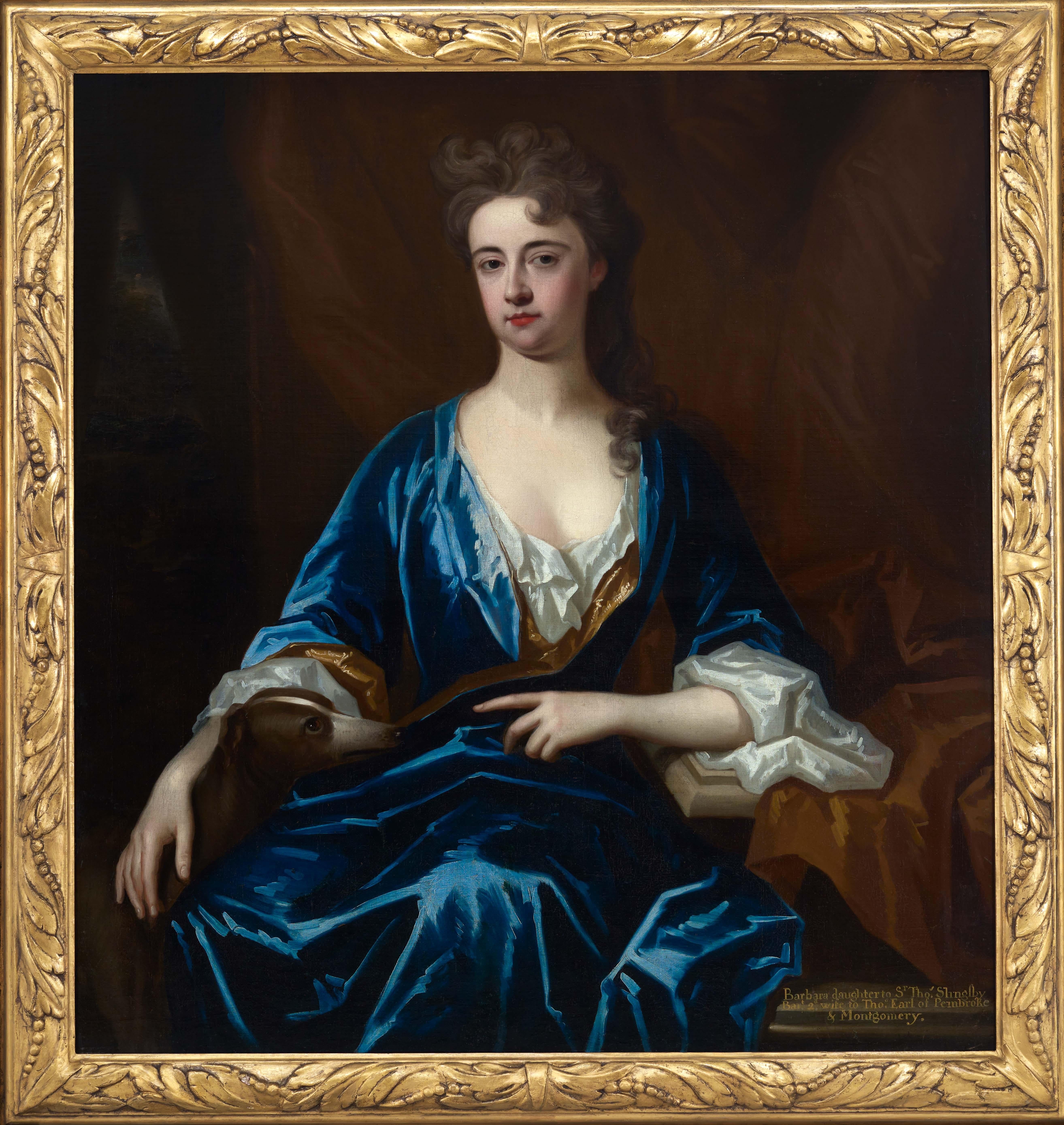
Portrait of Lady, Barbara Herbert, Countess of Pembroke c.1708, Large Painting
Located in London, GB
Portrait of Barbara Herbert, Countess of Pembroke c.1708 Charles d’Agar (1669-1723) This magnificent large-scale portrait, presented by Titan Fine Art, depicts the British court of...
Category

17th Century Old Masters Portrait Paintings

Materials

Cotton Canvas, Oil

Portrait of Bridget Drury Lady Shaw, formerly Viscountess Kilmorey
By Sir Peter Lely
Located in London, GB
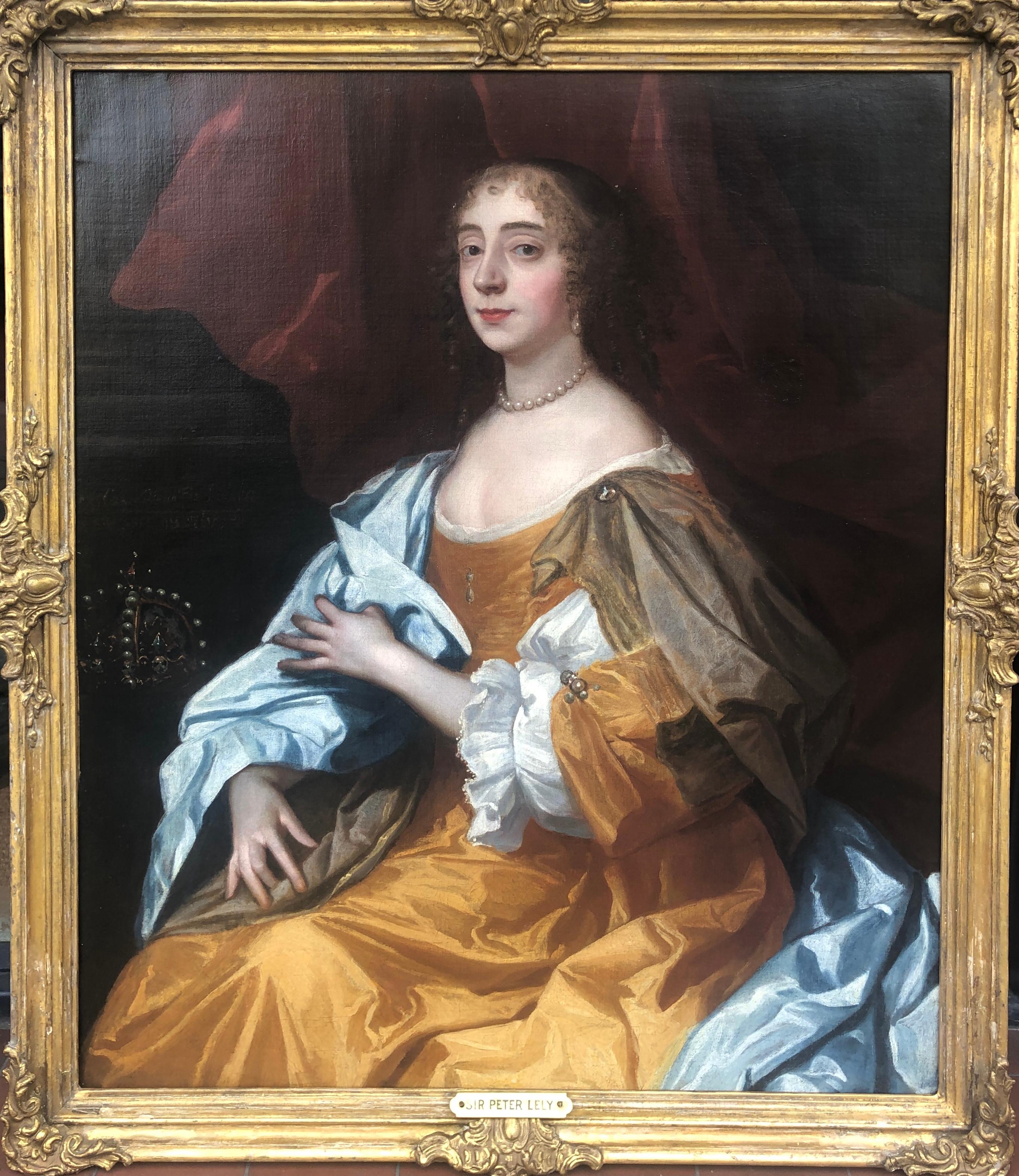
Sir Peter Lely (Soest 1618 – 1680 London) Portrait of lady with a crown, possibly Bridget Drury Lady Shaw, formerly Viscountess Kilmorey, later Lady Baber (d.1696) c.1665 Oil on canvas 46 1/2 x 40 3/4 inches, Framed 42 1/4 x 36 1/4 inches, Unframed Inscribed left [……….]Isabella James Mulraine wrote the following for this piece: This portrait dates to the middle of the 1660s, the decade when Lely’s career took off as successor to Sir Anthony van Dyck. At the Restoration Charles II had appointed him Principal Painter to the King and paid a pension £200 per annum ‘as formerly to Sr. Vandyke...’1 Lely had trained in Haarlem and he was in his early twenties when he came to London in 1643. He was an astute businessman and a wise courtier. In 1650 he painted a portrait of Oliver Cromwell (Birmingham Museum and Art Gallery) while maintaining links with the Royalist exiles through the 1650s. He had arrived in England as a painter of small-scale portraits and lush scenes of nymphs in landscapes in a Dutch style. His experience of Van Dyck in English collections transformed his painting. His lavish and alluring vision of Arcadia exactly captured the spirit of the Court and as Principal Painter he dominated English portraiture for the next twenty years. Lely ran a highly efficient studio along Netherlandish lines, employing a team of specialists like the drapery painter John Baptist Gaspars and young artists-in-training like Nicolas de Largilliere. He had numerous rivals during that period, and by 1670 he had introduced numbered standard poses to speed up production, while collaborating with printmakers for further revenue and advertising. He died in 1680 of a stroke while painting, working to the last. The portrait, painted at a date when Lely’s poses and execution were still individual and inventive shows a lady sitting at three-quarter length facing away from the viewer. She has begun to turn towards the viewer, a pose with a long pedigree in art, first used by Leonardo da Vinci in the Mona Lisa (Louvre). She steadies her blue drapery where it might slip from her arm with the movement, a flash of realism beautifully captured. Like Van Dyck, Lely painted his female sitters in a timeless costume rather than contemporary fashion, showing a loose gown and floating silk draperies. It presented the sitter as a classical ideal. The portrait would not date. The saffron dress may be the work of a drapery painter but the brown scarf must be by Lely himself, and appears unfinished, broadly sketched in behind the shoulder. The delicate blue glaze and nervous highlights suggest shimmering translucence. Lely was a master of painting hands – his hand studies are marvels of drawing – and the lady’s hands are superb, exactly drawn, delicately modelled and expressive. The fidgety gestures, clutching the gown, fiddling with the edge of the scarf, give the portrait psychological bite, suggesting the personality behind the calm courtier’s expression, adding to the sense shown in the look of the eyes and mouth that the lady is about to speak. The portrait’s language is Vandykian. The inspiration comes directly from Van Dyck’s English portraits of women. Lely owned Van Dyck’s Portrait of Lady Elizabeth Thimbleby and Dorothy Viscountess Andover (National Gallery, London) and the sitter’s costume quotes Lady Andover’s saffron dress and brown scarf. But Lely paints a generation who sat nearer to the ground and through a dialogue of expression and gesture he shows sitters who are more flesh and blood than Van Dyck’s. The background with a column and curtain is different to those shown in most of Lely’s portraits of women. They tend to include trees or fountains, with a glimpse of landscape. But there are other examples. A portrait of the King’s reigning mistress, Barbara Villiers Duchess of Cleveland...
Category

1660s Portrait Paintings

Materials

Oil