Items Similar to Portrait of Lord William Russell, three-quarter length
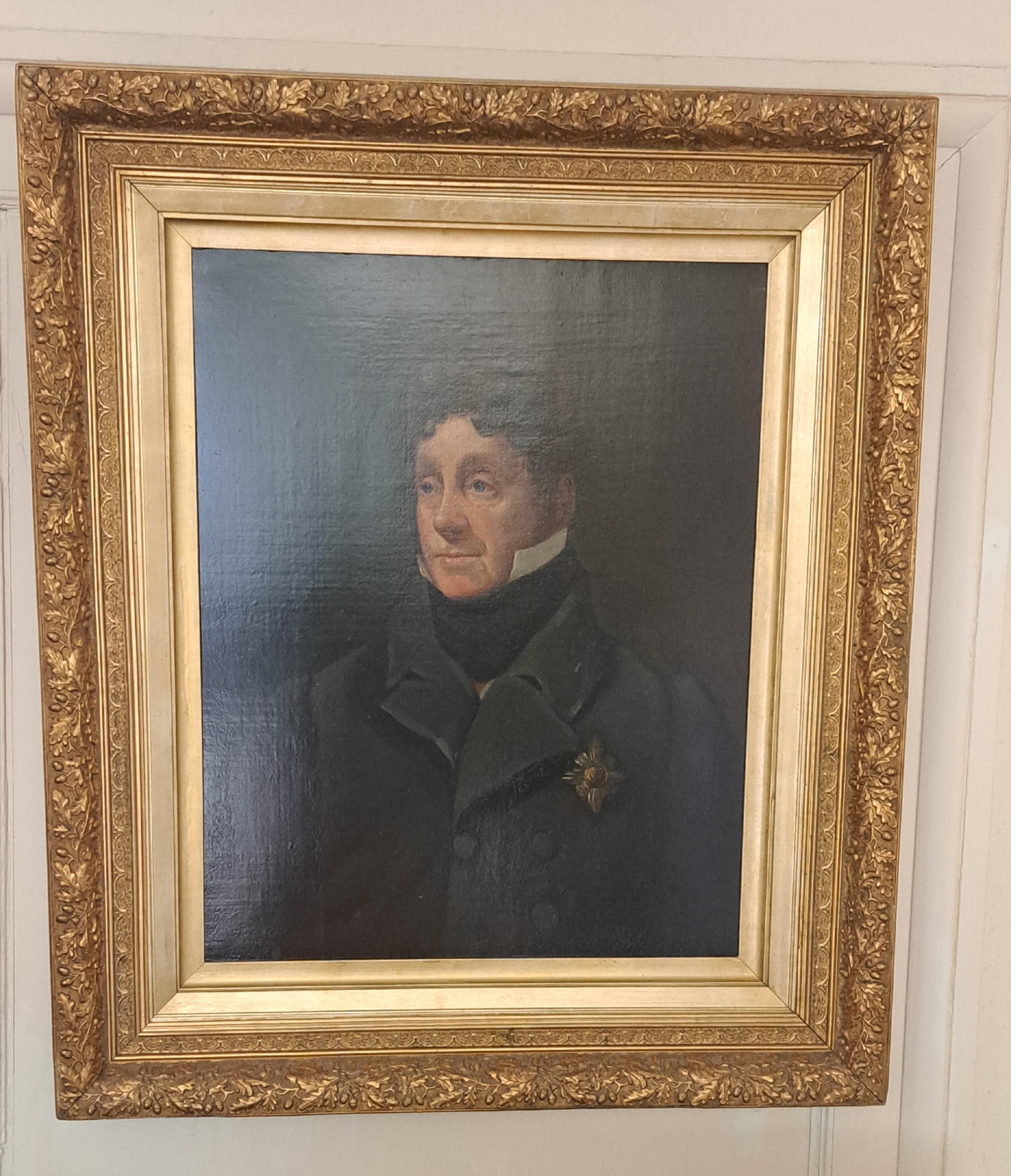
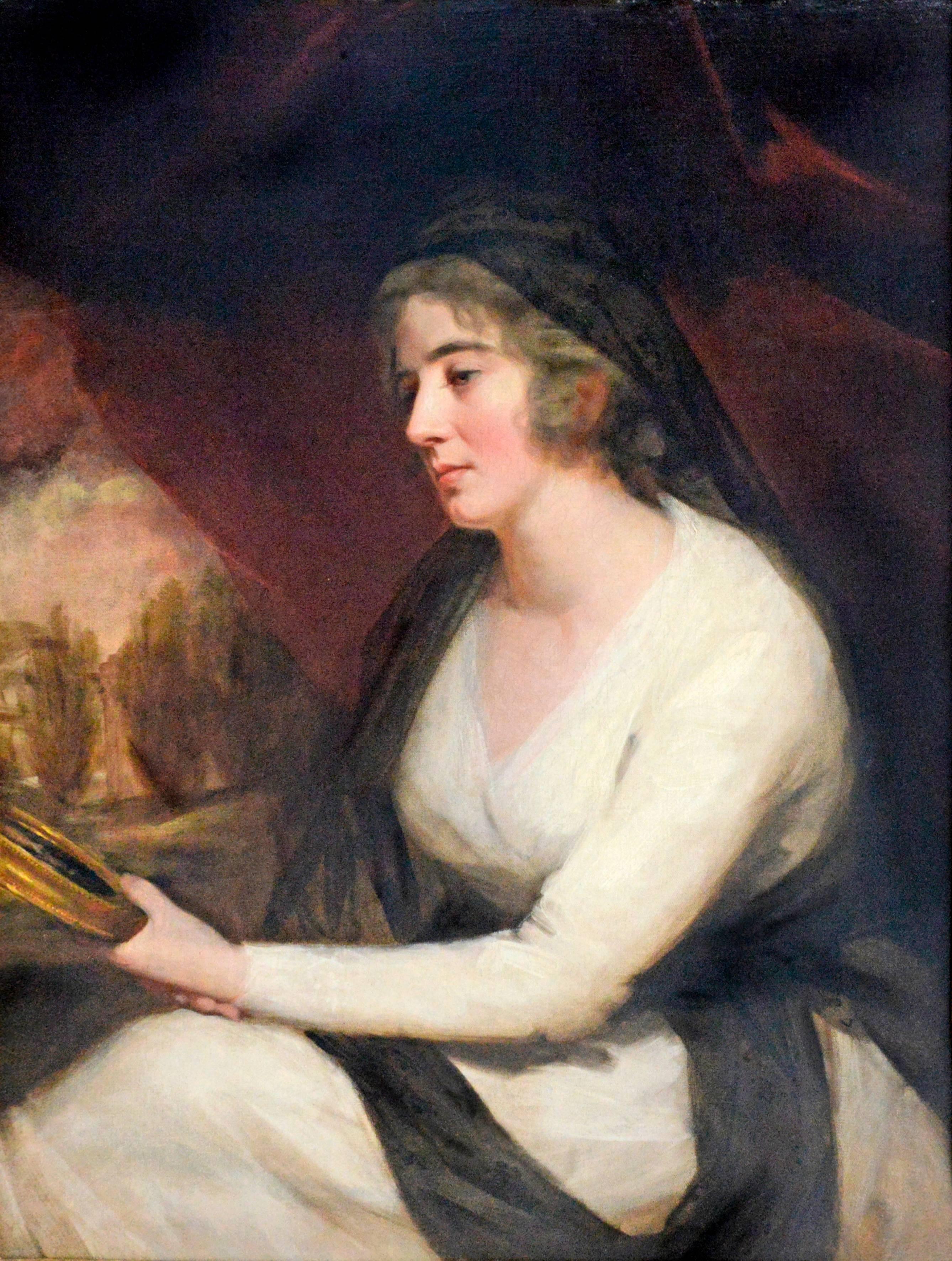
Want more images or videos?
Request additional images or videos from the seller
1 of 4
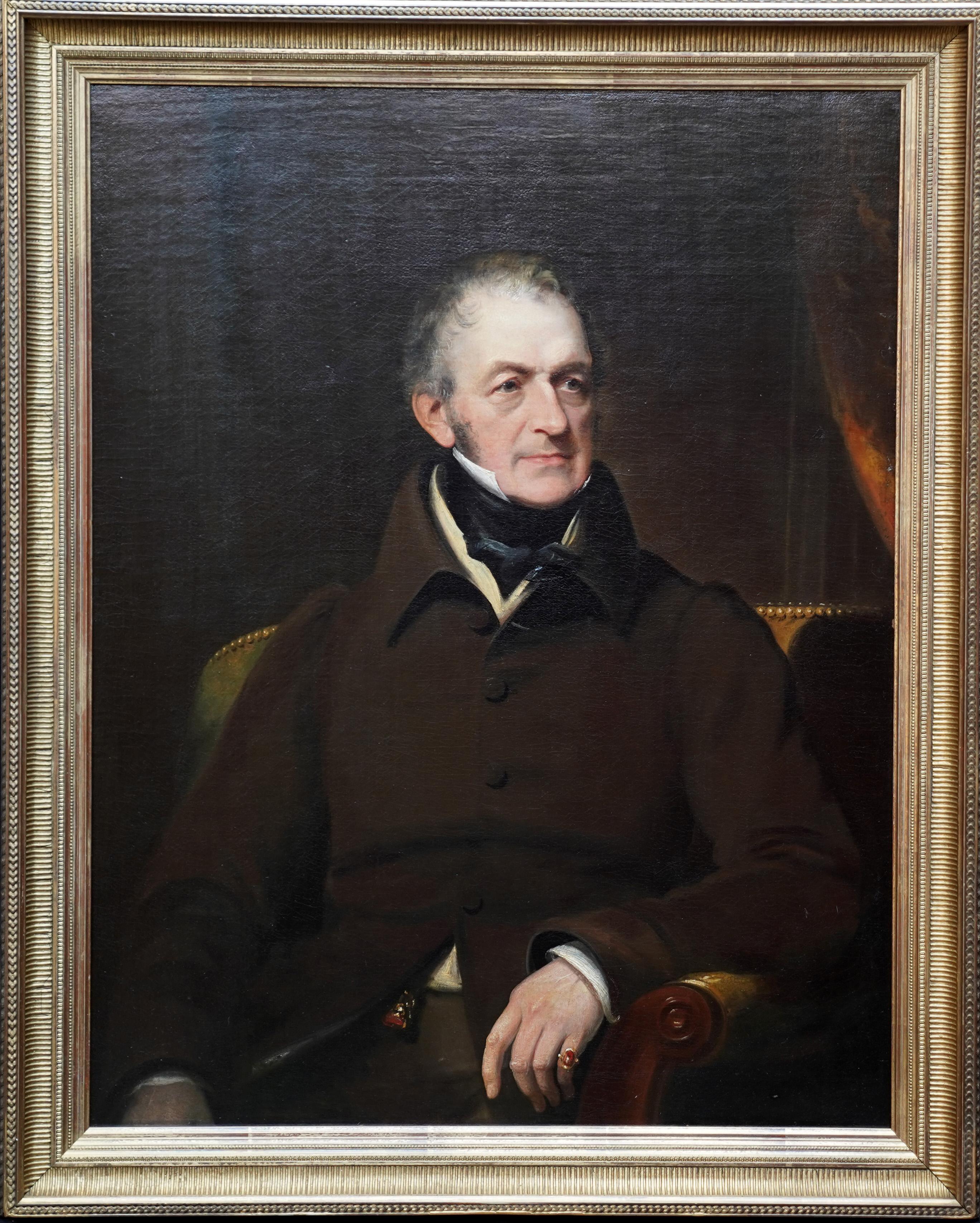
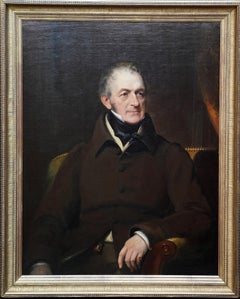
Sir Henry RaeburnPortrait of Lord William Russell, three-quarter length
$20,472.34
£15,000
€17,479.05
CA$28,242.61
A$30,934.42
CHF 16,286.97
MX$369,191.96
NOK 207,562.87
SEK 189,743.75
DKK 130,615.55
About the Item
Portrait of Lord William Russell, three-quarter length seated at a table wearing a Brown Coat and a Yellow Waistcoat and a White Stock, a book by his side
Oil on canvas
49 ½ x 39 ½ inches
THE ARTIST
Sir Henry Raeburn (1756–1823) was one of Scotland’s most important portrait artists and a leading figure of the Scottish Enlightenment. Born in Edinburgh, he was largely self-taught before studying in London under Joshua Reynolds and later in Rome. Upon returning to Scotland, Raeburn became the principal portraitist of the nation’s elite—judges, philosophers, writers and lairds—capturing them with a distinctive blend of naturalism, bold brushwork, and psychological depth. His most famous works include The Skating Minister and numerous portraits of Enlightenment figures. In 1822 he was knighted by King George IV, becoming the first Scottish-born artist to receive this honour.
THE SOUTHWELL COLLECTION
Everett Fine Art is excited to present this remarkable collection of paintings assembled over generations by the Southwell family, once resident at Kings Weston House, a fine 18th-century estate on the outskirts of Bristol.
The collection was first established during the 18th and early 19th centuries, and many of the works were personally chosen for the enjoyment they brought.
When Kings Weston was sold in 1833, much of the collection passed to the Russell branch of the family. The Russells continued to enrich the collection through the 19th century, commissioning works that reflected the interests and pastimes they valued-most notably, portraits of family members, horses and beloved pets. Thanks to the generosity of the Inge family, who acted as custodians during the 20th century, the collection remained largely intact.
In more recent years, the paintings returned to family ownership, where they have been carefully restored and preserved by Lord de Clifford (27th Baron de Clifford). Now, a number of these works are offered for sale.
- Creator:Sir Henry Raeburn (1756 - 1823, British)
- Dimensions:Height: 49.5 in (125.73 cm)Width: 39.5 in (100.33 cm)
- Medium:
- Period:Late 17th Century
- Condition:
- Gallery Location:Taunton, GB
- Reference Number:1stDibs: LU2028217353722
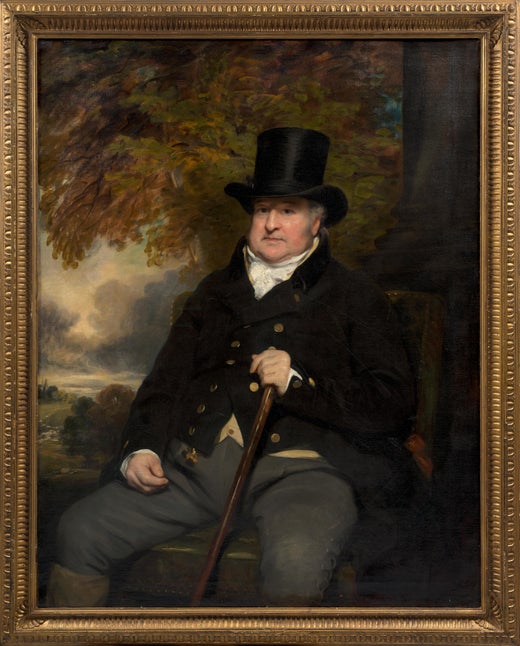
Sir Henry Raeburn
Sir Henry Raeburn, FRSE, RA, RSA (1756–1823) was a prominent Scottish portrait painter who is now largely credited for the revival of Scottish art in the early 19th century. Born in Stockbridge, Edinburgh, he was orphaned at a young age and subsequently educated at Heriot’s Hospital. He began his career as a goldsmith's apprentice, creating portrait miniatures before transitioning to oil painting, largely self-taught. Raeburn married the wealthy Ann Edgar, which enabled him to study art in Italy, where he was advised by Sir Joshua Reynolds and others. Upon returning to Edinburgh in 1787, Raeburn quickly gained success, painting notable figures like Sir Walter Scott and Dugald Stewart. He became known for his vigorous brushwork, strong characterizations, and dramatic lighting. His direct painting style and refusal to make preparatory sketches set him apart from contemporaries, incorporating elements of Romanticism. He was knighted by King George IV in 1822 and appointed the King’s limner for Scotland. He died in 1823 at his home in Stockbridge, Edinburgh. This distinguished three-quarter length portrait depicts Elizabeth Clough (b. circa 1970-1770s), matriarch of the Clough family of Keighley, West Yorkshire. The piece was commissioned by her son, John Clough (1799–1863), a prominent engineer and industrialist in Keighley. Clough owned and operated Grove Mills, a major worsted spinning and manufacturing facility which employed a significant portion of the local workforce. Elizabeth Clough is portrayed seated in an upholstered armchair, dressed in sober but elegant attire—a dark shawl and a crisp white cap tied beneath her chin. Her direct, steady gaze and flushed cheeks convey quiet strength and maternal dignity. The subdued, neutral background serves to emphasize the face and upper body, while still maintaining an airy and light feel. The face is rendered with sensitive modeling and naturalistic lighting, while the fabric of her garments contain blockier brushstrokes yet do not lose their sensitivity. These characteristics, combined with the information gleaned from the label, place this piece in the tradition of early 19th century Scottish portraiture.
About the Seller
No Reviews Yet
Vetted Professional Seller
Every seller passes strict standards for authenticity and reliability
Established in 1953
1stDibs seller since 2022
- ShippingRetrieving quote...Shipping from: Taunton, United Kingdom
- Return Policy
More From This Seller
View AllPortrait of Edward Southwell, three quarter length
By Thomas Hudson
Located in Taunton, GB
Portrait of Edward Southwell, three quarter length standing in a landscape, wearing a rust coat and a white satin waistcoat holding his cane
Inscribed
Oil on canvas in a carved woo...
Category
18th Century Portrait Paintings
Materials
Oil
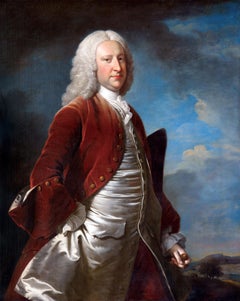
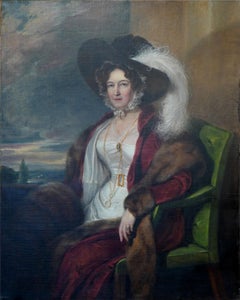
Portrait of Lady Mary Burke, later Wife of Edward Southwell
Located in Taunton, GB
Portrait of Lady Mary Burke, later Wife of Edward Southwell, 2lst Baron, three-quarter length seated, wearing Red Coat and Fur Robes, a Landscape beyond
Signed
Oil on canvas
55 x ...
Category
18th Century Portrait Paintings
Materials
Oil
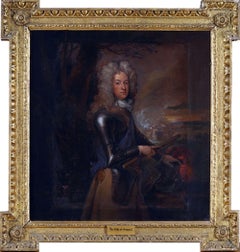
Portrait of James Butler, 2nd Duke of Ormonde (1665-1745), three-quarter length
By Sir Godfrey Kneller
Located in Taunton, GB
Portrait of James Butler, 2nd Duke of Ormonde (1665-1745), three-quarter length, standing wearing Armour, holding his baton, a skirmish beyond
Oil on canvas
In a carved wood frame
...
Category
17th Century Portrait Paintings
Materials
Oil
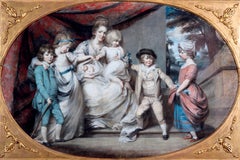
Sophia, Lady de Clifford and her Children
By Daniel Gardner
Located in Taunton, GB
Sophia, Lady de Clifford and her Children
Pastel
Oval
THE ARTIST
Daniel Gardner (1750-1805) was an inventive portrait painter known for blending pastel, gouache, and graphite to ...
Category
18th Century Portrait Paintings
Materials
Pastel
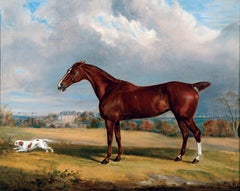
Maryann, A Chestnut hunter and a Spaniel in front of Kirby Mallory Hall
By William Webb
Located in Taunton, GB
Maryann, A Chestnut hunter and a Spaniel in front of Kirby Mallory Hall, Leicestershire
Signed and Dated 1829
Oil on canvas
23 ½ x 29 ½ inches
THE ARTIST
William Edward Webb (18...
Category
Late 19th Century Landscape Paintings
Materials
Oil
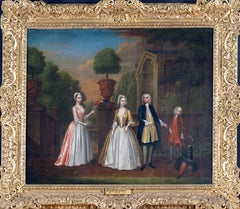
A group portrait of the Southwell family with a Negro Page and Macaw
By Charles Philips
Located in Taunton, GB
A group portrait of the Southwell family on the terrace with a negro page and Macaw.
Oil on canvas
Signed and dated 1731
Canvas size 25 x 30 ¼ inches 63.5 x 77 cms
Frame exter...
Category
18th Century Portrait Paintings
Materials
Oil
You May Also Like
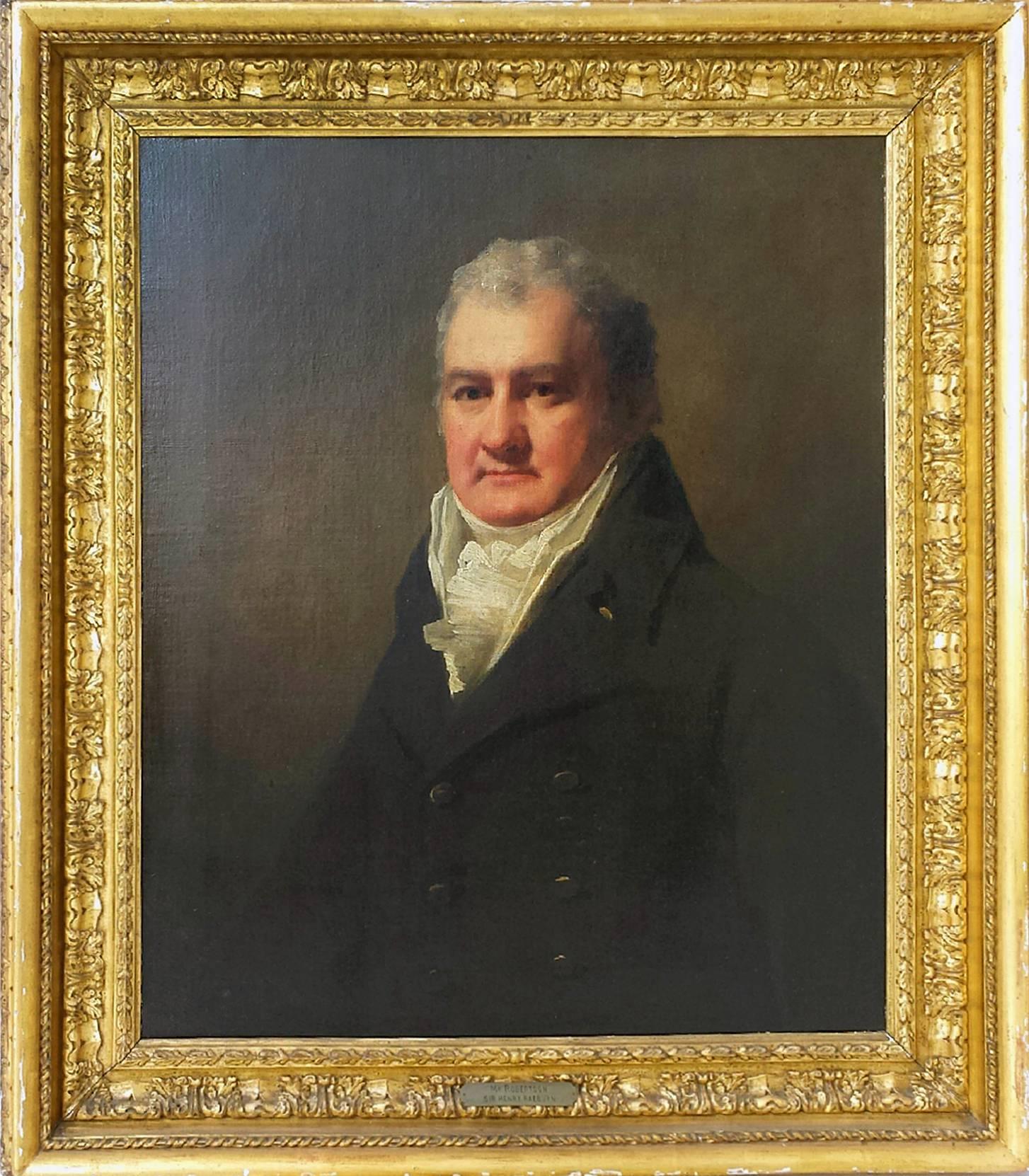
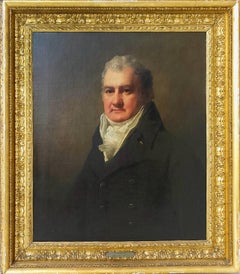
Half Length Portrait of Mr. Robertson of Edinburgh
By Sir Henry Raeburn
Located in Miami, FL
Half Length Portrait of Mr. Robertson
Sir. Henry Raeburn ( Scottish 1756 - 1823 )
Half Length Portrait of Mr. Robertson
29x 24
Purchased, J Leger & Son,...
Category
18th Century Realist Portrait Paintings
Materials
Oil
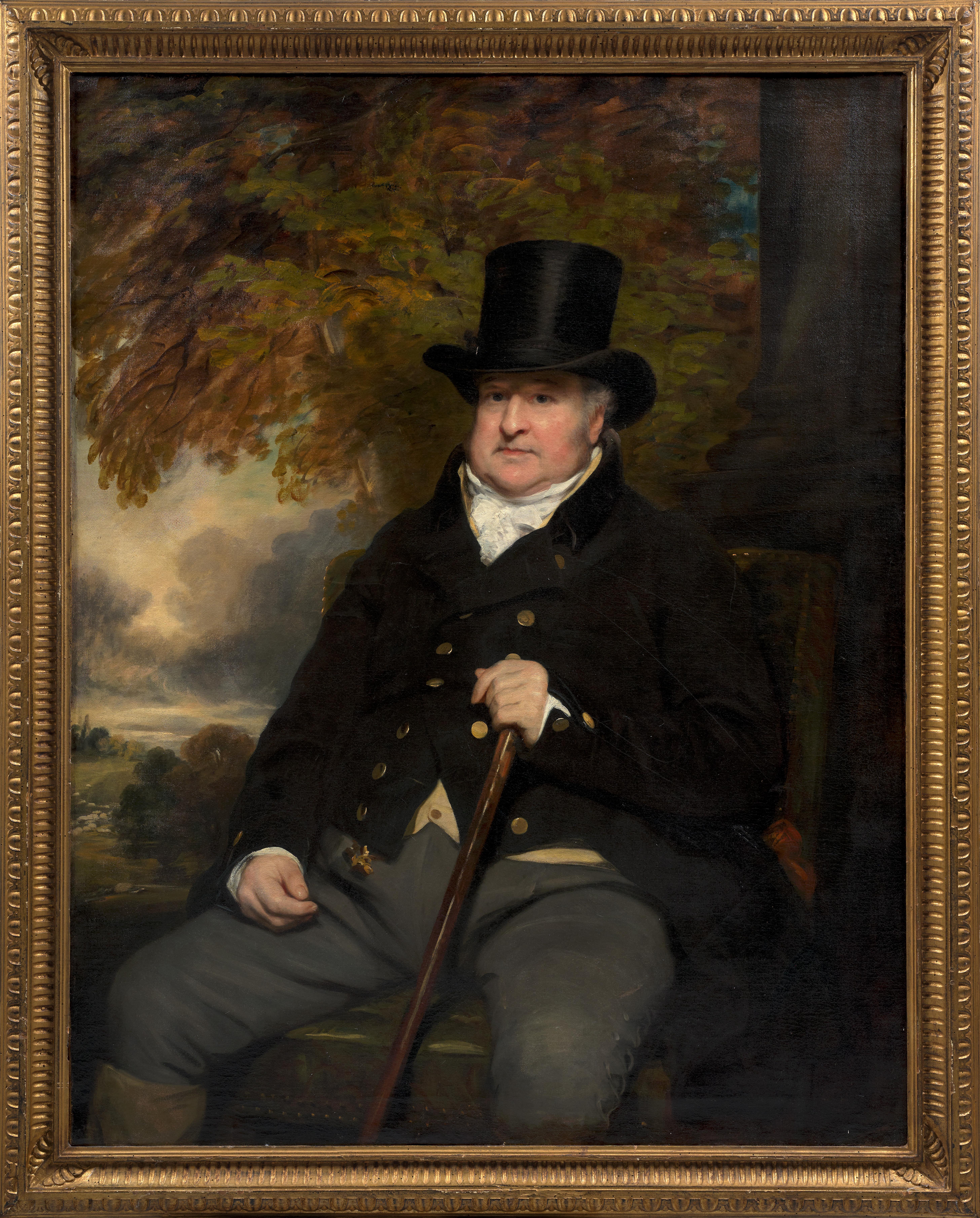
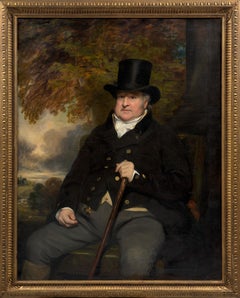
19th Century by Sir Henry Raeburn Portrait of a landowner Oil on canvas
By Sir Henry Raeburn
Located in Milano, Lombardia
Sir Henry Raeburn (Stockbridge, Edinburgh, UK, 1756 - Edinburgh, UK, 1823)
Title: Portrait of a landowner
Year: Early 19th century, 1803
Medium: Oil on canvas
Dimensions: Without fra...
Category
Early 19th Century Old Masters Portrait Paintings
Materials
Canvas, Oil
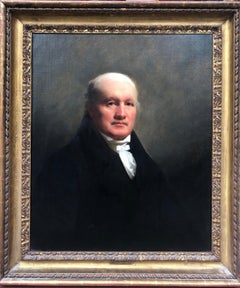
Striking 18th Century Portrait of the 12th Earl of Caithness
By Sir Henry Raeburn
Located in London, GB
Sir Henry Raeburn (1756-1823)
James Sinclair, 12th Earl of Caithness (1766-1823)
Oil on Canvas
30 X 25 inches Unframed
37 X 32 inches framed
Sir Henry Raeburn FRSE RA RSA (4 March 1756 – 8 July 1823) was a Scottish portrait painter and Scotland's first significant portrait painter since the Union to remain based in Scotland. He served as Portrait Painter to King George IV in Scotland.
Raeburn was born the son of a manufacturer in Stockbridge, on the Water of Leith: a former village now within the city of Edinburgh. He had an older brother, born in 1744, called William Raeburn. His ancestors were believed to have been soldiers, and may have taken the name "Raeburn" from a hill farm in Annandale, held by Sir Walter Scott's family. Orphaned, he was supported by William and placed in Heriot's Hospital, where he received an education. At the age of fifteen he was apprenticed to the goldsmith James Gilliland of Edinburgh, and various pieces of jewellery, mourning rings and the like, adorned with minute drawings on ivory by his hand, still exist. Soon he took to the production of carefully finished portrait miniatures; meeting with success and patronage, he extended his practice to oil painting, at which he was self-taught. Gilliland watched the progress of his pupil with interest, and introduced him to David Martin, who had been the favourite assistant of Allan Ramsay the Latter, and was now the leading portrait painter in Edinburgh. Raeburn was especially aided by the loan of portraits to copy. Soon he had gained sufficient skill to make him decide to devote himself exclusively to painting. George Chalmers (1776; Dunfermline Town Hall) is his earliest known portrait.
In his early twenties, Raeburn was asked to paint the portrait of a young lady he had noticed when he was sketching from nature in the fields. Ann was the daughter of Peter Edgar of Bridgelands, and widow of Count James Leslie of Deanhaugh. Fascinated by the handsome and intellectual young artist, she became his wife within a month, bringing him an ample fortune. The acquisition of wealth did not affect his enthusiasm or his industry, but spurred him on to acquire a thorough knowledge of his craft. It was usual for artists to visit Italy, and Raeburn set off with his wife. In London he was kindly received by Sir Joshua Reynolds, the president of the Royal Academy, who advised him on what to study in Rome, especially recommending the works of Michelangelo, and gave Raeburn letters of introduction for Italy. In Rome he met his fellow Scot Gavin Hamilton, Pompeo Girolamo Batoni and Byers, an antique dealer whose advice proved particularly useful, especially the recommendation that "he should never copy an object from memory, but, from the principal figure to the minutest accessory, have it placed before him." After two years of study in Italy he returned to Edinburgh in 1787, and began a successful career as a portrait painter. In that year he executed a seated portrait of the second Lord President Dundas.
Examples of his earlier portraiture include a bust of Mrs Johnstone of Baldovie and a three-quarter-length of Dr James Hutton: works which, if somewhat timid and tentative in handling and not as confident as his later work, nevertheless have delicacy and character. The portraits of John Clerk, Lord Eldin, and of Principal Hill of St Andrews belong to a later period. Raeburn was fortunate in the time in which he practised portraiture. Sir Walter Scott, Hugh Blair, Henry Mackenzie, Lord Woodhouselee, William Robertson, John Home, Robert Fergusson, and Dugald Stewart were resident in Edinburgh, and were all painted by Raeburn. Mature works include his own portrait and that of the Rev. Sir Henry Moncrieff Wellwood, a bust of Dr Wardrop of Torbane Hill, two full-lengths of Adam Rolland of Gask, the remarkable paintings of Lord Newton and Dr Alexander Adam in the National Gallery of Scotland, and that of William Macdonald of St Martin's. Apart from himself, Raeburn painted only two artists, one of whom was Sir Francis Leggatt Chantrey, the most important and famous British sculptor of the first half of the 19th century. It has recently been revealed that Raeburn and Chantrey were close friends and that Raeburn took exceptional care over the execution of his portrait of the sculptor, one of the painter's mature bust-length masterpieces.
It was commonly believed that Raeburn was less successful in painting female portraits, but the exquisite full-length of his wife, the smaller likeness of Mrs R. Scott Moncrieff in the National Gallery of Scotland, and that of Mrs Robert Bell, and others, argue against this. Raeburn spent his life in Edinburgh, rarely visiting London, and then only for brief periods, thus preserving his individuality. Although he, personally, may have lost advantages resulting from closer association with the leaders of English art, and from contact with a wider public, Scottish art gained much from his disinclination to leave his native land. He became the acknowledged chief of the school which was growing up in Scotland during the early 19th century, and his example and influence at a critical period were of major importance. So varied were his other interests that sitters used to say of him, "You would never take him for a painter till he seizes the brush and palette."
In 1812 he was elected president of the Society of Artists in Edinburgh; and in 1814 associate, and in the following year full member, of the Royal Scottish Academy. On 29 August 1822 he was knighted by George IV and appointed His Majesty's limner for Scotland at the Earl of Hopetoun house. He died in Edinburgh.
Raeburn had all the essential qualities of a popular and successful portrait painter. He was able to produce a telling and forcible likeness; his work is distinguished by powerful characterisation, stark realism, dramatic and unusual lighting effects, and swift and broad handling of the most resolute sort. David Wilkie recorded that, while travelling in Spain and studying the works of Diego Velázquez, the brushwork reminded him constantly of the "square touch" of Raeburn. Scottish physician and writer John Brown wrote that Raeburn "never fails in giving a likeness at once vivid, unmistakable and pleasing. He paints the truth, and he paints it with love".
Raeburn has been described as a "famously intuitive"portrait painter. He was unusual amongst many of his contemporaries, such as Reynolds, in the extent of his philosophy of painting directly from life; he made no preliminary sketches. This attitude partly explains the often coarse modelling and clashing colour combinations he employed, in contrast to the more refined style of Thomas Gainsborough and Reynolds. However these qualities and those mentioned above anticipate many of the later developments in painting of the 19th century from romanticism to Impressionism.
Sir Henry Raeburn died in St Bernard's House (17 St Bernards Crescent), Stockbridge, Edinburgh. He is buried in St. Cuthbert's churchyard against the east wall (the monument erected by Raeburn in advance) but also has a secondary memorial in the Church of St John the Evangelist, Edinburgh.
James Sinclair, 12th Earl of Caithness was born at Barrogill Castle (Castle of Mey) on 31 May 1766. He was the son of Sir John Sinclair of Mey, Baronet who he succeeded in the baronetcy in 1774. He succeeded as 12th earl of Caithness in 1789.
He was lord-lieutenant of the county of Caithness and lieutenant-colonel of the Ross-shire militia.
He married at Thurso Castle on 2 January 1784 Jane, second daughter of Alexander Campbell...
Category
18th Century Portrait Paintings
Materials
Oil
$29,480 Sale Price
40% Off
Free Shipping
Portrait of a Seated Gentleman - British 19th century art portrait oil painting
By Thomas Lawrence (circle)
Located in Hagley, England
This striking British 19th century portrait oil painting is attributed to the circle of Sir Thomas Lawrence. Painted circa 1820 it is the portrait of a seated gentleman in a brown hi...
Category
Early 19th Century Realist Portrait Paintings
Materials
Oil
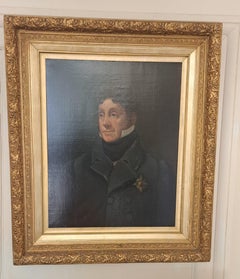
Henry Raeburn, (circle) 19th Century portrait of Sir Charles Forbes Edinglassie
By Henry Raeburn (circle)
Located in York, GB
Portrait of Sir Charles Forbes of Edinglassie, Oil on canvas.
The size of the portrait is 75 cm x 59.5 cm whilst overall the size is 106 cm x 91 cm
In very good condition.There has been some restoration/overpainting etc.There is some minor craquelure.
Housed in a period gilt frame decorated with acorns and leaves
Overall a good portrait, circle of a fine scottish artist (unsigned) , with an interesting sitter, his details below.
sir Charles Forbes of Edinglassie
Sir Charles Forbes, 1st Baronet (1774–1849) was a Scottish politician, of Newe and Edinglassie, Aberdeenshire. Forbes was the son of the Rev. George Forbes of Lochell. He was a descendant of Alexander Forbes of Kinaldie and Pitsligo, and was in 1833 served heir male in general to Alexander Forbes, 3rd lord Forbes of Pitsligo, father of Alexander Forbes, 4th Lord Forbes of Pitsligo, attainted in 1745.
Forbes was of a bluff but kindly nature, diffident as to his own merits, of a straightforward and manly character. On the death of his uncle in 1821 Forbes succeeded to the entailed estates of the Forbeses of Newe, and was created a baronet by patent in 1823.[1] He married in 1811. His daughter, Elizabeth, married General, Lord James Hay, second son of the seventh Marquess of Tweeddale.
Sir Henry Raeburn FRSE, RA, RSA (1756-1823)
Scottish portrait painter and Scotland's first significant portrait painter
since the Union to remain based in Scotland.
He served as Portrait Painter to King George IV in Scotland
Raeburn had all the essential qualities of a popular and successful portrait painter.
He was able to produce a telling and forcible likeness;
his work is distinguished by powerful characterisation,
stark realism, dramatic and unusual lighting...
Category
19th Century Old Masters Portrait Paintings
Materials
Oil
$5,452 Sale Price
33% Off
Free Shipping
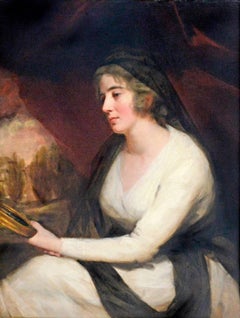
Portrait of Mrs. Johnstone
By Sir Henry Raeburn
Located in Miami, FL
This is one of Raeburns best works from his best period that is not in a museum or private collection.
Three-quarter length portrait, seated in a white dress with a black scarf over...
Category
Early 1800s Realist Portrait Paintings
Materials
Oil
$184,000 Sale Price
20% Off