Want more images or videos?
Request additional images or videos from the seller
1 of 9

Studio of Sir Peter Lely
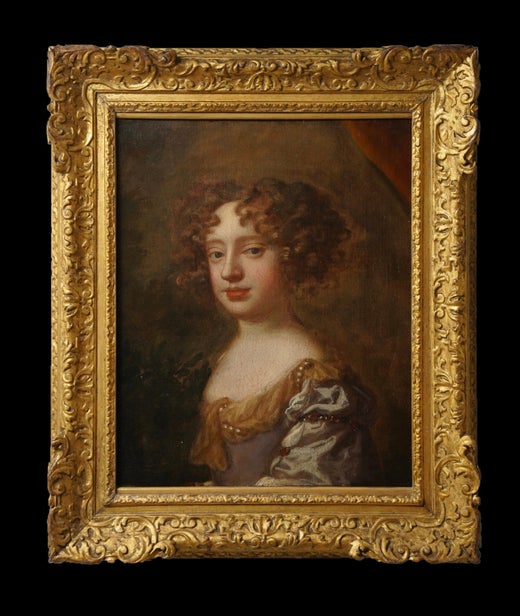
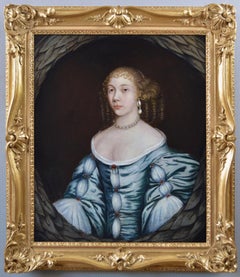
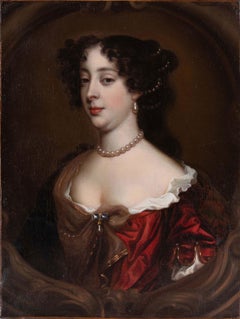
Studio of Sir Peter Lely, Portrait of Lady Anne (later Queen Anne)

c.1678

$16,328.16
£12,000
€14,021.01
CA$22,577.77
A$24,573.27
CHF 13,131.08
MX$296,751.32
NOK 165,025.49
SEK 153,492.91
DKK 104,743.54

About the Item

Studio of Sir Peter Lely (1618-1680) Portrait of Lady Anne (1665–1714), later Queen Oil on canvas 20⅞ x 16¾ in. c.1678 Provenance Capt. H. A. N. Forte of Polock, West Somerset; Christie’s, 21st February, 1913, Lot 52; Christie’s, 24th March, 1922, Lot 93; Private Collection, United Kingdom. We are pleased to offer a rare bust length portrait of Lady Anne Stuart (1665-1714), later Queen (1702-1714), from the studio of Sir Peter Lely (1618-1680) [1]. Lely was the foremost portrait painter to the English Court, and the leading painter of the restoration period. Praised especially for his portraits of female sitters, this work recalls Lely’s famous Windsor Beauties through the use of weighty backing drapes and dresses of sumptuous silk, glowing through the depiction of light and shadow. The full-length version of Lely’s painting ‘Queen Anne when a child’, c.1678 was known through mezzotint engravings produced in the seventeenth century, but was only rediscovered in a private collection in 2003 [2]. The present work is the only other known version of the full portrait and shows a cropped composition with slight alterations. David A. H. B. Taylor, the co-author of the forthcoming catalogue raisonné on Lely who rediscovered the larger version, has argued that the present ‘smaller picture may have been produced before the larger picture, or simultaneously, and they wouldn’t necessarily be an identical match in terms of modelling and details of clothes.’ And, firmly placing the work within the artist’s studio, Taylor observed ‘good painting in areas such as the modelling of the curls of Anne’s hair’ [3] If this portrait was painted first, it is possible that Peter Lely would have had a direct hand in both its composition and execution, producing a bust more closely relating to the life usable as a preparatory work for the larger version. This would be consonant with Lely’s studio practice of painting the head himself and leaving the drapery and further attributes to his assistants. The quality of the brushstrokes around the face are indicative of this, as well as the work being left unfinished, in turn revealing the delicate modelling. This has arguably created a more lively and direct countenance than in the larger worked up version. This compelling work shows the youthful Lady Anne in profile and is of particularly high quality. Given the sitter’s age and the suggestively sensuous manner in which it has been painted, it is likely that the work was produced to promote Anne for marriage: her porcelain-pale skin and high forehead mark Anne as a woman of aristocratic dignity, whilst rosy, rounded cheeks are filled with life and speak to her vitality [4]. Chestnut ringlets are beautifully modelled with naturalistic skill in the fashionable ‘hurly-burly’ style, which was fashionable in contemporary royal commissions [5]. Tones of red are reflected in the perimeters of Anne’s hair, repeated in the claret curtain and the rubies which wind around the sitter’s shoulder, creating a pyramidal form which frames and focuses on Anne’s face and delicate features. Further, Anne’s purity and innocence, and therefore her virginity, are attested to by the pearls which adorn the finely modelled neckline of her lilac gown. Dashes of lighter paint are utilised to make these adorning pearls, rubies and gemstones glitter and glint alongside Anne’s intelligent gaze which is enlivened with a mimetic yet subtle speck of white, which reflects the light behind the painter. The classicising drape of red curtain and the silhouetted leaves find completion in the full-length portrait, as an unfinished wreath and large ewer are introduced. This imagery speaks to iconographical promotion of Lady Anne as an educated, eligible and demonstrably impressive young woman, utilising a visual language which was being modelled as a contemporary alternative to the traditional Catholic imagery. This portrait therefore ‘serves to promote Anne as a future wife and mother of Protestant heirs for the Stuarts’ [6]. Anne would be married on the 28th of July 1683 to Prince George of Denmark. Anne was the second daughter of the Catholic King James II VII who was denounced by many of his Protestant subjects as a tyrant. Following her brother-in-law’s invasion and James’s flight to France, William and Mary were jointly crowned. Upon their deaths Anne succeeded the throne in 1702 not by traditional hereditary right – her brother-in-law was pretending to the title of ‘James III’ in France – but by parliamentary statute law ratified in the ‘revolution settlement.’ The revolution severely limited the power of the monarchy and Anne reigned as a parliamentary, or ‘constitutional,’ monarch. She most notably oversaw the legislative union of England and Scotland as Great Britain and the Peace of Utrecht, both of which cemented the country’s future pre-eminence. The portrait closely resembles Sir Peter Lely's also unsigned 'Study for a Portrait of a Woman' from the 1670s at the Metropolitan Museum of Art (06.1198) in execution, suggesting that the present picture may be a preparatory study of the larger worked up version recently published in the Burlington Magazine. Whiteman’s Fine Art gives thanks to David A. H. B. Taylor for his insightful comments regarding this work. Notes 1 David A. H. B. Taylor email correspondence based on high resolution images of the artwork, Tuesday 12th November 2024. 2 David A. H. B. Taylor, “A Rediscovered Portrait of Queen Anne, When a Child, by Sir Peter Lely,” The Burlington Magazine 145, no. 1204 (July 2003): 501–4; Engraving by Richard Tompson, 33 x 25 cm. 3 David A. H. B. Taylor email correspondence, Tuesday 12th November 2024. 4 4 David A. H. B. Taylor, “A Rediscovered Portrait of Queen Anne, When a Child, by Sir Peter Lely,” The Burlington Magazine 145, no. 1204 (July 2003): 501–4: p. 501. 5 As in the portrait of Anne’s older sister: Sir Peter Lely’s Mary II (1662-94), when Princess of Orange, c.1677. Oil on canvas, 126.0 x 102.3 cm. Royal Collection: Chatsworth Room, Hampton Court Palace, RCIN 40258. 6 David A. H. B. Taylor email correspondence, Tuesday 12th November 2024.
  • Creator:
  • Creation Year:
    c.1678
  • Dimensions:
    Height: 21 in (53.34 cm)Width: 17 in (43.18 cm)
  • More Editions Sizes:
    20⅞ x 16¾ in.Price: $16,328
  • Medium:
  • Movement Style:
  • Period:
  • Condition:
  • Gallery Location:
    Oxford, GB
  • Reference Number:
    1stDibs: LU2912217206582

More From This Seller

View All
Lord Leighton (1830-1896), Studies for Captive Andromache
By Frederic Leighton
Located in Oxford, GB
Frederic Leighton, 1st Baron Leighton, P.R.A. (1830-1896) Studies for Captive Andromache With the artist studio stamp (Lugt 1741a) (lower left); inscribed 'Andromache' (lower right) ...
Category

1880s Figurative Drawings and Watercolors

Materials

Chalk, Charcoal

You May Also Like

17th Century portrait oil painting of a lady
By Studio of Sir Peter Lely
Located in Nr Broadway, Worcestershire
Studio of Sir Peter Lely Dutch, (1618-1680) Portrait of a Lady Oil on canvas Image size: 29.25 inches x 24.25 inches Size including frame: 37...
Category

17th Century Portrait Paintings

Materials

Canvas, Oil

English 17th century portrait of a lady
By Sir Peter Lely
Located in Bath, Somerset
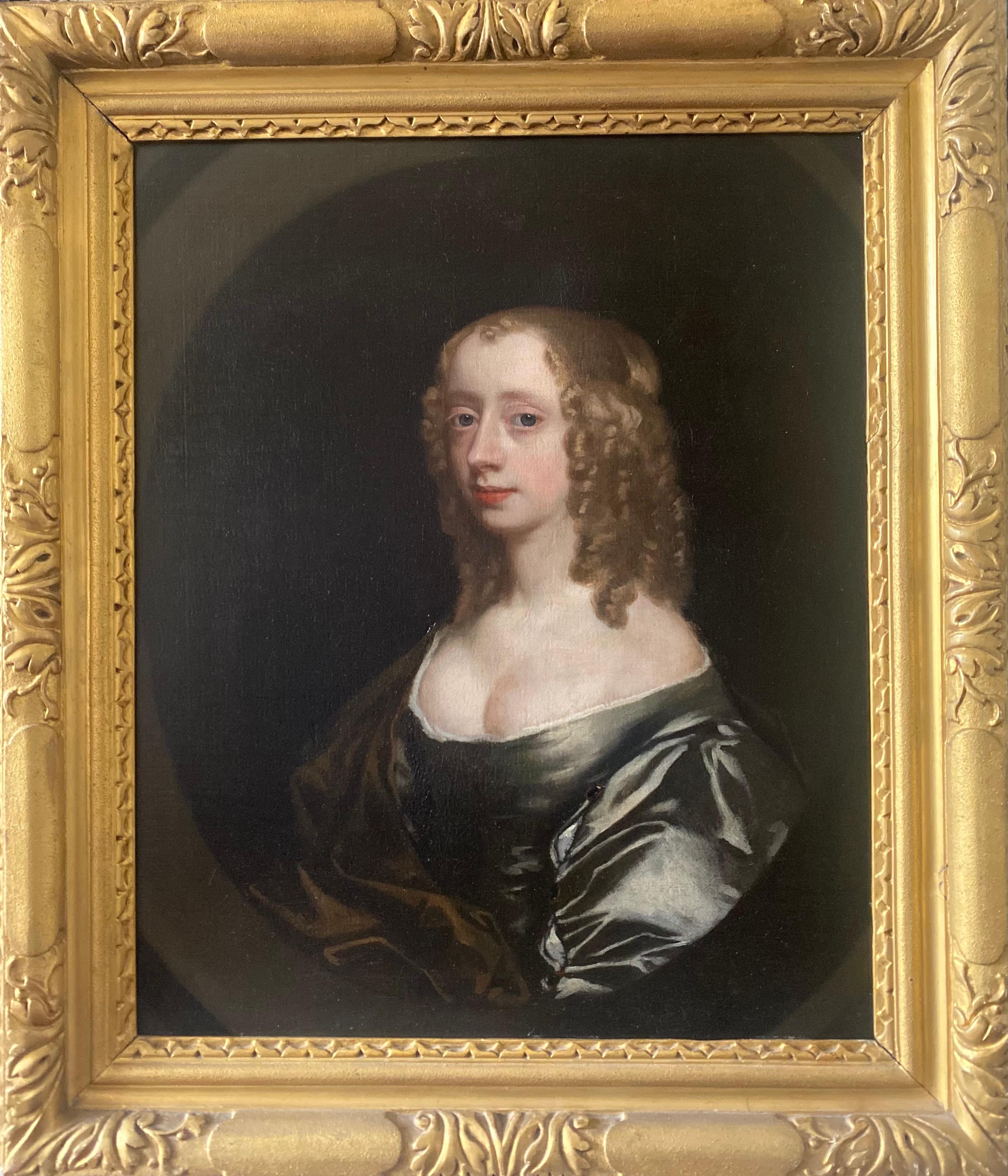
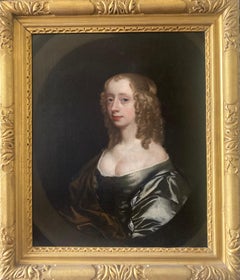
A 17th century English portrait of a lady by Sir Peter Lely (1618-1680), half-length in a painted feigned oval, wearing a green silk gown with chestnut coloured cloak over one shoulder, her fair hair curled in the fashionable ringlet style of the period. Oil on canvas in an English giltwood 'Lely' frame. We are grateful to Diana Dethloff and Catharine MacLeod (who are currently working on a Lely catalogue raisonné) for their confirmation of Lely as the artist from photograph analysis of this previously unidentified early work. Provenance: Private collection Nottingham until 2021 Mellors and Kirk sale December 2000, lot 1173 The sitter is likely to have been from an upper class or aristocratic family in court circles, who were the main source of Lely`s patronage. The simple composition serves to highlight the beauty of the sitter through portraying her pale decolletage and complexion, set against the gentle gaze of her blue eyes, the soft blush of her cheeks and her full red lips. Peter Lely (1618-1680) was originally of dutch origin and became Principle Painter to the King in 1661, following in the footsteps of Van Dyck who had died in 1641. He dominated the portrait painting scene in England for over 20 years, creating a distinctive 'court look' in his work which had a strong influence on many other artists. He had an extremely successful and popular portrait practice which meant that he soon had to develop production methods that could accommodate the high demand for portraits, and also for copies and versions of them which were given as gifts to family and courtiers. The use of studio assistants was a common practice for busy artists and as with Van Dyck, Lely is known to have used specialist assistants to execute particular parts of his paintings. Artists who worked in Lely`s studio included John Baptist Gaspars who specialised in drapery painting, William Wissing, John Greenhill...
Category

17th Century Baroque Portrait Paintings

Materials

Canvas, Oil

Portrait of Barbara Palmer 1st Duchess of Cleveland
By Sir Peter Lely
Located in Taunton, GB
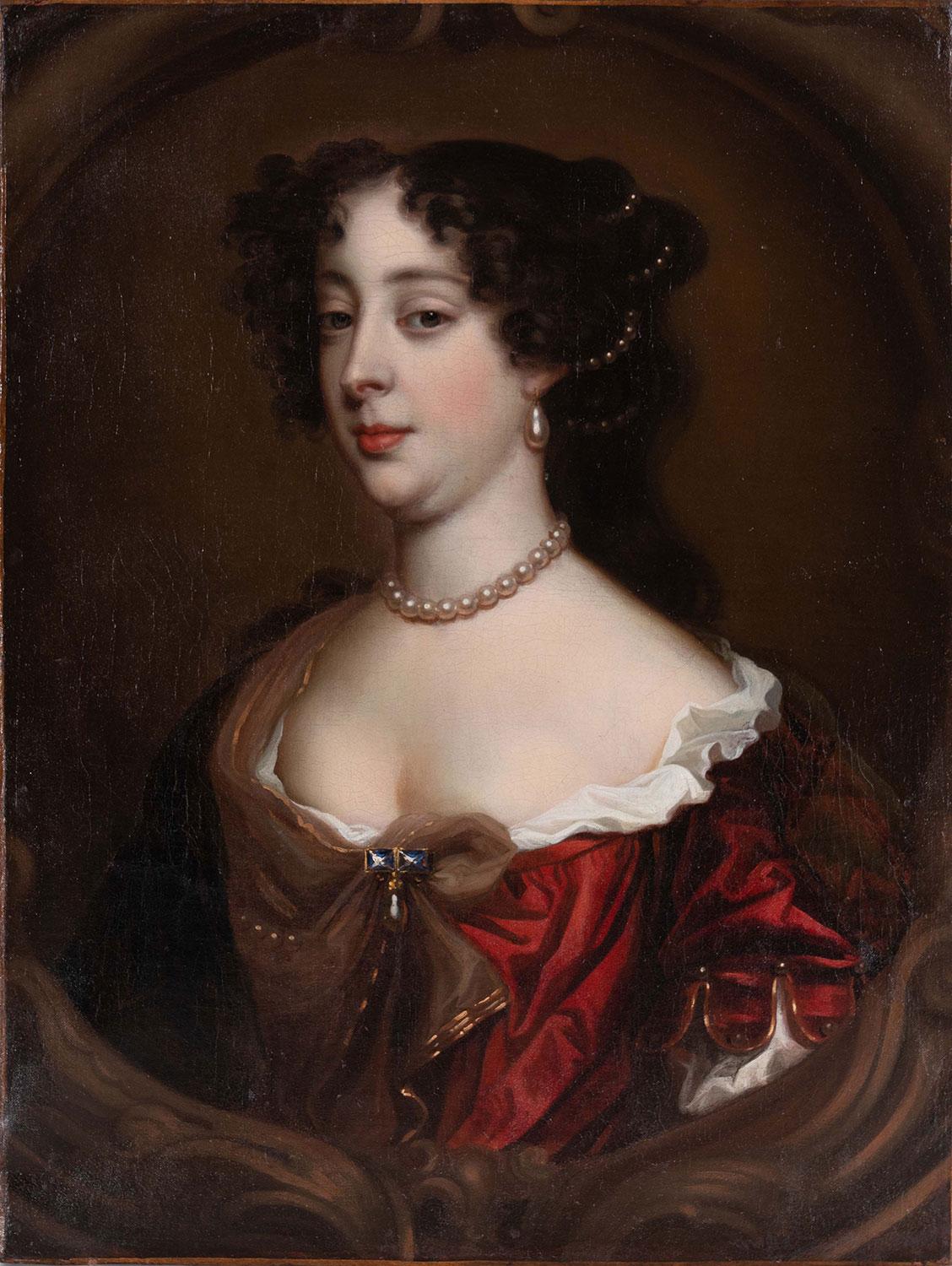
Portrait of Barbara Palmer 1st Duchess of Cleveland 1640-1709, half-length wearing a red dress and portrayed within a cartouche. Circa 1680 Oil On...
Category

17th Century Portrait Paintings

Materials

Oil

17th Century portrait oil painting of a lady
Located in Nr Broadway, Worcestershire
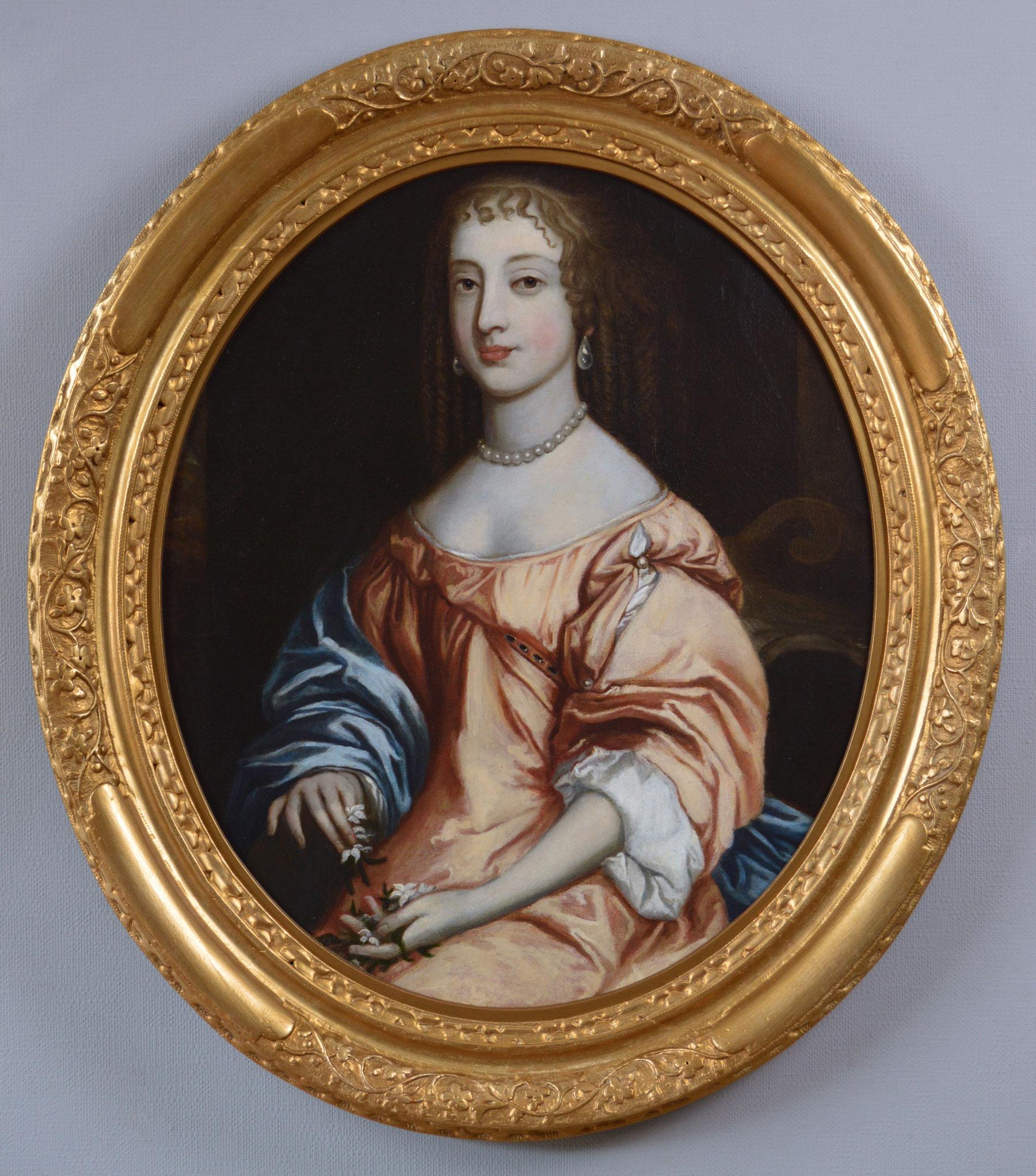
Circle of Sir Peter Lely Dutch, (1618-1680) Portrait of a Lady, traditionally identified as Princess Henrietta Anne Stuart Oil on canvas Image...
Category

17th Century Portrait Paintings

Materials

Canvas, Oil

Portrait Of Philadelphia, 17th Century Probably Philadelphia Carey Of Aske Hall
By Sir Peter Lely
Located in Blackwater, GB
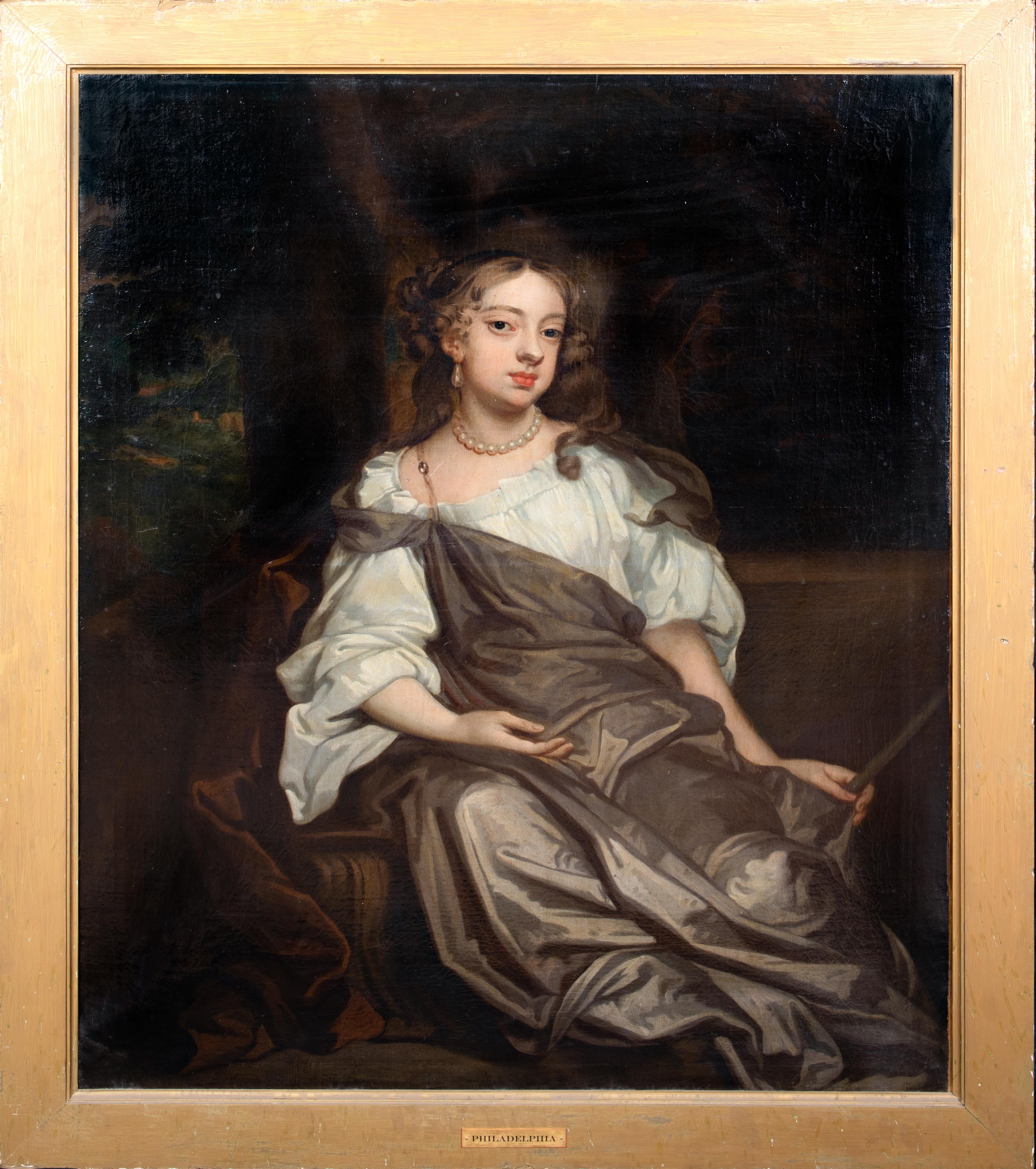
Portrait Of Philadelphia, 17th Century Probably Philadelphia Carey Of Aske Hall, Richmond, North Yorkshire, English Courier & Lady In Waiting to Princess Elizabeth Studio Of Sir Pe...
Category

17th Century Figurative Paintings

Materials

Canvas, Oil

Portrait of Bridget Drury Lady Shaw, formerly Viscountess Kilmorey
By Sir Peter Lely
Located in London, GB
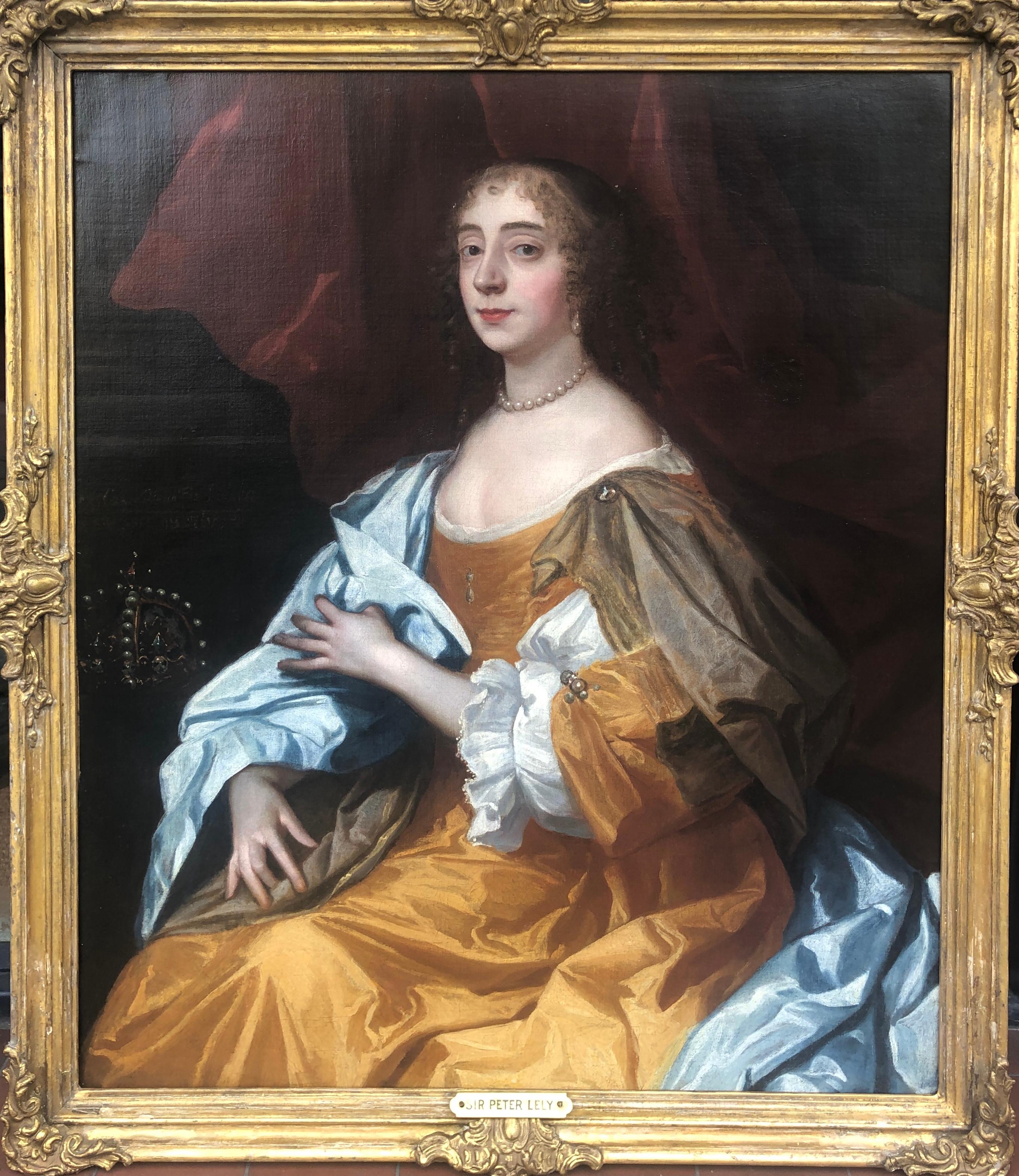
Sir Peter Lely (Soest 1618 – 1680 London) Portrait of lady with a crown, possibly Bridget Drury Lady Shaw, formerly Viscountess Kilmorey, later Lady Baber (d.1696) c.1665 Oil on canvas 46 1/2 x 40 3/4 inches, Framed 42 1/4 x 36 1/4 inches, Unframed Inscribed left [……….]Isabella James Mulraine wrote the following for this piece: This portrait dates to the middle of the 1660s, the decade when Lely’s career took off as successor to Sir Anthony van Dyck. At the Restoration Charles II had appointed him Principal Painter to the King and paid a pension £200 per annum ‘as formerly to Sr. Vandyke...’1 Lely had trained in Haarlem and he was in his early twenties when he came to London in 1643. He was an astute businessman and a wise courtier. In 1650 he painted a portrait of Oliver Cromwell (Birmingham Museum and Art Gallery) while maintaining links with the Royalist exiles through the 1650s. He had arrived in England as a painter of small-scale portraits and lush scenes of nymphs in landscapes in a Dutch style. His experience of Van Dyck in English collections transformed his painting. His lavish and alluring vision of Arcadia exactly captured the spirit of the Court and as Principal Painter he dominated English portraiture for the next twenty years. Lely ran a highly efficient studio along Netherlandish lines, employing a team of specialists like the drapery painter John Baptist Gaspars and young artists-in-training like Nicolas de Largilliere. He had numerous rivals during that period, and by 1670 he had introduced numbered standard poses to speed up production, while collaborating with printmakers for further revenue and advertising. He died in 1680 of a stroke while painting, working to the last. The portrait, painted at a date when Lely’s poses and execution were still individual and inventive shows a lady sitting at three-quarter length facing away from the viewer. She has begun to turn towards the viewer, a pose with a long pedigree in art, first used by Leonardo da Vinci in the Mona Lisa (Louvre). She steadies her blue drapery where it might slip from her arm with the movement, a flash of realism beautifully captured. Like Van Dyck, Lely painted his female sitters in a timeless costume rather than contemporary fashion, showing a loose gown and floating silk draperies. It presented the sitter as a classical ideal. The portrait would not date. The saffron dress may be the work of a drapery painter but the brown scarf must be by Lely himself, and appears unfinished, broadly sketched in behind the shoulder. The delicate blue glaze and nervous highlights suggest shimmering translucence. Lely was a master of painting hands – his hand studies are marvels of drawing – and the lady’s hands are superb, exactly drawn, delicately modelled and expressive. The fidgety gestures, clutching the gown, fiddling with the edge of the scarf, give the portrait psychological bite, suggesting the personality behind the calm courtier’s expression, adding to the sense shown in the look of the eyes and mouth that the lady is about to speak. The portrait’s language is Vandykian. The inspiration comes directly from Van Dyck’s English portraits of women. Lely owned Van Dyck’s Portrait of Lady Elizabeth Thimbleby and Dorothy Viscountess Andover (National Gallery, London) and the sitter’s costume quotes Lady Andover’s saffron dress and brown scarf. But Lely paints a generation who sat nearer to the ground and through a dialogue of expression and gesture he shows sitters who are more flesh and blood than Van Dyck’s. The background with a column and curtain is different to those shown in most of Lely’s portraits of women. They tend to include trees or fountains, with a glimpse of landscape. But there are other examples. A portrait of the King’s reigning mistress, Barbara Villiers Duchess of Cleveland...
Category

1660s Portrait Paintings

Materials

Oil