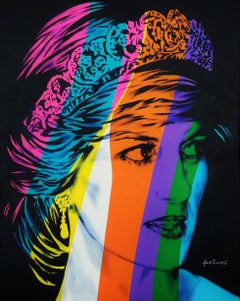
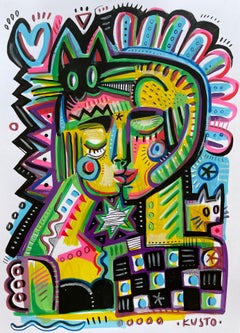
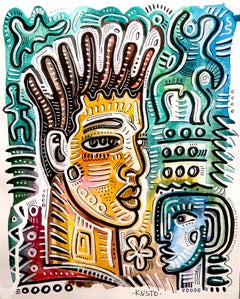
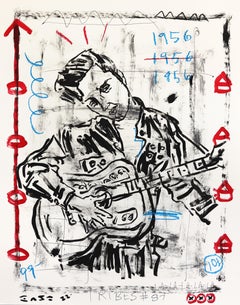
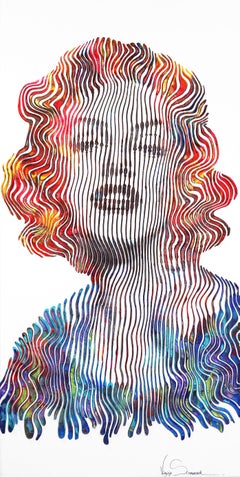
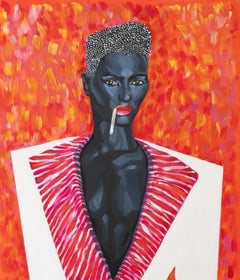
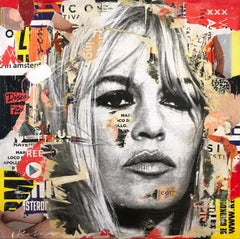
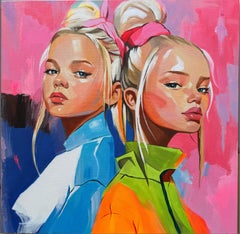
Pop Art Portrait Paintings

POP ART STYLE

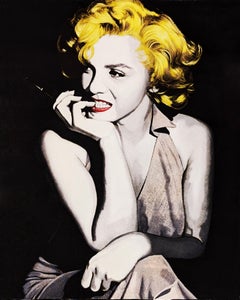
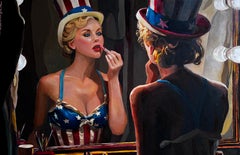
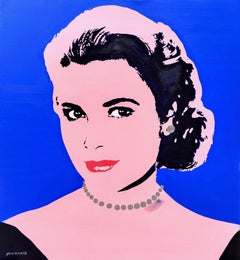
Perhaps one of the most influential contemporary art movements, Pop art emerged in the 1950s. In stark contrast to traditional artistic practice, its practitioners drew on imagery from popular culture — comic books, advertising, product packaging and other commercial media — to create original Pop art paintings, prints and sculptures that celebrated ordinary life in the most literal way.

ORIGINS OF POP ART

CHARACTERISTICS OF POP ART 

  • Bold imagery
  • Bright, vivid colors
  • Straightforward concepts
  • Engagement with popular culture 
  • Incorporation of everyday objects from advertisements, cartoons, comic books and other popular mass media

POP ARTISTS TO KNOW

ORIGINAL POP ART ON 1STDIBS

The Pop art movement started in the United Kingdom as a reaction, both positive and critical, to the period’s consumerism. Its goal was to put popular culture on the same level as so-called high culture.

Richard Hamilton’s 1956 collage Just what is it that makes today’s homes so different, so appealing? is widely believed to have kickstarted this unconventional new style.

Pop art works are distinguished by their bold imagery, bright colors and seemingly commonplace subject matter. Practitioners sought to challenge the status quo, breaking with the perceived elitism of the previously dominant Abstract Expressionism and making statements about current events. Other key characteristics of Pop art include appropriation of imagery and techniques from popular and commercial culture; use of different media and formats; repetition in imagery and iconography; incorporation of mundane objects from advertisements, cartoons and other popular media; hard edges; and ironic and witty treatment of subject matter.

Although British artists launched the movement, they were soon overshadowed by their American counterparts. Pop art is perhaps most closely identified with American Pop artist Andy Warhol, whose clever appropriation of motifs and images helped to transform the artistic style into a lifestyle. Most of the best-known American artists associated with Pop art started in commercial art (Warhol made whimsical drawings as a hobby during his early years as a commercial illustrator), a background that helped them in merging high and popular culture.

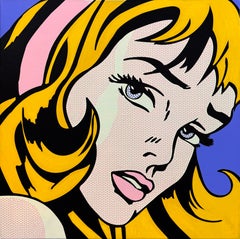
Roy Lichtenstein was another prominent Pop artist that was active in the United States. Much like Warhol, Lichtenstein drew his subjects from print media, particularly comic strips, producing paintings and sculptures characterized by primary colors, bold outlines and halftone dots, elements appropriated from commercial printing. Recontextualizing a lowbrow image by importing it into a fine-art context was a trademark of his style. Neo-Pop artists like Jeff Koons and Takashi Murakami further blurred the line between art and popular culture.

Pop art rose to prominence largely through the work of a handful of men creating works that were unemotional and distanced — in other words, stereotypically masculine. However, there were many important female Pop artists, such as Rosalyn Drexler, whose significant contributions to the movement are recognized today. Best known for her work as a playwright and novelist, Drexler also created paintings and collages embodying Pop art themes and stylistic features.

Read more about the history of Pop art and the style’s famous artists, and browse the collection of original Pop art paintings, prints, photography and other works for sale on 1stDibs.

to
214
92
102
81
135
215
Overall Width
to
Overall Height
to
72
553
1
1
4
7
13
27
4,484
1,185
886
559
547
448
423
380
173
134
99
27
7
292
196
119
378
218
183
151
138
99
57
47
42
31
28
25
21
19
18
14
13
13
12
12
517
378
378
361
342
63
45
30
19
18
147
124
417
167
Style: Pop Art
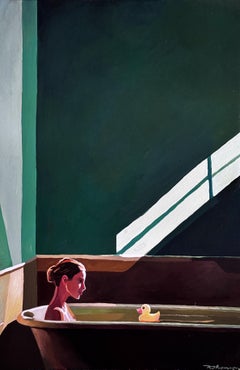
The One, Oil Painting
Located in San Francisco, CA

Artist Comments
In a shaft of late-afternoon light, a woman sits half-submerged in an antique tub. The deep green walls around her fall into shadow. She looks at her rubber duc...

Category

21st Century and Contemporary Pop Art Portrait Paintings

Materials

Oil

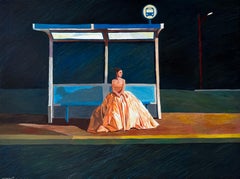
The Journey Is Half the Fun, Oil Painting
Located in San Francisco, CA

Artist Comments
Beneath the stark canopy of a bus shelter, a young woman in a luminous gown sits in quiet anticipation. Her elegance is out of place and raises the question: "W...

Category

21st Century and Contemporary Pop Art Portrait Paintings

Materials

Oil

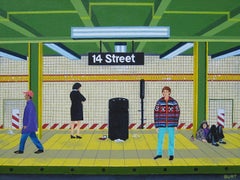
Subway Station, Original Painting
Located in San Francisco, CA

Artist Comments
Subways are a melting pot of culture. The station on 14th Street offers an ideal setting to observe this diversity and engage in people-watching. On cold days, one can often see homeless alcoholics among the fashion models, Wall Street executives, and commuters from all over Manhattan waiting for trains.Painted with bright colors and in the style of David Hockney and Edward Hopper, the scene depicts artist Leroy Burt's impression of a New York City subway station...

Category

21st Century and Contemporary Pop Art Portrait Paintings

Materials

Acrylic

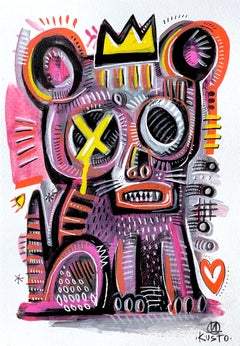
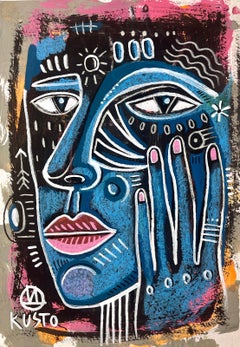
SKULL TIGER
Located in CÓRDOBA, ES
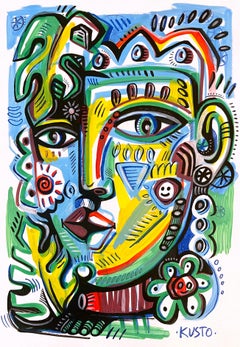
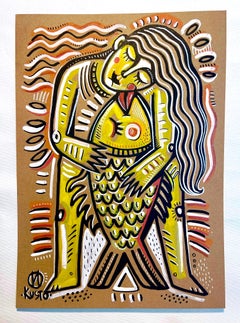
Original painting by Daria Kusto. Acrylic markers on paper. The magic flow reality... Shipping from Spain, safely and promptly.
Category

2010s Pop Art Portrait Paintings

Materials

Permanent Marker

SKULL TIGER
SKULL TIGER
$152 Sale Price
20% Off
Large Surreal Portrait Panel of Eight Acrylic Paintings With Floral Installation
Located in FISTERRA, ES
This large-scale installation brings together eight acrylic portraits from the You Are The One series, creating a powerful visual ensemble that amplifies the conceptual and chromatic...
Category

2010s Pop Art Portrait Paintings

Materials

Spray Paint, Acrylic

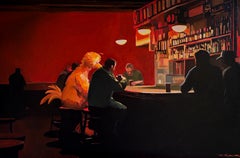
Sunny Night, Oil Painting
Located in San Francisco, CA

Artist Comments
A surreal scene offers two possibilities. First, it is a realistic rendering of a man in a Big Bird costume, slouched at a dimly lit bar among solitary drinkers...

Category

21st Century and Contemporary Pop Art Portrait Paintings

Materials

Oil

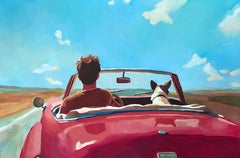
Shotgun, Oil Painting
Located in San Francisco, CA

Artist Comments
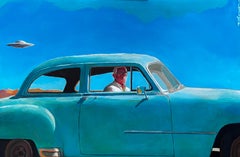
A man and his dog drive through a vast, open landscape. There’s a zero percent chance their trip won’t involve beef jerky. This sun-drenched scene captures ...

Category

21st Century and Contemporary Pop Art Portrait Paintings

Materials

Oil

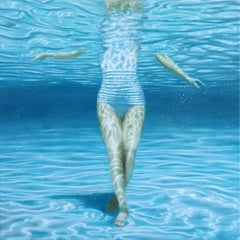
Summer Swim
Located in Los Angeles, CA
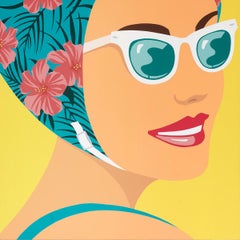
Elise Remender captures the romantic glamour of a bygone era in her contemporary figurative paintings that blend classical fine art and contemporary pop realism. Fantasy, mid-century fashion, and the glamour of travel and coastal living inform soft brush strokes and abstracted beauty; reminiscent of vintage advertisements and dusted sunlight. This original 37-inch square acrylic on canvas painting evokes a sense of delight and playfully nods at summery vintage aesthetics. It is signed by Remender on the front bottom right corner of the artwork. The sides are painted as a continuation of the front and it does not require framing. Free delivery within the local Los Angeles area. Affordable Continental U.S. and international shipping available. This artwork includes a certificate of authenticity issued by the gallery. Remender grew up in Arizona and is based in Southern California, but she has traveled all over the world gaining inspiration for her work. Her most recent series, Bathing Beauties, which captures the human form and abstracts it through light and reflection, was inspired by the vintage elegance and history of Southeast Asia’s historic hotel pools and gardens. It evokes a bygone era when Ernest Hemingway and Jackie O. were among the clientele. “I’m a bit of an old soul and there is a sense of elegance and beauty that has been lost in modern-day society, and I seek to recapture this essence in my work. I’m creating a sort of fantasy world of luxury, leisure, and old Hollywood glamour.” Her work has appeared in galleries in the US and Asia and in GQ Magazine, Architectural Digest, Dwell, California Home, People, among many other publications. Her paintings hang in luxury properties including The Ritz Carlton San Francisco, The Hard Rock Hotel Las Vegas, and Hilton properties across the United States, as well as in the homes of celebrity collectors including Ryan Seacrest and Kylie Jenner. REPRESENTATION: Artplex Gallery, Los Angeles, CA EXHIBITIONS: 2023 Artplex Gallery, Los Angeles, CA 2021 “The Beauty Myth”, Artplex Gallery, Los Angeles, CA 2018 “All American Inspired,” Merritt Gallery/Renaissance Fine Arts, PA, MD “At the Shore,” Eisenhauer Gallery, Edgartown, MA “Color in Motion,” Eisenhauer Gallery, Edgartown, MA “Having a Ball,” Jules Place, Boston, MA Meritt Gallery, Renaissance Fine Arts, PA, MD Studio E. Gallery, Palm Beach, FL 2017 “Distant Memories,” 111 Minna Gallery, San Francisco, CA Merrit Gallery, Renaissance Fine Arts, PA, MD “Holiday Gift Guide...
Category

2010s Pop Art Portrait Paintings

Materials

Canvas, Acrylic

Finn, Oil Painting
Located in San Francisco, CA

Artist Comments
A young woman reclines on a bright red inner tube, floating in a shimmering aquamarine pool. Her sunglasses, floral bikini, and the lyrical ripples on the water...

Category

21st Century and Contemporary Pop Art Portrait Paintings

Materials

Oil

A CAT S CARESS
Located in CÓRDOBA, ES
Original painting by Daria Kusto. Acrylic markers on paper. The magic flow reality... Painting rolled in a sturdy tube from Spain– safely and promptly.
Category

2010s Pop Art Portrait Paintings

Materials

Permanent Marker

A CAT
S CARESS
A CAT
S CARESS
$152 Sale Price
20% Off
The Strum King - Abstract Figurative Elvis Portrait Pop Art by Gary John
Located in Los Angeles, CA
Los Angeles street artist Gary John exploded onto the international art scene first during Art Basel Miami in 2013. John’s playfully bold work quickly gained attention and he was nam...
Category

21st Century and Contemporary Pop Art Portrait Paintings

Materials

Paper, Mixed Media, Acrylic, Oil Pastel, Ink, Illustration Board

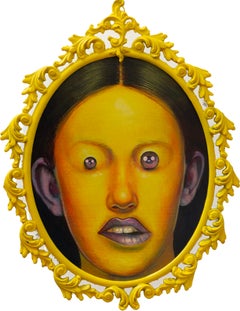
Yellow Emoji Acrylic and Spray Portrait with Ornate Yellow Metal Frame
Located in FISTERRA, ES
This acrylic portrait reinterprets digital emotion through a yellow-toned face with emoji-like eyes. Part of Natasha Lelenco’s You Are The One series, “Yellow Emoji” translates the ...
Category

2010s Pop Art Portrait Paintings

Materials

Canvas, Spray Paint, Acrylic, Board

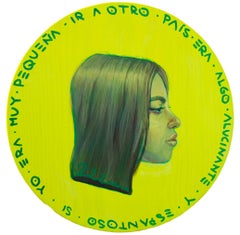
Unique Circular Portrait of a Migrant Girl on Yellow Wood Panel – "Currency #247
Located in FISTERRA, ES
Special offer only in this artwork of this series: 50% off from May 21 to May 28 only. This limited-time campaign highlights selected works from Currencies, the long-running series b...
Category

2010s Pop Art Portrait Paintings

Materials

Wood, Spray Paint, Acrylic

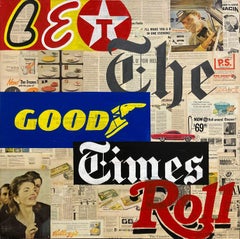
"Let the Good Times Rolls" Pop Art Mixed Media Collage on Canvas Painting
Located in New York, NY
This piece depicts iconic Logos with vintage news paper clippings from the mid century. We find Jacqueline Kennedy Onassis lower left, with other Americana imagery through out. Celeb...
Category

2010s Pop Art Portrait Paintings

Materials

Mixed Media, Acrylic, Newsprint, Canvas

Surreal Botanical Portrait with Yellow Daisies and Toy Soldier – Fetishes Series
Located in FISTERRA, ES
This striking acrylic painting by Moldovan-Spanish artist Natasha Lelenco features a surreal anthropomorphic portrait constructed from lush green leaves and blooming yellow daisies, blending botanical precision with symbolic intensity. The central figure’s face, composed entirely of flowers, is both haunting and tender, while a pink tongue and tiny plastic toy soldier create a poignant contrast that challenges the viewer’s perception of innocence, violence, and the natural world. Set against a softly gradated sky-blue background, the painting invites reflection on ecological fragility and the absurdity of human conflict. Part of the acclaimed “Fetishes” series, this work is inspired by Giuseppe Arcimboldo’s botanical portraits, reinterpreted with contemporary urgency. Lelenco’s painting critiques war and environmental destruction through a visual language that is as poetic as it is unsettling. The toy soldier, perched delicately on a green leaf-arm, acts as a miniature symbol of violence embedded in play, questioning the narratives we inherit and enact. The piece was originally commissioned for Imaxinaria, Mostra Internacional de Ilustración Contemporánea in Galicia (Spain) and remains one of the most iconic works of the series. Medium: Acrylic on board Dimensions: [Insert exact dimensions] Year: 2022 Framing: Painted edges, ready to hang, no frame needed Signed by the artist Keywords: Acrylic botanical portrait, Anti-war painting, Contemporary Arcimboldo style...
Category

2010s Pop Art Portrait Paintings

Materials

Acrylic, Board, Oil

Be Sharp (framed original painting on canvas)
Located in Aventura, FL
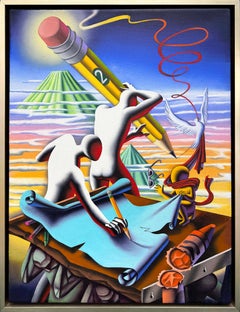
Original oil painting on canvas. Hand signed and dated lower front; hand signed, titled and date on verso by Mark Kostabi. Canvas Size: 23.5 x 17.75 x 1.5 inches. Frame Size: 25 x...
Category

1990s Pop Art Portrait Paintings

Materials

Canvas, Oil

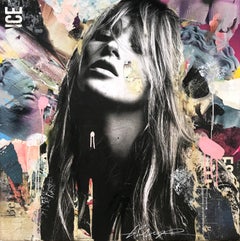
"It s a Sin to Be Tired" Pop Art Street Art Mixed Media Portrait of Kate Moss
Located in New York, NY
This piece depicts famous English model Kate Moss. Done with beautiful expressive colors and a distinctive street art design, this piece pops with energy and romantic beauty. Its com...
Category

2010s Pop Art Portrait Paintings

Materials

Canvas, Mixed Media, Spray Paint, Acrylic
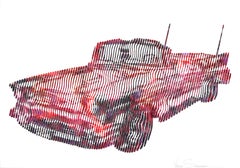
Chevrolet Bel Air 1957 - 3D Textured Line Retro Car Figurative Pop Art Painting
Located in Los Angeles, CA
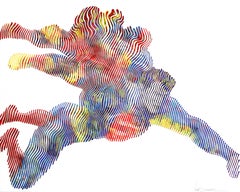
Virginie Schroeder is an innovative artist based in Quebec, Canada. She puts in play lines, circles and other geometric forms to create works with subjects that are not immediately v...
Category

21st Century and Contemporary Pop Art Portrait Paintings

Materials

Canvas, Mixed Media, Acrylic

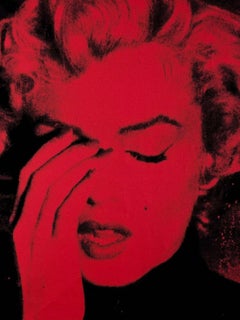
Marilyn Crying
Located in PARIS, FR
Original and unique artwork by Russell Young. Acrylic paint and enamel screen print on linen, unframed dimensions 62 x 48 inches, 2008, from the series "Fame + Shame". Bright and viv...
Category

Early 2000s Pop Art Portrait Paintings

Materials

Enamel

Marilyn Crying
Marilyn Crying
$11,200 Sale Price
20% Off
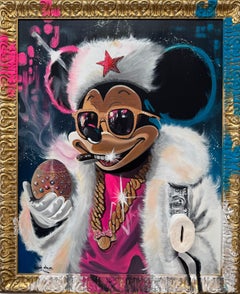
KING OF THE STREETZ “Once upon a time… I took over.”
Located in West Hollywood, CA
In King of the Streetz, innocence gets iced out. The artist hijacks the familiar silhouette of Mickey Mouse and rebrands him as a streetwise hustler—chain heavy, cash in hand, and ga...
Category

21st Century and Contemporary Pop Art Portrait Paintings

Materials

Canvas, Mixed Media

Vintage Pop Art Portrait of Peter Max Original Framed Oil Painting
Located in Buffalo, NY
Vintage American modernist portrait of iconic artist Peter Max. Signed. Framed. Original oil on canvas.
Category

1970s Pop Art Portrait Paintings

Materials

Canvas, Oil

Liberty IX /// Jack Graves Statue of Liberty New York France United States Paint
Located in Saint Augustine, FL
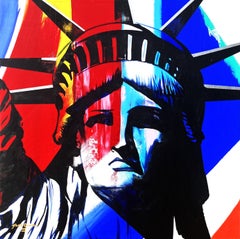
Artist: Jack Graves III (American, 1988-) Title: "Liberty IX" Series: Icon *Signed by Graves lower left. It is also signed, titled, and dated on verso Year: 2025 Medium: Original Acr...
Category

2010s Pop Art Portrait Paintings

Materials

Canvas, Paint, Acrylic

Elvis TCB Gun - Single (CA)
Located in PARIS, FR
Original and unique artwork by Russell Young. Acrylic paint, enamel and diamond dust screen print on linen, unframed dimensions 48 x 62 inches, 2011, from the series "Guns". Hand sig...
Category

2010s Pop Art Portrait Paintings

Materials

Canvas, Acrylic, Screen

"Jean Michel" Basquiat Colorful Pop Art Portrait Mixed Media Painting on Canvas
Located in New York, NY
This piece depicts famous artist, Jean-Michel Basquiat. Done with beautiful expressive colors and a distinctive street art design, this piece pops with energy and romantic beauty. It...
Category

2010s Pop Art Portrait Paintings

Materials

Canvas, Mixed Media, Spray Paint, Acrylic

High Noon
Located in Bozeman, MT
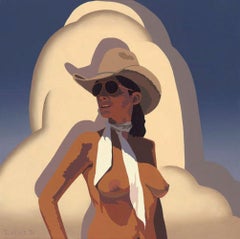
One of the originators of the Western pop art movement, Billy Schenck incorporates techniques from photorealism with a pop art sensibility to both exalt and poke fun at images of the...
Category

2010s Pop Art Portrait Paintings

Materials

Canvas, Oil

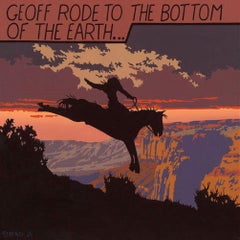
Geoff Rode South
Located in Bozeman, MT
One of the originators of the Western pop art movement, Billy Schenck incorporates techniques from photorealism with a pop art sensibility to both exalt and poke fun at images of the...
Category

2010s Pop Art Portrait Paintings

Materials

Canvas, Oil

Profile, Pop Art Portrait by Peter Max
Located in Long Island City, NY
Artist: Peter Max, German/American (1937) Title: Profile Year: 1986 Medium: Acrylic on Canvas, signed u.r. Size: 40 in. x 30 in. (101.6 cm x 76.2 cm) Frame Size: 49.5 x 39.5 inches
Category

1980s Pop Art Portrait Paintings

Materials

Canvas, Acrylic

Grace Jones
Located in Zofingen, AG
This portrait of Grace Jones is inspired by the remarkable Jamaican-born singer, model, and actress, who has been a beacon of bravery and self-expression for women worldwide. Known f...
Category

2010s Pop Art Portrait Paintings

Materials

Canvas, Acrylic

"Multitasking" Pop Art Street Posters Décollage Painting on Canvas of Kate Moss
Located in New York, NY
This piece depicts famous British model Kate Moss. Done with beautiful expressive colors and a distinctive street art design, this piece pops with energy and romantic beauty. Its com...
Category

2010s Pop Art Portrait Paintings

Materials

Canvas, Mixed Media, Spray Paint, Acrylic

Intricacies Of The Mind (huge original painting)
Located in Aventura, FL
Original acrylic painting on canvas. Hand signed and dated lower left by Peter Max. Artwork size: 48.25 x 58 inches. Canvas is stretched. Artwork is in excellent condition with...
Category

1970s Pop Art Portrait Paintings

Materials

Canvas, Acrylic

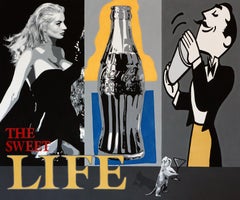
The Sweet Life, ITALY La Dolce Vita, Large Oil and Acrylic on canvas, 52x62"
Located in Southampton, NY
For the month of December we are offering very special end of year pricing of at least a 20% discount on all of the paintings at the gallery. A few are discounted as much as 50%. If ...
Category

2010s Pop Art Portrait Paintings

Materials

Oil, Acrylic, Canvas

Retro_Pop_Female Portrait/Figurative_Acrylic_James Wolanin, Summer Love
Located in Laguna Beach, CA
JAMES WOLANIN "Summer Love" Acrylic & Gloss Varnish on Panel 36 x 36 inches ______________________ James Wolanin’s paintings transport the viewer to an effervescent, candy coated w...
Category

2010s Pop Art Portrait Paintings

Materials

Varnish, Acrylic, Panel

First Call, Oil Painting
Located in San Francisco, CA

Artist Comments
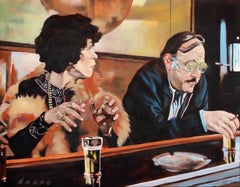
Two people share a tense, personal moment over a morning beer in a bar. The scene delivers a strong story through the use of color, light, and character portray...

Category

21st Century and Contemporary Pop Art Portrait Paintings

Materials

Oil

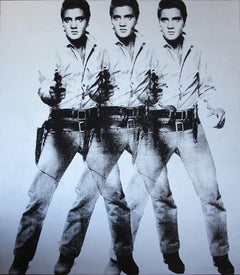
"Triple Elvis" Denied Andy Warhol Silver Black Pop Art Painting by Charles Lutz
Located in Brooklyn, NY
"Triple Elvis" (Denied) Silkscreen Painting by Charles Lutz Silkscreen and silver enamel paint on canvas with Artist's Denied stamp of the Andy Warhol Art Authentication Board. 82 x 72" inches 2010 This important example was shown alongside works by Warhol in a two-person show "Warhol Revisited (Charles Lutz / Andy Warhol)" at UAB Abroms-Engel Institute for the Visual Arts in 2024. Lutz's 2007 ''Warhol Denied'' series gained international attention by calling into question the importance of originality or lack thereof in the work of Andy Warhol. The authentication/denial process of the [[Andy Warhol Art Authentication Board]] was used to create value by submitting recreations of Warhol works for judgment with the full intention for the works to be formally marked "DENIED". The final product of the conceptual project being "officially denied" "Warhol" paintings authored by Lutz. Based on the full-length Elvis Presley paintings by Pop Artist Andy Warhol in 1964, this is likely one of his most iconic images, next to Campbell's Soup Cans and portraits of Jackie Kennedy, Marilyn Monroe, Liz Taylor, and Marlon Brando. This is the rarest of the Elvis works from the series, as Lutz sourced a vintage roll of 1960's primed artist linen which was used for this one Elvis. The silkscreen, like Warhol's embraced imperfections, like the slight double image printing of the Elvis image. Lutz received his BFA in Painting and Art History from Pratt Institute and studied Human Dissection and Anatomy at Columbia University, New York. Lutz's work deals with perceptions and value structures, specifically the idea of the transference of values. Lutz's most recently presented an installation of new sculptures dealing with consumerism at Frank Lloyd Wright's Fallingwater House in 2022. Lutz's 2007 Warhol Denied series received international attention calling into question the importance of originality in a work of art. The valuation process (authentication or denial) of the Andy Warhol Art Authentication Board was used by the artist to create value by submitting recreations of Warhol works for judgment, with the full intention for the works to be formally marked "DENIED" of their authenticity. The final product of this conceptual project is "Officially DENIED" "Warhol" paintings authored by Lutz. Later in 2013, Lutz went on to do one of his largest public installations to date. At the 100th Anniversary of Marcel Duchamp's groundbreaking and controversial Armory Show, Lutz was asked by the curator of Armory Focus: USA and former Director of The Andy Warhol Museum, Eric Shiner to create a site-specific installation representing the US. The installation "Babel" (based on Pieter Bruegel's famous painting) consisted of 1500 cardboard replicas of Warhol's Brillo Box (Stockholm Type) stacked 20 ft tall. All 1500 boxes were then given to the public freely, debasing the Brillo Box as an art commodity by removing its value, in addition to debasing its willing consumers. Elvis was "the greatest cultural force in the Twentieth Century. He introduced the beat to everything, and he changed everything - music, language, clothes, it's a whole new social revolution." Leonard Bernstein in: Exh. Cat., Boston, The Institute of Contemporary Art and traveling, Elvis + Marilyn 2 x Immortal, 1994-97, p. 9. Andy Warhol "quite simply changed how we all see the world around us." Kynaston McShine in: Exh. Cat., New York, Museum of Modern Art (and traveling), Andy Warhol: Retrospective, 1996, p. 13. In the summer of 1963 Elvis Presley was just twenty-eight years old but already a legend of his time. During the preceding seven years - since Heartbreak Hotel became the biggest-selling record of 1956 - he had recorded seventeen number-one singles and seven number-one albums; starred in eleven films, countless national TV appearances, tours, and live performances; earned tens of millions of dollars; and was instantly recognized across the globe. The undisputed King of Rock and Roll, Elvis was the biggest star alive: a cultural phenomenon of mythic proportions apparently no longer confined to the man alone. As the eminent composer Leonard Bernstein put it, Elvis was "the greatest cultural force in the Twentieth Century. He introduced the beat to everything, and he changed everything - music, language, clothes, it's a whole new social revolution." (Exh. Cat., Boston, The Institute of Contemporary Art (and traveling), Elvis + Marilyn 2 x Immortal, 1994, p. 9). In the summer of 1963 Andy Warhol was thirty-four years old and transforming the parameters of visual culture in America. The focus of his signature silkscreen was leveled at subjects he brilliantly perceived as the most important concerns of day to day contemporary life. By appropriating the visual vernacular of consumer culture and multiplying readymade images gleaned from newspapers, magazines and advertising, he turned a mirror onto the contradictions behind quotidian existence. Above all else he was obsessed with themes of celebrity and death, executing intensely multifaceted and complex works in series that continue to resound with universal relevance. His unprecedented practice re-presented how society viewed itself, simultaneously reinforcing and radically undermining the collective psychology of popular culture. He epitomized the tide of change that swept through the 1960s and, as Kynaston McShine has concisely stated, "He quite simply changed how we all see the world around us." (Exh. Cat., New York, Museum of Modern Art (and traveling), Andy Warhol: Retrospective, 1996, p. 13). Thus in the summer of 1963 there could not have been a more perfect alignment of artist and subject than Warhol and Elvis. Perhaps the most famous depiction of the biggest superstar by the original superstar artist, Double Elvis is a historic paradigm of Pop Art from a breath-taking moment in Art History. With devastating immediacy and efficiency, Warhol's canvas seduces our view with a stunning aesthetic and confronts our experience with a sophisticated array of thematic content. Not only is there all of Elvis, man and legend, but we are also presented with the specter of death, staring at us down the barrel of a gun; and the lone cowboy, confronting the great frontier and the American dream. The spray painted silver screen denotes the glamour and glory of cinema, the artificiality of fantasy, and the idea of a mirror that reveals our own reality back to us. At the same time, Warhol's replication of Elvis' image as a double stands as metaphor for the means and effects of mass-media and its inherent potential to manipulate and condition. These thematic strata function in simultaneous concert to deliver a work of phenomenal conceptual brilliance. The portrait of a man, the portrait of a country, and the portrait of a time, Double Elvis is an indisputable icon for our age. The source image was a publicity still for the movie Flaming Star, starring Presley as the character Pacer Burton and directed by Don Siegel in 1960. The film was originally intended as a vehicle for Marlon Brando and produced by David Weisbart, who had made James Dean's Rebel Without a Cause in 1955. It was the first of two Twentieth Century Fox productions Presley was contracted to by his manager Colonel Tom Parker, determined to make the singer a movie star. For the compulsive movie-fan Warhol, the sheer power of Elvis wielding a revolver as the reluctant gunslinger presented the zenith of subject matter: ultimate celebrity invested with the ultimate power to issue death. Warhol's Elvis is physically larger than life and wears the expression that catapulted him into a million hearts: inexplicably and all at once fearful and resolute; vulnerable and predatory; innocent and explicit. It is the look of David Halberstam's observation that "Elvis Presley was an American original, the rebel as mother's boy, alternately sweet and sullen, ready on demand to be either respectable or rebellious." (Exh. Cat., Boston, Op. Cit.). Indeed, amidst Warhol's art there is only one other subject whose character so ethereally defies categorization and who so acutely conflated total fame with the inevitability of mortality. In Warhol's work, only Elvis and Marilyn harness a pictorial magnetism of mythic proportions. With Marilyn Monroe, whom Warhol depicted immediately after her premature death in August 1962, he discovered a memento mori to unite the obsessions driving his career: glamour, beauty, fame, and death. As a star of the silver screen and the definitive international sex symbol, Marilyn epitomized the unattainable essence of superstardom that Warhol craved. Just as there was no question in 1963, there remains still none today that the male equivalent to Marilyn is Elvis. However, despite his famous 1968 adage, "If you want to know all about Andy Warhol, just look at the surface of my paintings" Warhol's fascination held purpose far beyond mere idolization. As Rainer Crone explained in 1970, Warhol was interested in movie stars above all else because they were "people who could justifiably be seen as the nearest thing to representatives of mass culture." (Rainer Crone, Andy Warhol, New York, 1970, p. 22). Warhol was singularly drawn to the idols of Elvis and Marilyn, as he was to Marlon Brando and Liz Taylor, because he implicitly understood the concurrence between the projection of their image and the projection of their brand. Some years after the present work he wrote, "In the early days of film, fans used to idolize a whole star - they would take one star and love everything about that star...So you should always have a product that's not just 'you.' An actress should count up her plays and movies and a model should count up her photographs and a writer should count up his words and an artist should count up his pictures so you always know exactly what you're worth, and you don't get stuck thinking your product is you and your fame, and your aura." (Andy Warhol, The Philosophy of Andy Warhol (From A to B and Back Again), San Diego, New York and London, 1977, p. 86). The film stars of the late 1950s and early 1960s that most obsessed Warhol embodied tectonic shifts in wider cultural and societal values. In 1971 John Coplans argued that Warhol was transfixed by the subject of Elvis, and to a lesser degree by Marlon Brando and James Dean, because they were "authentically creative, and not merely products of Hollywood's fantasy or commercialism. All three had originative lives, and therefore are strong personalities; all three raised - at one level or another - important questions as to the quality of life in America and the nature of its freedoms. Implicit in their attitude is a condemnation of society and its ways; they project an image of the necessity for the individual to search for his own future, not passively, but aggressively, with commitment and passion." (John Coplans, "Andy Warhol and Elvis Presley," Studio International, vol. 181, no. 930, February 1971, pp. 51-52). However, while Warhol unquestionably adored these idols as transformative heralds, the suggestion that his paintings of Elvis...
Category

21st Century and Contemporary Pop Art Portrait Paintings

Materials

Enamel

Green Bubble-Faced Portrait with Ornate Frame - Ancestor Clones #16 Bubbles Aunt
Located in FISTERRA, ES
This distinctive acrylic painting by Natasha Lelenco from her acclaimed series Ancestor Clones presents a captivating portrait characterized by a symbolic face composed entirely of s...
Category

2010s Pop Art Portrait Paintings

Materials

Metal

Shelbia - Abstract Vibrant Colorful Mixed Media Figurative Portrait Painting
Located in Los Angeles, CA
Vibrant multimedia artworks incorporate reflective mediums and thick textures in Kate Tova's work. Colors splash across the page melding into flourishes of sequins, rhinestones, and ...
Category

21st Century and Contemporary Pop Art Portrait Paintings

Materials

Wood, Sequins, Mixed Media, Acrylic, Glitter

14th Street Station - Oakland, Original Painting
Located in San Francisco, CA

Artist Comments
Artist John McCabe presents a diverse set of people crowding in a terminal. He pictures them in his signature graphic style of pop ...

Category

21st Century and Contemporary Pop Art Portrait Paintings

Materials

Acrylic

Family Dinner, Oil Painting
Located in San Francisco, CA

Artist Comments
A family eats dinner and talks about their day. The glowing, soft-focus background and amber palette evoke warmth, love, and perhaps nostalgia, while the styliz...

Category

21st Century and Contemporary Pop Art Portrait Paintings

Materials

Oil

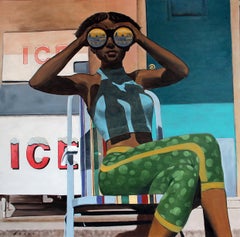
Ice, Oil Painting
Located in San Francisco, CA

Artist Comments
A woman sits cross-legged, peering at the city through binoculars. The scene shows a strong sense of composition and color interplay, with contrasting hues an...

Category

21st Century and Contemporary Pop Art Portrait Paintings

Materials

Oil

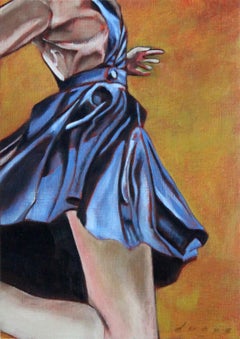
Striped Dip, Oil Painting
Located in San Francisco, CA

Artist Comments
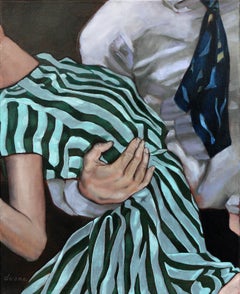
Flowing stripes on the dancer's dress create a bold visual rhythm. The composition crops both figures intentionally, shifting focus to the textures, patterns,...

Category

21st Century and Contemporary Pop Art Portrait Paintings

Materials

Oil

Shotgun Wedding, Oil Painting
Located in San Francisco, CA

Artist Comments
A woman wearing a wedding gown stands with a steady grip on a shotgun, her posture and expression radiating focus and determination. She emphasizes strength a...

Category

21st Century and Contemporary Pop Art Portrait Paintings

Materials

Oil

Generation Pop
Located in Zofingen, AG
Generation Pop is my vision of a generation that lives through colors, emotions, and the spirit of play. The brightness of childhood fused with the pulse of pop art creates a fresh, ...
Category

2010s Pop Art Portrait Paintings

Materials

Canvas, Acrylic

"Heartbreak a Stranger" Kate Moss with Stuart Weitzman Collage Resin Panel Board
Located in New York, NY
This piece depicts famous British model Kate Moss from a Fall 2013 ad campaign with Stuart Weitzman during the Milan Fashion Week while featuring Kate Moss swaggering to Nancy Sinatr...
Category

2010s Pop Art Portrait Paintings

Materials

Epoxy Resin, Mixed Media, Acrylic, Wood Panel, Newsprint
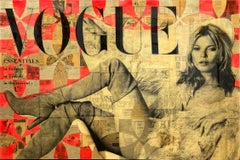
"Brigitte" Pop Art Portrait of Brigitte Bardot Décollage Painting on Canvas
Located in New York, NY
This piece depicts famous French actress and model Brigitte Bardot. Done with beautiful expressive colors and a distinctive street art design, this piece pops with energy and romanti...
Category

2010s Pop Art Portrait Paintings

Materials

Canvas, Mixed Media, Spray Paint, Acrylic
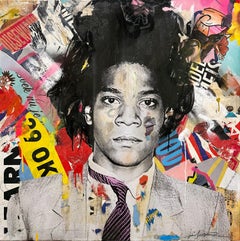
KISS IN THE JUNGLE
Located in CÓRDOBA, ES
Original painting by Daria Kusto. Acrylic markers on paper. The magic flow reality... Shipping from Spain, safely and promptly.
Category

2010s Pop Art Portrait Paintings

Materials

Permanent Marker

MARILYN - ANTICIPATION III
Located in Aventura, FL
Hand signed by the artist on verso. Hand Painted Unique Silkscreen on Canvas. Artwork is in excellent condition. Canvas is not stretched. Certificate of authenticity included. All...
Category

21st Century and Contemporary Pop Art Portrait Paintings

Materials

Canvas, Oil

FRIENDS
Located in CÓRDOBA, ES
Original painting by Daria Kusto. Acrylic markers on paper. The magic flow reality... Shipping from Spain, safely and promptly.
Category

2010s Pop Art Portrait Paintings

Materials

Permanent Marker

Queen Elizabeth II. Original Painting by Iryna Kastsova
Located in Zofingen, AG
Queen Elizabeth II. Painted in a modern style with brushes and a palette knife, it is Pop Art, expressionism, and realism. A bright palette of colors was used: yellow, green, pink, a...
Category

2010s Pop Art Portrait Paintings

Materials

Acrylic

In the water. Figurative Acrylic Painting, Minimalism, Pop art, Polish art
Located in Warsaw, PL
Contemporary figurative acrylic on canvas painting by Polish artist Joanna Woyda. Painting is in minimalistic, pop art style. The artwork depicts a boy standing in the water. He is v...
Category

2010s Pop Art Portrait Paintings

Materials

Canvas, Acrylic

An Apple A Day
Located in Atlanta, GA
From the artist: "The symbol of the Apple has held significance for humans throughout recorded history. In the bible it represents the forbidden. It was used by Newton to explain gra...
Category

21st Century and Contemporary Pop Art Portrait Paintings

Materials

Latex, Oil, Panel

An Apple A Day
An Apple A Day
$2,000 Sale Price
20% Off
Superman My Hero Forever - Large Original Textural Pop Art Superhero Painting
Located in Los Angeles, CA
Playing with the interaction between positive and negative space, strong colors on neutral backgrounds, Canadian artist Virginie Schroeder creates pop art portraits and iconic pop cu...
Category

21st Century and Contemporary Pop Art Portrait Paintings

Materials

Canvas, Mixed Media, Acrylic

Emoji Ancestral Portrait Acrylic Painting on Metal Plate with Wooden Frame
Located in FISTERRA, ES
This small-format acrylic portrait explores ancestral identity through a hybrid face shaped by emoji logic and stylized digital codes. Part of the Ancestor Clones group within Nata...
Category

2010s Pop Art Portrait Paintings

Materials

Metal

Framed Vibrant Pop Surreal Female Botanical Portrait. Acrylic on Canvas
Located in FISTERRA, ES
This original framed figurative painting by Natasha Lelenco blends surreal portraiture with botanical elements, capturing the essence of nature, transf...
Category

2010s Pop Art Portrait Paintings

Materials

Acrylic, Canvas

King Sponge, Sponge Bob, Painting, Pop Art, Street Art
Located in München, BY
Edition 5 Portrait of Sponge Bob JAY-C – the pseudonym of this innovative young artist known for his subversive use of familiar figures and symbols. Using ...
Category

2010s Pop Art Portrait Paintings

Materials

Mixed Media, Pigment, Archival Pigment
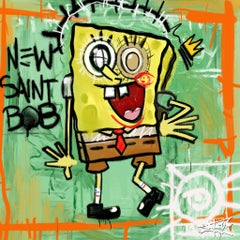
Currency #240 – Blue Circular Male Portrait with Japanese Text, Acrylic on Pine
Located in FISTERRA, ES
Round male portrait in blue and ochre, featuring Japanese text and a sculptural wood format that reflects on identity, journey, and value. Currency #240 is an acrylic painting on a ...
Category

2010s Pop Art Portrait Paintings

Materials

Wood, Spray Paint, Acrylic

Surrealist Figurative Portrait on Canvas, Green and Red Palette. "The Pirate"
Located in FISTERRA, ES
This surrealist figurative portrait on canvas merges traditional painting techniques with symbolic elements of contemporary art. Executed in acrylic on board, the piece measures 60 x...
Category

2010s Pop Art Portrait Paintings

Materials

Spray Paint, Acrylic, Board

"Elvis", Denied Andy Warhol Silver Black Pop Art Painting by Charles Lutz
Located in Brooklyn, NY
Elvis, Metallic Silver and Black Full Length Silkscreen Painting by Charles Lutz Silkscreen and silver enamel painted on vintage 1960's era linen with Artist's Denied stamp of the Andy Warhol Art Authentication Board. 82" x 40" inches 2010 Lutz's 2007 ''Warhol Denied'' series gained international attention by calling into question the importance of originality or lack thereof in the work of Andy Warhol. The authentication/denial process of the [[Andy Warhol Art Authentication Board]] was used to create value by submitting recreations of Warhol works for judgment with the full intention for the works to be formally marked "DENIED". The final product of the conceptual project being "officially denied" "Warhol" paintings authored by Lutz. Based on the full-length Elvis Presley paintings by Pop Artist Andy Warhol in 1964, this is likely one of his most iconic images, next to Campbell's Soup Cans and portraits of Jackie Kennedy, Marilyn Monroe, Liz Taylor, and Marlon Brando. This is the rarest of the Elvis works from the series, as Lutz sourced a vintage roll of 1960's primed artist linen which was used for this one Elvis. The silkscreen, like Warhol's embraced imperfections, like the slight double image printing of the Elvis image. Lutz received his BFA in Painting and Art History from Pratt Institute and studied Human Dissection and Anatomy at Columbia University, New York. Lutz's work deals with perceptions and value structures, specifically the idea of the transference of values. Lutz's most recently presented an installation of new sculptures dealing with consumerism at Frank Lloyd Wright's Fallingwater House in 2022. Lutz's 2007 Warhol Denied series received international attention calling into question the importance of originality in a work of art. The valuation process (authentication or denial) of the Andy Warhol Art Authentication Board was used by the artist to create value by submitting recreations of Warhol works for judgment, with the full intention for the works to be formally marked "DENIED" of their authenticity. The final product of this conceptual project is "Officially DENIED" "Warhol" paintings authored by Lutz. Later in 2013, Lutz went on to do one of his largest public installations to date. At the 100th Anniversary of Marcel Duchamp's groundbreaking and controversial Armory Show, Lutz was asked by the curator of Armory Focus: USA and former Director of The Andy Warhol Museum, Eric Shiner to create a site-specific installation representing the US. The installation "Babel" (based on Pieter Bruegel's famous painting) consisted of 1500 cardboard replicas of Warhol's Brillo Box (Stockholm Type) stacked 20 ft tall. All 1500 boxes were then given to the public freely, debasing the Brillo Box as an art commodity by removing its value, in addition to debasing its willing consumers. Elvis was "the greatest cultural force in the Twentieth Century. He introduced the beat to everything, and he changed everything - music, language, clothes, it's a whole new social revolution." Leonard Bernstein in: Exh. Cat., Boston, The Institute of Contemporary Art and traveling, Elvis + Marilyn 2 x Immortal, 1994-97, p. 9. Andy Warhol "quite simply changed how we all see the world around us." Kynaston McShine in: Exh. Cat., New York, Museum of Modern Art (and traveling), Andy Warhol: Retrospective, 1996, p. 13. In the summer of 1963 Elvis Presley was just twenty-eight years old but already a legend of his time. During the preceding seven years - since Heartbreak Hotel became the biggest-selling record of 1956 - he had recorded seventeen number-one singles and seven number-one albums; starred in eleven films, countless national TV appearances, tours, and live performances; earned tens of millions of dollars; and was instantly recognized across the globe. The undisputed King of Rock and Roll, Elvis was the biggest star alive: a cultural phenomenon of mythic proportions apparently no longer confined to the man alone. As the eminent composer Leonard Bernstein put it, Elvis was "the greatest cultural force in the Twentieth Century. He introduced the beat to everything, and he changed everything - music, language, clothes, it's a whole new social revolution." (Exh. Cat., Boston, The Institute of Contemporary Art (and traveling), Elvis + Marilyn 2 x Immortal, 1994, p. 9). In the summer of 1963 Andy Warhol was thirty-four years old and transforming the parameters of visual culture in America. The focus of his signature silkscreen was leveled at subjects he brilliantly perceived as the most important concerns of day to day contemporary life. By appropriating the visual vernacular of consumer culture and multiplying readymade images gleaned from newspapers, magazines and advertising, he turned a mirror onto the contradictions behind quotidian existence. Above all else he was obsessed with themes of celebrity and death, executing intensely multifaceted and complex works in series that continue to resound with universal relevance. His unprecedented practice re-presented how society viewed itself, simultaneously reinforcing and radically undermining the collective psychology of popular culture. He epitomized the tide of change that swept through the 1960s and, as Kynaston McShine has concisely stated, "He quite simply changed how we all see the world around us." (Exh. Cat., New York, Museum of Modern Art (and traveling), Andy Warhol: Retrospective, 1996, p. 13). Thus in the summer of 1963 there could not have been a more perfect alignment of artist and subject than Warhol and Elvis. Perhaps the most famous depiction of the biggest superstar by the original superstar artist, Double Elvis is a historic paradigm of Pop Art from a breath-taking moment in Art History. With devastating immediacy and efficiency, Warhol's canvas seduces our view with a stunning aesthetic and confronts our experience with a sophisticated array of thematic content. Not only is there all of Elvis, man and legend, but we are also presented with the specter of death, staring at us down the barrel of a gun; and the lone cowboy, confronting the great frontier and the American dream. The spray painted silver screen denotes the glamour and glory of cinema, the artificiality of fantasy, and the idea of a mirror that reveals our own reality back to us. At the same time, Warhol's replication of Elvis' image as a double stands as metaphor for the means and effects of mass-media and its inherent potential to manipulate and condition. These thematic strata function in simultaneous concert to deliver a work of phenomenal conceptual brilliance. The portrait of a man, the portrait of a country, and the portrait of a time, Double Elvis is an indisputable icon for our age. The source image was a publicity still for the movie Flaming Star, starring Presley as the character Pacer Burton and directed by Don Siegel in 1960. The film was originally intended as a vehicle for Marlon Brando and produced by David Weisbart, who had made James Dean's Rebel Without a Cause in 1955. It was the first of two Twentieth Century Fox productions Presley was contracted to by his manager Colonel Tom Parker, determined to make the singer a movie star. For the compulsive movie-fan Warhol, the sheer power of Elvis wielding a revolver as the reluctant gunslinger presented the zenith of subject matter: ultimate celebrity invested with the ultimate power to issue death. Warhol's Elvis is physically larger than life and wears the expression that catapulted him into a million hearts: inexplicably and all at once fearful and resolute; vulnerable and predatory; innocent and explicit. It is the look of David Halberstam's observation that "Elvis Presley was an American original, the rebel as mother's boy, alternately sweet and sullen, ready on demand to be either respectable or rebellious." (Exh. Cat., Boston, Op. Cit.). Indeed, amidst Warhol's art there is only one other subject whose character so ethereally defies categorization and who so acutely conflated total fame with the inevitability of mortality. In Warhol's work, only Elvis and Marilyn harness a pictorial magnetism of mythic proportions. With Marilyn Monroe, whom Warhol depicted immediately after her premature death in August 1962, he discovered a memento mori to unite the obsessions driving his career: glamour, beauty, fame, and death. As a star of the silver screen and the definitive international sex symbol, Marilyn epitomized the unattainable essence of superstardom that Warhol craved. Just as there was no question in 1963, there remains still none today that the male equivalent to Marilyn is Elvis. However, despite his famous 1968 adage, "If you want to know all about Andy Warhol, just look at the surface of my paintings" Warhol's fascination held purpose far beyond mere idolization. As Rainer Crone explained in 1970, Warhol was interested in movie stars above all else because they were "people who could justifiably be seen as the nearest thing to representatives of mass culture." (Rainer Crone, Andy Warhol, New York, 1970, p. 22). Warhol was singularly drawn to the idols of Elvis and Marilyn, as he was to Marlon Brando and Liz Taylor, because he implicitly understood the concurrence between the projection of their image and the projection of their brand. Some years after the present work he wrote, "In the early days of film, fans used to idolize a whole star - they would take one star and love everything about that star...So you should always have a product that's not just 'you.' An actress should count up her plays and movies and a model should count up her photographs and a writer should count up his words and an artist should count up his pictures so you always know exactly what you're worth, and you don't get stuck thinking your product is you and your fame, and your aura." (Andy Warhol, The Philosophy of Andy Warhol (From A to B and Back Again), San Diego, New York and London, 1977, p. 86). The film stars of the late 1950s and early 1960s that most obsessed Warhol embodied tectonic shifts in wider cultural and societal values. In 1971 John Coplans argued that Warhol was transfixed by the subject of Elvis, and to a lesser degree by Marlon Brando and James Dean, because they were "authentically creative, and not merely products of Hollywood's fantasy or commercialism. All three had originative lives, and therefore are strong personalities; all three raised - at one level or another - important questions as to the quality of life in America and the nature of its freedoms. Implicit in their attitude is a condemnation of society and its ways; they project an image of the necessity for the individual to search for his own future, not passively, but aggressively, with commitment and passion." (John Coplans, "Andy Warhol and Elvis Presley," Studio International, vol. 181, no. 930, February 1971, pp. 51-52). However, while Warhol unquestionably adored these idols as transformative heralds, the suggestion that his paintings of Elvis are uncritical of a generated public image issued for mass consumption fails to appreciate the acuity of his specific re-presentation of the King. As with Marilyn, Liz and Marlon, Warhol instinctively understood the Elvis brand as an industrialized construct, designed for mass consumption like a Coca-Cola bottle or Campbell's Soup Can, and radically revealed it as a precisely composed non-reality. Of course Elvis offered Warhol the biggest brand of all, and he accentuates this by choosing a manifestly contrived version of Elvis-the-film-star, rather than the raw genius of Elvis as performing Rock n' Roll pioneer. A few months prior to the present work he had silkscreened Elvis' brooding visage in a small cycle of works based on a simple headshot, including Red Elvis, but the absence of context in these works minimizes the critical potency that is so present in Double Elvis. With Double Elvis we are confronted by a figure so familiar to us, yet playing a role relating to violence and death that is entirely at odds with the associations entrenched with the singer's renowned love songs. Although we may think this version of Elvis makes sense, it is the overwhelming power of the totemic cipher of the Elvis legend that means we might not even question why he is pointing a gun rather than a guitar. Thus Warhol interrogates the limits of the popular visual vernacular, posing vital questions of collective perception and cognition in contemporary society. The notion that this self-determinedly iconic painting shows an artificial paradigm is compounded by Warhol's enlistment of a reflective metallic surface, a treatment he reserved for his most important portraits of Elvis, Marilyn, Marlon and Liz. Here the synthetic chemical silver paint becomes allegory for the manufacture of the Elvis product, and directly anticipates the artist's 1968 statement: "Everything is sort of artificial. I don't know where the artificial stops and the real starts. The artificial fascinates me, the bright and shiny..." (Artist quoted in Exh. Cat., Stockholm, Moderna Museet and traveling, Andy Warhol, 1968, n.p.). At the same time, the shiny silver paint of Double Elvis unquestionably denotes the glamour of the silver screen and the attractive fantasies of cinema. At exactly this time in the summer of 1963 Warhol bought his first movie camera and produced his first films such as Sleep, Kiss and Tarzan and Jane Regained. Although the absence of plot or narrative convention in these movies was a purposely anti-Hollywood gesture, the unattainability of classic movie stardom still held profound allure and resonance for Warhol. He remained a celebrity and film fanatic, and it was exactly this addiction that so qualifies his sensational critique of the industry machinations behind the stars he adored. Double Elvis was executed less than eighteen months after he had created 32 Campbell's Soup Cans for his immortal show at the Ferus Gallery, Los Angeles in July and August 1962, and which is famously housed in the Museum of Modern Art, New York. In the intervening period he had produced the series Dollar Bills, Coca-Cola Bottles, Suicides, Disasters, and Silver Electric Chairs, all in addition to the portrait cycles of Marilyn and Liz. This explosive outpouring of astonishing artistic invention stands as definitive testament to Warhol's aptitude to seize the most potent images of his time. He recognized that not only the product itself, but also the means of consumption - in this case society's abandoned deification of Elvis - was symptomatic of a new mode of existence. As Heiner Bastian has precisely summated: "the aura of utterly affirmative idolization already stands as a stereotype of a 'consumer-goods style' expression of an American way of life and of the mass-media culture of a nation." (Exh. Cat., Berlin, Neue Nationalgalerie (and traveling), Andy Warhol: Retrospective, 2001, p. 28). For Warhol, the act of image replication and multiplication anaesthetized the effect of the subject, and while he had undermined the potency of wealth in 200 One Dollar Bills, and cheated the terror of death by electric chair in Silver Disaster # 6, the proliferation of Elvis here emasculates a prefabricated version of character authenticity. Here the cinematic quality of variety within unity is apparent in the degrees to which Presley's arm and gun become less visible to the left of the canvas. The sense of movement is further enhanced by a sense of receding depth as the viewer is presented with the ghost like repetition of the figure in the left of the canvas, a 'jump effect' in the screening process that would be replicated in the multiple Elvis paintings. The seriality of the image heightens the sense of a moving image, displayed for us like the unwinding of a reel of film. Elvis was central to Warhol's legendary solo exhibition organized by Irving Blum at the Ferus Gallery in the Fall of 1963 - the show having been conceived around the Elvis paintings since at least May of that year. A well-known installation photograph shows the present work prominently presented among the constant reel of canvases, designed to fill the space as a filmic diorama. While the Elvis canvases...
Category

21st Century and Contemporary Pop Art Portrait Paintings

Materials

Enamel

King Sponge, Sponge Bob, Painting, Pop Art, Street Art
Located in München, BY
Edition 5 Portrait of Sponge Bob JAY-C – the pseudonym of this innovative young artist known for his subversive use of familiar figures and symbols. Using ...
Category

2010s Pop Art Portrait Paintings

Materials

Mixed Media, Pigment, Archival Pigment

Happiness. Figurative Acrylic Painting, Minimalism, Pop art, Polish art
Located in Warsaw, PL
Contemporary figurative acrylic on canvas painting by Polish artist Joanna Woyda. Painting is in minimalistic, pop art style. The artwork depicts a girl standing on the shoreline, sh...
Category

2010s Pop Art Portrait Paintings

Materials

Canvas, Acrylic

James Dean Smoking Cigarette Portrait Pop Art by British Urban Graffiti Artist
Located in Preston, GB
James Dean Smoking Cigarette Portrait Pop Art by British Urban Graffiti Artist, Chris Pegg. Chris Pegg is a self-taught Street Artist producing artwork with a strong social commentar...
Category

2010s Pop Art Portrait Paintings

Materials

Canvas, Paint, Cotton Canvas, Ink, Mixed Media, Oil, Spray Paint, Acryli...

Pop Art portrait paintings for sale on 1stDibs.

Find a wide variety of authentic Pop Art portrait paintings available for sale on 1stDibs. Works in this style were very popular during the 21st Century and Contemporary, but contemporary artists have continued to produce works inspired by this movement. If you’re looking to add portrait paintings created in this style to introduce contrast in an otherwise neutral space in your home, the works available on 1stDibs include elements of blue, orange, pink, yellow and other colors. Many Pop art paintings were created by popular artists on 1stDibs, including Steve Kaufman, Iryna Kastsova, Virginie Schroeder, and Annemarie Ambrosoli. Frequently made by artists working with Paint, and Acrylic Paint and other materials, all of these pieces for sale are unique and have attracted attention over the years. Not every interior allows for large Pop Art portrait paintings, so small editions measuring 7.88 inches across are also available. Prices for portrait paintings made by famous or emerging artists can differ depending on medium, time period and other attributes. On 1stDibs, the price for these items starts at $1 and tops out at $699,000, while the average work sells for $4,000.

Recently Viewed

View All