Items Similar to Erasmus of Rotterdam
Want more images or videos?
Request additional images or videos from the seller
1 of 9
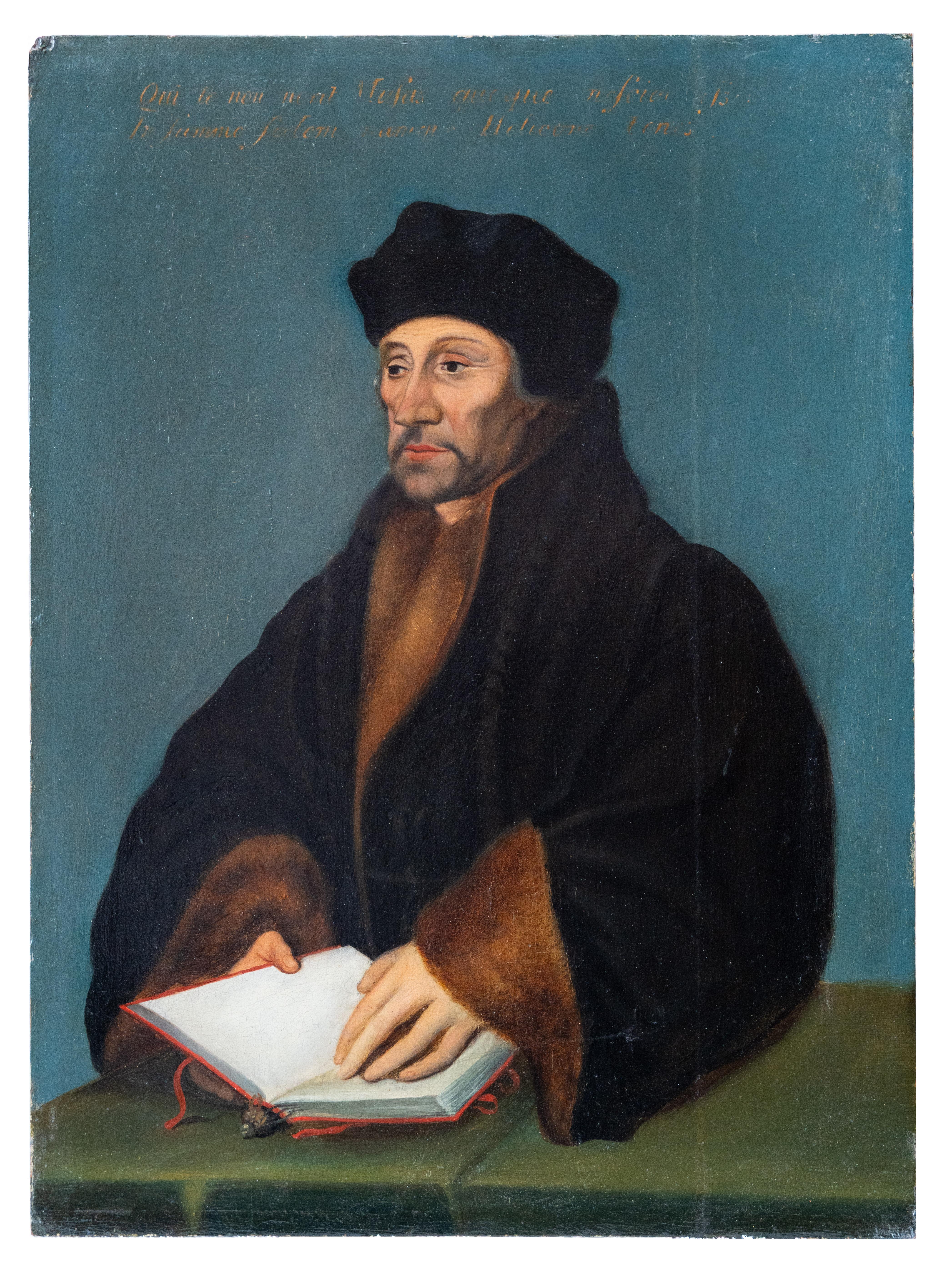
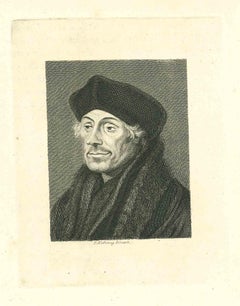
Thomas ChurchyardErasmus of Rotterdamcirca 1829
circa 1829
$13,784.04
£10,000
€11,689.43
CA$18,861.92
A$20,548.39
CHF 10,851.68
MX$246,678.19
NOK 138,262.86
SEK 126,367.06
DKK 87,318.66
About the Item
Thomas Churchyard 1798-1865, was an English painter and Lawyer. Churchyard was predominantly a landscape painter in oil and watercolour, however he was educated at the same school as John Constable and lived in Suffolk in Woodbridge close to Constable's home. Consequently Churchyard grew up wanting to be a painter but was realistic enough to train as a Lawyer and to supplement his artistic ambitions with his income from his legal practice. Churchyard was a very competent and ambitious scholar and resided with the schoolmaster being the most promising pupil, he was a gifted student in the classics, French, the poets, and religious speculation among other subjects. Due to his study of religious speculation he became knowledgeable of Erasmus and therefore painted this picture in honour of the greatest mind of the late 15th and early 16th Centuries. Churchyard was frustrated in his ambition to become a professionally active artist and travelled to London to achieve his goal but failed and returned to Woodbridge to continue in his legal profession. This portrait is very well executed study of the Holbein original and I think worthy of the title he desired, professionally accomplished artist.
About the Seller
5.0
Vetted Professional Seller
Every seller passes strict standards for authenticity and reliability
1stDibs seller since 2023
19 sales on 1stDibs
Typical response time: 7 hours
- ShippingRetrieving quote...Shipping from: Douglas, United Kingdom
- Return Policy
More From This Seller
View AllPortrait of a Sculptor
By Andrea Del Sarto
Located in Douglas, Isle of Man
After Andrea Del Sarto 1486 - 1530, who was an Italian Renaissance painter and draughtsman. Del Sarto worked in Fresco decorating, portrait painting and as a painter of alter pieces,...
Category
Mid-19th Century Portrait Paintings
Materials
Canvas, Oil
Portrait of a Venetian Nobleman
Located in Douglas, Isle of Man
Attributed to, Alessandro Longhi 1733-1813, was a prominent Venetian portrait painter, printmaker, and biographer. The son of the famous genre painter Pietro Longhi, he is known for his detailed oil portraits of the Venetian aristocracy and his valuable book on contemporary Venetian painters.
Longhi early life and training
Born: Alessandro Longhi was born on June 12, 1733, in Venice.
He received his initial training from his father, Pietro Longhi.
He later studied under Giuseppe Nogari, a respected portraitist in Venice during the 18th century, and was elected to the Venetian Academy in 1759.
Longhi specialized in portraiture, primarily depicting the nobles and officials of the Republic of Venice. His paintings are a valuable record of the social and political structure of 18th-century Venice.
Rococo aesthetic: Working in the Rococo style, he was adept at capturing the elegance and social status of his subjects. He paid meticulous attention to the elaborate robes, wigs, and emblems of office that signified his subjects' power.
While his official state portraits could be stiff and formal, his portraits of less noble patrons demonstrated a greater sense of realism and psychological insight.
Longhi was also an accomplished printmaker, particularly in etching. His etching technique showed an awareness of Rembrandt's work, and he used this skill to reproduce his and his father's paintings.
In 1762, he published Compendio delle vite de' pittori veneziani istorici più rinomati del presente secolo, a biographical dictionary of contemporary Venetian painters that is still an important resource for art historians. Longhi illustrated the book with etched portraits of the artists.
The portrait of Carlo Goldoni: One of his most celebrated paintings is his portrait of the Venetian playwright and librettist Carlo Goldoni.
For his election to the Venetian Academy, he painted this allegory, which features a personified figure of Painting.
His known portraits include Portrait of a Lady (Uffizi Gallery, Florence), Portrait of a Musician, and various portraits of Venetian nobles and officials.
I have included further albeit identical biographies of Alessandro Longhi.
Alessandro Longhi (born June 12, 1733, Venice—died 1813, Venice) was a painter, etcher, and biographer of Venetian artists, and was the most important Venetian portrait painter of his day.
The son of the painter Pietro Longhi, he was given his first training by his father, who quite soon put him to study under the portrait painter Giuseppe Nogari. In 1759 he was elected a member of the Venetian academy, for which he painted one of his rare allegorical pictures, “Painting and Merit.” In 1762 Longhi issued his book Compendio delle Vite de’ Pittori Veneziani Istorici piu rinomati del presente secolo con sui ritratti dal naturale delineati ed indisi, one of the most important source books for the history of Venetian 18th-century painting. Both portraits and text were printed from plates he etched. Longhi’s facilely rendered portraits are largely generalized likenesses lacking any acuity of character observation. He mainly portrayed the leading Venetian luminaries and dignitaries of his day in a style that drew upon his father’s Rococo manner and 16th-century traditions of Venetian Renaissance portraiture.
The personal details available for the painter Alessandro Longhi are limited, but his biography is intertwined with that of his family and the city of Venice. He was the son of a successful painter, which set his artistic path, and is known for creating sensitive and realistic portraits that captured the social atmosphere of 18th-century Venice.
Alessandro was born in Venice in 1733 to the celebrated genre painter Pietro Longhi. He received his early training from his father before studying under another prominent portraitist, Giuseppe Nogari.
A contrast to his father: While his father was known for painting scenes of everyday Venetian life, Alessandro focused almost exclusively on portraiture. His skill enabled him to capture the intimate psychology and character of his subjects, a quality especially evident in his portraits of less noble patrons.
Election to the academy: In 1759, Alessandro was elected to the Accademia dei Pittori, the Venetian Academy of Painting. His election solidified his reputation as a master of the Rococo style.
Beyond painting, Longhi was an accomplished printmaker, primarily producing etchings that reproduced his own works and those of his father. In 1762, he published the Compendio delle vite de' pittori veneziani, a collection of biographies of contemporary Venetian painters, which is an important historical resource.
He became a prominent portraitist for Venice's upper class, including nobles and state officials. His official state portraits featured grand, full-length depictions of his subjects in their elaborate robes and emblems of office.
Emphasis on realism: In contrast to the stylized nature of official portraits, Alessandro was praised for the "reality" he captured in works featuring common people. For example, his 1760 portrait of an innkeeper was celebrated for its realistic subject matter and "nuova maniera" (new manner).
The art historian Olimpia Theodoli noted that Longhi's etching technique showed he had a firsthand knowledge of Rembrandt's work.
Among his more famous works are a sensitive portrait of playwright Carlo Goldoni and the painting Portrait of a Wine Butler. He also produced religious and allegorical works, including paintings of the "Apostles" for the church of San Pantalon in Venice.
This painting has been carefully conserved and the frame also, the frame looks to be original to the picture but we have no way of confirming this but we believe it to be so. 18th Century Italian portraits...
Category
Mid-18th Century Portrait Paintings
Materials
Canvas, Oil
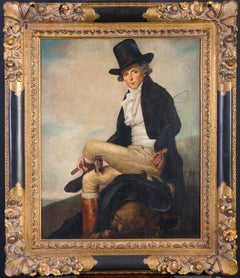
Portrait of Pierre Seriziat
Located in Douglas, Isle of Man
Copy of a Portrait of Pierre Seriziat by Jacques Louis David which was painted in 1795 , David 1748-1825, this picture is a direct copy by an artist by the name of F. Hamilton. There...
Category
Late 20th Century Portrait Paintings
Materials
Canvas, Oil, C Print
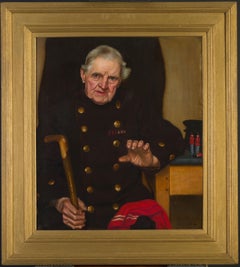
The Chelsea Pensioner
Located in Douglas, Isle of Man
Anne Marjorie Robinson 1858 - 1924, was a British painter in oil and watercolour of portraits and miniatures. Annie as she was sometimes known was born in Belfast Northern Ireland and moved to London in 1907, there she studied miniature portrait painting under the best miniature painter of the time Alyn Williams. Annie exhibited at the Royal Academy, the National Gallery in Ireland, the Belfast Museum, the Walker Art Gallery in Liverpool and the Royal Hibernian Academy, and others. She was a well known and much admired painter in Northern Ireland and a number of her works are held in the Ulster Museum. This picture is of a old soldier who resided with the Chelsea Pensioners and he is known a such. He looks as if he is wearing the coat of an officer of the Royal Marines Light Infantry and the medals he is wearing and the ribbons are for the Indian Mutiny issued between 1857 - 1859, he is also wearing the General Indian Service Medal which was issued between 1852 -1859. As an officer he would have worn this darker, and more expensive coat but the general service infantry would have worn red simply because it was cheaper to produce in mass production methods during the 19th Century. Visibility did not seem to be considered an issue then as the troops would have marched directly towards the enemy firing and bayonetting away without the later consideration of camouflage and personal survival. The advantage of camouflage did not come into force until WW1. The buttons on the coat are most interesting as they are dated back to the Duke of Wellington's time, and reflect the imitation of Royal and upper class serviceman's fashion in general. The frame appears to be original to the painting and the labels show that it was exhibited almost certainly at the Royal Academy, and the other label with the London address shows the home of what was once the home of James McNeil Whistler. I am extremely thankful to Jonathon Russell, from the Annie Swynnerton website, for his help in catalouging this painting and the help he received from the National Army Museum Experience Team.
I have included a further biography here:-
Annie Marjorie Robinson (1858–1924) was a Belfast-born Irish artist known for her portraits and miniature paintings, as well as for her sculptures.
Education and early career
Early training: Robinson trained as an illuminator and attended the Belfast Government School of Design.
Move to London: In 1907, she relocated to London to focus on portraiture, studying under Alyn Williams of the Royal Society of Miniature Painters. While there, she also studied modelling.
Return to Belfast: She returned to Belfast in 1914 after the outbreak of World War I.
Exhibitions and memberships
Robinson was a frequent exhibitor throughout her career:
Royal Academy: She exhibited nine works at the Royal Academy in London between 1914 and 1923.
Royal Hibernian Academy: Her work was regularly shown at the Royal Hibernian Academy in Dublin.
Other venues: She also exhibited at the Walker Art Gallery in Liverpool and with the Belfast Arts Society.
Arts & Crafts Society: In 1917, she displayed two decorative panels at the 5th exhibition of the Arts & Crafts Society in Dublin.
Robinson was an active member of the artistic community and held several prestigious memberships:
Associate of the Royal Miniature Society (ARMS), elected in 1912.
Associate of the Society of Women Artists (ASWA), elected in 1918.
Member of the Belfast Ramblers' Sketching Club (1886–1890) and the Belfast Arts Society (1895–1924).
Artworks and legacy
Subject matter: A regular subject in Robinson's work was Saint Brigid of Kildare. Paintings exploring this theme, including It Was Brigit Wove the First Cloth in Ireland, are now part of a triptych in the Ulster Museum.
Legacy at Ulster Museum: After her death on October 22, 1924, her brother John B. Robinson donated 22 miniature portraits, as well as sculptures, watercolours, and an oil-on-canvas self-portrait, to the Ulster Museum.
Other posthumous tributes
Memorial exhibition: In 1925, the Belfast Municipal Art Gallery held an exhibition of Robinson's oil paintings...
Category
1890s Portrait Paintings
Materials
Canvas, Oil
The Theatre
Located in Douglas, Isle of Man
John Baptista Verbruggen was an English actor and painter born of Dutch descent. His date of birth is unknown but his death was recorded in 1708. His historical biography is confusin...
Category
Late 17th Century Interior Paintings
Materials
Oil, Panel
Portrait of Tiziano Vecellio
Titian
Located in Douglas, Isle of Man
Joseph Arnold Freeman 1729-1799, was an English painter and draftsman. Freeman's middle name has been acquired through knowledge from an elderly now deceased art scholar, this is unr...
Category
Late 18th Century Portrait Drawings and Watercolors
Materials
Paper, Pencil
You May Also Like
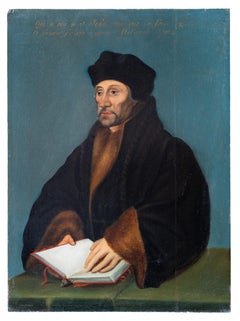
Erasmus of Rotterdam
By English School
Located in GB
Hans Holbein the Younger (1497/98 – 1543) was one of the greatest painters of the Northern Renaissance. Born in Augsburg, Germany, he was the son of Hans Holbein the Elder, also a pa...
Category
19th Century Old Masters Portrait Paintings
Materials
Oil, Wood Panel
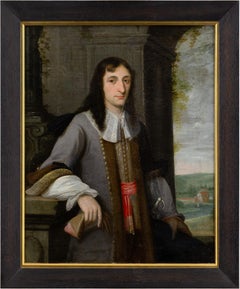
17th-Century Flemish School, Portrait Of A Gentleman In A Justaucorps, Oil
Located in Cheltenham, GB
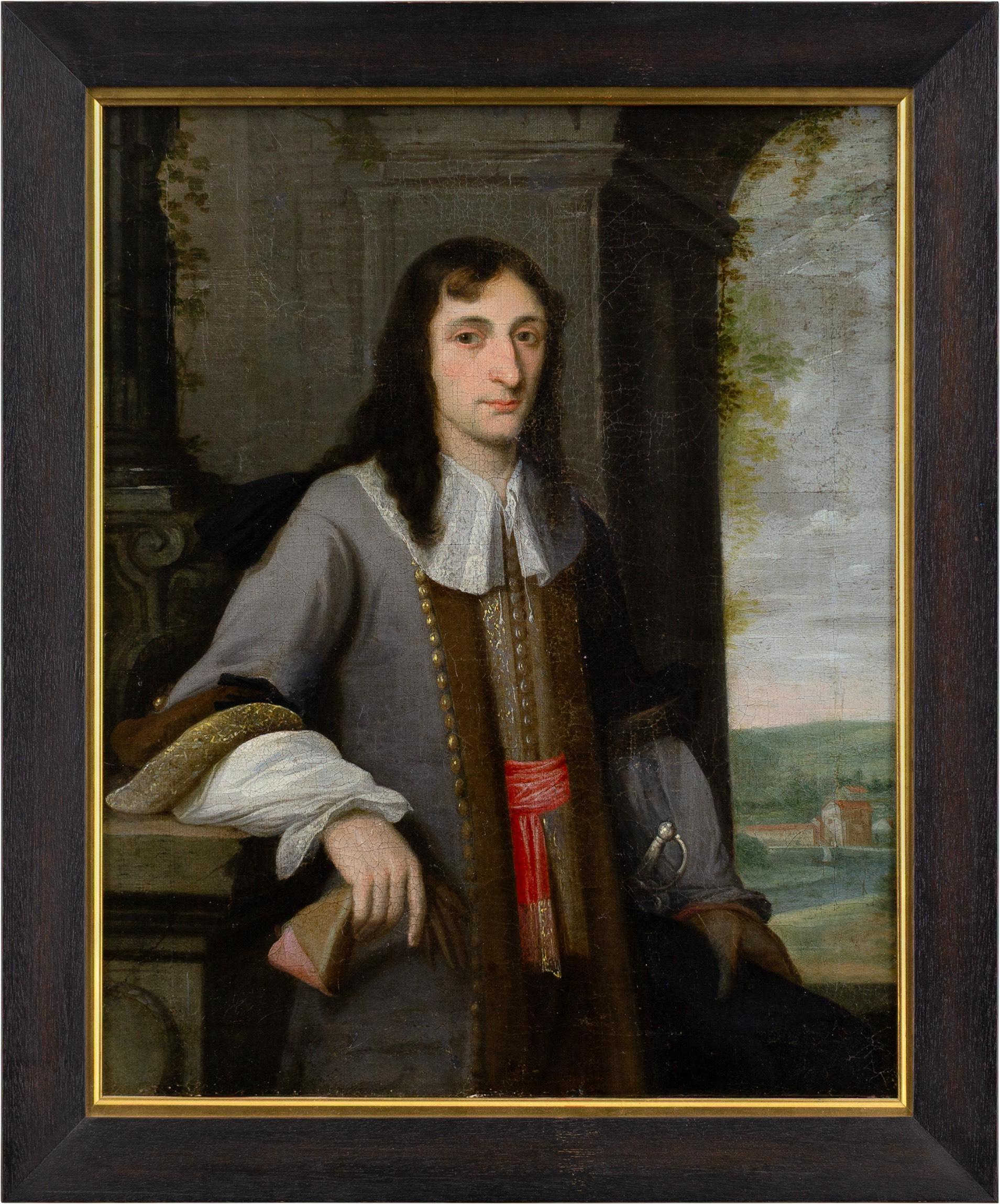
This fine late 17th-century Flemish portrait depicts a distinguished gentleman dressed in the elaborate fashions of the 1670s. He wears a long, collarless coat known as a justaucorps...
Category
1670s Old Masters Portrait Paintings
Materials
Canvas, Oil
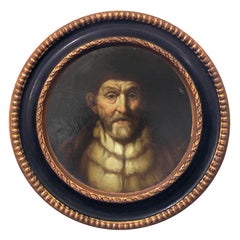
PHILOSOPHER - Dutch, Flemish, Baroque - Figurative Oil on Canvas Painting
By Ciro De Rosa
Located in Napoli, IT
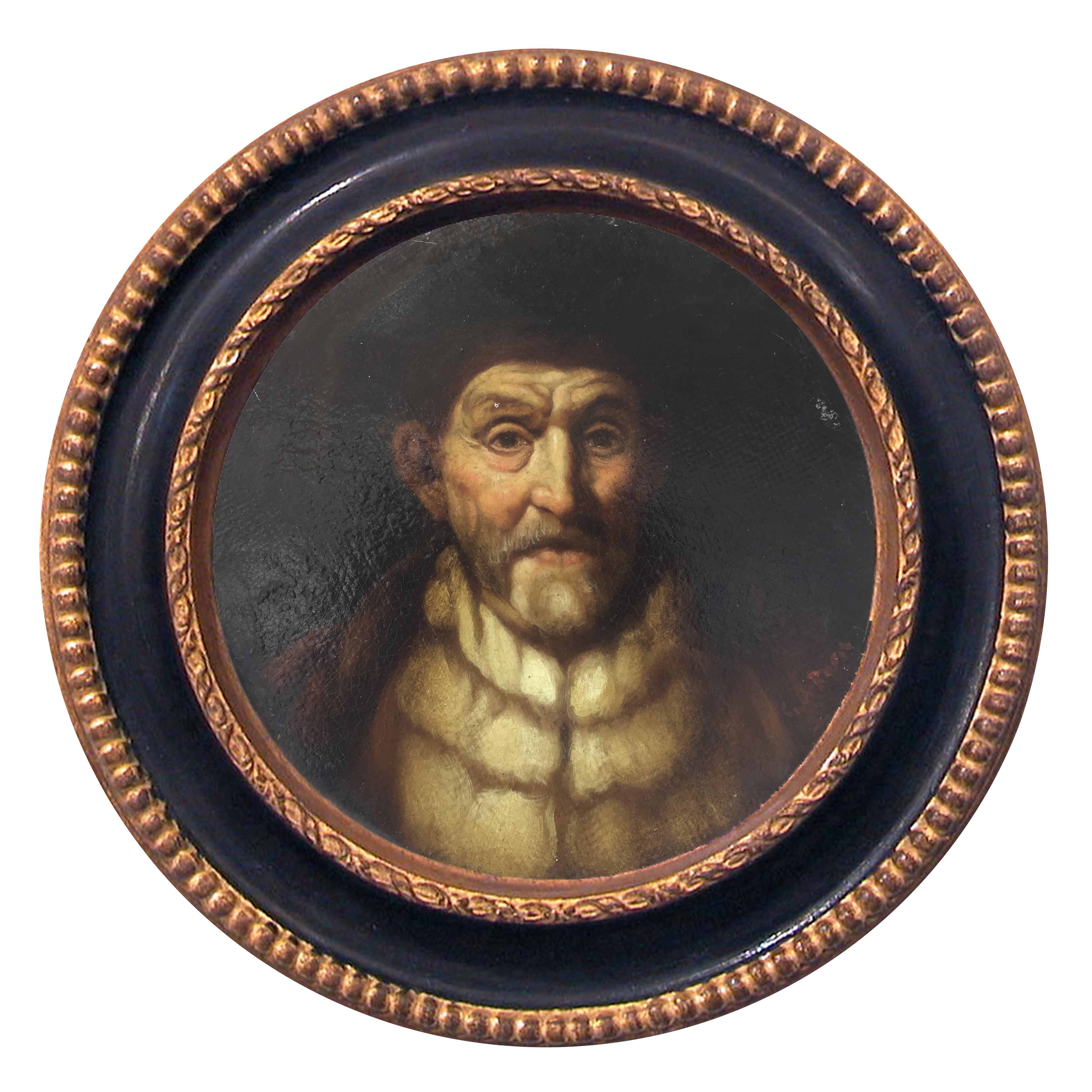
Philosopher - Ciro De Rosa Italia 2008 - Oil on canvas cm. 26x26
Gold leaf gilded wooden frame available on requestThe evocative portrait of Ciro De Rosa portrays an elderly man with...
Category
Early 2000s Baroque Portrait Paintings
Materials
Canvas, Oil
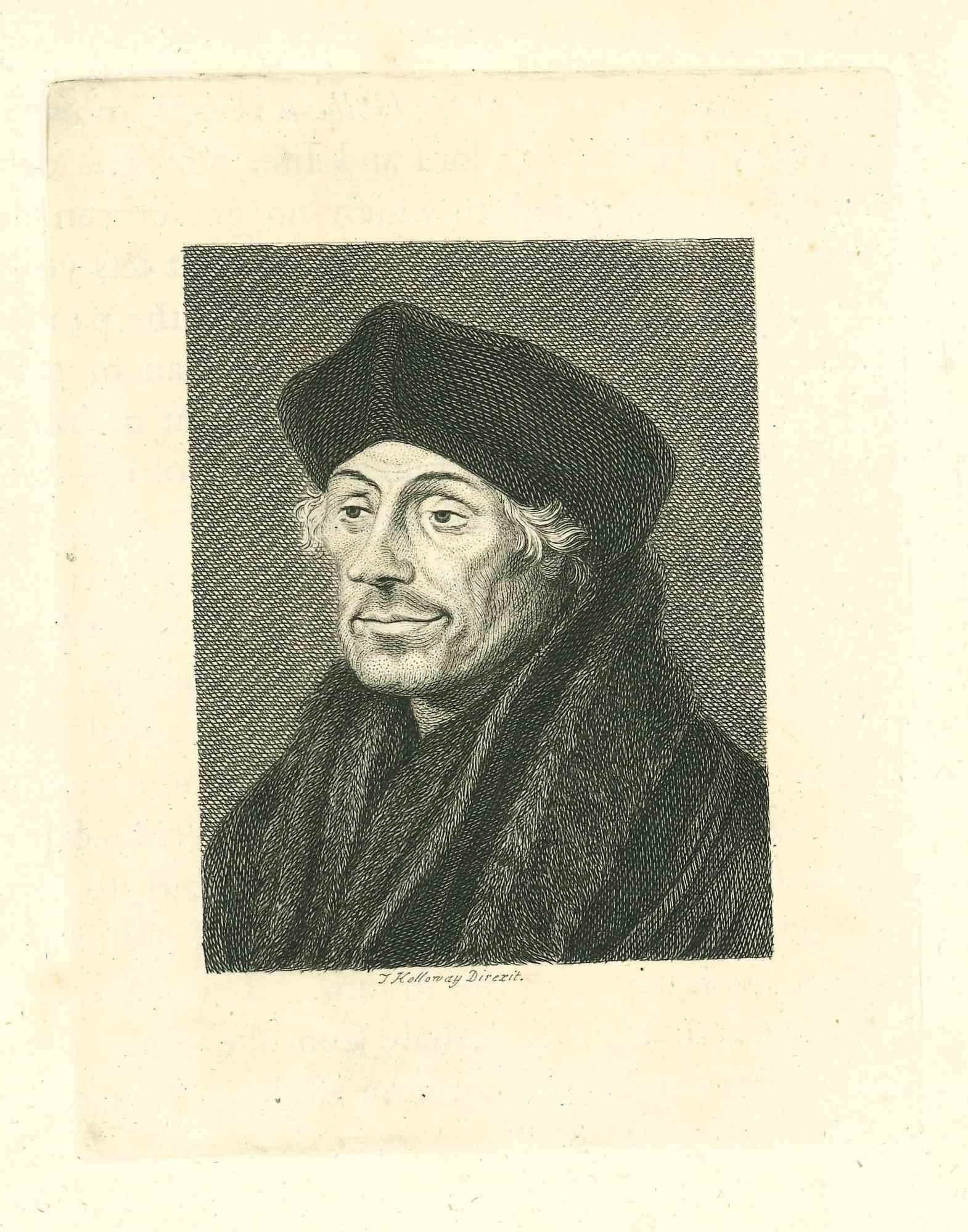
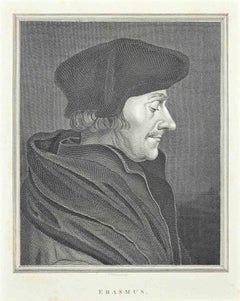
Portrait of Erasmus - Original Etching by Thomas Holloway - 1810
By Thomas Holloway
Located in Roma, IT
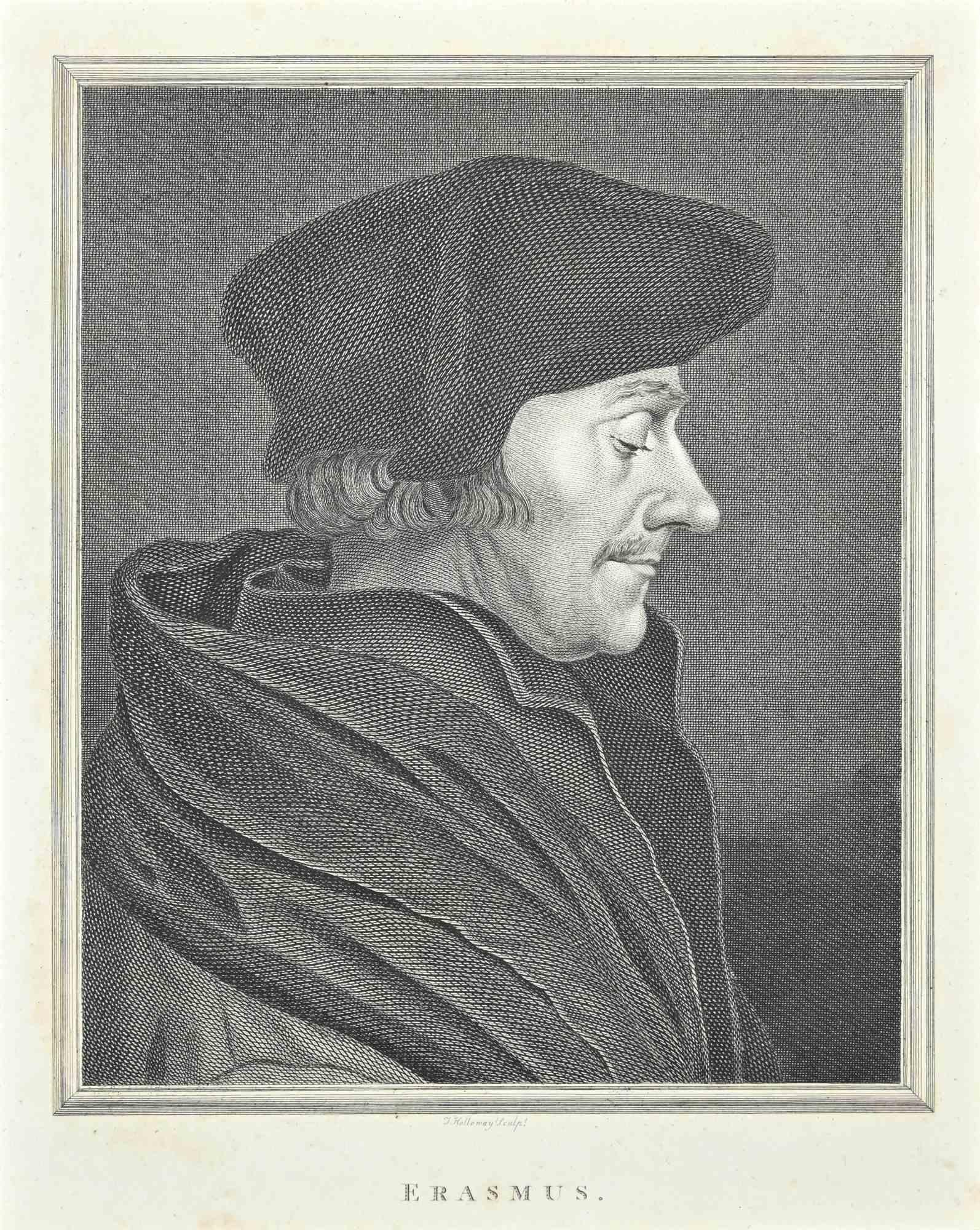
Portrait of Erasmus is an original etching artwork realized by Thomas Holloway for Johann Caspar Lavater's "Essays on Physiognomy, Designed to Promote the Knowledge and the Love of M...
Category
1810s Modern Figurative Prints
Materials
Etching
Portrait of Erasmus of Rotterdam - Original Etching by Thomas Holloway - 1810
By Thomas Holloway
Located in Roma, IT
Portrait of Erasmus of Rotterdam is an original etching artwork realized by Thomas Holloway for Johann Caspar Lavater's "Essays on Physiognomy, Designed to Promote the Knowledge and ...
Category
1810s Modern Figurative Prints
Materials
Etching
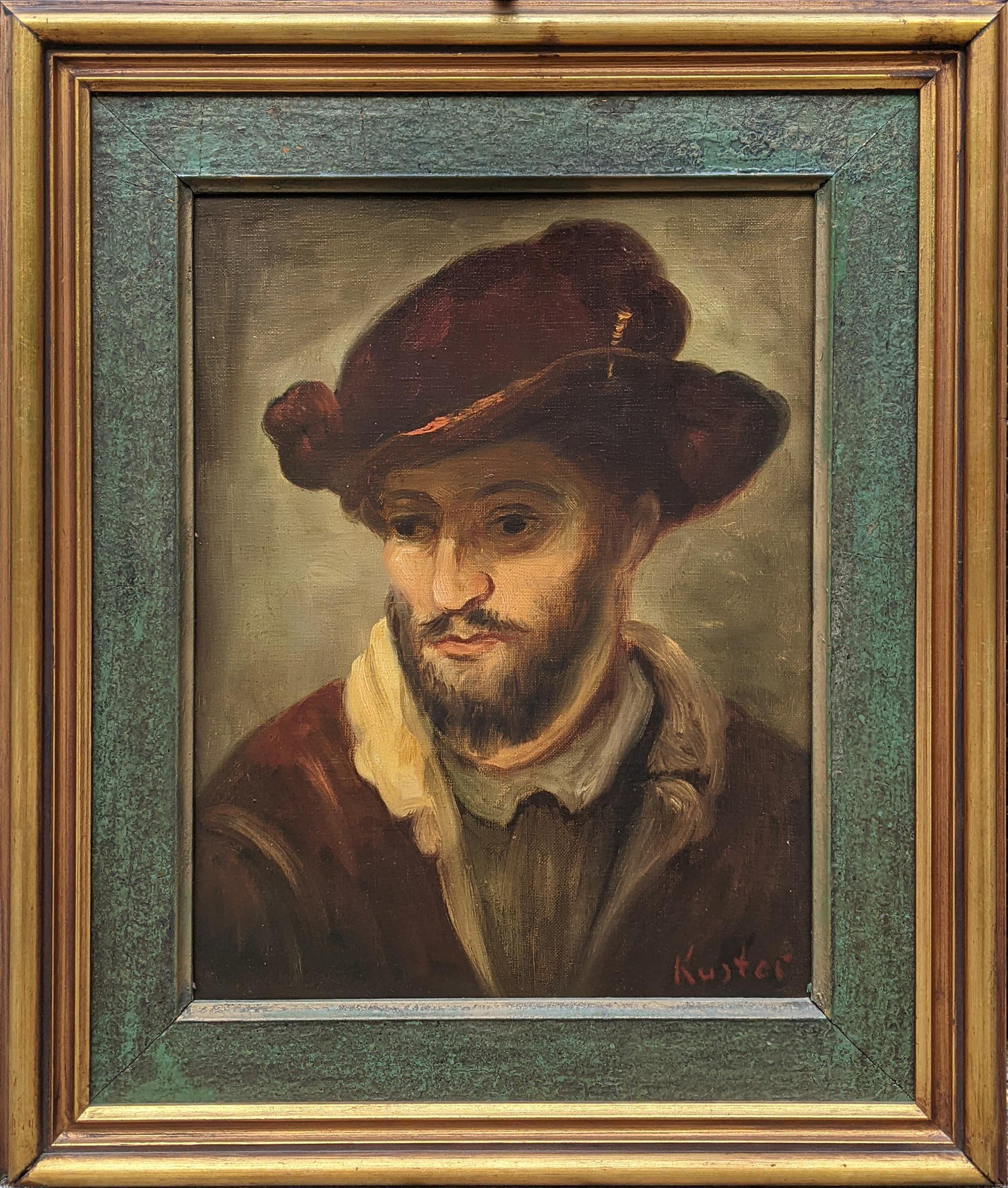
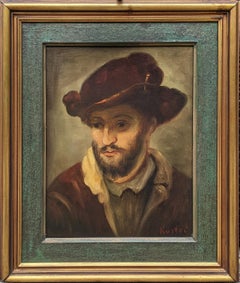
Portrait of a Man, Framed Oil Painting on Canvas after Friedrich Schaarschmidt
Located in Long Island City, NY
This painting, signed in the lower right "Kuster", is a stylized recreation of "Untitled - Portrait of a Man" by Friedrich Schaarschmidt. Like the figure in Schaarschmidt's painting,...
Category
Mid-20th Century Portrait Paintings
Materials
Oil
More Ways To Browse
Andy Warhol Studio 54
Battista Salvi
Battista Sassoferrato
Female Self Portrait Paintings
Floris Frans
Girl Privates
Jack King
Jorunn Mulen
Margaret Thomas
Oil Painting And Sir
Old American Portraits
Peasant Girl Painting
Peter Max Zero
Pierre Mignard
Portrait Of A Knight
Portrait Painting Of Princess
Reuben Tam
Shotgun Shell Art