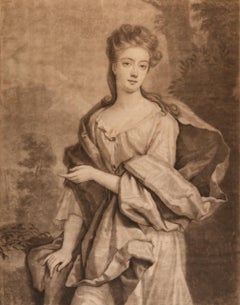
Items Similar to Portrait Of Lady Isobel Mackenzie, Countess of Seaforth (1636-1715) 17th Century
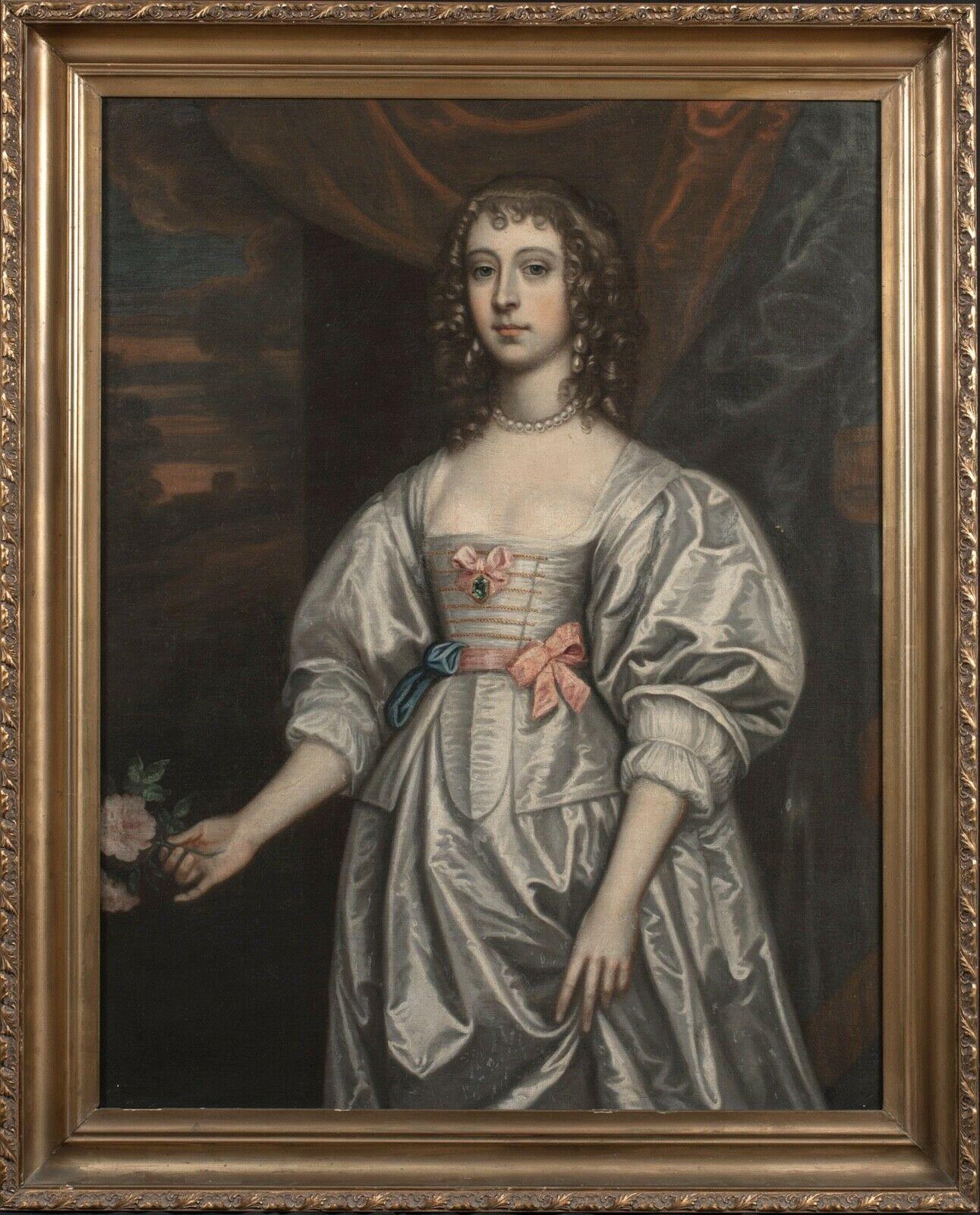
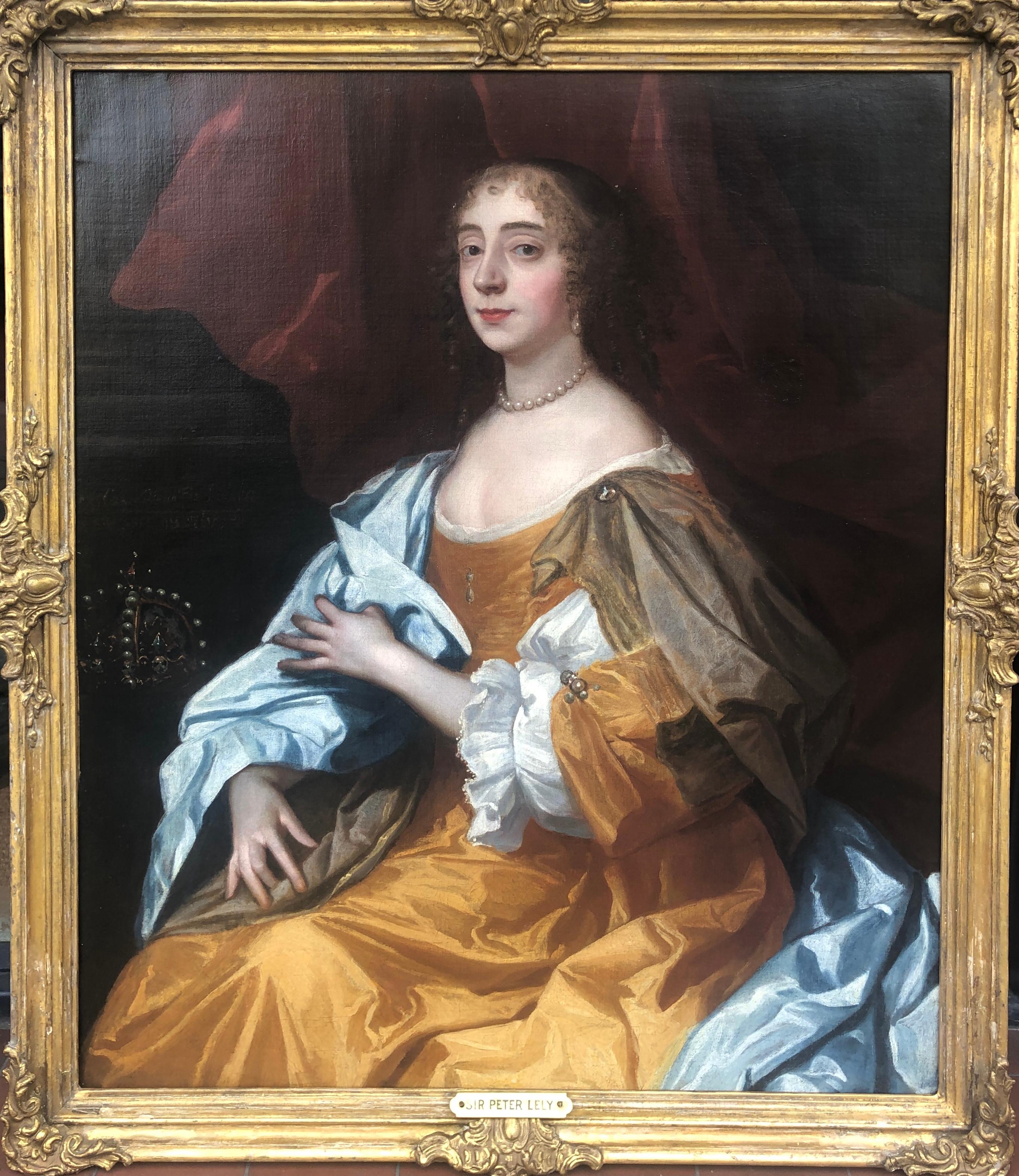
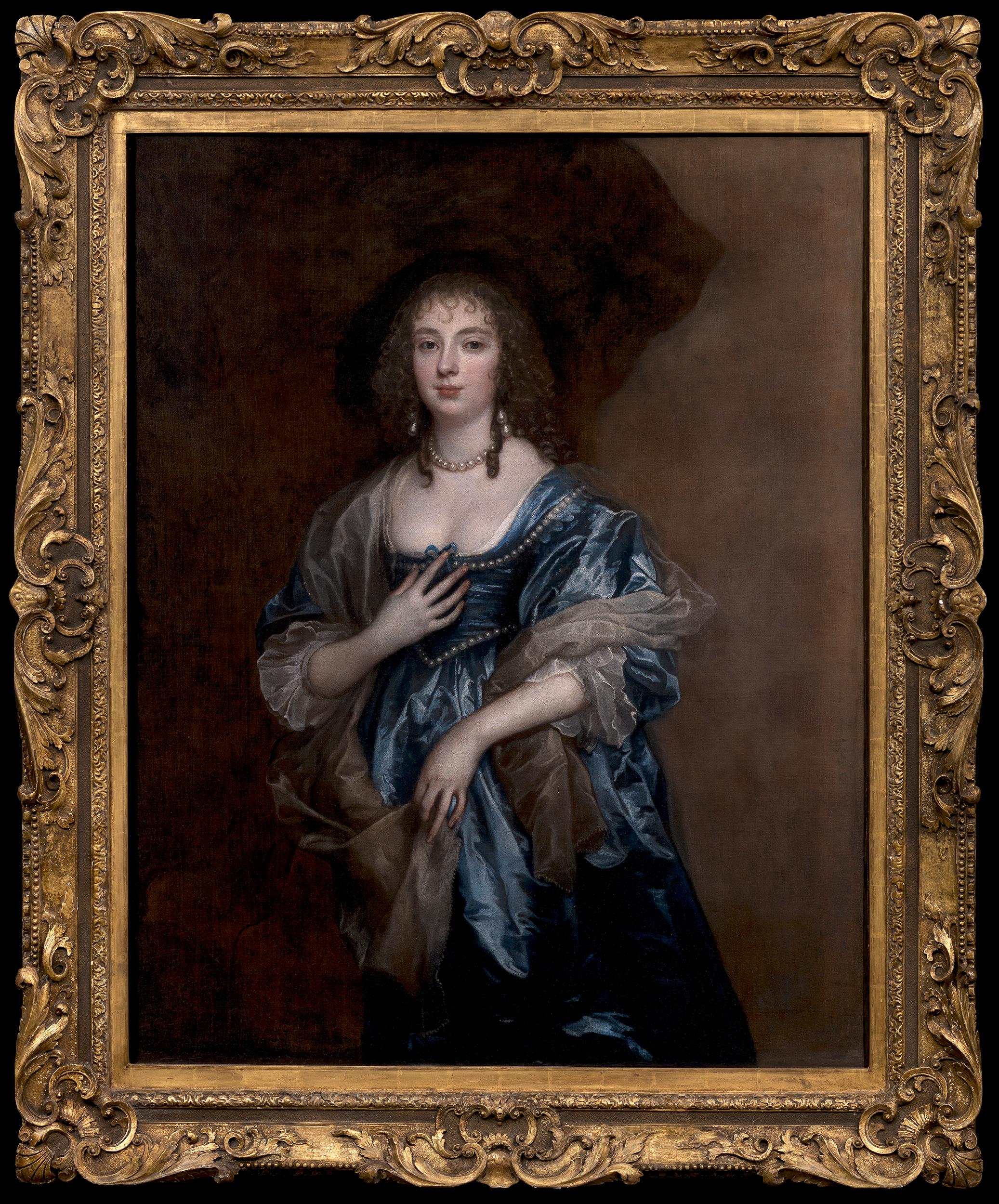
Want more images or videos?
Request additional images or videos from the seller
1 of 10
UnknownPortrait Of Lady Isobel Mackenzie, Countess of Seaforth (1636-1715) 17th Century
$9,554.75
£7,000
€8,235.24
CA$13,304.52
A$14,297.10
CHF 7,671.23
MX$168,411.14
NOK 96,457.15
SEK 88,112.98
DKK 61,546.95
About the Item
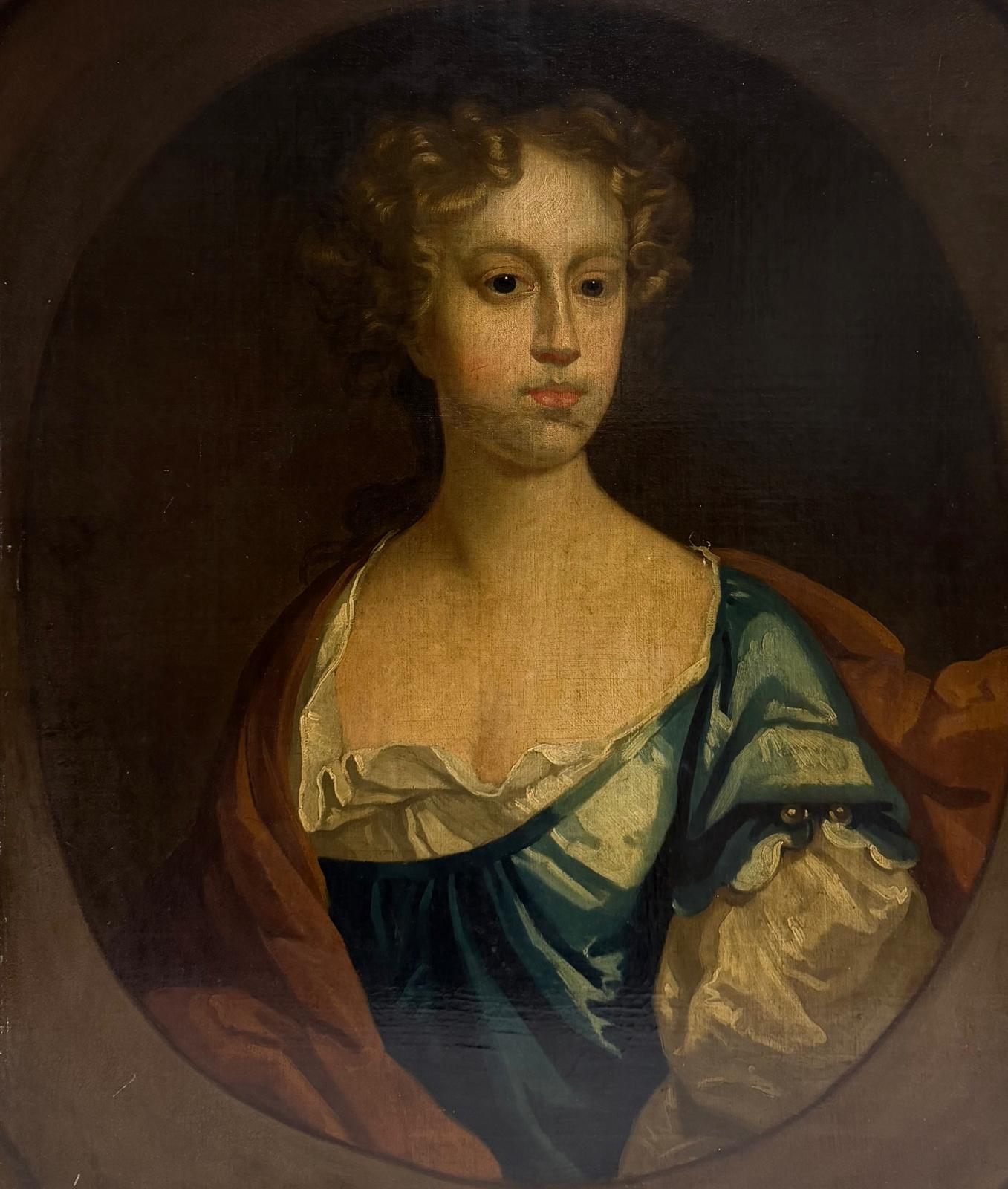
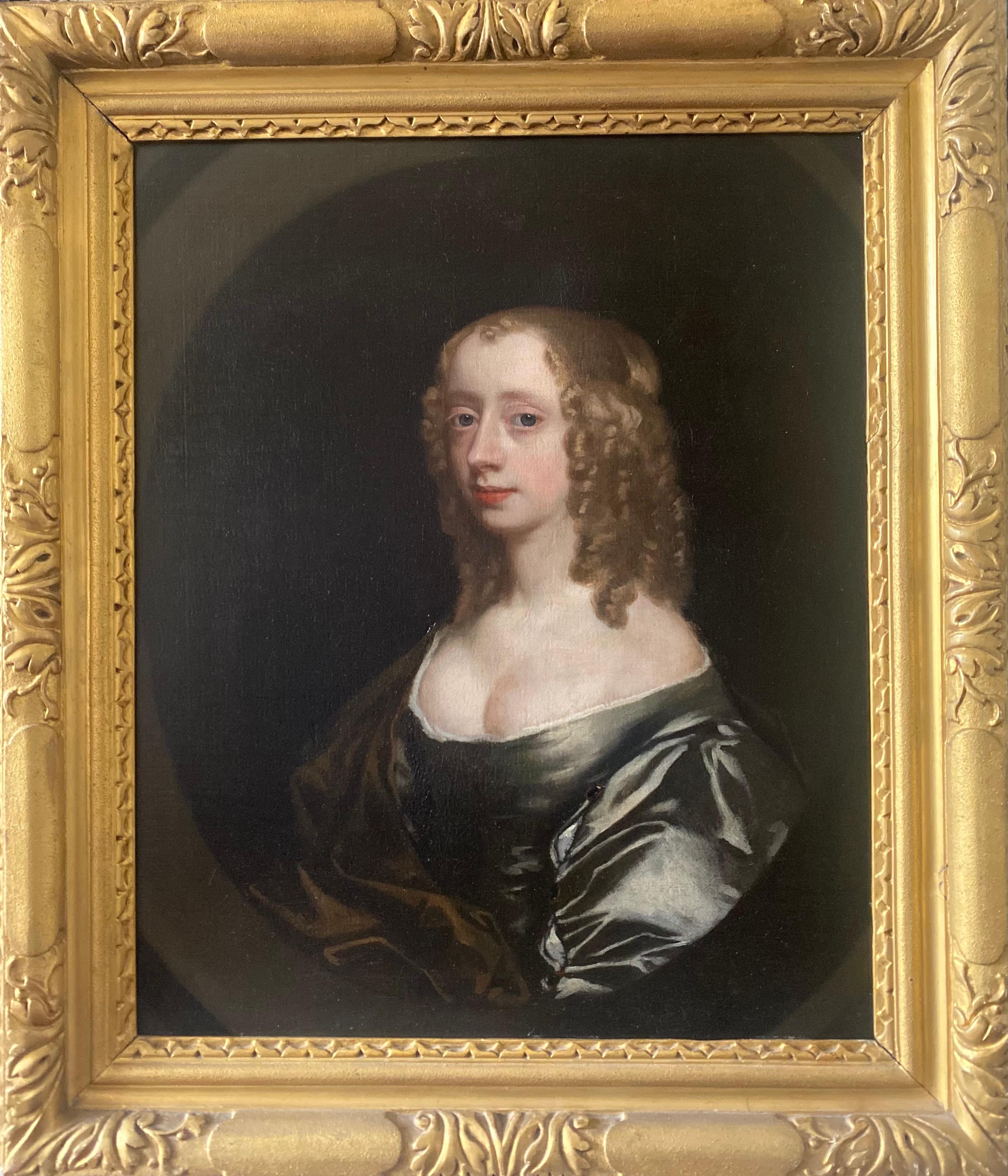
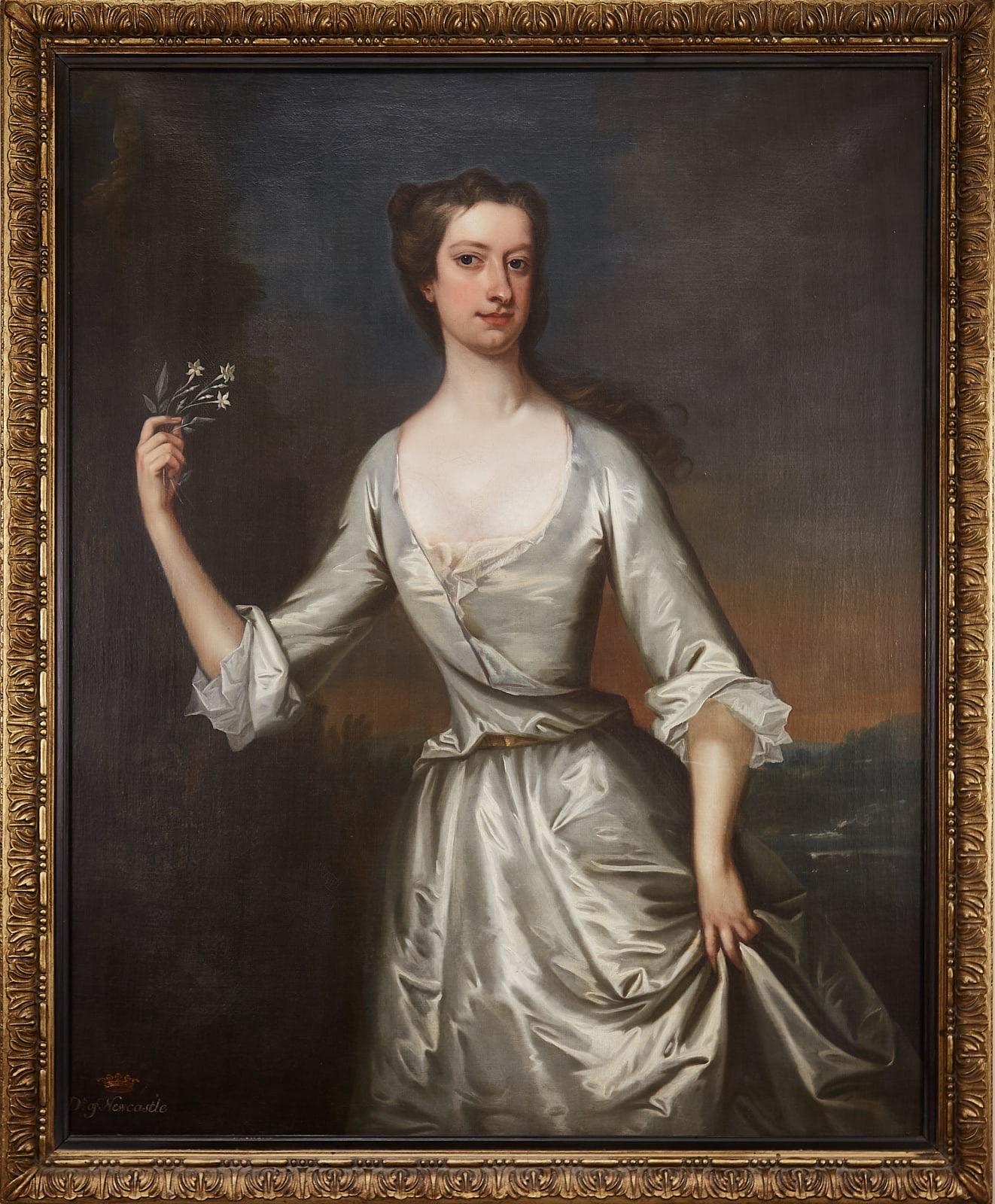
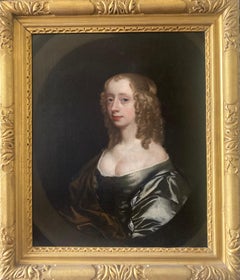
Portrait Of Lady Isobel Mackenzie, Countess of Seaforth (1636-1715), 17th Century
Studio of John Michael Wright (1617-1694)
Large 17th century portrait of Isobel Mackenzie, Countess of Seaforth, Scotland, oil on canvas. Excellent quality and condition three quarter length portrait of the young countess following her marriage to Kenneth Mackenzie, 3rd Earl of Seaforth. Presented in an early antique gilt gesso frame. unsigned
Provenance: Private family collection, Edinburgh
Measurements: 48" x 39" framed approx
- Dimensions:Height: 48 in (121.92 cm)Diameter: 39 in (99.06 cm)
- Medium:
- Period:
- Condition:
- Gallery Location:Blackwater, GB
- Reference Number:1stDibs: LU1577217302592
About the Seller
4.9
Vetted Professional Seller
Every seller passes strict standards for authenticity and reliability
Established in 2008
1stDibs seller since 2021
315 sales on 1stDibs
Typical response time: 8 hours
- ShippingRetrieving quote...Shipping from: Blackwater, United Kingdom
- Return Policy
More From This Seller
View AllPortrait Of A Lady, Frances Bard (1646-1702) Mistress of The Duke Of Cumberland
By Anthony van Dyck
Located in Blackwater, GB
Portrait Of A Lady, Frances Bard (1646-1702) Mistress of Prince Rupert von de Pfalz, Duke of Cumberland (1619-1882)
follower of Anthony Van Dyck (1...
Category
Late 17th Century Old Masters Portrait Paintings
Materials
Oil
PPortrait Of Barbara Villiers (1640–1709), Countess of Castlemaine and Duchess o
By Sir Peter Lely
Located in Blackwater, GB
PPortrait Of Barbara Villiers (1640–1709), Countess of Castlemaine and Duchess of Cleveland
Circle of Sir Peter Lely (1618-1680)
Huge 17th Cent...
Category
17th Century Portrait Paintings
Materials
Canvas, Oil
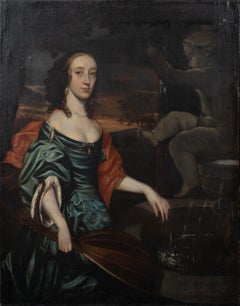
Portrait Of Philadelphia, 17th Century Probably Philadelphia Carey Of Aske Hall
By Sir Peter Lely
Located in Blackwater, GB
Portrait Of Philadelphia, 17th Century
Probably Philadelphia Carey Of Aske Hall, Richmond, North Yorkshire, English Courier & Lady In Waiting to Princess Elizabeth
Studio Of Sir Pe...
Category
17th Century Figurative Paintings
Materials
Canvas, Oil
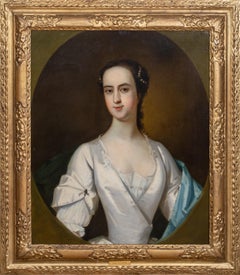
Portrait Of Isabella Blackett, Countess Of Buchan, 18th Century
Located in Blackwater, GB
Portrait Of Isabella Blackett, Countess Of Buchan, 18th Century
English School
Large 18th Century English portrait of Lady Isabella Blackett, Duchess of Buchan oil on canvas. Excel...
Category
18th Century Portrait Paintings
Materials
Canvas, Oil
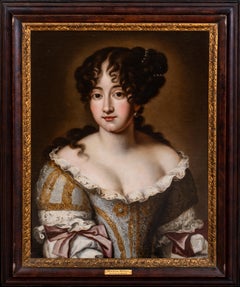
Portrait of Hortense Mancini, Duchess of Mazarin (1746-1699), 17th Century
By Jacob Ferdinand Voet 1
Located in Blackwater, GB
Portrait of Hortense Mancini, Duchess of Mazarin (1746-1699), 17th Century
by Jacob Ferdinand Voet (1639-1689)
Large 17th Century Italian portrait o...
Category
17th Century Portrait Paintings
Materials
Canvas, Oil
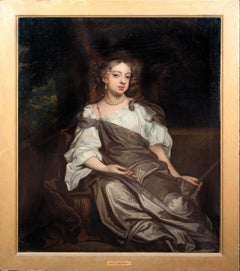
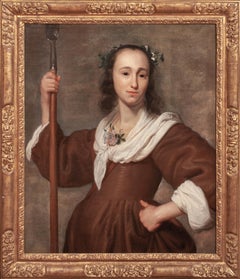
Portrait Of A Lady As Diana, 17th Century
Located in Blackwater, GB
Portrait Of A Lady As Diana, 17th Century
Dutch School
Large 17th Century Dutch Old Master portrait of a lady as Diana, oil on canvas . Exc...
Category
17th Century Portrait Paintings
Materials
Canvas, Oil
You May Also Like
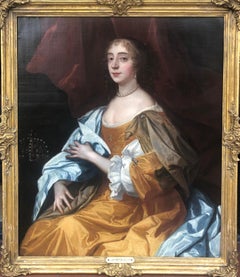
Portrait of Bridget Drury Lady Shaw, formerly Viscountess Kilmorey
By Sir Peter Lely
Located in London, GB
Sir Peter Lely (Soest 1618 – 1680 London)
Portrait of lady with a crown, possibly Bridget Drury Lady Shaw, formerly Viscountess Kilmorey, later Lady Baber (d.1696) c.1665
Oil on canvas
46 1/2 x 40 3/4 inches, Framed
42 1/4 x 36 1/4 inches, Unframed
Inscribed left [……….]Isabella
James Mulraine wrote the following for this piece:
This portrait dates to the middle of the 1660s, the decade when Lely’s career took off as successor to Sir Anthony van Dyck. At the Restoration Charles II had appointed him Principal Painter to the King and paid a pension £200 per annum ‘as formerly to Sr. Vandyke...’1 Lely had trained in Haarlem and he was in his early twenties when he came to London in 1643. He was an astute businessman and a wise courtier. In 1650 he painted a portrait of Oliver Cromwell (Birmingham Museum and Art Gallery) while maintaining links with the Royalist exiles through the 1650s. He had arrived in England as a painter of small-scale portraits and lush scenes of nymphs in landscapes in a Dutch style. His experience of Van Dyck in English collections transformed his painting. His lavish and alluring vision of Arcadia exactly captured the spirit of the Court and as Principal Painter he dominated English portraiture for the next twenty years. Lely ran a highly efficient studio along Netherlandish lines, employing a team of specialists like the drapery painter John Baptist Gaspars and young artists-in-training like Nicolas de Largilliere. He had numerous rivals during that period, and by 1670 he had introduced numbered standard poses to speed up production, while collaborating with printmakers for further revenue and advertising. He died in 1680 of a stroke while painting, working to the last.
The portrait, painted at a date when Lely’s poses and execution were still individual and inventive shows a lady sitting at three-quarter length facing away from the viewer. She has begun to turn towards the viewer, a pose with a long pedigree in art, first used by Leonardo da Vinci in the Mona Lisa (Louvre). She steadies her blue drapery where it might slip from her arm with the movement, a flash of realism beautifully captured. Like Van Dyck, Lely painted his female sitters in a timeless costume rather than contemporary fashion, showing a loose gown and floating silk draperies. It presented the sitter as a classical ideal. The portrait would not date.
The saffron dress may be the work of a drapery painter but the brown scarf must be by Lely himself, and appears unfinished, broadly sketched in behind the shoulder. The delicate blue glaze and nervous highlights suggest shimmering translucence. Lely was a master of painting hands – his hand studies are marvels of drawing – and the lady’s hands are superb, exactly drawn, delicately modelled and expressive. The fidgety gestures, clutching the gown, fiddling with the edge of the scarf, give the portrait psychological bite, suggesting the personality behind the calm courtier’s expression, adding to the sense shown in the look of the eyes and mouth that the lady is about to speak. The portrait’s language is Vandykian. The inspiration comes directly from Van Dyck’s English portraits of women. Lely owned Van Dyck’s Portrait of Lady Elizabeth Thimbleby and Dorothy Viscountess Andover (National Gallery, London) and the sitter’s costume quotes Lady Andover’s saffron dress and brown scarf. But Lely paints a generation who sat nearer to the ground and through a dialogue of expression and gesture he shows sitters who are more flesh and blood than Van Dyck’s.
The background with a column and curtain is different to those shown in most of Lely’s portraits of women. They tend to include trees or fountains, with a glimpse of landscape. But there are other examples. A portrait of the King’s reigning mistress, Barbara Villiers Duchess of Cleveland...
Category
1660s Portrait Paintings
Materials
Oil
$70,978 Sale Price
20% Off
Free Shipping
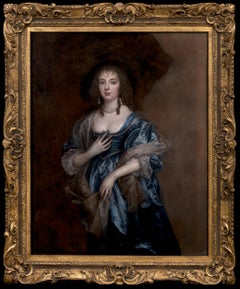
Portrait of Anne, Lady Russell, later Countess of Bedford
By Anthony van Dyck
Located in London, GB
A three-quarter length portrait of Anne, Lady Russell, later Countess of Bedford (1615-1684), in a blue dress. Attributed to Sir Anthony Van Dyck.
Anne C...
Category
17th Century Portrait Paintings
Materials
Oil
$207,474 Sale Price
24% Off
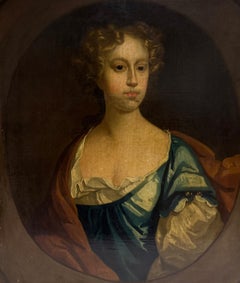
Fine 17th Century English Old Master Oil Painting Portrait Aristocratic Lady
Located in Cirencester, Gloucestershire
Portrait of a Young English Aristocratic Lady
English, circa 1670's period, unsigned
oil on canvas laid on board, unframed
canvas: 30 x 25 inches
Provenance: private collection, UK
C...
Category
Mid-17th Century Old Masters Portrait Paintings
Materials
Canvas, Oil
English 17th century portrait of a lady
By Sir Peter Lely
Located in Bath, Somerset
A 17th century English portrait of a lady by Sir Peter Lely (1618-1680), half-length in a painted feigned oval, wearing a green silk gown with chestnut coloured cloak over one shoulder, her fair hair curled in the fashionable ringlet style of the period. Oil on canvas in an English giltwood 'Lely' frame.
We are grateful to Diana Dethloff and Catharine MacLeod (who are currently working on a Lely catalogue raisonné) for their confirmation of Lely as the artist from photograph analysis of this previously unidentified early work.
Provenance:
Private collection Nottingham until 2021
Mellors and Kirk sale December 2000, lot 1173
The sitter is likely to have been from an upper class or aristocratic family in court circles, who were the main source of Lely`s patronage. The simple composition serves to highlight the beauty of the sitter through portraying her pale decolletage and complexion, set against the gentle gaze of her blue eyes, the soft blush of her cheeks and her full red lips.
Peter Lely (1618-1680) was originally of dutch origin and became Principle Painter to the King in 1661, following in the footsteps of Van Dyck who had died in 1641. He dominated the portrait painting scene in England for over 20 years, creating a distinctive 'court look' in his work which had a strong influence on many other artists. He had an extremely successful and popular portrait practice which meant that he soon had to develop production methods that could accommodate the high demand for portraits, and also for copies and versions of them which were given as gifts to family and courtiers. The use of studio assistants was a common practice for busy artists and as with Van Dyck, Lely is known to have used specialist assistants to execute particular parts of his paintings. Artists who worked in Lely`s studio included John Baptist Gaspars who specialised in drapery painting, William Wissing, John Greenhill...
Category
17th Century Baroque Portrait Paintings
Materials
Canvas, Oil
$24,023 Sale Price
20% Off
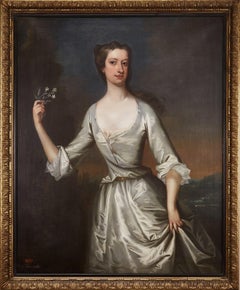
English 18th century portrait of Henrietta Pelham-Holles, Duchess of Newcastle.
By Charles Jervas
Located in Bath, Somerset
Portrait of Henrietta Pelham-Holles (née Godolphin) (1701-1776), Duchess of Newcastle, standing in a wooded landscape with a river beyond, three-quarter length wearing an ivory silk ...
Category
1720s Old Masters Portrait Paintings
Materials
Canvas, Oil
The Duchess of St. Albans: A 17th C. Portrait After a Kneller Painting
By (After) Sir Godfrey Kneller
Located in Alamo, CA
This is a 17th century engraved mezzotint portrait of the Duchess of St. Albans by John Smith, after a painting by Sir Godfrey Kneller. It was published in London by John Boydell in 1694.
The Duchess of St. Albans (1642-1712) was a woman named Diana de Vere. She was born in 1642, the daughter of Aubrey de Vere, the 20th Earl of Oxford. In 1662, she married Charles Beauclerk, the illegitimate son of King Charles II and his mistress, Nell Gwyn. As a result of her marriage, Diana became the Duchess of St. Albans, and she and Charles had several children together. Diana was known for her beauty and charm, and she was a prominent figure in the court of King Charles II. Despite her husband's illegitimate birth, Diana was highly respected in the royal court and was known for her intelligence and wit. She was a patron of the arts and supported many artists and writers of the time. Diana lived through a tumultuous period of English history, including the Great Fire of London and the Glorious Revolution, which saw King James II replaced by William of Orange. She died in 1712 at the age of 70 and was buried in Westminster Abbey. Descendants of Diana and her husband, who was an illegitimate son of King Charles II, include Diana, Princess of Wales and her son William, Duke of Cambridge.
An author wrote of her: "The line of Vere, so long renown’d in arms,
Concludes with luster in St. Albans’s charms;
Her conquering eyes have made their race complete,
It rose in valor, and in beauty set."
This striking mezzotint engraving depicts Diana, Duchess of St Albans in a three-quarter length pose, standing, wearing loose flowing dress and a wrap. She has a very serene, calm appearance as she is looking straight at the viewer. There is a landscape of trees in the background. The print is adhered in the corners to an archival backing, which is itself adhered in the upper corners to a larger backing. The print is trimmed to just beyond the plate mark. There are areas of discoloration in the margins and in the inscription area, but the print is otherwise in very good condition. The sheet measures 14.5" high and 10" wide. This mezzotint is held by multiple museums and institutions, including The British Museum, The National Portrait Gallery London, The Fine Arts Museum of Boston, The Lewis Walpole Library at Yale, The Yale Center for British Art, The Fitzwilliam Museum at Cambridge and The National Galleries of Scotland. The original Kneller painting is part of the British Royal Collection Trust and hangs in the King's Private Dining Room at Hampton Court Palace.
Sir Godfrey Kneller (1646-1723) was a leading portrait painter of his time, particularly renowned for his depictions of the British aristocracy and royalty. He was born in Lübeck, Germany, and trained in Amsterdam under the painter Ferdinand Bol...
Category
Late 17th Century Portrait Prints
Materials
Mezzotint