Items Similar to Portrait of a Noble 17th Century

Want more images or videos?
Request additional images or videos from the seller
1 of 13
UnknownPortrait of a Noble 17th Century1600s
1600s
$5,325.48
£3,986.70
€4,450
CA$7,331.18
A$8,014.42
CHF 4,239.99
MX$95,905.45
NOK 53,947.79
SEK 49,383.74
DKK 33,903.52
About the Item
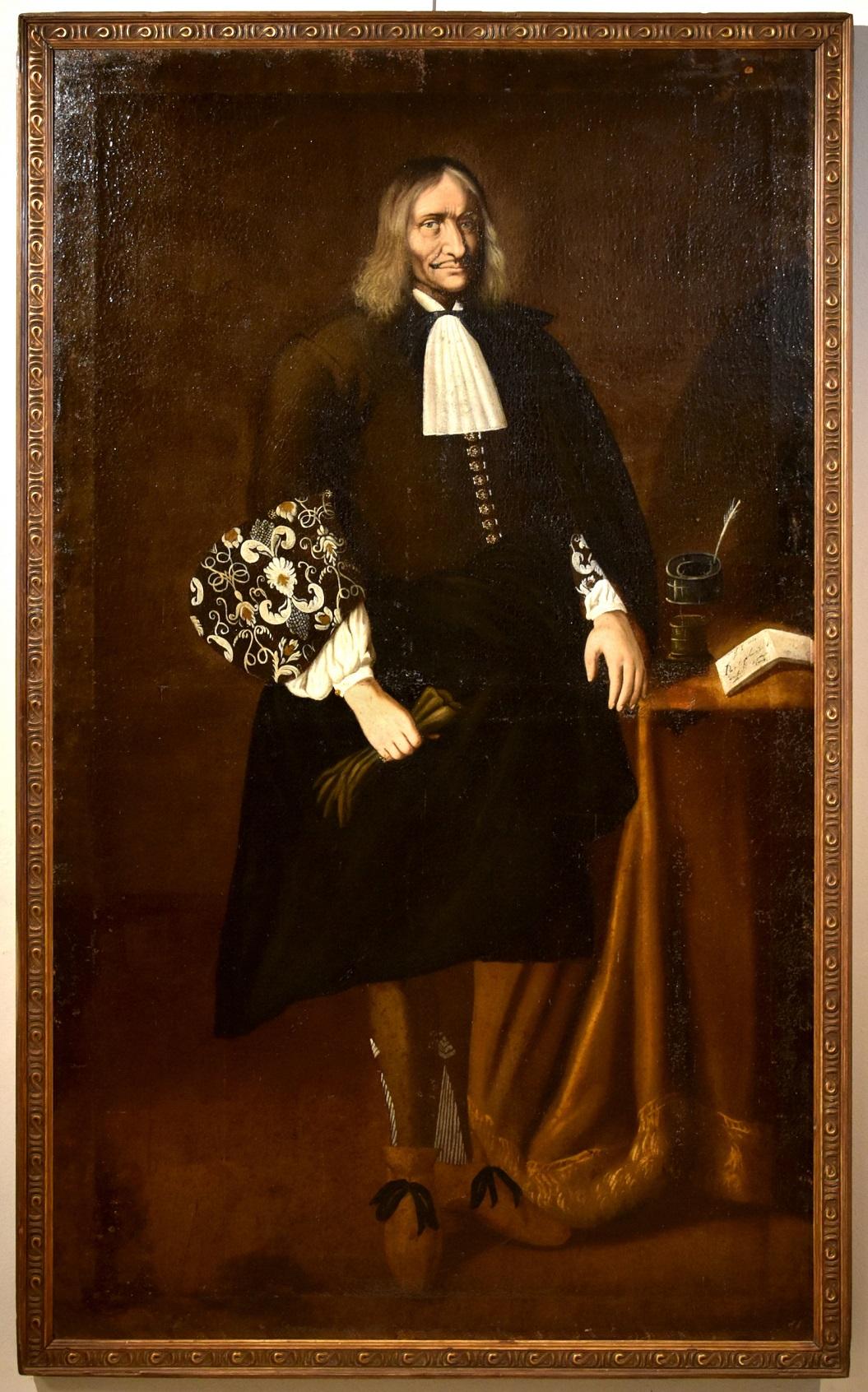
Oil on Canvas.
Portrait of a nobleman, proud with his hand resting on the 'hilt of his sword and dressed in an ermine-edged cloak. On the upper right appears the coat of arms of his lineage, which features a crowned red rampant lion holding a sword; across it is a band with three groups of balls arranged in a flower pattern.
A rampant lion similar to this is found in the coat of arms of some cities in central Italy, such as Faenza.
Restored and re-tinted, the dpinto is presented in a coeval carved and lacquered wooden frame.
- Creation Year:1600s
- Dimensions:Height: 59.06 in (150 cm)Width: 45.67 in (116 cm)Depth: 3.15 in (8 cm)
- Medium:
- Period:
- Condition:
- Gallery Location:Milan, IT
- Reference Number:1stDibs: LU680315981052
About the Seller
4.8
Vetted Professional Seller
Every seller passes strict standards for authenticity and reliability
Established in 2017
1stDibs seller since 2017
127 sales on 1stDibs
Typical response time: 2 hours
- ShippingRetrieving quote...Shipping from: Milan, Italy
- Return Policy
More From This Seller
View AllPainting Male Portrait 19thC
Located in Milan, IT
Oil on Canvas. French school of the late 1700s-early 1800s.
Portrait of a gentleman in elegant bourgeois dress.
The canvas has slight tears and is in need of cleaning.
It is presente...
Category
19th Century Other Art Style Portrait Paintings
Materials
Oil
Painting Portrait of a Noblewoman 18th century
Located in Milan, IT
Oil on Canvas.
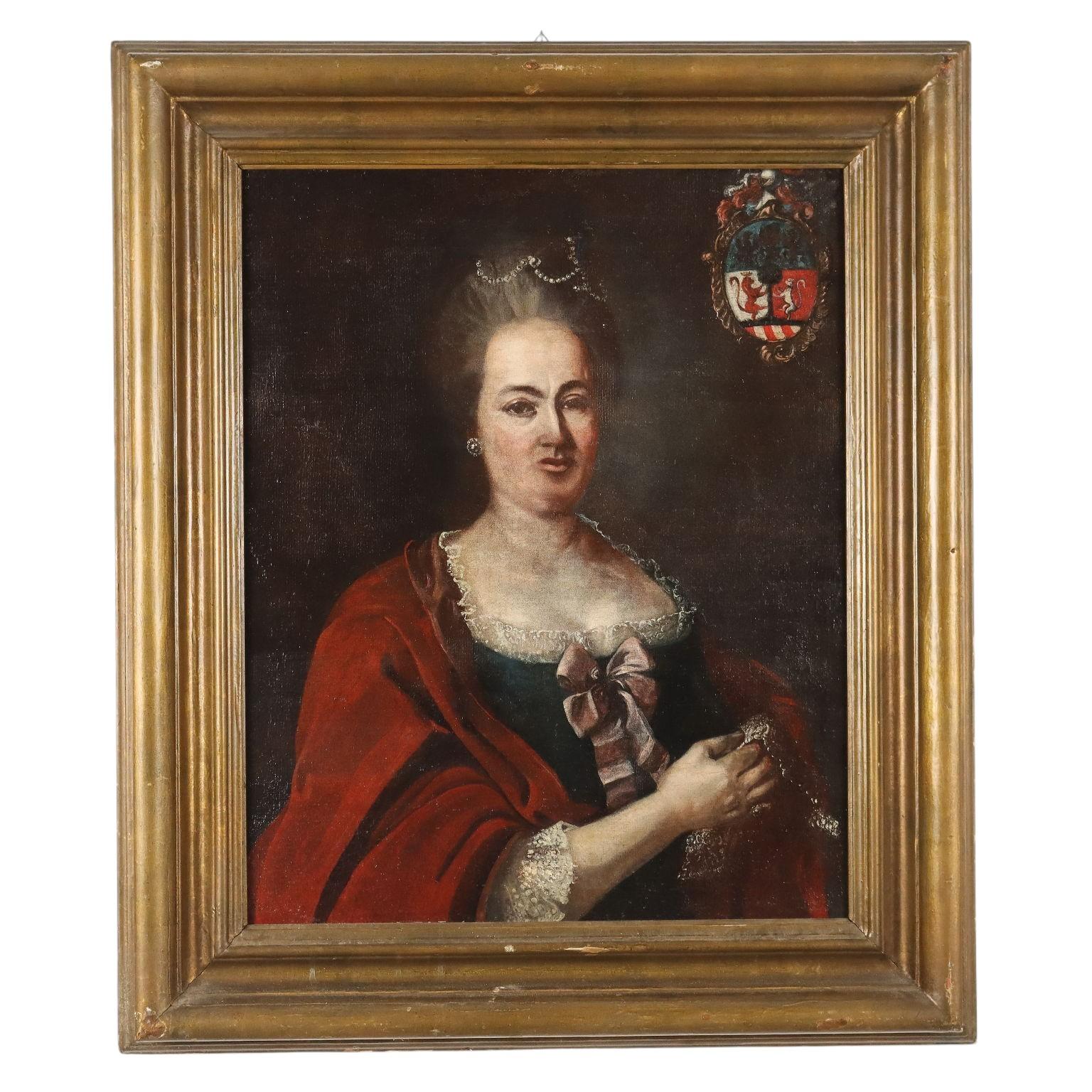
The noblewoman is richly attired, with an elegant red cape resting on her shoulders, leaving her lace-trimmed dress uncovered; her hairstyle is embellished with pearls...
Category
18th Century Other Art Style Portrait Paintings
Materials
Oil

Painting Female Portrait 18th century
Located in Milan, IT
Oil on Canvas. Central European school of the 18th century.
The distinguished lady, flaunting a dress embellished with bows and lace, is seated at her desk and holding a letter; in t...
Category
18th Century Other Art Style Portrait Paintings
Materials
Oil
The Drinker, Painting by Follower of James Francis Cipper, 18th century
Located in Milan, IT
Oil on Canvas.
The painting refers in pictorial manner and subject matter to the production of Giacomo Francesco Cipper known as the Todeschini, an artist of Austrian origin but esta...
Category
18th Century Other Art Style Portrait Paintings
Materials
Oil
Painting David with the Head of Goliath 17th century
Located in Milan, IT
Oil on Canvas. Central Italian school of the 17th century.
The painting recalls in pictorial style the production of Angelo Caroselli (1585-1652), a Roman Baroque artist who was a pa...
Category
17th Century Other Art Style Figurative Paintings
Materials
Oil
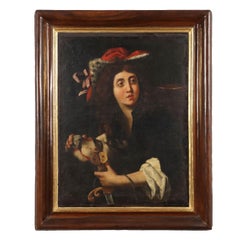
Dipinto Ritratto di Nobildonna fine 800
Located in Milan, IT
Olio su tela.
L'opera, dipinta seguendo lo stile della pittura spagnola di inizio '600, è in realtà di fine '800.
Ritrae una nobildonna che indossa la gorgiera, il colletto pieghetta...
Category
Late 19th Century Other Art Style Portrait Paintings
Materials
Oil
You May Also Like
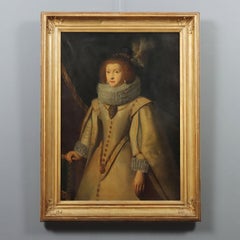
Ritratto figurativo maschile scuola toscana del XVII secolo olio su tela
Located in Florence, IT
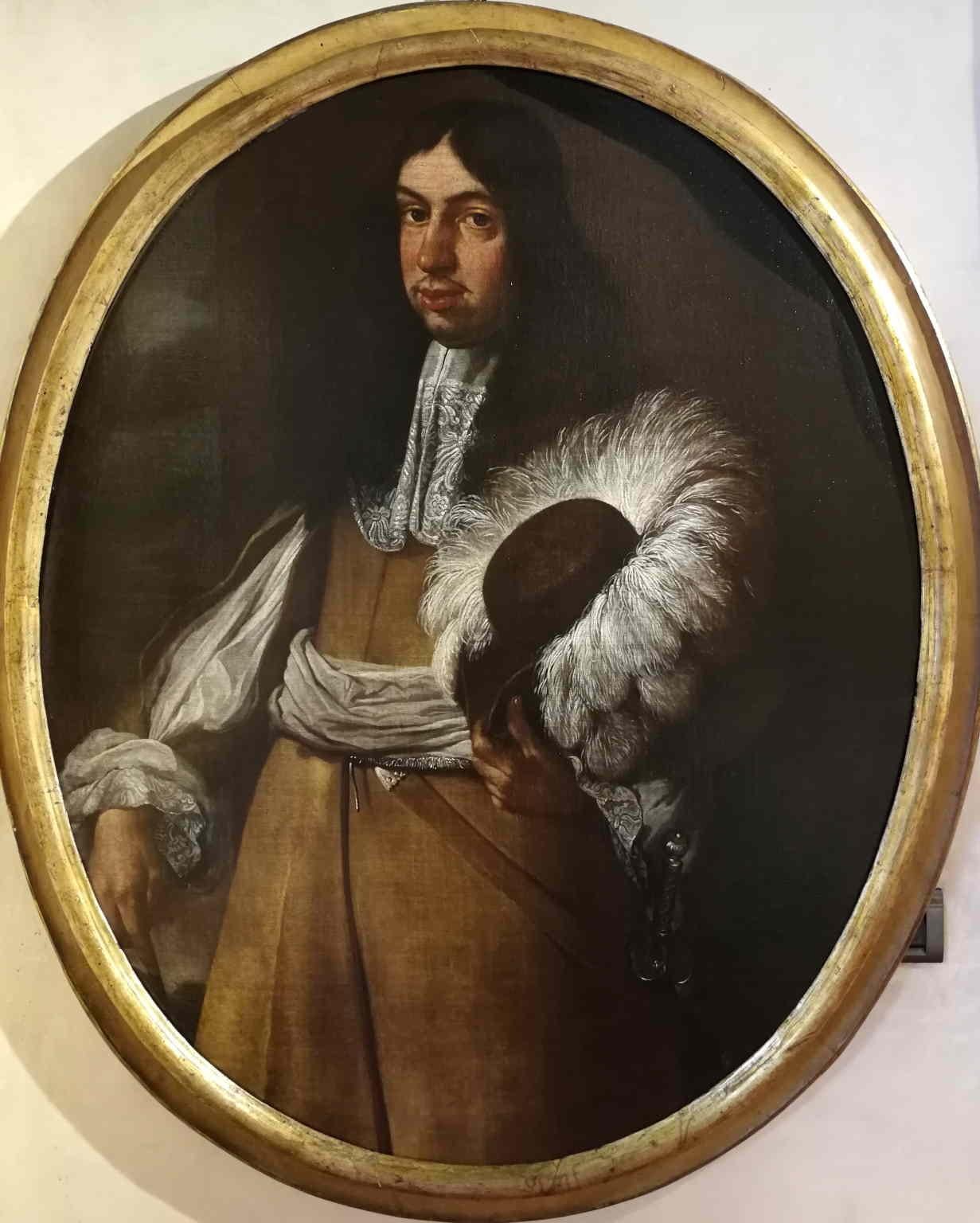
Dipinto di scuola toscana della seconda metà del XVII secolo raffigurante un ritratto maschile di tre quarti, immerso nell'eleganza e nella maestosità proprie dell'epoca. La figura è...
Category
Late 17th Century Baroque Portrait Paintings
Materials
Canvas, Oil
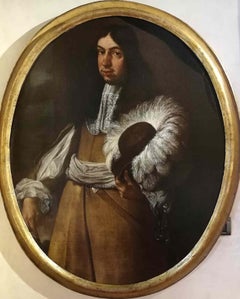
Emanuele Filiberto Portrait
Located in Queens, NY
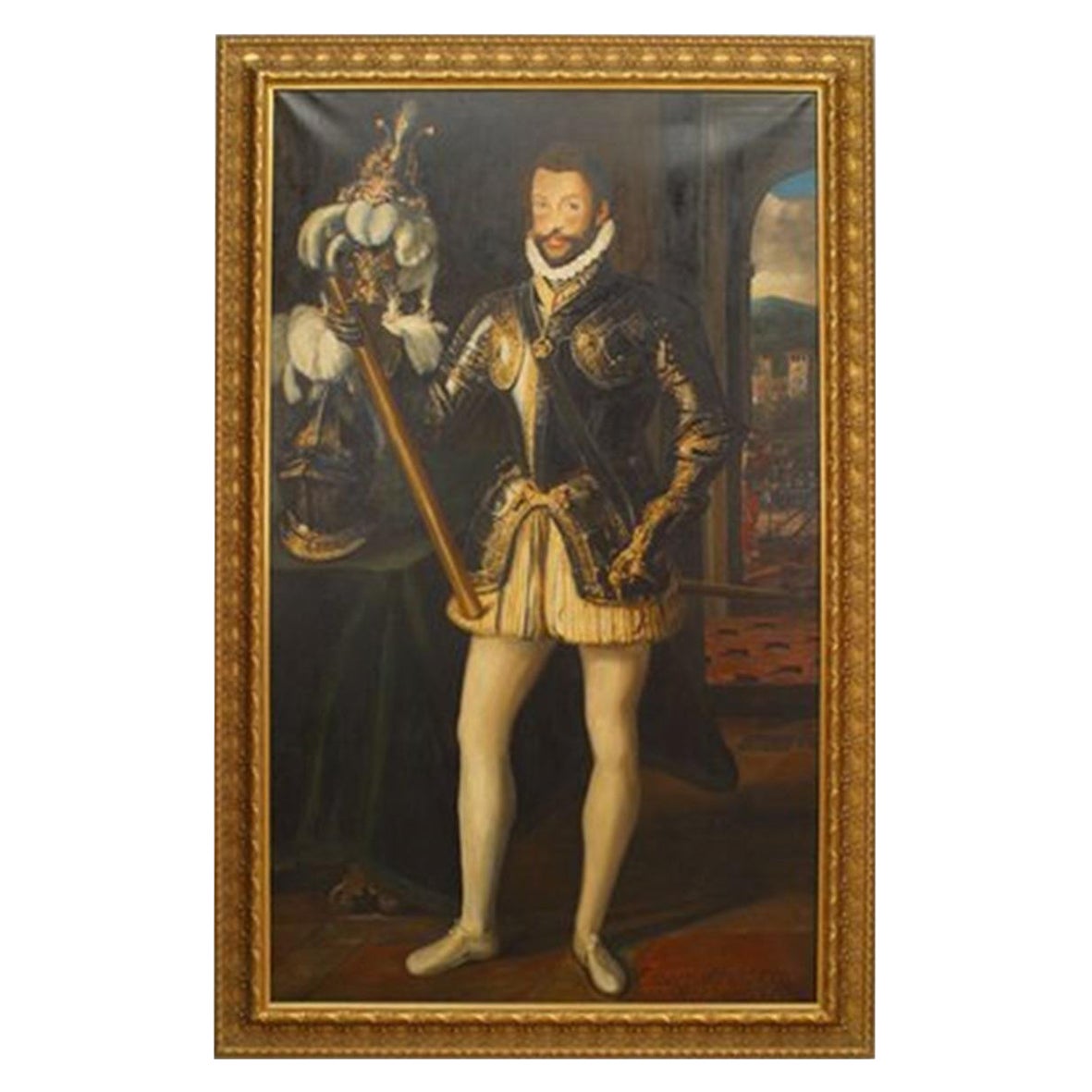
Copy of a portrait of "Emanuele Filiberto", Italian military leader of the 1500's
Category
Late 20th Century Italian Baroque Paintings
Materials
Paint
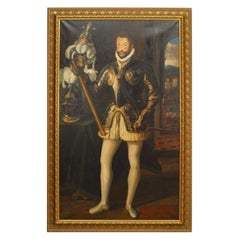
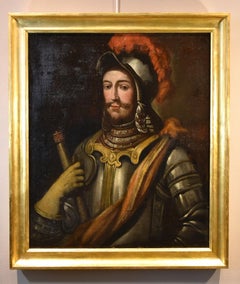
Portrait Knight Paint Oil on canvas 17th Century Lombard school Old master Italy
Located in Riva del Garda, IT
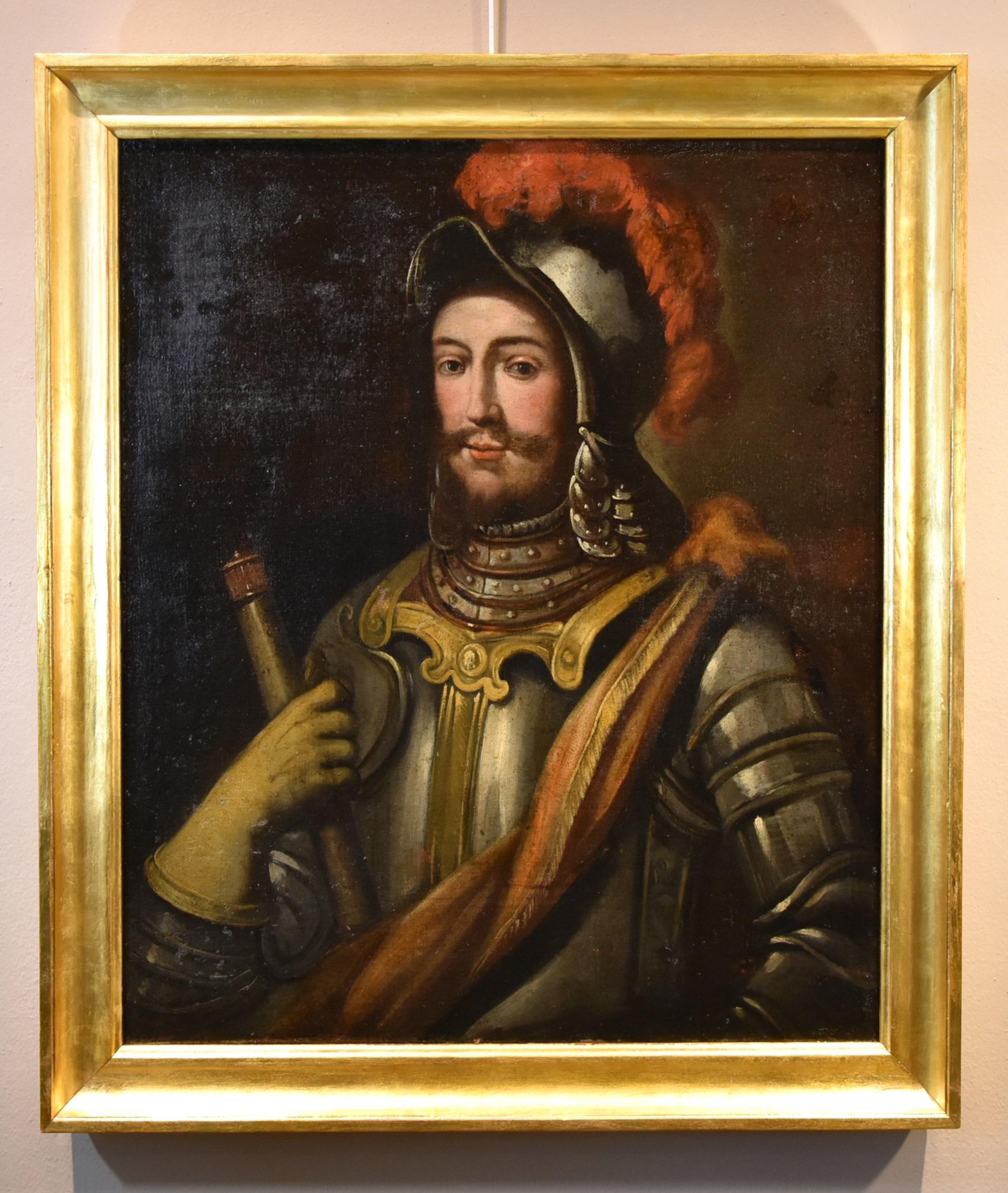
Lombard painter of the 17th century
Portrait of a Knight in Armour
Oil on canvas
81 x 70 cm./ Framed 93 x 82
A handsome gentleman in armour, immortalised in an authoritative and pr...
Category
17th Century Old Masters Paintings
Materials
Oil
$6,098 Sale Price
20% Off
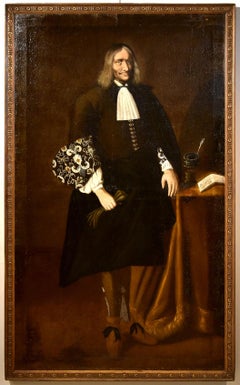
Portrait Noble Man Ceresa Paint Oil on canvas Old master 17th Century Italy Art
Located in Riva del Garda, IT
Carlo Ceresa (San Giovanni Bianco 1609 - Bergamo 1679) attributable
Full-length portrait of Giacomo Pesenti
Oil on canvas (206 x 121 cm - in frame 212 x 133 cm.)
This fascinating portrait, portraying a full-length gentleman and datable to the 17th century, illustrates the stylistic and compositional details typical of the pictorial production of the Lombardy area, Bergamo in particular. This reference is reflected in elements such as the natural light, the sober and austere setting and, above all, the subtle psychological characterisation of the face.
We are inclined to identify the hand of portrait painter Carlo Ceresa, one of the most illustrious Bergamasque figure painters of the 17th century, capable of developing a style of intense realism and acute psychological investigation. In his works, and our portrait perfectly reflects his canons, an extraordinary naturalistic imprint, great realism and remarkable essentiality are evident.
Those traits of severity, moral rigour and austerity typical of his portraiture find a perfect balance here: never courtly or rhetorical, his portraits are profoundly linked to the concept of counter-reform. Immortalising the main personalities of the time, he established himself as a point of reference for the Bergamasque aristocracy, from the Vertova to the Pesenti to the Secco Suardo.
The subject of the portrait is Giacomo Pesenti, here immortalised life-size in a rigorous black suit, his left hand resting on a table, on which is placed the necessities for writing and a manuscript, and his right hand, with a sealed ring on his little finger, abandoned along his side while he holds his gloves.
He wears a suit of incredible rigour, dressed as befits a man of his high social standing, while the sharp light focuses on his face, with an intensity that seems to be accentuated by the reflection of the white collar, with its sharp profile.
For Ceresa, it is not the richness of the garment that gives value to the person portrayed, it is the need to give feeling and bring out the character of the person, and this he succeeds in marvellously, aided by his ability to capture the essence of the person and return it to us in painting through the face and light used as a strong expressive element.
In fact, the image highlights that 'counter-reformed' composure typical of the portraiture of painters active in this area and era, adhering to a verism...
Category
17th Century Old Masters Paintings
Materials
Oil
$12,254 Sale Price
20% Off
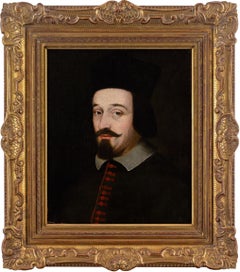
Mid-17th-Century Spanish School Oil Painting, Portrait Of A Theologian
Located in Cheltenham, GB
This mid-17th-century Spanish oil on canvas depicts a dignified man of learning - a theologian, or perhaps a cathedral canon.
Dressed in a black cassock, marked by a vertical row of...
Category
Mid-17th Century Baroque Portrait Paintings
Materials
Canvas, Oil
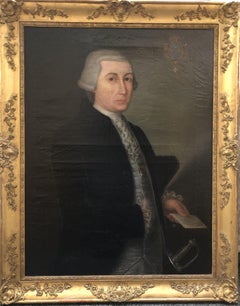
Portrait of a Venetian Nobleman
Located in Douglas, Isle of Man
Attributed to, Alessandro Longhi 1733-1813, was a prominent Venetian portrait painter, printmaker, and biographer. The son of the famous genre painter Pietro Longhi, he is known for his detailed oil portraits of the Venetian aristocracy and his valuable book on contemporary Venetian painters.
Longhi early life and training
Born: Alessandro Longhi was born on June 12, 1733, in Venice.
He received his initial training from his father, Pietro Longhi.
He later studied under Giuseppe Nogari, a respected portraitist in Venice during the 18th century, and was elected to the Venetian Academy in 1759.
Longhi specialized in portraiture, primarily depicting the nobles and officials of the Republic of Venice. His paintings are a valuable record of the social and political structure of 18th-century Venice.
Rococo aesthetic: Working in the Rococo style, he was adept at capturing the elegance and social status of his subjects. He paid meticulous attention to the elaborate robes, wigs, and emblems of office that signified his subjects' power.
While his official state portraits could be stiff and formal, his portraits of less noble patrons demonstrated a greater sense of realism and psychological insight.
Longhi was also an accomplished printmaker, particularly in etching. His etching technique showed an awareness of Rembrandt's work, and he used this skill to reproduce his and his father's paintings.
In 1762, he published Compendio delle vite de' pittori veneziani istorici più rinomati del presente secolo, a biographical dictionary of contemporary Venetian painters that is still an important resource for art historians. Longhi illustrated the book with etched portraits of the artists.
The portrait of Carlo Goldoni: One of his most celebrated paintings is his portrait of the Venetian playwright and librettist Carlo Goldoni.
For his election to the Venetian Academy, he painted this allegory, which features a personified figure of Painting.
His known portraits include Portrait of a Lady (Uffizi Gallery, Florence), Portrait of a Musician, and various portraits of Venetian nobles and officials.
I have included further albeit identical biographies of Alessandro Longhi.
Alessandro Longhi (born June 12, 1733, Venice—died 1813, Venice) was a painter, etcher, and biographer of Venetian artists, and was the most important Venetian portrait painter of his day.
The son of the painter Pietro Longhi, he was given his first training by his father, who quite soon put him to study under the portrait painter Giuseppe Nogari. In 1759 he was elected a member of the Venetian academy, for which he painted one of his rare allegorical pictures, “Painting and Merit.” In 1762 Longhi issued his book Compendio delle Vite de’ Pittori Veneziani Istorici piu rinomati del presente secolo con sui ritratti dal naturale delineati ed indisi, one of the most important source books for the history of Venetian 18th-century painting. Both portraits and text were printed from plates he etched. Longhi’s facilely rendered portraits are largely generalized likenesses lacking any acuity of character observation. He mainly portrayed the leading Venetian luminaries and dignitaries of his day in a style that drew upon his father’s Rococo manner and 16th-century traditions of Venetian Renaissance portraiture.
The personal details available for the painter Alessandro Longhi are limited, but his biography is intertwined with that of his family and the city of Venice. He was the son of a successful painter, which set his artistic path, and is known for creating sensitive and realistic portraits that captured the social atmosphere of 18th-century Venice.
Alessandro was born in Venice in 1733 to the celebrated genre painter Pietro Longhi. He received his early training from his father before studying under another prominent portraitist, Giuseppe Nogari.
A contrast to his father: While his father was known for painting scenes of everyday Venetian life, Alessandro focused almost exclusively on portraiture. His skill enabled him to capture the intimate psychology and character of his subjects, a quality especially evident in his portraits of less noble patrons.
Election to the academy: In 1759, Alessandro was elected to the Accademia dei Pittori, the Venetian Academy of Painting. His election solidified his reputation as a master of the Rococo style.
Beyond painting, Longhi was an accomplished printmaker, primarily producing etchings that reproduced his own works and those of his father. In 1762, he published the Compendio delle vite de' pittori veneziani, a collection of biographies of contemporary Venetian painters, which is an important historical resource.
He became a prominent portraitist for Venice's upper class, including nobles and state officials. His official state portraits featured grand, full-length depictions of his subjects in their elaborate robes and emblems of office.
Emphasis on realism: In contrast to the stylized nature of official portraits, Alessandro was praised for the "reality" he captured in works featuring common people. For example, his 1760 portrait of an innkeeper was celebrated for its realistic subject matter and "nuova maniera" (new manner).
The art historian Olimpia Theodoli noted that Longhi's etching technique showed he had a firsthand knowledge of Rembrandt's work.
Among his more famous works are a sensitive portrait of playwright Carlo Goldoni and the painting Portrait of a Wine Butler. He also produced religious and allegorical works, including paintings of the "Apostles" for the church of San Pantalon in Venice.
This painting has been carefully conserved and the frame also, the frame looks to be original to the picture but we have no way of confirming this but we believe it to be so. 18th Century Italian portraits...
Category
Mid-18th Century Portrait Paintings
Materials
Canvas, Oil
More Ways To Browse
1920s Painting Portrait Woman
Beatles Oil Painting
Bret Reilly
British Officer Painting
Caspar Netscher
Charles Andre Van Loo
Duke Of Somerset
Edward Masters Painting
French Painter Bernard
John Hicks
Lillian Shao
Marjorie Blake
Moretti Lucien
Oil Painting Of Turkey
Oil Painting Peasant Girl
Portrait Of Cleric
Portrait Painting 1700s
Steve Mcqueen Pop Art