Items Similar to Salome and the Head of Saint John the Baptist
Want more images or videos?
Request additional images or videos from the seller
1 of 10
UnknownSalome and the Head of Saint John the BaptistCirca 1680
Circa 1680
$20,347.67
£15,118.81
€17,000
CA$27,872.12
A$30,406.97
CHF 16,127.24
MX$366,335.41
NOK 204,685.97
SEK 187,395.56
DKK 129,503.87
About the Item
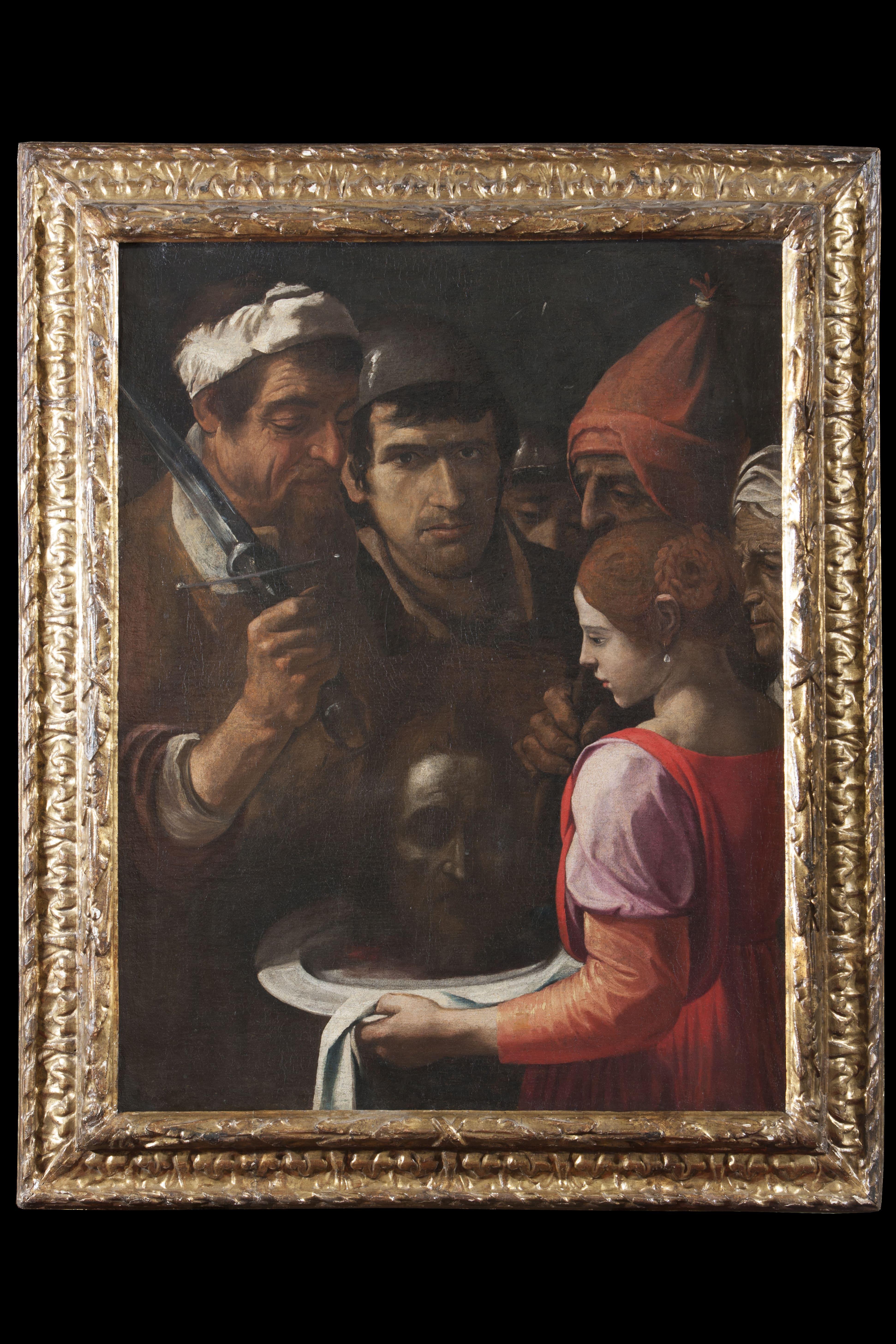
Italian School, late 17th century
Salome and the Head of Saint John the Baptist
Oil on canvas
H. 109 cm; W. 83 cm
Unsigned
The theme of Salome receiving the head of Saint John the Baptist is one of the most unsettling in Baroque painting, combining beauty and cruelty, eroticism and faith. The biblical episode (Mark 6:17–29) recounts how Salome, daughter of Herodias, obtains from King Herod, captivated by her dance, the head of the prophet John the Baptist, who had condemned the illicit union of her parents.
In this work from the late 17th century, the scene is treated with the dramatic sensibility characteristic of the late Baroque period. The light, inspired by Caravaggio, focuses its brilliance on Salome's face and on the head of the saint, isolating the protagonists in an atmosphere of silence and tension. The golden glow emphasizes the duality of the subject: the youthful beauty of the young woman and the tragedy of martyrdom.
Salome, here, is not depicted as a mere executioner, but as an ambivalent figure: her hesitant gaze expresses both fascination and remorse. The grace of her posture, the richness of the fabrics, and the restraint of her gesture contrast with the horror of the trophy she presents. This contrast, typical of Italian Baroque art, evokes a moral emotion: the vanity of seduction confronted with the purity of sacrifice.
The painter combines naturalism and spirituality in a composition where light becomes the language of faith. The influence of masters such as Guido Cagnacci or Carlo Dolci is perceptible in the delicacy of the flesh tones and the sobriety of the setting. Through this dialogue between beauty and death, this Salome illustrates the expressive power of Italian art of the late 17th century, where the pathetic and the sacred converge to invite contemplation.
- Creation Year:Circa 1680
- Dimensions:Height: 42.92 in (109 cm)Width: 32.68 in (83 cm)
- Medium:
- Movement Style:
- Period:1680-1689
- Condition:
- Gallery Location:BELEYMAS, FR
- Reference Number:1stDibs: LU1857217306302
About the Seller
3.0
Vetted Professional Seller
Every seller passes strict standards for authenticity and reliability
Established in 2017
1stDibs seller since 2022
7 sales on 1stDibs
Typical response time: 5 hours
- ShippingRetrieving quote...Shipping from: BELEYMAS, France
- Return Policy
More From This Seller
View AllPortrait of a woman with a book
Located in BELEYMAS, FR
Italian school circa 1560, circle of Bernardino Campi
Portrait of a woman with a book
Oil on panel
H. 78 cm ; L. 57cm
Category
16th Century Italian School Portrait Paintings
Materials
Oil, Wood Panel
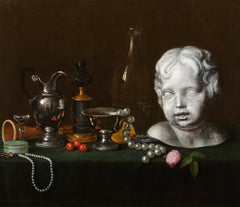
Still-life of various art objects
Located in BELEYMAS, FR
François CARLIER-RUBRECQ
(active around 1820-1830)
Study of various works of art
Oil on canvas
H. 50 cm; L. 58.5 cm
Signed and dated upper left, countersigned on the stretcher 1825
...
Category
1820s French School Still-life Paintings
Materials
Oil, Canvas
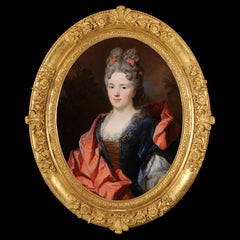
Presumed portrait of Marie-Anne de Bourbon
By Nicolas de Largillière
Located in BELEYMAS, FR
Nicolas de LARGILLIERRE
(Paris 1656 – 1746)
Portrait of a woman, presumed to be Marie-Anne de Bourbon, Princess of Conti (1666-1739)
Oil on oval canvas
H. 8...
Category
Early 1700s French School Figurative Paintings
Materials
Canvas, Oil
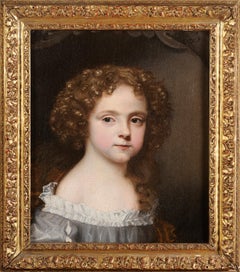
Young girl portrait
By Jacob Ferdinand Voet 1
Located in BELEYMAS, FR
Circle of Jacob Ferdinand Voet
Portrait of a Little Girl
Oil on canvas
H. 44 cm; W. 38 cm
Unsigned
This delicate portrait of a child, from the circle of Jacob Ferdinand Voet, demons...
Category
1690s French School Portrait Paintings
Materials
Canvas, Oil
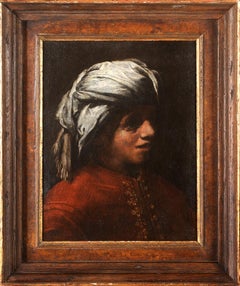
Portrait of a young man with a turban
Located in BELEYMAS, FR
Circle of Adam de Coster
(Mechelen 1586 – Antwerp 1643)
Portrait of a Young Man with a Turban, Dressed in Oriental Style
Oil on canvas
H. 43 cm ; W. 33 cm
Unsigned
This portrait of ...
Category
1620s Flemish School Portrait Paintings
Materials
Oil, Canvas
Portrait of a young woman in Louis XV period dress
Located in BELEYMAS, FR
French School
Portrait of a young woman in Louis XV period dress
Pastel on paper mounted on oval canvas
H. 68 cm; W. 54 cm (Frame: H. 102 cm; W. 71 cm)
18th century frame, anti-refle...
Category
Mid-18th Century French School Figurative Paintings
Materials
Canvas, Paper, Pastel
You May Also Like
Judith Holding Holofernes
Head - Oil Painting - 17th Century
Located in Roma, IT
Judith Holding Holofernes' Head is an old master artwork realized by an unknown Artist of 17th century.
Oil on canvas.
The painting depicts Judith Holding the head of Holofernes.
Category
17th Century Modern Figurative Paintings
Materials
Paint, Oil
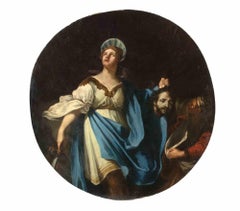
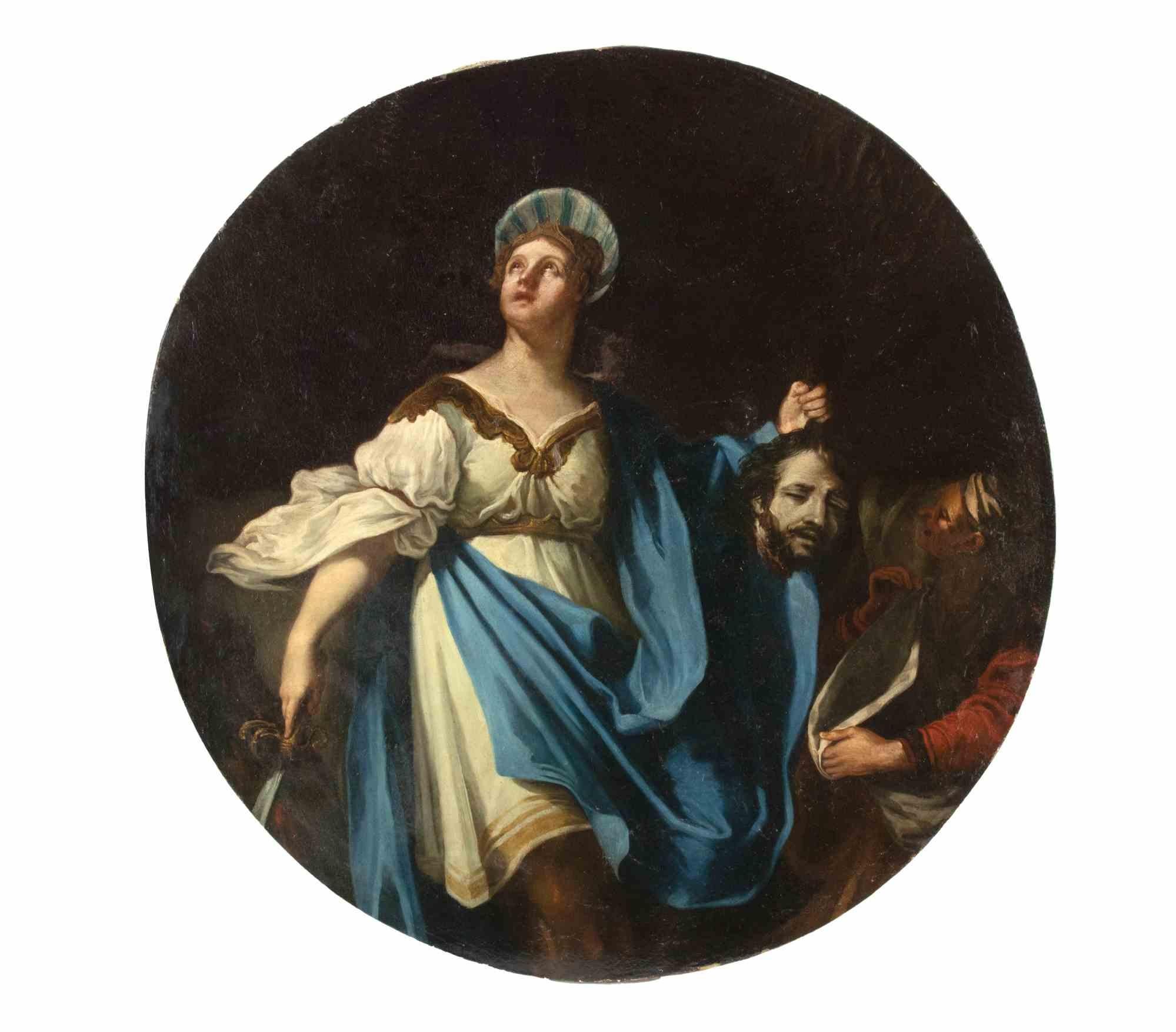
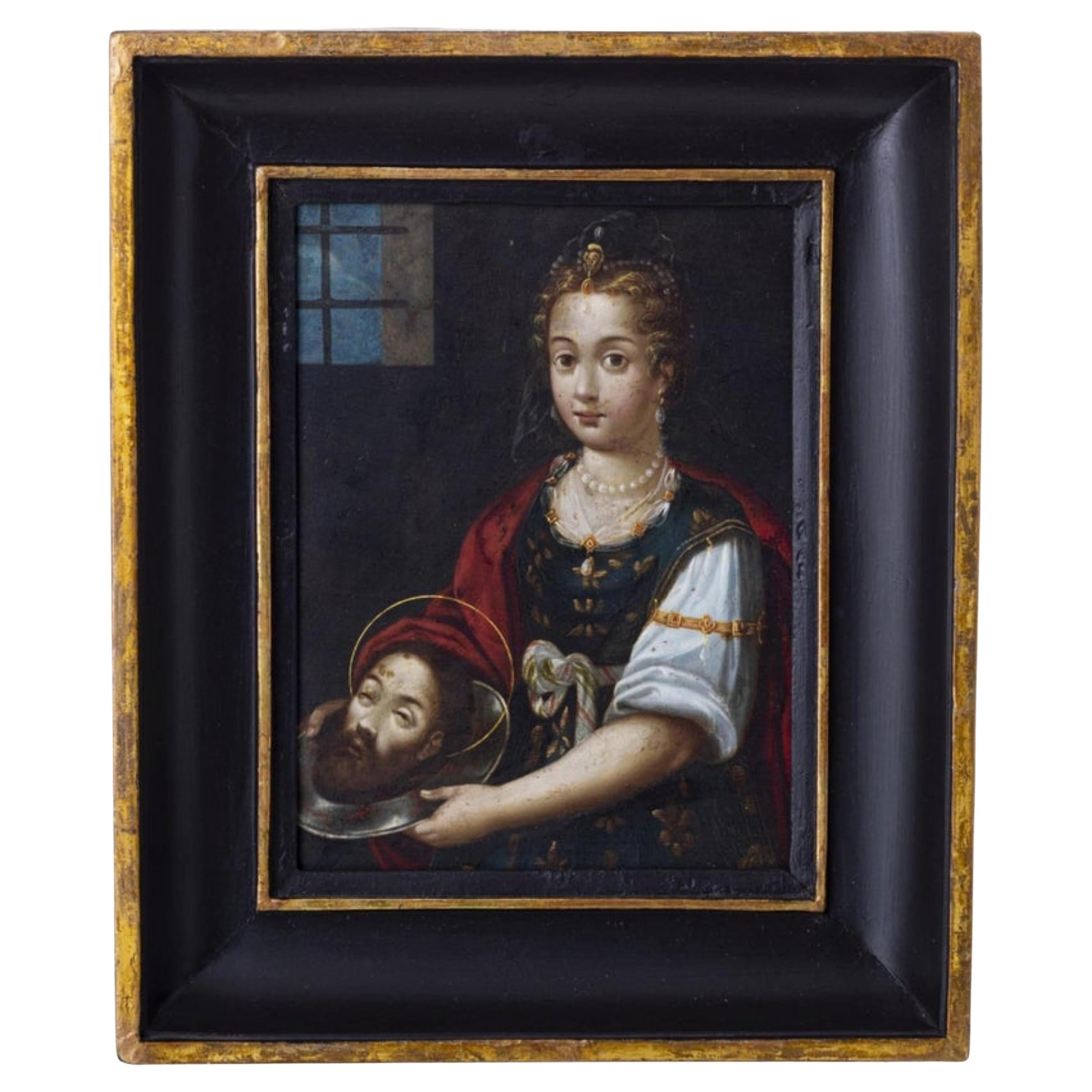
Italian School of the 17th Cent."Salome with the Head of Saint John the Baptist"
Located in Madrid, ES
Italian School of the Sec. XVII
"SALOME WITH THE HEAD OF SAINT JOHN THE BAPTIST"
Oil on copper.
Dim.: 22 x 15 cm
good conditions.
Category
Antique 17th Century Italian Baroque Paintings
Materials
Paint
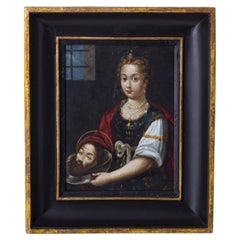
17th Century By Guidotti aka Cavalier Borghese Salomé and the Baptist Oil/canvas
Located in Milano, Lombardia
Cavaliere Paolo Guidotti, also known as il Cavalier Borghese (Lucca, Italy, 1559 - 1629)
Title: Salomé and the Baptist
Medium: Oil on canvas
Dimensions: without frame 90 x 68.5 cm -...
Category
Early 17th Century Old Masters Figurative Paintings
Materials
Canvas, Oil
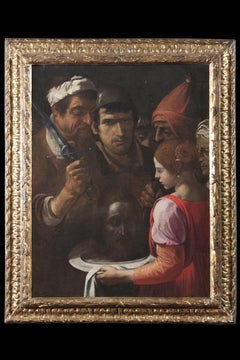
Judith Beheading Holoferne - Oil painting by G.R. Badaracco - Late 17th Century
Located in Roma, IT
Judith Beheading Holoferne is an oil painting made by Giovanni Raffaele Badaracco, mid-17th Century.
Oil on canvas, cm. 102x75..
Very good condition.
Prov. Sotheby's, Amsterdam,...
Category
Late 17th Century Baroque Figurative Paintings
Materials
Oil
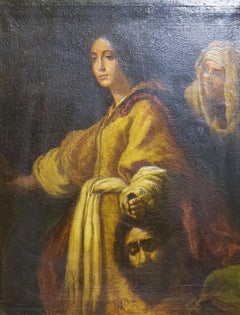
Judith with the Head of Holofernes, Antique Oil Painting after Cristofano Allori
By Alessandro di Cristofano Allori
Located in Berlin, DE
Judith with the head of Holofernes, antique oil painting after Cristofano Allori.
Painting has been restored.
Dimensions without f...
Category
18th Century Old Masters Figurative Paintings
Materials
Canvas, Oil
$6,702 Sale Price
20% Off
Free Shipping
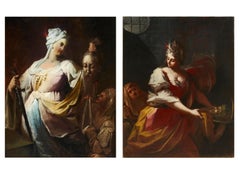
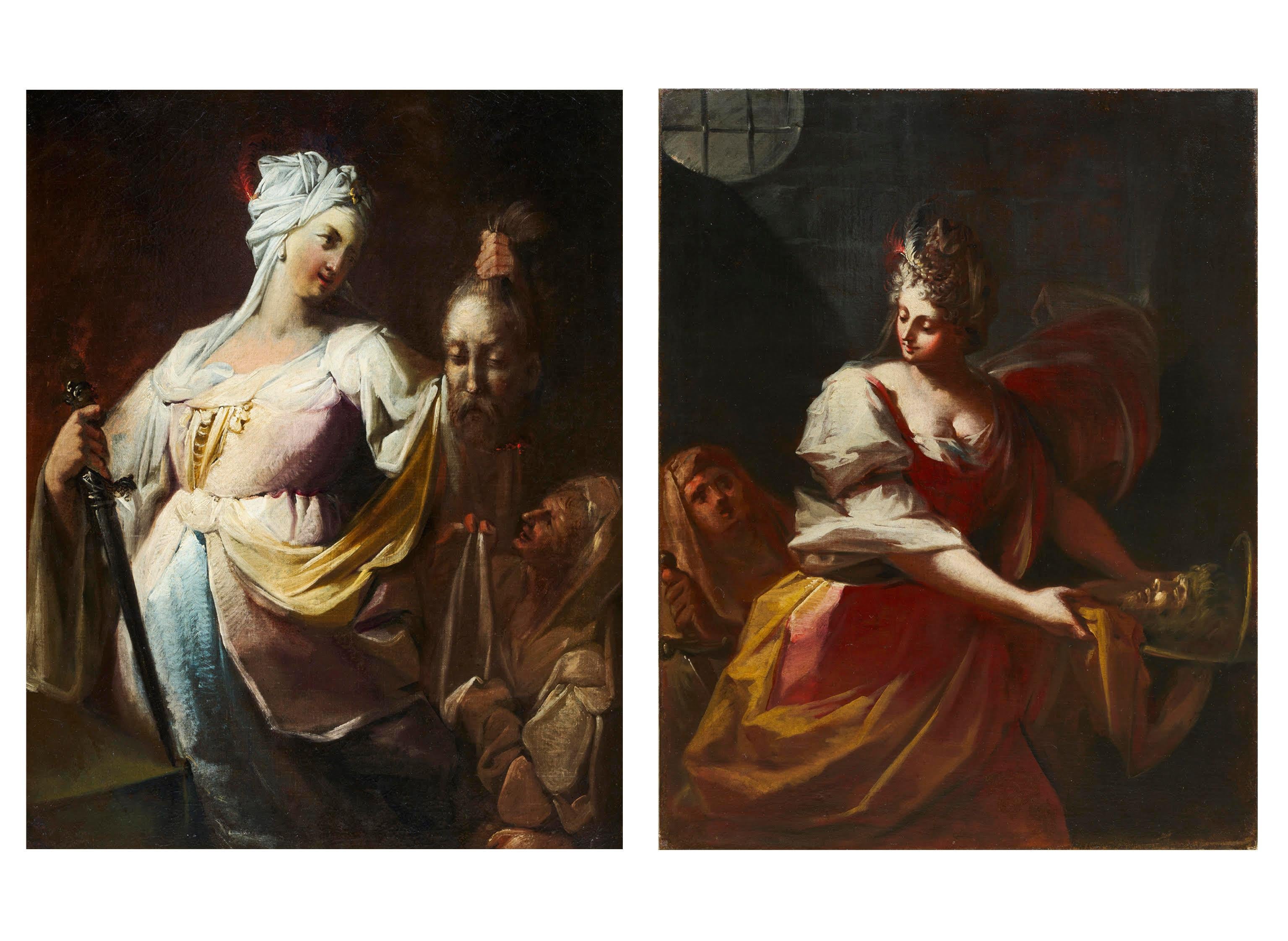
Judith and Salome, a pair of oil paintings on canvas by Francesco Conti
Located in PARIS, FR
This widely referenced pair of paintings is one of Francesco Conti’s most successful productions. Francesco Conti is one of the finest painters of 18th-century Florence. In the shimmering colors typical of his best work, he represents two opposite characters from the Bible: the virtuous Judith, whose courage saves her people by cutting off the head of the invader Holofernes, and the depraved Salome, who under the influence of her mother becomes responsible for the beheading of the prophet John the Baptist.
The artist's talent lies in his ability to treat these two macabre subjects with a light touch, presenting us with two attractive women who seem to twirl with glee amidst the severed heads...
1. Francesco Conti, the “Florentine Tiepolo”
Francesco Conti is a major painter of the Florentine school of the 18th century; he can even probably be considered, along with Giovanni Domenico Ferretti (1692-1768), as one of the two main painters of the second quarter of the Florentine 18th century.
Born in Florence in 1682, Francesco Conti began his apprenticeship in the workshop of Simone Pignoni (1611 - 1698), a disciple of Francesco Furini; he was also influenced by the Venetian Sebastiano Ricci. A protégé of Marquis Riccardi, he accompanied him to Rome between 1699 and 1705, where he frequented Carlo Maratta's studio. He settled permanently in Florence in 1705.
Painted exclusively on canvas, the majority of his work consists of religious subjects, altarpieces or private devotional works. It is likely that Conti himself was a devout churchgoer, as evidenced by his affiliation, in the third decade of the eighteenth century, to the Society of the Disciples of Saint-John-the-Baptist, and his entry, at the end of his life, into the fraternity of the Venerable Society of the Holy Trinity.
In Florence, Conti worked for the Grand Duchy's major patrons, including the last Medici - in particular Giangastone and Annamaria Luisa, Electress Palatine - and confirmed his role as a reference painter under the Lorraine Regency, as master of the Public Drawing School, which was closely linked to the institute responsible for the manufacture of semi-precious stone mosaics, then located in the Uffizi complex.
Matteo Marangoni, an art critic of the early 20th century, praised his "brushwork full of elegance and true spirit of the 18th century", pointing out that Conti was "probably one of the best colorists" of the Florentine school of his time. These two characteristics led the art historian Paolo dal Poggetto to nickname him the "Florentine Tiepolo".
2. Judith and Salome, two biblical characters opposing each other
These two paintings form a pair presenting two biblical episodes, which have in common the depiction of a "heroine" carrying the severed head of a man.
While the Salome episode might at first appear to be an echo of the Old Testament story of Judith, each character is the exact opposite of the other. Judith, whose story is told in the Book of Judith, is a beautiful young widow from Bethulia who, accompanied by her maid, went into the camp of the invading Assyrians and won the confidence of Holofernes, the general commanding the enemy army. Invited to a great feast on the fourth evening, she took advantage of Holofernes' drunkenness to cut off his head. “She went up to the bedpost near Holofernes’ head, and took down his sword that hung there. She came close to his bed, took hold of the hair of his head, and said, “Give me strength today, O Lord God of Israel!” Then she struck his neck twice with all her might, and cut off his head. Next she rolled his body off the bed and pulled down the canopy from the posts. Soon afterward she went out and gave Holofernes’ head to her maid, who placed it in her food bag...
Category
1710s Old Masters Figurative Drawings and Watercolors
Materials
Canvas, Oil