Want more images or videos?
Request additional images or videos from the seller
1 of 6
UnknownTudor Court Portrait16th Century
16th Century
$6,166.91List Price
About the Item
- Creation Year:16th Century
- Dimensions:Height: 5.52 in (14 cm)Width: 7.29 in (18.5 cm)
- Medium:
- Movement Style:
- Period:
- Condition:
- Gallery Location:London, GB
- Reference Number:1stDibs: LU67332359653
About the Seller
5.0
Vetted Professional Seller
Every seller passes strict standards for authenticity and reliability
Established in 1990
1stDibs seller since 2017
46 sales on 1stDibs
Typical response time: 1 to 2 days
Authenticity Guarantee
In the unlikely event there’s an issue with an item’s authenticity, contact us within 1 year for a full refund. DetailsMoney-Back Guarantee
If your item is not as described, is damaged in transit, or does not arrive, contact us within 7 days for a full refund. Details24-Hour Cancellation
You have a 24-hour grace period in which to reconsider your purchase, with no questions asked.Vetted Professional Sellers
Our world-class sellers must adhere to strict standards for service and quality, maintaining the integrity of our listings.Price-Match Guarantee
If you find that a seller listed the same item for a lower price elsewhere, we’ll match it.Trusted Global Delivery
Our best-in-class carrier network provides specialized shipping options worldwide, including custom delivery.You May Also Like
St. Vincent Ferrer Preaching to the People of Salamanca
Located in New York, NY
Provenance:
Private Collection, New Jersey
The present painting depicts Saint Vincent Ferrer preaching from a raised pulpit to a group of seven peopl...
Category
15th Century and Earlier Renaissance Figurative Paintings
Materials
Oil, Wood Panel
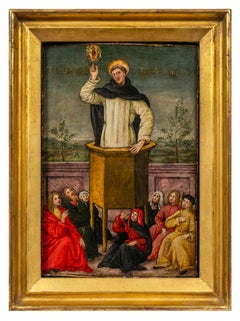
$17,500
H 11.75 in W 8 in
A portrait of John Poyntz, after Hans Holbein, ca. 1644 - 1674
By Hans Holbein
Located in New York, NY
A portrait of courtier and politician John Poyntz, after Hans Holbein, circa 1644 - 1674. This painting is based on a drawing by Hans Holbein, part of the drawings collection of the ...
Category
Mid-17th Century Renaissance Portrait Paintings
Materials
Oil, Wood Panel
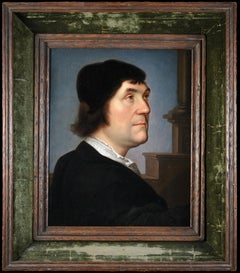
$24,000 Sale Price
52% Off
H 12.8 in W 10.44 in
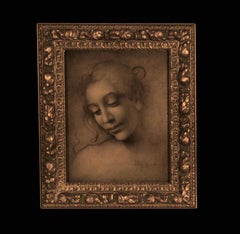
Eli
Located in Mokena, IL
Eli, 2020
Oil on Panel with Carved and Gilded Frame, 11.5 x 13.5 inches
An embodiment of Renaissance portraiture, Varpucanskis’s “Eli” is distinguished by its gentle charm and mat...
Category
21st Century and Contemporary Renaissance Portrait Paintings
Materials
Gold Leaf
Renaissance Style Italian Old Master Painting Madonna
Child Tender Embrace
Located in Cirencester, Gloucestershire
19th/ early 20th Century Italian School
unsigned
Madonna and Child
oil painting on canvas, unframed
canvas: 32 x 24 inches
provenance: private collecti...
Category
Late 19th Century Renaissance Portrait Paintings
Materials
Oil

Original abstract oil painting by prominent searchable artist Steve McElroy.
By Steve McElroy
Located in Dallas, TX
This artist's butterfly work is in the current Veranda Magazine with Jan Showers.
"Girl with the Hermes Scarf" by Steve McElroy. Oil on canvas, 22 x 28 inches, painted 2025. This ...
Category
2010s Renaissance Figurative Paintings
Materials
Canvas, Oil
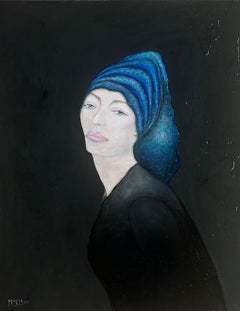
$1,100
H 28 in W 22 in D 0.5 in
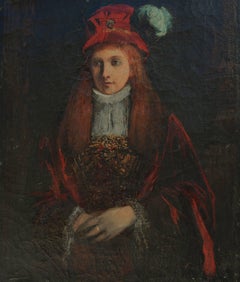
19th Century Young Irish Woman with Feathered Hat
Located in Soquel, CA
Mid 19th Century portrait of a young Irish woman in c. 1570s dress with ruffle. Painted in the style of William Merritt Chase. Unsigned and unframed.
Category
Mid-19th Century Renaissance Portrait Paintings
Materials
Canvas, Oil
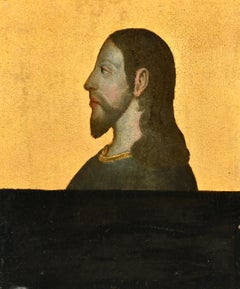
Renaissance Style Head Profile Portrait of Christ Beautiful Antique Oil Painting
Located in Cirencester, Gloucestershire
The Head of Christ
19th Century Dutch School
oil on paper laid down on board, unframed
size: 7.5 x 6 inches
private collection
The painting is in overall very good and sound condition
Category
19th Century Renaissance Figurative Paintings
Materials
Oil
$2,077 Sale Price
20% Off
H 7.5 in W 6 in
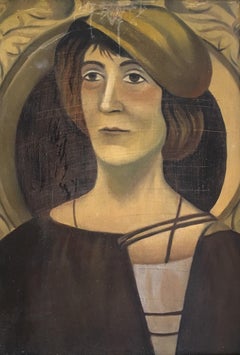
Stylised Portrait, Peasant Girl, Impressionist Oil Painting
Located in Cirencester, Gloucestershire
Stylised Portrait, Peasant Girl, Impressionist Oil Painting
By European Schooled artist, Mid 20th Century
Oil painting on metal, framed
Framed size: 10.5 ...
Category
Mid-20th Century Renaissance Portrait Paintings
Materials
Oil
$657 Sale Price
20% Off
H 10.5 in W 8 in
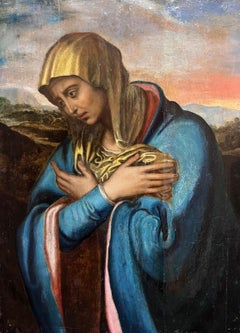
Very Rare Renaissance Old Master Oil Painting c. 1600 Oil on Panel The Madonna
Located in Cirencester, Gloucestershire
The Virgin Madonna
Spanish Renaissance artist, circle of El Greco (1541-1614)
circa 1600
oil on wood panel, unframed
panel: 20 x 14.5 inches
Provenance: private collection, northern ...
Category
Early 17th Century Renaissance Figurative Paintings
Materials
Oil
$15,140 Sale Price
20% Off
H 20 in W 14.5 in
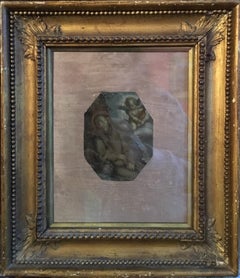
Guardian Angel, 17th century Italian Old Master oil on copper
Located in Cirencester, Gloucestershire
Guardian Angel
Italian School, 17th century
Oil painting on copper, framed
Framed size: 12 x 10.5 inches
Fine quality early Italian Old Master oil on copper panel, dating to the 17t...
Category
17th Century Renaissance Portrait Paintings
Materials
Oil
$2,471 Sale Price
20% Off
H 12 in W 10.5 in D 1 in
More From This Seller
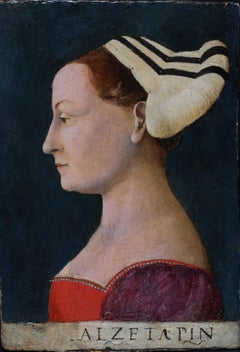
View AllPortrait of an Italian Noblewoman
Located in London, GB
15th century, Italian
Circle of Antonio del Pollaiuolo (1429-1498)
Portrait of an Italian Noblewoman
Oil and tempura on poplar panel
With partial inscription: ALZETAPIN
Provenance:...
Category
15th Century and Earlier Renaissance Portrait Paintings
Materials
Oil, Tempera, Wood Panel
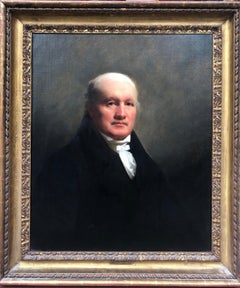
Striking 18th Century Portrait of the 12th Earl of Caithness
By Sir Henry Raeburn
Located in London, GB
Sir Henry Raeburn (1756-1823)
James Sinclair, 12th Earl of Caithness (1766-1823)
Oil on Canvas
30 X 25 inches Unframed
37 X 32 inches framed
Sir Henry Raeburn FRSE RA RSA (4 March 1756 – 8 July 1823) was a Scottish portrait painter and Scotland's first significant portrait painter since the Union to remain based in Scotland. He served as Portrait Painter to King George IV in Scotland.
Raeburn was born the son of a manufacturer in Stockbridge, on the Water of Leith: a former village now within the city of Edinburgh. He had an older brother, born in 1744, called William Raeburn. His ancestors were believed to have been soldiers, and may have taken the name "Raeburn" from a hill farm in Annandale, held by Sir Walter Scott's family. Orphaned, he was supported by William and placed in Heriot's Hospital, where he received an education. At the age of fifteen he was apprenticed to the goldsmith James Gilliland of Edinburgh, and various pieces of jewellery, mourning rings and the like, adorned with minute drawings on ivory by his hand, still exist. Soon he took to the production of carefully finished portrait miniatures; meeting with success and patronage, he extended his practice to oil painting, at which he was self-taught. Gilliland watched the progress of his pupil with interest, and introduced him to David Martin, who had been the favourite assistant of Allan Ramsay the Latter, and was now the leading portrait painter in Edinburgh. Raeburn was especially aided by the loan of portraits to copy. Soon he had gained sufficient skill to make him decide to devote himself exclusively to painting. George Chalmers (1776; Dunfermline Town Hall) is his earliest known portrait.
In his early twenties, Raeburn was asked to paint the portrait of a young lady he had noticed when he was sketching from nature in the fields. Ann was the daughter of Peter Edgar of Bridgelands, and widow of Count James Leslie of Deanhaugh. Fascinated by the handsome and intellectual young artist, she became his wife within a month, bringing him an ample fortune. The acquisition of wealth did not affect his enthusiasm or his industry, but spurred him on to acquire a thorough knowledge of his craft. It was usual for artists to visit Italy, and Raeburn set off with his wife. In London he was kindly received by Sir Joshua Reynolds, the president of the Royal Academy, who advised him on what to study in Rome, especially recommending the works of Michelangelo, and gave Raeburn letters of introduction for Italy. In Rome he met his fellow Scot Gavin Hamilton, Pompeo Girolamo Batoni and Byers, an antique dealer whose advice proved particularly useful, especially the recommendation that "he should never copy an object from memory, but, from the principal figure to the minutest accessory, have it placed before him." After two years of study in Italy he returned to Edinburgh in 1787, and began a successful career as a portrait painter. In that year he executed a seated portrait of the second Lord President Dundas.
Examples of his earlier portraiture include a bust of Mrs Johnstone of Baldovie and a three-quarter-length of Dr James Hutton: works which, if somewhat timid and tentative in handling and not as confident as his later work, nevertheless have delicacy and character. The portraits of John Clerk, Lord Eldin, and of Principal Hill of St Andrews belong to a later period. Raeburn was fortunate in the time in which he practised portraiture. Sir Walter Scott, Hugh Blair, Henry Mackenzie, Lord Woodhouselee, William Robertson, John Home, Robert Fergusson, and Dugald Stewart were resident in Edinburgh, and were all painted by Raeburn. Mature works include his own portrait and that of the Rev. Sir Henry Moncrieff Wellwood, a bust of Dr Wardrop of Torbane Hill, two full-lengths of Adam Rolland of Gask, the remarkable paintings of Lord Newton and Dr Alexander Adam in the National Gallery of Scotland, and that of William Macdonald of St Martin's. Apart from himself, Raeburn painted only two artists, one of whom was Sir Francis Leggatt Chantrey, the most important and famous British sculptor of the first half of the 19th century. It has recently been revealed that Raeburn and Chantrey were close friends and that Raeburn took exceptional care over the execution of his portrait of the sculptor, one of the painter's mature bust-length masterpieces.
It was commonly believed that Raeburn was less successful in painting female portraits, but the exquisite full-length of his wife, the smaller likeness of Mrs R. Scott Moncrieff in the National Gallery of Scotland, and that of Mrs Robert Bell, and others, argue against this. Raeburn spent his life in Edinburgh, rarely visiting London, and then only for brief periods, thus preserving his individuality. Although he, personally, may have lost advantages resulting from closer association with the leaders of English art, and from contact with a wider public, Scottish art gained much from his disinclination to leave his native land. He became the acknowledged chief of the school which was growing up in Scotland during the early 19th century, and his example and influence at a critical period were of major importance. So varied were his other interests that sitters used to say of him, "You would never take him for a painter till he seizes the brush and palette."
In 1812 he was elected president of the Society of Artists in Edinburgh; and in 1814 associate, and in the following year full member, of the Royal Scottish Academy. On 29 August 1822 he was knighted by George IV and appointed His Majesty's limner for Scotland at the Earl of Hopetoun house. He died in Edinburgh.
Raeburn had all the essential qualities of a popular and successful portrait painter. He was able to produce a telling and forcible likeness; his work is distinguished by powerful characterisation, stark realism, dramatic and unusual lighting effects, and swift and broad handling of the most resolute sort. David Wilkie recorded that, while travelling in Spain and studying the works of Diego Velázquez, the brushwork reminded him constantly of the "square touch" of Raeburn. Scottish physician and writer John Brown wrote that Raeburn "never fails in giving a likeness at once vivid, unmistakable and pleasing. He paints the truth, and he paints it with love".
Raeburn has been described as a "famously intuitive"portrait painter. He was unusual amongst many of his contemporaries, such as Reynolds, in the extent of his philosophy of painting directly from life; he made no preliminary sketches. This attitude partly explains the often coarse modelling and clashing colour combinations he employed, in contrast to the more refined style of Thomas Gainsborough and Reynolds. However these qualities and those mentioned above anticipate many of the later developments in painting of the 19th century from romanticism to Impressionism.
Sir Henry Raeburn died in St Bernard's House (17 St Bernards Crescent), Stockbridge, Edinburgh. He is buried in St. Cuthbert's churchyard against the east wall (the monument erected by Raeburn in advance) but also has a secondary memorial in the Church of St John the Evangelist, Edinburgh.
James Sinclair, 12th Earl of Caithness was born at Barrogill Castle (Castle of Mey) on 31 May 1766. He was the son of Sir John Sinclair of Mey, Baronet who he succeeded in the baronetcy in 1774. He succeeded as 12th earl of Caithness in 1789.
He was lord-lieutenant of the county of Caithness and lieutenant-colonel of the Ross-shire militia.
He married at Thurso Castle on 2 January 1784 Jane, second daughter of Alexander Campbell...
Category
18th Century Portrait Paintings
Materials
Oil
$29,601 Sale Price
40% Off
Free Shipping
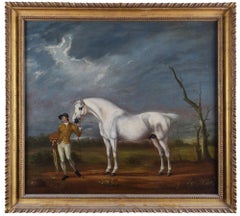
Grey stallion held by groom in Duke of Grosvenor’s colours British 18C
Located in London, GB
Richard Roper (British, c. 1730-c. 1775)
Grey stallion held by groom in the Duke of
Grosvenor’s colours
Oil on canvas
Old chalk inscription '22 Mar 74' verso
Property of a gentleman...
Category
18th Century English School Animal Paintings
Materials
Oil
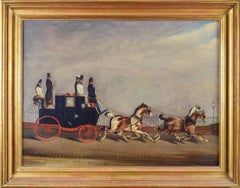
Windsor Mail Coach Horses Oil on canvas English 19th Century
By Charles Cooper Henderson
Located in London, GB
Charles Cooper Henderson (English, 1803-1877)
Windsor Mail Coach
Oil on canvas
With chalk inscriptions verso
Property of a gentleman
From the collection of Peter Roe
Dimensions:
(F...
Category
Mid-19th Century English School Animal Paintings
Materials
Oil
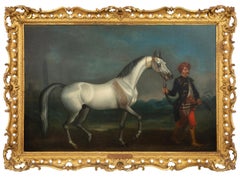
The Bloody Shouldered Arabian Horse Oil on canvas 18th Century
By John Wootton
Located in London, GB
John Wootton (1686 - 1764)
The Bloody-Shouldered Arabian
Oil on canvas
Inscribed below, 'Bred by Lord Oxford in 1755 & Sire of many famous Racers, including the Duke of Bolton's 'Swe...
Category
Early 18th Century English School Animal Paintings
Materials
Oil
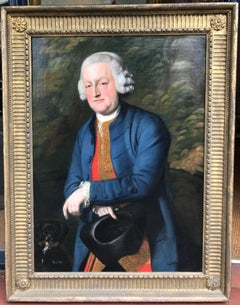
18th Century Oil Painting Portrait of Phillip, 6th Viscount Wenman.
By Nathaniel Dance-Holland
Located in London, GB
Sir Nathaniel Dance-Holland (1750-1811) was an English portrait painter and one of the founding members of the Royal Academy in 1768. Justly celebrated in his lifetime he won several...
Category
Late 18th Century Old Masters Portrait Paintings
Materials
Oil
Still Thinking About These?
All Recently ViewedMore Ways To Browse
Antique Mens Clothing
16th Century Tudor
Tudor Oil Painting
Regal Oil Portrait
Roni Stretch
Seignac Guillaume
Socialite Painting
Tina Spratt
Whitehall Palace
William Burke
Wreath Portrait Painting
16x20 Portrait Painting
18th Century Scottish Painting
Ancient View Of The Bay Of Naples
Auricular Frame
Barkley Hendricks
Barry Leighton Jones
Bartolomeo Schedoni