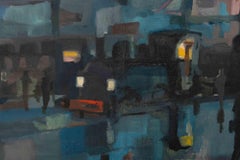
Items Similar to Gramby Station, Painting, Oil on Wood Panel
Want more images or videos?
Request additional images or videos from the seller
1 of 5
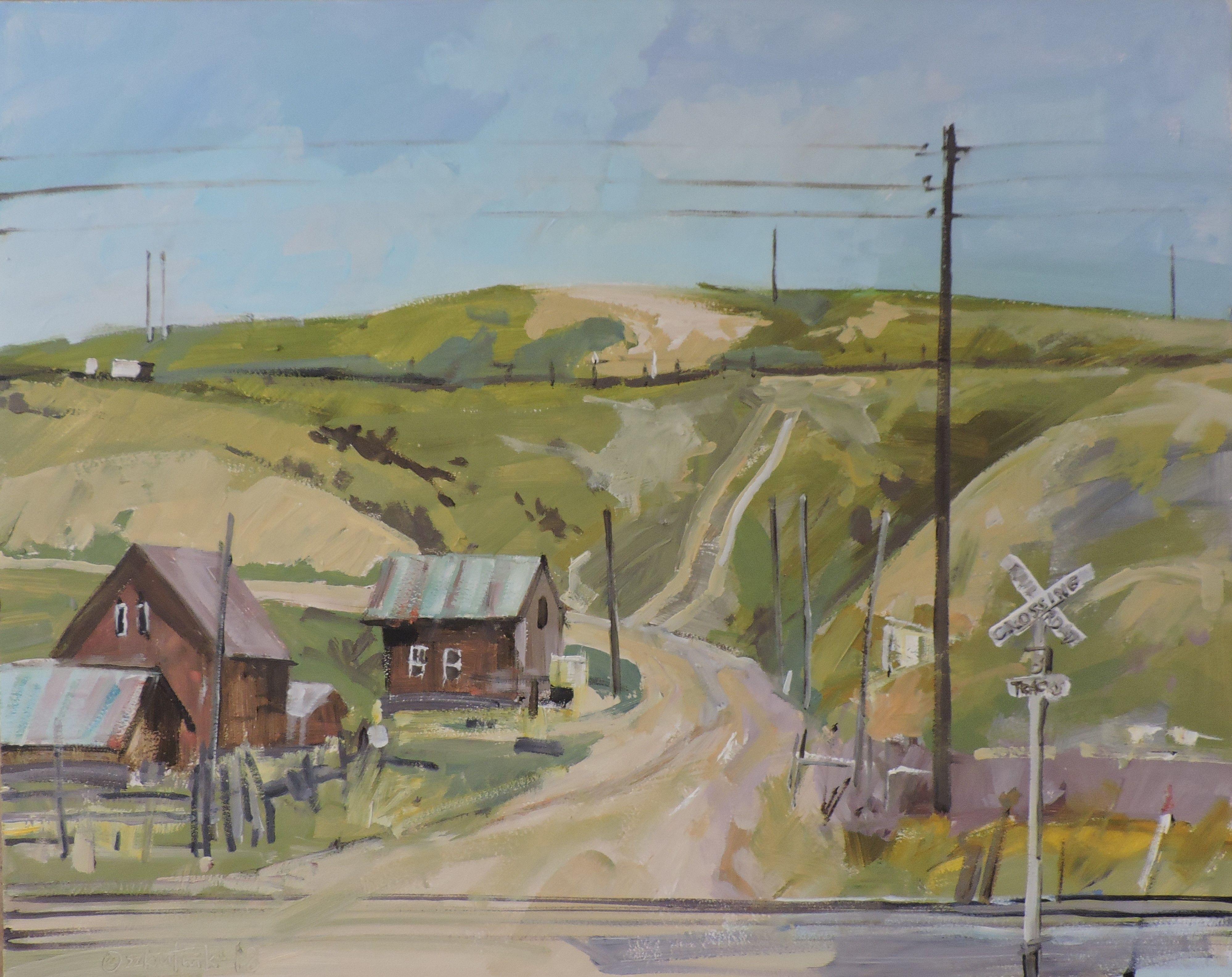
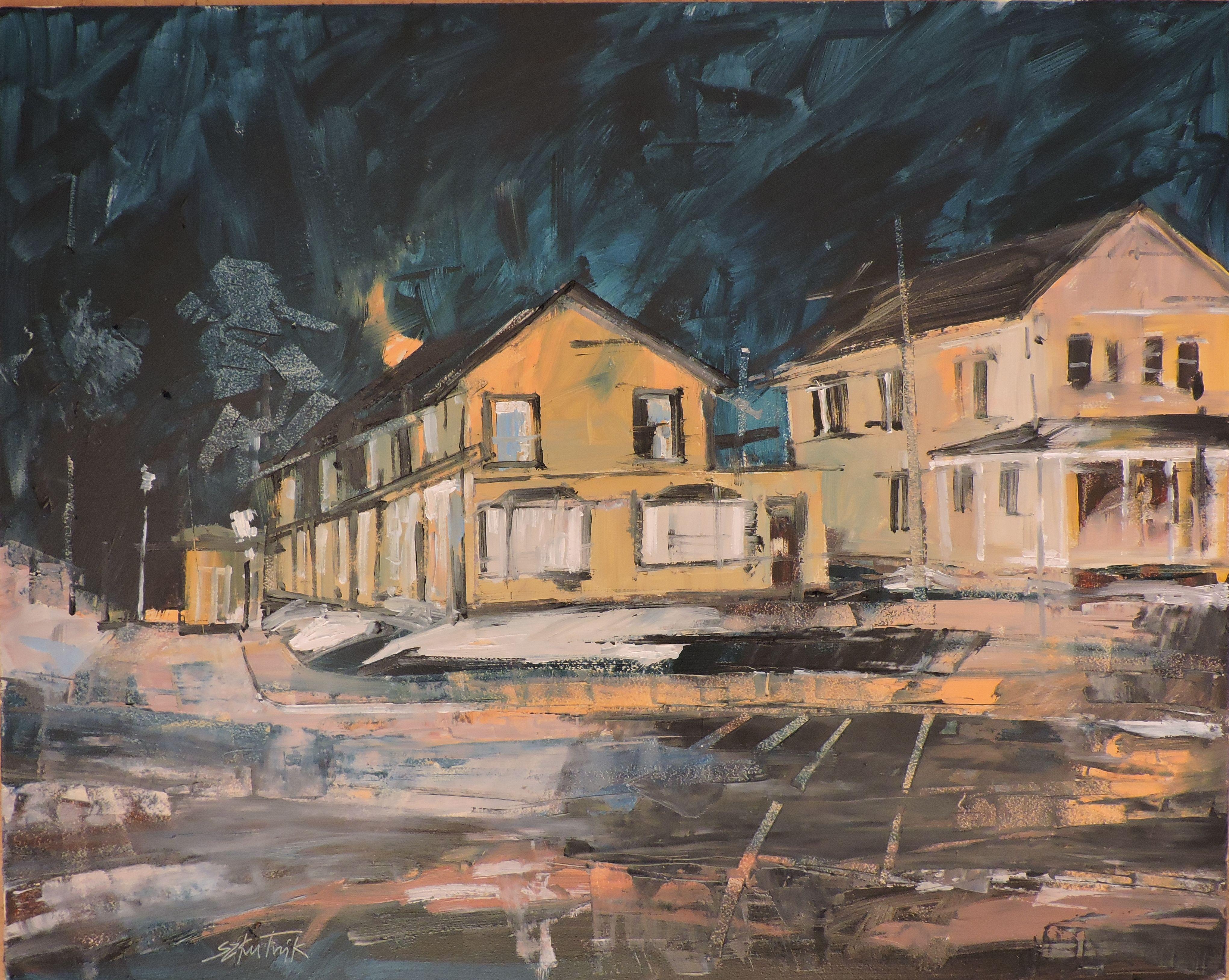
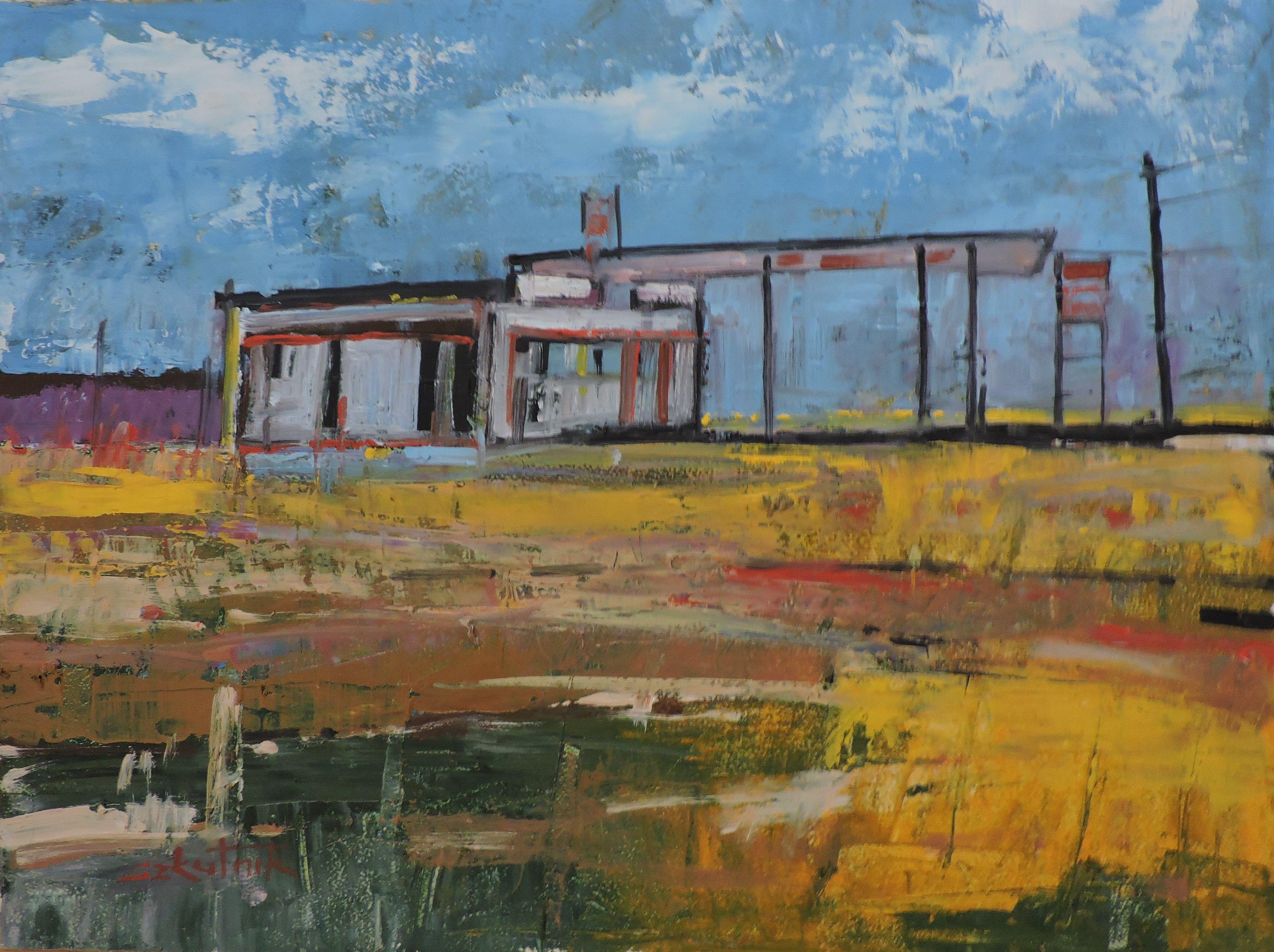
Richard SzkutnikGramby Station, Painting, Oil on Wood Panel2022
2022
$1,200
£908.89
€1,043.70
CA$1,681.71
A$1,829.05
CHF 969.33
MX$21,915.84
NOK 12,319.68
SEK 11,286.50
DKK 7,801.29
About the Item
original oil on panel paint in Gramby, Colorado :: Painting :: Impressionist :: This piece comes with an official certificate of authenticity signed by the artist :: Ready to Hang: No :: Signed: Yes :: Signature Location: front :: Wood Panel :: Landscape :: Original :: Framed: No
- Creator:
- Creation Year:2022
- Dimensions:Height: 14 in (35.56 cm)Width: 18 in (45.72 cm)Depth: 0.2 in (5.08 mm)
- Medium:
- Movement Style:
- Period:
- Condition:
- Gallery Location:Yardley, PA
- Reference Number:Seller: 1411701stDibs: LU802111108502
About the Seller
5.0
Gold Seller
Premium sellers maintaining a 4.3+ rating and 24-hour response times
Established in 2009
1stDibs seller since 2017
1,598 sales on 1stDibs
Typical response time: 4 hours
- ShippingRetrieving quote...Shipping from: Littleton, CO
- Return Policy
More From This Seller
View AllGhost Station, Painting, Oil on Wood Panel
By Richard Szkutnik
Located in Yardley, PA
original architecture oil on panel painting in contemporary impressionism style :: Painting :: Impressionist :: This piece comes with an official certificate of authenticity signed b...
Category
2010s Impressionist Paintings
Materials
Oil
Railroad Crossing, Painting, Oil on Other
By Richard Szkutnik
Located in Yardley, PA
original en plein air oil on panel :: Painting :: Impressionist :: This piece comes with an official certificate of authenticity signed by the artist :: Ready to Hang: No :: Signed: ...
Category
2010s Impressionist Paintings
Materials
Oil
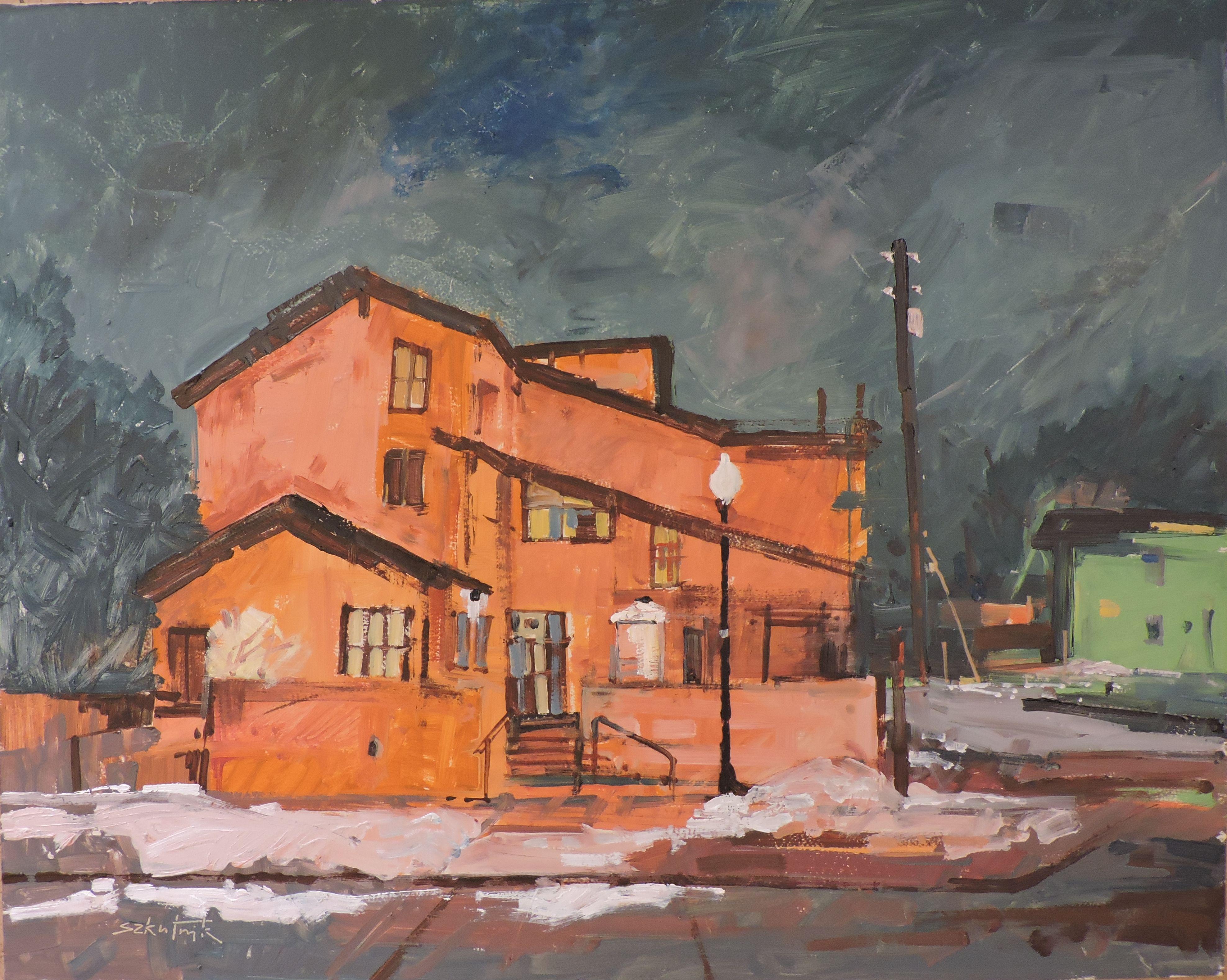
Littleton #4, Painting, Oil on Wood Panel
By Richard Szkutnik
Located in Yardley, PA
original winter cityscape oil on panel :: Painting :: Impressionist :: This piece comes with an official certificate of authenticity signed by the artist :: Ready to Hang: No :: Sign...
Category
21st Century and Contemporary Impressionist Paintings
Materials
Oil
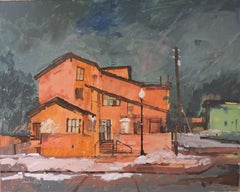
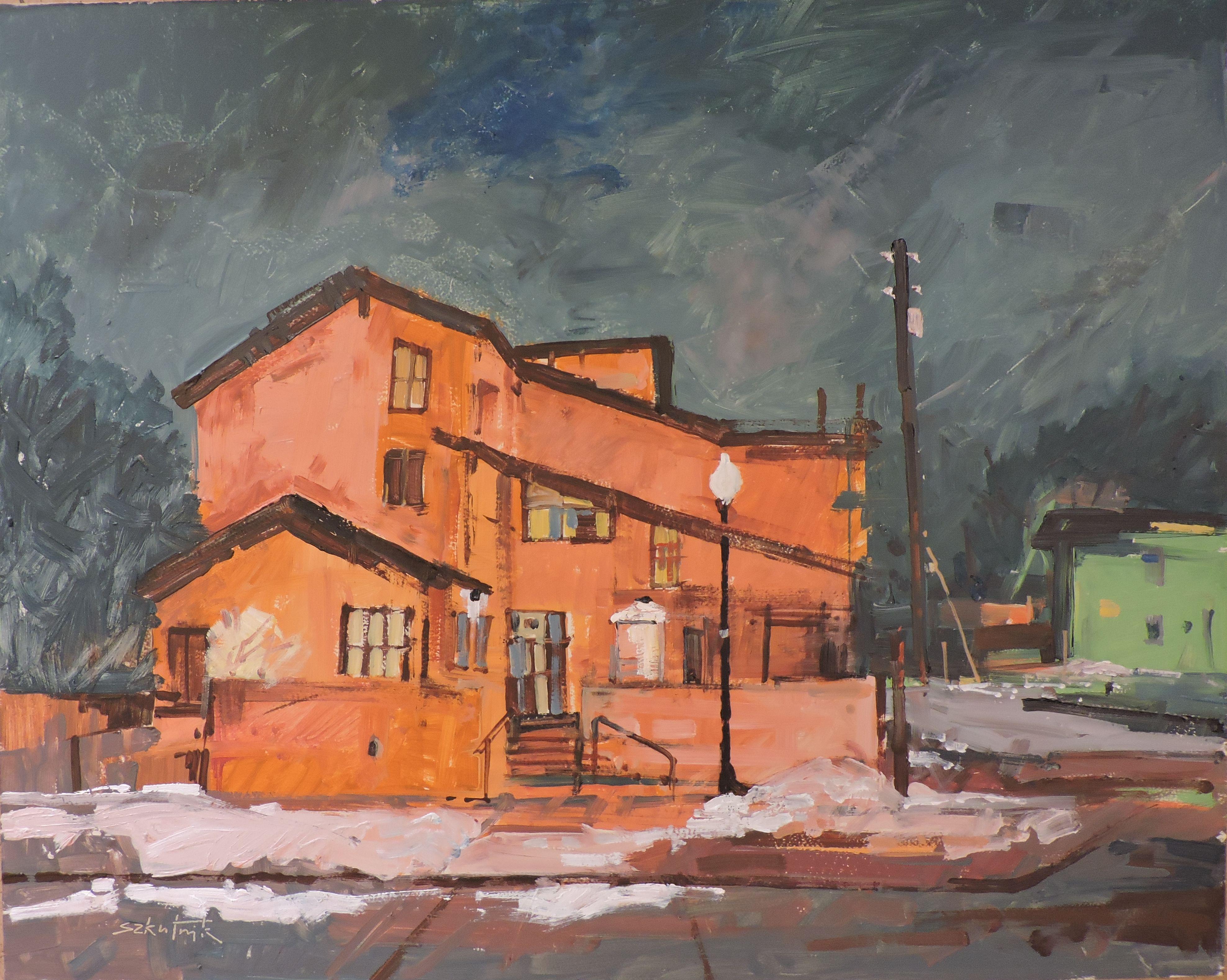
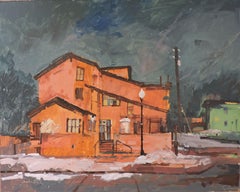
Littleton #4, Painting, Oil on Wood Panel
By Richard Szkutnik
Located in Yardley, PA
original en plein air winter cityscape oil on panel :: Painting :: Impressionist :: This piece comes with an official certificate of authenticity signed by the artist :: Ready to Han...
Category
2010s Impressionist Paintings
Materials
Oil
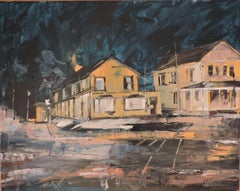
Littleton #7, Painting, Oil on Wood Panel
By Richard Szkutnik
Located in Yardley, PA
original plein air winter cityscape oil on panel :: Painting :: Impressionist :: This piece comes with an official certificate of authenticity signed by the artist :: Ready to Hang: ...
Category
21st Century and Contemporary Impressionist Paintings
Materials
Oil
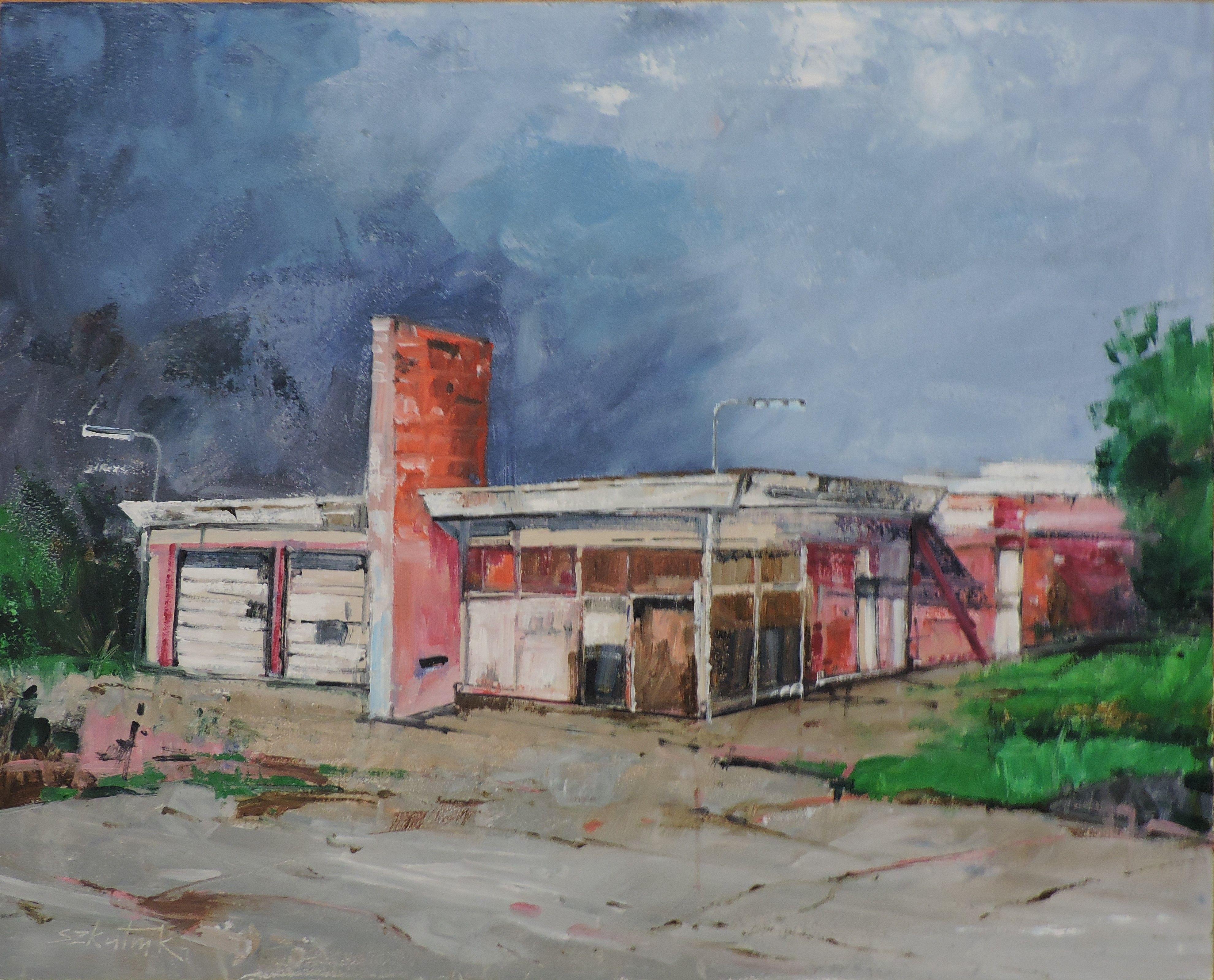
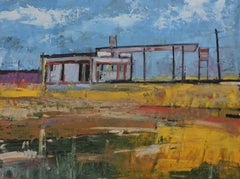
Abandoned Gas Station, Painting, Oil on Wood Panel
By Richard Szkutnik
Located in Yardley, PA
original contemporary impressionism oil on panel :: Painting :: Impressionist :: This piece comes with an official certificate of authenticity signed by the artist :: Ready to Hang: ...
Category
21st Century and Contemporary Impressionist Paintings
Materials
Oil
You May Also Like
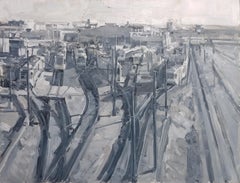
"Light Rail Station" Oil Painting
By Mikael Olson
Located in Denver, CO
Mikael Olson's (US based) "Light Rail Station" is an oil painting that depicts the convergence of Light Rail Lines at a station in a monochromatic grey.
Category
2010s Impressionist Landscape Paintings
Materials
Oil
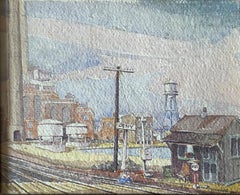
"Train Station, " Max Kuehne, Industrial City Scene, American Impressionism
By Max Kuehne
Located in New York, NY
Max Kuehne (1880 - 1968)
Train Station, circa 1910
Watercolor on paper
8 1/4 x 10 1/4 inches
Signed lower right
Provenance:
Private Collection, Illinois
Max Kuehne was born in Halle, Germany on November 7, 1880. During his adolescence the family immigrated to America and settled in Flushing, New York. As a young man, Max was active in rowing events, bicycle racing, swimming and sailing. After experimenting with various occupations, Kuehne decided to study art, which led him to William Merritt Chase's famous school in New York; he was trained by Chase himself, then by Kenneth Hayes Miller. Chase was at the peak of his career, and his portraits were especially in demand. Kuehne would have profited from Chase's invaluable lessons in technique, as well as his inspirational personality. Miller, only four years older than Kuehne, was another of the many artists to benefit from Chase's teachings. Even though Miller still would have been under the spell of Chase upon Kuehne's arrival, he was already experimenting with an aestheticism that went beyond Chase's realism and virtuosity of the brush. Later Miller developed a style dependent upon volumetric figures that recall Italian Renaissance prototypes.
Kuehne moved from Miller to Robert Henri in 1909. Rockwell Kent, who also studied under Chase, Miller, and Henri, expressed what he felt were their respective contributions: "As Chase had taught us to use our eyes, and Henri to enlist our hearts, Miller called on us to use our heads." (Rockwell Kent, It's Me O Lord: The Autobiography of Rockwell Kent. New York: Dodd, Mead and Co., 1955, p. 83). Henri prompted Kuehne to search out the unvarnished realities of urban living; a notable portion of Henri's stylistic formula was incorporated into his work.
Having received such a thorough foundation in art, Kuehne spent a year in Europe's major art museums to study techniques of the old masters. His son Richard named Ernest Lawson as one of Max Kuehne's European traveling companions. In 1911 Kuehne moved to New York where he maintained a studio and painted everyday scenes around him, using the rather Manet-like, dark palette of Henri.
A trip to Gloucester during the following summer engendered a brighter palette. In the words of Gallatin (1924, p. 60), during that summer Kuehne "executed some of his most successful pictures, paintings full of sunlight . . . revealing the fact that he was becoming a colorist of considerable distinction." Kuehne was away in England the year of the Armory Show (1913), where he worked on powerful, painterly seascapes on the rocky shores of Cornwall. Possibly inspired by Henri - who had discovered Madrid in 1900 then took classes there in 1906, 1908 and 1912 - Kuehne visited Spain in 1914; in all, he would spend three years there, maintaining a studio in Granada. He developed his own impressionism and a greater simplicity while in Spain, under the influence of the brilliant Mediterranean light. George Bellows convinced Kuehne to spend the summer of 1919 in Rockport, Maine (near Camden). The influence of Bellows was more than casual; he would have intensified Kuehne's commitment to paint life "in the raw" around him.
After another brief trip to Spain in 1920, Kuehne went to the other Rockport (Cape Ann, Massachusetts) where he was accepted as a member of the vigorous art colony, spearheaded by Aldro T. Hibbard. Rockport's picturesque ambiance fulfilled the needs of an artist-sailor: as a writer in the Gloucester Daily Times explained, "Max Kuehne came to Rockport to paint, but he stayed to sail." The 1920s was a boom decade for Cape Ann, as it was for the rest of the nation. Kuehne's studio in Rockport was formerly occupied by Jonas Lie.
Kuehne spent the summer of 1923 in Paris, where in July, André Breton started a brawl as the curtain went up on a play by his rival Tristan Tzara; the event signified the demise of the Dada movement. Kuehne could not relate to this avant-garde art but was apparently influenced by more traditional painters — the Fauves, Nabis, and painters such as Bonnard. Gallatin perceived a looser handling and more brilliant color in the pictures Kuehne brought back to the States in the fall. In 1926, Kuehne won the First Honorable Mention at the Carnegie Institute, and he re-exhibited there, for example, in 1937 (Before the Wind). Besides painting, Kuehne did sculpture, decorative screens, and furniture work with carved and gilded molding. In addition, he designed and carved his own frames, and John Taylor Adams encouraged Kuehne to execute etchings. Through his talents in all these media he was able to survive the Depression, and during the 1940s and 1950s these activities almost eclipsed his easel painting. In later years, Kuehne's landscapes and still-lifes show the influence of Cézanne and Bonnard, and his style changed radically.
Max Kuehne died in 1968. He exhibited his work at the National Academy of Design, the Art Institute of Chicago, the Carnegie Institute in Pittsburgh, the Memorial Art Gallery of the University of Rochester, and in various New York City galleries. Kuehne's works are in the following public collections: the Detroit Institute of Arts (Marine Headland), the Whitney Museum (Diamond Hill...
Category
1910s American Impressionist Landscape Drawings and Watercolors
Materials
Paper, Watercolor
"The Train Depot"
By Gershon Benjamin
Located in Lambertville, NJ
Jim’s of Lambertville is proud to offer this artwork by:
Gershon Benjamin (1899-1985)
An American Modernist of portraits, landscapes, still lives, and the urban scene, Gershon Benj...
Category
1930s Modern Landscape Paintings
Materials
Oil, Board
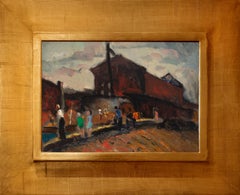
"Trackside 2" (2023) by Delton Demarest, Original Oil Painting
Located in Denver, CO
Delton Demarest's "Trackside 2" (2022) is an original oil painting depicting a train passing by.
Delton Demarest has been working in the freelance industry for many years. Recent an...
Category
21st Century and Contemporary Impressionist Figurative Paintings
Materials
Oil, Board
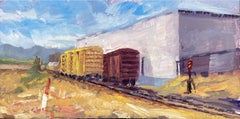
Train Station - Oil Paint by Eliano Fantuzzi - 1953
By Eliano Fantuzzi
Located in Roma, IT
Oil on canvas realized by Fantuzzi in 1952.
Hand signed lower left and on rear.
Category
1950s Modern Figurative Paintings
Materials
Oil
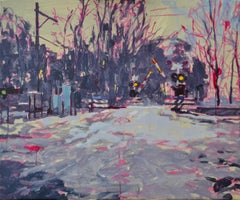
Railroad Crossing II - 21st Century Contemporary Oil Painting by Eric Schutte
By Eric Schutte
Located in Nuenen, Noord Brabant
Introduction to Eric Schutte A publication in the art magazine 'Atelier', made us aware of his work. Very special we found his paintings, square-air paintings where the influences of the weather, the light to a special touch and a very colorful whole. Versatile What we do, when we see an artist's work that appeals to us, is to search for other work. This also applies to Eric. His website taught us that he is very versatile. In addition to paintings, Eric has found a special way of design. With waste plastic, iron and other material he makes the most special installations, commissioned, but also free work. An appointment was made quickly! Eric Schutte lives and works in Ommen, his studio is next to a beautiful mill. At the time of visit it is cold, there is some frozen snow and it is almost dark when I arrive. In the studio it is immediately clear that Eric is busy with everything. Mountains with tubes of oil paint, different donkeys with semi-manufactured paintings, a particularly large pile of waste plastic. Eric is an enthusiastic narrator, besides being an artist, he is a drawing teacher for a few days a week. I can imagine how he knows how to enthuse his students! Eric talks about special assignments that constantly lead to new ideas and new 'free works'. (The free work Eric likes to call 'research'.) For example, a cow, at De Brink in Ommen, produced Eric on behalf of the municipality. He made the cow out of iron. Old iron from all farmers in the immediate vicinity of Ommen. With this old iron he constructed a cow, the iron is particularly visible, but also the cow. Very clever! Environments Eric takes me enthusiastically to his work. The paintings, classical in origin, made with elegant imagination, and the images, beautiful and simple at the same time, and therefore also stimulating to look better. With these paintings Eric is always looking for the edge, during the opening exhibition we have a special work from him. Is it a 6-part, or are it 6 separate paintings of a railway crossing where a train is passing by? Anyway, you keep looking at it. Eric tells about this when I pick up the work: "I see something then, and then I want something with it, and this is it. Yes, otherwise I can not explain it ". Another and special piece during the opening exhibition is also by Eric Schutte. A calf made from almost 2000 yellow ear tags of slaughtered calves and iron. Particularly plastic and very lifelike. Eric Schutte is an artist who makes both conceptual and classical work. Eric himself about this: "The conceptual work consists of a figurative design in which the non-obvious use of materials is part of the imagination. The concept also plays a major role in classical work, but the material (use) is more traditional. I consider making images as a continuous game and research in which the idea and the design are equal and influence each other ". The opening exhibition and the work of Eric that we have kept in stock has been sold for a large part. Particularly enthusiastic and enthusiastic are people who see his work. During the exhibition 'Naar buiten!' We show new work by this special artist. Acrylic paintings made in the snow, outside in the cold. Also a number of works of waste plastic. The artist tells about his painting of a forest made from waste plastic: We make a waste mountain from nature, I make nature from waste again. The work is called biotope, our living environment. Nature, but at the same time, our environment is plastic. If later excavations are made to this time, the main thing that is found will be plastic. We live in the plastic age.
Category
2010s Contemporary Landscape Paintings
Materials
Oil
More Ways To Browse
Colorado Painting
The Paris Salons
Oil Painting Of A Library
Paintings With Children 20th Century
Boat Painting Art
Belgian Artist
German Landscape Oil On Canvas
French Paintings Signed
Paul Brown Art
Nude Figure
Grey Painting
River Oil Painting
Semi Abstract
French 19th Century Landscape Painting
Painting On Linen
Oil Painting New England Landscape
1995 Art
Oil Painting Still Life Vase