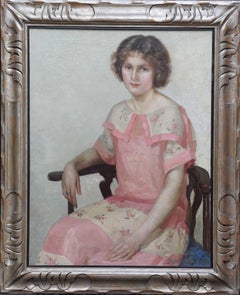
Items Similar to Portrait of Woman with Fuchsia, Early 20th Century Still Life
Want more images or videos?
Request additional images or videos from the seller
1 of 11
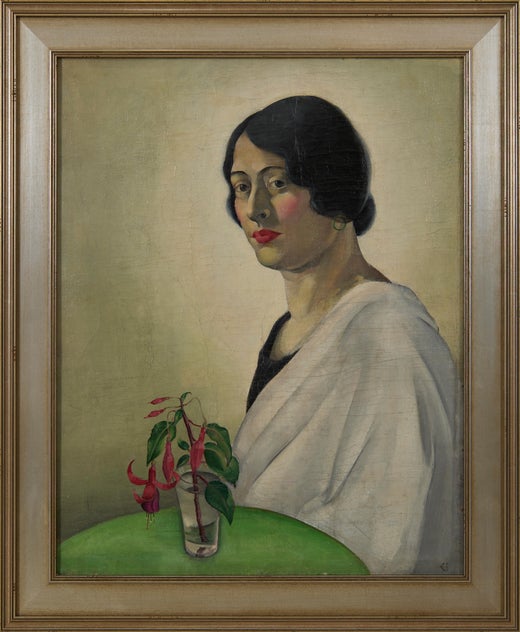
Clarence Holbrook CarterPortrait of Woman with Fuchsia, Early 20th Century Still Life1935
1935
$8,750
£6,657.47
€7,670.76
CA$12,422.26
A$13,326.86
CHF 7,148.26
MX$160,453.65
NOK 90,112.16
SEK 82,169.80
DKK 57,310.82
About the Item
Clarence Holbrook Carter (American, 1904-2000)
Woman with FUCHSIA, 1935
Oil on canvas
Signed and dated lower right
31.75 x 27 inches
37 x 32.25 inches, framed
Untitled Still Life verso
Clarence Holbrook Carter achieved a level of national artistic success that was nearly unprecedented among Cleveland School artists of his day, with representation by major New York dealers, scores of awards and solo exhibits, and streams of praise flowing from pens of the top art critics. Over the course of his 60+ year career Carter evolved from an exceptionally fine American Scene painter capable of evoking deep reservoirs of mood, into an abstractionist with a strongly surrealist bent.
While his two bodies of work seem at first to be worlds apart, owing to their different formal vocabularies, they, in fact, explore virtually the same subject: the nexus between life and death and the transition from earth to spirit. The early work finds its expressive power through specific people, events, and landscapes—most of which are drawn from his experiences growing up in the river town of Portsmouth, Ohio—while the later work from the 1960s on evokes potent states of being through pure flat shape, color and form that read as universals. As his primary form he adopted the ovoid or egg shape, endowing it with varying degrees of transparency. Alone or in multiples, the egg moves through Carter’s landscapes and architectural settings like a sentient spirit on a restless quest.
Born and raised in southern Ohio along the banks of the mercurial Ohio River and its treacherous floods, Carter developed a love of drawing as a child, and was encouraged by both his parents. He was self-directed, found inspiration all around him, and was strongly encouraged by the fact that his teenage work consistently captured art prizes in county and state fairs. Although money was tight after his father (who was a postal worker) died suddenly of a stroke, Carter’s mother supported his desire to study at the Cleveland School of Art from 1923-27, where he trained under painters Henry Keller, Frank Wilcox and Paul Travis.
In the summer of 1927, Carter studied in Capri with the modernist Hans Hofmann, where he carried out compositional exercises in charcoal and paint, recording the lucid spatial order of stairs, walls, roofs, arches and other elements of the island’s compressed architecture. Returning to Cleveland in 1929, Carter had his first solo show, and through Milliken taught studio classes at the Cleveland Museum of Art from 1930-37. In 1934, he worked under the auspices of the Public Works of Art Project and won a commission to paint two murals in Cleveland’s Public Auditorium. In 1936, he painted a post office mural in Ravenna, Ohio, as well as one for the post office in his hometown of Portsmouth, where his father had worked. He then headed the Northeast Ohio division of the painting projects arm of the Works Progress Administration, a subsequent government art program. In 1938, he moved to Pittsburgh to teach at the Carnegie Institute of Technology until 1944. Carter’s American Scene paintings of the ’30s and ’40s, which launched his artistic star, are the works for which the artist remains best known.
During and immediately after World War II, Clarence Carter realized his attraction to bold pattern, dramatic perspective and eye-catching hard-edged design was a poor fit with the prevailing style of Abstract Expressionism. Fortunately, these same hallmarks of his style were prized within the realm of commercial art. Thus, from 1944-1959, Carter became a veritable “Mad Man [Madison Avenue Man],” designing ambitious series of advertisements for major corporations such as Alcoa and The National City Bank of New York (Citibank) which appeared on the back covers of Fortune magazine, and on inside pages of Time, Newsweek, Business Week, and US News
World Report. Carter described this period of his life as one of incredible inventiveness and imagination. It freed him up to be far more experimental in his approach to image-making.
Around 1964 Carter acknowledged a need to break from the confines of representational painting. Once Carter had found a potent symbol in the egg, he used it to create an astounding body of imagery for the rest of his life. Among the most ambitious of all his later paintings were his Transections, a theological term meaning to cross, specifically between life and death.
- Creator:Clarence Holbrook Carter (1904-2000, American)
- Creation Year:1935
- Dimensions:Height: 37 in (93.98 cm)Width: 32.25 in (81.92 cm)
- Medium:
- Movement Style:
- Period:
- Condition:
- Gallery Location:Beachwood, OH
- Reference Number:1stDibs: LU1768217219142
Clarence Holbrook Carter
Clarence Holbrook Carter achieved a level of national artistic success that was nearly unprecedented among Cleveland School artists of his day, with representation by major New York dealers, scores of awards and solo exhibits, and streams of praise flowing from pens of the top art critics. Over the course of his 60+ year career Carter evolved from an exceptionally fine American Scene painter capable of evoking deep reservoirs of mood, into an abstractionist with a strongly surrealist bent. While his two bodies of work seem at first to be worlds apart, owing to their different formal vocabularies, they, in fact, explore virtually the same subject: the nexus between life and death and the transition from earth to spirit. The early work finds its expressive power through specific people, events, and landscapes—most of which are drawn from his experiences growing up in the river town of Portsmouth, Ohio—while the later work from the 1960s on evokes potent states of being through pure flat shape, color and form that read as universals. As his primary form he adopted the ovoid or egg shape, endowing it with varying degrees of transparency. Alone or in multiples, the egg moves through Carter’s landscapes and architectural settings like a sentient spirit on a restless quest. Born and raised in southern Ohio along the banks of the mercurial Ohio River and its treacherous floods, Carter developed a love of drawing as a child, and was encouraged by both his parents. He was self-directed, found inspiration all around him, and was strongly encouraged by the fact that his teenage work consistently captured art prizes in county and state fairs. Carter studied at the Cleveland School of Art from 1923-27, where he trained under painters Henry Keller, Frank Wilcox and Paul Travis. Returning to Cleveland in 1929, Carter had his first solo show, and through Milliken taught studio classes at the Cleveland Museum of Art from 1930-37. In 1938, he moved to Pittsburgh to teach at the Carnegie Institute of Technology until 1944. Carter’s American Scene paintings of the ’30s and ’40s, which launched his artistic star, are the works for which the artist remains best known. During and immediately after World War II, Clarence Carter realized his attraction to bold pattern, dramatic perspective and eye-catching hard-edged design was a poor fit with the prevailing style of Abstract Expressionism. Fortunately, these same hallmarks of his style were prized within the realm of commercial art. Around 1964 Carter acknowledged a need to break from the confines of representational painting. Once Carter had found a potent symbol in the egg, he used it to create an astounding body of imagery for the rest of his life. Among the most ambitious of all his later paintings were his Transections, a theological term meaning to cross, specifically between life and death.
About the Seller
5.0
Gold Seller
Premium sellers maintaining a 4.3+ rating and 24-hour response times
Established in 1975
1stDibs seller since 2022
46 sales on 1stDibs
Typical response time: 1 hour
- ShippingRetrieving quote...Shipping from: Beachwood, OH
- Return Policy
More From This Seller
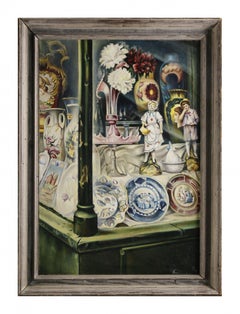
View AllHospitalities Long Past, 1940s Oil Painting of Store Front
By Clarence Holbrook Carter
Located in Beachwood, OH
Clarence Holbrook Carter (American, 1904-2000)
Hospitalities Long Past, 1941
Oil on canvas
Signed and dated lower right
37 x 27 inches
"Looking into store front windows has always i...
Category
1940s American Modern Figurative Paintings
Materials
Oil
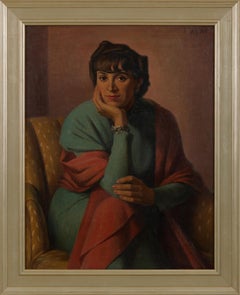
1940 Large Portrait of a Woman, Kae Dorn Cass, by Cleveland School Artist
By Rolf Stoll
Located in Beachwood, OH
Rolf Stoll (American, 1892-1978)
Kae Dorn Cass, 1940
Oil on canvas
Signed upper right
32 x 25 inches
38 x 31 inches, framed
Exhibited:
The 27th Annual May Show, Cleveland Museum of Art, Cleveland, OH, 1940
This work won first prize for oil painting- Portrait category
Provenance:
Collection of Kae Dorn Cass's niece
Kae Dorn Cass
Rolf Stoll
Rolf Stoll, a painter of figure subjects, landscapes and floral still lifes, was an important member of the Cleveland art scene during the second quarter of the century. He was also an influential teacher, as well as one of Ohio’s foremost portrait painters.
Rolf Stoll was born in Heidelberg, Germany, in 1892. As a boy, he attended a military academy, during which time he developed an interest in art. He received his early formal training at the Academy of Fine Arts in Karlsruhe and at the Academy of Fine Arts in Stuttgart. He emigrated to the United States in 1912, settling in New York City. A decade later, after studying at the school of the National Academy of Design and supporting himself by working as a commercial artist, Stoll decided to leave New York. Upon the recommendation of Warren Pryor, one of his teachers, he decided to move to Cleveland, Ohio. After arriving in Cleveland, Rolf Stoll continued to work as a commercial artist. However, in 1926, he joined the faculty of the Cleveland School of Art, where he taught drawing. Two years later Stoll was appointed head of the school’s portrait painting department. A talented portraitist, Stoll’s sitters included industrialists, community leaders and many prominent members of Cleveland and Ohio society, as well as over twenty faculty members from Case Western Reserve University. Stoll also gave portrait classes at the John Huntington Polytechnic Institute from 1926 to 1953. In his male portraits especially, he was admired for his ability to convey the dignity of his sitter’s professional position without sacrificing individuality. As noted by one contemporary reviewer, Stoll was a “master of rich color, a searching student of human types, a forceful portrayer of all that the face reveals of the mind and the soul.” In addition to his activity as a portraitist, Rolf Stoll painted figure subjects and floral still lifes. He was also known for his views of the Ohio countryside...
Category
1940s Portrait Paintings
Materials
Oil
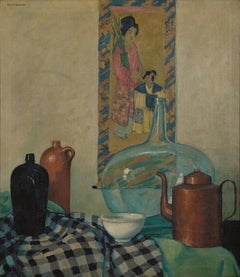
Large Table Still Life, Copper and Glass Jug, Cleveland School Artist
By Carl Frederick Gaertner
Located in Beachwood, OH
Carl Gaertner (American, 1898-1952)
Copper and Glass, 1925
Oil on canvas
Signed upper left
41 x 35 inches
44.5 x 38.5 inches, framed
Exhibition: The Cleveland Museum of Art 7th Annu...
Category
1920s Still-life Paintings
Materials
Oil
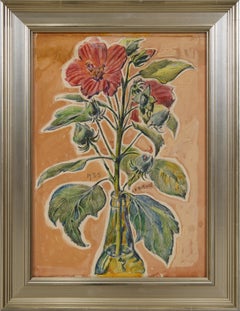
Hibiscus Floral Still Life, Early 20th Century Cleveland School
Located in Beachwood, OH
August Frederick Biehle (American, 1885–1979)
Hibiscus, 1935
Gouache, graphite and colored pencil on paper
Signed and dated center
16.5 x 11.5 inches
21 x 15.75 inches, framed
A ver...
Category
1930s American Modern Still-life Paintings
Materials
Gouache, Color Pencil, Graphite
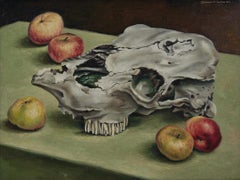
Still Life with Apples and Skull, Figurative Oil Painting by Ohio Artist
By Clarence Holbrook Carter
Located in Beachwood, OH
Clarence Holbrook Carter (American, 1904-2000)
Still Life with Apples, 1940
Oil on canvas
Signed and dated upper right
18 x 24 inches
Clarence Holbrook Carter achieved a level of national artistic success that was nearly unprecedented among Cleveland School artists of his day, with representation by major New York dealers...
Category
1940s American Modern Still-life Paintings
Materials
Oil
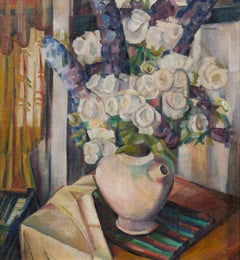
Canterbury Bells Floral Still Life, Female Cubist Artist, Cleveland School
Located in Beachwood, OH
Clara Deike (American, 1881-1965)
Canterbury Bells, c. 1932
Oil on canvas
26 x 24 inches
31.25 x 29.5 inches, framed
Exhibited: The Women's Art Club of Cleveland, 1932
A graduate of...
Category
1930s Cubist Still-life Paintings
Materials
Oil
You May Also Like
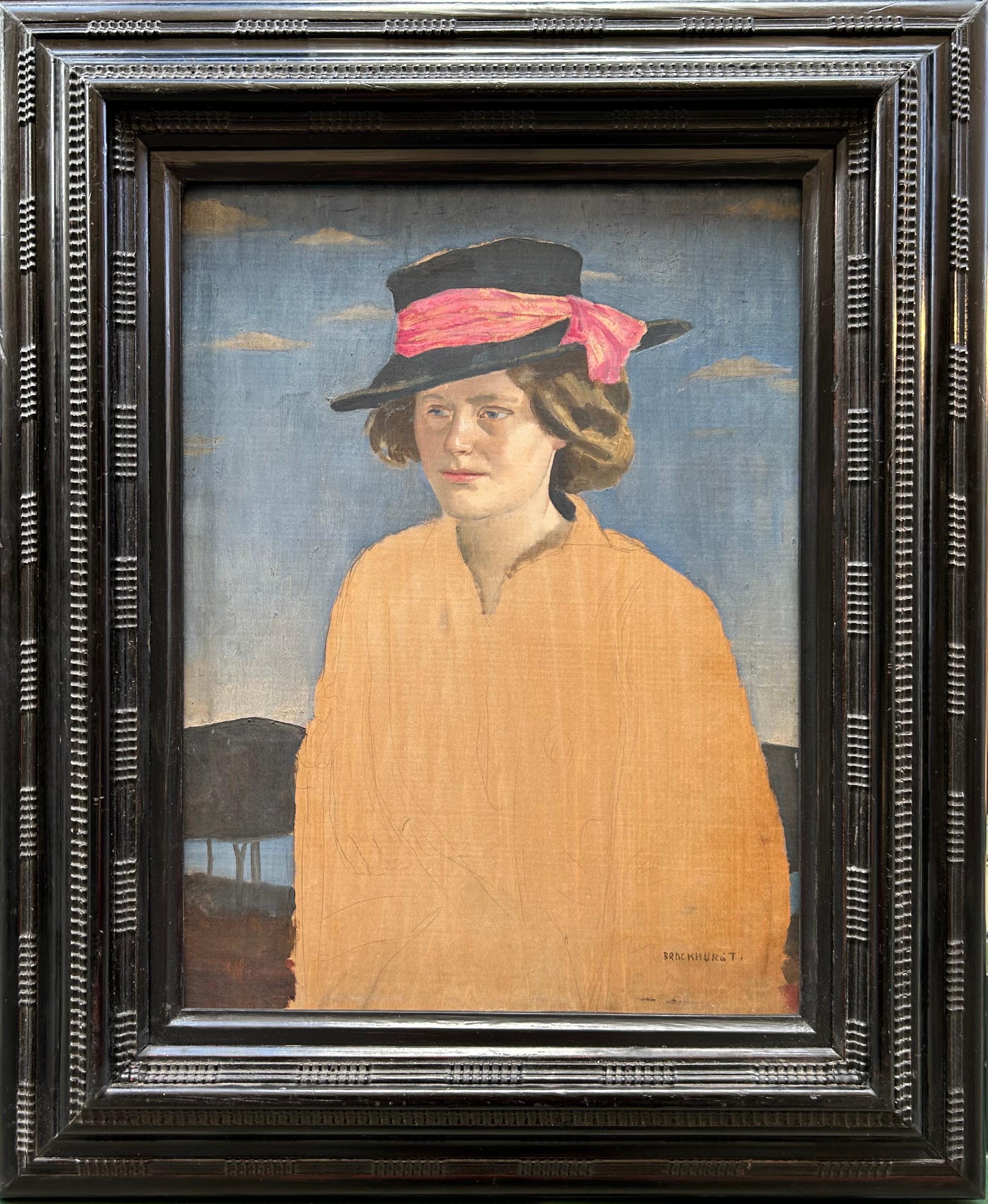
Portrait of Marguerite Folin, Gerald Brockhurst
By Gerald Leslie Brockhurst
Located in London, GB
Gerald Leslie Brockhurst
1890 – 1978
Portrait of Marguerite Folin
Oil on panel, signed lower right
Image size: 18 x 14 inches (45.7 x 34.3 cm)
Original frame
The sitter for this po...
Category
Early 20th Century Art Nouveau Portrait Paintings
Materials
Oil
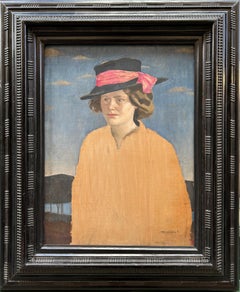
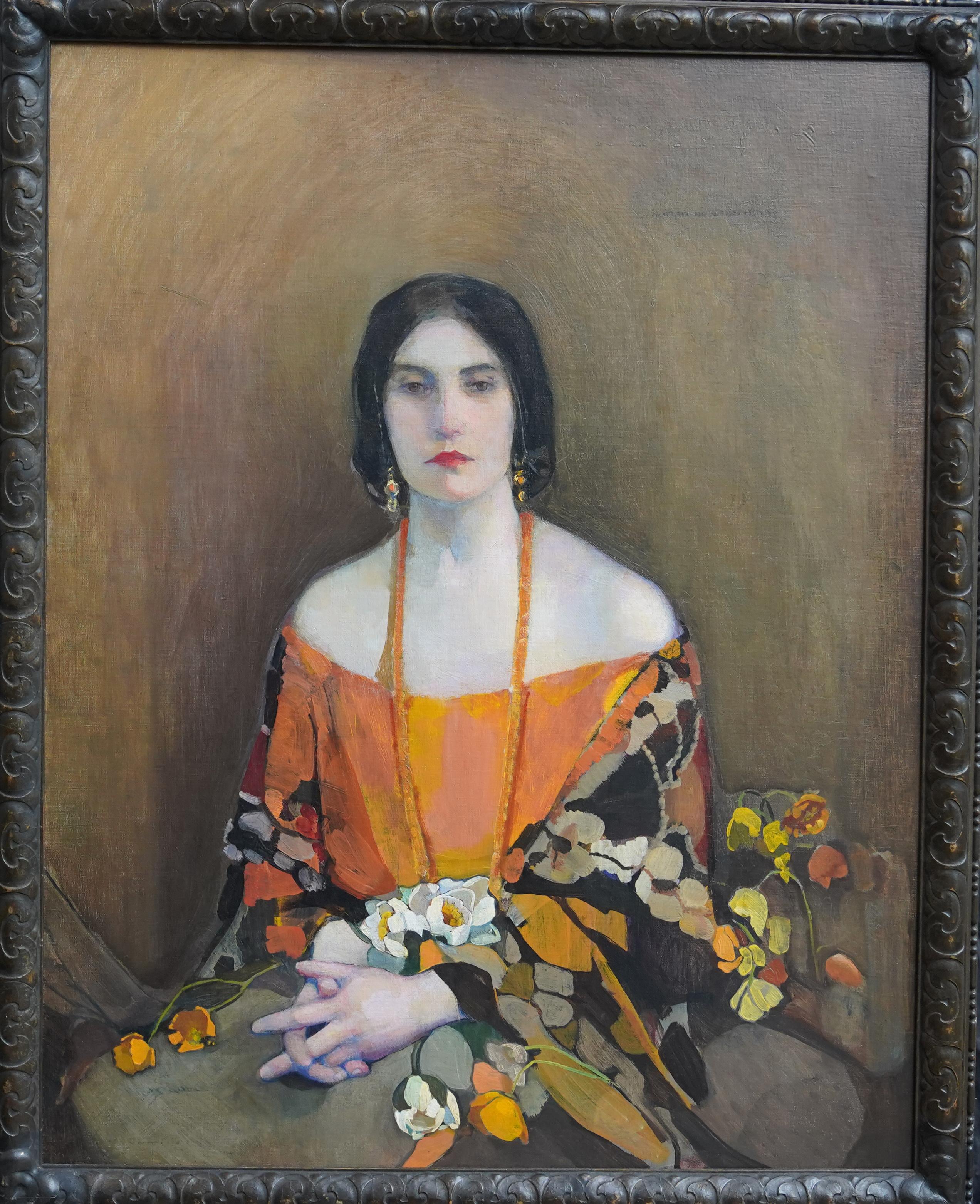
Exotic - Scottish 1920
s exhibited
Glasgow Girl
art portrait oil painting
Located in Hagley, England
This stunning much exhibited 1920's Scottish portrait oil painting is by noted Glasgow Girl artist Norah Nielson Gray. Painted circa 1923, the model for the painting was Rita McIlraith but the artist did not want to use her name in the title and it was called 'Exotic.'
Norah Neilson Gray...
Category
1920s Art Deco Portrait Paintings
Materials
Oil
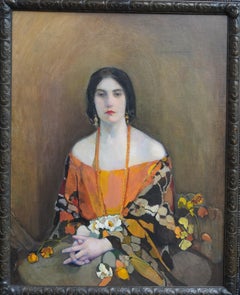
$284,421 Sale Price
20% Off
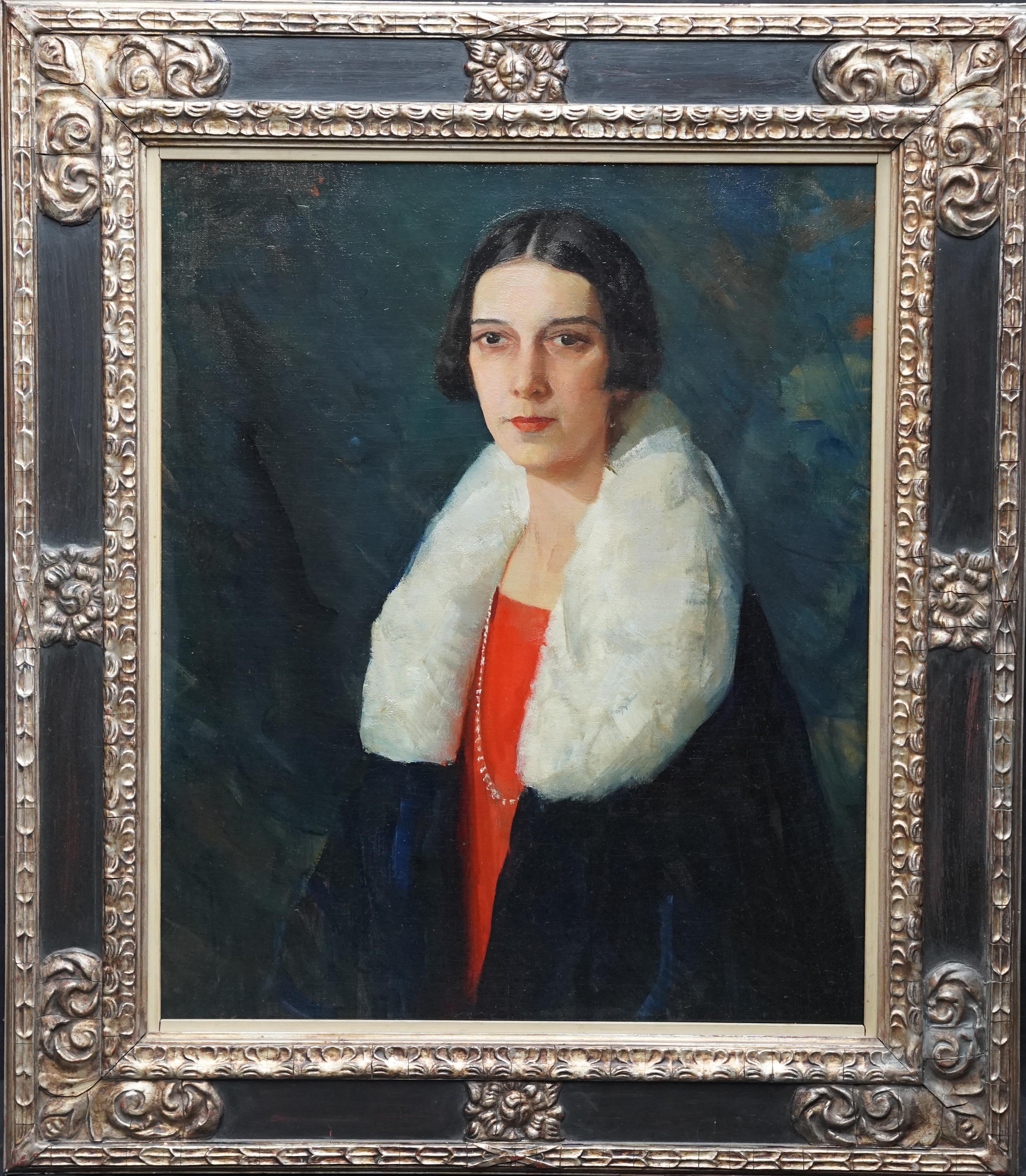
Portrait of a 1920
s Lady - American Art Deco female portrait oil painting
Located in Hagley, England
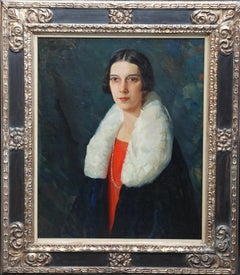
American artist Henry R Rittenberg painted this lovely 1920's Art Deco portrait oil painting. The painting is a standing half length portrait of a lady in a black coat with a white fur collar over a red dress and long beads. She has an elegant 1920's short bob hair style and a confident expression. The strong brushwork and range of tones within one colour are superb. A really striking Art Deco portrait oil painting.
Signed upper left.
Provenance. Dorset estate.
Condition. Oil on canvas, 30 inches by 25 inches and in good condition.
Frame. Housed in a fine James Bourlet panel silvered frame, 40 inches by 35 inches and in good condition.
Henry R Rittenberg (1879-1969) was born in Libau, Latvia and later immigrated to the United States. He studied art at the Bavarian Academy in Germany, and by 1906, was in Philadelphia, where he attended the Pennsylvania Academy of Fine Art. Rittenberg painted landscapes and still lifes, yet his forte was portraiture. The artist was commissioned to paint a number of portraits of American dignitaries including Attorney General Homer Stille Cummings and a group portrait of President Harry S...
Category
1920s Art Deco Portrait Paintings
Materials
Oil
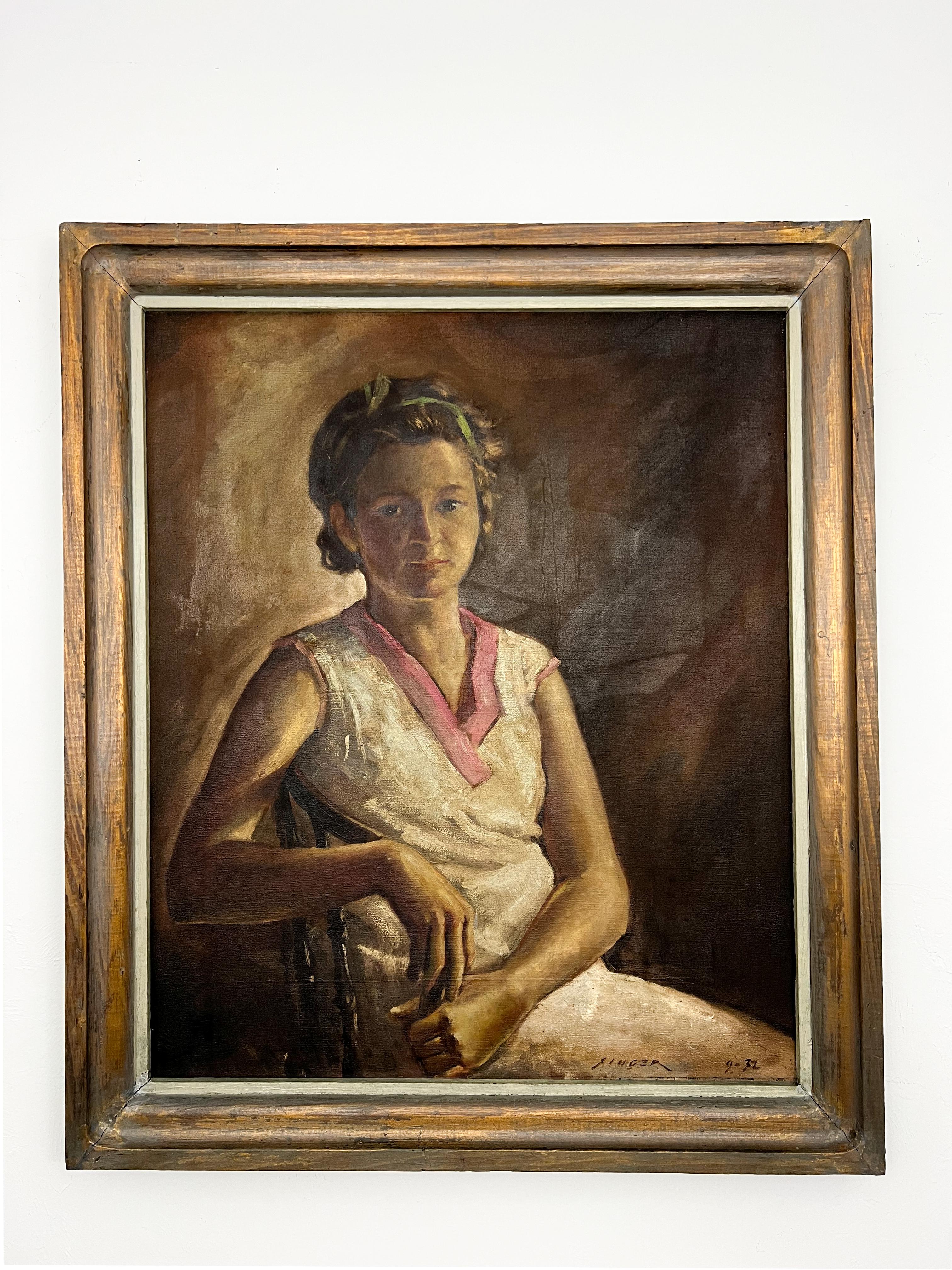
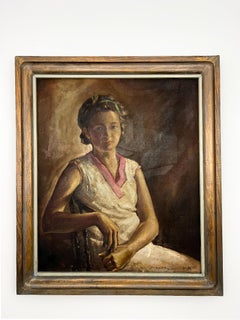
Portrait of Clara, Signed Oil Painting, 1932, Framed 32 x 25
Located in Marco Island, FL
Portrait of Clara by Clyde Singer
Clyde Singer captures his sister, Clara, in this painting done in September of 1932. The relaxed nature and closeness of their relationship is ev...
Category
1960s American Realist Figurative Paintings
Materials
Oil, Canvas
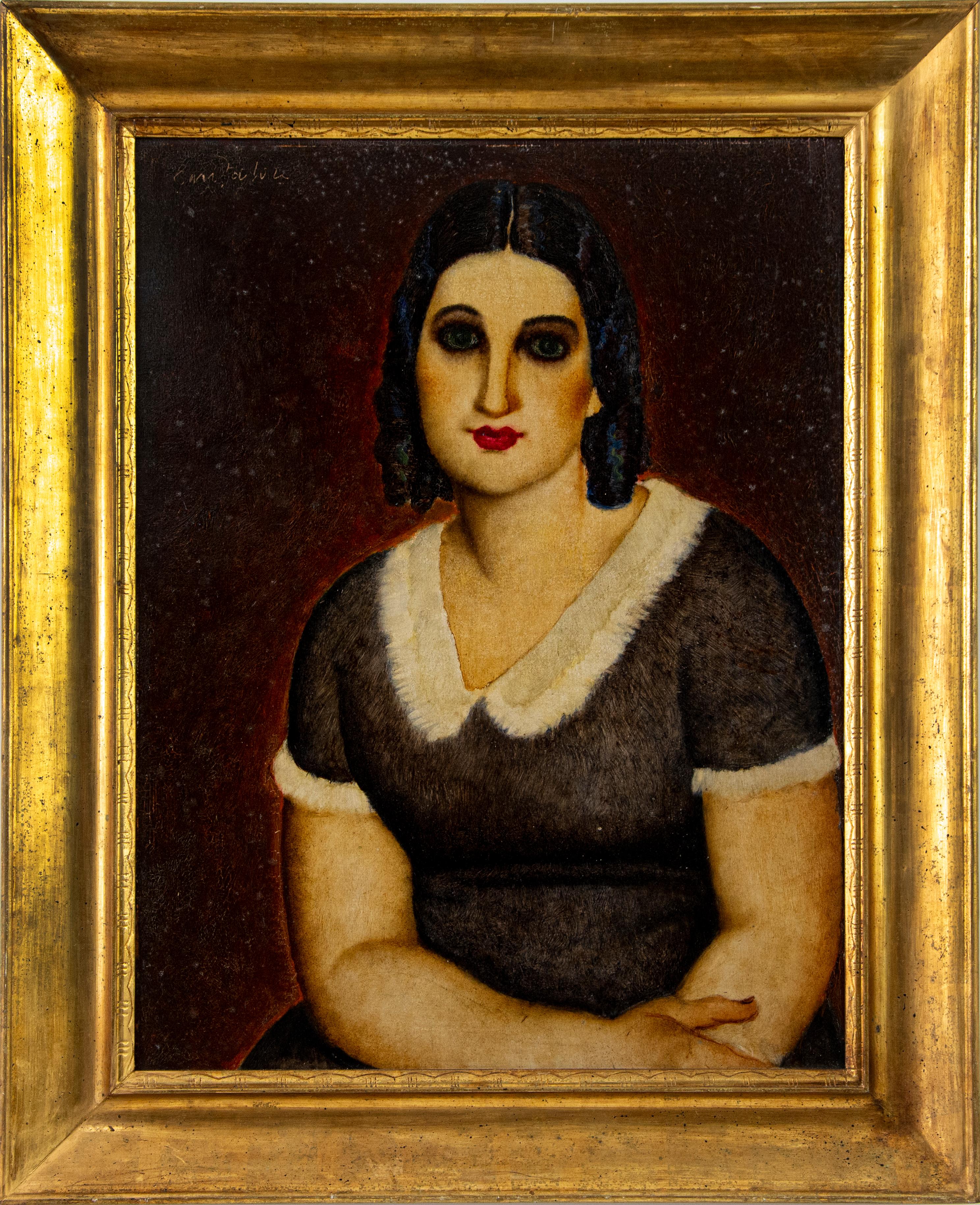
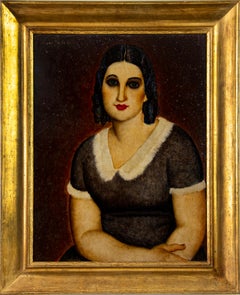
Portrait of Woman - Oil on Plywood by Domenico Cantatore - 1920 ca.
By Domenico Cantatore
Located in Roma, IT
A beautiful and early portrait of woman by well known italian master of the 20th century.
Good conditions, it includes a contemporary gilded wooden frame.
Certificate of authenticit...
Category
1920s Figurative Paintings
Materials
Plywood, Oil
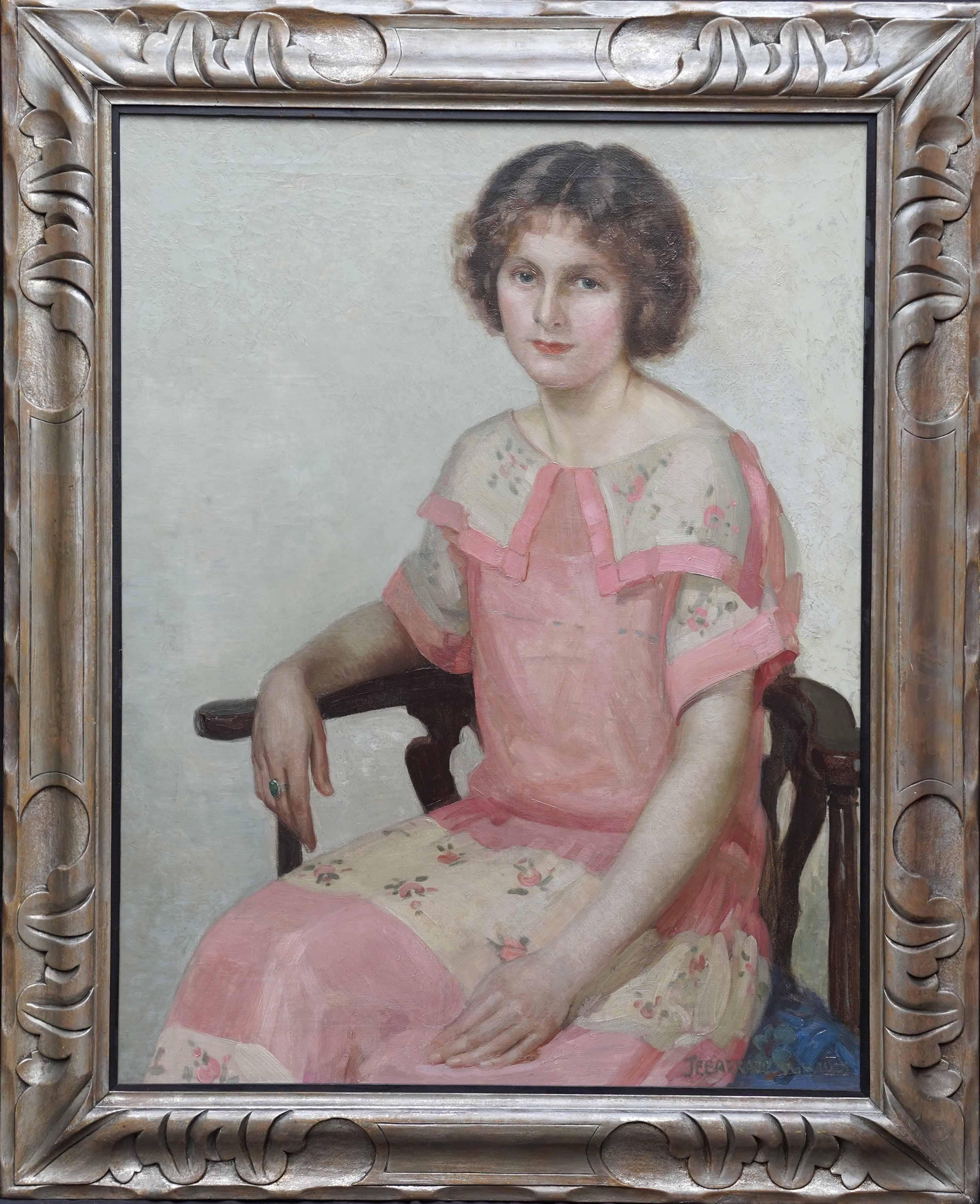
Portrait of a Lady in Pink Dress - British 1920
s Art Deco portrait oil painting
Located in Hagley, England
This lovely British Art Deco portrait oil painting is by noted portrait artist James Penniston Barraclough. It was painted in 1923 and is signed and dated lower right. The compositio...
Category
1920s Art Deco Portrait Paintings
Materials
Oil