Items Similar to Coupe aux Pêches et aux Raisins (Bowl with Peaches and Grapes)
Want more images or videos?
Request additional images or videos from the seller
1 of 7
Henri OttmannCoupe aux Pêches et aux Raisins (Bowl with Peaches and Grapes)
$13,639.45
£10,000
€11,620.89
CA$18,794.47
A$20,504.27
CHF 10,856.89
MX$245,699.60
NOK 138,268.51
SEK 126,436.29
DKK 86,771.42
About the Item
Henri Ottmann
Coupe aux Pêches et aux Raisins (Bowl with Peaches and Grapes)
1877-1927
Oil on canvas, signed lower right
Image size: 18 1/2 x 15 1/4 inches (47.2 x 39 cm)
Hand-carved gilt wood frame
Provenance
Bernard Toulblanc-Michel Collection
Exhibited
Society of the Friends of the Arts of Angers, 1924
Literature
Henry Ottmann Catalogue Raisonné, Bernard Toublanc-Michel, 2020, Lelivredart, p.87
This fantastic still life of a fruit bowl demonstrates Ottmann's skill as an observational painter, and his competency with the Impressionist aesthetic. The vibrant colours used to paint the fruit create a sense of plenitude, whilst also reflecting how Impressionist artists utilised colour - rather than shadow - to symbolise areas of light and dark. Take, for example, the grapes, which use darker and lighter shades of green to demonstrate how much light their waxy surface is reflecting. Whilst the fruit is beautiful and mouthwateringly sumptuous, the simple glass bowl is the outstanding feature of this work. Whilst it is predominantly painted in light blues, Ottmann has also used the hues of the sandy wall, the orange peaches, and the green grapes, to depict the reflective and transparent nature of the glass. Areas of very light blue are contrasted with areas of a darker shade of blue to demonstrate the crystalline quality of the glass, as well as the direction in which the light is hitting the fruit bowl. The plain background only serves to accentuate the beauty and skill of the central monolith of the fruit bowl, ensuring that the viewer's focus is kept firmly on the bountiful fruit and its vessel.
Henri Ottmann
Born in Ancenis in Loire-Atlantique in 1877, Ottmann began his artistic career as a painter and printmaker in Brussels at the beginning of the 20th century. He began his studies in 1896 at the Ecole des Beaux Arts in Paris, but was interrupted the following year when mandatory military service in the 64th Infantry Regiment forced Ottmann to return to Ancenis. Abhorring military life, Ottmann faked his own drowning in the Loire. Whilst on the run, he survived by painting and selling unsigned work. It was also during this fugitive period that he met and married Marianne Capron, with the two of them fleeing to Belgium. It was in Brussels that Ottmann’s first exhibition took place, at the Salon La Libre Esthetique in 1904.
Shortly after this, Ottmann and his wife did return to France, where he subsequently participated in prestigious exhibitions such as the Salon des Independants in Paris from 1905, the Salon d’Automne, the Salon Societe Nationale des Beaux-Arts and the Salon des Tuileries.
Despite this success at the Salons, Ottmann’s early career was marked by extreme financial difficulties. As a result, his formative years as an artist were spent painting works that appealed to collectors and commercial galleries, rather than developing his own distinct style. As he gained more success, this individual style did develop, particularly in relation to still life paintings which, alongside nude paintings, are the subject matter Ottmann is most renowned for.
Ottmann’s oeuvre before the First World War was heavily influenced by the French Impressionist movement, particularly the works of Renoir, and he often exhibited within this artistic circle of Impressionists, Post-Impressionists, and Fauves. In 1911 and 1912, Ottmann exhibited at the Artiste de la Société Moderne at the Gallery of the French art dealer Paul Durand-Ruel. Durand-Ruel represented many prominent French Impressionist painters, including Armand Guillaumin and Henri Lebasque. In 1912, he also exhibited at the Galerie of Eugene Druet, a French photographer and art dealer whose gallery had exhibited works from Georges Pissarro, Charles Camoin, Albert Marquet, Maurice Denis and Paul Cezanne.
At the outbreak of the war, Ottmann was registered as a conscientious objector. Instead of a combatant role, he worked as a nurse for a military hospital in Ancenis - intriguingly, many of his fellow nurses were his portrait clients and patrons. During the years of conflict, he continued to produce art and hosted an exhibition at Druet’s gallery in 1917.
From 1919, Ottmann was involved in creating woodcut illustrations for the ‘Drawings and Signed Wood’ section in the Nantes-based literary and artistic magazine La Gerbe. These illustrations were displayed among others by Impressionist artists such as Paul Signac and Henriette Tirman. In the early 1920s, Ottmann exhibited at the Marcel Bernheim Gallery and the Exposition du Cercle Artistique de Bruzelles, with the latter exhibition displaying his works alongside those of Charles Guerin, Henri Matisse, Paul-Abert Besnard and Andre Lhote. Ottmann continued to exhibit to great success, enjoying shows at L. Dru and La Palette Francaise in 1926, and the Galerie Armand Drouand in 1927. His works were even exhibited as far away as Beirut, New York, Detroit, Buenos Aires, and Tokyo.
Tragically, Ottmann’s life was cut short in a car accident in Vermon in 1927. Driving to an exhibition of his works in Rouen, a burst tire caused his car to roll over in which Ottmann suffered a fractured skull and spine. After being transported in a coma to a clinic in Vernon, Ottmann tragically passed from his injuries at the young age of 49 years old. If Ottmann had not been involved in this tragedy, it is likely that his artworks and distinct style would have earned him a deservedly high reputation.
Nonetheless, Ottmann’s works can be found in many French Museums, including the Modern Museum and the Luxembourg Museum in Paris. A number of his works were destroyed during the Second World War, particularly his works in collections in Berlin, Hamburg and Nagasaki. Subsequently, the conflicts in the Middle East destroyed a large portion of Ottmann’s oeuvre, held in Beirut by collector Mr Charles Corm. Ottmann’s surviving works are largely in private collections, and are very rarely seen or sold.
- Creator:Henri Ottmann (1877-1927, French)
- Dimensions:Height: 18.5 in (46.99 cm)Width: 15.25 in (38.74 cm)
- Medium:
- Movement Style:
- Period:
- Condition:
- Gallery Location:London, GB
- Reference Number:1stDibs: LU52417339622
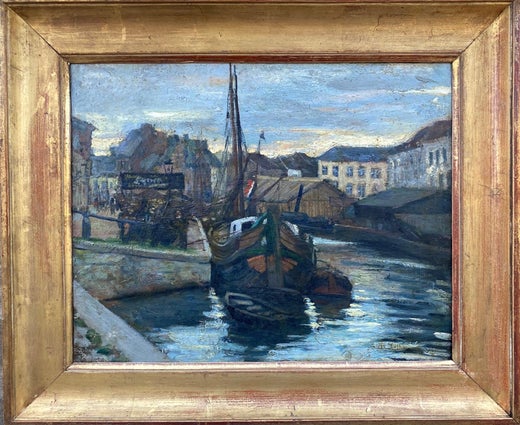
Henri Ottmann
Henry Ottmann was born on 10 April 1877 in Ancenis. He made his debut at the Salon La Libre Esthétique in Brussels in 1904 and took part in the Salon des Indépendants in Paris from 1905, the Salon d'Automne, the Salon de la Société Nationale des Beaux-Arts and the Salon des Tuileries.
In 1911 and 1912, Ottmann exhibited at the Artistes de la Société Moderne at the Gallery Paul Durand-Ruel together with Armand Guillaumin, Henri Lebasque and others. In 1912, he exhibited at the gallery Eugène Druet.
In 1920, Ottmann exhibited at the gallery Marcel Bernheim together with Manguin, Tirman, Alexandre-Paul Canu and others.
In 1922, he exhibited at the Exposition du Cercle Artistique de Bruxelles together with those of Paul-Albert Besnard, Pierre Bonnard, Raoul Dufy, Othon Friesz, Charles Guérin, André Lhote, Henri Matisse, Paul Signac, Maurice de Vlaminck and others.
In 1926, Ottmann exhibited at the gallery L.Dru (Paris) and at the Parisian gallery La Palette Française and in March 1927 in the gallery Armand Drouand.
He died in Vernon on 1 June 1927 after a car accident.
The Museum of Fine Arts in Nantes has a dozen paintings by the painter, including L'Étal Marseillais, L'Erdre at the bridge of Orleans and Portrait of the artist . The painting La Gare du Luxembourg à Bruxelles is now exhibited at the Musée d'Orsay in Paris.
About the Seller
5.0
Gold Seller
Premium sellers maintaining a 4.3+ rating and 24-hour response times
Established in 2007
1stDibs seller since 2014
85 sales on 1stDibs
Typical response time: 3 hours
- ShippingRetrieving quote...Shipping from: London, United Kingdom
- Return Policy
More From This Seller
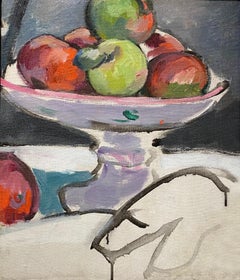
View AllStill Life of Apples in Fruit Bowl
Located in London, GB
Oil on canvas
Image size: 13 1/2 x 11 1/2 inches (34.25 x 29 cm)
Original Giltwood frame
It is likely that this work was inspired by Matthew Smith's wor...
Category
Early 20th Century Impressionist Still-life Paintings
Materials
Canvas, Oil
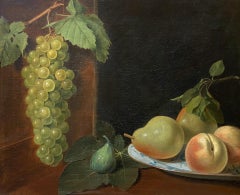
Still Life with fruit and Delft plate
Located in London, GB
Oil on canvas
Image size: 15 ½ x 19 ¼ inches (39.5 x 49 cm)
18th Century carved gilt frame
Provenance
Irish Country Estate
This complex and convincing composition is painted from a...
Category
17th Century Still-life Paintings
Materials
Canvas, Oil
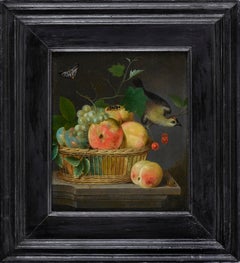
Still Life of Fruit in a Wicker Basket with Bird
Located in London, GB
Gaspar Peeter Verbruggen
1664-1730
Still Life of Fruit in a Wicker Basket with Bird
Oil on oak panel
Image size: 8 1/4 x 7 1/2 inches (21 x 19 cm)
Contemporary Dutch ebonised style f...
Category
17th Century Old Masters Still-life Paintings
Materials
Oak, Oil, Panel
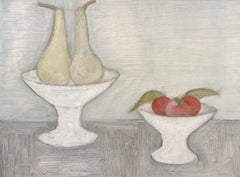
Still Life, Oil on board 20th Century Painting, Female Artist
Located in London, GB
Oil and Polyviny on board, signed on reverse
Image size: 15 1/2 x 11 3/4 inches (39.5 x 30 cm)
Original frame
Exhibited
Pictures for Scottish Schools, 1967
Elspeth Spottiswood
Bo...
Category
Mid-20th Century Modern Still-life Paintings
Materials
Acrylic Polymer, Oil, Board
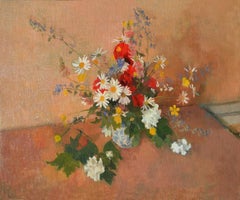
Summer Flowers 20th Century Modern British
By Gordon Scott
Located in London, GB
Gordon Scott ARCA
1914 - 2016
Summer Flowers
Oil on canvas, signed lower left
Image size: 23.5 x 20 inches
Contemporary style frame
Gordon Scott was trained at the Royal College of Art (1934-38) under Gilbert Spencer, Alan Sorrell and Charles Mahoney. In 1938 he was awarded a Travelling Scholarship by the R.C.A. for painting. A reserved and highly principled man, during WWII he was a conscientious objector, stationed at Bulford Camp on Salisbury Plain. His defined role there is unknown, but during his time there he produced a number of sketches and paintings of soldiers and other personnel who passed through the camp.
In 1946 Joseph Dixon...
Category
20th Century Modern Still-life Paintings
Materials
Canvas, Oil
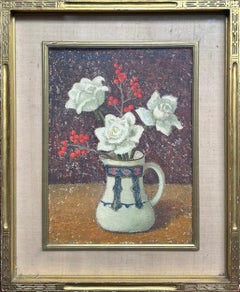
White Roses and Red Berries, Signed 20th Century American Female Artist
By Emma Fordyce MacRae
Located in London, GB
Oil on board, signed top left
Image size: 15 3/4 x 11 1/2 inches (40 x 29 cm)
Bespoke gilt cased frame
Provenance
By descent from the estate of the artist
Emma Fordyce MacRae
Emma Fordyce MacRae was an American representational painter. She was a member of the Philadelphia Ten, a group of women artists who worked and exhibited together. Her work — including still lifes and paintings of women — shows the influence of Asian flower paintings and of Seurat.
MacRae grew up in New York City, where she attended Miss Chapin's School and the Brearley School. She enrolled at the Art Students League in 1911, studying first with Frank DuMond and Kenneth Hayes Miller, and beginning in 1915, with Luis Mora, Ernest Blumenschein, and John French Sloan. She also attended one of Robert Reid's summer courses.
MacRae's painting, "Green Jade," was shown at the Anderson Galleries in 1928, at an exhibit of artist members of the American Woman's Association. Many exhibitions and gallery showings followed. In 1937, MacRae's painting "A Persian Girl," was listed as deserving of special mention by The New York Times critic Edward Alden Jewell. In the 1940s, MacRae was chairman of the awards jury of the National Association of Women Artists.
Galleries rediscovered MacRae's art in the 1980s; the Richard York Gallery in New York exhibited thirty of her paintings in December 1983. In 1987, her painting of a Venetian cafe was part of "American Women Artists, 1830-1930," an exhibition displayed at the National Museum of Women in the Arts in Washington, D.C. and in four other museums.
MacRae had studios in New York City and in Gloucester, Massachusetts. Where MacRae painted her New England landscapes form the Cape Ann Landscapes...
Category
20th Century American Modern Still-life Paintings
Materials
Oil, Board
You May Also Like
A Still Life with Porcelain and Fruit
Frans Mortelmans (1865 – Antwerp – 1936)
By Frans Mortelmans
Located in Knokke, BE
Frans Mortelmans
1865 – Antwerp – 1936
Belgian Painter
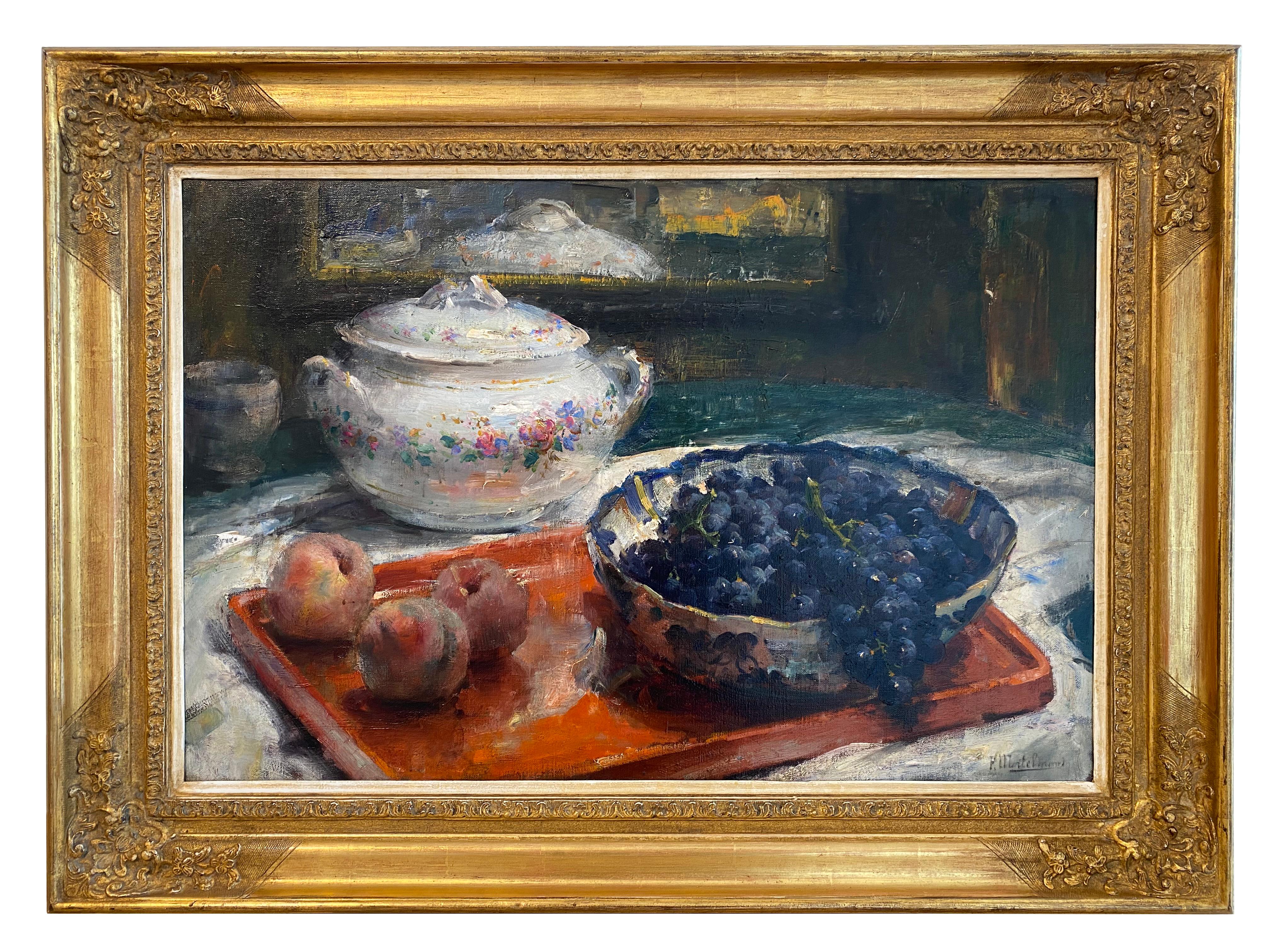
'A Still Life with Porcelain and Fruit'
Signature: signed lower right 'F. Mortelmans'
Medium: oil on canvas
Dimensions: image...
Category
Early 20th Century Impressionist Still-life Paintings
Materials
Canvas, Oil
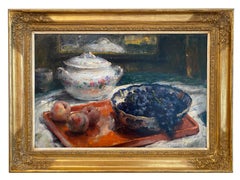
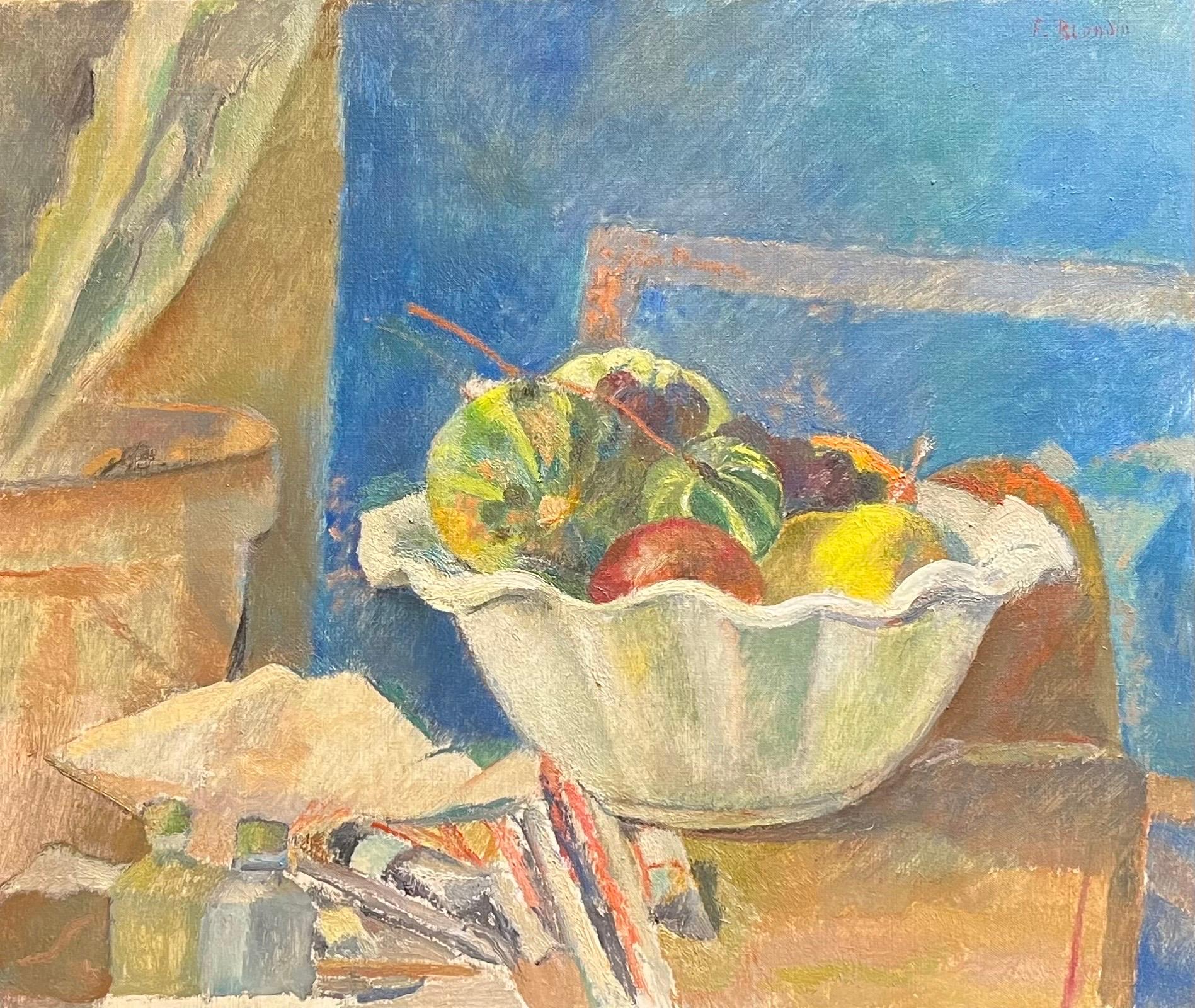
Bowl of Fruits by Fernand Blondin - Oil on Canvas - 55x46 cm
Located in Geneva, CH
Fernand Blondin (1887-1967) was a Swiss painter and teacher, celebrated for his depictions of idyllic rural life, interiors, female nudes, portraits, still-lifes, religious subjects ...
Category
Mid-20th Century Symbolist Still-life Paintings
Materials
Canvas, Oil
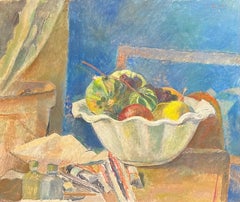
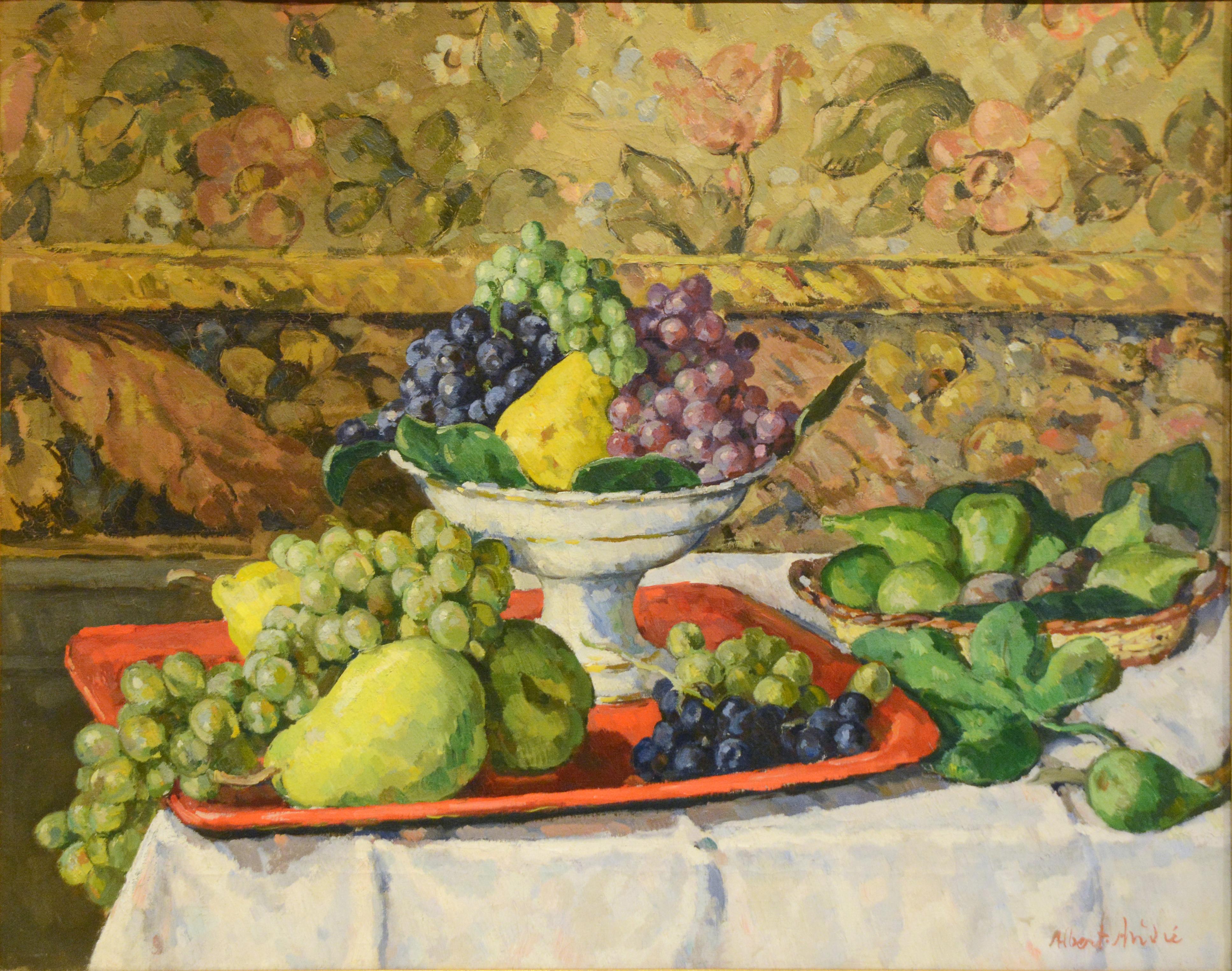
Fruits sur une table, compotier et plateau
By Albert Andre
Located in Mc Lean, VA
Post-impressionist still-life painting by Albert Andre. A similar picture is in the collection of The Phillips Collection, Washington, D.C.
Category
Early 1900s Post-Impressionist Still-life Paintings
Materials
Canvas, Oil
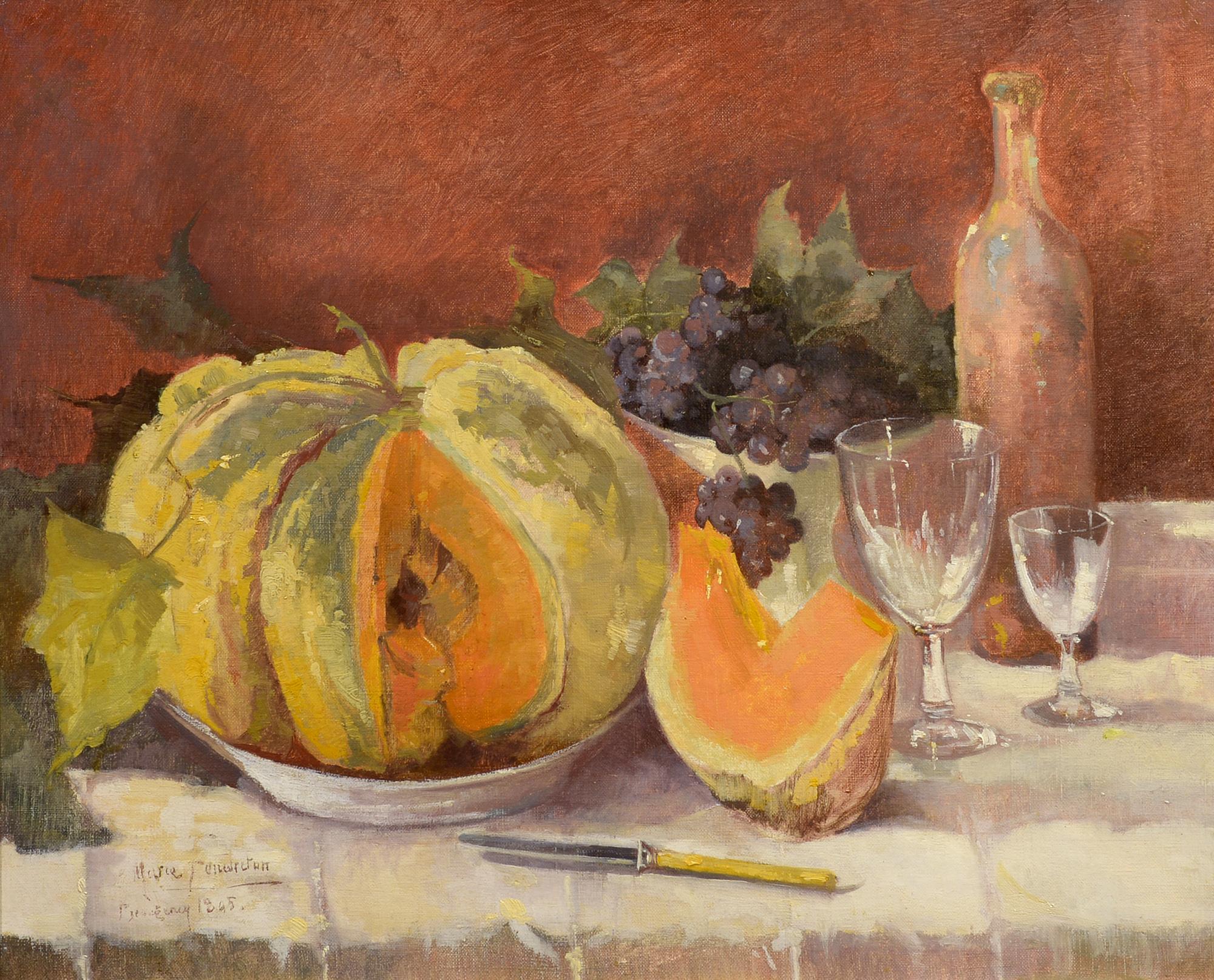
Still Life with Melon and Grapes, Beaugency, France, 1895, Impressionist, Fruit
Located in Wiscasset, ME
Marie Tonoir was born in Lyon and studied with the painters Joseph Guichard and Pierre Miciol before moving to Paris, where she attended Académie Julian and studied under Jules Lefeb...
Category
Late 19th Century Impressionist Still-life Paintings
Materials
Canvas, Oil
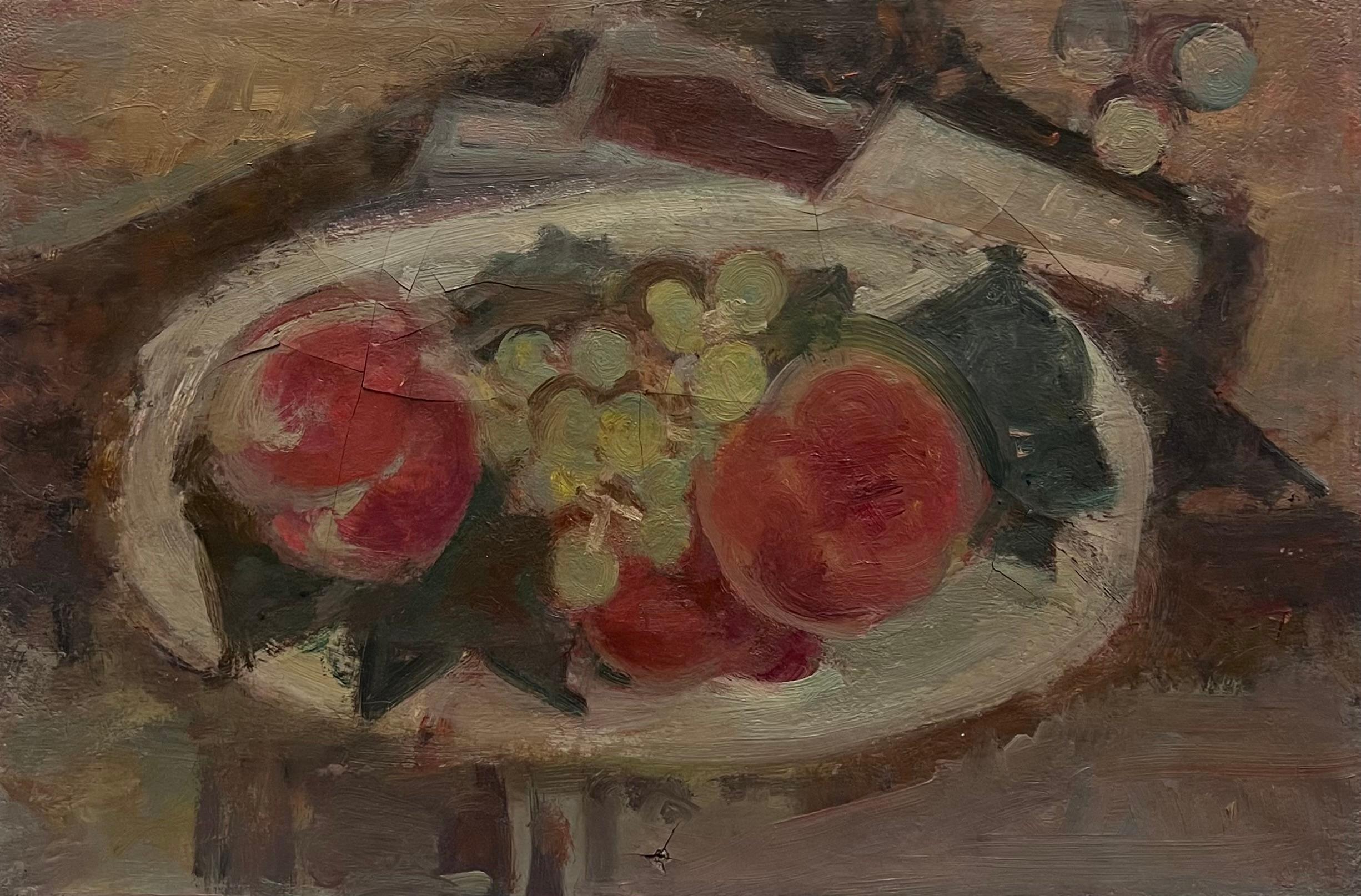
Mid Century French Modernist Oil Painting Still Life Fruit on a Bowl
Located in Cirencester, Gloucestershire
Still Life of Fruit
French School, mid 20th century
oil on canvas
10.5 x 16 inches
provenance: private collection, France
The painting is in sound condition but very much showing the...
Category
Mid-20th Century Modern Still-life Paintings
Materials
Canvas, Oil
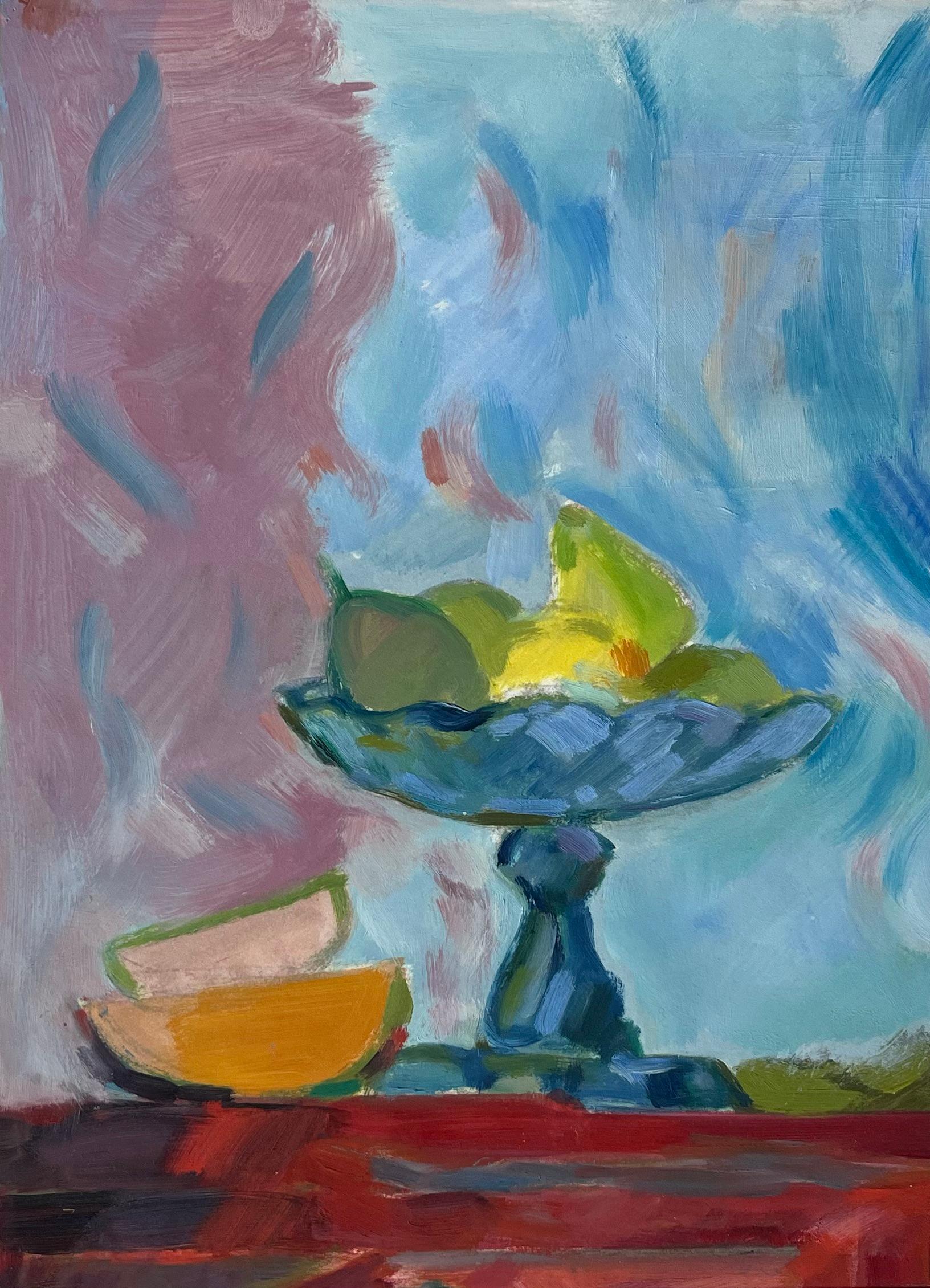
Original Oil Painting of Vibrant Still Life with Fruit Bowl and Sliced Fruit
Located in Cirencester, Gloucestershire
Title: Original Oil Painting of Vibrant Still Life with Fruit Bowl and Sliced Fruit
Artist: Roland Pichard
Medium: Oil on oil paper, mounted on card
Size: 13 (height) x 9.5 (width...
Category
Mid-20th Century Post-Impressionist Still-life Paintings
Materials
Oil