1910s Art
to
274
1,085
355
395
194
171
Overall Width
to
Overall Height
to
7,602
21,281
162,181
232,941
1,978
2,252
4,935
6,454
5,731
15,019
20,459
25,771
18,493
13,838
5,392
421
320
135
133
49
19
19
12
6
1
1,233
883
31
1,432
691
599
408
391
348
217
151
146
135
134
123
116
102
97
95
77
77
59
58
872
629
486
395
386
102
52
34
23
22
856
373
1,169
957
Period: 1910s
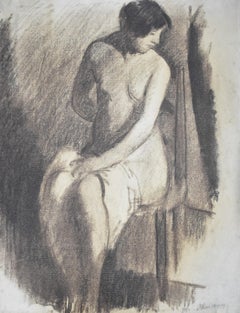
Henry Ottmann (1877-1927) Nude in the studio, drawing signed
Located in Paris, FR
Henry Ottmann (1877-1927)
Nude in the studio
signed lower right
Charcoal on paper
37.5 x 31.5 cm
In good condition
In a modern frame : 53 x 46.5 cm
Published under n°414 of the artist's catalogue raisonné (p 167 reproduced) published by Bernard Toublanc-Michel, Paris 2020
This drawing is a particularly interesting and touching example of Henry Ottmann's art. It shows his special technique, which gives priority to a kind of blur, and in this case it serves very well this scene of intimacy as if captured by stealth.
Henry Ottmann was born on 10 April 1877 in Ancenis.
He made his debut at the Salon La Libre Esthétique in Brussels in 1904 and took part in the Salon des Indépendants in Paris from 1905, the Salon d'Automne, the Salon de la Société Nationale des Beaux-Arts and the Salon des Tuileries.
In 1911 and 1912, Ottmann exhibited at the Artistes de la Société Moderne at the Gallery Paul Durand...
Category
Post-Impressionist 1910s Art
Materials
Charcoal
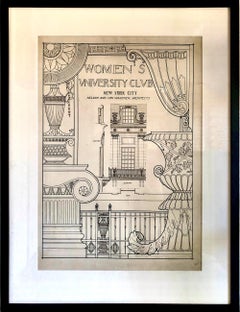
Architectural Drawing, Women’s University Club New York City
Located in San Francisco, CA
On offer is a lithograph of a detailed presentation drawing, likely intended for publication or display, showcasing the ornate architectural details of a proposed building for the Wo...
Category
Other Art Style 1910s Art
Materials
Lithograph
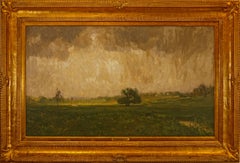
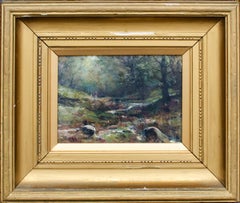
"Solebury Valley"
Located in Lambertville, NJ
Signed lower right.
Complemented by a period frame.
William L. Lathrop (1859-1938)
Deemed “Father of the New Hope Art Colony”, William Langson Lathrop was born in Warren, Illinois. He was largely self-taught, having only studied briefly with William Merritt Chase in 1887, at the Art Students League. Lathrop first moved east in the early 1880s, and took a job at the Photoengraving Company in New York City. While there, he befriended a fellow employee, Henry B. Snell. The two men became lifelong friends and ultimately, both would be considered central figures among the New Hope Art Colony.
Lathrop's early years as an artist were ones of continuing struggle. His efforts to break through in the New York art scene seemed futile, so he scraped enough money together to travel to Europe with Henry Snell in1888. There he met and married an English girl, Annie Burt. Upon returning to New York, he tried his hand at etching, making tools from old saw blades...
Category
American Impressionist 1910s Art
Materials
Canvas, Oil
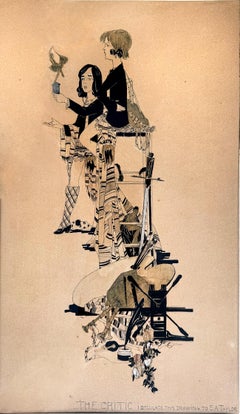
Female Critic - Female Connosieurs - Scottish Female Artist Illustrator
Located in Miami, FL
Two young Scottish women wear smart business jackets and fashionable tartan skirts. They are depicted as discerning Art Connoisseurs evaluating a small bronze dancer. The Artist Hele...
Category
1910s Art
Materials
Silver
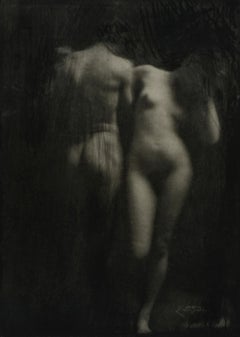
Adam and Eve
Located in Santa Monica, CA
Adam and Eve, 1910
Vintage photogravure, Camera Work April 1910, 30:5
Image: 7" x 5", Mount: 11-3/4" x 8-1/4", Mat: 20" x 16"
Category
1910s Art
Materials
Photogravure
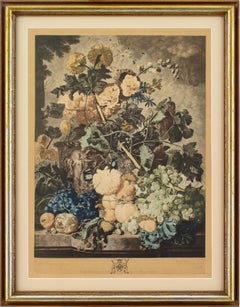
18th-Century Mezzotint Print, Flower Bouquet (After Jan van Huysum)
Located in Cheltenham, GB
US buyers pay no import tariffs on this item.
This beautiful early 20th-century aquatint is after an 18th-century engraving by Richard Earlom (1743-1822) of a work by the Dutch master, Jan Van Huysum...
Category
Dutch School 1910s Art
Materials
Paper, Aquatint
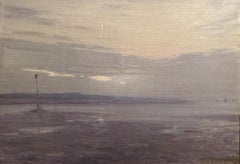
"La Marre de Soire, " George Leonard, American Impressionist, Beach Seascape
Located in New York, NY
George Henry Leonard, Jr. (1869 - 1928)
La Marre de Soire
Oil on canvas
15 x 21 3/4 inches
Signed lower right
A landscape painter--primarily using a late impressionist loose stroke as his main mode of expression--Leonard drew not only upon French influences, but also the American school of impressionism characterized by Frank Boggs...
Category
American Impressionist 1910s Art
Materials
Canvas, Oil
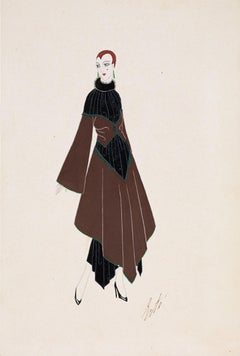
Untitled Fashion Design, 1919
By Erté
Located in Greenwich, CT
Likely a dress design for Henri Bendel or B. Altman, Untitled Fashion Design from 1919 is an iconic early Erté design. Erté's stylized Villa Excelsior name stamp and the 'Composition...
Category
Art Deco 1910s Art
Materials
Paper, Gouache
The Harbor
Located in Wiscasett, ME
Beautiful impasto, oil on canvas. Contemporary custom frame. Unsigned, but very well executed painting.
Category
Post-Impressionist 1910s Art
Materials
Oil

$2,850
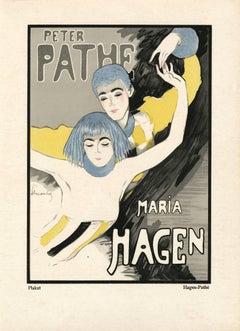
Kostume, Plakate, und Dekorationen, "Hagen-Pathe"
Located in Palm Beach, FL
Walter Schnackenberg’s style changed several times during his long and successful career. Having studied in Munich, the artist traveled often to Paris where he fell under the spell o...
Category
Expressionist 1910s Art
Materials
Lithograph
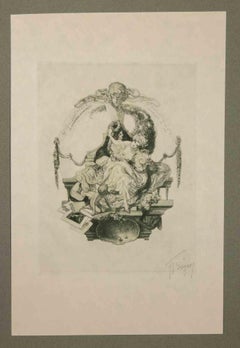
Bayros-Mappe III - Héliogravure by Fraz von Bayros - 1913
Located in Roma, IT
Héliogravure on japanese paper realized by Fraz von Bayros in 1913 for Ex Libris Verlag K. Th. Senger, Munich.
Mounted on passepartout. Edition of 260, hand signed in pencil by the ...
Category
Symbolist 1910s Art
Materials
Photogravure
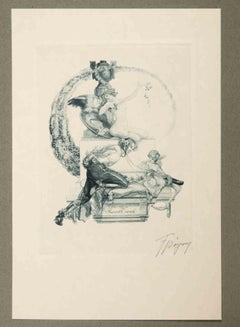
Bayros-Mappe III - Héliogravu by Fraz von Bayros - 1913
Located in Roma, IT
Héliogravure on japanese paper realized by Fraz von Bayros in 1913 for Ex Libris Verlag K. Th. Senger, Munich.
Mounted on passepartout. Edition of 260, hand signed in pencil by the ...
Category
Symbolist 1910s Art
Materials
Photogravure
Charming Small-scale Landscape by James GH Spindler, Royal Scottish Academy
Located in New York, NY
James Gustavus Hope Spindler (Scottish, 1862-1916)
Untitled, 1913
Oil on board
7 x 9 3/4 in.
Frame: 15 x 17 3/4 x 2 1/4 in.
Signed and dated lower left: James GH Spindler 1913
James...
Category
English School 1910s Art
Materials
Oil, Board
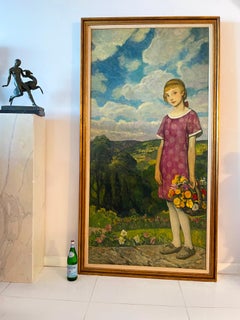
Blond Girl with Basket of Flowers "Rosemary
s Playmate"
Located in Miami, FL
This is an almost lifesize portrait of a charming blond holding a basket of freshly picked flowers. The girl set against a verdant landscape with blue sky and cumulus clouds. The subject is the friend of the artist's daughter. 78 x 42in. framed. This joyful image of youth looks better in person due to its impressive size and clearly will be a statement piece in any home. Francis Luis Mora ( ( Uruguayan / American, 1874-1940) Studied under Edmund Charles Tarbell...
Category
Academic 1910s Art
Materials
Canvas, Oil

$28,000 Sale Price
20% Off
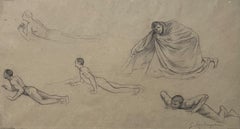
G. A. Rochegrosse (1859-1938) Studies of men, original drawing
Located in Paris, FR
Georges Antoine Rochegrosse (1859-1938)
Studies of men,
Pencil on paper
23 x 41.5 cm
Signed lower right
In good condition
In a modern mount 41 x 52.5 cm
Provenance: Estate of the...
Category
Symbolist 1910s Art
Materials
Carbon Pencil
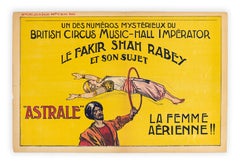
Levitation magic poster, The Fakir Shah Rabey and The Aerial Woman, c. 1915
Located in Chicago, IL
A magician billed as The Fakir Shah Rabey is pictured with his "astral" subject, The Aerial Woman, who levitates above in a hoop.
Original lithographic magic poster...
Category
Art Nouveau 1910s Art
Materials
Lithograph
General Wilhelm von Blume - Visionary retrospective -
Located in Berlin, DE
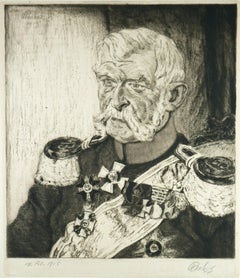
Bernhard Pankok (1872 Münster - 1943 Baierbrunn), General Wilhelm von Blume, 1915, aquatint etching, 34 x 29.5 cm (sheet size), 26 x 22 cm (plate size), signed in the plate at upper left, in pencil at lower right and dated in pencil at lower left.
- At lower left old collection stamp, at the right broad margin with a small spot, otherwise very good condition.
About the artwork
The 1915 aquatint etching of General Wilhelm von Blume is based on a 1912 oil painting in the LWL-Museum für Kunst und Kultur in Münster. A second oil portrait of the general by Pankok is in the Staatsgalerie Stuttgart. When Pankok painted the first oil portrait in 1912, the general had already been retired for 16 years. It is therefore a retrospective portrait. Accordingly, the orientation of his head is such that he is looking back in both the oil painting and the etching. Without fixing on anything in particular, he looks thoughtfully inwards and reflects on his life. Uniformed and highly endowed, it is his military activities in particular that he is reviewing attentively and, as his gaze reveals, quite critically.
Pankok has literally written the sum of his experiences on Wilhelm von Blume's face: The physiognomy is a veritable landscape of folds, furrows, ridges and gullies, all the more striking against the flat background. It is clear that each of the medals was also won through suffering. However, by breaking the boundaries of the picture, his bust appears as an unshakable massif, which gives the general a stoic quality.
The fact that the design of the portrait was important to Pankok can be seen from the different versions, the present sheet being the third and probably final revision, which Pankok dates precisely to 18 February 1915. Compared with the previous state, the light background now has a dark area against which the sitter's face stands out, the dark background in turn combining with the uniform to create a new tension in the picture.
Pankok's taking up of the portrait of the high-ranking military veteran and its graphic reproduction can also be seen in relation to the First World War, which had broken out in the meantime. In the face of modern weapons of mass destruction, Wilhelm von Blume's warfare and military writings were relics of a bygone, more value-oriented era.
About the artist
After studying at the Düsseldorf Art Academy from 1889 to 1891 under Heinrich Lauenstein, Adolf Schill, Hugo Crola, and Peter Janssen the Elder, Bernhard Pankok went to Munich in 1892, where he worked primarily as a graphic artist for the two major Jugendstil magazines "Pan" and "Jugend," which established his artistic success. Through this work he met Emil Orlik, with whom he had a lifelong friendship.
In 1897, he exhibited his first furniture, and in 1898, together with Richard Riemerschmid, Bruno Paul and Hermann Obrist...
Category
Realist 1910s Art
Materials
Etching
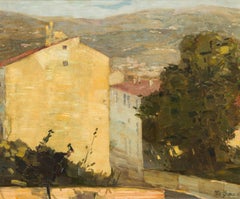
Vorstadthäuser in baumbestandener Straße
Located in Wien, 9
Als Sohn eines Lehrers wurde Willi Geiger 1878 in Landshut geboren. 1898–99 besuchte er die Münchner Kunstgewerbeschule, anschließend die Technische Hochschule, an der er sein Staats...
Category
1910s Art
Materials
Oil
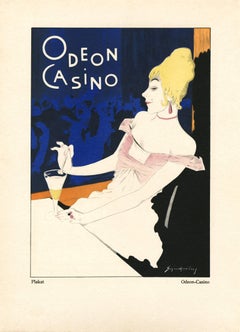
Kostume, Plakate, und Dekorationen, "Odeon-Casino"
Located in Palm Beach, FL
Walter Schnackenberg’s style changed several times during his long and successful career. Having studied in Munich, the artist traveled often to Paris where he fell under the spell of the Henri de Toulouse-Lautrec’s colorful and sensuous posters depicting theatrical and decadent subjects. Schnackenberg became a regular contributor of similar compositions to the German magazines Jugend and Simplicissimus before devoting himself to the design of stage scenery and costumes. In the artist’s theatrical work, his mastery of form, ornamentation, and Orientalism became increasingly evident. He excelled at combining fluid Art Nouveau outlines, with spiky Expressionist passages, and the postures and patterns of the mysterious East.
In his later years, Schnackenberg explored the unconscious, using surreal subject matter and paler colors that plainly portrayed dreams and visions, some imbued with political connotations. His drawings, illustrations, folio prints, and posters are highly sought today for their exceedingly imaginative qualities, enchanting subject matter, and arresting use of color.
SCHNACKENBERG: KOSTUME, PLAKATE UND DEKORATIONEN, a cardboard bound art book consisting of 43 prints of work by Walter Schnackenberg, 30 of which are color lithographs that are signed and some are titled and dated in the plate, as well as black and white prints and photographs with accompanying text by Oskar Bie; lithographs printed at Kunstanstalt Oskar Consee in Munich, other images printed by Gesellschaft Pick & Co. in Munich, the text and cover with color images by Schnackenberg front and verso printed by R. Oldenbourg in Munich; published by Musarion Verlag, Munich, 1920.
The majority of Walter Schnackenberg’s artistic output was destroyed by bomb attacks in Munich in 1944. The highly publicized 2013 auction in New York of the recovered pre-war poster collection once belonging to German poster aficionado, Hans Sachs has reintroduced the world to Walter Schnackenberg’s graphic genius and priceless ephemeral art from a lost era. Besides the museum world, designer Karl Lagerfeld is one of the most prodigious collectors of Schnackenberg. Flipping through the pages of Kostume, Plakate und Dekorationen, it becomes quite clear that Schnackenberg’s collection is ground zero at the crossroads of early modern fashion where the cult of celebrity meets up with dance, music, theater and cabaret, film and the graphic medium. Berlin and Munich under Germany’s Weimar Republic in the first quarter of the 20th century produced just the atmosphere to feed this burgeoning industry. Rising inflation sparked a recklessness to live large for the moment and heightened a desire for escapism. An influx of Indian and East Asian dancers and musicians added to the artsy bohemian cultural mix. A new decadence and tolerance resulted. Film boldly featured provocative subject matter. Cabarets became popular venues giving rise to the demi-monde in which people from all social stations mixed more freely in a thriving underground economy and culture where there was a blurring of boundaries and of social codes. Noted art historian and cultural doyen, Oskar Bie astutely observes in his introduction to Schnackenberg’s publication that what unites the images is fantasy and advertisement. Schnackenberg uses the eye as an instrument to brilliantly construct and convey this double message. His personages never directly confront the viewer. Their eyes gaze off in the distance like those of the screenplayer and film star Hedamaria Scholz in Schnackenberg’s “Die Rodelhexe” movie poster. Their eyes follow the path of a dance composition or become a transfixed and ogling male gaze such as the iconic 1911 Odeon Casino...
Category
Expressionist 1910s Art
Materials
Lithograph
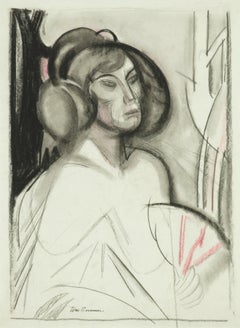
Deco Woman
Located in Fairlawn, OH
Deco Woman
Crayon on paper, c. 1920
Signed in ink lower left: "Wm. Sommer" (see photo)
Provenance:
Estate of the artist
Edwin Sommer (the artist’s son)
Jose...
Category
Art Deco 1910s Art
Materials
Crayon
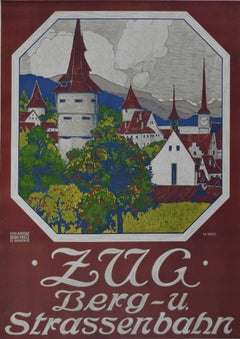
Original 1914 Ski Poster Zug Berg-u-Strassenbahn, Austria: Walther Koch - Skiing
By Walter Koch
Located in London, GB
Walther Koch (1875-1915)
Zug Berg und Strassenbahn
Original lithographic poster (1914)
40x30"
Printed in Zurich by Anstalt Gebr Fretz
Category
Modern 1910s Art
Materials
Lithograph
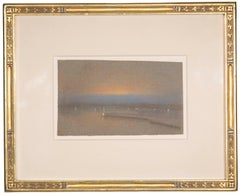
Sunset River
Located in New York, NY
Johann Berthelsen and one of New York city’s best known artists along with Guy Wiggins, depicting the streets, parks and skyline of New York. This is a romantic and atmospheric work ...
Category
Tonalist 1910s Art
Materials
Paper, Pastel
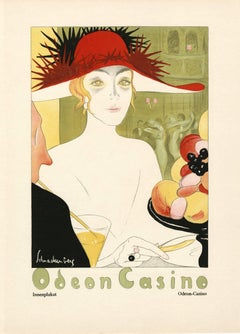
Kostume, Plakate, und Dekorationen, "Odeon-Casino"
Located in Palm Beach, FL
Walter Schnackenberg’s style changed several times during his long and successful career. Having studied in Munich, the artist traveled often to Paris where he fell under the spell of the Henri de Toulouse-Lautrec’s colorful and sensuous posters depicting theatrical and decadent subjects. Schnackenberg became a regular contributor of similar compositions to the German magazines Jugend and Simplicissimus before devoting himself to the design of stage scenery and costumes. In the artist’s theatrical work, his mastery of form, ornamentation, and Orientalism became increasingly evident. He excelled at combining fluid Art Nouveau outlines, with spiky Expressionist passages, and the postures and patterns of the mysterious East.
In his later years, Schnackenberg explored the unconscious, using surreal subject matter and paler colors that plainly portrayed dreams and visions, some imbued with political connotations. His drawings, illustrations, folio prints, and posters are highly sought today for their exceedingly imaginative qualities, enchanting subject matter, and arresting use of color.
SCHNACKENBERG: KOSTUME, PLAKATE UND DEKORATIONEN, a cardboard bound art book consisting of 43 prints of work by Walter Schnackenberg, 30 of which are color lithographs that are signed and some are titled and dated in the plate, as well as black and white prints and photographs with accompanying text by Oskar Bie; lithographs printed at Kunstanstalt Oskar Consee in Munich, other images printed by Gesellschaft Pick & Co. in Munich, the text and cover with color images by Schnackenberg front and verso printed by R. Oldenbourg in Munich; published by Musarion Verlag, Munich, 1920.
The majority of Walter Schnackenberg’s artistic output was destroyed by bomb attacks in Munich in 1944. The highly publicized 2013 auction in New York of the recovered pre-war poster collection once belonging to German poster aficionado, Hans Sachs has reintroduced the world to Walter Schnackenberg’s graphic genius and priceless ephemeral art from a lost era. Besides the museum world, designer Karl Lagerfeld is one of the most prodigious collectors of Schnackenberg. Flipping through the pages of Kostume, Plakate und Dekorationen, it becomes quite clear that Schnackenberg’s collection is ground zero at the crossroads of early modern fashion where the cult of celebrity meets up with dance, music, theater and cabaret, film and the graphic medium. Berlin and Munich under Germany’s Weimar Republic in the first quarter of the 20th century produced just the atmosphere to feed this burgeoning industry. Rising inflation sparked a recklessness to live large for the moment and heightened a desire for escapism. An influx of Indian and East Asian dancers and musicians added to the artsy bohemian cultural mix. A new decadence and tolerance resulted. Film boldly featured provocative subject matter. Cabarets became popular venues giving rise to the demi-monde in which people from all social stations mixed more freely in a thriving underground economy and culture where there was a blurring of boundaries and of social codes. Noted art historian and cultural doyen, Oskar Bie astutely observes in his introduction to Schnackenberg’s publication that what unites the images is fantasy and advertisement. Schnackenberg uses the eye as an instrument to brilliantly construct and convey this double message. His personages never directly confront the viewer. Their eyes gaze off in the distance like those of the screenplayer and film star Hedamaria Scholz in Schnackenberg’s “Die Rodelhexe” movie poster. Their eyes follow the path of a dance composition or become a transfixed and ogling male gaze such as the iconic 1911 Odeon Casino...
Category
Expressionist 1910s Art
Materials
Lithograph
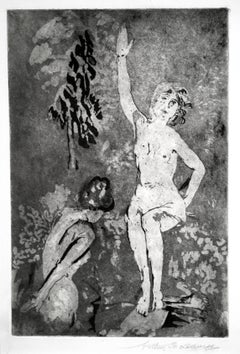
Amber Garden
Located in New York, NY
Arthur B. Davies (1862-1928), Amber Garden (Hand Raised, Autumn Mist), soft ground etching and aquatint, 1919, signed in pencil lower right margin. Referen...
Category
American Impressionist 1910s Art
Materials
Etching, Aquatint
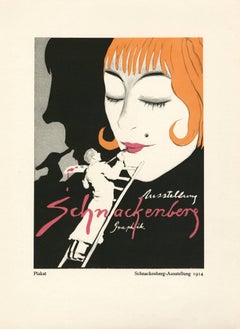
Kostume, Plakate, und Dekorationen, "Schnackenberg-Ausstellung 1914""
Located in Palm Beach, FL
Walter Schnackenberg’s style changed several times during his long and successful career. Having studied in Munich, the artist traveled often to Paris where he fell under the spell o...
Category
Expressionist 1910s Art
Materials
Lithograph
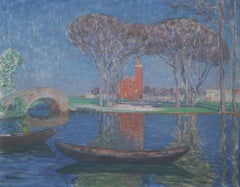
Italienischer Frühling
Located in Wien, 9
Hans Völker wuchs in der Gründerzeit des Deutschen Kaiserreichs auf. Nach seinem Schulabschluss studierte er zunächst in seiner Heimatstadt an der dortigen Kunstgewerbeschule sowie i...
Category
1910s Art
Materials
Watercolor
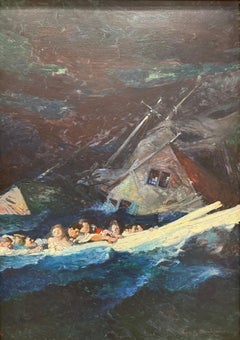
The Flood
Located in Greenville, DE
A great example of Schoonover's story telling. The painting is 43 1/2" x 32 1/2" framed. Signed Lower Right and dated '14
Raisonne catalog Vol 1 page 233 #616
Category
Impressionist 1910s Art
Materials
Canvas, Oil
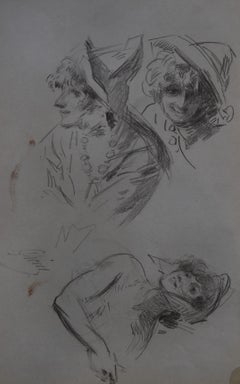
Jules Cheret (1836-1932) Three studies of women, original signed drawing
By Jules Chéret
Located in Paris, FR
Jules Cheret (1836-1932)
Three studies of women
charcoal on paper
signed on the bottom left
39 x 24.5 cm
This drawing of studies was part of the artist's workshop as so it bears the...
Category
Art Nouveau 1910s Art
Materials
Charcoal
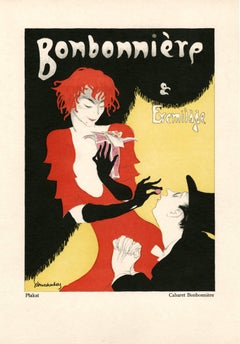
Kostume, Plakate, und Dekorationen, "Cabaret Bonbonniere"
Located in Palm Beach, FL
Walter Schnackenberg’s style changed several times during his long and successful career. Having studied in Munich, the artist traveled often to Paris where he fell under the spell o...
Category
Expressionist 1910s Art
Materials
Lithograph
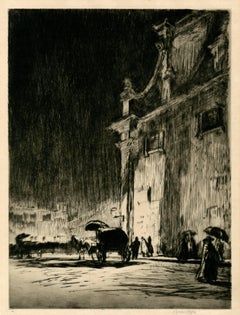
Rainy Night in Rome
Located in Fairlawn, OH
Rainy Night in Rome
Drypoint, 1913
Signed in pencil and titled in the lower margin by the artist
(see photo)
Provenance:
Kennedy Galleries, Stock # A6538
Reference; Doddgson 299 _/X
...
Category
English School 1910s Art
Materials
Drypoint
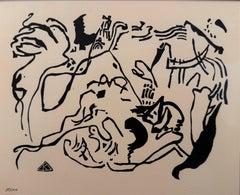
Regards sur le passé -Kandinsky original wood engraving abstract expressionist
Located in Hamburg, DE
"Ragards sur le passé" - is an original woodcut engraving of Wassilij Kandinsky which was edited by Nina Kandinsky from his work from 1912. The work is in the artist's characterist...
Category
Abstract Expressionist 1910s Art
Materials
Woodcut
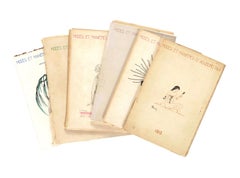
Modes et Manières d
Aujourd
hui
Located in Wilton, CT
7 volumes, complete. Six 8vo volumes (292 x 190 mm), and one 4to (Huitieme année, 1919, 310 x 245 mm). Publisher's pictorial paper board portfolios, patterned endpapers, housing loos...
Category
Art Deco 1910s Art
Materials
Gouache
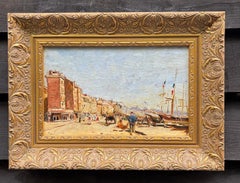
French Impressionist Early 2000th Century Harbour Scene, Fishermen, Boats, Fish
Located in Woodbury, CT
Léon Bompard (French, early 20th Century)
Harbour Scene with Fishermen, Boats and Fish Market
Oil on canvas, circa 1900–1920
Signed lower left
This charming harbour composition by th...
Category
Impressionist 1910s Art
Materials
Oil, Wood Panel
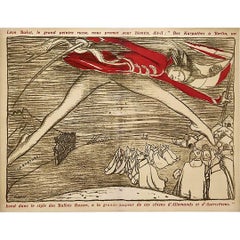
Work by Léon Bakst - early 20th-century wartime propaganda Avant-garde
By Leon Bakst
Located in PARIS, FR
This striking work by Léon Bakst, titled “Le grand peintre russe nous promet pour bientôt…” (“The great Russian painter promises us soon…”), vividly captures the spirit of early 20th...
Category
1910s Art
Materials
Linen, Paper, Lithograph
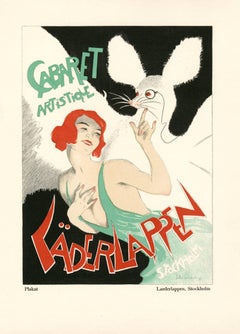
Kostume, Plakate, und Dekorationen, "Läderlappen"
Located in Palm Beach, FL
Walter Schnackenberg’s style changed several times during his long and successful career. Having studied in Munich, the artist traveled often to Paris where he fell under the spell of the Henri de Toulouse-Lautrec’s colorful and sensuous posters depicting theatrical and decadent subjects. Schnackenberg became a regular contributor of similar compositions to the German magazines Jugend and Simplicissimus before devoting himself to the design of stage scenery and costumes. In the artist’s theatrical work, his mastery of form, ornamentation, and Orientalism became increasingly evident. He excelled at combining fluid Art Nouveau outlines, with spiky Expressionist passages, and the postures and patterns of the mysterious East.
In his later years, Schnackenberg explored the unconscious, using surreal subject matter and paler colors that plainly portrayed dreams and visions, some imbued with political connotations. His drawings, illustrations, folio prints, and posters are highly sought today for their exceedingly imaginative qualities, enchanting subject matter, and arresting use of color.
SCHNACKENBERG: KOSTUME, PLAKATE UND DEKORATIONEN, a cardboard bound art book consisting of 43 prints of work by Walter Schnackenberg, 30 of which are color lithographs that are signed and some are titled and dated in the plate, as well as black and white prints and photographs with accompanying text by Oskar Bie; lithographs printed at Kunstanstalt Oskar Consee in Munich, other images printed by Gesellschaft Pick & Co. in Munich, the text and cover with color images by Schnackenberg front and verso printed by R. Oldenbourg in Munich; published by Musarion Verlag, Munich, 1920.
The majority of Walter Schnackenberg’s artistic output was destroyed by bomb attacks in Munich in 1944. The highly publicized 2013 auction in New York of the recovered pre-war poster collection once belonging to German poster aficionado, Hans Sachs has reintroduced the world to Walter Schnackenberg’s graphic genius and priceless ephemeral art from a lost era. Besides the museum world, designer Karl Lagerfeld is one of the most prodigious collectors of Schnackenberg. Flipping through the pages of Kostume, Plakate und Dekorationen, it becomes quite clear that Schnackenberg’s collection is ground zero at the crossroads of early modern fashion where the cult of celebrity meets up with dance, music, theater and cabaret, film and the graphic medium. Berlin and Munich under Germany’s Weimar Republic in the first quarter of the 20th century produced just the atmosphere to feed this burgeoning industry. Rising inflation sparked a recklessness to live large for the moment and heightened a desire for escapism. An influx of Indian and East Asian dancers and musicians added to the artsy bohemian cultural mix. A new decadence and tolerance resulted. Film boldly featured provocative subject matter. Cabarets became popular venues giving rise to the demi-monde in which people from all social stations mixed more freely in a thriving underground economy and culture where there was a blurring of boundaries and of social codes. Noted art historian and cultural doyen, Oskar Bie astutely observes in his introduction to Schnackenberg’s publication that what unites the images is fantasy and advertisement. Schnackenberg uses the eye as an instrument to brilliantly construct and convey this double message. His personages never directly confront the viewer. Their eyes gaze off in the distance like those of the screenplayer and film star Hedamaria Scholz in Schnackenberg’s “Die Rodelhexe” movie poster. Their eyes follow the path of a dance composition or become a transfixed and ogling male gaze such as the iconic 1911 Odeon Casino poster...
Category
Expressionist 1910s Art
Materials
Lithograph
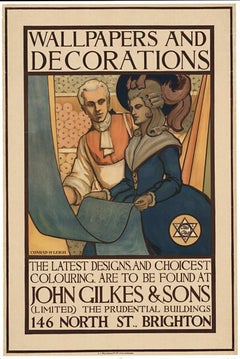
Original Wallpapers and Decorations John Gilkes
Sons vintage poster
Located in Spokane, WA
Wallpapers and Decorations John Gilkes & Sons. Original stone lithograph. Size: 31" x 47". C. 1915 - 1920. Printer: J.J. Keliher & Co., London Archival linen backed authentic antique poster...
Category
Art Nouveau 1910s Art
Materials
Lithograph
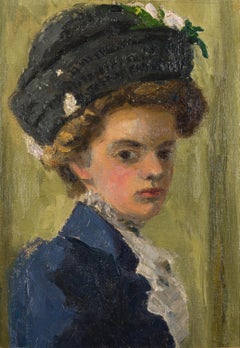
Portrait of a lady
Located in Wien, 9
In elegant clothing and a pompous hat, the lady looks out from the side of the picture. The narrow neckline and the sideways positioning create a strict and controlled impression. Th...
Category
Modern 1910s Art
Materials
Canvas, Oil
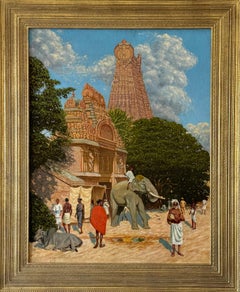
Meenakshi Temple Madurai Tamil India 1913 Hindu Priest Sacred Elephant Oil Paint
Located in Rancho Santa Fe, CA
Andre Chéronnet Champollion
Meenakshi Temple Hindu Priest & Sacred Elephant Madurai, Tamil
Oil on canvas
Painting Dimensions: 36 x 28 inches
Framed Dimensions: 44.5 x 36.5 inches
Sig...
Category
Impressionist 1910s Art
Materials
Canvas, Oil
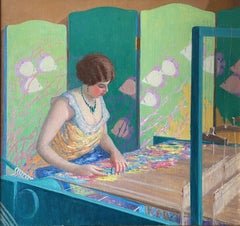
"The Artist
s Wife at the Loom, " Harry Hoffman, Bright American Impressionism
Located in New York, NY
Harry Leslie Hoffman (1871 - 1964)
The Artist's Wife (Beatrice Pope) at the Loom, circa 1915
Oil on canvas
30 x 32 inches
Housed in a period Newcomb-Macklin frame
Provenance:
Estate of the artist
Private Collection, Massachusetts
This painting depicts the artist's wife at the loom, producing textile versions of Hoffman's underwater paintings. The screen shown behind Bea is an underwater scene also painted by Hoffman. The study of this painting is held in the collection of the Wolfsonian Museum in Florida.
Harry Leslie Hoffman was born in Cressona, a small community in Pennsylvania's Schuylkill Valley. His mother was an amateur artist who encouraged her son to pursue a career in the arts. In 1893, Hoffman entered the School of Art at Yale University and studied with John Ferguson Weir, the son of Robert Walter Weir. After graduation in 1897, Hoffman moved to New York to continue his studies at the Art Students League. He also traveled to Paris and took classes at the Académie Julien.
In the summer of 1902, Hoffman attended the Lyme Summer School of Art, in the town of Old Lyme on the Connecticut coast. The school was headed by Frank Vincent Dumond and was located in a boarding house owned by Florence Griswold. The school eventually grew into an artists' colony and a center for American Impressionism. When Hoffman first arrived as a student, he was not permitted to stay in the house which was designated for the professional artists only. However, his outgoing personality soon won him many friends at the colony.
In 1905, Hoffman settled in Old Lyme and worked as a full member of the artist colony. He was particularly influenced by Willard Leroy Metcalf, an Impressionist also working in Old Lyme. Fellow artists later fondly recalled Hoffman's antics at the Griswold house, which included playing the flute and banjo, tap-dancing, singing humorous songs, and performing magic tricks. In 1910 Hoffman...
Category
American Impressionist 1910s Art
Materials
Canvas, Oil
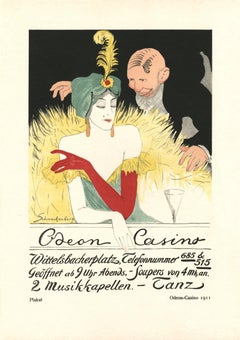
Kostume, Plakate, und Dekorationen, "Odeon-Casino 1911"
Located in Palm Beach, FL
Walter Schnackenberg’s style changed several times during his long and successful career. Having studied in Munich, the artist traveled often to Paris where he fell under the spell of the Henri de Toulouse-Lautrec’s colorful and sensuous posters depicting theatrical and decadent subjects. Schnackenberg became a regular contributor of similar compositions to the German magazines Jugend and Simplicissimus before devoting himself to the design of stage scenery and costumes. In the artist’s theatrical work, his mastery of form, ornamentation, and Orientalism became increasingly evident. He excelled at combining fluid Art Nouveau outlines, with spiky Expressionist passages, and the postures and patterns of the mysterious East.
In his later years, Schnackenberg explored the unconscious, using surreal subject matter and paler colors that plainly portrayed dreams and visions, some imbued with political connotations. His drawings, illustrations, folio prints, and posters are highly sought today for their exceedingly imaginative qualities, enchanting subject matter, and arresting use of color.
SCHNACKENBERG: KOSTUME, PLAKATE UND DEKORATIONEN, a cardboard bound art book consisting of 43 prints of work by Walter Schnackenberg, 30 of which are color lithographs that are signed and some are titled and dated in the plate, as well as black and white prints and photographs with accompanying text by Oskar Bie; lithographs printed at Kunstanstalt Oskar Consee in Munich, other images printed by Gesellschaft Pick & Co. in Munich, the text and cover with color images by Schnackenberg front and verso printed by R. Oldenbourg in Munich; published by Musarion Verlag, Munich, 1920.
The majority of Walter Schnackenberg’s artistic output was destroyed by bomb attacks in Munich in 1944. The highly publicized 2013 auction in New York of the recovered pre-war poster collection once belonging to German poster aficionado, Hans Sachs has reintroduced the world to Walter Schnackenberg’s graphic genius and priceless ephemeral art from a lost era. Besides the museum world, designer Karl Lagerfeld is one of the most prodigious collectors of Schnackenberg. Flipping through the pages of Kostume, Plakate und Dekorationen, it becomes quite clear that Schnackenberg’s collection is ground zero at the crossroads of early modern fashion where the cult of celebrity meets up with dance, music, theater and cabaret, film and the graphic medium. Berlin and Munich under Germany’s Weimar Republic in the first quarter of the 20th century produced just the atmosphere to feed this burgeoning industry. Rising inflation sparked a recklessness to live large for the moment and heightened a desire for escapism. An influx of Indian and East Asian dancers and musicians added to the artsy bohemian cultural mix. A new decadence and tolerance resulted. Film boldly featured provocative subject matter. Cabarets became popular venues giving rise to the demi-monde in which people from all social stations mixed more freely in a thriving underground economy and culture where there was a blurring of boundaries and of social codes. Noted art historian and cultural doyen, Oskar Bie astutely observes in his introduction to Schnackenberg’s publication that what unites the images is fantasy and advertisement. Schnackenberg uses the eye as an instrument to brilliantly construct and convey this double message. His personages never directly confront the viewer. Their eyes gaze off in the distance like those of the screenplayer and film star Hedamaria Scholz in Schnackenberg’s “Die Rodelhexe” movie poster. Their eyes follow the path of a dance composition or become a transfixed and ogling male gaze such as the iconic 1911 Odeon Casino...
Category
Expressionist 1910s Art
Materials
Lithograph
Amsterdam Canal - German Impressionism Dutch Landscape Amsterdam Cityscape
By Lesser Ury
Located in London, GB
This oil on canvas is hand signed by the artist "L. Ury" at the lower right corner.
It was realised in 1912 whilst the artist was in Holland.
Provenance:
Max and Rosa Joel, Berlin ...
Category
Impressionist 1910s Art
Materials
Canvas, Oil

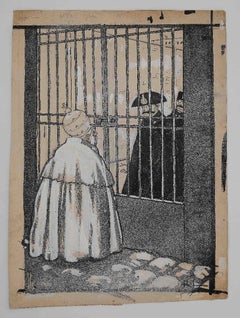
The Pope and the Prison - China Ink by Gabriele Galantara - 1910
Located in Roma, IT
The prison is an original drawing in China ink and white lead on creamy cardboard realized by Gabriele Galantara (1865-1937).
In good conditions.
This artwotk presents on the back...
Category
Modern 1910s Art
Materials
Ink
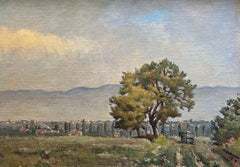
"Rural Landscape" by Henri Duvoisin - Oil on Canvas - 44x62 cm
Located in Geneva, CH
Artwork sold with frame (64 x 81 x 5 cm)
Henri Duvoisin (1877–1959) was a Swiss painter born in Geneva, celebrated for his still life paintings, landscapes, and urban scenes. He stu...
Category
Modern 1910s Art
Materials
Oil, Canvas
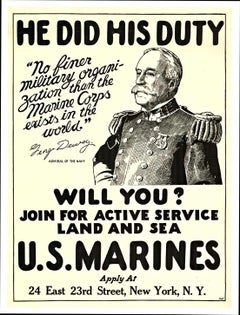
Original U.S. Marines, He Did His Duty, George Dewey vintage linen backed poster
Located in Spokane, WA
This original and visually striking artifact from the First World War is a vintage U.S. Marine Corps recruiting poster titled ‘He Did His Duty.' It stands as a testament to the power...
Category
American Realist 1910s Art
Materials
Lithograph
Stooped Old Man with Walking Stick and Cigarette, c. 1910 / - The sum of life -
Located in Berlin, DE
Hans Thoma (1839 Bernau - 1924 Karlsruhe), Stooped Old Man with Walking Stick and Cigarette, circa 1900. Watercolor and pastel on paper, mounted on cardboard, 29.5 cm x 23.5 cm (shee...
Category
Realist 1910s Art
Materials
Watercolor, Gouache

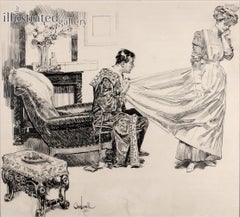
Life Magazine Story Illustration
Located in Fort Washington, PA
Medium: Pen and Ink on Board
Signature: Signed Lower Left
Story Illustration- Life Magazine ca. 1915
Seated Man in dressing gown pulling on maid's apron
Category
1910s Art
Materials
Ink, Board, Pen
1900
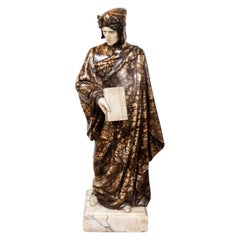
s Alabaster Sculpture of Dante
Located in Los Angeles, CA
A sensitively carved, solid alabaster, antique sculpture of famed Italian poet and philospher, Dante Aligheri (1265-1321). The figure in a rich, flowing robe, holding a book and wear...
Category
1910s Art
Materials
Alabaster, Marble
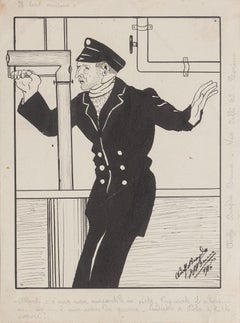
Their Heroism - China Ink By Adolfo Brayas Bruno - 1916
Located in Roma, IT
Their Heroism is an original drawing in China ink realized in 1916 by Adolfo Brayas Bruno.
Hand-signed and dated on the lower right.
With description on the lower and right margin ...
Category
Modern 1910s Art
Materials
Ink
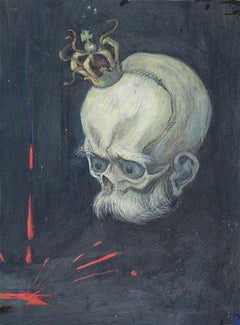
Il Kaiser - Original Drawing by Gabriele Galantara - 1915
Located in Roma, IT
Il Kaiser is an original drawing in China ink, watercolor and white lead on creamy cardboard realized by Gabriele Galantara (1865-1937).
In good conditions.
This artwotk presents ...
Category
Modern 1910s Art
Materials
Ink, Watercolor
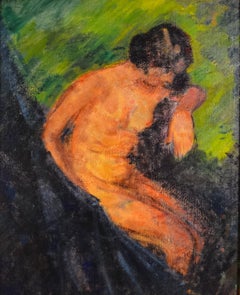
"Female Nude, " Edith Glackens Dimock, Ashcan School Figurative Painting
By Edith Glackens Dimock
Located in New York, NY
Edith (Glackens) Dimock (1876 - 1955)
Untitled (Female Nude), circa 1915
Oil on canvas
34 1/2 x 28 1/4 inches
Signed lower left
Provenance:
Private Colle...
Category
Ashcan School 1910s Art
Materials
Canvas, Oil
The Flying Postman - Original Ink and Watercolor by G. Galantara - 1910s
Located in Roma, IT
The flying postman is an original drawing in China ink and watercolor on creamy cardboard realized by Gabriele Galantara (1865-1937).
In good conditions.
This artwotk presents on ...
Category
Modern 1910s Art
Materials
Ink, Watercolor
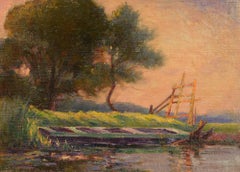
"Punt on the River, " William Dennis, impressionist, 1910-20, rural landscape
Located in Wiscasset, ME
William Dennis was a landscape painter based in Nottingham, England. Known for his impressionistic, pastoral landscape paintings, Dennis painted mostly in oil, capturing the rural sc...
Category
Impressionist 1910s Art
Materials
Oil
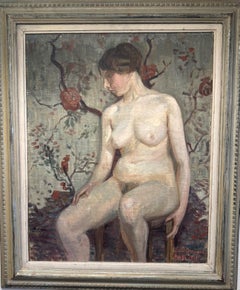
Paris Model
Located in Täby, SE
Julie Elise Hullgren, born July 29, 1879 in Aalborg, Denmark, died 1963, was a Danish-Swedish painter. She was the daughter of director J.G. Dinesen and Vilhelmine Marie Rodskier and...
Category
Impressionist 1910s Art
Materials
Oil, Wood Panel
$2,048 Sale Price
25% Off
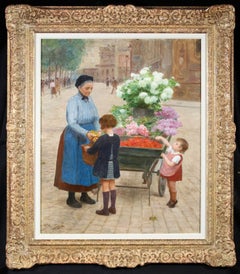
La Marchande de Fleurs - French Realist Figurative Oil by Victor Gilbert
Located in Marlow, Buckinghamshire
Signed figurative oil on original canvas by French realist painter Victor Gabriel Gilbert. The work shows a flower seller filling a young girl's basket with cherries while a little b...
Category
Realist 1910s Art
Materials
Canvas, Oil
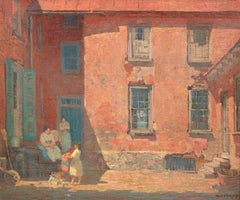
Courtyard at Noon
Located in New York, NY
Robert Spencer paints a sun-drenched scene of figures moving about outside red clay buildings in his work entitled, “Courtyard at Noon.”
Category
Impressionist 1910s Art
Materials
Canvas, Oil
$110,000
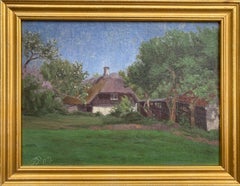
"Summer Cottage" - Framed Early 20th Century Landscape Painting
Located in New Orleans, LA
Doesn't this scene just make you want to be there, in this cottage in the country? I liked this painting enough that I actually put some money into it with a restorer to get it into ...
Category
Impressionist 1910s Art
Materials
Oil
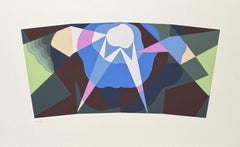
Giacomo Balla (1871–1958) - Balla futurista - Colour screen printing on paper
Located in Varese, IT
Colour screen printing on paper, edited 1914
Posthumous Edition issued by Balla Archive
Limited Edition of 150 copies
Numbered in pencil on the lower left 40/150
Paper size: 56 x 92 ...
Category
Abstract 1910s Art
Materials
Screen
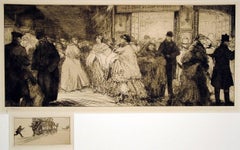
Sortie de Theatre a Londres
Located in New York, NY
Jean-Emile Laboureur (1877-1943), Sortie de Theatre a Londres, etching and drypoint, 1911, signed in pencil lower left [also signed and dated in the plate upper right]. Reference: Laboureur 104, third state (of 3). Published for La Societe des amis de l’eau-forte, with the blindstamp with the inscription: Circle Librairie Estampes. From an edition in the third state of 109; there were also 5 impressions of the first state and five of the second state. In excellent condition, the full sheet with deckle edges bottom and sides, 6 3/4 x 14; a remarque lower left 2 x 3 1/2, the sheet 12 3/4 x 19 3/4 inches.
Provenance: unknown collector’s mark verso (GOE in oval)
A fine rich impression, printed in dark brown ink on cream laid paper with the Arches watermark.
The small remarque lower left is actually another print printed on a separate plate; it shows a man running after a London horse...
Category
Naturalistic 1910s Art
Materials
Drypoint
Ojai, California
By Carl Lindin
Located in Saratoga Springs, NY
Signed lower left.
This painting was exhibited at the James Cox Gallery, Woodstock NY. "Carl Olof Eric Lindin 1862-1942", in 1993. No. 27.
Carl Lindin, a Swedish-born painter who...
Category
Modern 1910s Art
Materials
Canvas, Oil
$15,000
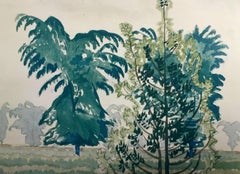
Untitled (Trees)
Located in Buffalo, NY
An original watercolor on paper by American modernist Charles E. Burchfield, created in 1916.
This work comes in an archival frame presentation and has been authenticated by the Bur...
Category
American Modern 1910s Art
Materials
Paper, Watercolor