1940s Art
to
1,095
2,849
1,173
991
414
263
Overall Width
to
Overall Height
to
7,592
21,260
159,652
232,791
1,978
2,248
4,937
6,460
5,714
13,249
19,868
25,790
18,474
13,829
5,392
2,190
407
247
217
176
117
83
68
49
20
10
2
1
3,296
2,157
161
2,985
1,439
1,159
929
923
556
387
370
356
351
294
270
264
259
229
190
162
145
145
140
2,029
1,408
1,279
983
705
117
108
73
57
48
1,540
944
3,674
1,843
Period: 1940s
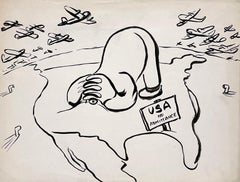
Original U.S. Military 1944 Propaganda Poster: In Mein Kampf...without a fight!
Located in Spokane, WA
This rare, original Newsmap for the Armed Forces poster from 1944 is a significant artifact of World War II history. Distributed weekly by the Army Information Branch, these maps kep...
Category
American Modern 1940s Art
Materials
Offset

No Ordinary Winter
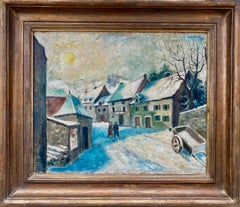
s Tale: Resilience, the War 1943, German Expressionist oil
Located in Norwich, GB
This is no ordinary winter scene. It is the story of prosecution and survival; of resolve and resilience during World War 2, as it was experienced by German Expressionist Heinz Lohma...
Category
Expressionist 1940s Art
Materials
Oil, Board
Vintage French Impressionist Paris Street Scene Signed Oil Painting
Located in Buffalo, NY
Vintage American impressionist Paris street scene oil painting. Oil on board. Signed. Framed. Provenance from a Sag Harbor, NY collection. Measuring: 13 by 15 inches overall. Handso...
Category
Impressionist 1940s Art
Materials
Oil, Board
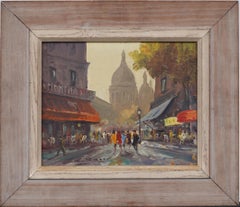
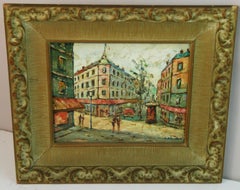
Parisian Street Scene
Located in Douglas Manor, NY
6119 Parisian street scene
Set in a decorative period frame
Image size 9.5x7.5"
Category
1940s Art
Materials
Oil

$300 Sale Price
36% Off
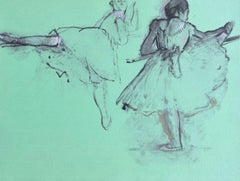
Edgar Degas, Dancer at the Barre, 1945 (after)
By Edgar Degas
Located in Southampton, NY
This exquisite lithograph after Edgar Degas (1834–1917), titled Danseur au bar (Dancer at the Barre), originates from the 1945 folio Degas, Ten Ballet Sketches. Published by The Studio Publications, Inc., New York, rendered and printed by Albert Carman, City Island, 1945, this work reflects Degas’s sensitive mastery of line, movement, and the intimate psychological nuances of the ballet studio.
Executed as a lithograph and pochoir on velin paper, this work measures 13 x 17 inches (33.02 x 43.18 cm). Signed in the plate and unnumbered as issued. Rendered and printed by Albert Carman, City Island.
Artwork Details:
Artist: After Edgar Degas (1834–1917)
Title: Danseur au bar (Dancer at the Barre), from Degas, Ten Ballet Sketches, 1945
Medium: Lithograph and pochoir on velin paper
Dimensions: 13 x 17 inches (33.02 x 43.18 cm)
Inscription: Signed in the plate and unnumbered as issued
Date: 1945
Publisher: The Studio Publications, Inc., New York
Printer: Albert Carman, City Island
Condition: Well preserved, consistent with age and medium
Provenance: From the 1945 folio Degas, Ten Ballet Sketches, published by The Studio Publications, Inc., New York
Notes:
Excerpted from the album, Born in Paris in 1834, Edgar Degas lived, and surely loved the life of that city during most of his years. These continued somewhat sadly beyond those of most of his friends— into the debacle of the first World War, during which he died in 1917. Judging by the frequency with which he used them as models, he must have had an especial admiration for the ballet girls who followed a profession that at the time brought none of the glory and prosperity which attend it today. New aspects of the human body, revealed in movement, fascinated him. But his occupation with the simply anatomical side of his subjects never resulted in a cold interpretation. On the contrary there is a warmth and sympathy that pervades all of his work. The drawings here represent the painter in one important phase of his multi-sensitive view of life; and permit an insight which a more ambitious work might not do-into the operation of the creative process, the artist's transformation of reality as it passes through the mesh of his sensibilities. The Edition of this Portfolio is limited to MMMD examples. Rendered by Albert Carman.
About the Publication:
Degas, Ten Ballet Sketches (1945) is one of the earliest and most significant American postwar fine art portfolios devoted to Edgar Degas’s intimate works on paper. Published by The Studio Publications, Inc., New York, and rendered and printed by Albert Carman at City Island, the album sought to faithfully reproduce a group of Degas’s ballet-related drawings through a combination of lithography and hand-applied pochoir coloring. This hybrid technique allowed the edition to preserve the immediacy, tonal subtlety, and gestural delicacy central to Degas’s draftsmanship. Conceived as a fine art publication rather than a commercial book, the portfolio provided American audiences unprecedented access to Degas’s private, spontaneous studies—images that reveal the artist’s fascination with movement, anatomy, and the psychological atmosphere of the rehearsal studio. The album exemplifies the mid-20th-century revival of pochoir as a means of recreating the texture and coloristic nuance of original works on paper, and it remains an important document of how Degas’s legacy was translated into high-quality printed form for collectors, museums, and connoisseurs.
About the Artist:
Edgar Degas (1834–1917) was a French painter, draughtsman, printmaker, and sculptor whose groundbreaking fusion of classical draftsmanship, modern experimentation, and psychological depth helped define the trajectory of Western art, positioning him as one of the most influential figures of the nineteenth and early twentieth centuries; renowned for his depictions of ballet dancers, racehorses, theater scenes, cafe life, domestic interiors, milliners, laundresses, and women at their toilette, Degas reimagined observational realism through radical compositional innovation—employing extreme cropping, asymmetrical framing, oblique viewpoints, and dramatic lighting that anticipated photographic and cinematic language long before these technologies shaped visual culture, and although associated with Impressionism, he rejected plein-air spontaneity in favor of studio-based discipline rooted in the linear precision of Jean-Auguste-Dominique Ingres, the expressive chromaticism of Eugene Delacroix, and the modernity of Edouard Manet while also drawing inspiration from Japanese ukiyo-e prints, classical sculpture, and early photography; his independent artistic philosophy resonated with and helped shape the innovations of Pablo Picasso, Alexander Calder, Alberto Giacometti, Salvador Dali, Joan Miro, Wassily Kandinsky, Marcel Duchamp, and Man Ray, whose explorations of movement, form, dream logic, abstraction, and conceptualism all find antecedents in Degas’s investigations into seriality, temporality, and the fragmented figure, and his pioneering use of pastel, monotype, and wax sculpture fundamentally transformed each medium, influencing artists from Henri Matisse, Francis Bacon, Lucian Freud, and Giacomo Manzu to Paula Rego, contemporary realists, experimental photographers, and choreographers; his works are held in nearly every major museum collection worldwide—including the Musee dOrsay, the Louvre, the Metropolitan Museum of Art, the National Gallery of Art, the Art Institute of Chicago, the Courtauld Institute, and the National Gallery, London—affirming his central place in the history of art, and the highest auction record for Degas was achieved at Sothebys London on February 3, 2015, when Danseuses en Bleu sold for 37,033,000 GBP, cementing his status as one of the most sought-after and enduringly significant artists of the Western canon.
Degas pochoir, Degas lithograph...
Category
Impressionist 1940s Art
Materials
Lithograph
$796 Sale Price
20% Off
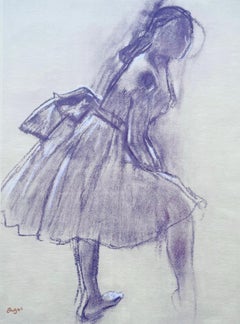
Edgar Degas, Dancer Standing in Profile, 1945 (after)
By Edgar Degas
Located in Southampton, NY
This exquisite lithograph after Edgar Degas (1834–1917), titled Danseur debout de profil (Dancer Standing in Profile), originates from the 1945 folio Degas, Ten Ballet Sketches. Published by The Studio Publications, Inc., New York, rendered and printed by Albert Carman, City Island, 1945, this work reflects Degas’s sensitive mastery of line, movement, and intimate observation, capturing the grace, poise, and psychological immediacy that define his iconic ballet imagery. In Danseur debout de profil (Dancer Standing in Profile), Degas reveals gesture and inner emotion through economical contour and lyrical nuance.
Executed as a lithograph and pochoir on velin paper, this work measures 17 x 13 inches (43.18 x 33.02 cm). Signed in the plate and unnumbered as issued. Rendered and printed by Albert Carman, City Island, one of the notable American ateliers specializing in fine art lithography during the mid-20th century.
Artwork Details:
Artist: After Edgar Degas (1834–1917)
Title: Danseur debout de profil (Dancer Standing in Profile), from Degas, Ten Ballet Sketches, 1945
Medium: Lithograph and pochoir on velin paper
Dimensions: 17 x 13 inches (43.18 x 33.02 cm)
Inscription: Signed in the plate and unnumbered as issued
Date: 1945
Publisher: The Studio Publications, Inc., New York
Printer: Albert Carman, City Island, 1945
Condition: Well preserved, consistent with age and medium
Provenance: From the 1945 folio Degas, Ten Ballet Sketches, published by The Studio Publications, Inc., New York
Notes:
Excerpted from the album, Born in Paris in 1834, Edgar Degas lived, and surely loved the life of that city during most of his years. These continued somewhat sadly beyond those of most of his friends— into the debacle of the first World War, during which he died in 1917. Judging by the frequency with which he used them as models, he must have had an especial admiration for the ballet girls who followed a profession that at the time brought none of the glory and prosperity which attend it today. New aspects of the human body, revealed in movement, fascinated him. But his occupation with the simply anatomical side of his subjects never resulted in a cold interpretation. On the contrary there is a warmth and sympathy that pervades all of his work. The drawings here represent the painter in one important phase of his multi-sensitive view of life; and permit an insight which a more ambitious work might not do-into the operation of the creative process, the artist's transformation of reality as it passes through the mesh of his sensibilities. The Edition of this Portfolio is limited to MMMD examples. Rendered by Albert Carman.
About the Publication:
Degas, Ten Ballet Sketches, published in 1945 by The Studio Publications, Inc., New York, stands as one of the most elegant and scholarly mid-century American fine art folios devoted to the ballet imagery of Edgar Degas. Conceived as a high-quality interpretive portfolio, the album presents a series of lithograph-and-pochoir renderings based on Degas’s original drawings, executed with exceptional attention to tonal subtlety, contour fidelity, and the emotional interiority that defines the artist’s draftsmanship. Rendered and printed by Albert Carman on City Island, the publication embodies an American postwar effort to restore and celebrate European masterworks through meticulous handcraft and artisanal color application, honoring Degas’s distinctive line and the atmospheric delicacy of his studio-based studies. Produced in a substantial edition of MMMD examples, the portfolio offered audiences rare access to Degas’s private working drawings—images rarely seen outside institutional collections—while exemplifying the technical refinement and interpretive care characteristic of Carman’s workshop. Today, Degas, Ten Ballet Sketches remains a sought-after historical publication, valued for its craft, fidelity to Degas’s aesthetic, and its role in preserving and disseminating the artist’s intimate ballet imagery in a beautifully executed mid-century fine art format.
About the Artist:
Edgar Degas (1834–1917) was a French painter, draughtsman, printmaker, and sculptor whose groundbreaking fusion of classical draftsmanship, modern experimentation, and psychological depth helped define the trajectory of Western art, positioning him as one of the most influential figures of the nineteenth and early twentieth centuries; renowned for his depictions of ballet dancers, racehorses, theater scenes, cafe life, domestic interiors, milliners, laundresses, and women at their toilette, Degas reimagined observational realism through radical compositional innovation—employing extreme cropping, asymmetrical framing, oblique viewpoints, and dramatic lighting that anticipated photographic and cinematic language long before these technologies shaped visual culture, and although associated with Impressionism, he rejected plein-air spontaneity in favor of studio-based discipline rooted in the linear precision of Jean-Auguste-Dominique Ingres, the expressive chromaticism of Eugene Delacroix, and the modernity of Edouard Manet while also drawing inspiration from Japanese ukiyo-e prints, classical sculpture, and early photography; his independent artistic philosophy resonated with and helped shape the innovations of Pablo Picasso, Alexander Calder, Alberto Giacometti, Salvador Dali, Joan Miro, Wassily Kandinsky, Marcel Duchamp, and Man Ray, whose explorations of movement, form, dream logic, abstraction, and conceptualism all find antecedents in Degas’s investigations into seriality, temporality, and the fragmented figure, and his pioneering use of pastel, monotype, and wax sculpture fundamentally transformed each medium, influencing artists from Henri Matisse, Francis Bacon, Lucian Freud, and Giacomo Manzu to Paula Rego, contemporary realists, experimental photographers, and choreographers; his works are held in nearly every major museum collection worldwide—including the Musee dOrsay, the Louvre, the Metropolitan Museum of Art, the National Gallery of Art, the Art Institute of Chicago, the Courtauld Institute, and the National Gallery, London—affirming his central place in the history of art, and the highest auction record for Degas was achieved at Sothebys London on February 3, 2015, when Danseuses en Bleu sold for 37,033,000 GBP, cementing his status as one of the most sought-after and enduringly significant artists of the Western canon.
Edgar Degas lithograph...
Category
Impressionist 1940s Art
Materials
Lithograph
$796 Sale Price
20% Off
Vintage American Modernist Framed Abstract Figural Composition Oil Painting
Located in Buffalo, NY
Vintage American modernist abstract figural oil painting. Oil on canvas. Framed. Provenance from a Sag Harbor, NY collection. Measuring: 25 by 19inches overall. Handsomely framed in...
Category
Modern 1940s Art
Materials
Oil, Canvas

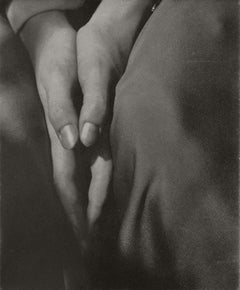
Alfred Stieglitz, Hands, Dorothy Norman, 1947 (after)
Located in Southampton, NY
This exquisite halftone print after Alfred Stieglitz (1864–1946), titled Hands, Dorothy Norman, originates from the 1947 folio Stieglitz Memorial Portfolio, 1864–1946. Published by T...
Category
American Modern 1940s Art
Materials
Offset
$716 Sale Price
20% Off
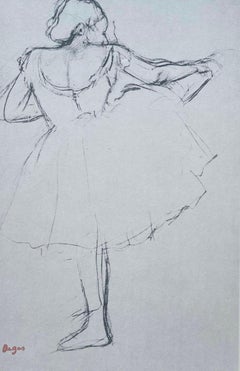
Edgar Degas, Dancer at the Barre, 1945 (after)
By Edgar Degas
Located in Southampton, NY
This exquisite lithograph after Edgar Degas (1834–1917), titled Danseur au bar (Dancer at the Barre), originates from the 1945 folio Degas, Ten Ballet Sketches. Published by The Studio Publications, Inc., New York, rendered and printed by Albert Carman, City Island, 1945, this work reflects Degas’s sensitive mastery of line, movement, and intimate observation, capturing the grace, poise, and psychological immediacy that define his iconic ballet imagery. In Danseur au bar (Dancer at the Barre), Degas reveals gesture and inner emotion through economical contour and lyrical nuance.
Executed as a lithograph and pochoir on velin paper, this work measures 17 x 13 inches (43.18 x 33.02 cm). Signed in the plate and unnumbered as issued. Rendered and printed by Albert Carman, City Island, one of the notable American ateliers specializing in fine art lithography during the mid-20th century.
Artwork Details:
Artist: After Edgar Degas (1834–1917)
Title: Danseur au bar (Dancer at the Barre), from Degas, Ten Ballet Sketches, 1945
Medium: Lithograph and pochoir on velin paper
Dimensions: 17 x 13 inches (43.18 x 33.02 cm)
Inscription: Signed in the plate and unnumbered as issued
Date: 1945
Publisher: The Studio Publications, Inc., New York
Printer: Albert Carman, City Island, 1945
Condition: Well preserved, consistent with age and medium
Provenance: From the 1945 folio Degas, Ten Ballet Sketches, published by The Studio Publications, Inc., New York
Notes:
Excerpted from the album, Born in Paris in 1834, Edgar Degas lived, and surely loved the life of that city during most of his years. These continued somewhat sadly beyond those of most of his friends— into the debacle of the first World War, during which he died in 1917. Judging by the frequency with which he used them as models, he must have had an especial admiration for the ballet girls who followed a profession that at the time brought none of the glory and prosperity which attend it today. New aspects of the human body, revealed in movement, fascinated him. But his occupation with the simply anatomical side of his subjects never resulted in a cold interpretation. On the contrary there is a warmth and sympathy that pervades all of his work. The drawings here represent the painter in one important phase of his multi-sensitive view of life; and permit an insight which a more ambitious work might not do-into the operation of the creative process, the artist's transformation of reality as it passes through the mesh of his sensibilities. The Edition of this Portfolio is limited to MMMD examples. Rendered by Albert Carman.
About the Publication:
Degas, Ten Ballet Sketches, published in 1945 by The Studio Publications, Inc., New York, stands as one of the most elegant and scholarly mid-century American fine art folios devoted to the ballet imagery of Edgar Degas. Conceived as a high-quality interpretive portfolio, the album presents a series of lithograph-and-pochoir renderings based on Degas’s original drawings, executed with exceptional attention to tonal subtlety, contour fidelity, and the emotional interiority that defines the artist’s draftsmanship. Rendered and printed by Albert Carman on City Island, the publication embodies an American postwar effort to restore and celebrate European masterworks through meticulous handcraft and artisanal color application, honoring Degas’s distinctive line and the atmospheric delicacy of his studio-based studies. Produced in a substantial edition of MMMD examples, the portfolio offered audiences rare access to Degas’s private working drawings—images rarely seen outside institutional collections—while exemplifying the technical refinement and interpretive care characteristic of Carman’s workshop. Today, Degas, Ten Ballet Sketches remains a sought-after historical publication, valued for its craft, fidelity to Degas’s aesthetic, and its role in preserving and disseminating the artist’s intimate ballet imagery in a beautifully executed mid-century fine art format.
About the Artist:
Edgar Degas (1834–1917) was a French painter, draughtsman, printmaker, and sculptor whose groundbreaking fusion of classical draftsmanship, modern experimentation, and psychological depth helped define the trajectory of Western art, positioning him as one of the most influential figures of the nineteenth and early twentieth centuries; renowned for his depictions of ballet dancers, racehorses, theater scenes, cafe life, domestic interiors, milliners, laundresses, and women at their toilette, Degas reimagined observational realism through radical compositional innovation—employing extreme cropping, asymmetrical framing, oblique viewpoints, and dramatic lighting that anticipated photographic and cinematic language long before these technologies shaped visual culture, and although associated with Impressionism, he rejected plein-air spontaneity in favor of studio-based discipline rooted in the linear precision of Jean-Auguste-Dominique Ingres, the expressive chromaticism of Eugene Delacroix, and the modernity of Edouard Manet while also drawing inspiration from Japanese ukiyo-e prints, classical sculpture, and early photography; his independent artistic philosophy resonated with and helped shape the innovations of Pablo Picasso, Alexander Calder, Alberto Giacometti, Salvador Dali, Joan Miro, Wassily Kandinsky, Marcel Duchamp, and Man Ray, whose explorations of movement, form, dream logic, abstraction, and conceptualism all find antecedents in Degas’s investigations into seriality, temporality, and the fragmented figure, and his pioneering use of pastel, monotype, and wax sculpture fundamentally transformed each medium, influencing artists from Henri Matisse, Francis Bacon, Lucian Freud, and Giacomo Manzu to Paula Rego, contemporary realists, experimental photographers, and choreographers; his works are held in nearly every major museum collection worldwide—including the Musee dOrsay, the Louvre, the Metropolitan Museum of Art, the National Gallery of Art, the Art Institute of Chicago, the Courtauld Institute, and the National Gallery, London—affirming his central place in the history of art, and the highest auction record for Degas was achieved at Sothebys London on February 3, 2015, when Danseuses en Bleu sold for 37,033,000 GBP, cementing his status as one of the most sought-after and enduringly significant artists of the Western canon.
Edgar Degas lithograph...
Category
Impressionist 1940s Art
Materials
Lithograph
$796 Sale Price
20% Off
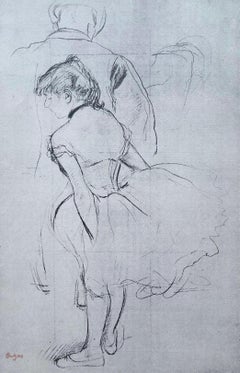
Edgar Degas, Dancer Arranging Her Dress, 1945 (after)
By Edgar Degas
Located in Southampton, NY
This exquisite lithograph after Edgar Degas (1834–1917), titled Danseuse arrangeant sa robe (Dancer Arranging Her Dress), originates from the 1945 folio Degas, Ten Ballet Sketches. Published by The Studio Publications, Inc., New York, rendered and printed by Albert Carman, City Island, 1945, this work reflects Degas’s sensitive mastery of line, movement, and intimate observation, capturing the grace, poise, and psychological immediacy that define his iconic ballet imagery. In Danseuse arrangeant sa robe (Dancer Arranging Her Dress), Degas reveals gesture and inner emotion through economical contour and lyrical nuance.
Executed as a lithograph and pochoir on velin paper, this work measures 17 x 13 inches (43.18 x 33.02 cm). Signed in the plate and unnumbered as issued. Rendered and printed by Albert Carman, City Island, one of the notable American ateliers specializing in fine art lithography during the mid-20th century.
Artwork Details:
Artist: After Edgar Degas (1834–1917)
Title: Danseuse arrangeant sa robe (Dancer Arranging Her Dress), from Degas, Ten Ballet Sketches, 1945
Medium: Lithograph and pochoir on velin paper
Dimensions: 17 x 13 inches (43.18 x 33.02 cm)
Inscription: Signed in the plate and unnumbered as issued
Date: 1945
Publisher: The Studio Publications, Inc., New York
Printer: Albert Carman, City Island, 1945
Condition: Well preserved, consistent with age and medium
Provenance: From the 1945 folio Degas, Ten Ballet Sketches, published by The Studio Publications, Inc., New York
Notes:
Excerpted from the album, Born in Paris in 1834, Edgar Degas lived, and surely loved the life of that city during most of his years. These continued somewhat sadly beyond those of most of his friends— into the debacle of the first World War, during which he died in 1917. Judging by the frequency with which he used them as models, he must have had an especial admiration for the ballet girls who followed a profession that at the time brought none of the glory and prosperity which attend it today. New aspects of the human body, revealed in movement, fascinated him. But his occupation with the simply anatomical side of his subjects never resulted in a cold interpretation. On the contrary there is a warmth and sympathy that pervades all of his work. The drawings here represent the painter in one important phase of his multi-sensitive view of life; and permit an insight which a more ambitious work might not do-into the operation of the creative process, the artist's transformation of reality as it passes through the mesh of his sensibilities. The Edition of this Portfolio is limited to MMMD examples. Rendered by Albert Carman.
About the Publication:
Degas, Ten Ballet Sketches, published in 1945 by The Studio Publications, Inc., New York, stands as one of the most elegant and scholarly mid-century American fine art folios devoted to the ballet imagery of Edgar Degas. Conceived as a high-quality interpretive portfolio, the album presents a series of lithograph-and-pochoir renderings based on Degas’s original drawings, executed with exceptional attention to tonal subtlety, contour fidelity, and the emotional interiority that defines the artist’s draftsmanship. Rendered and printed by Albert Carman on City Island, the publication embodies an American postwar effort to restore and celebrate European masterworks through meticulous handcraft and artisanal color application, honoring Degas’s distinctive line and the atmospheric delicacy of his studio-based studies. Produced in a substantial edition of MMMD examples, the portfolio offered audiences rare access to Degas’s private working drawings—images rarely seen outside institutional collections—while exemplifying the technical refinement and interpretive care characteristic of Carman’s workshop. Today, Degas, Ten Ballet Sketches remains a sought-after historical publication, valued for its craft, fidelity to Degas’s aesthetic, and its role in preserving and disseminating the artist’s intimate ballet imagery in a beautifully executed mid-century fine art format.
About the Artist:
Edgar Degas (1834–1917) was a French painter, draughtsman, printmaker, and sculptor whose groundbreaking fusion of classical draftsmanship, modern experimentation, and psychological depth helped define the trajectory of Western art, positioning him as one of the most influential figures of the nineteenth and early twentieth centuries; renowned for his depictions of ballet dancers, racehorses, theater scenes, cafe life, domestic interiors, milliners, laundresses, and women at their toilette, Degas reimagined observational realism through radical compositional innovation—employing extreme cropping, asymmetrical framing, oblique viewpoints, and dramatic lighting that anticipated photographic and cinematic language long before these technologies shaped visual culture, and although associated with Impressionism, he rejected plein-air spontaneity in favor of studio-based discipline rooted in the linear precision of Jean-Auguste-Dominique Ingres, the expressive chromaticism of Eugene Delacroix, and the modernity of Edouard Manet while also drawing inspiration from Japanese ukiyo-e prints, classical sculpture, and early photography; his independent artistic philosophy resonated with and helped shape the innovations of Pablo Picasso, Alexander Calder, Alberto Giacometti, Salvador Dali, Joan Miro, Wassily Kandinsky, Marcel Duchamp, and Man Ray, whose explorations of movement, form, dream logic, abstraction, and conceptualism all find antecedents in Degas’s investigations into seriality, temporality, and the fragmented figure, and his pioneering use of pastel, monotype, and wax sculpture fundamentally transformed each medium, influencing artists from Henri Matisse, Francis Bacon, Lucian Freud, and Giacomo Manzu to Paula Rego, contemporary realists, experimental photographers, and choreographers; his works are held in nearly every major museum collection worldwide—including the Musee dOrsay, the Louvre, the Metropolitan Museum of Art, the National Gallery of Art, the Art Institute of Chicago, the Courtauld Institute, and the National Gallery, London—affirming his central place in the history of art, and the highest auction record for Degas was achieved at Sothebys London on February 3, 2015, when Danseuses en Bleu sold for 37,033,000 GBP, cementing his status as one of the most sought-after and enduringly significant artists of the Western canon.
Edgar Degas lithograph...
Category
Impressionist 1940s Art
Materials
Lithograph
$796 Sale Price
20% Off
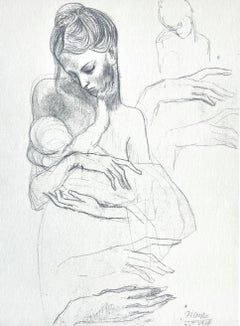
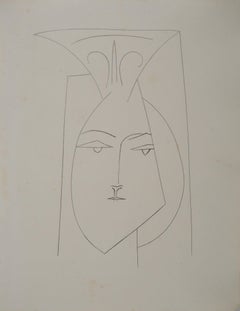
Pablo Picasso, Mother and Child, from Fifteen Drawings, 1946 (after)
Located in Southampton, NY
This exquisite lithograph and pochoir after Pablo Picasso (1881–1973), titled Mother and Child, from the folio Picasso, Fifteen Drawings, 1946, originates from the 1946 edition published by Pantheon Books, Inc., New York, and rendered and printed by Albert Carman, City Island, New York, 1946. Mother and Child conveys Picassos timeless exploration of tenderness, intimacy, and the human bond, distilling the universal theme of maternal love through graceful line and lyrical composition. With rhythmic simplicity and emotional clarity, the work captures the purity of affection and the quiet strength of motherhood—an enduring motif throughout Picassos artistic life.
Executed as a lithograph and pochoir on velin paper, this work measures 18.75 x 12.63 inches. Signed in the plate and unnumbered as issued. The edition exemplifies the exemplary standards and artistic integrity of the fine art publishing and printmaking of Pantheon Books, Inc., and Albert Carman whose next collaborative project following this edition was with Marc Chagall in the creation of his monumental suite, Four Tales from the Arabian Nights in 1948.
Artwork Details:
Artist: After Pablo Picasso (1881–1973)
Title: Mother and Child, from the folio Picasso, Fifteen Drawings, 1946
Medium: Lithograph and pochoir on velin paper
Dimensions: 18.75 x 12.63 inches (47.6 x 32.1 cm)
Inscription: Signed in the plate and unnumbered as issued
Date: 1946
Edition: D, primary edition; L, out of commerce, hand signed by Pablo Picasso
Publisher: Pantheon Books, Inc., New York
Printer: Albert Carman, City Island, New York
Catalogue raisonne reference: Orozco, Miguel. Picasso Interpretation Prints II - Etchings, Pochoirs
Woodcuts. Catalogue Raisonne. 2023, illustration 388–402
Condition: Well preserved, consistent with age and medium
Provenance: From the folio Picasso, Fifteen Drawings, 1946, published by Pantheon Books, Inc., New York; printed by Albert Carman, City Island, New York, 1946
About the Publication:
Picasso, Fifteen Drawings (1946) was one of the earliest fine art portfolios issued in the United States to feature the work of Pablo Picasso in the mediums of lithography and pochoir. Published by Pantheon Books, Inc., New York—a press renowned for its pioneering role in introducing European modernism to American audiences—the portfolio marked an important cultural bridge between postwar Paris and the emerging art scene in New York. The suite comprised fifteen images selected from Picassos prolific oeuvre, including depictions of mythological figures, musicians, and introspective portraits. Each work was rendered using a combination of lithography and pochoir, printed by Albert Carman at his atelier in City Island, New York, whose craftsmanship ensured a remarkable fidelity to the tonal and chromatic nuances of Picassos originals. The portfolio was produced in an edition of D, primary edition; L, out of commerce, hand signed by Pablo Picasso, issued unbound within a printed paper folder, and distributed primarily through Pantheons art book division under the direction of Kurt Wolff and Monroe Wheeler—key figures in shaping the intellectual reception of modern art in the United States. Picasso, Fifteen Drawings helped establish the artists postwar reputation among American collectors, scholars, and institutions, introducing a generation of viewers to the expressive immediacy and psychological depth of his draftsmanship. The publication also exemplified Pantheons broader mission to make modern European art accessible to an American audience, alongside their landmark editions devoted to Henri Matisse, Georges Rouault, and Marc Chagall. Technically refined and historically significant, the portfolio stands as a testament to the transatlantic exchange of modernist aesthetics during the mid-20th century and remains one of the most sought-after Picasso print editions issued in the United States before 1950.
About the Artist:
Pablo Picasso (1881–1973) was a Spanish painter, sculptor, printmaker, and ceramicist whose extraordinary vision revolutionized modern art and defined the visual language of the 20th century. A child prodigy from Malaga, Spain, Picassos career spanned more than seven decades and encompassed an astonishing range of styles and innovations—from the melancholic Blue and romantic Rose periods to his pioneering invention of Cubism with Georges Braque, which shattered conventional notions of perspective and form. Influenced by the bold expressiveness of El Greco, the structure of Cezanne, and the vitality of African and Iberian sculpture, Picasso became a central figure of the Paris avant-garde, working in creative dialogue with contemporaries such as Henri Matisse, Alexander Calder, Alberto Giacometti, Salvador Dali, Joan Miro, Wassily Kandinsky, Marcel Duchamp, and Man Ray. His insatiable experimentation extended across painting, drawing, printmaking, ceramics, and sculpture, forever expanding the boundaries of artistic expression. A master of reinvention, Picasso profoundly shaped generations of artists who followed—from Andy Warhol, Roy Lichtenstein, David Hockney, and Jean-Michel Basquiat to Jeff Koons and Banksy—cementing his status as a timeless cultural icon whose works remain among the most sought after worldwide. His landmark painting Les Femmes d'Alger (Version O) achieved a record-breaking sale of 179,365,000 USD at Christie's, New York, on May 11, 2015, affirming Picassos enduring legacy as one of the most influential and valuable artists in history.
Pablo Picasso Mother and Child...
Category
Modern 1940s Art
Materials
Lithograph, Stencil
$3,996 Sale Price
20% Off
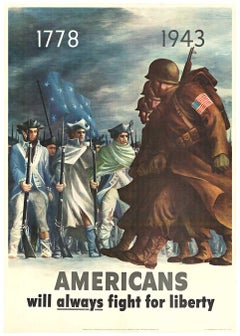
Original Americans will Always Fight for Liberty vintage WWII (1943) poster
Located in Spokane, WA
Title: Original 1943 WWII Propaganda Poster - "Americans Will Always Fight for Liberty" - Authentic U.S. Government Issue. Archival linen-backed with the original US Government-issue...
Category
American Modern 1940s Art
Materials
Offset
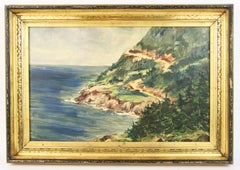
Antique California Coastal Seascape Landscape Painting circa 1940
Located in Douglas Manor, NY
#5-2751 California seascape oil on masonite displayed in an 19 century antique gitl -black wood frame,signed lower left by Mellin.
Image size 11 H x 17 W
Category
1940s Art
Materials
Oil
$450 Sale Price
53% Off
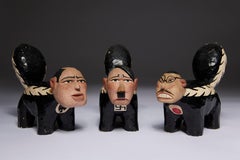
The Three Skunks of WWII, Carved Wooden Figures of Hitler, Mussolini
Tojo
Located in Beachwood, OH
Three Skunks of WWII
c. 1940s
Carved and painted wood
Unsigned
8 x 10 in. h. each
These skunks are depicted as Adolf Hitler, Benito Mussolini, and Hideki Tojo.
Condition: There ...
Category
1940s Art
Materials
Wood, Paint
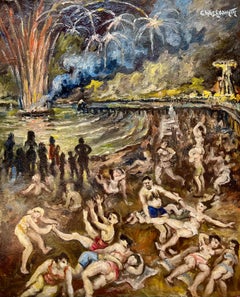
Coney Island, Fourth of July
Located in Los Angeles, CA
Coney Island, Fourth of July, c. 1940s, oil on canvas applied to Masonite, signed upper right, 26 x 21 1/2 inches, presented in its original frame
During the 1930s and 40s, Coney I...
Category
American Modern 1940s Art
Materials
Canvas, Oil, Board
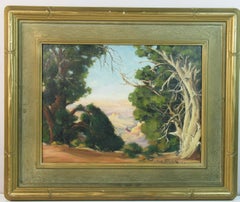
Antique American Realist Framed Summer Lake Landscape by Horlstone Fairchild
Located in Douglas Manor, NY
6040 Antique American realist landscape Impressionist landscape .Set in a period frame. Signed Horlstone Fairchild 1947. Ready to hang and enjoy,
Image size 11.5x15/5"
Category
1940s Art
Materials
Oil
$375 Sale Price
50% Off
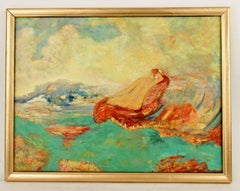
Venus on the Water
Located in Douglas Manor, NY
5-2738a Oil on artist board
Displayed in a vintage gilt wood frame
Image size 11x15"
Category
1940s Art
Materials
Oil
$279 Sale Price
38% Off
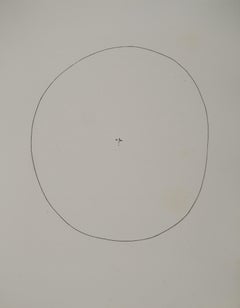
Carmen, The Small Moon - Original Etching (Cramer #52)
Located in Paris, IDF
Pablo PICASSO
Carmen, The Small Moon, 1949
Original burin engraving (Atelier Lacourière, Paris)
Unsigned
On Montval wove paper 33 x 26 cm (12.9 x 10.2 in)
REFERENCES :
- Catalog ra...
Category
Modern 1940s Art
Materials
Etching
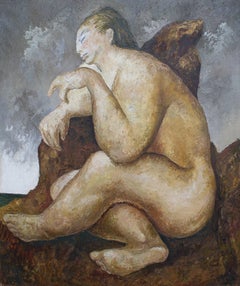
Sentada Desnuda, Surreal Painting of a Seated Nude Woman, Mexican Artist
Located in Beachwood, OH
Guillermo Meza (Mexican, 1917-1997)
Sentada Desnuda, 1941
Oil on canvas
Signed and dated lower right
23.5 in. h. x 19.5 in. w.
31 in. h. x 27 in. w., as framed
He was born in México...
Category
Surrealist 1940s Art
Materials
Oil
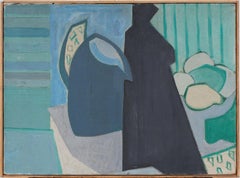
Vintage American Modernist Interior Still Life Cubist Framed Oil Painting
Located in Buffalo, NY
Vintage American modernist still life oil painting. Oil on canvas. Framed. Handsomely framed in modernist wood molding. Excellent condition, ready to hang and enjoy.
Category
Cubist 1940s Art
Materials
Canvas, Oil
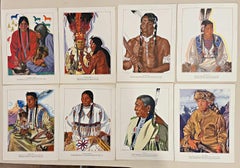
Blackfeet Indians, Great Northern Railway 14 prints
By Winold Reiss
Located in Spokane, WA
A group of 14 Blackfeet Indians prints created by the artist Winold Reiss. The Great Northern Railway printed and released these prints in c. 1940. This is for the entire group...
Category
American Realist 1940s Art
Materials
Lithograph
$576 Sale Price
20% Off
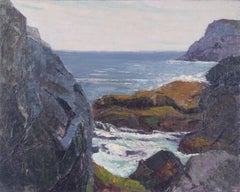
Rocky Inlet, Monhegan, Maine
Located in Fairlawn, OH
Rocky Inlet, Monhegan, Maine
Oil on canvas mounted on phenolic resin, c. 1940
Unsigned
Signed with the estate stamp on the reverse (see photo)
Condition: Excellent, recently cleaned ...
Category
American Impressionist 1940s Art
Materials
Oil
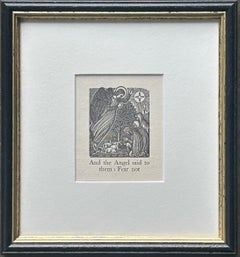
‘And the Angel Said: Fear not’
Located in Bournemouth, Dorset
David Jones (1895-1974)
‘And the Angel Said: Fear not’
Woodcut
Image: 9.0 x 5.5 cm
Frame: 21.0 x 19.5 cm
David Jones CH, CBE (1 November 1895 – 28 October 1974) was a Welsh paint...
Category
1940s Art
Materials
Woodcut
$273 Sale Price
20% Off
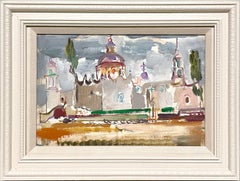
Early Mexican City Scene by Chicago Artist Francis Chapin, San Miguel de Allende
Located in Chicago, IL
A charming, vibrant, early Mexican city street scene by famed Chicago Modern artist Francis Chapin (Am. 1899-1965). Depicting a quiet, picturesque view of the rooftops and cathedral...
Category
American Modern 1940s Art
Materials
Masonite, Oil
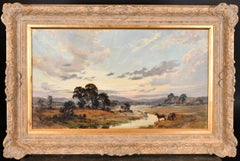
Sunset on the Cheshire Plain - Large Impressionist Horses in Landscape Painting
Located in Sevenoaks, GB
A beautiful large signed and dated 1943 English impressionsit oil on board depicting horses in a landscape at sunset, by William Ongley Miller.
Excellent quality and condition atmos...
Category
Impressionist 1940s Art
Materials
Oil
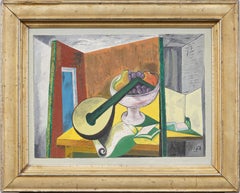
Vintage American Cubist Still Life Signed Giltwood Framed Interior Oil Painting
Located in Buffalo, NY
Vintage American modernist still life oil painting. Oil on board. Framed. Measuring: 16 by 20 inches overall, and 11.5 by 15.75 painting alone. Handsomely framed in wide giltwood mo...
Category
Cubist 1940s Art
Materials
Oil, Board
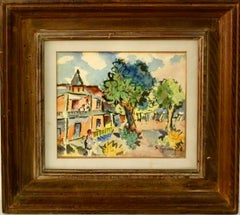
1940
s Americana WPA Modernist Watercolor Painting Catskill Mountains Bungalow
Located in Surfside, FL
Bungalow (fauvist painting of New York scene) 1940's.
image is 10X 11.5 inches. Hand signed lower right
Watercolor painting on paper board
Country Scene
Samuel Grunvald was a Hunga...
Category
Modern 1940s Art
Materials
Watercolor, Paper, Board
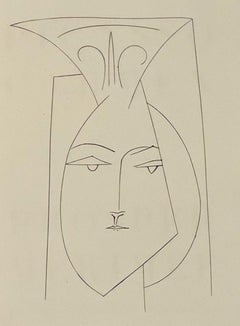
Head of a Woman with Mantilla (Plate I), from Carmen
Located in Washington, DC
Artist: Pablo Picasso
Title: Head of a Woman with Mantilla (Plate I)
Portfolio: Carmen
Medium: Original etching on Montval wove paper
Year: 1949
Edition: 289
Frame Size: 21" x 18"
Sh...
Category
Cubist 1940s Art
Materials
Etching
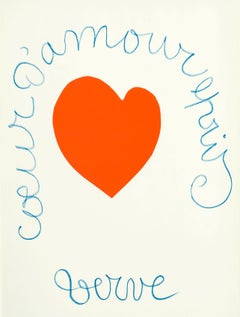
Henri Matisse, Heart of Love Taken, from Verve, Revue Artistique, 1949
Located in Southampton, NY
This exquisite lithograph by Henri Matisse (1869–1954), titled Coeur d’amour epris (Heart of Love Taken), from Verve, Revue Artistique et Litteraire, Vol. VI, No. 23, originates from...
Category
Fauvist 1940s Art
Materials
Lithograph
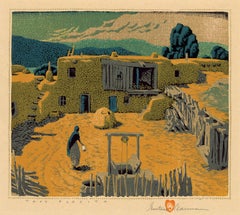
Taos Placita
— American Southwest Regionalist Masterwork
Located in Myrtle Beach, SC
Gustave Baumann, 'Taos Placita', color woodcut, 1947, edition 125. Baumann 132. Signed, titled, and numbered '20-125' in pencil; with the artist’s Hand-in-Heart chop. A superb, richly-inked impression, with fresh colors, on fibrous oatmeal wove paper; the full sheet with margins (2 to 3 1/8 inches); slight rippling at the left sheet edge, in excellent condition. Matted to museum standards, unframed.
Image size 9 5/8 x 11 1/4 inches (244 x 286 mm); sheet size 13 1/4 x 17 inches (337 x 432 mm).
Collections: Harwood Museum of Art, New Mexico Museum of Art, Phoenix Art Museum, Scottsdale Art Museum, Wichita Art Museum.
ABOUT THE ARTIST
Gustave Baumann (1881-1971) was a renowned printmaker and a leading figure of the American color woodcut revival whose exquisite craftsmanship and vibrant imagery captured the essence of the Southwest.
"A brilliant printmaker, Baumann brought to the medium a full mastery of the craft of woodworking that he acquired from his father, a German cabinetmaker. This craftsmanship was coupled with a strong artistic training that resulted in the handsome objects we see in the exhibition today. After discovering New Mexico in 1918, Baumann began to explore in his woodblock prints of this period the light. color, and architectural forms of that landscape. His prints of this period are among the most beautiful and poetic images of the American West."
—Lewis I. Sharp, Director, Denver Art Museum
Baumann, the son of a craftsman, immigrated to the United States from Germany with his family when he was ten, settling in Chicago. From 1897 to 1904, he studied in the evenings at the Art Institute of Chicago, working in a commercial printmaking shop during the day. In 1905, he returned to Germany to attend the Kunstwerbe Schule in Munich, where he decided on a career in printmaking. He returned to Chicago in 1906 and worked for a few years as a graphic designer of labels.
Baumann made his first prints in 1909 and exhibited them at the Art Institute of Chicago the following year. In 1910, he moved to the artists’ colony in Nashville, Indiana, where he explored the creative and commercial possibilities of a career as a printmaker. In 1915, he exhibited his color woodcuts at the Panama-Pacific International Exposition in San Francisco, winning the gold medal.
Among Baumann’s ongoing commercial activities was his work for the Packard Motor Car Company from 1914 to 1920 where he produced designs, illustrations, and color woodcuts until 1923.
In 1919, Baumann’s printmaking work dominated the important exhibition of American color woodcuts at the Detroit Institute of Arts. Twenty-six of his prints were included, far more than the works of any other artist. A set of his blocks, a preparatory drawing, and seven progressive proofs complemented the exhibition. That same year, Baumann worked in New York and, over the summer, in Provincetown, Massachusetts. His airy images of Cape Cod employed soft, pastel colors and occasionally showed the influence of the white-line woodcut technique.
Many of his Chicago artist friends had traveled to the southwest, and Baumann became intrigued by their paintings, souvenirs, and stories of an exotic place named Taos, New Mexico. In the summer of 1918, he spent the summer in Taos sketching and painting before visiting Santa Fe. Paul Walter, the director of the Museum of New Mexico, offered him a studio in the museum's basement. Inspired by the rugged beauty of the Southwest—the vibrant colors and dramatic landscapes of the region became a central theme in his work, influencing his artistic style and subject matter for the remainder of his career. Later in the decade, he traveled to the West Coast and made prints of California landscape.
Baumann's prints became synonymous with the Southwest, capturing the spirit of its place in America's identity with a unique sense of authenticity and reverence. His iconic images of desert vistas, pueblo villages, and indigenous cultures served as visual tributes to the region's rich cultural heritage, earning him a dedicated following among collectors and curators alike.
A true craftsman and artist, Baumann completed every step of the printmaking process himself, cutting each block, mixing the inks, and printing every impression on the handmade paper he selected. His dedication to true craftsmanship and his commitment to preserving the integrity of his artistic vision earned him widespread acclaim and recognition within the art world. About the vibrant colors he produced, Baumann stated, “A knowledge of color needs to be acquired since they don’t all behave the same way when ground or mixed...careful chemistry goes into the making of colors, with meticulous testing for permanence. While complicated formulae evolve new colors, those derived from Earth and metal bases are still the most reliable.”
In the 1930s, Baumann became interested in puppet theater. He designed and carved his own marionettes and established a little traveling company. From 1943 to 1945, the artist carved an altarpiece for the Episcopal Church of the Holy Faith in Santa Fe. In 1952, a retrospective exhibition of his prints was mounted at the New Mexico Museum of Fine Arts. Throughout his prolific career, Baumann executed nearly four hundred color woodcuts.
Baumann’s woodcuts...
Category
American Modern 1940s Art
Materials
Woodcut
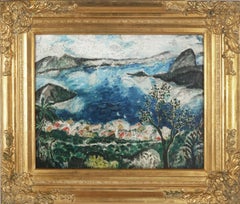
1940s Signed German Impressionist Oil of Rio de Janeiro in Style of Max Slevogt
Located in Soquel, CA
German Impressionist Painting of Rio de Janeiro's Guanabara Bay and Sugarloaf Mountain in style of Max Slevogt
This vivid landscape painting offers a panoramic view of Rio de Janeir...
Category
Blue Rider 1940s Art
Materials
Oil, Board
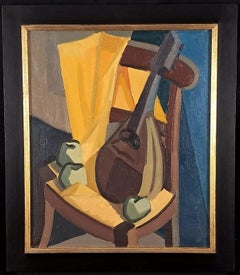
Still Life - Large Post Impressionist Belgian Guitar Interior Oil Painting
Located in Sevenoaks, GB
A beautiful post-impressionist interior still life oil on canvas depicting a guitair and fruits on a chair, by modern Belgian artist and sculptor Roger Duterme.
Ther work is signed ...
Category
Post-Impressionist 1940s Art
Materials
Canvas, Oil
Elwood W. Bartlett, Wisconsin Farm, about 1945, mid-century wood engraving
Located in New York, NY
Elwood Warren Bartlett is a Wisconsin native who also worked in Indiana.
Largely self taught as a printmaker, Bartlett worked in a style that once identified as his, immediately t...
Category
American Modern 1940s Art
Materials
Woodcut

Original Freedom from Want 1943 vintage poster. Thanksgiving
Located in Spokane, WA
Original vintage poster: FREEDOM FROM WANT, Ours to fight for ...
Original. Artist: Normal Rockwell. Archival linen backed in fine condition, ready to frame. Note: All US Go...
Category
American Realist 1940s Art
Materials
Offset

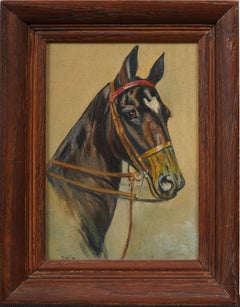
Antique American Realist Horse Portrait Framed Original Oil Painting
Located in Buffalo, NY
Antique American horse portrait oil painting. Oil on board. Signed verso. Framed. Measuring: 9 by 7 inches overall, and 7 by 5 painting alone. In excellent original condition. Hands...
Category
Realist 1940s Art
Materials
Oil, Board
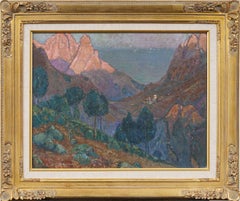
Vintage American School Western Seascape Fauvist Modern Framed Oil Painting
Located in Buffalo, NY
Vintage American school fauvist landscape oil painting. Oil on board. Framed. In excellent original condition. Handsomely framed in a giltwood molding. Excellent condition, read...
Category
Fauvist 1940s Art
Materials
Oil, Board
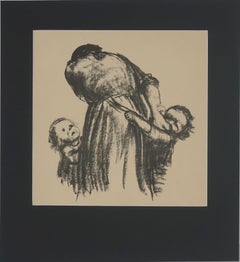
"Bread" lithograph by Käthe Kollwitz
Located in Soquel, CA
Bold lithograph titled "Bread" by Kathe Kollwitz (German, 1867-1945). This piece is one of the Lithographic reproductions of the original lithographs, plate 2 from a series of 10, pr...
Category
Expressionist 1940s Art
Materials
Paper, Ink, Lithograph
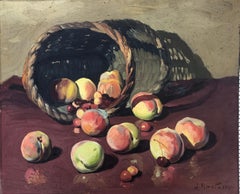
Still life of peaches and cherries oil on canvas painting
Located in Sitges, Barcelona
José Miret Aleu (1912-1999) - Still life of peaches and cherries - Oil on canvas
Oil measurements 50x61 cm.
Frameless.
Painter born in Barcelona in 1912. He studied drawing at the B...
Category
Impressionist 1940s Art
Materials
Oil, Canvas
$830 Sale Price
30% Off
Carmen, Cubist Face - Original Etching (Cramer #52)
Located in Paris, IDF
Pablo PICASSO
Carmen, Cubist Face , 1949
Original burin engraving (Atelier Lacourière, Paris)
Unsigned
On Montval wove paper 33 x 26 cm (12.9 x 10.2 in)
REFERENCES :
- Catalog rai...
Category
Modern 1940s Art
Materials
Etching
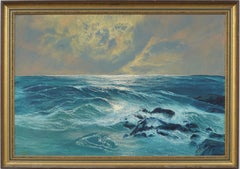
Antique American Large Impressionist Framed Surf Seascape Signed Oil Painting
Located in Buffalo, NY
Antique oil painting. Oil on canvas. Framed. Signed. Measuring: 29 by 40 inches overall, and 24 by 36 painting alone. In excellent original condition. Handsomely framed in a giltw...
Category
Impressionist 1940s Art
Materials
Canvas, Oil
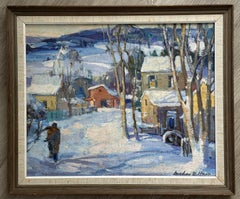
New England Winter
Located in Wilton Manors, FL
Gordon Ham (20th century)
New England Winter, ca. 1940.
Oil on unstretched canvas panel, 14 x 17 inches.
Measuring 17 x 20 inches framed.
Signed lower right.
Vertical cracking ...
Category
Abstract Impressionist 1940s Art
Materials
Oil
$1,350 Sale Price
25% Off
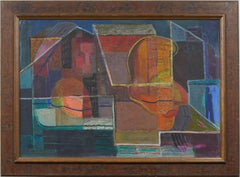
"Metropolitan Abstraction" Signed Mid Century Cubist Architectural Abstraction
Located in Buffalo, NY
Antique American abstract cubist street scene oil painting. Oil on board. Framed. Signed. Measuring: 31 by 42 inches overall, and 25 by 36 painting alone. In excellent original con...
Category
Modern 1940s Art
Materials
Oil, Board
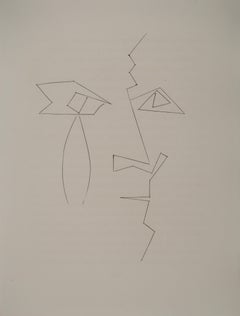
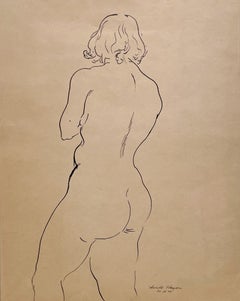
A Stunning, Finely Drawn 1940s Modern Female Figure Study, Standing Nude
Located in Chicago, IL
A Stunning, Finely Drawn 1940s Modern Female Nude Figure Study by Notable Chicago Artist, Harold Haydon (Am. 1909-1994). The drawing is ink on sepia toned paper and dates from 1946....
Category
American Modern 1940s Art
Materials
Paper, Ink
Chepstow Castle ( on a limestone cliff above the River Wye in Wales)
Located in New Orleans, LA
The magnificent printed works of the Yorkshire artist, Percival Gaskell have only been fully rediscovered in recent years. Percival Gaskell rose to prominence whilst working together with Sir Frank Short in the engraving school at the Royal College of Art in London during the first two decades of the 20th century. A true painter-printmaker, Percival Gaskell developed a sensitivity to atmospheric tone which is displayed in an air of timeless beauty throughout his printed works.
(sheet 24 x 20 1/2). A fine impression with tone printed in warm brown/black ink on chine appliqué mounted on white wove paper, and a backing board. Signed in pencil. Superb signed proof impression printed in warm-brownish-black ink. One of Gaskell's best large scale mezzotints.
The speed with which William the Conqueror committed to the creation of a castle at Chepstow is testament to its strategic importance. There is no evidence for a settlement there of any size before the Norman invasion of Wales, although it is possible that the castle site itself may have previously been a prehistoric or early...
Category
English School 1940s Art
Materials
Mezzotint, Etching

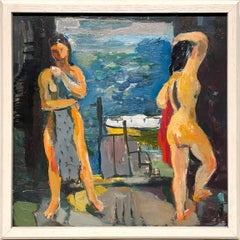
A Beautiful Modern Figure Painting, Two Bathers in a Boathouse by Francis Chapin
Located in Chicago, IL
A striking Modern figure painting of two bathers in a boathouse by noted Chicago Modern artist, Francis Chapin (Am. 1899-1965). Painted at the OxBow School of Saugatuck, Michigan (t...
Category
American Modern 1940s Art
Materials
Masonite, Oil
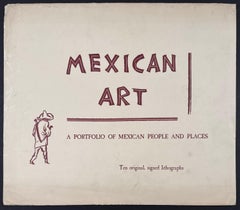
Mexican Art: A Portfolio of Mexican People and Places
Located in Palm Springs, CA
Ten lithographs in excellent condition, with portfolio cover. The ten artists included in the 1946 portfolio "Mexican Art: A Portfolio of Mexican People and Places" include: Ángel Bracho / Francisco Mora / Fernando Castro Pacheco / Raúl Anguiano / Alberto Beltrán...
Category
1940s Art
Materials
Lithograph
$3,500 Sale Price
22% Off
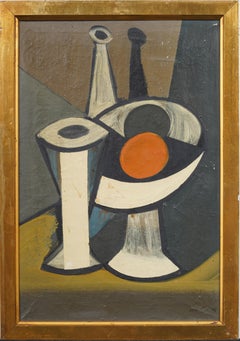
Antique Danish Modernist Abstract Signed
Framed Cubist Rare Oil Painting
Located in Buffalo, NY
Antique Danish modernist abstract cubist oil painting by Eugène Sala (1899 - 1987). Oil on canvas. Signed. Framed. Measuring: 19 by 13 inches overall. In excellent original conditi...
Category
Cubist 1940s Art
Materials
Oil, Board
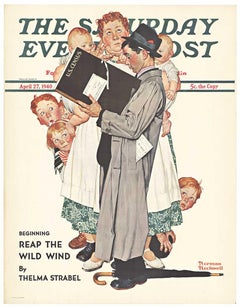
U. S. Census Saturday Evening Post original 1940 vintage poster
Located in Spokane, WA
Original poster: THE SAURDAY EVENING POST. Artist: Noman Rockwell. Size: 21.75" x 28". Archival linen backed in very fine condition. The painting for this original poster ...
Category
American Realist 1940s Art
Materials
Offset
$1,960 Sale Price
20% Off
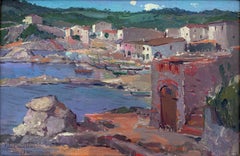
Costa Brava oil on canvas painting Spain mediterranean art
Located in Sitges, Barcelona
Title: Mediterranean Village, Catalonia
Artist: José María Vilà Cañellas (Vic, 1914 – Barcelona, 2001)
Date: 1941
Technique: Oil on canvas
Support: Canvas on stretcher
Dimensions (un...
Category
Impressionist 1940s Art
Materials
Canvas, Oil
$830 Sale Price
41% Off
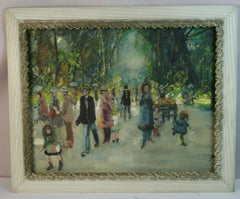
Parisians Strolling in The Park 1940
s
Located in Douglas Manor, NY
6069 Oil on canvas of Parisians strolling in the park set in a period frame
Image size 22.5x27.5"
Category
1940s Art
Materials
Oil
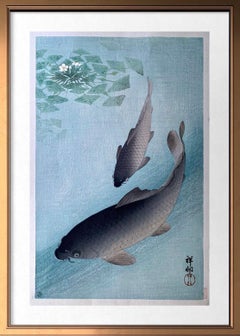
Authentic Life Time Edition Woodblock Print-Two Carps and Water Chestnut-Mint
By Ohara Koson
Located in London, GB
This is an authentic Japanese woodblock print by Ohara Koson (Shoson), titled Two (koi) Carp or Carp and Water Chestnut; originally created in the early 20th century, depicts two car...
Category
Edo 1940s Art
Materials
Ink, Washi Paper, Woodcut
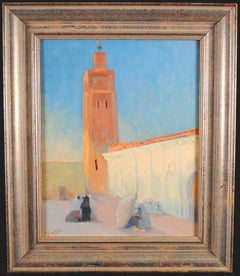
North African Town - Mid 20th Century French Orientalist Figures Oil Painting
Located in Sevenoaks, GB
A beautiful 1940's French oil on board by Rosette Chicotot depicting figures in a North African town, possibly Marrakech.
The work is signed lower left and presented in a silvered f...
Category
1940s Art
Materials
Oil
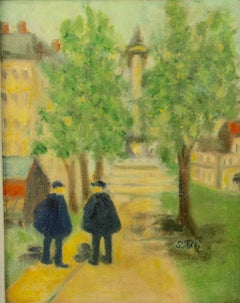
"Strolling In The Tuileries Gardens Paris"
Located in Douglas Manor, NY
5-3256a Figurative Landscape in the Tuileries gardens in Paris
Image size 7.5x9.5"
Set in a vintage wood and gesso frame
Category
1940s Art
Materials
Oil
$200 Sale Price
27% Off
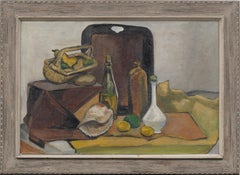
Large Antique American Modernist Still Life 1940s Nicely Framed Oil Painting
Located in Buffalo, NY
Antique American modernist interior still life oil painting. Oil on canvas. Framed. In excellent original condition. Handsomely framed in a modernt wood molding. Excellent cond...
Category
Modern 1940s Art
Materials
Oil, Canvas
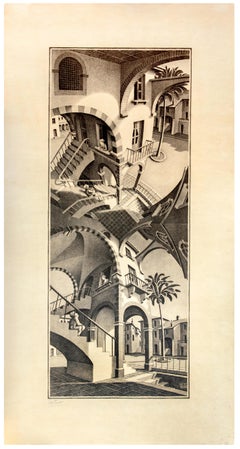
Up And Down - Lithograph by M.C. Escher - 1947
By M.C. Escher
Located in Roma, IT
Hand Signed.
Printed in black ink, and part of a limited edition thought to be of 400 specimen.
Image Dimensions : 51 x 20 cm
Reference: Bool n. 352 Locher 146.
Very good conditio...
Category
Modern 1940s Art
Materials
Lithograph
Carmen, Portrait of Woman - Original Etching (Cramer #52)
Located in Paris, IDF
Pablo PICASSO
Carmen, Portrait of a Woman, 1949
Original burin engraving (Atelier Lacourière, Paris)
Unsigned
On Montval wove paper 33 x 26 cm (12.9 x 10.2 in)
REFERENCES :
- Cata...
Category
Modern 1940s Art
Materials
Etching
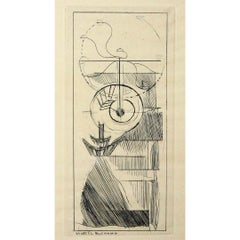
1947 original engraving by Marcel Duchamp - Coffee Mill
Located in PARIS, FR
This rare 1947 original engraving, Coffee Mill, by Marcel Duchamp is a profound example of his conceptual approach to mechanical imagery and Dada aesthetics. Signed by the artist and...
Category
1940s Art
Materials
Paper, Engraving
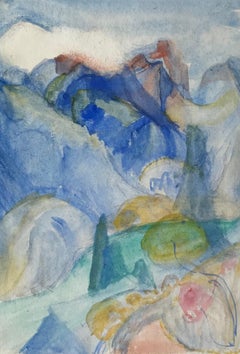
Swiss Mountain by Karl Speglitz - Watercolor 13x17 cm
Located in Geneva, CH
Work on paper
Dimension with pass
31.7 x 24 cm
Category
Expressionist 1940s Art
Materials
Watercolor
$136 Sale Price
20% Off
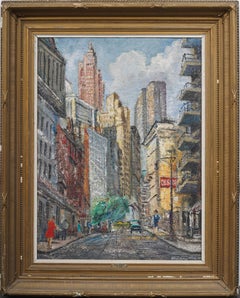
Antique American Modernist Large New York Cityscape Framed Street Scene Painting
Located in Buffalo, NY
Antique American modernist street scene painting. Oil on canvas. Signed. In excellent original condition. Handsomely framed in a late 19th century fluted cove giltwood molding. E...
Category
Modern 1940s Art
Materials
Canvas, Oil
Antique American Pacific Coast Maritime Village Seascape by M. Stiefel 1940
Located in Douglas Manor, NY
#5-3453 A marine village seascape painting,oil on artist board displayed in a wood frame.Signed lower left by M.Stiefel
Category
1940s Art
Materials
Oil