19th Century Art
to
2,173
12,838
3,829
2,262
1,180
1,137
Overall Width
to
Overall Height
to
7,607
21,284
162,218
233,200
1,981
2,257
4,928
6,460
5,739
15,015
20,477
25,762
18,495
13,842
5,391
6,668
983
837
149
78
76
54
49
24
3
3
1
10,601
9,667
164
13,364
6,282
4,422
3,230
3,092
2,754
1,838
1,584
1,144
1,133
1,083
1,022
1,020
991
958
882
799
696
634
582
8,232
5,775
5,756
3,164
2,619
309
169
148
127
110
7,151
7,711
11,934
5,580
Period: 19th Century
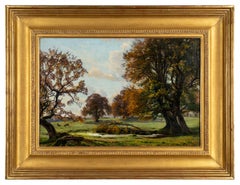
Deer in the Pasture
By Christian Zacho
Located in Sheffield, MA
Christian Zacho
Danish, 1843-1913
Deer in the Pasture
Oil on canvas
16 ½ by 24 ½ in, w/ frame 25 by 32 ¾ in
Signed lower right
Zacho studied at the Academy of Beaux- Arts in Copenh...
Category
Impressionist 19th Century Art
Materials
Canvas, Oil
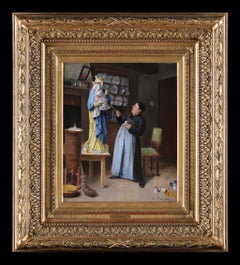
Cardinal Painting the Virgin Mary, Oil on Canvas, by Henri Brispot, 19th Century
Located in St. Albans, GB
This painting by Henri Brispot stands out amongst many pieces that he ever painted. It was sold in New York for $20 000 and is a wonderful example of his satirical nature shown throu...
Category
French School 19th Century Art
Materials
Oil
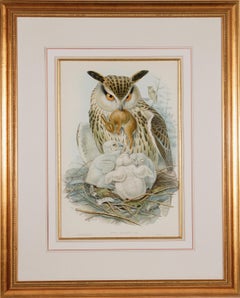
Eagle or Horned Owl: A Framed Original 19th C. Hand-colored Lithograph by Gould
Located in Alamo, CA
This is a framed original 19th century hand-colored folio-sized lithograph entitled “Bubo Maximus" (Great Horned or Eagle Owl) by John Gould, from the supplement to his "Birds of Great Britain", published in London between 1862 and 1873. The print depicts an adult Eagle Owl about to feed her brood of babies who are in the their nest. A another adult (possibly the male) is seen in the distant background in the upper right.
This striking framed Gould...
Category
Naturalistic 19th Century Art
Materials
Lithograph
Painting After 1890 Newsboy Tobacco “The Last Look” Tobacco Advertising Card
Located in Houston, TX
Late 19th century painting done after an 1890 Newsboy Plug Tobacco advertising card titled "The Last Look." At the time, a customer could trade in 10 paper tags that came with the to...
Category
Academic 19th Century Art
Materials
Oil
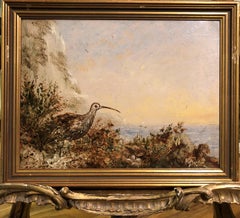
SMALL RARE OIL PAINTING ANTIQUE BIRD STUDY 19th Century Fine Quality Piece GGF
Located in Ferndown, GB
SMALL RARE OIL PAINTING Antique 19th Century Fine Quality Piece GGF
OLD MASTER OIL PAINTING BRITISH SCHOOL 19th Century in a Gold Frame
Descrip...
Category
Realist 19th Century Art
Materials
Oil
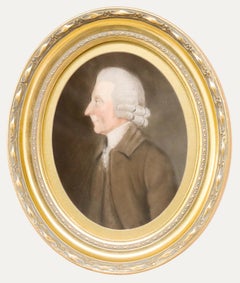
English School Early 19th Century Pastel - Gentleman in Profile
Located in Corsham, GB
A charming early 19th-century pastel study of a gentleman in a formal wig. Part of a pair of portraits depicting a man and woman in profile, the companion piece is also listed on our...
Category
19th Century Art
Materials
Pastel
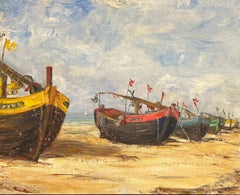
Colorful Fishing Boats on a Sandy Shore under a Cloudy Sky 1930
s French
Located in Cirencester, Gloucestershire
Fishing Boats Lined Along the Shore
Simone Forge 1930's French Impressionist
signed oil on board unframed
board: 13 x 16 inches
inscribed verso
Provenance: private collection
Condit...
Category
Impressionist 19th Century Art
Materials
Oil
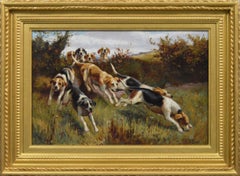
19th century sporting oil painting of hunting dogs going over a hedge
By Alfred Duke
Located in Nr Broadway, Worcestershire
Alfred Duke
British, (c1860-1905)
Over the Hedge
Oil on canvas, signed
Image size: 13.5 inches x 20.5 inches
Size including frame: 20.75 inches x 27.75 inches
An animated sporting...
Category
Victorian 19th Century Art
Materials
Canvas, Oil
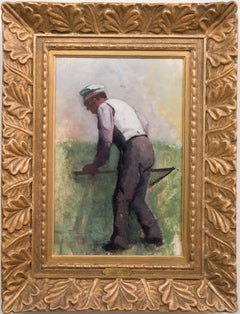
Harvest Scene With Farmer and Scythe, 1886
Located in Stockholm, SE
"Harvest Scene With Farmer and Scythe, 1886" is a captivating painting by the Swedish artist Alfred Thörne. Created during his travels through Germany, France, Italy, and Belgium bet...
Category
Romantic 19th Century Art
Materials
Canvas, Oil
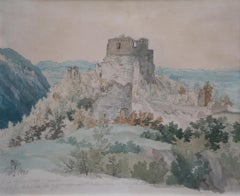
Ruins of the Imperial Castle Outside Split in Croatia
Located in Stockholm, SE
Gustaf Wilhelm Palm (1810–1890) Sweden
Ruins of the Imperial Castle Outside Split in Croatia
pencil and watercolour
unframed: 23.6 x 29.2 cm (9 1/4 x 11 1/2 in)
framed: 40 x 45 cm...
Category
Romantic 19th Century Art
Materials
Paper, Watercolor
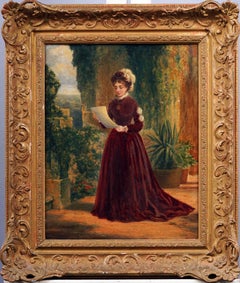
Antique English Realist Genre Scene Framed High Society Portrait Oil Painting
Located in Buffalo, NY
George Dunlop Leslie (1835 - 1921) Antique English realist oil painting. Oil on canvas. Signed. Framed. Measuring 17 by 20 overall and 12 by 15 paining alone.
Artist Bio:
George Dunlop Leslie RA (London 2 July 1835 – 21 February 1921 Lindfield, Sussex) was a British genre painter, author and illustrator. He was born into an artistic family; his father was the notable genre painter Charles Robert Leslie RA, and his uncle Robert Leslie was a marine artist. He studied art first at Cary's Art Academy, then from 1854 at the Royal Academy. His first exhibition at the Academy was in 1859, and he showed his work every year thereafter. He became an Associate (ARA) in 1868 and a full Royal Academician (RA) in 1876.George Dunlop Leslie lived early on in St John's Wood (London), and was part of the St John's Wood Clique, a group of artists who favoured light-hearted genre subjects. From 1884–1901 he was resident at "Riverside", St. Leonard's Lane, Wallingford, Oxfordshire. His sister Mary Leslie (1833–1907), also an artist, lived at "Cromwell Lodge" next door. Fellow artist, James Hayllar, was also a resident of the village and they painted a portrait of Queen Victoria together for her Golden Jubilee in 1887. From 1906 he lived at "Compton House" in Lindfield, SussexHis early works, such as Matilda (1860) showed the strong influence of the Pre-Raphaelites, but he settled into a more academic, aesthetic, style of painting with the aim of showing "pictures from the sunny side of English domestic life". He often used children as subjects and his work was praised by John Ruskin for its portrayal of the "sweet quality of English girlhood". One of his pictures, This is the Way we Wash our Clothes, was used as a poster in an advertising campaign for soap. Despite its apparently trivial subject matter, however, Leslie's work was highly regarded by critics of the time.In 1889 during his time at Riverside house in Wallingford Leslie is credited with painting four angel murals in St Leonards Church.Leslie was also an author and had several books published. Our river (1888), Letters to Marco (1893) and Riverside letters (1896) were all illustrated by him in black and white, and based on personal observations of life and nature in his local area. He also wrote a history of the early years of the Royal Academy - The inner life of the Royal Academy.Leslie was married to Lydia. They had a daughter Alice (depicted in his painting Alice in Wonderland) and a son Peter Leslie...
Category
Realist 19th Century Art
Materials
Canvas, Oil
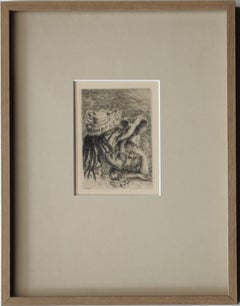
Pierre-Auguste Renoir -- Le chapeau épinglé - 3e planche
Located in BRUCE, ACT
Pierre-Auguste Renoir
Le chapeau épinglé - 3e planche (Delteil, Stella 8), circa 1894
Etching on laid paper.
Signed in the plate lower left.
From La Vie Artistique by Gustave Geffroy...
Category
19th Century Art
Materials
Etching
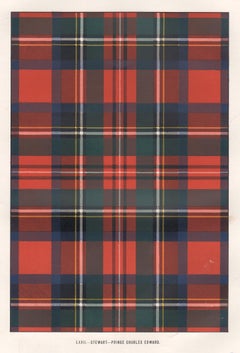
Stewart - Prince Charles Edward (Tartan), Scottish Scotland lithograph print
Located in Melbourne, Victoria
Stewart - Prince Charles Edward.
Chromolithograph. 1886. From 'The Tartans of the Clans of Scotland', by James Grant, 1886.
365mm by 265mm (sheet).
Accompanied by a sheet of de...
Category
Victorian 19th Century Art
Materials
Lithograph
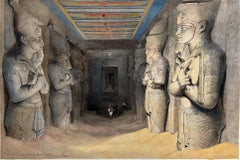
Interior of the Great Temple of Aboo Simbel - Orientalist - David Roberts
Located in London, GB
David Roberts R.A.
1796 - 1864
Interior of the Great Temple of Aboo Simbel
Subscription edition and First edition lithographs available
Full plate: 139
Acid free mount
With David ...
Category
Victorian 19th Century Art
Materials
Lithograph
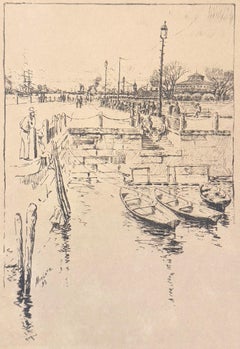
The Battery and Castle Garden
Located in Middletown, NY
Society of Iconophiles, 1898.
Lithograph on brown wove paper, 10 x 7 1/2 inches (253 x 190 mm), full margins. In good condition with some age tone and the lower left corner dog-eare...
Category
American Modern 19th Century Art
Materials
Lithograph
River Lune nr Lancaster - British 19thC Impressionist art landscape oil painting
Located in Hagley, England
A delightful oil painting on canvas by Newlyn listed artist Samuel Lamorna Birch. Painted circa 1895 it depicts The River Lune and a fisherman near Lancaster and it is a stunning example of early British Impressionism. One of the best early works by this artist, the colours are just beautiful, very vibrant and in gallery condition.
Signed lower right.
Provenance. Midlands collection.
Condition. Oil on canvas, 30 inches by 20 inches unframed and in excellent condition.
Housed in a fine period gallery frame which enhances the colours in the picture, 37 by 27 inches framed. In excellent condition.
Samuel John Lamorna Birch (1869-1955) the leading figure of the second flowering of the Newlyn School, Samuel John Birch was so smitten with the Lamorna valley...
Category
Impressionist 19th Century Art
Materials
Oil
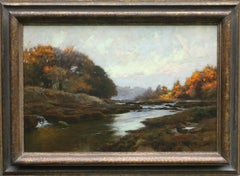
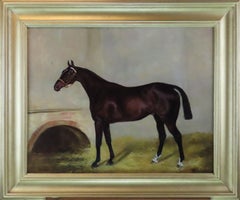
Original Oil on Canvas, Margaret Collyer. "Father O
Flynn"
Located in Mere, GB
Margaret Collyer, (1872 - 1945). A London painter of animal scenes, whether horse portraits or dramatic highland scenes such as her "Lord of the Isles". She exhibited at the Royal Ac...
Category
19th Century Art
Materials
Oil
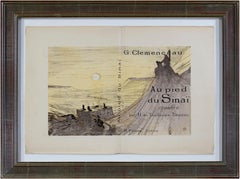
Toulouse Lautrec Original Lithograph Famous Political 1800s Collection Signed
Located in Milwaukee, WI
"Lautrec Book: From Au Pied du Sinai written by Georges Clemenceau" lithographs created by the legendary Henri de Toulouse-Lautrec. This book, Au Pied...
Category
Post-Impressionist 19th Century Art
Materials
Lithograph, Mulberry Paper
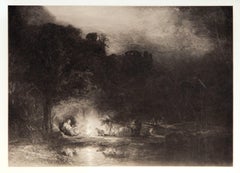
The Flight into Egypt, Photogravure by Rembrandt van Rijn
Located in Long Island City, NY
Rembrandt van Rijn, After by Bredius, Dutch (1606 - 1669) - The Flight into Egypt, Year: of Original:1627 Printed in: 1906, Medium: Photogravure, Size: 10 x 14 in. (25.4 x 35.56...
Category
Old Masters 19th Century Art
Materials
Etching
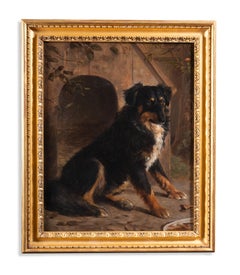
A sheepdog before a kennel
Located in Stoke, Hampshire
Walter Armiger Bowring (1874-1931)
A sheepdog before a kennel
signed and dated 'WALTER A. BOWRING/ 1898' (upper right)
Oil on canvas
Painting size 30 x 24 in
Framed size 36 x 30 in
...
Category
Victorian 19th Century Art
Materials
Oil
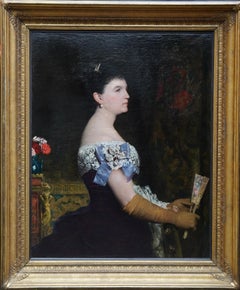
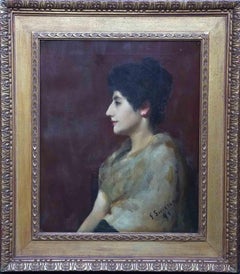
La Marquesa De Escombreras - French 19thC art female portrait oil painting
Located in Hagley, England
This superb French Victorian portrait oil painting is by noted French society painter Jules-Elie Delaunay. Painted in 1883 it is a three-quarter length profile portrait of the Marquesa de Escombreras. Her full name was Trinidad Maria Piedad Fulgenico de Aguirre. She was born in 1824 in Cartagena, Spain, the seventh and last child of Jose de Aguirre, a retired naval officer. On October 22nd 1843 she married Frenchman Hilarion Roux (1819-1898) who was a banker from Marseille who settled in Cartegena in January 1843. After her marriage she was known as Trinidad Roux. Hilarion Roux had arrived in Cartagena first to trade silver. He quickly became one of the main lead industrialists in Catagena then in the Mediterranean area. The couple later lived in France again, in Marseille and later in Paris, where Trinidad died in 1905 aged 81. Interestingly there is no similar portrait of her husband.
In this superb painting, the Marquesa, aged about 60 in reality, is wearing a black off the shoulder dress...
Category
Victorian 19th Century Art
Materials
Oil
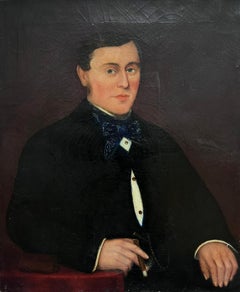
Portrait of Gentleman with Cigar Large 19th Century British Oil Painting
Located in Cirencester, Gloucestershire
Portrait of a Gentleman with a Cigar
English artist, mid 19th century
oil on canvas, unframed
canvas: 30 x 25 inches
provenance: private collection, England
condition: overall good a...
Category
Victorian 19th Century Art
Materials
Oil, Canvas

$1,911 Sale Price
20% Off
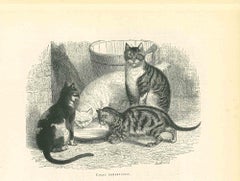
The Cats and Kitty - Lithograph by Paul Gervais - 1854
By Paul Gervais
Located in Roma, IT
The Cats and Kitty is an original lithograph on ivory-colored paper, realized by Paul Gervais (1816-1879). The artwork is from The Series of "Les Trois Règnes de la Nature", and was ...
Category
Modern 19th Century Art
Materials
Lithograph
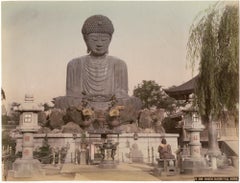
Japan – Daibutsu, Hiogo, Kobe – Hand-colored Meiji Period photograph
Located in Middletown, NY
circa 1890.
Hand-tinted albumen print, 7 7/8 x 10 1/4 inches (200 x 260 mm), numbered B 289 and captioned in negative at lower right. Unmounted; housed in an archival mat with clear...
Category
Realist 19th Century Art
Materials
Watercolor, Photographic Paper
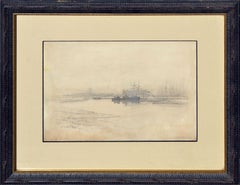
Late 19th Century Boats at San Francisco Port Seascape Drawing
By Raymond Dabb Yelland
Located in Soquel, CA
San Francisco moorings, a late 19th century double-sided pencil sketch by Raymond Dabb Yelland (American, 1848 - 1900), 1987. Signed "R.D. Yelland" lower right. Dated "87" lower left. Drawing on both sides of paper. Wood frame. Image size, 8.5"H x 12"L.
A master marine painter, Yelland painted in Gloucester Harbor. He sailed to San Francisco in 1874 to take a teaching position in art at Mills College in Oakland. From 1877 to 1894, he taught at the California School of Design. He was a decisive influence on a younger generation of California artists.
Full Bio:
Raymond Dabb Yelland was born in London, England on February 2, 1848. At the age of three, he immigrated with his family to New York City where he was raised and attended public schools. By the age of twelve, he had settled on art as a career.
He was born as Raymond Dabb, but due to the negative connotation of his name, his mother's maiden name, Yelland, was added. After serving under Sheridan in the Federal Army during the Civil War, Yelland attended Pennington Seminary in New Jersey. He studied art at the National Academy of Design from 1869 to 1871 with Page and Brevoort, and then taught at the Academy for one year.
With his new bride, he sailed around the Horn in 1874 to San Francisco where he would assume the position of an art instructor at Mills College in Oakland. In 1877, he traveled to England, and later continued his studies in Paris with Luc Oliver Merson. Upon his return to California, Yelland became assistant director of the San Francisco School of Design, and in 1888, assumed its directorship. While at that school, he also taught at the University of California, Berkeley, for many years. His many pupils included Homer Davenport, Alexander Harrison...
Category
American Impressionist 19th Century Art
Materials
Paper, Pencil
$1,836 Sale Price
20% Off
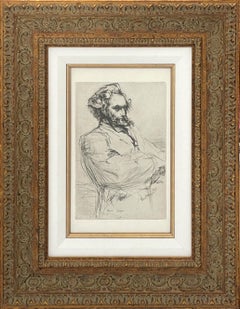
"C.L. Drouet, Sculptor" by Whistler
Located in Hinsdale, IL
Title: C. L. Drouet, Sculptor
Artist: James McNeill Whistler (American, Lowell, Massachusetts 1834–1903 London)
Sitter: Charles L. Drouet (French, 1836–1908)
Date: 1859
Medium: Etchi...
Category
Realist 19th Century Art
Materials
Etching
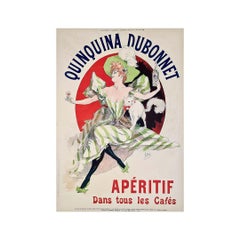
1895 Original poster by Jules Chéret for the Quinquina Dubonnet - Art Nouveau
By Jules Chéret
Located in PARIS, FR
Beautiful poster by Jules Chéret in 1895.
One of the many products promoted by Chéret's cheerful redhead was Quinquina Dubonnet, a fortified wine made from herbs mixed with quinine....
Category
Art Nouveau 19th Century Art
Materials
Linen, Paper, Lithograph
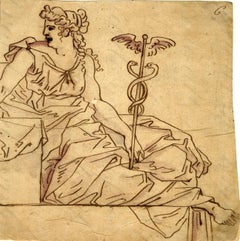
Study of a Priestess holding a Caduceus
Located in Middletown, NY
Brown ink and wash on laid paper with a grapes and vine watermark, 6 5/8 x 6 1/2 inches (168 x 164 mm). Laid down to Fellows watermarked wove paper, with uniform age tone, areas of light discoloration, and attenuation of pigment. Unevenly trimmed margins, and paper tape remnant from having been tipped-into a scrap book...
Category
Old Masters 19th Century Art
Materials
Ink, Watercolor, Laid Paper
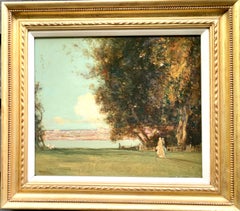
Antique 19th century English Impressionist classical landscape with figures
Located in Woodbury, CT
Outstanding English Impressionist landscape with figures strolling under trees with the sea beyond.
Joseph Vickers de Ville was a son of the farmers Joseph and Mary Deville. He was...
Category
Impressionist 19th Century Art
Materials
Oil, Wood Panel
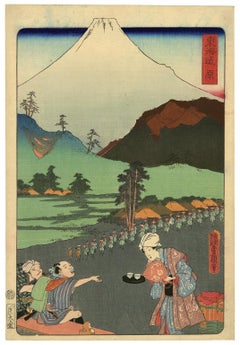
Tokaido
— Mt. Fuji Rising – Mid-Nineteenth Century Woodblock Print
Located in Myrtle Beach, SC
Utagawa Kunisada (Tokoyuni III), 'Tokaido', color woodblock, 1863. Signed in the cartouche, lower right. A fine impression, with rich, fresh colors and pronounced woodgrain, the full...
Category
Edo 19th Century Art
Materials
Woodcut
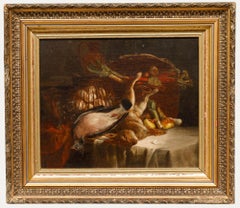
Henri Robbe (1807-1899) - Late 19th Century Oil, Still Life of Game
By Henri Robbe
Located in Corsham, GB
This still life painting depicts an abundant hunting scene with various game birds and fowl arranged on and around a table, including what appear to be ducks, rabbits, and other prey...
Category
19th Century Art
Materials
Oil
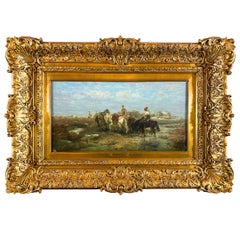
Arab Horsemen 19th Century Antique Landscape orientalist Oil Painting on Canvas
Located in Jacksonville, FL
Notes: This painting was reviewed via digital photographs by Max and Dr. Christoph Andreas who confirmed it authenticity. They commented that the painting
would benefit from removal of the discolored varnish.
Provenance:
Provenance: Christie's New York, 19th Century European Paintings, Drawings, Watercolors, and Sculpture, February 23, 1989, Lot 125.
Private Collection, Boston MA, Skinner Auction, Nov 2021
Arab Horsemen" by Adolf Schreyer captures the grace and power of Arab horsemen in a vibrant Middle Eastern setting. Schreyer, a renowned artist of the 19th century, adeptly portrays equestrian scenes with exceptional skill and detail. The painting showcases a group of horsemen galloping through a desert landscape, evoking a sense of freedom and adventure. Schreyer's meticulous attention to detail brings the scene to life, with sunlight reflecting off the horses' coats and dust rising beneath their hooves. Beyond its visual appeal, the artwork holds cultural significance, bridging the gap between cultures and inviting appreciation of Arabian heritage. Schreyer's experiences in North Africa, Turkey, and Syria inform his captivating depictions. "Arab Horsemen" is highly regarded in both America and France, where Schreyer's works found admiration among collectors and his association with the Barbizon School solidified his reputation. Owning this artwork not only adds beauty but also connects to a pivotal period in art history, showcasing Schreyer's artistic brilliance and cross-cultural appreciation. Experience the timeless allure of "Arab Horsemen" and embrace the spirit of the Middle East.
Frame Size: Width: 36″ x Hight: 24.75″
Frame Thickness: 6.50″
Picture Size: Width: 24″ x 12.75″
Description:
Introducing “Arab Horsemen” by Adolf Schreyer: A Captivating Blend of Artistry and Cultural Significance
Capture the essence of the vibrant Middle Eastern culture with “Arab Horsemen,” a masterpiece by the renowned artist Adolf Schreyer. This captivating painting takes you on a journey through time, allowing you to witness the grace, power, and elegance of Arab horsemen in their natural element.
Adolf Schreyer, a celebrated artist of the 19th century, gained immense popularity and admiration for his exceptional ability to depict equestrian scenes with unparalleled skill and detail. Born in Frankfurt, Germany in 1828, Schreyer developed a profound fascination for the Orientalist movement, which celebrated the exoticism and allure of the Middle East.
“Arab Horsemen” exemplifies Schreyer’s signature style, highlighting his mastery of capturing the energy and spirit of his subjects. The painting portrays a group of Arab horsemen galloping across a vast desert landscape, their silhouettes evoking a sense of freedom and adventure. Schreyer’s meticulous attention to detail is evident in every brushstroke, as he adeptly captures the shimmering sunlight bouncing off the horses’ coats and the billowing dust beneath their hooves.
What sets Schreyer apart is his ability to transcend mere representation and infuse his artworks with a profound cultural significance. His depictions of Arab horsemen are not only visually stunning but also serve as a bridge between cultures, inviting viewers to explore and appreciate the richness of Arabian heritage. The artist’s fascination with the Middle East stems from his experiences traveling through North Africa, Turkey, and Syria, immersing himself in the sights, sounds, and traditions of these enchanting lands.
“Arab Horsemen” holds a special place in the hearts of art enthusiasts in both America and France. Schreyer’s works found great admiration and recognition in these countries during his lifetime and continue to captivate audiences to this day. In America, his paintings were sought after by collectors who were drawn to the romanticism and exoticism of the Orient. In France, Schreyer’s association with the Barbizon School, a group of artists who favored realistic depictions of rural life, further solidified his reputation as a respected painter.
Owning a piece by Adolf Schreyer, especially “Arab Horsemen,” is not merely acquiring a beautiful artwork but also an opportunity to possess a tangible link to a pivotal period in art history. Schreyer’s ability to seamlessly blend artistic brilliance with cross-cultural appreciation makes this painting an invaluable addition to any collection. Experience the timeless allure of “Arab Horsemen” and let the spirit of the Middle East gallop into your life.
Collections holding paintings by Adolf Schreyer include the
Collections:
Schwerin Gallery
Count Mensdorff-Pouilly Collection
Raven Gallery, Berlin
Rockefeller Family Collection
Vanderbilt Family Collection
John Jacob Astor Collection
William Backhouse Astor, Sr. Collection
August Belmont Collection
William Walters Collection...
Category
Academic 19th Century Art
Materials
Canvas, Oil
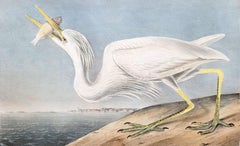
Great White Heron /// John James Audubon Ornithology Shorebird Key West Florida
Located in Saint Augustine, FL
Artist: John James Audubon (American, 1785-1851)
Title: "Great White Heron" (Plate 368, No. 74)
Portfolio: The Birds of America, First Royal Octavo Edition
Year: 1840-1844
Medium: Or...
Category
Victorian 19th Century Art
Materials
Watercolor, Lithograph
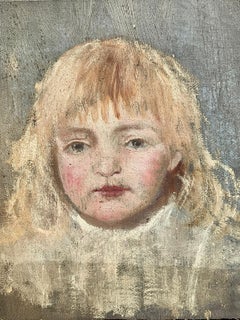
Antique Victorian English Oil Portrait Of A Young Blonde Girl
Located in Cirencester, Gloucestershire
Artist/ School: English School, late 19th/ early 20th century.
The painting came from a large collection of works by one artist. A very few of them are signed what looks to be 'F. Wa...
Category
Victorian 19th Century Art
Materials
Oil
$437 Sale Price
20% Off
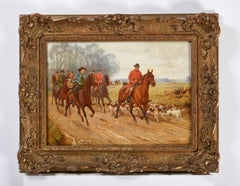
George Goodwin Kilburne, oil landscape horse/equine hunting scene 19th century
Located in York, GB
George Goodwin Kilburne landscape horse/equine hunting scene 19th century oil painting
A fine painting by the renowned artist George Goodwin Kilburne .oil on panel, framed the size ...
Category
English School 19th Century Art
Materials
Oil
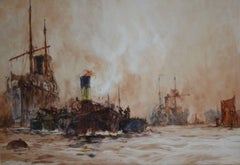
Shipping On The River Thames, London by Charles Dixon. Watercolour
By Charles Edward Dixon 1
Located in Brecon, Powys
Charles Dixon was born in England in December 1872 died 1934. Extremely well known for his nautical watercolours. Exhibited several time at the Royal Academy in London as well as the...
Category
English School 19th Century Art
Materials
Watercolor
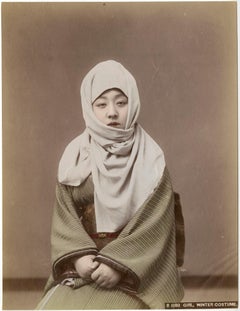
Japan, Girl Winter Costume
Located in Middletown, NY
Stillfried, Raimund von
Japan, Girl Winter Costume
Yokohama, Japan: c 1880. Hand-tinted albumen print, 10 1/4 x 7 3/4 inches (260x 200 mm), numbered B 1080 and titled in the lower r...
Category
Realist 19th Century Art
Materials
Watercolor, Photographic Paper
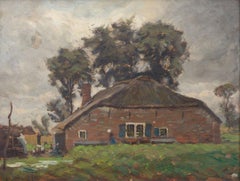
Landscape Scene with Barn and Trees, Late 19th Century, Ohio Artist
Located in Beachwood, OH
Addison Thomas Millar (American, 1860-1913)
Barn scene, 1892
Oil on board
Signed and dated lower left
10.25 x 13.5 inches
15 x 18.5 inches, framed
Addison Thomas Millar was an American painter and artist; best known for his genre scenes and Orientalist paintings.
He was born to William H. Millar and Permelia Kennedy Millar. His father had emigrated to the United States from Scotland in 1845. He grew up in Warren, Ohio. During his primary education, he took some painting lessons from John Bell, a local landscape painter.
In his late teens, he won three consecutive awards from The Youth's Companion, in their annual art contests. This prompted his parents to allow him to go to Cincinnati to take formal lessons from the genre painter, De Scott Evans...
Category
19th Century Art
Materials
Oil
$2,800 Sale Price
20% Off
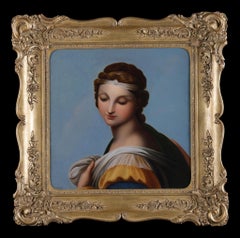
A Pre-Raphaelite Beauty. A Portrait of a lady by Josef Arnhold. Oil on canvas
Located in St. Albans, GB
A wonderful painting of a beautiful woman in the style of the Pre-Raphaelites.
It is signed Arnhold.
It is in very condition and in the original frame.
Picture Size: 21 x 21" (51 ...
Category
Pre-Raphaelite 19th Century Art
Materials
Oil
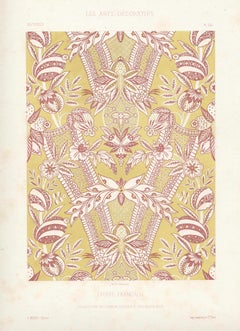
French Fabric Design - Etoffe Francais, antique French chromolithograph print
Located in Melbourne, Victoria
'Les Arts Décoratifs - Etoffe de Genes'
Depicts fabric from the 17th century. From 'Les Arts Decoratifs a toutes les epoques', printed by Lemercier & Cie, Paris.
300mm by 200mm (i...
Category
Victorian 19th Century Art
Materials
Lithograph
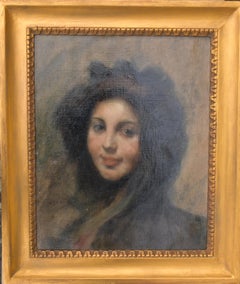
Antonin MERCIE (1845-1916) French Belle Époque Portrait
Located in Holywell, GB
Antonin MERCIE (1845-1916) French Belle Époque Portrait
A stylish portrait of a fashionable young woman dating to the Belle Époque period. Signe...
Category
Impressionist 19th Century Art
Materials
Oil
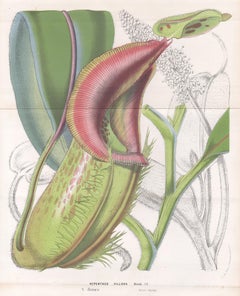
Nepenthes Villosa, antique botanical carnivorous pitcher plant lithograph print
Located in Melbourne, Victoria
'Nepenthes Villosa Hook. fil.'
Botanical lithograph with original hand-colouring of a carnivorous pitcher plant, native to Borneo. 1858.
Category
Naturalistic 19th Century Art
Materials
Lithograph
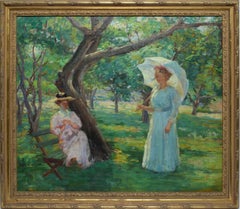
Sunny Day in the Park
Located in Buffalo, NY
19th century Impressionist oil painting of two women in a park. Oil on canvas, circa 1900. Signed illegibly lower left. Displayed in giltwood...
Category
American Impressionist 19th Century Art
Materials
Canvas, Oil
Mountain Landscape Brera School Painting Signed Bernasconi Collection
Located in Pistoia, IT
Domenico Induno (Milan, 1827-1890)
"Mountain landscape with figures," oil on canvas, signed lower left D. Induno.
Provenance: collection of Juan and Felix Bernasconi, Villa Argenti...
Category
Italian School 19th Century Art
Materials
Canvas, Oil
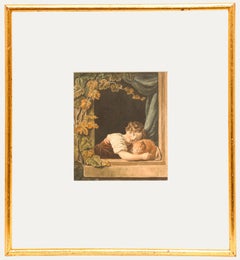
Early 19th Century Watercolour - Little Girl with Orange Cat
Located in Corsham, GB
A truly charming early 19th-century watercolour study depicting a young girl reaching tenderly toward her sleeping cat, curled peacefully on a sunlit windowsill. Framed by traditiona...
Category
19th Century Art
Materials
Watercolor
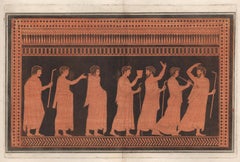
William Hamilton Classical Greek Vase-Painting Engraving
Located in Melbourne, Victoria
Subject : Ancient Greek vase-painting depicting three draped young men and cortege of banqueters from an Attic column krater now in the British Museum.
Technique : Copper-line engra...
Category
Other Art Style 19th Century Art
Materials
Engraving
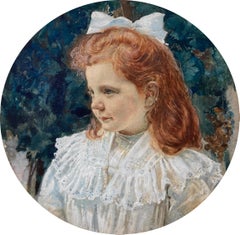
Circle of Myles Birket Foster, Portrait of a red haired girl
Located in Harkstead, GB
This exceptional quality watercolour depicts a snapshot of innocence and childhood with this delightful portrait of a red-haired young girl. Presented in a fine quality, hand carved and pierced, period frame with inlaid detail.
Circle of Myles Birket Foster (1825-1899)
Portrait of a red-haired young girl
Watercolour with touches of white
4 inches diamter (image only)
11 x 11 inches with frame
This beautiful image is of exceptional quality, as apparent in the delicate detailing to her eyelashes and the sunlit highlights of her hair. This is the work of an artist at the very peak of their powers and the intimacy of the work suggests a connection between artist and sitter such as daughter and parent. The level of draughtsmanship brings to mind artists from this period such as Myles Birket Foster, Fred Morgan and Helen...
Category
Victorian 19th Century Art
Materials
Watercolor, Paper
$2,389 Sale Price
30% Off
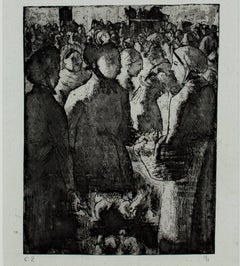
"Marche a la Volaille, a Gisors, " Original figurative Etching signed
Located in Milwaukee, WI
"Marche a la Volaille, a Gisors" is an original etching by Camille Pissarro. It depicts a dense crowd in black and white. This is edition 34/43 from Loys Delteil 98, 2nd State.
14" ...
Category
Impressionist 19th Century Art
Materials
Etching
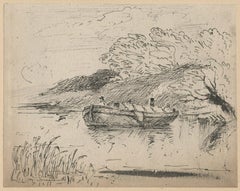
The River Barge
By David Cox
Located in Fairlawn, OH
The River Barge
Pen and ink on paper on laid paper, mounted in English drum mount , c. 1810
Unsigned
Condition: Slight sun staining to sheet and mount in the window (see photo)
Image/sheet size: 5 1/4 x 6 11/16 inches
Sight: : 5-3/4 x 7-1/4"
Frame: 13-3/8 x 14-3/8"
Provenance: Colnaghi, London (see photo of label)
David Cox (29 April 1783 – 7 June 1859) was an English landscape painter, one of the most important members of the Birmingham School of landscape artists and an early precursor of Impressionism.
He is considered one of the greatest English landscape painters, and a major figure of the Golden age of English watercolour.
Although most popularly known for his works in watercolour, he also painted over 300 works in oil towards the end of his career, now considered "one of the greatest, but least recognised, achievements of any British painter.
His son, known as David Cox the Younger (1809-1885), was also a successful artist.
Early life in Birmingham, 1783–1804
Cox's birthplace in Deritend, Birmingham, illustrated by Samuel Lines
Cox was born on 29 April 1783 on Heath Mill Lane in Deritend, then an industrial suburb of Birmingham. His father was a blacksmith and whitesmith about whom little is known, except that he supplied components such as bayonets and barrels to the Birmingham gun trade. Cox's mother was the daughter of a farmer and miller from Small Heath to the east of Birmingham. Early biographers record that "she had had a better education than his father, and was a woman of superior intelligence and force of character." Cox was initially expected to follow his father into the metal trade and take over his forge, but his lack of physical strength led his family to seek opportunities for him to develop his interest in art, which is said to have first become apparent when the young Cox started painting paper kites while recovering from a broken leg.
By the late 18th century Birmingham had developed a network of private academies teaching drawing and painting, established to support the needs of the town's manufacturers of luxury metal goods, but also encouraging education in fine art, and nurturing the distinctive tradition of landscape art of the Birmingham School. Cox initially enrolled in the academy of Joseph Barber in Great Charles Street, where fellow students included the artist Charles Barber and the engraver William Radclyffe, both of whom would become important lifelong friends.
At the age of about 15 Cox was apprenticed to the Birmingham painter Albert Fielder, who produced portrait miniatures and paintings for the tops of snuffboxes from his workshop at 10 Parade in the northwest of the town. Early biographers of Cox record that he left his apprenticeship after Fielder's suicide, with one reporting that Cox himself discovered his master's hanging body, but this is probably a myth as Fielder is recorded at his address in Parade as late as 1825. At some time during mid-1800 Cox was given work by William Macready the elder at the Birmingham Theatre, initially as an assistant grinding colours and preparing canvases for the scene painters, but from 1801 painting scenery himself and by 1802 leading his own team of assistants and being credited in plays' publicity.
London, 1804–1814
In 1804 Cox was promised work by the theatre impresario Philip Astley and moved to London, taking lodgings in 16 Bridge Row, Lambeth. Although he was unable to get employment at Astley's Amphitheatre it is likely that he had already decided to try to establish himself as a professional artist, and apart from a few private commissions for painting scenery his focus over the next few years was to be on painting and exhibiting watercolours. While living in London, Cox married his landlord's daughter, Mary Agg and the couple moved to Dulwich in 1808.
David Cox Travellers on a Path, pencil and brown wash.
In 1805 he made his first of many trips to Wales, with Charles Barber, his earliest dated watercolours are from this year. Throughout his lifetime he made numerous sketching tours to the Home Counties, North Wales, Yorkshire, Derbyshire and Devon.
Cox exhibited regularly at the Royal Academy from 1805. His paintings never reached high prices, so he earned his living mainly as a drawing master. His first pupil, Colonel the Hon.H. Windsor (the future Earl of Plymouth) engaged him in 1808, Cox went on to acquire several other aristocratic and titled pupils. He also went on to write several books, including: Ackermanns' New Drawing Book (1809); A Series of Progressive Lessons (1811); Treatise on Landscape Painting (1813); and Progressive Lessons on Landscape (1816). The ninth and last edition of his series Progressive Lessons, was published in 1845.
By 1810 he was elected President of the Associated Artists in Water Colour. In 1812, following the demise of the Associated Artists, he was elected as associate of the Society of Painters in Water Colour (the old Water Colour Society). He was elected a Member of the Society in 1813, and exhibited there every year (except 1815 and 1817) until his death.
Hereford, 1814–1827
In the summer of 1813 Cox was appointed as the drawing master of the Royal Military College in Farnham, Surrey, but he resigned shortly afterwards, finding little sympathy with the atmosphere of a military institution. Soon after that he applied to a newspaper advertisement for a position as drawing master for Miss Crouchers' School for Young Ladies in Hereford and in Autumn 1814 moved to the town with his family. Cox taught at the school in Widemarsh Street until 1819, his substantial salary of £100 per year requiring only two-day's work per week, allowing time for painting and the taking of private pupils.
Cox's reputation as both a painter and a teacher had been building over previous years, as indicated by his election as a member of the Society of Painters in Water Colours and his inclusion in John Hassell's 1813 book Aqua Pictura, which claimed to present works by "all of the most approved water coloured draftsmen". The depression that accompanied the end of the Napoleonic Wars had caused a contraction in the art market, however, and by 1814 Cox had been very short of money, requiring a loan from one of his pupils to pay even for the move to Hereford. Despite its financial advantages and its proximity to the scenery of North Wales and the Wye Valley, the move to Hereford marked a retreat in terms of his career as a painter: he sent few works to the annual exhibition of the Society of Painters in Water Colours during his first years away from London and not until 1823 would he again contribute more than 20 pictures.
Between 1823 and 1826 he had Joseph Murray Ince as a pupil.
London, 1827–1841
He made his first trip to the Continent, to Belgium and the Netherlands in 1826 and subsequently moved to London the following year.
He exhibited for the first time with the Birmingham Society of Artists in 1829, and with the Liverpool Academy in 1831. In 1839, two of Cox's watercolours were bought from the Old Water Colour Society exhibition by the Marquis of Conynha for Queen Victoria.
Birmingham, 1841–1859
Greenfield House in Harborne, Birmingham – where Cox lived from 1841 until his death in 1859 .
In May 1840 Cox wrote to one of his Birmingham friends: "I am making preparations to sketch in oil, and also to paint, and it is my intention to spend most of my time in Birmingham for the purpose of practice". Cox had been considering a return to painting in oils since 1836 and in 1839 had taken lessons in oil painting from William James Müller, to whom he had been introduced by mutual friend George Arthur Fripp. Hostility between the Society of Painters in Water Colours and the Royal Academy made it difficult for an artist to be recognised for work in both watercolour and oil in London, however, and it is likely that Cox would have preferred to explore this new medium in the more supportive environment of his home town. By the early 1840s his income from sales of his watercolours was sufficient to allow him to abandon his work as a drawing master, and in June 1841 he moved with his wife to Greenfield House in Harborne, then a village on Birmingham's south western outskirts. It was this move that would enable the higher levels of freedom and experimentation that were to characterise his later work.
The elderly Cox pictured by Samuel Bellin in 1855.
In Harborne, Cox established a steady routine – working in watercolour in the morning and oils in the afternoon. He would visit London every spring to attend the major exhibitions, followed by one or more sketching excursions, continuing the pattern that he had established in the 1830s. From 1844 these tours evolved into a yearly trip to Betws-y-Coed in North Wales to work outdoors in both oil and watercolour, gradually becoming the focus for an annual summer artists colony that continued until 1856 with Cox as its "presiding genius".
Cox's experience of trying to exhibit his oils in London was short and unsuccessful: in 1842 he made his only submission to the Society of British Artists; one oil painting was exhibited at each of the British Institution and the Royal Academy in 1843; and two oil paintings were exhibited at the Royal Academy in 1844 – the last that would be exhibited in London during his lifetime.
Cox showed regularly at the Birmingham Society of Arts and its successor, the Birmingham Society of Artists, becoming a member in 1842.
Cox suffered a stroke on 12 June 1853 that temporarily paralysed him, and permanently affected his eyesight, memory and coordination.
By 1857 however, his eyesight had deteriorated. An exhibition of his work was arranged in 1858 by the Conversazione Society Hampstead, and in 1859 a retrospective exhibition was held at the German Gallery Bond Street, London. Cox died several months later. He was buried in the churchyard of St Peters, Harborne, Birmingham, under a chestnut tree, alongside his wife Mary.
Work
Early work
In the spring of 1811 Cox made a small number of notable works in oils during a visit to Hastings with his family. It is not known why he didn't continue working in this medium at the time, but the five known surviving examples were described in 1969 as "surely some of the most brilliant examples of the genre in England".
Mature work
Cox reached artistic maturity after his move to Hereford in 1814. Although only two major watercolours can confidently be traced to the period between Cox's arrival in the town and the end of the decade, both of these – Butcher's Row, Hereford of 1815 and Lugg Meadows, near Hereford of 1817 – mark advances on his earlier work.
Later work
Cox's later work produced after his move to Birmingham in 1841 was marked by simplification, abstraction and a stripping down of detail. His art of the period combined the breadth and weight characteristic of the earlier English watercolour school, together with a boldness and freedom of expression comparable to later impressionism. His concern with capturing the fleeting nature of weather, atmosphere and light was similar to that of John Constable, but Cox stood apart from the older painter's focus on capturing material detail, instead employing a high degree of generalisation and a focus on overall effect.
The quest for character over precision in representing nature was an established characteristic of the Birmingham School of landscape artists with which Cox had been associated early in his life, and as early as 1810 Cox's work had been criticised for its "sketchiness of finish" and "cloudy confusion of objects", which were held to betray "the coarseness of scene-painting". During the 1840s and 1850s Cox took this "peculiar manner" to new extremes, incorporating the techniques of the sketch into his finished works to a far greater degree.
Cox's watercolour technique of the 1840s was sufficiently different from his earlier methods to need explanation to his son in 1842, despite the fact that his son had been helping him teach and paint since 1827. The materials used for his later works in watercolour also differed from his earlier periods: he used black chalk instead of graphite pencil as his primary drawing medium, and the rough and absorbent "Scotch" wrapping paper for which he became well-known – both of these were related to his development of a rougher and freer style.
Influence and legacy
By the 1840s Cox, alongside Peter De Wint and Copley Fielding, had become recognised as one of the leading figures of the English landscape watercolour style of the first half of the 19th century. This judgement was complicated by reaction to the rougher and bolder style of Cox's later Birmingham work, which was widely ignored or condemned. While by this time De Wint and Fielding were essentially continuing in a long-established tradition, Cox was creating a new one.
A group of young artists working in Cox's watercolour style emerged well before his death, including William Bennett, David Hall McKewan and Cox's son David Cox Jr. By 1850 Bennett in particular had become recognised as "perhaps the most distinguished among the landscape painters" for his Cox-like vigorous and decisive style. Such early followers concentrated on the example of Cox's more moderate earlier work and steered clear of what were then seen as the excesses of Cox's later years. During a period dominated by sleek and detailed picturesque landscape, however, they were still condemned by publications such as The Spectator as "the 'blottesque' school", and failed to establish themselves as a cohesive movement.
John Ruskin in 1857 condemned the work of the Society of Painters in Water-colours as "a kind of potted art, of an agreeable flavour, suppliable and taxable as a patented commodity", excluding only the late work of Cox, about which he wrote "there is not any other landscape which comes near these works of David Cox in simplicity or seriousness".
An 1881 book, A Biography of David Cox: With Remarks on His Works and Genius, was based on a manuscript by Cox's friend William Hall, edited and expanded by John Thackray Bunce, editor of the Birmingham Daily Post.
There are two Blue Plaque memorials commemorating him at 116 Greenfield Road, Harborne, Birmingham, and at 34 Foxley Road, Kennington, London, SW9, where he lived from 1827. It can also be seen at the David Cox exhibition in Birmingham.
His pupils included Birmingham architectural artist, Allen Edward...
Category
Romantic 19th Century Art
Materials
Ink
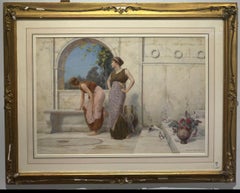
CLASSICAL Antique PRE-RAPHEALITE Grecian Ladies on a MARBLE Painted TERRACE
By Henry Ryland
Located in New York, NY
Ryland studied under Jean-Joseph Benjamin-Constant (1845-1902), Gustave Boulanger (1824-1888), and Jules Joseph Lefebvre (1836-1911) in Paris, and also at the South Kensington Art Sc...
Category
Academic 19th Century Art
Materials
Watercolor
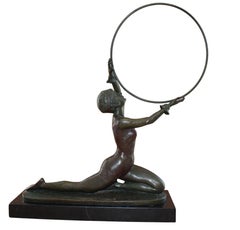
Dancer, bronze, 40x46x12 cm
Located in Riga, LV
Ferdinand Preiss(1882-1943)
Category
Realist 19th Century Art
Materials
Marble, Bronze
$2,658 Sale Price
20% Off
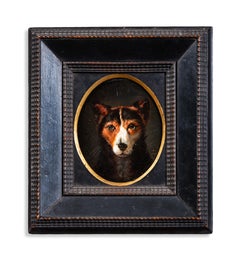
Head of a terrier
By Samuel Raven
Located in Stoke, Hampshire
Samuel Raven (1775-1847)
Head of a terrier
signed and inscribed 'S. Raven pinxt./Patronized by H.R.H. the Duke of Sussex/& Prince Leopold of Saxe-Coburg' verso
oil on papier mâché
Pa...
Category
Victorian 19th Century Art
Materials
Oil
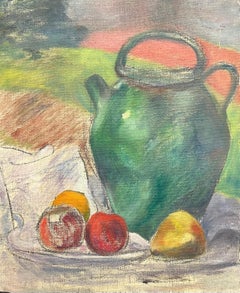
1930
s French Impressionist Still Life with Green Jug and Assorted Apples
Pear
Located in Cirencester, Gloucestershire
Still Life
Simone Forge 1930's French Impressionist
oil on canvas laid on board unframed
board: 15 x 18 inches
Provenance: private collection
Condition: great condition
For more a...
Category
Impressionist 19th Century Art
Materials
Oil
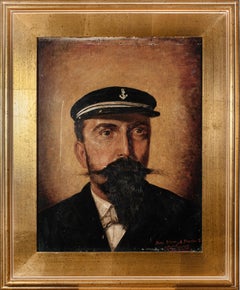
Captain
Located in Columbia, MO
F. CLEVEROT
Captain
1898
Oil on panel
18 x 14 inches
Framed: 28 x 24 inches
Hand signed lower right recto
Category
Naturalistic 19th Century Art
Materials
Oil, Wood Panel
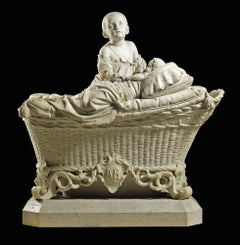
$8,640
Life-Size Italian 19th Century Marble Sculpture Children on Crib, A. Tantardini
Located in LA, CA
Antonio Tantardini (Italian, 1829-1879) An extraordinary Italian 19th century life size carved Carrara white marble sculpture of "A Young Child and a baby in a wicker crib" - A Risorgimento Allegory. Signed and dated: A.nio Tantanrdini F.ce / 1863. The older child's medallion inscribed with an interlocked XV and Garibaldi, the crib monogrammed: AR. Circa: Florence, 1863. This sculpture includes a recent custom-made veined black marble pedestal stand. (The 2 items description mean the sculpture and pedestal, which are sold as sold a set.)
In a country famed for its skilled carvers and working in an age when virtuoso carving technique was highly prized, Antonio Tantardini was one of the very best exponents of master carvers in nineteenth century Italy. Vicario describes Tantardini's skill as 'un abilità tecnica stupefacente'.
The present amazing quality marble group epitomizes Tantardini's exceptional talents as a carver. Lesser sculptors might have shied away from attempting to carve a life-size wicker crib in marble, but Tantardini has clearly relished the Challenge. The result is a stunning achievement of verismo Italian sculpture.
This marble group, however, is more than a paradigm of Italian marble carving, it is also a prime example of the use of Risorgimento allegory in Italian sculpture of the 1860s. Famous sculptural Risorgimento allegories include Raffaelle Monti...
Category
Academic 19th Century Art
Materials
Marble
$348,500 Sale Price
46% Off
Portrait of a Lady - British 19th century art portrait oil painting
Located in Hagley, England
This lovely British Victorian portrait oil painting is by British portrait artist Edward Spilsbury Swinson. It was painted in 1891 and is dated and signed lower right. It is a half l...
Category
Victorian 19th Century Art
Materials
Oil
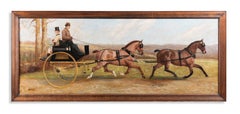
A horse-drawn buggy on a track, a hunt beyond
By George Paice
Located in Stoke, Hampshire
George Paice (1854-1925
A horse-drawn buggy on a track, a hunt beyond
signed and dated lower left
Oil on canvas
Canvas size 23 x 60 in
Framed size 27 x 65 in
Provenance
The Collecti...
Category
Victorian 19th Century Art
Materials
Oil
$5,531 Sale Price
40% Off
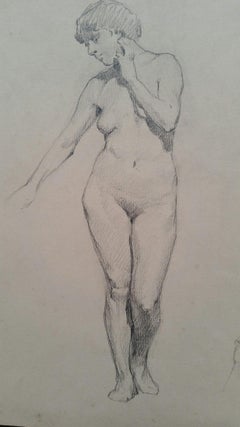
English Antique Portrait Sketch of Female Nude Standing
Located in Cirencester, Gloucestershire
English Graphite Sketch of a Female Nude, Standing
by Henry George Moon (British 1857-1905)
on off white artists paper, unframed
measurements: sheet 14.75 x 10.5 inches
provenance:...
Category
Impressionist 19th Century Art
Materials
Graphite
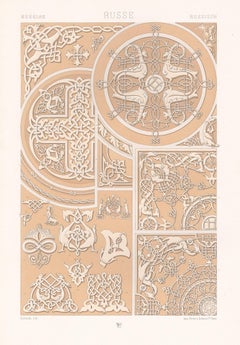
Russian, French antique 19th century Racinet art design lithograph print
Located in Melbourne, Victoria
'Russian - Russe - Russisch'
Late 19th century interior design chromolithograph, from Racinet’s ‘L’Ornement Polychrome’, 1887. Published in Paris.
Albert Racinet's 'L' Ornement Pol...
Category
French School 19th Century Art
Materials
Lithograph
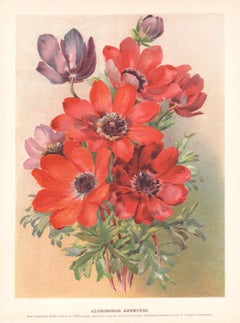
Aldborough Anemones, English antique flower botanical chromolithograph, 1896
Located in Melbourne, Victoria
'Aldborough Anemones'
Flowers are numbered with a key to the varieties below the image.
Antique English flower botanical chromolithograph.
Category
Naturalistic 19th Century Art
Materials
Lithograph