Mid-19th Century Art
to
393
4,200
1,090
385
201
162
Overall Width
to
Overall Height
to
7,600
21,288
162,233
233,198
1,982
2,257
4,929
6,460
5,740
15,015
20,481
25,765
18,495
13,842
5,392
3,210
106
100
23
12
7
7
5
1
1
2,959
2,934
49
3,908
1,788
1,355
1,162
915
782
654
477
364
326
318
310
288
286
213
206
191
186
185
177
3,089
1,407
950
811
762
168
127
106
100
87
1,278
3,253
3,353
1,214
Period: Mid-19th Century
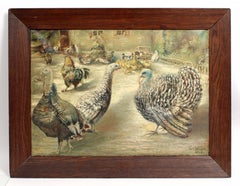
German Wild Turkey Chicken Oil Painting Animal Farm Antique Von Wille 1868
Located in Buffalo, NY
An antique German animal painting by Clara Von Wille which features Wild Turkeys and chickens in a whimsical setting.
Original period frame.
Category
Realist Mid-19th Century Art
Materials
Canvas, Oil
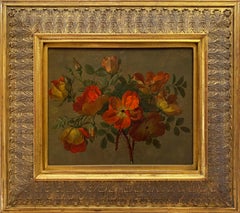
Roses, Historic Botanical
Located in New York, NY
A most popular drawing master, Lesourd-Beauregard exhibited extensively at the Paris Salons, and was awarded a medal in 1842.
He is famous for his in depth botanical studies done in...
Category
French School Mid-19th Century Art
Materials
Oil, Panel
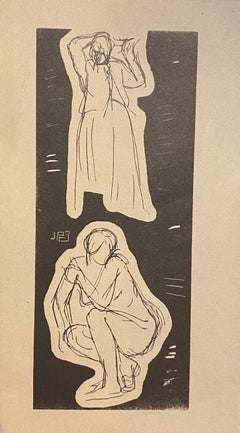
Figures of Women - Original Lithograph on Paper - 1840s
Located in Roma, IT
Figures of Women is an original lithograph on ivory-colorated paper by an unknown artist in 1840s.
In very good condition.
Not signed. Monogrammed J.P.
Category
Modern Mid-19th Century Art
Materials
Lithograph
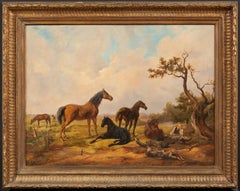
Wide landscape with horses, Otto Grashof, Cologne 1850
Located in New York, NY
Oil on canvas. Signed and dated bottom-center: O. Grashof 1850.
A landscape with gnarled trees and a wide view, in the foreground several detailed and masterfully executed horses and a herding boy, in the distance the silhouette of a church village, the whole scenery under a wide sky. Otto Grashof...
Category
Mid-19th Century Art
Materials
Canvas, Oil

$4,960 Sale Price
29% Off
Le Grand-Turc - Lithograph by Paul Gavarni - 1850s
By Paul Gavarni
Located in Roma, IT
Le Grand-turc is a lithograph on ivory-colored paper, realized by the French draftsman Paul Gavarni (alias Guillaume Sulpice Chevalier Gavarni, 1804-1866) in the mid-19th Century.
F...
Category
Modern Mid-19th Century Art
Materials
Lithograph
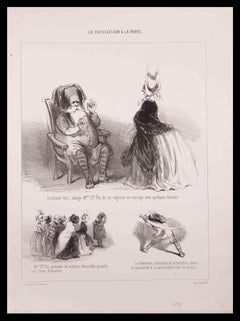
The Courtship - Lithograph by Hégésippe Moreau - 1838
Located in Roma, IT
The Courtship is a lithograph on paper realized by Hégésippe Moreau in 1838.
The artwork is in good conditions.
Hégésippe Moreau (1810-1838) was a French lyric poet. The romantic m...
Category
Modern Mid-19th Century Art
Materials
Lithograph
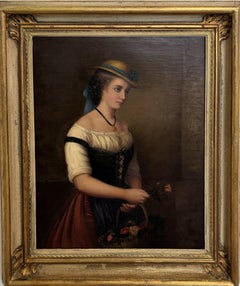
Antique 1868 Oil Portrait Young Woman European Lady Gilt Frame 19th Century
Located in Palm Coast, FL
This authentic 19th-century oil portrait depicts a young European woman in traditional attire, painted with refined academic realism and quiet emotional restraint. The sitter is show...
Category
Realist Mid-19th Century Art
Materials
Oil
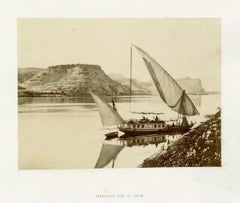
Travelers Boat at Ibrim
Located in Fairlawn, OH
Travelers Boat at Ibrim
Original gold toned albumin photograph, c. 1862
From: Upper Egypt and Ethiopia, c. 1862, Vol 3, (36 plates)
Published by William Mackenzie, London, Glasgow & ...
Category
Romantic Mid-19th Century Art
Materials
Photographic Paper
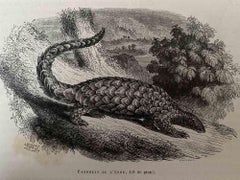
Pangolin De L
Inde - Original Lithograph by Paul Gervais - 1854
By Paul Gervais
Located in Roma, IT
Pangolin De L'Inde is an original lithograph on ivory-colored paper, realized by Paul Gervais (1816-1879). The artwork is from The Series of "Les Trois Règnes de la Nature", and was ...
Category
Modern Mid-19th Century Art
Materials
Paper, Lithograph
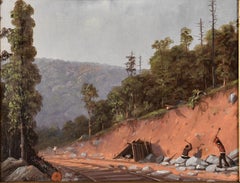
"Building the Allegheny Railroad, Pennsylvania" Alfred Wall, Scalp Level School
Located in New York, NY
Alfred S. Wall (American, 1825-1896)
Untitled (Building the Railroad), 1859
Oil on canvas
14 1/2 x 18 1/2 inches
Signed and dated lower left
For Christmas, 2008, the Pittsburgh Post-Gazette featured Alfred Wall's painting, Old Saw Mill from the collection of the Westmoreland Museum of American Art in Greensburg, PA. It was painted in 1851 in the town of Lilly, Pennsylvania in the Allegheny Mountains. The newspaper description stated that "though the saw mill is long gone, it still conveys all the warmth and coziness of this time of year. The article, written by Patricia Lowry, continued:
At first glance, Alfred S. Wall's painting of a saw mill in snowy woods triggers nostalgia for the coziness of a log cabin, the smell of a wood-burning fire and the warming of chilled hands and feet beside it.
But as sentimental as it seems on the surface, Mr. Wall's painting has a deeper and unexpected context.
This is more than a painting about sled-riding children and early industry planted in the middle of virgin forest. Intended or not, this is a painting about conquering the great divide of the Allegheny Mountains.
For the third consecutive year, the Post-Gazette features a winter-scene painting on the cover of the Christmas Day newspaper. This year's painting, Old Saw Mill, was selected by co-publisher and editor-in-chief John Robinson Block and executive editor David Shribman during a visit to the Westmoreland Museum of American Art in Greensburg.
Mr. Wall, listed as a portrait painter in the 1850 census, was about 26 when he painted Old Saw Mill in 1851. The self-taught artist was born in Mount Pleasant, Westmoreland County, to William and Lucy Wall, who'd emigrated from England around 1820. An artistic sensibility ran in the family: William was a sculptor who carved ornate tombstones here; Alfred's children, A. Bryan and Bessie, were landscape painters, as was Alfred's older brother, William Coventry Wall. For more than a century the Walls formed a prominent art dynasty in Pittsburgh, and Alfred, eventually a partner in the city's most prestigious art gallery, was well known as a painter, dealer and restorer.
In Old Saw Mill, two wood cutters, each holding an axe, meet outside the mill; one points in the direction of the forest. On the other side of the stream, one child pulls another down the hillside on a sled. Just behind the hill's slope, the roof of a building appears, perhaps the home of the sawyer. The luminous, late afternoon light comes from the northwest, casting lengthening shadows on the snow under a darkening sky.
The saw mill in "Old Saw Mill" likely would have been impossible to track down had Mr. Wall, presumably, not written on the back of the painting: "old saw mill near Jct. 4, Portage RR, Pa."
"There was no Junction 4," said Mike Garcia, park ranger at the Allegheny Portage Railroad National Historic Site, about 90 miles east of Pittsburgh near Gallitzen, Cambria County. "But there was an Inclined Plane No. 4 at Lilly, and there was a saw mill there."
In fact, there were at least six saw mills at Lilly over the years, said longtime resident Jim Salony, president of the Lilly-Washington Historical Society. But when he saw an image of the painting, Mr. Salony had no trouble coming up with a location. While there are no known photographs of the saw mill, he believes it stood near the intersection of Portage and Washington streets, next to Bear Rock Run.
Mr. Salony, retired academic dean at Mount Aloysius College, didn't know exactly when the mill was torn down, but it's been gone since at least the late 1800s. He was pleased to learn of the painting, even though that knowledge came too late for inclusion in a new book about Lilly, The Spirit of a Community, for which he served as primary author and editor. It runs to more than 700 pages. For a little town -- population 869 last year -- Lilly has a lot of history.
Nestled in a bowl on the western slope of the Allegheny Mountains about 3 miles south of Cresson, Lilly was first settled in 1806 by Joseph Meyer and his family, who named their 332-acre land patent Dundee. Although the Meyers had left by 1811, other settlers followed, but the community didn't flourish until the 1830s, when the Allegheny Portage Railroad began its 23-year-run through the town.
For 200 years the Alleghenies had stood as an impediment to trade and travel between Pittsburgh and the east. A canal from Philadelphia to Pittsburgh would change that and compete with New York's Erie Canal. But a portage railroad would have to be built, on which teams of horses would lead the canal boats over the mountains. Engineer Sylvester Welch began his surveying from the small settlement at Lilly. The railroad would require 10 inclined planes, some quite steep, between Hollidaysburg and Johnstown. To build it, trees had to be cut along a 120-foot-wide right-of-way for 36 miles, along which track and engine houses had to be built.
William Brown, who owned the saw mill on Bear Rock Run, built at least one of the engine houses at Inclined Plane No. 4; an 1834 contract also included fencing the dwelling lots at the head and foot of the plane. Lilly is located at what was the foot of Inclined Plane No. 4., giving the community one of its early informal names, Foot of Four.
Named in 1883 for Richard Lilly, who'd completed the grist mill there, Lilly had another early name: Hemlock, so dubbed by a Portage Railroad traveler who smelled the bark stripped from the trees at the saw mill.
Because there isn't another Allegheny Portage Railroad location like it, where a cut in the mountains opens into a bowl, Mr. Salony thinks it was Lilly that Charles Dickens wrote about following his trip from Harrisburg to Pittsburgh on the Pennsylvania Canal in late March 1842, describing what he saw after emerging from "the bottom of the cut": "It was very pretty while traveling, to look down into a valley full of light and softness, catching glimpses through the tree-tops of scattered cabins; children running to the doors; dogs bursting out to bark, who we could see without hearing; terrified pigs scampering homeward; families sitting out in their rude gardens; cows gazing upward with a stupid indifference; men in their shirt-sleeves looking on at their unfinished houses, planning out to-morrow's work; and we riding onward, high above them, like a whirlwind."
To get to Lilly, Mr. Wall may have taken the Pennsylvania Canal from his home in Allegheny City, now the North Side. He'd married young, at 21, to Sarah Carr in 1846, the same year he began his career as an artist. By 1880 they were living in a brick townhouse at 104 (later 814) Arch St., now demolished.
Across the river in Pittsburgh he shared a studio at 67 Fourth Ave. with his brother William; they later moved to Burke's Building, today the city's oldest office building at 209-211 Fourth. But often they worked outdoors, sometimes as part of the colony of artists that grew up around painter George Hetzel beginning in the late 1860s at Scalp Level...
Category
Hudson River School Mid-19th Century Art
Materials
Canvas, Oil
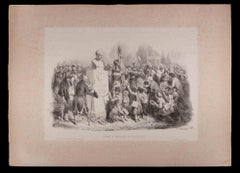
Dédié a Madame Vve. Charlet - Original Lithographs by Hippolyte Bellangé - 1846
Located in Roma, IT
Dédié a Madame Vve. Charlet is an original artwork realized by Hippolyte Bellangé in 1846.
Original lithograph on paper. The title appear on the lo...
Category
Modern Mid-19th Century Art
Materials
Lithograph
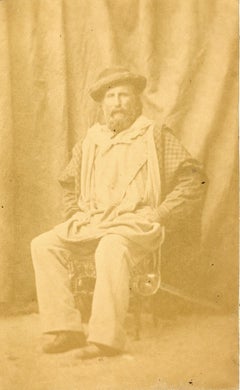
Early Signed Portrait of Giuseppe Garibaldi - Original Albumen Print 1860
Located in Roma, IT
Early Signed Portrait of Giuseppe Garibaldi is an albumen print signed on clichè and dated 26 June 1860.
Excellent conditions, size 11 x 17,5
This very rare and unpublished photogr...
Category
Mid-19th Century Art
Materials
Photographic Paper
Osakae - Woodcut by Ichiyôsai Yoshitaki - 1860s
Located in Roma, IT
Osakae is an original artwork realized in the 1861 by Ichiyôsai Yoshitaki.
Woodcut print Chuban Diptych.
The actor Nakamura Jakuemon I as Matsushita Kaheiji, Arashi Rikan III as Ak...
Category
Modern Mid-19th Century Art
Materials
Woodcut
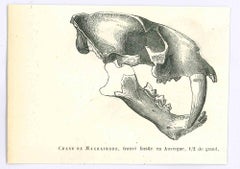
The Skull - Original Lithograph by Paul Gervais - 1854
By Paul Gervais
Located in Roma, IT
The Skull is an original lithograph on ivory-colored paper, realized by Paul Gervais (1816-1879). The artwork is from The Series of "Les Trois Règnes de la Nature", and was published...
Category
Modern Mid-19th Century Art
Materials
Paper, Lithograph
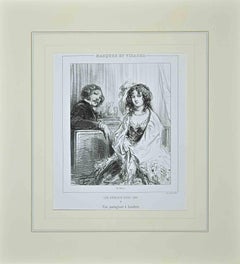
Une Partegeuse à Londres - Lithograph by Paul Gavarni - 1850s
By Paul Gavarni
Located in Roma, IT
Une partegeuse a Londres is a lithograph on ivory-colored paper, realized by the French draftsman Paul Gavarni (alias Guillaume Sulpice Chevalier Gavarni, 1804-1866) in the mid-19th Century.
From series of "Masques et Visages". Titled on the lower.
Good conditions except for some foxings.
Paul Gavarni (Paris, 1804 – 1866). Gavarni's father, Sulpice Chevalier, was from a family line of coopers from Burgundy. Paul began work as mechanical work in a machine factory but he saw that to make any progress in his profession, he had to be able to draw; accordingly, in his spare time in the evenings, he took classes in drawing. He devoted his special attention to architectural and mechanical drawing and worked at land surveying...
Category
Modern Mid-19th Century Art
Materials
Lithograph
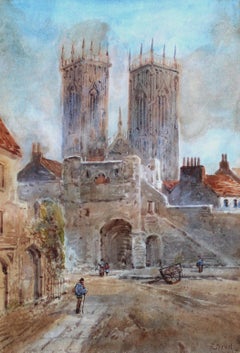
Notre-Dame de Paris. Paper, watercolor, 26.5x18 cm
By Edward Nevil
Located in Riga, LV
Edward Nevil ( 1813 – 1901 )
Notre-Dame de Paris. Paper, watercolor, 26.5x18 cm
Category
Realist Mid-19th Century Art
Materials
Paper, Watercolor
$606 Sale Price
71% Off
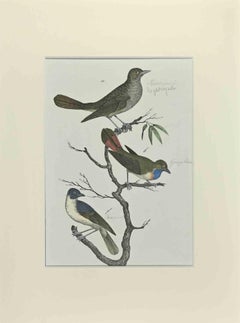
Nightingale - Etching by Johann Friedrich Naumann - 1840
Located in Roma, IT
Nightingale is a Etching hand colored realized by Gotthilf Heinrich von Schubert - Johann Friedrich Naumann, Illustration from Natural history of birds in pictures, published by Stut...
Category
Modern Mid-19th Century Art
Materials
Etching
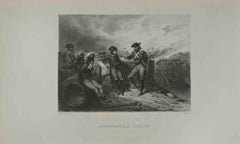
Napoleon Bonaparte in Toulon - Etching by Hippolyte Bellangé - 1837
Located in Roma, IT
Napoleon Bonaparte in Toulon is an etching that belongs to the suite AtlasBatt realized within Jacques Norvins' Histoire de Napoleon, published in 1837.
Author Jacques Norvins publ...
Category
Modern Mid-19th Century Art
Materials
Etching
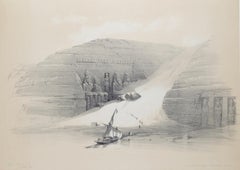
Temples of Aboo-Simbel, From the Nile: Original 19th C. Lithograph by D. Roberts
Located in Alamo, CA
This is an original 19th century duotone lithograph entitled "The Temples of Aboo-Simbel, From the Nile" by David Roberts, from his Egypt and Nubia volumes of the large folio edition...
Category
Realist Mid-19th Century Art
Materials
Lithograph
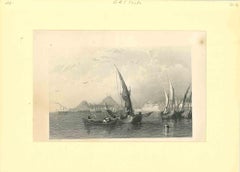
Ancient View of Corfu - Original Lithograph - Mid-19th Century
Located in Roma, IT
Corfu is an original modern artwork realized in the mid-19th Century.
Original B/W Lithograph on Ivory Paper.
Inscripted on the lower margin in Capital Letters: Corfu. Drawn by T...
Category
Modern Mid-19th Century Art
Materials
Lithograph
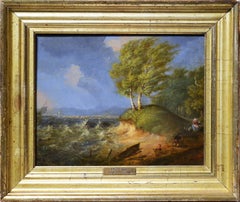
British seascape Storm on coast 19th century Oil painting by David Cox
By David Cox
Located in Stockholm, SE
Signed lower right - David Cox (1783 – 1859). The scene on the coast, the impending storm wind. The depiction of wind in art has always been a symbol of change and a reminder that everything in this world is relative... Beautiful landscape full of expression and dynamism. Antique oil painting on wood...
Category
Realist Mid-19th Century Art
Materials
Wood, Oil
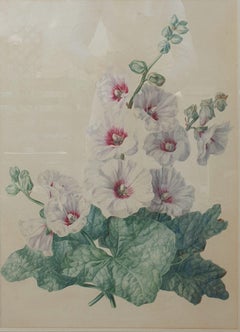
Watercolor 19th French school flowers hollyhocks large Academic
Located in PARIS, FR
French school of the mid-19th century
Watercolor
51 x 37 cm (69 x 55 cm with frame)
Signed and dated at the bottom “M. C. / 1857”
The hollyhock comes from China, passing through Sy...
Category
Mid-19th Century Art
Materials
Watercolor
$805 Sale Price
20% Off
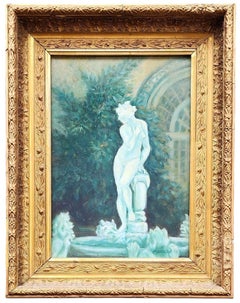
Venus of the Grotticella Fountain, Giambologna, Mid 19th Century
Located in Grand Rapids, MI
Signed: Morrow '65 (Lower, Right)
" Venus of the Grotticella Fountain ", 1865
Oil on Paper
14 1/2" x 10"
Housed in a 2 3/4" Ornamented Frame
Overall Size: 19 1/2" x 15"
The f...
Category
Romantic Mid-19th Century Art
Materials
Oil, Paper
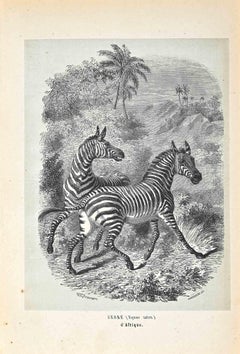
Zebra - Original Lithograph by Paul Gervais - 1854
By Paul Gervais
Located in Roma, IT
Zebra is an original lithograph on ivory-colored paper, realized by Paul Gervais (1816-1879). The artwork is from The Series of "Les Trois Règnes de la Nature", and was published in ...
Category
Modern Mid-19th Century Art
Materials
Lithograph
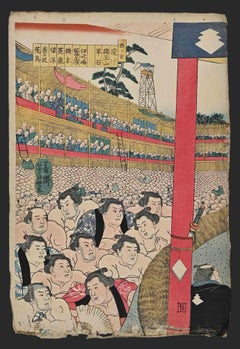
Sumo - Woodcut by Utagawa Kunisada - Mid 19th century
Located in Roma, IT
Sumo Tournament is a Woodcut print realized in the first half of the 19th century by Utagawa Kunisada.
Good condition and Beautiful colored woodblock print.
This wonderful modern artwork represents Japanese Sumo...
Category
Modern Mid-19th Century Art
Materials
Woodcut
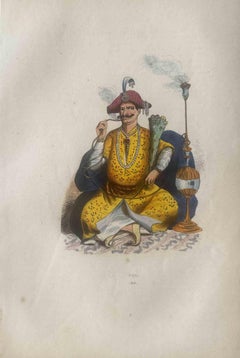
Uses and Customs - Indian Rajah - Lithograph - 1862
Located in Roma, IT
Uses and Customs - Indian Rajah is a lithograph on paper realized in 1862.
The artwork belongs to the Suite Uses and customs of all the peoples of the universe: " History of the gov...
Category
Modern Mid-19th Century Art
Materials
Lithograph
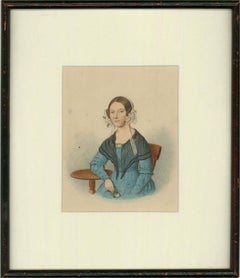
John Chapman - Mid 19th Century Watercolour, Seated Woman with Flower
Located in Corsham, GB
A beautiful 19th century watercolour capturing a young woman in a blue dress holding a single flower. Her intricate lace bonnet is adorned with s...
Category
Mid-19th Century Art
Materials
Watercolor
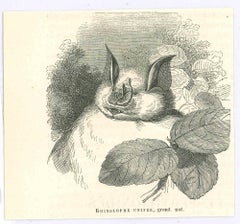
The Bat - Lithograph by Paul Gervais - 1854
By Paul Gervais
Located in Roma, IT
The Bat is an original lithograph on ivory-colored paper, realized by Paul Gervais (1816-1879). The artwork is from The Series of "Les Trois Règnes de la Nature", and was published i...
Category
Modern Mid-19th Century Art
Materials
Paper, Lithograph
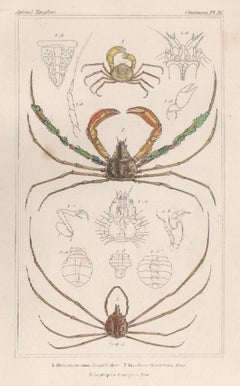
Crustaceans - crabs, antique English natural history engraving print, 1837
Located in Melbourne, Victoria
'Crustacea'
Copper-line engraving with original hand-colouring. From Baron Georges Cuvier's (1769-1832) 'Animal Kingdom', published in London in 1837.
210mm by 130mm (sheet)
Category
Naturalistic Mid-19th Century Art
Materials
Engraving
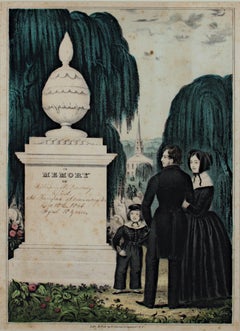
19th century color lithograph figures cemetery willow tree memorial headstone
Located in Milwaukee, WI
The present hand-colored lithograph was produced as part of the funeral and mourning culture in the United States during the 19th century. Images like this were popular as ways of remembering loved ones, an alternative to portraiture of the deceased. This lithograph shows a man, woman and child in morning clothes next to an urn-topped stone monument. Behind are additional putto-topped headstones beneath weeping willows, with a steepled church beyond. The monument contains a space where a family could inscribe the name and death dates of a deceased loved one. In this case, it has been inscribed to a young Civil War soldier:
William W. Peabody
Died at Fairfax Seminary, VA
December 18th, 1864
Aged 18 years
The young Mr. Peabody probably died in service for the Union during the American Civil War. Farifax Seminary was a Union hospital and military headquarters in Alexandria, Virginia. The hospital served nearly two thousand soldiers during the war time. Five hundred were also buried on the Seminary's grounds.
13.75 x 9.5 inches, artwork
23 x 19 inches, frame
Published before 1864
Inscribed bottom center "Lith. & Pub. by N. Currier. 2 Spruce St. N.Y."
Framed to conservation standards using 100 percent rag matting and TruVue Conservation Clear glass, housed in a gold gilded moulding.
Nathaniel Currier was a tall introspective man with a melancholy nature. He could captivate people with his piercing stare or charm them with his sparkling blue eyes. Nathaniel was born in Roxbury, Massachusetts on March 27th, 1813, the second of four children. His parents, Nathaniel and Hannah Currier, were distant cousins who lived a humble yet spartan life. When Nathaniel was eight years old, tragedy struck. Nathaniel’s father unexpectedly passed away leaving Nathaniel and his eleven-year-old brother Lorenzo to provide for the family. In addition to their mother, Nathaniel and Lorenzo had to care for six-year-old sister Elizabeth and two-year-old brother Charles. Nathaniel worked a series of odd jobs to support the family, and at fifteen, he started what would become a life-long career when he apprenticed in the Boston lithography shop of William and John Pendleton.
A Bavarian gentleman named Alois Senefelder invented lithography just 30 years prior to young Nat Currier’s apprenticeship. While under the employ of the brothers Pendleton, Nat was taught the art of lithography by the firm’s chief printer, a French national named Dubois, who brought the lithography trade to America.
Lithography involves grinding a piece of limestone flat and smooth then drawing in mirror image on the stone with a special grease pencil. After the image is completed, the stone is etched with a solution of aqua fortis leaving the greased areas in slight relief. Water is then used to wet the stone and greased-ink is rolled onto the raised areas. Since grease and water do not mix, the greased-ink is repelled by the moisture on the stone and clings to the original grease pencil lines. The stone is then placed in a press and used as a printing block to impart black on white images to paper.
In 1833, now twenty-years old and an accomplished lithographer, Nat Currier left Boston and moved to Philadelphia to do contract work for M.E.D. Brown, a noted engraver and printer. With the promise of good money, Currier hired on to help Brown prepare lithographic stones of scientific images for the American Journal of Sciences and Arts. When Nat completed the contract work in 1834, he traveled to New York City to work once again for his mentor John Pendleton, who was now operating his own shop located at 137 Broadway. Soon after the reunion, Pendleton expressed an interest in returning to Boston and offered to sell his print shop to Currier. Young Nat did not have the financial resources to buy the shop, but being the resourceful type he found another local printer by the name of Stodart. Together they bought Pendleton’s business.
The firm ‘Currier & Stodart’ specialized in "job" printing. They produced many different types of printed items, most notably music manuscripts for local publishers. By 1835, Stodart was frustrated that the business was not making enough money and he ended the partnership, taking his investment with him. With little more than some lithographic stones, and a talent for his trade, twenty-two year old Nat Currier set up shop in a temporary office at 1 Wall Street in New York City. He named his new enterprise ‘N. Currier, Lithographer’
Nathaniel continued as a job printer and duplicated everything from music sheets to architectural plans. He experimented with portraits, disaster scenes and memorial prints, and any thing that he could sell to the public from tables in front of his shop. During 1835 he produced a disaster print Ruins of the Planter's Hotel, New Orleans, which fell at two O’clock on the Morning of the 15th of May 1835, burying 50 persons, 40 of whom Escaped with their Lives. The public had a thirst for newsworthy events, and newspapers of the day did not include pictures. By producing this print, Nat gave the public a new way to “see” the news. The print sold reasonably well, an important fact that was not lost on Currier.
Nat met and married Eliza Farnsworth in 1840. He also produced a print that same year titled Awful Conflagration of the Steamboat Lexington in Long Island Sound on Monday Evening, January 18, 1840, by which melancholy occurrence over One Hundred Persons Perished. This print sold out very quickly, and Currier was approached by an enterprising publication who contracted him to print a single sheet addition of their paper, the New York Sun. This single page paper is presumed to be the first illustrated newspaper ever published.
The success of the Lexington print launched his career nationally and put him in a position to finally lift his family up. In 1841, Nat and Eliza had their first child, a son they named Edward West Currier. That same year Nat hired his twenty-one year old brother Charles and taught him the lithography trade, he also hired his artistically inclined brother Lorenzo to travel out west and make sketches of the new frontier as material for future prints. Charles worked for the firm on and off over the years, and invented a new type of lithographic crayon which he patented and named the Crayola. Lorenzo continued selling sketches to Nat for the next few years.
In 1843, Nat and Eliza had a daughter, Eliza West Currier, but tragedy struck in early 1847 when their young daughter died from a prolonged illness. Nat and Eliza were grief stricken, and Eliza, driven by despair, gave up on life and passed away just four months after her daughter’s death.
The subject of Nat Currier’s artwork changed following the death of his wife and daughter, and he produced many memorial prints and sentimental prints during the late 1840s. The memorial prints generally depicted grief stricken families posed by gravestones (the stones were left blank so the purchasers could fill in the names of the dearly departed). The sentimental prints usually depicted idealized portraits of women and children, titled with popular Christian names of the day.
Late in 1847, Nat Currier married Lura Ormsbee, a friend of the family. Lura was a self-sufficient woman, and she immediately set out to help Nat raise six-year-old Edward and get their house in order. In 1849, Lura delivered a son, Walter Black Currier, but fate dealt them a blow when young Walter died one year later. While Nat and Lura were grieving the loss of their new son, word came from San Francisco that Nat’s brother Lorenzo had also passed away from a brief illness. Nat sank deeper into his natural quiet melancholy. Friends stopped by to console the couple, and Lura began to set an extra place at their table for these unexpected guests. She continued this tradition throughout their lives.
In 1852, Charles introduced a friend, James Merritt Ives, to Nat and suggested he hire him as a bookkeeper. Jim Ives was a native New Yorker born in 1824 and raised on the grounds of Bellevue Hospital where his father was employed as superintendent. Jim was a self-trained artist and professional bookkeeper. He was also a plump and jovial man, presenting the exact opposite image of his new boss.
Jim Ives met Charles Currier through Caroline Clark, the object of Jim’s affection. Caroline’s sister Elizabeth was married to Charles, and Caroline was a close friend of the Currier family. Jim eventually proposed marriage to Caroline and solicited an introduction to Nat Currier, through Charles, in hopes of securing a more stable income to support his future wife.
Ives quickly set out to improve and modernize his new employer’s bookkeeping methods. He reorganized the firm’s sizable inventory, and used his artistic skills to streamline the firm’s production methods. By 1857, Nathaniel had become so dependent on Jims’ skills and initiative that he offered him a full partnership in the firm and appointed him general manager. The two men chose the name ‘Currier & Ives’ for the new partnership, and became close friends.
Currier & Ives produced their prints in a building at 33 Spruce Street where they occupied the third, fourth and fifth floors. The third floor was devoted to the hand operated printing presses that were built by Nat's cousin, Cyrus Currier, at his shop Cyrus Currier & Sons in Newark, NJ. The fourth floor found the artists, lithographers and the stone grinders at work. The fifth floor housed the coloring department, and was one of the earliest production lines in the country. The colorists were generally immigrant girls, mostly German, who came to America with some formal artistic training. Each colorist was responsible for adding a single color to a print. As a colorist finished applying their color, the print was passed down the line to the next colorist to add their color. The colorists worked from a master print displayed above their table, which showed where the proper colors were to be placed. At the end of the table was a touch up artist who checked the prints for quality, touching-in areas that may have been missed as it passed down the line. During the Civil War, demand for prints became so great that coloring stencils were developed to speed up production.
Although most Currier & Ives prints were colored in house, some were sent out to contract artists. The rate Currier & Ives paid these artists for coloring work was one dollar per one hundred small folios (a penny a print) and one dollar per one dozen large folios. Currier & Ives also offered uncolored prints to dealers, with instructions (included on the price list) on how to 'prepare the prints for coloring.' In addition, schools could order uncolored prints from the firm’s catalogue to use in their painting classes.
Nathaniel Currier and James Merritt Ives attracted a wide circle of friends during their years in business. Some of their more famous acquaintances included Horace Greeley, Phineas T. Barnum, and the outspoken abolitionists Rev. Henry Ward, and John Greenleaf Whittier (the latter being a cousin of Mr. Currier).
Nat Currier and Jim Ives described their business as "Publishers of Cheap and Popular Pictures" and produced many categories of prints. These included Disaster Scenes, Sentimental Images, Sports, Humor, Hunting Scenes, Politics, Religion, City and Rural Scenes, Trains, Ships, Fire Fighters, Famous Race Horses, Historical Portraits, and just about any other topic that satisfied the general public's taste. In all, the firm produced in excess of 7500 different titles, totaling over one million prints produced from 1835 to 1907.
Nat Currier retired in 1880, and signed over his share of the firm to his son Edward. Nat died eight years later at his summer home 'Lion’s Gate' in Amesbury, Massachusetts. Jim Ives remained active in the firm until his death in 1895, when his share of the firm passed to his eldest son, Chauncey.
In 1902, faced will failing health from the ravages of Tuberculosis, Edward Currier sold his share of the firm to Chauncey Ives...
Category
Romantic Mid-19th Century Art
Materials
Watercolor, Lithograph
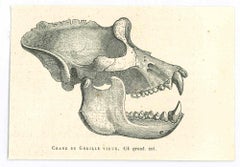
The Skull - Original Lithograph by Paul Gervais - 1854
By Paul Gervais
Located in Roma, IT
The Skull is an original lithograph on ivory-colored paper, realized by Paul Gervais (1816-1879). The artwork is from The Series of "Les Trois Règnes de la Nature", and was published...
Category
Modern Mid-19th Century Art
Materials
Paper, Lithograph
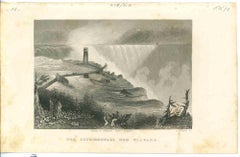
Ancient View of Niagara Waterfalls - Original Lithograph - 1850s
Located in Roma, IT
Ancient View of Niagara Waterfalls is an original modern artwork realized in Italy in the first half of the 19th Century.
Original Lithograph on Ivory Paper.
Inscripted in capital...
Category
Modern Mid-19th Century Art
Materials
Lithograph
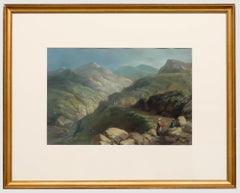
1849 Pastel - The Mountain Path
Located in Corsham, GB
A delightful continental scene depicting figures travelling a winding mountain path. Illegibly signed. Dated 1849. Presented in a gilt frame. On paper.
Category
Mid-19th Century Art
Materials
Pastel
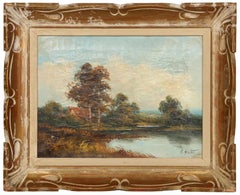
Landscape with Cottage, Framed Impressionist Oil Painting by Edward Heaton
Located in Long Island City, NY
Artist: Edward Heaton, American (1824 - )
Title: Landscape with Cottage
Medium: Oil on Canvas, signed lower right
Size: 12 x 16 in. (30.48 x 40.64 cm)
Fr...
Category
Impressionist Mid-19th Century Art
Materials
Oil
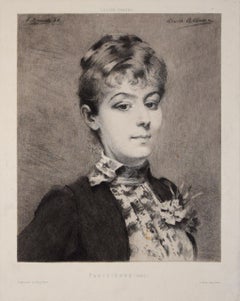
Parisienne - Original Etching by Fernand Desmoulin - 1886
Located in Roma, IT
Pariesienne is an original artwork realized by Fernand Desmoulin in 1886. Etching on paper.
Titled on the lower central margin; "Supplement de Paris-Noel" at the bottom; "L. Eudes ...
Category
Mid-19th Century Art
Materials
Etching
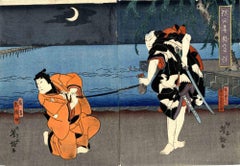
Sumida Haru - Kakutai - Woodcut by Utagawa Yoshitaki - 1860
Located in Roma, IT
Sumida haru - kakutai is an original artwork realized in 1860 by Utagawa Yoshitaki (April 13, 1841 – June 28, 1899) also known as Ichiyosai Yoshitaki.
Two Chuban from a Triptych.
M...
Category
Modern Mid-19th Century Art
Materials
Woodcut
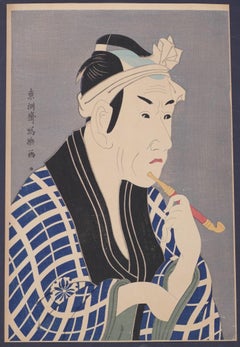
Portrait of Man with a Pipe - Woodcut print after Utagawa Kuniyoshi
Located in Roma, IT
Portrait of Man with Pipe is a superb color woodblock print on paper, from the Japanese print-series “Taiheiki eiyu den”, 'Tale of Grand Pacification', designed by Utagawa Kuniyoshi ...
Category
Modern Mid-19th Century Art
Materials
Paper, Woodcut
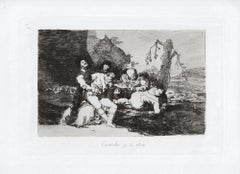
Curarlos y a Otra - Etching by Francisco Goya - 1863
Located in Roma, IT
Curarlos y a otra is an original artwork realized by the great Spanish artist Francisco Goya in 1810. Original etching on paper.
The artwork belongs to the famous print collection L...
Category
Old Masters Mid-19th Century Art
Materials
Etching, Aquatint
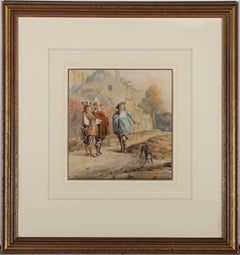
Framed Mid 19th Century Watercolour - Frenchmen in Conversation
Located in Corsham, GB
Gossip on the Street- This Mid 19th century watercolour depicts three boastful Frenchmen having a public natter in front of several french style houses. The artist has captured a dog...
Category
Mid-19th Century Art
Materials
Watercolor
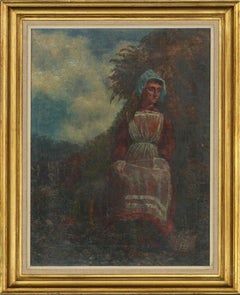
Mid 19th Century Oil - Girl With Basket
Located in Corsham, GB
A striking mid 19th Century full length portrait of a young woman in a red dress and blue bonnet, sitting on a hay bail with a basket at her feet, The painting is unsigned and has be...
Category
Mid-19th Century Art
Materials
Oil
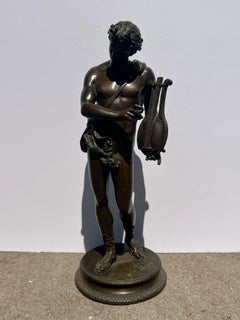
28” Orpheus Antique Bronze Sculpture Male Nude with Lyre by George Mattes 1900
Located in New York, NY
For sale is the great looking large male nude bronze sculpture of Orpheus by German Artist Professor George Mattes (1874-1945). Orpheus is seen along ...
Category
Academic Mid-19th Century Art
Materials
Bronze
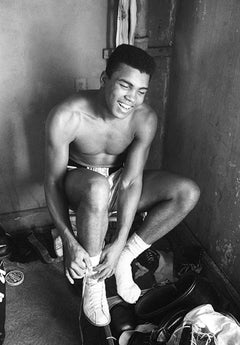
Cassius Clay, 5th Street Gym, Miami, Black
White Photography, Fine Art Print
Located in Los Angeles, CA
Cassius Clay, 5th Street Gym, Miami, 1963
13 x 19 in. (33 x 48 cm)
Archival Pigment Print
Edition of 10
The photographer
Marvin E. Newman (b. 1927) was one of the first recipi...
Category
Mid-19th Century Art
Materials
Archival Pigment
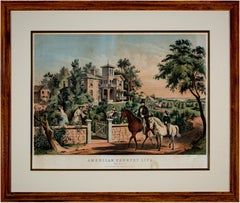
19th century color lithograph landscape figures horseback house scene trees sky
Located in Milwaukee, WI
The present print is one of several examples produced for Nathaniel Currier by his longtime collaborator Frances F. "Fanny" Palmer. Harry T. Peters wrote of her: "There is no more interesting and appealing character among the group of artists who worked for Currier & Ives than Fanny Palmer. In an age when women, well-bred women in particular, did not generally work for a living Fanny Palmer for years did exacting, full-time work in order to support a large and dependent family ... Her work ... had great charm, homeliness, and a conscientious attention to detail."
One of a series of four prints showing American country life in different seasons, the image presents the viewer with a picturesque view of a successful American farm. In the foreground, a gentleman rides a horse with a young boy before a respectable Italianate country house. Two women and a young girl pick flowers in the garden and several farm workers attend to their duties. Beyond are other homes and a city on the coast.
16.63 x 23.75 inches, artwork
28.13 x 33.38 inches, frame
Entitled bottom center "American Country Life - May Morning"
Signed in the stone, lower left "F.F. Palmer, Del."
Signed in the stone, lower right "Lith. by N. Currier"
Copyrighted lower center "Entered according to Act of Congress in the year 1855 by N. Currier in the Clerk's office of the Southern District of N.Y."
Inscribed bottom center "New York, Published by N. Currier 152 Nassau Street"
Framed to conservation standards using silk-lined 100 percent rag matting and Museum Glass with a gold gilded liner, all housed in a stained wood moulding.
Nathaniel Currier was a tall introspective man with a melancholy nature. He could captivate people with his piercing stare or charm them with his sparkling blue eyes. Nathaniel was born in Roxbury, Massachusetts on March 27th, 1813, the second of four children. His parents, Nathaniel and Hannah Currier, were distant cousins who lived a humble yet spartan life. When Nathaniel was eight years old, tragedy struck. Nathaniel’s father unexpectedly passed away leaving Nathaniel and his eleven-year-old brother Lorenzo to provide for the family. In addition to their mother, Nathaniel and Lorenzo had to care for six-year-old sister Elizabeth and two-year-old brother Charles. Nathaniel worked a series of odd jobs to support the family, and at fifteen, he started what would become a life-long career when he apprenticed in the Boston lithography shop of William and John Pendleton.
A Bavarian gentleman named Alois Senefelder invented lithography just 30 years prior to young Nat Currier’s apprenticeship. While under the employ of the brothers Pendleton, Nat was taught the art of lithography by the firm’s chief printer, a French national named Dubois, who brought the lithography trade to America.
Lithography involves grinding a piece of limestone flat and smooth then drawing in mirror image on the stone with a special grease pencil. After the image is completed, the stone is etched with a solution of aqua fortis leaving the greased areas in slight relief. Water is then used to wet the stone and greased-ink is rolled onto the raised areas. Since grease and water do not mix, the greased-ink is repelled by the moisture on the stone and clings to the original grease pencil lines. The stone is then placed in a press and used as a printing block to impart black on white images to paper.
In 1833, now twenty-years old and an accomplished lithographer, Nat Currier left Boston and moved to Philadelphia to do contract work for M.E.D. Brown, a noted engraver and printer. With the promise of good money, Currier hired on to help Brown prepare lithographic stones of scientific images for the American Journal of Sciences and Arts. When Nat completed the contract work in 1834, he traveled to New York City to work once again for his mentor John Pendleton, who was now operating his own shop located at 137 Broadway. Soon after the reunion, Pendleton expressed an interest in returning to Boston and offered to sell his print shop to Currier. Young Nat did not have the financial resources to buy the shop, but being the resourceful type he found another local printer by the name of Stodart. Together they bought Pendleton’s business.
The firm ‘Currier & Stodart’ specialized in "job" printing. They produced many different types of printed items, most notably music manuscripts for local publishers. By 1835, Stodart was frustrated that the business was not making enough money and he ended the partnership, taking his investment with him. With little more than some lithographic stones, and a talent for his trade, twenty-two year old Nat Currier set up shop in a temporary office at 1 Wall Street in New York City. He named his new enterprise ‘N. Currier, Lithographer’
Nathaniel continued as a job printer and duplicated everything from music sheets to architectural plans. He experimented with portraits, disaster scenes and memorial prints, and any thing that he could sell to the public from tables in front of his shop. During 1835 he produced a disaster print Ruins of the Planter's Hotel, New Orleans, which fell at two O’clock on the Morning of the 15th of May 1835, burying 50 persons, 40 of whom Escaped with their Lives. The public had a thirst for newsworthy events, and newspapers of the day did not include pictures. By producing this print, Nat gave the public a new way to “see” the news. The print sold reasonably well, an important fact that was not lost on Currier.
Nat met and married Eliza Farnsworth in 1840. He also produced a print that same year titled Awful Conflagration of the Steamboat Lexington in Long Island Sound on Monday Evening, January 18, 1840, by which melancholy occurrence over One Hundred Persons Perished. This print sold out very quickly, and Currier was approached by an enterprising publication who contracted him to print a single sheet addition of their paper, the New York Sun. This single page paper is presumed to be the first illustrated newspaper ever published.
The success of the Lexington print launched his career nationally and put him in a position to finally lift his family up. In 1841, Nat and Eliza had their first child, a son they named Edward West Currier. That same year Nat hired his twenty-one year old brother Charles and taught him the lithography trade, he also hired his artistically inclined brother Lorenzo to travel out west and make sketches of the new frontier as material for future prints. Charles worked for the firm on and off over the years, and invented a new type of lithographic crayon which he patented and named the Crayola. Lorenzo continued selling sketches to Nat for the next few years.
In 1843, Nat and Eliza had a daughter, Eliza West Currier, but tragedy struck in early 1847 when their young daughter died from a prolonged illness. Nat and Eliza were grief stricken, and Eliza, driven by despair, gave up on life and passed away just four months after her daughter’s death.
The subject of Nat Currier’s artwork changed following the death of his wife and daughter, and he produced many memorial prints and sentimental prints during the late 1840s. The memorial prints generally depicted grief stricken families posed by gravestones (the stones were left blank so the purchasers could fill in the names of the dearly departed). The sentimental prints usually depicted idealized portraits of women and children, titled with popular Christian names of the day.
Late in 1847, Nat Currier married Lura Ormsbee, a friend of the family. Lura was a self-sufficient woman, and she immediately set out to help Nat raise six-year-old Edward and get their house in order. In 1849, Lura delivered a son, Walter Black Currier, but fate dealt them a blow when young Walter died one year later. While Nat and Lura were grieving the loss of their new son, word came from San Francisco that Nat’s brother Lorenzo had also passed away from a brief illness. Nat sank deeper into his natural quiet melancholy. Friends stopped by to console the couple, and Lura began to set an extra place at their table for these unexpected guests. She continued this tradition throughout their lives.
In 1852, Charles introduced a friend, James Merritt Ives, to Nat and suggested he hire him as a bookkeeper. Jim Ives was a native New Yorker born in 1824 and raised on the grounds of Bellevue Hospital where his father was employed as superintendent. Jim was a self-trained artist and professional bookkeeper. He was also a plump and jovial man, presenting the exact opposite image of his new boss.
Jim Ives met Charles Currier through Caroline Clark, the object of Jim’s affection. Caroline’s sister Elizabeth was married to Charles, and Caroline was a close friend of the Currier family. Jim eventually proposed marriage to Caroline and solicited an introduction to Nat Currier, through Charles, in hopes of securing a more stable income to support his future wife.
Ives quickly set out to improve and modernize his new employer’s bookkeeping methods. He reorganized the firm’s sizable inventory, and used his artistic skills to streamline the firm’s production methods. By 1857, Nathaniel had become so dependent on Jims’ skills and initiative that he offered him a full partnership in the firm and appointed him general manager. The two men chose the name ‘Currier & Ives’ for the new partnership, and became close friends.
Currier & Ives produced their prints in a building at 33 Spruce Street where they occupied the third, fourth and fifth floors. The third floor was devoted to the hand operated printing presses that were built by Nat's cousin, Cyrus Currier, at his shop Cyrus Currier & Sons in Newark, NJ. The fourth floor found the artists, lithographers and the stone grinders at work. The fifth floor housed the coloring department, and was one of the earliest production lines in the country. The colorists were generally immigrant girls, mostly German, who came to America with some formal artistic training. Each colorist was responsible for adding a single color to a print. As a colorist finished applying their color, the print was passed down the line to the next colorist to add their color. The colorists worked from a master print displayed above their table, which showed where the proper colors were to be placed. At the end of the table was a touch up artist who checked the prints for quality, touching-in areas that may have been missed as it passed down the line. During the Civil War, demand for prints became so great that coloring stencils were developed to speed up production.
Although most Currier & Ives prints were colored in house, some were sent out to contract artists. The rate Currier & Ives paid these artists for coloring work was one dollar per one hundred small folios (a penny a print) and one dollar per one dozen large folios. Currier & Ives also offered uncolored prints to dealers, with instructions (included on the price list) on how to 'prepare the prints for coloring.' In addition, schools could order uncolored prints from the firm’s catalogue to use in their painting classes.
Nathaniel Currier and James Merritt Ives attracted a wide circle of friends during their years in business. Some of their more famous acquaintances included Horace Greeley, Phineas T. Barnum, and the outspoken abolitionists Rev. Henry Ward, and John Greenleaf Whittier (the latter being a cousin of Mr. Currier).
Nat Currier and Jim Ives described their business as "Publishers of Cheap and Popular Pictures" and produced many categories of prints. These included Disaster Scenes, Sentimental Images, Sports, Humor, Hunting Scenes, Politics, Religion, City and Rural Scenes, Trains, Ships, Fire Fighters, Famous Race Horses, Historical Portraits, and just about any other topic that satisfied the general public's taste. In all, the firm produced in excess of 7500 different titles, totaling over one million prints produced from 1835 to 1907.
Nat Currier retired in 1880, and signed over his share of the firm to his son Edward. Nat died eight years later at his summer home 'Lion’s Gate' in Amesbury, Massachusetts. Jim Ives remained active in the firm until his death in 1895, when his share of the firm passed to his eldest son, Chauncey.
In 1902, faced will failing health from the ravages of Tuberculosis, Edward Currier sold his share of the firm to Chauncey Ives...
Category
Romantic Mid-19th Century Art
Materials
Watercolor, Lithograph
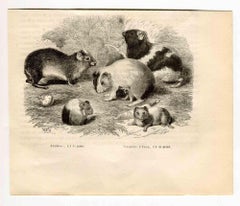
Brazilian Guinea Pig - Lithograph by Paul Gervais - 1854
By Paul Gervais
Located in Roma, IT
Brazilian Guinea Pig is an original lithograph on ivory-colored paper, realized by Paul Gervais (1816-1879). The artwork is from The Series of "Les Trois Rè...
Category
Modern Mid-19th Century Art
Materials
Paper, Lithograph
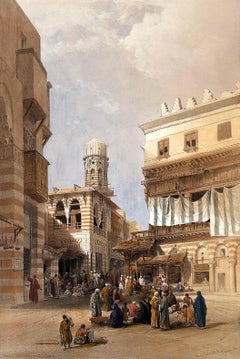
Bazaar of the Coppersmiths, David Roberts Lithograph
Located in London, GB
DAVID ROBERTS RA
1796 - 1864
Bazaar of The Coppersmiths, Cairo
First Edition lithograph
Full plate: 230
Presented in a acid free mount
We pride ourselves in the hand colouring of our antique David Roberts lithographs...
Category
Realist Mid-19th Century Art
Materials
Laid Paper, Lithograph
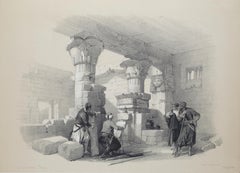
The Portico of Dayr-Medeeneh, Thebes: Original 19th C. Lithograph by D. Roberts
Located in Alamo, CA
This is an original 19th century duotone lithograph entitled "View from Under the Portico of Dayr-Medeeneh, Thebes" by David Roberts, from his Egypt and Nubia volumes of the large fo...
Category
Realist Mid-19th Century Art
Materials
Lithograph
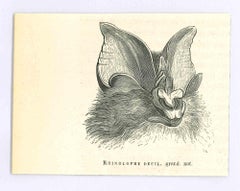
The Bat - Lithograph by Paul Gervais - 1854
By Paul Gervais
Located in Roma, IT
The Bat is an original lithograph on ivory-colored paper, realized by Paul Gervais (1816-1879). The artwork is from The Series of "Les Trois Règnes de la Nature", and was published i...
Category
Modern Mid-19th Century Art
Materials
Paper, Lithograph
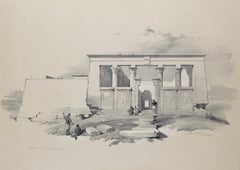
Temple of Wady Dabod, Nubia: Original 19th C. Lithograph by D. Roberts
Located in Alamo, CA
This is an original 19th century duotone lithograph entitled "Temple of Wady Dabod, Nubia" by David Roberts, from his Egypt and Nubia volumes of the large folio edition, published in...
Category
Realist Mid-19th Century Art
Materials
Lithograph
Bath in Algeria - Original Lithograph - 1846
Located in Roma, IT
Bath in Algeria is an original Hand-colored lithograph on paper realized in 1846 by an Anonymous artist of the 19th century.
Titled in Italian on the lower center.
The state of pr...
Category
Mid-19th Century Art
Materials
Lithograph

Gate in Algeria - Original Lithograph - 1846
Located in Roma, IT
Gate in Algeria is an original Hand-colored lithograph on paper realized in 1846 by an Anonymous artist of the XIX century.
Titled in Italian on the lower center "Porta Bab-Azoun i...
Category
Mid-19th Century Art
Materials
Lithograph

Pyramid of Cestius - Original Lithograph and Stencil - Mid 19th Century
Located in Roma, IT
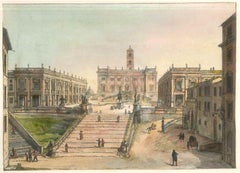
The Capitol is a beautiful lot of two hand-watercolored lithographs realized by an Italian artist of the XIX century. It represents the incredible landscape of the communal site of t...
Category
Modern Mid-19th Century Art
Materials
Watercolor, Stencil
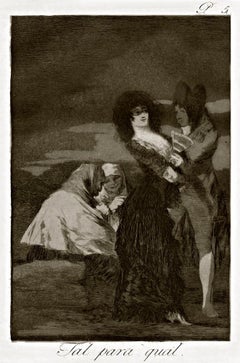
Tal Para Qual - Etching by Francisco Goya - 1868
Located in Roma, IT
Tal para Qual is an original artwork realized by the Spanish artist Francisco Goya and published for the first time in 1799.
Original etching on paper.
The plate is part of the Thi...
Category
Old Masters Mid-19th Century Art
Materials
Etching, Aquatint
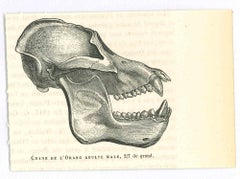
The Skull - Original Lithograph by Paul Gervais - 1854
By Paul Gervais
Located in Roma, IT
The Skull is an original lithograph on ivory-colored paper, realized by Paul Gervais (1816-1879). The artwork is from The Series of "Les Trois Règnes de la N...
Category
Modern Mid-19th Century Art
Materials
Paper, Lithograph
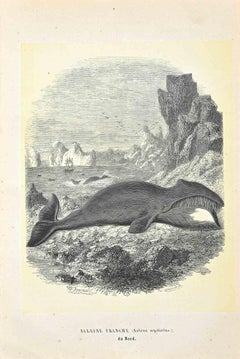
North Atlantic Right Whale - Original Lithograph by Paul Gervais - 1854
By Paul Gervais
Located in Roma, IT
North Atlantic Right Whale is an original lithograph on ivory-colored paper, realized by Paul Gervais (1816-1879). The artwork is from The Series of "Les T...
Category
Modern Mid-19th Century Art
Materials
Lithograph
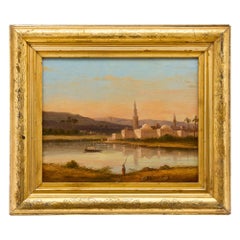
Antique Orientalist Oil Painting Mosque Riverside Nicolas Louis André Prevost
Located in London, GB
Antique Orientalist Oil Painting Mosque Riverside Nicolas Louis André Prevost
Swiss, Mid-19th century
Canvas: Height 38cm, width 46cm
Frame: Height 53cm, width 62cm, depth 5cm
Paint...
Category
Mid-19th Century Art
Materials
Canvas, Oil
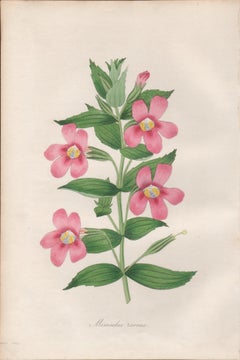
Mimulus roseus, antique botanical pink flower engraving
Located in Melbourne, Victoria
Engraving with original hand-colouring. 1834. 230mm by 155mm. From Paxton's 'Magazine of botany and register of flowering plants' by Sir Joseph Paxton.
Category
Naturalistic Mid-19th Century Art
Materials
Engraving
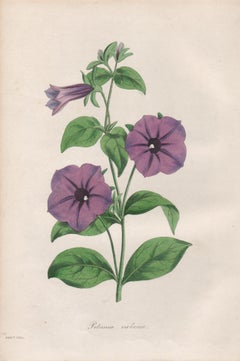
Petunia violacea, antique botanical purple flower engraving
Located in Melbourne, Victoria
Engraving with original hand-colouring. 1834. 230mm by 155mm. From Paxton's 'Magazine of botany and register of flowering plants' by Sir Joseph Paxton.
Category
Naturalistic Mid-19th Century Art
Materials
Engraving
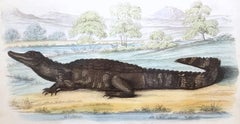
The Alligator (In the Gardens of the Zoological Society) /// Natural History Art
Located in Saint Augustine, FL
Artist: Robert Huish (English, 1777-1850)
Title: "The Alligator (In the Gardens of the Zoological Society)" (Plate 26)
Portfolio: The Wonders of the Animal Kingdom; Exhibiting Deline...
Category
Victorian Mid-19th Century Art
Materials
Watercolor, Etching
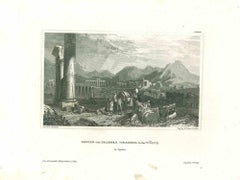
Ancient View of the Ruins of Palmira - Original Lithograph - Mid-19th Century
Located in Roma, IT
Ancient Ruins of Palmira is an original modern artwork realized in the mid-19th Century.
Original B/W Lithograph on Ivory Paper.
Inscripted on the lower margin in Capital Letters...
Category
Modern Mid-19th Century Art
Materials
Paper, Lithograph
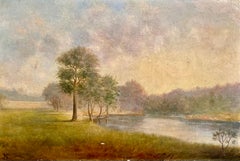
Charles River Meadows, MA
Located in Fredericksburg, VA
"Charles River Meadows, Massachusetts" by Mark E. Slayton is a masterful landscape painting that embodies the beauty characteristic of the Hudson River School. As a prominent artist ...
Category
Hudson River School Mid-19th Century Art
Materials
Canvas, Oil
More Ways To Browse
Maggie Siner
Maplethorpe Calla
Marble Woman Head
Marcel Leprin
Mark Stock
Martin Hardie
Mauritz Lindstrom
Maximillien Luce
Michael Budden Central Park
Midcentury Matador Paintings
Mike Wright
Miracle On Ice
Mississippi River Painting
Monarch Of The Glen Painting
Moroccan Paintings Essaouira
Morpho Butterfly Art
Mount Tamalpais
Murray Dessner