Mid-19th Century Art
to
384
4,200
1,091
385
201
161
Overall Width
to
Overall Height
to
7,604
21,290
162,226
233,229
1,981
2,258
4,928
6,461
5,740
15,014
20,476
25,765
18,493
13,852
5,388
3,210
106
101
23
12
7
7
5
1
1
2,958
2,935
49
3,907
1,789
1,354
1,162
916
782
655
477
364
326
318
310
288
285
213
206
191
186
184
177
3,089
1,406
949
811
762
168
127
106
100
87
1,278
3,253
3,353
1,214
Period: Mid-19th Century
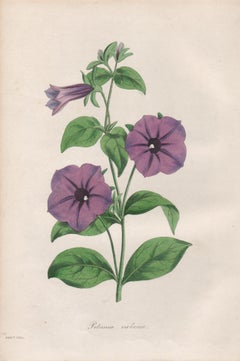
Petunia violacea, antique botanical purple flower engraving
Located in Melbourne, Victoria
Engraving with original hand-colouring. 1834. 230mm by 155mm. From Paxton's 'Magazine of botany and register of flowering plants' by Sir Joseph Paxton.
Category
Naturalistic Mid-19th Century Art
Materials
Engraving
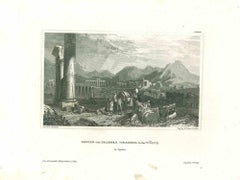
Ancient View of the Ruins of Palmira - Original Lithograph - Mid-19th Century
Located in Roma, IT
Ancient Ruins of Palmira is an original modern artwork realized in the mid-19th Century.
Original B/W Lithograph on Ivory Paper.
Inscripted on the lower margin in Capital Letters...
Category
Modern Mid-19th Century Art
Materials
Paper, Lithograph
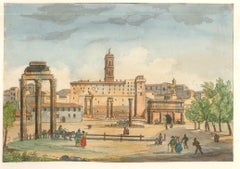
The Capitol - Original Lithographs and Watercolors - Mid 19th Century
Located in Roma, IT
The Capitol is a beautiful lot of two hand-watercolored lithographs realized by an Italian artist of the XIX century and later watercolored. It represents ...
Category
Modern Mid-19th Century Art
Materials
Watercolor, Lithograph
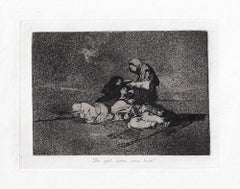
De que Sirvé una Taza? - Etching by Francisco Goya - 1863
Located in Roma, IT
Di que sirvé una taza? is an original artwork realized by the great Spanish artist Francisco Goya in 1810.
Original Etching on paper.
The artwork belongs to the famous series "Lo...
Category
Old Masters Mid-19th Century Art
Materials
Etching, Aquatint
Cassius Clay, 5th Street Gym, Miami, Black
White Photography, Fine Art Print
Located in Los Angeles, CA
Cassius Clay, 5th Street Gym, Miami, 1963
13 x 19 in. (33 x 48 cm)
Archival Pigment Print
Edition of 10
The photographer
Marvin E. Newman (b. 1927) was one of the first recipi...
Category
Mid-19th Century Art
Materials
Archival Pigment

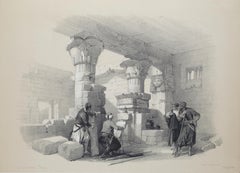
The Portico of Dayr-Medeeneh, Thebes: Original 19th C. Lithograph by D. Roberts
Located in Alamo, CA
This is an original 19th century duotone lithograph entitled "View from Under the Portico of Dayr-Medeeneh, Thebes" by David Roberts, from his Egypt and Nubia volumes of the large fo...
Category
Realist Mid-19th Century Art
Materials
Lithograph
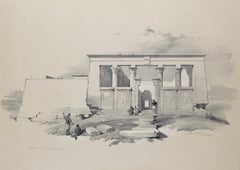
Temple of Wady Dabod, Nubia: Original 19th C. Lithograph by D. Roberts
Located in Alamo, CA
This is an original 19th century duotone lithograph entitled "Temple of Wady Dabod, Nubia" by David Roberts, from his Egypt and Nubia volumes of the large folio edition, published in...
Category
Realist Mid-19th Century Art
Materials
Lithograph
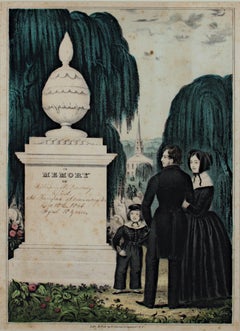
19th century color lithograph figures cemetery willow tree memorial headstone
Located in Milwaukee, WI
The present hand-colored lithograph was produced as part of the funeral and mourning culture in the United States during the 19th century. Images like this were popular as ways of remembering loved ones, an alternative to portraiture of the deceased. This lithograph shows a man, woman and child in morning clothes next to an urn-topped stone monument. Behind are additional putto-topped headstones beneath weeping willows, with a steepled church beyond. The monument contains a space where a family could inscribe the name and death dates of a deceased loved one. In this case, it has been inscribed to a young Civil War soldier:
William W. Peabody
Died at Fairfax Seminary, VA
December 18th, 1864
Aged 18 years
The young Mr. Peabody probably died in service for the Union during the American Civil War. Farifax Seminary was a Union hospital and military headquarters in Alexandria, Virginia. The hospital served nearly two thousand soldiers during the war time. Five hundred were also buried on the Seminary's grounds.
13.75 x 9.5 inches, artwork
23 x 19 inches, frame
Published before 1864
Inscribed bottom center "Lith. & Pub. by N. Currier. 2 Spruce St. N.Y."
Framed to conservation standards using 100 percent rag matting and TruVue Conservation Clear glass, housed in a gold gilded moulding.
Nathaniel Currier was a tall introspective man with a melancholy nature. He could captivate people with his piercing stare or charm them with his sparkling blue eyes. Nathaniel was born in Roxbury, Massachusetts on March 27th, 1813, the second of four children. His parents, Nathaniel and Hannah Currier, were distant cousins who lived a humble yet spartan life. When Nathaniel was eight years old, tragedy struck. Nathaniel’s father unexpectedly passed away leaving Nathaniel and his eleven-year-old brother Lorenzo to provide for the family. In addition to their mother, Nathaniel and Lorenzo had to care for six-year-old sister Elizabeth and two-year-old brother Charles. Nathaniel worked a series of odd jobs to support the family, and at fifteen, he started what would become a life-long career when he apprenticed in the Boston lithography shop of William and John Pendleton.
A Bavarian gentleman named Alois Senefelder invented lithography just 30 years prior to young Nat Currier’s apprenticeship. While under the employ of the brothers Pendleton, Nat was taught the art of lithography by the firm’s chief printer, a French national named Dubois, who brought the lithography trade to America.
Lithography involves grinding a piece of limestone flat and smooth then drawing in mirror image on the stone with a special grease pencil. After the image is completed, the stone is etched with a solution of aqua fortis leaving the greased areas in slight relief. Water is then used to wet the stone and greased-ink is rolled onto the raised areas. Since grease and water do not mix, the greased-ink is repelled by the moisture on the stone and clings to the original grease pencil lines. The stone is then placed in a press and used as a printing block to impart black on white images to paper.
In 1833, now twenty-years old and an accomplished lithographer, Nat Currier left Boston and moved to Philadelphia to do contract work for M.E.D. Brown, a noted engraver and printer. With the promise of good money, Currier hired on to help Brown prepare lithographic stones of scientific images for the American Journal of Sciences and Arts. When Nat completed the contract work in 1834, he traveled to New York City to work once again for his mentor John Pendleton, who was now operating his own shop located at 137 Broadway. Soon after the reunion, Pendleton expressed an interest in returning to Boston and offered to sell his print shop to Currier. Young Nat did not have the financial resources to buy the shop, but being the resourceful type he found another local printer by the name of Stodart. Together they bought Pendleton’s business.
The firm ‘Currier & Stodart’ specialized in "job" printing. They produced many different types of printed items, most notably music manuscripts for local publishers. By 1835, Stodart was frustrated that the business was not making enough money and he ended the partnership, taking his investment with him. With little more than some lithographic stones, and a talent for his trade, twenty-two year old Nat Currier set up shop in a temporary office at 1 Wall Street in New York City. He named his new enterprise ‘N. Currier, Lithographer’
Nathaniel continued as a job printer and duplicated everything from music sheets to architectural plans. He experimented with portraits, disaster scenes and memorial prints, and any thing that he could sell to the public from tables in front of his shop. During 1835 he produced a disaster print Ruins of the Planter's Hotel, New Orleans, which fell at two O’clock on the Morning of the 15th of May 1835, burying 50 persons, 40 of whom Escaped with their Lives. The public had a thirst for newsworthy events, and newspapers of the day did not include pictures. By producing this print, Nat gave the public a new way to “see” the news. The print sold reasonably well, an important fact that was not lost on Currier.
Nat met and married Eliza Farnsworth in 1840. He also produced a print that same year titled Awful Conflagration of the Steamboat Lexington in Long Island Sound on Monday Evening, January 18, 1840, by which melancholy occurrence over One Hundred Persons Perished. This print sold out very quickly, and Currier was approached by an enterprising publication who contracted him to print a single sheet addition of their paper, the New York Sun. This single page paper is presumed to be the first illustrated newspaper ever published.
The success of the Lexington print launched his career nationally and put him in a position to finally lift his family up. In 1841, Nat and Eliza had their first child, a son they named Edward West Currier. That same year Nat hired his twenty-one year old brother Charles and taught him the lithography trade, he also hired his artistically inclined brother Lorenzo to travel out west and make sketches of the new frontier as material for future prints. Charles worked for the firm on and off over the years, and invented a new type of lithographic crayon which he patented and named the Crayola. Lorenzo continued selling sketches to Nat for the next few years.
In 1843, Nat and Eliza had a daughter, Eliza West Currier, but tragedy struck in early 1847 when their young daughter died from a prolonged illness. Nat and Eliza were grief stricken, and Eliza, driven by despair, gave up on life and passed away just four months after her daughter’s death.
The subject of Nat Currier’s artwork changed following the death of his wife and daughter, and he produced many memorial prints and sentimental prints during the late 1840s. The memorial prints generally depicted grief stricken families posed by gravestones (the stones were left blank so the purchasers could fill in the names of the dearly departed). The sentimental prints usually depicted idealized portraits of women and children, titled with popular Christian names of the day.
Late in 1847, Nat Currier married Lura Ormsbee, a friend of the family. Lura was a self-sufficient woman, and she immediately set out to help Nat raise six-year-old Edward and get their house in order. In 1849, Lura delivered a son, Walter Black Currier, but fate dealt them a blow when young Walter died one year later. While Nat and Lura were grieving the loss of their new son, word came from San Francisco that Nat’s brother Lorenzo had also passed away from a brief illness. Nat sank deeper into his natural quiet melancholy. Friends stopped by to console the couple, and Lura began to set an extra place at their table for these unexpected guests. She continued this tradition throughout their lives.
In 1852, Charles introduced a friend, James Merritt Ives, to Nat and suggested he hire him as a bookkeeper. Jim Ives was a native New Yorker born in 1824 and raised on the grounds of Bellevue Hospital where his father was employed as superintendent. Jim was a self-trained artist and professional bookkeeper. He was also a plump and jovial man, presenting the exact opposite image of his new boss.
Jim Ives met Charles Currier through Caroline Clark, the object of Jim’s affection. Caroline’s sister Elizabeth was married to Charles, and Caroline was a close friend of the Currier family. Jim eventually proposed marriage to Caroline and solicited an introduction to Nat Currier, through Charles, in hopes of securing a more stable income to support his future wife.
Ives quickly set out to improve and modernize his new employer’s bookkeeping methods. He reorganized the firm’s sizable inventory, and used his artistic skills to streamline the firm’s production methods. By 1857, Nathaniel had become so dependent on Jims’ skills and initiative that he offered him a full partnership in the firm and appointed him general manager. The two men chose the name ‘Currier & Ives’ for the new partnership, and became close friends.
Currier & Ives produced their prints in a building at 33 Spruce Street where they occupied the third, fourth and fifth floors. The third floor was devoted to the hand operated printing presses that were built by Nat's cousin, Cyrus Currier, at his shop Cyrus Currier & Sons in Newark, NJ. The fourth floor found the artists, lithographers and the stone grinders at work. The fifth floor housed the coloring department, and was one of the earliest production lines in the country. The colorists were generally immigrant girls, mostly German, who came to America with some formal artistic training. Each colorist was responsible for adding a single color to a print. As a colorist finished applying their color, the print was passed down the line to the next colorist to add their color. The colorists worked from a master print displayed above their table, which showed where the proper colors were to be placed. At the end of the table was a touch up artist who checked the prints for quality, touching-in areas that may have been missed as it passed down the line. During the Civil War, demand for prints became so great that coloring stencils were developed to speed up production.
Although most Currier & Ives prints were colored in house, some were sent out to contract artists. The rate Currier & Ives paid these artists for coloring work was one dollar per one hundred small folios (a penny a print) and one dollar per one dozen large folios. Currier & Ives also offered uncolored prints to dealers, with instructions (included on the price list) on how to 'prepare the prints for coloring.' In addition, schools could order uncolored prints from the firm’s catalogue to use in their painting classes.
Nathaniel Currier and James Merritt Ives attracted a wide circle of friends during their years in business. Some of their more famous acquaintances included Horace Greeley, Phineas T. Barnum, and the outspoken abolitionists Rev. Henry Ward, and John Greenleaf Whittier (the latter being a cousin of Mr. Currier).
Nat Currier and Jim Ives described their business as "Publishers of Cheap and Popular Pictures" and produced many categories of prints. These included Disaster Scenes, Sentimental Images, Sports, Humor, Hunting Scenes, Politics, Religion, City and Rural Scenes, Trains, Ships, Fire Fighters, Famous Race Horses, Historical Portraits, and just about any other topic that satisfied the general public's taste. In all, the firm produced in excess of 7500 different titles, totaling over one million prints produced from 1835 to 1907.
Nat Currier retired in 1880, and signed over his share of the firm to his son Edward. Nat died eight years later at his summer home 'Lion’s Gate' in Amesbury, Massachusetts. Jim Ives remained active in the firm until his death in 1895, when his share of the firm passed to his eldest son, Chauncey.
In 1902, faced will failing health from the ravages of Tuberculosis, Edward Currier sold his share of the firm to Chauncey Ives...
Category
Romantic Mid-19th Century Art
Materials
Watercolor, Lithograph
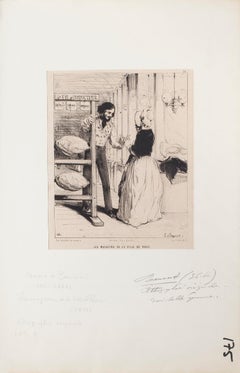
Les Magasins de la Ville de Paris - Original Lithograph on Paper - 1843
Located in Roma, IT
Les Magasins de la ville de Paris is original vintage lithograph realized by Edouard De Beumont (1821-1889), in 1843.
Not -Signed on the lower right margin. IMP. D'Aubert & C., Chez...
Category
Mid-19th Century Art
Materials
Lithograph
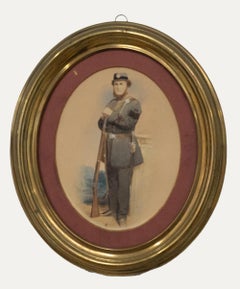
Framed Mid 19th Century Watercolour - Portrait of John Cornwall
Located in Corsham, GB
A fine full-length portrait of John Cornwall of the Scarborough rifle corps, dressed in full uniform with musket. Presented in an oval gilt metal frame w...
Category
Mid-19th Century Art
Materials
Watercolor
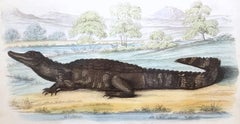
The Alligator (In the Gardens of the Zoological Society) /// Natural History Art
Located in Saint Augustine, FL
Artist: Robert Huish (English, 1777-1850)
Title: "The Alligator (In the Gardens of the Zoological Society)" (Plate 26)
Portfolio: The Wonders of the Animal Kingdom; Exhibiting Deline...
Category
Victorian Mid-19th Century Art
Materials
Watercolor, Etching
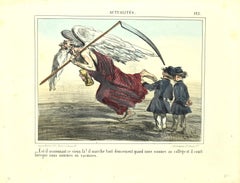
Actualités, Old Angle - Original Lithograph by Cham - 1865
Located in Roma, IT
Actualités, Old Angle is an amusing satirical illustration by the French illustrator and caricaturist, Cham (alias Count Amédée de Noé, 1818-1879) realized in 1865.
Beautiful Hand-c...
Category
Mid-19th Century Art
Materials
Lithograph
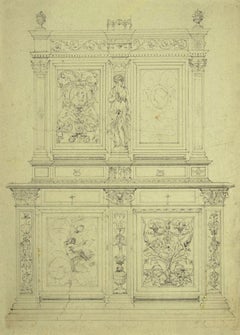
Design of Furniture - Pen and Pencil on Paper - 1850
Located in Roma, IT
Design of Furniture is a drawing in pen and pencil on paper realized in about 1850 by anonymous artist of the 19th Century.
The State of preservation i...
Category
Mid-19th Century Art
Materials
Pencil, Pen
Christ
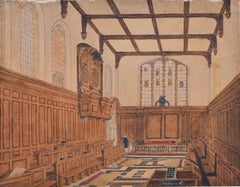
s College Chapel, Cambridge, 1842, watercolour by R.A.E Little
Located in London, GB
R.A.E Little
Christ's College Chapel, Cambridge, 1842
Watercolour
20 x 26 cm
Charming watercolour depicting a view of Christ's College Chapel in the mid nineteenth century. In thi...
Category
Realist Mid-19th Century Art
Materials
Watercolor
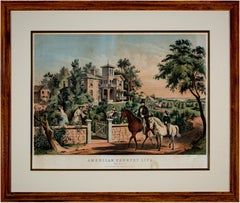
19th century color lithograph landscape figures horseback house scene trees sky
Located in Milwaukee, WI
The present print is one of several examples produced for Nathaniel Currier by his longtime collaborator Frances F. "Fanny" Palmer. Harry T. Peters wrote of her: "There is no more interesting and appealing character among the group of artists who worked for Currier & Ives than Fanny Palmer. In an age when women, well-bred women in particular, did not generally work for a living Fanny Palmer for years did exacting, full-time work in order to support a large and dependent family ... Her work ... had great charm, homeliness, and a conscientious attention to detail."
One of a series of four prints showing American country life in different seasons, the image presents the viewer with a picturesque view of a successful American farm. In the foreground, a gentleman rides a horse with a young boy before a respectable Italianate country house. Two women and a young girl pick flowers in the garden and several farm workers attend to their duties. Beyond are other homes and a city on the coast.
16.63 x 23.75 inches, artwork
28.13 x 33.38 inches, frame
Entitled bottom center "American Country Life - May Morning"
Signed in the stone, lower left "F.F. Palmer, Del."
Signed in the stone, lower right "Lith. by N. Currier"
Copyrighted lower center "Entered according to Act of Congress in the year 1855 by N. Currier in the Clerk's office of the Southern District of N.Y."
Inscribed bottom center "New York, Published by N. Currier 152 Nassau Street"
Framed to conservation standards using silk-lined 100 percent rag matting and Museum Glass with a gold gilded liner, all housed in a stained wood moulding.
Nathaniel Currier was a tall introspective man with a melancholy nature. He could captivate people with his piercing stare or charm them with his sparkling blue eyes. Nathaniel was born in Roxbury, Massachusetts on March 27th, 1813, the second of four children. His parents, Nathaniel and Hannah Currier, were distant cousins who lived a humble yet spartan life. When Nathaniel was eight years old, tragedy struck. Nathaniel’s father unexpectedly passed away leaving Nathaniel and his eleven-year-old brother Lorenzo to provide for the family. In addition to their mother, Nathaniel and Lorenzo had to care for six-year-old sister Elizabeth and two-year-old brother Charles. Nathaniel worked a series of odd jobs to support the family, and at fifteen, he started what would become a life-long career when he apprenticed in the Boston lithography shop of William and John Pendleton.
A Bavarian gentleman named Alois Senefelder invented lithography just 30 years prior to young Nat Currier’s apprenticeship. While under the employ of the brothers Pendleton, Nat was taught the art of lithography by the firm’s chief printer, a French national named Dubois, who brought the lithography trade to America.
Lithography involves grinding a piece of limestone flat and smooth then drawing in mirror image on the stone with a special grease pencil. After the image is completed, the stone is etched with a solution of aqua fortis leaving the greased areas in slight relief. Water is then used to wet the stone and greased-ink is rolled onto the raised areas. Since grease and water do not mix, the greased-ink is repelled by the moisture on the stone and clings to the original grease pencil lines. The stone is then placed in a press and used as a printing block to impart black on white images to paper.
In 1833, now twenty-years old and an accomplished lithographer, Nat Currier left Boston and moved to Philadelphia to do contract work for M.E.D. Brown, a noted engraver and printer. With the promise of good money, Currier hired on to help Brown prepare lithographic stones of scientific images for the American Journal of Sciences and Arts. When Nat completed the contract work in 1834, he traveled to New York City to work once again for his mentor John Pendleton, who was now operating his own shop located at 137 Broadway. Soon after the reunion, Pendleton expressed an interest in returning to Boston and offered to sell his print shop to Currier. Young Nat did not have the financial resources to buy the shop, but being the resourceful type he found another local printer by the name of Stodart. Together they bought Pendleton’s business.
The firm ‘Currier & Stodart’ specialized in "job" printing. They produced many different types of printed items, most notably music manuscripts for local publishers. By 1835, Stodart was frustrated that the business was not making enough money and he ended the partnership, taking his investment with him. With little more than some lithographic stones, and a talent for his trade, twenty-two year old Nat Currier set up shop in a temporary office at 1 Wall Street in New York City. He named his new enterprise ‘N. Currier, Lithographer’
Nathaniel continued as a job printer and duplicated everything from music sheets to architectural plans. He experimented with portraits, disaster scenes and memorial prints, and any thing that he could sell to the public from tables in front of his shop. During 1835 he produced a disaster print Ruins of the Planter's Hotel, New Orleans, which fell at two O’clock on the Morning of the 15th of May 1835, burying 50 persons, 40 of whom Escaped with their Lives. The public had a thirst for newsworthy events, and newspapers of the day did not include pictures. By producing this print, Nat gave the public a new way to “see” the news. The print sold reasonably well, an important fact that was not lost on Currier.
Nat met and married Eliza Farnsworth in 1840. He also produced a print that same year titled Awful Conflagration of the Steamboat Lexington in Long Island Sound on Monday Evening, January 18, 1840, by which melancholy occurrence over One Hundred Persons Perished. This print sold out very quickly, and Currier was approached by an enterprising publication who contracted him to print a single sheet addition of their paper, the New York Sun. This single page paper is presumed to be the first illustrated newspaper ever published.
The success of the Lexington print launched his career nationally and put him in a position to finally lift his family up. In 1841, Nat and Eliza had their first child, a son they named Edward West Currier. That same year Nat hired his twenty-one year old brother Charles and taught him the lithography trade, he also hired his artistically inclined brother Lorenzo to travel out west and make sketches of the new frontier as material for future prints. Charles worked for the firm on and off over the years, and invented a new type of lithographic crayon which he patented and named the Crayola. Lorenzo continued selling sketches to Nat for the next few years.
In 1843, Nat and Eliza had a daughter, Eliza West Currier, but tragedy struck in early 1847 when their young daughter died from a prolonged illness. Nat and Eliza were grief stricken, and Eliza, driven by despair, gave up on life and passed away just four months after her daughter’s death.
The subject of Nat Currier’s artwork changed following the death of his wife and daughter, and he produced many memorial prints and sentimental prints during the late 1840s. The memorial prints generally depicted grief stricken families posed by gravestones (the stones were left blank so the purchasers could fill in the names of the dearly departed). The sentimental prints usually depicted idealized portraits of women and children, titled with popular Christian names of the day.
Late in 1847, Nat Currier married Lura Ormsbee, a friend of the family. Lura was a self-sufficient woman, and she immediately set out to help Nat raise six-year-old Edward and get their house in order. In 1849, Lura delivered a son, Walter Black Currier, but fate dealt them a blow when young Walter died one year later. While Nat and Lura were grieving the loss of their new son, word came from San Francisco that Nat’s brother Lorenzo had also passed away from a brief illness. Nat sank deeper into his natural quiet melancholy. Friends stopped by to console the couple, and Lura began to set an extra place at their table for these unexpected guests. She continued this tradition throughout their lives.
In 1852, Charles introduced a friend, James Merritt Ives, to Nat and suggested he hire him as a bookkeeper. Jim Ives was a native New Yorker born in 1824 and raised on the grounds of Bellevue Hospital where his father was employed as superintendent. Jim was a self-trained artist and professional bookkeeper. He was also a plump and jovial man, presenting the exact opposite image of his new boss.
Jim Ives met Charles Currier through Caroline Clark, the object of Jim’s affection. Caroline’s sister Elizabeth was married to Charles, and Caroline was a close friend of the Currier family. Jim eventually proposed marriage to Caroline and solicited an introduction to Nat Currier, through Charles, in hopes of securing a more stable income to support his future wife.
Ives quickly set out to improve and modernize his new employer’s bookkeeping methods. He reorganized the firm’s sizable inventory, and used his artistic skills to streamline the firm’s production methods. By 1857, Nathaniel had become so dependent on Jims’ skills and initiative that he offered him a full partnership in the firm and appointed him general manager. The two men chose the name ‘Currier & Ives’ for the new partnership, and became close friends.
Currier & Ives produced their prints in a building at 33 Spruce Street where they occupied the third, fourth and fifth floors. The third floor was devoted to the hand operated printing presses that were built by Nat's cousin, Cyrus Currier, at his shop Cyrus Currier & Sons in Newark, NJ. The fourth floor found the artists, lithographers and the stone grinders at work. The fifth floor housed the coloring department, and was one of the earliest production lines in the country. The colorists were generally immigrant girls, mostly German, who came to America with some formal artistic training. Each colorist was responsible for adding a single color to a print. As a colorist finished applying their color, the print was passed down the line to the next colorist to add their color. The colorists worked from a master print displayed above their table, which showed where the proper colors were to be placed. At the end of the table was a touch up artist who checked the prints for quality, touching-in areas that may have been missed as it passed down the line. During the Civil War, demand for prints became so great that coloring stencils were developed to speed up production.
Although most Currier & Ives prints were colored in house, some were sent out to contract artists. The rate Currier & Ives paid these artists for coloring work was one dollar per one hundred small folios (a penny a print) and one dollar per one dozen large folios. Currier & Ives also offered uncolored prints to dealers, with instructions (included on the price list) on how to 'prepare the prints for coloring.' In addition, schools could order uncolored prints from the firm’s catalogue to use in their painting classes.
Nathaniel Currier and James Merritt Ives attracted a wide circle of friends during their years in business. Some of their more famous acquaintances included Horace Greeley, Phineas T. Barnum, and the outspoken abolitionists Rev. Henry Ward, and John Greenleaf Whittier (the latter being a cousin of Mr. Currier).
Nat Currier and Jim Ives described their business as "Publishers of Cheap and Popular Pictures" and produced many categories of prints. These included Disaster Scenes, Sentimental Images, Sports, Humor, Hunting Scenes, Politics, Religion, City and Rural Scenes, Trains, Ships, Fire Fighters, Famous Race Horses, Historical Portraits, and just about any other topic that satisfied the general public's taste. In all, the firm produced in excess of 7500 different titles, totaling over one million prints produced from 1835 to 1907.
Nat Currier retired in 1880, and signed over his share of the firm to his son Edward. Nat died eight years later at his summer home 'Lion’s Gate' in Amesbury, Massachusetts. Jim Ives remained active in the firm until his death in 1895, when his share of the firm passed to his eldest son, Chauncey.
In 1902, faced will failing health from the ravages of Tuberculosis, Edward Currier sold his share of the firm to Chauncey Ives...
Category
Romantic Mid-19th Century Art
Materials
Watercolor, Lithograph
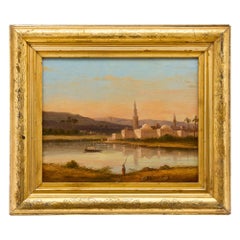
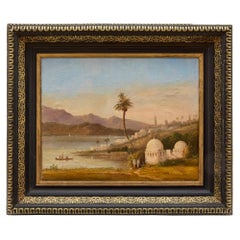
Antique Orientalist Oil Painting Mosque Riverside Nicolas Louis André Prevost
Located in London, GB
Antique Orientalist Oil Painting Mosque Riverside Nicolas Louis André Prevost
Swiss, Mid-19th century
Canvas: Height 38cm, width 46cm
Frame: Height 53cm, width 62cm, depth 5cm
Paint...
Category
Mid-19th Century Art
Materials
Canvas, Oil
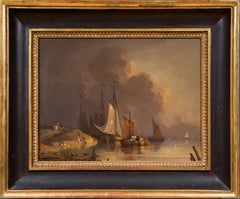
Evening Calm, Fishing Boats at Anchor, c. 1835
Located in Stockholm, SE
Evening Calm, Fishing Boats at Anchor is a painting Per Wickenberg, capturing a serene twilight along a sheltered coast. Fishing boats rest quietly at anchor, their sails lowered and...
Category
Romantic Mid-19th Century Art
Materials
Canvas, Oil
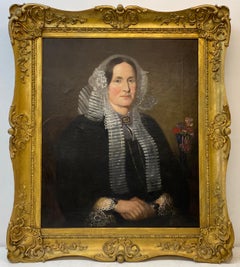
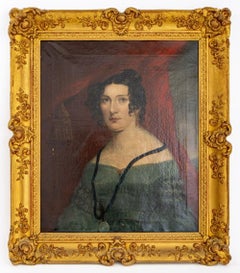
Mid 19th Century Woman in Black Dress and Lace Cap Original Oil Painting c.1840
Located in San Francisco, CA
Mid 19th Century Woman in Black Dress and Lace Cap Original Oil Painting c.1840
A fine portrait of an elegant matron with the lappets of her cap held together by a fancy brooch
Ori...
Category
Mid-19th Century Art
Materials
Canvas, Oil
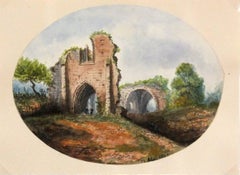
Old Ruins Near Paris
Located in Houston, TX
Beautifully detailed 19th century watercolor of ruins near Paris by artist Delastre, 1862.
Original artwork on paper displayed on a white mat with a gold border. Mat fits a standar...
Category
Mid-19th Century Art
Materials
Watercolor
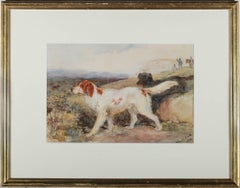
John Henderson Scott - Framed Mid 19th Century Watercolour, Dog
Grouse
Located in Corsham, GB
A particularly fine 19th century watercolour by John H. Scott (1829-1886), depicting two inquisitive setters retrieving grouse in the glorious moors of Scotland. Signed and dated to ...
Category
Mid-19th Century Art
Materials
Watercolor
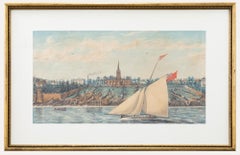
Mid 19th Century Watercolour - Passing Yacht
Located in Corsham, GB
A charming 19th century study of a yacht with a red duster flag passing through a city on the river. The yacht passes a parish church on the river bank with a spire at the centre. Th...
Category
Mid-19th Century Art
Materials
Watercolor
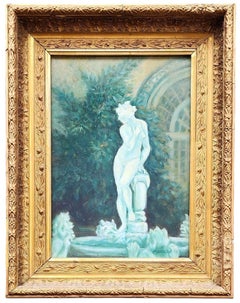
Venus of the Grotticella Fountain, Giambologna, Mid 19th Century
Located in Grand Rapids, MI
Signed: Morrow '65 (Lower, Right)
" Venus of the Grotticella Fountain ", 1865
Oil on Paper
14 1/2" x 10"
Housed in a 2 3/4" Ornamented Frame
Overall Size: 19 1/2" x 15"
The f...
Category
Romantic Mid-19th Century Art
Materials
Oil, Paper
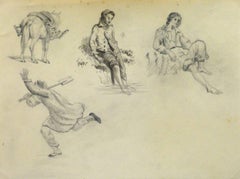
French Drawing - Figure Study
Located in Houston, TX
Lovely one-of-a-kind pencil and watercolor sketch of various figures and a work horse, circa 1850.
Original artwork on paper displayed on a white mat with a gold border. Archival pl...
Category
Mid-19th Century Art
Materials
Paper, Watercolor, Pencil
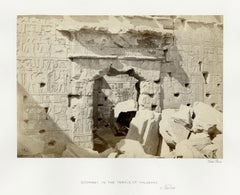
Doorway in the Temple of Kalabshe, Nubia
Located in Fairlawn, OH
Doorway in the Temple of Kalabshe, Nubia
Original gold toned albumin photograph, c. 1862
Unsigned as is usual
From: Upper Egypt and Ethiopia, c. 1862, Vol 1, (36 plates)
Published by...
Category
Romantic Mid-19th Century Art
Materials
Photographic Paper
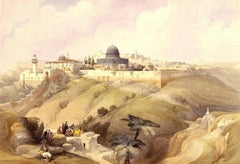
The Church of Purification
Located in London, GB
First Edition lithograph
Full plate: 16
Presented in a acid free mount
Modern hand-coloured lithograph for the first edition of David Roberts' The Holy Land.
Published by F.G. Moon...
Category
Realist Mid-19th Century Art
Materials
Laid Paper, Lithograph
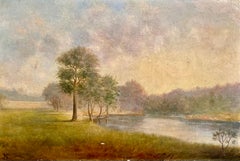
Charles River Meadows, MA
Located in Fredericksburg, VA
"Charles River Meadows, Massachusetts" by Mark E. Slayton is a masterful landscape painting that embodies the beauty characteristic of the Hudson River School. As a prominent artist ...
Category
Hudson River School Mid-19th Century Art
Materials
Canvas, Oil
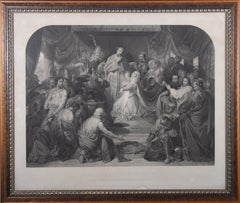
John Robinson (1796-1871) after Selous - 1868 Engraving, The Surrender Of Calais
Located in Corsham, GB
A fine 19th Century engraving showing a dramatic scene from the Hundred Year War, showing Queen Philippa pleading for the Burgesses. Philippa was a French princess who married Edward III...
Category
Mid-19th Century Art
Materials
Engraving
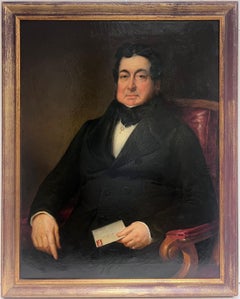
Very Large Mid 19th Century Victorian Portrait English Gentleman Seated Leather
Located in Cirencester, Gloucestershire
The Victorian English Gentleman
Portrait of a Man seated in a leather chair, holding a letter in his hand.
oil on canvas , framed
framed: 41 x 33 inches
canvas: 36 x 28 inches
prove...
Category
Victorian Mid-19th Century Art
Materials
Oil, Canvas

$2,403 Sale Price
20% Off
Trompe l
oeil [Punch and Judy].
Located in New York, NY
Trompe l'oeil. [Punch and Judy].
Watercolor and drawing, undated, circa 1830. Paper size 10.25 x 14" (26.1 x 35.6 cm). On "J. Whatman" watermarked paper. Unidentified artist.
A 19th-century visual montage of Cruikshank's "Punch & Judy." The images are taken from the book "The Tragical Comedy, or Comical Tragedy of Punch and Judy." As told to John Payne Collier by Giovanni in 1827, illustrated by George Cruikshank and published by S. Prowlett, London 1828. The central circle illustrates a drawing showing two allegorical female figures with two putti. The text under this image: “E Musao Hugonis Howard Armig, from Guercino.” On top of that illustration is a handsome painting of a flintlock pistol. Trompe l’oeil is an art of illustration – the name translates to ‘Trick of the Eye.”
The puppet show of Pulcinella or Punch and Judy has a long and fascinating history. “A puppet play that would have featured a version of Punch was first recorded in England in May 1662 by the diarist Samuel Pepys. He noted seeing it in Covent Garden, London, performed by the Italian puppet showman Pietro Gimonde from Bologna, otherwise known as Signor Bologna.
The earliest script of a Punch and Judy show...
Category
Realist Mid-19th Century Art
Materials
India Ink, Watercolor, Pencil
![Trompe l
oeil [Punch and Judy].](https://a.1stdibscdn.com/a_3312/1620315874402/Trompe_L_Oeil_Punch_87325_master.jpg?width=240 "trompe l
oeil art")
Portrait of a Woman
Located in Astoria, NY
American School, Portrait of a Woman, Oil on Canvas, 19th century, unsigned, inscribed "J Harrison / 1836" to verso, giltwood frame. Image: 23"H x 19.25" W;...
Category
American Realist Mid-19th Century Art
Materials
Canvas, Oil
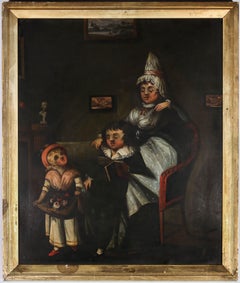
Mid 19th Century Oil - The Eloquent Young Man
Located in Corsham, GB
This charming scene depicts a child at the feet of his seated mother reading out loud from a book. The sister looks up at them both, smiling as she holds out her apron full of flower...
Category
Mid-19th Century Art
Materials
Oil
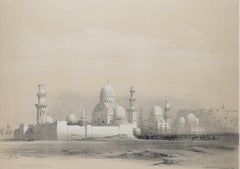
Tombs of the Mamelukes, Cairo, Egypt: Original 19th C. Lithograph by D. Roberts
Located in Alamo, CA
This is an original 19th century duotone lithograph entitled "Tombs of the Mamelukes, Cairo" by David Roberts, from his Egypt and Nubia volumes of the large folio edition, published ...
Category
Realist Mid-19th Century Art
Materials
Lithograph
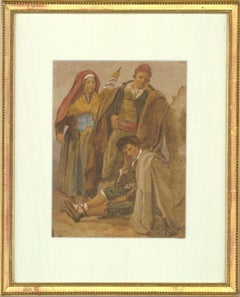
Mid 19th Century Watercolour - Italian Weavers Family
Located in Corsham, GB
A very fine 19th Century watercolours showing an Italian family. The boy sits on he ground at his parents feet. All three are finely dressed in traditional, regional garb with unusua...
Category
Mid-19th Century Art
Materials
Watercolor
The Nilometer on Rhoda, Cairo, Egypt: Original 19th C. Lithograph by D. Roberts
Located in Alamo, CA
This is an original 19th century duotone lithograph entitled "The Nilometer on the Island of Rhoda, Cairo" by David Roberts, from his Egypt and Nubia volumes of the large folio editi...
Category
Realist Mid-19th Century Art
Materials
Lithograph
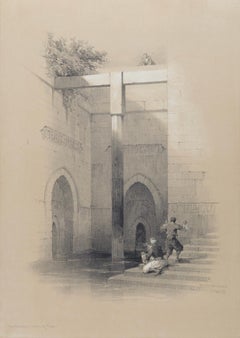
Aquaduct of the Nile, Cairo, Egypt: Original 19th C. Lithograph by D. Roberts
Located in Alamo, CA
This is an original 19th century duotone lithograph entitled "Cairo: The Aquaduct of the Nile from the Island of Rhoda" by David Roberts, from his Egypt and Nubia volumes of the larg...
Category
Realist Mid-19th Century Art
Materials
Lithograph
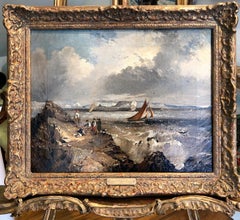
OIL PAINTING 19th Century By Robert E . Roe British old master Gold Gilt Frame
Located in Ferndown, GB
VERY RARE Oil PAINTING Antique 19th Century By Listed artist British old master
OLD MASTER OIL PAINTING BRITISH SCHOOL 19th Century Gold Frame
Description
Late 19th century
“Good...
Category
Realist Mid-19th Century Art
Materials
Oil
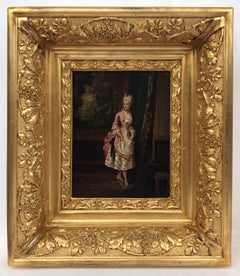
Portrait of a Lady
By Alexandre-François Caminade
Located in Saint-Ouen, FR
Alexandre François CAMINADE (1789-1862)
Portrait of a Lady
Oil on wood signed low right
Old frame gilded with leaves
Wood size : 22 X 15 cm
Frame size : 40 X 30 cm
Alexandre-Françoi...
Category
Academic Mid-19th Century Art
Materials
Oil
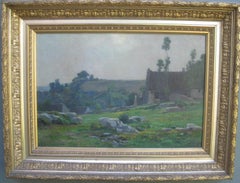
French Impressionist: Hillside Landscape with Dwellings oil circa 1860
Located in Frome, Somerset
A fine impressionist landscape by the 19th century French painter Loouis Boulanger (1806-1867).
Oil on canvas 15"x21,3/4" 38cmx 55cm
The original giltwood frame: 22"x28" , 56cmx 72cm.
A fine plein air study of a stoney outcrop on the edge of a French village circa 1860. Boulanger was famous during his lifetime for his portraits of the intelligentsia of Paris society during the 19th century including Victor Hugo.
He was also a great follower of the early impressionist landscape painters this being a fine example of his work.
A well balanced composition and an intense study of afternoon light in a French landscape.
Signed lower right.
Provenance : Estate collection, Paris
Good condition.
Higher resolution images available on request.
Viewing welcome .
Worldwide shipping available.
Louis Boulanger (11 March 1806, Vercelli, Piedmont - 5 March 1867, Dijon) was a French Romantic painter, lithographer and illustrator.
Life
He enrolled in 1821 at the École des beaux-arts where he attended the workshop of Guillaume Guillon Lethière and received a solid classical training. Next he made a présentation for the prix de Rome, in 1824, in which he finished logiste. He became the companion of Eugène Devéria...
Category
Impressionist Mid-19th Century Art
Materials
Oil
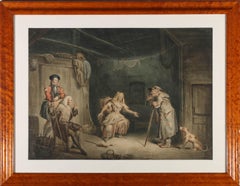
Mid 19th Century Watercolour - The Dispute
Located in Corsham, GB
A fine mid 19th Century watercolour scene with wonderful narrative. The scene is set inside a run down barn in which an old man and woman appear to b...
Category
Mid-19th Century Art
Materials
Watercolor
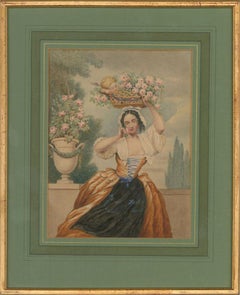
Manner of Jean-Frédéric Schall (1752-1825)- Mid 19thC Watercolour, Flower Seller
Located in Corsham, GB
A beautiful mid 19th Century watercolour,showing a pretty young flower seller with dark hair and a corseted dress with linen undershirt. She is carrying a basket of delicate pink ros...
Category
Mid-19th Century Art
Materials
Watercolor
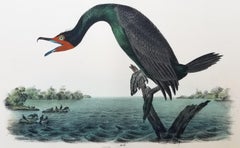
Florida Cormorant /// John James Audubon Ornithology Bird Art Natural History
Located in Saint Augustine, FL
Artist: John James Audubon (American, 1785-1851)
Title: "Florida Cormorant" (Plate 417, No. 84)
Portfolio: The Birds of America, First Royal Octavo Edition
Year: 1840-1844
Medium: Original Hand-Colored Lithograph on wove paper
Limited edition: approx. 1,200
Printer: John T. Bowen, Philadelphia, PA
Publisher: John James Audubon and J.B. Chevalier, New York, NY and Philadelphia, PA
Sheet size: 6.5" x 10.44"
Image size: 3.75" x 6.25"
Condition: Some minor discoloration upper center in margin. In excellent condition with strong colors
Notes:
Provenance: private collection - Cleveland, OH. Lithography and hand-coloring by American artist John T. Bowen (1801-c.1856). Comes from Audubon's famous seven volume portfolio "The Birds of America", First Royal Octavo Edition (1840-1844), which consists of 500 hand-colored lithographs.
Based on a composition painted in the Florida Keys on April 26, 1832, Audubon's forty-seventh birthday.
The double-crested cormorant (Nannopterum auritum) is a member of the cormorant family of water birds. It is found near rivers and lakes and in coastal areas and is widely distributed across North America, from the Aleutian Islands in Alaska down to Florida and Mexico. Measuring 70–90 cm (28–35 in) in length, it is entirely black except for a bare patch of orange-yellow facial skin and some extra plumage that it exhibits in the breeding season when it grows a double crest in which black feathers are mingled with white. Five subspecies are recognized. It mainly eats fish and hunts by swimming and diving. Its feathers, like all cormorants, are not waterproof, and it must dry them out after spending time in the water. Once threatened by the use of DDT, the numbers of this bird have increased markedly in recent years.
To make 'The Birds of America' more affordable and widely available, in 1839 John James Audubon began the first octavo edition, a smaller version of the folio which was printed and hand-colored by J. T. Bowen in Philadelphia. Employing a new invention, the camera lucida, the images were reduced in size, rendered in intermediate drawings by John James Audubon and his son John Woodhouse, and then drawn onto lithographic stones. These miniatures exhibit a remarkable amount of attention to quality and detail, as well as a meticulous fidelity to the larger works. Some compositional changes were made in order to accommodate the smaller format. Like the Havell edition, John James Audubon’s first...
Category
Victorian Mid-19th Century Art
Materials
Watercolor, Lithograph
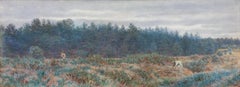
A Surrey Common - Pre-Raphaelite landscape watercolour by George Price Boyce
Located in London, GB
GEORGE PRICE BOYCE, RWS
(1826-1897)
A Surrey Common in November
Signed, inscribed and dated 1866.7; indistinctly signed and inscribed with title and the...
Category
Pre-Raphaelite Mid-19th Century Art
Materials
Watercolor
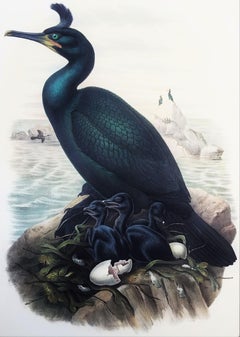
Phalacrocorax Graculus (Spectacled Cormorant) /// John Gould Ornithology Bird
By John Gould
Located in Saint Augustine, FL
Artist: John Gould (English, 1804-1881)
Title: "Phalacrocorax Graculus (Spectacled Cormorant)" (Vol. 5, Plate 53)
Portfolio: The Birds of Great Britain
Year: 1862-1873
Medium: Original Hand-Colored Lithograph on wove paper
Limited edition: approx. 750
Printer: Walter or Walter & Cohn, London, UK
Publisher: Taylor and Francis, John Gould, London, UK
Reference: Sauer No. 23; Ayer/Zimmer page 261; Wood page 365; Nissen No. IVB 372; Sitwell page 78
Sheet size: 21.63" x 14.75"
Image size: 17.25" x 12.25"
Condition: Has been professionally stored away for decades. In excellent condition with strong colors
Notes:
Provenance: private collection - Aspen, CO. Lithography and hand-coloring by John Gould and English artist Henry Constantine Richter (1821-1902). Comes from Gould's five volume "The Birds of Great Britain", (1862-1873) (First edition), which consists of 367 hand-colored lithographs. Other contributing lithographers were German artist Joseph Wolf (1820-1899) and Irish artist William Hart (1830-1908). "The Birds of Great Britain" is recognized as Gould's greatest work. Gold gilded edges as issued.
The spectacled cormorant or Pallas's cormorant is an extinct marine bird of the cormorant family of seabirds that inhabited Bering Island and possibly other places in the Commander Islands and the nearby coast of Kamchatka in the far northeast of Russia.
Biography:
John Gould FRS (14 September 1804 – 3 February 1881) was an English ornithologist and bird artist. He published a number of monographs on birds, illustrated by plates that he produced with the assistance of his wife, Elizabeth Gould, and several other artists including Edward Lear, Henry Constantine Richter, Joseph Wolf and William Matthew Hart. He has been considered the father of bird study in Australia and the Gould League in Australia is named after him. His identification of the birds now nicknamed "Darwin's finches" played a role in the inception of Darwin's theory of evolution by natural selection. Gould's work is referenced in Charles Darwin's book, "On the Origin of Species".
Category
Victorian Mid-19th Century Art
Materials
Watercolor, Lithograph
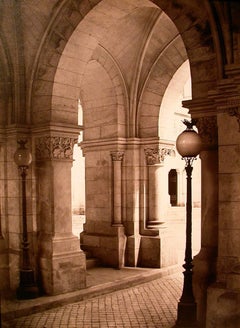
“Hotel de Ville, Angou leme”
Located in Carmel-by-the-Sea, CA
In 1865 Marville was retained by the Historical Works Commission to make a record of a Paris about to be destroyed by major new town planning projects- LAMP POSTs chronicled/auctione...
Category
Mid-19th Century Art
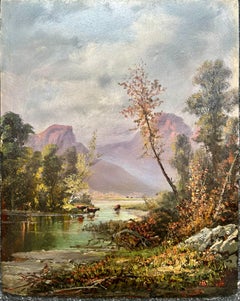
Mountain Stream
By Henry Boese
Located in Fredericksburg, VA
In Mountain Stream, Henry Boese presents a majestic and serene vision of the American wilderness. A crisp, rushing stream flows through the heart of the composition, cascading over r...
Category
Hudson River School Mid-19th Century Art
Materials
Oil, Board
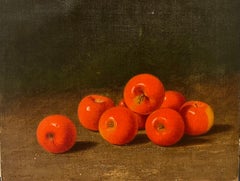
Oil Still Life of Apples
By George Harvey
Located in Fredericksburg, VA
George Harvey was born in 1800 in Tottenham, England but moved to the United states at 20 years old and spent several years in the west before he established himself in New York City...
Category
Hudson River School Mid-19th Century Art
Materials
Canvas, Oil
Antique Orientalist Oil Painting Mosque Evening Coastal Landscape Prevost
Located in London, GB
Antique Orientalist Oil Painting Mosque Evening Coastal Landscape Prevost
Swiss, 1856
Canvas: Height 38cm, width 47cm
Frame: Height 55cm, width 65cm, depth 7cm
Painted by Nicolas Lo...
Category
Mid-19th Century Art
Materials
Canvas, Oil
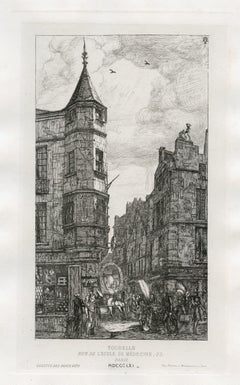
"Tourelle rue de L
Ecole de Medicine 22" original etching
Located in Henderson, NV
Medium: original etching. Printed on chine-collé paper by Pierron Montfaucon and published in Paris in 1861 by Gazette Beaux-Arts. Plate size: 8 1/2 x 5 inches (213 x 132mm). Signed ...
Category
Mid-19th Century Art
Materials
Etching
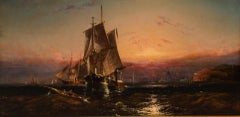
New York Harbor Near Castle Garden
Located in Costa Mesa, CA
In this atmospheric and luminous work by E.T. Baker, the busy port of New York hosts a huge number of ships coming and going near the Battery and the famous landmark of Castle Garden...
Category
Other Art Style Mid-19th Century Art
Materials
Canvas, Oil
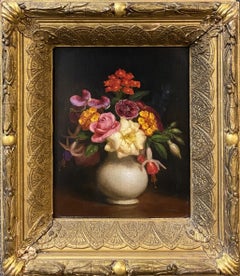
Still Life with Flowers in a White Vase
Located in Milford, NH
A finely detailed still life with flowers in a white vase by American artist George Henry Hall (1925-1913). Hall was born in Manchester, NH, and began his career as an artist at the ...
Category
Mid-19th Century Art
Materials
Canvas, Oil
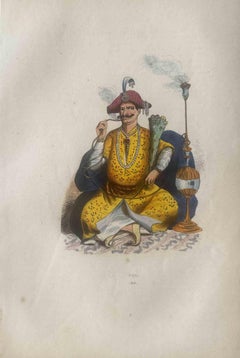
Uses and Customs - Indian Rajah - Lithograph - 1862
Located in Roma, IT
Uses and Customs - Indian Rajah is a lithograph on paper realized in 1862.
The artwork belongs to the Suite Uses and customs of all the peoples of the universe: " History of the gov...
Category
Modern Mid-19th Century Art
Materials
Lithograph
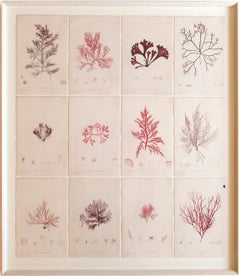
Rare Seaweed "Nature Prints" by Henry Bradbury
Located in London, GB
A beautifully framed set of twelve rare "nature prints" produced in 1856 by Henry Bradbury.
Henry Bradbury (1829-1860) is known for the innovative technique of “nature printing”, a...
Category
Naturalistic Mid-19th Century Art
Materials
Paper
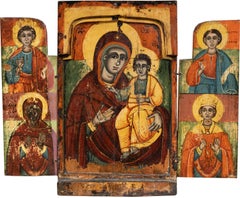
Greek Orthodox painter - 19th century figure painting - Religious travel icon
Located in Varmo, IT
Greek Orthodox travel icon (19th century) - Madonna and Child with Four Saints (Madonna Hodegetria).
30.5 x 19 cm closed, 30.5 x 37 cm open.
Tempera on a book-like panel, it repres...
Category
Old Masters Mid-19th Century Art
Materials
Oil, Panel
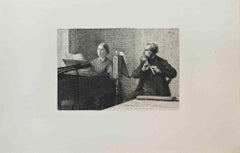
Un Morceau de Schumann - Etching by Henri Fantin-Latour - 1863
Located in Roma, IT
Etching on laid paper
Signed and dated in plate lower center: Dresde Oct. 1863 / Fantin
Inscribed: Un morceau de Schumann
Published by Cadart & Luquet, Éditeurs, 79 Rue Richelieu, Pa...
Category
Modern Mid-19th Century Art
Materials
Etching
New York City, 1948 - Elliott Erwitt (Black and White Photography)
Located in London, GB
New York City, 1948 - Elliott Erwitt (Black and White Photography)
Signed, inscribed with title and dated on accompanying artist’s label
Silver gelatin print, printed later
Availabl...
Category
Mid-19th Century Art
Materials
Silver Gelatin
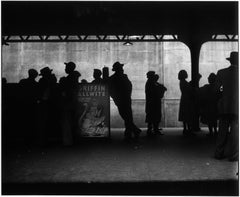
Off Portsmouth Harbour 19th century oil , john callow
By John Callow
Located in York, GB
Off Portsmouth Harbour 19th century oil , john callow
A fine 19th century oil on canvas painting "off Portsmouth harbour "
signed and indistinctly dated 1844, the size of the paint...
Category
Old Masters Mid-19th Century Art
Materials
Oil
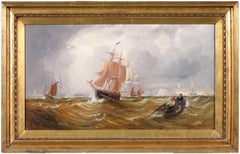
Preparatory drawing in pencil on paper by Théodore Chassériau, ca. 1850
Located in Vicenza, VI
Preparatory drawing/study made in pencil and white chalk on paper by French artist Théodore Chassériau in the early 1850s.
The drawing in question, depicting a male nude, is a prepa...
Category
Other Art Style Mid-19th Century Art
Materials
Chalk, Pencil
French School 19th century, Animated dune landscape, oil on panel
Located in Paris, FR
French School mid 19th Century
Animated dune landscape,
oil on cardboard panel
12.4 x 29.8 cm
bears a small inscription "Escoublac" on the lower right, not visible under the actual ...
Category
Barbizon School Mid-19th Century Art
Materials
Oil
"The Doubtful Bill" Charles Blauvelt, 19th Century Genre Painting Money Interior
Located in New York, NY
Charles Blauvelt
The Doubtful Bill, 1868
Signed and dated lower left
Oil on canvas
12 1/4 x 9 1/2 inches
Provenance:
Private Collection, Connecticut...
Category
Mid-19th Century Art
Materials
Canvas, Oil
Impatiens puberula (Soft Pink Balsam) /// Antique Botanical Flowers Plant Print
Located in Saint Augustine, FL
Artist: Nathaniel Wallich (Danish, 1786-1854)
Title: "Impatiens puberula (Soft Pink Balsam)" (Plate 193)
Portfolio: Plantae Asiaticae Rariores; or, Descriptions and Figures of a Select Number of Unpublished East Indian Plants
Year: 1830-1832
Medium: Original Hand-Colored Lithograph on J. Whatman paper
Limited edition: 254
Printer: Engelmann, Graf, Coindet & Co., London, UK
Publisher: Richard Taylor for Treuttel & Würtz, London, UK
Reference: Nissen BBI No. 2099; Pritzel No. 9957; Stafleu-Cowan No. 16583; Dunthorne No. 326
Sheet size: 21.13" x 14.13"
Condition: Has been professionally stored away for decades. In excellent condition with strong colors
Rare
Notes:
Provenance: private collection - Aspen, CO. Lithography by Maltese artist...
Category
Victorian Mid-19th Century Art
Materials
Watercolor, Lithograph

More Ways To Browse
Maggie Siner
Maplethorpe Calla
Marble Woman Head
Marcel Leprin
Mark Stock
Martin Hardie
Mauritz Lindstrom
Maximillien Luce
Michael Budden Central Park
Midcentury Matador Paintings
Mike Wright
Miracle On Ice
Mississippi River Painting
Monarch Of The Glen Painting
Moroccan Paintings Essaouira
Morpho Butterfly Art
Mount Tamalpais
Murray Dessner