Items Similar to Vintage Magnum Silver gelatin photograph "George Balanchine" for LOOK Magazine
Want more images or videos?
Request additional images or videos from the seller
1 of 7
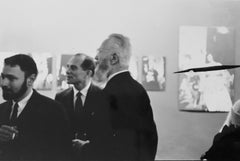
Ernst HaasVintage Magnum Silver gelatin photograph "George Balanchine" for LOOK Magazine1962
1962
$5,000
£3,762.17
€4,346.46
CA$7,019.89
A$7,583.78
CHF 4,034.65
MX$91,253.54
NOK 51,087.14
SEK 46,720.58
DKK 32,470.22
About the Item
Framed Dimensions (inches): 14.5" x 16.5"
Ernst Haas (1921–1986) is acclaimed as one of the most celebrated and influential photographers of the 20th century and considered one of the pioneers of color photography. Haas was born in Vienna in 1921, and took up photography after the war. At the invitation of Robert Capa, Haas joined Magnum in 1949, developing close associations with Capa, Henri Cartier-Bresson, and Werner Bischof. His images were disseminated by magazines like Life and Vogue and, in 1962, were the subject of the first single-artist exhibition of color photography at New York's Museum of Modern Art. He served as president of the cooperative Magnum Photos, and his book The Creation (1971) was one of the most successful photography books ever, selling 350,000 copies.
A Poet’s Camera (1949), which combined poetry with metaphoric imagery by artists like Edward Weston, was particularly important to Haas's early development. Unsure of his career path, Haas realized that photography could provide both a means of support and a vehicle for communicating his ideas. He obtained his first camera in 1946, at the age of 25, trading a 20-pound block of margarine for a Rolleiflex on the Vienna black market.
In 1954 Robert Capa, Magnum's first president, was killed while on assignment covering the First Indochina War. That same year, Werner Bischof died in a car accident in the Andes. Following their deaths, Haas was elected to Magnum's board of directors and traveled to Indochina himself to cover the war. After the death of David “Chim” Seymour in Suez in 1959, Haas was named the fourth president of Magnum.
In 1962 the Museum of Modern Art in New York presented a ten-year survey of Haas's color photography. Haas had been included in Edward Steichen's exhibition The Family of Man, which premiered in 1955 and traveled to 38 countries.
In addition to editorial journalism and unit stills work, Haas was also highly regarded for advertising photography, contributing groundbreaking campaigns for Volkswagen automobiles and Marlboro cigarettes, among other clients.
Haas also taught frequently at photography workshops, including the Maine Photographic Workshops, the Ansel Adams Workshop in Yosemite National Park, and the Anderson Ranch Arts Center near Aspen, Colorado.
In 1958, Haas was listed as one of the 10 greatest photographers in the world by Popular Photography magazine, along with Ansel Adams, Richard Avedon, Henri Cartier-Bresson, Alfred Eisenstadt, Philippe Halsman, Yousuf Karsh, Gjon Mili, Irving Penn, and W. Eugene Smith. He won the Hasselblad Award just before his death.
Selected awards
Hasselblad Photographer of the Year, 1986
Leica Medal of Excellence: Master of Photography, 1986
Selected Collections
Royal Society of Photography, Bath, UK
Museum of Fine Arts, Boston, Massachusetts, US
Museum Ludwig, Cologne, Germany
Erna and Victor Hasselblad Foundation, Goteborg, Sweden
The National Museum of Art, Kyoto, Japan
International Center of Photography, New York, US
The Metropolitan Museum of Art, New York, US
The Museum of Modern Art, New York, US
International Museum of Photography at the George Eastman House, Rochester, New York, US
National Museum of Art, Tokyo, Japan
Museum Modern Kunst, Vienna, Austria
Corcoran Gallery of Art, Washington, D.C., US
National Portrait Gallery, Washington D.C., US
- Creator:Ernst Haas (1921-1986, American)
- Creation Year:1962
- Dimensions:Height: 14.5 in (36.83 cm)Width: 16.5 in (41.91 cm)
- Medium:
- Movement Style:
- Period:
- Condition:
- Gallery Location:Surfside, FL
- Reference Number:1stDibs: LU38217433892
Ernst Haas
Ernst Haas (1921–1986) is an acclaimed photographer of the 20th century and considered one of the pioneers of color photography. Haas moved to the United States in 1951 and began experimenting with Kodachrome color film. He soon became the premier color photographer of the 1950s. In 1953 LIFE magazine published his groundbreaking 24-page color photo essay on New York City. In 1962 a retrospective of his work was the first color photography exhibition held at New York’s Museum of Modern Art. Haas was the author of four books: The Creation (1971), In America (1975), In Germany (1976), and Himalayan Pilgrimage (1978). Ernst Haas received the Hasselblad award in 1986, the year of his death. His work continues to be the subject of museum exhibitions and publications such as Ernst Haas, Color Photography (1989), Ernst Haas in Black and White (1992), Color Correction (2011), and Ernst Haas: New York in Color, 1952-1962 (2020).
About the Seller
4.9
Platinum Seller
Premium sellers with a 4.7+ rating and 24-hour response times
Established in 1995
1stDibs seller since 2014
1,858 sales on 1stDibs
Typical response time: <1 hour
- ShippingRetrieving quote...Shipping from: Surfside, FL
- Return Policy
More From This Seller
View AllVintage Silver Gelatin Signed Photograph Edward Steichen, MoMA Photo
By Fred McDarrah
Located in Surfside, FL
Edward Steichen, John Durniak, Monroe Wheeler and Edward D. Museum of modern art on Feb 10, 1962
Photographer Fred McDarrah
Over a 50-year span, McDarrah documented the rise of the Beat Generation, the city’s postmodern art movement, its off-off-Broadway actors, troubadours, politicians, agitators and social protests.
Fred captured Jack Kerouac frolicking with women at a New Year’s bash in 1958, Andy Warhol adjusting a movie-camera lens in his silver-covered factory, and Bob Dylan offering a salute of recognition outside Sheridan Square near the Voice’s old office.
Not just a social chronicler, McDarrah was a great photo-journalist.
For years, McDarrah was the Voice's only photographer and, for decades, he ran the Voice’s photo department, where he helped train dozens of young photographers, including James Hamilton, Sylvia Plachy, Robin Holland and Marc Asnin. His mailbox was simply marked "McPhoto."
An exhibit of McDarrah’s photos of artists presented by the Steven Kasher Gallery in Chelsea was hailed by The New York Times as “a visual encyclopedia of the era’s cultural scene.”
artists in their studios, (Alice Neel, Philip Guston, Stuart Davis, Robert Smithson, Jasper Johns, Franz Kline), actors (Dustin Hoffman, Robert De Niro on the set of “Taxi Driver”), musicians (Janis Joplin, Alice Cooper, Bob Dylan) and documentary images of early happenings and performances (Yayoi Kusama, Charlotte Moorman, Al Hansen, Jim Dine, Nam June Paik). The many images of Andy Warhol include the well-known one with his Brillo boxes at the Stable Gallery in 1964. Woody Allen, Diane Arbus, W. H. Auden, Francis Bacon, Joan Baez, Louise Bourgeois, David Bowie, Jimmy Breslin, William Burroughs, John Cage, Leo Castelli, Christo, Leonard Cohen, Merce Cunningham, William de Kooning, Jim Dine, Mark di Suvero, Marcel Duchamp, Bob Dylan, Federico Fellini, Allen Ginsberg, Robert Indiana, Mick Jagger, Jasper Johns, Kusama, John Lennon, Sol Lewitt, Roy Lichtenstein, Nam June Paik, Elvis Presley, Claes Oldenburg, Yoko Ono, Robert Rauschenberg, Lou Reed, James Rosenquist, Mark Rothko, Ed Ruscha, Robert Smithson, Susan Sontag, Andy Warhol, and others. McDarrah’s prints have been collected in depth by the J. Paul Getty Museum and the National Portrait Gallery, Washington. His work is in numerous public and private collections.
Edward Jean Steichen (March 27, 1879 – March 25, 1973) was a Luxembourgish American photographer, painter, and art gallery and museum curator. Steichen's were the photographs that most frequently appeared in Alfred Stieglitz's groundbreaking magazine Camera Work during its publication from 1903 to 1917. Together Stieglitz and Steichen opened the Little Galleries of the Photo-Secession, which eventually became known as '291', after its address.
Steichen laid claim to his photos of gowns for the magazine Art et Décoration in 1911 being the first modern fashion photographs ever published. From 1923 to 1938, Steichen was a photographer for the Condé Nast magazines Vogue and Vanity Fair while also working for many advertising agencies including J. Walter Thompson. During these years, Steichen was regarded as the best known and highest paid photographer in the world. In 1944, he directed the war documentary The Fighting Lady, which won the 1945 Academy Award for Best Documentary.
From 1947 to 1961, Steichen served as Director of the Department of Photography at New York's Museum of Modern Art. While at MoMA, he curated and assembled exhibits including The Family of Man, which was seen by nine million people. In 1904, Steichen began experimenting with color photography. He was one of the earliest in the United States to use the Autochrome Lumière process. In 1905, Stieglitz and Steichen created the Little Galleries of the Photo-Secession, which eventually became known as 291 after its address. It presented some of the first American exhibitions of Henri Matisse, Auguste Rodin, Paul Cézanne, Pablo Picasso, and Constantin Brâncuși.
He worked with Robert Frank even before his The Americans was published, exhibited the early work of Harry Callahan and Aaron Siskind, and purchased two Rauschenberg prints...
Category
1960s American Modern Black and White Photography
Materials
Silver Gelatin
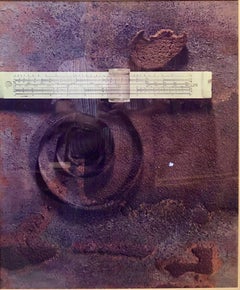
Vintage Large Format Avant Garde Polaroid 20X24 Photograph
By György Kepes
Located in Surfside, FL
Sorry for the reflection on the plexi. In the early 1980s, the Polaroid Foundation invited Hungarian-born painter and photographer György Kepes (1906-2001) to use the 20x24 Polaroid camera. The resulting carefully staged compositions summarize many of his artistic concerns, employing such objects as prisms, flowers, and graphic papers to manipulate the effects of light and form.
György Kepes 1906-2001 was a Hungarian-born painter, photographer, designer, educator, and art theorist. After emigrating to the U.S. in 1937, he taught design at the New Bauhaus (later the School of Design, then Institute of Design, then Illinois Institute of Design or IIT) in Chicago. In 1967 He founded the Center for Advanced Visual Studies at the Massachusetts Institute of Technology (MIT) where he taught until his retirement in 1974. Kepes was born in Selyp, Hungary. His younger brother was Imre Kepes, ambassador in Argentina, father of András Kepes journalist, documentary filmmaker and author. At age 18, he enrolled at the Royal Academy of Fine Arts in Budapest, where he studied for four years with Istvan Csok, a Hungarian impressionist painter. In the same period, he was also influenced by the socialist avant-garde poet and painter Lajos Kassak.
Kepes gave up painting temporarily and turned instead to filmmaking. In 1930, he settled in Berlin, where he worked as a publication, exhibition and stage designer. Around this time, he designed the dust jacket for Gestalt psychologist Rudolf Arnheim's famous book, Film als Kunst (Film as Art), one of the first published books on film theory. In Berlin, he was also invited to join the design studio of Laszlo Moholy-Nagy, the Hungarian photographer who had taught at the Dessau Bauhaus. When, in 1936, Moholy relocated his design studio to London, Kepes joined him there as well.
Kepes was lured to Brooklyn College by Russian-born architect Serge Chermayeff, who had been appointed chair of the Art Department in 1942. There he taught graphic artists such as Saul Bass.
In 1944, he published Language of Vision, an influential book about design and design education. In part, the book was important because it predated three other influential texts on the same subject: Paul Rand, Thoughts on Design (1946), László Moholy-Nagy, Vision in Motion (1947), and Rudolf Arnheim, Art and Visual Perception (1954).
In 1947, Kepes accepted an invitation from the School of Architecture and Planning at MIT to initiate a program there in visual design, a division that later became the Center for Advanced Visual Studies (c1968). Some of the Center's early fellows included artists Otto Piene, Vassilakis Takis, Jack Burnham, Wen-Ying Tsai, Stan Vanderbeek, Maryanne Amacher, Joan Brigham, Lowry Burgess, Peter Campus, Muriel Cooper, Douglas Davis, Susan Gamble, Dieter Jung, Piotr Kowalski, Charlotte Moorman, Antoni Muntadas, Yvonne Rainer, Keiko Prince, Alan Sonfist, Aldo Tambellini, Joe Davis, Bill Seaman, Tamiko Thiel, Alejandro Sina, Don Ritter, Luc Courchesne, and Bill Parker...
Category
1980s Conceptual Abstract Photography
Materials
Polaroid
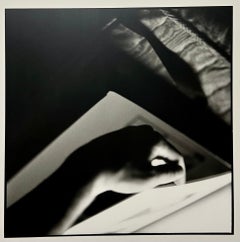
Vintage Street Photography Bruce Cratsley Photo Silver Gelatin Print Photograph
By Bruce Cratsley
Located in Surfside, FL
Bruce Cratsley, American (1944-1998)
Vintage gelatin silver print
Lifting Hand (Scot) Chez Moi
A surrealist image of a hand with a light study
Hand signed, titled and dated 1986-1988 verso
image (each): 15 1/4 x 15 1/4 inches, matted to 24 X 20 inches
Provenance: From the collection of AGFA Graphics Corporation
David Bruce Cratsley (1944 - 1998) was an American photographer specialized in still lifes, portraits of friends, and life in New York City. He had a reputation of master of light and shadow.
Bruce Cratsley attended Swarthmore College, graduating in 1966, and then, in the early 1970s, The New School for Social Research, studying under Lisette Model.
Cratsley worked for many years as a gallerist at Marlborough Gallery before quitting in 1986 to become a full-time photographer. As "Bruce Cratsley", he exhibited in various New York galleries, like: Laurence Miller Gallery, Howard Greenberg Gallery and Witkin Gallery. Cratsley was represented by Yancey Richardson Gallery, a dealer of fine art photography based in SoHo. He was photographed by Elsa Dorfman who shot many luminaries including, Allen Ginsberg, Denise Levertov, Anaïs Nin and more. In 1978 Cratsley contributed the photo sequences for the musical The Class, performed by The New Ballet School at the New York City Center.
In 1980, Cratsley showed his work, Atlantic City, 1977, an August beach scene, at the 11th Anniversary show at the Witkin Gallery. In 1989 Cratsley was awarded with the Guggenheim Fellowship for Photography, US
Canada.
Cratsley documented gay life in NYC including his life with David Waine, who died in 1991. "I'd been photographing David since long before he became sick [...] at some point I realized that this was an extraordinary thing that was happening, and that I had an intimate relationship to it. I photographed David just a few hours before he died, not knowing what was about to happen [...] David was very spiritual [...] My pictures are a poetic, spiritualized look at AIDS".
In 1995 Cratsley was included together with Barbara Norfleet, Olivia Parker and John Sturges in the list of bestselling photographer at Robert Klein Gallery...
Category
1980s American Modern Figurative Photography
Materials
Silver Gelatin
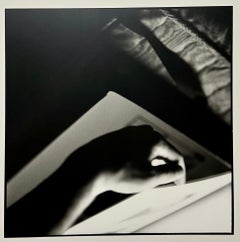
Vintage Street Photography Bruce Cratsley Photo Silver Gelatin Print Photograph
By Bruce Cratsley
Located in Surfside, FL
Bruce Cratsley, American (1944-1998)
Vintage gelatin silver print
Lifting Hand (Scot) Chez Moi
A surrealist image of a hand with a light study
Hand signed, titled and dated 1986-1988 verso
image (each): 15 1/4 x 15 1/4 inches, matted to 24 X 20 inches
Provenance: From the collection of AGFA Graphics Corporation
David Bruce Cratsley (1944 - 1998) was an American photographer specialized in still lifes, portraits of friends, and life in New York City. He had a reputation of master of light and shadow.
Bruce Cratsley attended Swarthmore College, graduating in 1966, and then, in the early 1970s, The New School for Social Research, studying under Lisette Model.
Cratsley worked for many years as a gallerist at Marlborough Gallery before quitting in 1986 to become a full-time photographer. As "Bruce Cratsley", he exhibited in various New York galleries, like: Laurence Miller Gallery, Howard Greenberg Gallery and Witkin Gallery. Cratsley was represented by Yancey Richardson Gallery, a dealer of fine art photography based in SoHo. He was photographed by Elsa Dorfman who shot many luminaries including, Allen Ginsberg, Denise Levertov, Anaïs Nin and more. In 1978 Cratsley contributed the photo sequences for the musical The Class, performed by The New Ballet School at the New York City Center.
In 1980, Cratsley showed his work, Atlantic City, 1977, an August beach scene, at the 11th Anniversary show at the Witkin Gallery. In 1989 Cratsley was awarded with the Guggenheim Fellowship for Photography, US
Canada.
Cratsley documented gay life in NYC including his life with David Waine, who died in 1991. "I'd been photographing David since long before he became sick [...] at some point I realized that this was an extraordinary thing that was happening, and that I had an intimate relationship to it. I photographed David just a few hours before he died, not knowing what was about to happen [...] David was very spiritual [...] My pictures are a poetic, spiritualized look at AIDS".
In 1995 Cratsley was included together with Barbara Norfleet, Olivia Parker and John Sturges in the list of bestselling photographer at Robert Klein Gallery...
Category
1980s American Modern Figurative Photography
Materials
Silver Gelatin
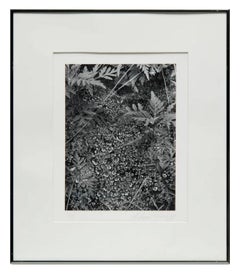
American Photographer Andreas Feininger Silver Gelatin Vintage Print
By Andreas Feininger
Located in Surfside, FL
Andreas Feininger (American, 1906-1999),
Untitled, nature subject
Morning dew
silver gelatin prints
Hand signed in pencil "Andreas Feininger"
numbered "2/100"
Dimensions: 12.25"h ...
Category
Mid-20th Century Black and White Photography
Materials
Silver Gelatin
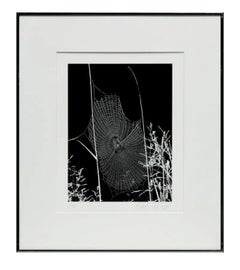
American Photographer Andreas Feininger Silver Gelatin Vintage Print
By Andreas Feininger
Located in Surfside, FL
Andreas Feininger (American, 1906-1999),
Untitled, nature subject
Spider web
silver gelatin prints
Hand signed in pencil "Andreas Feininger"
numbered "2/100"
Dimensions: 12.25"h x...
Category
Mid-20th Century Black and White Photography
Materials
Silver Gelatin
You May Also Like
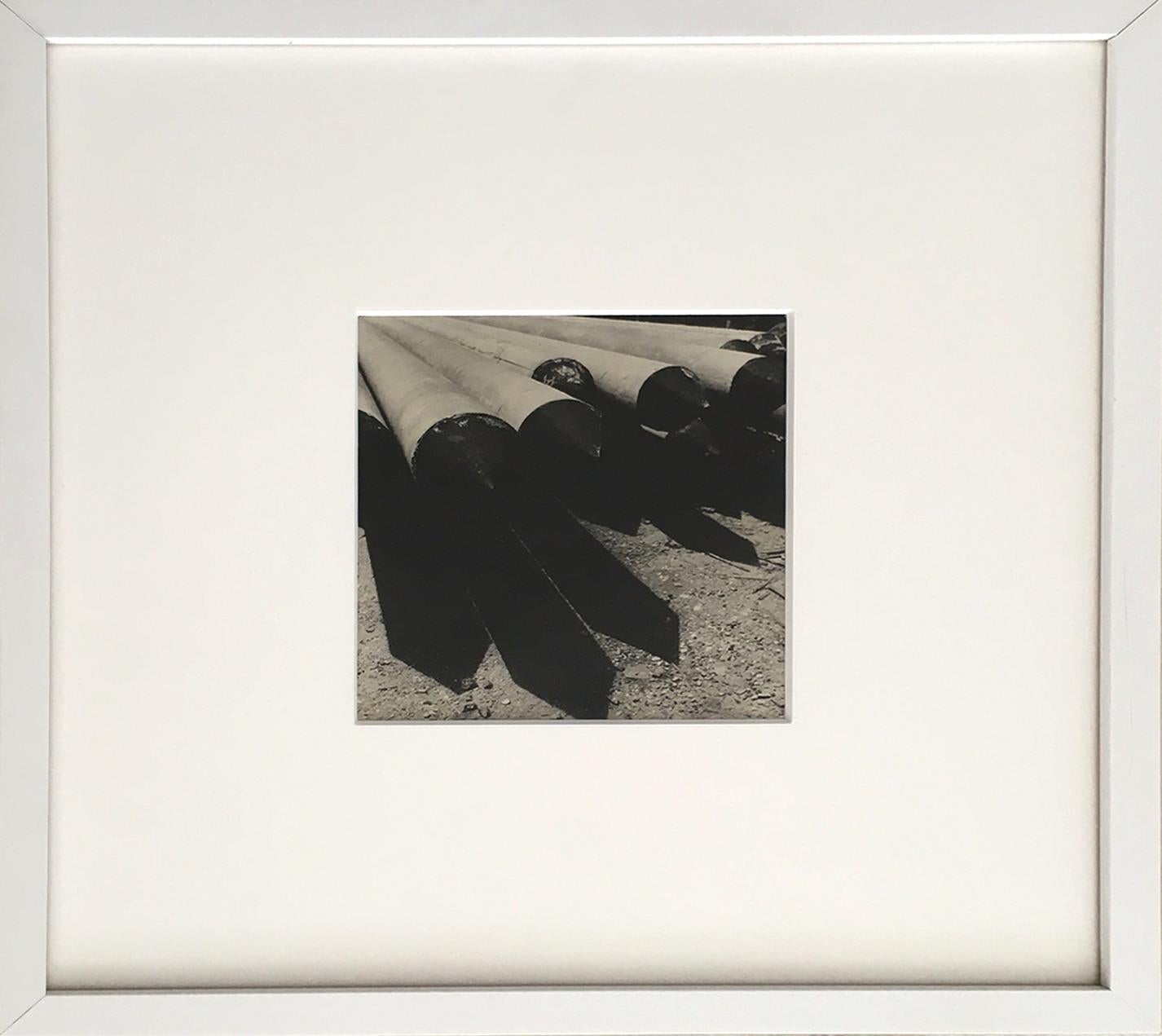
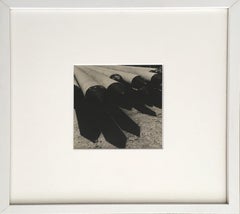
Pipes. Abstract black and white vintage photograph. (Framed)
By Leo Matiz
Located in Miami Beach, FL
Black and white photographs that reveal the various facets and aesthetic searches of the legendary Colombian photographer, recognized as the creator of memorable realistic, abstract ...
Category
1950s Other Art Style Black and White Photography
Materials
Other Medium
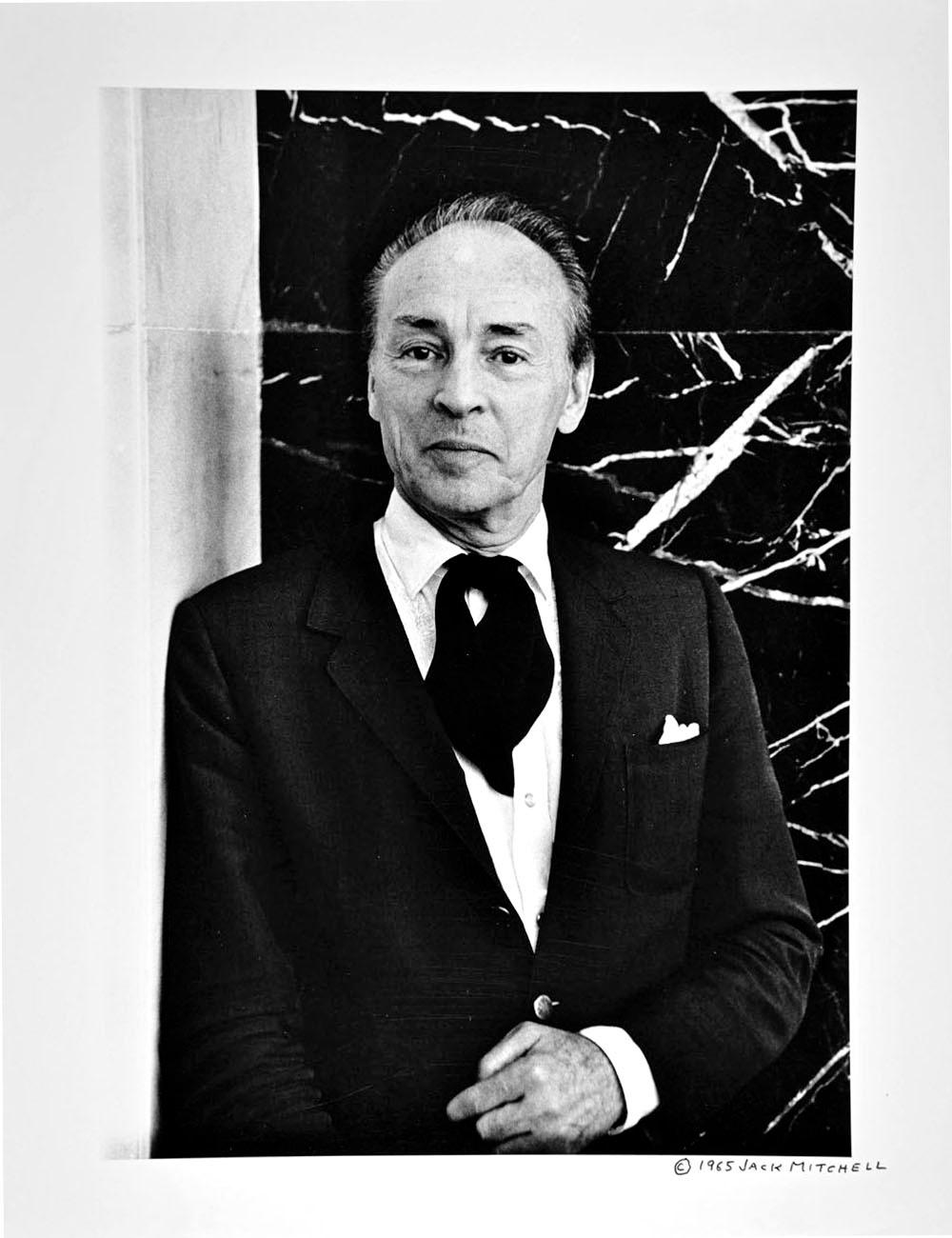
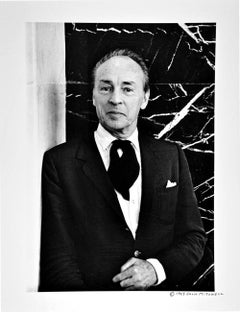
Choreographer
Ballet Master George Balanchine, signed by Jack Mitchell
By Jack Mitchell
Located in Senoia, GA
11 x 14" vintage silver gelatin photograph of choreographer and ballet master of the New York City Ballet George Balanchine photographed in April 196...
Category
1960s Pop Art Black and White Photography
Materials
Silver Gelatin
$1,500 Sale Price
25% Off
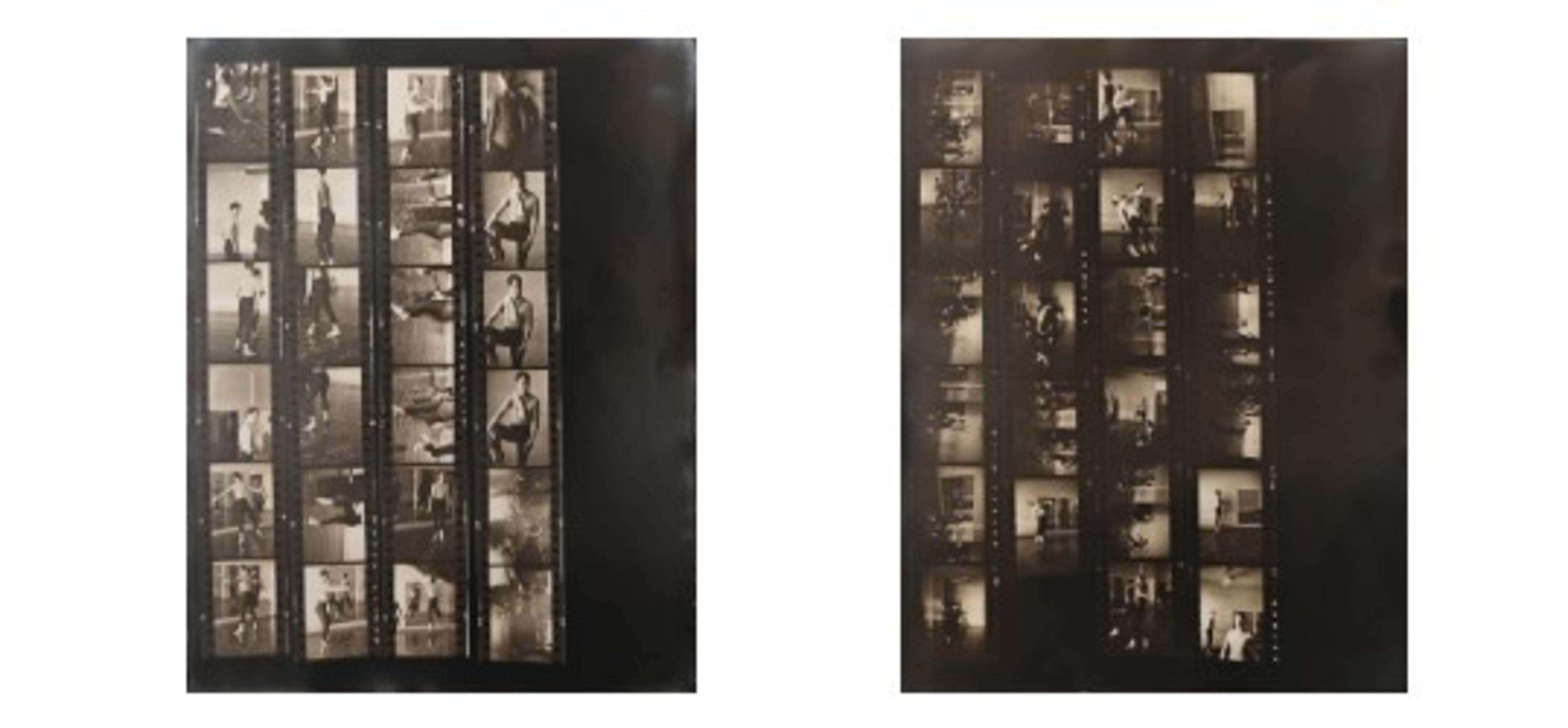
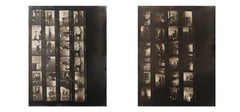
"Merce Cunningham" Saul Leiter, 2 Contact Sheets, Fluxus Movement, Ballet
By Saul Leiter
Located in New York, NY
Saul Leiter
2 Merce Cunningham Contact Sheets, 1954
Dated and inscribed by Carolyn Brown on verso
Kodak safety film
10 x 8 inches
Provenance
Estate of Carolyn Brown, New York 2025.
Saul Leiter (1923-2013) was born in Pittsburgh to a father who was a well-respected Talmudic scholar. His passion for the arts ignited during his late teenage years, and despite being urged to follow in his father's footsteps to become a Rabbi, he chose to forgo theological studies, moving to New York at the age of 23 to delve into painting. In the city, he formed a friendship with Abstract Expressionist painter Richard Pousette-Dart, who was exploring photography. This connection, along with a subsequent friendship with W. Eugene Smith, deepened his fascination with photography. Leiter's initial black and white images reveal a remarkable talent for the art form. By the 1950s, he also began to explore color, producing a substantial and noteworthy collection during the early stages of this medium. His uniquely muted color palette often imparts a painterly essence that distinguishes his work from that of others in his era.
Leiter's inaugural showcase of color photography took place in the 1950s at the Artist's Club, a gathering spot for many Abstract Expressionists of that period. Edward Steichen included twenty-three of his black and white works in the influential 1953 exhibition "Always the Young Stranger" at the Museum of Modern Art and also showcased twenty of Leiter's color photographs during the 1957 MoMA event "Experimental Photography in Color. " In the late 1950s, art director Henry Wolf featured Leiter's color fashion photography...
Category
1950s Conceptual Black and White Photography
Materials
Photographic Film
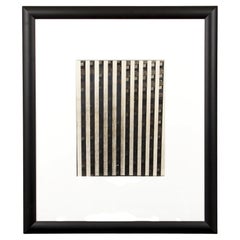
1950s Original Gelatin Silver Print from the Chrysler Building by Barbara Morgan
Located in North Miami, FL
ntroducing a captivating original vintage gelatin silver print from the 1950s, featuring the iconic Chrysler Building in New York, as captured by the acclaimed photographer Barbara M...
Category
Mid-20th Century American Mid-Century Modern Photography
Materials
Wood, Paper
$3,823 Sale Price
44% Off
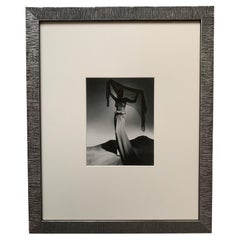
George Platt Lynes Original B&W Fashion Photograph, Metropolitan Museum Art
By George Platt Lynes
Located in Palm Springs, CA
The silver gelatin photograph was printed by the photography department of the Metropolitan Museum of Art in New York City in the 1990s frim the original negative. George Platt Lynes...
Category
1990s American Modern Photography
Materials
Other
Framed Vintage Photography by André Kertész
By Andre Kertesz
Located in Atlanta, GA
A vintage gelatin silver print photograph by celebrated Hungarian-born photographer André Kertész (1894-1985). Entitled "Martinique", printed in 1972, this is an iconic image by the ...
Category
Vintage 1970s American Modern Photography
Materials
Wood, Paper