Items Similar to The Canadian Pacific Train (1956-Canada) Large size Black
White Fine Art Print
Want more images or videos?
Request additional images or videos from the seller
1 of 10
Fabrizio La TorreThe Canadian Pacific Train (1956-Canada) Large size Black
White Fine Art Print1956
1956
$2,194.44
$2,743.0520% Off
£1,640.95
£2,051.1820% Off
€1,832
€2,29020% Off
CA$3,023.39
CA$3,779.2320% Off
A$3,297.43
A$4,121.7820% Off
CHF 1,746.75
CHF 2,183.4420% Off
MX$39,531.47
MX$49,414.3320% Off
NOK 22,245.89
NOK 27,807.3620% Off
SEK 20,342.21
SEK 25,427.7720% Off
DKK 13,960.57
DKK 17,450.7120% Off
About the Item
Artwork # 1 on 5 sold in limited edition in perfect condition
This photo was made in 1956, the negative was digitized during the artist's lifetime and the technical parameters (framing, contrast, light, etc.) was approved by him. This is a very high quality fine art prints on 310 gr/m² Fine Art paper with museum quality pigment inks.
Fabrizio La Torre's first impression of the country is not so much its immensity but how cold it is, gusts of wind, ice and snow, snow which comes as a storm or as a fine sleet which the Canadians hardly seem to notice.
In Toronto, Ottawa and Montreal, the young Roman sees passers-by strolling and shopping in conditions which would incline him to retire forthwith to the nearest fireside!
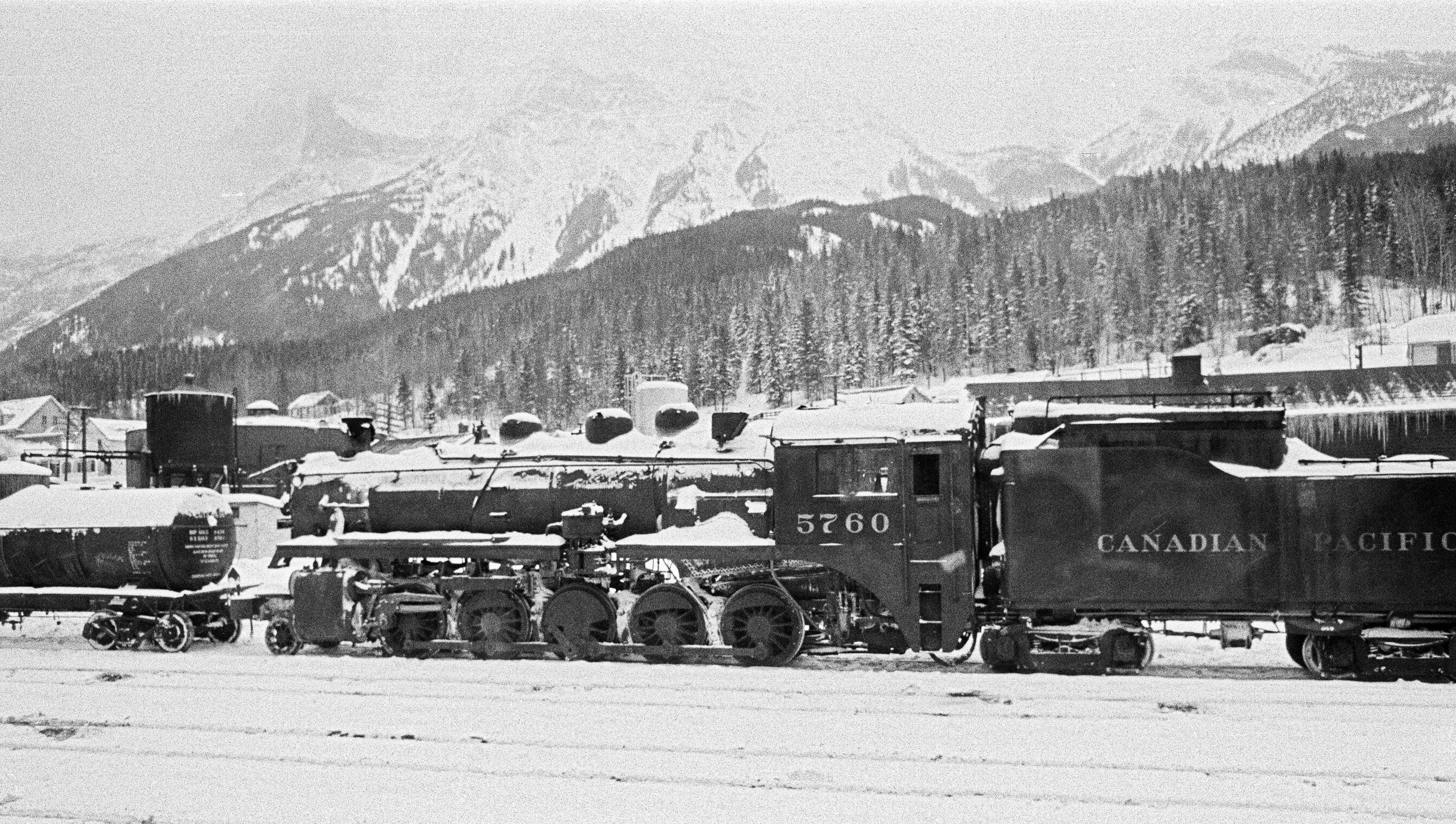
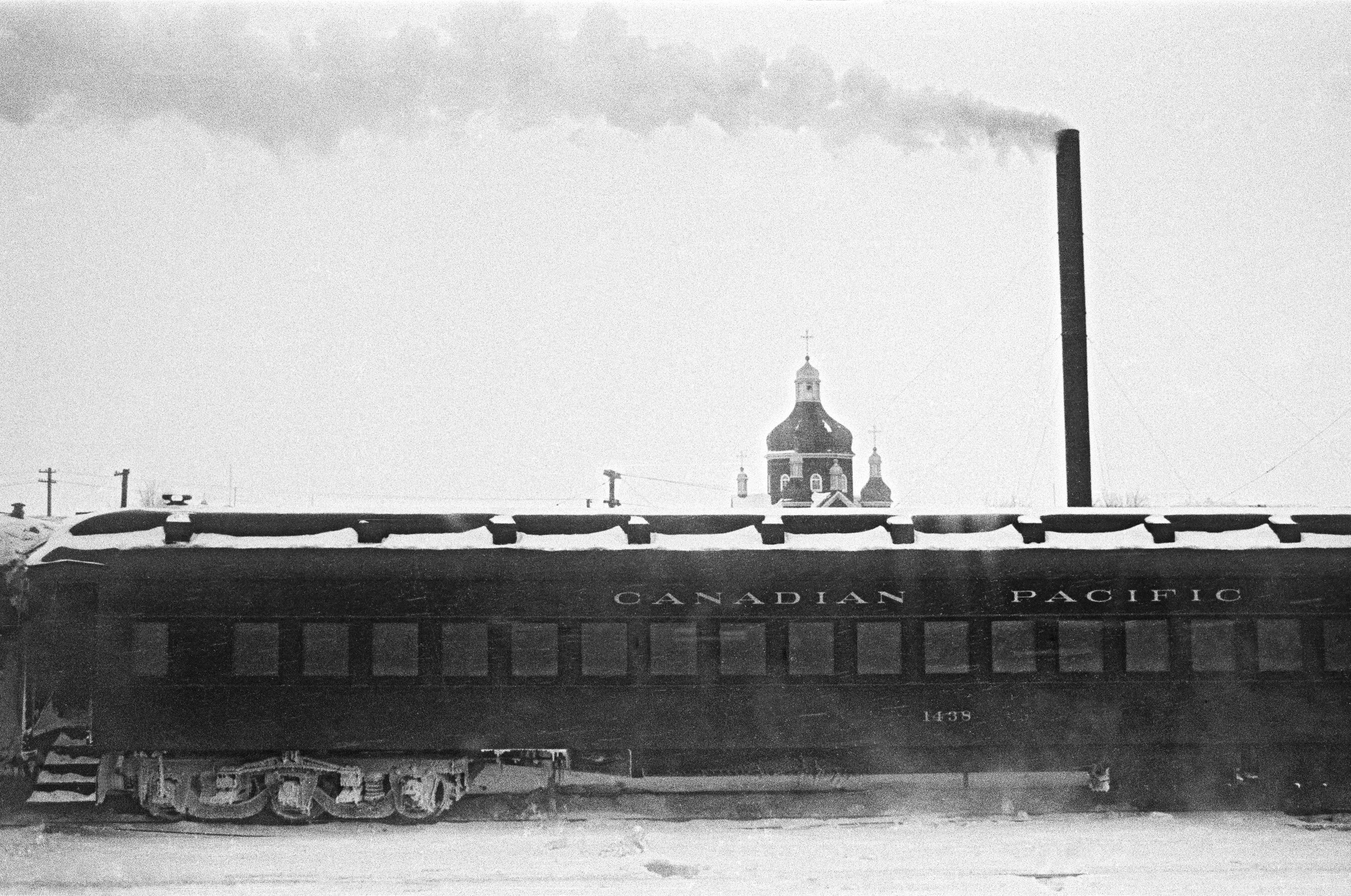
And when he takes the Canadian Pacific train, that slow journey across the country, in a landscape where the sky and the land are of the same uniform white, he encounters a cold which is pretty extreme,-30 degrees centigrade, almost enough to stop him from taking photos. His fingers stick to the metal parts of his camera, whilst the heavy gloves make it virtually impossible to adjust to the right settings.
What he does not realise while taking the photos is that the films he bought in Rome before leaving are not really ideally suited to the extreme cold and when developped will produce some unexpectedly impressionistic results!
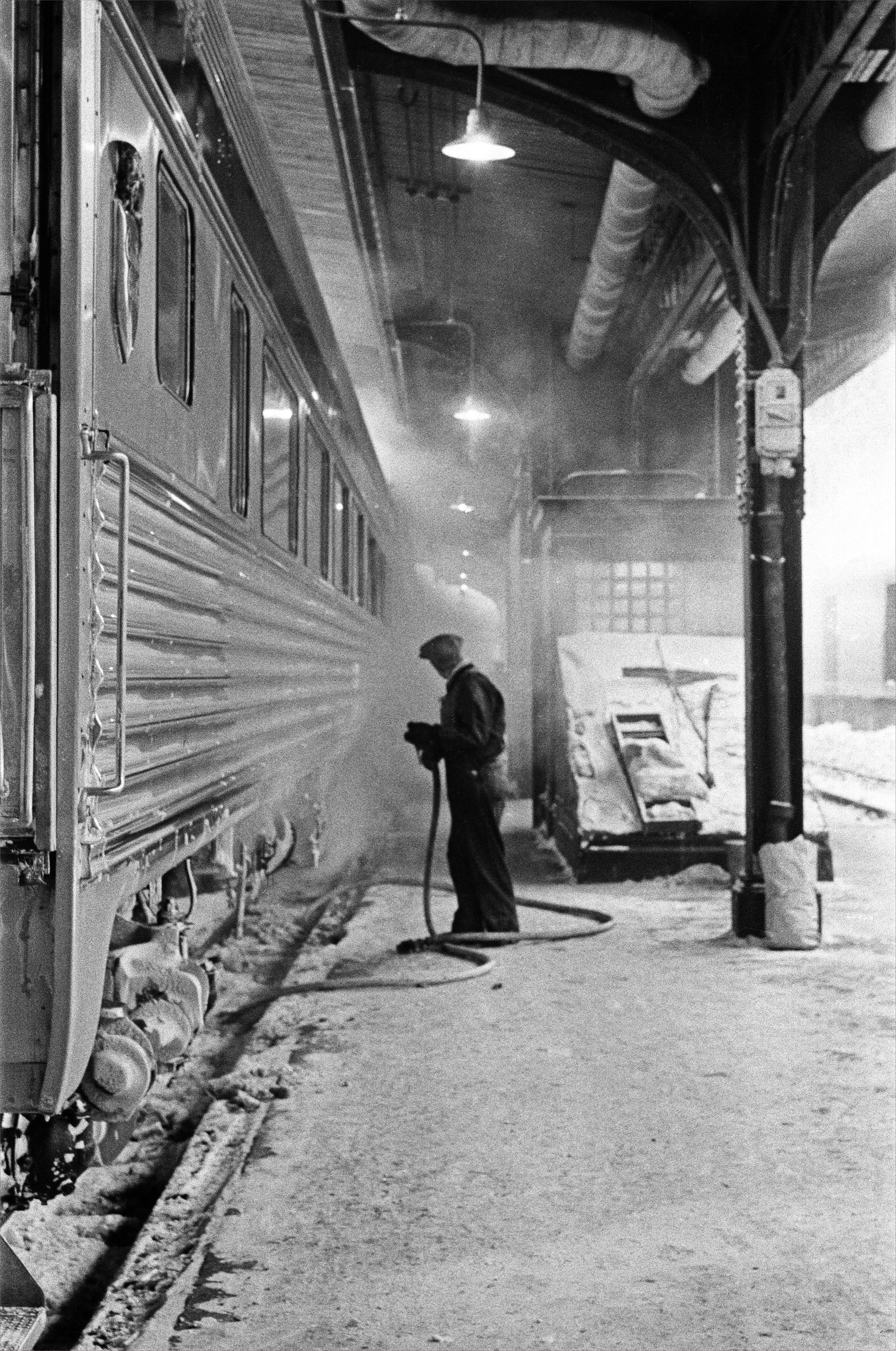
Every time the train halts, he alights to the platform and trys to capture the interactions of light and materials which emerge due to the innumerable jets of steam. The train drivers use this steam to protect the carriages and the passengers from...immediate freezing.
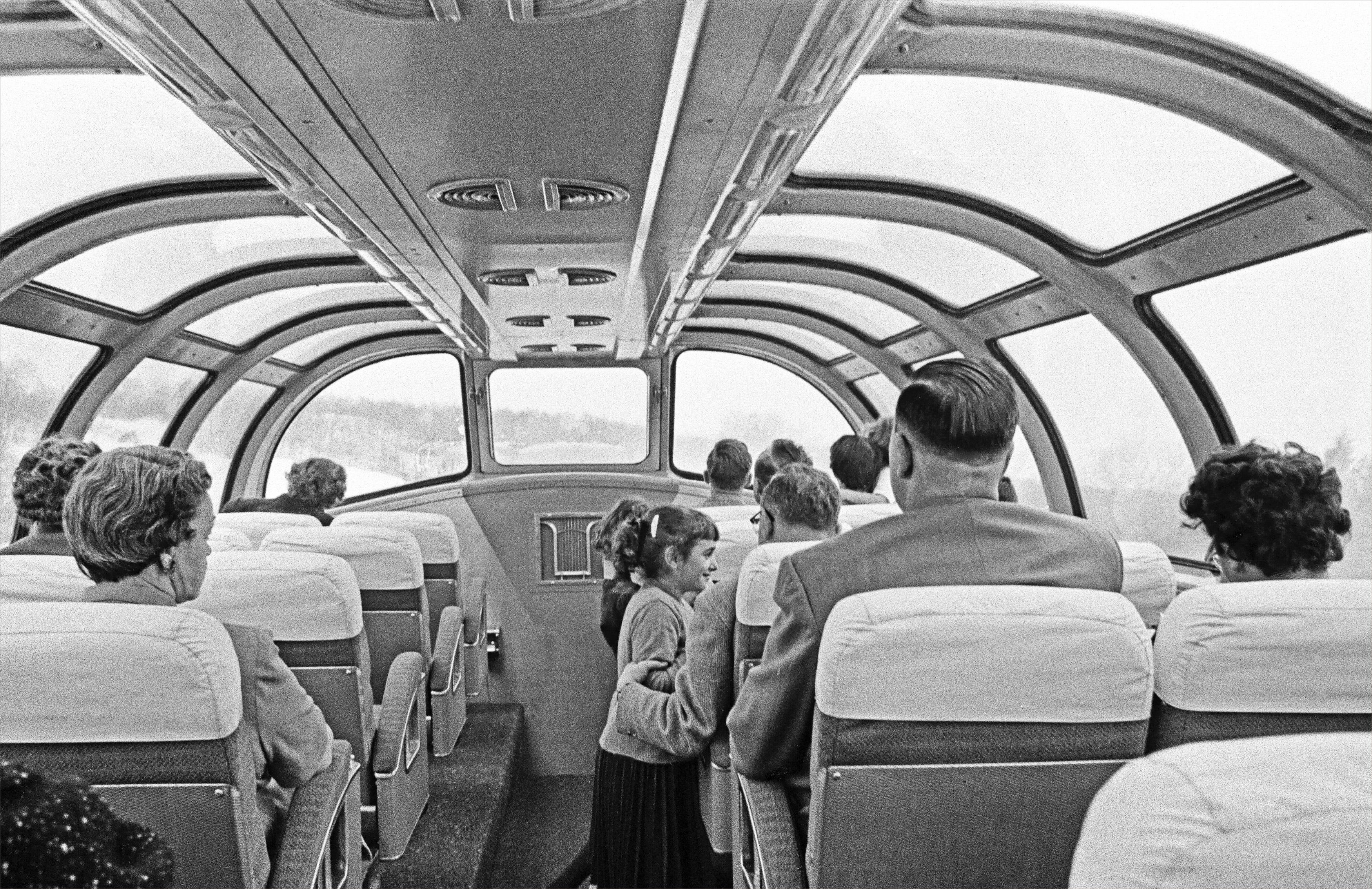
And then the train departs, slowly, very slowly, comfortable and welcoming like a cruise liner. The viewing car offers the stunning spectacle of uninterrupted whiteness which is only disturbed on the outskirts of towns.
Camera in hand, the photographer lurks: the result is this remarkable game of hockey where the kids enjoy themselves immensely in a kind or ragged choreography. This photo cannot help recalling Robert Capa's “Snowball Fight” taken in china in 1938.
Fabrizio La Torre (b. Rome 1921 d. Brussels 2014) was an Italian neo-realist photographer working during the period 1950-1960 who left behind a body of work focussing on three specific geographical areas: Italy, North America, which he spent several months visiting in 1955 and Asia where he lived for five years (1956-61).
Fascinated by the task of capturing moments of truth and intimacy which characterise the human condition all over the world, he gives us moments of insight into life which reach out to us bridging time and distance. He holds up to us an affectionate and benign mirror, always knowing, sometimes amused but never mocking.
In 1965, success came knocking at his door: he was offered the possibility of exhibitions and publication but he turned it down for reasons he never fully explained.
The most we can do is note that this was also the time when the immense talent and historical importance of the photographic works, produced a century earlier by his grandfather Enrico Valenziani, were discovered. This may have made him feel he could not compete, particularly as he came from a family which was possessed of multiple artistic talents but in which no-one claimed to be an artist. Perhaps he saw himself as “a photographer” who was just the grandson of one of the founding fathers of Italian photography. Who knows?
In 1970 he closed his archives and gave away his cameras. He ceased to see his photography as an act of creation but merely as a kind of notebook of his many travels for his job.
In 2009 he agreed to re-open his archives and to have his photos restored and digitised. He also permitted the first printed edition of his art photos.
Far from rejecting the switch to digital photography, he welcomed the freedom to render the shades, the tones, the “sfumature” which photo labs in the 1960s saw as “imperfections”, at a time when hyper contrast was the big thing, deep blacks and anaemic whites were all the rage. Fabrizio La Torre’s vision of the world was full of different shades.
The last few years of his life were spent hard at work. He may have been a little unsteady on his legs but there was nothing wrong with his head - memory intact, imparting clear instructions and sharing many reminiscences. With Jean-Pierre De Neef and his technical team he fine-tuned every single print, perfectly willing to start all over again if necessary to achieve what he had intended 50 years earlier when the photo was taken - the desired composition, lighting and contrast.
The exhibitions, the publications, the encounters with his audience came thick and fast: in Paris at the Italian Institute of Culture in 2010, in Brussels at the Ixelles Museum in 2011, followed by the magnificent Retrospective organised in 2014 in the Principality of Monaco. For a year he worked on a daily basis, taking advantage of this major event to give his final instructions. Fate can be cruel: his heart finally gives out just two weeks before the opening of the exhibition which covers 800 square metres. However, he knows he has done what was necessary, he has passed on his instructions which embody his desire to bring to life his photographic achievements which are centred entirely on the human dimension, man’s adventures, his dreams, his fight for a better life.
Beginning in 2017, his curator, François Bayle, assisted by the team at Brussels Art Edition started work on the photos taken by Fabrizio La Torre in Asia during his five year stay in Thailand (1956-61). In November 2018, in Bangkok, a book entitled “Bangkok That Was” was published in English, which brings together these photos and, using the original notes left by the artist, tells the story of his life in Asia and expresses his affection for its people.
An exhibition with the same title took place for two months at the Serindia Gallery. Afterwards Fabrizio’s photos were taken to their permanent home in Bangkok, the cultural venue of the Central Embassy Mall where they are displayed and on sale all year round.
Meanwhile a new exhibition is planned in Bangkok and a new book published based on the pioneering efforts of Fabrizio La Torre in photographing in 1958 in the storerooms of the National Museum in Bangkok the painstaking lacquerwork representations of daily life of the Siamese people two centuries earlier.
At the very beginning of 2020 Jean-Pierre De Neef, François Bayle and their teams were working enthusiastically on two specific projects: the exhibition and the book on the lacquerwork mentioned above and a very fine exhibition planned for 2021 in New York.
Then along came the virus and upset the best-laid plans. The projects have been postponed, in all probability for a year.
In order to continue funding preparations for these two major projects, the high quality art photos, validated by the artist himself before his death, are now on sale.
This is an opportunity for collectors and enthusiasts to acquire the works of an Italian artist of recognised talent whose works are attractively priced before the exhibition in the USA, thus offering the advantage of a very strong potential for growth.
- Creator:Fabrizio La Torre (1921 - 2014, Italian)
- Creation Year:1956
- Dimensions:Height: 27.56 in (70 cm)Width: 41.34 in (105 cm)Depth: 0.12 in (3 mm)
- Medium:
- Movement Style:
- Period:
- Framing:Framing Options Available
- Condition:
- Gallery Location:Brussels, BE
- Reference Number:1stDibs: LU157029496662
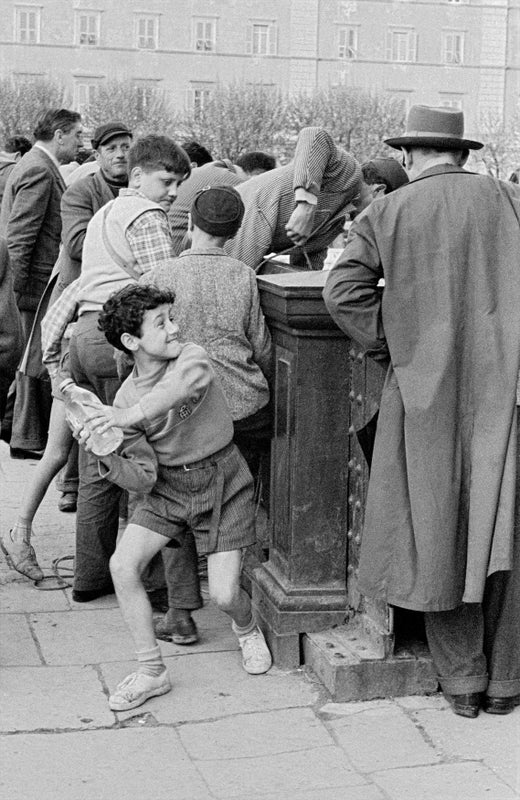
Fabrizio La Torre, who was born in Rome (Italy) on 11 January 1921 and died in Brussels (Belgium) on 27 August 2014, he was an Italian photographer active for a 15 year period in the 1950s–1960s and whose neorealistic and intimistic works are typical of cinema and photography of that time in Italy. La Torre said that “his parents gave him his first camera, a Bakelite body with non-adjustable lens and focus which produced rather strange half format 18x24 millimeter negatives. It was with it that he took his first photos.” Since then, he tried to take pictures at any occasion especially during the different trips he made during his life, “trying to capture the daily life” of the people he encountered.
La Torre justified his "frenzy of travel" as a pretext to flee from the paternal model and the resumption of management of a family estate.
Since the early 1950s and until the late 1960s, La Torre produced less than 10 thousand photos worldwide. After this period, he gave up photography, gave away or sold his cameras, closed his archives and put them away in boxes where they would remain out of sight for 40 years.
In 2009 he agreed to re-open his archives for examination and study and allowed the restoration of a number of negatives. Gradually a first exhibition was prepared, focussing on Rome in the 1950s and ‘60s, “La Vera vita”. By this time he was 90 years old and in failing health. He realised that this was not a time to hold back and decided to cooperate fully in the restoration of his works. He moved to Brussels, in order to benefit from the availability of the technicians and experts which he would need.
In 2014, La Torre worked every day on preparations for his Retrospective in Monaco. He realised that this was his last chance to display his works as he thought best. Two weeks before the official inauguration, he died. His ashes would be placed in the little cemetery of Cap d’Ail next door to Monaco where his parents and his sister were already at rest.
La Torre never tried to only show the beautiful for fear of "making postcard". For him, "there is only the introduction of the human element that protects from looking like a postcard. This is why my naked landscapes are so rare."
Far from the paparazzi, La Torre developed his own style, working alone, ignoring the surprise and amused comments of Roman photographers obsessed with the Via Veneto and its starlets. They did have in common the laboratory to which they took their films, that of the Nannini Brothers in the city centre, two experts in high contrast images and probably the inventors of the concept of "stolen photos", out of focus and slightly grainy to give the impression of privacy revealed.
About the Seller
5.0
Vetted Professional Seller
Every seller passes strict standards for authenticity and reliability
Established in 2010
1stDibs seller since 2021
36 sales on 1stDibs
- ShippingRetrieving quote...Shipping from: Brussels, Belgium
- Return Policy
More From This Seller
View AllAl Riposo, Canada 1955 - Limited Edition Black
White Photography
Located in Brussels, BE
Artwork sold in perfect condition
During the 15 years during which he gave himself to photography, Fabrizio La Torre traveled to Italy, Europe, North America and Asia. From everywhe...
Category
1950s Photorealist Black and White Photography
Materials
Archival Pigment
$1,581 Sale Price
20% Off
La ciminiera non è sua, Canada 1955 - Limited Edition Black
White Photography
Located in Brussels, BE
Artwork sold in perfect condition
During the 15 years during which he gave himself to photography, Fabrizio La Torre traveled to Italy, Europe, North America and Asia. From everywhe...
Category
1950s Photorealist Black and White Photography
Materials
Archival Pigment
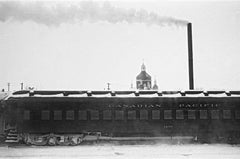
Ancora il vapore, Canada, 1955 - Limited Edition Black
White Photography
Located in Brussels, BE
Artwork sold in perfect condition
During the 15 years during which he gave himself to photography, Fabrizio La Torre traveled to Italy, Europe, North America and Asia. From everywhe...
Category
1950s Photorealist Black and White Photography
Materials
Archival Pigment
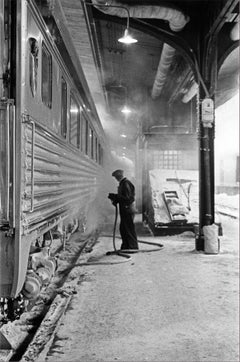
$1,581 Sale Price
20% Off
Universo bianco, Canada, 1955 - Limited Edition Black
White Photography
Located in Brussels, BE
Artwork sold in perfect condition
During the 15 years during which he gave himself to photography, Fabrizio La Torre traveled to Italy, Europe, Nort...
Category
1950s Photorealist Black and White Photography
Materials
Archival Pigment
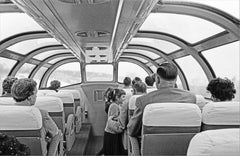
$1,581 Sale Price
20% Off
100th Anniversary Celebration Coffret # 10 - Canada - Vintage Photography
Located in Brussels, BE
Artwork sold in perfect condition
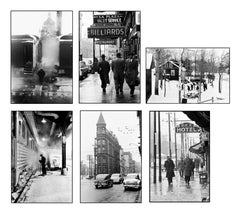
Fabrizio La Torre’s 100th Anniversary Celebration (1921-2021) Set # 10 - Canada
Limited edition of 100 Coffrets for each themes, all artworks printe...
Category
1950s Photorealist Black and White Photography
Materials
Archival Pigment
First Looks over Canada, 1955 - 12 ex - Limited Ed - Black
White Photography
Located in Brussels, BE
Artwork sold in perfect condition
Coffret Collector # 1 from a limited editon of 5
Each coffret is including 12 Fine Art Limited Edition Prints up to 13 x 19 inches
These photos were made in 1955, printed later, the negative was digitized during the artist's lifetime and the technical parameters (framing, contrast, light, etc.) was approved by him. These are very high quality fine art prints on 310 gr/m² with museum quality pigment inks.
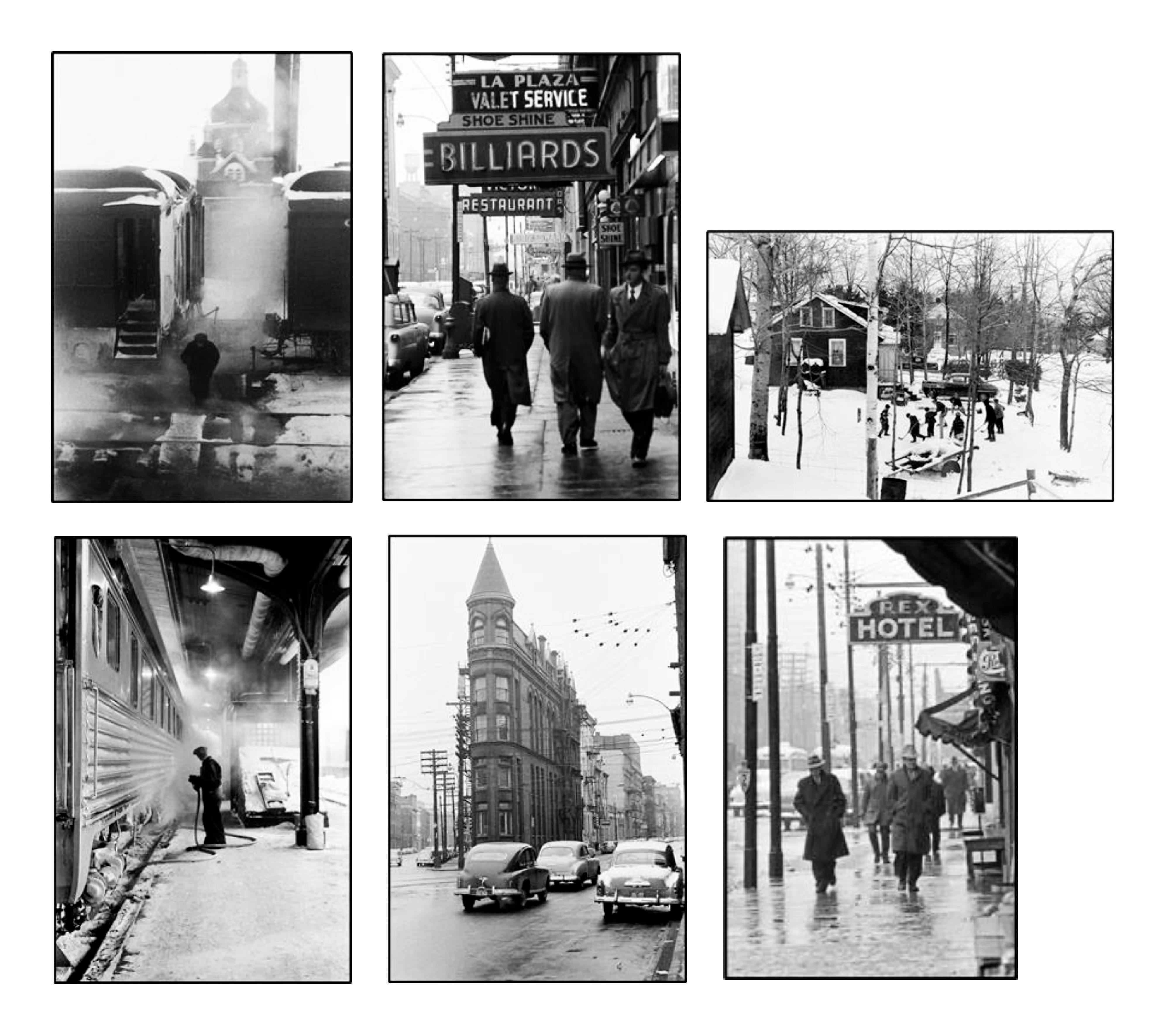
During the 15 years during which he gave himself to photography, Fabrizio La Torre traveled to Italy, Europe, North America and Asia. From everywhere he brought back photos that tell of the human, universal and soul-filled condition, to which he was so sensitive. Here is First Look at Canada, where Fabrizio La Torre stayed in November and December 1955, on a 6-month trip to North America which also took him to Canada and California. In Montreal, he could not resist the urge to travel aboard the "Canadian", the most modern and luxurious version of the Canadian Pacific train, inaugurated a few months earlier, on April 24, 1955. And even if the official story of this company claims that as from this inauguration the train was pulled by modern diesel locomotives, the heavy steam engines are still used, to the delight of the photographer who knows how to play with their big white plumes. In stations, on platforms, steam is everywhere; while the temperature is around - 30°C, steam is welcome to thaw the axles, often blocked by ice.
1 – « The Rex Hotel », Toronto, November 1955. A cold, gray day where the snow is not far away, silhouettes of men in hats walking past the Rex Hotel. It has not yet become the legendary venue for all jazz concerts in Toronto. But for its comfortable rooms and its reasonable prices, this is where Fabrizio La Torre chose to stay.
2 – « On Wellington Street », Toronto November 1955.
The Gooderham building which remains one of the city symbols today, now surrounded by imposing skyscrapers while back then it was it’s turret that stared at the passer-by and the circulation of all its majesty .
3 – « Pietra e ferro », Stone and iron, Toronto November 1955. In every North American city where he passes, Fabrizio La Torre is struck by the overwhelming mass of buildings and the ubiquity of large cars, which he compares to living rooms. For this former naval officer accustomed to scanning around him with binoculars, the horizon is seems short. And nature is missing too: no tree grow outside the parks where they are confined.
4 – « Billiards », Toronto November 1955. Billiards, shoe shiners, restaurants, there is nothing lacking in the happiness of these gentlemen whose silhouettes in long coats and small hats definitely evoke the atmosphere of American movies of those years.
5 – « La partita di Hockey », Canada November 1955. An improvised hockey game...
Category
1950s Photorealist Black and White Photography
Materials
Archival Pigment
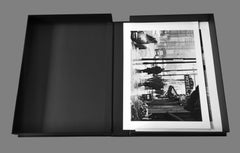
You May Also Like
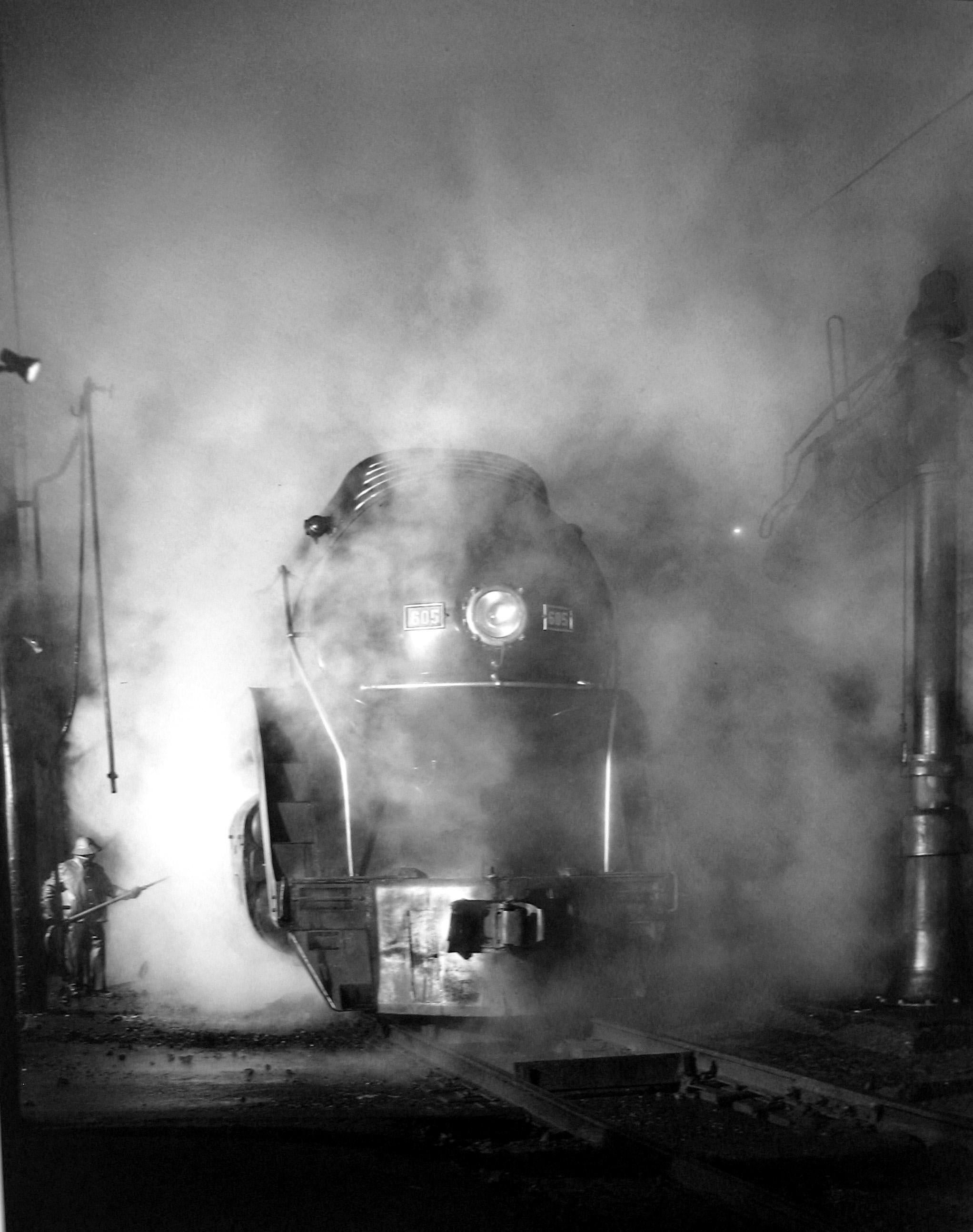
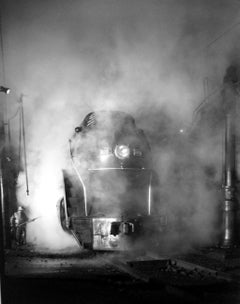
Washington J Class 605, Shaffers Crossing, VA
By O. Winston Link
Located in Santa Monica, CA
Signed on verso in pencil; Artist copyright stamp on verso
Gelatin Silver Print
Image: 19-3/8 x 15-1/2" inches, Paper: 20 x 16 inches
Category
1950s Black and White Photography
Materials
Silver Gelatin
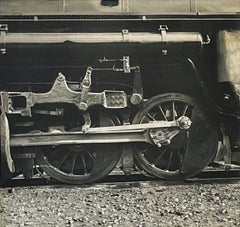
"Class A Steam Locomotive: The Second Set of Drivers" Walker Evans, Train Photo
By Walker Evans
Located in New York, NY
Walker Evans
Class A Steam Locomotive: The Second Set of Drivers, 1958
Inscribed "For Calvert from Walker" lower right
Gelatin silver print
10 x 10 1/2 inches
Provenance
The artist
...
Category
1950s American Realist Black and White Photography
Materials
Silver Gelatin
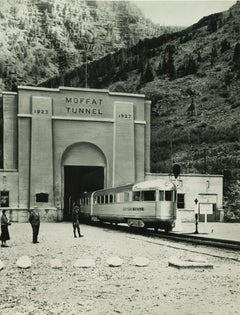
America
s Most Modern Transcontinental Express Train - Mid 20th Century
Located in Roma, IT
America's most Modern Transcontinental Express Train- American Vintage Photograph is an original black and white photograph realized in the U.S in the Mi...
Category
Mid-20th Century Modern Figurative Photography
Materials
Photographic Paper
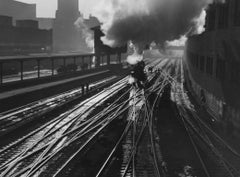
Chicago Railroad Yard
By Jack Delano
Located in Denton, TX
Signed, titled and dated in pencil on print verso.
Category
Mid-20th Century Modern Black and White Photography
Materials
Silver Gelatin
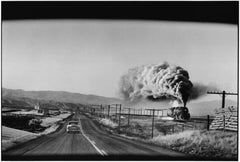
Steam Train Press, Wyoming, 1954 - Elliott Erwitt (Black and White Photography)
By Elliott Erwitt
Located in London, GB
Steam Train Press, Wyoming, 1954 - Elliott Erwitt (Black and White Photography)
Signed, inscribed with title and dated on accompanying artist’s label
Silver gelatin print, printed la...
Category
Late 20th Century American Realist Photography
Materials
Silver Gelatin
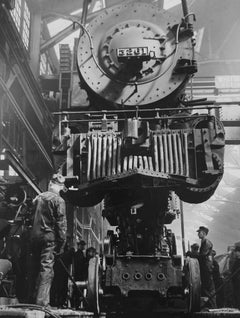
Kansas City, Kansas, Santa Fe Railroad Repair Shop
By Jack Delano
Located in Denton, TX
Signed, titled, and dated in pencil on print verso.
Category
Mid-20th Century Modern Black and White Photography
Materials
Silver Gelatin
More Ways To Browse
Nabi Painting
Niki De Saint Phalle Lithograph
Paintings By George W Bush
Peck And Peck
Persimmon Art
Picasso Carmen
Scott Fitzgerald
Set Of Six Russian Silver
Signed Lithographs Artist Proofs
Tarot Cards
The Redfern Gallery London
Vintage Calendar Prints
Vintage Construction Workers
Vintage Government Posters
Vintage Posters 1900
Vinyl Art Toy
Water Bag
Wayang Puppet