Items Similar to Cownose Ray (Rhinoptera bonasus)
Want more images or videos?
Request additional images or videos from the seller
1 of 5
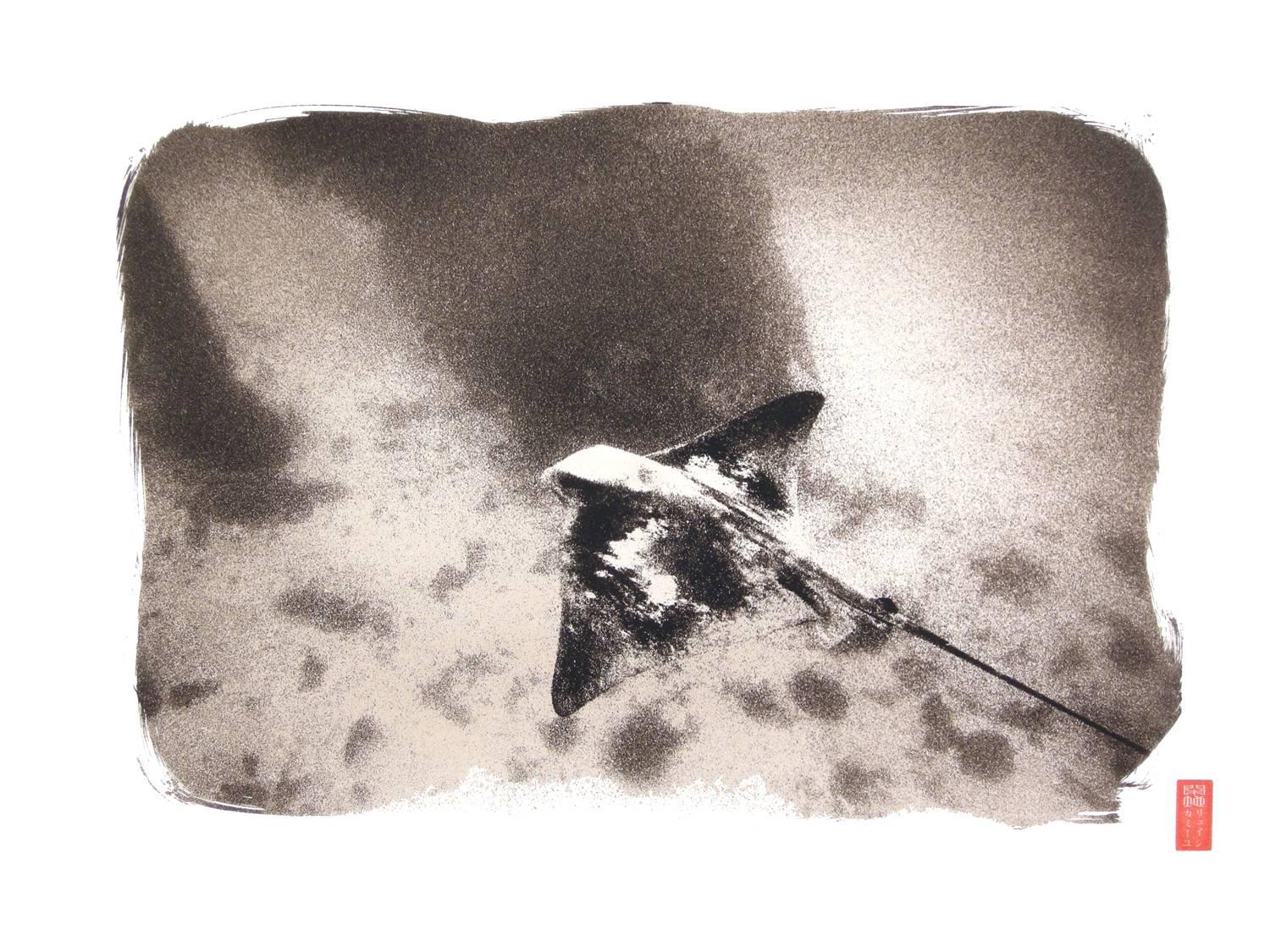
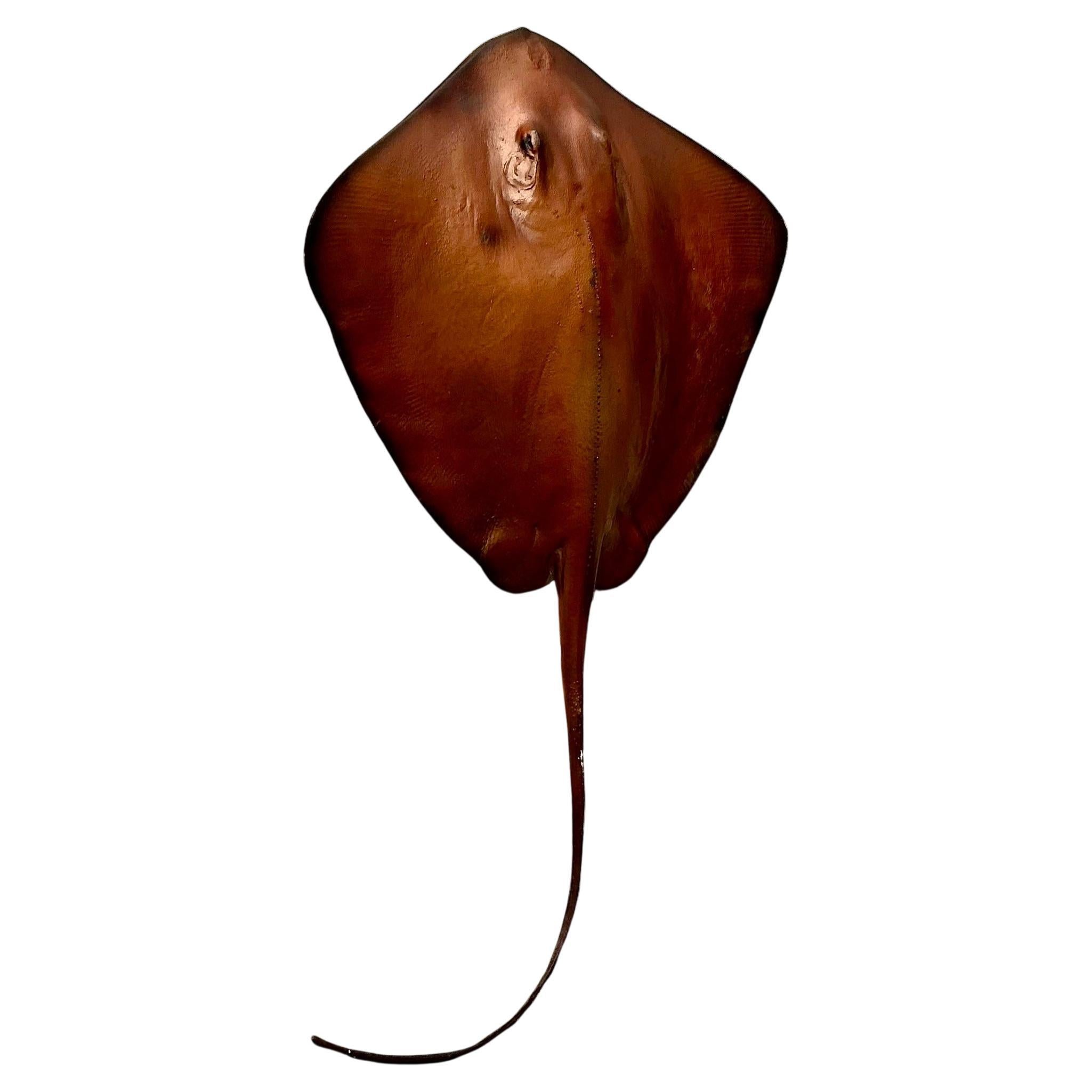
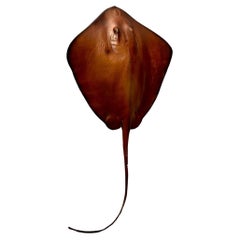
Henry HorensteinCownose Ray (Rhinoptera bonasus)c. 1995-2001
c. 1995-2001
$2,500
£1,888.17
€2,181.13
CA$3,522.14
A$3,772.22
CHF 2,027.92
MX$45,815.79
NOK 25,623.73
SEK 23,460.43
DKK 16,297.01
About the Item
Sepia-toned gelatin silver print
Signed and numbered, verso
24 x 20 inches, sheet
(Edition of 35)
39 x 26 inches, sheet
(Edition of 15)
This photograph is offered by ClampArt, located in New York City.
“Horenstein’s creatures are decontextualized. They appear without the backdrop of the natural landscape, outside even the artificial world of the zoo or aquarium, and devoid of their true color. As a consequence, the images are truly arresting; and in both a literal and a metaphorical sense, we see these animals as we have never seen them before. We notice details, and Horenstein focuses our vision on the unexpected: the foot of an elephant, the eye of an octopus, the hair on the back of a gibbon’s head, the pattern of feathers on a bird’s neck. He plays with scale: the rear end and tail of a rhinoceros occupy the entire picture frame. We see these as if through a magnifying glass. His pictures challenge us to look more closely, to ask questions and make connections. We think about form and function: the relationship between an elephant’s foot, a horse’s hoof, and our own toes. We ponder modes of sensing and communication: the signals that hold together a school of fish. Examining these photographs, we become scientists and discoverers.
“In some respects, Horenstein’s work continues a centuries-old tradition of natural history illustration in the realm of photography. In natural history illustration, animals are often presented in shallow space with limited landscape, sometimes even against a blank page, in order to promote close examination and study of detail. But as much as these photographs promote scientific inquiry, they are more than scientific illustration. Animals were the subjects of our first art and our first metaphors; and freed from the constraints of space and time, many of Horenstein’s creatures remind us of the lost magical connection between the ‘animal world’ and our own. They are unsettling and they mesmerize. They transcend and transgress familiar boundaries between subject and object. Who is observing whom? The Komodo dragon looks at us with piercing eyes. We’re transfixed by the gaze of the harbor seal.
“The combination of the scientific and the metaphorical, the artistic and the analytical in these images is what accounts for their extraordinary power.” —Elisabeth Werby, Executive Director, Harvard Museum of Natural History, Cambridge, Massachusetts
- Creator:Henry Horenstein (1947, American)
- Creation Year:c. 1995-2001
- Dimensions:Height: 24 in (60.96 cm)Width: 20 in (50.8 cm)
- Medium:
- Period:
- Condition:
- Gallery Location:New York, NY
- Reference Number:1stDibs: LU93233222023
About the Seller
5.0
Vetted Professional Seller
Every seller passes strict standards for authenticity and reliability
Established in 2000
1stDibs seller since 2018
270 sales on 1stDibs
Typical response time: 3 hours
- ShippingRetrieving quote...Shipping from: New York, NY
- Return Policy
More From This Seller
View AllBeluga Whale (Delphinapterus leucas)
By Henry Horenstein
Located in New York, NY
Sepia-toned gelatin silver print
Signed and numbered, verso
24 x 20 inches, sheet
(Edition of 35)
39 x 26 inches, sheet
(Edition of 15)
This photograph is offered by ClampArt, located in New York City.
“Horenstein’s creatures are decontextualized. They appear without the backdrop of the natural landscape, outside even the artificial world of the zoo or aquarium, and devoid of their true color. As a consequence, the images are truly arresting; and in both a literal and a metaphorical sense, we see these animals as we have never seen them before. We notice details, and Horenstein focuses our vision on the unexpected: the foot of an elephant, the eye of an octopus, the hair on the back of a gibbon’s head, the pattern of feathers on a bird’s neck. He plays with scale: the rear end and tail of a rhinoceros occupy the entire picture frame. We see these as if through a magnifying glass. His pictures challenge us to look more closely, to ask questions and make connections. We think about form and function: the relationship between an elephant’s foot, a horse’s hoof, and our own toes. We ponder modes of sensing and communication: the signals that hold together a school of fish. Examining these photographs, we become scientists and discoverers.
“In some respects, Horenstein’s work continues a centuries-old tradition of natural history illustration in the realm of photography. In natural history illustration, animals are often presented in shallow space with limited landscape, sometimes even against a blank page, in order to promote close examination and study of detail. But as much as these photographs promote scientific inquiry, they are more than scientific illustration. Animals were the subjects of our first art and our first metaphors; and freed from the constraints of space and time, many of Horenstein’s creatures remind us of the lost magical connection between the ‘animal world’ and our own. They are unsettling and they mesmerize. They transcend and transgress familiar boundaries between subject and object. Who is observing whom? The Komodo dragon looks at us with piercing eyes. We’re transfixed by the gaze of the harbor...
Category
1990s Other Art Style Black and White Photography
Materials
Silver Gelatin
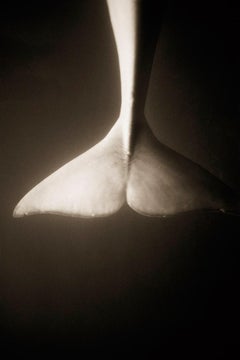
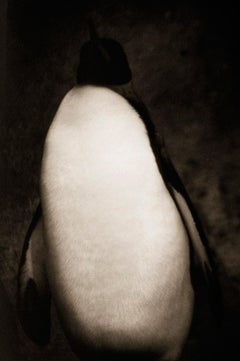
Emperor Penguin (Aptenodytes forsteri)
By Henry Horenstein
Located in New York, NY
Sepia-toned gelatin silver print
Signed and numbered, verso
24 x 20 inches, sheet
(Edition of 35)
39 x 26 inches, sheet
(Edition of 15)
This photograph is offered by ClampArt, located in New York City.
“Horenstein’s creatures are decontextualized. They appear without the backdrop of the natural landscape, outside even the artificial world of the zoo or aquarium, and devoid of their true color. As a consequence, the images are truly arresting; and in both a literal and a metaphorical sense, we see these animals as we have never seen them before. We notice details, and Horenstein focuses our vision on the unexpected: the foot of an elephant, the eye of an octopus, the hair on the back of a gibbon’s head, the pattern of feathers on a bird’s neck. He plays with scale: the rear end and tail of a rhinoceros occupy the entire picture frame. We see these as if through a magnifying glass. His pictures challenge us to look more closely, to ask questions and make connections. We think about form and function: the relationship between an elephant’s foot, a horse’s hoof, and our own toes. We ponder modes of sensing and communication: the signals that hold together a school of fish. Examining these photographs, we become scientists and discoverers.
“In some respects, Horenstein’s work continues a centuries-old tradition of natural history illustration in the realm of photography. In natural history illustration, animals are often presented in shallow space with limited landscape, sometimes even against a blank page, in order to promote close examination and study of detail. But as much as these photographs promote scientific inquiry, they are more than scientific illustration. Animals were the subjects of our first art and our first metaphors; and freed from the constraints of space and time, many of Horenstein’s creatures remind us of the lost magical connection between the ‘animal world’ and our own. They are unsettling and they mesmerize. They transcend and transgress familiar boundaries between subject and object. Who is observing whom? The Komodo dragon looks at us with piercing eyes. We’re transfixed by the gaze of the harbor...
Category
1990s Other Art Style Black and White Photography
Materials
Silver Gelatin
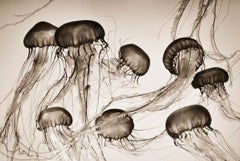
Brown Sea Nettles (Chrysaora fuscescens)
By Henry Horenstein
Located in New York, NY
Sepia-toned gelatin silver print
Signed and numbered, verso
20 x 24 inches, sheet
(Edition of 35)
26 x 39 inches, sheet
(Edition of 15)
This photograph is offered by ClampArt, located in New York City.
“Horenstein’s creatures are decontextualized. They appear without the backdrop of the natural landscape, outside even the artificial world of the zoo or aquarium, and devoid of their true color. As a consequence, the images are truly arresting; and in both a literal and a metaphorical sense, we see these animals as we have never seen them before. We notice details, and Horenstein focuses our vision on the unexpected: the foot of an elephant, the eye of an octopus, the hair on the back of a gibbon’s head, the pattern of feathers on a bird’s neck. He plays with scale: the rear end and tail of a rhinoceros occupy the entire picture frame. We see these as if through a magnifying glass. His pictures challenge us to look more closely, to ask questions and make connections. We think about form and function: the relationship between an elephant’s foot, a horse’s hoof, and our own toes. We ponder modes of sensing and communication: the signals that hold together a school of fish. Examining these photographs, we become scientists and discoverers.
“In some respects, Horenstein’s work continues a centuries-old tradition of natural history illustration in the realm of photography. In natural history illustration, animals are often presented in shallow space with limited landscape, sometimes even against a blank page, in order to promote close examination and study of detail. But as much as these photographs promote scientific inquiry, they are more than scientific illustration. Animals were the subjects of our first art and our first metaphors; and freed from the constraints of space and time, many of Horenstein’s creatures remind us of the lost magical connection between the ‘animal world’ and our own. They are unsettling and they mesmerize. They transcend and transgress familiar boundaries between subject and object. Who is observing whom? The Komodo dragon looks at us with piercing eyes. We’re transfixed by the gaze of the harbor...
Category
1990s Other Art Style Black and White Photography
Materials
Silver Gelatin
Untitled #91
By Henry Horenstein
Located in New York, NY
Sepia-toned gelatin silver print
Signed and numbered, verso
16 x 20 inches, sheet
(Edition of 25)
This photograph is offered by ClampArt, located in New York City.
“These are not ...
Category
Early 2000s Other Art Style Figurative Photography
Materials
Silver Gelatin
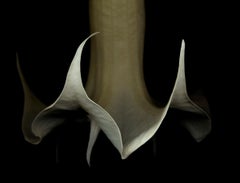
Datura T
By Doris Mitsch
Located in New York, NY
2000
Signed, titled, dated, and numbered, verso
Archival inks on rag paper
This artwork is offered by ClampArt, located in New York City.
Doris Mitsch writes about her technique:...
Category
Early 2000s More Prints
Materials
Archival Ink
Untitled #57
By Henry Horenstein
Located in New York, NY
Sepia-toned gelatin silver print
Signed and numbered, verso
20 x 16 inches, sheet
(Edition of 25)
This photograph is offered by ClampArt, located in New York City.
“These are not ...
Category
Early 2000s Other Art Style Figurative Photography
Materials
Silver Gelatin
You May Also Like
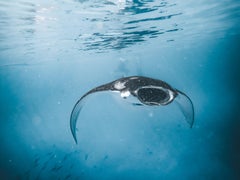
Marvelous Manta (Ray, Marine Life, Underwater, Elegance, Ocean, ~34% OFF)
By Heather Hollis
Located in Kansas City, MO
Heather Hollis
Marvelous Manta
Archival Pigment Print on Hahnemuehle Rag (or equivalent)
2025
Size: 8 x 12 inches (20.32 x 30.48 cm)
Edition: 15
Signed on label (to be attached verso)
COA provided (issued by representing gallery)
*Framing options available. Please inquire.
**Other sizes available. Please inquire.
Marvelous Manta captures the effortless grace of one of the ocean’s most majestic beings. Gliding through clear blue waters with wings that move like poetry, the manta ray embodies both serenity and strength in motion. Its fluid silhouette and rhythmic movement reveal the quiet power and beauty that exist beneath the surface — a world rarely seen yet endlessly captivating. This piece is a tribute to the wonder of marine life, celebrating freedom, harmony, and the breathtaking elegance of the underwater realm.
Heather J. Hollis is a self-taught fine art photographer whose work captures the quiet poetry of nature. Rooted in resilience and empathy, her imagery transforms fleeting moments—like delicate fungi blooming on a Missouri tree—into meditations on beauty, endurance, and light. Now exploring both land and sea through her lens, Heather continues to reveal the extraordinary within the everyday.
Heather Hollis, fine art photography, manta ray photography, marine life artwork, underwater elegance, ocean wildlife, graceful sea creature, fine art marine print, serenity in motion, blue ocean waters, aquatic majesty, underwater freedom, poetic movement, peaceful sea life scene, ocean conservation, captivating manta ray, calming ocean wall art
Category
2010s Contemporary Figurative Photography
Materials
Archival Ink, Archival Paper, Archival Pigment
Kanchi "K-59" Bat Ray
By Ryuijie
Located in Carmel-by-the-Sea, CA
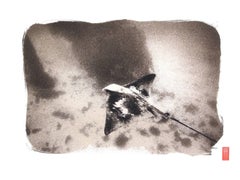
Original platinum print by Ryuijie & Camille Derendinger. Edition of 15. Signed and numbered on the front of the print.Available in 11 x 14 inches approximately. Works come overmatte...
Category
21st Century and Contemporary Black and White Photography
Materials
Platinum
Price Upon Request
K108 ~ Eagle Rays
By Ryuijie
Located in Carmel-by-the-Sea, CA
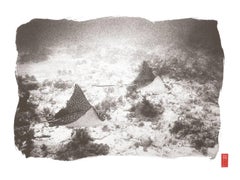
Original platinum print by Ryuijie & Camille Derendinger. Edition of 15. Signed and numbered on the front of the print. Available in 11 x 14 inches approximately. Works come overmatt...
Category
21st Century and Contemporary Black and White Photography
Materials
Platinum
Price Upon Request
Vintage Boho Life Size Fiberglass Stingray
Located in West Palm Beach, FL
Make a splash with this Vintage Boho Life-Size Fiberglass Stingray. Its realistic design and boho flair make it a stunning conversation piece, perfect for adding an ocean-inspired to...
Category
Mid-20th Century American Wall-mounted Sculptures
Materials
Fiberglass
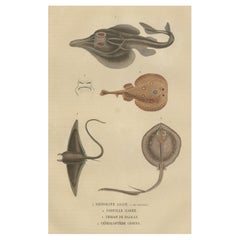
Print of a Guitarfish, Common Torpedo, Stingray
Devil fish or Giant Devil Ray
Located in Langweer, NL
Here's a brief description of the animals mentioned on the orginal hand-colored antique print:
This antique print features marine creatures that present a captivating depiction of e...
Category
Antique 1840s Prints
Materials
Paper
$181 Sale Price
20% Off
Thornback Rays - contemporary male and female stingrays chromaluxe xogram print
By Hugh Turvey
Located in London, GB
Remastered print – only available in Chromaluxe for the edition of 10.
It is signed in UV ink and supplied with UV light. (Unframed print size 50x50cm)
Framed and glazed piece
price including frame
Hugh...
Category
2010s Contemporary Photography
Materials
Inkjet