Video Loading
Want more images or videos?
Request additional images or videos from the seller
1 of 14

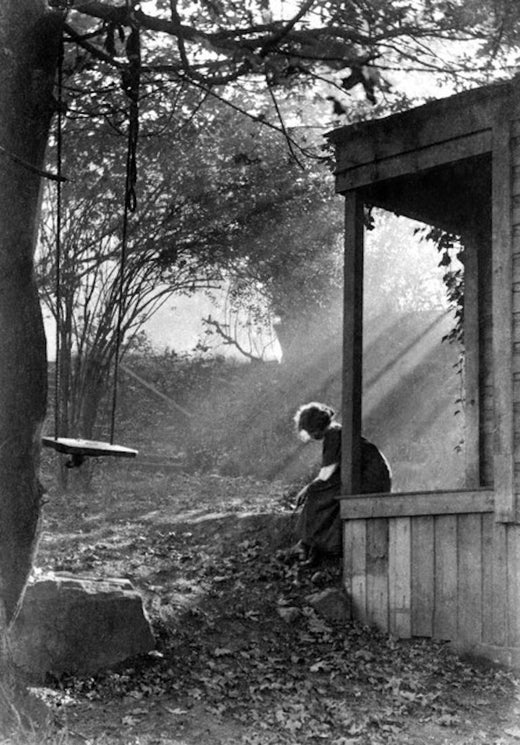
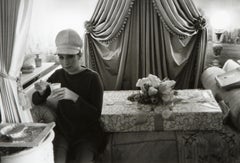
Imogen Cunningham
The Unmade Bed

1957

$29,000List Price

You May Also Like

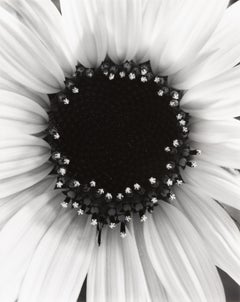
Sunflower, Winthrop, MA
By Paul Caponigro
Located in Pacific Grove, CA
This vintage silver gelatin print is signed in pencil on the front of the mount.
Category

1960s Modern Black and White Photography

Materials

Silver Gelatin

Sunflower, Winthrop, MA
$2,800 Sale Price
20% Off
H 8.5 in W 6.75 in
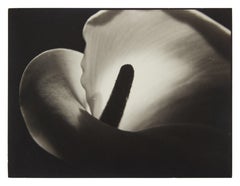
Calla Lily
By Johan Hagemeyer
Located in Pacific Grove, CA
This early silver gelatin contact print with margins bears the photographer's numerical exposure notes in pencil on the back of the print.
Category

1920s Modern Black and White Photography

Materials

Silver Gelatin

Calla Lily
$4,400 Sale Price
20% Off
H 2.875 in W 3.875 in
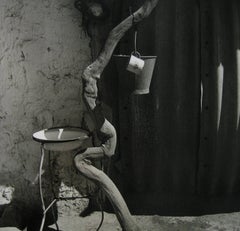
San Juan
By Oscar Pintor
Located in Denton, TX
Edition 3/10 Signed, dated, titled, and numbered in pencil on print verso. Gelatin silver print 11 1/4 x 11 1/4 in.
Category

20th Century Modern Black and White Photography

Materials

Silver Gelatin

San Juan
$600 Sale Price
66% Off
H 11.25 in W 11.25 in D 0.07 in
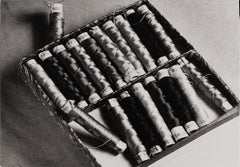
Sewing Silk - Black and White Photograph, Still Life, Bauhaus
Located in Denton, TX
Edition of 33 Signed in pencil on verso. Bauhaus II Portfolio
Category

1930s Modern Black and White Photography

Materials

Silver Gelatin

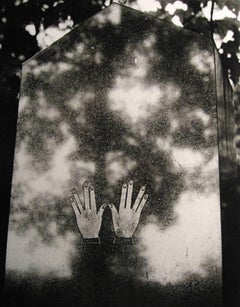
Jewish Cemetery, Prague
By Vaclav Chochola
Located in Denton, TX
Vaclav Chochola Jewish Cemetery, Prague, 1959 Gelatin silver print, 11 1/2 x 9 1/2 in. Signed, dated and misc. notations on print verso by Vaclav Chochola
Category

Late 20th Century Modern Still-life Photography

Materials

Silver Gelatin

Jewish Cemetery, Prague
$1,800
H 11.5 in W 9.5 in D 0.07 in
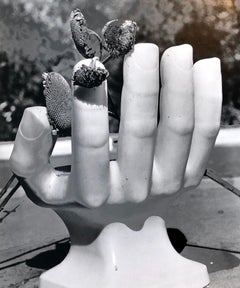
Photo Of Pedro Friedeberg Hand Chair Vintage Silver Gelatin Photograph
By Naomi Savage
Located in Surfside, FL
This depicts a chair in the manner of Mexican surrealist modernist Pedro Friedeberg with a dried flowers. It is a hand signed, titled and dated vintage silver gelatin print photograph. and bears the artists studio stamp verso. Naomi Siegler Savage (1927 – 2005) was an American woman photographer. A native of Princeton, New Jersey, Naomi Savage was the niece of artist Man Ray. She first studied photography under Berenice Abbott at the New School for Social Research in 1943, following this with studies in art, photography, and music at Bennington College from 1944 until 1947. The next year she spent in California with her uncle, studying his techniques. When she returned to New York in 1948, she combined her love of music with her skill in photography by taking portraits of the best known composers of day: Aaron Copland, John Cage, Virgil Thomson, etc. (over 30 in all). In 1950 she married the architect and sculptor David Savage, with whom she moved to Paris, living there for some years. During her career Savage received an award from the Cassandra Foundation in 1970, and a photography fellowship from the National Endowment for the Arts in 1971. In 1976 she received the silver award from the Art Directors Club. Later in life, Savage returned to live in Princeton, where she died. Savage was heavily influenced by her uncle, the avant garde artist Man Ray, prompting her to experiment with the medium of photography, combining traditional techniques with more unusual processes, including some of her own design. She worked extensively with photogravure and photoengraving, transforming these mechanical printing techniques to be used for aesthetic effects rather than duplication. Unlike many photographers, Savage considered the metal plate that photographs are etched on to be a work of art in its own right. She pioneered the use of using the photographic metal plate to produce a three dimensional form with a metallic surface. Savage explored variations in color and texture in her work often by using inked and intaglio relief prints. Many of her works were created by combining media such as collage, negative images, texture screening, multiple exposure, photograms, solarization, toning, laser printing on metallic foils. Her works focus on a variety of subject matter and imagery, which has included portraits, landscapes, human figures, mannequins, masks, toys, kitchen utensils, dental and ophthalmological equipment. Her approach represents an involvement with "process as medium," and an interest in art as image manipulation, a pursuit shared by contemporaries like Robert Heinecken, Betty Hahn, and Bea Nettles. She has experimented extensively with photogravure and photoengraving, employing these mechanical printing techniques for aesthetic effects rather than duplication. Savage uses inked and intaglio relief prints to explore variations in color and texture, and considers the metal plate on which the photograph has been etched to be a work of art in its own right. She has also combined media--collage, negative images, texture screening, multiple exposure, photograms, solarization, toning, printing on metallic foils--and made laser color prints. Several of her pieces are owned by the Museum of Modern Art, and she is represented as well in the collections of the Art Institute of Chicago, the International Center for Photography, the Fogg Art Museum, the Museum of Fine Arts, Houston, and the Madison Art Center. A photo engraved mural depicting the life of Lyndon Baines Johnson is a centerpiece of the Lyndon Baines Johnson Library and Museum. A collection of her papers relating to the life of Man Ray is held by the Archives of American Art at the Smithsonian Institution. She was included in the show Making Space at MoMA in 2017. It shone a spotlight on the stunning achievements of women artists between the end of World War II (1945) and by Lee Krasner, Helen Frankenthaler, and Joan Mitchell; the radical geometries by Lygia Clark, Lygia Pape, and Gego; and the reductive abstractions of Agnes Martin, Anne Truitt, and Jo Baer; the fiber weavings of Magdalena Abakanowicz, Sheila Hicks, and Lenore Tawney; and the process-oriented sculptures of Lee Bontecou, Louise Bourgeois, and Eva Hesse. The exhibition also featured treasures such as collages by Anne Ryan, photographs by Gertrudes Altschul, Naomi Savage, Ruth Asawa, Carol Rama, and Alma Woodsey Thomas...
Category

1980s Modern Black and White Photography

Materials

Silver Gelatin

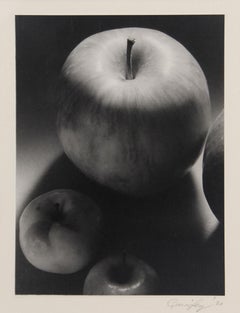
Still Life (Apples)
By Edward W. Quigley
Located in New York, NY
Signed and dated on mount in pencil, l.r. Mounted vintage gelatin silver print 13.25 x 10 inches (33.7 x 25.4 cm), sheet This artwork is offered by ClampArt, located in New York City.
Category

1930s Modern Black and White Photography

Materials

Silver Gelatin

Still Life (Apples)
Price Upon Request
H 13.25 in W 10 in
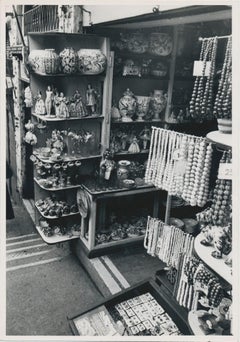
Venice, Shop, Street Photography, Black and White, Italy 1950s, 17, 8 x 12, 4 cm
By Erich Andres
Located in Cologne, DE
Silver Gelatine Print by Erich Andres, ca 1950. Andres was born 1905 in Germany and passed away 1992. He started his career as a photographer in 1920. He was one of the first photogr...
Category

1950s Modern Black and White Photography

Materials

Silver Gelatin, Black and White

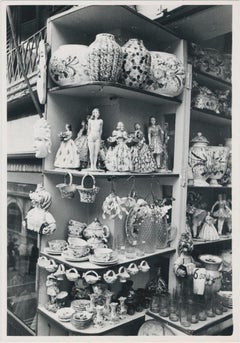
Pottery, Shop, Street Photography, Black and White, Italy 1950s, 17.8 x 12.4 cm
By Erich Andres
Located in Cologne, DE
Silver Gelatine Print by Erich Andres, ca 1950. Andres was born 1905 in Germany and passed away 1992. He started his career as a photographer in 1920. He was one of the first photogr...
Category

1950s Modern Black and White Photography

Materials

Silver Gelatin, Black and White

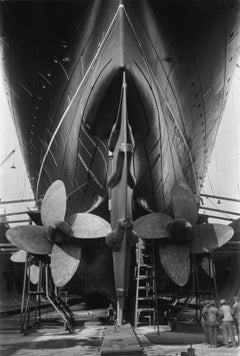
Mauretania - Silver Gelatin Fibre Print
Located in London, GB
Mauretania - Silver Gelatin Fibre Print (Photo by Topical Press Agency/Getty Images) The Cunard superliner Mauretania being refitted in the dry dock at Southampton. Additional I...
Category

1950s Modern Still-life Photography

Materials

Black and White, Silver Gelatin

More From This Seller

View All
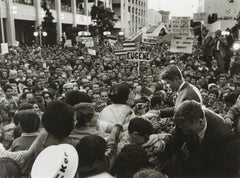
Robert Kennedy, San Diego
Located in Palm Desert, CA
A photograph by Lawrence Schiller. “Robert Kennedy, San Diego” is a figurative photograph, vintage silver gelatin photograph in black and white by American artist Lawrence Schiller. The artwork is signed on the verso. Lawrence Schiller only remembers the 60s in this way: Fast. As in: Blur. Which is, for those who lived through it, as accurate a description as one is likely to find about the decade that began with optimism and ended in chaos. It was ten years of turmoil and exploration. And through this turbulent and tumultuous decade, it often seemed that whenever a headline-making news event occurred, Lawrence Schiller was there. Schiller was not just lucky to be in the right place at the right time; he was prescient. He was there to cover the event, to add to it, to help us see it, to aid its meaning and its depth. "It was a time in which things happened awfully fast," Schiller says of the decade. "It was a wild, wild period; an uncontrolled period. I don’t think you had any sense of perspective in the 60s. You had to wait and look back at it, because it was a period in which things were happening that had no rhyme or reason to it. But by the end of the ‘60s I had covered so many stories, had so many magazine covers, I had somehow become part of that decade’s history. And I already had my eye on the future." When Lawrence Schiller got the assignment from the French magazine, Paris Match to photograph Marilyn Monroe on the 20th Century Fox set of Something’s Got to Give, he thought nothing of it. It wasn’t to be a private, studio shoot. He wasn’t going to set up lights, create backgrounds, or use a tripod. Just another assignment, he figured. Monroe by then was firmly established as a figment in the imagination of most young men. The orphan Norma Jean had recreated herself as the blonde bombshell Marilyn Monroe. She’d appeared in twenty-nine films by the time Schiller photographed her in black and white and color in May, 1962. The world was unprepared for the moment when Marilyn jumped in the swimming pool in a flesh-colored bikini and came up out of the water au natural. She was all smiles and in her element: the sex goddess...
Category

Mid-20th Century Post-War Figurative Photography

Materials

Silver Gelatin

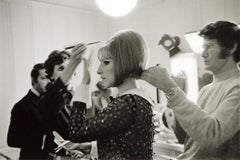
Barbra Streisand
By Lawrence Schiller
Located in Palm Desert, CA
This black and white photograph is a portrait of Barbara Streisand backstage, getting ready for a performance. It is a beautiful and intimate portrait of the celebrity.
Category

1960s Contemporary Black and White Photography

Materials

Silver Gelatin

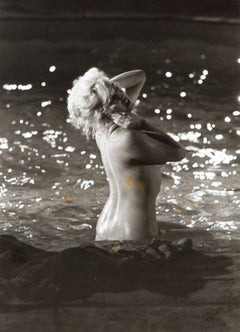
Marilyn Monroe
Located in Palm Desert, CA
A photograph by Lawrence Schiller. ""Marilyn Monroe"" is a nude, figurative vintage silver gelatin photograph in black and white by American Post-War artist Lawrence Schiller. Lawrence Schiller only remembers the 60s in this way: Fast. As in: Blur. Which is, for those who lived through it, as accurate a description as one is likely to find about the decade that began with optimism and ended in chaos. It was ten years of turmoil and exploration. And through this turbulent and tumultuous decade, it often seemed that whenever a headline-making news event occurred, Lawrence Schiller was there. Schiller was not just lucky to be in the right place at the right time; he was prescient. He was there to cover the event, to add to it, to help us see it, to aid its meaning and its depth. ""It was a time in which things happened awfully fast,"" Schiller says of the decade. ""It was a wild, wild period; an uncontrolled period. I don’t think you had any sense of perspective in the 60s. You had to wait and look back at it, because it was a period in which things were happening that had no rhyme or reason to it. But by the end of the ‘60s I had covered so many stories, had so many magazine covers, I had somehow become part of that decade’s history. And I already had my eye on the future."" When Lawrence Schiller got the assignment from the French magazine, Paris Match to photograph Marilyn Monroe on the 20th Century Fox set of Something’s Got to Give, he thought nothing of it. It wasn’t to be a private, studio shoot. He wasn’t going to set up lights, create backgrounds, or use a tripod. Just another assignment, he figured. Monroe by then was firmly established as a figment in the imagination of most young men. The orphan Norma Jean had recreated herself as the blonde bombshell Marilyn Monroe. She’d appeared in twenty-nine films by the time Schiller photographed her in black and white and color in May, 1962. The world was unprepared for the moment when Marilyn jumped in the swimming pool in a flesh-colored bikini and came up out of the water au natural. She was all smiles and in her element: the sex goddess...
Category

Mid-20th Century Post-War Black and White Photography

Materials

Silver Gelatin

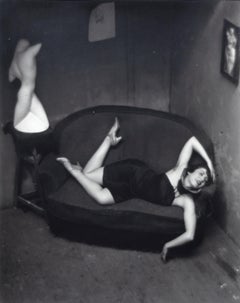
Satiric Dancer
By Andre Kertesz
Located in Palm Desert, CA
"Satiric Dancer" is a photograph by Andre Kertesz. The photograph is signed verso, "Paris 1926, A. Kertesz". The framed piece measures 18 1/4 x 15 1/4 x 3/4 in. Kertész's work was i...
Category

1920s Modern Figurative Photography

Materials

Silver Gelatin

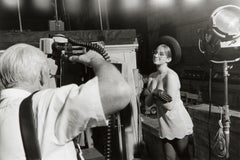
Black and White Photograph of Barbra Streisand filming of "On A Clear Day” 1969
Located in Palm Desert, CA
A photograph by Lawrence Schiller. “Barbra Streisand (photo session)” is a figurative photograph, vintage silver gelatin photograph in black and white by American artist Lawrence Sch...
Category

Mid-20th Century Post-War Portrait Photography

Materials

Silver Gelatin

Barbra Streisand (in her hotel room)
Located in Palm Desert, CA
A photograph by Lawrence Schiller. “Barbra Streisand (in her hotel room)” is a figurative photograph, vintage silver gelatin photograph in black and white by American artist Lawrence Schiller. The artwork is signed on the verso. Lawrence Schiller only remembers the 60s in this way: Fast. As in: Blur. Which is, for those who lived through it, as accurate a description as one is likely to find about the decade that began with optimism and ended in chaos. It was ten years of turmoil and exploration. And through this turbulent and tumultuous decade, it often seemed that whenever a headline-making news event occurred, Lawrence Schiller was there. Schiller was not just lucky to be in the right place at the right time; he was prescient. He was there to cover the event, to add to it, to help us see it, to aid its meaning and its depth. "It was a time in which things happened awfully fast," Schiller says of the decade. "It was a wild, wild period; an uncontrolled period. I don’t think you had any sense of perspective in the 60s. You had to wait and look back at it, because it was a period in which things were happening that had no rhyme or reason to it. But by the end of the ‘60s I had covered so many stories, had so many magazine covers, I had somehow become part of that decade’s history. And I already had my eye on the future." When Lawrence Schiller got the assignment from the French magazine, Paris Match to photograph Marilyn Monroe on the 20th Century Fox set of Something’s Got to Give, he thought nothing of it. It wasn’t to be a private, studio shoot. He wasn’t going to set up lights, create backgrounds, or use a tripod. Just another assignment, he figured. Monroe by then was firmly established as a figment in the imagination of most young men. The orphan Norma Jean had recreated herself as the blonde bombshell Marilyn Monroe. She’d appeared in twenty-nine films by the time Schiller photographed her in black and white and color in May, 1962. The world was unprepared for the moment when Marilyn jumped in the swimming pool in a flesh-colored bikini and came up out of the water au natural. She was all smiles and in her element: the sex goddess...
Category

Mid-20th Century Post-War Portrait Photography

Materials

Silver Gelatin

Still Thinking About These?

All Recently Viewed