Want more images or videos?
Request additional images or videos from the seller
1 of 4

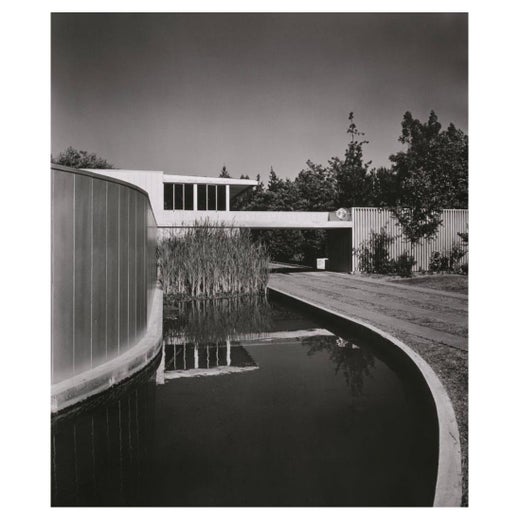
Julius Shulman
Architectural Study - Interior

$1,350List Price

You May Also Like

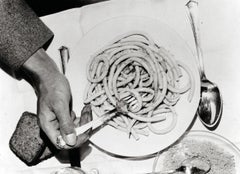
Macaroni, from Bauhaus I Portfolio
By Irene Bayer
Located in Denton, TX
Bauhaus I Portfolio Ed. 33/70 Signed and dated in black ink on print margin.
Category

1920s Modern Photography

Materials

Silver Gelatin

Macaroni, from Bauhaus I Portfolio
$2,000
H 4.88 in W 6.63 in D 0.1 in
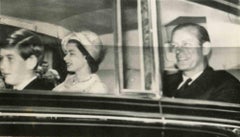
Queen Elizabeth, Prince Philip and Prince Charles
By Associated Press
Located in Roma, IT
Queen Elizabeth, Prince Philip and Prince Carlo is a press photograph. With the attached paper of the description in Italian. A historical moment of the past is captured by the sub...
Category

1960s Modern Black and White Photography

Materials

Photographic Paper

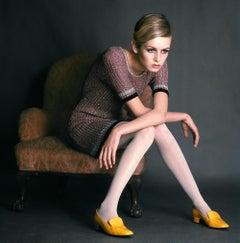
Twiggy – at David Steen’s Home, Surrey, 1967 Limited Estate Print
By David Steen
Located in London, GB
Twiggy – at David Steen’s Home, Surrey, Lesley Lawson (born 19 September 1949) is an English model, actress, and singer widely known by the nickname Twiggy. She was a British cultu...
Category

1960s Modern Black and White Photography

Materials

C Print

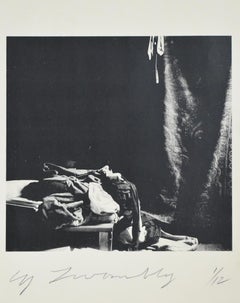
CY TWOMBLY BLACK WHITE PHOTO PHOTOGRAPHY MID CENTURY 1 OF 12
By Cy Twombly
Located in San Antonio, TX
Cy Twombly (1928-2011) Virginia/ New York / Italy Image Size: 16 x 11 Visible inside matboard is 12 x 11 Frame Size: 21.5 x 19 Medium: Photograph Edition 1/12 Signed with the edition number "Black and White" 1954 This is an original. The same photo in the Twombly book is a dry point on cardboard but is unsigned by hand. Cy Twombly (1928-2011) Following is the obituary of the artist by Randy Kennedy, The New York Times, July 5, 2011 Cy Twombly, whose spare, childlike scribbles and poetic engagement with antiquity left him stubbornly out of step with the movements of postwar American art even as he became one of the era's most important painters, died on Tuesday in Rome. He was 83. His death was announced by the Gagosian Gallery, which represents his work. Mr. Twombly had battled cancer for several years. In a career that slyly subverted Abstract Expressionism, toyed briefly with Minimalism, seemed barely to acknowledge Pop art and anticipated some of the concerns of Conceptualism, Mr. Twombly was a divisive artist almost from the start. The curator Kirk Varnedoe, on the occasion of a 1994 retrospective at the Museum of Modern Art, wrote that his work was "influential among artists, discomfiting to many critics and truculently difficult not just for a broad public, but for sophisticated initiates of postwar art as well." The critic Robert Hughes called him "the Third Man, a shadowy figure, beside that vivid duumvirate of his friends Jasper Johns and Robert Rauschenberg." Mr. Twombly's decision to settle permanently in southern Italy in 1957 as the art world shifted decisively in the other direction, from Europe to New York, was only the most symbolic of his idiosyncrasies. He avoided publicity throughout his life and mostly ignored his critics, who questioned constantly whether his work deserved a place at the forefront of 20th century abstraction, though he lived long enough to see it arrive there. It didn't help that his paintings, because of their surface complexity and whirlwinds of tiny detail — scratches, erasures, drips, penciled fragments of Italian and classical verse amid scrawled phalluses and buttocks — lost much of their power in reproduction. But Mr. Twombly, a tall, rangy Virginian who once practiced drawing in the dark to make his lines less purposeful, steadfastly followed his own program and looked to his own muses — often literary ones, like Catullus, Rumi, Pound and Rilke. He seemed to welcome the privacy that came with unpopularity. "I had my freedom and that was nice," he said in a rare interview, with Nicholas Serota, the director of the Tate, before a 2008 survey of his career at the Tate Modern. The critical low point probably came after a widely panned 1964 exhibition at the Leo Castelli Gallery in New York. The artist and writer Donald Judd, who was hostile toward painting in general, was especially damning, calling the show a fiasco. "There are a few drips and splatters and an occasional pencil line," he wrote in a review. "There isn't anything to these paintings." But by the 1980s, with the rise of neo-Expressionism, a generation of younger artists like Jean-Michel Basquiat found inspiration in Mr. Twombly's skittery bathroom-graffiti scrawl. Coupled with rising interest in European artists whose work shared unexpected ground with Twombly's, like Joseph Beuys, the newfound attention brought him a kind of critical favor he had never enjoyed before. And by the next decade, he was highly sought after not only by European museums and collectors, who had discovered his work early on, but also by those back in his homeland who had not known what to make of him two decades before. In 1989, the Philadelphia Museum of Art opened permanent rooms dedicated to his monumental 10-painting cycle, Fifty Days at Iliam, based on Alexander Pope's translation of The Iliad. (Mr. Twombly said that he purposely misspelled Ilium, a Latin name for Troy, with an "a," to refer to Achilles.) That same year, Mr. Twombly's work passed the million dollar mark at auction. In 1995, the Menil Collection in Houston opened a new gallery dedicated to his work, designed by Renzo Piano after a plan by Mr. Twombly himself. Despite this growing acceptance, Mr. Varnedoe still felt it necessary to include an essay in the Modern's newsletter at the time of the retrospective, titled "Your Kid Could Not Do This, and Other Reflections on Cy Twombly." In the only written statement Mr. Twombly ever made about his work, a short essay in an Italian art journal in 1957, he tried to make clear that his intentions were not subversive but elementally human. Each line he made, he said, was "the actual experience" of making the line, adding: "It does not illustrate. It is the sensation of its own realization." Years later, he described this more plainly. "It's more like I'm having an experience than making a picture," he said. The process stood in stark contrast to the detached, effete image that often clung to Mr. Twombly. After completing a work, in a kind of ecstatic state, it was as if the painting existed but he himself barely did anymore: "I usually have to go to bed for a couple of days," he said. Edwin Parker Twombly Jr., was born in Lexington, Va., on April 25, 1928, to parents who had moved to the South from New England. His father, a talented athlete who pitched a summer for the Chicago White Sox and went on to become a revered college swimming coach, was nicknamed Cy, after Cy Young, the Hall of Fame pitcher. The younger Mr. Twombly (pronounced TWAHM-blee) inherited the name, though he was much more bookish than athletic as a child, with stooped shoulders and a high ponderous forehead. He read avidly and, discovering his calling early, he worked from art kits he ordered from the Sears Roebuck catalog. As a teenager, he studied with the Spanish painter Pierre Daura, who had left Europe after the Spanish Civil War and settled in Lexington. Daura's wife, Louise Blair, studied cave paintings and may have sparked Mr. Twombly's early interest in Paleolithic art. In 1947 he attended the Boston Museum School, where German Expressionism was the rage, but Mr. Twombly gravitated to his own interests, like Dada and Kurt Schwitters and particularly to Jean Dubuffet and Alberto Giacometti, two important early influences. He moved back to Lexington in 1949 and studied art at Washington and Lee University, where his talent impressed teachers. By 1950, he was in New York, the recipient of a scholarship to the Art Students League. Later in his life, he cited visiting Willem de Kooning's studio and seeing an Arshile Gorky retrospective at the Whitney Museum of American Art as important moments in his young painting life. But he also came to New York at the heyday of the New York School and was exposed to the work of almost all its giants in the city's galleries. He turned down an offer for a solo show of his paintings at the Art Students League in 1950, saying that he felt it was too early for him. He met Rauschenberg, a fellow student at the league, during his second semester, and Rauschenberg later persuaded Mr. Twombly to enroll at Black Mountain College in North Carolina, which had become a crucible for the American avant-garde, with John Cage, Merce Cunningham, Ray Johnson, Dorothea Rockburne and John Chamberlain among its faculty and students. Mr. Twombly, who studied with Ben Shahn, stayed at the college only briefly and was a bit of an outsider even then. As he told Mr. Serota: "I was always doing my own thing. I always wondered why there are books with photographs of all the artists of that period and I was only in one! I thought: 'Where was I?' " In the summer of 1952, after receiving a grant from the Virginia Museum of Fine Arts, Mr. Twombly traveled to Europe for the first time and met up with Rauschenberg. The two wandered through Italy, North Africa and Spain, an experience that later yielded some of the first paintings to be considered a part of Mr. Twombly's mature work. "Tiznit," made with white enamel house paint and pencil and crayon, with gouges and scratches in the surface, was named for a town in Morocco that he had visited, and the painting's primitivist shapes were inspired by tribal pieces he saw at the ethnographic museum in Rome, as well as by artists like Dubuffet, de Kooning and Franz Kline. The painting, along with another based on tribal motifs, was exhibited in 1953 at Eleanor Ward's Stable Gallery on West 58th Street along with monochromatic paintings by Rauschenberg. The show was generally savaged. (Early this year, the Museum of Modern Art acquired "Tiznit," along with another early work, which Mr. Twombly had kept in his personal collection.) Mr. Twombly was drafted and spent more than a year in the Army, where he was assigned to cryptography work in Washington. On weekends and leaves, he continued to paint and draw, sometimes at night with the lights out to try to lose techniques he had learned in art classes and to express himself more instinctively. After receiving a medical discharge and teaching for a time in Virginia, Mr. Twombly returned to New York and worked in a studio on William Street, near both Rauschenberg and Johns, who helped choose titles for his paintings during this period. Mr. Twombly tried without success for several months to get a grant to go back to Europe and in 1957, with Ward's help, he spent several months in Italy, where he met Tatiana Franchetti...
Category

1950s Modern Black and White Photography

Materials

Drypoint

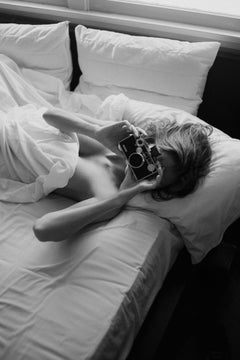
"Darling" Black White Photography 45" x 30" in Ed. 2/7 by Larsen Sotelo
By Larsen Sotelo
Located in Culver City, CA
"Darling" Black & White Photography 45" x 30" in Ed. 2/7 by Larsen Sotelo Not framed. Ships in a tube Giclee (Archival Ink) print on 310G Platine Fibre Cotton Rag w/satin finish Si...
Category

21st Century and Contemporary Modern Black and White Photography

Materials

Archival Ink, Rag Paper, Giclée

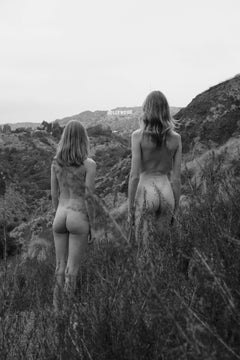
"Not from Hollywood" Nude Photography 45" x 30" in Edition 1/7 by Larsen Sotelo
By Larsen Sotelo
Located in Culver City, CA
"Not from Hollywood" Nude Photography 45" x 30" in Edition 1/7 by Larsen Sotelo Not framed. Ships in a tube Giclee (Archival Ink) print on 310G Platine Fibre Cotton Rag w/satin fini...
Category

21st Century and Contemporary Modern Black and White Photography

Materials

Archival Ink, Rag Paper, Giclée

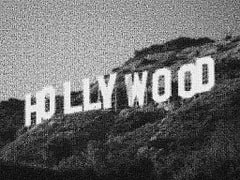
40x50 " Hollywood Sign" Photomosaic Pop Fine Art Photography Unsigned
By Destro
Located in Los Angeles, CA
"Hollywood Sign" is a photomosaic artwork by Destro. This image is made up of 100's of smaller images of Hollywood related imagery. Archival photographic paper Framing options ava...
Category

21st Century and Contemporary American Modern Black and White Photography

Materials

Archival Pigment

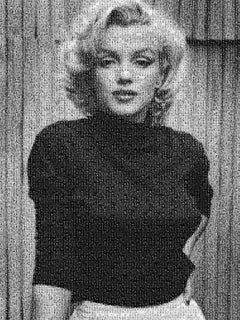
64x48 " Marilyn Monroe" Photomosaic Pop Fine Art Photography Signed
By Destro
Located in Los Angeles, CA
"Marilyn" is a photomosaic artwork by Destro. Destro has created large prints which are made up of many hundreds of smaller images. Archival photographic paper Edition of 10 Signe...
Category

21st Century and Contemporary American Modern Black and White Photography

Materials

Archival Pigment

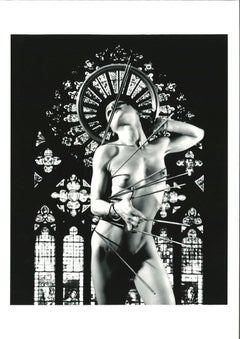
S. Sebastian - B/w Photography by Plinio Martelli - 1990s
Located in Roma, IT
S. Sebastian is a b/w photographic print realized by Plinio Martelli in the 1990s. Very good conditions. Hand signed and titled by the artist on the back of the photograph. Plinio Martelli (1945-2016) After scientific studies he graduated from the Albertina Academy of Fine Arts in Turin with masters such as Enrico Paolucci and Mario Calandri...
Category

1990s Modern Black and White Photography

Materials

Photographic Paper

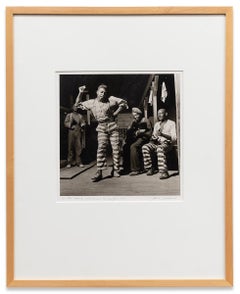
In the County Jail, Greene County, GA - Man Dancing, Music, Band, Jail
By Jack Delano
Located in Denton, TX
In the County Jail, Greene County, GA by Jack Delano is a black and white gelatin silver print of men playing music and dancing inside of a jail. Gelatin Silver Print Image size: 9 ...
Category

1940s Modern Black and White Photography

Materials

Silver Gelatin

More From This Seller

View All
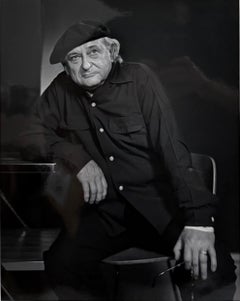
Sculptor Jacques Lipchitz Photograph Portrait Yousuf Karsh Photo Vintage Print
By Yousuf Karsh
Located in Surfside, FL
YOUSUF KARSH Vintage Photograph of Sculptor Jacques Lipchitz, Dimensions: sight 13 x 10-1/2 overall size is 16.5 X 14 inches mat This bears a studio stamp verso inscribed Copyright...
Category

20th Century Modern Black and White Photography

Materials

Photographic Paper

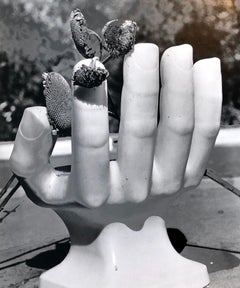
Photo Of Pedro Friedeberg Hand Chair Vintage Silver Gelatin Photograph
By Naomi Savage
Located in Surfside, FL
This depicts a chair in the manner of Mexican surrealist modernist Pedro Friedeberg with a dried flowers. It is a hand signed, titled and dated vintage silver gelatin print photograph. and bears the artists studio stamp verso. Naomi Siegler Savage (1927 – 2005) was an American woman photographer. A native of Princeton, New Jersey, Naomi Savage was the niece of artist Man Ray. She first studied photography under Berenice Abbott at the New School for Social Research in 1943, following this with studies in art, photography, and music at Bennington College from 1944 until 1947. The next year she spent in California with her uncle, studying his techniques. When she returned to New York in 1948, she combined her love of music with her skill in photography by taking portraits of the best known composers of day: Aaron Copland, John Cage, Virgil Thomson, etc. (over 30 in all). In 1950 she married the architect and sculptor David Savage, with whom she moved to Paris, living there for some years. During her career Savage received an award from the Cassandra Foundation in 1970, and a photography fellowship from the National Endowment for the Arts in 1971. In 1976 she received the silver award from the Art Directors Club. Later in life, Savage returned to live in Princeton, where she died. Savage was heavily influenced by her uncle, the avant garde artist Man Ray, prompting her to experiment with the medium of photography, combining traditional techniques with more unusual processes, including some of her own design. She worked extensively with photogravure and photoengraving, transforming these mechanical printing techniques to be used for aesthetic effects rather than duplication. Unlike many photographers, Savage considered the metal plate that photographs are etched on to be a work of art in its own right. She pioneered the use of using the photographic metal plate to produce a three dimensional form with a metallic surface. Savage explored variations in color and texture in her work often by using inked and intaglio relief prints. Many of her works were created by combining media such as collage, negative images, texture screening, multiple exposure, photograms, solarization, toning, laser printing on metallic foils. Her works focus on a variety of subject matter and imagery, which has included portraits, landscapes, human figures, mannequins, masks, toys, kitchen utensils, dental and ophthalmological equipment. Her approach represents an involvement with "process as medium," and an interest in art as image manipulation, a pursuit shared by contemporaries like Robert Heinecken, Betty Hahn, and Bea Nettles. She has experimented extensively with photogravure and photoengraving, employing these mechanical printing techniques for aesthetic effects rather than duplication. Savage uses inked and intaglio relief prints to explore variations in color and texture, and considers the metal plate on which the photograph has been etched to be a work of art in its own right. She has also combined media--collage, negative images, texture screening, multiple exposure, photograms, solarization, toning, printing on metallic foils--and made laser color prints. Several of her pieces are owned by the Museum of Modern Art, and she is represented as well in the collections of the Art Institute of Chicago, the International Center for Photography, the Fogg Art Museum, the Museum of Fine Arts, Houston, and the Madison Art Center. A photo engraved mural depicting the life of Lyndon Baines Johnson is a centerpiece of the Lyndon Baines Johnson Library and Museum. A collection of her papers relating to the life of Man Ray is held by the Archives of American Art at the Smithsonian Institution. She was included in the show Making Space at MoMA in 2017. It shone a spotlight on the stunning achievements of women artists between the end of World War II (1945) and by Lee Krasner, Helen Frankenthaler, and Joan Mitchell; the radical geometries by Lygia Clark, Lygia Pape, and Gego; and the reductive abstractions of Agnes Martin, Anne Truitt, and Jo Baer; the fiber weavings of Magdalena Abakanowicz, Sheila Hicks, and Lenore Tawney; and the process-oriented sculptures of Lee Bontecou, Louise Bourgeois, and Eva Hesse. The exhibition also featured treasures such as collages by Anne Ryan, photographs by Gertrudes Altschul, Naomi Savage, Ruth Asawa, Carol Rama, and Alma Woodsey Thomas...
Category

1980s Modern Black and White Photography

Materials

Silver Gelatin

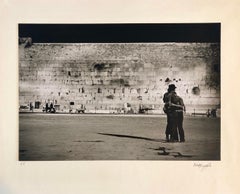
Vintage Silver Gelatin Photograph Jerusalem Western Wall Night Time Photo 1973
Located in Surfside, FL
Jerusalem Wailing Wall Photo with couple at night. This is for one Photograph from the portfolio entitled "Jerusalem: City of Mankind," The mounting is 14 X 17 inches. the actual ph...
Category

1970s Modern Landscape Photography

Materials

Photographic Paper, Silver Gelatin

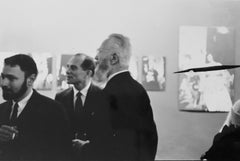
Vintage Silver Gelatin Signed Photograph Edward Steichen, MoMA Photo
By Fred McDarrah
Located in Surfside, FL
Edward Steichen, John Durniak, Monroe Wheeler and Edward D. Museum of modern art on Feb 10, 1962 Photographer Fred McDarrah Over a 50-year span, McDarrah documented the rise of the Beat Generation, the city’s postmodern art movement, its off-off-Broadway actors, troubadours, politicians, agitators and social protests. Fred captured Jack Kerouac frolicking with women at a New Year’s bash in 1958, Andy Warhol adjusting a movie-camera lens in his silver-covered factory, and Bob Dylan offering a salute of recognition outside Sheridan Square near the Voice’s old office. Not just a social chronicler, McDarrah was a great photo-journalist. For years, McDarrah was the Voice's only photographer and, for decades, he ran the Voice’s photo department, where he helped train dozens of young photographers, including James Hamilton, Sylvia Plachy, Robin Holland and Marc Asnin. His mailbox was simply marked "McPhoto." An exhibit of McDarrah’s photos of artists presented by the Steven Kasher Gallery in Chelsea was hailed by The New York Times as “a visual encyclopedia of the era’s cultural scene.” artists in their studios, (Alice Neel, Philip Guston, Stuart Davis, Robert Smithson, Jasper Johns, Franz Kline), actors (Dustin Hoffman, Robert De Niro on the set of “Taxi Driver”), musicians (Janis Joplin, Alice Cooper, Bob Dylan) and documentary images of early happenings and performances (Yayoi Kusama, Charlotte Moorman, Al Hansen, Jim Dine, Nam June Paik). The many images of Andy Warhol include the well-known one with his Brillo boxes at the Stable Gallery in 1964. Woody Allen, Diane Arbus, W. H. Auden, Francis Bacon, Joan Baez, Louise Bourgeois, David Bowie, Jimmy Breslin, William Burroughs, John Cage, Leo Castelli, Christo, Leonard Cohen, Merce Cunningham, William de Kooning, Jim Dine, Mark di Suvero, Marcel Duchamp, Bob Dylan, Federico Fellini, Allen Ginsberg, Robert Indiana, Mick Jagger, Jasper Johns, Kusama, John Lennon, Sol Lewitt, Roy Lichtenstein, Nam June Paik, Elvis Presley, Claes Oldenburg, Yoko Ono, Robert Rauschenberg, Lou Reed, James Rosenquist, Mark Rothko, Ed Ruscha, Robert Smithson, Susan Sontag, Andy Warhol, and others. McDarrah’s prints have been collected in depth by the J. Paul Getty Museum and the National Portrait Gallery, Washington. His work is in numerous public and private collections. Edward Jean Steichen (March 27, 1879 – March 25, 1973) was a Luxembourgish American photographer, painter, and art gallery and museum curator. Steichen's were the photographs that most frequently appeared in Alfred Stieglitz's groundbreaking magazine Camera Work during its publication from 1903 to 1917. Together Stieglitz and Steichen opened the Little Galleries of the Photo-Secession, which eventually became known as '291', after its address. Steichen laid claim to his photos of gowns for the magazine Art et Décoration in 1911 being the first modern fashion photographs ever published. From 1923 to 1938, Steichen was a photographer for the Condé Nast magazines Vogue and Vanity Fair while also working for many advertising agencies including J. Walter Thompson. During these years, Steichen was regarded as the best known and highest paid photographer in the world. In 1944, he directed the war documentary The Fighting Lady, which won the 1945 Academy Award for Best Documentary. From 1947 to 1961, Steichen served as Director of the Department of Photography at New York's Museum of Modern Art. While at MoMA, he curated and assembled exhibits including The Family of Man, which was seen by nine million people. In 1904, Steichen began experimenting with color photography. He was one of the earliest in the United States to use the Autochrome Lumière process. In 1905, Stieglitz and Steichen created the Little Galleries of the Photo-Secession, which eventually became known as 291 after its address. It presented some of the first American exhibitions of Henri Matisse, Auguste Rodin, Paul Cézanne, Pablo Picasso, and Constantin Brâncuși. He worked with Robert Frank even before his The Americans was published, exhibited the early work of Harry Callahan and Aaron Siskind, and purchased two Rauschenberg prints...
Category

1960s American Modern Black and White Photography

Materials

Silver Gelatin

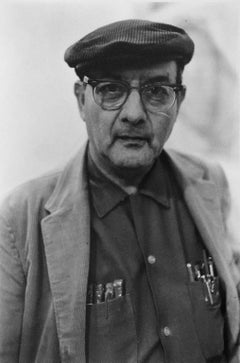
Vintage Silver Gelatin Photograph Lawrence Lipton Photo Beatnik Beat Writer
By Fred McDarrah
Located in Surfside, FL
Lawrence Lipton May 17 1965 photographer Fred McDarrah Over a 50-year span, McDarrah documented the rise of the Beat Generation, the city’s postmod...
Category

1960s American Modern Black and White Photography

Materials

Silver Gelatin

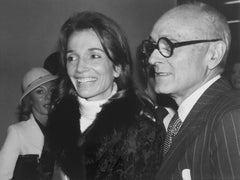
Signed Silver Gelatin Photograph Philip Johnson, Architect, Lee Radziwill, Photo
By Fred McDarrah
Located in Surfside, FL
Lee Radziwill and Philip Johnson at The Met - 10/18/1973 Over a 50-year span, McDarrah documented the rise of the Beat Generation, the city’s postmodern art movement, its off-off-Broadway actors, troubadours, politicians, agitators and social protests. Fred captured Jack Kerouac frolicking with women at a New Year’s bash in 1958, Andy Warhol adjusting a movie-camera lens in his silver-covered factory, and Bob Dylan offering a salute of recognition outside Sheridan Square near the Voice’s old office. Not just a social chronicler, McDarrah was a great photo-journalist. For years, McDarrah was the Voice's only photographer and, for decades, he ran the Voice’s photo department, where he helped train dozens of young photographers, including James Hamilton, Sylvia Plachy, Robin Holland...
Category

1970s American Modern Black and White Photography

Materials

Silver Gelatin

Still Thinking About These?

All Recently Viewed