1 of 1
Phil SternFrank Sinatra with John F. Kennedy, President
s Inaugural1961
1961
About the Item
- Creator:Phil Stern (1919, American)
- Creation Year:1961
- Condition:
- Gallery Location:Los Angeles, CA
- Reference Number:1stDibs: G1109067545
Authenticity Guarantee
In the unlikely event there’s an issue with an item’s authenticity, contact us within 1 year for a full refund. DetailsMoney-Back Guarantee
If your item is not as described, is damaged in transit, or does not arrive, contact us within 7 days for a full refund. Details24-Hour Cancellation
You have a 24-hour grace period in which to reconsider your purchase, with no questions asked.Vetted Professional Sellers
Our world-class sellers must adhere to strict standards for service and quality, maintaining the integrity of our listings.Price-Match Guarantee
If you find that a seller listed the same item for a lower price elsewhere, we’ll match it.Trusted Global Delivery
Our best-in-class carrier network provides specialized shipping options worldwide, including custom delivery.You May Also Like
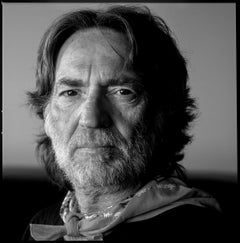
Willie Nelson, Spicewood, Texas - Country Musician, Singer, Celebrity Portrait
By Michael O
Brien
Located in Denton, TX
Willie Nelson, Spicewood, Texas by Michael O'Brien is a black and white portrait of the beloved country musician.
Archival Pigment Print
Paper size: 22 x 17 in.
Image size: 15 x 15 ...
Category
1980s Contemporary Black and White Photography
Materials
Archival Pigment
$2,300
H 22 in W 17 in D 0.01 in
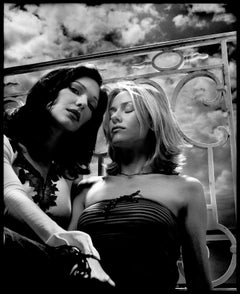
Laura Harring and Naomi Watts Mulholland Drive Signed Limited Edition
By Kevin Westenberg
Located in London, GB
Laura Harring and Naomi Watts Mulholland Drive
Signed Limited Edition
Cannes, 2001
by Kevin Westenberg
Signed Limited Edition
Kevin Westenberg is famed for his creation of provoc...
Category
Early 2000s Modern Black and White Photography
Materials
Archival Pigment
$4,929
Free Shipping
H 45 in W 35 in
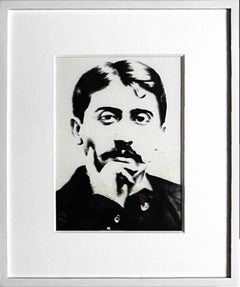
Marcel Proust, Unique Acetate delivered by Andy Warhol to Chromacomp Inc. Framed
By Otto Wegener
Located in New York, NY
Intended for Andy Warhol
Marcel Proust, ca. 1976
Acetate positive acquired directly from Chromacomp, Inc. Andy Warhol's printer in the 1970s.
Derivative on acetate, based on a photo by Otto Wegener...
Category
1970s Pop Art Portrait Photography
Materials
Photographic Film
$20,000
H 17.75 in W 14.75 in D 1.5 in
"Matrix" Black
White Photography 24" x 24" in Ed. 1/15 by Olha Stepanian
By Olha Stepanian
Located in Culver City, CA
"Matrix" Black & White Photography 24" x 24" in Ed. 1/15 by Olha Stepanian
Printed on Epson Professional Paper
Signed and numbered by the artist
Comes with COA issued by the artist...
Category
21st Century and Contemporary Surrealist Black and White Photography
Materials
Photographic Paper
$1,350
H 24 in W 24 in D 0.1 in
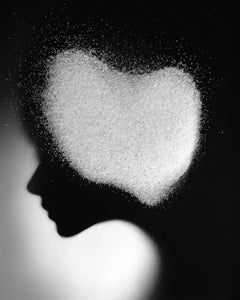
Grain by Grain - black and white abstract photography, limited edition of 15
By Ugne Pouwell
Located in London, GB
"Grain by Grain" is a poetic exploration of identity and transformation, captured in Ugne’s signature monochromatic style. This evocative photograph contemplates the interplay betwee...
Category
21st Century and Contemporary Surrealist Black and White Photography
Materials
Giclée
$958
H 27.56 in W 22.05 in D 0.2 in
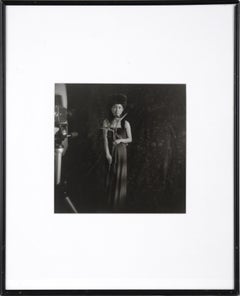
"Portrait of MiKyoung with Camera" - Silver Gelatin Photograph
Located in Soquel, CA
"Portrait of MiKyoung with Camera" - Silver Gelatin Photograph - Edition (5)
Dramatic black and white portrait of a woman by Dale Sparage (American, b. 1954). A woman named MiKyoung is standing, wearing a dark dress and furry hat. She is holding two bird of paradise flowers and looking directly at the camera. Off to the left, there is a vintage camera at the edge of the frame.
Artist's information on verso.
Presented in a white mat and a black aluminum frame.
Frame size: 20.5"H x 16.25"W
Image size: 9"H x 9"W
Dale Sparage (American, b. 1954) is a photographer and artist from Detroit, Michigan. She completed her BFA with honors from York University in Canada, and an MFA in painting from Wayne State University in Detroit Michigan. She has taught at the College for Creative Studies in Detroit, University of Michigan, and The School for Visual Arts at the Toledo Museum of Art. She is currently working on an MFA in Photography at Academy of Art University in San Francisco. Her ongoing work on photographing women...
Category
Early 2000s Photorealist Portrait Photography
Materials
Photographic Paper, Silver Gelatin
$520 Sale Price
20% Off
H 20.5 in W 16.25 in D 1 in
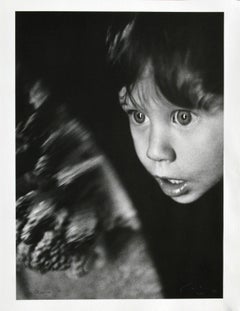
The Observer, Jackson Nash Portrait by Graham Nash
By Graham Nash
Located in Soquel, CA
Gorgeous archival digital photograph, limited edition giclee by Graham Nash (American, b. 1942) of a Nash's first born son Jackson, age five, looking into an aquarium in his San Francisco house...
Category
1980s Realist Portrait Photography
Materials
Archival Ink, Laid Paper
$1,000 Sale Price
20% Off
H 24.5 in W 22.25 in D 0.1 in
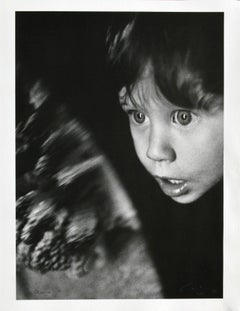
The Observer, Portrait of Jackson Nash by Graham Nash
By Graham Nash
Located in Soquel, CA
Gorgeous archival digital photograph, limited edition giclee by Graham Nash (American, b. 1942) of a Nash's first born son Jackson, age five, looking into an aquarium in his San Francisco house...
Category
1980s Realist Portrait Photography
Materials
Archival Ink, Laid Paper
$1,200 Sale Price
20% Off
H 24.5 in W 22.25 in D 0.1 in
Colette by Herbert List, ca. 1950 – Late Print
By Herbert List
Located in Cologne, DE
Colette by Herbert List, ca. 1950 – Vintage Print
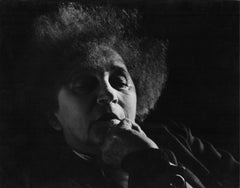
This intimate black-and-white portrait captures the legendary French author, performer, and feminist icon Colette (1873–1954) in her...
Category
1950s Modern Black and White Photography
Materials
Silver Gelatin
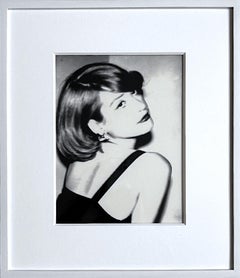
Nicola (Nicky) Weymouth, unique acetate positive of British socialite provenance
By Andy Warhol
Located in New York, NY
Andy Warhol
Nicola (Nicky) Weymouth, ca. 1976
Acetate positive, acquired directly from Chromacomp, Inc. Andy Warhol's printer in the 1970s. Accompanied by a Letter of Provenance from the representative of Chromacomp
Unique
Frame included:
Elegantly framed in a museum quality white wood frame with UV plexiglass:
Measurements:
Frame:
18 x 15.5 x 1.5 inches
Acetate:
11 x 8 inches
This is the original, unique photographic acetate positive taken by Andy Warhol as the basis for his portrait of Nicky Weymouth, that came from Andy Warhol's studio, The Factory to his printer. It was acquired directly from Chromacomp, Inc. Andy Warhol's printer in the 1970s. It is accompanied by a Letter of Provenance from the representative of Chromacomp. This is one of the images used by Andy Warhol to create his iconic portrait of the socialite Nicola Samuel Weymouth, also called Nicky Weymouth, Nicky Waymouth, Nicky Lane Weymouth or Nicky Samuel. Weymouth (nee Samuel) was a British socialite, who went on to briefly marry the jewelry designer Kenneth Lane, whom she met through Warhol. This acetate positive is unique, and was sent to Chromacomp because Warhol was considering making a silkscreen out of this portrait. As Bob Colacello, former Editor in Chief of Interview magazine (and right hand man to Andy Warhol), explained, "many hands were involved in the rather mechanical silkscreening process... but only Andy in all the years I knew him, worked on the acetates." An acetate is a photographic negative or positive transferred to a transparency, allowing an image to be magnified and projected onto a screen. As only Andy worked on the acetates, it was the last original step prior to the screenprinting of an image, and the most important element in Warhol's creative process for silkscreening. Warhol realized the value of his unique original acetates like this one, and is known to have traded the acetates for valuable services. This acetate was brought by Warhol to Eunice and Jackson Lowell, owners of Chromacomp, a fine art printing studio in NYC, and was acquired directly from the Lowell's private collection. During the 1970s and 80s, Chromacomp was the premier atelier for fine art limited edition silkscreen prints; indeed, Chromacomp was the largest studio producing fine art prints in the world for artists such as Andy Warhol, Leroy Neiman, Erte, Robert Natkin, Larry Zox, David Hockney and many more. All of the plates were done by hand and in some cases photographically. Famed printer Alexander Heinrici worked for Eunice
Jackson Lowell at Chromacomp and brought Andy Warhol in as an account. Shortly after, Warhol or his workers brought in several boxes of photographs, paper and/or acetates and asked Jackson Lowell to use his equipment to enlarge certain images or portions of images. Warhol made comments and or changes and asked the Lowells to print some editions; others were printed elsewhere. Chromacomp Inc. ended up printing Warhol's Mick Jagger Suite and the Ladies
Gentlemen Suite, as well as other works, based on the box of photographic acetates that Warhol brought to them. The Lowell's allowed the printer to be named as Alexander Heinrici rather than Chromacomp, since Heinrici was the one who brought the account in. Other images were never printed by Chromacomp- they were simply being considered by Warhol.
Warhol left the remaining acetates with Eunice and Jackson Lowell. After the Lowells closed the shop, the photographs were packed away where they remained for nearly a quarter of a century. This work is exactly as it was delivered from the factory. Unevenly cut by Warhol himself. This work is accompanied by a signed letter of provenance from the representative of Chromacomp, Andy Warhol's printer for many of his works in the 1970s.
About Andy Warhol:
Isn’t life a series of images that change as they repeat themselves?
—Andy Warhol
Andy Warhol’s (1928–1987) art encapsulates the 1960s through the 1980s in New York. By imitating the familiar aesthetics of mass media, advertising, and celebrity culture, Warhol blurred the boundaries between his work and the world that inspired it, producing images that have become as pervasive as their sources.
Warhol grew up in a working-class suburb of Pittsburgh. His parents were Slovak immigrants, and he was the only member of his family to attend college. He entered the Carnegie Institute of Technology (now Carnegie Mellon University) in 1945, where he majored in pictorial design. After graduation, he moved to New York with fellow student Philip Pearlstein and found steady work as a commercial illustrator at several magazines, including Vogue, Harper’s Bazaar, and the New Yorker. Throughout the 1950s Warhol enjoyed a successful career as a commercial artist, winning several commendations from the Art Directors Club and the American Institute of Graphic Arts. He had his first solo exhibition at the Hugo Gallery in 1952, showing drawings based on the writings of Truman Capote; three years later his work was included in a group show at the Museum of Modern Art for the first time.
The year 1960 marked a turning point in Warhol’s prolific career. He painted his first works based on comics and advertisements, enlarging and transferring the source images onto canvas using a projector. In 1961 Warhol showed these hand-painted works, including Little King (1961) and Saturday’s Popeye (1961), in a window display at the department store Bonwit Teller; in 1962 he painted his famous Campbell’s Soup Cans, thirty-two separate canvases, each depicting a canned soup of a different flavor. Soon after, Warhol began to borrow not only the subject matter of printed media, but the technology as well. Incorporating the silkscreen technique, he created grids of stamps, Coca-Cola bottles, shipping and handling labels, dollar bills, coffee labels...
Category
1970s Pop Art Black and White Photography
Materials
Photographic Film
$20,000
H 18 in W 15.5 in D 1.5 in
Still Thinking About These?
All Recently ViewedMore Ways To Browse
Studio Sam
Surrealist Heads
Transformation Sculpture
Trees Woodcut Print
Vintage Chinese Oil Painting
Vintage Disney Art Prints
Vintage Head Silhouette
Vintage Posters Flowers
Weinmann Botanical Prints
Woman In Wind
18th Century Bird Painting
Adoration Magi
Artist Signed Book
Barbier George
Calder Stabiles
Chicago Lithograph
Cricket Prints
David Roberts Egypt