Items Similar to Welcome to the Rent Party
Want more images or videos?
Request additional images or videos from the seller
1 of 11
WeegeeWelcome to the Rent Party1950
1950
$3,500
£2,664.38
€3,045.95
CA$4,924.55
A$5,386.64
CHF 2,836.22
MX$64,311.05
NOK 36,147.97
SEK 33,066.77
DKK 22,750.09
About the Item
The inimitable and notorious photographer known as Weegee, (aka. Arthur Fellig) exposed the scope of New York’s nightlife; whether it was celebrating high-culture or low-life revellers. Throughout his career Weegee was a true nightcrawler whether he was pursuing early hour crimes and disasters or hitting up parties that rocked till dawn.
In the mid ‘50s, the artist focused on the bohemian student area around Washington Square known as the Village.
In his text, The Village, Weegee recounts the growing urgency to document the quickly gentrifying downtown area. This work is a fine example of the light-hearted energy and dynamism of his post-1946 work.
These types of parties originated in Harlem in the 20's as means by which to pay rent. The tenant would hire a band or musician and pass around a collection plate, usually in the form of a hat, to raise money to cover the hosts bills.
The artist’s images from this series (and this era in general) are softer and more varied than the disaster images upon which he built his reputation. The Village images are diverse; capturing carnivals, folk events, and young people enjoying the city.
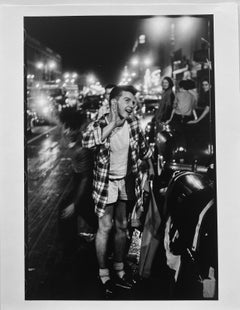
Weegee explained this image: “On New Year’s Eve, I went to a rent party in a cheap village flat. For fifty cents you bring your own bottle, your girl, squat on a bare wood floor, and share a few unusual sights".
“Welcome to The Rent Party” is a quintessential example of this festive mood, capturing a shirtless young man balancing a bottle of hooch on his head while streamers fall in the background. Many of Weegee's favorite themes are present here; entertainment, the follies brought on by alcohol, raucous night life, and the curiosity of children.
Questions about this piece? Contact us.
“Welcome to The Rent Party”
Gelatin silver print
USA, c. 1956
“Weegee the Famous,” stamped and annotated in pencil on verso
12”W 10”H (image)
Good condition.
Detailed condition report by request.
- Creator:Weegee (1899-1968, American)
- Creation Year:1950
- Dimensions:Height: 10 in (25.4 cm)Width: 12 in (30.48 cm)
- Medium:
- Movement Style:
- Period:
- Framing:Framing Options Available
- Condition:Good condition. Full report on request.
- Gallery Location:Toronto, CA
- Reference Number:Seller: 12-251stDibs: LU215217386982

Weegee
Arthur Fellig, who later assumed the pseudonym Weegee, was a photographer and photojournalist, best known for his gritty black-and-white imagery taken on the streets of New York City. Born in 1899 in what is now the Ukraine, he arrived in the United States with his family in 1909, and settled in Brooklyn. After working in a variety of photography-related jobs, he struck out on his own at the age of 35 as a self-taught freelance photographer, selling his work to publications like the Herald Tribune, the Daily News, the Post, and the Sun. Weegee worked mostly at night, usually around Manhattan Police Headquarters. He was the only freelancer in New York to obtain permission to install a police radio in his car. As a result, he was often the first to arrive at the scene of the many crimes he photographed, often before the police themselves had responded. Moreover, he traveled with a makeshift darkroom in the trunk of his car, so he could produce, and then sell, his images faster than his competitors. But crime was not his only subject. He also photographed socialites at high-society events, circus performers, street life, tenement housing conditions, and many other facets of New York life. For a number of years he traveled extensively in Europe, and worked for the London Daily Mirror. He later returned to New York City, where he died in 1968. Th Museum of Modern Art began collecting his work in 1943, and featured it in several exhibitions. His work was also shown at the New York Photo League, and the International Center of Photography hosted a retrospective of his work in 1998. He has been featured in exhibitions at European venues such as the Kunsthalle Vienna, Austria's Flatz Museum, and the Multimedia Art Museum in Moscow. Several monographs of his work have been published.
About the Seller
4.8
Vetted Professional Seller
Every seller passes strict standards for authenticity and reliability
Established in 2009
1stDibs seller since 2015
197 sales on 1stDibs
Typical response time: 2 hours
- ShippingRetrieving quote...Shipping from: Toronto, Canada
- Return Policy
More From This Seller
View AllWeegee "A Trip to Mars"
By Weegee
Located in Toronto, Ontario
While many first associate Weegee (aka Arthur Fellig) with New York City crime scenes, perhaps a broader and more consistent theme is that of spectacle and/or urban entertainment.
The origins of his nick-name and reputation date back to the 1930s when he became the first New York City press photographer to obtain permission to install a police radio in his car. Following the city's first responders and documenting their duties, Weegee had unprecedented access to New York’s fires, crimes, debaucheries and of course, murders.
During the first decade of his career these unflinching urban tragedy or crime images paid Weegee's bills, but as he became more financially independent he was more inspired to pursue photographs on his own agenda. While his oeuvre is vast, Weegee was especially drawn to entertainment: nightlife, circuses, the theatre, showgirls, city thrills, the cinema etc.
Some of Weegee's most dynamic and tender (and under-appreciated!) images are related to simply having fun (in a crowd). He was not confined to one neighbourhood or demographic. He captured action, faces and events from Coney Island to the Bowery and Greenwich Village, to Times Square and Harlem.
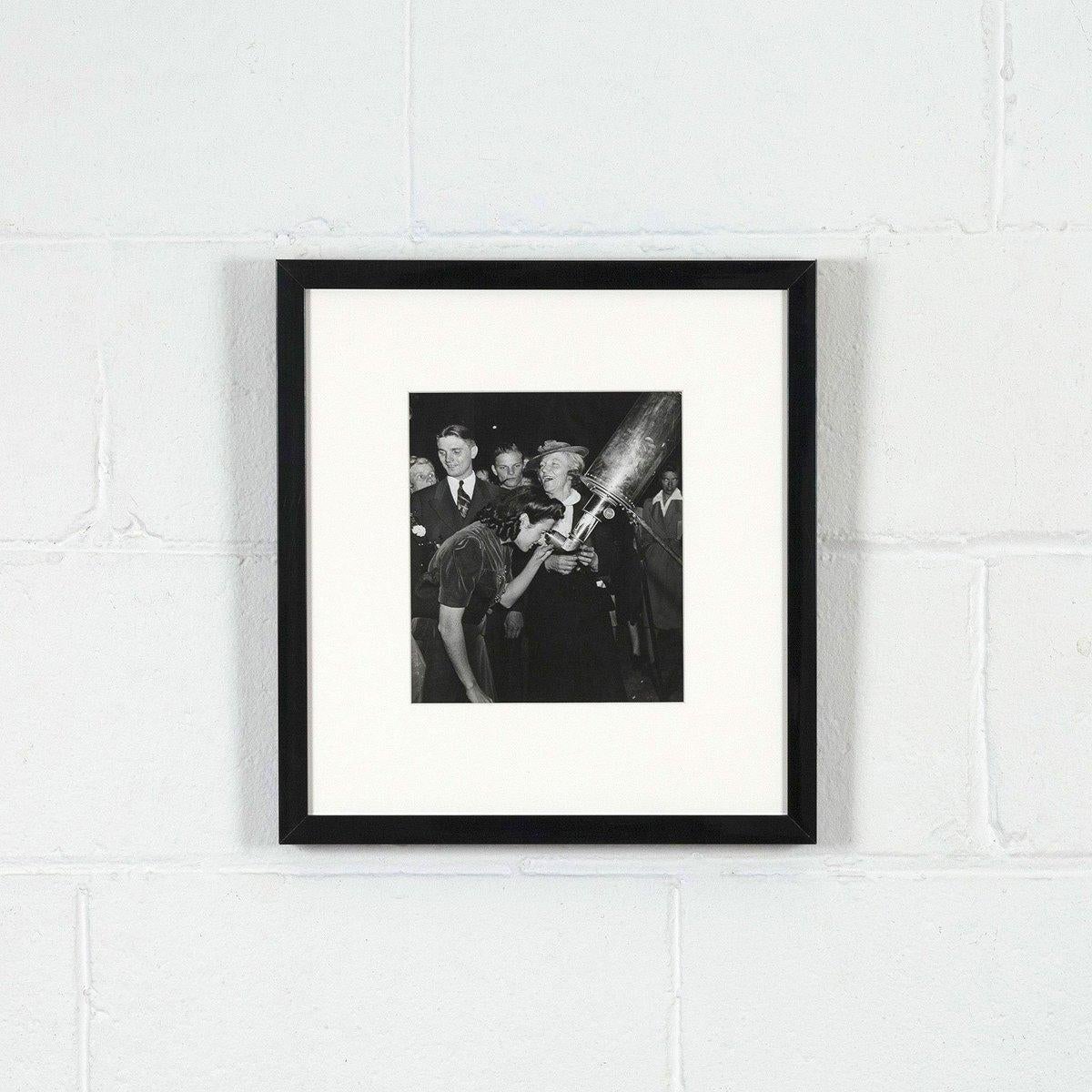
In “A Trip To Mars,” Weegee depicts a multi-generational group crowding around a large telescope...
Category
1940s American Modern Black and White Photography
Materials
Silver Gelatin
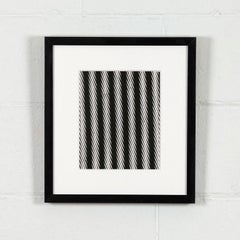
Weegee "Distortion: Stripes"
By Weegee
Located in Toronto, Ontario
Innovative, provocative, inimitable - these are just a few of the words to describe America's boldest photographer.
Arthur Fellig, better known as Weegee (1899-1968) was a ground-breaking, successful (and notorious) photojournalist. His images shot on the streets of New York City are iconic and influential.
In the 1930s he became the first New York City press photographer to obtain permission to install a police radio in his car. This allowed him to follow the city's first responders and to document their duties; responding to fire, crime, debauchery and of course, murder.
By the early 1940s Weegee was experiencing fatigue with crime reportage. Ironically, this was also the point when he finally began experiencing professional validation and acclaim, to the point of being a minor celebrity. Notably in 1941 he was included in The MoMA's seminal "50 Photographs by 50 Photographers" (curated by Edward Steichen). The museum would also acquire five Weegee photographs...
Category
1940s American Modern Black and White Photography
Materials
Silver Gelatin
$3,000 Sale Price
58% Off
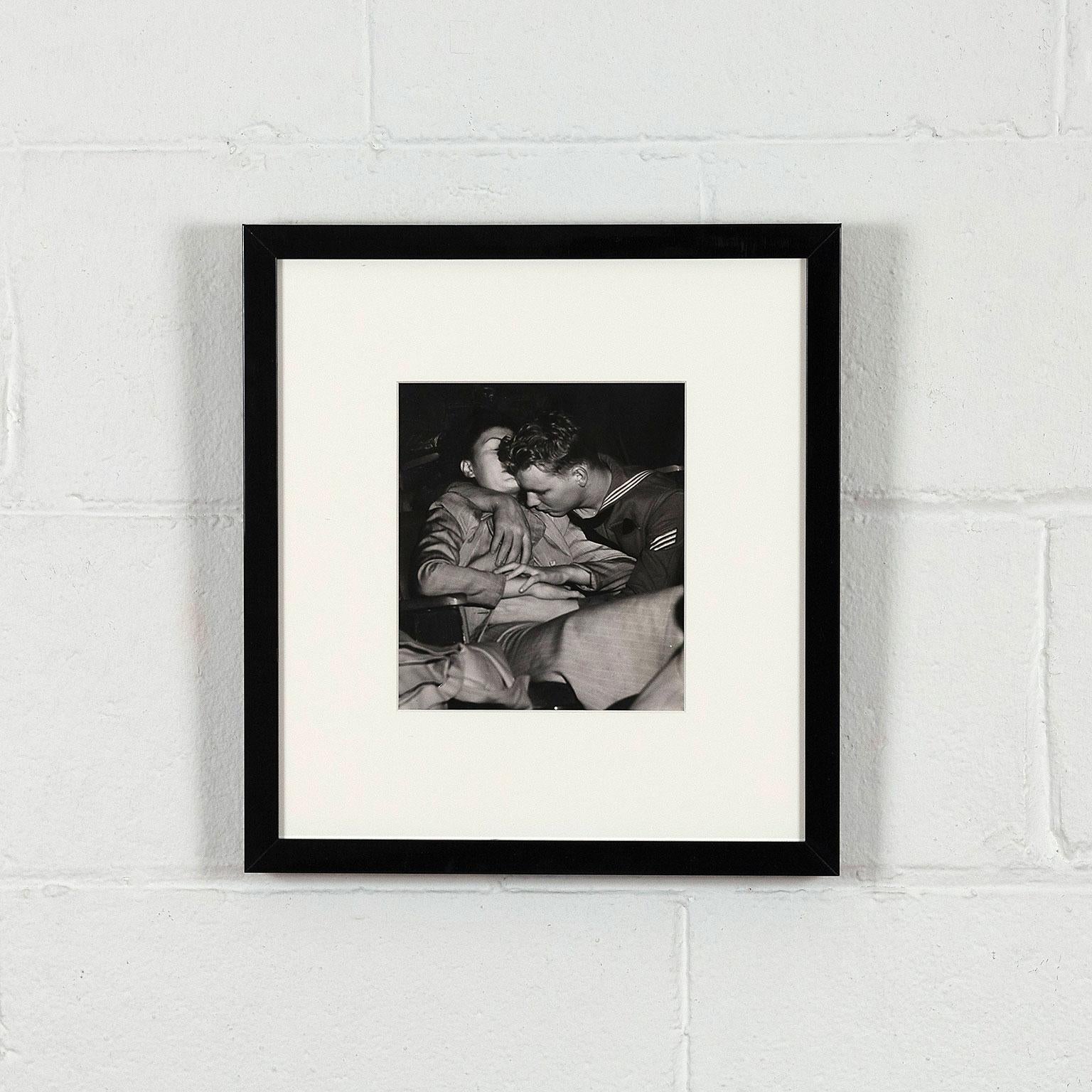
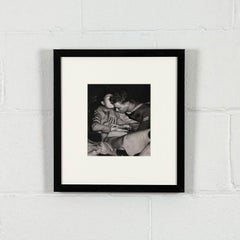
Weegee "Sailor and Girl Kissing"
By Weegee
Located in Toronto, Ontario
Weegee (1899-1968) was equally fascinated and inspired by cinema and all of its tangents, from Hollywood movie stars to ordinary civilians going to the movies. While Weegee is typically associated with crime/disaster images, the broad theme of "entertainment" is a major component of his oeuvre.
An interesting and provocative sub-genre of his cinema-related work are his images of couples (often heavy-petting) in movie theatres.
Recent scholarship has established that many of Weegee's supposed clandestine images were actually staged or arranged with friends or co-operative strangers.
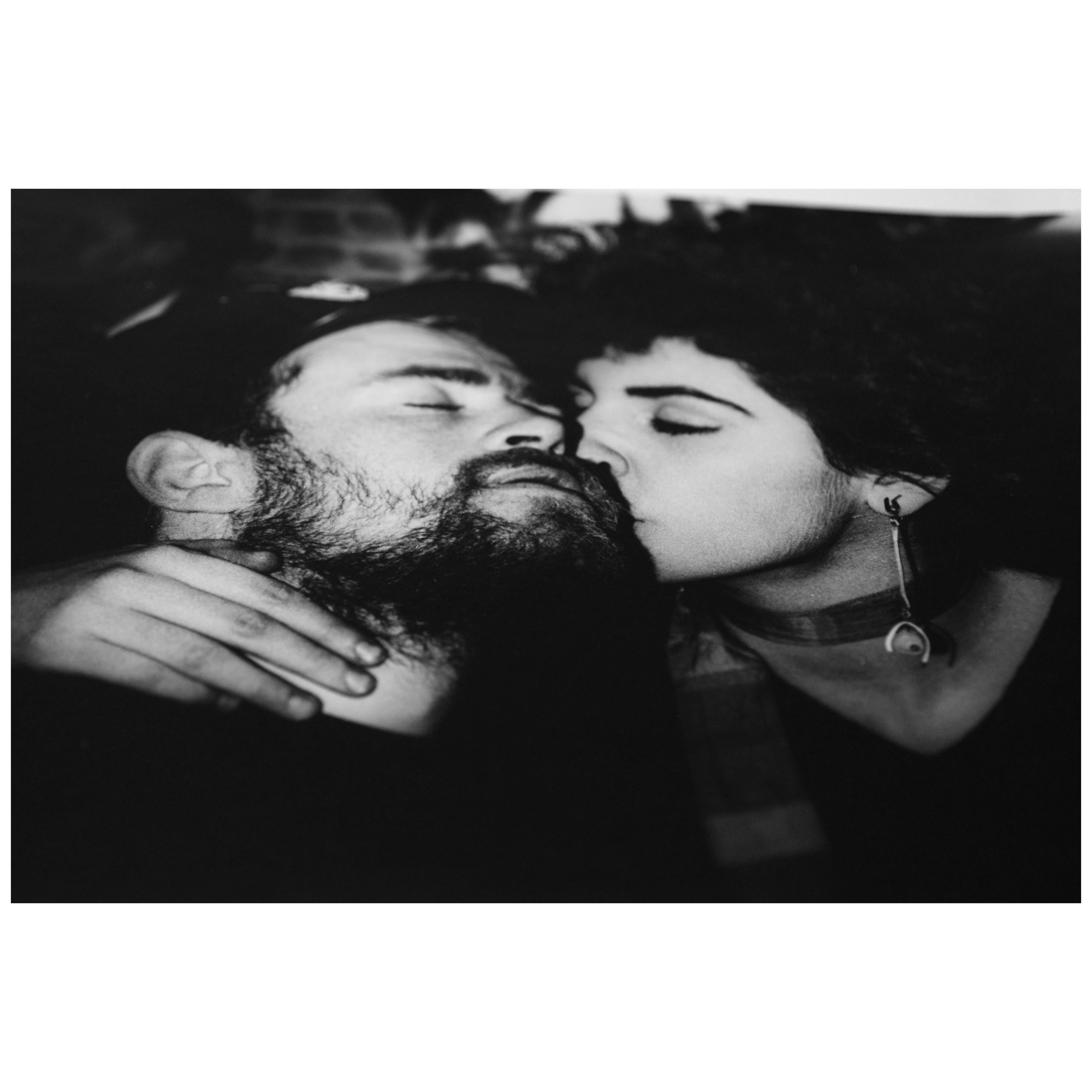
Nevertheless, Weegee created these photographs in the dark with an array of clever techniques including infrared film, filtered flashbulb and triangular prism lens. Employed in shots such as this one, the prism lens would allow the artist to “see around corners,” useful at times when his subjects were in compromising locations.
These images of kissing couples, Weegee wrote in 1959, were “his best seller, year in and year out.”
"Sailor and GIrl at the Movies...
Category
1940s American Modern Black and White Photography
Materials
Silver Gelatin
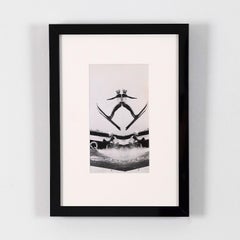
Waterski Jumper
By Weegee
Located in Toronto, Ontario
Arthur Felling, better known as Weegee (1899-1968) is America's premiere photojournalist and one of the last century's most influential photographers.
He would become famous, beyond...
Category
1950s American Modern Black and White Photography
Materials
Silver Gelatin
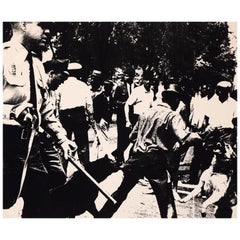
Birmingham Race Riots
By Andy Warhol
Located in Toronto, Ontario
Andy Warhol is arguably the most important American artist of the 20th century. He not only helped define Pop Art but has had a profound and enduring effect on artists, and image-mak...
Category
1960s Pop Art Figurative Prints
Materials
Screen
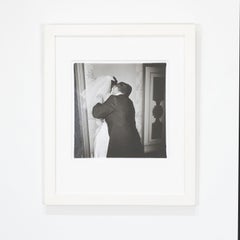
Groom Kissing His Bride
By Diane Arbus
Located in Toronto, Ontario
Diane Arbus (1923-1971) is one of the most influential and daring photographers of the 20th century.
Arbus is best known for her unique form of documentary portraiture. She explored the uncanny, the marginalized, and the idiosyncratic characters who defied mid-century conformity. Her work has influenced some of the most renowned photographers of our time including Nan Goldin.
While her career launched in the fashion world, it was years after quitting commercial photography (circa 1956) that she found her voice as an artist. With camera in hand, she followed her fascination with the eccentric individuals and oddities of New York City. Ultimately rejecting her affluent, sheltered upbringing and the mainstream fashion industry to create her own definitions of beauty.
Arbus’ portraits were considered incredibly provocative for their bold representations of sexuality, chaos, and grit. She fully immersed herself within the queer and alternative communities she documented, engaged with a curious balance of mystery and homage.
Shot in 1966, "Groom Kissing His Bride" is a prime example of her uncanny ability to capture even the most traditional moments (a wedding) through a lens of surrealism.
Love and tension confront each other as the groom kisses the bride with an attacking passion. Her likeness disappears behind his embrace and their newlywed bodies merge together. This work also contains Arbus’ visual trademarks – a black and white palette, a square crop, and a hard flash that flattens the aesthetic wonderland of New York.
Today, Arbus' work is celebrated in many major museum collections including the Art Gallery of Ontario, Art Institute of Chicago, National Museum of Modern Art (Tokyo), and Centre Pompidou (Paris).
"Groom Kissing his Bride, NYC"
USA, 1966
Gelatin-silver print
Printed by Neil Selkirk
Stamped 'A Diane Arbus photograph...
Category
1960s American Modern Black and White Photography
Materials
Silver Gelatin
You May Also Like
Weegee
Cafe Romance
, New York, 1953
By Weegee 1
Located in Hamilton, Ontario
Weegee (Ukranian/American 1899-1968)
Title: 'Cafe Romance', New York 1953
Gelatin silver print
Signed, titled, dated in ink au verso
'Corkin Gallery' label au verso
stamped "weegee the famous" au verso
Image size: 11" x 13.5"
Mat size: 21" x 24"
Biography:
Probably few policemen have seen as much violent sin as Arthur Fellig, better known as Weegee, did. Specializing in crime and catastrophe, Weegee’s work is regarded as some of the most powerful images of the 20th century. His profound influence on other photographers derives not only from his sensational subject matter and his use of the blinding, close-up flash, but also from his eagerness to photograph the city at all hours, at all levels: coffee shops at three in the morning, hot summer evenings in the tenements, debutante balls, parties in the street, lovers on park benches, the destitute and the lonely. No other photographer has better revealed the non-stop spectacle of life in New York City.
During the 1930s and 1940s Weegee worked as a freelance news photographer in New York City, and was the first private citizen to gain access to police radio transmits. He lived across the street from Manhattan police headquarters waiting for the inevitable call that would announce another gangland execution, botched hold-up, or crime of passion.
Weegee’s first book, Naked City, was a runaway success, making him an instant celebrity who suddenly had assignments from Life and Vogue. He was among the first to fully realize the camera’s unique power to capture split-second drama and exaggerated emotion. By the mid-40s, Weegee photographed...
Category
20th Century American Photography
#05, 1970s Nightclubs of Chicago South Side - Rare Vintage Silver Gelatin Print
Located in London, GB
"A camera is a window through which a photographer interacts with the world, and it's up to the operator to decide whether his camera will be a barrier or a mirror between he and his subjects. In the 1970s, Michael Abramson...
Category
1970s Contemporary Figurative Photography
Materials
Photographic Film, Archival Paper, Photographic Paper, Silver Gelatin
New York City, USA, Limited Edition Signed Iconic Street Photography 1950s
By Leonard Freed
Located in New york, NY
New York City, USA, 1954 is a 13" x 9" archival pigment print (baryta) in a limited edition of 5. Signed verso (back of photo) by Brigitte Freed (wife of the photographer), with Leon...
Category
1950s Contemporary Black and White Photography
Materials
Photographic Film, Archival Ink, Archival Paper, Digital, Archival Pigme...
New York City, Office Party, Black and White Dance Party Photograph 1960s
By Leonard Freed
Located in New york, NY
Office Party by Leonard Freed is a 13" x 19" limited-edition photograph. The print 4/5 is signed verso (back of photo) by Brigitte Freed (wife of the phot...
Category
1960s Contemporary Black and White Photography
Materials
Photographic Film, Archival Ink, Archival Paper, Digital, Archival Pigme...
Paris France, Black and White Photography Night Life 1950s, Crazy Horse Stripper
By Burt Glinn
Located in New york, NY
American photographer Burt Glinn's Stripper, Crazy Horse Saloon, Paris, 1956, is a 16" x 20" gelatin silver print, signed and authenticated by the Glinn estate. This photo offers an ...
Category
1950s Contemporary Black and White Photography
Materials
Silver Gelatin, Photographic Film, Photographic Paper
New York City, World Series Win, Black and White Baseball Photography 1950s
By Leonard Freed
Located in New york, NY
World Series Win, New York City, 1954 by Leonard Freed, is a 14" x 11" gelatin silver later ("lifetime") print, signed on verso (back of print) by the ...
Category
1950s Contemporary Black and White Photography
Materials
Photographic Film, Photographic Paper, Silver Gelatin