Items Similar to Girl at Fence (Last Picture Show) - mounted, analog
Want more images or videos?
Request additional images or videos from the seller
1 of 9
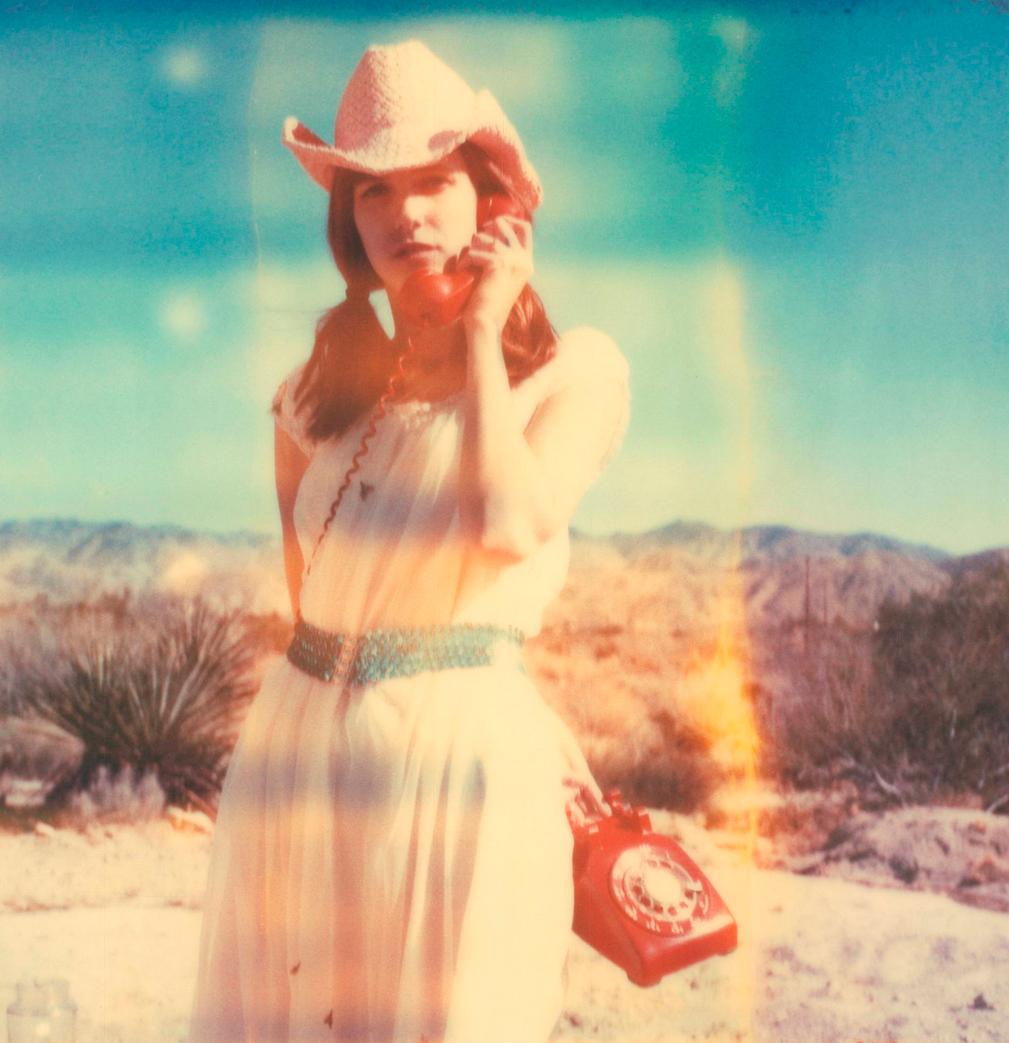
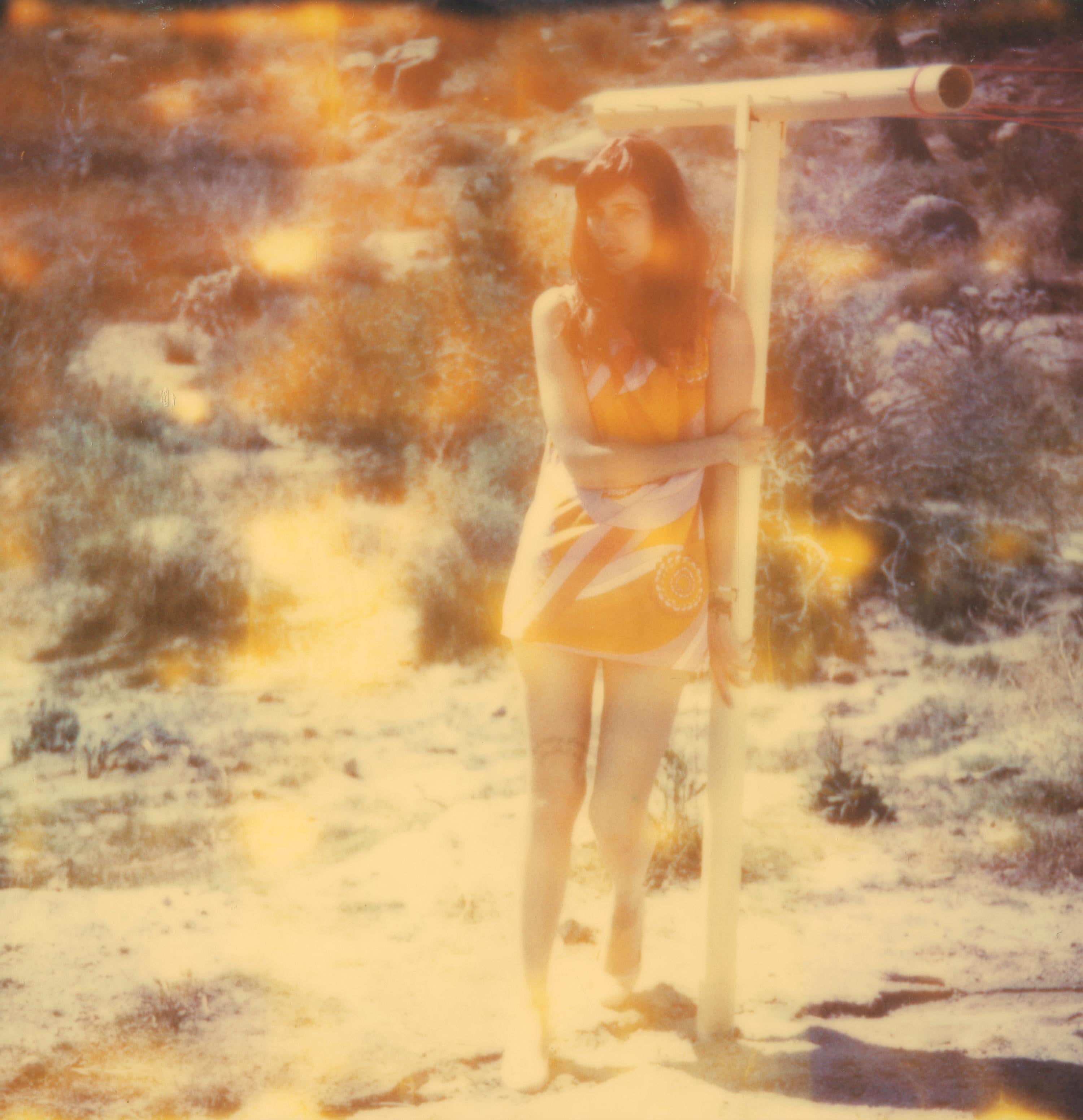
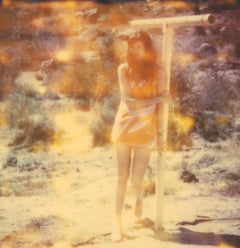
Stefanie SchneiderGirl at Fence (Last Picture Show) - mounted, analog2005
2005
$1,600
$2,395.6133% Off
£1,220.76
£1,791.9633% Off
€1,389.74
€2,00033% Off
CA$2,248.82
CA$3,301.0433% Off
A$2,472
A$3,628.6533% Off
CHF 1,297.79
CHF 1,905.0233% Off
MX$29,393.84
MX$43,147.2533% Off
NOK 16,666.54
NOK 24,464.8333% Off
SEK 15,181.42
SEK 22,284.8233% Off
DKK 10,383.58
DKK 15,242.0733% Off
About the Item
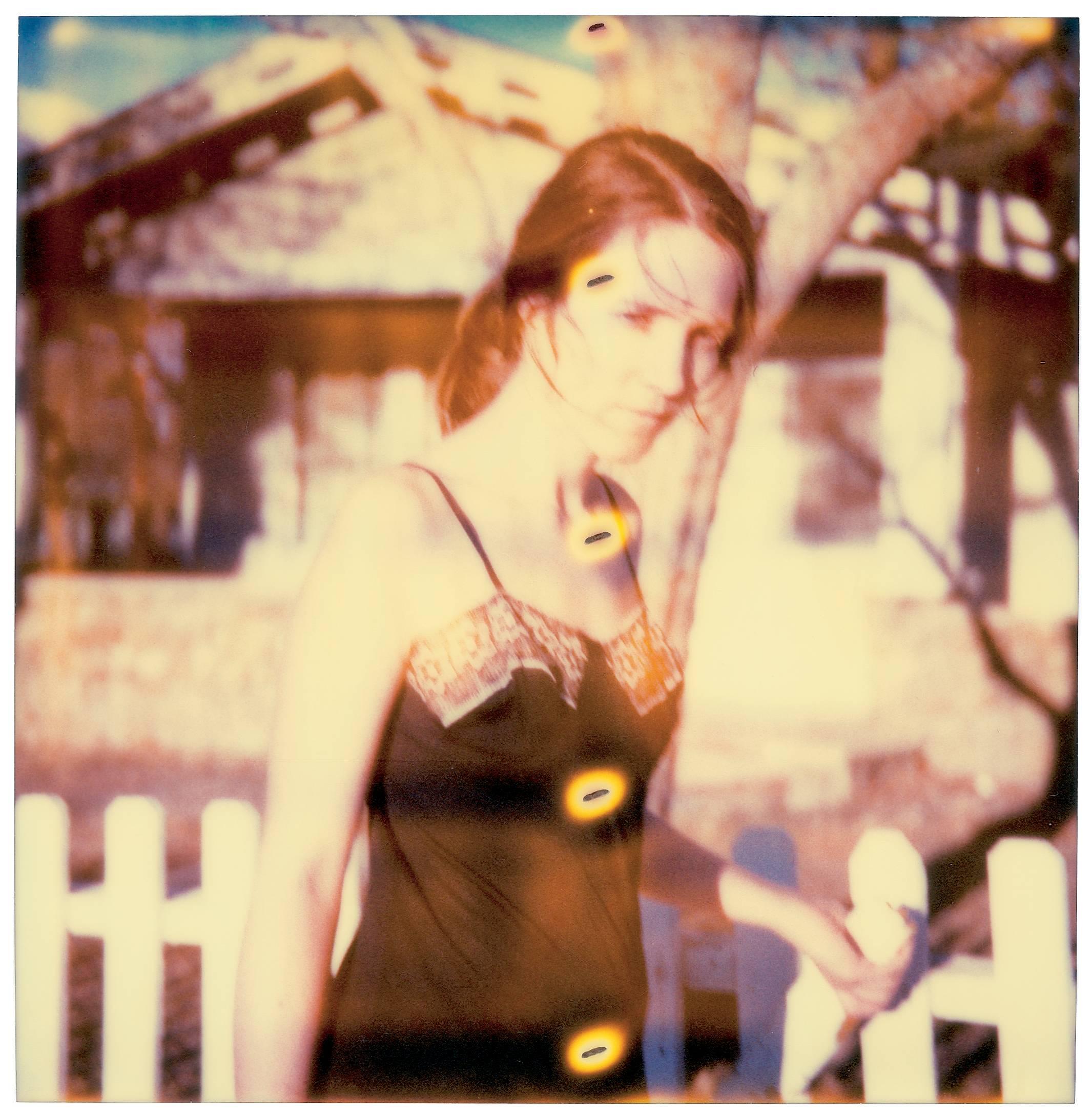
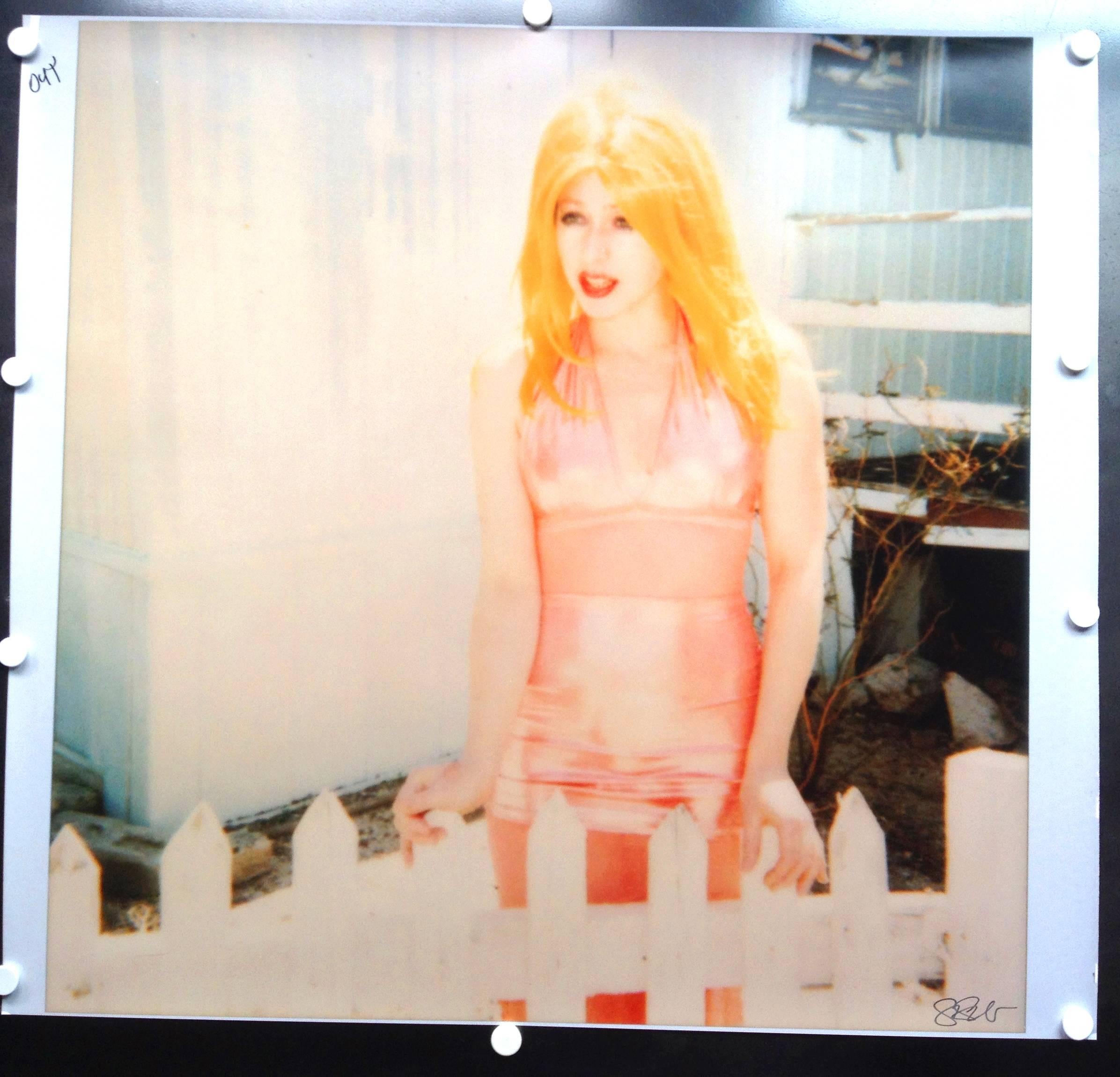
Girl at Fence (Last Picture Show) - 2005
58x56cm,
Edition 1/5,
Analog C-Print, hand-printed by the artist.
Mounted on Aluminum with matte UV-Protection.
Artist inventory number: 775.01.
Signed on verso.
When did you (Stefanie) first decide to work with Polaroids? Why do Polaroids seem to be so well-tuned to our (artistic) senses, perception and minds?
I started developing as a photographer in 1984 but didn't start using expired Polaroid film until 1996. It has the most beautiful quality and encapsulates my vision perfectly. The colors on one hand, but then the magic moment of witnessing the image appear. Time seems to stand still, and the act of watching the image develop can be shared with the people around you. It captures a moment, which becomes the past so instantly that the decay of time is even more apparent; – it gives the image a certain sentimentality. The Polaroid moment is an original every time.
Why use a medium from the past?
For me, analog has always been there in the present. For the new generation, analog is interesting because it's new to them. I understand that people growing up in a digital age will wonder about its usefulness, but it's theirs to recover if they want to. When I first started working with Polaroid, it wasn't the past. It was a partially forgotten medium, but it existed nonetheless. It is mine by choice. There is no substitute for tangible beauty.
Is it imperfect?
The imperfect perfection in a “wabi-sabi” kind of way.
Wabi-sabi (侘寂) represents a comprehensive Japanese world view or aesthetic centered on the acceptance of transience and imperfection. The aesthetic is sometimes described as one of beauty that is "imperfect, impermanent, and incomplete".[1]
'If an object or expression can bring about, within us, a sense of serene melancholy and a spiritual longing, then that object could be said to be wabi-sabi' [2] 'Wabi-sabi nurtures all that is authentic by acknowledging three simple realities: nothing lasts, nothing is finished, and nothing is perfect.'[3]
Is the Polaroid photograph recognizable or even sometimes cliché?
Absolutely! There's something cliché about the way I'm showing the American Dream. I live it myself, trying to find perfection in an imperfect world. Reaching for the horizon. The dream is broken; the cliché tumbles. There are different ways to involve an audience. You could make movies like Harmony Korine's "Gummo", a masterpiece in my view, which would estrange a large part of the audience. A certain film education is a prerequisite. Or you can start with clichés, the audience then feels safe, which lures them into the depth of your world without them even knowing it or understanding where exactly they are being led to. Appealing to emotions and the sub-conscious. Normal, Change, New Normal.
You continually revisit the landscape of the American West in your work. What draws you back to this scene?
Southern California represents a dream to me. The contrast of Northern Germany, where I grew up, to the endless sunshine of Los Angeles was what first attracted me. The American West is my dream of choice. Wide, open spaces give perspectives that articulate emotions and desires. Isolation feeds feelings of freedom or sometimes the pondering of your past. The High Desert of 29 Palms has very clear and vivid light, which is vital. Expired Polaroid film produces 'imperfections' that I would argue mirrors the decline of the American dream. These so called 'imperfections' illustrate the reality of that dream turning into a nightmare. The disintegration of Western society.
Are you playing with the temporality of the material and the value of the moment itself?
The value of the moment is paramount, for it is that moment that you're trying to transform. All material is temporary, it's relative, and time is forever.
Why does analog film feel more pure and intuitive?
It's tangible and bright and represents a single moment.
The digital moment may stay in the box (the hard drive / camera / computer etc.) forever, never to be touched, put into a photo album, sent in a letter, or hung on a wall. Printing makes it an accomplishment.
The analog world is more selective, creating images of our collective memory.
The digital worldwide clicking destroys this moment. The generation without memories due to information overload and hard drive failures. Photo albums are a thing of the past.
Why does it feel this way?
That's how the human instinct works.
When I was a child, every picture taken was a special moment. Analog photographic film as well as Super-8 material were expensive treasures. My family's memories were created by choosing certain moments in time. There was an effort behind the picture. The roll of film might wait months inside the camera before it was all used. From there, the film required developing, which took more time, and finally, when the photos were picked up from the shop, the memories were visited again together as a family. Who knew then, how fleeting these times were. Shared memories was a ritual.
What's your philosophy behind the art of Polaroid pictures?
The 'obsolete' is anything but obsolete. Things are not always as they appear, and there are hidden messages. Our memories and our dreams are under-valued. It is there that real learning and understanding begins by opening yourself to different perspectives.
What inspired you to use stop motion cinematography?
My work has always resembled movie stills. I remember the first time I brought a box of Polaroids and slid them onto Susanne Vielmetter's desk (my first gallery). Instantly, it became apparent that there was a story to tell. The stories grew. It was undeniable to me, that the emerging story was where I was destined to go. I've made four short films before my latest feature film, "The Girl behind the White Picket Fence". This film is 60 minutes long with over 4000 edited Polaroids. It's important to remember that our sub-conscious fills in the blanks, the parts missing from the story allow a deeper and more personal experience for the viewer. That is, if you surrender yourself and trust me as the director to lead you somewhere you might not have been before.
- Creator:Stefanie Schneider (1968, German)
- Creation Year:2005
- Dimensions:Height: 22.84 in (58 cm)Width: 22.05 in (56 cm)Depth: 0.12 in (3 mm)
- Medium:
- Movement Style:
- Period:
- Condition:
- Gallery Location:Morongo Valley, CA
- Reference Number:1stDibs: LU652310242062
Stefanie Schneider
Stefanie Schneider received her MFA in Communication Design at the Folkwang Schule Essen, Germany. Her work has been shown at the Museum for Photography, Braunschweig, Museum für Kommunikation, Berlin, the Institut für Neue Medien, Frankfurt, the Nassauischer Kunstverein, Wiesbaden, Kunstverein Bielefeld, Museum für Moderne Kunst Passau, Les Rencontres d'Arles, Foto -Triennale Esslingen., Bombay Beach Biennale 2018, 2019.
About the Seller
4.9
Platinum Seller
Premium sellers with a 4.7+ rating and 24-hour response times
Established in 1996
1stDibs seller since 2017
1,051 sales on 1stDibs
Typical response time: 1 hour
- ShippingRetrieving quote...Shipping from: morongo valley, CA
- Return Policy
More From This Seller
View AllGirl at Fence III (The Last Picture Show)
By Stefanie Schneider
Located in Morongo Valley, CA
Girl at Fence III (The Last Picture Show) - 2005,
58x56cm.
Edition 2/5.
Analog C-Print, hand-printed by the artist, based on the Polaroid.
Certificate and Signature label.
Arti...
Category
Early 2000s Contemporary Figurative Photography
Materials
C Print, Color, Polaroid
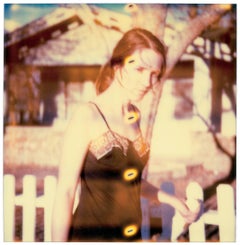
Max by the Fence - based on a Polaroid Original - Proof
By Stefanie Schneider
Located in Morongo Valley, CA
Max by the Fence (29 Palms, CA)
Proof Before Printing / 2005
Analog C-Print, hand-printed by the artist from a Polaroid, signed on the front.
128 × 125 cm
The white border is for ha...
Category
1990s Contemporary Color Photography
Materials
Photographic Paper, C Print, Polaroid
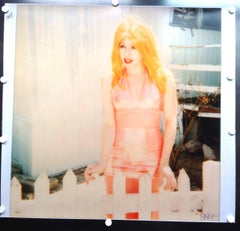
Gravity (The Girl behind the White Picket Fence) - Polaroid, Contemporary, Color
By Stefanie Schneider
Located in Morongo Valley, CA
Gravity (The Girl behind the White Picket Fence) - 2013
80x80cm,
Edition 2/5.
Analog C-Print printed on Fuji Archive Paper, hand-printed by the artist,
based on the Polaroid.
Mou...
Category
2010s Contemporary Color Photography
Materials
Wood, Archival Paper, Photographic Paper, C Print, Color, Polaroid
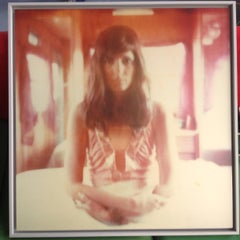
Her last Call III
(The Girl behind the White Picket Fence) - Polaroid
By Stefanie Schneider
Located in Morongo Valley, CA
'Her last Call III' (The Girl behind the White Picket Fence) - 2008
20x24cm,
Edition of 10,
Archival C-Print, based on the Polaroid.
Certificate and Signature label.
Artist Inv...
Category
Early 2000s Contemporary Color Photography
Materials
Photographic Film, Archival Paper, C Print, Color, Polaroid
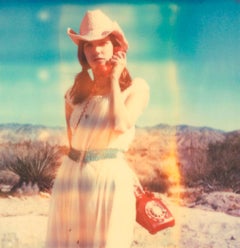
Burning (The Girl behind the White Picket Fence) Figurative, expired, Polaroid
By Stefanie Schneider
Located in Morongo Valley, CA
Burning (The Girl behind the White Picket Fence) - 2015,
20x20cm, Edition 8/10.
Archival Print based on a Polaroid.
Artist Inventory 16077.
Not mounted.
Stefanie Schneider liv...
Category
2010s Contemporary Color Photography
Materials
Photographic Paper, C Print, Color, Polaroid, Acrylic Polymer, Archival ...
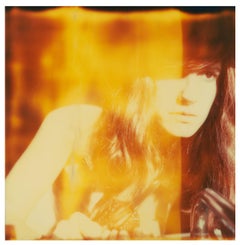
Traces of Time III (The Girl behind the White Picket Fence) - Polaroid, Portrait
By Stefanie Schneider
Located in Morongo Valley, CA
Traces of Time III (The Girl Behind the White Picket Fence) - 2013
20x20cm,
Edition of 10, plus 2 Artist Proofs.
Archival C-Print, based on the original Polaroid.
Signature label and certificate.
Artist Inventory #13372.
Not mounted.
Offered is a piece from the movie: The Girl Behind the White Picket Fence. Written and directed by Stefanie Schneider
A tale told with blemished and expired Polaroid film about the hopes and dreams of a newly orphaned girl after losing her parents who lived in the Californian desert in an old travel trailer.
-filmed with Polaroid film stock and Super-8 footage, overlaid with poetic voice-over monologue - this feature film creates a dynamic kaleidoscope of words and pictures, a dreamy tale that channels Terrence Malick, Gus Van Sant, and pages torn from a lonely girl's journal.
(Palms Springs life magazine / Caroline Ryder)
Stefanie Schneider
By Caroline Ryder
Travel up a bumpy dirt road in Morongo Valley, the trail strewn with rocks, and you’ll come upon a gigantic 1950s trailer in pristine condition, ringed by a white picket fence, with cottontail rabbits hopping among neat little rose bushes that bloom in spite of the broiling desert heat.
Inside the trailer are period accents—a vintage radio, vintage fridge, little crocheted doilies, and dusty gilt-framed photographs. It’s a surreal home-sweet-home, an Americana fantasy as imagined by German artist and experimental filmmaker Stefanie Schneider whose work is so inspired by the desert landscape, she made it her home in 2005. “There’s a completely different light here than in Germany, a beautiful light,” says Schneider, whose property in Morongo is dotted with vintage trailers. They surround her midcentury home and serve as sets for her photoshoots or as guest lodgings for her friends from Hollywood and Berlin. “But what I really love about the desert is the desolation,” she continues. “The sense of hope for something that might or might not come. It’s easy to see our dreams projected in the desert.”
Famed for shooting trailer park chic fine art photographs exclusively on vintage Polaroid film, Schneider recently completed her most ambitious project to date—a feature film made entirely of Polaroid stills (4000 images in total), the story set around her magnificent 1950s trailer. The film, called “The Girl Behind The White Picket Fence” tells the story of a broken-hearted girl who lives in the trailer. Her name is Heather, and she is played by model Heather Megan Christie, girlfriend of actor Joaquin Phoenix, and former partner of Red Hot Chili Peppers singer Anthony Kiedis, with whom she has a son. Heather stars opposite Kyle Larson (who plays ‘Hank’), a real-life gypsy fisherman who catches crab in Alaska when he’s not surfing in Southern California. Neither of the two had ever acted before, and never in the history of movie-making has a director shot a film entirely on Polaroid film.
“There was great difficulty shooting a film this way,” says Schneider, who, with her long straight hair, wide innocent eyes, and thick-framed glasses, conjures an art-house Gretel. “If I had used a regular camera I would have had 36 exposures per minute, much faster and easier than using the old Polaroid camera which takes a long time to shoot one frame. Also, sometimes it doesn’t shoot at the exact moment you think it’s going to—but that’s really great because then you miss the perfect moment…and often those are the best shots.” Individually, the Polaroid photographs that comprise 29 PALMS, CA stand alone, but together and in sequence, filmed with super 8 and 16mm film stock and overlaid with poetic voice-over monologues, they create a dynamic kaleidoscope of words and pictures, a dreamy tale that channels Terrence Malick. Gus Van Sant, and pages torn from a lonely girl’s journal.
The idea to shoot a movie in this way came about in 2004 when Schneider was working with leading German director Mark Forster (Monster’s Ball, Finding Neverland, Quantum of Solace) on his film Stay. She had met Forster at director Wim Wender’s birthday party in Hollywood. A few years later, Forster asked Schneider to shoot Polaroids of scenes from Stay as he filmed; he used those photographs for dream and memory sequences in the movie. For the first time, Schneider saw her Polaroids strung together in sequence, moving with rhythm like a flipbook, in the context of a story. When Forster urged her to consider making a feature film using that technique, the seed of 29 PALMS, CA was sown. She mentioned the idea to her good friend German actor Udo Kier, who also gave the idea a big thumbs up, and agreed to play the part of a mysterious shaman in the film.
Thanks to her strong reputation in the art world and her Hollywood connections, getting talented people on board was the easy part (for a while, Charlotte Gainsbourg was pegged to play the starring role, although she pulled out two weeks before shooting commenced because she was pregnant and not fit to travel to the desert.) The hard part was finding the perfect trailer—and bringing it to the desert. “This trailer almost killed us,” says Schneider’s partner Lance Waterman, who lives and works with Schneider in Morongo Valley. After finding it on eBay, the couple drove to Utah to pick it up, the plan being to tow it all the way back to the high desert themselves. Bad idea. “We were driving down a hill with this enormous trailer behind us when we realized that if we wanted to stop, there would be no way to do so without the trailer crushing us,” says Waterman. Adds Schneider: “Lance was even giving me instructions on how to jump out of the truck if we needed to.” Thankfully the road leveled and as soon as they were able to slow down and pull over, they called a professional towing company, which transported the trailer the remaining distance to Morongo Valley.
Filming took place in Spring 2011 and 2012. Schneider recently submitted the film to major film festivals in Europe and the US, and it will be broadcast in 2013 by leading German television channel, Arte. While Schneider may come from a long tradition of photographers-turned-filmmakers—Stanley Kubrick started out as a photographer, as did Ken Russell (Tommy, Women in Love) and Larry Clark, who was a controversial fine art photographer before directing smash hit Kids—she does not see her future in Hollywood, directing blockbusters. Not necessarily. “I don’t think I want to make more films,” she says. “The actors were saying they would love to work with me again, and were asking if I would like to make other movies. But being on movie sets is far too stressful, and at least with this, I was in complete power of what was going on creatively. That said, if this gets a lot of acclaims…we can always think again. One should never say never.”
Film features
original soundtrack with songs by Adam Weiss, Daisy McCrackin, Billy Harvey, Sophie Huber, Zoe Bicat, Max Sharam, Cheyenne Randall...
Category
2010s Contemporary Color Photography
Materials
Archival Paper, Photographic Paper, C Print, Color, Polaroid
You May Also Like
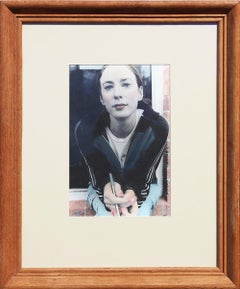
Contemporary Hand Tinted Photograph of a Young Lady
Located in Houston, TX
Contemporary hand-tinted photography of a young woman by Houston, TX artist, Jim Reitz. Signed by the artist at the bottom left. Framed and matted in a natur...
Category
2010s Contemporary Color Photography
Materials
Photographic Paper
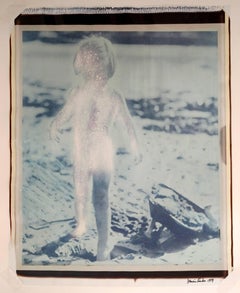
Large Format Vintage Color 20X24 Polaroid "Radiant Child" signed and dated
By Dennis Farber
Located in Surfside, FL
30X26 with Mat. (20X24 inch polaroid) From The New York Times: Dennis Farber abducts children from photographic illustrations in children's books of the 30's. He paints Ku Klux Klan ...
Category
1980s Figurative Photography
Materials
Photographic Paper
"Woman" Photography on paper 52" x 42" framed
Located in Carmel, CA
The photograph comes with a certificate of authenticity and a letter of appraisal.
Lucile - 'Women' Photography on paper. framed.
Category
21st Century and Contemporary Contemporary Figurative Photography
Materials
Canvas, Acrylic
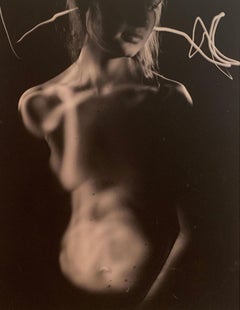
Girl in Park
By Diana Bloomfield
Located in Sante Fe, NM
Diana H. Bloomfield
"Figurative" Statement
I began this ongoing series of my daughter over eighteen years ago. These particular images work as narratives. Alone, or in combination, ...
Category
2010s Contemporary Color Photography
Materials
Pinhole, Platinum
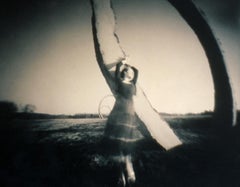
Untitled, Girl Portrait - Contemporary Photography - Painting Object
By Magdalena Peszkowska
Located in Salzburg, AT
Magdalena Peszkowska born in 1980 in Gdańsk, Poland. Studied in Department of Painting at Academy of Fine Arts in Gdańsk (1999-2004). Diploma with special recognition in painting in 2004.
The character of Magdalena Peszkowska's works Series Stand is like an poetic archive of memories, which call for a classification and reconstruction of the time of childhood and the intense experience of time with everything around it. Gdansk - where the artist comes from - becomes a mythical place, This city, with a very strong symbolic potential inherent in its history, needs editing from a single point of view. Magdalena Peszkowska uses her own photos or those from the family album. She transfers them to gray field blankets and camp beds with her own secret technology Then she paints on the used objects. Many of her objects show figures from the closest circle of Peszkowska, often it is herself, her family or places close to her in Gdansk. Her objects have intentional signs of use.
The field blankets have a sewn-in wooden bar to hang them on the wall.
The field military beds...
Category
2010s Contemporary Figurative Sculptures
Materials
Metal
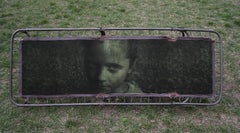
Jane Calvin Composite Photograph, 1990
By Jane Calvin
Located in New York, NY
Jane Calvin (American, b. 1938)
Untitled, 1990
Photograph
Sight: 19 1/2 x 15 1/2 in.
Framed: 26 7/8 x 22 1/2 x 1 1/4 in.
Edition 2/10
Provenance: Collection of Robert Burge, New Y...
Category
1990s Contemporary Color Photography
Materials
Color