Want more images or videos?
Request additional images or videos from the seller
1 of 6

Robert Longo
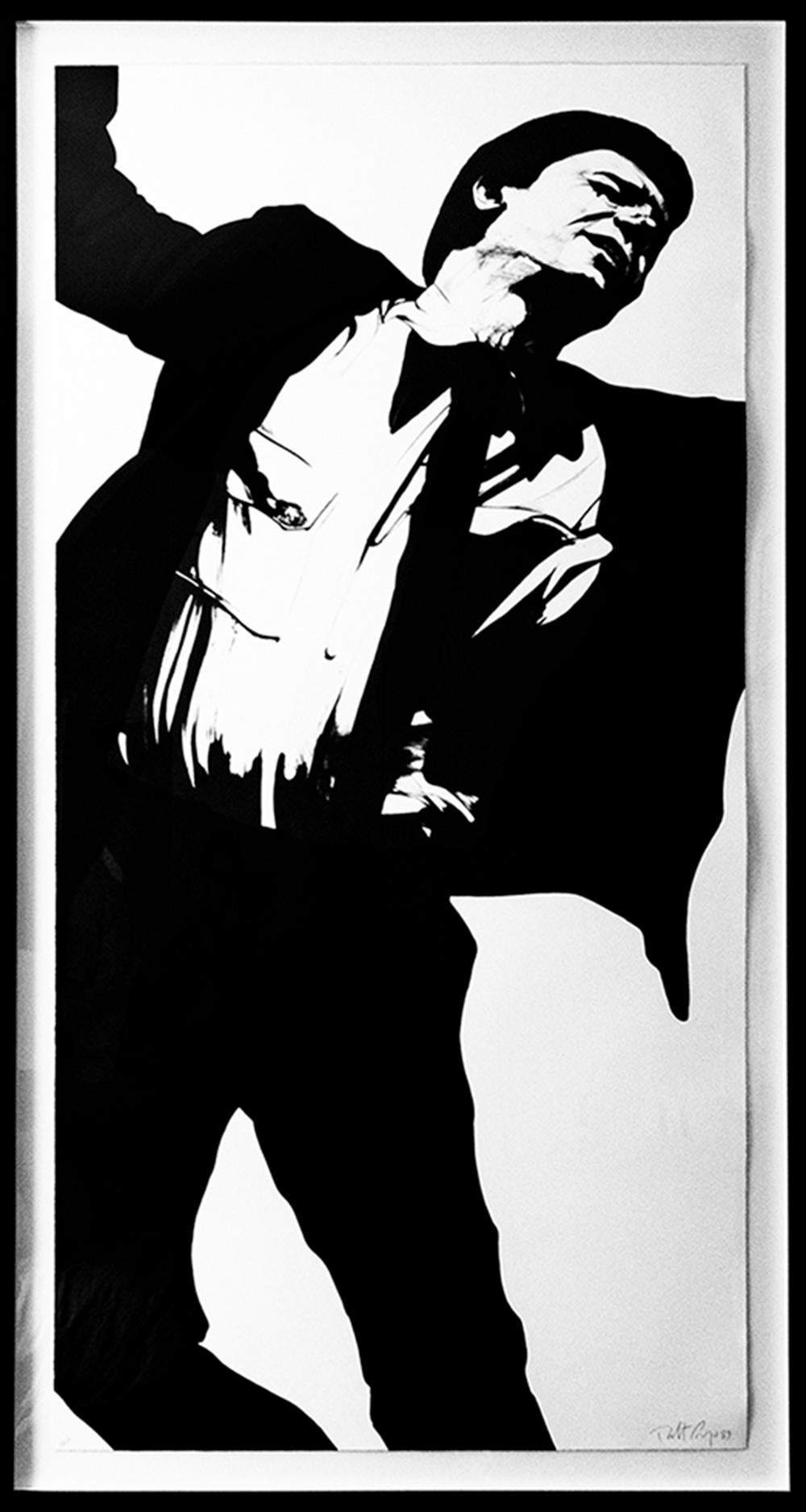
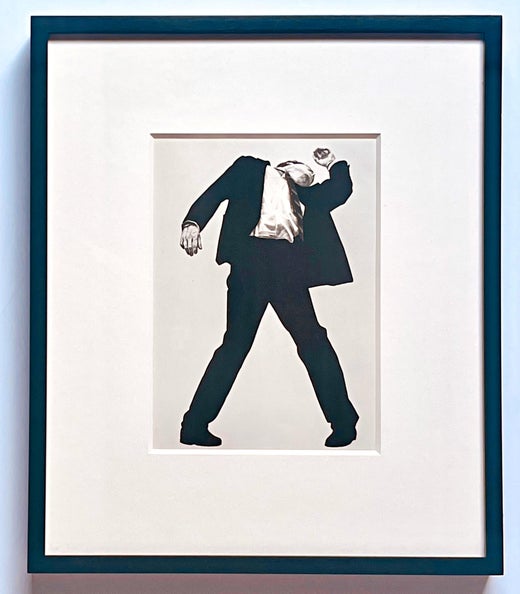
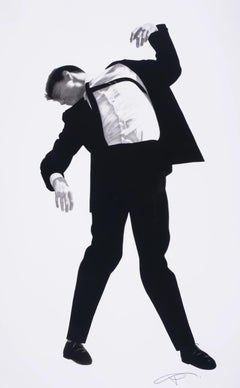
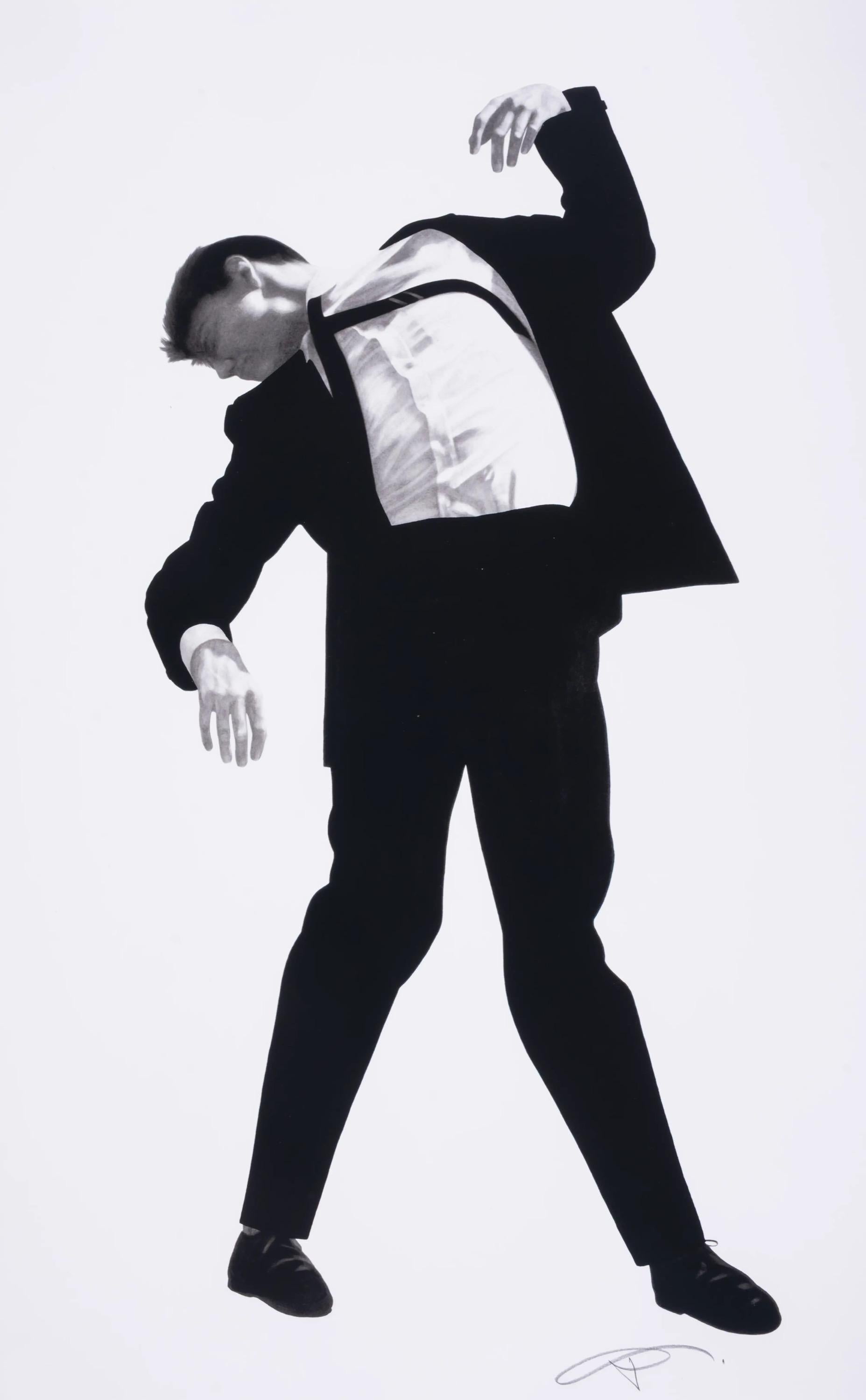
Robert Longo - Men in the Cities (Rick), 1984 artist-certified photograph unique

1992

$10,000
£7,622.97
€8,708.65
CA$14,071.41
A$15,412.56
CHF 8,114.71
MX$183,943.74
NOK 103,414.74
SEK 94,536.66
DKK 65,077.02

About the Item

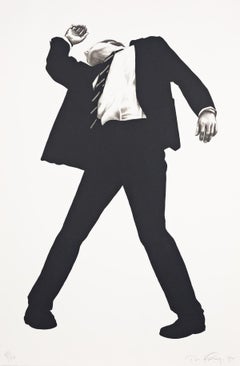
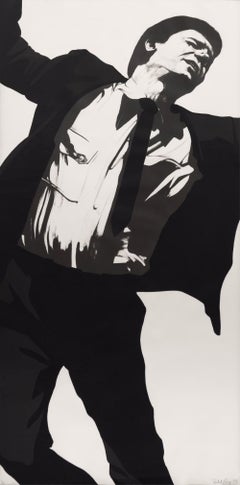
Robert Longo, Men in the Cities (Rick) , 1984 - unique artist-certified photographic document, 1992 Vintage photographic print on Kodak paper, with unique artist inscription and certification on verso Unique artist-certified photographic document with extensive handwritten inscription and signature Elegantly framed in a museum quality wood frame and ready to hang This work is a photographic print on Kodak paper, with artist inscription and certification on verso This work is a photographic document of Robert Longo's iconic Men in the Cities series, depicting the work known as Rick. The verso bears an extensive handwritten inscription and certification by Longo, executed in black marker and signed and dated 1992. In his inscription, Longo identifies the depicted work as: Untitled, 1984, Men in the Cities Graphite, flashe, and charcoal on paper 50 x 38 inches He further notes that the image appeared on the cover of Artnews, October 1989, and certifies it is an original work. (For reference only is a jpeg of the cover of the October 1989 Artnews magazine, but the magazine itself is not included) This document was likely created to accompany the original artwork and later became separated from it - common with archival material from estates and major collections. As such, it survives as a rare, autonomous object: it is at once a Certificate, a rare, archival photograph and a conceptual artifact. The photograph is printed on Kodak paper and is professionally framed in a museum quality black wood frame with UV-protective glazing and a die-cut window on the reverse to reveal the full handwritten inscription and signature. Works from Men in the Cities are among the most recognizable images of 1980s American art. This piece offers a unique point of access to that history - not as a reproduction, but as an artist-authenticated document directly tied to the series and its critical reception. A wonderful art historical artifact from the 1980s, a period that is very much in vogue these days and subject of major critical, commercial and scholarly re-examination. Measurements: Framed: 16.25 inches (vertical) by 13.5 inches (horizontal) by 1.5 inches Photograph: 9 inches (vertical) x 6.5 inches (horizontal) More About Longo's Men in the Cities Series: Men in the Cities is Robert Longo’s defining, canonical series. This work is artist-written, artist-signed and references a specific known work featured on the cover of Artnews magazine, summarizing the entire decade of the 1980s • The series was inspired by film stills of people dying or being hit with force. • Longo photographed his friends in dramatic poses, sometimes throwing things at them to capture the flinching motion, and then used these photos to create the final drawings. • The works have been interpreted as a critique or metaphor for the success-driven "yuppie culture" of the 1980s. • The specific work in the image is titled Rick. ROBERT LONGO BIOGRAPHY: Robert Longo grew up on Long Island, New York. He graduated high school in 1970, weeks after the Ohio National Guard massacred several students at Kent State University who were protesting the United States invasion of Cambodia. One of those killed was a former classmate of Longo’s, and his body was shown in a Pulitzer Prize-winning photograph that was seen across the world. The event shocked Longo, triggering his interest in political activism and media imagery. In 1972, Longo received a grant to study restoration and art history in Florence, Italy. While touring the museums of Europe, he realized he wanted to make, rather than restore art. In 1973, Longo enrolled at State University of New York College at Buffalo, where he worked for artists Paul Sharits and Hollis Frampton, who introduced him to structuralist filmmaking. Along with Charles Clough, Longo co-founded Hallwalls (1974–ongoing), an alternative non-profit art exhibition space where he organized shows and talks with artists such as John Baldessari, Lynda Benglis, Robert Irwin, Joan Jonas, Bruce Nauman, and Richard Serra. At Buffalo State, Longo started a friendship—that still exists to this day—with Cindy Sherman, and in 1977 the two moved to New York together, where Longo began working as a studio assistant to Vito Acconci and Dennis Oppenheim. That year he was included in the exhibition Pictures at Artist’s Space, curated by Douglas Crimp, which showcased work by a group of five young artists who were engaged with the politics of image-making, drawing from advertisements, newspapers, film, and television. The “Pictures Generation,” as they became known, included artists such as Cindy Sherman, Richard Prince, Louise Lawler, David Salle, and drew from semiotics and poststructuralist theory to investigate the way meaning is made and circulated in modern society. Their work often critiqued the anaesthetizing power of consumer capitalism and the indoctrinating effects of mass media. At his first solo exhibition at Metro Pictures in 1981, Longo presented his charcoal and graphite Men in the Cities drawings, which instantly became icons of the “Pictures Generation,” and some of the most recognizable artworks of the 1980s. Longo performed in New York rock clubs with the band Menthol Wars with Richard Prince, throughout the 1980s. During that period, he also designed numerous album covers, including Glenn Branca’s The Ascension (1981) and The Replacements’ Tim (1985). In 1986, he directed his first music video for New Order’s chart-topping song “Bizarre Love Triangle,” and the following year directed “The One I Love,” a video for R.E.M.’s first hit single. Longo began working with diverse materials at increasingly ambitious scales. His Combines series, first exhibited in 1983, incorporated materials such as paint, graphite, wood, plaster, cast bronze, and steel in works that were part-painting, part-sculptural reliefs. Using Sergei Eisenstein’s theory of montage to juxtapose conflicting imagery and forms, they touched on many of the themes of war, alienation, and consumption that have remained central to Longo’s practice. The Combines were followed in 1990 by Black Flags, a series of cast bronze American Flags taking the forms of wall-hanging structures frozen mid-wave, free-standing pennants as sharp as missiles, and enormous impenetrable walls, all pointed critiques of US imperialism. In 1989, Longo escaped a recession and the Gulf War by moving to Paris, where he lived and worked for three years, eventually returning to begin his Bodyhammers series of large-scale charcoal and graphite drawings of guns, and to direct the cyberpunk film Johnny Mnemonic (1995), based on William Gibson’s text, which starred Keanu Reeves and Dolph Lundgren. Following the film’s release, he began a series titled Magellan in 1996—a leap year—comprising 366 small drawings, based on images from daily media sources. Taken together, the eclectic images of murders, funerals, concerts, sporting events, cops, superheroes, animals, and plants are a kind of channel scroll through the American subconscious, which became the lexicon for work to come. Beginning in 1999, Longo began making large-scale charcoal wave drawings, his Monsters series, followed by The Freud Cycle, depicting Sigmund Freud’s consultation room and apartment in Nazi-occupied Vienna. On the one hand, the stormy seas counterbalance the cool rationalism of psychoanalysis, while on the other, the pairing suggests inner tempests. These images are what Longo considers “absolutes,” embodiments of the collective unconscious. In 2009, he completed a cycle of drawings of other absolutes—bombs, nebulae, roses, sleeping children, and sharks—that he called The Essentials, and which form a poetic creation myth. Longo’s engagement with metaphysics continued in The Mysteries, a body of work completed from 2009 to 2014. Each drawing depicts a scene of beauty and contradiction: light streaming through cathedral windows and a forest; the eyes of a woman in a niqab and the reflection of clouds on a pilot’s visor. In 2014, following Black Lives Matter protests in Ferguson, Missouri and the declaration of an ISIS caliphate, Longo began The Destroyer Cycle, a series of works that distill scenes of power and violence from American media. Riot police, migrant ships, and terrorist attacks form a searing portrait of a world locked in perpetual crisis. For an exhibition at Metro Pictures in 2014, Longo presented a series of twelve charcoal drawings, entitled Gang of Cosmos, that functioned as black and white translations of well-known paintings by Abstract Expressionists, including Willem de Kooning, Lee Krasner, Jackson Pollock, Ad Reinhardt, Joan Mitchell, and Mark Rothko, thereby creating his own version of this wholly American artistic legacy. Longo continues to work with characteristic scale, precision, and perceptiveness, achieving visually striking images of people, places, events, and animals. The artist slows things down through the venerable medium of charcoal, often capturing images that would not otherwise be possible to see with the human eye. Through his large-scale hyperrealistic charcoal drawings, Longo has cemented himself as a preeminent artist of his generation. Longo’s body of work, A History of the Present, which he began in 2020, is informed by the Coronavirus Pandemic, the nation’s political upheaval, our tenuous ecological future, fueled by the artist’s personal experiences. Through this group of large-scale charcoal drawings, Longo seeks to focus on the power of the viewer and the individual’s capacity to create change, a celebration of freedom of expression. Longo’s work is held in multiple public collections worldwide, including The Albertina Museum, Vienna; The Art Institute of Chicago; Centre Georges Pompidou, Paris; Harvard Art Museums, Cambridge, Massachusetts; Los Angeles County Museum of Art; and The Museum of Modern Art, New York, among many others. A landmark traveling retrospective, Robert Longo, was held at The Albertina Museum from September 2024 through January 2025, and is on view at the Louisiana Museum of Modern Art, Humlebæk, Denmark, through August 31, 2025.
  • Creator:
    Robert Longo (1953, American)
  • Creation Year:
    1992
  • Dimensions:
    Height: 9 in (22.86 cm)Width: 6.5 in (16.51 cm)
  • Medium:
  • Movement Style:
  • Period:
  • Condition:
  • Gallery Location:
    New York, NY
  • Reference Number:
    1stDibs: LU1745217361152

More From This Seller

View All
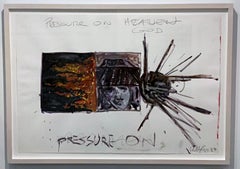
Robert Longo - Pressure on God - Unique iconic 1980s work on paper signed Framed
By Robert Longo
Located in New York, NY
Robert Longo's "Pressure on Heaven/God" is a classic work from the 1980s, a period that is very much in vogue these days and subject of major critical, commercial and scholarly re-ex...
Category

1980s Contemporary Abstract Drawings and Watercolors

Materials

Mixed Media, Acrylic, Graphite

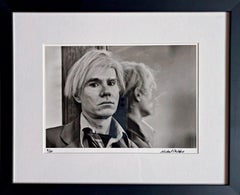
Andy Warhol in New York, 1976, 2007, hand signed photograph 8/60 for Museum
By Michael Childers
Located in New York, NY
Michael Childers Andy Warhol in New York, 1976, 2007 Photographic print Signed and numbered 8/60 on the front in black felt tip marker Museum Provenan...
Category

Early 2000s Pop Art Black and White Photography

Materials

Permanent Marker, Photographic Paper

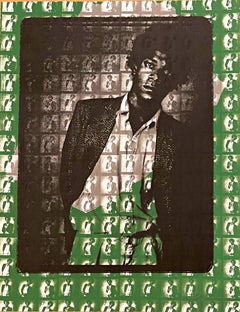
Jean-Michel Basquiat Silkscreen Monotype UNIQUE hand signed 2X by Richard Corman
By Richard Corman
Located in New York, NY
Richard Corman Portrait of Jean-Michel Basquiat: Monotype (hand signed twice by Richard Corman), 2015 Silkscreen monotype on 320 gram Coventry Rag paper with deckled edges Signed twi...
Category

2010s Pop Art Portrait Prints

Materials

Screen, Monotype

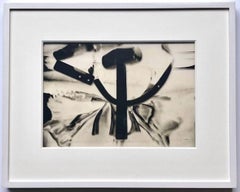
Hammer Sickle, acetate of iconic image, given by Warhol to Chromacomp Inc.
By Andy Warhol
Located in New York, NY
Andy Warhol Hammer Sickle, 1976 Acetate negative acquired directly from Chromacomp, inc. Andy Warhol's printer in the 1970s. accompanied by a signed letter of provenance from t...
Category

1970s Pop Art Black and White Photography

Materials

Mixed Media, Photographic Paper, Photographic Film

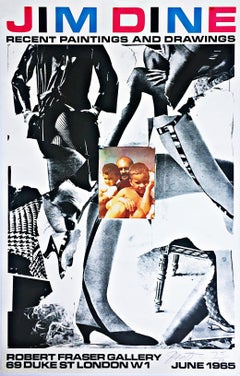
Jim Dine The Robert Fraser Gallery Print famous Deluxe Signed/N British Pop art
By Jim Dine
Located in New York, NY
Jim Dine The Robert Fraser Gallery Print, 1965 Silkscreen and Lithograph on wove paper (Deluxe hand signed limited edition) Hand signed and numbered 75/100 in graphite by Jim Dine lo...
Category

1960s Pop Art Abstract Prints

Materials

Lithograph

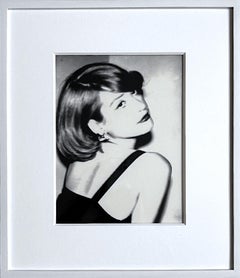
Nicola (Nicky) Weymouth, unique acetate positive of British socialite provenance
By Andy Warhol
Located in New York, NY
Andy Warhol Nicola (Nicky) Weymouth, ca. 1976 Acetate positive, acquired directly from Chromacomp, Inc. Andy Warhol's printer in the 1970s. Accompanied by a Letter of Provenance from the representative of Chromacomp Unique Frame included: Elegantly framed in a museum quality white wood frame with UV plexiglass: Measurements: Frame: 18 x 15.5 x 1.5 inches Acetate: 11 x 8 inches This is the original, unique photographic acetate positive taken by Andy Warhol as the basis for his portrait of Nicky Weymouth, that came from Andy Warhol's studio, The Factory to his printer. It was acquired directly from Chromacomp, Inc. Andy Warhol's printer in the 1970s. It is accompanied by a Letter of Provenance from the representative of Chromacomp. This is one of the images used by Andy Warhol to create his iconic portrait of the socialite Nicola Samuel Weymouth, also called Nicky Weymouth, Nicky Waymouth, Nicky Lane Weymouth or Nicky Samuel. Weymouth (nee Samuel) was a British socialite, who went on to briefly marry the jewelry designer Kenneth Lane, whom she met through Warhol. This acetate positive is unique, and was sent to Chromacomp because Warhol was considering making a silkscreen out of this portrait. As Bob Colacello, former Editor in Chief of Interview magazine (and right hand man to Andy Warhol), explained, "many hands were involved in the rather mechanical silkscreening process... but only Andy in all the years I knew him, worked on the acetates." An acetate is a photographic negative or positive transferred to a transparency, allowing an image to be magnified and projected onto a screen. As only Andy worked on the acetates, it was the last original step prior to the screenprinting of an image, and the most important element in Warhol's creative process for silkscreening. Warhol realized the value of his unique original acetates like this one, and is known to have traded the acetates for valuable services. This acetate was brought by Warhol to Eunice and Jackson Lowell, owners of Chromacomp, a fine art printing studio in NYC, and was acquired directly from the Lowell's private collection. During the 1970s and 80s, Chromacomp was the premier atelier for fine art limited edition silkscreen prints; indeed, Chromacomp was the largest studio producing fine art prints in the world for artists such as Andy Warhol, Leroy Neiman, Erte, Robert Natkin, Larry Zox, David Hockney and many more. All of the plates were done by hand and in some cases photographically. Famed printer Alexander Heinrici worked for Eunice Jackson Lowell at Chromacomp and brought Andy Warhol in as an account. Shortly after, Warhol or his workers brought in several boxes of photographs, paper and/or acetates and asked Jackson Lowell to use his equipment to enlarge certain images or portions of images. Warhol made comments and or changes and asked the Lowells to print some editions; others were printed elsewhere. Chromacomp Inc. ended up printing Warhol's Mick Jagger Suite and the Ladies Gentlemen Suite, as well as other works, based on the box of photographic acetates that Warhol brought to them. The Lowell's allowed the printer to be named as Alexander Heinrici rather than Chromacomp, since Heinrici was the one who brought the account in. Other images were never printed by Chromacomp- they were simply being considered by Warhol. Warhol left the remaining acetates with Eunice and Jackson Lowell. After the Lowells closed the shop, the photographs were packed away where they remained for nearly a quarter of a century. This work is exactly as it was delivered from the factory. Unevenly cut by Warhol himself. This work is accompanied by a signed letter of provenance from the representative of Chromacomp, Andy Warhol's printer for many of his works in the 1970s. About Andy Warhol: Isn’t life a series of images that change as they repeat themselves? —Andy Warhol Andy Warhol’s (1928–1987) art encapsulates the 1960s through the 1980s in New York. By imitating the familiar aesthetics of mass media, advertising, and celebrity culture, Warhol blurred the boundaries between his work and the world that inspired it, producing images that have become as pervasive as their sources. Warhol grew up in a working-class suburb of Pittsburgh. His parents were Slovak immigrants, and he was the only member of his family to attend college. He entered the Carnegie Institute of Technology (now Carnegie Mellon University) in 1945, where he majored in pictorial design. After graduation, he moved to New York with fellow student Philip Pearlstein and found steady work as a commercial illustrator at several magazines, including Vogue, Harper’s Bazaar, and the New Yorker. Throughout the 1950s Warhol enjoyed a successful career as a commercial artist, winning several commendations from the Art Directors Club and the American Institute of Graphic Arts. He had his first solo exhibition at the Hugo Gallery in 1952, showing drawings based on the writings of Truman Capote; three years later his work was included in a group show at the Museum of Modern Art for the first time. The year 1960 marked a turning point in Warhol’s prolific career. He painted his first works based on comics and advertisements, enlarging and transferring the source images onto canvas using a projector. In 1961 Warhol showed these hand-painted works, including Little King (1961) and Saturday’s Popeye (1961), in a window display at the department store Bonwit Teller; in 1962 he painted his famous Campbell’s Soup Cans, thirty-two separate canvases, each depicting a canned soup of a different flavor. Soon after, Warhol began to borrow not only the subject matter of printed media, but the technology as well. Incorporating the silkscreen technique, he created grids of stamps, Coca-Cola bottles, shipping and handling labels, dollar bills, coffee labels...
Category

1970s Pop Art Black and White Photography

Materials

Photographic Film

You May Also Like

Robert Longo -- Untitled (Eric, from Men in the Cities)
By Robert Longo
Located in Manchester, GB
Robert Longo, Untitled (Eric, from Men in the Cities), 2025 11 colour silkscreen on 410gsm Somerset Tub Sized Satin Radiant White paper with matte varnish seal Hand-signed and num...
Category

2010s Contemporary Interior Prints

Materials

Screen

Large Robert Longo JAMES Lithograph, 70"H
By Robert Longo
Located in Lake Worth Beach, FL
Artist/Designer; Manufacturer: Robert Longo (American, b. 1955) Marking(s); notes: signed, blind stamp; ed. HC 1/10 aside from the edition of 50; 1999 Materials: lithograph on Arches...
Category

Early 2000s Pop Art Figurative Prints

Materials

Lithograph

Robert Longo -- Untitled (Eric, from Men in the Cities)
By Robert Longo
Located in BRUCE, ACT
Robert Longo Untitled (Eric, from Men in the Cities), 2025 Screenprint Hand signed in pencil Numbered from the edition of 1273, Published by Avant Arte, Amsterdam, within the origina...
Category

2010s Prints and Multiples

Materials

Lithograph

Larry from Men in the Cities
By Robert Longo
Located in New York, NY
Larry from Men in the Cities 1983 Signed and dated in pencil, l.r. Lithograph (Edition of 48) 72 x 36 inches (182.9 x 91.4 cm) Contact gallery for price. This work is offered by ...
Category

1980s Contemporary Prints and Multiples

Materials

Lithograph

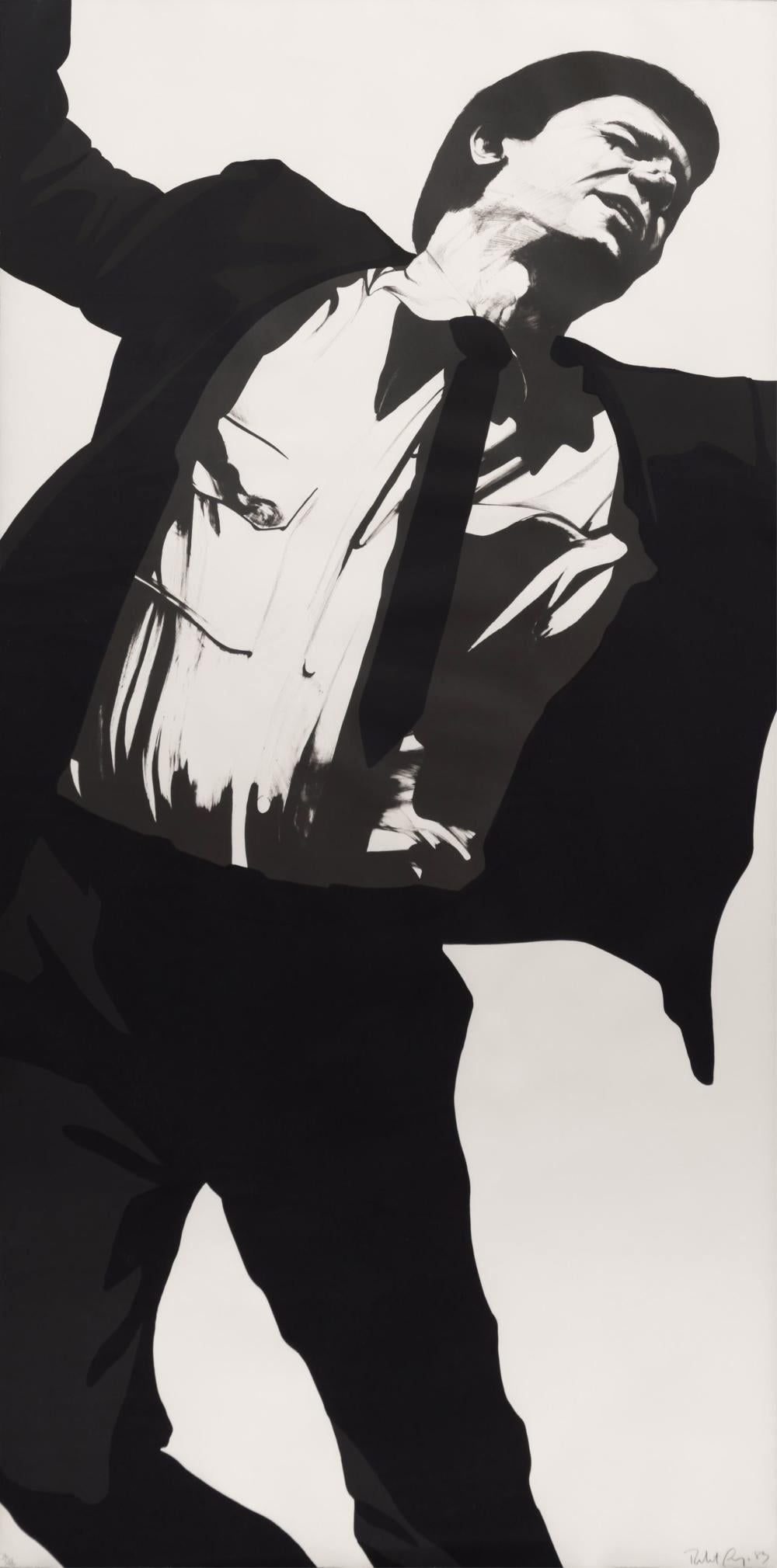
Rick
By Robert Longo
Located in New York, NY
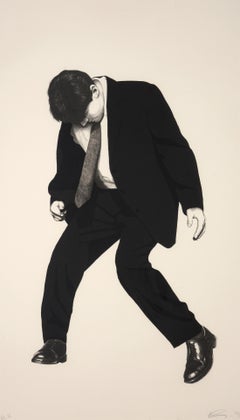
A very good impression of this large lithograph on Arches Cover. Signed, dated and numbered 44/170 in pencil by Longo. There were also 30 artist’s proofs and 18 hors-commerce Publish...
Category

1990s Contemporary Abstract Prints

Materials

Lithograph

Larry
By Robert Longo
Located in New York, NY
From the artist's iconic Men in the Cities series, Larry was created in 1983 as an original lithograph on Arches paper. Hand-signed, dated, and numbered, from the edition of 48, the ...
Category

20th Century Contemporary Prints and Multiples

Materials

Lithograph

Larry
Price Upon Request