Items Similar to Los Carpinteros Cuban Art Photograph Tuneles Populares Silver Gelatin Photo

Want more images or videos?
Request additional images or videos from the seller
1 of 8
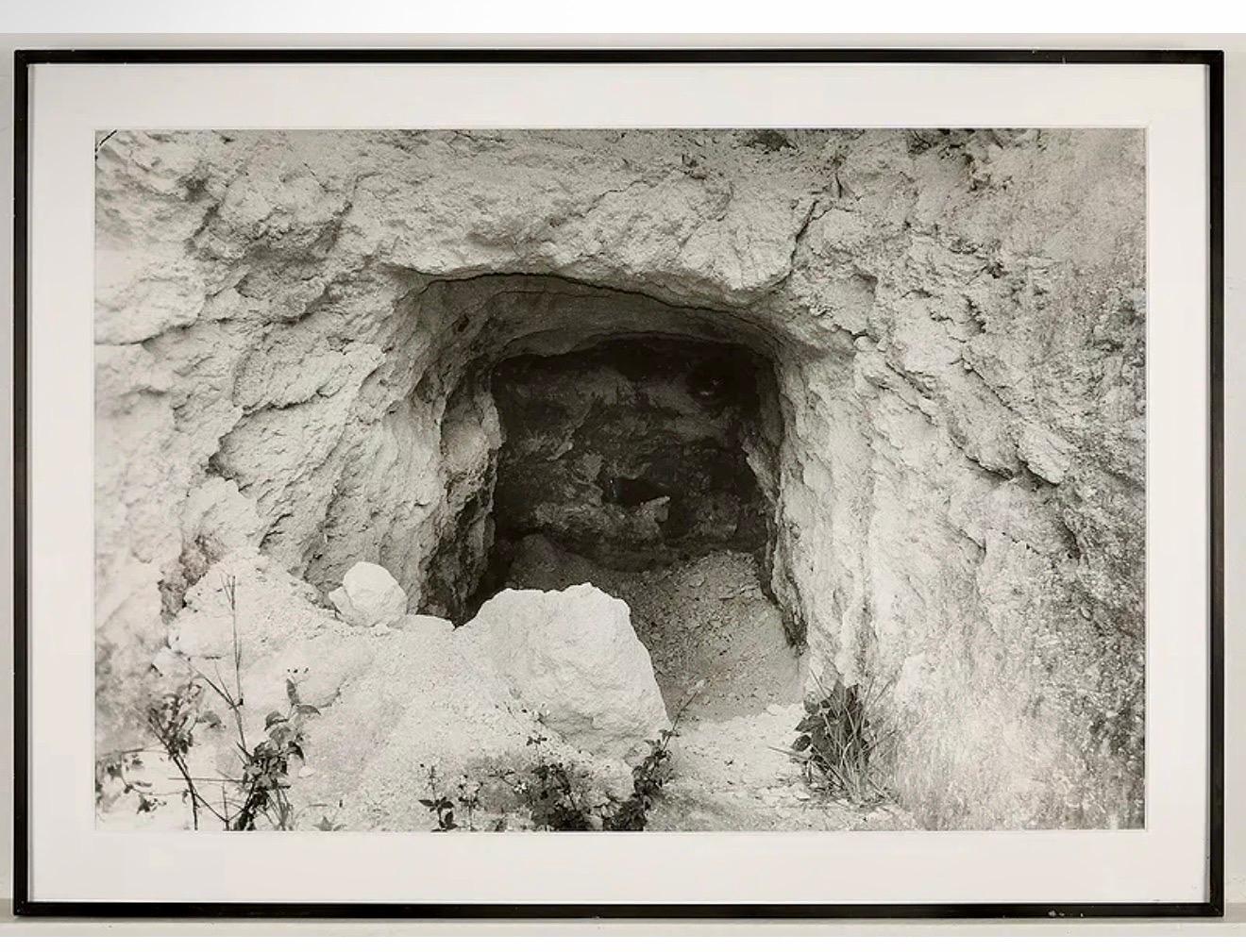
Los CarpinterosLos Carpinteros Cuban Art Photograph Tuneles Populares Silver Gelatin Photo1999
1999
$6,500
£4,923.15
€5,654.06
CA$9,108.63
A$9,902.91
CHF 5,250.54
MX$118,710.81
NOK 66,731.61
SEK 61,135.23
DKK 42,256.97
About the Item
Los Carpinteros (Cuban, 1992-present).
Silver gelatin print photograph, large format.
From the series "Tuneles Populares" (The People's Tunnels)
1999
Edition 1/5
Provenance: Bliss Fine Art Services, New York (with label affixed to the verso)
This is probably nad signed verso but has not been examin ed out of frame and does not bear a signature on recto.
Dimensions: height: 26 in x width: 38 1/2 in. Framed; height: 32 in x width: 44 in x depth: 1 1/2 in.
"Tuneles Populares" (The People's Tunnels)
During the 1980´s, in part as a reaction to the Republican administration of Ronald Reagan, the Cuban government proclaimed “La Guerra de todo el pueblo” (the war of the whole people). As part of this national defense strategy, it ordained that the people should build tunnels throughout the country for evacuation of the population in the event of a war. Even though there was not a real declaration of war against Cuba, this strategy created a psychological disposition toward war. These spaces have never been used for evacuation and remain anachronistic structures in the center of cities.
The photo series Tuneles Populares (The people´s tunnels), 1999, consist of ten large-scale photographs that document this very particular Project in Cuban history, taken by Los Carpinteros in 1999. The tunnels were the biggest construction project realized in Cuba in that decade, and they changed the appearance of the urban and architectonic environment in a drastic way. They also affected individual living space by transforming public life into “life in trenches”, facing a time of imaginary yet very present war. The unused tunnels remain as interventions into societal fabric, not only creating a sense of community in and through war but also developing very specific “faces” and “personalities”.
Los Carpinteros: Handwork - Constructing the World. Edited by Gudrun Ankele and Daniela Zyman Thyssen-Bornemisza Art Contemporary. Verlag der Buchhandlung Walther König, Köln. 2010. p. 318
Los Carpinteros are currently represented by Sean Kelly Gallery in New York, Galeria Fortes Vilaça in Sao Paulo, Ivorypress Art and Books in Madrid, Galerie Peter Kilchmann in Zürich, and Galería Habana in Havana.
Los Carpinteros was a Cuban artist collective founded in 1991, comprising Marco Castillo, Dagoberto Rodríguez, and, initially, Alexandre Arrechea, who left the group in 2003. In 1994 they decided "to renounce the notion of individual authorship and refer back to an older guild tradition of artisans and skilled laborers” in an attempt to emphasize their belief that art always, to some extent, involves collaboration.Known for their innovative blend of art, architecture, and design, the collective explored themes of functionality, politics, and humor through sculptures, installations, and drawings. Their work often combined the meticulous craftsmanship of vintage carpentry with conceptual commentary on social and cultural issues, creating pieces that are simultaneously utilitarian and symbolic. Los Carpinteros’ projects, such as their large-scale installations and furniture-inspired sculptures, challenged traditional boundaries between art and design while reflecting on the intersection of Cuban history and contemporary global issues. The collective officially disbanded in 2018, but their legacy endures as a pivotal force in contemporary art, celebrated in exhibitions worldwide.
Marco Antonio Castillo Valdés (Cuba, 1971-)
Graduate from the Superior Art Institute of Havana (ISA), 1995
Dagoberto Rodríguez Sánchez (Cuba, 1969-)
Graduate from the Superior Art Institute of Havana (ISA), 1994
Both Valdes and Sanchez were born in Cuba and live and work between Havana and Madrid. They have exhibited in Cuba, Europe and North America, and have received a number of awards.
In their work the artists incorporate aspects of architecture, design and sculpture to create installations and drawings that “negotiate the space between the functional and the nonfunctional", where they derive their “inspiration from the physical world” and express their interest in the intersection of art and society in a humorous manner. Los Carpinteros create a response to places, spaces and objects, how they have been conceived, built, used and abandoned.
Los Carpinteros - Clavos Torcidos
Between personal exposures are those made in the 90s in the ' "Centro de Arte 23 y 12" Cuba. They have been exhibited at "The New Museum of Contemporary Art" and the "Contemporary Arts Center" in Cincinnati, Ohio; "Grant Selwyn Fine Arts" in Los Angeles, CA; at the International Contemporary Art Fair ARCO'98 in Madrid; and Art Basel Miami where for the 2012 edition of the fair they built the "Güiro Art Bar". They held their first solo exhibition in Asia, 'Heterotopias', at Edouard Malingue Gallery in 2013.
They were included in numerous shows at MoMA NY:
New Perspectives in Latin American Art, 1930– 2006 with historical and contemporary Latin American artists, including Joaquín Torres-García, Alejandro Otero, Hélio Oiticica, Lygia Clark, Lygia Pape, Carmen Herrera, Geraldo de Barros, Leo Matiz, Willys de Castro, León Ferrari, Gego, Gerd Leufert, Mira Schendel, Waltercio Caldas, Anna Maria Maiolino, Victor Grippo, Guillermo Kuitca, Arturo Herrera, Gabriel Orozco, Carlos Garaicoa, and Santiago Cucullu.
MoMA at El Museo: Latin American and Caribbean Art,The Museum of Modern Art
with Diego Rivera, José Clemente Orozco, Alexandre Arrechea, Marco Castillo, David Alfaro Siqueiros, Ana Mendieta, Fernando Botero, Antonio Berni, Frida Kahlo, Wifredo Lam, León Ferrari, Gego, Marisol, Cildo Meireles, Vik Muniz, and Doris Salcedo.
Los Carpinteros have had many solo exhibitions including at the Thyssen-Bornemisza in Madrid, the Kunstmuseum in Thun and the Faena Art Center in Buenos Aires.
Los Carpinteros works are included in the following permanent collections:
Centre Pompidou, Paris, France
Pérez Art Museum Miami, Florida
Guggenheim museum, NYC
Museum of Modern Art, New York
Museum of Fine Arts, Houston
Los Angeles County Museum of Art, California
Tate Modern, London
Galeria Fortes Vilaça, São Paulo, Brazil
Daros Foundation,
Farber Collection of Contemporary Cuban Art,
Hirshhorn Museum, the MoMA,
Thyssen-Bornemisza in Vienna, Austria
Museo de Bellas Artes, Havana
Museo Nacional Centro de Arte Reina Sofia, Madrid
Museo Extremeño e Iberoamericano de Arte Contemporáneo, Badajoz, Spain
- Creator:Los Carpinteros (Cuban)
- Creation Year:1999
- Dimensions:Height: 32 in (81.28 cm)Width: 44 in (111.76 cm)
- Medium:
- Movement Style:
- Period:
- Condition:
- Gallery Location:Surfside, FL
- Reference Number:1stDibs: LU38217091952
About the Seller
4.9
Platinum Seller
Premium sellers with a 4.7+ rating and 24-hour response times
Established in 1995
1stDibs seller since 2014
1,855 sales on 1stDibs
Typical response time: <1 hour
- ShippingRetrieving quote...Shipping from: Miami, FL
- Return Policy
More From This Seller
View AllLos Carpinteros Cuban Art Photograph Tuneles Populares Silver Gelatin Photo
By Los Carpinteros
Located in Surfside, FL
Los Carpinteros (Cuban, 1992-present).
Silver gelatin print photograph, large format.
From the series "Tuneles Populares" (The People's Tunnels)
1999
Edition 1/5
Provenance: Bliss Fi...
Category
1990s Conceptual Landscape Photography
Materials
Silver Gelatin
Architectural Gelatin SIlver Print Vellum Photograph Mark Citret Vintage Photo
By Mark Citret
Located in Surfside, FL
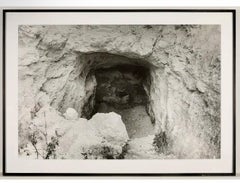
Mark Citret, American, b. 1949.
"Third Story Arches", Fort Point, 1998
Silver gelatin print hand signed and editioned 1/45 in pencil along lower edge.
Published: "Along the Way" Mark Citret, Published Custom & Limited Editions, San Francisco, 1999. Plate #23.
Dimensions: Image area measures 8.25"h x 6.25"w., Frame measures 17.5 x 14.5
Mark Citret was born in 1949 in Buffalo, New York, and grew up in San Francisco. He began photographing seriously in 1968 and received both his BA and MA in Art from San Francisco State University.
He has worked on many photographic projects over the course of his career and continues to do so. From 1973 to 1975 he lived in and photographed Halcott Center, a farming valley in New York's Catskill Mountains. In the mid to late 1980s, he produced a large body of work with the working title of "Unnatural Wonders", which is his personal survey of architecture in the national parks. He spent four years, 1990 to 1993, photographing "Coastside Plant", a massive construction site in the southwest corner of San Francisco. Since he moved to his current home in 1986, he has been photographing the ever-changing play of ocean and sky from the cliff behind his house. Currently, he is in the midst of a multi-year commission from the University of California San Francisco, photographing the construction of their 43 acre Mission Bay life-sciences campus. He has taught photography at the University of California Berkeley Extension since 1982 and the University of California Santa Cruz Extension since 1988, and for organizations such as the Center for Photography at Woodstock, the Ansel Adams Gallery, and Santa Fe Workshops.He was included in the Weston Gallery exhibition NIGHT VISION: PHOTOGRAPHING IN THE DARK works by: Berenice Abbott, Wynn Bullock, Mark Citret, Harold Davis, Robert Frank, Ernst Haas, Chip Hooper, Rolfe Horn, Dale Johnson, Robb Johnson, Michael Kenna, André Kertész, Bob Kolbrener, Paul Kozal, Sally Mann and Jerry Uelsmann and PATTERNS IN ARCHITECTURE works by Ansel Adams, Brett Weston, Edward Weston, Oliver Gagliani, Pirkle Jones...
Category
1990s American Modern Black and White Photography
Materials
Vellum, Silver Gelatin
Brazilian Conceptual Modernist Photograph Jose Yalenti Architectural Abstract
Located in Surfside, FL
José Yalenti, (1895-1967) Brazilian Photographer
"Beiras" (Sides)
Photo, numbered 5/15, circa 1950, (printed later) on premium luster photo paper with ultrachrome ink.
Art: 15" H x 11" W; Frame: 20 1/4" H x 14 1/4" W.
Provenance: Dickinson Roundell Gallery
José Yalenti’s Architecture photos seem at first disorienting, abstract black & white and grey surfaces, cut through by startlingly straight lines and a variety of surface textures. Much of his work is of mid-century Latin American architecture, by the likes of Oscar Niemeyer and Roberto Burle Marx.
José Yalenti was born in São Paulo, Brazil in 1895. On April 28, 1939, a group of photography aficionados, including Yalenti, formed the Foto Clube Bandeirante, later changed to Foto Cine Clube Bandeirante, or FCCB.
Starting in the late 1940s, a contingent of FCCB photographers began creating photographs of abstracted architectural motifs (as in Architecture or Twilight), and eventually became known as the Escola Paulista, or “Paulista School.” Yalenti was among the members of the unofficial Paulista School. Between 1945 and 1960, the Paulista School photographers explored the rapidly changing formal qualities of São Paulo. By photographing skyscrapers and stairways at steep angles, creating closely cropped compositions from found geometric motifs, and capturing the flattening effects of shadows, Paulista School photographers investigated the new physical perspectives emerging in the urban environment. They created a distinctively Modern aesthetic that used strong contrasts of light and dark, geometric forms, linear compositions, and collapsed space to assert photography’s status as an artistic medium.
As part of their pursuit of photographic Modernism, Yalenti and his fellow Brazilians adapted the stylistic innovations of U.S. and European photographers such as f.64, New Objectivity, Dada, Surrealism, and the Bauhaus, to the Brazilian context. Along with his FCCB compatriots—Thomaz Farkas, Geraldo de Barros, and German Lorca, among others—Yalenti explored the formal properties of black-and-white image-making.
Yalenti and the Paulista’s School’s abstract photographs responded to the new trends in Brazilian Modernist architecture being developed by young architects in São Paulo and Rio de Janeiro. In 1939, Lúcio Costa, Oscar Niemeyer, and Affonso Reidy broke ground on the Ministry of Education and Health Building (MES), the building that would define Brazilian architectural modernism. The Rio-based team combined elements of Le Corbusier’s undecorated structural purity with Brazilian regional design to produce a more organic and “tropical” Modernism that responded to the local culture and climate.
The sinuous and sensuous curves of Yalenti’s photograph are directly influenced by stylistic developments in architecture at the MES, including the building’s covered entry and its organically abstract contours. By 1957, when Yalenti created Architecture or Twilight, Brazil was globally recognized as an architectural leader. MoMA in New York City organized a popular exhibition of Brazilian architecture in 1943 (“Brazil Builds”), and highlighted the country again in its survey show "Latin American Architecture since 1945," that ran from 1955–56. Brazilian photography...
Category
20th Century Modern Black and White Photography
Materials
Photographic Paper
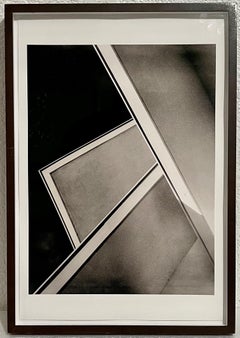
French Contemporary Collotype Photograph Black White Photo Andre Naggar
By Andre Naggar
Located in Surfside, FL
Photos pictured of information cards after the images of the black and white photos are not included.
La Chute D'Icare (The Fall of Icarus) is a original, black and white photograp...
Category
1990s Contemporary Black and White Photography
Materials
Photogravure
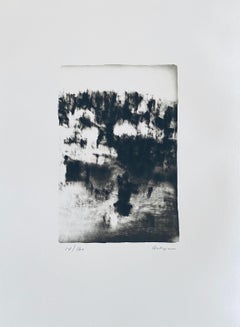
French Contemporary Collotype Photograph Black White Photo Andre Naggar
By Andre Naggar
Located in Surfside, FL
Photos pictured of information cards after the images of the black and white photos are not included.
La Chute D'Icare (The Fall of Icarus) is a original, black and white photograp...
Category
1990s Contemporary Black and White Photography
Materials
Photogravure
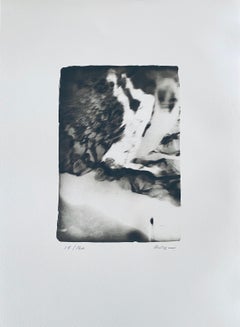
French Contemporary Collotype Photograph Black White Photo Andre Naggar
By Andre Naggar
Located in Surfside, FL
Photos pictured of information cards after the images of the black and white photos are not included.
La Chute D'Icare (The Fall of Icarus) is a original, black and white photograp...
Category
1990s Contemporary Black and White Photography
Materials
Photogravure
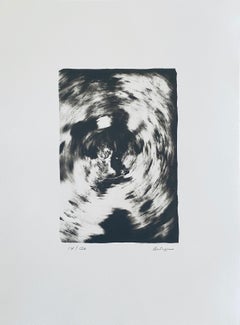
You May Also Like
Cuban signed Artist Proof limited edition original art print inkjet 28x20 in
Located in Miami, FL
Alberto Arcos (Cuba, 1956)
'Untitled', 2004
Photography, inkjet on paper
P/A (Artist Proof)
27.7 x 19.7 in. (70.2 x 50 cm.)
ID: ARC-302
Unframed
Category
Early 2000s Contemporary Black and White Photography
Materials
Paper, Photographic Paper
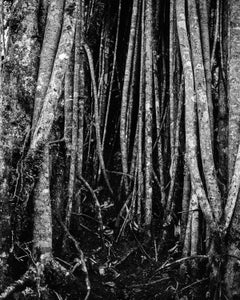
Raíces Selva Oscura, Silver Gelatin Print
By Miguel Winograd
Located in Miami Beach, FL
What began as a pretext to exercise MIguel Wynograd's gaze, little by little became a meditation on different intertwined temporalities. The superposition of very ancient times with ...
Category
21st Century and Contemporary Naturalistic Black and White Photography
Materials
Black and White, Silver Gelatin
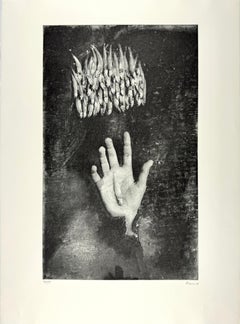
Cuban Artist Original Hand Signed photoengraving 30x22 in. n7
Located in Miami, FL
Juan Carlos Alom (Cuba, 1964)
'Mandy y Tara', 2004
photoengraving on paper
30 x 22.1 in. (76 x 56 cm.)
Edition of 106
ID: ALO1534-007-106
Hand-signed ...
Category
Early 2000s Contemporary Prints and Multiples
Materials
Paper, Photogravure
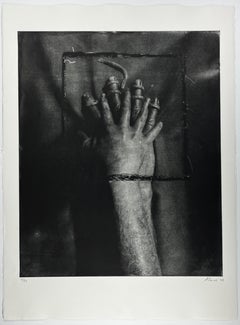
Cuban Artist Original Hand Signed photoengraving 30x22 in. n1
Located in Miami, FL
Juan Carlos Alom (Cuba, 1964)
'Sólo tu cabes en la palma de mi mano', 2004
photoengraving on paper
30 x 22.1 in. (76 x 56 cm.)
Edition of 106
ID: ALO1...
Category
Early 2000s Contemporary Prints and Multiples
Materials
Photogravure
Bosque Húmedo Tropical II Nuqui, From the Series Bosques. B&W Photography
By Miguel Winograd
Located in Miami Beach, FL
The artist looks for a path between tangled branches. Reconfiguring a personal archive of diverse Colombian landscapes, experimenting with a variety of printing materials to reconstr...
Category
21st Century and Contemporary Naturalistic Black and White Photography
Materials
Black and White, Pigment
Cuban Artist Original Hand Signed photoengraving 30x22 in. n4
Located in Miami, FL
Juan Carlos Alom (Cuba, 1964)
'El cielo protector', 2004
photoengraving on paper
30 x 22.1 in. (76 x 56 cm.)
Edition of 106
ID: ALO1534-004-106
Hand-s...
Category
Early 2000s Contemporary Prints and Multiples
Materials
Paper, Photogravure