Paper Landscape Photography

to
493
2,270
1,194
637
944
1,766
Overall Width
to
Overall Height
to
1
165
1,472
5,181
1
23
13
41
9
75
55
275
138
287
1
4,093
827
282
150
134
75
56
30
27
24
23
14
3,981
1,720
1,097
2,740
2,373
1,555
975
878
862
822
769
710
688
649
563
546
509
479
459
425
349
296
294
7,649
6,824
6,554
5,055
4,437
904
623
297
223
159
688
2,179
4,085
2,310
Medium: Paper
BROOKLYN MESA
Located in New York, NY
ADDITIONAL SIZES AND FRAMING: Additional sizes are available. Please inquire for more information on larger sizes. We offer fully archival professional framing for all prints for an ...
Category

2010s Paper Landscape Photography

Materials

Photographic Paper

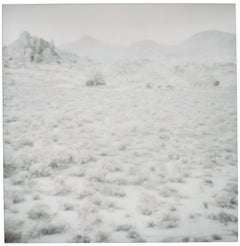
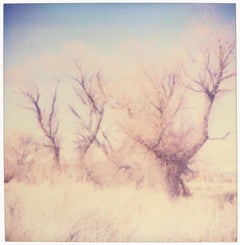
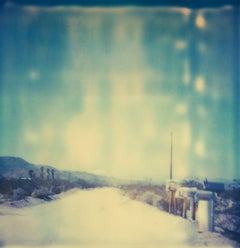
Hidden Valley (Wastelands)
Located in Morongo Valley, CA
Hidden Valley (Wastelands) - 2003 20x20cm, Edition of 10, plus 2 Artist Proofs. Archival C-Print, based on the original Polaroid. Artist inventory Number 1992. Signature label a...
Category

Early 2000s Contemporary Paper Landscape Photography

Materials

Archival Paper, Photographic Paper, C Print, Color, Polaroid

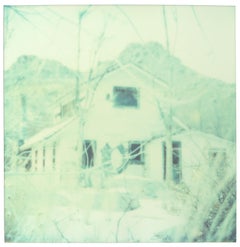
House up in the Mountains (Wastelands) - Contemporary, Analog, Polaroid, Color
Located in Morongo Valley, CA
House up in the Mountains (Wastelands) - 2003 20x20cm, Edition of 10 plus 2 Artist Proofs. Archival C-Print, based on the original Polaroid. Artist inventory Number 1235. Signat...
Category

Early 2000s Contemporary Paper Landscape Photography

Materials

Archival Paper, Photographic Paper, C Print, Color, Polaroid

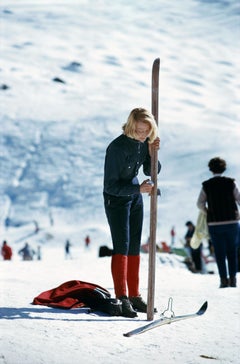
Verbier Skier, 1964 - Blonde Skier Polishes Skis on Snowy Mountain Photograph
Located in Brighton, GB
Verbier Skier, 1964 - Blonde Skier Polishes Skis on Snowy Mountain Ski Slopes by Slim Aarons 16" x 20" print Limited Edition Estate Stamped Print. Edition of 150. Printed Later. 'V...
Category

20th Century American Modern Paper Landscape Photography

Materials

C Print, Digital, Photographic Paper, Color

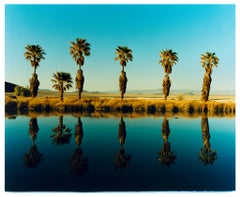
Zzyzx Resort Pool II, Soda Dry Lake, California - Palm Print Color Photography
Located in Cambridge, GB
'Zzyzx Resort Pool', photograph from Richard Heeps 'Dream in Colour' Series. When travelling on a road trip from LA to Las Vegas, Richard was set a challenge to find something intere...
Category

Early 2000s Contemporary Paper Landscape Photography

Materials

Photographic Paper, C Print, Color, Silver Gelatin

Untitled (Fairytales) - analog
Located in Morongo Valley, CA
Untitled (Fairytales) - 2006, 49x48cm, Edition 2/5. Analog C-Print, hand-printed by the artist on Fuji Crystal Archive Paper, matte finish, based on the original Polaroid. Certi...
Category

Early 2000s Contemporary Paper Landscape Photography

Materials

Photographic Paper, C Print, Color, Polaroid, Archival Paper

Blue Day (Wastelands)
Located in Morongo Valley, CA
Blue Day (Wastelands) - 2003 38x37cm, Edition 2/5. Analog C-Print, hand-printed by the artist, based on the original Polaroid. Artist inventory Number 837. Signature label and c...
Category

Early 2000s Contemporary Paper Landscape Photography

Materials

Archival Paper, Photographic Paper, C Print, Color, Polaroid

Magic Hour (Musica Poetica)
Located in Morongo Valley, CA
Magic Hour (Musica Poetica) - 1999 Edition 3/10, 44x59cm. Analog C-Print, hand-printed and enlarged by the artist, based on the Polaroid. Certificat...
Category

1990s Contemporary Paper Landscape Photography

Materials

Archival Paper, Photographic Paper, C Print, Color, Polaroid

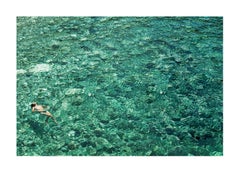
Dive In
Located in New York, NY
ABOUT THIS ARTIST: Niall Staines is a digital artist based in Ireland. His work is graphic, vibrant and visually arresting. Nature is a consistent theme in his work, often turning se...
Category

2010s Paper Landscape Photography

Materials

Photographic Paper

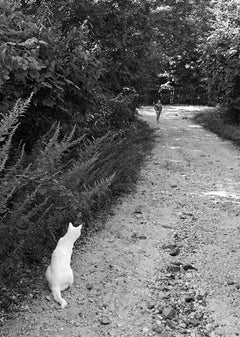
Summer Cat, Upstate New York, Black-and-White Documentary Landscape Photography
Located in New york, NY
Summer Cat, 2007 by Hank Gans, is a 19” x 13” black-and-white photograph of a white cat on a dusty road in upstate New York. On a lazy summer day the cat fol...
Category

Early 2000s Contemporary Paper Landscape Photography

Materials

Archival Ink, Archival Paper, Black and White, Digital, Pigment, Archiva...

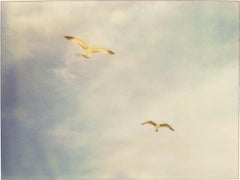
Seagulls (Zuma Beach)
Located in Morongo Valley, CA
Seagulls (Zuma Beach) - 1999 20x25cm, Edition of 10 plus 2 Artists Proofs. Archival C-Print, based on the Polaroid. Signature Label and Certificate. Artist Inventory # 107. Not mou...
Category

1990s Contemporary Paper Landscape Photography

Materials

Archival Paper, Photographic Paper, C Print, Color, Polaroid

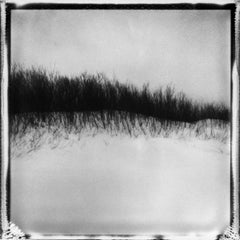
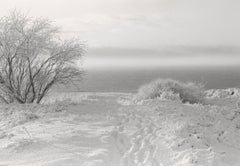
Frozen beach #7 - black and white analogue landscape photography
Located in London, GB
'Frozen beach #7' 2023 A photograph captured with a Polaroid camera that showcases the winter landscape of Lithuania in black and white. Printed on the finest archival paper, these...
Category

21st Century and Contemporary Contemporary Paper Landscape Photography

Materials

Photographic Film, Archival Ink, Photographic Paper, Giclée

Lifeguard (Zuma Beach)
Located in Morongo Valley, CA
Lifeguard (Zuma Beach) - 1999 20x25cm, Edition of 10 plus 2 Artists Proofs. Archival C-Print, based on the Polaroid. Signature Label and Certificate. Artist Inventory #499. Not mou...
Category

1990s Contemporary Paper Landscape Photography

Materials

Archival Paper, Photographic Paper, C Print, Color, Polaroid

Fall (The Last Picture Show)
Located in Morongo Valley, CA
Fall (The Last Picture Show) - 2006, 50x49cm, Edition of 10 plus 2 Artist Proofs. Archival C-Print, based on the original Polaroid. Certificate and Signature label. Artist Inv...
Category

Early 2000s Contemporary Paper Landscape Photography

Materials

Archival Paper, Photographic Paper, C Print, Color, Polaroid

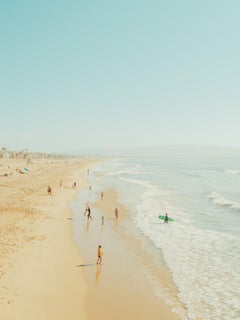
Deia
Located in Burlingame, CA
Large-scale photographer Troy House celebrates people’s primordial attraction to the beach. He travels the world capturing iconic, breathtaking scenes – often from a bird’s-eye view ...
Category

21st Century and Contemporary Contemporary Paper Landscape Photography

Materials

Archival Paper, Photographic Paper, Digital Pigment

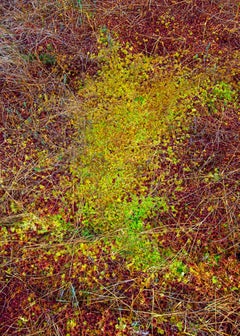
The Bog Plants 003 by Bernhard Lang - Close-up photography, vivid tones, flora
Located in Paris, FR
The Bog Plants 003 is a limited-edition photograph by contemporary artist Bernhard Lang. It is a Fine Art Print on Hahnemüle Paper. This photograph is sold unframed as a print only...
Category

2010s Contemporary Paper Landscape Photography

Materials

Photographic Paper

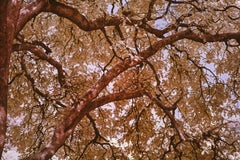
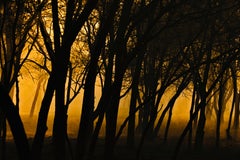
Large Landscape Photographs Trees Nature Wildlife Orange Blue Forest India
Located in Norfolk, GB
Aditya Dicky Singh Untitled Infrared photograph on fine-art Hahnemuhle archival paper 44" x 65" unframed (112cm x 165cm) 2019 Edition 1/15 *Should you wish the photograph to be...
Category

2010s Contemporary Paper Landscape Photography

Materials

Archival Ink, Archival Paper

Striped Surf
Located in New York, NY
THIS PIECE IS AVAILABLE FRAMED. Please reach out to the gallery for additional information. ABOUT THIS PIECE: French photographer Ludwig Favre recently road tripped to California. ...
Category

2010s Paper Landscape Photography

Materials

Photographic Paper

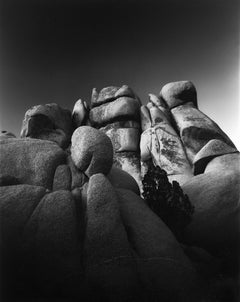
Jumbo Rocks California - analogue black and white desert rocks
Located in London, GB
'Jumbo rocks California' 2023 Limited edition of 20 Photograph shot using mid-century large format film camera Linhof. Printed on archival Hahnemühle...
Category

21st Century and Contemporary Contemporary Paper Landscape Photography

Materials

Film, Photographic Film, Photographic Paper, Giclée

Street Spirit (Bombay Beach, CA) - Polaroid, Landscape Photography
Located in Morongo Valley, CA
Street Spirit (Bombay Beach, CA) - 2022 20x20cm. Edition of 7 plus 2 Artist Proofs. Archival C-Print based on the original Polaroid. Signature label with certificate. Artist Inv...
Category

2010s Contemporary Paper Landscape Photography

Materials

Archival Paper, Photographic Paper, C Print, Color, Polaroid

Up up and away (Stranger than Paradise)
Located in Morongo Valley, CA
Up up and away - 2008 40x40cm, Edition of 10, plus 2 Artist Proofs. Archival C-Print, based on the Polaroid. Signature label and Certificate. Artis...
Category

Early 2000s Contemporary Paper Landscape Photography

Materials

Archival Paper, Photographic Paper, C Print, Color, Polaroid

Large Landscape Sunset Trees Nature Wildlife India Forest Dhonk Trees Orange
Located in Norfolk, GB
Aditya Dicky Singh Untitled Photograph on fine-art Hahnemuhle archival paper 44" x 65" unframed (112cm x 165cm) 2017 Edition 1/15 *Should you wish the photograph to be printed ...
Category

2010s Contemporary Paper Landscape Photography

Materials

Archival Ink, Archival Paper

Wonder Valley (Till Death Do Us Part) - Contemporary, Polaroid
Located in Morongo Valley, CA
Wonder Valley (Till Death Do Us Part) - 2005 20x20cm, Edition of 10, plus 2 Artist Proofs. Archival C-Print, based on the original Polaroid. Certificate and Signature label. Art...
Category

Early 2000s Contemporary Paper Landscape Photography

Materials

Archival Paper, Photographic Paper, C Print, Color, Polaroid

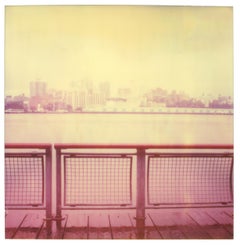
East River View (Stay) - Polaroid, 21st Century
Located in Morongo Valley, CA
Stefanie Schneider's work was used for Marc Forster's movie 'Stay', featuring Ewan McGregor, Naomi Watts and Ryan Gosling. Naomi and Ryan were both portraying artists and Stefanie Schneider's art was the art both characters created during the movie. Stefanie's images were also used for Ryan Gosling's memory sequence, for the end titles, for edits in between and as paintings hanging in several scenes within the movie. East River View (Stay) - 2006 20x20cm, Edition of 10, plus 2 Artist Proofs. Archival C-Print, based on a Polaroid. Certificate and Signature label, artist Inventory No. 2598. Not mounted. Torsten Scheid, “Fotografie, Kunst, Kino. Revisited.”, FilmDienst 3/2006, page 11-13

 Photography Art Cinema. Revisited Stay expands a traditional connection through new facets interwoven between the media of photography and film is a veritable mesh-work of technical, motific, metaphorical and personal interrelationships. Extending from photo-film which, as in La Jetée by Chris Marker (France, 1962) is a montage of single, unmoving photographs all the way to the portrayal of photographic motifs in Hollywood cinema―most recently in Memento (USA, 2000) and One hour photo (USA, 2002)―is the range of filmic-photographic interactions on the one hand, and from the adaption of modes of cinematic production to the imitation of film stills on the other. For instance, with the legendary Untitled Film Stills (1978) of the American artist Cindy Sherman, who later made her debut as a film director with Office Killer (USA, 1997) and thereby, like many others, changed sides: Wim Wenders, Robert Frank and Larry Clark are doubtlessly the most successful of these photographic-filmic border crossers. This brief survey provides only a vague indication of the dimensions of this intermedial field, which in fact extends much further and is constantly being cultivated. Also as a motif in film, photography has experienced a historical transformation: Photographers were once considered to be technicians who mastered a craft but never achieved the status of artists. Photographer-figures were caught in the allure of beautiful appearance, incapable of penetrating to the actual essence of things. Such depth was reserved for literature or painting. When photography in film touched upon the sphere of art, then most often as its contrasting model, as the metaphor for a superficial access to the world. Coming to mind are Fred Astaire as a singing fashion photographer in Stanley Donen’s musical film Funny Face (USA, 1957), or the restless lifestyle-photographer in Michelangelo Antonioni’s genre-classic Blow up (GB, 1966). For the doubting Thomas, only that exists which can be photographed. He ultimately enters the world of fantasy and thereby the field of art only unwillingly, when he becomes entangled in the world of his images. The last of his detail-enlargements shows only the photographic grain and has lost all connection to reality. The photograph looks as if it had been painted by Bill, the painter who is both friend and antagonist to the protagonist.

 Photography as Art It was first around the end of the last century that numerous filmmakers discovered photography as a genuine art form. In The Bridges of Madison County (USA, 1995) a sensitive Clint Eastwood stands, camera in hand, on the threshold of artistic status, and in Smoke (USA, 1994) a tobacco merchant ripens into a philosopher through his involvement in photography. Finally, in John Water’s parody of the art market, Pecker (USA, 1998), a provincial tom-fool is hyped into celebrated stardom amid the New York art scene because of his blurred snapshots. This film about a postmodern Kaspar Hauser in photographic art (with clear parallels to Richard Billingham, the British shooting...
Category

Early 2000s Contemporary Paper Landscape Photography

Materials

Archival Paper, Photographic Paper, C Print, Color, Polaroid

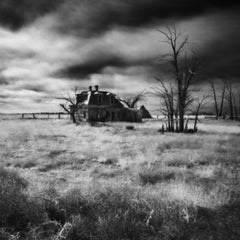
Landscape Photography Square Series: "Estancia House"
Located in New York, NY
In expressing his narrative of “The Western Abandon” Cody concentrates his focus on abandoned farms, crumbling homes, neglected churches, aging cemeteries, forgotten cars and other o...
Category

2010s Contemporary Paper Landscape Photography

Materials

Photographic Paper

Waiting
Located in New York, NY
THIS PIECE IS AVAILABLE FRAMED. Please reach out to the gallery for additional information. ABOUT THIS ARTIST: Desert born and raised, fashion photographer Natasha Wilson has had ...
Category

2010s Paper Landscape Photography

Materials

Photographic Paper

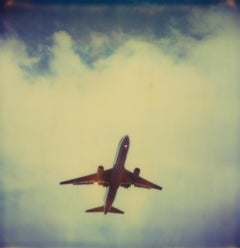
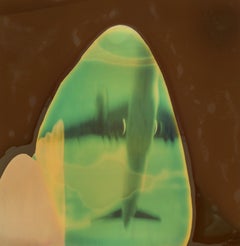
Plane Mirage (Stranger than Paradise)
Located in Morongo Valley, CA
Plane Mirage (Stranger than Paradise) - 2008 40x40cm, Edition of 10, plus 2 Artist Proofs. Archival C-Print, based on the Polaroid. Signature label and Certificate. Artist Inven...
Category

Early 2000s Contemporary Paper Landscape Photography

Materials

Archival Paper, Photographic Paper, C Print, Color, Polaroid

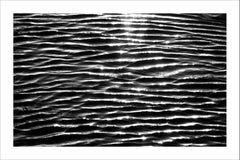
Extra Large Black and White Giclée Print of Tranquil Water Patterns, Seascape
Located in Barcelona, ES
This is an exclusive limited edition black and white giclée print, on 100% cotton Hahnemühle Photo Rag Fine Art matte paper. This series of black and white photographs captures the ...
Category

2010s Abstract Paper Landscape Photography

Materials

Rag Paper

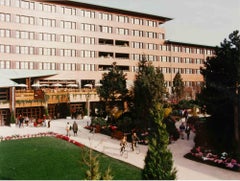
Sequoia Lodge - Euro Disney Resort - Vintage Photograph - 1990s
Located in Roma, IT
Sequoia Lodge - Euro Disney Resort  is a colour vintage photo, realized in the Early 1990s. Good conditions and aged. It belongs to a historical and nostalgic album including histo...
Category

1980s Contemporary Paper Landscape Photography

Materials

Photographic Paper

My own private Travel Diary - Bishop, CA - Autumn
Located in Morongo Valley, CA
My own private Travel Diary - Bishop, CA - Autumn - 2001, 20x29cm, Edition of 10, plus 2 Artist Proofs. Archival C-Print, based on a Polaroid Slide. Signature label and Certificate. Not mounted. LIFE’S A DREAM (The Personal World of Stefanie Schneider) by Mark Gisbourne Projection is a form of apparition that is characteristic of our human nature, for what we imagine almost invariably transcends the reality of what we live. And, an apparition, as the word suggests, is quite literally ‘an appearing’, for what we appear to imagine is largely shaped by the imagination of its appearance. If this sounds tautological then so be it. But the work of Stefanie Schneider is almost invariably about chance and apparition. And, it is through the means of photography, the most apparitional of image-based media, that her pictorial narratives or photo-novels are generated. Indeed, traditional photography (as distinct from new digital technology) is literally an ‘awaiting’ for an appearance to take place, in line with the imagined image as executed in the camera and later developed in the dark room. The fact that Schneider uses out-of-date Polaroid film stock to take her pictures only intensifies the sense of their apparitional contents when they are realised. The stability comes only at such time when the images are re-shot and developed in the studio, and thereby fixed or arrested temporarily in space and time. The unpredictable and at times unstable film she adopts for her works also creates a sense of chance within the outcome that can be imagined or potentially envisaged by the artist Schneider. But this chance manifestation is a loosely controlled, or, better called existential sense of chance, which becomes pre-disposed by the immediate circumstances of her life and the project she is undertaking at the time. Hence the choices she makes are largely open-ended choices, driven by a personal nature and disposition allowing for a second appearing of things whose eventual outcome remains undefined. And, it is the alliance of the chance-directed material apparition of Polaroid film, in turn explicitly allied to the experiences of her personal life circumstances, that provokes the potential to create Stefanie Schneider’s open-ended narratives. Therefore they are stories based on a degenerate set of conditions that are both material and human, with an inherent pessimism and a feeling for the sense of sublime ridicule being seemingly exposed. This in turn echoes and doubles the meaning of the verb ‘to expose’. To expose being embedded in the technical photographic process, just as much as it is in the narrative contents of Schneider’s photo-novel exposés. The former being the unstable point of departure, and the latter being the uncertain ends or meanings that are generated through the photographs doubled exposure. The large number of speculative theories of apparition, literally read as that which appears, and/or creative visions in filmmaking and photography are self-evident, and need not detain us here. But from the earliest inception of photography artists have been concerned with manipulated and/or chance effects, be they directed towards deceiving the viewer, or the alchemical investigations pursued by someone like Sigmar Polke. None of these are the real concern of the artist-photographer Stefanie Schneider, however, but rather she is more interested with what the chance-directed appearances in her photographs portend. For Schneider’s works are concerned with the opaque and porous contents of human relations and events, the material means are largely the mechanism to achieving and exposing the ‘ridiculous sublime’ that has come increasingly to dominate the contemporary affect(s) of our world. The uncertain conditions of today’s struggles as people attempt to relate to each other - and to themselves - are made manifest throughout her work. And, that she does this against the backdrop of the so-called ‘American Dream’, of a purportedly advanced culture that is Modern America, makes them all the more incisive and critical as acts of photographic exposure. From her earliest works of the late nineties one might be inclined to see her photographs as if they were a concerted attempt at an investigative or analytic serialisation, or, better still, a psychoanalytic dissection of the different and particular genres of American subculture. But this is to miss the point for the series though they have dates and subsequent publications remain in a certain sense unfinished. Schneider’s work has little or nothing to do with reportage as such, but with recording human culture in a state of fragmentation and slippage. And, if a photographer like Diane Arbus dealt specifically with the anomalous and peculiar that made up American suburban life, the work of Schneider touches upon the alienation of the commonplace. That is to say how the banal stereotypes of Western Americana have been emptied out, and claims as to any inherent meaning they formerly possessed has become strangely displaced. Her photographs constantly fathom the familiar, often closely connected to traditional American film genre, and make it completely unfamiliar. Of course Freud would have called this simply the unheimlich or uncanny. But here again Schneider almost never plays the role of the psychologist, or, for that matter, seeks to impart any specific meanings to the photographic contents of her images. The works possess an edited behavioural narrative (she has made choices), but there is never a sense of there being a clearly defined story. Indeed, the uncertainty of my reading here presented, acts as a caveat to the very condition that Schneider’s photographs provoke. Invariably the settings of her pictorial narratives are the South West of the United States, most often the desert and its periphery in Southern California. The desert is a not easily identifiable space, with the suburban boundaries where habitation meets the desert even more so. There are certain sub-themes common to Schneider’s work, not least that of journeying, on the road, a feeling of wandering and itinerancy, or simply aimlessness. Alongside this subsidiary structural characters continually appear, the gas station, the automobile, the motel, the highway, the revolver, logos and signage, the wasteland, the isolated train track and the trailer. If these form a loosely defined structure into which human characters and events are cast, then Schneider always remains the fulcrum and mechanism of their exposure. Sometimes using actresses, friends, her sister, colleagues or lovers, Schneider stands by to watch the chance events as they unfold. And, this is even the case when she is a participant in front of camera of her photo-novels. It is the ability to wait and throw things open to chance and to unpredictable circumstances, that marks the development of her work over the last eight years. It is the means by which random occurrences take on such a telling sense of pregnancy in her work. However, in terms of analogy the closest proximity to Schneider’s photographic work is that of film. For many of her titles derive directly from film, in photographic series like OK Corral (1999), Vegas (1999), Westworld (1999), Memorial Day (2001), Primary Colours (2001), Suburbia (2004), The Last Picture Show (2005), and in other examples. Her works also include particular images that are titled Zabriskie Point, a photograph of her sister in an orange wig. Indeed the tentative title for the present publication Stranger Than Paradise is taken from Jim Jarmusch’s film of the same title in 1984. Yet it would be dangerous to take this comparison too far, since her series 29 Palms (1999) presages the later title of a film that appeared only in 2002. What I am trying to say here is that film forms the nexus of American culture, and it is not so much that Schneider’s photographs make specific references to these films (though in some instances they do), but that in referencing them she accesses the same American culture that is being emptied out and scrutinised by her photo-novels. In short her pictorial narratives might be said to strip films of the stereotypical Hollywood tropes that many of them possess. Indeed, the films that have most inspired her are those that similarly deconstruct the same sentimental and increasingly tawdry ‘American Dream’ peddled by Hollywood. These include films like David Lynch’s Blue Velvet (1986), Wild at Heart (1990) The Lost Highway (1997), John Dahl’s The Last Seduction (1994) or films like Ridley Scott’s Thelma and Louise with all its girl-power Bonny and Clyde-type clichés. But they serve no more than as a backdrop, a type of generic tableau from which Schneider might take human and abstracted elements, for as commercial films they are not the product of mere chance and random occurrence. Notwithstanding this observation, it is also clear that the gender deconstructions that the characters in these films so often portray, namely the active role of women possessed of a free and autonomous sexuality (even victim turned vamp), frequently find resonances within the behavioural events taking place in Schneider’s photographs and DVD sequences; the same sense of sexual autonomy that Stefanie Schneider possesses and is personally committed to. In the series 29 Palms (first begun in 1999) the two women characters Radha and Max act out a scenario that is both infantile and adolescent. Wearing brightly coloured fake wigs of yellow and orange, a parody of the blonde and the redhead, they are seemingly trailer park white trash possessing a sentimental and kitsch taste in clothes totally inappropriate to the locality. The fact that Schneider makes no judgment about this is an interesting adjunct. Indeed, the photographic projection of the images is such that the girls incline themselves to believe that they are both beautiful and desirous. However, unlike the predatory role of women in say Richard Prince’s photographs, which are simply a projection of a male fantasy onto women, Radha and Max are self-contained in their vacuous if empty trailer and motel world of the swimming pool, nail polish, and childish water pistols. Within the photographic sequence Schneider includes herself, and acts as a punctum of disruption. Why is she standing in front of an Officers’ Wives Club? Why is Schneider not similarly attired? Is there a proximity to an army camp, are these would-be Lolita(s) Rahda and Max wives or American marine groupies, and where is the centre and focus of their identity? It is the ambiguity of personal involvement that is set up by Schneider which deliberately makes problematic any clear sense of narrative construction. The strangely virulent colours of the bleached-out girls stand in marked contrast to Schneider’s own anodyne sense of self-image. Is she identifying with the contents or directing the scenario? With this series, perhaps, more than any other, Schneider creates a feeling of a world that has some degree of symbolic order. For example the girls stand or squat by a dirt road, posing the question as to their sexual and personal status. Following the 29 Palms series, Schneider will trust herself increasingly by diminishing the sense of a staged environment. The events to come will tell you both everything and nothing, reveal and obfuscate, point towards and simultaneously away from any clearly definable meaning. If for example we compare 29 Palms to say Hitchhiker (2005), and where the sexual contents are made overtly explicit, we do not find the same sense of simulated identity. It is the itinerant coming together of two characters Daisy and Austen, who meet on the road and subsequently share a trailer together. Presented in a sequential DVD and still format, we become party to a would-be relationship of sorts. No information is given as to the background or social origins, or even any reasons as to why these two women should be attracted to each other. Is it acted out? Are they real life experiences? They are women who are sexually free in expressing themselves. But while the initial engagement with the subject is orchestrated by Schneider, and the edited outcome determined by the artist, beyond that we have little information with which to construct a story. The events are commonplace, edgy and uncertain, but the viewer is left to decide as to what they might mean as a narrative. The disaggregated emotions of the work are made evident, the game or role playing, the transitory fantasies palpable, and yet at the same time everything is insubstantial and might fall apart at any moment. The characters relate but they do not present a relationship in any meaningful sense. Or, if they do, it is one driven the coincidental juxtaposition of random emotions. Should there be an intended syntax it is one that has been stripped of the power to grammatically structure what is being experienced. And, this seems to be the central point of the work, the emptying out not only of a particular American way of life, but the suggestion that the grounds upon which it was once predicated are no longer possible. The photo-novel Hitchhiker is porous and the culture of the seventies which it might be said to homage is no longer sustainable. Not without coincidence, perhaps, the decade that was the last ubiquitous age of Polaroid film. In the numerous photographic series, some twenty or so, that occur between 29 Palms and Hitchhiker, Schneider has immersed herself and scrutinised many aspects of suburban, peripheral, and scrubland America. Her characters, including herself, are never at the centre of cultural affairs. Such eccentricities as they might possess are all derived from what could be called their adjacent status to the dominant culture of America. In fact her works are often sated with references to the sentimental sub-strata that underpin so much of American daily life. It is the same whether it is flower gardens and household accoutrements of her photo-series Suburbia (2004), or the transitional and environmental conditions depicted in The Last Picture Show (2005). The artist’s use of sentimental song titles, often adapted to accompany individual images within a series by Schneider, show her awareness of America’s close relationship between popular film and music. For example the song ‘Leaving on a Jet Plane’, becomes Leaving in a Jet Plane as part of The Last Picture Show series, while the literalism of the plane in the sky is shown in one element of this diptych, but juxtaposed to a blonde-wigged figure first seen in 29 Palms. This indicates that every potential narrative element is open to continual reallocation in what amounts to a story without end. And, the interchangeable nature of the images, like a dream, is the state of both a pictorial and affective flux that is the underlying theme pervading Schneider’s photo-narratives. For dream is a site of yearning or longing, either to be with or without, a human pursuit of a restless but uncertain alternative to our daily reality. The scenarios that Schneider sets up nonetheless have to be initiated by the artist. And, this might be best understood by looking at her three recent DVD sequenced photo-novels, Reneé’s Dream and Sidewinder (2005). We have already considered the other called Hitchhiker. In the case of Sidewinder the scenario was created by internet where she met J.D. Rudometkin, an ex-theologian, who agreed to her idea to live with her for five weeks in the scrubland dessert environment of Southern California. The dynamics and unfolding of their relationship, both sexually and emotionally, became the primary subject matter of this series of photographs. The relative isolation and their close proximity, the interactive tensions, conflicts and submissions, are thus recorded to reveal the day-to-day evolution of their relationship. That a time limit was set on this relation-based experiment was not the least important aspect of the project. The text and music accompanying the DVD were written by the American Rudometkin, who speaks poetically of “Torn Stevie. Scars from the weapon to her toes an accidental act of God her father said. On Vaness at California.” The mix of hip reverie and fantasy-based language of his text, echoes the chaotic unfolding of their daily life in this period, and is evident in the almost sun-bleached Polaroid images like Whisky Dance, where the two abandon themselves to the frenetic circumstances of the moment. Thus Sidewinder, a euphemism for both a missile and a rattlesnake, hints at the libidinal and emotional dangers that were risked by Schneider and Rudometkin. Perhaps, more than any other of her photo-novels it was the most spontaneous and immediate, since Schneider’s direct participation mitigated against and narrowed down the space between her life and the art work. The explicit and open character of their relationship at this time (though they have remained friends), opens up the question as the biographical role Schneider plays in all her work. She both makes and directs the work while simultaneously dwelling within the artistic processes as they unfold. Hence she is both author and character, conceiving the frame within which things will take place, and yet subject to the same unpredictable outcomes that emerge in the process. In Reneé’s Dream, issues of role reversal take place as the cowgirl on her horse undermines the male stereotype of Richard Prince’s ‘Marlboro Country’. This photo-work along with several others by Schneider, continue to undermine the focus of the male gaze, for her women are increasingly autonomous and subversive. They challenge the male role of sexual predator, often taking the lead and undermining masculine role play, trading on male fears that their desires can be so easily attained. That she does this by working through archetypal male conventions of American culture, is not the least of the accomplishments in her work. What we are confronted with frequently is of an idyll turned sour, the filmic clichés that Hollywood and American television dramas have promoted for fifty years. The citing of this in the Romantic West, where so many of the male clichés were generated, only adds to the diminishing sense of substance once attributed to these iconic American fabrications. And, that she is able to do this through photographic images rather than film, undercuts the dominance espoused by time-based film. Film feigns to be seamless though we know it is not. Film operates with a story board and setting in which scenes are elaborately arranged and pre-planned. Schneider has thus been able to generate a genre of fragmentary events, the assemblage of a story without a storyboard. But these post-narratological stories require another component, and that component is the viewer who must bring their own interpretation as to what is taking place. If this can be considered the upside of her work, the downside is that she never positions herself by giving a personal opinion as to the events that are taking place in her photographs. But, perhaps, this is nothing more than her use of the operation of chance dictates. I began this essay by speaking about the apparitional contents of Stefanie Schneider’s pictorial narratives, and meant at that time the literal and chance-directed ‘appearing’ qualities of her photographs. Perhaps, at this moment we should also think of the metaphoric contents of the word apparition. There is certainly a spectre-like quality also, a ghostly uncertainty about many of the human experiences found in her subject matter. Is it that the subculture of the American Dream, or the way of life Schneider has chosen to record, has in turn become also the phantom of it former self? Are these empty and fragmented scenarios a mirror of what has become of contemporary America? There is certainly some affection for their contents on the part of the artist, but it is somehow tainted with pessimism and the impossibility of sustainable human relations, with the dissolute and commercial distractions of America today. Whether this is the way it is, or, at least, the way it is perceived by Schneider is hard to assess. There is a bleak lassitude about so many of her characters. But then again the artist has so inured herself into this context over a long protracted period that the boundaries between the events and happenings photographed, and the personal life of Stefanie Schneider, have become similarly opaque. Is it the diagnosis of a condition, or just a recording of a phenomenon? Only the viewer can decide this question. For the status of Schneider’s certain sense of uncertainty is, perhaps, the only truth we may ever know.

1 Kerry Brougher (ed.), Art and Film Since 1945: Hall of Mirrors, ex. cat., The Museum of Contemporary Art (New York, 1996) 2 Im Reich der Phantome: Fotographie des Unsichtbaren, ex. cat., Städtisches Museum Abteiberg Mönchengladbach/Kunsthalle Krems/FotomuseumWinterthur, (Ostfildern-Ruit, 1997) 3 Photoworks: When Pictures Vanish – Sigmar Polke, Museum of Contemporary Art (Zürich-Berlin-New York, 1995) 4 Slavoj Žižek, The Art of the Ridiculous Sublime: On David Lynch’s Lost Highway, Walter Chapin Simpson Center for the Humanities, University of Washington, Seattle, Occasional Papers, no. 1, 2000. 5 Diane Arbus, eds. Doon Arbus, and Marvin Israel...
Category

1990s Contemporary Paper Landscape Photography

Materials

Archival Paper, Photographic Paper, C Print, Color, Polaroid

Neighborhood Garden (Suburbia), analog, mounted - Contemporary, Polaroid, Color
Located in Morongo Valley, CA
Neighborhood Garden (Suburbia) - 2004 60x80cm, Edition of 1/5. Analog C-Print, hand-printed by the artist, based on the original Polaroid, mounted on Aluminum with matte UV-Projection. Artist Inventory No. 405.01. Signed on verso. The project "Suburbia" was shot on the set of Marc Forster's first feature film 'Everything put Together' with Radha Mitchell, Michelle Hicks, Megan Mullally, Catherine Lloyd Burns, Matt Malloy and others. Suburbs collectively, or the people who live in them Suburb { a district, especially a residential one, on the edge of a city or large town } synonyms [Outer edge , Fringes, Periphery, Limits, Outer reaches, Environs ] Sunday in suburbia, a summer's day heavy with heat, hardly a soul to be seen. As a result, the motifs of Stefanie Schneider's “Suburbia” cycle – put together in California, in the very west of the USA – are virtually inconspicuous.Schneider's camera encircles an idyllic American setting, capturing a garden practically empty of people. Surrounded by a white picket fence, flowers and trees bloom profusely in the blazing sunlight. The day is empty and quiet like only a Sunday can be. The grass is perfectly cut, the garden well tended, the inhabitants oblivious to everything and lethargic. An instant is seized, revealing the tragedy of an average, unsuccessful, middle class life. The scene is familiar from countless movies and American literature; the perfect façade of an American ideal, which seems to conceal the horror of daily life. In David Lynch's „Blue Velvet“ the film begins with the camera rolling over a similar setting: the view over the fence, the painstakingly neatly cut lawn, ending with a close-up: a cut-off ear covered with feasting ants. Stefanie Schneider overdoes it, she exaggerates: this is confirmed by the irritating colourfulness as well as the vehemence of the motifs. Emptiness stands in stark contrast to the beauty of the blooming roses or the lush growth of the trees. The fenced, idyllic summer scene appears vacant; unused chairs surround a table, the grill untouched and clean, no object out of place. It is only the inhabitants who appear curiously lost. Schneider shows them in the middle of their saturated lives, in well-tended averageness, which can only be endured with a Martini on ice, on hand before lunch. In her opinion the scenes are banal, yet one becomes witness to great intimacy. Schneider's „Suburbia“ cycle lives from the interplay of the motifs, and tells a story with the same flavour as American author Raymond Carver...
Category

Early 2000s Contemporary Paper Landscape Photography

Materials

Metal

0°00 Longitude, 52°32N Latitude, Hake s Drove - Landscape Color Photography
Located in Cambridge, GB
Hake's Drove, British landscape photograph from Richard Heeps series, 36 Minutes in Cambridgeshire. Richard Heeps was awarded a Millennium Year of the Artist Arts Council Grant to m...
Category

Early 2000s Contemporary Paper Landscape Photography

Materials

Photographic Paper, C Print, Color, Silver Gelatin

Half Full
Located in New York, NY
ABOUT THIS ARTIST: Niall Staines is a digital artist based in Ireland. His work is graphic, vibrant and visually arresting. Nature is a consistent theme in his work, often turning se...
Category

2010s Paper Landscape Photography

Materials

Photographic Paper

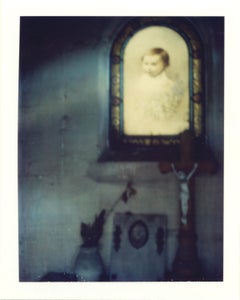
Père Lachaise (Paris) - analog, Contemporary, Women, Portrait
Located in Morongo Valley, CA
Père Lachaise - 1995 Edition of 5, plus 2 Artist Proofs. 60x50cm including white borders. Analog C-Print, hand-printed by the artist and based on the original Polaroid, Signatu...
Category

Early 2000s Contemporary Paper Landscape Photography

Materials

Archival Paper, Photographic Paper, C Print, Color, Polaroid

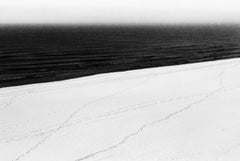
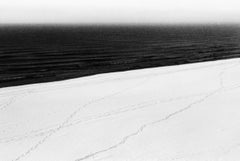
Baltic freeze - black and white analogue landscape photography 100 x 67 cm
Located in London, GB
'Baltic freeze' 2022 A photograph captured with a 35mm camera showcases the winter landscape of Lithuania in black and white. Printed on the finest archival paper, these limited ed...
Category

21st Century and Contemporary Abstract Expressionist Paper Landscape Photography

Materials

Photographic Film, Ink, Archival Ink, Photographic Paper, Giclée

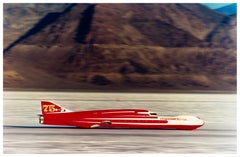
Ferguson Racing Streamliner, Bonneville, Utah - Car Landscape Color Photography
Located in Cambridge, GB
Ferguson Racing Streamliner, photograph taken in the iconic home of speed, Bonneville Salt Flats, just as the mountains contrast with the flat salt lake, Richard Heeps captured this ...
Category

21st Century and Contemporary Contemporary Paper Landscape Photography

Materials

Photographic Paper, C Print, Color, Silver Gelatin

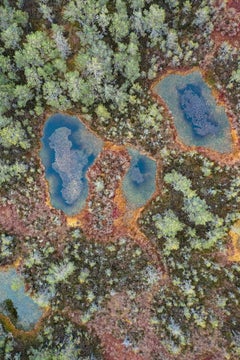
The Bog 001 by Bernhard Lang - Close-up photography, flora, green tones, swamps
Located in Paris, FR
The Bog 001 is a limited-edition photograph by contemporary artist Bernhard Lang. It is a Fine Art Print on Hahnemüle Paper. This photograph is sold unframed as a print only. It is...
Category

2010s Contemporary Paper Landscape Photography

Materials

Photographic Paper

Baltic freeze - black and white analogue landscape photography 70 x 47 cm
Located in London, GB
'Baltic freeze' 2022 A photograph captured with a 35mm camera showcases the winter landscape of Lithuania in black and white. Printed on the finest archival paper, these limited ed...
Category

21st Century and Contemporary Contemporary Paper Landscape Photography

Materials

Photographic Film, Archival Ink, Photographic Paper, Giclée

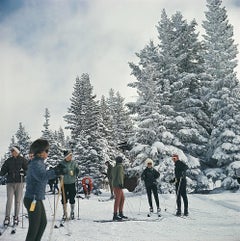
Skiing in Vail, 1964 - Colorado Ski Resort Destination Winter Sports Photograph
Located in Brighton, GB
Skiing in Vail, 1964 - Colorado Ski Resort Destination Winter Sports Photograph by Slim Aarons 16" x 16" print on 16" x 20" paper. Limited Edition Estate Stamped Print. Edition of 1...
Category

20th Century American Modern Paper Landscape Photography

Materials

Photographic Paper, Color, C Print, Digital

Baltic freeze #3 - black and white analogue landscape photography 70 x 48 cm
Located in London, GB
'Baltic freeze #3' 2022 A photograph captured with a 35mm camera showcases the winter landscape of Lithuania in black and white. Printed on the finest archival paper, these limited...
Category

21st Century and Contemporary Contemporary Paper Landscape Photography

Materials

Photographic Film, Archival Ink, Photographic Paper, Giclée

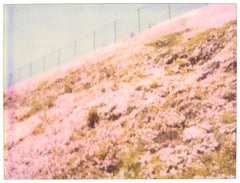
Pink Flower Carpet (Zuma Beach) - analog, vintage print
Located in Morongo Valley, CA
Pink Flower Carpet (Zuma Beach) - 1999 43x59cm, Edition 2/10. Analog C-Print, hand-printed by the artist, based on the Polaroid. Signed on back and Certificate. Artist Inventory #2...
Category

1990s Contemporary Paper Landscape Photography

Materials

Archival Paper, Photographic Paper, C Print, Color, Polaroid

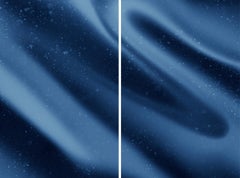
Space is The Place, Depp Blue Tones Diptych, Abstract Silk Shapes Limited Giclee
Located in Barcelona, ES
Cyd Fontaine (Lausanne, 1992) is a contemporary artist renowned for her captivating use of dreamy atmospheric gradients, which has helped her carve a distinctive niche in the world o...
Category

2010s Contemporary Paper Landscape Photography

Materials

Archival Ink, Photographic Paper, C Print, Giclée, Archival Pigment

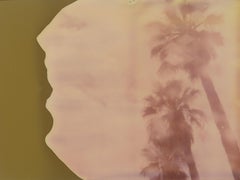
Palm Trees in the Rain (Stranger than Paradise) - Polaroid, 21st Century, Color
Located in Morongo Valley, CA
Palm Trees in the Rain (Stranger than Paradise) - 2000 Edition 2/10, 44x59cm. Analog C-Print, hand-printed by the artist, based on the Polaroid. Certificate and Signature label. ...
Category

Early 2000s Contemporary Paper Landscape Photography

Materials

Archival Paper, Photographic Paper, C Print, Color, Polaroid

HOME
Located in New York, NY
ABOUT THIS ARTIST: Max Wanger constructed his first camera out of paper and scotch tape when he was seven years old. To this day, he is fond of simplicity a...
Category

2010s Paper Landscape Photography

Materials

Photographic Paper

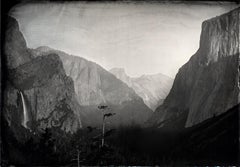
Tunnel View, Yosemite
Located in New York, NY
Listing includes free shipping for unframed prints and 14-day return policy. Ian Ruhter Tunnel View, Yosemite 30 x 40 inch archival pigment print Edition...
Category

2010s Paper Landscape Photography

Materials

Photographic Paper

Mind Storm (The Last Picture Show) - Contemporary, 21st Century, Polaroid
Located in Morongo Valley, CA
Mind Storm (The Last Picture Show) - 2000 20x20m, Edition of 10, plus 2 Artist Proofs. Archival C-Print, based on the Polaroid. Certificate and Signature label. Artist Inventory...
Category

2010s Contemporary Paper Landscape Photography

Materials

Archival Paper, Photographic Paper, C Print, Color, Polaroid

Deep Mirroring Forest 015 by Bernhard Lang - Landscape photography, trees, green
Located in Paris, FR
Deep Mirroring Forest 015 is a limited-edition photograph by German contemporary artist Bernhard Lang. This photograph is sold unframed as a print only. It is available in 5 dimens...
Category

2010s Contemporary Paper Landscape Photography

Materials

Photographic Paper, C Print

Castelejo
Located in London, GB
'Castelejo' Castelejo, Portugal 2021 Limited edition of 20.
Category

2010s Contemporary Paper Landscape Photography

Materials

Photographic Paper, Giclée

Sunday Afternoon (Malibu)
Located in Morongo Valley, CA
Sunday Afternoon (Malibu)n - 2004 39x37cm, Edition 2/5. Analog C-Print, hand-printed by the artist, printed on Fuji Crystal Archive Paper, based on the orignal Polaroid. Artist i...
Category

Early 2000s Contemporary Paper Landscape Photography

Materials

Archival Paper, Photographic Paper, C Print, Color, Polaroid

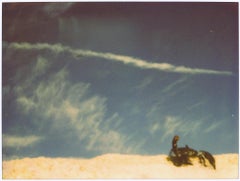
Scorpion (Stranger than Paradise) - analog, vintage print
Located in Morongo Valley, CA
Scorpion (Stranger than Paradise) - 1998 43x59cm, sold out Edition of 5, Artist Proof 2/3. Analog C-Print, hand-printed by the artist, based on the Polaroid. Signature Label and C...
Category

1990s Contemporary Paper Landscape Photography

Materials

Archival Paper, Photographic Paper, C Print, Color, Polaroid

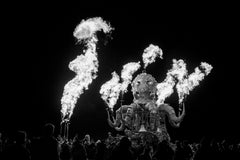
El Pulpo Mechanico, 21st Century, Landscape Photography, Contemporary
Located in Morongo Valley, CA
El Pulpo Mechanico (Black Rock City), Edition 1/10, 20x30cm, 2010, digital Print, printed on Velvet Watercolor, 310gsm, Bright White, Acid Free, Signature label and Certificate. Published in Tao Ruspoli's Monography 'Midway on our Life's Journey’, 2018 The Exaltation of Imagination Photographs and Musings in Defense of Burning Man by Tao Ruspoli The press around Burning Man had gotten so bad that I almost felt embarrassed to be going this year. Even Daniel Pinchbeck, famed psychonaut and burner par excellence, had written a thoughtful piece explaining why, after 15 consecutive years, he wasn’t going back this year: the festival had changed too much--the rich had taken over, it had gone from a relevant and fascinating social experiment to epitomizing the worst elements of capitalist excess. Besides, he seemed to be saying, the world is going through too many crises, both ecological and humanitarian, to justify the extravagance of an event like this. Two burners heading to Temple, one of the massive temporary structures in Black Rock City The burning of the Temple which happens every year the night after the man burns. Keith Spencer...
Category

2010s Contemporary Paper Landscape Photography

Materials

Archival Ink, Archival Paper, Color, Archival Pigment

Back Alley (The Last Picture Show)
Located in Morongo Valley, CA
Back Alley (The Last Picture Show) - 2005, 20x20cm, Edition of 10 plus 2 Artist Proofs. Archival C-Print, based on the original Polaroid. Certificate and Signature label. Arti...
Category

Early 2000s Contemporary Paper Landscape Photography

Materials

Archival Paper, Photographic Paper, C Print, Color, Polaroid

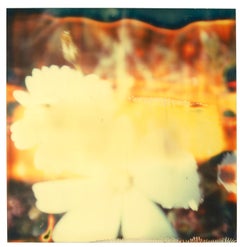
Wildflower (The Last Picture Show)
Located in Morongo Valley, CA
Wildflower (The Last Picture Show) - 2005, 50x49cm, Edition of 10 plus 2 Artist Proofs. Archival C-Print, based on the original Polaroid. Certificate and Signature label. Art...
Category

Early 2000s Contemporary Paper Landscape Photography

Materials

Archival Paper, Photographic Paper, C Print, Color, Polaroid

Hereafter (The Last Picture Show)
Located in Morongo Valley, CA
Hereafter (The Last Picture Show) - 2005, 50x49cm, Edition of 10 plus 2 Artist Proofs. Archival C-Print, based on the original Polaroid. Certificate and Signature label. Artis...
Category

Early 2000s Contemporary Paper Landscape Photography

Materials

Archival Paper, Photographic Paper, C Print, Color, Polaroid

Ocotillo (The Last Picture Show)
Located in Morongo Valley, CA
Ocotillo (The Last Picture Show) - 1999, 20x20cm, Edition of 10 plus 2 Artist Proofs. Archival C-Print, based on the original Polaroid. Certificate and Signature label. Artist...
Category

Early 2000s Contemporary Paper Landscape Photography

Materials

Archival Paper, Photographic Paper, C Print, Color, Polaroid

James Sparshatt Sands of The Himalaya Small Archival Print with Wooden Frame
Located in Coltishall, GB
The Nubra Valley is part of the Tibetan plateau. It is an arid landscape surrounded by awesome peaks, a high altitude desert inhabited by a few small Ladakhi communities and their ...
Category

21st Century and Contemporary Paper Landscape Photography

Materials

Rag Paper, Wood

Coney Island (Stay) - Polaroid, 21st Century, Contemporary, Color
Located in Morongo Valley, CA
Stefanie Schneider's work was used for Marc Forster's movie 'Stay'. Featuring Ewan McGregor, Naomi Watts and Ryan Gosling. Naomi and Ryan were both portraying artists and Stefanie's art was the art both created during the movie. Stefanie's images were also used for Ryan Gosling's memory sequence, for the end titles, for edits in between and as art paintings hanging in several scenes within the movie. “I never remember the details of a Stefanie Schneider image, just the whole. She treads a third path between reality and dream that connects the two and truly sparks my artistic, visual freedom.” (Marc Forster) This piece: Coney Island (Stay) - 2006 20x20cm, Edition of 10 plus 2 Artist Proofs. Archival C-Print, based on the Polaroid. Signature label and Certificate. Artist Inventory # 2196. Not mounted. Torsten Scheid, “Fotografie, Kunst, Kino. Revisited.”, FilmDienst 3/2006, page 11-13

 Photography Art Cinema. Revisited Stay expands a traditional connection through new facets Interwoven between the media of photography and film is a veritable mesh-work of technical, motific, metaphorical and personal interrelationships. Extending from photo-film which, as in La Jetée by Chris Marker (France, 1962) is a montage of single, unmoving photographs all the way to the portrayal of photographic motifs in Hollywood cinema―most recently in Memento (USA, 2000) and One hour photo (USA, 2002)―is the range of filmic-photographic interactions on the one hand, and from the adaption of modes of cinematic production to the imitation of film stills on the other. For instance, with the legendary Untitled Film Stills (1978) of the American artist Cindy Sherman, who later made her debut as a film director with Office Killer (USA, 1997) and thereby, like many others, changed sides: Wim Wenders, Robert Frank and Larry Clark are doubtlessly the most successful of these photographic-filmic border crossers. This brief survey provides only a vague indication of the dimensions of this intermedial field, which in fact extends much further and is constantly being cultivated. Also as a motif in film, photography has experienced a historical transformation: Photographers were once considered to be technicians who mastered a craft but never achieved the status of artists. Photographer-figures were caught in the allure of beautiful appearance, incapable of penetrating to the actual essence of things. Such depth was reserved for literature or painting. When photography in film touched upon the sphere of art, then most often as its contrasting model, as the metaphor for a superficial access to the world. Coming to mind are Fred Astaire as a singing fashion photographer in Stanley Donen’s musical film Funny Face (USA, 1957), or the restless lifestyle-photographer in Michelangelo Antonioni’s genre-classic Blow up (GB, 1966). For the doubting Thomas, only that exists which can be photographed. He ultimately enters the world of fantasy and thereby the field of art only unwillingly, when he becomes entangled in the world of his images. The last of his detail-enlargements shows only the photographic grain and has lost all connection to reality. The photograph looks as if it had been painted by Bill, the painter who is both friend and antagonist to the protagonist.

 Photography as Art It was first around the end of the last century that numerous filmmakers discovered photography as a genuine art form. In The Bridges of Madison County (USA, 1995) a sensitive Clint Eastwood stands, camera in hand, on the threshold of artistic status, and in Smoke (USA, 1994) a tobacco merchant ripens into a philosopher through his involvement in photography. Finally, in John Water’s parody of the art market, Pecker (USA, 1998), a provincial tom-fool is hyped into celebrated stardom amid the New York art scene because of his blurred snapshots. This film about a postmodern Kaspar Hauser in photographic art (with clear parallels to Richard Billingham, the British shooting...
Category

Early 2000s Contemporary Paper Landscape Photography

Materials

Archival Paper, Photographic Paper, C Print, Color, Polaroid

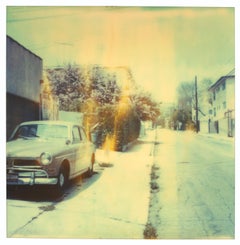
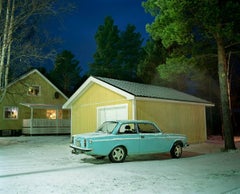
Volvo Sky - American Landscape Photography Urban Nightlife Winter Scenery
Located in Brighton, GB
Volvo Sky is a stunning C-Type Print by contemporary photographer Samuel Hicks. It is available in this size in an Edition of 25, and is sold unframed. A vintage turquoise Volve s...
Category

21st Century and Contemporary Contemporary Paper Landscape Photography

Materials

Photographic Paper, C Print, Digital

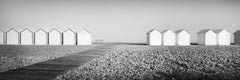
Beach Huts Panorama, France, black and white photography, limited edition
Located in Vienna, Vienna
Black and White Fine Art Panorama photography - Beach huts on the beach with black stones, France. Archival pigment ink print, edition of 9. Signed, titled, dated and numbered by art...
Category

2010s Abstract Paper Landscape Photography

Materials

Archival Ink, Archival Paper, Digital Pigment

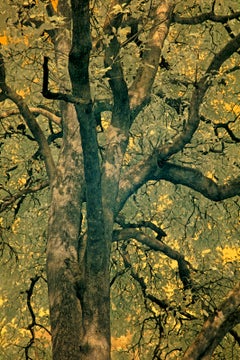
Large Landscape Tree Nature Wildlife Photograph India Orange Green Yellow Forest
Located in Norfolk, GB
Aditya Dicky Singh, Untitled, Infrared photograph on fine-art Hahnemuhle archival paper, 64" x 42.7" *please note this artwork can be printed at any size so long as the ratio r...
Category

2010s Contemporary Paper Landscape Photography

Materials

Archival Ink, Archival Paper

Paper landscape photography for sale on 1stDibs.

Find a wide variety of authentic Paper landscape photography available on 1stDibs. While artists have worked in this medium across a range of time periods, art made with this material during the 21st Century is especially popular. If you’re looking to add landscape photography created with this material to introduce a provocative pop of color and texture to an otherwise neutral space in your home, the works available on 1stDibs include elements of blue, purple, green, orange and other colors. There are many well-known artists whose body of work includes ceramic sculptures. Popular artists on 1stDibs associated with pieces like this include Gerald Berghammer, Stefanie Schneider, Mitchell Funk, and David Burdeny. Frequently made by artists working in the Contemporary, Modern, all of these pieces for sale are unique and many will draw the attention of guests in your home. Not every interior allows for large Paper landscape photography, so small editions measuring 0.4 inches across are also available

Still Thinking About These?

All Recently Viewed