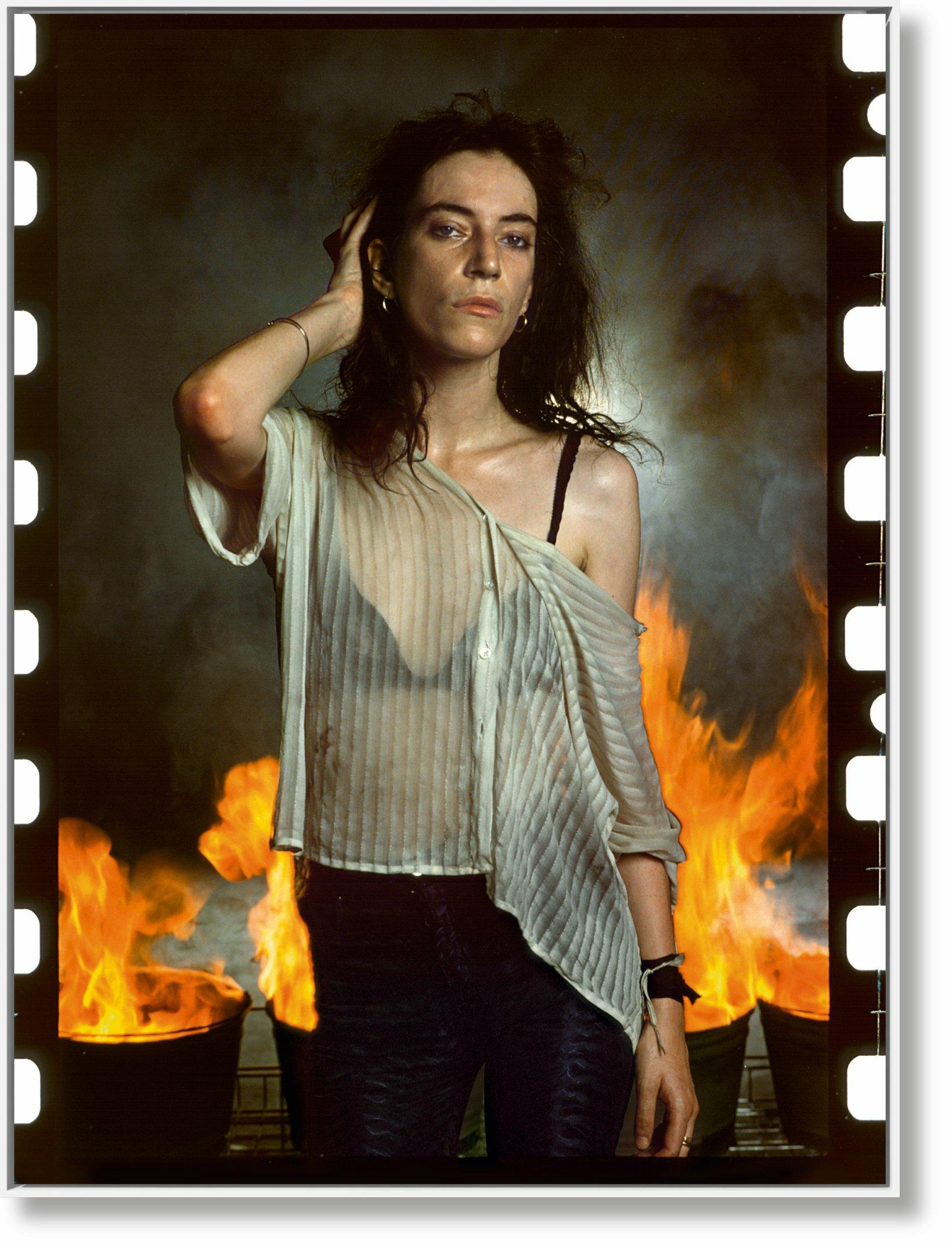
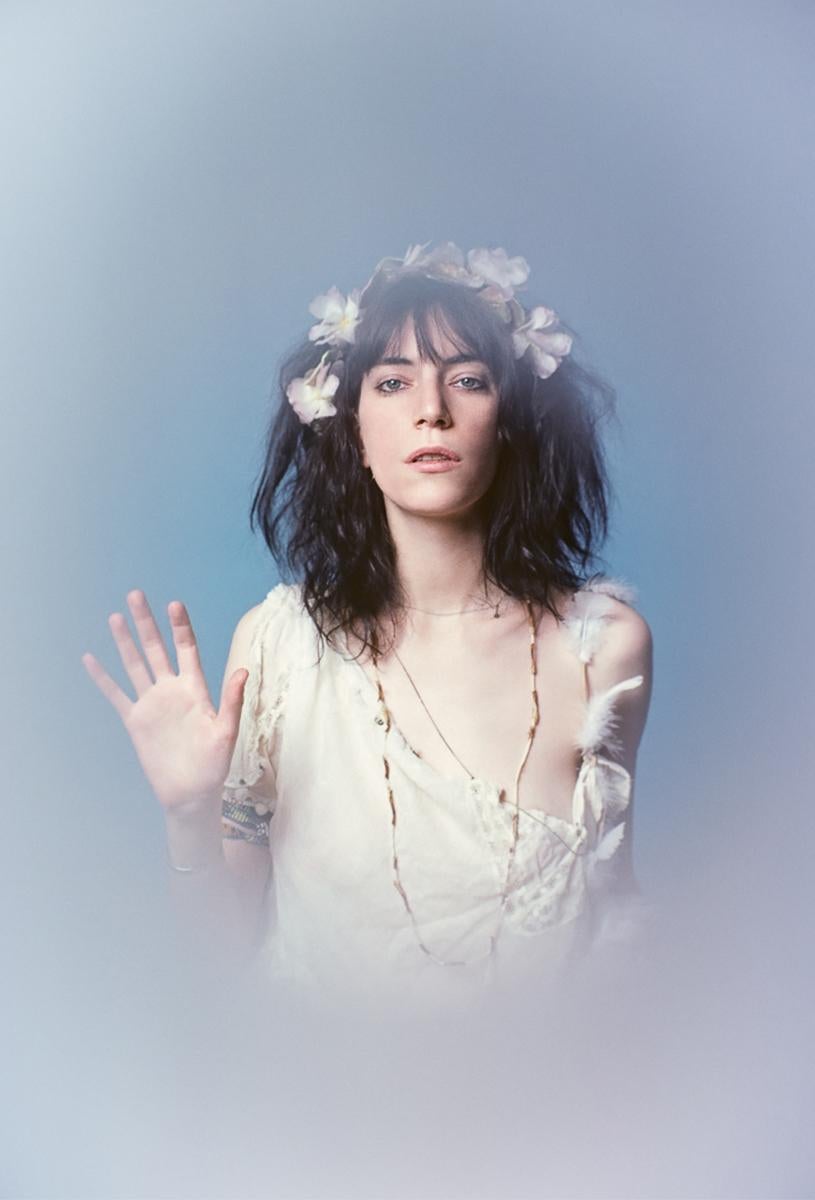
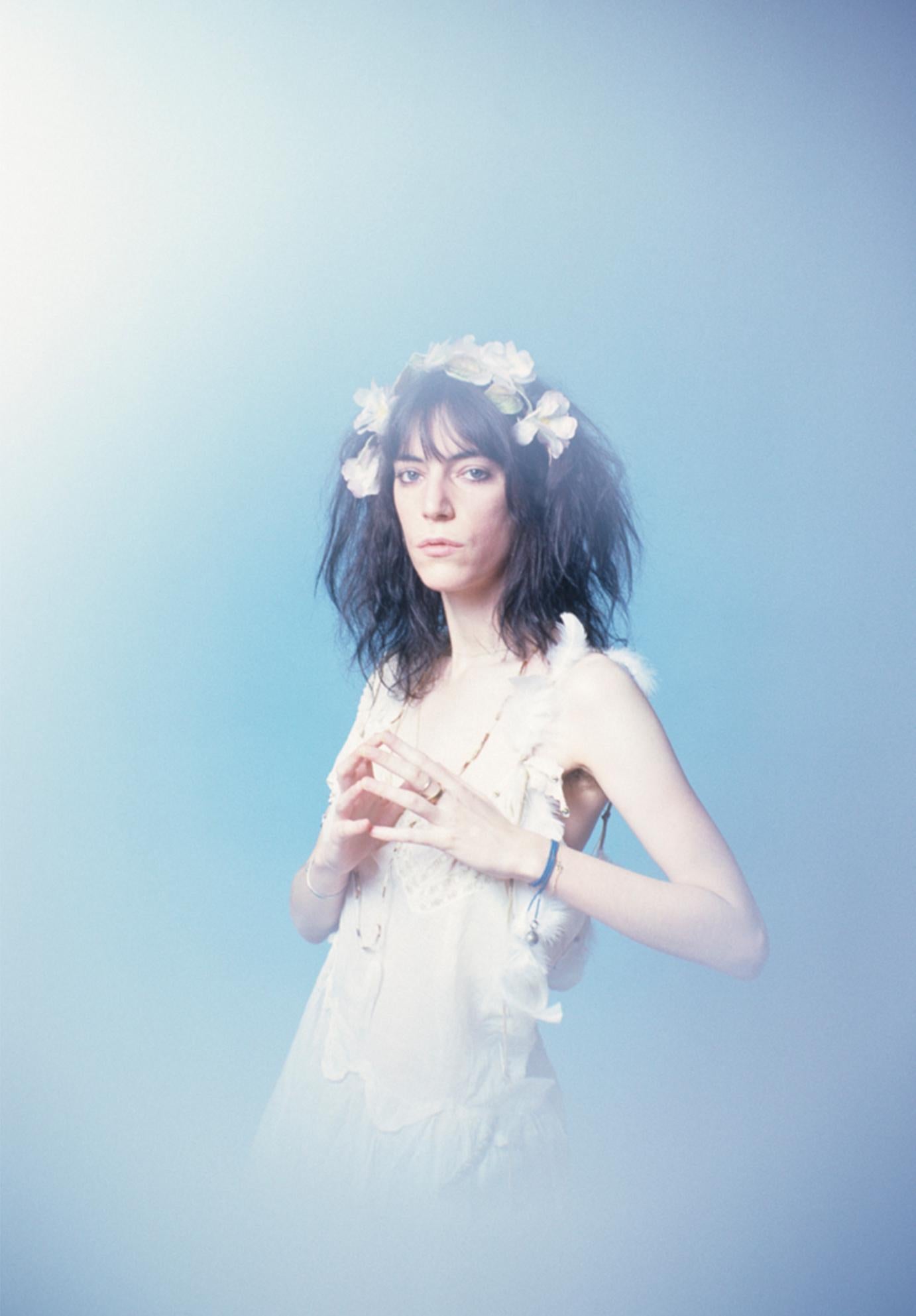
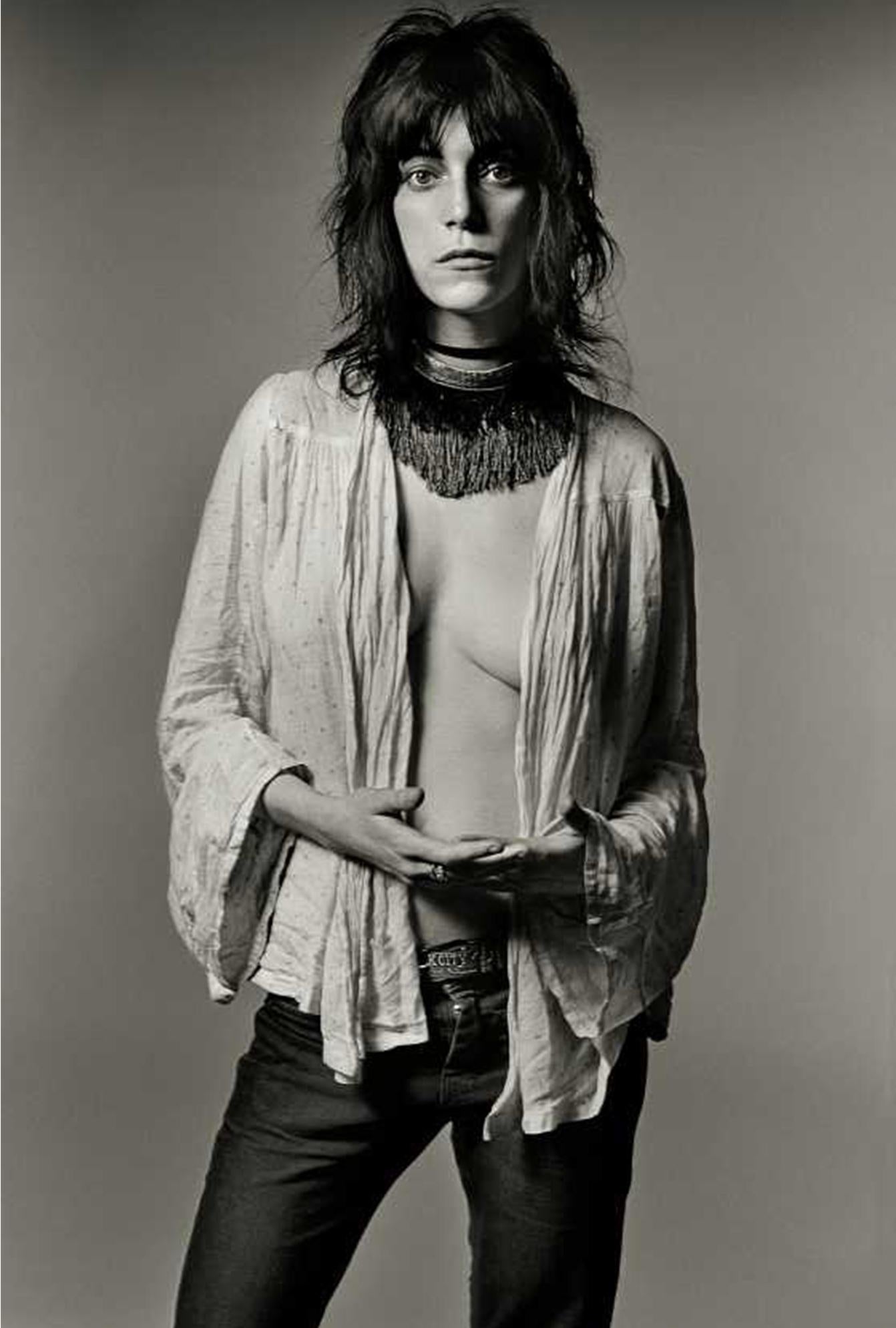
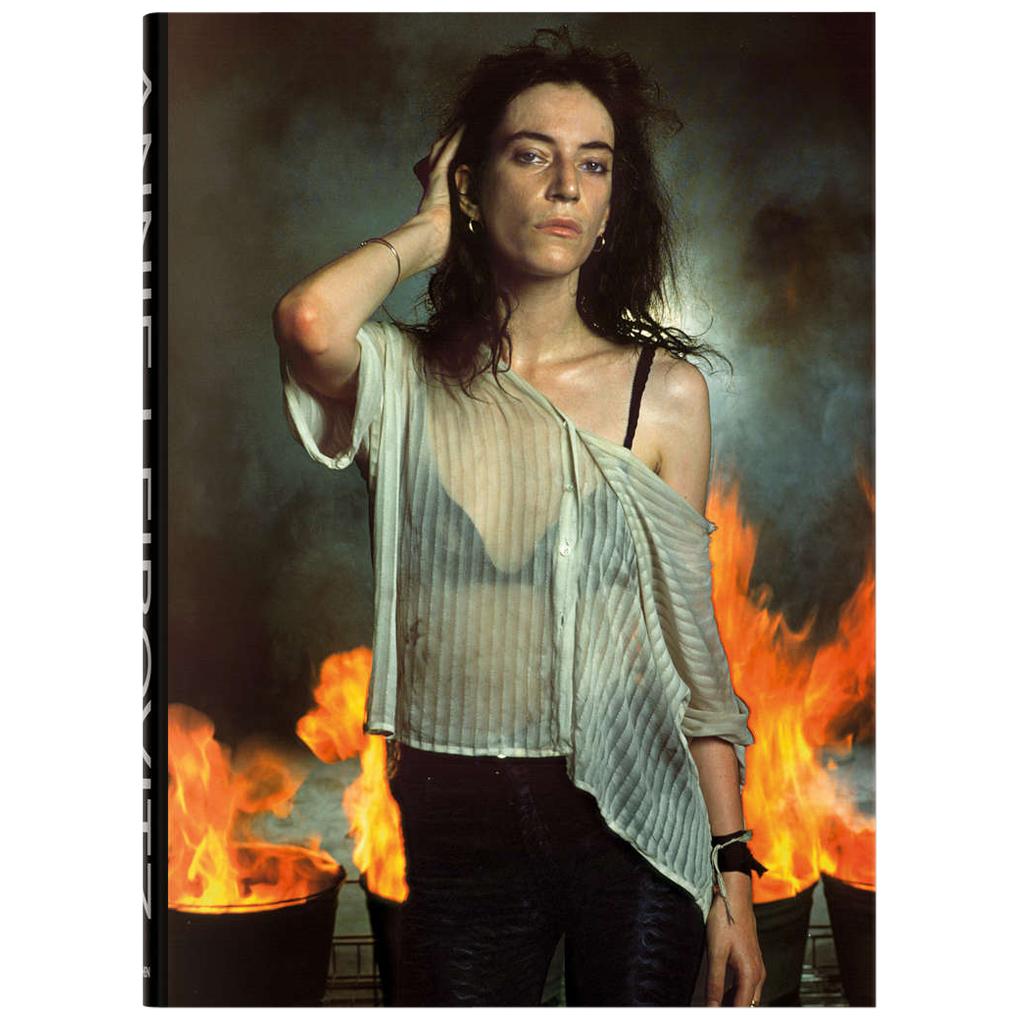
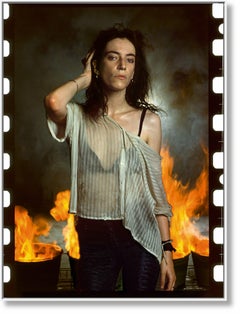
Annie Leibovitz - Patti Smith - New Orleans - 1978 (Original), 1978
Cibachrome photograph (this is the original - not the later commemorative reprint)
Please note: There was a later 2023 promotional reprint of this work published by TASCHEN that accompanied a monograph in a larger edition of 275 - but the present work is the ORIGINAL 1978 Cibachrome photograph. (Serious collectors will never confuse or conflate the two, but worth mentioning in an abundance of caution.)
Boldly signed, titled, dated 1978 with a dateline "New Orleans", and numbered 12/40 in black marker by Annie Leibovitz on the front
Provenance: Dan Cooney Gallery, NM
Framed and ready to hang
Taken in 1978 during a pivotal moment in Patti Smith's career, this rare Cibachrome photograph by Annie Leibovitz captures the artist not in a static studio portrait, but in the heightened, theatrical context of her life performance in New Orleans. At the time, Smith's concerts were charged with an apocalyptic intensity - drawing on ritual, poetry, fire and improvisation. Leibovitz' image reflects that atmosphere, presenting Smith in performance attire against a dramatically saturated, almost incendiary backdrop. Produced using the now-discontinued Cibachrome (lifochrome) process, the photograph is notable for its exceptional color depth and luminosity, qualities that amplify the urgency and physical presence of the subject. Signed, titled, annotated and numbered from an edition of 40, this work belongs to Leibovitz's early documentary period, when her images of musicians and writers helped define the visual language of late-1970s counterculture. This image of Patti Smith has been widely reproduced in monographs and institutional contexts, underscoring its enduring significance within both photographic and cultural history. This image is also reproduced on Hauser
Wirth Gallery's website, along with an audio annotation that transcribes as follows:
“Patti Smith emerged from the Downtown NY music scene n 1975 with “Horses” – one of the most influential albums in the Rock Music canon. The central song suite is of course is an homage to Rambo, William Burroughs and Jimi Hendrix. Essentially a poet, by 1978 Smith was also a full-fledged rock star. Her song “Because the Night”, co-written with Bruce Springsteen, was a big commercial hit – Patti’s first and only. She had been a key figure in the Punk Rock world, and now she was going to be on the cover of Rolling Stone. Annie Leibovitz went on the road with Patti and her band and doing some off stage reportage. Smith’s performances were intense, hypnotic events in which she sang about apocalyptic visions of burning barns and shifting planets. The cover shoot, with a wall of flames, was made in New Orleans. A few months later, Smith dropped out of the music world, although she would return, triumphantly, after a nearly 20 year absence. Annie photographed Patti many times in subsequent years.” – Courtesy Hauser
Wirth
This work has been elegantly framed in a museum quality wood frame under UV glazed plexiglass.
Measurements:
Framed
21.75 inches by 18 inches by 2 inches
Photograph:
20 inches x 16 inches
Visible:
14.4 inches by 11 inches
Annie Leibovitz Biography
Annie Leibovitz was born in 1949 in Connecticut. She bought her first camera in the summer of 1968, when she was a student at the San Francisco Art Institute, and her early works are punctuated by images of the Bay Area landscape and photographs shot during drives the artist often took on the highways between San Francisco and Los Angeles. She switched majors from painting to photography, and while still a student, in 1970, she approached Rolling Stone magazine—just three years after its inception—with a few of her pictures. Some of them were published, thus beginning her career as a photojournalist and embarking on what would develop into a symbiotic relationship between the young photographer and a magazine famous for reflecting the American zeitgeist. Leibovitz’s first major assignment was for a cover story on John Lennon. Leibovitz became Rolling Stone’s chief photographer in 1973, and by the time she left the magazine, she had amassed 142 covers and published photo essays on scores of stories, including the 1975 Rolling Stones tour. Moments of freedom and an unyielding imagination fed the evolution of Leibovitz’s photography. The monumental body of work taken during her thirteen-year tenure at Rolling Stone blurred the lines between celebrity and civilian, interviewer and interviewee, artist and subject, dissolving the boundary separating Leibovitz from those captured in her photographs. Documenting fellow reporters and photographers in addition to their subjects, Leibovitz highlighted those hidden behind the camera and brought them to the forefront.
Leibovitz recorded major political moments of the Seventies in the United States, including the 1972 presidential campaign, which she covered with the writer Hunter S. Thompson. In a haunting photograph taken when President Richard Nixon resigned, on August 9, 1974, Leibovitz’s camera records his helicopter as it takes off from the White House lawn. Her immersion within the political landscape extended to photographs from the 1976 election, when figures such as Jerry Brown and Jimmy Carter seized national attention. The artist photographed the Democratic National Convention in New York City, showcasing candid moments with Dianne Feinstein and journalists such as Sally Quinn and Dan Rather. Leibovitz’s unobtrusive lens implicates both the photographer and her colleagues as significant actors and contributors to cultural moments.
When traveling with the Rolling Stones to document their tour of the Americas in the summer of 1975, Leibovitz entered the band’s world to such a degree that only her camera served as a reminder of her identity. It was Leibovitz’s distinct ability to immerse herself in varying environments that enabled a direct engagement with her subjects, revealing their true, honest, and perhaps most vulnerable selves.
Leibovitz began using a medium-format camera that produced square photographs and was appropriate for shooting set-up portraits with a strobe light. The planned portraits were based on a straightforward idea often stemming from a deeply personal collaboration with her subjects. Evidencing a level of uncanny intimacy and an uncommon depth of engagement, this relationship can be seen in one of her most celebrated photographs, in which a naked John Lennon clutches Yoko Ono. The portrait, made on December 8, 1980, was meant to serve as an intimate emblem of the couple’s relationship. When Lennon was killed just hours after the photo was taken, the image became a powerful visual memorial.
In 1983, when Leibovitz joined the staff of the revived Vanity Fair, she was established as the foremost rock-music photographer and an astute documentarian of the social landscape. At Vanity Fair, and later at Vogue, she developed a large body of work—portraits of actors, directors, writers, musicians, athletes, and political and business figures, as well as fashion photographs. Leibovitz’s portraiture reflects a signature technique she developed early in her career, as she consciously and consistently fit style to subject through collaborating with her subjects, photographing them in their homes or in a location that meant something to them, where friends, lovers, children, and other personal markers might appear.
Annie Leibovitz’s prolific output and her inventive approach to photography itself position her distinctly within the traditions and trajectory of American portraiture during the twentieth century. Her unique photographic language dovetailed with—and advanced—the medium’s evolution as a force for art making. The singularity of her vision, which included combining portraiture with photojournalism that captured historical and cultural touchstones throughout the United States and abroad, places her within a lineage of some of her personal heroes—artists like Andy Warhol and Richard Avedon, both innovators of their mediums. Influences such as Robert Frank and Henri Cartier-Bresson inspired Leibovitz to turn the tide on photography’s reception. Combining Frank’s highly personal and emotional style of photographic reportage with Cartier-Bresson’s Surrealist and even sculptural art photography, Leibovitz embraced her own inclination toward personal journalism. The artist’s large and distinguished body of work encompasses some of the most well-known portraits of our time.
Leibovitz is the recipient of many honors. In 2006 she was made a Commandeur in the Ordre des Arts et des Lettres by the French government. The previous year, in a compilation of the forty top magazine covers of the past forty years by the American Society of Magazine Editors (ASME), she held the top two spots (#1 for the photograph of John Lennon and Yoko Ono taken for Rolling Stone the day Lennon was shot, and #2 for the pregnant Demi Moore in Vanity Fair). In 2009, she received the International Center of Photography’s Lifetime Achievement Award, ASME’s first Creative Excellence Award, and the Centenary Medal of the Royal Photographic Society in London. In 2012, she was the recipient of the Los Angeles Museum of Contemporary Art Award to Distinguished Women in the Arts and the Wexner Prize. In 2013 she received the Prince of Asturias Award for Communication and Humanities. She was the inaugural recipient of the San Francisco Museum of Modern Art Contemporary Vision Award in 2015. In 2018, she received a Lifetime Achievement Award for Excellence in the Arts from the National Museum of Women in the Arts. Leibovitz has been designated a Living Legend by the Library of Congress. She lives and works in New York.
-Courtesy Hauser
Wirth