Masonite Portrait Photography

to
3
1
Overall Width
to
Overall Height
to
4
1
3
1
1
1
1
1
1
1
1,370
6,334
5,521
4,245
4,098
3
1
4
Medium: Masonite
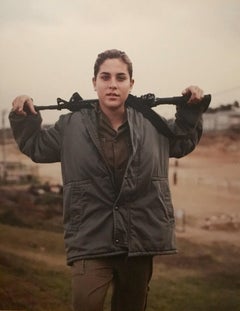
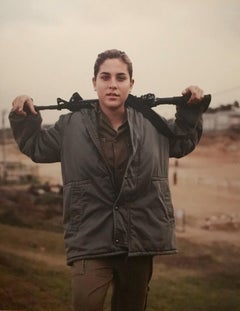
WOMEN OF THE IDF Large color Photograph LITAL
Located in Surfside, FL
"Women of the IDF" Large Exhibition color Photograph 30 x 40 inches, mounted on masonite and laminated. Edition of 4 + 2 artists proof. minor dings and bumps to edges Born in Teh...
Category

Early 2000s Masonite Portrait Photography

Materials

Masonite

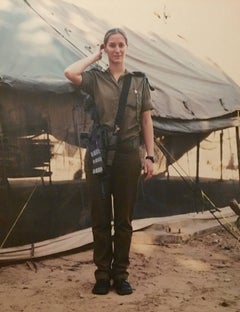
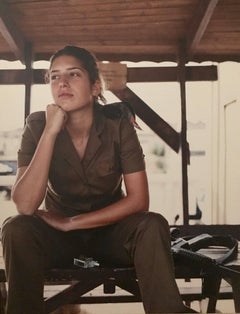
WOMEN OF THE ISRAEL DEFENSE FORCES Large Photo NETA
Located in Surfside, FL
"Women of the IDF" Large Exhibition color Photograph 30 x 40 inches, mounted on masonite and laminated. Edition of 4 + 2 artists proof. minor dings and bumps to edges Born in Teh...
Category

Early 2000s Masonite Portrait Photography

Materials

Masonite

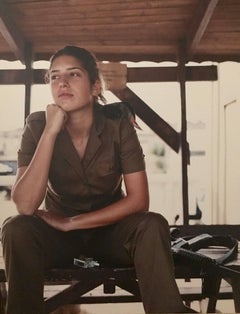
Large Color Photograph "Women of the IDF" Ashkan Sahihi
Located in Surfside, FL
"Women of the IDF" Large Exhibition color Photograph 30 x 40 inches, mounted on masonite and laminated. Edition of 4 + 2 artists proof. minor dings and bumps to edges Born in Tehra...
Category

Early 2000s Masonite Portrait Photography

Materials

Laminate, Masonite

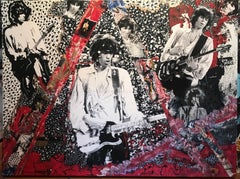
Keith Snow Storm
Located in New York, NY
Mixed Media on wood featuring the infamous Keith Richards. Photographed by Joester. About the Artist: Steve Joester is a British-born Rock & Roll photographer and mixed media a...
Category

2010s Contemporary Masonite Portrait Photography

Materials

Masonite, Mixed Media, Photographic Film
Related Items
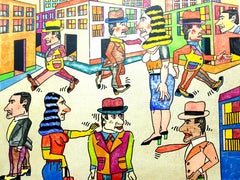
Antonio Segui - Distraido - Oil on Canvas
Located in Collonge Bellerive, Geneve, CH
Antonio Segui 38 x 46 cm Distraido Oil on Canvas Signed and Dated on the back Antonio Segui Biography Born in Córdoba, Argentina in 1934, Antonio Seguí currently lives and works in Paris. He studied at the San Fernando Academy in Madrid, Spain as well as the Ecole des Beaux-Arts in Paris, France. His first solo exhibition was in Argentina at age 23. Antonio Seguí is one of the most internationally renowned Argentinian artists. He began his artistic endeavors at a young age after leaving Argentina to travel the world and study art. His journeys through Latin America, Europe and Africa exposed him to new ideas and encouraged his culturally diverse approach to art. Influenced by artists like Fernand Leger and Diego Rivera, Seguí’s work is generally satirical, critiquing society and human nature. In a pre-computer age, the artist created a vocabulary that is now being explored by a new generation of artists through comics and Manga, yet his visual language and social commentaries remain poignant, both symbolically and literally. Throughout his career, Seguí has developed a fascination for urban life, creating in his work the idea of the “everyman.” The city movement, the fast pace at which life happens and the people who live in these urban spaces are some of the elements that constitute the world depicted in his paintings. It is a prototypical realm inhabited by speedy automatons that take immutable routes leading nowhere. Up close, each figure is an individual, walking down dark alleys, pointing, waving and emerging from potholes. But from a distance, the individuals morph into complex patterns swallowed up in a labyrinth of buildings and cookie-cutter trees. Utilizing cubist techniques, Seguí’s repeated elements give shape to the cities causing planes to vibrate between line and color. Numerous perspectives unfold with each vibration and reflect the many angles of life of the urban man. Always in action, the little figures trample, tip-toe, dodge and advance through Seguí’s imaginary metropolis of life. His work is representated on a series of narratives and criticisms reflected on paintings that show many little men, dressed in 20's style clothes. He uses his own recourse based on comic strip characters, texts, arrows and various signs, juxtaposed onto the figures that resemble comic strip style language. Seguí’s work is collected and exhibited worldwide in places such as the MoMA, New York; Art Museum of the Americas, Washington, D.C.; Frissiras Museum, Athens, Greece; Museo de Arte Moderno de Buenos Aires, Argentina; Museum der Moderne Salzburg, Austria; Museum of Modern Art Dubrovnik, Croatia; and Museo Tamayo, Mexico City, Mexico. The Musée National d´Art Moderne, Paris organized a retrospective of his works on paper in 2005. A monograph on the artist by Daniel Abadie was published in 2010 by Hazan. Antonio Segui Resumé 1995 Art Miami '95, USA. S. Zannettacci, Geneva, Switzerland Marwan Hoss, Paris, France Gallerie du Cirque Divers, Belgium Le Moulin du Roc, France Fundacao C. Gulbenkaian, Portugal Gallerie J. Rubeiz, Beirut, Liban 1994 F. Santos, Portugal E. Franck Gallery, Belgium 1993 Galleria San Carlo, Milan, Italy Galería I. Vega, Puerto Rico Winance-Sabbe, Belgium FIAC, Paris, France 1992 Casa Rosada, Buenos Aires, Argentina Espace Julio Gonzales...
Category

2010s Modern Masonite Portrait Photography

Materials

Oil

[Bruce Sargeant (1898-1938)] Single Rower
Located in New York, NY
[Bruce Sargeant (1898-1938)] Single Rower n.d. Signed in red, u.r. Oil on canvas mounted to Masonite 37.25 x 71.5 inches (94.6 x 181.6 cm) $8,500 + $800 framing This work is off...
Category

Early 2000s Contemporary Masonite Portrait Photography

Materials

Canvas, Masonite, Oil

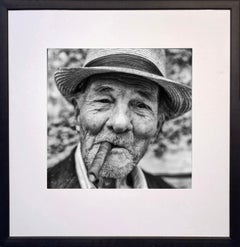
El Caballero - Framed portrait of an old cigar-smoking Cuban man with a smile
Located in Coltishall, GB
The gentleman… a man of calm dignity and endessly kind eyes in Old Havana in 2016. The Spirit of the Revolution series documents the generation of Cubans that saw the dramatic chan...
Category

21st Century and Contemporary Naturalistic Masonite Portrait Photography

Materials

Glass, Wood, Silver Gelatin

Kate Moss 1993, Paradise Island Bahamas, Portrait Photograph, Custom Framed
Located in London, GB
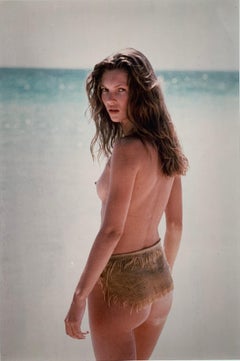
For the 1994 Pirelli Calendar shot on the Paradise Island in the Bahamas, photographer Herb Ritts set out to capture in a series of nudes what he called “the gentle innocence” of Kat...
Category

1990s Contemporary Masonite Portrait Photography

Materials

Glass, Wood, Photographic Film, Archival Paper, Photographic Paper, C Print
Antique 1920s Danish Realist Oil Painting Fish Market Scene Copenhagen Signed
Located in Stockholm, SE
This antique oil on canvas from the 1920s, attributed to the Danish artist Søren Christian Bjulf (1890 - 1958), captures a spirited fish market at Gammel Strand, Copenhagen. The scen...
Category

Early 20th Century Realist Masonite Portrait Photography

Materials

Canvas, Wood, Oil

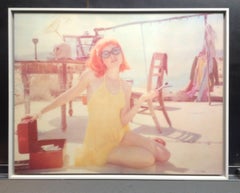
Treasure II (29 Palms, CA) - Polaroid, framed, analog
Located in Morongo Valley, CA
Treasure II (Stage of Consciousness) 29 Palms, CA, 2007, 75x93cm, Edition 3/5. Analog C-Print printed on Fuji Archive Paper, hand-printed by the artist, based on a Polaroid. Sign...
Category

Early 2000s Contemporary Masonite Portrait Photography

Materials

Wood, Archival Paper, Photographic Paper, C Print, Color, Polaroid
[Bruce Sargeant (1898-1938)] Man with Ladders and Ropes, Queer Figure Painting
Located in New York, NY
This painting by Mark Beard depicts a man climbing ladders and ropes. The listed price includes the cost of framing.
Category

2010s Contemporary Masonite Portrait Photography

Materials

Canvas, Masonite, Oil

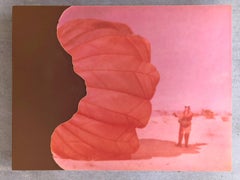
Captain Nelson (29 Palms, CA) - Contemporary, Polaroid, 21st Century, Dream
Located in Morongo Valley, CA
Captain Nelson (29 Palms, CA) - 2007 37x49x3.5cm, Edition 1/5. Artist Inventory No 4033.01. Analog C-Print, Hand-printed by the artist, mounted on a wooden box with matte UV-Prot...
Category

Early 2000s Contemporary Masonite Portrait Photography

Materials

Wood, Archival Paper, Photographic Paper, C Print, Color, Polaroid
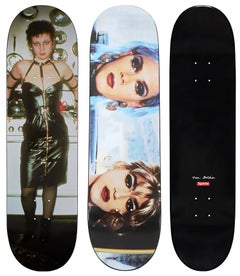
Nan Goldin Supreme set of 2 skateboard decks (Nan Goldin Supreme)
Located in NEW YORK, NY
Nan Goldin Supreme Skateboard Decks, 2018 (set of 2): – Misty and Jimmy Paulette in a taxi, (NYC 1991) – Nan as a Dominatrix (Cambridge MA 1978) Set of 2 limited edition Nan Goldin ...
Category

21st Century and Contemporary Street Art Masonite Portrait Photography

Materials

Wood, Offset

Polish Woman - Impressionist Mid 20th Century Oil Painting by Helena Krajewska
Located in Watford, Hertfordshire
Helena Malarewicz-Krajewska (born 14 July 1910 in Biecz , died May 7, 1998 in Warsaw) is a Polish painter, active advocate of socialist realism. Studied between 1928 and 1929 at the...
Category

1950s Impressionist Masonite Portrait Photography

Materials

Oil, Board

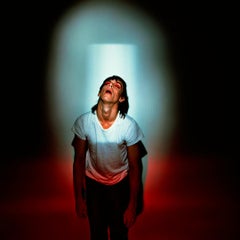
IGGY POP - FROM THE ALBUM COVER SOLDIER 1980, STUDIO PORTRAIT (1979)
Located in London, GB
IGGY POP - FROM THE ALBUM COVER SOLDIER 1980, STUDIO PORTRAIT (1979), 1979 Archival Pigment Print, Framed Image size 30 x 30 cm Frame: 55 x 45.5 cm © Brian Griffin "I remember this...
Category

1970s Surrealist Masonite Portrait Photography

Materials

Wood, Glass, Photographic Film, Photographic Paper, Color, Archival Pigment
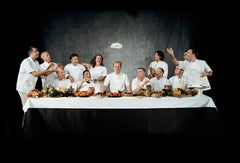
Chefs s Last Supper - Portrait of 13 Michelin-starred Chefs - Framed Photograph
Located in London, GB
'Last supper' of 13 Michelin-starred Chefs... John Reardon is particularly associated with his portraits of chefs for the Observer Food Monthly (UK) for which this commission based o...
Category

Early 2000s Contemporary Masonite Portrait Photography

Materials

Glass, Wood, Photographic Film, Archival Ink, Archival Paper, Photograph...
Previously Available Items
WOMEN OF THE ISRAEL DEFENSE FORCES Large Photo NETA
Located in Surfside, FL
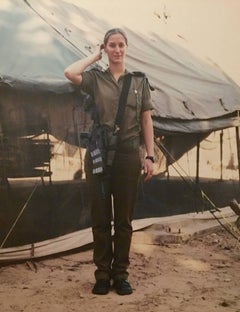
"Women of the IDF" Large Exhibition color Photograph 30 x 40 inches, mounted on masonite and laminated. Edition of 4 + 2 artists proof. minor dings and bumps to edges Born in Tehran, Iran, Ashkan Sahihi moved with his family to West Germany at the age of seven. Although he began taking photographs as a teenager, Sahihi traces the beginning of his professional trajectory to New York in 1987, a thriving “pop culture metropolis” where he could do the kind of photography work that he wanted to do, exploring the underbelly of the society around him. Taking assignments from German publications such as the Süddeutsche Zeitung Magazine, Der Spiegel, Dummy and GEO, he photographed subjects like prisoners on death row, players in the hip-hop scene, and the downtown art scene of New York. Neither black nor white, an insider among outsiders, he found himself able to navigate spaces and dynamics that others might have had difficulty entering. He considered this both a privilege and an obligation – to visit these places and tell these stories. His success led to commissions from American publications as well, including the New York Times Magazine, the New Yorker, Rolling Stone, and Vogue. Put off by the limitations of photojournalism (the expectation that he would illustrate the writer’s perspective rather than author a narrative of his own), Sahihi began to embark on independent, highly compact conceptual series. His main goal in these series has been to drive forward public discourse on topics he believes have not provoked enough or the right kind of discussion: drugs, gender in the media, women in the military, etc. His portraits draw on a familiar visual language – often seated subjects before a neutral backdrop – but push the viewer to feel and think about entirely new things. Although he constantly challenges the comfort level of both the viewer and the subject, Sahihi never removes himself from the line of fire; all of his work requires the artist to immerse himself in uncomfortable situations and challenge his own emotional fortitude. Photographic Series In the “Face Series”, latex-gloved hands manipulate the subjects’ features, stretching, pushing, squeezing, pinching at the whim of external direction – from the artist? The customer? The public? The “Hypnosis Series” comprises 8 portraits of hypnotized subjects each experiencing a single emotion, e.g. helplessness, withholding/anger, or regret. In a society that rewards the suppression of such naked emotion, the purity of these depictions is arresting. In 2006, Sahihi photographed himself in the homes and with the families of six ex-girlfriends and one ex-wife, imposing himself more or less awkwardly on the constellations that emerged after he had exited their lives (“Exes Series”). For Sahihi’s most well-known work, the “Drug Series,” he convinced 11 non–drug users to consume a particular drug, then took their portraits over the course of their trips. The series was born out of Sahihi’s frustration with the hypocrisy of the political conversation about drugs in the United States. “By attempting to present an objective image of drug use, the artist addresses the cultural politics that allow our society to simultaneously glamorize the ‘drug look’ in fashion magazines and the entertainment industry and meanwhile turn a blind eye to the complicated, and vast, problem of drug abuse.” Sahihi has exhibited this series at MoMA PS1 New York in 2001, in Dresden in 2008, and alongside his installation “100 Million in Ready Cash." Sahihi’s dense explorations through small photographic series include “Women of the IDF," portraits of female Israeli soldiers...
Category

Early 2000s Masonite Portrait Photography

Materials

Masonite

WOMEN OF THE IDF Large color Photograph LITAL
Located in Surfside, FL
"Women of the IDF" Large Exhibition color Photograph 30 x 40 inches, mounted on masonite and laminated. Edition of 4 + 2 artists proof. minor dings and bumps to edges Born in Tehran, Iran, Ashkan Sahihi moved with his family to West Germany at the age of seven. Although he began taking photographs as a teenager, Sahihi traces the beginning of his professional trajectory to New York in 1987, a thriving “pop culture metropolis” where he could do the kind of photography work that he wanted to do, exploring the underbelly of the society around him. Taking assignments from German publications such as the Süddeutsche Zeitung Magazine, Der Spiegel, Dummy and GEO, he photographed subjects like prisoners on death row, players in the hip-hop scene, and the downtown art scene of New York. Neither black nor white, an insider among outsiders, he found himself able to navigate spaces and dynamics that others might have had difficulty entering. He considered this both a privilege and an obligation – to visit these places and tell these stories. His success led to commissions from American publications as well, including the New York Times Magazine, the New Yorker, Rolling Stone, and Vogue. Put off by the limitations of photojournalism (the expectation that he would illustrate the writer’s perspective rather than author a narrative of his own), Sahihi began to embark on independent, highly compact conceptual series. His main goal in these series has been to drive forward public discourse on topics he believes have not provoked enough or the right kind of discussion: drugs, gender in the media, women in the military, etc. His portraits draw on a familiar visual language – often seated subjects before a neutral backdrop – but push the viewer to feel and think about entirely new things. Although he constantly challenges the comfort level of both the viewer and the subject, Sahihi never removes himself from the line of fire; all of his work requires the artist to immerse himself in uncomfortable situations and challenge his own emotional fortitude. Photographic Series In the “Face Series”, latex-gloved hands manipulate the subjects’ features, stretching, pushing, squeezing, pinching at the whim of external direction – from the artist? The customer? The public? The “Hypnosis Series” comprises 8 portraits of hypnotized subjects each experiencing a single emotion, e.g. helplessness, withholding/anger, or regret. In a society that rewards the suppression of such naked emotion, the purity of these depictions is arresting. In 2006, Sahihi photographed himself in the homes and with the families of six ex-girlfriends and one ex-wife, imposing himself more or less awkwardly on the constellations that emerged after he had exited their lives (“Exes Series”). For Sahihi’s most well-known work, the “Drug Series,” he convinced 11 non–drug users to consume a particular drug, then took their portraits over the course of their trips. The series was born out of Sahihi’s frustration with the hypocrisy of the political conversation about drugs in the United States. “By attempting to present an objective image of drug use, the artist addresses the cultural politics that allow our society to simultaneously glamorize the ‘drug look’ in fashion magazines and the entertainment industry and meanwhile turn a blind eye to the complicated, and vast, problem of drug abuse.” Sahihi has exhibited this series at MoMA PS1 New York in 2001, in Dresden in 2008, and alongside his installation “100 Million in Ready Cash." Sahihi’s dense explorations through small photographic series include “Women of the IDF," portraits of female Israeli soldiers...
Category

Early 2000s Masonite Portrait Photography

Materials

Masonite

Large Color Photograph "Women of the IDF" Ashkan Sahihi
Located in Surfside, FL
"Women of the IDF" Large Exhibition color Photograph 30 x 40 inches, mounted on masonite and laminated. Edition of 4 + 2 artists proof. minor dings and bumps to edges Born in Tehran, Iran, Ashkan Sahihi moved with his family to West Germany at the age of seven. Although he began taking photographs as a teenager, Sahihi traces the beginning of his professional trajectory to New York in 1987, a thriving “pop culture metropolis” where he could do the kind of photography work that he wanted to do, exploring the underbelly of the society around him. Taking assignments from German publications such as the Süddeutsche Zeitung Magazine, Der Spiegel, Dummy and GEO, he photographed subjects like prisoners on death row, players in the hip-hop scene, and the downtown art scene of New York. Neither black nor white, an insider among outsiders, he found himself able to navigate spaces and dynamics that others might have had difficulty entering. He considered this both a privilege and an obligation – to visit these places and tell these stories. His success led to commissions from American publications as well, including the New York Times Magazine, the New Yorker, Rolling Stone, and Vogue. Put off by the limitations of photojournalism (the expectation that he would illustrate the writer’s perspective rather than author a narrative of his own), Sahihi began to embark on independent, highly compact conceptual series. His main goal in these series has been to drive forward public discourse on topics he believes have not provoked enough or the right kind of discussion: drugs, gender in the media, women in the military, etc. His portraits draw on a familiar visual language – often seated subjects before a neutral backdrop – but push the viewer to feel and think about entirely new things. Although he constantly challenges the comfort level of both the viewer and the subject, Sahihi never removes himself from the line of fire; all of his work requires the artist to immerse himself in uncomfortable situations and challenge his own emotional fortitude. Photographic Series In the “Face Series”, latex-gloved hands manipulate the subjects’ features, stretching, pushing, squeezing, pinching at the whim of external direction – from the artist? The customer? The public? The “Hypnosis Series” comprises 8 portraits of hypnotized subjects each experiencing a single emotion, e.g. helplessness, withholding/anger, or regret. In a society that rewards the suppression of such naked emotion, the purity of these depictions is arresting. In 2006, Sahihi photographed himself in the homes and with the families of six ex-girlfriends and one ex-wife, imposing himself more or less awkwardly on the constellations that emerged after he had exited their lives (“Exes Series”). For Sahihi’s most well-known work, the “Drug Series,” he convinced 11 non–drug users to consume a particular drug, then took their portraits over the course of their trips. The series was born out of Sahihi’s frustration with the hypocrisy of the political conversation about drugs in the United States. “By attempting to present an objective image of drug use, the artist addresses the cultural politics that allow our society to simultaneously glamorize the ‘drug look’ in fashion magazines and the entertainment industry and meanwhile turn a blind eye to the complicated, and vast, problem of drug abuse.” Sahihi has exhibited this series at MoMA PS1 New York in 2001, in Dresden in 2008, and alongside his installation “100 Million in Ready Cash." Sahihi’s dense explorations through small photographic series include “Women of the IDF," portraits of female Israeli soldiers...
Category

Early 2000s Masonite Portrait Photography

Materials

Laminate, Masonite

Masonite portrait photography for sale on 1stDibs.

Find a wide variety of authentic Masonite portrait photography available on 1stDibs. While artists have worked in this medium across a range of time periods, art made with this material during the 21st Century is especially popular. There are many well-known artists whose body of work includes ceramic sculptures. Popular artists on 1stDibs associated with pieces like this include Ashkan Sahihi, and Steve Joester. Frequently made by artists working in the Contemporary, all of these pieces for sale are unique and many will draw the attention of guests in your home. Not every interior allows for large Masonite portrait photography, so small editions measuring 0.63 inches across are also available

Read More

This Week-Old Calf Named Bug Is One of Randal Ford’s Most Adorable Models

In a recent collection of animal portraits, he brings fashion photography to the farm.

11 of Annie Leibovitz’s Most Talked-About Photographs

See why the famed photographer's celebrity portraits have graced magazine covers and become headline grabbers in their own right for five decades and counting.

Queen Elizabeth’s Life in Photos

She was one of the most photographed women in history, but the world’s longest-reigning queen remained something of a mystery throughout her decades on the throne.

Photographer to Know: William Klein

The noted lensman brought a bold sense of irony to fashion photography in the 1950s and '60s, transforming the industry. But his work in street photography, documentary filmmaking and abstract art is just as striking.

Chris Levine’s Portrait of a Shut-Eyed Queen Elizabeth Sparkles with Crystals

Celebrate the queen's Platinum Jubilee with a glittering, Pop-art version of the most famous and thought-provoking photo of Her Royal Majesty.

In Milan, La DoubleJ Celebrates Women of Design through Portraiture

During Salone del Mobile, Robyn Lea photographed some of the most powerful creative forces in the European design industry, decked out in J.J. Martin’s maximal fashion line.

Lori Grinker’s Artful Photographs of a Young Mike Tyson Are a Knockout!

The New York photographer tells us how an encounter with the then-13-year-old boxer led to a decade-long project that saw them both go pro.

John Dolan’s Photographs Capture the Art and Soul of a Wedding Day

In a new book compiling 30 years' worth of images, the photographer reveals that it's the in-between moments that make a wedding special.

Recently Viewed

View All